Director Anubhuti Kashyap does an interesting gender flip with the backdrop of Me Too. In this case the victim as well as the accused is a woman. Using this as a microscope the film looks at society’s double standards on how men feel threatened by a woman rising to the top. A strong aspect of Accused is the same sex relationship of Konkana and Pratibha Ranta. Their bond is portrayed in a matter-of-fact way like any man and woman in the same situation.
Starcast: Konkana Sen Sharma, Pratibha Rana, Aditya Nanda, Mashhor Amorahi and others
Director: Anubhuti Kashyap
Genre: Thriller/drama
Writers: Sima Agarwal and Yash Keswani
Producers: Karan Johar, Somen Mishra, Apoorva Mehta and Aadar Poonawala
Production Company: Dharmatic Entertainment
Running time: 1 hour and 46 minutes
Streaming site: Netflix
There is an important line in Anubhuti Kashyap’s Accused streaming on Netflix. It goes like this Jab Aadmi successful hota hai to hum kehta hain deserve karte hain but when a woman reaches a powerful position, we doubt Aisa Kya Kiya hoga. This statement pretty much sums up the core of Accused. After the story of male doctor practicing gynaecology Anubhuti once again chooses a medical workplace for the film. But this one operates in a very different zone.
Konkana and Pratibha as a queer couple in Accused
The story of Accused in simple terms focuses on Konkana Sen Sharma’s Geetika Rao and Pratibha Ranta’s Meera. The two are in a solid relationship with plans of adopting a baby. Geetika is a celebrated doctor who is known for her hard work as well for her no-nonsense nature. Geetika Rao has a tough exterior and is not necessarily likeable. Meera on the other hand is the more emotional one. The difference in their personalities is not a hindrance for their co living as things are going stable. However, all that changes due to some anonymous mails hinting at sexual misconduct. Geetika Rao’s reputation faces a major hit. Complaints about her being a taskmaster are common but this time around the nature of accusations threaten to destroy both her professional and personal career. This is the story in brief.
A strong aspect of Accused are the characterizations of both Geetika and Meera. There are portions in the movie where Geetika comes across as very self-centered. A heated argument between Konkana and Pratibha is a solid example of this. Also, the way Geetika does certain things makes the viewers think that she is actually guilty of the accusations levelled on her.
Meera on the other hand is not reduced to a submissive spouse. There is both vulnerability and strong inner strength. She wants the previous normalcy to return but at the same time Geetika’s distant attitude makes things difficult. The dynamics have an organic feel as both Konkana and Pratibha feed off each other wonderfully.
As the mystery is unraveled a different layer comes out which is how and why Geetika was framed for sexual misconduct. This is where the film slips into a feministic zone on how men feel threatened by a woman achieving high position. An important monologue of Konkana Sen Sharma reflects this. At the same time there is a psychological insight too into the mindset of Geetika on why she is hard with her colleagues expecting absolute efficiency.
In the end Geetika accepts her flaws and rejects the promotion of dean saying that she still needs to work on herself. The patch up of Konkana and Pratibha has some heartfelt dialogues ending the movie on a high.
Both Konkana and Pratibha handle the tricky subject matter with ease. Konkana is of course a seasoned performer, but Pratibha is the surprise package here capturing the different shades of Meera with admirable precision. Aditya Nanda as Meera’s colleague with some unspoken feelings does a good job too. Mashhor Amarohi as the investigator has his moments as well.
Technically speaking the production design coupled with the atmospherics add to the mystery. One major issue with Accused is the portrayal of Me-Too movement. There is a surface level treatment to the entire subplot. The significance of Me-too gets somewhere lost in the thriller treatment.
Final word: Accused is a largely satisfying thriller/drama especially for the solid acting and the themes it tackles.
Returning back to the big screen after a huge gap Neeraj Ghaywan once again shows his ability in delivering socially relevant tales. Homebound is notches above Masaan in more ways than one: the angst is more, and the politics more in your face but highly effective. Homebound benefits immensely from the solid on screen friendship. The viewers feel the everyday marginalization felt by Vishal Jethwa’s Chandan and Ishaan Khattar’s Shoaib. The heart of Homebound though lies in the second half when it tackles the plight of migrant workers
Starcast: Vishal Jethwa, Ishaan Khattar, Janhvi Kapoor, Harshika Parmar, Shalini Vasta and others
Genre: Social drama
Story: Basharat Peer, Neeraj Ghaywan and Sumit Roy
Direction, screenplay and dialogues: Neeraj Ghaywan
Additional dialogues: Varun Grover
Based on: A friendship, a pandemic and the death beside the Highway article by Basharat Peer
Cinematography: Pratik Shah
Music: Benedict Taylor, Amit Trivedi and Naren Chandavarkar
Producers: Karan Johar, Somen Mishra, Adar Poonawala etc
Production Company: Dharma Productions
Running time: 2 hours and 2 minutes
In the last few years Dharma has seen a massive shift in terms of the diverse stories and filmmakers who come with strong voices. This is very apparent with films like 2024’s Kill and this year’s Dhadak 2 along with Homebound. All these movies have a social voice especially in the case of last two. In both Dhadak 2 and Homebound the plight of the marginalized form the central core: both these movies aren’t afraid to wear their politics on sleeves dealing with thorny issues which don’t find much representation in mainstream pan masala cinema.
Homebound is inspired from a devasting real life incident. A tragic story of two friends who like the numerous migrant workers had to walk long distance during the harrowing COVID pandemic. Out of the two only one makes it. An article about this was written by the noted writer Basharat Peer. Taking this as a base director Neeraj Ghaywan along with Sumit Roy and Basharat himself add different social dimensions.
In simple terms the story of Homebound primarily focuses on two childhood friends played by the excellent Vishal Jethwa and Ishaan Khattar. Both of them go after a police constable job promising them dignity which has been long denied due to their social backgrounds. Ishaan Khattar plays a young Muslim man facing religious taunts. Vishal Jethwa on the other hand is Chandan a Dalit boy afraid of embracing his true identity. Janhvi Kapoor plays Sudha Bharati. Much like Chandan she is also a Dalit but with a better economic background. Sudha is a strong believer in the Ambedkar philosophy: she constantly eggs Chandan to complete his studies so that he will be in a stronger position. This is the story in brief.
The best part of Homebound is the strong on-screen friendship. There is a lived in feel to the scenes featuring Vishal and Ishaan. Their moments together whether it’s the light ones or the more intense portions when Shoiab doesn’t make it has been brilliantly written and enacted.
Through the two friends the film delivers a hard-hitting tale on the everyday discrimination faced by the marginalized. For example, there is a scene where Chandan goes to check about his exam results. An official asks Chandan which category he applied. To this Chandan replies general category hiding his true identity. This is followed by the official going on a rant about reservation in a tone reminiscent of the numerous upper-class people who feel that reservation is a regressive thing.
Similarly in the case of Shoaib he too faces the brunt of being a Muslim. There is a scene of Shoaib going for an office party. A cricket match between India and Pakistan is going on. Like the other people in party Shoaib is also happy about India winning however his seniors chide him with the term Lahore implying that he is sad about Pakistan losing. All this hits the viewers hard especially those who are into serious cinema.
The love story between Chandan and Sudha also has interesting dynamics. As already mentioned, Sudha is financially better off than Chandan and this shows in her confident persona. Through Janhvi Neeraj shows a more empowered Dalit with a strong voice. Janhvi doesn’t have much heavy lifting to do but she plays the part with the required confidence. Her scenes with Vishal bring a much-needed lightness to the otherwise grim proceedings.
In the second half the plot goes from caste to the plight of migrant workers. The movie makes the viewers ponder on how lucky we were safe in our homes. The visuals of the sudden lockdown imposed and migrant workers desperate attempts to get away will definitely stir a strong emotion. In these segments the touch of Basharat Peer is very apparent.
The movie doesn’t directly critique the government but for those who read between the lines the administrative failure is very palpable. The moments leading up to Chandan’s death has also been brilliantly staged. There is an important conversation just before he gets sick. He talks about his future aspirations which include completing his studies among other things. This adds to the tragedy later on. The pre climax scene with Shoaib desperately wanting to save his friend by egging him on is so emotionally riveting. Ishaan Khattar as Shoaib especially shines in this sequence making you wish that the real-life scenario had played out differently. With his portrayal of Shoaib Ishaan once again shows why he is such a fine talent. Vishal Jethwa is also equally good in portraying the angst and anguish of a lower caste man who is afraid to embrace his true caste identity. Mention must also be made of Harshika Parmar as Chandan’s sister. She brings in a quiet strength in the sequence where her character reminds Chandan about how she never had the opportunity of going to college unlike her brother. Shalini Vatsa as the mother is equally good in spite of the brief screen time.
Pratik Shah’s cinematography is solid too. He does a very fine job in capturing the lived in atmospherics. The costumes and production design are also in perfect sync making Homebound a technically solid product as well.
Final word: Its no surprise that the movie received a 9-minute standing ovation at the Cannes Festival.
Tripti Dimri and Siddhanth Chaturvedi from Dhadak 2. Both deliver exceptional performances
Though a remake of Pariyerum Perumal Shazia Iqbal’s Dhadak 2 is a timely tale of how caste plays out in modern times. This spiritual sequel is far more bold than the first part taking a strong stand on thorny issues. The transformation of Siddhanth Chaturvedi’s Neelesh from a timid young Dalit man to fighting for his self respect is the best part of the movie. Mention must also be made of the feministic lens through which Tripti’s Vidhi is portrayed.
Producers: Karan Johar, Apoorva Mehta, Somen Mishra and others
Production Companies: Zee Studios, Dharma Productions and Cloud 9 Pics
Music: Rochak Kohli, Tanishk Bagchi etc
Cinematography: Sylvester Fonseca
Running time: 2 hours and 26 minutes
Dhadak 2 begins with a powerful and necessary quote for today’s times. “When injustice becomes law, resistance becomes duty.” this isn’t just a throwaway quote used for surface level but the core message of Dhadak 2. Through the tale of star crossed lovers Shazia Iqbal along with her co writer Rahul Badwelkar deliver a highly charged political reinterpretation of Pariyerum Perumal. Of course Dhadak 2 comes with a dash of mainstream Bollywood too in terms of the protagonists rebellion, nevertheless this is an important film and Kudos to Karan Johar for backing a movie like this which is not afraid to wear its politics on sleeves.
For those who haven’t seen the Mari Selvaraj directorial Dhadak 2 primarily focuses on the journey of Neelesh Ahirwar (Siddhanth Chaturvedi) he is a law student from an oppressed caste, Neelesh has big dreams and is very clear about steering away from campus politics and anything to to do with activism. Tripti Dimri is Vidhi an upper caste girl with a mind of her own and doesn’t shy away from asking uncomfortable questions. Soon friendship blossoms between the two with Vidhi becoming Neelesh’s confidante, she helps him a lot in his studies explaining things which he doesn’t understand. For Vidhi the struggles of Neelesh opens up a whole new understanding of the society. Soon love happens but a humiliating incident puts a major speed breaker. This is the story in brief.
The best part of Dhadak 2 is how Shazia Iqbal has retained the essence of the Tamil original with some additional elements. This specifically comes out in the character of Vidhi who has more agency than the one played by Anandhi. The film strongly critiques the idea of a so called family honor being attached to a woman’s behavior. On the surface Vidhi’s family may come across as modern but in actuality they are anything but that. A standout moment in Dhadak 2 is Tripti Dimri’s high voltage clash with her truly despicable brother Roonie (Saad Bilgrami). The way she tears into his patriarchal mindset gives goosebumps.
Mention must also be made of how the film tackles casteism head on whether it is Vidhi’s father leaving out Neelesh’s surname when she invites him for the sister’s wedding or the very disturbing moment of Neelesh being smeared with sludge just because he asserts his individuality. These scenes are packed with the required rawness.
Shazia Iqbal and Rahul Badwelkar also do a good job in touching upon the theme of reservation. The taunts faced by the lower castes mirrors numerous real life situations. There is an important dialogue in the movie where a character talks on how reservation came because of casteism and not the other way around. This small but important track also adds to the caste discrimination and violence faced by Neelesh.
The character arc of Neelesh has also been done well. His steady evolution from timid to more assertive happens gradually and not overnight. The pre climax portion where Neelesh chases Ronnie to his home and pours out his anguish is a treat to watch, it moves the viewers making them root for Neelesh and Vidhi to have a happy ending. Siddhanth Chaturvedi does a very fine job in bringing out the vulnerability of a Dalit man with a dream of better future. The actor specifically shines in the portions of rage using his eyes and overall body language to great effect. Tripti Dimri also makes a strong impact with her powerful performance. After a series of glamorous roles the young actress is back doing what she is best known for. Towards the end there is a scene where Vidhi lets out an animal like cry after an important revelation and Tripti absolutely aces it. Yes the ending may across as too mainstream Bollywood for the purists nevertheless it leaves the audiences on a high.
The supporting cast is also solid but the ones who stand out are Zakir Hussain and Saurabh Sachdeva. As the college principal Zakir Hussain lends a lot of warmth to his part. His conversation with Neelesh while opening up about his caste background and how he endured several taunts on his way in becoming a principal is very poignant. The portion ends with a motivational message giving further impetus to Neelesh’s fight. Saurabh Sachdeva as the self-appointed moral guardian is chilling too. His part is similar to the role of Bobby Deol’s equally chilling hit man in Love Hostel; both believe that they are doing some great social service. Saurabh Sachdeva does a very fine job in imbibing the character’s attitude and the way he meets his end is poetic justice done right.
The songs of Dhadak 2 don’t match up to Dhadak 1 nevertheless the compositions are soulful. Among the tunes Bas Ek Dhadak, Preet Re and Duniya Alag are good.
This is a look-back into how Karan Johar has evolved over the years both as a producer and director encouraging new talent whether it is directors or actors. The way he is going strong with an unfazed attitude is praise worthy in spite of being trolled for different things, more so for launching star kids.
Producer, director, TV Host and occasional actor Karan Johar is one of the most polarising Bollywood personalities. On one hand he gets lots of love for backing films like Kill and Homebound, which has gone to Cannes receiving a standing ovation, on the other hand he faces trolling for producing films with star kids like Alia, Janhvi Kapoor and the recent launch pad Nadaaniyan with Ibrahim Ali Khan. There is an unabashed nature to Karan which comes out strongly in all his interviews. A good example of this is the latest interview with Baradwaj Rangan.
He had a convincing answer to every criticism. He said he goes by his inner conviction while selecting young actors and actresses irrespective of their family background. Sounds true, because in the movie Kill both the lead actors come from non filmy families, Lakshya Kapoor and Raghav Juyal. A big strength of Karan is his strong persona. Karan also has this great ability to take pot-shots at himself and his movies either directed by him or produced by him. Karan’s inherent jovial nature and the way he interacts with even younger actors and actresses, putting them at ease without the baggage of a producer is refreshing too.
Lakshya Kapoor and Raghav Juyal in Kill
Director:
Karan Johar has come a long way as a director in selection of stories, he started his directorial debut with the frothy Kuch Kuch Hota Hai but as a filmmaker his most defining moment came with Kabhi Alvida Naa Kehna a major departure from the usual romantic dramas. Though not without flaws Kabhi Alvida Naa Kehna showed Karan Johar’s ability in taking on more layered and risky storylines. The director successfully dwelt into the complexities of modern marriages and emotional dissatisfaction. The movie showcased how messy relationships can turn out to be with everyone getting hurt.
In more ways than one Karan completely turned the concept of the clichéd ‘happily ever after’ on its head. The movie had its share of brickbats as well due to the bold presentation. Kabhi Alvida Naa Kehna featured SRK in one of his most unlikeable roles as a very bitter and arrogant Dev while Abhishek Bachchan gave one of his better performances. There is a child like nature and sweetness to the role. As viewers you sympathize with Abhishek more than SRK.
The starcast of Kabhi Alvida Naa Kehna
Another movie showcasing Karan Johar’s evolution as a director is My Name Is Khan. The movie explored the burning issue of Islamophobia set in the period after 9/11 attacks. It’s a very risky topic given the political undertones but Karan did a very fine job. Apart from Islamophobia Karan also dealt with a syndrome called Aspergus with the required sensitivity. In spite of having an overblown pre climax involving a massive flood Karan delivered an important message about the need for tolerance and rising above religious hatred.
A still from My Name Is Khan
Mention must also be made of 2023’s Rocky Aur Rani Ki Prem Kahani. Karan managed to bring in something new within the familiar terrain; he subverted some of his own themes regarding patriarchal authority. A major highlight of Rocky Aur Rani Ki Prem Kahani is the recreation of ‘Dole Re Dola’. Ranveer’s Rocky dancing with his prospective father in law challenged the traditional notions of masculinity like nothing else; he broke down the gender stereotypes with this one. gesture. Through the character of Rocky Karan presented a refreshingly different protagonist, a man who is willing to change for his girlfriend.
Ranveer Singh’s Rocky doing Kathak with his prospective father in law
Apart from feature films Karan has also been part of anthology movies like Bombay Talkies, Lust Stories 1 and Ghost stories. By Karan’s own admission he was very sceptical on how he would fare among the more intellectuals Anurag Kashyap, Dibakar Banerjee and Zoya Akhtar. Though he stuck to his favorite homosexuality theme starring Saqib Saleem and Randeep Hooda he effectively brought out the need to embrace one’s real self. It ended up being the most talked about segment.
Producer
As a producer too Karan has experimented with different genres. For example there is Tarun Mansukhani’s Dostana a movie about two guys pretending to be gays in order to find a house. Dostana may come across as just a frivolous fun film with humour that often borders on being outlandish, but it is not that. It is an important film as it is one of the first mainstream movies on homosexuality in an attempt to normalize it. There is an important scene in the second half where Kirron Kher is seen accepting her son’s sexual identity and relationship. Of course Abhishek Bachchan’s character is not an actual gay, still it is an important moment in the larger context of social acceptance.
Abhishek Bachchan and John Abraham as pretending gays
Kapoor &Sons directed by Shakun Batra and produced by Karan is another millstone. The film was a family drama with several hidden skeletons, something which most families try to cover up with a pretense of everything is all right. Through this tale of a dysfunctional family Shakun Batra also advocated on a same sex relationship being normal
Kapoor &Sons
Raazi directed by Meghana Gulzar and produced by Karan is a nuanced war drama bringing alive a little known chapter of history. Raazi’s significance lies in how Meghna Gulzar explored the human cost of war through a wonderful Alia Bhatt. The presentation of the Pakistani characters specifically Vicky Kaushal’s Iqbal was refreshing too.
Raazi movie banner
With Nikhil Nagesh Bhatt’s Kill Karan entered into a very different territory, a movie combining raw and brutal action with societal undertones. The movie brilliance lies in how it humanized the gang of armed robbers through the themes of class divide elevating a standard one man army plot. Much like Homebound Kill also went to a film festival last year to Toronto, it received rave reviews as well as awards. Kill marked the emergence of two promising talents.
With Gauri Shinde’s Dear Zindagi Karan brought the much needed topic of mental health to the mainstream. The need to recognise mental health issues and go for professional help was well emphasised. This is necessary, particularly in today’s society where people are judged constantly. Dear Zindagi also explored the challenges, both professional and personal of a young woman cinematographer aspiring to be a director.
Alia and SRK in Dear Zindagi
Lastly Neeraj Ghawyan’s segment called Geeli Puchhi in the Karan Johar produced Ajeeb Daastaans anthology also deserves a mention for its exploration of caste, sexuality and womanhood in an impactful manner. It was the most liked segment in the anthology making a political statement.
Geeli Puchhi
Of course Dharma Productions has its share of huge misfires too, Puri Jagannadh’s Liger being the best example. The film was a cross pollination of various genres making little sense. Even Ayaan Mukherjee’s Bramhastra: Part 1 didn’t have a long run. There is no denying that Bramhastra: Part 1 was an ambitious attempt at merging western aesthetics with Indian mythology, however the plot suffered majorly on account of tonal issues like the jarring trope of quick love. In spite of these hiccups he continues to be strong backing new talent and content. Many directors who have worked in Dharma productions have talked about the freedom Karan gives.
Actor:
As an actor Karan made his debut with a small role in one of the longest running Indian movies Dilwale Dulhania le Jayenge. He played a small role, as a friend of SRK. After many years he played a full fledged part in Anurag Kashyap’s ill fated Bombay Velvet. The movie was a disaster on many levels but Karan did make an impact, specifically in the scene where his character Khambata breaks into an uncontrollable laugh.
Host:
Karan Johar’s chat show Koffee with Karan doesn’t need a particular introduction. Starting from the year 2004 the chat show has had 8 seasons so far. The show has stirred up numerous controversies due to his adult line of questioning and the intimate nature with which Karan hosts the show. The conversations on more than one occasion may come across as crass; however it presents a different side to the celebrities making it interesting.
Presenter: Of late he has started presenting and promoting movies also, like Bahubali and Lunchbox. Let us see what else he has up his sleeve. One thing is for sure -whatever he does, he makes sure the spotlight is on him and his work.
Director Collin D’Cunha manages to create a strong sense of sisterhood, the journey of Ananya Pandey’s Bae in carving her own identity comes across as sanitized but still the show has enough spunk
Starcast: Ananya Pandey, Muskkaan Jaferi, Gurfateh Pirzada, Varun Sood, Vihaan Samrat, Vir Das and others
Story: Ishita Moitra, Samina Motlekar and Rohit Nair
Director: Collin D’ Cunha
Producers: Karan Johar, Apoorva Mehta and Somen Mishra
Production Company: Dharmatic Entertainment
No of episodes: 8
Streaming site: Amazon Prime
Music: Rochak Kohli
Collin D’Cunha’s Call Me Bae focuses on the transformation of a rich housewife Bella aka Bae (Ananya Pandey). The show begins with Bae getting ousted from her sasural when she is caught getting cozy with the gym trainer played by Varun Sood. From here we go to a brief flashback establishing her rich lifestyle. Mini Mathur plays Bae’s mother Gayatri. She takes it upon herself to set the daughter’s marriage with an equally rich guy Agastya (Vihaan Samrat). Their relationship starts off a great note, but soon the marriage takes a big hit because of Agastya’s detachment. It is during this time that Bae falls for Varun Sood’s Prince Bhasin. What adds to Bae’s woes is the attitude of her mother who distances herself. Now Bae has to fend for herself and in this process her path crosses with that of Satyajit Sen (a delightful Vir Das). Satyajit Sen is a news anchor modeled on the likes of Arunav Goswami. Aiding Bae in the growth is Muskkaan Jaferi’s Saira Ali.
Call Me Bae focuses on the transformation of a rich housewife Bella aka Bae Bae’s path crosses with Satyajit Sen (Vir Das)
First and foremost, the tonality of Call Me Bae is not of the typical riches to rags storylines. Ananya Pandey’s Bae doesn’t sleep on a footpath and nor do we see her hustle in local trains. The process of finding a place and job doesn’t become a big hassle. There is a lot of tongue in cheek humor in the way the writers have written Bella. Once the viewers get adjusted to this tonality there is quite a bit to enjoy.
What makes the series work in spite of the sanitized situations is the characterization of Bella coupled with Ananya Pandey’s winsome act. Some of Bella’s quirks jell perfectly with the personality of Ananya and the actress raises many chuckles in portraying Bella’s cluelessness. One of the humorous bits include a scene where Bella sprays hand sanitizer on a beach bench. At the same time, she also aces the emotional scenes like the one where Bella sees her husband Agastya being close to another girl. The process of Bella becoming a more layered person has been wonderfully portrayed by the actress. Also, to the credit of Ishita Moitra and co Bella doesn’t drastically transform into a down to earth person. Her quirky nature is very much there but at the same time there is a subtle growth.
What also works for the series is the camaraderie between Ananya Pandey and Muskkaan Jaferi. Muskkaan Jaferi’s character enters at a crucial point and soon becomes an important ally. Muskkaan Jaferi’s comic timing is simply wonderful, her one liners add a lot to the show. Through her performance Muskkaan Jaferi makes you wish that you also had a strong friend like her.
Vir Das’s act of an arrogant and oversmart journalist is clearly reminiscent of Arunav Goswami’s antics. The character is more of a caricature but still Vir Das does a splendid job in making the viewers detest him. There is a devilish glee in the way Vir portrays him. The confrontation scenes between Ananya and Vir spice up the show in a major way.
Vir Das as Satyajit Sen Ananya Pandey and Vir Das confrontation scene
Mention must be also made of the equation between the characters of Ananya Pandey and Gurfateh Pirzada. Gurfateh Pirzada plays Bella’s colleague Neel. Neel also contributes significantly to Bella’s progress, there is also a cute love story. Gurfateh Pirzada pitches in a fine performance making his presence amply felt. Varun Sood as the lovable gym trainer also has his moments.
As mentioned in the beginning director Collin D’ Cunha brings a strong sense of sisterhood. This sisterhood is reflected through not just the track of Muskkaan Jaferi. There is also Niharika Lyra Dutt as Tammarrah Lisa Mishra as Harleen. These two women also become an important part of Bella’s life.
Towards the end the series gets into a serious territory of Me Too and also data privacy. These important themes needed stronger writing, also the cinematic liberties taken by Colllin D’Cunha here becomes hard to digest. Thankfully though the series doesn’t get into a preachy zone. The costumes of Ananya go perfectly well with the pitch of the series. initially they are very glitzy and over the top but in the later episodes they are more subdued.
Rochak Kohli’s music has a good mix of fun and emotional songs particular mention must be made of Churaaiyaan.
Ananya Pandey in Churaaiyaan
Call Me Bae is a perfect watch for those like frothy entertainment without going very deep.
The insights of V Vijayendra Prasad, MM Keeravani, Rama Rajamouli etc. give the documentary some of its best moments
Modern Masters directed by Raghav Khanna and Tanvi Ajinkya is an absolute treat for the fans of the celebrated director. Right from the beginning it is clear that both of them are in awe of SS Rajamouli and how the documentary has been designed as a tribute. Just like his on-screen heroes the tonality is that of reverence and awe. This method does come with its drawbacks as there isn’t much of a critical analysis however there is never a dull moment
A strong aspect of Modern Masters is the narration of the family members. Through the various anecdotes the viewers understand the passionate nature of Rajamouli and his eccentricities while filming a movie. The documentary also successfully sheds light on Rajamouli’s modest beginnings. Seeing the struggles of his father and how that influenced the creative choices.
Although Rajamouli’s debut movie Student No 1 was a commercial success it is very clear that Rajamouli looks at Simhadri as his breakthrough movie. It was Simhadri that set the tone for Rajamouli’s future films. There is also an intriguing insight given by MM Keeravani about the use of a Tamil rustic song to showcase the transformation of Junior NTR. The producers weren’t very sure about its placement, but he was very clear about audiences enjoying it which turned out to be true. The courtship of SS Rajamouli and how he convinced Rama for marriage is charming. Just like his movies here too his persistent nature comes forth strikingly.
The anecdotes regarding the Baahubali films are also engaging. Initially the movie had a slow start with the talk being not so positive. One of the producers Shobu Yarlagadda went into a panic mode and there was major anxiety about Baahubali 2’s future however things changed with the movie growing on the audiences and eventually becoming a blockbuster. Karan Johar is the only one from the Hindi fraternity to appear in the documentary. The movie could have done with few more Hindi and Telugu personalities, keeping that aside Karan Johar makes an interesting analogy by comparing Ramesh Sippy’s Sholay with this. Upon its release Sholay also had a slow start with many people dismissing it but subsequently the film made a major splash and has now become a commercial benchmark.
Prominent film Journalist and reviewer Anupama Chopra is also a part of this documentary. She asks questions regarding the criticism of Bahubali and RRR being sexist and casteist. The answers aren’t completely satisfactory nevertheless there is an interesting bit where he talks about being an atheist while still being a believer of Sanatana dharma. According to him a person can be both. Talking about the controversial love scene in Bahubali 1 he says that Tamannaah’s Avanthika is much more than just a hard warrior, adding that there is also a woman looking for love beneath the tough exterior.
Rajamouli’s creation of strong villains particularly Rana Daggubati’s Bhallaladeva and how he likes Ravana more than Rama adds an interesting dimension to the documentary. To sum it up Modern Masters could have done with more depth particularly the questions about Bahubali and RRR, still it is entertaining enough.
Director Nikhil Nagesh Bhatt elevates a standard action plot by bringing class divide and blurring the lines between what we consider as hero and anti hero.
Production houses: Dharma Productions and Sikhya Entertainment
On surface the plot of Kill may appear as a series of action sequences, a show reel for debutant Lakshya to establish himself as a massy hero who can vanquish villains even after facing severe blows. But what makes Kill different from other violent movies is a strong emotional poignancy. The character graph of Lakshya’s Amrit Rathod from a commando who initially just wants to control the situation to eventually becoming a bigger monster has strong undercurrent of emotions. As the movie progresses Nikhil Nagesh Bhatt questions our notions of what we consider as hero and anti-hero. No wonder Kill got rave reviews at the Toronto International Film Festival, kudos to Karan Johar for giving a movie like this a significant platform along with Guneet Monga.
The initial minutes of Kill are devoted to the love story between Amrit Rathod and Tulika (Tanya Maniktala). Tulika is returning to Delhi after a reluctant engagement. Amrit and his fellow commando/ friend Viresh (Abhishek Chauhan) are also on the same train. Amrit is making plans on how to convince his future father in law with the help of Viresh. A romantic story soon turns into a catastrophic night thanks to a group of dacoits (armed robbers). The leader of this gang is Fani (Raghav Juyal). Ashish Vidyarthi plays Fani’s father and a fellow dacoit. The father and son don’t get along well. What should have been a simple robbery ends up in a violent bloodbath because of Fani’s thoughtless actions who is desperate to get his father’s approval and love. Nothing more can be revealed here.
The initial moments start as a love story
A strong aspect of Kill is the humanizing of the dacoits. There are portions of the second half where the armed robbers vent out their vulnerabilities and fears. They want an escape from this havoc seeing the brutal deaths of their family members. On more than one occasion they plead to Ashish Vidyarti’s Beni about deboarding the train. Director Nikhil Nagesh Bhatt is successful in bringing out a strong sense of brotherhood. He also subtly highlights the class divide and the impoverished state that leads to these men becoming robbers and looting rich people. On the surface they appear as ordinary men but there is a deep angst within.
The scenes between Ashish Vidyarti and Raghav Juyal is another major highlight of the movie, there is a constant friction in spite of both being armed robbers. A particular scene that has to be mentioned is the one where Beni talks about how Fani has dumped his father’s values and principles. To this Fani replies sarcastically that they are dacoits and he isn’t Amitabh Bachchan’s Narayan Shankar from Mohabbatein to talk about principles and values, this scene raises ample chuckles.
The action sequences by nature are very violent and definitely not for family audiences, however stunt directors Se- Yeong along with Parvez Sheikh deserve kudos for coming up with innovative combat sequences in the confined spaces. A particular mention must be made of how they have used the window curtains that become death traps. Cinematographer Rafey Mehmood camera work is also fantastic. He successfully captures the tense atmosphere through his lens.
Kill wouldn’t be what it is without the brilliant acting particularly lakshya and Raghav. Lakshya makes for a perfect action hero. He captures the turmoil of Amrit many times with just his eyes and overall body language. Lakshya fully convinces the audiences that Amrit has become a killing machine. Fani’s taunt at Amrit on how he isn’t a hero but a big monster feels very true. Raghav Juyal best known for his dancing skills springs a very pleasant surprise. He knocks it out of the park as a cold blooded villain who has his own vulnerabilities. Fani’s anguish at seeing the violent deaths of the family members including his own father has been well portrayed by Raghav.
Both Lakshya and Raghav deliver terrific performances
Tanya Manikatala does well in her brief yet important role. She brings in an understated strength to Tulika. Her lovey-dovey moments with Amrit that include him proposing to her in a toilet seat comes across as a respite from the breathless action. Ashish Vidyarthi also makes his presence amply felt as the frustrated father who prophesies that the reason for him dying before time would be his son. Abhishek Chauhan has a straight forward role of being Amrit’s ally in the initial phase nevertheless the actor has his moments.
True to the title Nikhil Nagesh Bhatt has killed it, this violent saga may make you apprehensive of train journeys but it is a must watch for those who like blood and gore with a solid storyline.
Kannan Iyer deserves credit for bringing to live an unheard talefrom the pages of history but sharper writing and a stronger actor would have made this movie more memorable.
21-03-2024, Biographical Drama, 2 hours and 13 minutes U/A, OTT
Main Cast: Sara Ali Khan, Sparsh Shrivastav, Anand Tiwari, Emraan Hashmi, Sachin Kedekar, and Abhay Verma
Director: Kannan Iyer
Producer: Karan Johar and Somen Mishra
Music Director: Mukund Suryawanshi, Akashdeep Sengupta, and Sashi Suman
Cinematography: Amalendu Choudary
India’s independence is a result of many people’s blood and sweat. These include not just the ones that we have read in history books.
There are many unsung heroes about whom we have little to no knowledge.
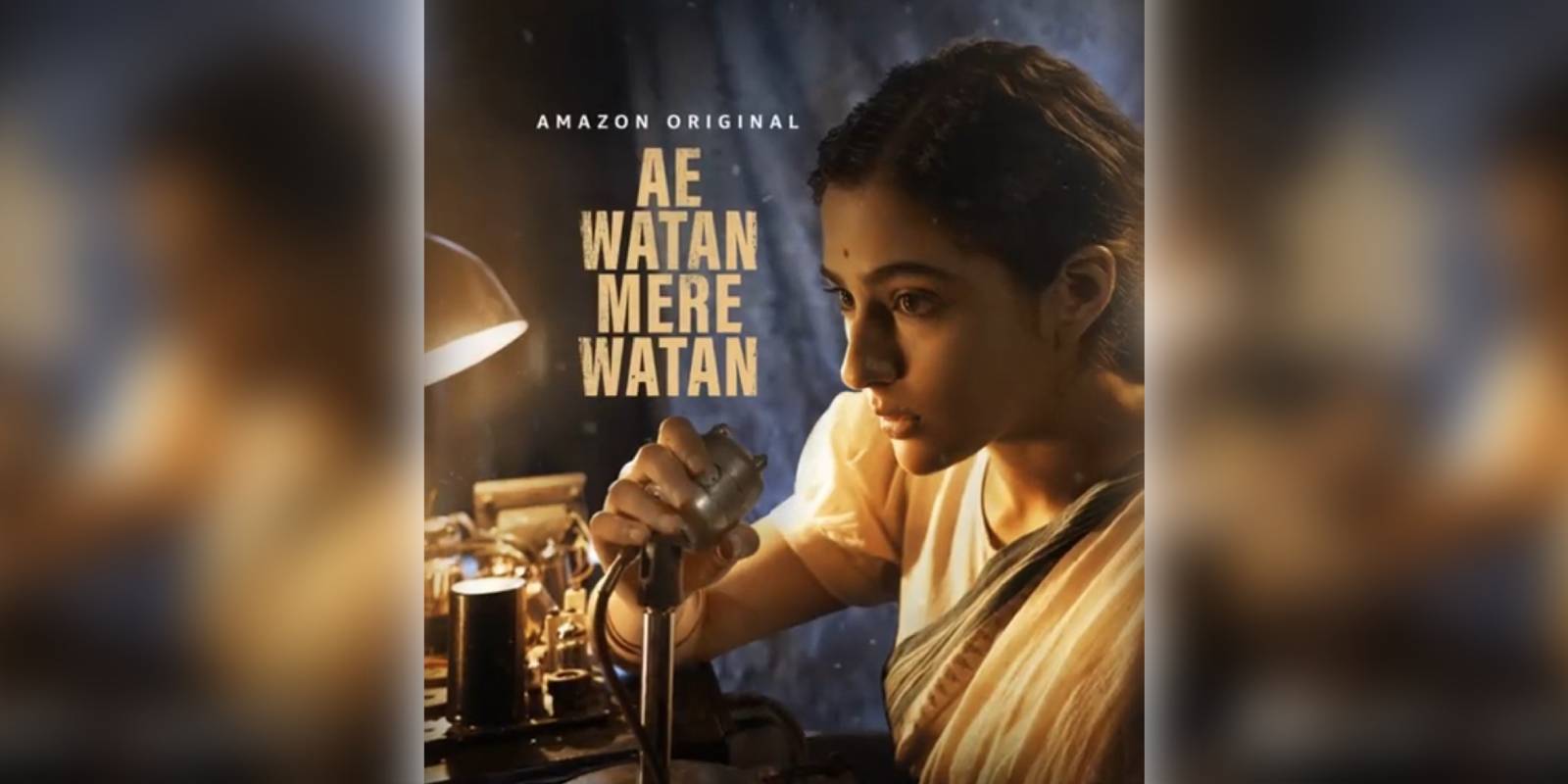
Kannan Iyers Ae Watan Mere Watan is about one such personality.
Synopsis
Usha Mehta (Sara Ali Khan) is a big devotee of Mahatma Gandhi.
Her father Hariprasad Mehta (Sachin Kedakar) is a judge working for the British regime. Neither he approves of his daughter’s rebellious nature nor Usha likes the ways of her father.
Things take a dramatic turn when Mahatma Gandhi and some more leaders are imprisoned during the Quit India Movement.
The British have complete control over the media. The radio, in particular, becomes a medium to divide the nation by spreading misinformation.
In retaliation, Usha and her fellow revolutionaries launch a radio channel — Congress Radio.
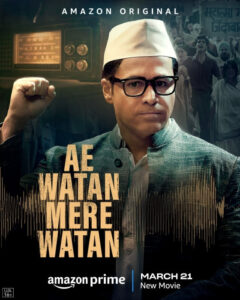
The Congress Radio becomes an instant hit; it catches the attention of Ram Manohar Lohia (Emraan Hashmi).
Ram Manohar Lohia was a pre-independence leader who managed not to get caught by the British.
Of course, this Congress Radio also comes under the notice of the British and they decide to track down the people behind this radio channel.
The rest of the story is about how Usha and her comrades fight to keep the radio alive and the role of Ram Manohar Lohia in this.
Back in 1942
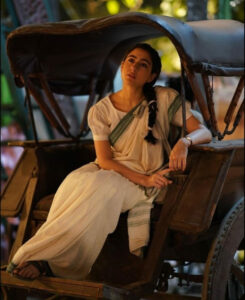
Sara Ali Khan on the sets of ‘Ae Watan Mere Watan’. (X)
A strong aspect of Ae Watan Mere Watan is how Kannan Iyer has recreated the pre-independence era.
The production design and cinematography, in particular, deserve praise for a job well done.
The costumes along with the architecture of buildings etc are spot on.
Usha’s dynamics with her father Hariprasad give the film some of its best moments — whether it is the scenes of playful innocence in her childhood like the one where Usha is watching Serbian birds flying in the sky and talks about wanting to have wings, or the later portions where the father and daughter have heated arguments given their different ideologies.
The scene where Hariprasad writes a letter to his daughter after Usha is jailed has been wonderfully written and performed.
Another track which deserves a mention is that of Sparsh Srivastava’s Fahad. Fahad suffers from polio but this physical disability never comes in the way of his zeal.
Inconsistent writing
There are two major issues with Ae Watan Mere Watan. One is the lack of more impactful writing by Darab Farooqui and Kannan Iyer.
The ineffective writing is particularly reflected in the love story between Usha and Abhay Varma’s character Kaushik.
Kaushik is not just a comrade but loves Usha. However, this aspect never comes out strong.
Another example of weak writing comes in the portions of Usha using a transmitter and the radio for the first time. We are never shown how Usha learns to use these things.
Compare this to the scenes of Alia’s Sehmat in Raazi (2018), the difference is as clear as day and light, both in terms of staging and acting performance.
Music and background score are of great importance for a film like this. But the movie is a big letdown in that area, too. None of the songs including the title track register.
Performances
Emraan Hashmi in ‘Ae Watan Mere Watan’. (X)
Sparsh Srivastava shows that his terrific performance in Laaptaa Ladies(2024) was no fluke. He portrays the fighting spirit of Fahad in a heart-touching manner.
Emraan Hashmi, as Manohar Lohia, makes a late entry but makes a striking impact. The actor also gets some impactful dialogue which he nails. For instance, there is a scene in a dark room.
A person is trying to generate light by using matchsticks but the matchsticks are getting doused.
You have the following dialogue by Manohar Lohia. “Chahe Kitni bhi teeliyan bujh jayein, hamaare seene ki aag kabhi nahi bujheg,” (No matter how many matchsticks get doused, the fire in our hearts will always remain.)
As Usha Mehta, Sara Ali Khan is like a fish out of water. The actor is earnest but her shrill dialogue delivery annoys the viewers, big time. She is unable to bring the required conviction.
The British characters are, of course, your usual stereotypes and they leave zero impact.
Particularly irritating to watch is Alex O ‘Niel as the antagonist who is given the responsibility of apprehending Usha and co.
Final take
To conclude an unsung hero like Usha Mehta deserved a far better movie based on her life.
Love stories always make for a great watch, irrespective of their format. They make your heart skip even if you are not a romantic, at heart.
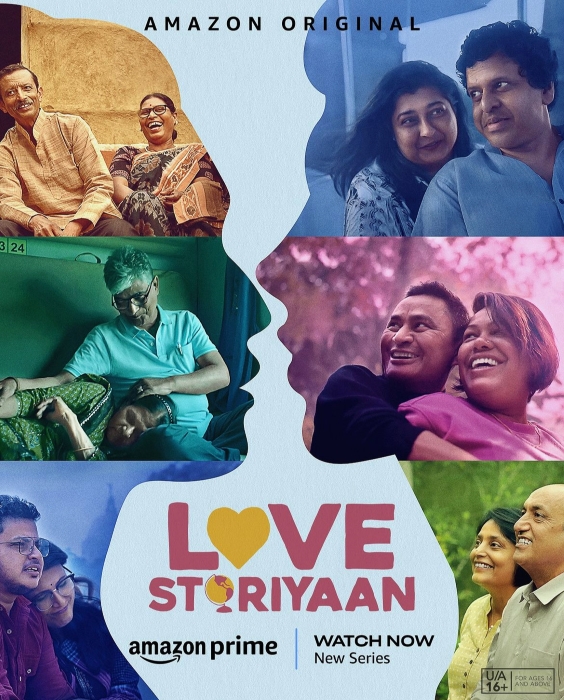
The basis of Love Storiyaan are the stories featured in India Love Project, an initiative by journalists Niloufer Venkatraman, Priya Ramani, and Samar Halarnkar.
Through the six episodes, directors Hardik Mehta, Vivek Soni, and Collin D’ Cuha, among others, touch upon various social and political constructs that hinder love.
The Love Storiyaan
The first story, “An Unsuitable Girl” (an interesting spin on Karan Johar’s “An Unsuitable Boy”), focuses on a Malayali man and a 40-year-old Punjab writer who is also a divorcee.
Hardik Mehta directed it.
The second story, “Love in the Air”, is about Shillong-based radio jockeys Nicholas J Kharnami and Rajan K Chettri.
The last four stories are more political in nature.
For example, Shazia Iqbal’s “Homecoming” is about a Kolkata-based couple who fell in love at the height of the Bangladesh Liberation Movement in 1971.
The fourth is “Raah Sangharsh Ki”, directed by Akshat Indikar. The political aspect comes out even more strongly in this tale of an inter-caste marriage between Brahmin IIT graduate Rahul Banerjee and Dalit girl Subhadra Khaperde.
They meet at the demonstration of Narmada Bachao Andolan.
The fifth one is “Faasley”. Director Archana Phadke focuses on the love between a Malayali woman and an Afghan man. They meet at a college in Russia and eventually end up together.
A situation arises when the woman moves to war-torn Afghanistan. This short talks about numerous challenges; one of the difficulties involves making ends meet in a war-torn Afghanistan.
Lastly, there is “Love Beyond Labels”. It is about the first transgender couple who got married in West Bengal.
Director Collin D’Cuha showcases their journey from seeking help to creating history.
Analysis
There is a template that these six episodes follow.
We begin with the couples in the present day. From here, it is about how they met and fell in love.
At times, there are old pictures, videos, and dramatised recreations. There is nothing per se wrong with this template, but the recreations do not have the same impact as the real-life couples talking about their love and the hurdles they overcame.
Keeping aside this aspect and the shaky staging at places, the directors have done a brilliant job of capturing the emotional core. They are helped by heartfelt narrations.
All the stories have their high points. For example, the first one has an adorable Malayali man. His scenes of trying to build a connection with the kids of his partner have a lot of warmth.
‘Love Storiyaan’ docu-series is streaming on Amazon Prime Video. (X)
Helping him in this relationship are two dogs who play an important role. Dog lovers are going to have a feast.
My favourite segment of this docu-series is “Raah Sangharsh Ki”.
The love story between a Brahmin man and a Dalit activist has some hard-hitting moments. The scenes of Subhadra, in particular, stand out; like the one where she talks about casteism.
There are some strong moments of sarcastic humour too that raise chuckles. The viewers clearly understand that Akshat Indikar is in awe of Subhadra’s fearlessness.
In “Faasley”, Archana Phadke does a good job of recreating the war-torn Afghanistan.
The narration of falling in love with the common interest of Bollywood movies brings a smile to the viewer’s face.
There are also some bits where the woman talks about the large Afghan family of her husband and how they jelled with her, thus making her overcome the initial awkwardness.
Collin D’ Cunha’s “Love Beyond Labels” is a fitting end to this web show.
The director intermingles the concepts of sexuality and gender with ease. This is one of my other favourite segments.
The couple coming to terms with their bodies have some impactful dialogues.
Verdict
Love Storiyaan is a treat for those who like intimate love stories. This celebration of love should be on your watchlist. The docu-series is streaming on Amazon Prime Video.
The director subverts some of his own themes from his previous films; a case in point being how fear is looked upon as respect in our culture.
Karan Johar’s Rocky Aur Rani Ki Prem Kahaani is everything that you expect from the filmmaker. There are larger-than-life sets and exquisite costumes among other things.
At the same time, the director subverts some of his own themes from his previous films; a case in point being how fear is looked upon as respect in our culture.
The film also makes a strong case for inclusivity through Tota Roy Chowdhury’s character who loves Kathak which is looked upon as a female dance form. It also makes a strong case for inclusivity between two vastly different cultures — Punjabi and Bengali.
Synopsis
Rocky Aur Rani ki Prem Kahaani begins with the introduction of Rocky and Rani (Ranveer Singh and Alia Bhatt respectively).
Rocky is introduced through a dance number where he is surrounded by many women, including Janhvi Kapoor, Sara Ali Khan, and Ananya Pandey (in special appearances).
He is dancing his heart out; but as soon as his grandmother Dhanalakshmi (Jaya Bachchan) appears, he scampers away because he is afraid of her and also his father.
Dhanalakshmi is the owner of a sweet shop — Dhanalakshmi Group. Rocky is the future heir to this business venture.
After the introduction of Ranveer, we move to Alia Bhatt’s Rani Chatterjee. She is introduced as this firebrand journalist who isn’t afraid to take on the Jugular.
The viewers see her grilling a minister about the rising rape cases by uttering a powerful dialogue: “Nazare Kharab Aapki Parde Kare Hum” (You ever tease us and we have to hide behind the curtains).
This sets the base for the drama to follow.
Rocky’s grandfather Kanwal (Dharmendra) is bedridden most of the time because of paralysis. He suffers from memory loss, too.
He has half picture of a woman in one of his books and Rocky believes that this woman might be the key to his grandfather regaining his memory.
The woman turns out to be Rani Chatterjee’s grandmother Jamini Chatterjee (Shabana Azmi). She is a cultural icon known among her intellectual gatherings.
Rocky arranges a meeting between his grandfather and Jamini through Rani.
Real kahaani
Rani initially treats him in a patronising way. But after some flirtation and through some old Hindi songs, they both fall for each other.
Rani isn’t sure about getting into a relationship with Rocky, given the many differences. But she eventually gives in.
However, things are far from easy as both families are contrastingly different from each other.
While the Chatterjees are woke, the Randhawas are as rigid as you get.
Taking the Telugu film Bommarillu (2006) route, the couple decides to go for a swap. Rani starts living with the Randhawas and Rocky with the Chatterjees.
Rani initially treats him in a patronising way. But after some flirtation and through some old Hindi songs, they both fall for each other.
Rani isn’t sure about getting into a relationship with Rocky, given the many differences. But she eventually gives in.
However, things are far from easy as both families are contrastingly different from each other.
While the Chatterjees are woke, the Randhawas are as rigid as you get.
Taking the Telugu film Bommarillu (2006) route, the couple decides to go for a swap. Rani starts living with the Randhawas and Rocky with the Chatterjees.
Rani faces severe opposition from Dhanalakshmi as she doesn’t like her firebrand nature. on the other hand, Rocky faces cultural issues. In a hilarious scene, he thinks that Rabindranath Tagore is Rani’s grandfather because of his long beard.
Whiff of nostalgia
The best part of Rocky Aur Rani Ki Prem Kahaani is how the director uses old Hindi songs at important junctures.
For example, Dharmendra sings “Abhi Na Jao Chod Ke” for the first time when his character regains his memory.
Some of the other songs include “Yeh Shaam Mastani“, “O Saathi Chal“, and “Do Dil Mil Rahe Hai“. These old songs are a character in itself.
However, the best usage has to be “Dola Re Dola” from Sanjay Leela Bhansali’s Devdas (2002). The song starts off with Tota Roy Chowdhury performing in Durga Puja.
Ranveer’s Rocky joins him much to the delight of Alia Bhatt’s Rani and to the horror of Jaya Bachchan. Here the director is clearly subverting gender stereotypes.
Alia and Ranveer hold the fort
What also works for Rocky Aur Rani Ki Prem Kahaani is how Ranveer and Alia play off each other’s energies. Their contrasting personalities work for the film.
Ranveer Singh as Rocky brings the house down with his faulty English and uninhibited performance. The actor equally shines in the scenes showcasing Rocky’s fragile side.
The best example is the emotional moment that he shares with Alia’s father Chandon Chatterjee (Tota Roy Chowdary).
Alia Bhatt plays the firebrand journalist with the finesse that you expect from her. She more than holds her own opposite the veteran actors. She is first-rate in the dramatic bits like the showdown that happens between her and Rocky post the “Dhindora” song.
Veterans steal the show
Another thing that works for the film is the bonding between Dharmendra and Shabana Azmi. Their scenes bring a smile to the viewer’s face.
Dharmendra doesn’t have many dialogues, but the actor is still quite good. Shabana Azmi is a picture of grace and poise. Some of her dialogues are truly wonderful.
For instance, there is a scene where Jamini opens up about why she fell in love with Kanwal and how she doesn’t regret it.
Jamini also adds that she got more love from Kanwal in just seven days than she got from her husband in their entire marriage. Further, she talks about how her grandfather wasn’t as polished as Rani thinks him to be.
Tota Roy Chowdhury is in a wonderful form as the man who loves Kathak and takes pride in being a dancer. There is a heart-touching scene where he talks about how he was the only male student in his dance class.
Jaya Bachchan as Dhanalakshmi is more or less a personification of all patriarchal characters, including her husband. She seems to have taken revenge on behalf of all the women characters who have been subjugated by them — Sweet Vengence.
Technical crafts
Pritam’s music isn’t exactly a blockbuster but still, it works on the big screen. “Dhindora Baje Re” and “Ve Kamleya” are easily the best of the lot.
“Dhindora Baje Re” is further enhanced by the intense scene which precedes the song.
“What Jhumka” makes for a perfect Sangeet number. Alia’s dance moves in sarees particularly stand out.
The cinematography by Manush Nandan is appropriately glossy. He captures the wide canvas of the film well through his lens. Having said that, for some, the canvas may come across as too glossy.
Final take
Rocky Aur Rani Ki Prem Kahaani does remind you of 2 States (2014) and Bommarillu. However, this cultural and family clash is hugely enjoyable if you buy into Karan Johar’s world.