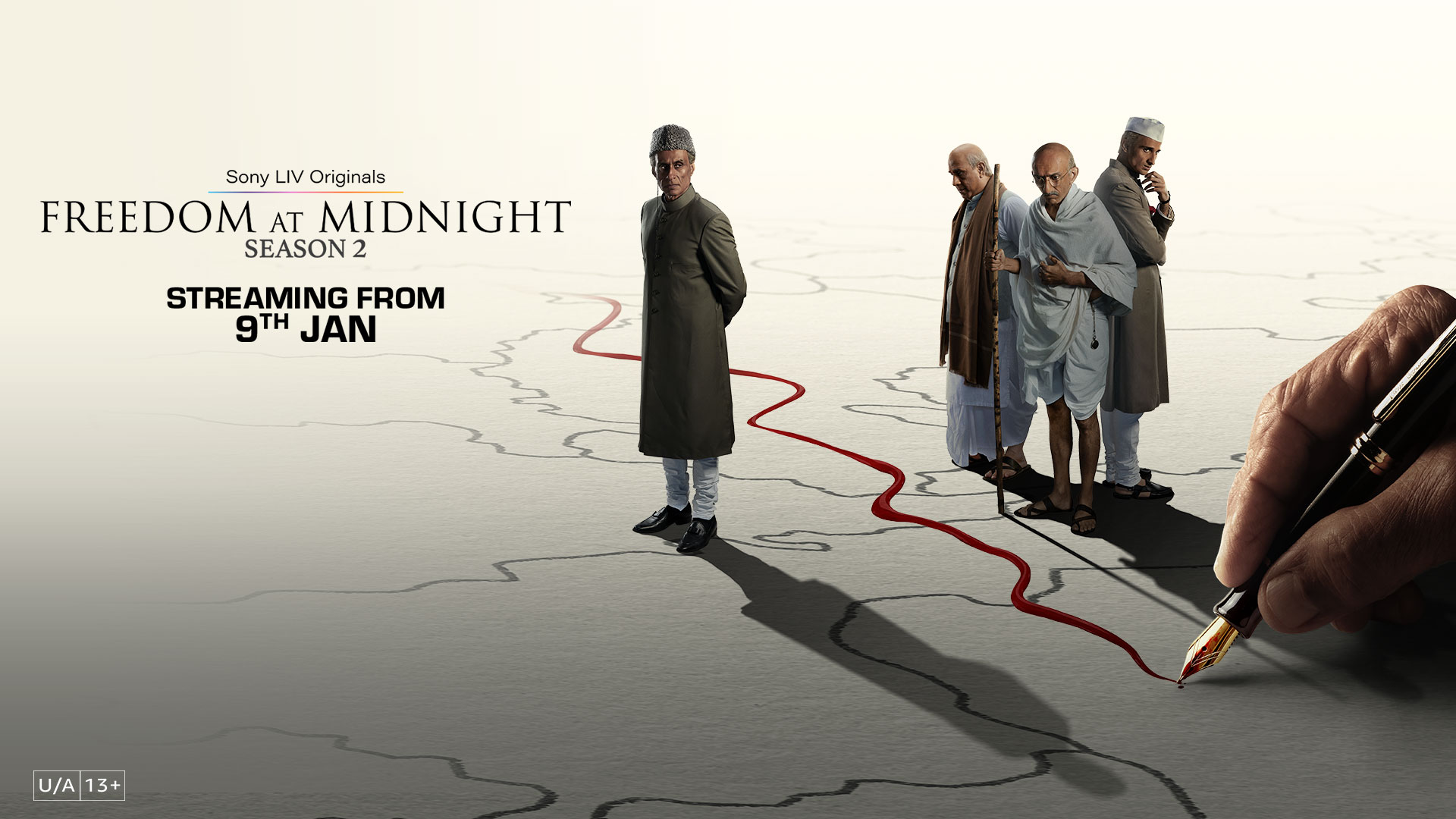
Freedom At Midnight Season 2: An introspective history lesson on partitions aftermath

Nikhil Advani along his writers give an important reminder on the very foundation of our constitution. The consequences of partition felt even today is depicted in a hard-hitting manner. The stellar cast led by Siddhant Gupta is top notch

Starcast: Siddhant Gupta, Rajendra Chawla, Chirag Vohra, Arif Zakaria Luke MC Gibney and others

Genre: Historical drama

Director and creator: Nikhil Advani

Writers: Divy Nidhi Sharma, Revantha Sarabhai etc

Producers: Nikhil Advani and Madhu Bojwani

Production houses: Studio Next &Emmay Entertainment

Music: Ashutosh Patak

Cinematography: Malay Prakash

No of episodes: 7

Streaming site: SonyLiv

There is a very poignant moment in Freedom At Midnight season 2 when Chirag Vohra’s Mahatma Gandhi expresses his anguish over divided India. It goes like this “How you divide pain soaked into the soil? How do you divide regret?”. This is one of the many introspective moments in this solid follow up. The second season takes a deep dive into the human paradox of freedom. As a nation we were free on paper with new filled hopes: but the triumph of freedom came with a huge cost something which we need to remember as a nation especially in today’s politically divisive environment.
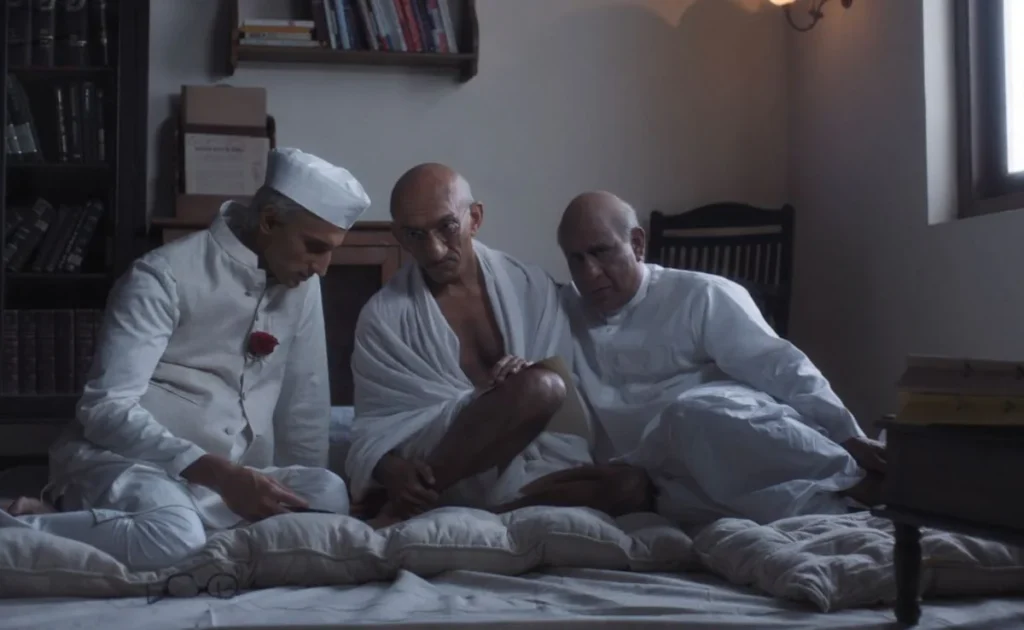
For those who haven’t seen season 1 this web series is based on a significant novel of the same name. This elaborately detailed work was written by Larry Collins and Dominquie Lapierre. It was centered around partition with the complex scenarios faced by Jawaharlal Nehru, Sardar Vallabai Patel and of course Mahatma Gandhi among others. Nikhil Advani did a fantastic job in portraying the leaders with their contradictions.

Season 2 also follows this blueprint. This time around the focus is on the division of India leading to terrible consequences. The loss of humanity with friends becoming foes and the bloodbath that followed forms a major part of Freedom At Midnight Season 2. The series also looks at the mismanagement from both India and Pakistan as the scenarios quickly spiraled out of control.

A strong aspect of Freedom At Midnight Season 2 is how it never romanticizes independence. Nikhil Advani doesn’t shy away from showing the disturbing reality. How the nation became fragile with huge communal and religious divide comes out in a stark manner.

There is a scene where Siddhant Gupta’s Jawaharlal Nehru says in this new India nothing will be decided on the basis of religion. Ek azaad, secular Hindustan ki pehchan sirf insaaniyat hogi”. This is followed by Sardar Vallabhai Patel looking at Nehru with hope as well as unspoken fears.

This foundation of secular Hindustan is something that we have forgotten thanks to the current political environment and certain films which have aided this. Mention must also be made of how the series depicts the character of Radcliffe the man responsible for drawing the line. There are scenes of Radcliffe pleading with Mountbatten on how he knows nothing about the geography and the people of India. But Mountbatten is hell bent that Radcliffe should be the one and also there shouldn’t be much delay. It’s hard to not feel for the situation which Radcliffe finds himself in.

The moments of conflict between Jawaharlal Nehru and Sardar Vallabai Patel has also come out in an excellent manner. Both Nehru and Vallabai Patel have different ideas regarding the running of governance leading to some showdowns. In spite of the bitter arguments between the two it never takes a venomous side. There is a moment post Gandhi’s death where Vallabai Patel faces an accusation and Jawharlal Nehru stands up for the senior statesmen.

Chirag Vohra as Gandhi is another highlight of the second season. The questions that he asks about the consequences of partition and his firm belief in the method of Ahimsa gives the show some of its best moments.

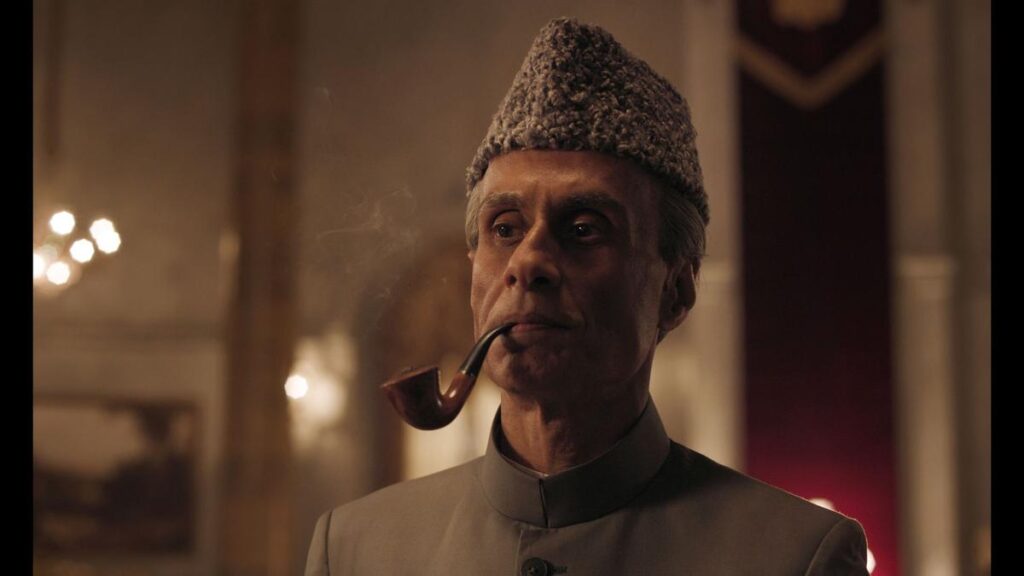
Arif Zakaria’s Jinnah is mostly a bitter person but even he too gets moments of humanness. The best example of this is his conversation with Jawaharlal Nehru on how the immense bloodshed was never his intention. There is a genuine regret in the voice. There is also an important portion when Jinnah has to leave Bombay post partition. His mood is very much cranky when seeing the house filled with half closed cartons. In an angry tone he asks the sister Fatima Jinnah (underutilized but effective Ira Dubey) on what the hell is happening. She replies that they are going home. There is a certain emptiness in the eyes of Jinnah brilliantly portrayed by Arif Zakaria.
Ashutosh Patak’s music like the first season is haunting here too. They perfectly encapsulate the human tragedy. The cinematography of Malay Prakash is first rate as well. He successfully brings alive the big scale on which the series has been mounted. There is a lived-in feel to the atmospherics.

On the performances front both Siddhant Gupta and Rajendra Sharma are top notch in their respective parts. They lead the acting department with their excellent performances. The talented Siddhant Gupta brings alive Nehru’s determination as well as portraying the internal and external conflicts with authenticity. Rajendra Sharma as the no nonsense Vallabai Patel brings in the required authority in the confrontation scenes with Siddhanth. At the same time, he aces the emotional scenes too. Mention must also be made of Abhishek Benarjee in an extended special appearance. He is both a victim and perpetrator of the riots. His confrontation scene with Chirag Vohra is an example of some solid acting.

Final word: Freedom At Midnight Season 2 is a much-needed history lesson, to learn from our past mistakes and not repeat.
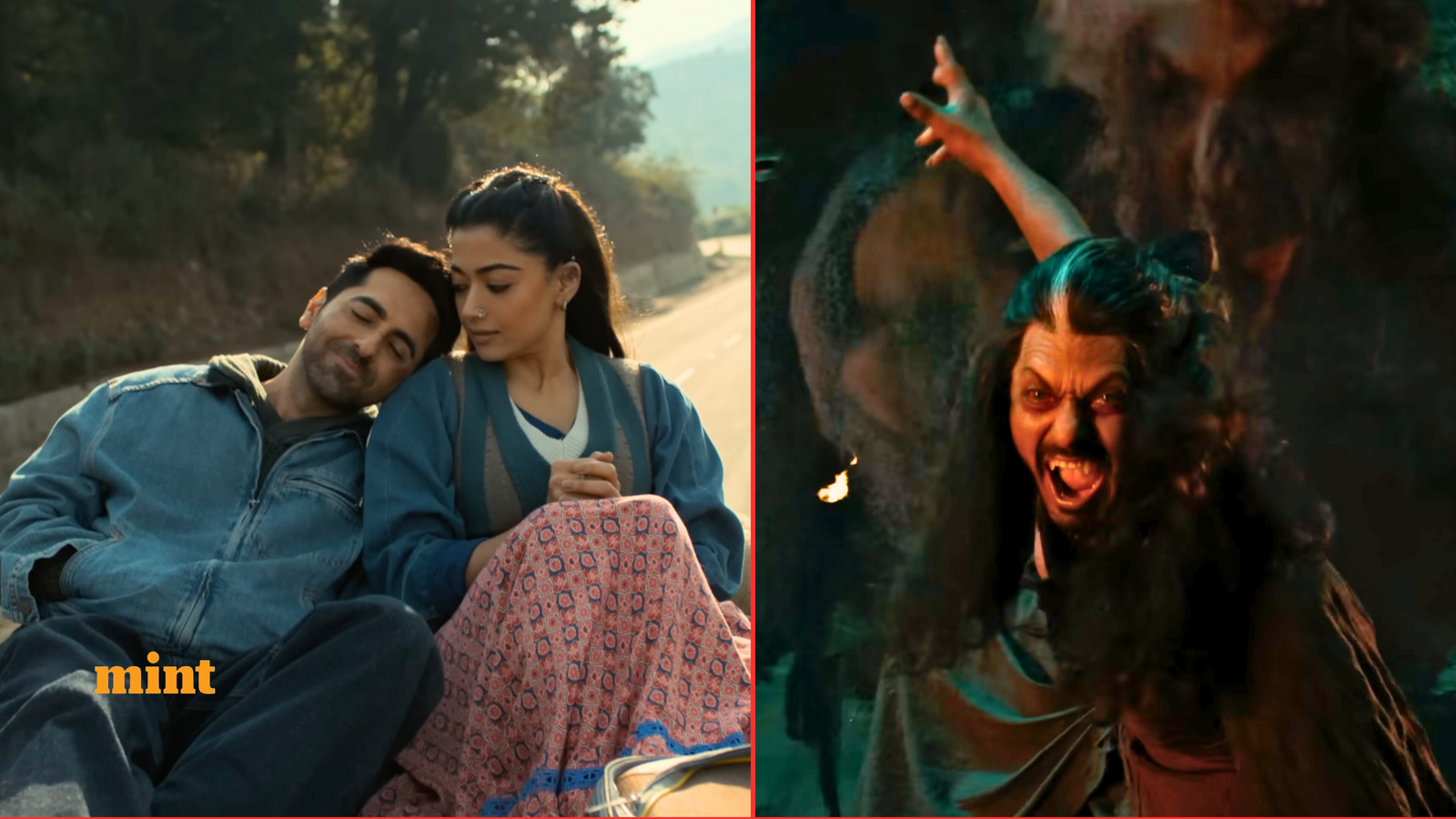
Thamma: Rashmika Mandanna steals the show in this gender bender

Director Aditya Sarpotdar for most part reverses the knight in shining armor trope with Rashmika’s character of Taraka/Tarika. The role has the perfect mix of vulnerability and fierceness in equal measure. Thamma is a welcome change from the usual Maddock horror comedy even though the concoction of scares and laughs doesn’t hit the high notes of the Stree movies. Ayushmann Khurrana also brings his usual finesse especially in the second half when his character is caught between two worlds

Starcast: Rashmika Mandanna, Ayushmann Khurrana, Paresh Rawal, Nawazuddin Siddiqui, Faisal Malik and others

Director: Aditya Sarpotdar

Writers: Niren Bhatt, Suresh Mathew and Arun Fulara

Producers: Dinesh Vijan and Aamir Kaushik

Production Company: Maddock Films

Cinematography: Saurabh Goswami

Music: Sachin Jigar

Running time: 2 hours and 29 minutes

Genre: Romance/horror

The horror comedy universe for Maddock has been its most successful business venture. The two Stree films along with Munjya have done fantastic numbers at the box office. Even Bhediya did fair business at the box office. This universe is expanding further with newer actors and fresh storylines. Thamma is the latest addition with crossovers from the movies mentioned above. Thamma varies from the previous films of this space as the beating heart is the love story between two people belonging to vastly different worlds. At the same time there is also a set formula in its treatment of horror with laugh out moments. This two way approach doesn’t always work nevertheless Thamma makes for an interesting watch.

Thamma is essentially the journey of two lovers having to battle many odds. Ayushmann Khurrana is a small-time reporter Alok Goyal. While roaming in the forest Alok is confronted with an animal. A scared Alok runs away and his path crosses with Rashmika Mandanna’s Taraka/Tarika. Taraka is a mysterious woman belonging to a mythical world. A situation comes when Alok is offered as a sacrifice to Nawazuddin Siddqui’s Yakshashan. Yakshashan was once upon a time a leader of the demi humans. Now he is a chained prisoner. Taraka breaks the rules of the tribe by following her heart. She saves Alok and runs away with him. This sets the clash between two opposing worlds.

A strong aspect of Thamma is the love story between Alok and Taraka. It does take a little to warm up but soon the romance gathers momentum. The sweet nature of Alok and how he falls in love with Taraka has been both well written and enacted. The revelation of who Taraka actually is and the origin story comes in at the right juncture. There is a reference to the horrific partition when Taraka talks about a group called betaals. This tribe follows a strict rule which is never kill humans and drink their blood. The reason is they consider the human blood to be poisonous. This happens after they come across a charade of dead bodies with people slaughtering each other in the mayhem of partition.

The biggest strength of Thamma though is the character design of Rashmika Mandanna’s Taraka coupled with her performance. Unlike the Stree movies Rashmika Mandanna here is much more than just a mysterious woman. For a large part of the film Rashmika is the protector of Alok fighting tooth and nail for her love. The character is both ferocious and also tender as the situation demands and Rashmika nails both these shades. The actress also gets to do some action like the sequence with a group of boys chasing Alok and her after a party. In spite of a slightly drunken state Taraka gives a sound beating to the guys.

Ayushmann too comes into his own when Alok turns into a Betaal himself. The actor does a wonderful job in conveying both the initial shock and also accepting the new identity. Paresh Rawal as the scared father raises some chuckles. At the same time the veteran actor also shines in the few emotional sequences. A special mention must be made of the sequence where he encourages Alok to not give up saying that he has accepted Taraka as his daughter in law. However, the reference to late Amrish Puri’s dialogue in DDLJ and an Ayushmann bava feels forced. Nawazuddin Siddqui’s character as the comic villain needed more depth in writing nevertheless Nawazuddin chews the scenery coming up with a wonderfully eccentric act. Faisal Malik as a betaal turned cop is also good.

The crossover characters have also been smartly integrated. Whether its Abhishek Benarjee from the Stree and the Bhediya movies or Satyraaj in Munjya. These roles aren’t confined to filers. They play an important role in connecting the dots. Varun Dhawan as Bhediya gets a roaring entry too. His fight sequence with Ayushmann has been wonderfully choreographed. Saurabh Goswami’s cinematography is of a very good order whether it’s the haunting wilderness or the more tender moments.

Sachin Jigar’s music falls significantly short of Stree 2. The special dance numbers stick out like a sore thumb. But the duo do redeem themselves with Tum Mere Na Hue and Rahien Na Rahien hum.

Final word: Thamma is an interesting addition to the growing Maddock horror universe. Inspite of some bumps the movie makes for an engaging watch.

Rana Naidu (Season2): A competent follow up led by an excellent cast

A poster of Rana Naidu Season 2

The toned down approach of season 2 does harm than good robbing the show of its zing, nevertheless the family dynamics make up for the shortcomings. Abhishek Banerjee as Jaffa gets the best arc, a sexual abuse survivor finding his voice and the actor absolutely nails it moving the viewers. The new entrants led by Arjun Rampal and Kriti Kharbanda make their presence amply felt too

Starcast: Rana Dagubbati, Venkatesh Dagubbati, Surveen Chawla, Sushant Singjh, Abhishek Banerjee, Arjun Rampal, Kriti Kharbanda, Dino Morea and others

Genre: Action/drama

Directors: Karan Anshuman and Suparn Verma

Writers: Karan Anshuman, Karan Gour, Vaibhav Vishal etc

Producer: Sunder Aron

Production house: Locomotive Global Production

Cinematography: John Schmidt

Music: Sangeet-Siddarth

No of episodes: 8

Streaming site: Netflix

For those who haven’t seen season one of Rana Naidu the story followed the journey of a fixer Rana (Rana Dagubbati). The job of Rana is to clean up the mess of his high profile clients. Rana goes about his job with utmost seriousness successfully solving their problems, at home though its a very different matter. Naga (an uninhibited Venkatesh Dagubbati) played the estranged father. He had gone to jail for a crime he didn’t commit coming out of a prison after a huge gap of fifteen years. Naga is desperate to fix his relationship with the sons for the other mistakes he has done. Sushant Singh and Abhishek Banerjee played the other two sons. The series was based on an English web series Ray Donavan.

Rana Naidu Season 1

At ten episodes Rana Naidu did feel a little long, specifically the use of swear words, at times it felt overdone although the same no holds barreled approach was a major USP of the show. Season 1 was an gripping drama about a twisted family giving a psychological insight into the different psyches of parents. Not surprisingly the shows bold nature had its share of praise and brickbats making Season 1 one of the most watched web series. Now you have Season 2 within a gap of two years. The affect of the brickbats is clearly visible in toning down of the content, this makes the show less interesting nevertheless season 2 has its share of pluses specifically the drama involving the three brothers and also the women characters.

Season 2 of Rana Naidu begins with the protagonist wanting to quit his fixer’s life. However the dream gets shattered due to his son’s kidnap. Rajat Kapoor plays billionaire Vikram Oberoi. He helps Rana in rescuing the child however this comes with a cost. Rana aligns himself with Vikram helping the daughter Alia Oberoi (Kriti Kharbanda) to acquire her own cricket team. Enter Arjun Rampal’s Rauf Bhai, Rauf Bhai has a history with Rana. He comes out of jail with a the support of politician OB Mahajan (Rajesh Jais). Rauf Bhai is filled with Vengeance. On personal front Rana’s wife Naina (Surveen Chawla) becomes emotionally distant. This is the storyline in brief as the web series moves along multiple threads.

A strong aspect of Season 2 are the human emotions whether it is the subplot of Abhishek Banerjee’s Jaffa overcoming the trauma of sexual abuse and finding the courage to fall in love or the crumbling marriage of Rana and Naina. The subplot of Abhishek Banerjee and Aditi Shetty’s Tasneem gives the show some of its best moments. The love story and Jaffa’s path to finding courage has been wonderfully integrated. There is a brilliant scene where Abhishek Banerjee let’s out a shout of joy after a love making session. How he breaks down revealing a crucial incident of his past to Tasneem hugging her has been brilliantly written and enacted. Abhishek Banerjee continues his super run of form delivering a fantastic act, he is truly one of the best actors that we have in the current lot.

Abhishek Banerjee and Aditi Shetty

Mention must also be made of the nuanced manner in which the directors have depicted the complexities of a troubled marriage. The portions between Rana and Surveen Chawla also pack an emotional punch. The ups and downs of a long marriage has come out in an impactful manner. Just like the first season Surveen Chawla’s Naina is no push over, Naina is a strong woman who isn’t afraid of pointing out her husband’s flaws and following her heart. Surveen plays the part with a lot of grace perfectly capturing the robust nature. In fact the main women characters in the show apart from Surveen have also been written with lot of care with different shades. A good example of this is Kriti Kharbanda in the role of an ambitious girl who would go to any lengths in taking over her father’s business. Kriti pulls off a pleasant surprise with her impactful performance, she embraces the grey shades with complete conviction. Aditi Shetty as Tasneem is also very good as the woman in charge of her life. There is a key portion between Aditi Shetty and Rana just before her and Jaffa’s wedding, Tasneem clearly tells Rana on how she loves Jaffa as much as he does and how she isn’t marrying for his social background. This scene is a perfect example of Tasneem’s feisty nature and Aditi Shetty does a swell job.

Arjun Rampal and Kriti Kharbanda

Season 2 also makes an interesting case study of different types of masculinity. Rana Dagubbati’s Rana is the more macho guy, Jaffa on the other hand is more sensitive. In case of Sushant Singh’s Tej he somewhere falls in between as an elder brother. He doesn’t approve of Rana and Naga Naidu’s ways but at the same time he also takes decisions which go against the core nature of his personality. Sushant Singh plays a key emotional anchor in a solid manner.

The series also dwells into vote bank politics and power struggles, how greed and power fuel shifting alliances with nothing good coming out of it for the characters.

Coming to the titular protagonists. Rana Dagubbati as Rana reprises his role with practiced ease. There isn’t much of an upgrade and often times a predictability creeps in how Rana manages to get out of tough situations. Nevertheless the actor’s charisma keeps the viewers invested. Much like the first season he strikes the perfect balance between brooding intensity and emotional vulnerability. Venkatesh Daggubati as Naga Naidu has a lot of fun in spite of the reduced screen time and less profanities. In spite of Naga Naidu’s flawed nature Venkatesh makes you care for the character’s desperation to reconcile with the sons. There is a brilliant scene between Venkatesh and Abhishek Banerjee where Jaffa asks Naga on how to become the best father. To this Venkatesh says to not do the mistakes which he did, its a heartwarming moment. Arjun Rampal effortlessly slips into the shoes of a Mumbaiya Gangster whether its the dialect or the overall body language. The actor effortlessly switches between a supposed messiah and a merciless villain. Rajat Kapoor as Oberoi lends a suave charm to his role of a millionaire with hidden closets. Lastly Dino Morea as the undercover cop falling in love with Naina also makes his presence amply felt.

Final word: Rana Naidu Season 2 is a perfect watch for admirers of dysfunctional and twisted families. The toned down approach becomes a roadblock for fans of first season nevertheless second season is still worth watching.

Stolen: A taut social thriller

Abhishek Banerjee in Stolen

Inspired from a true incident director Karan Tejpal presents a largely gripping and harrowing tale of the huge divide between the privileged and the poor. Stree and Vedaa actor Abhishek Banerjee once again proves his chameleon like ability in adapting to different roles, he knocks it out of the park as usual.

Starcast: Abhishek Banerjee, Shubham Vardan, Mia Mazeler and others

Genre: Thriller

Director: Karan Tejpal

Writer and producer: Gaurav Dhingra

Executive Producers: Kiran Rao, Anurag Kashyap and Vikramaditya Motwane

Production house: Jungle Book Studio

Running time: 1 hour and 55 minutes

Cinematography: Ishaan Ghosh

Streaming site: Amazon Prime

In structure Karan Tejpal’s Stolen shares more than one similarity with Navadeep Singh’s NH10. Just like that movie here too the urbane characters find themselves in a huge tangle, a world far removed from their comfortable lives. The two protagonists become the medium to explore a world which is far away from high rise buildings and the glittery urbane space. However Karan Tejpal gives Stolen its own distinct identity through two brothers who are as different as chalk and cheese. In spite of some rough edges Stolen for most part is largely engrossing drawing the viewers in.

Stolen begins at a small town railway station in Rajasthan. Gautam (Abhishek Banerjee) is waiting for his younger brother Raman (Shubam Vardan). Raman is coming in a train since he missed the flight. Next day there is an important family event, Gautam is desperate to return back home. However things don’t go according to plan and the reason for this is Jhumpa (Mia Mazeler). Jhumpa’s daughter is missing and Raman is briefly suspected by the police. Raman is cleared of the charges but the police ask the brothers to wait leading to several things. This is the story in brief.

A strong aspect of Stolen is the cinematography of Ishaan Ghosh. Ishaan Ghosh is very successful in capturing the gritty tone, the visuals have a lived in feel with the rusty atmospherics. Through his lens he presents an India that we don’t see in big budget mainstream movies. A major divide between the privileged and oppressed, a deep cynicism and an agony of those who aren’t blessed with the safety net. Ishaan Ghosh’s work also stands out in the tense chase sequences. Sure at times they do get repetitive still he does a first rate job in capturing the dreadful scenarios which both the brothers find themselves in.

Mention must also be made of the sibling dynamics. Abhishek Banerjee’s Gautam is the more corporate guy among the two trying to dissuade his brother from helping Jhumpa. Shubham Vardan’s Raman is the more considerate guy leading to an interesting clash of ideologies. At one point the contrast may across as too jarring but Karan Tejpal along with Gaurav Dhingra give a slight insight into why Raman connects with Jhumpa. In spite of different view points there is an undercurrent of love and affection too. The sibling dynamics makes the movie stand out from NH 1O also set in the same space.

Abhishek Banerjee and Shubham Vardan

Stolen is stuffed with numerous social issues like illegal surrogacy and the absolute lack of law and order. However at no point Stolen feels preachy, this is because of the thriller format. As viewers you are constantly tensed about what would be the fate of the three protagonists. It also helps that the movie has no unnecessary detours, no comic or romantic angle to slow down the proceedings.

Stolen also benefits immensely from its lead actors. Abhishek Banerjee shows a masterclass in acting. The way he portrays the different shades of Gautam effortlessly showcasing the eventual transformation is a sheer delight to watch. With this movie he once proves his capability in adapting to different roles. Shubham Vardan as Raman also lends solid support proving to be a perfect foil for Abhishek Banerjee, both the actors feed of each other wonderfully. As Jhumpa Mia Maezeler is very effective too bringing in a raw intensity without going melodramatic.

Mia Maezeler as Jhumpa

Although tight for most part Stolen does suffer from a couple of mishaps. One of them is a slightly repetitive nature of the brothers being chased. Also towards the end the movie does stray somewhat, a tighter edit in some portions would have definitely helped.

Final word: Stolen is a must watch for those seeking stories beyond entertainment.

Nikhil Advani: From romantic dramas to gripping social thrillers

Starting from the romantic dramas Kal Ho Naa Hoo (2024) and Salaam-e-Ishq (2007) Nikhil Advani has created a distinct space for himself both on the big screen and also in the OTT space.

In a career spanning from 2003 to now, Nikhil Advani has donned various hats as a director, producer, writer and also creator for web series like the two seasons of Rocket Boys (2022, 2024) and The Empire (2021).

However, over the years, Nikhil Advani has moved from light-hearted romantic films to gritty tales about society, and history.

For example, the 2013 movie D-Day is a significant milestone in his career. At the box office, it was an average grosser but the critical reviews were very good.

Although an espionage thriller with all the nationalistic elements, the movie was nevertheless gripping showcasing a different facet of Nikhil Advani. The trials and tribulations faced by the four undercover agents in capturing the late Rishi Kapoor’s character modelled on Dawood Ibrahim packed an emotional punch.

Another TV show POW Bandi Yudk Ke was also directed by Nikhil Advani. The show based on two prisoners of war was taken off the air due to low viewership despite critical acclaim.

Nikhil Advani has aced many genres, including action thrillers like Batla House, sports dramas like Patiala House, and films on social issues like Vedaa. He has also dabbled in the OTT space, giving series like the recent Freedom At Midnight, and Mumbai Diaries Season 1 and 2.

Now let’s get into a little more detail about a few other projects that have been helmed by Nikhil Advani, showcasing how much he has grown as a director.

Batla House

John Abraham in Batla House
John Abraham in ‘Batla House’. (Instagram)

In 2019, Nikhil Advani directed the action thriller Batla House based on the real-life police officer Sanjeev Kumar Yadav. The film focused on the controversial encounter showcasing Sanjeev’s struggles in proving both the authenticity of it and also dealing with post-traumatic stress disorder.

The movie isn’t entirely objective in its approach more or less siding with Sanjeev Kumar. Still, it was a taut film keeping the viewers engaged. Also, Nikhil Advani’s depiction of PTSD deserves major appreciation.

Nikhil Advani also pushed John Abraham beyond his action star image. On numerous occasions, the viewers see John battling with his inner demons, a particular mention must be made of the portions reminiscent of William Shakespeare’s play Lady Macbeth. Much like that play, here too John’s character is often haunted giving a much-needed emotional heft.

Vedaa

Sharvari Wagh in Vedaa
Sharvari Wagh in ‘Vedaa’. (X)

Vedaa (2024) headlined by Sharvari Wagh is flawed yet a gritty social drama about caste-based violence and discrimination. The movie was based on real-life events and Nikhil Advani did a fantastic job in showcasing the struggles of Dalits in climbing up the social ladder even after so many years of independence.

Vedaa deserved to be much more at the box office given its merits but unfortunately lost the box office battle with Amar Kaushik’s mega-blockbuster Stree 2.

A very strong point of Vedaa was how Nikhil Advani developed the character of its titular protagonist portrayed by the brilliant Sharvari Wagh. The character of Vedaa starts off as a timid girl but gradually she grows in confidence becoming a strong rebel refusing to bow down. This transition was wonderfully depicted by Nikhil Advani aided by Sharvari who didn’t miss a single beat.

Apart from Sharvari’s towering act, Nikhil Advani also created a strong antagonist in the form of Abhishek Banerjee’s Jitender Pratap Singh. As the man who firmly believes that one shouldn’t toy with the established caste system, Abhishek simply knocked it out of the park showcasing his immense range.

Mumbai Diaries Season 1 and 2

The two seasons of Mumbai Diaries directed and created by Nikhil Advani focused on two highly distressing real-life incidents.

A poster of the series Mumbai Diaries
A poster of the series ‘Mumbai Diaries’. (Instagram)

The first one was about the horrors of 26/11. Nikhil Advani along with Nikhil Gonsalves focused their lens on how medical professionals like doctors and nurses were pushed to their limits in a crowded hospital which is low on resources. The web series was also a tribute to the spirit of Mumbaikars.

A strong aspect of the first season was how it never portrayed the doctors as superheroes. All of them come with their own inner demons and have their backs to the wall both professionally and personally.

Nikhil Advani also did a very fine job in not pitting one religion or nation against one another. It was more about terror versus humanity. The strong acting performances led by Mohit Raina and Konkana Sen Sharma were another highlight of both seasons.

The second season of Mumbai Diaries focused on the rage of floods which had submerged the Mumbai city. Much like the first season this time too the focus was equally on both the doctors fighting against the unfavourable weather and their personal demons along with the fighting spirit of Mumbaikars.

A strong aspect of Season 2 was how Nikhil Advani along with his writers built a palpable sense of urgency. The viewers feel an emotional connection with the characters of Mohit Raina and Konkana Sharma among others.

The flood scenes were also authentically recreated, and the production design of Priya Suhass was simply top-notch.

Freedom At Midnight

Freedom At Might co-written by Dominique Lapierre and Larry Collins is a very difficult novel to adopt given the sheer vastness of the political turmoil.

A still from the series Freedom At Midnight
A still from the series ‘Freedom At Midnight’. (Instagram)

In today’s political environment numerous filmmakers are seen playing to the gallery to please the ruling party but Nikhil Advani’s adaptation of the vast novel stands out for not just the brilliant writing but also the way in which he never takes sides. He let the audiences make their own judgements by placing them amidst the powerful leaders who had fought for India’s independence.

The dynamics between Gandhi and Nehru were a treat to watch in particular. Gandhi’s unwavering idealism and Nehru’s internal struggle leading to discord were both wonderfully written and enacted. The series was also technically top-notch particularly the portions featuring the riot-torn neighbourhoods.

The show moves the viewers on many occasions like the scenes of religious discord leading to communal violence. Cannot wait to see how the second season unfolds.

Apart from the ones mentioned above a couple of other web series worth mentioning here are Rocket Boys and The Empire. Nikhil Advani didn’t direct either of them but he was still creatively involved. Both these shows further demonstrated Nikhil Advani’s versatility.

This is all about the evolution of Nikhil Advani as a filmmaker. Here’s hoping that he continues to do stellar work.

(Edited by Sumavarsha)

Vedaa: A flawed yet a gritty social drama that touches upon caste-based violence and discrimination

In spite of a bloated second half director Nikhil Advani delivers a hard-hitting tale based on real events. Sharvari Wagh has delivered her career best performance.

  • Starcast: Sharvari Wagh, John Abraham, Abhishek Banerjee, Ashish Vidyarthi and others special appearances (Tammanna Bhatia and Mouni Roy)
  • Director: Nikhil Advani
  • Writer: Assem Arora
  • Producers: John Abraham, Monisha Advani and others
  • Production Companies: Zee Studios, Emmay Entertainment and JA Entertainment
  • Music: Ammal Malik and Manan Bhardwaj
  • Cinematography: Malay Prakash
  • Running time: 2 hours and 36 minutes

Nikhil Advani has had a very interesting filmography starting from the romantic dramas Kal Ho Na Ho and Salaam e Ishq. He shifted gears successfully with the film D-Day a well-made action thriller. Nikhil further proved his versatility on OTT with the two seasons of Mumbai Diaries. Of course, the director has also fallen flat on his face with certain movies but there is no denying that Nikhil is a fascinating filmmaker. His latest directorial is based on some real-life incidents dwelling into the oppression of lower caste. Vedaa alternates between a social drama and a high-octane action thriller with dollops of blood. This mix doesn’t always work particularly the long-drawn climax however there is no denying that Nikhil Advani makes an important statement.

Vedaa alternates between a social drama and a high-octane action thriller

The story of Vedaa deals with an ambitious Dalit girl played by Sharvari Wagh. Vedaa aspires to be a boxer breaking the boundary of social stigma. However, that is easier said than done given her family background and the upper caste bigots. Abhishek Banerjee in his second release of the week plays an unhinged antagonist who firmly believes that one cannot toy with the firmly established caste system. The actor is simply phenomenal which I will elaborate on later. John Abaraham on the other hand is a typical hot headed solider who faces court martial for his rebellious streak. His character Abhimanyu comes to the village of Sharvari, his father-in-law stays here. Abhimanyu tries to lead a normal civilian life but an honor killing incident changes everything. Vedaa’s brother falls in love with an upper caste girl, she also reciprocates but expectedly there is no happy ending. Abhimanyu becomes the guiding force of Vedaa echoing Mahabharata.

Sharvari Wagh’s Vedaa aspires to be a boxer breaking free from social stigma

A strong aspect of Vedaa is how Nikhil Advani has showcased the humiliation that Dalits go through. Even after so many years of independence the social and economic conditions of Dalits leave a lot to be desired. There are some hugely disturbing scenes like the one where Vedaa is assaulted by upper caste hooligans, but she is not a position to fight back. There is also a scene where lower caste men rub their noses on the ground. Of course, the treatment is more in your in your face unlike Article 15 that was more nuanced but still these moments leave a strong impact.

Vedaa also benefits from the strong characterization of the central role. Sharvari Wagh starts off as a timid girl but gradually the character grows in confidence becoming a strong rebel. A scene which deserves a particular mention is Vedaa’s confrontation scene with the younger brother of Abhishek Banerjee’s character. A very violent fight ensues with Vedaa taking out all of her pent-up frustration. Sharvari proves to be a worthy action heroine, on a side note cannot wait to see her kick some serious ass with Alia Bhatt in Alpha.

Abhishek Banerjee proves himself as a supremely talented artist with his portrayal of Jitender Pratap Singh. The actor does a wonderful job in portraying an intimidating villain. He gives John Abaraham more than a tough fight in the hand-to-hand combat sequences. It is hard to believe that this is the same man who played the role of Jana in Stree 2. He is that good.

Abhishek Banerjee proves himself to be a supremely talented artist

The second half of Vedaa has numerous car chases and action sequences. These sequences offer a thrilling ride for the viewers. There is constant tension about how Vedaa is going to emerge victorious from all this. However, it has to be said that the fights become too elongated as well and the climax in particular becomes a never-ending saga. John Abraham’s Abhimanyu Kanwar is pumped with numerous bullets but still he stands up. The gritty texture of the first half is in complete odds with these scenes. Similarly, Abhishek Banerjee is seen walking normally even after being shot in the stomach.

Talking about John Abraham the actors hulk like presence goes completely with the role. Abhimanyu is a man of few words letting his fists doing the talk. However, John’s performance feels like a letdown in comparison to his character of Jim in Pathaan.

Vedaa’s music also leaves something to be desired. The only song that makes an impression is Arjit Singh’s ‘Zaroorat Se Zyada’. Malay Prakash’s cinematography coupled with Manoj Sikka’s sound design deserves a major appreciation. The hinterland of Rajasthan has a lived-in feel.

Vedaa in spite of some flaws is thought provoking making the viewers root for the titular character.

Stree 2 Sarkate Ka Aatank: A rollicking sequel with the right mixture of scares and humor

Apart from the horror and scares director Aamir Kaushik also does a fine job in blending impactful social commentary

  • Starcast: Rajkummar Rao, Abhishek Banerjee, Aparshakti Khurana, Pankaj Tripathi, Shraddha Kapoor and others special appearances (Varun Dhawan, Akshay Kumar and Tamanna Bhatia)
  • Director: Aamir Kaushik
  • Writer: Niren Bhatt
  • Producers: Dinesh Vijan and Jyothi Deshpande
  • Production Companies: Maddock Films and Jio Studios
  • Music: Sachin Jigar and Justin Varghese
  • Cinematography: Jishnu Bhattacharjee
  • Running time: 2 hours and 27 minutes

Aamir Kaushik’s Stree 2 is one of those few sequels that matches up to its first part. For those who haven’t seen Stree 1 the plot revolved around a female spirit wreaking havoc in the small town of Chanderi. This female ghost by the name of Stree attacked men at night that too during a particular festival period. She only kidnaps those men who turn around when she calls. Apparently looking into her eyes confirms permission to abduct. There is an underlying satire about how consent doesn’t matter for men. Women even in their non-human form are more evolved. Stree 1 had the right doses of suspense and humor along with a touching origin story. The film also benefitted from the fantastic male cast led by an adorable Rajkummar Rao. Not surprisingly Stree 1 was a major hit.

Stree 2 is one of these few sequels that matches up to the first part

Now you have Stree 2 again set in Chanderi. At the end of Stree 1 the female ghost had left the town, fear has been replaced by respect which was denied to her when alive. Instead of O’ Stree Kal Anna (O Stree, come tomorrow) the new instruction is O Stree Raksha Karna (O Stree, protect us) The mindset of Chanderi people has also undergone a significant change, they have become more liberal with woman marrying outside their caste and having big dreams. However, the peace is short lived thanks to a new demon who abducts girls with modern outlook. His name is Sarkate, a hugely grotesque creature with no head. This Sarkate had burned Stree and her lover alive. Once again, the responsibility of saving Chanderi falls on the shoulders of Vicky (Rajkummar Rao continuing his splendid form). Shraddha Kapoor returns back as the mysterious figure with whom Vicky deeply fell in love. Thankfully the viewers get to know more about her character this time around. Apart from Shraddha Kapoor Vicky gets help from his usual trusted allies Abhishek Banerjee as Jana and Pankaj Tripathi as Rudra. Aparshakti Khurrana as Bittu has as an interesting arc which I will get to later.

Shraddha Kapoor returns back as the mysterious with whom Vicky had fallen in love with

A strong aspect of Stree 2 is how Aamir Kaushik has used the character of Sarkate to explore the patriarchal mindset. Very often we see leaders blaming a women’s mindset for the crimes happening on them. The way Sarkate chooses only those girls who think beyond the traditional boundaries reminds the viewers of the numerous sexist leaders.

There is a hugely poignant moment in Stree 2 when all the Chanderi women break out in unison late into the night, fully aware of the dangers lurking. Stree 2 also touches upon women empowerment briefly while talking about the kidnapped girls. Aamir Kaushik doesn’t go very deep but still these moments are mighty effective.

The humor quotient of Stree 2 is also very strong. Niren Bhatt’s dialogues are filled with punches and often leave the viewers in splits. Abhishek Banerjee as the gullible friend often manipulated by his friends raises many laughs particularly in his interactions with Pankaj Tripathi’s Rudra. The way both of them feed on each other is wonderful to watch. Pankaj Tripathi as the ghost expert continues his great form delivering many laughs. He has also gets a charming romantic subplot with Tamanna Bhatia, it doesn’t last for long but makes for a fun watch.

Aparshakti Khurana as Bittu gets more to do this time around and he does a fantastic job. He is charming as the lover singing a lullaby to his girlfriend. His portrayal of anguish upon his girlfriend being taken away by Sarkate is palpable. At the same time there is a different shade too when Bittu becomes an alpha male as a result of Sarkate’s strong spell. The actor brings out both these shades in a wonderful manner.

Rajkummar Rao as Vicky is spot on in acing the different aspects of his role. Whether it is his lover boy act, or scenes of physical comedy. With this movie he once again proves his ability in jumping genres successfully.

The cameos of Tamanna Bhatia, Varun Dhawan and Akshay Kumar have been smartly integrated. Akshay Kumar plays a lunatic who thinks of himself as Shah Jahan. Akshay’s character is the one who sends a warning letter to Rudra in the beginning. The ending shot suggests that he might be an important part of Stree 3. Tamanna Bhatia sizzles in the special song “Aaj Ki Raat. She adds a lot of glamour with her sexy belly moves. Talking about the songs apart from “Aaj Ki Raat the other two “Aayi nai ” and “Tumhare Hi Rahenga Hum” also make for a good listen and watch. Varun Dhawan as Bhediya gets a dashing entry at a critical juncture. His scene with Abhishek Banerjee deserves a particular mention. Varun’s Bhediya gets attracted to Shraddha and asks him on how to impress her. In response Abhishek Banerjee says that you are Bhediya remain like that and don’t become an animal.

Tamanna Bhatia in Aaj Ki Raat

What drags down Stree 2 much like the first part is Shraddha Kapoor’s character. She has the same set of expressions from Stree 1. The romance between her and Rajkummar feels largely one sided with him doing most of the heavy lifting. The sequences of Sarkate meeting his end also needed to be crisper. The viewers get a feeling of eternity before Sarkate gets defeated.

Keeping aside these small niggles Stree 2 is truly a blockbuster sequel.

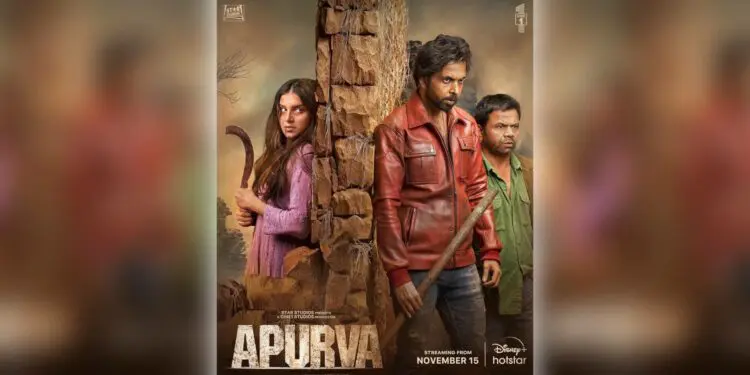
Apurva : Tara Sutaria Delivers A Knockout Punch In This Predictable Yet Gritty Survival Drama

Keeps you hooked.

Apurva (Hindi)

  • Cast: Tara Sutaria, Abhishek Banerjee, Rajpal Yadav, and Dhairya Karwa
  • Director: Nikhil Nagesh Bhat
  • Producer: Murad Khetani
  • Music: Vishal Mishra
  • Runtime: 1 hour 35 minutes
  • OTT platform: Disney+ Hotstar

Nikhil Nagesh Bhat’s Apurva is based on an extraordinary real-life story of a girl named Apurva who was kidnapped by some goons in the Chambal area.

With no substantial help, Apurva fought them all alone and emerged as a victor.

The film begins by establishing the extreme cruelty of the four bad guys.

The main antagonists among these are Abhishek Banerjee and Rajpal Yadav. From there, we see how Apurva’s (Tara Sutaria) path crosses with these four local dacoits.

Excellent characterisation

Tara Sutaria in Apurva
Tara Sutaria in ‘Apurva’. (X)

To put it briefly, the story of Apurva is about how a city girl transforms herself into goddess Durga and kills the bad guys, of course, not literally.

The big area where Apurva scores is the gritty atmosphere that pulls the viewers into the story.

Despite tonal similarities with NH10 (2015), director Nikhil Nagesh Bhat and his technical team stage the Chambal area with authenticity. There is no artificiality whatsoever.

What also works for the film is a sense of dread that the director creates among the viewers with the help of the background score.

The characterisations of the dacoits are another major plus for the film.

Abhishek Banerjee and Co are truly scary as psychopaths. As a result, the viewers anxiously wait for Tara Sutaria’s Apurva to come out safe.

The characterisation of Apurva from a city girl to finding herself in a life-threatening situation has been written well. Her love story with Sid (Dhairya Karwa) gives some much-needed light moments. Both actors share good chemistry.

A brilliant Tara Sutaria

Tara Sutaria debuted with the sequel of Student of The Year 2 in 2019. Since then, she faltered in the selection of roles.

But here, the actress has an author-backed part, and Tara delivers a commendable performance. It is a juicy role with different shades, and Tara doesn’t miss a single beat.

Dhairya Karwa also does well as the supportive fiancée. He succeeds in portraying the love and desperation of Sid.

Coming to the local dacoits, Rajpal Yadav and Abhishek Banerjee successfully make the audiences hate them, particularly Abhishek, who plays an unhinged man with a lot of glee.

The major problem with Apurva is the excessive bloodshed and cuss words that won’t go down well with all. The serious hangover of NH10 also acts as a deterrent in some parts.

The police characters feel cardboard, more like an add-on, and don’t serve any purpose.

Same case with Apurva’s parents. They are hardly there.

Final take

To sum it up, watch Apurva if you are a fan of gritty dramas and real-life stories.

Rana Naidu: A Gripping Father-Son Saga Bolstered By Real-Life Chacha-Nephew Combo

Venkatesh is the icing on the cake!

Rana Naidu (Hindi)

  • Cast: Rana Daggubati, Venkatesh, Surveen Chawla, Sushant Singh, Abhishek Benarjee, Gaurav Chopra, and Aditya Menon
  • Directors: Suparn Verma and Karan Anshuman
  • OTT platform: Netflix
  • Number of episodes: 10

Over the years, web shows have not just opened doors for newer stories but also given mainstream actors an opportunity to explore a different facet of their acting skills — something which doesn’t always happen on the big screen.

Rana Naidu directed by Karan Anshuman and Suparn Verma feels a little long with its duration of 10 episodes. The use of swear words and also an overdose of sex scenes get bothersome at times.

But still, there is a lot to enjoy here: particularly, the confrontation scenes between Rana Daggubati and Venkatesh.

I must say, Venkatesh has the guts to play a role that is quite different from his onscreen image.

For those who are not aware, Rana Naidu is based on the English web drama Ray Donavan. Since I have not seen the original, this will be a standalone review.

Synopsis

Rana Daggubati plays a fixer called Rana Naidu whose profession is cleaning up the mess of his high-profile clients. He takes his job seriously and successfully solves the problems of his clients.

But, at home, it is an altogether different story. His relationship with his family — wife and two children — is on tense ground. Adding to his woes is Rana Naidu’s estranged father Naga Naidu (Venkatesh).

Naga Naidu comes out of prison after 15 years for a crime that he did not commit. He has two more sons — played by Abhishek Banerjee and Sushant Singh.

Naga wants to fix his relationship with his sons. This is the story in brief.

A gripping drama

The best part of the Rana Naidu web series is how the undercurrent of the drama is maintained throughout.

As the layers peel off, audiences become more and more excited about what will happen next. There are ample twists and turns that shock you.

Another major highlight of Rana Naidu is the drama generated by the protagonist’s profession.

Gaurav Chopra as the Bollywood superstar may come across as a tad dramatic but the character is deliberately designed in that manner. And it works in the favour of the web series.

The directors also dwell on the different psyches of parents through the characters of Rana Naidu and Naga Naidu. They present some fascinating insights into exploring this aspect.

The confrontation scenes between Rana Dagubbati and Venkatesh, though less in number, still pack a punch.

The face-off between this real-life mama and nephew gives the show some of its best solid moments.

Rana and Venkatesh are top-notch

Rana Daggubati is supremely effective in essaying a protagonist who is torn between his high-profile job and his crumbling family.

He is top notch in not just portraying the menace and the intensity required but also shines in the vulnerable moments — whether it is with his wife and children or with his two brothers.

Venkatesh Dagubbati is equally solid as the wronged father who is at loggerheads with his son. The actor brings a certain warmth to his part beneath all the roughness.

The senior actor also brings much-needed humour to this otherwise serious show.

His Hyderabadi Hindi gives the show some of its most amusing moments. He successfully oscillates between being a chilled-out guy, who is desperate to reunite with his family and someone who is thirsting for vengeance.

Abhishek Banerjee nails it

Although the primary focus is on Rana and Venkatesh, the directors give ample space to others as well. Particular mention must be made of Abhishek Banerjee and Sushant Singh.

Abhishek Benarjee’s Jaffa, a recovering alcoholic, gets abused by a swamiji during his childhood. He is severely affected by those scars.

Sushant Singh’s Tej Naidu is a stuntman with Parkinson’s disease.

Suparn Verma and Karan Anshuman handle the complicated back story of Jaffa with the right amount of sensitivity.

Abhishek Banerjee is someone who is known more for his comic roles. But here, he successfully presents a different facet of himself.

The scenes between the three brothers are filled with a lot of warmth. As audiences, we earnestly want them to come out of their childhood scars.

Surveen Chawla and Ashish Vidyarthi stand out

The supporting cast is equally solid in their parts but the ones who stand out are Surveen Chawla and Ashish Vidyarthi.

As the fierce wife, Surveen Chawla more than holds her own opposite — both Rana and Venkatesh. The refreshing aspect of her character is that she is no pushover at any point.

Ashish Vidyarthi makes a surprise entry towards the end and sends chills down the audience’s spine. The coolness with which he goes about things makes him even scarier.

Too much adult content

The technical department starting from the cinematography and the background score also deserves equal credit for creating the right atmospherics.

What pulls down Rana Naidu is the length of the series. Instead of 10 episodes, the makers should have restrained it to seven. This would have made the web show crisper.

Also, there is an overdose of cuss words and uninhibited sex scenes. This becomes a tad too much to digest.

Final take

In a nutshell, Rana Naidu isn’t everyone’s cup of tea, But, if you are in the mood to watch a twisted family drama, then this one is definitely for you.

Bhediya: A Strong Cautionary Tale On The Importance Of Environment

Varun is brilliant, while Kriti gets relegated to the background!

Bhediya (Hindi)

  • Cast: Varun Dhawan, Abhishek Benarjee, Deepak Dobriyal, Paalin Kabak, and Kriti Sanon
  • Director: Aamir Kaushik
  • Producer: Dinesh Vijan
  • Music: Sachin-Jigar
  • Runtime: 2 hours and 36 minutes

Aamir Kaushik is known for his wacky sense of storytelling: his previous films Stree and Bala are examples.

Stree was based on the folk tale, “Oh Woman Come Tomorrow”. He gave it a feminist touch, elevating the film from the usual horror-comedy genre.

In Bala, Kaushik used humour to convey an important message on baldness and societal standards of beauty.

With Bhediya, Kaushik once again scripts a folk tale with a strong message. This time, the setting is Arunachal Pradesh.

In Bhediya, he focuses his lens on how progress should not be at the cost of the environment. There is also a commentary on how the northeast people are alienated.

These are heavy themes but Kaushik makes them non-preachy through his storytelling.

The plot of Bhediya is centred on a small-time contractor Bhaskar (Varun Dhawan). He gets the opportunity of a lifetime when he is given a road-construction contract inside the dense forests of Ziro in Arunachal Pradesh.

This is his biggest project. But he is aware that this project will destroy the environment.

He also knows that the project would not benefit the local population. Still, he wants to continue the work for the benefits it brings.

His cousin Janardan (Abhishek Banerjee) accompanies him. He has a local friend, Jomin (Paalin Kabak).

Deepak Dobriyal plays sub-contractor Panda. One night, Bhaskar is stranded in the jungle and is bitten by a bhediya (wolf).

Veterinary doctor Anki (Kriti Sanon with a weird hairstyle) provides him first-aid.

However, things start getting worse for Bhaskar because he was bitten by a supernatural wolf. As a result, he too gets some supernatural powers now.

On the other hand, certain people associated with this controversial project are getting killed due to a particular animal.

The rest of the story is about how this mystery is solved and how Bhaskar manages to overcome his inner conflict. This is the synopsis of Bhediya.

Terrific visual effects

The best thing about the movie is how the director balances horror and comedy.

The scenes of Varun transforming into a werewolf at night will give goosebumps to the audience, more so if you are watching it in 3D.

The background music by Sachin-Jigar coupled with the cinematography of Jishnu Bhattacharjee heightens the impact of these scenes.

The computer-generated ‘wolf effects’ are in perfect sync with the nature of the film. The hard work that has gone behind the scenes is evident.

Comedy is a mixed bag

Abhishek Benerjee mostly handles the comedy part. He is a real hoot and often leaves the audience in splits.

Varun’s camaraderie with both Abhishek Benerjee and Paalin Kabak gives the film some of its best moments.

Paalin Kabak also stands on his own, particularly in the scene where he expresses his frustration about the stereotypes associated with northeastern people.

Deepak Dobriyal is fun to watch.

But some of the jokes are rather in bad taste. A case in point is the scene where Varun’s bum becomes a point of discussion; there is also some unnecessary toilet humour which dragged quite a bit.

There are also some avoidable racist jokes.

Varun is brilliant, Kriti is underused

Another major win for the film is how the character of Varun has been designed coupled with the actor’s terrific performance.

Bhaskar is someone who starts with an indifferent attitude towards nature. Becoming rich is his only ambition. However, all these changes after he gets bitten by the supernatural wolf.

The audiences get to see him going through a lot of internal conflicts and eventually changing for the better.

Varun captures all these shades meticulously. He also deserves huge credit for the physical transformation that he goes through when the wolf takes over.

Kriti Sanon has a mysterious presence much like Shraddha Kapoor in Stree. And just like Shraddha, Kriti is largely relegated to the background except for the pre-climax twist.

It has a good emotional touch. However, the impact would have been more if Kriti was better used it from the beginning. Her romance with Varun is rather half-baked.

Sachin-Jigar’s music was better in Stree than in this film but they more than make it up with their background score.

Rajkumar Rao and Aparshakti Khuranna make a surprise appearance, in the end, leaving the audiences curious about a possible crossover film between Bhediya and Stree in future.