
Senior male actors romancing women half their age is nothing new, in fact it has become a normalized matter thanks to numerous male actors. Whether it’s Senior NTR in his hey days or the likes of megastar Chiranjeevi and Ravi Teja; with these movies there is a general trend of hero wooing the heroine first and she falling in love with him later.
When we talk about a lot of Ravi Teja’s recent films case in point Mr Bachchan there is a deliberate attempt to portray the character as a youngster. In the name of wooing you get a lot of stalking with lavishly chore graphed numbers. However a new kind of age gap romances have emerged recently, and I will be giving a brief overview on this. In this article five movies will be covered, among them two have released this year Vishwanth &Sons and Bethlehem Kudumba Unit. Both star the same heroine Mamitha Baiju with plots that feel similar. However, the narration style varies significantly; but one very striking point is Mamitha’s characters design, they are far more outward than the men taking the initiative in numerous sequences. The Hollywood reporter magazine was absolutely right when they mentioned about Mamitha driving the romance in both the movies.

But before getting into VS and BKU in little more depth its necessary to talk about three Rakul Preet Singh movies perfectly symbolizing the topic. There are two De De Pyaar De films and Manmadhudu 2. In all these three Rakul take more initiative and following is a brief explanation of that.
The first half of De De Pyaar De 1 focuses on a growing bond between Ajay Devgan’s Ashish and Rakul’s Ayesha. Ashish is fifty and she on the other hand is 26 years old. Ashish has certain misgivings about dating a much younger girl and this is further compounded by Javed Jaffery playing a psychiatrist cum friend. But Ayesha has no such doubts about Ashish being her future life partner.
In numerous sequences she is the one initiating romance and expresses her desires without hesitation. This holds particularly true of a crucial confrontation scene a few scenes before the interval. Ashish deliberately distances himself talking about the difficulties which could arise from the huge age gap. But Ayesha follows her heart convincing Ashish.

De De Pyaar De 1 ends with Ashish having to convince Ayesha’s parents for the marriage. In part 2 a significant parental opposition comes in the form of R Madhavan. Here too their approaches are contrastingly different with Ashish playing more of a waiting game. Ayesha on the other hand wants him to be more proactive in convincing her parents.

There is an elongated sub plot featuring Javed Jaffery’s real life son Meezan Jafri. His character is brought into the picture to woo Ayesha; the plan is orchestrated by the father. For a while it appears that the plan is successful however there is a major twisted revealed before the climatic stretch. Ayesha actually knows what’s on her father’s mind; so, she hatches up a roundabout plan to emotionally manipulate her father as well as a change Ashish’s attitude where he decides to win her back.
Yes the route is very elongated, and a simpler path would have been better. Still the important point here is that Ayesha asserts her independence and an important monologue of Rakul in the pre climax is a perfect icing on the cake.
The last Rakul Preet Singh movie in this list is Manmadhudu 2. Akkenini Nagarjuna is Sambasiva Rao/ Sam, a middle aged Casanova with no interest in marriage; but the mother played by the veteran actress Lakshmi along with the other family members wants the protagonist to get married. Rakul Preet Singh plays a bartender cum poet Avantika; Avantika is waiting for her poetry book to be published.
Much like the De De Pyaar De movies the character here too is strong willed and unapologetic. Avantika is the one who first falls for Sam and isn’t afraid of expressing her interest in him. Sam also has feelings but is afraid to express. Eventually Avantika’s bold nature rubs on him resulting in a feel good climax.


Now let’s get to this year’s Vishwanth &Sons and Bethlehem Kudamba Unit. Both have the same heroine the sensational Mamitha Baiju and characterization wise too Maddy and Ashley share a couple of similarities. Of screenplay wise both differ but in both the cases it’s the leading lady who takes the lead.
First up is Vishwanath &Sons. Mamitha’s Maddy has no parents and relatives; she lives in hostel with a bunch of friends. Her life plan is chalked out both professionally and personally, but this changes with the arrival of Suriya’s Sanjay Vishwanth. She is a surrogate mother to his son; due to the son’s medical emergency Maddy comes into the live of Sanjay and their lives get intertwined.
Maddy falls in love head over heels perfectly captured in the song “Neno Butterfly in Telugu and Pattampochi in Tamil. She is absolutely uninhibited in expressing her desire of wanting to be Sanjay’s wife but Sanjay maintains a distance. It’s not that the man doesn’t have feelings for Maddy; he does have feelings as revealed in the closing stretch with Raveena Tandon’s character. But a certain emotional baggage coupled with the huge age makes things complicated. Sanjay deliberately distances himself so that Maddy finishes her studies and may find someone younger, but that doesn’t happen with Maddy’s persistent nature winning. What makes the climax very satisfying is that Maddy becomes a doctor and at the same time Sanjay accepts her.
The final movie belonging to this genre is the Malayalam blockbuster Bethlehem Kudamba Unit. Much like VS here too Mamitha plays a younger girl; her character Ashley falls in love with a middle aged bachelor Justin (Nivin Pauly). Unlike the hyperactive Maddy Ashley is more melancholic, it takes a while to find her feet but once Ashley falls in love with Justin there is no looking back.
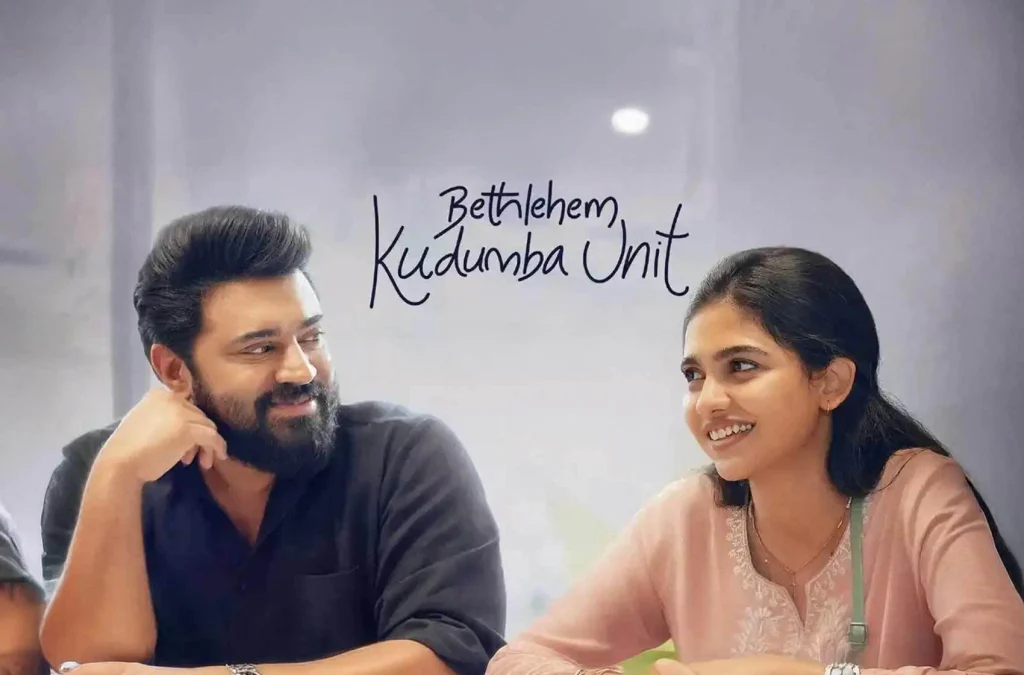
There is a beautiful interval sequence of Ashley confessing her feelings and Justin reciprocating it. This is followed by Ashley kissing him on the cheek. She brings a different side of Justin’s personality like the adorable miss you moment.
A point in the movie comes once where the relationship is known to everyone; Ashley’s mother and uncle try to dissuade her in different ways. At one point everything seems to be done and dusted especially with Justin deliberately distancing himself. But Ashley’s climatic outburst changes everything; she makes it very clear that her life is with him only and no one else making Justin emotionally overwhelmed.

Unlike VS open ended ending BKU has a dramatic but a very satisfying finale. To sum it up Maddy and Ashley perfectly define the term heroine driven romance.
Senior male actors romancing much younger women has long been a familiar trope in Indian cinema, but a refreshing shift is emerging in how these relationships are portrayed. Rather than the hero pursuing the heroine, films such as De De Pyaar De, De De Pyaar De 2, Manmadhudu 2, Vishwanath & Sons and Bethlehem Kudumba Unit place the women at the forefront of romance. From Ayesha and Avantika to Mamitha Baiju’s Maddy and Ashley, these characters express their desires openly, challenge societal expectations and persist despite the men’s emotional reservations. While the films differ in their storytelling and characterization, they share a common thread: the heroine takes the initiative, drives the relationship forward and ultimately changes the hero’s outlook on love. Together, these films offer an interesting perspective on the evolution of age-gap romances in Indian cinema.