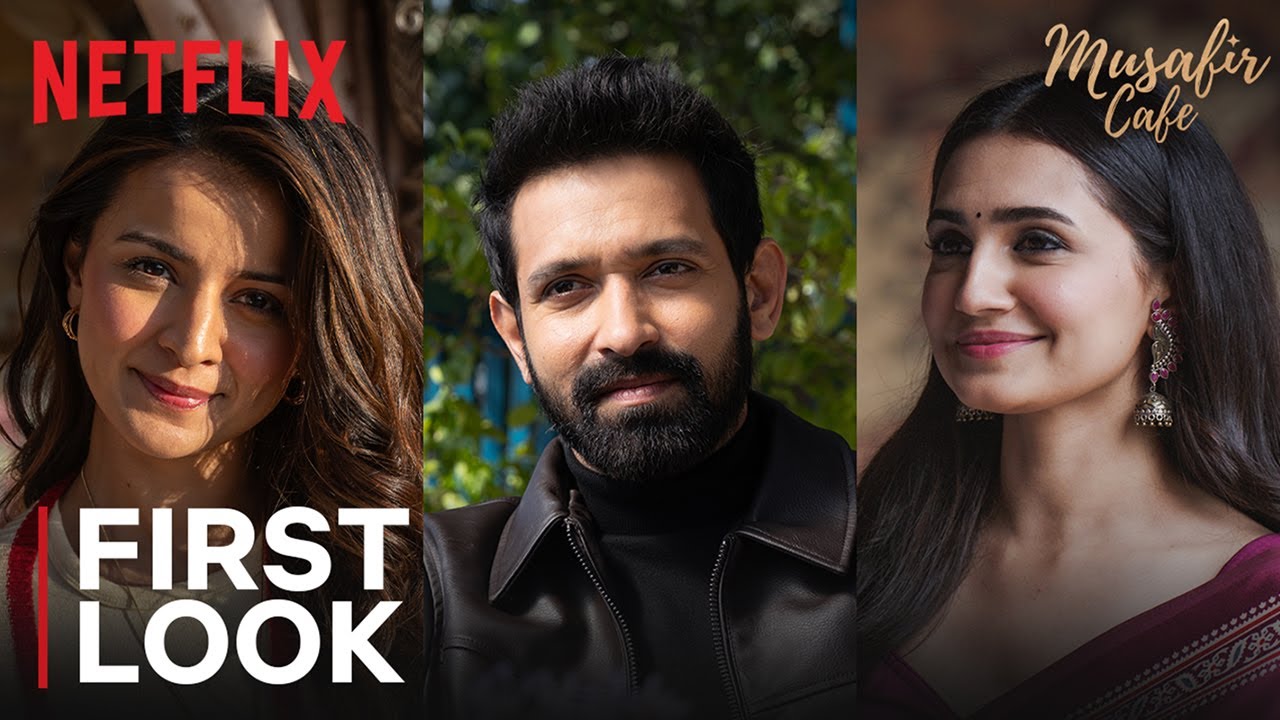
Musafir Cafe: A tender tale of romance and finding oneself

Based on a book by the same name director Ruchir Arun does a good job in portraying the complexities of modern love. Musafir Cafe paints an interesting picture on the pressures of conventional society, certain expectations related to marriage and career plans. The web series also looks at how love can happen at different stages in life. The journey of Vikrant Massey’s Chander compliments the theme perfectly. In spite of some lag the web series remains largely watchable thanks to the solid cast and two well written love stories. A special mention must be made of Mahima Makwana as the third wheel. Both the writing and the actress make sure that the character doesn’t become a stereotypical rival.

Starcast: Vikrant Massey, Vedika Pinto, Mahima Makwana, Adil Hussain and others

Genre: Romance

Director: Ruchir Arun

Writer and creator: Sharanya Rajgopal

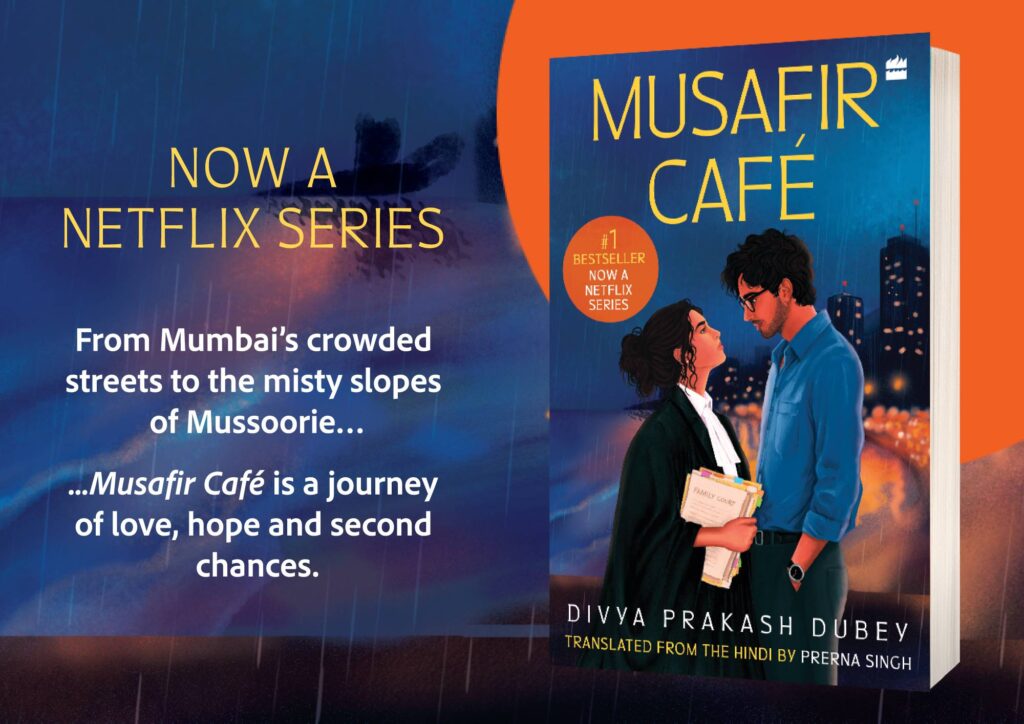
Based on: Musafir Cafe by Divya Prakash Dubey

Music: Raghav Kaushik. Neel Adhikari and Garvit Priyansh

Cinematography: Anirudha

Producers: Vikrant Massey and Anuj Gosalia

Production houses: Homemade stories and Terribly Tiny Tales Production

No of episodes: 8

Streaming site: Netflix

Before dissecting Musafir Cafe its necessary to appreciate Vikrant for venturing into production with this kind of story. A full-fledged romantic story in an Ott space is an anomaly and kudos to Vikrant for backing a show like this. Musafir Cafe primarily focuses on two love stories and three individuals. Vikrant Massey’s Chander starts off as software engineer, later though he follows his passion of opening an intimate mountain cafe. In one way the man is an Imtiaz Ali protagonist from something like Tamasha bored of conventional routine. Vedika Pinto is Sudha, she is a fiercely independent woman with clear cut career plans. Marriage doesn’t fit anywhere in her menu, without giving much away Chander and Sudha share a turbulent past. Last but not the least Mahima Makwana is Preeti, Preeti is Chander’s present partner both in the cafe as well as personal life. This is the basic synopsis
A strong aspect of Musafir Cafe is the intertwining of Chander’s past with his present life. The meet up of Chander and Sudha and their subsequent falling in love has an excellent mix of lighthearted and intense moments. How Sudha shapes up Chander’s eventual dream is straight out of an Imitiaz Ali movie still the writing coupled with the performances make it work.

Talking about the intense scenes a mention must be of the portions in which the two find themselves at crossroads. As already mentioned marriage isn’t in the menu of Sudha though she loves Chander. For her professional dreams and looking after mother is more important. There is a point of Chander deciding to move to Mumbai and settling down with her. There are a series of heated arguments with Sudha leaving Chander.

These portions are emotionally poignant making the viewers feel sad for Chander, at the same time it’s hard to dislike Sudha completely. The present portions of Chander with Preeti are also engaging in their own way. Yes, the writing in these portions isn’t fully developed still there is a palpable warmth in the scenes between Vikrant and Mahima. Some of their conversations like the portion of Preeti egging Chander to find a closure is solidly written and enacted. The Chander that we see in the present and the past varies significantly in terms of the mental space and Vikrant brings that out beautifully.
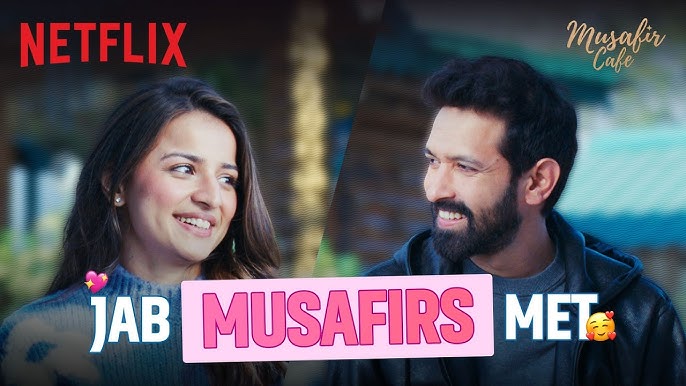
Mahima makes her presence amply felt too, she plays Preeti with grace and emotional maturity. There is a dialogue in the web series where a character describes Preeti as a life partner you shouldn’t miss, and Mahima does a very fine job in portraying those qualities while at the same time not being a complete saint. Vedika Pinto as Sudha has a strong screen presence, she too does an excellent job in portraying Sudha’s feisty nature as well as the more vulnerable moments. The supporting cast led by the ever-effective Adil Hussain are good too, but these characters could have done with better depth. Adil’s scenes with Vikrant have some solid dialogues especially an important scene of advice.

Musafir Cafe also benefits from soulful music and wonderful cinematography. The songs composed by multiple musicians perfectly compliment Chander’s journey. Among the songs Tera Hua, Kaafi Hain Na and Darmiyaan stand out. Anirudha’s cinematography especially the mountain shots and Musafir Cafe brimming with people makes for a good visual viewing.
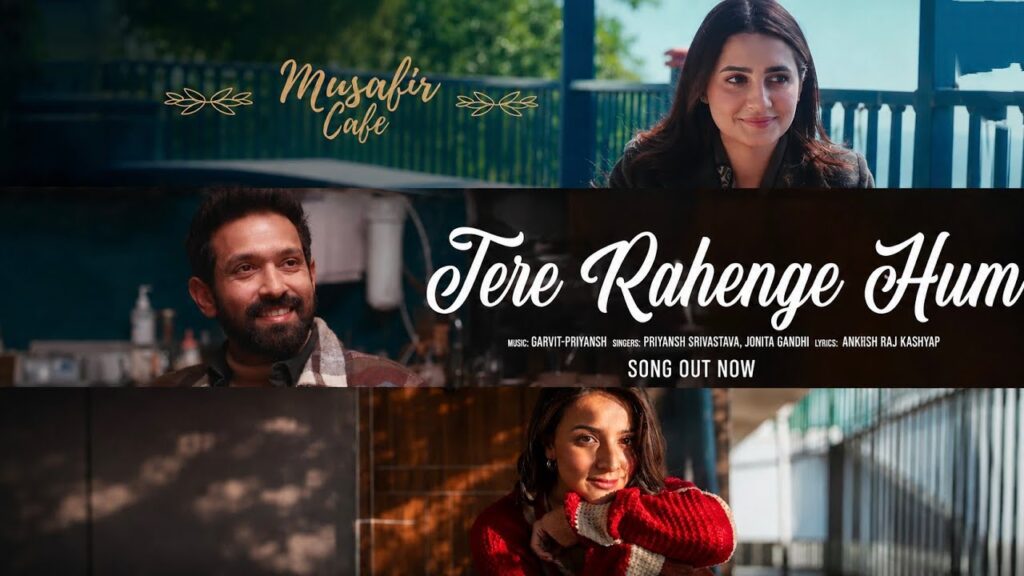
Final word: Musafir Cafe is definitely worth binging for fans of romance and those who are interested in stories dwelling into relationships.
Main Vaapas Aaunga: A stirring tale of trauma and loss of humanity

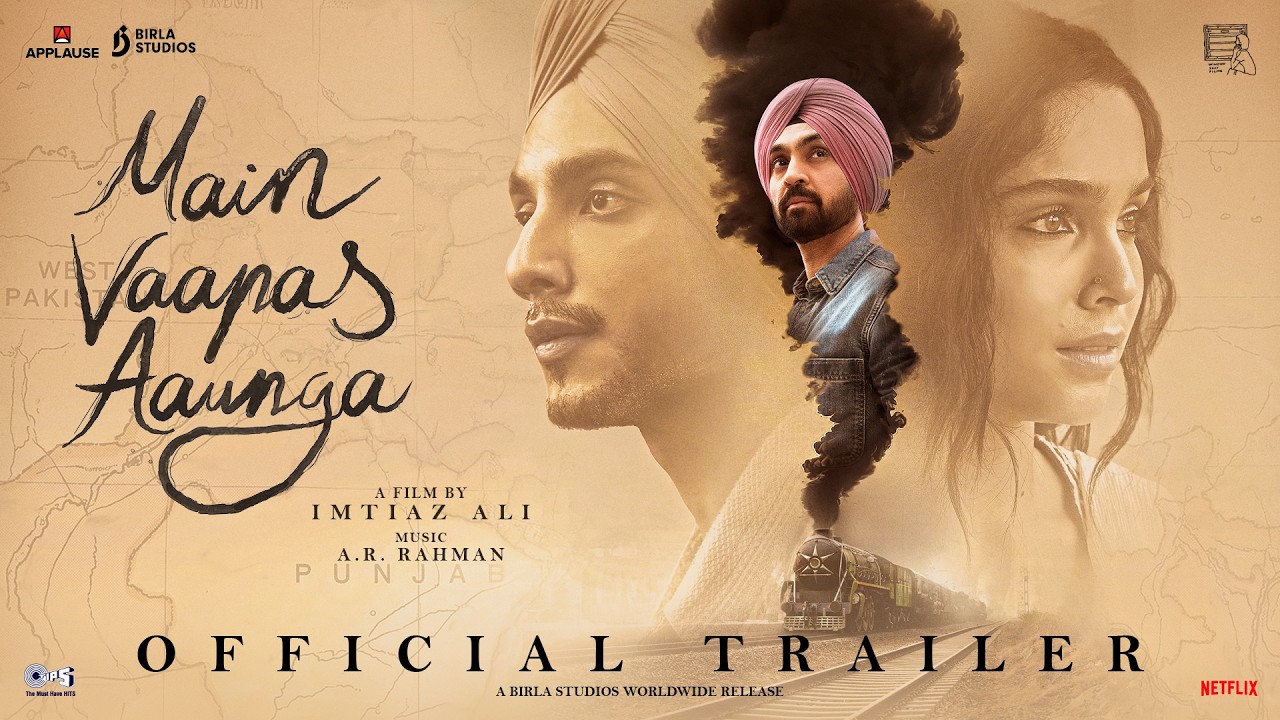
Imtiaz Ali once again employs his favorite two timeline plot sequencing. More than the partition horrors the movie holds a mirror to today’s displaced homes due to bloodshed. The end montage song with the ever-charming Diljit Dosanjh hits hard. A strong aspect of Main Vaapas Aaunga are the scenes between Nasseerudin Shah and Diljit. The portions have a perfect blend of humor with emotional pathos. The pre partition romance though needed better writing

Starcast: Naseeruddin Shah, Diljit Dosanjh, Vedang Raina, Sharvari Wagh and others

Genre: Romance/drama

Director and writer: Imtiaz Ali

Additional writer: Nayanika Mahatani

Music: A R Rahman

Cinematography: Sylvester Fonseca

Producers: Sameer Nair, Deepak Segal etc

Production Companies: Window Seat Films, Applause Entertainment etc

Running time: 2 hours and 46 minutes

Stories of Partition and Bollywood go hand in hand; numerous filmmakers have depicted the horrors of partition in their own ways but still there is always something left to be explored. Imtiaz Ali’s latest Main Vaapas Aaunga is also about pre partition and the horrors following it. But the genre here makes a difference. Imtiaz packs in an intense tale of unrequited love, love so intense that our protagonist hasn’t forgotten his heroine though he is 95 years old. Naseeruddin Shah is Keenu. He falls in love with a Muslim girl Jiya/Afshana played by a radiant Sharvari Wagh. Vedang Raina plays the younger version in the flashbacks. Their blossoming romance hits a roadblock due to partition. He manages to make a living, but the scars haven’t completely left. Diljit Dosanjh plays the grandson Nirvair Grewal. Nirvair is going through his own hassles both professionally and personally. Nirvair becomes Keenu’s support system, and he is determined to fulfill his grandfather’s last wish and how that happens is the essence of MVA.

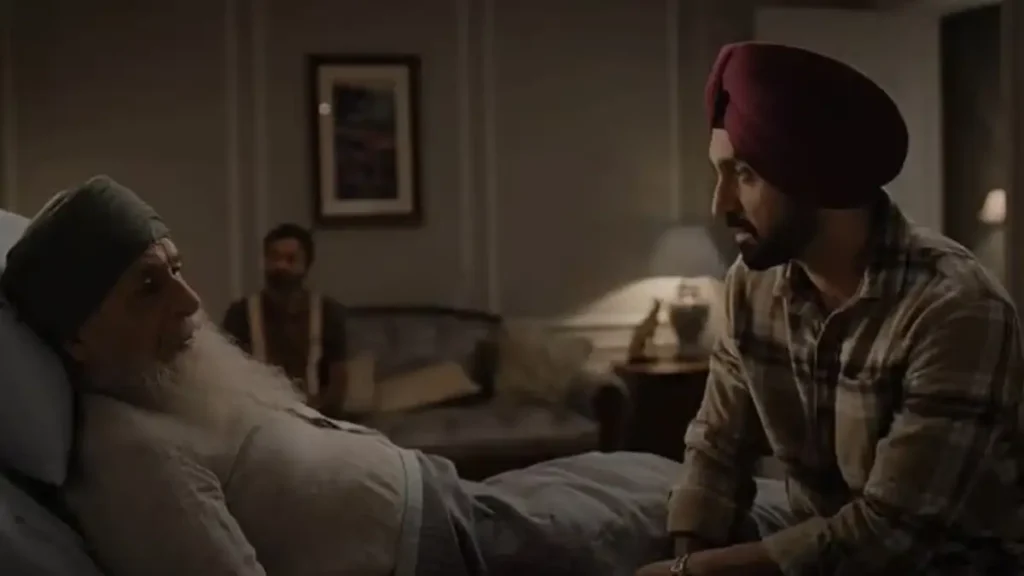
A strong aspect of MVA are the scenes between Nasseerudin Shah and Diljit. Their interactions have undertones of humor in the beginning especially the hospital ones. But as Nirvair becomes more emotionally involved the dynamics takes a different turn. The portions start to become emotionally poignant and the two feed off each other wonderfully. After a long time Naseeruddin Shah has gotten an author backed part and the veteran makes complete use of it. Whether its his intense love for Jiya/Afshana or the pain of leaving one’s home the actor tugs at your heartstrings. He also raises chuckles in his initial interactions with Diljit.

Diljit as the grandson gets his own arc and the dependable actor doesn’t disappoint. In spite of sharing screen space with an in form Naseeruddin Shah he more holds his own. From being curious and then the strong determination of making sure that the grandfather finds peace at least in death the actor doesn’t miss a single beat.

The pre partition romance also has his moments. Both Vedang and Sharvari look the part of bestowed lovers, but the writing could have been better. The love track could have been developed more; there is a hurried nature to the proceedings here. Having said that the conversations between young Keenu and Jiya have the right romantic spark. Vedang in particular impresses more so in the post partition scenes. The scenes of subtle pain and grief has been excellently portrayed by the young actor. Sharvari has much less to do in comparison, but she has a luminous presence and does a fine job in portraying a certain inner resilience.

The theme of humanity loss has a realistic feel to it as well. Human beings getting carried away in the cycle of violence and behaving in a barbarious manner has a contemporary feel. The post credit song Kya Kamaal Hai takes the audiences on a short tour of present horrors and the incredible spirit of fighting back. The tune coupled with Diljit voice is simply fantastic.

AR Rahman’s music jells perfectly with the movie’s tone capturing both the young love as well as the emotional undertones perfectly. The cinematography of Slylvester Fonseca particularly the pre partition romance has some nice frames. The proceedings have a lived-in feel

One of the things sticking out like a sore thumb is the subplot of Nirvair and his off/on relationship with Banita Sandhu’s Kaveri. It doesn’t add much substance to the movie. The subplot feels like more of a crutch to amplify Keenu’s deep love for Jiya. But this is a minor misstep in a mostly heartfelt drama on what it means to leave your home.

Amar Singh Chamkila: Imtiaz Ali returns back with a bang

After a series of love stories, Imtiaz Ali takes a welcome detour and delivers a hard-hitting film that goes beyond a biographical drama.
Amar Singh Chamkila (Hindi), 12-04-2024, Biological Drama, 2 hours 26 minutes, U/A, OTT
  • Main Cast: Diljit Dosanjh, Parineeti Chopra, Apinderdeep Singh, Nisha Bano, and Anjum Batra
  • Director: Imtiaz Ali
  • Producer: Imtiaz Ali and Mohit Choudary
  • Music Director: AR Rahman
  • Cinematography: Sylvester Fonseca
  • Rating: 4/5
  • Published in: Southfirst

Imtiaz Ali is a director who is known primarily for making love stories and he has found good success in that genre except for Jab Harry Met Sejal (2017)and Love Aaj Kal (2020).

But one of Imtiaz Ali’s best works to date remains Highway (2014). The director focused his lens on the issue of sexual abuse with the backdrop of Stockholm syndrome.

The film was a major breakthrough for the now national award winner Alia Bhatt. It is also one of Randeep Hooda’s best works.

In the last few years, Imtiaz hasn’t had the best run at the box, both critically and commercially.

Tamasha (2015) did moderate business but Jab Harry Met Sejal along with Love Aaj Kal 2 were damp squibs in more ways than one.

Finally, Imtiaz Ali has broken his dry run with the movie Amar Singh Chamkila.

Synopsis

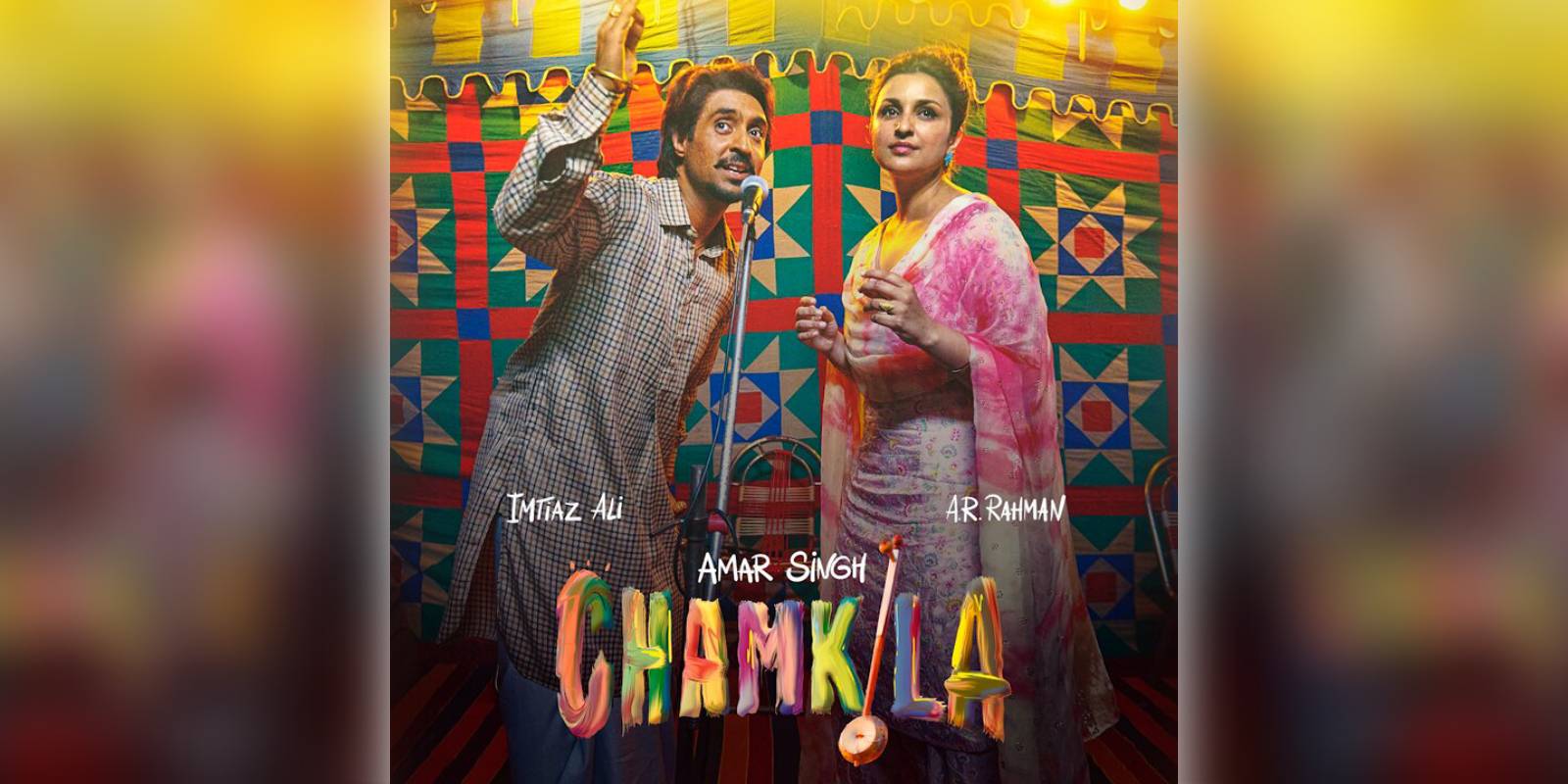
Amar Singh Chamkila begins with the assassination of the controversial Punjab Pop Singer played by Diljit Dosanjh and his wife Amrajot Kaur (Parineeti Chopra).

Imtiaz Ali’s ‘Amar Singh Chamkila’. (X)

The husband and wife were a popular duo who had sung many songs.

From here the movie goes into non-linear storytelling that talks about the formative years of Chamkila which had a huge influence on his music, and how he goes from a Dalit laborer to a singer who is both admired and criticized in equal measure for the brazen lyrics that are sexual in nature.

At times Amar Singh Chamkila also plays out like a whodunit giving an insight into the groups who had a big issue with how Chamkila didn’t adhere to the social diktats.

One of the things that majorly works for Amar Singh Chamkila is the characterization of the titular role. Diljit Dosanjh’s character is not a rebel by design.

There are scenes in the second half when Chamkila tries to move away from his regular songs and tried devotional, but the audiences want Chamkila to sing what he is famous for.

Chamkila is not someone who is dismissive of what is happening around him, but at the same time he is a man who chooses not to be bullied into submission.

In that way Chamkila’s character proves to be a worthy successor to the previous Imtiaz Ali protagonists whose intent was to live more freely and in the process discover their purpose in life.

Many pertinent questions

In the two hours and 26 minutes running time Imtiaz packs in many themes.

For example who gets to decide what an actual art is? Should an artist endure a lifetime of hate and humiliation for choices that are driven by circumstances? And finally how there is a huge difference between criticizing an art versus wanting to ban something that does not align with our tastes.

Parineeti Chopra in ‘Amar Singh Chamkila’. (X)

There are many powerful moments in Amar Singh Chamkila that stay in the viewers’ minds for a long time.

For example, a journalist comes to meet Chamkila and insists on having a personal interview. Chamkila is reluctant to the extent that he won’t even look into her eyes, the reason being this journalist has worn pants.

This portion works as a hard-hitting statement on how a singer has no issues in writing songs describing women’s sexuality in a raw manner but at the same time, modern clothing is a big problem for this man.

Amar Singh Chamkila also boasts of some hard-hitting dialogues. There is a scene where Chamkila talks about how everyone isn’t blessed with the privilege of thinking about what is right and wrong.

He goes on to add that he certainly is not in that position and makes music to just feel alive.

The film also has some archival footage showing the real Amar Singh Chamkila and the wife Amrajot Kaur, this is juxtaposed with the scenes of Diljit and Parineeti.

Sure this technique becomes distracting on occasions but still the raw footage makes it easier for the audiences to understand why the real Chamkila was considered as a threat by the purists.

Technical aspects

AR Rahman’s music coupled with Irshad Kamil’s lyrics is the backbone of Amar Singh Chamkila. Mohit Chauhan’s “Baaja” sets the tone perfectly capturing the spirit of Chamkila. “Tu Kya Jaane” is another wonderful number celebrating the love between the husband and wife.

The camerawork by Sylvester Fonseca is also first-rate. The cameraman deserves distinction marks for bringing alive the 1970’s and 80’s of Punjab. A particular mention must be made of the scenes where the village girls talk straight to the camera with some hilarious punchlines.

Imtiaz Ali also deserves credit for how he has depicted the impact of insurgency, both for Punjab and Chamkila’s professional life.

Performances

Diljit Dosanj in ‘Amar Singh Chamkila’. (X)

Diljit Dosanjh delivers a rousing performance in the title role. It goes without saying that Diljit’s histrionics is a major asset of the movie.

The actor portrays the vulnerability and the fighting spirit of Chamkila in a stellar manner.

Among the supporting cast, Anjum Batra, as the first musician who collaborated with Chamkila stands out the most.

Parineeti Chopra has her moments like the love ballad “Tu Kya Jaane” where she does a wonderful job in showcasing a love-struck woman but the role of Amarjot needed to be etched better and also deserved a stronger actor.

A film could also have done with a deeper dive into interpersonal relationships. The track of Chamkila’s first marriage before settling with Amarjot also feels patchy.

Verdict

Keeping aside these small niggles Amar Singh Chamkila is a glorious return to form for Imtiaz Ali. Diljit Dosanjh shows why he deserves to play the male lead in Hindi Cinema more often.