From Ayesha to Maddy and Ashley: The Rise of Heroine-Driven Age-Gap Romances

Senior male actors romancing women half their age is nothing new, in fact it has become a normalized matter thanks to numerous male actors. Whether it’s Senior NTR in his hey days or the likes of megastar Chiranjeevi and Ravi Teja; with these movies there is a general trend of hero wooing the heroine first and she falling in love with him later.

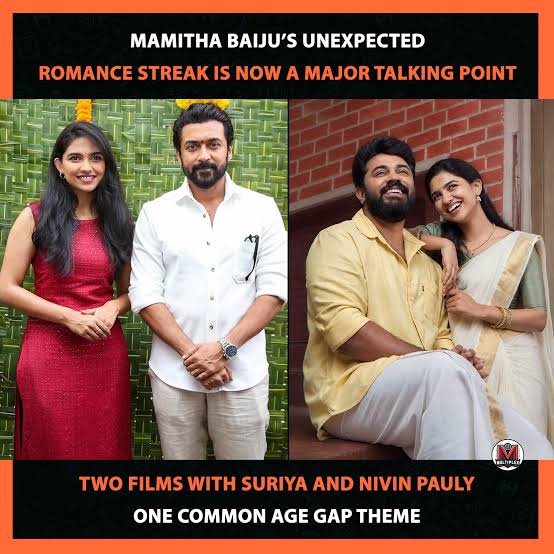
When we talk about a lot of Ravi Teja’s recent films case in point Mr Bachchan there is a deliberate attempt to portray the character as a youngster. In the name of wooing you get a lot of stalking with lavishly chore graphed numbers. However a new kind of age gap romances have emerged recently, and I will be giving a brief overview on this. In this article five movies will be covered, among them two have released this year Vishwanth &Sons and Bethlehem Kudumba Unit. Both star the same heroine Mamitha Baiju with plots that feel similar. However, the narration style varies significantly; but one very striking point is Mamitha’s characters design, they are far more outward than the men taking the initiative in numerous sequences. The Hollywood reporter magazine was absolutely right when they mentioned about Mamitha driving the romance in both the movies.
But before getting into VS and BKU in little more depth its necessary to talk about three Rakul Preet Singh movies perfectly symbolizing the topic. There are two De De Pyaar De films and Manmadhudu 2. In all these three Rakul take more initiative and following is a brief explanation of that.

The first half of De De Pyaar De 1 focuses on a growing bond between Ajay Devgan’s Ashish and Rakul’s Ayesha. Ashish is fifty and she on the other hand is 26 years old. Ashish has certain misgivings about dating a much younger girl and this is further compounded by Javed Jaffery playing a psychiatrist cum friend. But Ayesha has no such doubts about Ashish being her future life partner.

In numerous sequences she is the one initiating romance and expresses her desires without hesitation. This holds particularly true of a crucial confrontation scene a few scenes before the interval. Ashish deliberately distances himself talking about the difficulties which could arise from the huge age gap. But Ayesha follows her heart convincing Ashish.
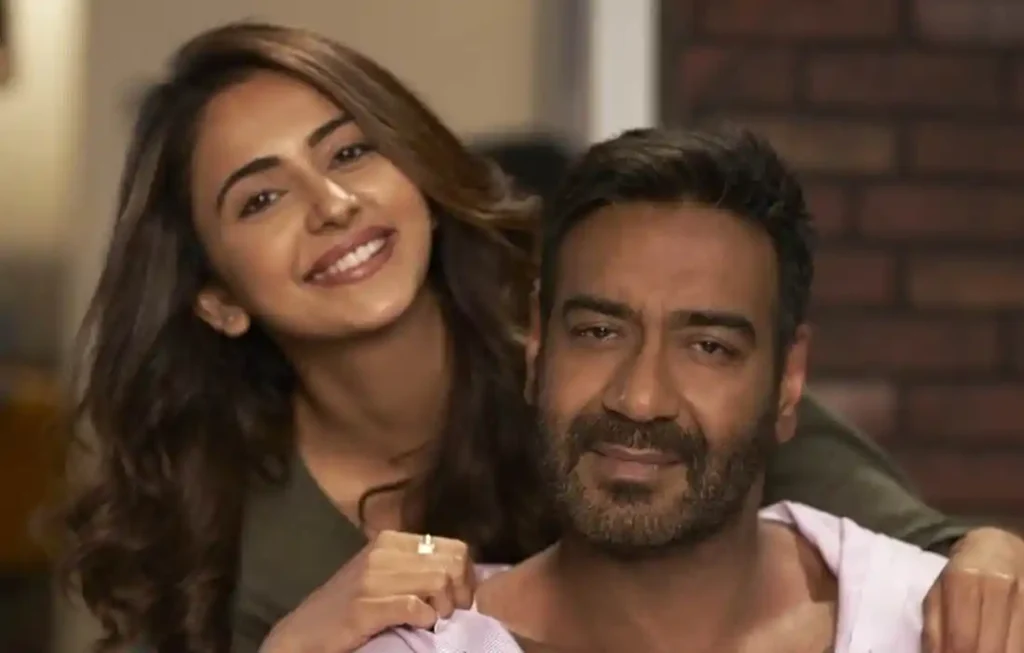
De De Pyaar De 1 ends with Ashish having to convince Ayesha’s parents for the marriage. In part 2 a significant parental opposition comes in the form of R Madhavan. Here too their approaches are contrastingly different with Ashish playing more of a waiting game. Ayesha on the other hand wants him to be more proactive in convincing her parents.

There is an elongated sub plot featuring Javed Jaffery’s real life son Meezan Jafri. His character is brought into the picture to woo Ayesha; the plan is orchestrated by the father. For a while it appears that the plan is successful however there is a major twisted revealed before the climatic stretch. Ayesha actually knows what’s on her father’s mind; so, she hatches up a roundabout plan to emotionally manipulate her father as well as a change Ashish’s attitude where he decides to win her back.

Yes the route is very elongated, and a simpler path would have been better. Still the important point here is that Ayesha asserts her independence and an important monologue of Rakul in the pre climax is a perfect icing on the cake.

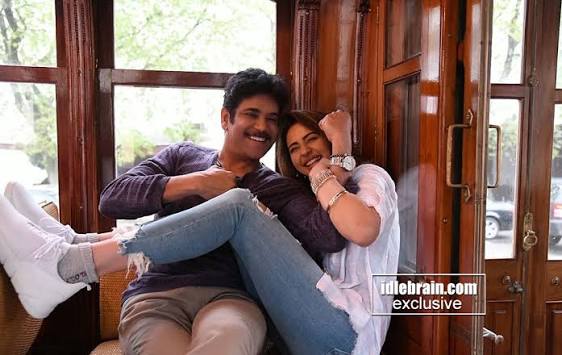
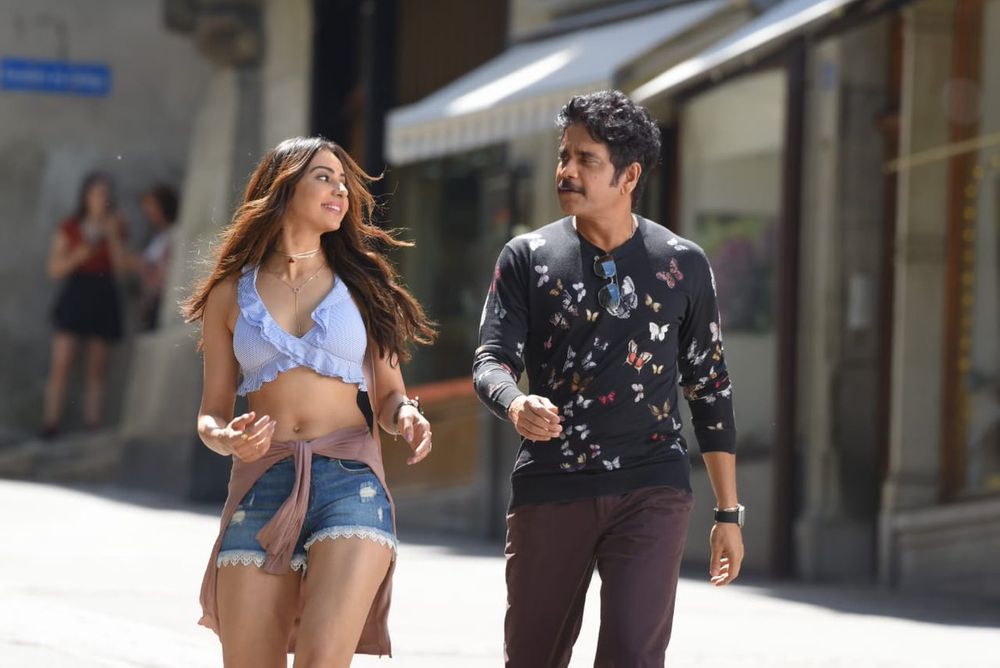
The last Rakul Preet Singh movie in this list is Manmadhudu 2. Akkenini Nagarjuna is Sambasiva Rao/ Sam, a middle aged Casanova with no interest in marriage; but the mother played by the veteran actress Lakshmi along with the other family members wants the protagonist to get married. Rakul Preet Singh plays a bartender cum poet Avantika; Avantika is waiting for her poetry book to be published.

Much like the De De Pyaar De movies the character here too is strong willed and unapologetic. Avantika is the one who first falls for Sam and isn’t afraid of expressing her interest in him. Sam also has feelings but is afraid to express. Eventually Avantika’s bold nature rubs on him resulting in a feel good climax.
Now let’s get to this year’s Vishwanth &Sons and Bethlehem Kudamba Unit. Both have the same heroine the sensational Mamitha Baiju and characterization wise too Maddy and Ashley share a couple of similarities. Of screenplay wise both differ but in both the cases it’s the leading lady who takes the lead.

First up is Vishwanath &Sons. Mamitha’s Maddy has no parents and relatives; she lives in hostel with a bunch of friends. Her life plan is chalked out both professionally and personally, but this changes with the arrival of Suriya’s Sanjay Vishwanth. She is a surrogate mother to his son; due to the son’s medical emergency Maddy comes into the live of Sanjay and their lives get intertwined.

Maddy falls in love head over heels perfectly captured in the song “Neno Butterfly in Telugu and Pattampochi in Tamil. She is absolutely uninhibited in expressing her desire of wanting to be Sanjay’s wife but Sanjay maintains a distance. It’s not that the man doesn’t have feelings for Maddy; he does have feelings as revealed in the closing stretch with Raveena Tandon’s character. But a certain emotional baggage coupled with the huge age makes things complicated. Sanjay deliberately distances himself so that Maddy finishes her studies and may find someone younger, but that doesn’t happen with Maddy’s persistent nature winning. What makes the climax very satisfying is that Maddy becomes a doctor and at the same time Sanjay accepts her.

The final movie belonging to this genre is the Malayalam blockbuster Bethlehem Kudamba Unit. Much like VS here too Mamitha plays a younger girl; her character Ashley falls in love with a middle aged bachelor Justin (Nivin Pauly). Unlike the hyperactive Maddy Ashley is more melancholic, it takes a while to find her feet but once Ashley falls in love with Justin there is no looking back.
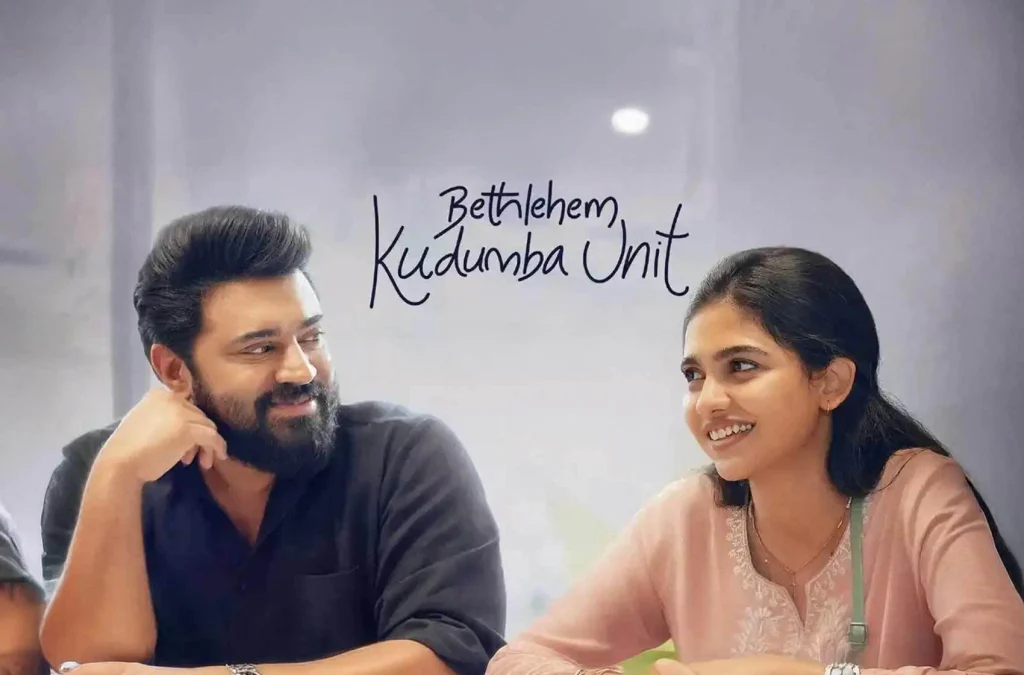
There is a beautiful interval sequence of Ashley confessing her feelings and Justin reciprocating it. This is followed by Ashley kissing him on the cheek. She brings a different side of Justin’s personality like the adorable miss you moment. 

A point in the movie comes once where the relationship is known to everyone; Ashley’s mother and uncle try to dissuade her in different ways. At one point everything seems to be done and dusted especially with Justin deliberately distancing himself. But Ashley’s climatic outburst changes everything; she makes it very clear that her life is with him only and no one else making Justin emotionally overwhelmed.

Unlike VS open ended ending BKU has a dramatic but a very satisfying finale. To sum it up Maddy and Ashley perfectly define the term heroine driven romance.

Senior male actors romancing much younger women has long been a familiar trope in Indian cinema, but a refreshing shift is emerging in how these relationships are portrayed. Rather than the hero pursuing the heroine, films such as De De Pyaar De, De De Pyaar De 2, Manmadhudu 2, Vishwanath & Sons and Bethlehem Kudumba Unit place the women at the forefront of romance. From Ayesha and Avantika to Mamitha Baiju’s Maddy and Ashley, these characters express their desires openly, challenge societal expectations and persist despite the men’s emotional reservations. While the films differ in their storytelling and characterization, they share a common thread: the heroine takes the initiative, drives the relationship forward and ultimately changes the hero’s outlook on love. Together, these films offer an interesting perspective on the evolution of age-gap romances in Indian cinema.

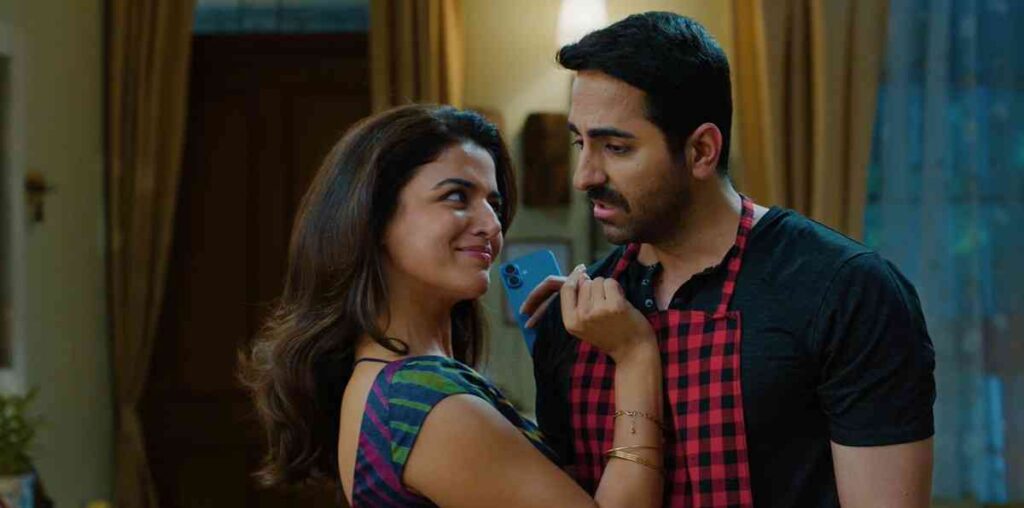
Pati Patni Aur Woh Do: A madcap comedy with a misleading title

The one liners coupled with a committed cast especially Ayushmann Khurrana and the stunning Wamiqa Gabbi keep the movie afloat. An interesting aspect of PPAWD is the angle of casteism. Actor and filmmaker Tigmanshu Dhulia plays a regressive politician with certain notions of so-called social boundaries. His role sets the base for the ensuing chaos spilling out of hand.

Starcast: Ayushmann Khurrana, Wamiqa Gabbi, Rakul Preet Singh, Sara Ali Khan, Tigmanshu Dhulia, Ayesha Raza, Vijay Raaz and others

Genre: Comedy

Direction, writing and screenplay: Mudassar Aziz

Additional screenplay: Ravi Kumar

Music: Rochak Kohli, Taniskh Bagchi etc

Cinematography: Jishnu Bhattachatterjee

Producers: Krishan Kumar, Ravi Chopra etc

Production Companies: T- Series Films and BR studios

Running time: 2 hours and 2 minutes

Before dissecting PPAWD it’s necessary to get an important matter out of the way. The film is not about Ayushmann Khurrana’s Prajapati Pandey having an extra marital affair behind the wife’s back. Mudazar Azis steers clear of that angle even though the scenarios are tailor made for a film like Masti franchise. Prajapati Pandey is a green flag husband and a solid friend. In the process of helping Sara Ali Khan’s Chanchal Prajapati’s life turns upside down. The root cause of the chaos is Tigmanshu Dhulia’s Gajraj Tiwari. Gajraj has strict boundaries of what he thinks is acceptable, Chanchal and Gajraj’s son Sunny are in deep love, however things take a dramatic turn thanks to a leaked photo of Sunny with a burqa clad woman. Of course, the one under the burqa is Chanchal and this pic reaches Gajraj. This photo is clicked by no other than Prajapati’s wife Aparna (Wamiqa Gabbi looking absolutely stunning as well as delivering a solid act). Aparna is a journalist with an ambition of opening her own news channel. What follows is a major comedy of chaos with a pile of misunderstandings and a frantic climax.

A strong aspect of PPAWD are the tricky scenarios in which our protagonist finds himself in. There is a scene in the cafe where Prajapati decides to act like Chanchal’s boyfriend to keep her safe from Gajraj and his men. He promises to help Chanchal until her boyfriend makes arrangements for the two to get away. Initially Prajapati plans to take Aparna too in confidence however a crucial revelation lands our protagonist in a messy situation. Still Prajapati goes ahead as Chanchal’s life is in danger. There are portions of Chanchal play acting like a girlfriend and Prajapati feeling hapless but playing along. This leads to numerous entertaining moments.

What elevates these screwball situations is Ayushmann Khurrana’s performance. Ayushmann’s facial expressions itself generate humor. The actor is in solid form playing to the gallery in an uninhibited manner. Apart from the comic situations Ayushmann also does a fine job in the vulnerable moments. An example of the vulnerable portion is Prajapati feeling anxious on hurting Aparna. The scenes of the protagonist’s frustration with his married life spilling out of control has been excellently portrayed by the actor.

A mention must also be made of the caste subplot. Yes, it doesn’t go too deep but the threat of Gajraj Tiwari can be definitely felt especially in an early scene of Chanchal describing her prospective father-in-law. There is an explicit emphasis from Chanchal on her coming from a lower caste and how this a major hurdle. This lifts PPAWD beyond the comedy of errors. There is also a monologue on rumors being perceived as truth when repeated often

Mudassar Aziz also deserves credit for the strong woman characters he has written. Wamiqa Gabbi’s Aparna has the least comical role among the three, but the actress brings in an emotional depth. Whether it’s her journalistic ambitions or the hurt of her husband supposed cheating Wamiqa is very good besides looking breadth takingly beautiful. Rakul Preet Singh plays Aparna and Prajapati’s best friend Nilofer Khan. Rakul is suitably feisty especially in the scene where she warns Prajapati on not hurting her best friend. Her scenes with Ayushmann especially in the one where she mocks him have nice comic touches. The two share a good camaraderie, lastly Sara Ali Khan as Chanchal does a fine job too in bringing out the character’s desperation.

The supporting cast led by Tigmanshu Dhulia and Ayesha Razia also lift the movie. Tigmanshu Dhulia plays the casteist politician with the right amount of authority, Ayesha Raza on the other hand is absolutely hilarious as Chanchal’s Buaji. The way she speaks with the speed of a Rajdhani express with a poker face leads to some chuckles. Vijay Raaz as a corrupt policeman is also competent with his dead pan humor.

Coming to the flaws Pati Patni Aur Woh do does suffer from scenes of excess. The second half in particular feels stretched in spite of the crisp running time. The pile of misunderstandings goes out of control. Also, a dream song featuring Ayushmann and Rakul doesn’t add much value to the proceedings. The songs in itself are a mixed bag with Roop Di Rani being the best of the lot. There is also a rather unnecessary character of an effeminate office boy speaking in a highly theatrical zone.

Final word: Pati Patni Aur Woh Do makes for an engaging screwball comedy especially if you are in the mood for some lighthearted fun.

Thank God: A Fantasy Ride That You Won’t Mind Hopping On

Indra Kumar’s Thank God is an attempt at creating a make believe world that wants to entertain, as well as give a message. This is a difficult tightrope and the dramatic bits don’t completely land but still there is no denying that Thank God is a film that leaves you in a good mood. For those who are not aware Thank God is based on the Danish social comedy Sorte Kugler.

Ayaan Kapoor (Siddarth Malhotra) is a bankrupt real estate agent married to a cop played by Rakul Preet Singh. Ayaan is someone who has many flaws. He has anger management issues, low self-esteem, and doesn’t get along well with either his wife or the daughter. Additionally he is very jealous and adores Nora Fatehi as a fantasy figure. One day, he meets with an accident. Instead of waking up in a hospital room he wakes up to afterlife. Indra Kumar’s version of afterlife consists of a giant stadium full of people who would be judging him in a game show called The Game of life. The host is C.G shortcut for Chitragupt (A flamboyant Ajay Devgan). If Ayaan gets enough white balls he would be sent back to be resurrected. However, abundance of black balls would mean hell.

What follows is a roller coaster journey where Ayaan has no other option other than to win this Game of life. There are many life lessons along the way presented in the format of an escapist fantasy.

The best parts of Thank God are easily the interactions between Ajay Devgan and Siddarth Malhotra. The one liners of Ajay will leave you in splits. The first half has lot of situational humor. Thankfully Indra Kumar stays away from making it a vulgar comedy. One of my favorite bits in the first half is when Siddarth Malhotra tries to bring his inner Singham but ends up failing miserably. There is also a KBC reference when Ajay Devgan talks about how a superstar had come here once, and took the idea of his game and adapted it as KBC.

Another good thing about Thank God is how the director portrays the transformative journey of Ayaan. The way CG makes Ayaan relive episodes from his own life make the drama more interesting.

The gradual progression in his character and how he learns to appreciate the good happenings in his life and letting go off the bad has been well portrayed.

Thank God heavily relies on the shoulders of Ajay Devgan and Siddarth Malhotra and both don’t disappoint. Siddarth Malhotra is successful in capturing the different shades of Ayaan. This is the first time that Siddarth has tried his hand at a situational comedy and the actor does a pretty good job. The scenes in the first half where he pretends to be a broker in order to sell his bungalow are hilarious to say the least.

Ajay Devgan makes for the perfect modern Chitragupt. The actor is a delight to watch as the all knowing game host who has nothing but the best interests of the contestants at heart. You can clearly see that Ajay is having a ball.

Rakul Preet Singh is good as a devoted wife but suffers majorly due to a one note characterization. Like numerous female characters in this year Rakul ends up being a prop later on. More scenes between Siddarth and Rakul would have enhanced the romantic portions. The talented Seema Pahwa is also relegated to the backseat.

The music is more situational but thankfully the songs do not come across as speed breakers. The song Manike filmed on Siddarth and Nora Fatehi is easily the best song in the album.

Final word: Watch Thank God for some lighthearted moments and if you are in the mood for some life lessons.

Kondapolam: Another Feather In Krish’s Filmography

Sannapureddy Venkatarami Reddy’s novel Konda Polam is a hugely acclaimed novel for many reasons. It addressed many significant topics, one of which is the need for coexistence between man and nature. It was also about the protagonist getting rid of his inner demons and facing life with confidence.

Director Krish retains the spirit of the novel and adds his own touch to it. At the same time he removes certain unnecessary chapters from the novel like the smuggling one. Krish’s touch can be seen in the way he builds up the love story between Vaishnav Tej’s Ravi and Rakul Preet Singh’s Obu. The character of Obulamma is a creation of the director but it never feels unnecessary or unwanted. Through the characters of both Rakul Preet Singh and Hema Krish gives a feministic touch.

THE BIGGEST ACHIEVEMENT OF KRISH IS HOW HE SETS UP THE TALE WITH THE HELP OF A FANTASTIC TECHNICAL TEAM.

The movie begins off with Ravi attending an interview at the UPSC board. His aim is to become a forest officer. Though he is fluent in English he requests Nassar along with the other officers to conduct the interview in Telugu, highlighting the right to speak in one’s own mother tongue. From there we move to a flashback that tells you about the journey of the protagonist from Nallamala forest to this current interview.

The biggest achievement of Krish is how he sets up the tale with the help of a fantastic technical team. Gnana Sekhar’s cinematography beautifully captures the locales. Although the film was shot in Vikarabad forests and Anantagiri, it has the authentic feel of Nallamala forests. They are a treat to watch. The art direction is another department that deserves full marks. Rajkumar Gibson creates an authentic milieu that has a lived in feel. You never feel any sense of artificiality.

ANOTHER THING THAT KRISH GETS RIGHT IS THE CHARACTER GROWTH OF RAVI.

Another thing that Krish gets right is the character growth of Ravi. Initially we see him in a perpetual state of fear whether it is in the boardroom or back home in village. He is jerky whenever he is asked why he hasn’t got a job yet. The transformative journey begins when he is sent by his grandfather to Konda Polam. If his biggest fear in forest is tiger, his biggest fear in life is not getting a job. Krish combines both these aspects and shows how Ravi overcomes both.

Rakul Preet Singh’s Obulamma is a character that will be remembered for a long time just like Samantha’s role in Rangasthalam. While Ravi might look more knowledgeable in the outside world, but it is Obulamma who is superior to him in terms of sheep rearing and the ways of the forest. She turns into a guru for Ravi and teaches him the ropes of the forest. The way the love story has been weaved into the bigger picture is very appreciable.

RAKUL PREET SINGH IS A REVELATION IN HER PART. SHE PORTRAYS THE DE-GLAM ROLE WITH ABSOLUTE CONVICTION.

Rakul Preet Singh is a revelation in her part. She portrays the de-glam role with absolute conviction.  Vaishnav Tej is earnest and delivers a sincere performance.

One of my other favorite characters is of Ravi Prakash. There is a brilliant monologue scene where he speaks to his wife over the phone and breaks down. It is a highly emotional scene that moves us to tears. Ravi Prakash is absolutely brilliant. Sai Chand also deserves appreciation for his wonderful acting. After Uppena it is the second time that Vaishnav Tej and Sai Chand are acting together as father and son and the comfort level shows. Kota Srinivasa Rao has a small role but the veteran actor is a delight to watch.

AFTER UPPENA IT IS THE SECOND TIME THAT VAISHNAV TEJ AND SAI CHAND ARE ACTING TOGETHER AS FATHER AND SON AND THE COMFORT LEVEL SHOWS.

The use of Rayalaseema dialect is also pretty impressive. The accent never comes across as odd. However there are certain heavy dialogues by some characters that seem strange given their background.

The songs and the background score by Keeravani is definitely a minus. Except for the Obulamma song nothing really works. Couple of romantic songs also act as speed breakers. The background score is too loud and it distracts you somewhat from the watching experience.

Watch Konda Polam for the authentic performances and the realistic background.