From Ayesha to Maddy and Ashley: The Rise of Heroine-Driven Age-Gap Romances

Senior male actors romancing women half their age is nothing new, in fact it has become a normalized matter thanks to numerous male actors. Whether it’s Senior NTR in his hey days or the likes of megastar Chiranjeevi and Ravi Teja; with these movies there is a general trend of hero wooing the heroine first and she falling in love with him later.

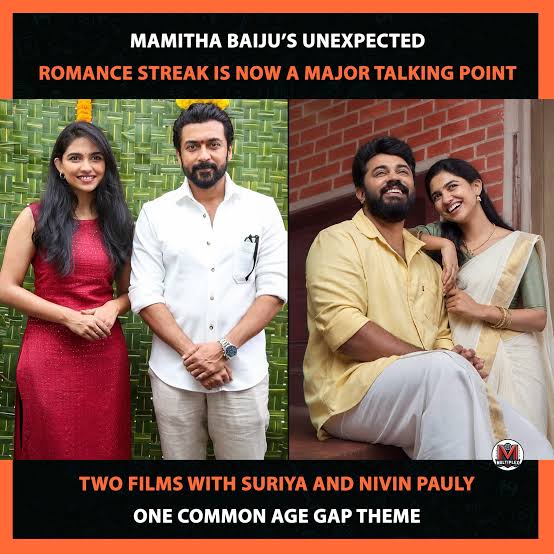
When we talk about a lot of Ravi Teja’s recent films case in point Mr Bachchan there is a deliberate attempt to portray the character as a youngster. In the name of wooing you get a lot of stalking with lavishly chore graphed numbers. However a new kind of age gap romances have emerged recently, and I will be giving a brief overview on this. In this article five movies will be covered, among them two have released this year Vishwanth &Sons and Bethlehem Kudumba Unit. Both star the same heroine Mamitha Baiju with plots that feel similar. However, the narration style varies significantly; but one very striking point is Mamitha’s characters design, they are far more outward than the men taking the initiative in numerous sequences. The Hollywood reporter magazine was absolutely right when they mentioned about Mamitha driving the romance in both the movies.
But before getting into VS and BKU in little more depth its necessary to talk about three Rakul Preet Singh movies perfectly symbolizing the topic. There are two De De Pyaar De films and Manmadhudu 2. In all these three Rakul take more initiative and following is a brief explanation of that.

The first half of De De Pyaar De 1 focuses on a growing bond between Ajay Devgan’s Ashish and Rakul’s Ayesha. Ashish is fifty and she on the other hand is 26 years old. Ashish has certain misgivings about dating a much younger girl and this is further compounded by Javed Jaffery playing a psychiatrist cum friend. But Ayesha has no such doubts about Ashish being her future life partner.

In numerous sequences she is the one initiating romance and expresses her desires without hesitation. This holds particularly true of a crucial confrontation scene a few scenes before the interval. Ashish deliberately distances himself talking about the difficulties which could arise from the huge age gap. But Ayesha follows her heart convincing Ashish.

De De Pyaar De 1 ends with Ashish having to convince Ayesha’s parents for the marriage. In part 2 a significant parental opposition comes in the form of R Madhavan. Here too their approaches are contrastingly different with Ashish playing more of a waiting game. Ayesha on the other hand wants him to be more proactive in convincing her parents.

There is an elongated sub plot featuring Javed Jaffery’s real life son Meezan Jafri. His character is brought into the picture to woo Ayesha; the plan is orchestrated by the father. For a while it appears that the plan is successful however there is a major twisted revealed before the climatic stretch. Ayesha actually knows what’s on her father’s mind; so, she hatches up a roundabout plan to emotionally manipulate her father as well as a change Ashish’s attitude where he decides to win her back.

Yes the route is very elongated, and a simpler path would have been better. Still the important point here is that Ayesha asserts her independence and an important monologue of Rakul in the pre climax is a perfect icing on the cake.

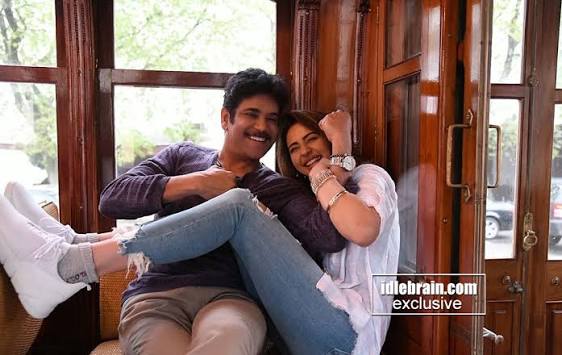
The last Rakul Preet Singh movie in this list is Manmadhudu 2. Akkineni Nagarjuna is Sambasiva Rao/ Sam, a middle-aged Casanova with no interest in marriage; but the mother played by the veteran actress Lakshmi along with the other family members wants the protagonist to get married. Rakul Preet Singh plays a bartender cum poet Avantika; Avantika is waiting for her poetry book to be published.

Much like the De De Pyaar De movies the character here too is strong willed and unapologetic. Avantika is the one who first falls for Sam and isn’t afraid of expressing her interest in him. Sam also has feelings but is afraid to express. Eventually Avantika’s bold nature rubs on him resulting in a feel good climax.

Now let’s get to this year’s Vishwanth &Sons and Bethlehem Kudamba Unit. Both have the same heroine the sensational Mamitha Baiju and characterization wise too Maddy and Ashley share a couple of similarities. Of screenplay wise both differ but in both the cases it’s the leading lady who takes the lead.

First up is Vishwanath &Sons. Mamitha’s Maddy has no parents and relatives; she lives in hostel with a bunch of friends. Her life plan is chalked out both professionally and personally, but this changes with the arrival of Suriya’s Sanjay Vishwanth. She is a surrogate mother to his son; due to the son’s medical emergency Maddy comes into the live of Sanjay and their lives get intertwined.

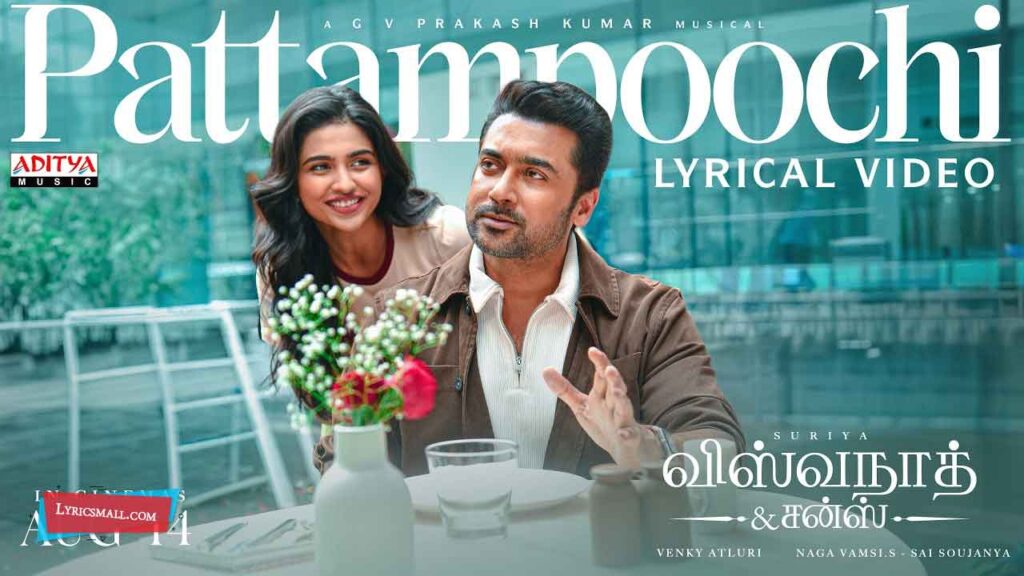
Maddy falls in love head over heels perfectly captured in the song “Neno Butterfly in Telugu and Pattampochi in Tamil. She is absolutely uninhibited in expressing her desire of wanting to be Sanjay’s wife, but Sanjay maintains a distance. It’s not that the man doesn’t have feelings for Maddy; he does have feelings as revealed in the closing stretch with Raveena Tandon’s character. But a certain emotional baggage coupled with the huge age makes things complicated. Sanjay deliberately distances himself so that Maddy finishes her studies and may find someone younger, but that doesn’t happen with Maddy’s persistent nature winning. What makes the climax very satisfying is that Maddy becomes a doctor and at the same time Sanjay accepts her.

The final movie belonging to this genre is the Malayalam blockbuster Bethlehem Kudamba Unit. Much like VS here too Mamitha plays a younger girl; her character Ashley falls in love with a middle aged bachelor Justin (Nivin Pauly). Unlike the hyperactive Maddy Ashley is more melancholic, it takes a while to find her feet but once Ashley falls in love with Justin there is no looking back.

There is a beautiful interval sequence of Ashley confessing her feelings and Justin reciprocating it. This is followed by Ashley kissing him on the cheek. She brings a different side of Justin’s personality like the adorable miss you moment. 

A point in the movie comes once where the relationship is known to everyone; Ashley’s mother and uncle try to dissuade her in different ways. At one point everything seems to be done and dusted especially with Justin deliberately distancing himself. But Ashley’s climatic outburst changes everything; she makes it very clear that her life is with him only and no one else making Justin emotionally overwhelmed.

Unlike VS open ended ending BKU has a dramatic but a very satisfying finale. To sum it up Maddy and Ashley perfectly define the term heroine driven romance.

Senior male actors romancing much younger women has long been a familiar trope in Indian cinema, but a refreshing shift is emerging in how these relationships are portrayed. Rather than the hero pursuing the heroine, films such as De De Pyaar De, De De Pyaar De 2, Manmadhudu 2, Vishwanath & Sons and Bethlehem Kudumba Unit place the women at the forefront of romance. From Ayesha and Avantika to Mamitha Baiju’s Maddy and Ashley, these characters express their desires openly, challenge societal expectations and persist despite the men’s emotional reservations. While the films differ in their storytelling and characterization, they share a common thread: the heroine takes the initiative, drives the relationship forward and ultimately changes the hero’s outlook on love. Together, these films offer an interesting perspective on the evolution of age-gap romances in Indian cinema.

Vishwanath&Sons: A wholesome family entertainer with a Trivikram touch

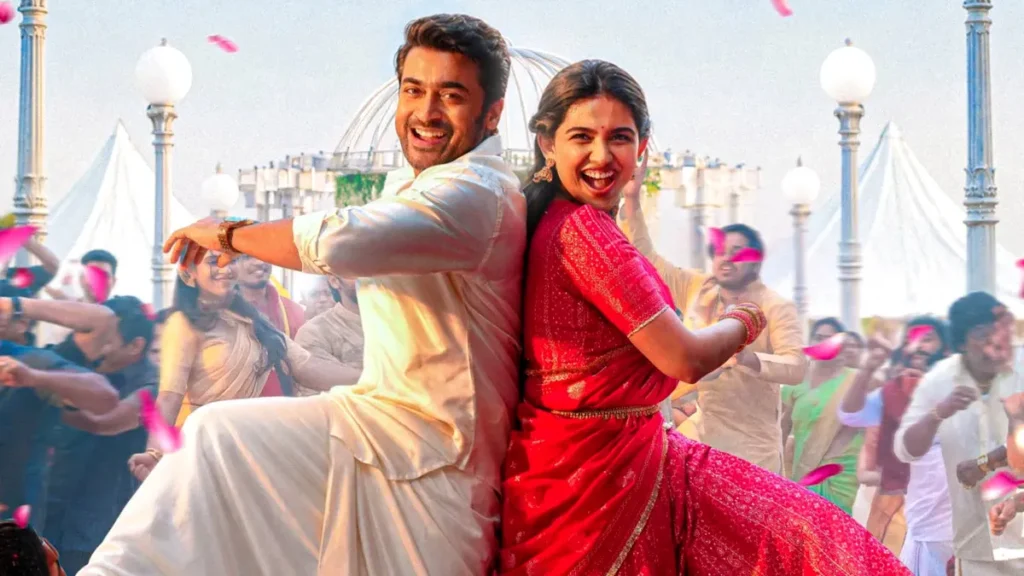
After Lucky Bhaskar Venky Atluri takes another out of box premise, this time a huge age gap romance with the backdrop of surrogacy. In spite of some dips post interval the film is largely engaging. Mamitha Baiju as the chirpy Madanakameswari akka Maddy is the films beating heart. The young actress more than holds her own opposite Suriya and Radhika Sarathkumar. Suriya as Sanjay Vishwanath delivers a performance which is more internalized nevertheless highly effective. The climax signifying a happy ending for Vishwanath and Maddy ends the film on a high.

Starcast: Suriya, Mamitha Baiju, Radhika Sarathkumar, Raveena Tandon, Nassar and others

Director and writer: Venky Atluri

Genre: Romance/family drama

Dialogues: KN Vijaykumar

Music: GV Prakash Kumar

Cinematography: Nimish Ravi

Producers: Suryadevara Naga Vamsi and Sai Soujanya

Production Companies: Srikara Studios, Sithara Entertainments etc

Running time: 2 hours and 41 minutes

Vishwanath& Sons is a very anticipated release for numerous reasons. Venky Atluri’s last Lucky Bhaskar was a major hit both critically and commercially. Suriya after a series of theatricals debacles made a strong comeback with the massy hit Karuppu. However, the biggest reason for the buzz is it’s out of box plot. How the huge age gap romance will unfold has created curiosity. Thankfully Venky Atluri does justice to the theme, and the happy ending is the icing on the cake. At times the film ventures into a classic Trivikram territory, the family drama in second half does slow down the movie thankfully though the film never slips off the rails.

The story of VS revolves around a businessman cum Olympic shooter played by Suriya and a free-spirited medical student Maddy (Mamitha Baiju). Vishwanth has an aversion for marriage due to certain reasons, but he ends up having a baby boy through surrogacy. Radhika Sarathkumar plays Vishwanath’s mother who wants her son to get married. The lives of Vishwanath and the surrogate mother Maddy intertwine due to a medical crisis. How Maddy entry changes Vishwanath’s life forms the main core of VS.

The strong aspect of VS is the polar opposite characters. Vishwanath has a more serious demeanor; there is a certain restraint to the character. Maddy though is wilder with an unfiltered attitude. How the two end up developing a deep bond even with the mismatched personalities is a major plus for VS.

Vishwanath’s emotional trauma is revealed in installments, and this helps the viewers in understanding the man’s personality. The subplot of Raveena Tandon and her dynamics with Vishwanath has some solid moments too. Radhika Sarathkumar as the ageing matriarch is elegance personified. The veteran actress balances authority and warmth in her signature style. Her scenes with both Suriya and Mamitha give the film some of its best moments.

Among the lighter scenes a specific mention must be of the portion involving Suriya’s condoms. Venky Atluri treats the entire portion of Vishwanath having flings with 30 plus women in a matter-of-fact way. There is no overt sensationalization with the mother also being cool about it.

Vishwanath &Sons wouldn’t be what it is without the performances apart from the solid writing. After an unabashed massy turn in Karuppu Suriya effortlessly slips into a classy avatar portraying Vishwanath in an understated but highly effective manner. The actor especially shines in the scenes of Vishwanath facing his inner demons and revealing his feelings about Maddy.

Mamitha Baiju though is the showstopper, she brings in both warmth and an infectious energy. The stubbornness of Maddy could have been easily mistaken for infatuation but both the writing and the actress bring an emotional resonance. As viewers you understand where Maddy is coming from making the happy ending even more satisfying.

The rest also pitch in some fine performances especially Raveena Tandon. Nassar on the other hand brings in some laughs amidst the second half’s emotional drama. The music of GV Prakash Kumar isn’t a chartbuster, but the songs go well with the films flow. Neno Butterfly deserves a special mention for Mamitha’s portrayal of a love-struck woman.

The cinematography is suitably blingy, but it has a significant hangover of other movies depicting rich families.

Final word: Vishwanth& Sons is a refreshing family entertainer with a good mix of emotions. Definitely worth seeing for fans of comfort cinema and Suriya.

Lucky Bashkar: A well-made financial thriller/drama with a terrific Dulquer Salmaan

Director Venky Atluri is successful in transporting the viewers into the world of bank scams and how people made huge fortunes on stock markets by exploiting the banking system. What also makes the movie work is the characterization of Baskhar, a normal middle class bank employee wanting to change the family fortunes through whatever it takes

  • Starcast: Dulquer Salmaan, Meenakshi Chaudhary, Rithvik P. Sai Kumar, Ramki, Tinnu Anand and others
  • Director and writer: Venky Atluri
  • Producers: Suryadevara Naga Vamsi and Sai Soujanya
  • Production Companies: Sithara Entertainments and Fortune Four Cinemas
  • Music: G. V Prakash Kumar
  • Running time: 2 hours and 30 minutes
  • Cinematography: Nimish Ravi

Before the Tamil Film Vaathi starring Dhanush the filmography of Venky Atluri was dominated by romantic movies. Vaathi showcased a different side to Venky Atluri, though far from perfect the director did a fair job in exploring right to education and also some institutions which treat education as business. With his latest Lucky Baskhar the director has once again stepped out of his comfort zone dealing with a subject involving the banking system and the stock market. He pulls it off for most part.

Venky Atluri has once again stepped out of his comfort zone dealing with a subject involving the banking system and the stock market

The story of Lucky Baskhar is set in the period of the early 90’s. Dulquer Salmaan is the main protagonist. Baskhar is a middle-class employee working in Magadh Bank. Meenakshi Chaudhary of Hit 2 and Guntur Kaaram fame is the wife Sumathi, Rithivik plays the son. Baskhar’s salary is mere nine thousand rupees, given the large family consisting of brother, sister and father this money is nowhere sufficient to support them. Additionally, debts are also there. Also adding to Bashkar’s woes are the in laws who don’t shy away from expressing their dissatisfaction with his financial condition. The final nail in the coffin happens when Baskhar doesn’t get the promotion he was expecting. Frustrated with the circumstances Baskhar treads a very dangerous path starting with a small scam. Baskhar’s new path changes his entire personality causing friction with those closest to him. This is the story in brief.

The theme of financial crime set against the backdrop of a bank is a new genre for Telugu Cinema. Thankfully director Venky Atluri doesn’t make it overtly complicated. The banking system and the functioning of stock markets are presented in such a way even a lay men can understand.

Lucky Baskhar also works due to the effective world building of a bygone era. Venky Atluri along with the cinematographer Nimish Ravi do a wonderful job in transporting the viewers into the Bombay of 1989 and 1990 giving the viewers a lived-in feel.

The portrayal of the middle-class life in terms of the conversations and the overall texture is a big plus for the movie. This particularly reflects in the ups and downs of Baskhar and Sumati’s relationship. The dialogues often have a philosophical tone, but they never get verbose. A Trivikram flavor can be found in the dialogues related to the concepts of success, failure and greed.

The financial struggles of Baskhar are presented in a crisp yet very impactful manner. The humiliations and the financial hardships which he undergoes makes the viewers empathize with him even when he takes a route which isn’t ethically right.

What also enhances the films are the constant twists and turns. Every venture of Baskhar feels like a mini adventure where the viewers are constantly guessing on how Baskhar will come out triumphs.

Baskhar’s huge rise and the subsequent crash has a lot of emotional depth. Baskhar’s regret over his actions has come out wonderfully too.

The biggest ace of Lucky Bashkar though is its leading man. Dulquer has always experimented with a range of characters making them his own. Here too he does a swell job in portraying the various nuances. He is simply terrific both as a struggling middle class man and also showcasing the subsequent arrogance of Bashkar as he loses the way. The actor is particularly impressive in the emotional scene like the portion where he vents out his frustration on not being promoted in spite of slogging hard for 3 years and winning the best employee award consecutively.

Dulquer Salmaan does a swell job in portraying the various nuances of Bashkar

Meenakshi Chaudhary gets a far better role in this one compared to the tiny part in Guntur Kaaram. She makes full use of it delivering a strong act particularly the portions where Sumati expresses her rage at the change in Bashkar.

Meenakshi Chaudary as Sumathi also delivers a strong act

G V Prakash’s songs flow seamlessly into the narrative. Particular mention must be of the Srimathi Garu song. It is a soothing romantic number enhanced by the chemistry of Dulquer and Meenakshi. His background score also deserves distinction marks. It adds to the thrill quotient significantly.

Dulquer and Meenakshi in Srimathi Garu song

The ending of Lucky Baskhar is also interesting. The director completely leaves it to the viewers to judge the actions of Baskhar.

While mostly engaging Lucky Baskhar has a couple of loose ends. One of them is a sequence involving Raghu Babu and a cop. It feels dragged, also the movie needed a stronger opposition to Baskhar given how he always comes out unscathed in spite of how tough the situations are like the pre- climax and climax.

Leaving aside these small niggles Lucky Baskhar is an entertaining thriller/drama particularly for die hard Dulquer fans.