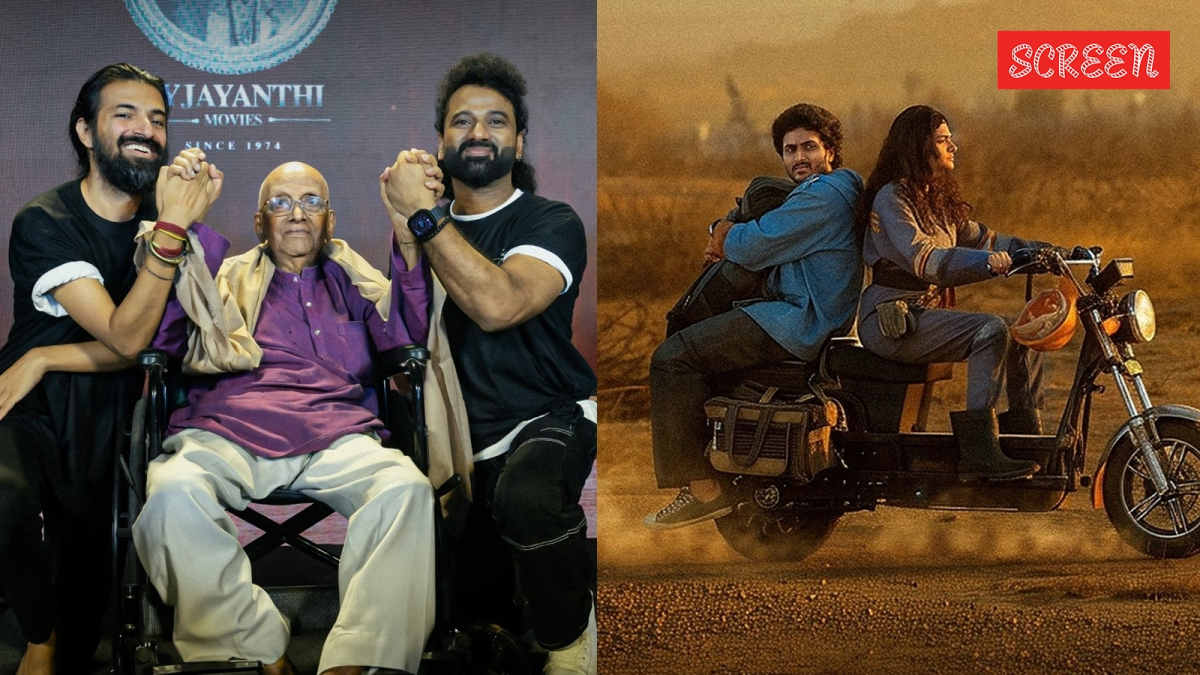
Movies, in general, tend to carry social undertones of various kinds. Sometimes these are overtly explicit, in other cases they emerge subtly through subplots. These social undertones aren’t confined to just the serious stuff, sometimes it can just be a fun rom com like this year’s Godavari Gattu Paina. On the surface, the film’s plot is threadbare, but within that lay some interesting nuances. One of the most notable is its underlying theme of religious inclusivity. This is conveyed seamlessly through the hero’s close friends, who are Muslim and Christian respectively. The film also features an important scene in which the mother character emphasizes that belonging to a different religion is neither a barrier to love nor a valid reason to oppose marriage. Rather than feeling preachy, the message is woven naturally into the narrative, making it all the more effective.

Mahesh Narayan’s globe-trotting Malayalam film Patriot also explores the theme of religious inclusivity, anchored by the strong on-screen friendship between Mammootty’s Dr. Daniel James and Mohanlal’s Rahim Naik. Through their bond, the film conveys the symbolism of unity in diversity in a powerful manner. Patriot also features strong female characters in brief yet significant roles, particularly those played by Revathy and Nayanthara. Revathy, especially leaves a lasting impression as a determined Chief Minister, projecting both understated authority and quiet strength.

2026 has, so far, witnessed an interesting mix of social themes. From the ecological fable Sing Geetham to the poignant story of displacement in Main Vaapas Aaunga, filmmakers have explored a wide range of contemporary and historical concerns. At the same time, big-budget productions like Peddi have also engaged with socially relevant ideas, focusing on themes of identity, dignity, and aspiration through the journey of a crossover athlete. What follows is a brief exploration of some of the key social themes emerging from Hindi, Telugu, and other language films released this year.
Maverick director Singeetham Srinivasa Rao’s latest film, Sing Geetham, tackles weighty themes such as mining, environmental destruction, and humanity. While these subjects could have resulted in a heavy-handed drama, the film stands out for its fable-like narrative structure giving the story a distinctive charm. Several scenes evoke the harsh realities of mining and the large-scale destruction of forests in the name of development. Another aspect that makes Sing Geetham special is its strong focus on women, particularly Ahilya Bamroo’s Gauri and Shalini Kondepudi’s Renu. Gauri, a spirited environmental activist, and Renu, a shrewd businesswoman, emerge as the story’s driving forces. Their contrasting ideologies shape the narrative and are brought to life through a series of compelling and thought-provoking confrontations.

Imtiaz Ali’s Main Vaapas Aaunga is much more than just the horrors of Partition. It also serves as a poignant reminder of the displacement and devastation caused by the wars unfolding across the world today. The film explores the loss of humanity as people are swept into an endless cycle of violence, a theme that comes through powerfully in several scenes of second half. By the end, we realize that despite the passage of decades, very little has changed. This realization makes Main Vaapas Aaunga a timely watch for our times

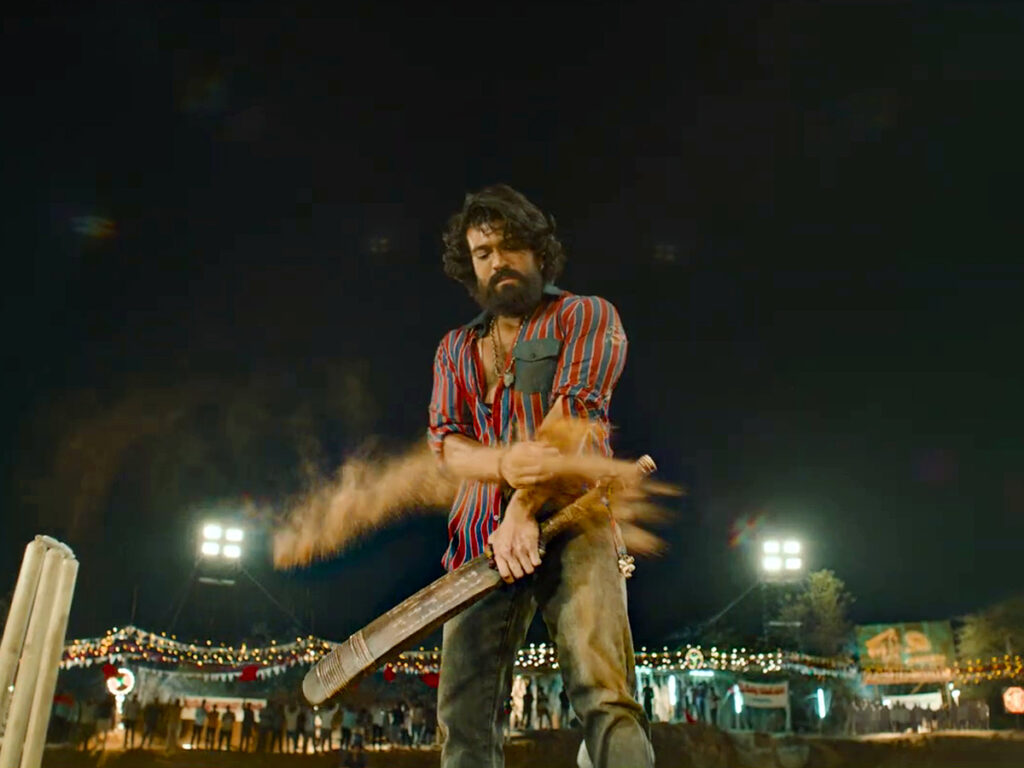
Buchi Babu Sana’s Peddi demonstrates how a mainstream star vehicle can also possess a meaningful social core. While the heroine’s characterization leaves much to be desired, the film’s exploration of dignity and identity carries universal appeal. The story portrays caste discrimination through an oppressed community that lacks even basic civic amenities such as proper roads and railway access. The casteist insults endured by Ram Charan’s Peddi and his community make their eventual triumph all the more satisfying.
Another underlying theme of Peddi is sports as a great unifier. This is wonderfully conveyed through the oppressed community watching the Paralympics match in an upper caste man’s house, this person until then treats them with distaste but the medium of sports breaks that barrier.
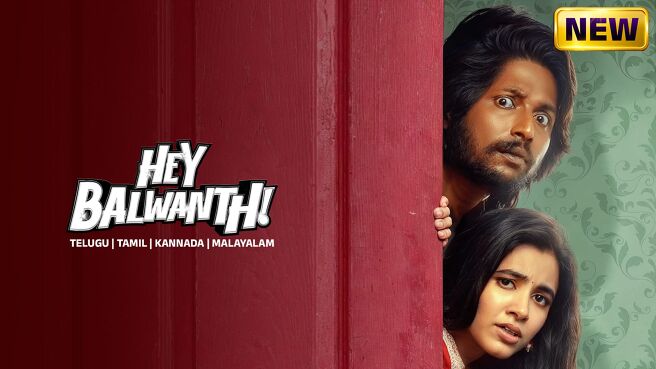
Gopi Atchara’s Hey Balwant occupies a unique space among this year’s films. At its heart, it is a father-son drama, but it also offers a compassionate portrayal of sex workers. The lodge run by VK Naresh’s Balwant becomes a character in itself, carrying years of history and emotional significance. There is a police officer whose mother was one of the numerous prostitutes. He talks about how Balwant helped him with his studies, an important reason for his growth.
The film also examines society’s attitudes towards women in this profession through the characters played by Suhas and Shivani Nagaram.
One important scene features Suhas casually asking a sex worker on “why don’t you find” some another job, exposing his ignorance about the realities forcing some women into such work. Another important sequence sees Shivani Nagaram’s Mithra blaming the lodge for her grandfather’s visits to sex workers, rather than holding him accountable for his own choices. Through these moments, the film critiques society’s tendency to judge women while excusing men.
AR Sajeev’s Om Shanti Shanti Shantihi shares thematic similarities with Rahul Ravindran’s Girlfriend in a slice of life zone. Though a remake of Jaya Jaya Jaya Hey OSSS has a strong social core, an important theme explored in the movie is the power dynamics. The patriarchal hierarchy with women also enabling it has parallels with numerous households. A specific mention must be made of a sequence involving Esha Rebba’s Prasanthi and her on screen mother. When Prasanthi complains about her husband’s beating, she defends the son- in law by using Sandeep Reddy Vanga’s real life comment on how physical violence is an expression of love. This scene gives a perfect insight into a certain kind of social conditioning.
Vivek Soni’s Chand Mera Dil unfolds like a spiritual companion to Thappad. Through Ananya Panday’s Chandini, the film explores self-respect, personal identity, and emotional independence. Ananya Pandey’s Chandini is someone who doesn’t compromise on her identity in order to preserve her relationship. She carves out her own space as a single mother. The film doesn’t celebrate the violent snap of Lakshya Lalwani’s Aarav; it makes him work hard to earn the relationship back.

Cheekatilo, streaming on Amazon Prime Video, examines society’s treatment of sexual assault survivors. It critiques the tendency to blame victims while also exposing the voyeuristic gaze of sections of the media. The film’s emotional impact is heightened by the fact that only two survivors come forward to share their experiences, reflecting the harsh reality that many victims go through due to fear and stigma.
Two notable Hindi OTT releases this year, Accused and Maa Behen, also offer compelling gender perspectives. Both are streaming on Netflix and focus on a certain kind of perception. In Accused Anubuthi Kashyap does an interesting gender flip with the backdrop of Me Too. Here the accused is a woman Geetika Rao (Konkana Sen Sharma), she is a top doctor who has worked hard to reach this position. Through this gender flip Anubuthi presented a a nuanced picture on how men feel threatened by woman in power. This is perfectly summed up in the following dialogue. “Jab aadmi successful hota hai to hum kehta hain deserve karte hain. But when a woman reaches a powerful position, we doubt Aisya Kya Kiya Hoga. A dramatic sequence featuring this dialogue sums up the underlying social theme. Another interesting aspect of Accused is the same sex relationship and how Pratibha Ranta isn’t reduced to just a supportive spouse. Their dynamics are treated in a matter-of-fact way like any normal couple in the same circumstances.
Maa Behen on the other hand has scenes of gossip culture and how society judges those not conforming to what they think is appropriate. A strong example of this is the rumours spread on Madhuri Dixit Nene’s Rekha, a non conforming widow living life on her own terms. There is also a social angle similar to Jeo Baby’s The Great Indian Kitchen. Tripti Dimri’s Jaya is someone caught in a suffocating cycle of an oppressive marriage. Through her character and her eventual rebellion director Suresh Triveni explores the emotional exhaustion a regular housewife goes through.
Among the Tamil Films Made in Korea and Thaai Kizhavi deserve a special mention for their tackling of social themes related to gender. Made in Korea celebrates female solidarity through the friendship between a young Tamil woman and a Korean woman. Priyanka Mohan’s character evolves into a stronger, more self-reliant individual because of this relationship.
Thaai Kizhavi presents an equally compelling feminist narrative within a rural setting. It emphasizes the importance of women’s financial independence while also briefly addressing remarriage. Radhika Sarathkumar’s character undergoes a fascinating transformation from someone initially perceived as a ruthless moneylender into a self-made matriarch who inspires other women to shape their own destinies.
Among English-language films, three releases stand out for their social themes: Obsession, The Devil Wears Prada 2, and The Bride.
Obsession uses psychological horror to examine autonomy and emotional dependency. Through supernatural elements, director Curry Barker explores the gradual erosion of Nikki’s individuality. Initially an aspiring writer, she slowly loses her sense of self as emotional dependency takes over her.

The Devil Wears Prada 2 examines the changing landscape of digital journalism, touching upon sponsored content, clickbait culture, and editorial compromise. It also subtly explores female solidarity through the evolving relationship between the characters played by Meryl Streep and Anne Hathaway.

The Bride presents feminism through the lens of gothic romance. Jessie Buckley’s Ida is created as a companion for Christian Bale’s Frank, but over time she develops into a complete individual. The film argues that a woman’s identity should never exist solely in relation to someone else.
Taken together, these films demonstrate that cinema in 2026 continues to move beyond mere entertainment. Interestingly, many of the year’s strongest social commentaries have emerged from small and medium-budget productions featuring newcomers or actors outside the mainstream star system.
Sing Geetham and Main Vaapas Aaunga exemplify how middle-of-the-road and alternative cinema are currently producing some of the year’s most meaningful storytelling. Their ability to earn both appreciation and commercial success is an encouraging trend for Indian cinema.
Mainstream big-budget films, however, still have considerable ground to cover, particularly in terms of gender representation. Peddi, despite its powerful exploration of dignity and caste discrimination, fails to extend the same sensitivity to its female lead.
Similarly, films dealing with patriotism and history have increasingly become vehicles for ideological agendas. A prominent example is Dhurandhar 2: The Revenge. In contrast, both Main Vaapas Aaunga and Dharmendra’s Ikkis foreground humanity across borders, emphasizing compassion over divisive nationalism. Their humane perspective serves as a reminder that cinema can engage with history, not reducing it to an “us versus them” narrative.