Ajeeb Daastaans: An Uneven Anthology Saved By Neeraj Ghaywan And Kayoze Irani

Ajeeb Daastaans has interesting ideas at its core but it could have been far better. Out of the four stories only two stand out. One is Neeraj Ghaywan’s Geeli Pucchi starring Konkona Sen Sharma and Aditi Rao Hydari. In this approximately 40 minutes film the director combines the themes of caste, sexuality and womanhood. Kayoze Irani’s Ankahi on the other hand is a heartwarming story with winning performances from Shefali Shah and Manav Kaul. Below is my brief analysis of the four films.

  1.  Majnu directed by Shashank Khaitan- Majnu revolves around a couple who end up together because of a business alliance and as a result struggle to find happiness. Things take a turn when a third person Raj played by Armaan Ralhan turns up. He turns their life upside down. The biggest issue with this story is Mirzapur hangover. Right from the atmospherics to the dialogues you are heavily reminded of that series. There isn’t much here to appreciate but there are a couple of positives. One of them is the unexpected revelation of Jaideep Ahlawat’s character. It comes in when you are least expecting it. The other positive is the performance of Fatima Sana Sheikh. The actress does a good job. Jaideep Ahlawat on the other hand looks lost which is strange considering how good he was in last year’s Paatal Lok.
  2.  Khilona directed by Raj Mehta – Director Raj Mehta’s Khilauna is an earnest attempt at highlighting the gap between rich and poor. It does succeed in making you uncomfortable but it is not in a good way. Nushrrat Bharuccha and Inayat Verma play sisters who have strong survival instincts. Sushil played by Abhishek Banerjee is a laundry man who loves Nushrrat Bharuccha’s Meenal. When her illegal electricity connection is terminated she decides to use her sexuality. In spite of strong performances by Bharrucha and Inayat Verma this segment suffers because of cramming too many things. Raj Mehta is not able to humanize the character of Meenal. Too much time is spent on her sexuality.
  3.  Geeli Puchhi directed by Neeraj Ghawyan – Geeli Puchhi is easily the best one out of the four. In its crisp run time the director addresses caste, sexuality and womanhood in an impactful way. In fact a whole movie can be created out of this short story and it would make for an interesting film. Konkana Sen Sharma plays a Dalit assembly line worker and Aditi Rao Hydari is the Brahmin data operator who has been given the job that Konkan’s character wanted.

Historical faultiness stand between these two but they have a mutual attraction which draws them together. However the limits of their mutual attraction are revealed in a quiet but devastating manner. There is also a clever node to 36 Chowringhee Lane which was directed by konkana’s mother Aparna Sen.

Konkana delivers a super performance as usual. With her body language she conveys the multiple battlefronts that a woman faces at any given point. Aditi Rao Hydari gives a pleasant surprise as a seemingly immature woman who is a rebel in her own way.

  •  Ankahi directed by Kayoze Irani- Ankahi is a heartwarming story which works more because of the treatment and also the chemistry between Shefali Shah and Manav Kaul. Shefali plays Natasha the mother of a teenager who is slowly losing her hearing. Natasha and her husband Rohan are drifting apart because of the strain. A welcome distraction arrives for Natasha when she meets a deaf photographer Kabir played by Manav Kaul. Kabir touches Natasha’s heart with sign language and oodles of charm.

What keeps this segment afloat is the way the characters of Natasha and Kabir have been written. It also helps that both the actors share a wonderful chemistry. The scenes between them are sure to bring a smile on your face, especially the one filmed in Kabir’s art gallery. While Shefali Shah stands out Manav Kaul also wins hearts with his charming performance.

To sum it up Ajeeb Daastaans is a mixture of good and not so good stories. It is an earnest attempt but it never comes across as a whole.

William Shakespeare: A Writer For All Ages

Not all writers have a universal appeal but William Shakespeare’s works have transcended geographical boundaries because of the universality of his themes. Although it has been a long time since the writer has died he is still remembered by many and his works have been made into so many films across languages. William Shakespeare was a playwright who wrote stories of so many genres and in each of these genres he left his own stamp. On one hand you have the likes of King Lear, Hamlet etc which leave you heartbroken, on the other side there are the likes of Tempest, Twelfth Night etc which leave you with a smile on your face.

While Vishal Bhardwaj’s trilogy of Macbeth, Othello and Hamlet is well known there are also other movies which are slightly less known. For example, you have the Telugu film Gunasundari Katha directed by KV Reddy. KV Reddy took inspiration from King Lear but changed the ending into a happy one. Comedy of errors was made in both Hindi and Bengali. The Hindi one was directed by Gulzar and starred Sanjeev Kumar and Deven Verma in leading roles. Comedy of errors is a story about two pairs of identical twins and the chaos that happens as a result. The story ends with the twins finding each other and their parents. Together they resolve the entire problems caused earlier. In Bengal the film was made as Bhrantibilas starring Uttam Kumar.

I haven’t seen the Bengali one but Gulzar’s adaptation was a hilarious comedy with lots of fun elements. It is a complete family entertainer which is something you cannot say about all the comedies. The star cast made the film even more special. While Sanjeev Kumar is as good as usual Deven Sharma matched up equally.

Following are some of the things in Shakespeare writings which explain his universality.

  1.  Plots and Themes- Shakespeare’s plots and themes are something which are timeless. They are not limited to a particular place or time. For example there is the ill fated love of Romeo and Juliet. Although the story is set in England you can place the plot anytime and anywhere in the world. The reason for that are racial, ethnic and the class divisions. Similarly if we talk about Macbeth you have the themes of good versus evil, the dangers of ambition and the influence of supernatural powers. All these themes are as relevant today as they were when Shakespeare wrote the play.
  2.  Complex Characters- One of Shakespeare’s biggest strengths was how he wrote his characters. His characters come with distinct behavioral patterns. He presents human beings with all their vices, virtues, strengths and weakness. Because of that his characters feel like living, breathing human beings instead of being superficial. There are times when he allows the mysteries to go unsolved knowing very well that in real life most people don’t know all secrets about their neighbors, their fellow employees or even themselves for that matter.
  3.  Universality- Because his plots and themes have universal appeal every culture has a Macbeth, a Lear, and an Othello. Versions of all his plays have appeared in almost every language. These include Turkish, Japanese, Korean etc.
  4.  Authenticity- because he had vast knowledge obtained through self education and school he used that knowledge in his writings to make them authentic and believable. He was versed with many languages which include Latin, French and Italian. He also knew many subjects like history, medicine, geography, Flora and fauna, politics and government etc. Last but not the least he was also very well acquainted with human nature and that clearly showed in his writings.
  5.  Observations about Humankind- Shakespeare was someone who didn’t mince words about human nature. He openly expressed his observations about humankind without any flattery or political blandishments. Blandishments are a pleasing statement or an action that we do as a means of gently persuading someone to do something for us.

In totality these are some of the reasons which can be attributed to Shakespeare’s universality. Just like Ramayana and Mahabharata his works will continue to be made forever. You will have new filmmakers exploring his stories in their own ways. The latest being Malayalam film Joji which is inspired by Macbeth.

I will end this feature with a big thanks to William Shakespeare. Thank you sir for writing stories which are so relevant even today.

Joji: Malayalam’s Macbeth

Over the years the works of William Shakespeare have influenced many directors. It started with Romeo and Juliet which has been made multiple times across languages.  A popular desi version is the Aamir Khan and Juhi Chawla starrer Qayamat Se Qayamat Tak. You also have Sanjay Leela Bhansali’s Ram Leela which placed the story in a town that resembled Varanasi. Apart from Romeo and Juliet other works like Hamlet, Othello and Macbeth have also been adopted into movies. For example there is Vishal Bhardwaj’s critically acclaimed Maqbool which took the story of Macbeth and placed it in the setting of a Bombay underworld. Dileesh Pothan draws inspiration from the same source and makes a thriller which haunts you.

The setting of this story is an estate of an influential patriarch PK Kuttapan played by the terrific Sunny PN. Kuttapan lives with his three sons, daughter-in-law and others. From the very first scene we see how powerful Kuttapan is both physically and mentally. He has an iron grip on his family and as a result all the members fear him. Things take a turn when he falls and has a serious injury. Revealing anything more wouldn’t be appropriate given that it would spoil the fun of watching it.

The best thing about the film is the equation shared between Fahadh  Fassil’s  character Joji and the sister-in-law Bincy played by Unnimaya Prasad. Bincy is a character which is stuck in the daily routine of taking care of men around her. The kitchen is the only place where you will find her. In this woman Joji finds his Lady Macbeth. What brings them together is the circumstances and the oppression that they have gone through.

The strength of the writing can be seen in the dynamics that these two characters share. She knows how Joji is turning all the things in his favor, but both of them have a silent agreement which will benefit them. What they want most is freedom. However there is a minor issue which I have and that is the character could have used more given its potential.

The writing of Syam Pushkaran deserves a special mention as well. He skillfully builds up the tension and the dread which is very important for a story of this genre.

Each character has been well etched. The director also shows the aspect of alcoholism, a serious problem in Kerala through the character of joji’s brother. Almost all the characters are flawed and everyone becomes a catalyst for the tragedies that follow.

The film is also rich in atmospherics as the locales have been brilliantly shot. The interiors of the house also tell a story of its own. You can feel the oppression of the character Bincy and she being non relevant in the family decisions.

The house is large but almost sterile. Due to this reason the greenery outside the house offers a big relief to both the characters and also us as audiences.

Fahadh Faasil has created a niche for himself as one of the most exciting actors of this generation and with Joji he continues his brilliance. Unnimya Prasad also delivers a standout act as the oppressed daughter- in- law. Baburaj is terrific as the elder brother.

In totality Joji works as a fascinating study of human beings while exploring the lengths to which humans can go for a thing known as better living.

Pagglait: A Story Which Is Much More Than A Widow Who Can’t Cry

Umesh Bist’s Pagglait is set in the backdrop of a large Indian family but unlike Sooraj Barjatiya’s sugar overload Umesh focuses on the hypocrisies and the greed. There is no outright villain here, the circumstances make the characters do what they do. In brief Pagglait is a heartwarming winner which works on many accounts.

Sandhya played by Sanya Malhotra is a young widow who is unable to grieve the death of her husband Astik. A major reason for that is they never shared a close bond but things take a turn when she discovers a startling fact about him. It is revealed that Astik was in a relationship with a girl Akansha played by Sayani Gupta. They couldn’t marry as the girl’s parents didn’t approve of Astik. However the main conflict in the story comes when the family members are informed that Astik had left behind 50 lakh worth of insurance money for Sandhya alone and nothing for his parents who are hugely in debt. From here on an absurdist drama begins where the patriarchal figureheads are hell bent on keeping the money within the family. They devise various plans for that which includes trying to bribe the agent into changing the nominee name. Side by side you have Sandhya finding out more about Astik through the character of Sayani Gupta.

Pagglait touches upon many things starting from the hypocrisy of our culture. A good example of that is the character of Raghubir Yadav. He plays the role of an angry uncle who talks about Sandhya’s remarriage openly. He claims to be open minded but flinches every time her Muslim friend passes by.

In a very subtle manner Umesh shows how money is the only religion we follow. This is reflected in the schemes that the elders employ in order to keep the money within the family. Up until then there is no talk on remarriage but when they realize that Sandhya is the nominee of 50 lakh you have Rajesh Tailing’s character who wants to make Sandhya his daughter in law. The reason being he believes that the money will help his son in setting up a hotel.

The dynamics between Sanya’s and Sayani Gupta’s characters has also been explored well by Umesh Bist. Sandhya’s eagerness to know more about her husband and the bond that develops between these two comes out well.

Umesh Bist also deserves credit for not showing Sandhya as a tragic figure. There is nothing miserable or schmaltzy about the portrayal of Sandhya. Of course she is no Rani Laxmibai either. She is a regular woman leading a life of conformism who has an awakening in the midst of a tragedy.

Cinematographer Rafey Mehmood captures the Ganga ghat with all its beauty and complexity. Dialogues written by Umesh Bist are another major winner. They are both satirical and thought provoking. Arjit Singh’s music goes well with the mood of the film.

The film’s star cast lends even more weight to the film. Sanya Malhotra captures the journey off her character perfectly without missing a single beat. After last year’s Shakuntala Devi and Ludo this is another performance where the growth of the actress is visible. The surprise package of the film though is Ashutosh Rana. Known largely for his negative characters Ashutosh delivers a solid act as the morally conflicted father in – law. My favorite scene of Ashutosh is the scene with his wife where he expresses his anger on almost losing his morality. Sheeba Chadda is also good.

In totality Pagglait is well worth your time.

Aranya: Both Rana And The Elephants Deserved A Better Film

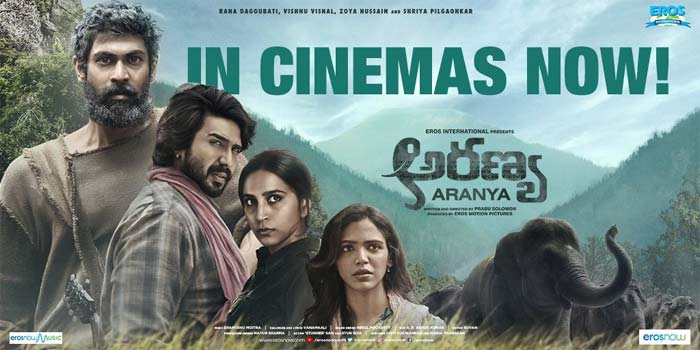
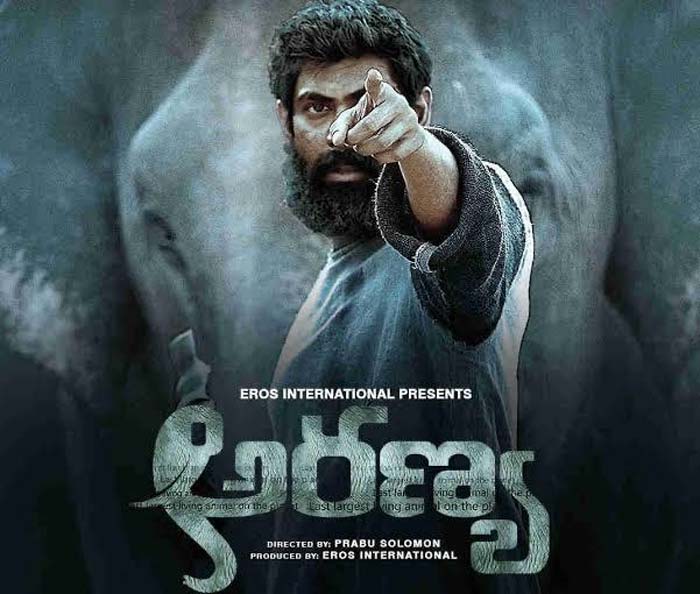
Prabhu Solomon’s trilingual Aranya tries to be many things at once but doesn’t do justice to any of the things that it tries to address. The story of the film is relevant as encroachments in the reserve forest zone are a reality; however Prabhu Solmon wastes a terrific opportunity. The film is also an indirect tribute to Jadav Payeng who is considered to be the forest man of India. Like Payeng Rana’s on screen character is also credited with planting several trees but the similarity ends here as the protagonist’s journey here is a fictional one.  The only thing which remotely works in the film is Rana’s performance and some of his scenes with the Elephants in the second half.

In Aranya Rana’s character name is Narendra Bhupathi but he is better known as Aranya. He has grown in the lap of nature and understands every call of a bird or animal. He particularly shares a good bond with the herd of elephants. On the other side of the coin you have the central minister, and a real estate firm along with their many subordinates who want to invade a reserve forest zone. Elephants are at a huge risk of losing their access to their most fundamental need – water.

The biggest problem with the movie Aranya is the mishmash of sensibilities which irritates you. A good example of that is the character of Vishnu Vishal. His style of acting will get on your nerves very quickly as his acting would work more with the Tamil audience than the Telugu ones. It would have been much better if you had a Telugu actor. To make things worse, his character is also very loosely written. You never understand why he is helping the minister’s men more so since he is in love with a naxalite played by Zoya Hussain. Also the track ends very abruptly and it doesn’t add any significance to the story.

Aranya: Both Rana and the elephants deserved a better film

The sub plot of the Naxalite movement could have also been dealt in a far better way. There is a mention of it in the beginning but after a point it is reduced to more of a background thing. The characters of the tribal people could have also been more impactful. Their only purpose in the film seems to be rallying behind Rana’s character and make him do all the heavy loading.

Bhuvan Srinivasan’s editing also needed to be much crisper as the length is also a major issue. This can be seen in the very beginning where it takes forever for the title cards to end.

Technically Aranya is a sound product thanks to the cinematography and the art design by Rasool Pookutty. However here also there are certain issues. There are some images which feel very repetitive.

Aranya: Both Rana and the elephants deserved a better film

Over the years Rani Dagubbati proved an efficient performer and here also the actor delivers a committed performance. The energy and the conviction that he brings is commendable. The scenes of him and the elephant in the second half will evoke some emotion from the audience. There is a segment where a misunderstanding occurs between Aranya and the elephants as they think that he has killed their fellow friend. Rana’s scenes where he tries to convince the elephants that he didn’t kill are quite impactful.

When making a trilingual film there are certain things that a director needs to be extra careful.  It is not enough to take actors from different languages; the sensibilities of their acting should also match the regional cultures.

On the whole Aranya aims big but doesn’t do justice to its vision.

Twilight In A Knotted World: A Fascinating Read For History Buffs

Siddhartha Sarma’s novel Twilight in a knotted world majorly focuses on a group of Phansigars. (They are more famous as thugs. Since they used to kill with a noose the name Phansigars also came into usage.) They are a feared gang of dacoits who roamed the countryside, the highways and the river ways, and attacked the travelers. They spoke a certain kind of dialect so they could mingle with the strangers and attack them at a right time. Sarma draws upon historical accounts of these Phansigars and weaves a tale which is part history and part police procedural. Through this story he throws light on the lives of both Indians and Englishmen of that time. It is a book that makes for a fascinating read.

There is another book called confessions of a thug by Phillip Meadows Taylor. The plot of the book revolves around a fictional anti – hero protagonist, Ameer Ali, a Muslim thug. The story lays bare the practices of the thugs, or ”deceivers” as they were called who murdered travelers for money and valuables. The book is not to be confused with the Aamir Khan and Amitabh Bachchan starrer Thugs of Hindustan.

The protagonist of the book is the real life British officer William Henry Sleeman. He is an administrator of Jabalpur district in the central province. He is a man of wide ranging interests like linguistics and archeology and also someone who is keen on understanding the culture, history and geography of the country that he stayed in.

One day Sleeman is urgently summoned by the governor general. The reason being that Scindia of Gwalior is upset that a nobleman who was bringing him a prized horse has vanished without a trace on the highway; he’s suspected to have fallen victim to the Phansigars. The issue threatens to boil over and the responsibility of catching the dacoits falls on Sleeman. As Sleeman digs deeper into his investigation he realizes that there is a vast network of men (and women), intricately organized and operating across huge acres of land hunting and killing their fellowmen.

Through this investigation several questions are raised by the writer. For example are poverty and hunger leading to this sort of crime? Are a few powerful men controlling the destinies of many?

The best part of the book is how the author gives a psychological insight into what makes them do the things they do. We also get an insight into the intricate strands or types of Jati, Varna and Biradari which holds good even today. I quite agree with what the writer wrote.

However the book is not just about the Phansigars and their deeds. One of the most tender and touching accounts in the book is that of a little wolf boy from the forests of Seoni. Sleeman’s deputy, who is investigating a series of cattle killings, comes across a pack of wild dogs and wolves, and with them there is a boy who is naked and feral. He is captured and brought to the civilized world, where Sleeman’s wife tries to care for him. Months later he loses his fear and begins to roam the grounds, but still tied to a rope.

Ideas of governance, law and justice is another important thing which runs through the book, as does the question of the validity of the colonial enterprise. There is a chapter in the book regarding sati. You have an old woman who is determined to commit sati. Her words to Sleeman show what it is to be a woman caught in a patriarchal and unfair system where mere laws cannot bring much change.

Siddartha Sarma’s etching of characters deserves a special mention. They have been sketched well starting from the primary character of captain Sleeman. What makes his character very likeable is following the rule of the law and at the same time choosing the right thing while on a crossroad. Another character which deserves a mention is that of Amelie who supported her husband in all his endeavors and acted as a moral compass during testing times. What adds even more strength to her character is that she brings in the much required human touch. On the whole Twilight in a knotted world is a fascinating read which shows how ideas evolve and change with time.

Alia Bhatt: A Multi Faceted Queen

Today’s feature is a very special one as it is about one of my most favourite actresses. She is the very talented and a multifaceted personality Alia Bhatt. The reason for doing this feature is that Alia will be turning 28 on 15th of this month. Alia has captured the hearts of many ranging across different age groups from children, teenagers, adults and even old people. Apart from being a wonderful actress she has also sung some nice songs in Humpty Sharma Ki DulhaniaBadrinath Ki Dulhania, HighwayUdta Punjab etc. She also opened up a production house recently. The name of her production house is Eternal Sunshine productions. What makes this even more special is the fact that Alia is the youngest actress turned producer. The actress also set up an initiative called co Exist in 2017 which works towards animals and ecological welfare.

Shabana Azmi in one of her interviews had called Alia a wonderful actress with the perfect mixture of vulnerability and strength which is very attractive. When you look at the characters in films like Highway and Udta Punjab you feel that Shabana ji is right. For example, in Highway you see lot of vulnerability as she is scared of her kidnapper but gradually you see the character finding strength and by the end strength replaces vulnerability. A good example of that is the scene when she confronts her uncle in front of entire family. She yells at her father about not warning her about the dangers posed by insiders. The film ends with her going to the mountains and setting up her own factory. In Udta Punjab the character goes through multiple scenes of physical abuse but she never gives up, in fact she becomes a victor at the end. This combination makes her very endearing to the audiences particularly the younger generation both male and female. Males want to have a girlfriend like her while females find themselves in the characters.

Now I will talk about some of my favourite Alia Bhatt performances. Since I have already mentioned Highway and Udta Punjab I will be talking about three more.

1 Raazi – Raazi is based on the book written by Harinder Sikka. It is set in 1971 when India and Pakistan were at the brink of the war and Information is the key for both the nations. Alias character Sehmat gets married to a respectable Pakistani family. Her job is deliver information to Indian government through Mars code. It is a part which isn’t particularly likeable since she has to choose between nation and family. Honestly some of the actions which the character does are questionable but Sehmat never comes across as a villain because of Alias performance.

2 Dear Zindagi – Dear Zindagi was an attempt to normalize Psychiatry through the troubled personal life of a teenage girl. The character in this one is very different from Udta Punjab. The reason being it comes from an upper middle class family and her issues aren’t exactly first world war ones. You have friends to fall upon and also a glamorous profession but Alia still made it work with her spontaneous performance. Her scenes with the therapist played by SRK were one of the chief reasons why the film worked.

3 Gully Boy – As the title suggests the story is about a boy from the gully played by Ranveer Singh but Alia shined in all her scenes with a spirited act. In this film also you can see vulnerability and strength in many scenes. Alias performance worked as a perfect contrast to the understatedness of Ranveer. Through her performance she showed that good actors don’t need a whole of screen time in order to make an impression.

Apart from the above mentioned ones you have also got the Dulhania Franchise, Humpty Sharma and Badrinath Ki Dulhania along with 2 states, Kalank etc. Although these films are more commercial in nature the actress has played strong parts in these films as well. For example, in Badrinath Ki Dulhania Alia plays a girl called Vaidehi who is very clear about wanting to become an air hostess. She is someone who will go to any lengths in order to achieve the dream. Keeping all this in mind it is not surprising that apart from Shabana you have also had acclaimed actors Irrfran and Pankaj Tripati  also praising her. Irrfran had called her a gifted actress with the potential of being an international star. Pankaj Tripati who was the dialect coach of Udta Punjab had called her a hardworking actress.

As I earlier said the actress is a singer too. Her singing journey started with a bit version of Sooha Saaha in Highway however the first major song that she sung was the unplugged version of Samjhawaan in Humpty Sharma Ki Dulhania. This song is not there in the film but is available in Youtube. The actress won lot of appreciation for the song. This was followed by two songs in Dear Zindagi and one of the songs was the club version of Love You Zindagi. After Dear Zindagi you had the song Ik Kudi which she sung with Diljit Dosanjh. In Badrinath Ki dulhania she sang the female version of Humsafar. The last one was Sadak 2. Just like her acting Alia also left a mark with her singing skills.

Now let’s move to Coexist which I mentioned in the beginning. As I earlier said Co Exist works towards animals and ecological welfare. As part of coexist you have the initiative my wardrobe is Su wardrobe. It is a philanthropic initiative where people get to choose outfits from the personal closet of Alia and other celebrities as a part of charity. The entire amount goes to some charity or the other. From one of the proceeds eco friendly solar lamps were sent to economically backward districts in Kikkeri, Karnataka. 

Alias sense of humour is another thing which is worth appreciating. Everyone knows how she became the butt of the jokes after getting the name of India president wrong. She was never offended with the jokes and took it in her stride. She also talked about her favourite Alia Bhatt jokes. In fact Alia also featured in Genuis of the year which was a funny take on the aftermath of Koffe with Karan debacle.

Although Alia is only 27 you can see lot of maturity in her which shows both off and on screen. The biggest example of that is the way she dealt with all the trolling post Sushant Singh Rajput’s death last year. A Koffe with Karan episode was unnecessarily blown out of proportion and a picture was painted of them as enemies. Add to that Sonam’s statement of who is Sushant was attributed to her. The actress took the controversy in her stride and focused on her work. We can see the result in the teaser of Gangubai.

It is a well known fact that Kangana has been attacking her since 2019 just because Alia didn’t promote her film Manikarnika. But Alia never resorted to Kangana’s language and has always given a dignified answer. One reason for that could be that she understands the background from which Kangana comes from.

Alia’s compassionate nature can also be seen with her sister. In We The Women event she broke down about not understanding what her sister was going through in spite of living with her for a long time. It was a very heart-warming event. Similarly when Rishi Kappor was admitted due to cancer Alia made sure to visit her future father in law. She was there for all the family things and balanced the personal life and professional life very well. After Rishi Kapoor’s death it is said that Alia Bhatt called Neetu Kapoor regularly and not Ranbir. 

Alia’s chemistry with all her co stars has always been good but my favourite pairing is with Varun Dhawan. They have acted together in four films starting from Student of the year to 2019’s Kalank. You can see the comfort level and the understanding that they have got. Even in the disaster that Kalank was their scenes were good to watch. My second favourite pairing of Alia is with Ranveer Singh. Before acting together in Gully Boy they acted in the make my trip ads and their pairing was liked by the audience. You can see the respect that they have for each other’s work and that clearly reflected in Gully Boy. It also helps that both of them are passionate actors and love to take on challenging roles.

Although Alia is not someone who is politically very active but there have been times where the actress has taken a stand. For example during the JNU and CAE protests the actress expressed her solidarity for the students through social media.

I will end this feature by talking about the teaser of Gangubai which has been trending for all the right reasons unlike Sadak 2. The dialogues in the teaser have particularly become very popular and have been quoted by fans. A good example of this is the line Kunwari apne Chhoda Nahi, shrimati kisi ne banaya nahi. While the transformation of Alia in the teaser has largely been appreciated there has also been discussion about alternate casting. Now this isn’t really surprising since Hrithik Roshan’s Super 30 also went through similar issues. But we all know what happened after the release of the film. Hrithik impressed everyone with his committed performance and the film went on to do very well. Coming back to this controversy it is necessary that the people wait until the release of the film. The reason being we don’t know which part of the life story Sanjay Leela Bhansali has taken. Since we are talking about Hrithik it is necessary to mention that both Hrithik and Alia have been invited to join the Oscar academy where they might be given voting rights.

I will finally end by wishing her all the best for the future projects which include Bramhastra and her Telugu debut RRR. An interesting thing about RRR is that Alia will be dubbing in her own voice. It will be interesting to see the actress speak Telugu.