The Game (You Never Play Alone): An important cautionary thriller led by a brilliant Shraddha Srinath

Rajesh M Selva’s The Game (You Never Play Alone) has a strong beginning keeping the viewers invested for 2 thirds of the narrative. Things though start stagnating from the middle episodes with underdeveloped villains and also the gaming portions. Nevertheless, this Tamil web series throws light on important issues like data tracking and how technology in the wrong hands can be a very harmful tool. It also helps that Shraddha Srinath is in excellent form getting into the skin of the role

Starcast: Shraddha Srinath, Santhosh Prathap, Chandini Tamilarasan and others

Genre: Thriller/drama

Writer: Deepthi Govindarajan

Director: Rajesh M Selva

Music: Simon K. King

Cinematography: Akilesh Kathamuthu

Producers: Sameer Nair and Pramod Cheruvalath

Production Company: Applause Entertainment

No of episodes: 7

Streaming site: Netflix

The growing age of technology is both a Boone and bane for the current times. In one way technology has made our lives easier in connecting with people far away and also the vast information helping in increase of our knowledge. However, this massive digital age also comes with major side effects. One of this includes losing connect with the real world and also data impeachment. Numerous movies have come on this topic whether its the 2010 American Drama The Social Network or the two Ananya Pandey’s starrers Kho Gaye Hum Kahan and CTRL. The Game (You Never Play Alone) is the latest addition to this genre. This Shraddha Sranath starrer is a remake of the French show Le Jeu.

A still from the web series

The broad storyline of this seven-episode show follows the tumultuous journey of Shraddha Srinath’s Kavya. She is a talented game developer alongside her husband Anoop (Santhosh Prathap). Both work at a leading game company called Moon bolt. Their professional lives are going well but Kavya often faces scrutiny on the account of her gender. There is this constant pressure of proving her skills in a male dominated office.

Things take a traumatic turn at an award night. She is attacked by an unknown group of men and is left traumatized both physically and mentally. Chandini Tamilrasan plays officer Bhanumati. She gets deep into the case revealing a series of chilling incidents connected to online abuse and misogyny. Running alongside this is the track of Kavya’s niece Tara. Tara becomes the target of online predators. How all these are interconnected forms the basic premise.

Chandi Tamilrasan as police officer

A strong aspect of The Game (That You Never Play Alone) is the technical department. Cinematographer Akhilesh Kathamuthu does an excellent job in capturing the intensity of urban life as well as the scenes of online harassment. The psychological horror is palpable with appropriately lit frames. Sudharshan’s background music too enhances the tension filled moments. As viewers you feel a certain anxiety on what will happen next especially till the mid part.

Director Rajesh M Selva also deserves credit for how he has explored the topics of social media abuse which includes misogyny along with the challenges faced by women in professional spaces. The last one comes through a jealous colleague. The subplot of the jealous colleague and how this leads to several things is underdeveloped nevertheless the aspect of male ego being hurt is an important one.

The character of Shraddha Srinath coupled with her performance is another major ace especially the emotional parts. The way Shraddha portrays the emotions of resilience, vulnerability and solid inner strength is a delight to watch. She is the glue holding the show even when things start to fall apart.

Santhosh Prathap brings in a certain warmth as a husband who stands tall with Kavya in spite of some tensions in the marriage. The tender moments between the two are a delight to watch with Anoop giving major husband goals. Chandini Tamilrasan too does a fine job in balancing professional diligence with empathy. This trio play a crucial role in making the show engaging.
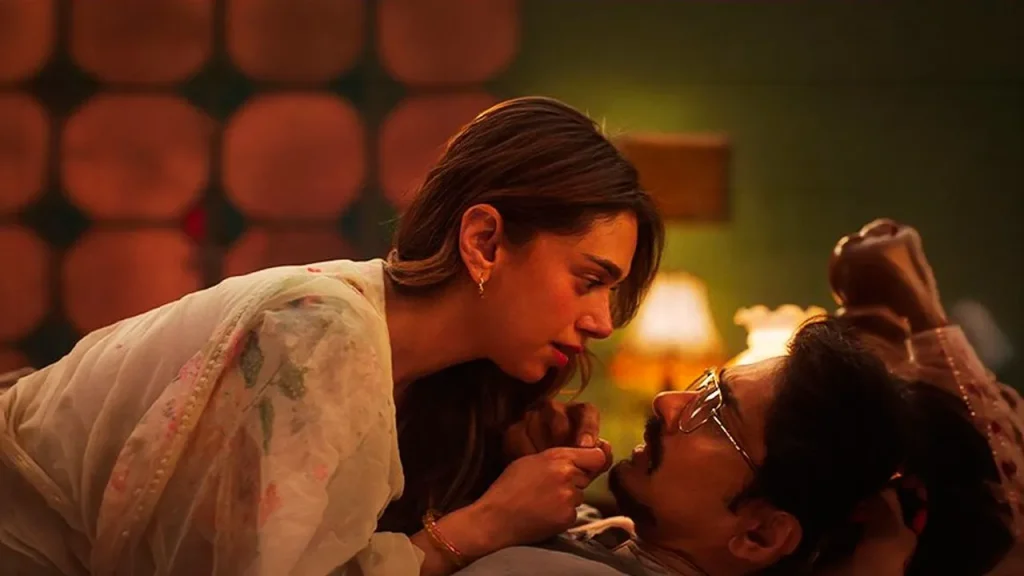
A tender moment between the two

As already mentioned The Game (Which You Never Play Alone) keeps the viewers invested for 2 thirds. However, things start stagnating while exploring the motives of the villain gang. This track needed more solid writing. As a result, the built-up tension somewhat dilutes. Also the gaming background needed more depth.

There is a surface level treatment with the glossy backdrop. More insight into the functioning of the gaming world would have enhanced the proceedings. These two aspects stop the show from soaring higher.

Final word: In spite of a muddled second act and a tame climax The Game (Which You Never Play Alone) makes for an important watch especially for those who are into digital thrillers.

12 Years (My Messed-Up Love Story): More of a Bollywood romantic drama with some interesting topics

Chetan Bhagat does a good job in building up the love story while also making sure that the 12 years age gap doesn’t come across as cringeworthy. The conversations between the hero and the heroine have a good flow with well-established personalities. Mention must also be made of how Chetan Bhagat integrates different issues through a romantic drama. The novel though needed much a much better edit and a cut down on staple Bollywood elements

Most of Chetan Bhagat’s novels come across as a pitch for producers. Whether it’s the autobiographical novel 2 States or Half Girlfriend, Revolution 2020 and now 12 Years (My Messed- Up- Love Story). Chetan Bhagat’s latest follows the journey of the 33-year-old Saket Khuranna and a 21-year-old Payal Jain. Saket is recovering from the emotional wounds of a divorce while trying to chart a new career path of standup comedy. Payal Jain on the other hand is a young woman stepping into the corporate world. How the paths of these two cross and the various tribulations they go through with a happy ending forms the core of Chetan Bhagat’s latest.

As already mentioned Chetan Bhagat does a good job in building up the love story. The dilemmas which both go through before taking the big leap has been well written. What also helps the love story is the integration of hero’s standup comedy profession. This acts as a building block for Payal’s attraction as she finds Saket unique. How her presence helps Saket in navigating the emotional wounds of the first marriage makes the readers root for the couple. The novel’s ending with the two having a happy ending in a standup comedy act leaves the viewers in a happy mood.

Up until midway point the novel has a smooth flow especially for those who are acquainted with Chetan Bhagat’s style of love stories. A mention too must be made of the portion where the two are caught in the middle of a sexual act. It’s both laugh out funny as well as tragic.

However, once the separation sets in the novel follows a set template. Saket almost becomes a Devadas slipping into depression. He has also a major fall resulting in hospital treatment. The reactions of Saket is definitely understandable given his love for Payal and what she means to him, but these portions overstay their welcome.

This is where the staple Bollywood elements kick in whether it’s parental opposition, separation and destiny bringing them back together. Hopefully these elements are toned down if the novel is made into a movie.

Keeping aside these things, Chetan Bhagat deserves appreciation for how he has integrated various societal aspects. Some of these include gender-based divorce laws from the perspective of men and the demands of unreasonable maintenance. Also, how society looks at age gaps along with the community aspect has come out well.

Final word: 12 Years (My Messed Up Love Story) is worth reading for fans of romantic fiction and also those who have grown on Chetan Bhagat novels.

Thamma: Rashmika Mandanna steals the show in this gender bender

Director Aditya Sarpotdar for most part reverses the knight in shining armor trope with Rashmika’s character of Taraka/Tarika. The role has the perfect mix of vulnerability and fierceness in equal measure. Thamma is a welcome change from the usual Maddock horror comedy even though the concoction of scares and laughs doesn’t hit the high notes of the Stree movies. Ayushmann Khurrana also brings his usual finesse especially in the second half when his character is caught between two worlds

Starcast: Rashmika Mandanna, Ayushmann Khurrana, Paresh Rawal, Nawazuddin Siddiqui, Faisal Malik and others

Director: Aditya Sarpotdar

Writers: Niren Bhatt, Suresh Mathew and Arun Fulara

Producers: Dinesh Vijan and Aamir Kaushik

Production Company: Maddock Films

Cinematography: Saurabh Goswami

Music: Sachin Jigar

Running time: 2 hours and 29 minutes

Genre: Romance/horror

The horror comedy universe for Maddock has been its most successful business venture. The two Stree films along with Munjya have done fantastic numbers at the box office. Even Bhediya did fair business at the box office. This universe is expanding further with newer actors and fresh storylines. Thamma is the latest addition with crossovers from the movies mentioned above. Thamma varies from the previous films of this space as the beating heart is the love story between two people belonging to vastly different worlds. At the same time there is also a set formula in its treatment of horror with laugh out moments. This two way approach doesn’t always work nevertheless Thamma makes for an interesting watch.

Thamma is essentially the journey of two lovers having to battle many odds. Ayushmann Khurrana is a small-time reporter Alok Goyal. While roaming in the forest Alok is confronted with an animal. A scared Alok runs away and his path crosses with Rashmika Mandanna’s Taraka/Tarika. Taraka is a mysterious woman belonging to a mythical world. A situation comes when Alok is offered as a sacrifice to Nawazuddin Siddqui’s Yakshashan. Yakshashan was once upon a time a leader of the demi humans. Now he is a chained prisoner. Taraka breaks the rules of the tribe by following her heart. She saves Alok and runs away with him. This sets the clash between two opposing worlds.

A strong aspect of Thamma is the love story between Alok and Taraka. It does take a little to warm up but soon the romance gathers momentum. The sweet nature of Alok and how he falls in love with Taraka has been both well written and enacted. The revelation of who Taraka actually is and the origin story comes in at the right juncture. There is a reference to the horrific partition when Taraka talks about a group called betaals. This tribe follows a strict rule which is never kill humans and drink their blood. The reason is they consider the human blood to be poisonous. This happens after they come across a charade of dead bodies with people slaughtering each other in the mayhem of partition.

The biggest strength of Thamma though is the character design of Rashmika Mandanna’s Taraka coupled with her performance. Unlike the Stree movies Rashmika Mandanna here is much more than just a mysterious woman. For a large part of the film Rashmika is the protector of Alok fighting tooth and nail for her love. The character is both ferocious and also tender as the situation demands and Rashmika nails both these shades. The actress also gets to do some action like the sequence with a group of boys chasing Alok and her after a party. In spite of a slightly drunken state Taraka gives a sound beating to the guys.

Ayushmann too comes into his own when Alok turns into a Betaal himself. The actor does a wonderful job in conveying both the initial shock and also accepting the new identity. Paresh Rawal as the scared father raises some chuckles. At the same time the veteran actor also shines in the few emotional sequences. A special mention must be made of the sequence where he encourages Alok to not give up saying that he has accepted Taraka as his daughter in law. However, the reference to late Amrish Puri’s dialogue in DDLJ and an Ayushmann bava feels forced. Nawazuddin Siddqui’s character as the comic villain needed more depth in writing nevertheless Nawazuddin chews the scenery coming up with a wonderfully eccentric act. Faisal Malik as a betaal turned cop is also good.

The crossover characters have also been smartly integrated. Whether its Abhishek Benarjee from the Stree and the Bhediya movies or Satyraaj in Munjya. These roles aren’t confined to filers. They play an important role in connecting the dots. Varun Dhawan as Bhediya gets a roaring entry too. His fight sequence with Ayushmann has been wonderfully choreographed. Saurabh Goswami’s cinematography is of a very good order whether it’s the haunting wilderness or the more tender moments.

Sachin Jigar’s music falls significantly short of Stree 2. The special dance numbers stick out like a sore thumb. But the duo do redeem themselves with Tum Mere Na Hue and Rahien Na Rahien hum.

Final word: Thamma is an interesting addition to the growing Maddock horror universe. Inspite of some bumps the movie makes for an engaging watch.

Bison Kaalamaadan: A rousing tale of breaking social shackles

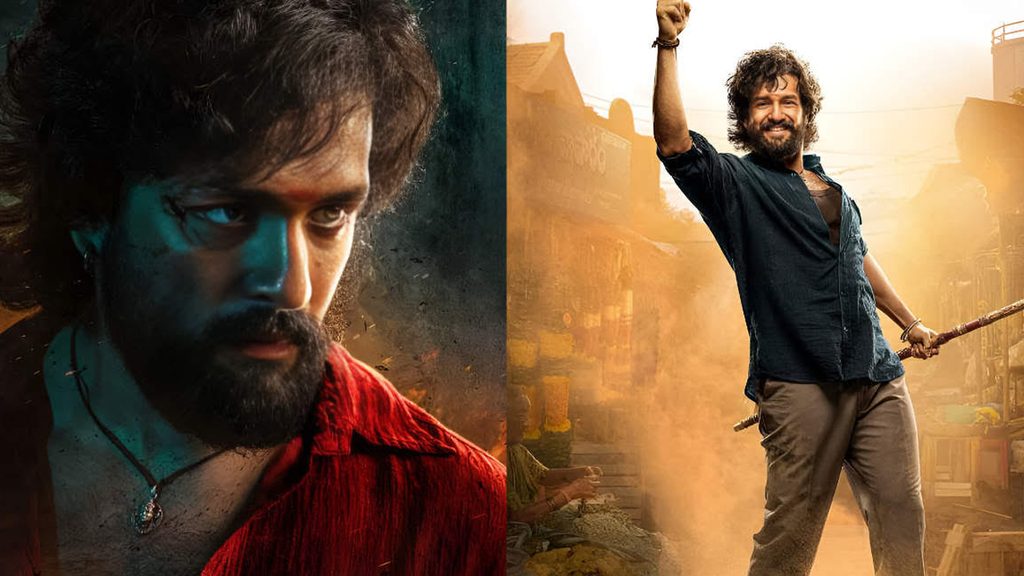
The movie benefits immensely from its strong ensemble headed by a terrific Pashupathy. The real-life story which the film is based on also helps the proceedings even when things start to stagnate. Much like the teenage rom com Little Hearts earlier this year Bison Kaalamaadan is also successful in normalizing the heroine being older to the hero in a different social milieu. Anupama Parameswaran playing a defiant young lady brings in the required passion making the romantic subplot interesting

Starcast: Pashupathy. Dhruv Vikram, Rajisha Vijayan, Anupama Parameswaran, Lal, Ameer, Anurag Arora and others

Genre: Drama/action

Director and writer: Mari Selvaraj

Producers: PA Ranjith, Sameer Nair, Aditi Anand and Deepak Saigal

Production Companies: Applause Entertainment and Neelam Studios

Cinematography: Ezhil Arasu K

Music: Nivas K Prasanna

Running time: 2 hours and 48 minutes

Mari Selvaraj like PA Ranjith and Vetrimaran has made a place for himself as a politically charged filmmaker. His stories revolve around the marginalized communities with the protagonists coming from the oppressed castes. Some elements which the director uses have become his trademark symbols. This includes the incorporation of animal imagery starting from his debut movie Pariyerum Perumal itself. His latest Bison is no different. He takes the staple elements of a sports drama and combines that with his politically charged filmmaking.

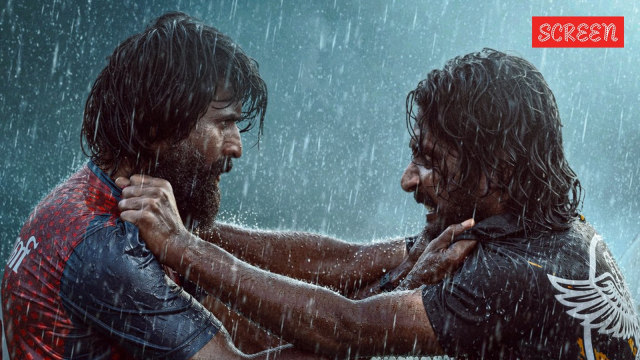
In simple terms the storyline of Bison focuses on the numerous tribulations faced by Dhruv Vikram’s Kittan also called as “Vanathi” Kittan. The setting is 90’s rural Tamil Nadu. Kittan comes from an area where both caste oppression and violence are never ending. The basis for this story is Manathi Ganesan renowned Kabaddi player. The movie looks at how Kittan makes it big overcoming numerous battles of various kinds. This includes a conflicted father turned emotional anchor Velusamy (A scene stealing Pashupathy). There is an elaborate subplot of two warring factions headed by Lal and Ameer. These two also play an important role in shaping up Kittan’s journey especially Lal as Kandasamy. Rajisha Vijayan as Raji is the supportive elder sister. She fights for Kittan even when Velusamy is dead against his son playing the sport.

A strong aspect of Bison Kaalamaadan is the father and son dynamics. As Velusamy, Pashupathy goes through myriad emotions more than Dhruv Vikram in the titular character. In the initial portions Velusamy is adamant that his son shouldn’t pursue kabaddi. There is a constant fear in him given the social strata coupled with the violence prone atmospherics. It also doesn’t help that Kittan himself has a very aggressive personality with anger management problems. For example, there is a scene in the bus involving a goat. A seemingly small thing snowballs into a very violent incident as Kittan loses his temper further fueling the already tense atmosphere. It takes a lot of convincing for Velusamy to even see his son play. It’s only after watching the match that he finally says yes. This doesn’t mean that the fear stops completely but Velusamy later becomes an important pillar of support. This particularly comes out in a telephonic conversation when Kittan is down and out before a Kabaddi game.

Pashupathy as expected delivers a knockout act capturing the myriad emotions with ease. Bison is another feather in the cap for this versatile actor. As Kittan Dhruv Vikram does a fine job in justifying the tough persona. More than the moments of aggression the upcoming actor shines in the portions of showcasing vulnerability. It comes out in a solid manner in the second half. However, Kittan needed more shades especially in the romantic track with Anupama Parameswaran’s Rani. The passion feels one sided with only Anupama showing her intense love. Anupama Parameswaran as a defiant young lady sparkles in spite of the less screen time. She fares much better than Anandhi’s pretty but clueless doll in Periyarum Perumul. Its good to see movies normalizing the heroine being older than the hero and more importantly having a happy ending. Rajisha Vijayan also makes her presence amply felt.

Mention must also be made of the portions featuring Lal and Ameer. Yes, the track could have done with some serious trimming. At the same time they aren’t painted in a caricaturist manner. There is a humanness to them especially in the way Kandasamy supports Kittan when the people around him treat Kittan as a suspicious outsider. Mention must also be made of the scene where Ameer as Pandiraja supports Rani’s love more than her own brother. Ameer scolds him for his narrow-minded thinking along with the treatment of his wife. The futility of violence comes out well with both of them in the end betrayed by close ones.

The cinematography of Ezhil Asaru K is suitably rustic. The rugged atmospherics with a constant dread has been effectively captured. The costume design coupled with the art direction is also of a good order. The music and background score amplifies the drama on numerous occasions.

A major problem with Bison is the staple and cliched sports film tropes. The film gives a major hangover of numerous sports dramas with the political manipulations and also a dramatic finale which can be seen from a mile. Anurag Arora as the coach is particularly irritating with his constant undermining of Kittan. More of Kabaddi and less violence would have benefitted the film. An overdose of blood with stretched action sequences makes the film a tough watch.

Final word: Bison Kaalamaadan has its heart in the right place and is definitely worth watching for fans of Mari Selvaraj’s brand of cinema. But the overdose of violence and the repetitive animal imagery isn’t for all.

Telusu Kada (You Know, right?): Bold and intense romantic drama

Telusu Kada has certain similarities with the Salman Khan and Rani Mukherjee starrer Chori Chori Chupke Chupke. But this is no remake. Writer and director Neeraja Kona takes a familiar set up of a triangle love story, but the sensibilities are different. All the three protagonists come with shades of grey. The movie dwells into the complexities of modern-day relationships with its messiness. The unconventional storytelling isn’t for all nevertheless Neeraja Kona establishes herself as a promising new director.

Starcast: Siddhu Jonnalagadda, Rashi Khanna, Srinidhi Shetty, Harsha Chemudu and others

Genre: Romance

Director and writer: Neeraja Kona

Producers: T. G Vishwa Prasad and Vivek Kuchibhotia

Production Company: People Media Factory

Music: Thaman S

Cinematography: Gnana Shekar V S

Running time: 2 hours and 12 minutes

The conflict points in love stories have undergone a significant change over time. From the cliches of warring parents and simplistic rich versus poor now the sensibilities are very different. This is amply evident in today’s love stories whether it’s the intense ones or coming of age mixed with love. Neeraja Kona’s Telusa Kada is a bold story dealing with interesting conflict points. One of them are the varied expectations. Siddhu Jonnalagada plays the volatile Varun. Having grown up as an orphan with no proper family he earns for a complete life with a wife and kids. Srinidhi Shetty is Raaga. Without giving much away Raaga is the anthesis of Shivani Nagaram’s steel rod Kathyayini in Little Hearts.

The movie begins with Varun tearing away some photos and venting out his anger. Harsha Chemudu as Mahesh is a buddy as well as an important emotional anchor. Mahesh knows Varun inside and out, the scenes featuring the two gives the movie some of its best moments. Rashi Khanna is Anjali Sharma. She is a mix of traditional and modern. Anjali’s thought process regarding family life is similar to Varun. Not surprisingly Varun falls fast for Anjali and vice versa. The two end up marrying however a major incident changes everything. This is connected to surrogacy. In a big twist of events Raaga makes a comeback into Varun’s life as a surrogate mother. The conflicts that arise when Anjali comes to know about Raaga’s past connection with Varun forms the basic core of Telusu Kada

A strong aspect of Telusu Kada are the characterizations of the principal protagonists especially Siddhu Jonnalagda and Rashi Khanna. Thanks to the huge success of Tillu character Siddhu has been largely associated with comedy. However, Telusu Kada presents a refreshingly different side. This is evident from the first scene itself. Siddhu imbibes the volatileness with gay abandon. The second half has numerous scenes of Varun showing his mean side. He gives taunts to Raaga on how their relationship was a time pass for her. On the surface some of it may across as childish but the palpable pain makes the viewers understand the hero’s perspective. It is hard to pinpoint Varun as either a good or bad. This confusing characterization has its minus points too but there is no denying that Siddhu absolutely aces the role from the body language to the emotional intensity. Telusu Kada definitely marks a new beginning for the budding actor.

Rashi Khanna too displays a different facet. She not only looks stunning but also aces the grey shades. A special mention must be made of the scenes where she questions Varun about holding back important incidents and how she feels like a third wheel between him and Raaga. Srinidhi Shetty is also good in her part but is somewhat let down by a sketchy characterization. The movie could have benefitted a little more by showing the emotional upheaval of Raaga after she dumps Varun. Harsha Chemudu gets a role beyond hero’s best friend and the actor aces it.

The second half drama between the three characters has some engaging moments as well however a comic interlude featuring veteran actress Annapurna leaves a bitter after taste. Mention must also be made of how Neeraja Kona normalizes the concept of a surrogate mother for mainstream Telugu audiences. The movie’s ending with Varun getting what he always wanted makes the viewers happy.

Thaman’s score also adds to the film. Among the tunes Mallika Gandha and Sogasu Chudatharama are soulful enhancing the romantic core. Gnana Shekar VS Cinematography in spite of the limited locations makes the movie visually appealing.

Final word: Telusu Kada isn’t for all but for those like romance with unconventional storytelling its very much worth a watch.

Oka Manchi Prema Katha: Not just making a case for old age parents but raising many more important questions

Oka Manchi prema katha isn’t confined to looking after old age parents it is also about the corporate culture and the subsequent rat race. Stories of parents going through emotional neglect has been explored many times much like the genre of love itself. But this movie has many interesting points and one of them is about becoming a mother to your own parent. Among the principal actors Samuthirakani makes the strongest impact in a refreshingly different role.

Starcast: Rohini Hattangadi, Rohini Molleti, Samuthirakani, Himanshu Popuri and others

Genre: Drama

Direction and screenplay: Akkineni Kutumba Rao

Story, Dialogues and Songs: Volga

Producer: Himanshu Popuri

Cinematographer: Madhu Ambat

Music: K M Radhakrishnan

Streaming site: ETV Win

Running time: 2 hours+

Stories of parents facing emotional neglect has a certain template. The children are generally presented in a shrill and often unbearable tone. Oka Manchi Prem Katha’s first half also follows this formula. Sujatha (Rohini Molleti) is a very ambitious woman. She wants to reach the top position and has been working heavily to get a promotion which will put her on par with her husband Eshwar (Samuthirakani). Their daughter is studying abroad. Because of the extremely busy work schedules neither Sujatha nor Eshwar have much time to each other and for their daughter. Veteran actress Rohini Hattangadi is Rangamani the mother. Rangamani was also an employee but now stays in her village doing a bit of social service. She interacts with numerous people on a daily basis, solving some of their problems and one of them is her ‘adopted’ son Shankar. However, a health problem makes her miss her daughter dearly, but Sujatha is too busy to visit Rangamani. How they come together is the core of the film.

A strong aspect of Oka Manchi Prem Katha are the portions featuring the two Rohinis in the latter half. From the moment Sujatha becomes a mother to her own parent the film hits numerous high notes. The scenes are filled with lot of warmth, and the film succeeds in presenting a different kind of love, in this case a bond between a mother and a daughter. Both Sujatha and Rohini Molleti become more likeable here.

Through the very ambitious nature of Sujatha, Volga does a fine job in critiquing the current working lifestyle especially the corporate set up where there is one deadline after another leaving little to no space for imbibing humanistic values. The mental health issues that come with it has also been effectively presented. There is a nice bit in the first half when Sujatha visits a psychiatrist. The psychiatrist says that she needs love and more communication with people around her. To this Sujatha asks whether there is any medicine to cure this problem and the Doctor replies that unfortunately no love pill has been discovered so far.

The portions of Samuthirakani missing his wife and the telephonic conversations have been wonderfully written and enacted. Samuthirakani is a delight to watch whether it is reciting poems of John Keats or making up his own one or portraying the absolute bewilderment about the change in Sujatha’s behaviour. It is nice to see the actor playing a nuanced role for a change rather than the routine mainstream villain.

Among the other actors Rohini Molleti’s character was a little too loud and caricaturist in the first half but gets better as the movie progresses. Rohini Hattangadi as usual shines bright especially in the confrontation scenes. A specific mention must be made of the portion between her and Samuthirakani when Eshwar sends a divorce notice. She counters him with one simple question but a powerful one; would he do the same thing if the company had sent Sujatha somewhere for work purpose. There is one more dialogue where she raises an important question about Companies not granting leave to take care of old age parents. The reasoning that she gives is also very thought provoking. When there can be a maternity leave why can’t there be one for old age parental care? The rest of the cast are also fine. Himanshu Popuri as Shankar especially stands out.

Talking about the flaws the movie needed to be crisper in the first half. The core plot should have kicked in earlier instead of leaving it to the second half. The jarring difference between the attitudes of village folk and Sujatha could have been handled with more subtlety.

The music by K M Radhakrishna is soulful adding to the movie’s emotional core. Madhu Ambat’s cinematography is of course as usual very pleasant.

Janaawar (The Beast Within): A hard-hitting tale of caste identity and crime

Janaawar directed by Sachindar Vats uses the framework of a murder mystery to explore the deep-rooted theme of caste prejudice faced by its central protagonist. The internal battles of Bhuvan Arora’s Hemanth gives the show some of its best moments. The atmospherics have a rooted feel making Janaawar one of the best shows in 2025. Sachindra Vats along with his fellow writers do absolute justice to the tagline

Starcast: Bhuvan Arora, Dheeksha K Sonalkar, Bhagwan Tiwari, Badrul Islam and others

Genre: Crime

Director: Sachindar Vats

Screenplay: Shreyas Lowelkar

Music: Sreejith Edavana

Cinematography: Rahul Nayak

Producers: Abhishek Rege, Harish Shah and Dinesh Khetann

Production Company: Aarambh Entertainment

No of episodes: 7

Streaming site: Zee 5

Sachindra Vats Janaawar (The Beast Within) is a perfect example of how to blend crime with powerful social commentary. The web series starts off as a regular whodunit but as the show progresses different layers come out. The struggles of Hemanth in balancing his duties as a husband and cop while dealing with his own caste identity adds an important layer. This angle uplifts the show significantly.

Without giving much away the storyline of Janaawar is set in a fictional town of Chhaand (Chhattisgarh) and follows the journey of sub inspector Hemanth (Bhuvan Arora). In the beginning episodes the wife shown to be pregnant. Hemanth has applied for a week long leave to take care of her. But a highly decomposed dead body in a deep forest cuts short Hemanth Plans. At the same time a local MLA lands up at the police station to report a case about his missing brother. To further compound the mystery the head of the decomposed body goes missing before it can be sent for forensics. This is the story in brief.

A strong aspect of Janaawar are its atmospherics. Even before the murder mystery kicks in an air of dread is palpable. A major reason for that is the cinematography and the score. Rahul Nayak does a very fine job in capturing the tense atmosphere through his lens especially the portions set in forest. The eerie nights will give chills to the viewers.

At the same time Sreejith Edvana’s score is suitably ominous amplifying the mystery. It perfectly complements the murder mystery investigation going Parrell with Hemanth’s personal life.

Mention must also be made of the scenes featuring Bhuvan Arora and Dheeksha Sonalkar. The husband-and-wife scenes are few, but they are filled with lot of warmth. It shows a different facet to Hemanth a caring husband. Although Hemanth is a sub inspector there is no getting away from his caste identity. This discrimination has come out well on numerous occasions.

While the murder mystery is going on the show also dwells into the power structure. This is brought through the roles of Hemanth’s senior officer and an MLA (Atul Kale and Alok Mishra). These characters aren’t just part of the crime narrative but a larger reflection of the social dynamics in that particular place.

The twists and turns are also solid even though things do get convoluted in the mid portions. The suspicion of who has done it and the reasons behind it keeps the viewers guessing. The ultimate revelation does complete justice to the show’s tagline which is how society and circumstances bring out both the good and bad within us.

The performances headed by Bhuvan Arora are solid. The role of Hemath is very different from what Bhuvan Arora has done so far, and the actor does complete justice to it. He portrays the different shades with finesse. A special mention must be made of the scenes where Hemanth talks about his caste identity and how in spite of a being a sub inspector nothing much has changed. As the wife Dheekha Sonalkar is successful in bringing out the inner strength in spite of the less screen time. Atul Kale and Alok Mishra make the biggest impression among the supporting cast.

Final word: Janaawar is definitely worth watching for those interested in mysteries going beyond the usual whodunits.

Sthal: Marathi Cinema’s The Great Indian Kitchen

Jayant Digambar Somklar’s Sthal is a strong critique of arranged marriages especially in rural areas where the girl is a commodity to be sold off. The constant cycle of being decked up as a doll and being judged by the prospective in laws has a realistic feel to it. Much like Jeo Baby’s The Great Indian Kitchen Sthal also has a sense of repetitiveness with repeated shots still the film makes a strong impact

Starcast: Nandini Chikte, Taranath Khiratakar and others

Genre: Social drama

Director, writer and producer: Jayanth Digambar Somklar

Additional producers: Shefali Bhushan, Karan Grover and Riga Malhotra

Cinematography: Manoj Karamkhar

Music: Madhav Agarwal

Running time: 1 hour and 47 minutes

Production house: Dhun Production

Streaming site: Zee 5

In Indian movies the arranged marriage set up is generally used to explore budding romance. Two contrasting people coming together and becoming one. But in reality, things always don’t pan out in this manner. Sthal written and directed by Jayanth Digambar Somklar looks at the entire scenario through a young girl’s suffocation. The grind of getting appropriately dressed to please the prospective in laws and answering every question. Jayanth Digambar Somklar in short strips off the glamor generally associated with this genre.

Sthal in brief focuses on Nandini Chikte’s Savita Daulatrao Wandhare. She is in the final year of BA. Her specialization is sociology. Savita has major aspirations of studying further but her parents want to get her married off as soon as possible. This is the story in short.

A strong aspect of Sthal is how the movie depicts the cycle of arranged marriage especially in a rural setting. There are repeated shots of elders having a chat and then the girl is made to sit uncomfortably on a stool. Barrage of questions start making her feel as if she is a criminal.

The humiliation comes out in a strong manner. Above all the girl’s consent isn’t taken into consideration. The structuring of these episodes has a distinct hangover of The Great Indian Kitchen. A sense of repetition can be felt still it works.

The movie also throws light on dowry which still exists in our society. Mention must also be made of how the movie juxtaposes the celebration of SavitriBhai Phule with the regressive practices. There is an important portion where the college is seen celebrating her birth anniversary and she is being hailed for being a torchbearer for women’s education: however, the situation in Savita’s home is completely different.

There is also a male professor who teaches women empowerment to the students pretending to be modern. But the reality is very different. These touches add a lot to the movie.

Sthal also sheds light on farmer’s issues through the father played by Taranath Khiratkar. Taranath Khiratkar does a very fine job in making the viewers emphasize with him. Both the parents are presented as victims of their circumstances rather than outright villains. As viewers you understand from where their thought process comes from. The ending of Sthal reminds the viewers of Nagraj Manjule’s Fandry. There is the sound of a strong slap.

Nandini Chikte does an extremely fine job in bringing out the ordeal. She conveys a lot with just expressions. The rest of the cast led by Taranath Khiratkar are formidable too in their respective parts.

Technically speaking both the music and the background score are appropriately minimal. Manoj Karamkar’s cinematography goes perfectly well with the rustic surroundings too.

Final word: Sthal is definitely worth a watch especially for fans of rural social dramas

Kantara (Chapter 1): A powerful second half saves the day

Director, writer and actor Rishabh Shetty saves the best for the latter half. The devotional elements with Rishabh in a possessed state makes for a fantastic watch especially if it’s the big screen. The twist around the gorgeous Rukmini Vasanth catches the viewers unawares. Much like the 2022 Kantara this one also explores the importance of ecological conservation and not taking the downtrodden for granted among others. Only the scale is much bigger this time around

Starcast: Rishabh Shetty, Rukmini Vasanth, Gulshan Devaih, Jayaram and others

Genre: Action/devotional

Director and writer: Rishabh Shetty

Producers: Vijay Kirangadur and Chaluve Gowda

Production Company: Hombale Films

Music: B Ajaneeth Loknath

Cinematography: Aravind S Kashyap

Running time: 2 hours and 48 minutes

The 2022 Kantara released with less expectations but surprised everyone. In spite of the problematic elements like the romantic track the Karnataka folklore coupled with Rishabh Shetty’s committed performance made it sail through. The movie became a national wide success making Rishabh a breakthrough star director and actor.

Expectations with Kantara (Chapter 1) is huge given the massive success of the first part. In simple terms the plot of this one is an origin story connected to the divine protectors of the mythical forest. The guardians include Panjurli Daiva, Guliga Davia and Varaha Roopam. Each of this symbolizes a divine power. The period is Kadamba dynasty.

The first half of Kantara (Chapter 1) has a slow build up. A lot of time is spent on world building with comedic episodes and side characters occupying more space than required. This does test the viewers patience making the viewers wish that Rishabh speeds up the proceedings. Even the very talented Gulshan Devaih starts off as a caricature. Thankfully though the film picks up pace towards the interval.

Things really start moving once the central conflict is introduced. The hidden riches of the Kadamba Forest and how this triggers a chain of events. The second half has many engaging moments especially the sequences where Rishabh Shetty goes into a trance like state. The sheer physical energy that the actor brings to the table is extremely commendable.

Gulshan Devaih also comes into his own during the second half. He is successful in making the viewers hate him. Mention must also be made of the twists and turns connected to Jayaram and Rukmini Vasanth’s roles. Without giving much away how they eventually shape up takes the viewers by surprise especially in the case of Rukmini Vasanth as Princess Kanakavathi. Until the midway mark Princess Kanakavathi is presented as a love interest but there is a surprise twist connected to her birth. This changes the graph of the movie completely. Rukmini Vasanth not looks gorgeous but also leaves a strong mark in portraying the duality of her role. Jayaram also leaves a significant mark in a grey shaded role.

Apart from a strong second half the technical values also enhance the film specially in the large action set pieces. Cinematographer Aravind S Kashyap does a very fine job in capturing the massive scale through his lens. The picturization of the Kadamba forests has the required eeriness. The background score by Ajaneesh Loknath is also rousing. His work enhances the trance portions of Rishabh Shetty. The songs have the right devotional flavor for deep believers in God.

Underneath all the mysticism Kantara Chapter 1 has important socio-political commentary too. Specifically, the need for ecological balance and how not to take the downtrodden for granted. These portions are definitely relevant and some of Rishabh Shetty’s dialogues do pack a punch as well: however, the overreliance on divine intervention and mythological folklore makes the film simplistic.

Final word: Kantara (Chapter 1) will be a delight for hard core Rishabh Shetty fans and also those who enjoy mythical mixed with devotion.

One Battle After Another: A strong cocktail of politics, thrills and drama

Director Paul Thomas Andreson delivers a khichdi of genres in a seamless manner. The best part of Paul Thomas Andreson narration is how he manages to find humor in even the direst of circumstances. The movie’s socio-political commentary- like the angle of racial discrimination- doesn’t feel force fitted at any point. There is a natural blend to the way events unfold

Starcast: Leonardo DiCaprio, Sean Penn, Chase Infiniti, Teyana Taylor and others

Genre: Action thriller/drama

Director and writer: Paul Thomas Andreson

Based on: The Book Vineland by Thomas Pynchon

Producers: Adam Somner, Sara Murphy and Paul Thomas Andreson

Production Company: Ghoulardi Film Company

Cinematography: Michael Bauman

Music: Jonny Greenwood

Running time: 2 hours and 50 minutes

The best way to describe One Battle After Another would be a chaotic ride in the best manner. The movie takes the viewers on a roller coaster of a journey from the beginning itself. The plot doesn’t waste any time in establishing a revolutionary group called French 75. A scene stealing Leonardo DiCaprio along with a fierce Teyana Taylor are a part of this French 75. A revolutionary group taking on a fascist regime.

There is a daring rescue operation involving the immigration detention center. Sean Penn plays colonel Steven Lockjaw. He is absolutely smitten by Teyana Taylor’s Perfidia Beverly Hills. The first half an hour establishes the motives of French 75 and the mayhem they cause. However once incident changes everything leading Leonardo DiCaprio’s Bob and the young child played by Chase Infinti to go underground. Perfidia Beverly has already left her husband and daughter due to a certain friction. Bob is leading a quiet life with the grown-up daughter but the past returns back to haunt and soon the movie turns into a race against time.

A strong aspect of One Batlle After Another is the entertainment quotient. The movie raises many chuckles at regular intervals: this in spite of the tense situations. A lot of credit for that goes to Leonardo DiCaprio’s comic timing. When his daughter suddenly disappears, he knows that she is in peril and tries to contact his old comrades. However, the person on the phone insists on their secret code answers which Bob cannot recollect due to the overuse of drugs and alcohol in all these years. This keeps repeating generating a lot of comedy.

The portions of Bob as a father and how he interacts with the daughter’s friends specially the scene where she is going to a party is hilarious to say the least. Leonardo simply brings the house down. In the emotional scenes also, he does a fine job. The desperation is palpable making the viewers root for him. In short Leonardo is first rate.

Mention must also be made of the impactful socio-political commentary. The political violence led by colonel Steven Lockjaw in how the immigrants and the black community are treated has a contemporary touch. The result of extreme authoritarianism and how this leads to rebellious groups like French 75 has been well written and enacted.

The movie also pays a nod to Hitler’s dictatorial ways in a sequence resembling a gas chamber. Sean Penn makes for a suitably despicable antagonist even though the character becomes a mere caricature as the plot progresses.

The character of Chase Infiniti has been well crafted. There is a strong inner strength to the role and a certain street-smart nature. She isn’t someone waiting for her to dad rescue her. There is an important sequence where she bumps off an assassin after he fails to answer an important code question. Chase Infiniti more than holds her own opposite Leonardo.

The cinematography of Michael Bauman is also eye filling. The vast landscape specially in the tense chase sequence makes the movie a visual delight. The background score of Jonny Greenwood also adds to the drama.

Final word: I am sure that a person who is familiar with American political context would understand the film more comprehensively.