Tere Ishq Mein: A headache in the name of intense love

Tere Ishq Mein often feels like a friendship meet between Kabir Singh, Animal and fighter. Aanand L Rai and his longtime collaborator Himanshu Sharma pick elements from various movies: the end result is let’s hate a woman for rejecting the hero, how dare she marry someone else. The problematic representation of mental health also adds to the agony. The cliched use of trauma as a justification for protagonist’s violence is the final nail

Starcast: Dhanush, Kriti Sanon, Prakash Raj, Tota Roy Chowdhury and others

Genre: Romantic drama

Director: Aanand L Rai

Writers: Himanshu Sharma and Neeraj Yadav

Producers: Aanand L Rai, Himanshu Sharma, Bhushan Kumar etc

Production Companies: Color Yellow Productions and T Series Films

Music: A R Rahman

Cinematography: Tushar Kranti Roy

Running time: 2 hours and 49 minutes

There is a very thin line separating intense love and celebrating problematic characters under the disguise of romance. Mohit Suri’s Saiyaara was an intense romantic drama done right. Yes, Ahaan Pandey’s Krish Kapoor starts off as a hot-headed young man with temper issues: however, the second half sees a major change with the hero becoming a devoted boyfriend putting his love above the need for fame. By the end the hero strikes the perfect balance between ambition and standing for his love. Tere Ishq Mein on the other hand has very harmful gender politics. The hot-headed nature of Dhanush’s Shankar is often passed as heroism and deep love.

The storyline of this convoluted mess begins with a scene firmly establishing the hero’s aggressive nature. Shankar (an intense Dhanush) is a fighter pilot facing disciplinary action. Shankar needs a mental health certificate clearance stating that he is fit to participate in an ongoing war. Kriti Sanon plays a supposed psychologist Mukti which is more unintentionally funny. Mukti has a complicated past with Shankar: this is revealed gradually with numerous flashbacks.

Looking for positives in a train wreck like this is similar to searching for a needle in Haystack. Still to give credit where its due Prakash Raj as Shankar’s concerned father strikes an emotional chord. The veteran actor especially shines in the sequence of pleading with Mukti’s father (a suitably arrogant Tota Roy Chowdhury). There is also a very poignant father and son moment explaining why Shankar becomes a fighter pilot instead of pursuing UPSC. Tota Roy Chowdhury as the upper-class aristocrat has a strong presence. His attitude towards Shankar has a condescending nature but as a father it’s understandable why he wouldn’t want a guy like Shankar to be his son- in- law. It also doesn’t help that Shankar continues to be a proud alpha.

Dhanush as Shankar brings his trademark earnestness. The south Indian accent along with the character’s nature stops the viewers from being completely invested. But Dhanush’s efforts as a performer cannot be faulted. He is especially good in a heartbreak sequence involving Kriti. The questions that he asks about Mukti using him as a guinea pig for her psychological study of violence is genuinely good.

As far as the flaws are concerned the basic premise is the biggest problem. Mukti’s obsession with getting her thesis done and a certain overconfidence on her ability’s reeks of stupidity. She is very much aware of Shankar’s temper and how dangerous he can be: In spite of being aware Mukti invites self-trouble. As a professor rightly says Mukti could have chosen another subject area for PHD thesis rather than I will go out of my way to reform a violent man. This in itself becomes a major obstacle for sympathizing with Mukti. Also, the character graph from a confident young woman to walloping in self-destruction has many tonal problems.

For a supposed psychologist Mukti has zero control over her emotional turmoil. There are numerous sequences of her drinking and vomiting. This happens even when she is pregnant. As a viewer you really feel for the on-screen husband who in spite of knowing her complicated past and an inability to get over stands with her.

Shankar for all his temper issues at least becomes a fighter pilot which is a huge improvement from Raanjhanaa. The entire arc of Mukti in simple terms is spinless. This is in a very sharp contrast to a movie like The Girlfriend where Rashmika’s Bhooma goes from timid to assertive. Even Shivani Nagaram’s Khathyayani in Little Hearts does a much better job in handling pressure and exercising her choice. Kriti tries her best but there isn’t much she can do with a self-defeating woman like Mukti.

There is also a forced link with Raanjhanaa with an extended special appearance of Mohammed Zeeshan Ayub. His attempts at philosophical puns on Shiva and Mukti is completely out of place. It irritates the viewer’s big time. Both the writing and the dialogues don’t help. The portions of Dhanush pursuing UPSC is also very shabbily done. It will make the fans of 12th fail movie squirm in their seats.

Finally, Tere Ishq Mein’s attempt at handling different threads like class differences, Emotional trauma due to a loss of parent etc. is simply surface level. Most of it is used for convenient dramatic moments.

AR Rahman’s music works in parts. The theme song coupled with a Sufi track Deewana Deewana is striking. Tushar Kranti Ray’s cinematography is effective in capturing the different moods of the movie.

Final word: Watch Tere Ishq Mein only if you are in the mood for heartbreak and are fans of doomed love stories.
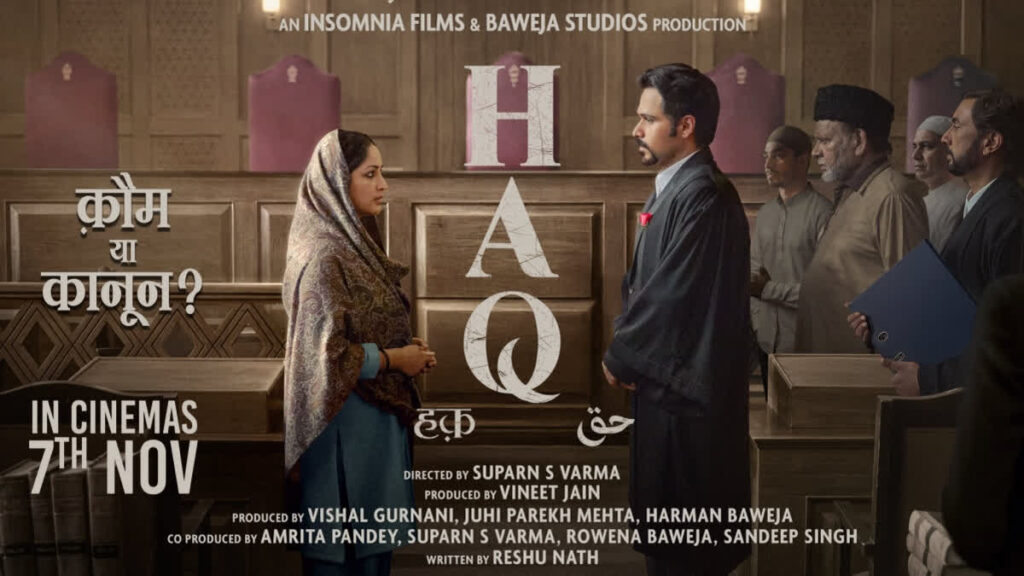
Haq: A gripping tale of perseverance and fighting for one’s rights

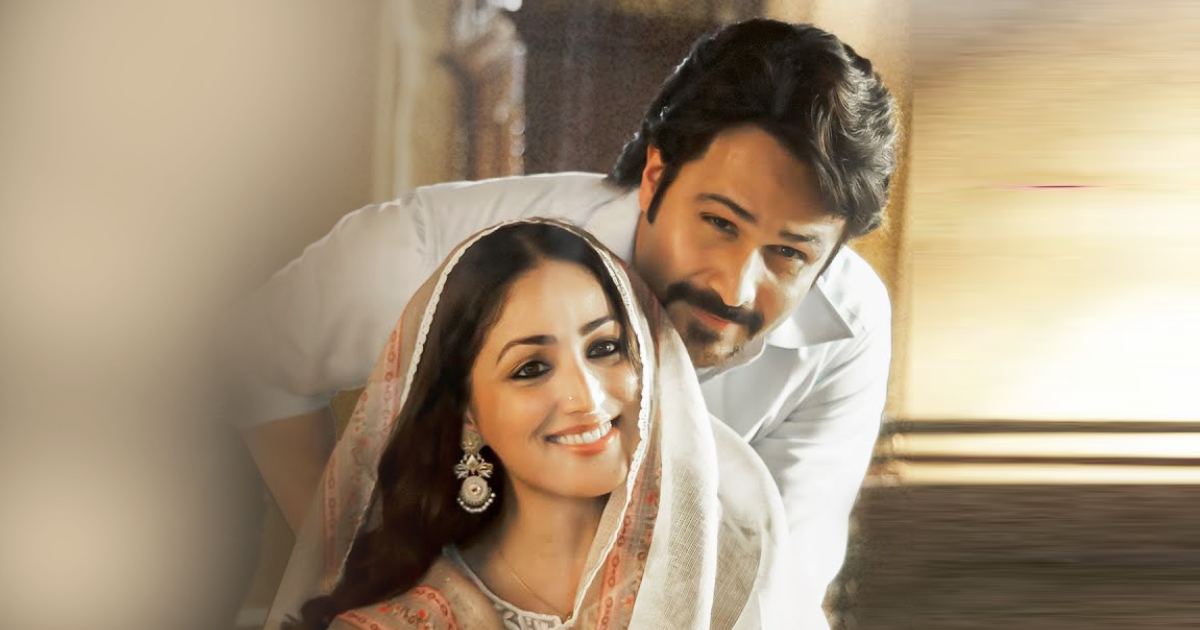
Director Suparn Verma does an excellent job in making sure that the movie doesn’t end up demonizing the Muslim community. It’s more about men twisting laws and using religion as an excuse to have their way irrespective of the faith. Yami Gautam as Shazia Bano is excellent as is Emraan Hashmi who has the trickier part. Both the writing and Emraan make sure that the husband doesn’t slip into a caricature

Starcast: Yami Gautam, Emraan Hashmi, Danish Hussain, Sheeba Chadda, Vartika Singh and others

Genre: Drama

Director: Suparn Verma

Writer: Reshu Nath

Based on: Bharat Ki Beti novel Jigna Vora

Producers: Harman Baweja, Vishal Gurnani and Juhi Parekh Mehta

Production Companies: Baweja Studios, Insomnia Films and Junglee Pictures

Cinematography: Pratham Mehta

Music: Vishal Mishra

Running time: 2 hours and 16 minutes

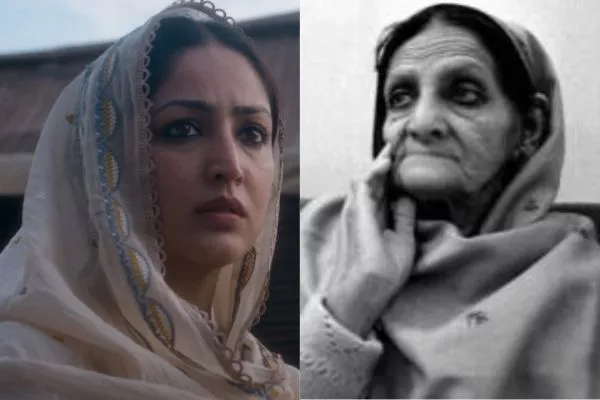
The landmark Supreme court judgement of Sha Bano upholding her rights of maintenance is a very significant one even today. Of course, the entire scenario took a political turn as well making it a matter of national debate; but beyond that it become a milestone case for women’s rights in this case an Indian Muslim. It raised questions about gender equality and protecting women’s rights. Haq directed by Suparn Verma and written by Reshu Nath successfully brings alive the long and arduous battle of Sha Bano with Yami Gautam playing Shazia. Emraan Hashmi is Shazia’s husband turned adversary Abbas.

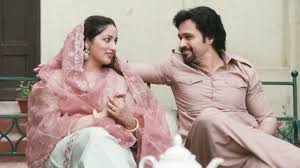
The story of Haq in simple terms focuses on the emotional turmoil faced by Shazia (an excellent Yami Gautam). Everything seems perfect with a loving husband and children, but her life goes upside down with Abbas (Emraan Hashmi) doing second marriage. Shazia as expected is very angry with her husband’s actions. She tries to make peace with the situation but that becomes difficult as Abbas gives little to no attention for Shazia. She takes the decision of going back to parent’s house. The situation takes a major dramatic turn when Abbas cuts of all ties starting with the children. He stops giving the maintenance money and then comes the divorce with just the three words Talaq. This is the story in brief.

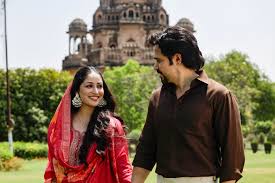
A strong aspect of Haq is the gradual revealing of different layers. Suparn Verma first establishes the happy moments of their married life. Abbas isn’t painted as a complete jerk. There is a visible romantic side in the initial scenes like the portion involving Shazia’s wish of wanting a rose garden. Gradually though things start to change after two children. He spends more time in the office giving not much time for her and children. Even when Shazia calls to talk about important matters Abbas asks her to not disturb and handle things on her own. The seeds of a scarred marriage start from there and take a full shape with the arrival of Vartika Singh’s Saira.

As a result of this layered writing the transformation of Abbas doesn’t come as jerky. The battle of Shazia has also been depicted well both in the terms of direction and Yami’s solid act. The role has the perfect mixture of vulnerability and a mother’s fighting spirit. A specific mention must be made of the emotional scenes where Shazia questions her husband. The dialogues are power packed, and the performances of both the actors make it even better.

Emraan Hashmi though has a trickier role as already mentioned. Abbas could have easily slipped into an over-the-top villain but Suparn Verma along with Reshu Nath give a psychologist insight into a man trapped in a sense of entitlement. Someone who refuses to see his wrong doings. There is also a sense of tragedy to Abba’s downfall. This is wonderfully captured in the moment where the one of sons doesn’t even make eye contact with the father. There is a palpable pain in the way Abbas talks about this to Shazia before the landmark Judgement. Emraan does an excellent job in capturing the little nuances.

The biggest victory of Haq though is that it never demonizes the Muslim community. The battle of Shazia Bano has a universal touch not restricted to a particular religion. Its more about men reinterpreting laws as per their convenience and using religion as a tool to hide behind their regressive thought process.

The dialogues are also power packed. The best of the lot involves a conversation between Shazia and Abba’s second wife. Shazia gives an important message on the need for respect in a relationship and how that is sometimes equally important. Vartika Singh as the second wife has a dignified presence and thankfully the movie doesn’t turn into two women fighting over one man. There is a wonderful moment involving the two when Saria places a basket of vegetables for cooking. This happens after Shazia starts facing social ostracization. Similarly in another moment she strongly says to Abbas about Shazia being right which obviously doesn’t go down well with the husband.

Danish Hussain as the supportive father is also wonderful to watch. The way he boosts Shazia’ ‘s spirit when the chips are absolutely down is a treat to watch. Through him the movie gives a progressive Muslim man. Sheeba Chadda as Shazia’s lawyer is excellent too in the courtroom scenes. Assem Hattangady as Faraz Sayeed is fine as well. The way he stands with Sheeba Chadda’s Bela Jain in spite of certain misgivings is nice to watch.

There isn’t much place for music in a movie like Haq but an important romantic number between Emraan and Yami has been smartly integrated. The song Qubool has a lovely melody establishing how happy they were. Pratham Mehta’s cinematography is successful in taking back the viewers to those times. The atmospherics have a lived-in feel.

As for the flaws the final courtroom arguments have a rushed feel. Also, the heavy use of Urdu in some sequences can be hugely distracting.

Final word: Haq is a very relevant tale with the issues being the same even today. On a side note, its great to see two women centric narratives the Girlfriend and Haq in the same week.

Thamma: Rashmika Mandanna steals the show in this gender bender

Director Aditya Sarpotdar for most part reverses the knight in shining armor trope with Rashmika’s character of Taraka/Tarika. The role has the perfect mix of vulnerability and fierceness in equal measure. Thamma is a welcome change from the usual Maddock horror comedy even though the concoction of scares and laughs doesn’t hit the high notes of the Stree movies. Ayushmann Khurrana also brings his usual finesse especially in the second half when his character is caught between two worlds

Starcast: Rashmika Mandanna, Ayushmann Khurrana, Paresh Rawal, Nawazuddin Siddiqui, Faisal Malik and others

Director: Aditya Sarpotdar

Writers: Niren Bhatt, Suresh Mathew and Arun Fulara

Producers: Dinesh Vijan and Aamir Kaushik

Production Company: Maddock Films

Cinematography: Saurabh Goswami

Music: Sachin Jigar

Running time: 2 hours and 29 minutes

Genre: Romance/horror

The horror comedy universe for Maddock has been its most successful business venture. The two Stree films along with Munjya have done fantastic numbers at the box office. Even Bhediya did fair business at the box office. This universe is expanding further with newer actors and fresh storylines. Thamma is the latest addition with crossovers from the movies mentioned above. Thamma varies from the previous films of this space as the beating heart is the love story between two people belonging to vastly different worlds. At the same time there is also a set formula in its treatment of horror with laugh out moments. This two way approach doesn’t always work nevertheless Thamma makes for an interesting watch.

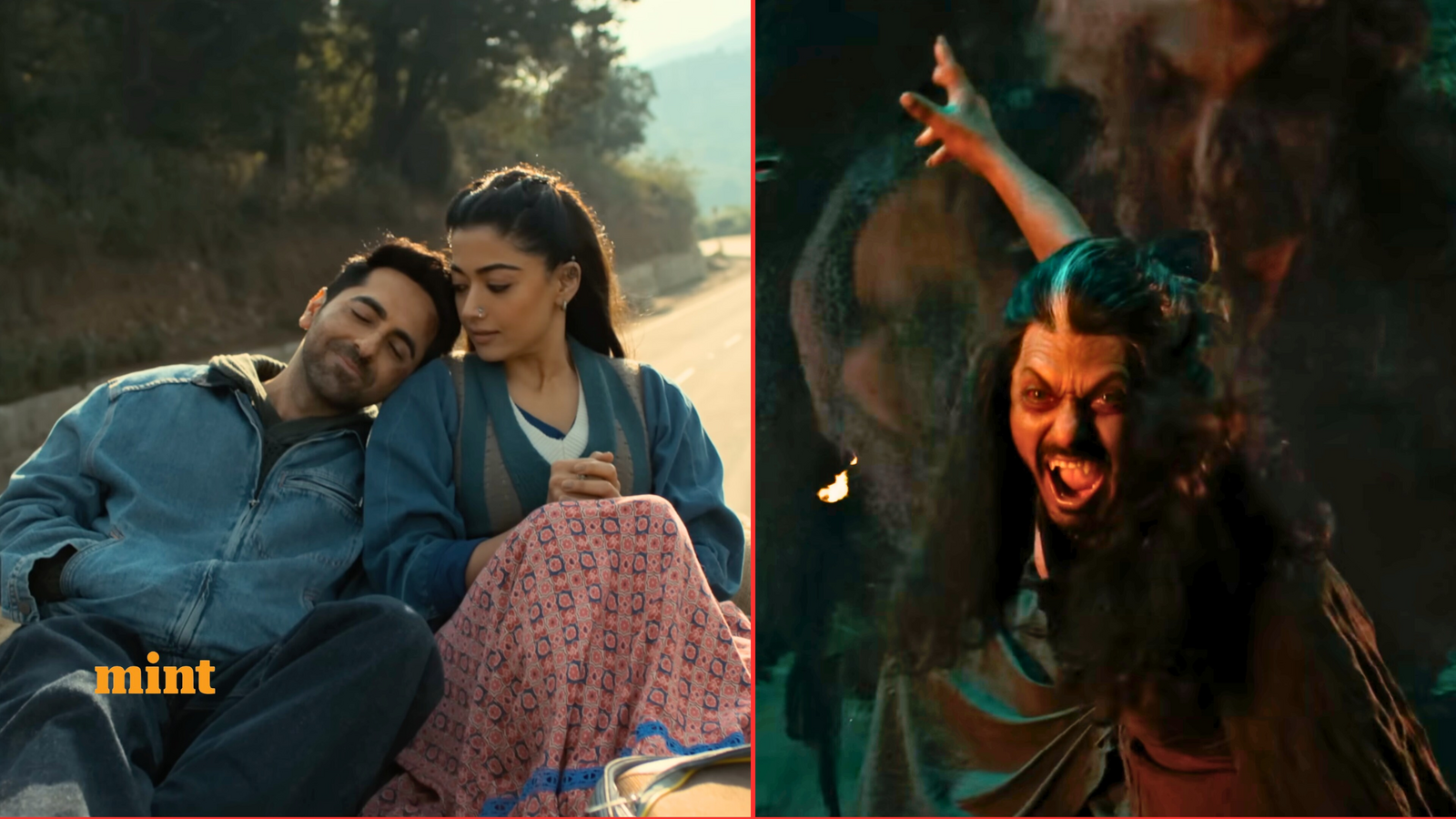
Thamma is essentially the journey of two lovers having to battle many odds. Ayushmann Khurrana is a small-time reporter Alok Goyal. While roaming in the forest Alok is confronted with an animal. A scared Alok runs away and his path crosses with Rashmika Mandanna’s Taraka/Tarika. Taraka is a mysterious woman belonging to a mythical world. A situation comes when Alok is offered as a sacrifice to Nawazuddin Siddqui’s Yakshashan. Yakshashan was once upon a time a leader of the demi humans. Now he is a chained prisoner. Taraka breaks the rules of the tribe by following her heart. She saves Alok and runs away with him. This sets the clash between two opposing worlds.

A strong aspect of Thamma is the love story between Alok and Taraka. It does take a little to warm up but soon the romance gathers momentum. The sweet nature of Alok and how he falls in love with Taraka has been both well written and enacted. The revelation of who Taraka actually is and the origin story comes in at the right juncture. There is a reference to the horrific partition when Taraka talks about a group called betaals. This tribe follows a strict rule which is never kill humans and drink their blood. The reason is they consider the human blood to be poisonous. This happens after they come across a charade of dead bodies with people slaughtering each other in the mayhem of partition.

The biggest strength of Thamma though is the character design of Rashmika Mandanna’s Taraka coupled with her performance. Unlike the Stree movies Rashmika Mandanna here is much more than just a mysterious woman. For a large part of the film Rashmika is the protector of Alok fighting tooth and nail for her love. The character is both ferocious and also tender as the situation demands and Rashmika nails both these shades. The actress also gets to do some action like the sequence with a group of boys chasing Alok and her after a party. In spite of a slightly drunken state Taraka gives a sound beating to the guys.

Ayushmann too comes into his own when Alok turns into a Betaal himself. The actor does a wonderful job in conveying both the initial shock and also accepting the new identity. Paresh Rawal as the scared father raises some chuckles. At the same time the veteran actor also shines in the few emotional sequences. A special mention must be made of the sequence where he encourages Alok to not give up saying that he has accepted Taraka as his daughter in law. However, the reference to late Amrish Puri’s dialogue in DDLJ and an Ayushmann bava feels forced. Nawazuddin Siddqui’s character as the comic villain needed more depth in writing nevertheless Nawazuddin chews the scenery coming up with a wonderfully eccentric act. Faisal Malik as a betaal turned cop is also good.

The crossover characters have also been smartly integrated. Whether its Abhishek Benarjee from the Stree and the Bhediya movies or Satyraaj in Munjya. These roles aren’t confined to filers. They play an important role in connecting the dots. Varun Dhawan as Bhediya gets a roaring entry too. His fight sequence with Ayushmann has been wonderfully choreographed. Saurabh Goswami’s cinematography is of a very good order whether it’s the haunting wilderness or the more tender moments.

Sachin Jigar’s music falls significantly short of Stree 2. The special dance numbers stick out like a sore thumb. But the duo do redeem themselves with Tum Mere Na Hue and Rahien Na Rahien hum.

Final word: Thamma is an interesting addition to the growing Maddock horror universe. Inspite of some bumps the movie makes for an engaging watch.

Homebound: A searing tale of friendship and politics

Returning back to the big screen after a huge gap Neeraj Ghaywan once again shows his ability in delivering socially relevant tales. Homebound is notches above Masaan in more ways than one: the angst is more, and the politics more in your face but highly effective. Homebound benefits immensely from the solid on screen friendship. The viewers feel the everyday marginalization felt by Vishal Jethwa’s Chandan and Ishaan Khattar’s Shoaib. The heart of Homebound though lies in the second half when it tackles the plight of migrant workers

Starcast: Vishal Jethwa, Ishaan Khattar, Janhvi Kapoor, Harshika Parmar, Shalini Vasta and others

Genre: Social drama

Story: Basharat Peer, Neeraj Ghaywan and Sumit Roy

Direction, screenplay and dialogues: Neeraj Ghaywan

Additional dialogues: Varun Grover

Based on: A friendship, a pandemic and the death beside the Highway article by Basharat Peer

Cinematography: Pratik Shah

Music: Benedict Taylor, Amit Trivedi and Naren Chandavarkar

Producers: Karan Johar, Somen Mishra, Adar Poonawala etc

Production Company: Dharma Productions

Running time: 2 hours and 2 minutes

In the last few years Dharma has seen a massive shift in terms of the diverse stories and filmmakers who come with strong voices. This is very apparent with films like 2024’s Kill and this year’s Dhadak 2 along with Homebound. All these movies have a social voice especially in the case of last two. In both Dhadak 2 and Homebound the plight of the marginalized form the central core: both these movies aren’t afraid to wear their politics on sleeves dealing with thorny issues which don’t find much representation in mainstream pan masala cinema.

Homebound is inspired from a devasting real life incident. A tragic story of two friends who like the numerous migrant workers had to walk long distance during the harrowing COVID pandemic. Out of the two only one makes it. An article about this was written by the noted writer Basharat Peer. Taking this as a base director Neeraj Ghaywan along with Sumit Roy and Basharat himself add different social dimensions.

In simple terms the story of Homebound primarily focuses on two childhood friends played by the excellent Vishal Jethwa and Ishaan Khattar. Both of them go after a police constable job promising them dignity which has been long denied due to their social backgrounds. Ishaan Khattar plays a young Muslim man facing religious taunts. Vishal Jethwa on the other hand is Chandan a Dalit boy afraid of embracing his true identity. Janhvi Kapoor plays Sudha Bharati. Much like Chandan she is also a Dalit but with a better economic background. Sudha is a strong believer in the Ambedkar philosophy: she constantly eggs Chandan to complete his studies so that he will be in a stronger position. This is the story in brief.

The best part of Homebound is the strong on-screen friendship. There is a lived in feel to the scenes featuring Vishal and Ishaan. Their moments together whether it’s the light ones or the more intense portions when Shoiab doesn’t make it has been brilliantly written and enacted.

Through the two friends the film delivers a hard-hitting tale on the everyday discrimination faced by the marginalized. For example, there is a scene where Chandan goes to check about his exam results. An official asks Chandan which category he applied. To this Chandan replies general category hiding his true identity. This is followed by the official going on a rant about reservation in a tone reminiscent of the numerous upper-class people who feel that reservation is a regressive thing.

Similarly in the case of Shoaib he too faces the brunt of being a Muslim. There is a scene of Shoaib going for an office party. A cricket match between India and Pakistan is going on. Like the other people in party Shoaib is also happy about India winning however his seniors chide him with the term Lahore implying that he is sad about Pakistan losing. All this hits the viewers hard especially those who are into serious cinema.

The love story between Chandan and Sudha also has interesting dynamics. As already mentioned, Sudha is financially better off than Chandan and this shows in her confident persona. Through Janhvi Neeraj shows a more empowered Dalit with a strong voice. Janhvi doesn’t have much heavy lifting to do but she plays the part with the required confidence. Her scenes with Vishal bring a much-needed lightness to the otherwise grim proceedings.

In the second half the plot goes from caste to the plight of migrant workers. The movie makes the viewers ponder on how lucky we were safe in our homes. The visuals of the sudden lockdown imposed and migrant workers desperate attempts to get away will definitely stir a strong emotion. In these segments the touch of Basharat Peer is very apparent.

The movie doesn’t directly critique the government but for those who read between the lines the administrative failure is very palpable. The moments leading up to Chandan’s death has also been brilliantly staged. There is an important conversation just before he gets sick. He talks about his future aspirations which include completing his studies among other things. This adds to the tragedy later on. The pre climax scene with Shoaib desperately wanting to save his friend by egging him on is so emotionally riveting. Ishaan Khattar as Shoaib especially shines in this sequence making you wish that the real-life scenario had played out differently. With his portrayal of Shoaib Ishaan once again shows why he is such a fine talent. Vishal Jethwa is also equally good in portraying the angst and anguish of a lower caste man who is afraid to embrace his true caste identity. Mention must also be made of Harshika Parmar as Chandan’s sister. She brings in a quiet strength in the sequence where her character reminds Chandan about how she never had the opportunity of going to college unlike her brother. Shalini Vatsa as the mother is equally good in spite of the brief screen time.

Pratik Shah’s cinematography is solid too. He does a very fine job in capturing the lived in atmospherics. The costumes and production design are also in perfect sync making Homebound a technically solid product as well.

Final word: Its no surprise that the movie received a 9-minute standing ovation at the Cannes Festival.

Jolly LLB 3: A plea for saving farmers and the journey of social consciousness

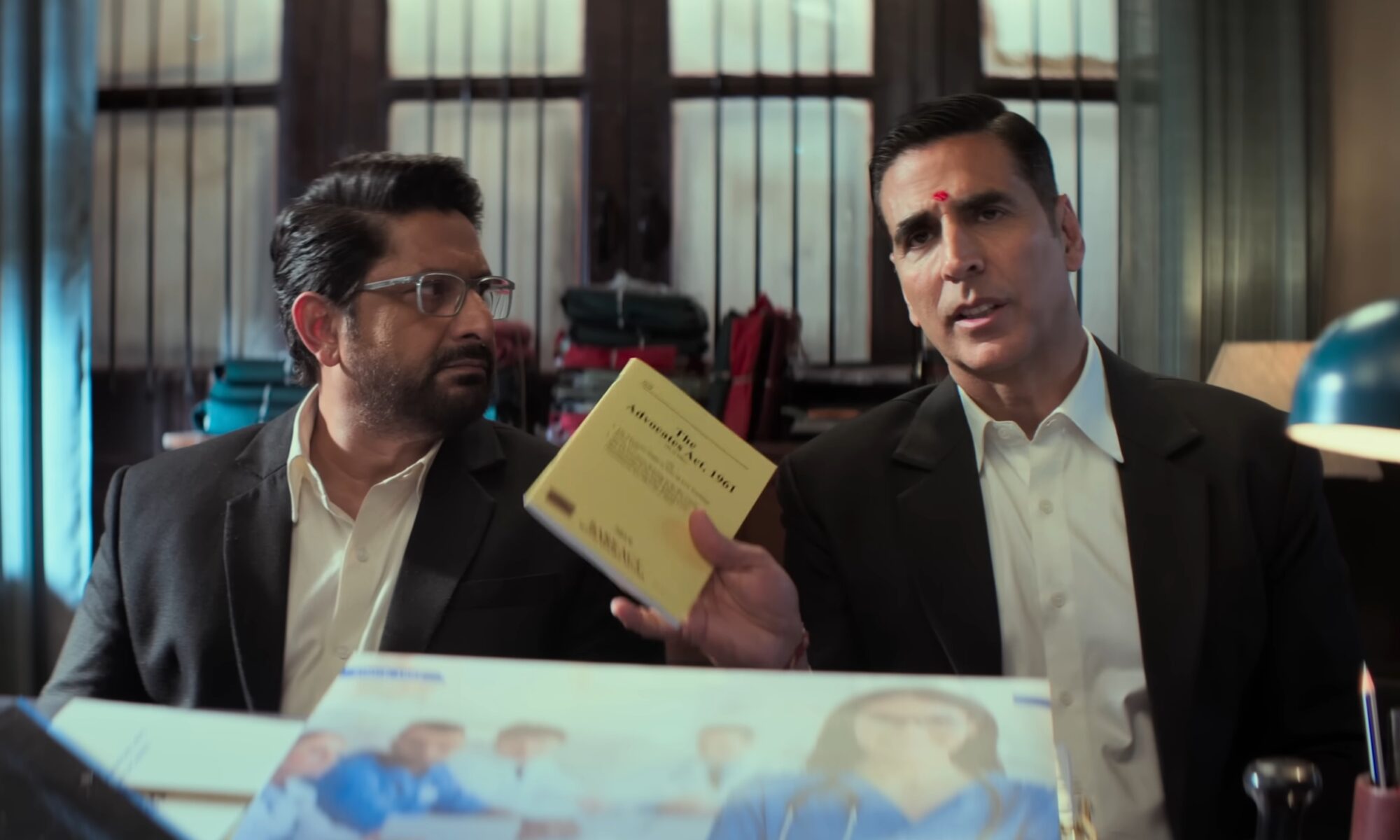
Director and writer Subhash Kapoor takes a familiar route particularly in how the protagonists evolve. The third part lacks the freshness of the last two, still it remains a compelling watch for the issues explored and the performances of the core cast. Akshay Kumar and Arshad Warsi as the bumbling Jolly’s undergoing a change do a fine job: But Saurabh Shukla is the show stealer raising laughs as well as lending gravity in the serious moments.

Starcast: Akshay Kumar, Arshad Warsi, Saurabh Shukla, Seema Biswas, Gajaraj Rao, Seema Biswas and others

Genre: Comedy/drama

Director and writer: Subhash Kapoor

Producers: Alok Jain and Ajith Andhare

Music: Anurag Saikia, Vikram Montrose etc

Cinematography: Rajarajan Ramabadran

Production Companies: Star studio 18 and Kangara Talkies

Running time: 2 hours and 37 minutes

The Jolly LLB series is one of its kind franchise. Generally, movies related to comedy and action are developed into a series of films. But Jolly LLB movies are an exception as the stories dwell into the different types of problems effecting a common man. The heroes in these films aren’t the usual idealistic ones. They are grey shaded characters undergoing a gradual change.

Jolly LLB 3 pretty much sticks to this formula. This time around its corporates usurping farmers land in the name of globalization. Arshad Warsi and Akshay reprising their roles from the previous movies are at constant loggerheads. Both of them suffer from lack of substantial clients. This results in constant tussle with each trying to outwit one another in search of fame. However, things take a major dramatic turn with the entry of Seema Biswa’s Janaki. Saurabh Shukla continues to be the adorable judge often exasperated with the two central lawyers but at the same time being considerate too.

A strong aspect of Jolly LLB 3 are the courtroom portions. The series of dramatic exchanges between Akshay Kumar and Ram Kapoor who represents the industrialist Haribai (Gajraj Rao) have the right amount of spark. They are often intense making the viewers ponder on the pitiable condition of farmers. At times the movie slips into a melodramatic space with the district magistrate having a change of heart: this particular portion is wobbly. But the core relevance helps it tide over.

Saurabh Shukla as the Judge Sundar Lal Tripathi continues to be a major highlight. The veteran actor raises ample chuckles specially in a conversation with the two Jolly’s. He tells them in detail about the high stress caused by the two. The third part also gives a peek into the romantic side of Sundar Lal and Saurabh Shukla aces it.

Apart from the chuckles he also lends in a certain seriousness whenever required. For example, there is a scene involving constitutional values and respecting its spirit. In simple terms Saurabh Shukla is the major ace of this franchise.

Seema Biswas as the widow Janaki rallying for justice is the only female character with some weight. As expected, Seema Biswas nails the role with her piercing gaze. She communicates a lot with her eyes. Gajraj Rao as the typical industrialist also makes for a suitably despicable villain. The character graph isn’t the most innovative, but he brings in an understated menace. Ram Kapoor also makes his presence amply felt as a rich advocate fighting for a wealthy industrialist.

As the two Jolly’s Arshad Warsi and Akshay Kumar play their parts with practiced ease. Akshay gets the bigger arc though with some fiery arguments. The scene where he talks about farmers subsidies being dismissed as Khairat (charity) deserves a particular mention. Arshad Warsi comes alive in the final monologue where he talks about farmers always being the scapegoats in the name of economic progress. An expectation that they should give their lands without any complaints.

Amrita Rao and Huma Quereshi as the respective wives have a lovely presence but in the larger scheme of things they don’t have much to do. The personal lives of both Jolly has zero noticeable moments. The music is another sore point specially an emotional song meant to stir the viewers. Some scenes like the two heroes coming on a camel disturbing a racing competition is also clumsily staged.

Final word: Jolly LLB 3 is a worthy addition to this growing franchise in spite of some lags.

War 2: Watchable but doesn’t quite justify the tag of a popcorn entertainer

Hrithik Roshan and Junior NTR from War 2. The two stars lift the movie above the bumoy screenplay with their screen presence and performances

Ayan Mukherj’s War 2 is a significant improvement over the last spy installment Tiger 3 but the film relies heavily on gloss over substance. The absence of our neighbor and go to nation Pakistan is welcome but there is no escaping patriotism with the repletion of lines India first. Ayan’s direction shines best in the portions of high voltage clash between the two stars and also a poignant flashback in the second half

Starcast: Hrithik Roshan, Junior NTR, Kiara Advani, Anil Kapoor and others special appearance (Bobby Deol)

Genre: Action/thriller

Direction: Ayan Mukherji

Screenplay: Shridhar Raghavan

Story and Production: Aditya Chopra

Dialogues: Abbas Tyrewala

Cinematography: Benjamin Jasper

Music: Pritam

Production House: Yash Raj Films

Running time: 2 hours and 50 minutes

When EK Tha Tiger released in 2012 the movie was one of its kind, a love story between an Indian and Pakistani spy and how they have a happily ever after by crossing the various hurdles of both raw and ISI. There was a certain groundedness to the character of Salman while keeping the larger than life image intact. As the spy movies have increased with addition of new actors and larger set pieces the charm is somewhat reducing and the latest installment is a perfect example of this.

War 2’s director Ayan Mukherjee started his career with rom coms but Bramhastra Part 1 marked a significant shift with a larger than life scale and an ambitious plot. In spite of the striking visuals Ayan’s inability to handle a scale of that nature was very visible. In War 2 the director is more in control specifically in his handling of the two stars, but in terms of delivering a perfect popcorn movie Ayan still has miles to go.

The plot of War 2 focuses on Kabir (Hrithik Roshan) coming into contact with a deadly cartel called Kali. This syndicate consists of numerous individuals, they want to cause severe harm to the nation. In a shocking turn of events Kabir kills his father like figure and RAW chief Luthra (Ashutosh Rana). The assassination of Luthra leads to the introduction of Junior NTR’s Vikram. Vikram along with some more are assigned to bring Kabir down. This is the story in brief without giving away much of the twists and turns.

A strong aspect of War 2 are the twists and turns related to the characters of both Kabir and Vikram. In the beginning portions the audience have the feeling that Kabir has really gone rouge, an important dialogue featuring Ashutosh Rana and him spiting on Hrithik’s face saying that I had brought you up as a son and you turned into a betrayer raises the curiosity of the audiences.

Even in case of Junior NTR’s Vikram the role comes with different shades. He is shown to be a brave and a honest agent till the interval, at one point Kabir and Vikram team up as partners too after Kabir makes an important closure about why he is doing what he is doing.

The interval bang with a surprising reveal ends the first half on a high. The beginning portions of the second half featuring a key flashback has a strong emotional weight. This flashback establishes how Kabir and Vikram then known as Raghu came into contact developing a friendship bond. The two do stealing for a living, however one major incident in a remand home changes everything. The personalities of the two and how in the present they are up against each other has been well connected.

The film also benefits from the strong performances of both Hrithik and Junior NTR. As Kabir Hrithik combines his hunk like presence with emotional vulnerability. The actor specifically shines in the scenes of showcasing Kabir’s moral dilemmas and a certain loneliness from operating in the shadows. Junior NTR as Vikram/Raghu also does a fine job in his Bollywood Debut. He pulls off the grey shades convincingly, the actor clearly has a ball with the one liners chewing the scenery along with Hrithik. The high intense moments between the actors with the cat and mouse game leads to some engaging sequences.

A major problem with War 2 apart from the usual patriotism is the criminal underutilization of the supporting cast. Anil Kapoor replacing Girish Karnad from the Tiger movies has a strong beginning with just the right amount of mystery on whether he is good or bad, however as the movie progresses the character gets lost. The same applies to its leading Lady Kiara Advani. Kiara has shown her potential in a film like Satyaprem Ki Katha but here she is largely wasted except for the action sequences. She carries the required attitude of a tough woman but the role is too thinly written and the patchily written love story also doesn’t help matters.

Pritam’s music is another sore point for the movie, whether its the love ballad featuring Hrithik and Kiara or the dance face off between Hrithik and Junior NTR. The songs come across as major spreedbreakers. The VFX is also a mixed bag, it comes across as too shoddy for a film of this scale, sometimes the shoddy VFX becomes a major deterrent in enjoying the action set pieces too. The stunts of Bea Arreugui does provide some thrills more so in the climatic face off. Benjamin Jasper’s cinematography is also efficient. He does a fine job in capturing the large scale through his lens making it a good theatrical experience specially for the die hard fans of Hrithik and Junior NTR.

War 2 ends with an introduction to the world of Alpha through a deadly Bobby Deol. Here’s hoping the female centric spy movie later this year becomes a much needed game changer.

Final word: War 2 is a major mixed bag and personally quite a bummer after the mega success of YRF last production Saiyaara. Watch it if you are in the mood for some large scale action or want to see how Junior NTR fares in his Hindi debut.

Dhadak 2: A visceral tale of caste horrors and rebellion

Tripti Dimri and Siddhanth Chaturvedi from Dhadak 2. Both deliver exceptional performances

Though a remake of Pariyerum Perumal Shazia Iqbal’s Dhadak 2 is a timely tale of how caste plays out in modern times. This spiritual sequel is far more bold than the first part taking a strong stand on thorny issues. The transformation of Siddhanth Chaturvedi’s Neelesh from a timid young Dalit man to fighting for his self respect is the best part of the movie. Mention must also be made of the feministic lens through which Tripti’s Vidhi is portrayed.

Starcast: Siddhanth Chaturvedi, Tripti Dimri, Saurabh Sachdeva, Zakir Hussain, Vipin Sharma and others

Genre: Romantic drama

Director and writer: Shazia Iqbal

Additional writer: Rahul Badwelkar

Based on: Pariyerum Perumal (Mari Selvraj)

Producers: Karan Johar, Apoorva Mehta, Somen Mishra and others

Production Companies: Zee Studios, Dharma Productions and Cloud 9 Pics

Music: Rochak Kohli, Tanishk Bagchi etc

Cinematography: Sylvester Fonseca

Running time: 2 hours and 26 minutes

Dhadak 2 begins with a powerful and necessary quote for today’s times. “When injustice becomes law, resistance becomes duty.” this isn’t just a throwaway quote used for surface level but the core message of Dhadak 2. Through the tale of star crossed lovers Shazia Iqbal along with her co writer Rahul Badwelkar deliver a highly charged political reinterpretation of Pariyerum Perumal. Of course Dhadak 2 comes with a dash of mainstream Bollywood too in terms of the protagonists rebellion, nevertheless this is an important film and Kudos to Karan Johar for backing a movie like this which is not afraid to wear its politics on sleeves.

For those who haven’t seen the Mari Selvaraj directorial Dhadak 2 primarily focuses on the journey of Neelesh Ahirwar (Siddhanth Chaturvedi) he is a law student from an oppressed caste, Neelesh has big dreams and is very clear about steering away from campus politics and anything to to do with activism. Tripti Dimri is Vidhi an upper caste girl with a mind of her own and doesn’t shy away from asking uncomfortable questions. Soon friendship blossoms between the two with Vidhi becoming Neelesh’s confidante, she helps him a lot in his studies explaining things which he doesn’t understand. For Vidhi the struggles of Neelesh opens up a whole new understanding of the society. Soon love happens but a humiliating incident puts a major speed breaker. This is the story in brief.

The best part of Dhadak 2 is how Shazia Iqbal has retained the essence of the Tamil original with some additional elements. This specifically comes out in the character of Vidhi who has more agency than the one played by Anandhi. The film strongly critiques the idea of a so called family honor being attached to a woman’s behavior. On the surface Vidhi’s family may come across as modern but in actuality they are anything but that. A standout moment in Dhadak 2 is Tripti Dimri’s high voltage clash with her truly despicable brother Roonie (Saad Bilgrami). The way she tears into his patriarchal mindset gives goosebumps.

Mention must also be made of how the film tackles casteism head on whether it is Vidhi’s father leaving out Neelesh’s surname when she invites him for the sister’s wedding or the very disturbing moment of Neelesh being smeared with sludge just because he asserts his individuality. These scenes are packed with the required rawness.

Shazia Iqbal and Rahul Badwelkar also do a good job in touching upon the theme of reservation. The taunts faced by the lower castes mirrors numerous real life situations. There is an important dialogue in the movie where a character talks on how reservation came because of casteism and not the other way around. This small but important track also adds to the caste discrimination and violence faced by Neelesh.

The character arc of Neelesh has also been done well. His steady evolution from timid to more assertive happens gradually and not overnight. The pre climax portion where Neelesh chases Ronnie to his home and pours out his anguish is a treat to watch, it moves the viewers making them root for Neelesh and Vidhi to have a happy ending. Siddhanth Chaturvedi does a very fine job in bringing out the vulnerability of a Dalit man with a dream of better future. The actor specifically shines in the portions of rage using his eyes and overall body language to great effect. Tripti Dimri also makes a strong impact with her powerful performance. After a series of glamorous roles the young actress is back doing what she is best known for. Towards the end there is a scene where Vidhi lets out an animal like cry after an important revelation and Tripti absolutely aces it. Yes the ending may across as too mainstream Bollywood for the purists nevertheless it leaves the audiences on a high.

The supporting cast is also solid but the ones who stand out are Zakir Hussain and Saurabh Sachdeva. As the college principal Zakir Hussain lends a lot of warmth to his part. His conversation with Neelesh while opening up about his caste background and how he endured several taunts on his way in becoming a principal is very poignant. The portion ends with a motivational message giving further impetus to Neelesh’s fight. Saurabh Sachdeva as the self-appointed moral guardian is chilling too. His part is similar to the role of Bobby Deol’s equally chilling hit man in Love Hostel; both believe that they are doing some great social service. Saurabh Sachdeva does a very fine job in imbibing the character’s attitude and the way he meets his end is poetic justice done right.

The songs of Dhadak 2 don’t match up to Dhadak 1 nevertheless the compositions are soulful. Among the tunes Bas Ek Dhadak, Preet Re and Duniya Alag are good.

Saiyaara : An intense romantic drama with boyfriend goals

Ahaan Pandey and Aneet Padda from Saiyaara. Both of them are rock solid in demanding roles

The core plot point of Saiyaara doesn’t make any pretense of being new, in fact it’s a classic Vishesh Films territory with a YRF soul. However, what makes the film click is the emotional core involving the two leads. The soulful music by various composers and its integration is also wonderfully done. Both Ahaan and Aneet get the tone of their characters perfectly, the close-up shots in particular where they have to emote just through body language is simply brilliant.

Starcast: Ahaan Panday, Aneet Padda, Geeta Agarwal, Rajesh Kumar, Varun Badola and others

Genre: Romantic drama

Director: Mohit Suri

Writers: Rohan Shankar and Sankalp Sadanah

Producer: Akshay Widhani

Production house: Yash Raj Films

Music: Mithoon, Tanishk Bagchi, Sachet Parampara etc

Cinematography: Vikas Sivaraman

Running time: 2 hours and 35 minutes

Mohit Suri’s Saiyaara has had a fantastic prerelease buzz transforming into very good openings, additionally the movie has also struck a chord with numerous audiences something which even some of the big films have failed to do. On paper Saiyaara is a romantic drama harping back to the times of Rockstar and Mohit’s own Aashiqui 2. It’s about passionate love bordering on madness. However, the film still works because it’s a familiar tale well told.

The broad storyline of Saayiara focuses on two individuals Krish Kapoor (Ahaan Panday in his debut) and Vaani (Aneet Padda in her first major role). Krish Kapoor is talented, but a hot-headed musician, his hot headedness and angst is established early on where he gets into a brawl, it’s related to the heated topic of nepotism. A big reason for Krish Kapoor’s angst is the alcoholic father played by Varun Badola. Vaani on the other hand has a way with words but suffers from confidence problems., she carries a major emotional baggage. This is due to her ex-boyfriend, he had ditched her at the last moment of a register marriage. The two meet by chance leading to a tumultuous romantic journey, two broken souls healing each other and a medical condition threatening to destroy their happily ever after.

The best part of Saiyaara is how Mohit Suri along his writers build up the love story. How Krish and Vaani find solace changing each other’s lives has been well depicted. A specific mention must be made of the portion where Krish Kapoor talks about his desire for fame and not wanting to die in poverty. The subsequent scene involving Varun Badola and Vaani also opening up about her emotional baggage leading to a fresh start moves the viewers. The pre interval block with a major revelation also doesn’t feel jarring because there is enough foreshadowing.

In the second half the viewers see a different side of Krish. A devoted boyfriend who puts his love above the desire for fame, he gives major boyfriend goals much like Ranveer Singh in Rocky Aur Rani Ki Prem Kahani. The romantic moments are heartwarming also aided by the striking chemistry between the two leads. Yes, some parts of the second half like the return of Vaani’s ex-boyfriend and the scenes between them do act as a speed breaker but as viewers you are still invested in the proceedings.

The music composed by Mithoon, Tanishk Bagchi and others also lift the movie. Specific mention must be made of the title track sung by Faheem Abdullah. It’s an absolute earworm both singing and composition wise. The song comes at the right juncture and is also aided by Ahaan Pandey’s performance.

Mention must also be made of how the movie dwells into digital journalism and the culture of instant gratification songs. There is an important dialogue where Vaani talks about the songs that have endured the test of time and how these were created.

It goes without saying that Ahaan Panday and Aneet Padda successfully carry the movie on their shoulders. Ahaan Pandey seamlessly captures the different shades of Krish from the hot-headed nature to the gradual transformation. The simmering anger feels authentic and there is a certain boyish charm. Aneet Padda also gets into the skin of her role particularly in the emotional scenes of the second half. Portraying a character with serious illness isn’t easy but Aneet scores full marks for a job very well done. In fact, both Ahaan and Aneet establish themselves as potential stars going forward.

In the supporting cast Geeta Agarwal and Rajesh Kumar provide good support as Vaani’s concerned parents, they lend in a lot of warmth. Varun Bodala as the alcoholic father also has his moment during an apology sequence but the shift in the dynamics could have done with better writing. Shaad Randhawa in a brief appearance as a rapper singer moddled on Yo Yo Honey Singh suffers from a sketchy characterization not bringing much to the table.

Final word: Sayiaara is worth watching for those who like passionate romantic dramas with soulful music.

Tanvi (The Great): Cheerfully optimistic but an important message

The starcast of Tanvi (The Great)

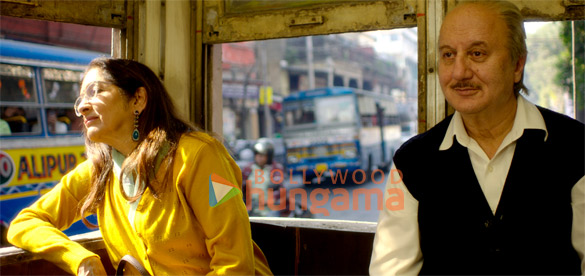
Anupam Kher as the grumpy grandfather coming to terms with Tanvi’s autism gives the movie a strong emotional core. The scene where Tanvi finally addresses him as dadu instead of colonel Pratap Raina is very heartfelt moving the viewers. In the title role Shubhangi Dutt delivers an authentic performance making a promising debut.

Starcast: Shubhangi Dutt, Anupam Kher, Pallavi Joshi, Jackie Shroff, Aravind Swamy etc

Direction, story and producer: Anupam Kher

Genre: Drama

Additional writers: Ankur Suman and Abhishek Dixit

Production Companies: Anupam Kher Studio and NDFC

Music: M M Keeravani

Cinematography: Keiko Nakahara

Running time: 2 hours and 30 minutes

In the last few years there has been an increase in the trend of Hindi movies dealing with the topic of differently abled. Whether it is Tushar Hiranandani’s Srikanth with Rajkummar Rao as the visually impaired businessman, Kabir Khan’s Chandu Champion about a paralympic champion. This year the Aamir Khan produced Sitaare Zameen Par was an earnest attempt at normalizing people with down syndrome and autism challenging our general perception of normal. A common core point of all these movies is being different doesn’t make you a lesser person. This section are also capable of doing brilliant things.

Anupam Kher’s second directorial after a long gap pretty much follows the formula of the ones mentioned above. It makes a strong case for inclusivity even though excessive cinematic liberties does somewhat hamper the experience. A tighter second half would have definitely justified the title even more. The story of Tanvi (The Great) begins with Vidya Raina (Pallavi Joshi) she has worked a lot on the topic of autism; Vidya Raina is invited to a conference in United States. Vidya Raina is a single mother, as a result she takes her daughter to Lansdowne in Uttarakhand. Anupam Kher is Tanvi’s grandfather and retired Colonel Raina. Tanvi’s dynamics with her grandfather isn’t so great. Additionally, Colonel Raina has a hard work in wrapping his head around the concept of autism. The movie focuses on how the two gradually develop a bond and Tanvi’s desire to join the army in order to fulfill her father’s dream of saluting the Indian flag at Siachen Glacier.

A strong aspect of Tanvi (The Great) is the evolving relationship between the granddaughter and the grandfather. How the two learn to co-exist with each other particularly Colonel Raina gives the movie some of its best moments. The gradual transformation of Colonel Raina from his initial resistance to eventually admiring the fighting spirit of Tanvi is a delight to watch.

Shubhangi Dutt and Anupam Kher

Anupam Kher along his writers also do a fine job in creating the right emotional core. There is a specific reason for Tanvi’s desire to join the army, it’s not about killing the enemy in a war. It’s more about fulfilling her father’s wish and this has come out in an impactful manner.

The portions of Tanvi going through the hard grill of military training in spite of physical challenges has been both well written and enacted. Particular mention must be made of Aravind Swamy playing Tanvi’s mentor cum coach Major Srinivasan. He plays a hardened military man who is both strict as well as supportive. Major Srinivasan’s connection with Tanvi’s late father and how this leads to an emotional bond has also come out well.

The movie has numerous familiar faces in the supporting cast apart from Anupam Kher and they all do well within their respective roles. Aravind Swamy though shines the brightest followed by a dashing Jackie Shroff in the role of a senior army man Brigadier Joshi. Tanvi’s exchanges with Brigadier Joshi specifically the portion of her affectionally calling him Tiger is nice to watch. Jackie Shroff brings in a certain warmth. The same applies to Boman Irani as music teacher Raza, as Tanvi’s confidante the actor brings in his usual finesse. Pallavi Joshi as the single mother is good too but her track needed better writing. The portions of Vidya Raina in US and the angle of her autism project feels somewhat superficial not adding much to the proceedings.

Shubhangi Dutt and Boman Irani

Infact the movie’s second half could have done with far more crispness. A feeling of restlessness creeps in. Also, the journey of Tanvi in the latter half resembles more of a masala Hindi movie undoing the nuanced first half. There is a certain sense of repetitiveness with the same point being hammered in.

Technically speaking Tanvi (The Great) is a visual treat. Cinematographer Keiko Nakahara captures the hilly terrains of Lansdowne and the misty mornings beautifully through this lens. MM Keeravani’s songs are also tuneful with Man Chala Manwa and O Mera Manmohana standing out.

It goes without saying that Tanvi (The Great) is largely reliant on the performances of Shubhangi Dutt and Anupam Kher, both are first rate in their respective parts. Shubhangi is terrific in capturing the fighting spirit, she nails the different shades of her character from a certain innocence to becoming an idol. Anupam Kher as the grandfather is also terrific delivering one of his better performances. He brings in an emotional resonance as a disgruntled old man whose outlook undergoes a significant change.

Final word: Tanvi (The Great) doesn’t match the qualities of its protagonist completely. Nevertheless, for those who like optimistic stories with a message the movie makes for a good watch.

Metro In Dino: A solid spiritual sequel exploring the complexities of love and marriage

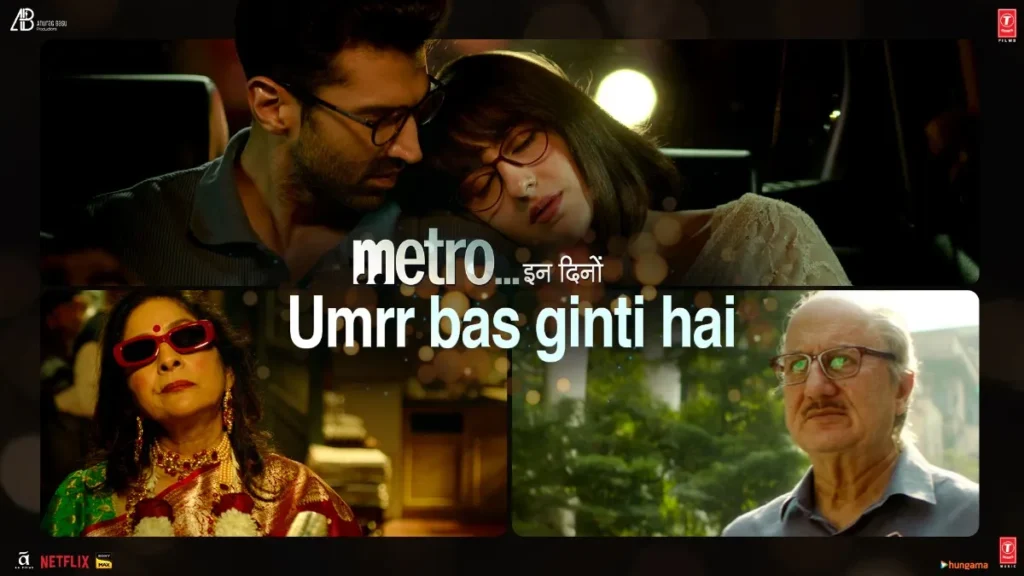
Metro In Dino movie image

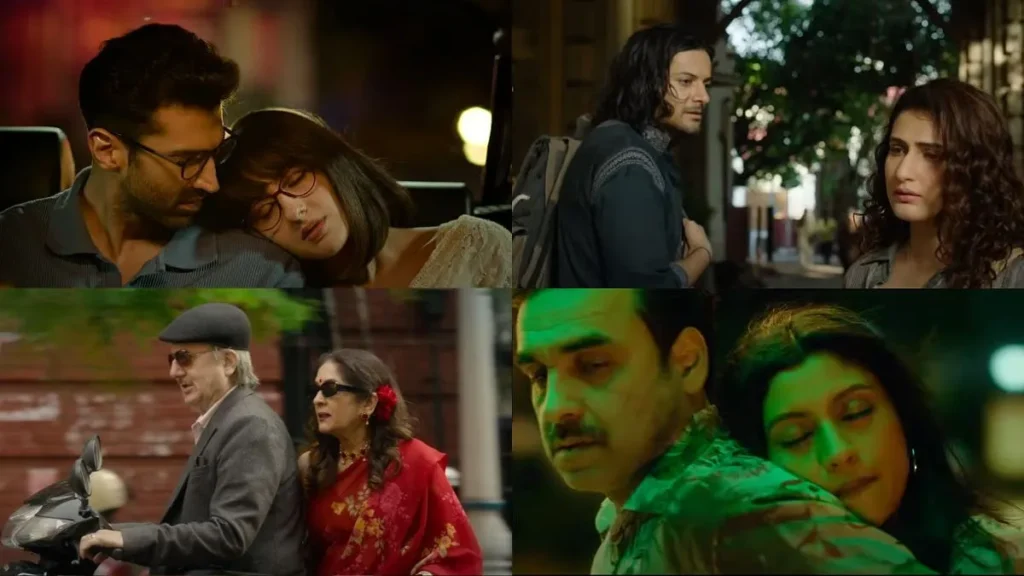
Anurag Basu’s Metro in Dino holds a mirror to today’s society much like the first movie Life in A Metro. Metro In Dino is a mostly gripping concoction of emotions and humor making you laugh as well as reflect. Pankaj Tripathi as Monty successfully takes over the mantle from the late Irrfran Khan. As a flawed husband he is both charming and also heartfelt in the emotional sequences. Sara Ali Khan’s track turns out to be the weak link partly salvaged by a charming Aditya Roy Kapoor

Starcast: Pankaj Tripathi, Konkana Sen Sharma, Fatima Sana Sheikh, Ali Fazal, Aditya Roy Kapoor, Sara Ali Khan, Neena Gupta, Anupam Kher, Saswata Chatterjee and others

Genre: Romance

Story, screenplay and direction: Anurag Basu

Dialogues: Sandeep Shrivastava and Samrat Chakravarthy

Producers: Bhushan Kumar, Krishan Kumar, Taani Basu and Anurag Basu

Production Companies: T-Series Films and Anurag Basu Productions

Music: Pritam Chakraborty

Cinematography: Abhishek Basu and Anurag Basu

Running time: 2 hours and 42 minutes

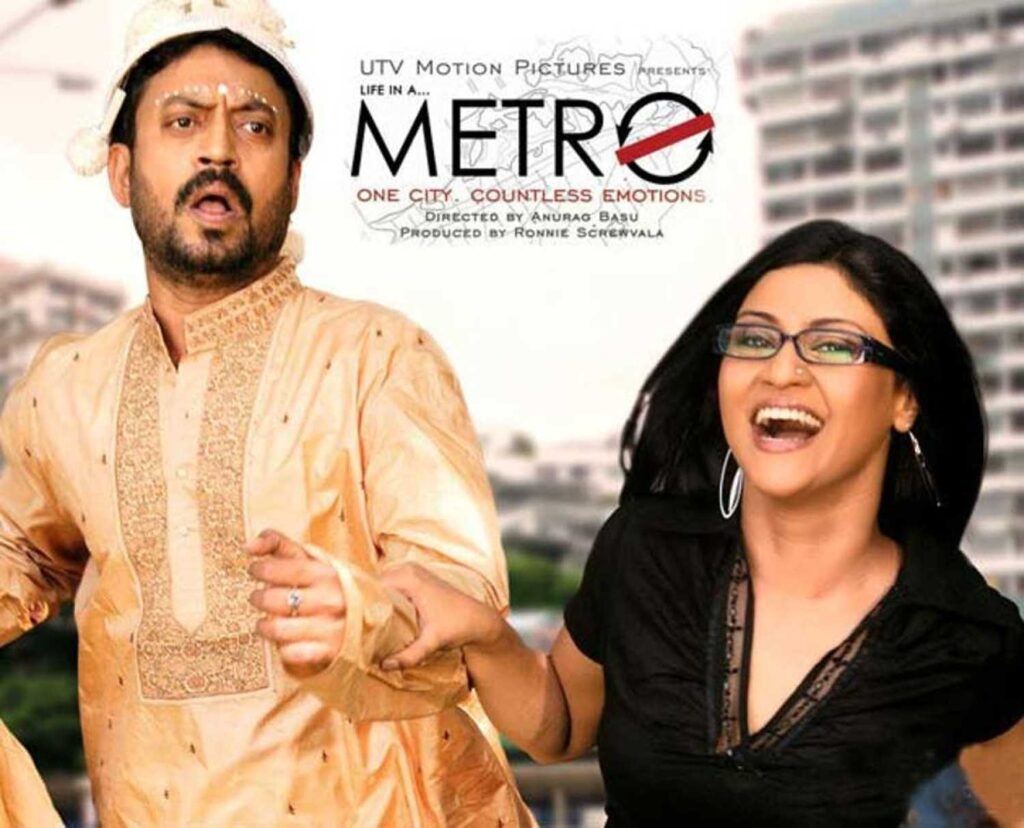
Life In A Metro released in 2007 was a romantic drama exploring different topics like extramarital affairs, the sanctity of love etc. The city of Mumbai where the different tracks take place simultaneously was also a character in itself reflecting the hustle and bustle along with the ambitions of making it big. The movie received widespread acclaim for the gripping narration, music and fantastic performances. Life In A Metro is widely considered to be one of late Irrfran Khan’s best work and rightly so, the actor was a sheer delight to watch with his wackiness, his track with an equally good Konkana Sen Sharma was the highlight of the movie.

Late Irrfran Khan and Konkana Sen Sharma

After a huge gap of 18 years Anurag Basu returns back with a spiritual sequel with similar strands and new additions. Like Life in a Metro the locations in this movie also become a character in itself perfectly reflecting the various moods and the emotional upheavals which the characters go through. The story of Metro in Dino focuses on numerous individuals spanning different age groups and cities. Pankaj Tripathi and Konkana Sen Sharma are Monty and Kajol respectively. The two are going through a major midlife crisis, the marriage has lost the spark. In order to escape from the boredom Monty takes the aid of a dating app leading to a lot of chaos. Ali Fazal’s Akash and Fatima Sana Sheikh’s Sruthi on the other hand are a young couple dealing with a major conflict of ambitions and a secured life. Neena Gupta and Anupam Kher play two lonely souls Shivani and Parimal respectively. For most part of her life Shivani has been stuck in a family rut not thinking about what she enjoys. All this changes during a college reunion. Lastly Sara Ali Khan’s Chumki and Aditya Roy Kapoor’s Parth are your typical gen z with issues commitment phobia and clash of ideas regarding the institution of marriage and what love really is. This is the story in brief.

A strong aspect of Metro In Dino is Anurag Basu’s handling of the various strands. The director has done a very good job in reflecting the contemporary society. The fast lifestyles of today and the sometimes-fickle nature of marriages has been brought out beautifully. The city audiences in particular will relate to the multi layered narrative and most would see a bit of themselves in the characters.

The use of music with Pritam and his band performing the songs has also been wonderfully integrated by Anurag Basu. It doesn’t feel jarring at any point. Much like Life In A Metro here too it enhances the various emotions which the characters go through at different points. There are also some occasions in the beginning where the main cast sing songs in the musical style of Anurag Basu’s Jagga Jasoos. This adds an interesting touch too giving a context into the background and the situations.

Among the four tracks specific mention must be made of two. The first one being Monty and Kajol. Both Pankaj Tripathi and Konkana Sen Sharma feed off each other wonderfully, whether it’s the comic situations of Monty unknowingly chatting with Kajol on the dating app or the second half portions where Monty is desperate to make amends. It’s an absolute delight to watch the two in one frame. As a flawed husband Pankaj Tripati delivers a knockout act perfectly capturing the different shades of Monty. A specific mention must be made of the scene in the pre climax where Monty expresses his anguish about how many more times should he say sorry. Konkana Sen Sharma is also delightful as Kajol. She brings out the fierce nature as well as the vulnerability brilliantly, there is a wonderful moment in the second half where Kajol questions about her mother’s passive acceptance of the father’s infidelity and how she doesn’t want to become like that.

Through the track of Ali Fazal and Fatima Sana Sheikh Anurag Basu is successful in bringing out the clash between ambition and practicalities. Ali Fazal plays an aspiring musician with big dreams, his father also had aspirations of making it big in music however things didn’t plan out that way due to family responsibilities. The fear of unfilled dreams and insecurity takes a toll on the marriage of Ali Fazal and Fatima Sana Sheikh. The emotional upheavals of the couple have a rawness to them without trying to sugar coat. Both the actors do a first-rate job in portraying the different nuances.

The story of Shivani and Parimal also has some interesting touches. Through this track Anurag Basu tells a liberating story of an older woman breaking out of a self-created rut. The transformation of Neena Gupta’s Shivani from a doormat to becoming more independent is wonderful to watch. The conversations between her and Anupam Kher have a philosophical touch to them as well regarding how love eventually happens in most marriages. The senior actors play their parts with the right amount of gravity.

Anupam Kher and Neena Gupta

In comparison to the three mentioned above Sara Ali Khan and Aditya Roy Kapoor’s one sticks out a sore thumb. This is mostly because of a Yeh Jaawani Hai Deewani and Ludo hangover. Aditya Roy Kapoor’s character feels like a mixture of Ranbir Kapoor’s Bunny and his own Akash, nevertheless Aditya plays the role with a certain charm salvaging the proceedings to some extent, the actor seems to be having a lot of fun with the quirky nature of Akash and that clearly shows in his scenes. His dialogue about how whether the so called happily married couples are really happy does work as a reflection of most relationships. Sara Ali Khan though is a major let down with her squeaky voice and poor voice modulation. There is an important scene where Chumki has to let out her inner anguish similar to the one in Life In A Metro involving Konkana Sen Sharma, but the way Sara portrays it makes the viewers feel zero emotion.

Coming to the music the songs of Metro In Dino has their own pluses, tracks like Zammana Lage sung by Arjit Singh and Dil Ka Kye by Raghav Chaitanya make for a soulful listen and a good watch. The cinematography by Abhishek Basu and Anurag Basu has a lived-in feel too. The two do a very fine job in capturing both the bustling nature of the cities as well as a certain inner loneliness.

Final word: Metro In Dino is a must watch for fans of intimate cinema.