Kartavya: Familiar but an important crime thriller/drama

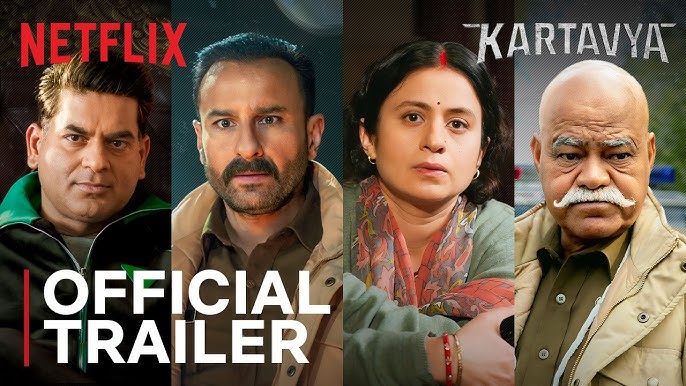
Kartavya written and directed by Pulkit does fall into a tangle with its multiple themes. There is a rushed treatment to the proceedings, nevertheless Kartavya does make for a gripping watch especially the dilemmas faced by Saif Ali Khan’s SHO Pawan Malik. The references to Abhimanyu and Arjuna from Mahabharata does add an interesting dimension.

Starcast: Saif Ali Khan, Sanjay Mishra, Zakir Hussain, Rasika Duggal, Manish Chaudhari, Saurabh Dwivedi etc

Genre: Thriller/drama

Writer and director: Pulkit

Cinematographer: Anil Mehta

Producer: Gauri Khan

Production Company: Red Chillies Entertainment

Running time: 2 hours and 27 minutes

Streaming site: Netflix

The story of Kartavyaa begins on the 40th birthday of Saif Ali Khan’s Pawan Malik. It starts off as a moment of fun camaraderie, a celebration among fellow police men. But soon things take a dramatic turn with the journalist being shot under the vigil of Pawan. This leads to several developments the details of which cannot be revealed here. The movie juggles between the different pressures faced by both Pawan both professionally and personally. Some of the themes explored are caste, abuse of law, the regressive notions of khap panchayat among others

A strong aspect of Kartavyaa are the mythological references. There are numerous dialogues where Pawan compares his situations to Abhimanyu in the Chakravyuh. Later on, there is a parallel to Arjuna’s dilemma’s well. This particularly comes out in connection to the regressive father played by a terrific Zakir Hussain. Harihar is a deeply entranced casteist with fixed notions of so-called societal boundaries. Pawan’s simmering anger and the confrontation scenes with Harihar gives the movie some of its best moments.

The significant role of Khap panchayat’s ideology serving as self-appointed moral custodians has also come out in a disturbing manner. Yes the topic of honor killings has been addressed numerous times in movies but that doesn’t take away its significance in any way. The scenes have a realistic feel sending a chill down the viewers spine.

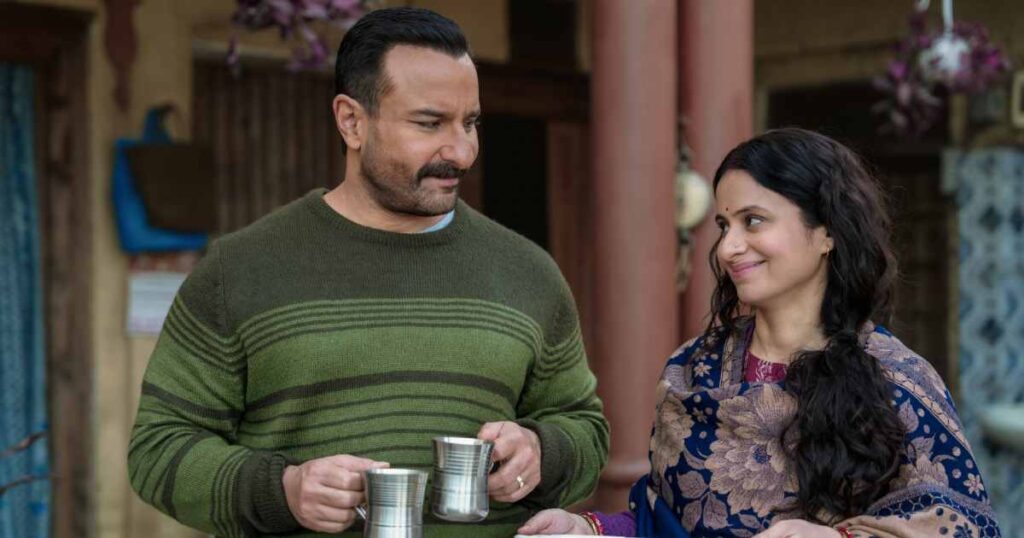
Rasika Duggal as the homemaker trying to keep things together has a lovely presence. Her scenes with Saif come across as a much-needed breather amidst the tense scenarios. A particular mention must be of the portion where she jokes about Pawan’s smoking while in tension. Some of the other lighter moments include in house references to Shah Rukh Khan as well as Pawan comparing his dad to late Amrish Puri.

Sanjay Mishra as the weary constable is another big asset of the movie. The scenes of on screen friendship between him and Saif has some nice touches. However, an important twist related to his character can be seen from miles.

The corrupt godman and child abuse angle comes with Saurabh Diwidi and Yudhvir Ahlawat. Yudhvir in particular is very effective in the breakdown scenes with Saif. However, Saif Ali Khan is the major glue holding Kartavya together. Saif brings a simmering anger to Pawan, a certain exhaustion both professionally and personally but still a strong fighting spirit has been excellently portrayed by the actor.

As already mentioned Kartavyya does stretch itself a little too far with the themes it wants to explore. As the result there is a sense of incompleteness. A web series along the lines of Sacred Games or Paatal lok would have been a better option.

Also, Kartavyya suffers from a somewhat glossy look. There is a polished feel to the cinematography of Anil Mehta making it a bit distracting.

Final word: Kartavya is worth watching for those who like slow burn thrillers and if you are an admirer of Saif Ali Khan.

Subedaar: Anil Kapoor and Radhika Madan lift this old school masala

The story of Subedaar is a classic one-man army plot. But director and writer Suresh Triveni manages to bring some newness within this. The fractured father and daughter relationship with a feisty Radhika Madan is the best thing about Subedaar

Starcast: Anil Kapoor, Radhika Madan, Aditya Rawal, Faisal Malik, Saurabh Shukla, Mona Singh, Khusboo etc

Genre: Action/drama

Writer and director: Suresh Triveni

Additional writer: Prajwal Chandrasekhar

Producers: Anil Kapoor, Suresh Triveni and Vikram Malhotra

Cinematography: Ajay Saxena

Music: Rohan Vinayak, Raj Mawar etc

Production Companies: Abundatia Entertainment and Anil Kapoor productions

Streaming site: Amazon Prime

Running time: 2 hours plus

Suresh Triveni’s latest feature plays out like a cross between the masala cinema of 70’s and 80’s with a dash of western influence. At the center of Subedaar is Anil Kapoor’s Arjun Maurya. A retired major struggling to deal with civilian life. Radhika Madan is the angsty daughter Shyama. Arjun and Shyama have a fractured relationship and in terms of temperament they share more than one similarity. Arjun’s life turns upside down when his world collides with Aditya Rawal’s prince. Prince is a mafia hair to Mona Singh’s Babli Didi. Panchyat fame Faisal Malik is the calculating operator often frustrated with Prince temperament. Finally, there is Saurabh Shukla too as Arjun’s confidante and longtime friend Prabhakar. The story in simple terms focuses on Arjun’s fight back as well as Shyama’s own battles.

A strong aspect of Subedaar is the gritty texture. The backdrop of sand mafia with the rugged atmospherics has an authentic feel. A major reason for that is Ajay Saxena’s cinematography along with the production design. There is a lived-in feel to the area of prince and Babli Didi. The extreme lawlessness though a cliched trope has come out well.

Mention must also be made of the portions depicting Arjun Maurya’s internal struggles. This includes a certain guilt on not being with his wife when she needed him as well as identity crisis. There is a crucial scene where Arjun talks about the cost of being patriotic. The gradually simmering anger has been built up well. When the pent-up anger eventually explodes the action feels justified rather than just a regular hero and villain thing. Anil Kapoor plays the part with a good mixture of emotional vulnerability and volatileness. It’s a treat to watch the actor doing hard core action proving that he can give any young actor a run for his money.

The characterization of Radhika Madan is also a big plus coupled with her act. Shyama carries a certain inner resentment towards her father and there is a confrontational nature to the way she handles things. Radhika does a very good job in pulling off a feisty woman especially in the action sequence where she saves herself from a bunch of guys.

Subedaar also scores on the account of strong villains. Aditya Rawal as Prince is deliberately hammy but the young actor more than holds his own opposite the veteran Anil Kapoor. Aditya brings in the required intimidation in spite of a one note character. Mona Singh as Babli Didi is more understated but thoroughly effective. Her interaction with Anil Kapoor over a video call is especially entertaining. The actress once again proves her versatility. Faisal Malik underplays beautifully for a large part; at the same time there is a certain switch too when he gives it back to Babli. Faisal Malik is absolutely solid.

Saurabh Shukla as Arjun Maurya’s longtime friend brings in the required warmth. His scenes with Anil Kapoor have a tender nature. Khushboo Sundar as the dead wife could have done with more screen time rather than being just a memory. Yes, she plays her part with grace but a few more scenes of her and Anil would have enhanced the emotional quotient.

The core of Subedaar is nothing new and this does become a deterrent in the eventual scheme of things. From mid second half things start to stagnate. Also, the subplot connected to sand mafia with Arjun Maurya becoming a savior needed better writing.

Final word: Subedaar is worth watching for fans of gritty action dramas and Anil Kapoor admirers.

Accused: A nuanced character study of women in power

Director Anubhuti Kashyap does an interesting gender flip with the backdrop of Me Too. In this case the victim as well as the accused is a woman. Using this as a microscope the film looks at society’s double standards on how men feel threatened by a woman rising to the top. A strong aspect of Accused is the same sex relationship of Konkana and Pratibha Ranta. Their bond is portrayed in a matter-of-fact way like any man and woman in the same situation.

Starcast: Konkana Sen Sharma, Pratibha Rana, Aditya Nanda, Mashhor Amorahi and others

Director: Anubhuti Kashyap

Genre: Thriller/drama

Writers: Sima Agarwal and Yash Keswani

Producers: Karan Johar, Somen Mishra, Apoorva Mehta and Aadar Poonawala

Production Company: Dharmatic Entertainment

Running time: 1 hour and 46 minutes

Streaming site: Netflix

There is an important line in Anubhuti Kashyap’s Accused streaming on Netflix. It goes like this Jab Aadmi successful hota hai to hum kehta hain deserve karte hain but when a woman reaches a powerful position, we doubt Aisa Kya Kiya hoga. This statement pretty much sums up the core of Accused. After the story of male doctor practicing gynaecology Anubhuti once again chooses a medical workplace for the film. But this one operates in a very different zone.

Konkana and Pratibha as a queer couple in Accused

The story of Accused in simple terms focuses on Konkana Sen Sharma’s Geetika Rao and Pratibha Ranta’s Meera. The two are in a solid relationship with plans of adopting a baby. Geetika is a celebrated doctor who is known for her hard work as well for her no-nonsense nature. Geetika Rao has a tough exterior and is not necessarily likeable. Meera on the other hand is the more emotional one. The difference in their personalities is not a hindrance for their co living as things are going stable. However, all that changes due to some anonymous mails hinting at sexual misconduct. Geetika Rao’s reputation faces a major hit. Complaints about her being a taskmaster are common but this time around the nature of accusations threaten to destroy both her professional and personal career. This is the story in brief.

A strong aspect of Accused are the characterizations of both Geetika and Meera. There are portions in the movie where Geetika comes across as very self-centered. A heated argument between Konkana and Pratibha is a solid example of this. Also, the way Geetika does certain things makes the viewers think that she is actually guilty of the accusations levelled on her.

Meera on the other hand is not reduced to a submissive spouse. There is both vulnerability and strong inner strength. She wants the previous normalcy to return but at the same time Geetika’s distant attitude makes things difficult. The dynamics have an organic feel as both Konkana and Pratibha feed off each other wonderfully.

As the mystery is unraveled a different layer comes out which is how and why Geetika was framed for sexual misconduct. This is where the film slips into a feministic zone on how men feel threatened by a woman achieving high position. An important monologue of Konkana Sen Sharma reflects this. At the same time there is a psychological insight too into the mindset of Geetika on why she is hard with her colleagues expecting absolute efficiency.

In the end Geetika accepts her flaws and rejects the promotion of dean saying that she still needs to work on herself. The patch up of Konkana and Pratibha has some heartfelt dialogues ending the movie on a high.

Both Konkana and Pratibha handle the tricky subject matter with ease. Konkana is of course a seasoned performer, but Pratibha is the surprise package here capturing the different shades of Meera with admirable precision. Aditya Nanda as Meera’s colleague with some unspoken feelings does a good job too. Mashhor Amarohi as the investigator has his moments as well.

Technically speaking the production design coupled with the atmospherics add to the mystery. One major issue with Accused is the portrayal of Me-Too movement. There is a surface level treatment to the entire subplot. The significance of Me-too gets somewhere lost in the thriller treatment.

Final word: Accused is a largely satisfying thriller/drama especially for the solid acting and the themes it tackles.

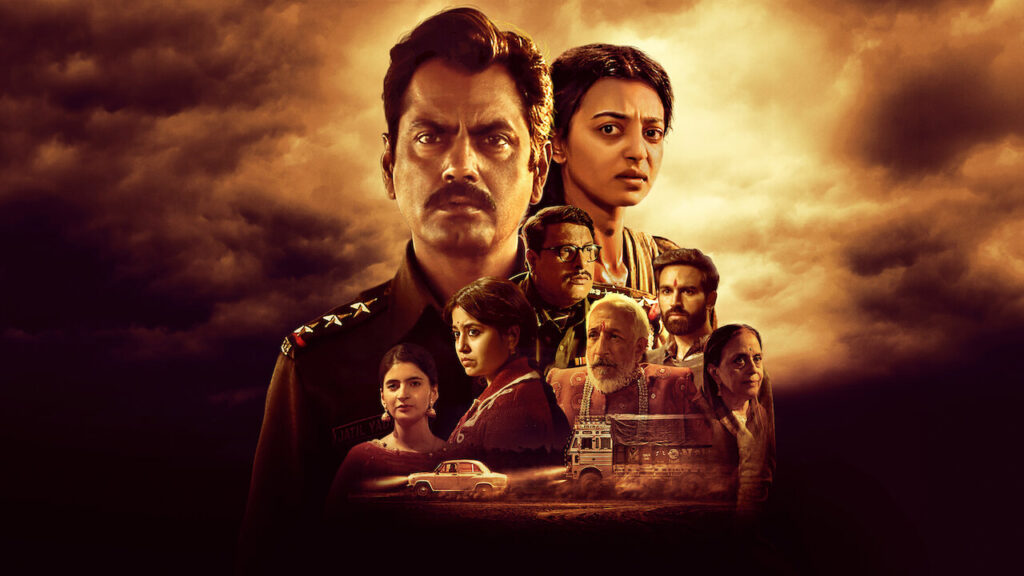
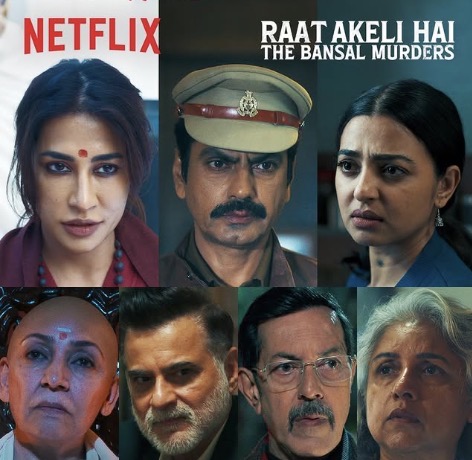
Raat Akeli Hai(The Bansal murders): A competent whodunit with strong social themes

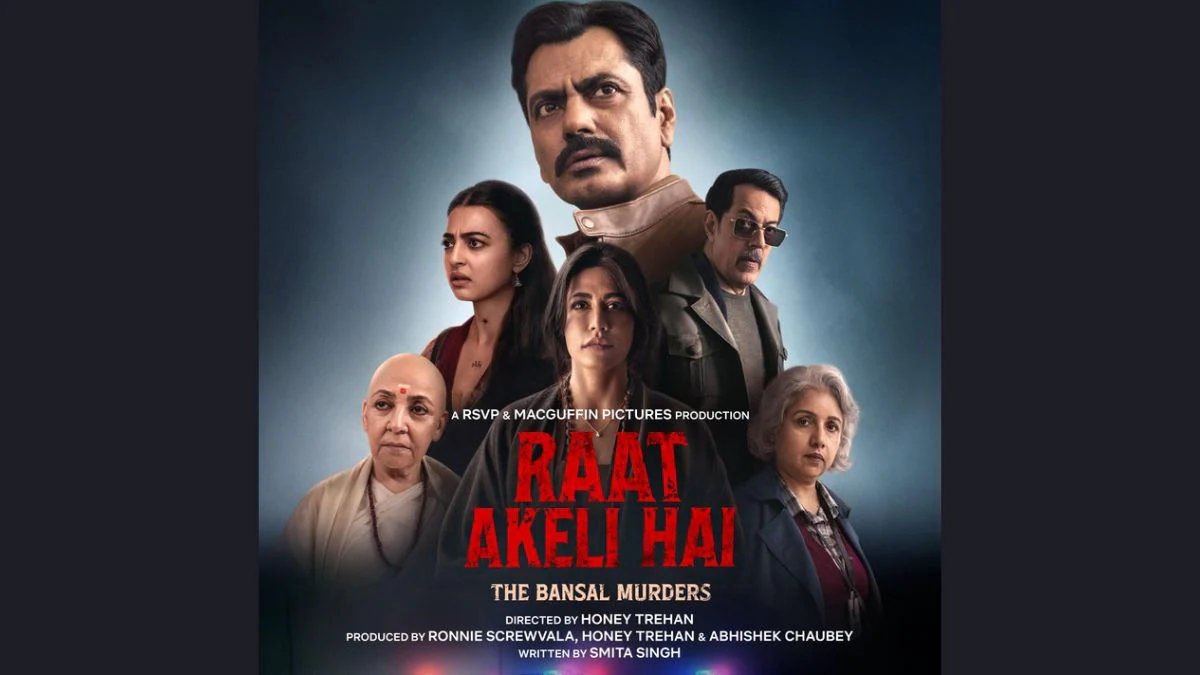
Honey Trehan’s second in the series doesn’t quite hit the high notes of the previous one: nevertheless, the movie is a gripping watch especially in its treatment of human greed and systemic corruption. Honey Trehan along with Smita Singh also touch upon on industrial pollution and a certain apathy for environment

Starcast: Nawazuddin Siddiqui, Chitragandha Singh, Deepti Naval, Revathy, Sanjay Kapoor and others

Genre: Thriller

Director: Honey Trehan

Writer: Smita Singh

Cinematography: Sirsha Ray

Producers: Abhishek Chaubey, Ronnie Screwala etc

Production companies: RVSP Movies and Macguffin Pictures

Running time: 2 hours and 29 minutes

The first Raat Akeli Hai released in 2020 was a compelling murder mystery as well as a social thriller. Through a murder mystery the plot explored the themes of women’s bodies controlled by patriarchy and how their autonomy both sexual and emotional are treated as sins: the institution of marriage being more of a transaction among others. Raat Akeli Hai (The Bansal Murders) follows a similar pattern in the way it combines a whodunit with social elements.

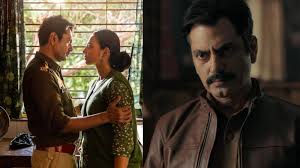
Raat Akeli Hai first part

The storyline of Raat Akeli Hai (The Bansal Murders) takes the viewers right into the thick of action. A wealthy and well-connected family is massacred to death. The crime is meant to be easily solved by the higher officers with a quick culprit fixed: however, Nawazuddin Siddiqui’s Jatil Yadav believes that there is more to what meets the eye. There are multiple skeltons in the closet. Secrets which are meant to be buried and not solved. The rest of the story is about the multiple suspects and the whys and how’s of the case.

A strong aspect of Raat Akeli Hai (The Bansal Murders) is its treatment of multiple layers. The suspects have been written with enough care. This particularly holds true of Chitragandha Singh. She is one of the four survivors. Chitragandha’s Meera is an ambiguous woman with deep bitterness. Meera covers this deep resentment under the guise of spirituality. Chitragandha aces the part with the required mysteriousness keeping the viewers guessing about her motivations.

Screenshot

Deepti Naval plays a supposed preacher moddled on fake godmen. This character is reminiscent of movies and web featuring fake babas exploiting people’s vulnerabilities. There is nothing particularly new here, but the senior actress plays her role with the required charm.

Mention must also be made of Sanjay Kapoor as a relative. His eyes are set on the fortunes of Bansali family. Both the character and the actor don’t come across as a stereotypical villain. There is a casual entitlement wonderfully portrayed by the actor. His role and the track cover the theme of moral shortcuts justified in the name of lineage.

There is no denying that Raat Akeli Hai (The Bansal Murders) suffers somewhat on the pacing front. The first part had a tight structure with not much meandering. The second one though needed more crispness. The portions involving Rajat Kapoor and Akhilendra Mishra overstay their welcome. The same applies to the track involving the nitty gritty of forensics. Radhika Apte has an extended special appearance meant to show a personal side of Jatil Yadav. These scenes have some nice touches but in the bigger picture the track doesn’t contribute much. Proceedings stagnate for a while: thankfully though the movie regains lost ground when the focus shifts to environmental destruction.

The themes of industrial pollution and a certain apathy towards environment has come out well. It makes the viewers ponder about where we are heading. Most importantly Honey Trehan and Smita Singh do a good job in linking these portions with the main murder plot. Special mention must also be made of the scenes featuring Revathy as a forensic expert. She plays a moral counterpart to Jatil Yadav’s superiors. The scenes featuring her and Nawazuddin gives the movie some of its best moments.

As Jatil Yadav Nawazuddin Sidddiqui successfully takes off from the first movie. He plays the determined cop with his trademark gravity. He especially shines in the scenes of the character finding itself at crossroads torn between the pressures of institution while listening to his personal consciousness.

Among the technical departments Sirsha Ray’s cinematography is suitably eerie. The cinematography helps in building up a mysterious atmosphere.

Final word: Raat Akeli Hai (The Bansal Murders) is a competent follow up. For fans of murder mysteries with social angles its very much worth watching.

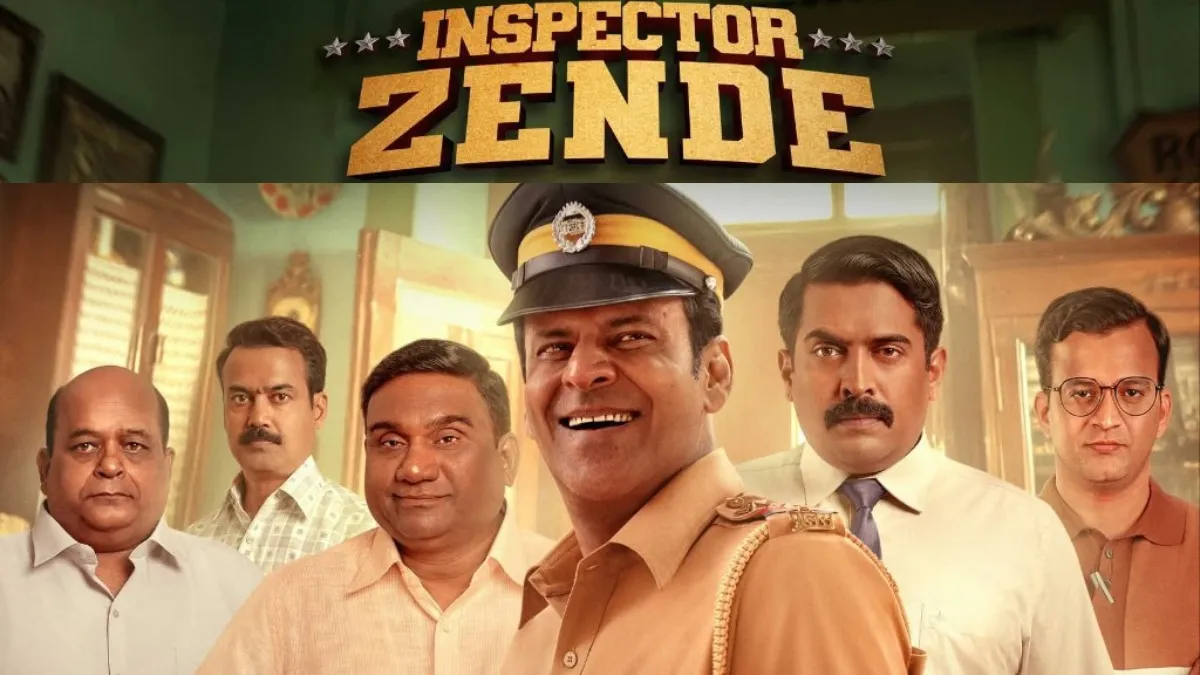
Inspector Zende: A quirky cop versus criminal saga with an excellent Manoj Bajpayee

Unlike the usual larger than life Bollywood cop’s director Chinmay Mandlekar opts for a comic tone with a bumbling hero. He mixes crime with comedy, and the results are quite good. In spite of some uneven writing Inspector Zende makes for a fun watch and a good stress buster.

Starcast: Manoj Bajpayee, Jim Sarbh, Girija Oak, Harish Dudhade, Sachin Khedekar and others

Genre: Comedy/thriller

Director and writer: Chinmay Mandlekar

Producers: Om Raut and Jay Shewakramani

Production house: Northern Light Films

Cinematography: Vishal Sinha

Music: Sanket Sane

Running time: 1 hour and 52 minutes

Streaming site: Netflix

Inspector Zende streaming on Netflix is based on a real-life story set in the period of 1970&1980’s. Madhukar Zende’s pursuit of the noted criminal Charles Sobhraj and the eventual capture in Goa. The story makes for a good dramatic fodder with a larger-than-life protagonist. But the tone adopted by Chinmay Mandelkar is more goofy than a serious drama. This approach has its positives and negatives. The good thing is that the film makes for a welcome stress buster. At the same time those looking for more intensity will be disappointed.

Jim Sarbh as Charles Sobhraj

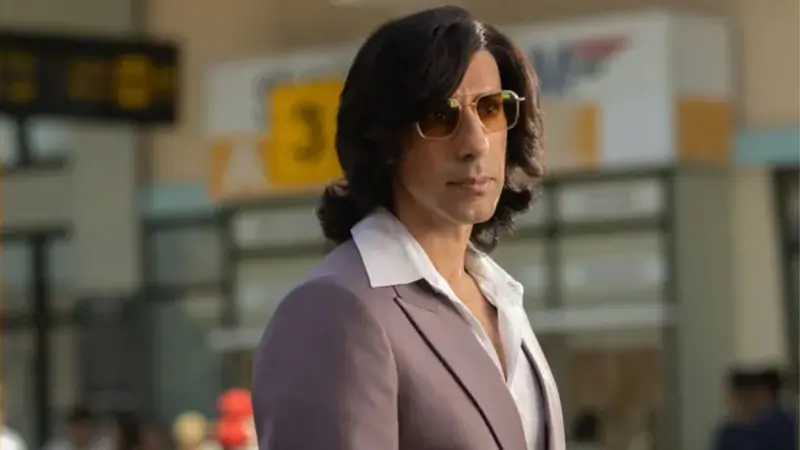
The one-line story of Inspector Zende focuses on Manoj Bajpayee’s Madhukar Bapurao Zande. He is no supercop with flexing muscles. He is a middle-class Maharashtrian officer with no distinct qualities as such. The movie focuses on his pursuit of Carl Bhojraj (a flamboyant Jim Sarbh). Bapurao Zande’s eventual capture of Carl forms the basic premise of Inspector Zende

A strong aspect of Inspector Zende is the retro atmospherics. Director Chinmay Mandlekar along with his cinematographer Vishal Sinha create a lived-in world. The streets of Bombay with the bustling lanes and the police force operating with no fancy technology has been recreated well. The detailing is on point, and this includes the chawl where Zende stays too.

A lot of movie’s humor is situational emerging from the messy situations and undercover names like “Rushi Kapoor” and “Om Raut”. For the modern audiences the ways of Zende and his tribe may feel dated but the way these men operate fits the time period.

Refreshingly the movie doesn’t opt for the mainstream slapstick approach like Rohit Shetty and David Dhawan. Instead, it finds laughs in the small errors and the sheer absurd nature of humans. Thankfully many jokes land.

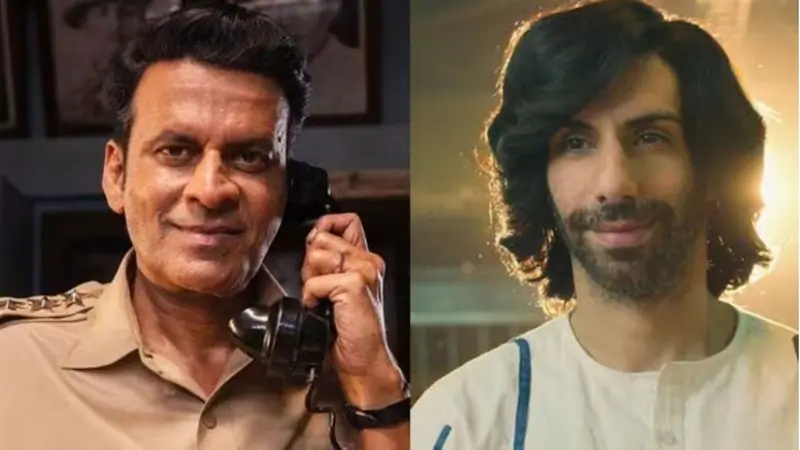
A standout moment in Inspector Zende is the scene where Zende finally crosses paths with Carl Bhojraj. Instead of a brutal showdown their encounter feels like an odd dance. Every punch and push feels like choreographed number. The scene comes across like a bizarre Tango between a cop and criminal. It’s both thrilling and funny in perfect synch with the movie’s tonality.

Manoj Bajpayee and Jim Sarbh

Mention must also be made of the husband-and-wife scenes. Girija Oak as Zende’s wife plays her part with lot of warmth. Her interactions with Manoj Bajpayee and specially the segment involving puranpolis is adorable. As Zende’s collogues Both Harsh Dudhade and Bhalchandra Kadam bring strong comic timing. Sachin Khedekar too brings in the required authority as the no nonsense DGP. Jim Sarbh as Carl Sobhraj plays his part with the right amount of deception and flamboyant attitude. As Zende Manoj Bajpayee slips into the part with practiced ease nailing the goofball nature. He does a very fine job in capturing the grit of Zende while also making the viewers laugh.

Apart from the uneven writing in some patches the songs composed by Sanket Sane is also a minus point. The tunes are just about serviceable nowhere close to good.

Final word: Inspector Zende is worth watching if you are fans of stories mixing crime with comedy.

Songs of Paradise: An important tale of breaking social conventions

Taking inspiration from Kashmir’s first female singer director Danish Renzu tells a relevant tale of resilience and rebelling against the social norms. The fight of Saba Azad’s Zeeba Akhtar holds relevance even today. Not everything lands but Songs of Paradise is an important watch

Starcast: Saba Azad, Soni Razdan, Zain Khan Dhurrani, Sheeba Chadda, Taaruk Raina and others

Genre: Musical

Director and writer: Danish Renzu

Producers: Ritesh Sidhwani, Danish Renzu, Farhan Akhtar and Shafat Qazi

Production Companies: Excel Entertainment, Apple Tree Pictures and Renzu Films

Music: Abhay Sopori

Cinematography: Vincenzo Condorelli

Running time: 1 hour and 40 minutes

Streaming site: Amazon Prime

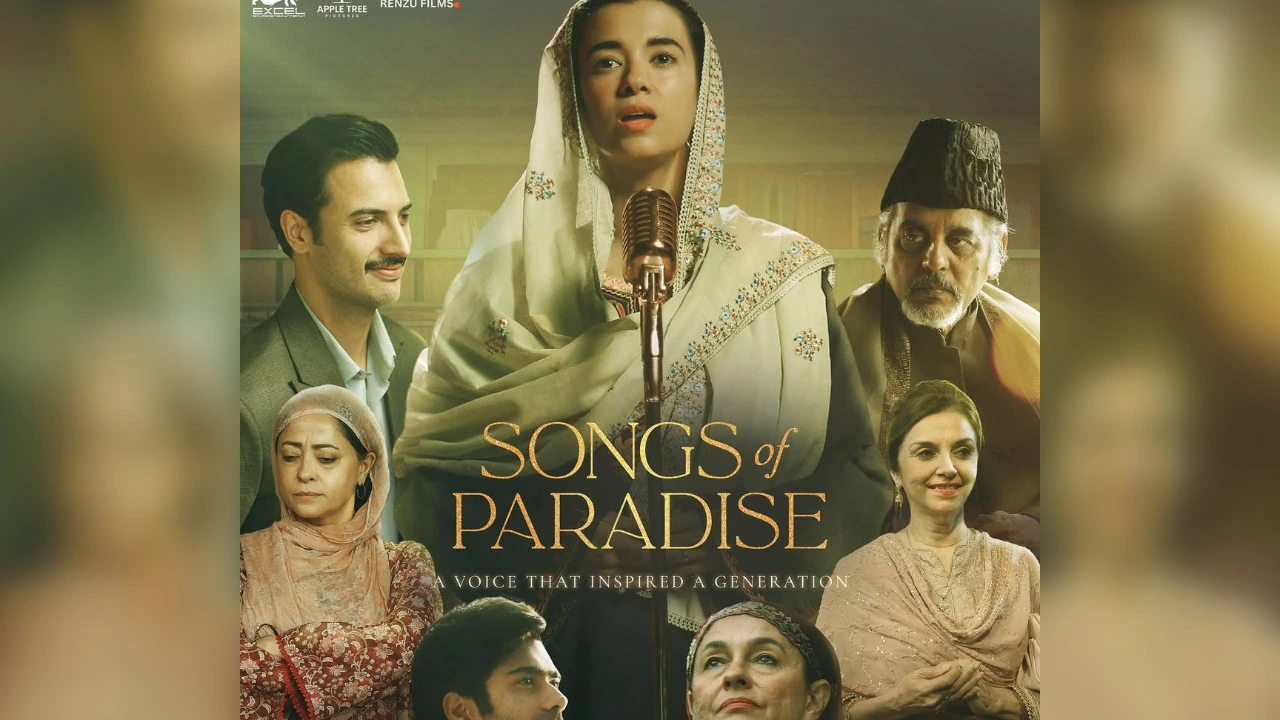
Raj Begum born in the year 1927 became popular as the Melody Queen of Kashmir. She was honored with Sangeet Natak Akademi award along with the Padma Shri. Raj Begum became a singer at the time of major restrictions. Danish Renzu’s Songs of Paradise is an earnest effort at celebrating her defiance.

Saba Azad as the younger version of Raj Begum

In brief the storyline traces the life of Saba Azad’s Zeeba Akhtar, a young woman blessed with an extraordinary voice. How she breaks the rigid traditions with the help of supportive men forms the basic arc of the film.

A major strength of the film are the acting performances coupled with the music. Both Saba Azad and Soni Razdan playing Zeeba at different ages are a delight to watch. As a young Zeeba Saba brings the perfect mix of vulnerability and resilience. The journey of Zeeba in navigating the world of patriarchal mindset in spite of a support system is both well written and enacted. Saba conveys the determination and the persistence often times with the slightest expressions, specifically her eyes. A standout sequence involves Zeeba’s conversation with a man, “You are a male, you look for an opportunity to showcase your talent. We women seek excuses to pursue our hobbies.” Saba Azad’s background as a singer also comes in handy during the song portions.

Soni Razdan as the older Noor Begum is also wonderful with her moving portrayal. She becomes an emotional anchor often conveying a lot through silences. Zain Khan Durrani as the oxford educated poet is charm personified. The way he supports Zeeba in spite of the open hostility makes the viewers wish that the world has more men like him. Their love track has some adorable moments.

Sheeba Chadda playing an overbearing mother is also fantastic successfully making the viewers hate her. Shishir Sharma as Zeeba’s master also pitches in a good act. Taaruk Raina as a music student is fairly good too. What also adds to the performances is the perfect local dialect. The songs is another plus for the movie. The compositions of Abhay Sopori are deeply rooted in Kashmiri Folk giving a different flavor. The songs do a fine job in echoing Zeeba’s yearning for freedom.

A major problem with Songs of Paradise is the lack of sufficient dramatic tension. The socio and political turmoil in Kashmir needed to be explored more. The challenges faced by Zeeba specifically the societal backlash and the emotional toll have a rushed nature. There is a certain surface level approach sometimes distancing the viewers.

Final word: In spite of a certain surface level approach Songs of Paradise is a relevant tale of pursuing one’s hobby without giving into the society’s narrow minded thinking.

Aap Jaisa Koi: Feminism wrapped in romance

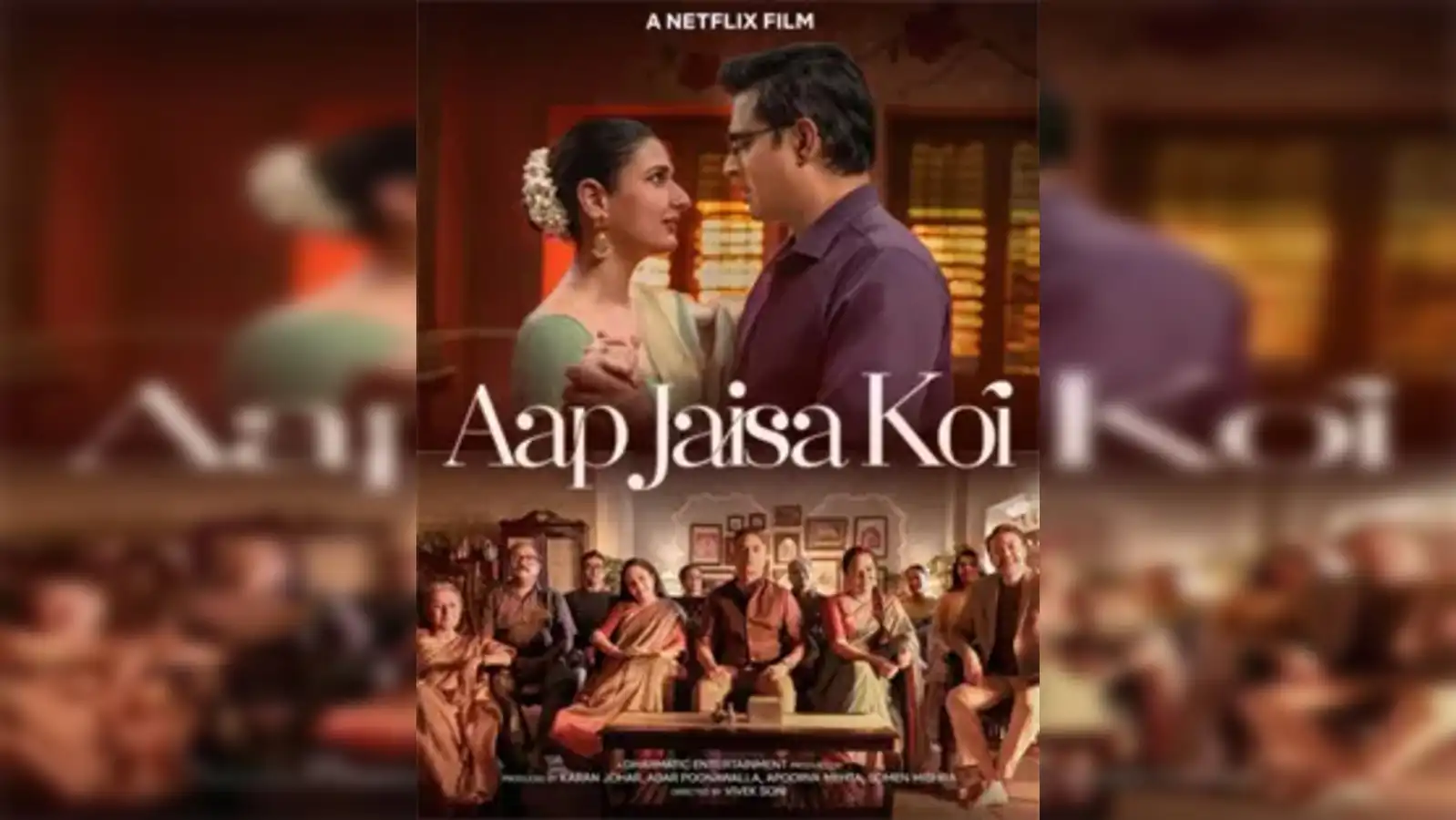
R Madhavan and Fatima Sana Sheikh in Aap Jaise Ko

Director Vivek Soni takes the classic trope of gradual love in an arranged marriage to deliver stinging lessons on patriarchy. Men who appear to be modern on surface but actually placing themselves in authority. Vivek Soni along his writers do a fine job in calling out the double standards particularly in matters related to sexuality and desires

Starcast: R Madhavan, Fatima Sana Sheikh, Ayesha Raza, Namit Das, Manish Chaudhary and others

Genre: Romance

Director: Vivek Soni

Writers: Radhika Anand and Jehan Handa

Producers: Karan Johar, Somen Mishra, Aadar Poonawala etc

Production Company: Dharmatic Entertainment

,Music: Rochak Kohli and Justin Prabhakaran

Cinematography: Debojeet Ray

Running time: 1 hour and 55 minutes

Streaming site: Netflix

On the surface the plot of Aap Jaisa Koi feels a cross between Karan Johar’s Rocky Aur Rani Ki Prem Kahani and R Madhavan’s own Tanu Weds Manu. Much like Alia Bhatt in Rocky Aur Rani Ki Prem Kahani Fatima Sana Sheikh also plays a fiercely opiniated Bengali here. R Madhavan’s character of a middle aged bachelor has shades of the soft Manu. Thankfully though Aap Jaisa Koi has its own identity specifically the subplot of Ayesha Raza representing the numerous married women facing casual sexism and misogyny and how she breaks out of the conventions by following her heart.

The story of Aap Jaisa Koi primarily revolves around two people belonging to different age brackets as well as varied thought processes. R Madhavan is a 40 plus Sanskrit professor Shrinenu Tripathi. Shrinenu is painfully shy, he hasn’t even kissed till now. In short an absolute virgin becoming the butt of jokes. The friend played by Namit Das introduces him to an anonymous world of chatting with unknown women, the site is Aap Jaisa Koi. The chats in this site have sexual undertones which Shrinenu thoroughly enjoys. Fatima Sana Sheikh is Madhu Bose. a lecturer from Kolkata. Both of them meet in an arranged marriage set up and sparks fly soon. However the path is far from easy. The obstacles are societal expectations and the traditional expectations of gender roles. This is the story in brief.

A strong aspect of Aap Jaise Koi is the integration of different social issues like women’s desires along with the hypocritical attitude of men towards their choices. There is a key scene in the second half where Shrinenu and Madhu Bose have a split when everything is going right, the break up is connected to the dating site. Madhu Bose was also on the same site for a while chatting with many men. Shrinenu considers Madhu Bose a whore just because she chatted with numerous unknown males .The heated dialogues between the two exposes the double standards of men like Shrinenu who think of themselves as progressive but in actuality they are sexist.

In the beginning portions there is a heavy hangover of Manu in R Madhavan’s role but unlike that movie Shrinenu here comes with more shades. Post the bitter break up there are scenes of Shrinenu grappling with prejudices that he has never questioned so far. After a long time R Madhavan has returned back to the romantic set up and the actor is a delight to watch conveying the internal turmoil with just his body language. Fatima Sana Sheikh is confidence personified perfectly embodying the feministic attitude, additionally she looks gorgeous as well in the sarees.

Mention must also be made of Ayesha Raza’s heartfelt portrayal of a woman who hasn’t got the emotional love and often faces casual sexism from her husband. In spite of doing a job from home the husband doesn’t take her seriously, instead Manish Chaudhary’s character thinks that he is doing some favor by allowing her to work. This is where the theme of ingrained patriarchy comes in. This is cycle of inherited attitudes is very visible in Shrinenu’s view points towards Madhu being on Aap Jaisa Koi app. Manish Chaudhary is successful in making the viewers hate him, he perfectly embodies the character’s attitude making the role relatable.

The songs composed by Rochak Kohli and Justin Prabhakaran are soulful too. Jab Tu Sajan and Mila Tujhe stand out among the compositions. Both these numbers perfectly capture the blossoming romance.

Final word: Aap Jaisa Koi is a simple tale with feministic undertones. If you are in the mood for something breezy and are an R Madhavan fan do watch it.

Stolen: A taut social thriller

Abhishek Banerjee in Stolen

Inspired from a true incident director Karan Tejpal presents a largely gripping and harrowing tale of the huge divide between the privileged and the poor. Stree and Vedaa actor Abhishek Banerjee once again proves his chameleon like ability in adapting to different roles, he knocks it out of the park as usual.

Starcast: Abhishek Banerjee, Shubham Vardan, Mia Mazeler and others

Genre: Thriller

Director: Karan Tejpal

Writer and producer: Gaurav Dhingra

Executive Producers: Kiran Rao, Anurag Kashyap and Vikramaditya Motwane

Production house: Jungle Book Studio

Running time: 1 hour and 55 minutes

Cinematography: Ishaan Ghosh

Streaming site: Amazon Prime

In structure Karan Tejpal’s Stolen shares more than one similarity with Navadeep Singh’s NH10. Just like that movie here too the urbane characters find themselves in a huge tangle, a world far removed from their comfortable lives. The two protagonists become the medium to explore a world which is far away from high rise buildings and the glittery urbane space. However Karan Tejpal gives Stolen its own distinct identity through two brothers who are as different as chalk and cheese. In spite of some rough edges Stolen for most part is largely engrossing drawing the viewers in.

Stolen begins at a small town railway station in Rajasthan. Gautam (Abhishek Banerjee) is waiting for his younger brother Raman (Shubam Vardan). Raman is coming in a train since he missed the flight. Next day there is an important family event, Gautam is desperate to return back home. However things don’t go according to plan and the reason for this is Jhumpa (Mia Mazeler). Jhumpa’s daughter is missing and Raman is briefly suspected by the police. Raman is cleared of the charges but the police ask the brothers to wait leading to several things. This is the story in brief.

A strong aspect of Stolen is the cinematography of Ishaan Ghosh. Ishaan Ghosh is very successful in capturing the gritty tone, the visuals have a lived in feel with the rusty atmospherics. Through his lens he presents an India that we don’t see in big budget mainstream movies. A major divide between the privileged and oppressed, a deep cynicism and an agony of those who aren’t blessed with the safety net. Ishaan Ghosh’s work also stands out in the tense chase sequences. Sure at times they do get repetitive still he does a first rate job in capturing the dreadful scenarios which both the brothers find themselves in.

Mention must also be made of the sibling dynamics. Abhishek Banerjee’s Gautam is the more corporate guy among the two trying to dissuade his brother from helping Jhumpa. Shubham Vardan’s Raman is the more considerate guy leading to an interesting clash of ideologies. At one point the contrast may across as too jarring but Karan Tejpal along with Gaurav Dhingra give a slight insight into why Raman connects with Jhumpa. In spite of different view points there is an undercurrent of love and affection too. The sibling dynamics makes the movie stand out from NH 1O also set in the same space.

Abhishek Banerjee and Shubham Vardan

Stolen is stuffed with numerous social issues like illegal surrogacy and the absolute lack of law and order. However at no point Stolen feels preachy, this is because of the thriller format. As viewers you are constantly tensed about what would be the fate of the three protagonists. It also helps that the movie has no unnecessary detours, no comic or romantic angle to slow down the proceedings.

Stolen also benefits immensely from its lead actors. Abhishek Banerjee shows a masterclass in acting. The way he portrays the different shades of Gautam effortlessly showcasing the eventual transformation is a sheer delight to watch. With this movie he once proves his capability in adapting to different roles. Shubham Vardan as Raman also lends solid support proving to be a perfect foil for Abhishek Banerjee, both the actors feed of each other wonderfully. As Jhumpa Mia Maezeler is very effective too bringing in a raw intensity without going melodramatic.

Mia Maezeler as Jhumpa

Although tight for most part Stolen does suffer from a couple of mishaps. One of them is a slightly repetitive nature of the brothers being chased. Also towards the end the movie does stray somewhat, a tighter edit in some portions would have definitely helped.

Final word: Stolen is a must watch for those seeking stories beyond entertainment.

Chhorii 2: A gripping story of a dangerous cult and a mother’s fight

For those who haven’t seen Chhorii 1 the plot revolved around an eight month pregnant Sakshi played by Nushratt Bharuccha. Sakshi and her husband Hemant are a happily married couple. However due to the debts of Hemant they are forced to move somewhere else. The setting is a secluded place in a north Indian village reminiscent of Haryana. After a few days the husband makes a decision of going back to the city for arranging money. Sakshi soon stumbles upon a deadly secret related to Mita Vashist’s Bhanno Devi. Without giving away too much Chhorii effectively combined the horror elements and the important issue of female infanticide, the acting performances specifically that of Nushratt and Mita Vashist were of the highest order too. The movie is based on a Marathi film Lapachhapi.

Chhorii 1 movie image

Now you have the sequel to Chhorii after a gap of four years. The basic storyline of Chhorii 2 is about Sakshi’s return to the cursed village due to her missing daughter Ishaani (Hardik Sharma). Ishaani is in the grip of a dangerous cult who do demonic rituals. Sakshi is left no other option other than to fight back. Standing in the path of Sakshi is Soha Ali Khan’s Daasi ma (Soha Ali Khan). Soha Ali Khan is a shape shifting priestess in servitude of her master.

The genre of horror gives scope for stories that go beyond the commercial template. A good example of this is Sohum Shah’s Tumbbaad. The movie focused on ordinary human beings turning into monsters in order to satisfy their unlimited greed. It gave a strong message on these types of humans being more dangerous than a cursed supernatural entity. Another good example of horror genre being effectively used is Aamir Kaushik’s Stree 2, in this film the antagonist by the name of sarkate is used to explore the patriarchal mindset reminiscent of our sexist leaders who often blame a women’s modernity for the crimes happening on them. Vishal Furia’s Chhorii 2 is a good addition to this trend of movies.

As already mentioned the paranormal entities in Chhorii aren’t ghosts but a certain regressive mindset justified under the name of tradition. The portions of the patriarchal cult led by the character of Pradhan sends a chill down the viewers spine. Soha Ali Khan’s character of Daasi ma is both a villain and a victim. Villain because she stands in the way of Sakshi, however Daasi ma isn’t just a mouth piece for the activities of Pradhan she is also a victim of a certain kind of training. This layered characterization makes the movie very interesting.

Nushratt Bharuccha and Soha Ali Khan

The camerawork of Anshul Dobey is also of the highest order. The way he captures the underground maze and the numerous struggles of Sakshi through his lens is very praiseworthy. In fact the underground maze becomes a character in itself. The narrow tunnel becomes an allegory representing the societal structures which suffocate women generation after generation.

The main themes in Chhorii 2 are blind faith, misogyny, child marriage etc. All these come across effectively in simple yet effective moments like a young boy’s malicious behavior. An interesting plot device in Chhorii 2 is the major contrast in the stories that Sakshi and Daasi ma say to Ishaani. On one hand Sakshi tells tales of empowerment, on the other hand Daasi ma narrates manipulative stories using folklore as a device to make her submissive. This parallel storytelling adds an interesting social layer to the proceedings.

Talking about the jump scares the film could have done more with intense moments in that department. The eerie atmosphere is suitably effective but the jump scares lack a consistency factor. Also some of the secondary characters have been sketched way too loosely. They fade into oblivion leaving little to no impact. The movie also suffers from pacing issues in the final act and an abrupt ending which feels like more of a set up for the next part.

As Sakshi Nushrratt Bharuccha successfully takes off from the first movie. She does a very fine job in portraying both the motherly warmth and also the strong resolve of a warrior. Soha Ali Khan plays her complex character with the right amount of finesse, her grasp of the local dialect is impressive too. The supporting cast led by Gashmeer Mahajani as a police officer and Sakshi’s ally do a fine job too however the absence of Mita Vashist can be significantly felt.

Final word: Watch Chhorii 2 for its intense depiction of social issues and the acting performances.

Nadaaniyan (innocence/ naivety) : A confident debut from Ibrahim Ali Khan

Nadaaniyan streaming on Netflix much like the 2023 Archies serves as more of a launch pad for star kids in this case Ibrahim Ali Khan rather than telling a cohesive story. Unlike Archies though Nadanniyan isn’t unwatchable, the storyline moves at a brisk pace leaving viewers little time to ponder on the flimsy scenarios particularly for the undemanding audiences. The movie also does succeed in positioning Ibrahim Ali Khan as the next chocolate boy something which I will get to later.

Nadaaniyan begins with establishing the character of Pia Jaisingh (Khushi Kapoor). Pia is an elite Delhi girl dealing with the issues of a broken family. She is on the verge of loosing her sister like best friends due to certain lie. In order to save her friendship she persuades the new joinee Arjun Mehta (Ibrahim Ali Khan) to become her boyfriend for Rs 25, 000 per week. Arjun comes from a less polished background, he agrees to this proposal for furthering his own ambitions. What starts off as pretending to be boyfriend and girlfriend takes a very drastic turn when things become serious. This is the story in brief.

One of the things which work in Nadaaniyan is its self aware tone. Right from the first frame director Shauma Gautam succeeds in establishing the character traits particularly that of Pia and her rich folk without wasting any time. The director does a fine job in capturing how a lot of gen z looks at the concept of love. The characters use the help of AL to express romantic feelings. At one point Pia makes Arjun Mehta pose romantically just to get some social media likes.

Although Nadaaniyan operates on a strictly surface level it has also got some nice emotional touches particularly in the later half when Pia and Arjun actually fall in love. Pia is someone who comes from a patriarchal family where the father played by a daper Sunil Shetty thinks that the law firm Jaisingh&Sons needs a male heir to carry forward their legacy. Jugal Hansraj and Dia Mirza on the other hand play the cool parents of Arjun. How their actions indirectly play a strong role in strengthening their love is interesting to watch.

Talking about debutant Ibrahim Ali Khan the young actor has a very striking resemblance to father Saif Ali Khan. He gives a major deja vu of the 90’s Saif with his chiseled physique and overall body language. Ibrahim makes an impressive debut particularly in the key dramatic scenes like the portion where Arjun has a breakdown expressing his emotional vulnerability. Khushi Kapoor’s Pia Singh starts off as more of a barbie doll but as the plot progress Pia emerges as a strong personality. Khushi like Ibrahim also does a competent job in the emotionally charged moments. The chemistry between Ibrahim and Khushi is also good within the confines of the flimsy script.

Ibrahim Ali Khan gives a major deja vu of father Saif Ali Khan in the 90’s

Sunil Shetty and Mahima Choudhary lend some much needed gravitas as a once married couple dealing with problems of their own. Jugal Hansraj and Dia Mirza play the lovable parents to the hilt. Both of them play their roles with a lot of warmth.

Dia Mirza and Jugal Hansraj

A major problem with Nadaaniyan is how it borrows quite a bit from the staple cliches found in Dharma romantic films. This is very evident in the characterization of Mahima Choudhary who initially looks down upon Arjun just because his father is a doctor and not some businessman. The depiction of class divide is very similar to the one already seen in 2012’s Student of The Year. The movie also briefly dwells into the issue of patriarchy through the mindset of Sunil Shetty’s role but it doesn’t dig deep enough.

Anuj Samtani’s cinematography goes perfectly well with the nature of the movie. It’s very glossy giving it a rich look. Sachin Jigar’s music has a couple of soulful songs. Among the songs the title track is the best of the lot. Sung by Jonita Gandhi, Sachin Jigar and Varun Jain the track perfectly captures the movie’s central theme of youthful mistakes, love and discovery. Mention must also be made of Ishq Mein sung by Sachet Tandon. Ishq Mein perfectly embodies the euphoria of love.

Final word: Watch Nadaaniyan if you are curious to know on how Ibrahim Ali Khan has fared in his debut or are in the mood for something undemanding.