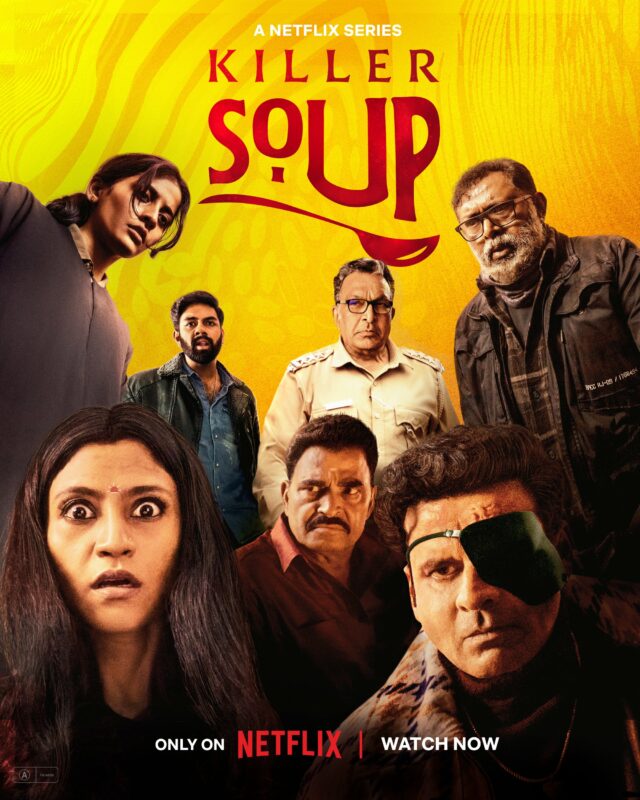
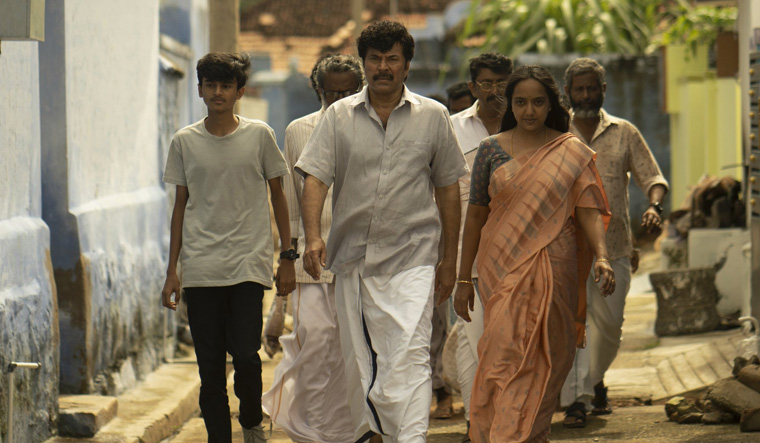
Cast: Manoj Bajpayee, Konkana Sen Sharma, Nassar, Sayaji Shinde, and Lal
Director: Abhishek Chaubey
Producers: Honey Tehran and Chetana Koshwik
Original Score: Benedict Taylor and Naresh Chandavarkar
No. of episodes: 8
OTT platform: Netflix
Abhishek Chaubey has proved to be more than a worthy protégé to the master filmmaker Vishal Bhardwaj. Starting from Ishqiya in 2010, he has created a space for himself in the industry.
Abhishek Chaubey’s movies have never been part of the big clubs, but he has earned a certain respect among moviegoers.
A case in point is 2016’s Udta Punjab, which ruffled many feathers for its honest portrayal of the drug situation in Punjab.
Now, he has made his OTT debut with Killer Soup, which has been anticipated for more than one reason: The lead actors, Manoj Bajpayee and Konkana Sen Sharma, who have proved their proficiency by playing distinct roles in both movies and web shows.
Additionally, the subject of Killer Soup is based on some real-life incidents. There is an uncanny similarity to a murder that happened in Telangana. A woman called Swathi Reddy killed her husband and burned his body with the help of her lover Rajesh.
Well, without much ado, let’s check the synopsis.
Synopsis
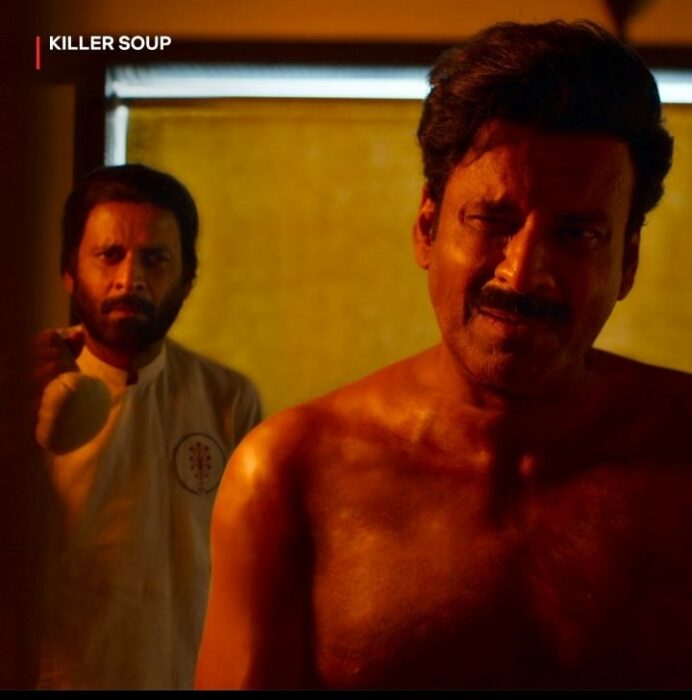
Manoj Bajpayee in ‘Killer Soup’. (X)
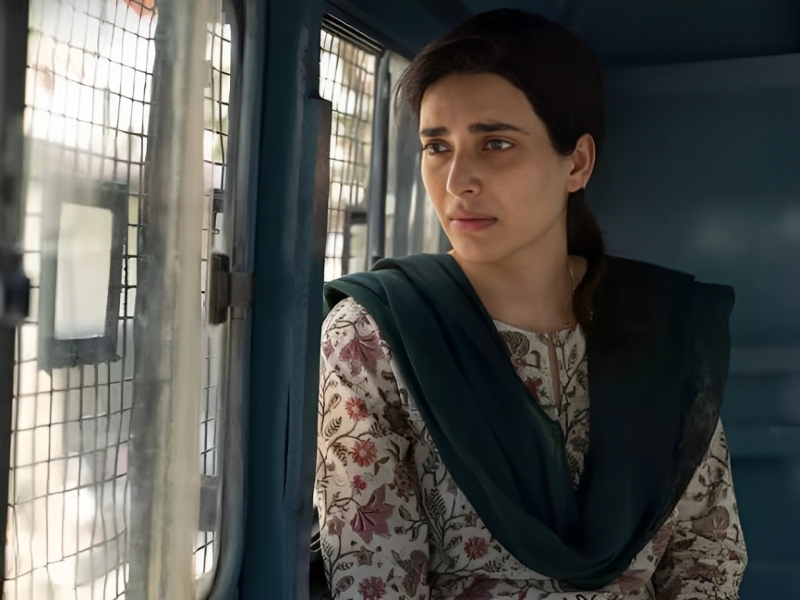
The setting of Killer Soup is the fictional town of Mainjur in South India. The story opens with the happy photographs of husband and wife Swathi (Konkana Sen Sharma) and Prabhu (Manoj Bajpayee). And then, we move to their daily routine, which includes Swathi preparing paya soup.
On the other hand, Prabhu chooses what to wear from his huge collection of printed shirts. Swathi aspires to open her restaurant where the star dish would be the paya soup.
Prabhu makes lofty promises to Swathi but does nothing substantial to help her achieve her goal. He maintains an image of a god-like man.
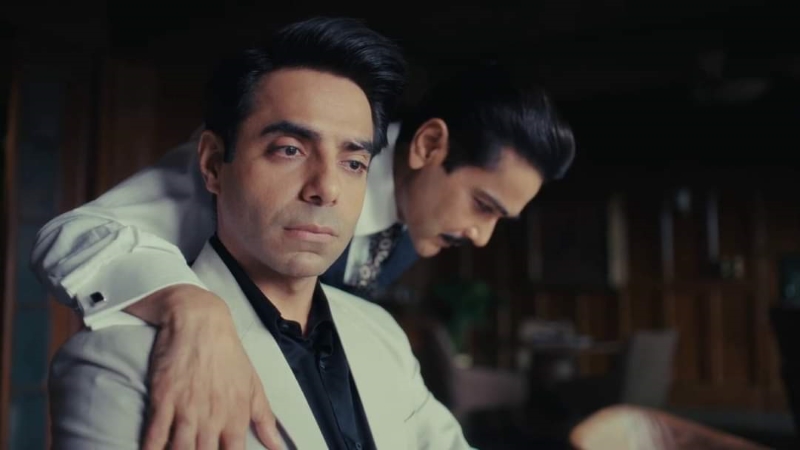
Swathi leads a double life. She wears a burkha and goes outside to meet two people. One is the woman who teaches her cooking, and the other is her lover Umesh (Manoj Bajpayee again).
Things turn drastically at the end of the first episode when Prabhu catches Swathi and Umesh.
From here begins a roller coaster of a journey where Umesh ends up replacing Prabhu. What follows is a delicious mix of a dark comedy and an investigative thriller.
Analysis
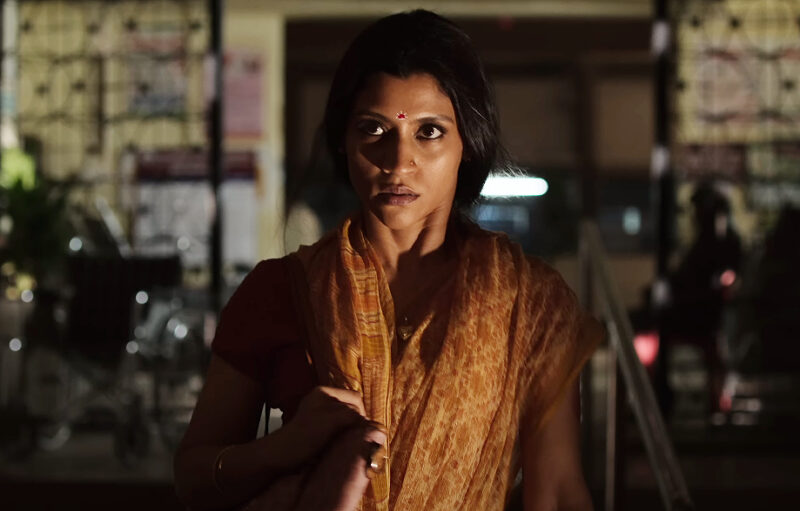
Konkona Sen Sharma in ‘Killer Soup’. (X)
One of the things that stand out in Killer Soup is the mix of different languages.
All the characters alternate between English, Hindi, and Tamil. The vocabulary and diction have an authentic feel and don’t sound jarring at any point.
Abhishek Chaubey does a wonderful job of creating a lived-in world.
Anuj Rakesh Dhawan’s cinematography needs to be commended.
Killer Soup also has some impressive social commentary through the character of Konkana Sen Sharma.
Swathi is someone who has a single-minded ambition of opening her restaurant. There is a visible desperation in her need for respect and social stature. Here, the viewers are reminded of Sobhita Dhulipala’s Tara from Made in Heaven (2019 and 2023).
Swathi is not the only one who wants to have an identity of her own. Her niece Apeksha (Anula Navleker) dreams of getting enrolled in a fine arts school in Paris to escape her controlling family.
Shakespearean touch
Abhishek Chaubey’s directorial ‘Killer Soup’. (X)
Abhishek Chaubey has also done a good job of incorporating the Shakespeare elements.
Hassan (Nassar), a cop, is on the cusp of retirement and wants to end his career on a high.
Aiding him in this investigation is the ghost of a private detective Kiran Nadar (Bagavathi Perumal). This ghost is visible only to Hassan and gives him valuable support whenever the senior officer is in the doldrums.
The director has used the technique of magic realism in the scenes where Hassan interacts with the ghost. Some viewers will feel a sense of absurdity but it is also equally fun to watch.
The characters of Swathi and Umesh have also been humanised. For example, Umesh has pangs of guilt and expresses his frustration of being in the shoes of someone else.
In the case of Swathi, there are occasions where she does come across as a lady Macbeth with her manipulative ways but at the same time, she has a genuine fondness for Apeksha that comes out on more than one occasion.
The supporting characters have also been written with a lot of care. The best examples of this are Sayaji Shinde and Nassar. Sayaji Shinde is a delight to watch as a no-nonsense man. He is the elder brother of Prabhu.
Nassar as the determined cop brings in a lot of integrity to his scenes. The actor also leaves you in splits in his interactions with the ghost.
Performances
As far as the lead actors are concerned, Konkana and Manoj Bajpayee are simply magical together and individually.
Konkana pulls off the different moods with absolute panache —going from loving to scary without any fumble.
Manoj Bajpayee is also wonderful, particularly as bumbling Umesh, who has no control over what is happening around him.
A slight flaw in the Killer Soup web series is the role of Malayalam actor Lal’s Lucas. Lucas is hinted to be a rebel leader before working for Sayaji Shinde’s Aravind, but the characterisation feels sketchy.
Lal makes a solid impression, but a better characterisation would have enhanced the performance.
Also, the editing leaves something to be desired at places.
Verdict
In all, Killer Soup is definitely a dish worth tasting. Abhishek Chaubey has made an impressive digital debut.
There is a profound line in Ala Vaikunthapurramuloo (2020) where Jayaram’s character talks about how the greatest battles are fought with people closest to you.
As a filmmaker, Trivikram Srinivas seems fascinated with this concept and has constantly churned out movies along these lines — Attarantiki Daredi (2013), Agnayaathavaasi (2018) or his last blockbuster Ala Vaikunthapurramuloo.
His latest outing Guntur Kaaram, too, has a similar theme and gives a déjà vu due to the presence of Jayaram.
The storyline of Guntur Kaaram has good scope for a festive family drama while also being a star vehicle. But here, Trivikram Srinivas falters in balancing the two aspects.
Mahesh Babu, as Ramana, is refreshing to watch.
Further, the film brings back the memories of his comic timing in Pokiri (2006) and Khaleja (2010).
Synopsis
Guntur Kaaram begins on an eventful night that ends with a murder. Jayarama’s royal Satyam is sent to prison. Vasundhara (Ramya Krishnan) disowns her husband (Jayaram) and son.
She gets remarried under the advice of her father Venkataswamy (Prakash Raj). Rahul Ravindran plays the hugely embarrassing role of Vasundhara’s second son, who is about to enter politics.
Vasundhara grows into an influential politician. Ramana becomes rowdy.
Venkataswamy feels “Rowdy” Ramana might become an obstacle and wants him to sign a document which would permanently erase him from her life.
However, Ramana refuses to sign the document despite never getting his mother’s love and care in his growing years.
As the story progresses, more layers reveal why Vasundhara has kept a distance from her husband and son.
Guntur Kaaram has a good beginning where the conflict is established without wasting time.
As viewers, you want to know the reasons behind her indifference. But the film soon stagnates as multiple characters are introduced whose relevance to the plot is better left unsaid.
Performances
Mahesh Babu in a still from ‘Guntur Kaaram’. (X)
There are a slew of actors who have been terribly wasted. Among them, the prominent ones are Jagapathi Babu, Rahul Ravindran, Rao Ramesh and Jayaram.
The comic punches definitely raise some chuckles.
Mahesh Babu’s comedic exchanges with Vennela Kishore are fun to watch. Their chemistry is reminiscent of Sarkaru Vaari Paata (2022).
Mahesh Babu also gets dialect well, and there is a certain carefree nature, which is refreshing to watch after his Bharat Ane Nenu (2018) and Maharshi (2019).
Prakash Raj makes the biggest impact in the supporting cast. His confrontation scenes with Mahesh Babu are good to watch.
Ramya Krishnan also delivers a commendable performance as Vasundhara but the film needed more scenes between her and Mahesh Babu.
Apart from the multiple characters, another big issue with Guntur Kaaram is the insipid love story between Ramana and Sreeleela’s Ammu.
Sreeleela entertains with her dance moves. Apart from that, there is nothing much for the actor to do. This is sad because Sreeleela showed good potential in Bhagavanth Kesari(2023).
There is also Meenakshi Chowdhary of Hit 2 (2022) fame. She is supposed to be the second female lead, but her only job is to offer Mahesh Babu a plate of omelette or a bottle of soda when he consumes alcohol.
The action sequences are formulaic in nature, with the standard hero elevations that get tiring after a point. These action sequences have some trademark Trivikram Srinivas humour. But these are not enough to salvage the slow narration.
Thaman’s music is suitably massy, but most songs come across as speed bumps in an already tired narrative.
Final take
Guntur Kaaram is a massive downfall for a man who delivered commercial films that can be watched on repeat mode!
From ‘RRR’ to ‘Animal’, an overview of how protagonists are sharing better onscreen chemistry with their male counterparts.
Most directors of mainstream action films hardly give any importance to the female leads. The primary duty of leading ladies has always been looking glamorous and waiting to be flirted or rescued by the heroes.
A recent deviation to this trend is YRF spy films, where Katrina Kaif and Deepika Padukone did some full-fledged action. Still, they cannot be called substantial parts.
But, of late, the female leads in action films are not even getting their romantic space.
Instead, the male leads bond with themselves rather than the opposite sex. For example, in Pathaan (2023), Shah Rukh Khan shared more chemistry with his nemesis, John Abraham, instead of Deepika Padukone.
Romantic comedies and movies of other genres are, of course, a different matter.
In romantic comedies, female leads usually have a substantial presence. In some movies, they get more screen presence than the heroes.
For instance, Imtiaz Ali’s Jab We Met (2007) was a huge turning point in the career of Kareena Kapoor. Both her performance and film are remembered fondly by the audience to this day.
Likewise, in Humpty Sharma Ki Dulhania (2014), which can be described as an ode to the blockbuster Dilwale Dulhania Le Jayenge (1995), Alia Bhatt’s Kavya Pratap Singh was much more assertive in her love than Kajol in the original.
Getting back to my original point, in most recent blockbusters — particularly pan-Indian movies, women’s roles have been pretty negligible. These include Salaar: Part 1-Ceasefire (2023), Gadar 2 (2023), and Animal (2023).
The male bonding in these pan-Indian hits consists of different types. In Salaar: Part 1-Ceasefire and the historical fantasy RRR (2022), the focus has been on intense brotherhood.
Salaar: Part 1-Ceasefire
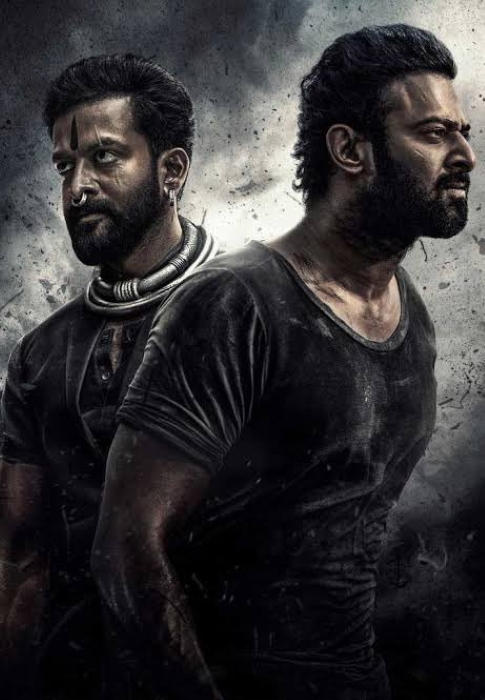
Prabhas and Prithviraj Sukumaran in ‘Salaar: Part 1-Ceasefire’. (X)
In the case of Salaar: Part 1-Ceasefire, the characters of Prabhas and Prithviraj Sukumaran are shown to be close from a young age.
The very first scene of Salaar has Deva (Prabhas) taking on a seasoned wrestler for his friend Varada (Prithviraj).
As the plot progresses, Deva becomes an extremely valuable commander-in-chief for his friend. Their bromance is particularly visible when they both take on some drug-infested zombies and indulge in some hilarious banter.
Expectedly, this became a major highlight of Salaar: Part 1-Ceasefire. Not only were there any major scenes with the women characters, but they were grossly underwritten and mostly left as bystanders.
RRR
RRR is a historical fantasy with a huge hangover of “Amar Chitra Katha“. SS Rajamouli chose the lives of two famous freedom fighters — Komaram Bheem and Alluri Sita Ramaraju (Junior NTR and Ramcharan).
He created a fictional scenario where the paths of these two meet and what happens after that.
In RRR, the two characters are not childhood friends but bond with each other fast while saving a young boy.
This friendship goes through many tests and trials before the ultimate happy ending.
Right from the first frame, it was clear that Rajamouli majorly focused on the bromance aspect. The different stages of their relationship came out well, but the rest was a huge mess.
The romantic angle between Ramcharan and Alia Bhatt’s Sita was pretty much nonexistent. Even the few scenes between them lacked the punch.
Ironically, Alia’s only substantial scene was with Junior NTR when she saved Bheem by pretending to have a deadly disease. The likes of Shreya Saran and Olivia Morris didn’t even get that.
Gadar 2
In Gadar 2, Animal, and Jawan, the male bonding is seen as father and son. In the case of Animal, there is also the additional angle of estranged brothers.
Talking about Gadar 2, Sunny Deol’s affection for his onscreen son is the biggest selling point of this blockbuster sequel.
Unfortunately, Ameesha Patel was reduced to either a weeping wife or a mother, depending on the circumstances.
The scenes between Sunny and Ameesha have hardly any scope for romantic chemistry.
Animal
Sandeep Reddy Vanga could have easily named his movie “A Son’s Psychotic Love for his Father” instead of Animal, because nothing else mattered in the flick.
All the women’s characters in the film are redundant, including Rashmika Mandanna’s Geetanjali.
Ranbir Kapoor has intimate scenes with Rashmika and Tripti Dimri, but the actor shares most chemistry with Anil Kapoor’s Balbir Singh and Bobby Deol’s Abrar.
A good example of this can be seen in an emotionally charged fight scene on an airport runway. Both Ranbir Kapoor and Bobby Deol are seen shirtless, and the entire sequence plays out like a romantic ballad. There is a particular moment where they even lie on top of each other.
Jawan and Pathaan
Atlee’s Jawan is essentially a father-and-son drama with a liberal dose of Shankar’s vigilante brand of cinema.
Unlike the abovementioned films, the women characters here are not insignificant. Nayanthara had a meaty role, particularly in the first half, where we see her doing a balancing act — a single mother who is also an NSG officer.
The women in SRK’s vigilante gang also had reasonably fleshed-out parts, particularly Sanya Malhotra.
But the highlight of Jawan is easily the scenes where SRK features as father and son — the emotions are so palpable.
In the other SRK film Pathaan, the male bonding comes out big time when he shares screen space with John Abraham’s Jim. The scenes between John and SRK were cracking — whether it was the banter they indulge in or the big action sequences, which have a lot of grit.
On the other hand, the attempt at creating a romantic chemistry between Shah Rukh Khan and Deepika Padukone came as an unnecessary distraction. Even in Jawan Shah Rukh’s chemistry with Deepika was rather cold.
Pushpa
Allu Arjun’s Pushpa does not exactly fall under the category of the abovementioned films because there are some proper romantic moments.
But it has to be said that Allu Arjun’s chemistry with Jagadeesh’s Keshava made a bigger impact. Their bromance can be particularly felt in the song “Srivalli“. Throughout the song, Pushpa asks Keshava whether or not Srivalli has seen him.
This trend might be good for heroes as it is helping them to expand their market like never before, along with a variety of roles. But for the cine-goers and female actors, the scenario is not desirable and needs to change fast.
2023 can be easily called as the year of Mammootty both critically and commercially. The legendary actor had three releases this year and all of them are so distinct from each other. The Malayalam film industry did not see a lot of commercial successes this year but for Mammootty, who is 70 now, 2023 will always be hugely memorable.
It all began with Nanpakal Nerathu Mayakkam (Like an Afternoon dream). The film belongs to the genre of surrealism where a Malayali man enters into a Tamil village and starts behaving like a Tamilian. Though it looked absurd on the surface the audiences thoroughly enjoyed these unexplained situations. This is majorly thanks to Lijo Jose Pollissery’s direction coupled with Mammootty’s performance.
Next up was the police procedural Kannur Squad. The film was based on a real-life accident where a bunch of police officers had to head north in order to catch and bring back some criminals. More than the story what made the film gripping was the direction of Roby Varghese Raj and also the star power of Mammootty. The actor had some powerful mass dialogues coupled with well choreographed action sequences. However, Mammootty saved the best for the year end with Jeo Baby’s marital drama Kaathal – The Core. The homosexual angle was dealt with utmost sensitivity without falling into the trap of mainstream clichés. Jeo Baby also did a brilliant job in exploring the predicament of Jyothika’s character.
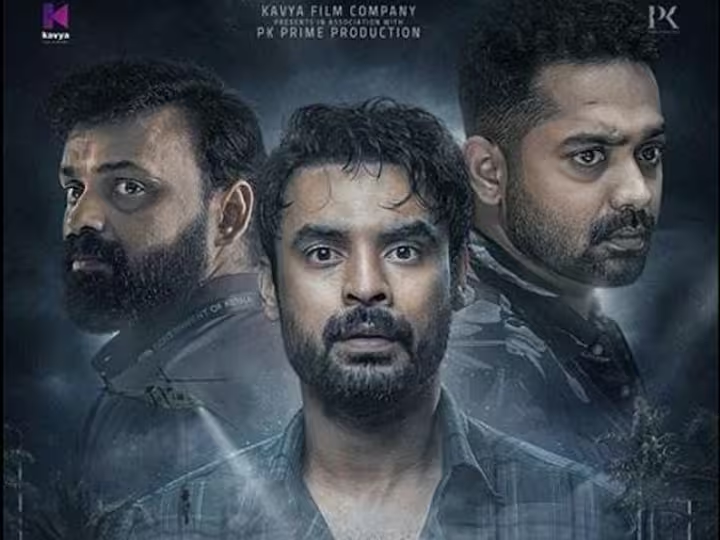
Among the other Malayalam actors Tovino Thomas found both critical acclaim and commercial success with the film 2018. It was a survival drama based on the Kerala floods that had devastated the state in 2018. The film had an ensemble cast with everyone doing justice to their parts.
Regarding Tamil Film Industry Siddharth struck gold with his production Chithha. Chithha is a hard-hitting drama about the bond between Eeswaran (Siddarth) and his niece Sundari (Sahasra Sree). While Eeswaran is like a father figure to Sundari, he absolutely adores her. The backdrop of Chithha is the killings of young girls by a pedophilic serial killer. Chithha is not a movie that is easy on the eyes, it has some highly disturbing visuals but this film is a must watch particularly for those who like intense dramas based on an important social topic.
Now let’s take a deep dive into the best of Malayalam and Tamil in 2023
Malayalam
1 Kaathal – The Core
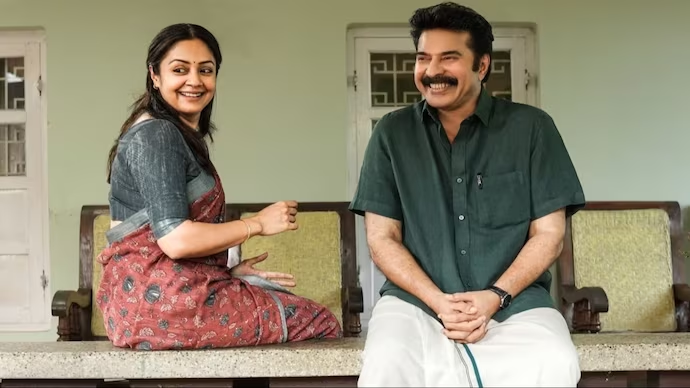
In the last few years many movies and web series have depicted homosexuality in different angles. What makes this Mammootty and Jyothika starrer refreshing is the utmost humanness with which Jeo Baby presented the situation. The life of Mathew Devassy (Mammootty) takes a drastic turn when his wife Omana (Jyothika) files divorce after twenty years of marriage.
Kaathal – The Core unfolds in a very leisurely manner. This is a movie that needs to be watched with some patience as the story takes time to kick in. But once the plot and the conflicts are established there is no looking back.
A very strong aspect of Kaathal – The Core is how Jeo Baby has dealt with the relationship of Mathew and Omana. Omana has no personal animosity towards Mathew despite not having a fulfilling relationship with him. She understands his sexual orientation and not only wants to have a life of her own but also wants Mathew to make peace with his sexuality. There is an inherent decency in the way both the characters have been written and that is what makes this marital drama refreshing.
The courtroom portions also have some impactful dialogues and scenes. Mammootty undoubtedly deserves all the accolades that came his way. It is not just about accepting a path breaking role but the veteran actor also did a brilliant job in showcasing different emotions. Jyothika also stood tall with her graceful performance. On many occasions she lets her subtle expressions do the talking. Another actor worth mentioning here is R.S Panicker as Mathews’s dad Devassy. There is a heartbreaking scene between him and Mammootty when the latter apologises for forcing his son to get married in spite of knowing his son’s feelings.
2. Nanpakal Nerathu Mayakkam
In this film Mammootty played a man called James returning with his family from a pilgrimage. He has a peevish personality in terms of easily getting irritated and always being doubtful about people even if they do some good to him. On the way back from the pilgrimage James tells the driver to stop the vehicle at a certain place when others are in deep sleep. He walks straight into a Tamil Village and starts behaving like a Tamilian man called Sundaram. Everyone is puzzled but they wait patiently to understand who the man is because he was behaving exactly like the missing Sundaram. This leads to many amusing situations with both his old and new families.
Nanpakal Nerathu Mayakkam is one of those films where audiences can interpret the story in different ways because director Lijo Jose Pellissery does not give any explanation for the behavior of James. There is no particular medical condition that you can pin point and as a result the audiences are constantly playing a guessing game. This is a major plus for the film.
Cinematographer Theni Eshwar also did a brilliant job in capturing the beauty and the quirks of the village through his lens. There is surrealness to the frames. What also made the transformation of James into Sundaram a smooth process was Mammootty’s incredible performance.
3. Kannur Squad
Roby Varghese Raj’s Kannur Squad is a solid police procedural that engages the viewers in spite of some generic mainstream elements. The film is based on the real-life incidents that happened in Kannur between 2007 and 2013.
Roby Varghese struck a perfect balance between the commercial tropes and the grittiness needed for the subject. Mammootty in this film is ASI George who leads a special investigative team.
Kannur Squad takes a little time to get going but gathers momentum soon when the plot moves into a thriller mode. What also works for the Kannur Squad are the back stories of the team members. They have been well written and add a certain weight. An interesting aspect of Kannur Squad is that one of the officers is facing serious corruption charges but is still on the investigative team. Certain rifts happen in the team at a crucial juncture because of this.
A particular stretch that has to be mentioned here is the one involving the Tikri village in U.P. The action sequences in the dark were brilliantly shot. As viewers there is a certain tension that we feel about the safety of these police officers.
The role of a police officer is not new for Mammootty but the veteran actor shined bright as the determined squad leader. There are some delightful massy moments also involving Mammootty which the actor pulled off with great panache.
4. 2018
Jude Anthany Joseph’s 2018 is a well-made survival drama that engrosses the viewers throughout. The film is set in the village of Aruvikkulam. The first half an hour is devoted to establishing the lives of the villagers. Tovino Thomas plays a former army soldier. He drops out of army as he feared death. Among the other cast members there is Lal and Narain (Mathachan and Winston) respectively. They make a living through fishing.
For a survival drama like this it is imperative that the technical department puts its best foot forward. Thankfully the atmospherics of 2018 are solid. The VFX team in particular deserves appreciation as they successfully created a chilling atmosphere. Cinematographer Akhil George’s work is also A class.
Apart from extracting solid performances Jude Anthany Joseph also did a wonderful job in showing the unity between villagers in times of crisis across caste, religion and politics.
One area where 2018 could have been better is showcasing the role of the government and the media during those tough times. While the performances were brilliant all round Tovino Thomas deserves a particular mention for how he portrayed the different shades. His character transitions from fearing death to becoming a brave man who fights against all odds.
5. Thuramukham
Rajeev Ravi’s Thuramukham is a hard-hitting tale of the workers movement in Kochi. The film is based on the real-life incidents that happened in Mattancherry area. Apart from the exploitation of the workers Rajeev Ravi also showed how the headmen and the bosses pit the poor against each other.
What makes Thuramukham even more compelling is how the director integrated a family drama into this narrative. Mymood (Joju George) is a worker who is forced to leave Mattancherry because he raised his voice against the work site supervisor ‘moopan’. Moopans are part of a nexus that ensure the ‘Chappa system’ prevailing in the harbor. As a result of his leaving his wife Umma is forced to bring up their three children on her own. While the elder son Moidu becomes the leader of a gang working for the cruel contractors, the second son Hamsa joins the union fighting against the Chappa system.
In spite of the lengthy running time and the leisurely pace Thuramukham is a must watch for how Rajeev Ravi has documented the struggles of poor and oppressed in the format of a commercial pot boiler. He brings to life an important chapter in history that is forgotten. The cinematography and the music are in perfect sync with the rustic nature of the film. The director has done a good job in capturing the spirit of those who fought for labour rights.
The performance of the actors across the board also adds a lot of power with specific mention to Nivin Pauly and Poorna Indrajith.
Now to the best of Tamil films in 2023
1. Chithha (Uncle)
S.U. Arun Kumar’s Chithha is a powerful film on many levels. On one hand it is a solid emotional drama about a strong bond between a doting uncle Eeswaran and his niece Sundari (Sahasra Shree). S.U Arun does not waste any time in establishing how Eeswaran is a father like figure to Sundari. He bathes her and also combs her hair. On the other hand the film also offers a fresh perspective on how to help a sexual assault victim. It is not just only getting angry and swearing to take revenge.
The film also touches upon how men and women react differently to a crisis and what kind of approach they adopt. Nimisha Sajayan plays Sakthi. She and Eeswaran had a misunderstanding in the past but in the present they end up falling in love all over again. Their romance has some fine moments of tenderness that acts as a soothing balm to this otherwise grim story. However, Nimisha’s role is not pertained to just being a love interest. There are scenes where she asks some important questions and nudges Eeswaran to not get swept away in his aggressiveness. Chithha is for most part is a disturbing yet gripping watch but there are some scenes which needed trimming. These portions include the scenes of Sundari and the kidnapper. The very thought of a little girl being held captive by a serial rapist is hair-raising thought in itself.
2. Farhana
Farhana headlined by Aishwarya Rajesh and directed by Nelson Venkatesan is a gripping thriller about human psyche. In Farhana Aishwarya Rajesh played a middle-class housewife who joins a bank call center. Her husband and father in law run a shoe shop but the money isn’t sufficient for Farhana to manage the household. Farhana is initially reluctant to go for the interview but she gets through the exam with distinction marks.
In order to earn more money she shifts from the bank call center to a friendship chat center. Initially the lewd talks from the male callers disturb Farhana but soon she comes across a caller who talks to her in a sympathetic and sweet manner. She feels overwhelmed as she is not used to this kind of affection. But soon the story takes a dark turn.
A big strength of Farhana is how the title character has been written and performed. Farhana starts off as shy and under-confident but soon the character undergoes many changes and Aishwarya Rajesh did a brilliant job in showcasing the various nuances. The thriller elements were also very well done. The backdrop of this mystery man and how he ends up being a tormentor has some chilling moments. Similarly, how Farhana uses technology to get even with her tormentor gives a lot of high. In the second half the screenplay does become loose with some unconvincing scenes involving the husband but there is no denying that this thriller/drama packed a huge punch.
3. Por Thozhil (The Art of War)
Por Thozhil is a gripping whodunnit about two policemen whose working methods are very different from each other. On one hand there is Prakash (Ashok Selvan) who is heavily bookish. His way of doing an investigation is majorly inspired from the crime novels that he has read. Loganathan (R. Sarathkumar) is blunt and has little patience for the bookish ways of Prakash. Naturally they do not get along well but during the course of an investigation they end up forming a bond while coming across some shocking revelations.
In most psycho thrillers the theme of a disturbed childhood plays a key role. This one also touches upon a similar theme but the gripping execution of Vignesh Raja makes sure that the audiences don’t feel a sense of de javu.
Late Sarath Babu’s role is a major highlight of Por Thozhil. His character has been well designed and the actor has done a terrific job in evoking fear. As far as the two main policemen are concerned both R. Sarathkumar and Ashok Selvan have done a wonderful job. Jakes Bejoy’s background score coupled with Kaliselvan’s cinematography elevate the drama further.
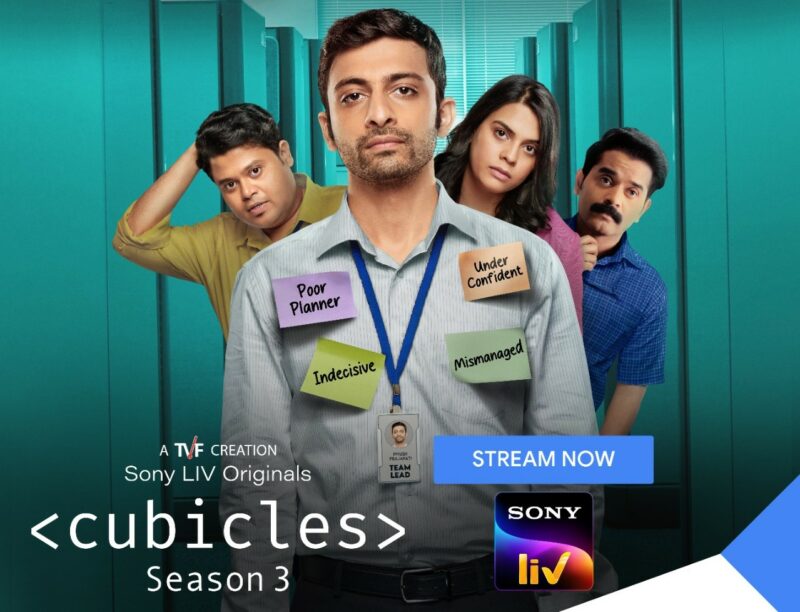
Cast: Abhishek Chauhan, Naveen Shetty, Badri Chavan, and Niketan Sharma
Director: Divyanshu Malhotra
Producers: Shreyansh Pandey, Vijay Koshy, and Chaitanya Kumbhakonum
Music: Arabinda Neog
OTT platform: Sonyliv
No of episodes: 5
From the outside, the life of a corporate employee appears to be very envious with the high salary and the glossy office. However, these jobs come with a lot of stress.
There are inevitable office politics and situations where your equations with colleagues are severely affected.
One way to narrate a story like this is to glamorise things; the other way is to present a show that villainises everyone and everything.
Cubicles web series falls under the third category, where you have a balanced and realistic outlook.
Synopsis
‘Cubicles Season 3’ is based on the office politics of a corporate job. (X)
For those who have not seen the first two seasons, the plot primarily revolves around the life of Piyush Prajapati (Abhishek Chauhan). The first two seasons were about his journey in Synnotech Innovations.
The first two seasons portray the highs and lows of his professional career and how he navigates the different aspects of life — related to both work and personal friendships.
The web show struck a chord with the audience, particularly the IT employees.
Naturally, there are certain expectations from Cubicles Season 3 and director Divyanshu Malhotra does meet those expectations.
In Cubicles Season 3, Piyush Prajapati is promoted as a team leader. He now has the task of leading a team comprising his close friends. These include Suniana (Ayushi Gupta), Gautam (Badri Chavan), and Naveen Shetty (Niketan Sharma).
In simple terms, Cubicles Season 3 showcases the struggles of Piyush in nurturing personal connections and meeting the demands of his elevated position.
Characterisation
A big plus for CubiclesSeason 3 is how the director maintains the entertainment quotient while, at the same time, giving a deep insight into the power struggles and politics that inevitably come with these high-profile jobs.
In the five episodes, Divyanshu Malhotra touches upon some important themes, including work-life balance, career aspirations and the importance of human connection in this fast-paced and competitive world.
These themes never come across as heavy-handed, thanks to the focused direction.
The director also deserves credit for how he has designed the characters of his colleagues. They have their own stories that run parallel to Piyush.
For example, Niketan Sharma’s Naveen Shetty has embraced parenthood in Cubicles Season 3, and often, the viewers see him doing a juggling act that leaves him frustrated.
Additionally, he is also not very happy with the salary. As a result, there are scenes of him taking a half-day leave in search of a job in another organisation.
Performances
The chemistry between the four friends is wonderful and will remind many working professionals of their colleagues.
Badri Chavan’s Gautam is mostly used for comic effect. He reminds you of those colleagues who crack jokes to uplift the team’s spirits. The humour does not always land, but still, he is fun to watch.
Abhishek Chauhan, as the team leader, plays his part to perfection. There is a certain relatability in the way the character has been designed.
There is a visible frustration in the scenes where Piyush makes sure his friends take him seriously and the actor does not miss a single beat.
Niketan Sharma does a brilliant job of portraying the different shades of his character.
The one actor who sticks out like a sore thumb is Nidhi Bhist. She played an important part in the first two seasons. But here, she is severely underutilised.
There is no major scope for cinematography here. But still, the office design along with the cubicles is good to watch.
The web series has also been well-edited with a crisp running time.
Final take
CubiclesSeason 3 is a breezy watch that should be on your watch list irrespective of whether or not you have been a part of a corporate job.
The inner workings of the industry are kept to a bare minimum which is surprising given that he has a career span of almost four decades.
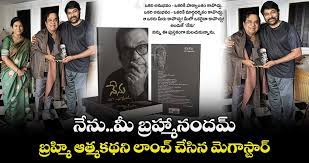
Comedy is a difficult art to master. Apart from timing spontaneous reactions to situations are also necessary. Bramhanandam has enthralled the audiences of different generations and has managed to stay relevant. The relevancy of Bramhanandam is easily visible in how his expressions are used as emojis in different situations of everyday life. Naturally there is lot of curiosity and excitement surrounding his autobiography. It recently came out both in Telugu and English as ‘Nenu mee brahmanandam’ and ‘Me Brahmanandam’ respectively.
Brahmanandam presenting his autobiography to Chiranjeevi
We all know that a comedian’s life need not be full of humour. It is never so. Nenu Mee Bramhanandam is no exception. The book covers different stages of Bramhanandam’s personal and professional life starting off from his life in poverty as a young child.
A significant incident in Bramhanandam’s childhood concerns the festival of Diwali. His father Nagalingachary could not afford to buy crackers for his children. But on one occasion when Bramhanandam was persistent about them his father took him along to borrow money from the local landlord. The observant child that he is he noticed his father’s hesitancy while asking for money. This incident made the young child understand the real meaning of poverty along with how to value money.
Bramhanandam’s bonding with his mother Lakshminarasamma also comes out strongly in the way the actor describes her. In one of the pages she gives an important advice to her son about how it is all right even if he doesn’t achieve anything significant in life; but don’t get into the wrong path, don’t get addicted to cigarettes and alcohol. He promised her never to touch them in life and kept it to this day. We are reminded of Gandhi’s mother here. Maybe most mothers give their sons the same advice but not all sons keep their word.
The other engaging chapters in the book are about the time of his studies and his period as lecturer. He recounts how different people helped him at different junctures and doesn’t forget to acknowledge them. Before becoming an actor Bramhanandam had participated in many mimicry shows. There was constant juggling that took a toll on his professional life as his fellow lecturers weren’t very understanding.
Coming to the acting career the chapters that particularly stand out are the ones related to the shooting of Kshana Kshanam and Money. He gives a good description about how the late Sridevi couldn’t control her laughter while shooting with him.
In the comedy thriller Money, Bramhanadam talks about how he was not very sure about playing Khan Dada in the film but still went ahead with it. Apparently the first copy of Money did not receive an encouraging response but the film went on to do big business along with immense appreciation.
Bramhanadam’s special love for late Jandhyala and EVV Satyanarayana can be seen on more than one occasion in the way he remembers them.
As for the disappointments –
One expected more insights into the treatment of comedy in Telugu Cinema. He could have shared his views on the use of slapstick comedy that often tilted towards the vulgar side. The inner workings of the industry are kept to a bare minimum which is surprising given that he has a career span of almost four decades.
Even about his latest film Rangamarthanda which brought him many accolades he touches about it only very briefly. After acting as a comedian in 1200 films he was doing a serious role for almost the first time. He himself said many people are referring his career now as before and after Rangamarthanda. Still he did not elaborate much on such an important shift in his career.
His belief in God was expressed in almost every sentence. Of course belief in god is an individual choice but to attribute every incident to the almighty was a little overdoing. A crisper edit would have made the book more readable.
In 2023, different kinds of thriller stories like ‘Dayaa’ and ‘Dhootha’ have been attempted. However, non-thrillers like ‘Save the Tigers’ struck a chord with the audience.
Web series in Telugu have seen a slow but gradual increase. The quality of these shows cannot be compared to Hindi. However, there have been some good ones.
For example, the 2021 Telugu web series Unheard by Aditya KV was an impactful show that dealt with the freedom struggle from the point of view of Hyderabadis.
Ideological standoffs between the revolutionaries and different opinions about the Nizam rule were brought out well in the web show. Though Unheard had a stage-like atmosphere, which took some time to get used to, it was nevertheless a fascinating web show, particularly for those who are interested in history.
In 2022, acclaimed filmmaker Krish Jagarlamudi adapted the work of Malladi Venkata Krishnamurthy into a gripping Telugu web series titled 9 Hours. Krish was not the director but he was involved creatively.
As the title suggests the story was set in the stipulated time of nine hours. Three prisoners plan to rob three banks and go back to jail before anyone finds out.
The best part of 9 Hours was the unexpected revelations that shocked the viewers. Though most of the story takes place in a single location, it never comes in the way of the audience’s enjoyment.
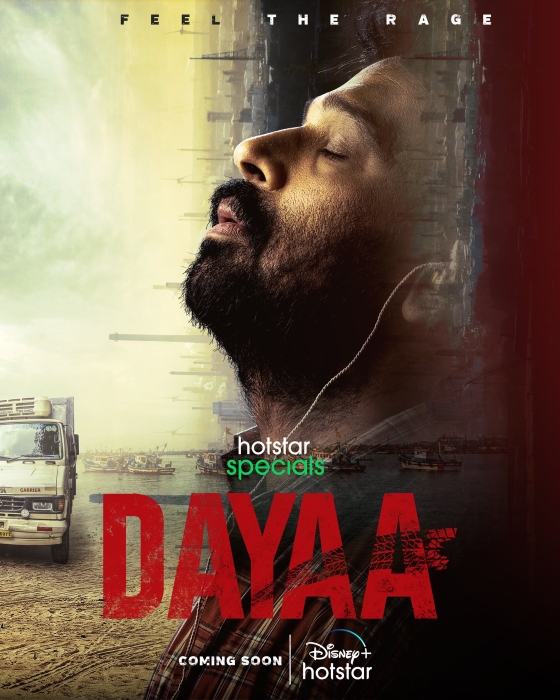
Now, in 2023, different kinds of thriller stories have been attempted — even paranormal. For example, Pavan Sadneni’s Dayaa revolves around a freezer van driver whose life turns upside down when he finds a dead body inside his van.
A poster of ‘Dayaa’ Telugu web series. (X)
JD Chakravarthy played the title role in his OTT Debut. Pavan Sadneni did a good job of keeping the audience invested with his skilful direction.
It was a right mix of mystery and drama while dwelling on the dark side of human nature. JD Chakravarthy led the ensemble cast with his skilful acting.
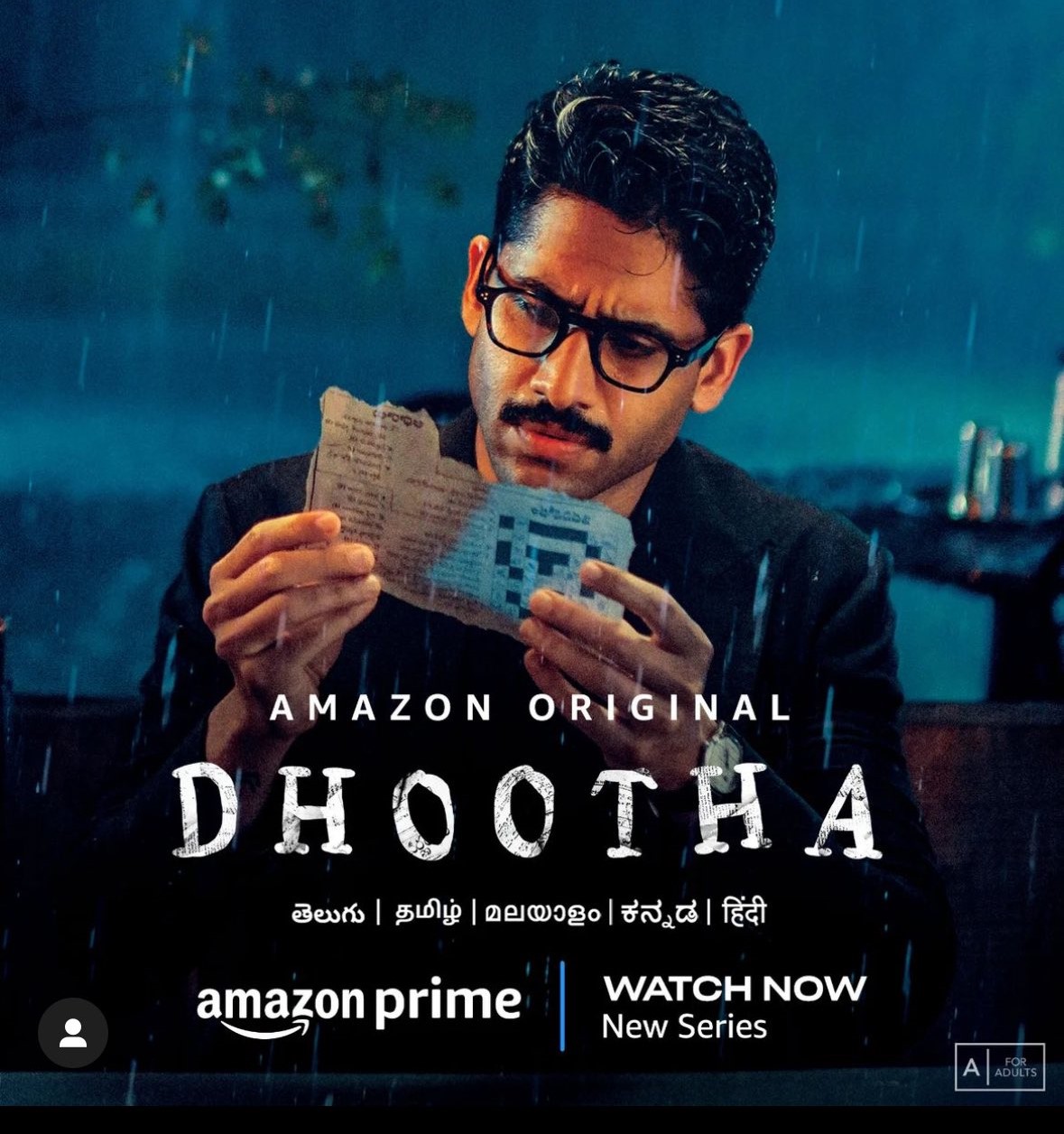
Among the thrillers with paranormal activities, Vikram K Kumar’s Dhootha was a riveting saga, making important points about politics and journalism.
On the other hand, non-thriller web series like Save the Tigers, Kumari Srimathi, and Newsense struck a chord with their target audience.
Interestingly, we have two major Telugu web shows in 2023 dealing with the nexus between journalism and politics.
Now, let us get into the details a little more:
Newsense
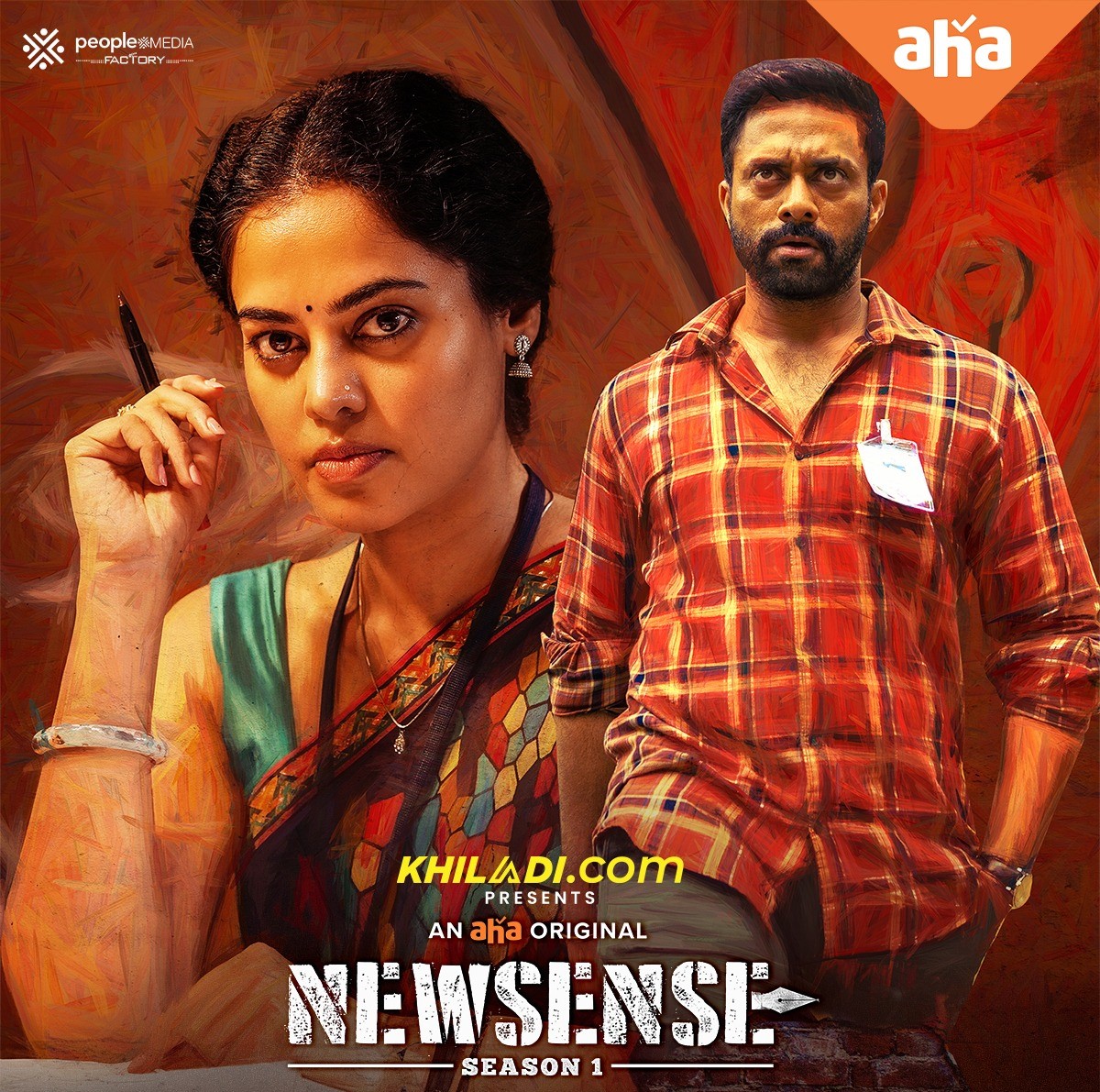
A poster of ‘Newsense’ web series. (X)
Newsense directed by Sri Prawin Kumar was an insightful take on the nexus between media and rural politics. The story was written by real-life journalist Priyadarshini Ram. This clearly showed in the authentic presentation.
Newsense touches upon several issues like the impact of sensationalising news and doesn’t shy away from criticising media and its corrupt practices.
Thankfully, there are no filmy clichés despite being set in the much-abused area of Rayalaseema.
The perspective of a female journalist, rarely seen in Telugu shows, is another plus to this web series.
Bindu Madhavi played the role. Her interactions with Navadeep’s Shiva have a certain playfulness and the dialogues have the appropriate rustic touch.
Navadeep got into the skin of a street-smart journalist and embraced the many grey shades of his character with aplomb.
Bindu Madhavi also lights the frame whenever she is on screen.
Among the supporting cast, Nanda Gopal made a solid impression as sub-inspector Edwin.
Newsense has only one song Myneeru Pillagada. This track made for a soothing watch and listen.
It is streaming on Aha.
Save the Tigers
A poster of ‘Save the Tigers’ web series. (X)
Director Teja Kakumanu‘s Save the Tigers is similar to Anil Ravipudi’s F2: Fun and Frustration (2019) in terms of husbands having issues with their wives. However, this web show has its individuality.
What made Save the Tigers entertaining is how the director used the background of his protagonists. The title is a reference to married men — that they should be saved from going extinct much like the tigers.
The main protagonists are Ghanta Ravi (Priyadarshi), Rahul (Abhinav Gomatam), and Vikram (Krishna Chaitanya). There is nothing common between them in terms of their backgrounds. They only meet at the school where their children are studying. But soon start bonding big time.
Save The Tigers hits the ground from the first frame. Several scenes tickle your funny bone. The interactions between Abhinav’s Rahul and Rohini playing the servant were an absolute riot. Fortunately, there are no body-shaming jokes here.
The director was also successful in creating conflicts that have substance. For example, Vikram’s wife is an activist-cum-lawyer. Their daughter is the emotional anchor between them like many children.
The Telugu web series also subtly touches upon workplace harassment without breaking the entertainment flow.
The story of Save the Tigers is not high on logic but that does not become a major deterrent. The performances of the three main leads were flawless.
Priyadarshi got the body language of a dairy farm owner spot on. Abhinav Gomatam’s satirical humour leaves the audience in splits.
A particular mention must be made of the scenes where he is struggling to get over writer’s block.
Krishna Chaitanya’s character does not come with any major comic punches but still, the actor was mighty impressive in his scenes. His acting skills are most visible when he expresses his frustration on being sandwiched between his boss, mother and wife.
Save the Tigers is an absolute binge-watch with just six episodes of short duration.
It is streaming on Disney+ Hotstar.
Kumari Srimathi
Thiruveer and Nithya Menen in a still from ‘Kumari Srimathi’ web series. (iamThiruveeR/ X)
Kumari Srimathi directed by Gomtesh Upadhye was a heartwarming tale of a female entrepreneur.
The backdrop is a beaten-to-death genre of a family feud. Still, Gomtesh brought a freshness to this tale. The freshness comes from how he depicts the journey of Srimathi in establishing her restaurant-cum-bar in Ramarajulanka.
Some subtle points are made about how society differentiates men and women while doing the same business.
Apart from Nitya Menen’s Kumari, there were also other strong female parts. Whether it is the mother Devika (Gautami) or grandmother Seshamma (Talluri Rameshwari), the scenes between the three gave the show some of its best moments.
But the love triangle where two men compete for Kumari’s affection falls out of place.
Among the male characters, Prem Sagar made a big impact as the semi-villain. His character has some of the best punch lines too.
Nani has a special appearance which does not last long but the viewers feel a sense of nostalgia for seeing the Ala Modalaindi (2011) jodi again.
Overall, Kumari Srimathi was a well-made feministic tale. The Telugu web series is streaming on Amazon Prime Video.
Dhootha
A poster of ‘Dhootha’ Telugu web series. (X)
Director Vikram K Kumar is mostly known for romantic and science fiction films, but he is also not new to the genre of paranormal thrillers.
Vikram earlier made a Tamil film with R Madhavan — Yavarum Nalam (2009). It was a nail-biting suspense thriller dubbed into Telugu as 13 B. In the movie, the television set was a major character.
In Dhootha web series, newspaper cuttings play a pivotal role. Whenever a newspaper cutting appears viewers get tensed up because there is a back story to the newspaper by the same name.
There are some hard-hitting dialogues about the dangers of intersecting politics and journalism. This web show makes it very clear that nothing good will come out of politicians running newspapers.
Naga Chaitanya as Sagar is initially presented as an ideal husband and righteous media person. In fact, many aspiring journalists look up to him. However, layers upon layers of secrets start tumbling down soon.
Naga Chaitanya did a splendid job in this grey-shaded role. A particular mention must be made of the mental and emotional breakdowns.
A good thing about these web series is several of them have left a huge impression in the minds and hearts of the audiences.
In the last few years, the number of web series in Hindi has been on the rise, particularly after the advent of mainstream production houses in the OTT space.
For example, YRF Chief Aditya Chopra forayed into the digital space in 2023 with the impactful human drama The Railway Men, based on the Bhopal gas tragedy.
First-time director Shiv Rawail had a difficult subject to deal with given the sensitivity of the issue. However, the newbie more than rose to the challenge. He didn’t shy away from addressing the moral corruption within the political landscape of that period.
Zoya Akhtar, of course, created her own stamp in the OTT space with the two seasons of Made in Heaven and Dahaad.
Similarly, acclaimed director Neeraj Pandey struck gold with the web series Special OPS and The Freelancer(though he is only the creator and not the director of The Freelancer his imprint is visible).
A good thing about these web series is several of them have left a huge impression in the minds and hearts of the audiences.
Kaala Paani, directed by the duo of Sameer Saxena and Amit Golani, was a gripping dystopian drama set in the backdrop of a mysterious disease in the Andaman and Nicobar Islands.
The show dealt with various themes like environmental exploitation and the harmonious relationship that indigenous people share with nature. It did suffer from pacing issues but still, it was gripping enough.
The ensemble cast led by Mona Singh also delivered brilliant performances. For Mona Singh, it was a double whammy after her impactful turn in Made in Heaven Season 2.
Similarly, director duo Prashanth Nair and Randeep Jha also delivered an unforgettable tale of courage and resilience Trial by Fire based on a real-life story.
After a long gap, Abhay Deol did some of his work here as Shekhar Krishnamurthy. Much like the other Deols — Dharmendra, Sunny, and Bobby Abhay — also rocked this year but in the digital format.
Now, let’s check the most impactful web series made this year in Hindi.
Made in Heaven Season 2
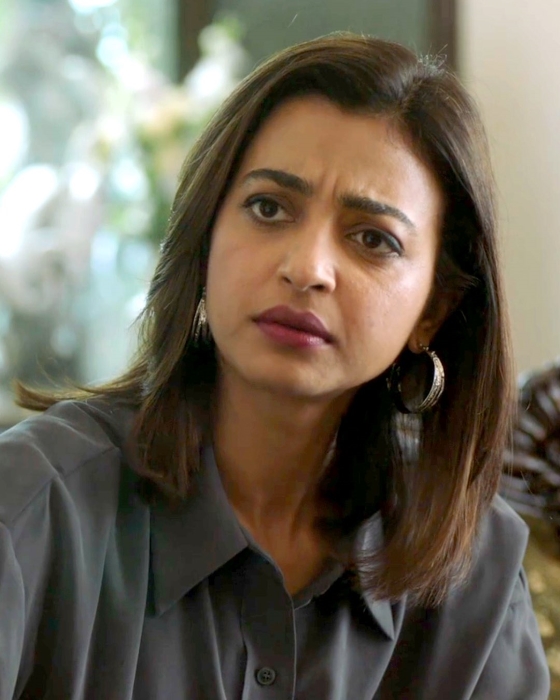
Radhika Apte in ‘Made In Heaven Season 2’. (S)
Contrary to the title Made in Heaven, there is nothing heavenly about how most of the marriages are portrayed in the two seasons. There were solid expectations from the second season, given how the first one was received.
Directors Zoya Akhtar and Neeraj Ghaywan among others not only delivered a solid follow-up but also pushed the envelope further in exposing the double standards and hypocrisies that dwell in our society through different weddings.
Just like the first season, here too, the social aspects came out strongly. Yes, the show could have been done with a crisper edit, but that didn’t diminish the impact of these stories.
Out of all the episodes, my two most favourite are the ones directed by Neeraj Ghaywan. One of them is about a successful author and Professor Pallavi Menke (Radhika Apte).
She is a Dalit Buddhist who asserts her Dalit identity at every step, including her wedding ceremony. Radhika Apte’s fiery performance coupled with Neeraj Ghaywan’s direction made this a punch-packed episode.
Another episode directed by Neeraj Ghaywan revolves around a man and a woman in their 50s having an extramarital affair without the knowledge of their respective spouses. Neelam Kothari and Samir Soni played Kriti and Gulshan respectively.
They were lovers while in college. This episode ends with Kriti taking a bold step that obviously doesn’t go down well with her children.
The performances across the board were first class with special mention to Radhika Apte and Mrunal Thakur in their extended special appearances.
Mrunal played a beauty queen struggling in an abusive relationship. The actress did a wonderful job, particularly in the breakdown scenes.
Dahaad
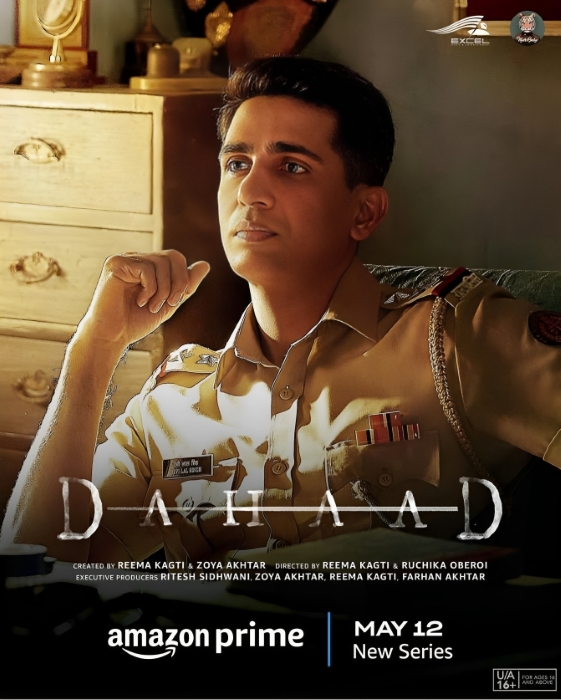
Gulshan Devaiah in ‘Dahaad’. (X)
Dahaad directed by Reema Kagti and Ruchika Oberoi was more than a police procedural about a serial killer.
Some important social issues were also addressed in a hard-hitting manner.
Zoya Akhtar wrote the screenplay for Dahaad. For those who are not aware, Dahaad is inspired by the story of a real-life serial killer Cyanide Mohan.
Vijay Varma as the serial killer was terrific. He played socially deviant roles in the past too, like Darlings. Here too, he makes a huge impact as Anand Swarnakar.
He appears to be a do-gooder on the surface but what he actually does is seduce women from the lower strata of society, particularly the daughters of those who cannot afford to give dowry.
He camouflages himself into a different person each time and seduces them with sweet talk. Once they fall for him and sex takes place, he believes they are characterless and deserve to die.
Vijay was simply fantastic both as a serial killer who has unresolved issues with his dad and also as the middle-class married man who pretends to be a great husband and father.
Another standout feature of Dahaad is the performance of Gulshan Deviah as Devilal Singh. Devilal Singh is not only a determined police officer but also weathers a big storm at home due to his progressive outlook.
Devilal wants his daughter to be independent and not confine herself to being a housewife in future. His wife doesn’t think that way and this results in a conflict between husband and wife.
His progressive outlook can also be seen in the few scenes he shares with his son. The best example of this is the moment when Devilal tells his son that it is natural to have curiosity about sex at his age but at the same time, he needs to be cautious in these matters.
Gulshan was absolutely magnetic in every scene.
Sonakshi Sinha was adequately fierce but her performance feels like a letdown in comparison to others.
Another area where Dahaad slightly faltered was its climax. The confrontation scene between Vijay and Sonakshi needed to be more powerful. Still, Dahaad was definitely a worthy roar.
Scoop
Karishma Tanna in ‘Scoop’. (X)
Hansal Mehta has made a niche for himself with stories based on real life, whether it is Shahid (2012), Aligarh (2015) or Omerta (2017).
His web series debut Scam 1992 (2020) was also based on the real-life rags-to-riches story of stockbroker Harshad Mehta.
Continuing this route, Hansal Mehta once again chose a real-life story for his second web series — Scoop. This time the focus was on a real-life investigative Journalist Jigna Vora.
Jigna Vora was falsely suspected of having a hand in the murder of another investigative journalist, Jaideb Sen (Prosenjit Chatterjee). As a result of her arrest, Jigna changes from being a confident journalist to a dejected woman. Karishma Tanna delivered a breakthrough performance in the titular role.
Apart from Karishma, Harman Baweja and Mohammed Zeeshan Ayyub were also competent in their respective parts.
In fact, the character of Mohammed Zeeshan Ayyub is also based on a real-life person named Hussain Zaidi. Hussain Zaidi is, of course, a prominent investigative journalist along with being a prolific writer. He was the mentor of the real-life Jigna.
A strong aspect of the Scoop web series is not only how Hansal Mehta depicted the challenge faced by these journalists in their everyday lives and the effect it has on them, but he also did a first-class job in showing the prejudices that female professionals face.
Hansal Mehta also deserves credit for how he fearlessly exposed the nexus between Dawood Ibrahim and the police.
Hussain Zaidi was also involved in this web series as part of research and his hand is clearly visible on many occasions.
Jubilee
After co-directing Sacred Games in 2018, Jubilee is the first full-fledged web series that Vikramaditya Motwane directed. He successfully transported the viewers into the 1940s.
Aparshakti Khurrana in ‘Jubilee’. (X)
The focus was the Hindi film industry of that time with the backdrop of the Independence movement and partition.
It is broadly inspired by the lives of prominent yesteryear film personalities Himanshu Rai and Devika Rani (Shrikant Roy and Sumitra Devi in the web series). Prosenjit Chatterjee and Aditi Rao Hydari played these parts.
The other prominent characters include Binod Das (Aparshakti Khurrana) Shrikant’s Man Friday who aspires to become a big actor. Niloufer Qureshi (Wamiqa Gabbi) is a courtesan.
Sidhant Gupta is Jay Khanna, a Pakistani refugee who is desperate to find a footing in Bombay. They both are street smart and end up striking a friendship with a common goal of making it big in the city and Roy Talkies.
Jubilee is a show that immerses the viewers from the first frame. The technical department deserves major kudos along with the director.
The art direction in particular is top-notch. The sets of Priti Gole and Yogesh Bansod are truly era-appropriate. Similarly, the cinematography of Pratik Shah enhances the overall experience.
What also made Jubilee binge-worthy was how Vikramaditya captured the turbulent political atmosphere and the effect it had on the film industry. Many scenes resonate with today’s times.
For example, there is a moment where Prosenjit Chatterji’s Shrikant Roy talks about the dangers of using cinema for propaganda. The characterisations were also layered particularly the ones essayed by Sidhant Gupta, Wamiqa Gabbi, and Aparshakti Khurrana.
Sidhant Gupta perfectly portrayed the pain and also the fighting spirit of a young man who has suddenly become a refugee in what was until recently his own country.
Wamiqa Gabbi’s Niloufer is someone who has big aspirations and to fulfil those dreams she takes all the possible routes. Some of it is questionable too but at the same time, Niloufer never comes across as compromising. Wamiqa effortlessly portrayed all these shades.
Aparshakti Khurrana took a huge U-turn from his regular comic roles. His character Binod Das has some grey shades which the actor pulled off with panache.
Certain passages in the show could have been done with a tighter edit.
Also, Aditi Rao Hydari’s Sumitra Devi needed to be more power-packed both in writing and performance. Her romantic scenes with Jamshed Khan (Nandish Singh Sandhu) with whom she tries to elope are loosely written.
Despite these flaws, Jubilee is still a very well-made web series.
Saas Bahu Aur Flamingo
Filmmaker Homi Adajania created a niche for himself with the likes of Being Cyrus (2005) and Finding Fanny (2014).
With Saas Bahu Aur Flamingo, the director made his digital debut. The show was produced by Dinesh Vijan under Maddock Films.
Dimple Kapadia in ‘Saas Bahu Aur Flamingo’. (X)
Saas Bahu Aur Flamingo was a formidable tale of four badass women set in the remote village of Hastinapur, somewhere in Rajasthan.
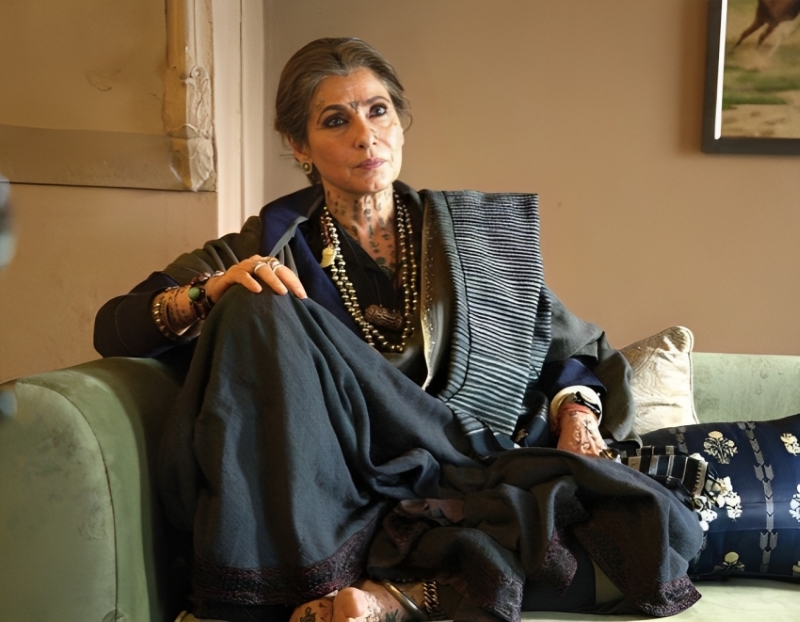
Savitri (Dimple Kapadia) is a matriarch who runs a company named “Rani Cooperative”. On the surface, this company produces various products but there is also a dark side.
Savitri’s team of women includes Kajal (Angira Dhar), Bijilee (Isha Talwar), and Shanta (Radhika Madan). While Shanta is the rebellious daughter Kajal and Bijilee are daughter-in-laws of Savitri.
These four together run drug business with a firm hand and live life on their terms. Deepak Dobriyal played the role of “The Monk” who is the arch-villain. Ashish Verma and Varun Mitra played the sons of Savitri.
Their characters have zero knowledge about the nature of their mother’s business. However, they soon come to know.
A strong aspect of Saas Bahu Aur Flamingo is how the director Homi Adajania makes Savitri’s palatial haveli a character in itself.
This is a place that is full of secrets. There was also an authenticity to the way the village was portrayed and the rustic makeover of these characters.
Saas Bahu Aur Flamingo is high on both thrills and emotions. There are many moments of tension and unpredictability as the plot thickens.
The emotional aspect can be particularly felt in the characterisation of Dimple Kapadia. Savitri is extremely brutal and menacing. At the same time, there is an emotional gravitas in the way her flashback is revealed.
Similarly, Isha Talwar’s Bijilee had the additional layer of homosexuality. Thankfully, this angle was dealt with sensitivity.
There are also some laugh-out-loud moments, thanks to Ashish Verma playing one of the sons. He brought in many chuckles with his understated humour.
Through his web series, the director also paid homage to both Mirch Masala (1987) and Bandit Queen (1994).
Talking about the performances, Dimple Kapadia led the ensemble by exuding both raw power and required vulnerability.
Angira Dhar and Isha Talwar also stood out with their power-packed performances.
The one slight flaw is the underutilisation of the legendary Naseeruddin Shah. The senior actor was a delight to watch in his portions. Still, the viewers feel that there could have been more of him.
Overall, this group of women gave a solid high to the viewers.
In 2023, the Telugu film industry did not have any monstrous successes on the scale of RRR (2022) but there are many decent hits like Hi Nanna, Miss Shetty Mr Polishetty, Bhagavanth Kesari, and Virupaksha headlined by stars and tier-2 actors.
Small-budget films like Writer Padmabhushan and Balagamalso struck a chord with audiences and critics alike.
Further, in 2023, several new and unconventional themes have been explored in Tollywood.
For example, Balagam was a human drama set against the backdrop of a funeral in rural Telangana. The practices of a specific region were portrayed with authenticity and this majorly contributed to the audience’s connection with the film.
Writer Padmabhushan delves into the struggles of both an aspiring writer and the unfulfilled aspiration of a housewife who wanted to become a writer. This is again a theme that we don’t see in Telugu cinema.
Miss Shetty Mr Polishetty explored the concept of a young man falling in love with an older woman in the backdrop of sperm donation.
Hi Nanna is about the trials of a single father and a complex love story that ends happily. Both these films worked well with their target audiences.
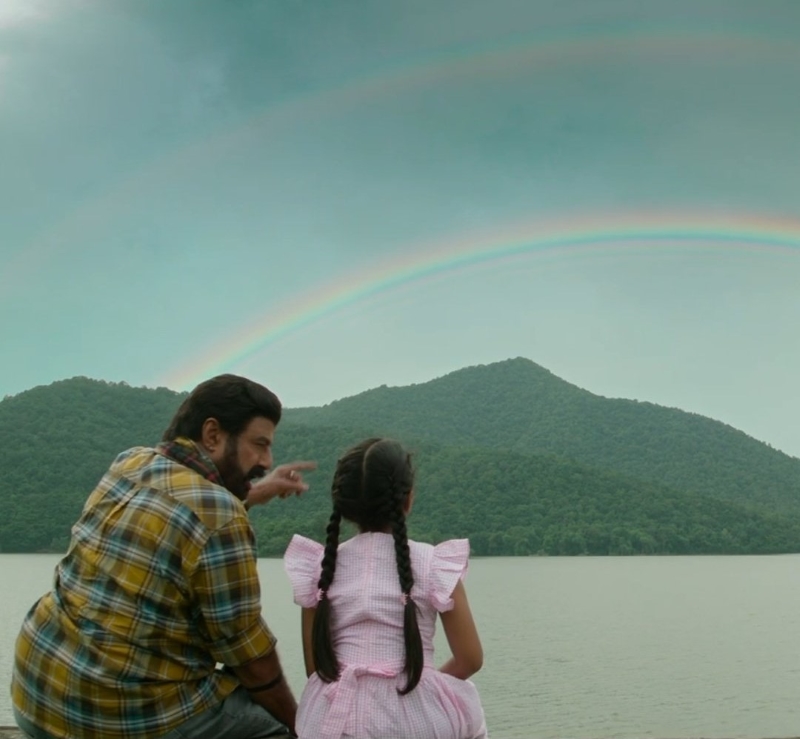
The biggest surprise of 2023 though is the transition of Balakrishna from a macho hero to a father hero. In Bhagavanth Kesari, the actor played a foster father with a salt-and-pepper look that went with his age.
Lastly, Virupaksha was a paranormal thriller that raised some important points about the prejudices and superstitious beliefs set against the backdrop of a particular village.
Now, let us delve a little more into these Tollywood releases:
Hi Nanna
First-time director Shouryuv delivered a riveting emotional saga about a single father and his daughter, along with a mother who battles her inner demons. Hi Nanna moves at a slow pace and is definitely not for those who prefer high-octane entertainers.
A poster of the film ‘Hi Nanna’. (X)
The trio of Nani, Baby Kiara, and Mrunal Thakur were simply splendid in their respective parts. For Nani, the role of Viraj is a cakewalk. But still, the actor was a delight to watch — whether it was the boyishness of a young lover or a determined single father in the later stages.
Baby Kiara more than held her portraying innocence and vulnerability like a pro.
Mrunal Thakur as Yashna/Varsha delivered a performance that was a step ahead of last year’s Sita Ramam(2022) in many ways.
On many occasions, she conveyed various feelings with just her expressive eyes, proving yet again why she is a bundle of talent.
Overall, Hi Nanna proved to be a perfect balm for those traumatised by the violent father-and-son dynamics of Animal.
Another strong aspect of Hi Nanna is the mostly soothing soundtrack of Hesham Abdul Wahab. My favourite songs in the album are “Samayama”, “Gaaju Bomma”, and “Ammaadi“.
The one song that sticks like a sore thumb though is “Odiyamma” featuring Shruti Haasan in an extended cameo, which the film could have easily done away with.
Sanu Varghese’s cinematography is icing on the cake, particularly the portions where Viraj talks about his wife in a fairy tale format.
Miss Shetty Mr Polishetty
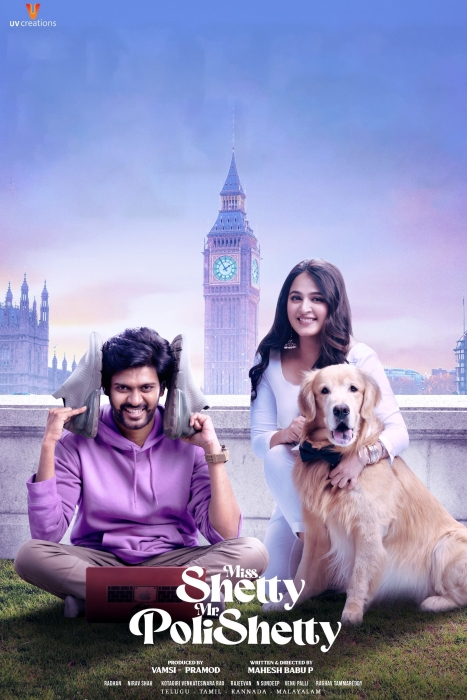
P Mahesh Babu’s Miss Shetty Mr Polishetty is a romantic drama filled with many layers. On one hand, you have an older woman Anvitha (Anushka Shetty), who wants children but not through marriage. She wants to go for IVF, that too, by choosing her sperm donor.
A poster of ‘Miss Shetty Mr Polishetty’. (X)
On one level, the movie has a distinct hangover of Ayushmann Khurrana’s Vicky Donor (2012). But Miss Shetty Mr Polishetty is very much its beast.
A big strength of the film is how P Mahesh Babu has sketched his two protagonists.
Anvitha comes across as very stubborn, at times cold-hearted too, but having said that, the viewers also understand why she is the way she is. The inner trauma of Anvitha was both well-written and enacted.
The director was successful in creating an authentic middle-class milieu through the characters of Murali Sharma and Tulasi playing Siddhu’s (Naveen Polishetty’s) parents.
Miss Shetty Mr Polishetty benefitted immensely from its two primary actors — Anushka Shetty and Naveen Polishetty.
Anuskha fits perfectly into the part of an older woman who is scared of getting into relationships.
Naveen Polishetty was an absolute livewire. His real-life experience of doing standup comedy came very handy. However, he was equally good in the more dramatic portions.
Jayasudha had an extended cameo as Anvitha’s mother, and her fan act of Balakrishna raised some chuckles. A couple of flaws include the rushed transformation of Siddhu’s parents, particularly the father.
Also, the likes of Nassar could have been utilised better.
Bhagavanth Kesari
In Bhagavanth Kesari, director Anil Ravipudi successfully moved away from his regular style of filmmaking and delivered an emotional drama that showed a different side to Nandamuri Balakrishna. At the same time, he satisfied his hardcore fans.
Balakrishna in ‘Bhagavanth Kesari’. (X)
Bhagavanth Kesari is primarily about an ex-police officer turned foster father to Vijji (Sreeleela).
As a young child, Vijji meets Bhagavanth in a jail where her father (R Sarathkumar) worked. Bhagavanth feels an emotional connection with the child from the beginning. After the sudden death of Vijji’s father, he takes over her responsibility.
The biggest USP of Bhagavanth Kesari is easily the emotional drama between Bhagavanth and Vijji. The thought processes of Bhagavanth and Vijji are vastly different from each other.
Vijji’s interests lie more in marrying the love of her life. Bhagavanth, on the other hand, wants to raise her like a lion. In that process, he pushes Vijji to do certain things.
In these portions, the attitude of Bhagavanth reminds the viewers of Aamir Khan’s Mahavir Singh Phogat in Dangal (2016).
Director Anil Ravipudi also made some important points about good and bad touch through a rousing monologue of Balakrishna.
Both Balakrishna and Sreeleela delivered powerful performances. Balakrishna’s command over the Telangana dialect was also commendable. Arjun Rampal made for a worthy opponent.
He brought in the right amount of swag and ruthlessness. It is not the most innovative character, but Arjun Rampal still made it work.
Virupaksha
Karthik Varma Dandu’s Virupaksha is a solid paranormal thriller that scores equally on both the atmosphere and the content.
The filmmaker proved to be a worthy successor to his master — the hugely successful filmmaker Sukumar, who is also the screenplay writer for this film.
Sai Dharam Tej’s ‘Virupaksha’. (X)
Virupaksha is one of those movies that instantly draws the viewers in with its ambience. It has some genuine jump scares; on more than one occasion, the viewers would want to close their eyes.
Sukumar’s screenplay is filled with many layers. He, along with his director, comes up with valid arguments against prejudices and superstitious beliefs that stem from ignorance.
They also deserve credit for not making their protagonist Surya (Sai Dharam Tej) larger than life. There are no unnecessary songs or comedy tracks that deviate the audience’s attention.
The twists and turns are engrossing till the end.
A special mention must be made of the climactic punch regarding the character of Samyukta Menon’s Nandini.
On the performance front, Sai Dharam Tej delivered a convincing performance. But it was Samyukta who stole the show with a complex character.
The supporting cast comprising Rajeev Kanakala, Ajay, and Sai Chand were also fine in their respective parts.
Hello Meera (Amazon Prime)
Hello Meera, directed by Srinivasu Kakarala, is a well-made experimental film.
The story revolves around a single character. Gargeyi Yellapragada played the titular role.
Meera is all set to marry a man called Kalyan and is busy finalising the last-minute formalities for her big day in Vijayawada.
A poster of the film ‘Hello Meera’. (X)
She is on her way back home, but at that exact moment, a cop from Hyderabad calls her to report to a police station at the earliest. The reason is her ex-boyfriend had attempted suicide mentioning her name in the suicide note.
What follows is a story that is not just high on thrills but also dwells on the prejudices that a modern woman faces.
It is not an easy task for any filmmaker to write and engage the audience with a script with only a single actor at its centre. But Srinivasu Kakarala more than rose to the occasion. He ensured that the audience was invested in the plight of Meera. As viewers, you want her to come out safe from this ordeal.
Hello Meera has a series of voice conversations. At times, it does get monotonous, but these voice characters also have a variety.
For example, there is her conservative mother, a father who stands by his daughter, and a future partner who comes across as slightly insensitive.
Teja Paruchuri of Vismai Foods has given his voice to the future spouse.
Gargeyi Yellapragada as Meera is thoroughly impressive. Her reactions to different situations do not come across as staged at any point. She is supremely natural. Her character of a modern woman who is forthright and owns up to the mistakes she has made in the past is something that many modern women can relate to.
Saalar: Part 1-Ceasefire
Saalar: Part 1-Ceasefire directed by Prashanth Neel is an important movie for its leading man Prabhas. The Baahubali star has been struggling big time to maintain his image as a pan-India star.
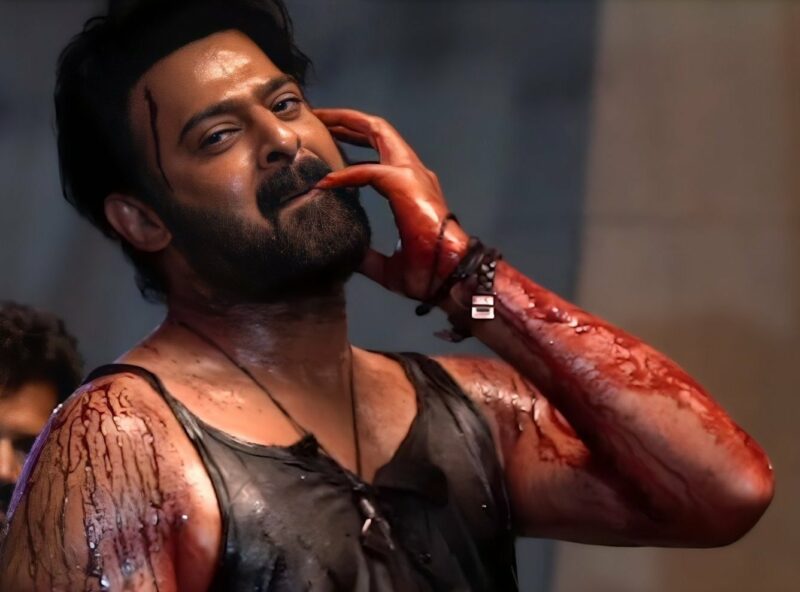
Prabhas in ‘Salaar’. (X)
Many thought that Om Raut’s Adipurush(2023) would bring back the lost glory, but nothing of that sort happened. In fact, the movie only added to Prabhas’ misery.
With Saalar: Part 1-Ceasefire, Prashanth Neel delivered a masala treat which should appeal to the fans of Prabhas.
The biggest strength of Saalar: Part 1-Ceasefire is the intense brotherhood showcased between Prabhas’ Deva and Prithviraj Sukumaran’s Vardha.
Deva’s intense affection for Vardha is visible right from the first scene, and this brotherhood only becomes stronger as the film goes on. Not surprisingly, Prabhas shares most sparks with Prithviraj.
Shruti Haasan played the role of Aadhya. She speaks in a heavily accented American accent, which is irritating, to say the least. Prabhas and Shruti do not have many scenes and aren’t romantically paired at least in this first part.
Prabhas doesn’t have many dialogues, but the actor is successful in portraying the raw aggression reminiscent of Chatrapathi (2005) days.
Prithviraj is also wonderful in portraying both the vulnerability and determination of a future successor caught in the power struggle.
The world of Saalar: Part 1-Ceasefire is similar to Game of Thrones in terms of drama and character dynamics.
Some of the themes explored by the film are the right to leadership and loyalty among others. Prashanth Neel has done a good job of depicting these themes.
Saalar: Part 1-Ceasefire ends with a cliffhanger that sets a good base for the second part.
Apart from an irritating Shruti Haasan, the KGF (2022) hangover does play a spoilsport. Also, the bloodshed in the second half gets too gory much like Animalwhich was also released in December.
Debut director Arjun Varain Singh gives an honest insight into the phenomenon of social media and how this made youth less communicative with each other.
Kho Gaye Hum Kahan (Hindi) Starcast: Ananya Pandey, Siddanth Chaturvedi, Adarsh Gaurav, Kalki Kochelin, Anya Singh and others Director and writer: Arjun Varain Singh Additional writers: Zoya Akhtar, Reema Kagti and Yash Sahai Music directors: Sachin- Jigar, Ankur Tewari and others Production Companies: Excel Entertainment and Tiger Baby films Genre: Drama Running time: 2 hours and 14 minutes Streaming site: Netflix
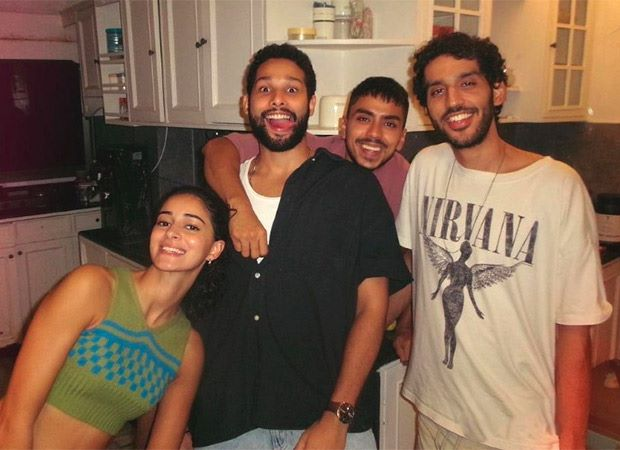
Since internet arrived there has been a huge bloom of social media in everyone’s life particularly the Gen Z. There is no denying that social media has its advantages; communication and spreading information has become easier whether it is for good or bad. But at the same time social media does come with its own share of negatives. There is an obsession to seek validification from complete strangers. Arjun Varain Singh uses the tonality of Dil Chahta Hai and Zindagi na milegi dobara to deliver a timely story that never becomes preachy. What also helps Kho Gaye Hum Kahan is its principal cast. The trio of Ananya Pandey, Siddhant Chaturvedi and Adarsh Gourav are in brilliant form.
Ananya Pande, Siddhant Chaturvedi and Adarsh Gourav
Kho Gaye Hum Kahan starts off with establishing the lifestyle of Ahana (Ananya Pandey), Imaad (Siddhant Chaturvedi) and Niel (Adarsh Gourav). They live in a spacious apartment in South Bombay with French windows. Everything looks sleek on the surface but as the story progresses we come to know more and more about these characters. One of the things that make this trio relatable is the side effects of social media.
They have their own share of trauma and insecurities. Their only way of dealing with it is seeking validation on social media. For example Imaad is a Tinder addict who has a major problem with long term relationships. He is a standup comedian who uses humour as a tool to camouflage his internal issues.
Seems like someone dissecting my life: Ananya Pande
Seems like someone dissecting my life: Ananya Pande
Niel is a gym trainer who has dreams of starting his own one day. He doesn’t have the same financial safety as Ahana and Imaad. He constantly compares himself to others by looking at their social media posts and falls deeper into the abyss. He is also in a relationship with a social media influencer Lala (Anya Singh). Lala wants to keep her relationship with Niel a secret as she doesn’t want her ‘hot’ image to be disturbed.
Lastly there is Ahana who has the most stable job among the trio. Ahana is a marketing executive but she also comes with her own share of problems. These include both professional and personal. Her boyfriend suddenly decides to break from her with no valid reason. She retaliates by opening an instagram account and starts posting good pictures of herself presenting a happy image but deep down she just wants to gain back the attention of her ex boyfriend.
Hone do jo hota hai, the song that involves almost every actor
Things take a turn when three of them decide to start a business together. However their personal equations go through many upheavals that impact their professional moves.
A major strength of Kho Gaye Hum Kahan is the way the three protagonists have been written. All of them are flawed and there are times where they are outright unlikeable too. Still many youngsters will find a little bit of themselves in them. Thanks to Zoya Akhtar and Reema Kagti’s sensitive writing these characters never become one note or caricaturist.
Director Arjun Varain Singh also does a good job in weaving the angle of class disparity through the character of Niel. There are moments when Niel judges himself and feels like an odd man out.
Kho Gaye Hum Kahan also makes some important points on the lifestyle of social media influencers and how this has a severe affect on youngsters who want to ape them.
Ananya Pande explores social media
The film begins off as a breezy friendship drama but soon enters into a very different zone altogether. It becomes a relationship thriller about loneliness in digital age.
Fortunately the direction coupled with the writing makes this a smooth process. However there are a couple of aspects that could have done with more insight. One of them is the co living.
The performances of the central cast also help the film immensely. After 2022’s Gehraiyaan Ananya finally gets a part with some substance. The actress is pitch-perfect in portraying the vulnerability of Ahana. Ananya displays a huge level of maturity in handling different emotions. She also shares a good camaraderie with her two co stars particularly Siddhant. There is a breezy vibe between them that makes it instantly endearing to the audiences.
Compelling watch
Siddanth Chaturvedi also gets into the skin of Imaad. He does a very good job in conveying the emptiness and the inner pain hiding behind the mask of standup comedy. Adarsh Gourav continues to show why he is a bundle of talent after White Tiger. He shines bright as the conflicted Niel who wants to hide his middle class upbringing.
Kalki Kochelin plays an older woman who gets involved with Imaad. She is a photographer who is seen doing a project on people who use Tinder. There is nothing to complain about her performance but the character could have done with more meat.
Kho Gaye Hum Kahan is both entertaining and also highly relatable. It should definitely be on your watch list.