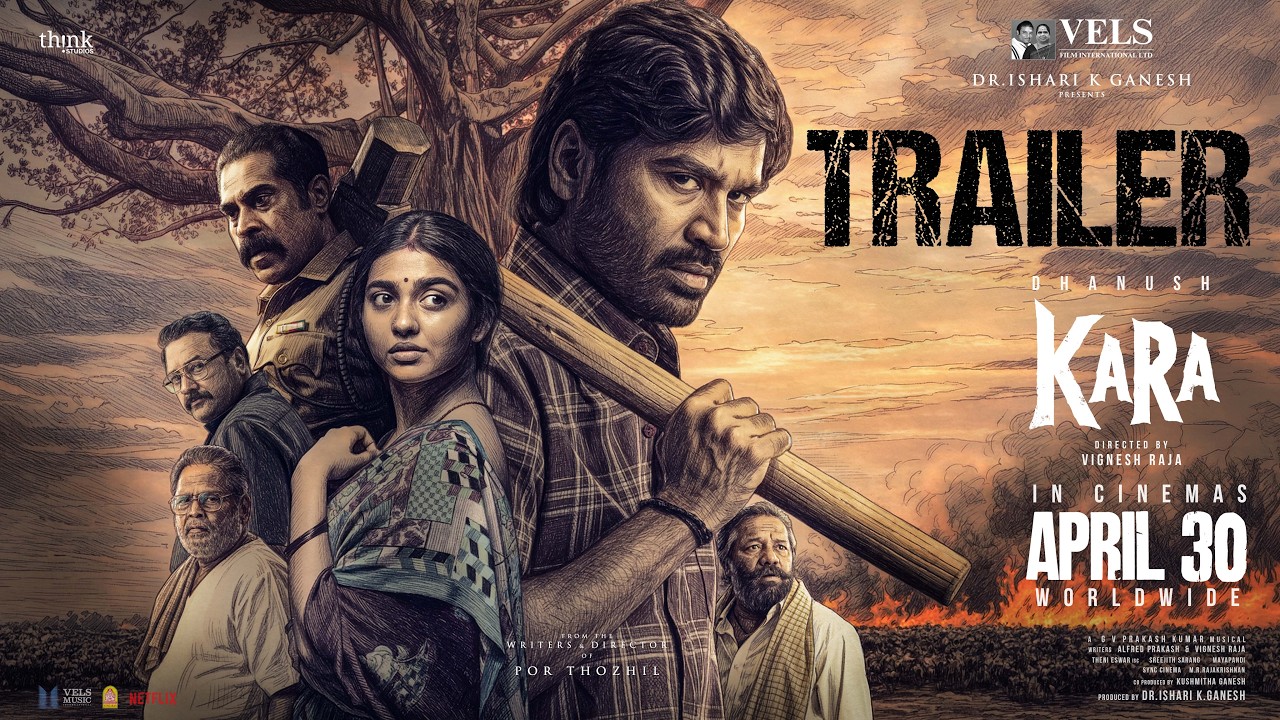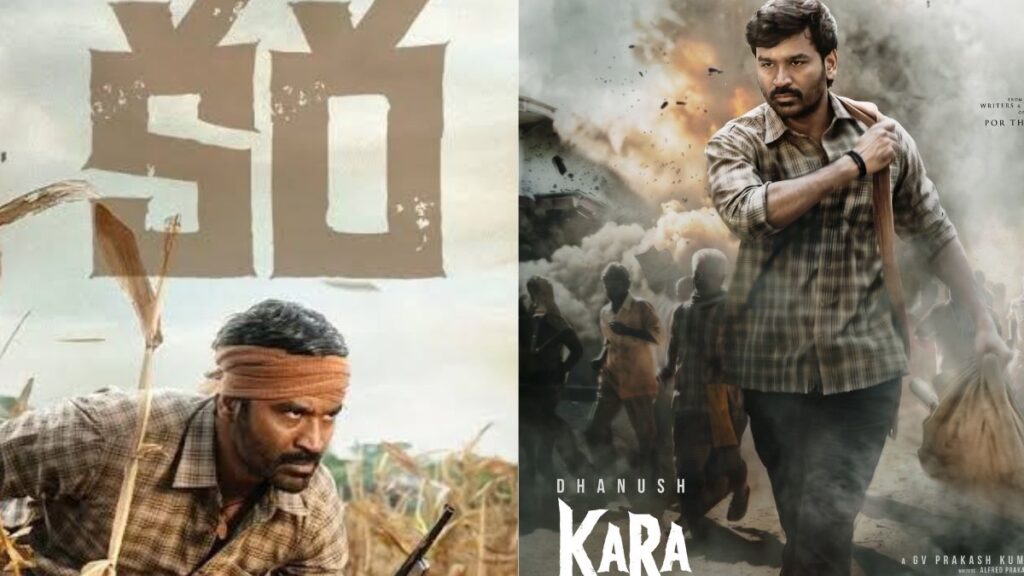
Kara: Familiar tropes but a well staged cat and mouse game

Vignesh Raja’s Kara is two films rolled into one. One a social thriller tackling the issue of financial exploitation and rural debts. The impact of Gulf war set in 1991 forms an important subplot. At the same time the films feature a father and son emotional thread. The latter is melodramatic, but the first one engages the viewers more so in the post interval portions. The grey areas of both Dhanush and Suraj Venjaramoodu is well written and enacted.

Starcast: Dhanush, Suraj Venjaramoodu, Jayaram, Mamita Buiji, K S Ravikumar and others

Genre: Crime/drama

Director and writer: Vignesh Raja

Additional writer: Alfred Prakash

Music: G V Prakash

Cinematography: Theni Eshwar

Producer: Ishari K Ganesh

Production Companies: Vels Film international and Think Studios

Running time: 2 hours and 41 minutes

The proceedings in Vignesh Raja’s Kara has a certain contemporariness though the plot is set in the 90’s. The current fuel crisis because of a global war is a well-known thing. Kara’s timeline features an important subplot along the lines of current war. Here the focus is on the bank exploiting the vulnerable farmers. The movie begins with Dhanush’s Kaarsami along with an associate robbing a house. For Kaarasami it’s his supposed last theft but things go awry after a successful robbery. The protagonist though manages to get away from police clutches. Flash forward he is now a family man with Mamitha Buiji playing the wife Selli. Without revealing much a situation comes when Kaarasami is in desperate need of money for setting up his own food mess. However, that’s easier said than done. Nothing more can be revealed given the different layers

A strong aspect of Kara are the thriller portions. Midway through the first half a scenario comes when Kaarasami also called Kara has to rob a bank going back to his former self. Kaarasami makes two attempts with his associates. One of them is Karunas as an elderly figure. The first attempt turns out to be a disaster though they don’t get caught. The second time around Dhanush and co decide to rob in morning at a particular time. These sequences have a super combination of thrills coupled with humor. There is a scene of Dhanush pretending to be a bank employee and Karunas doing the pretension of filling a form. This is wonderfully written and enacted.

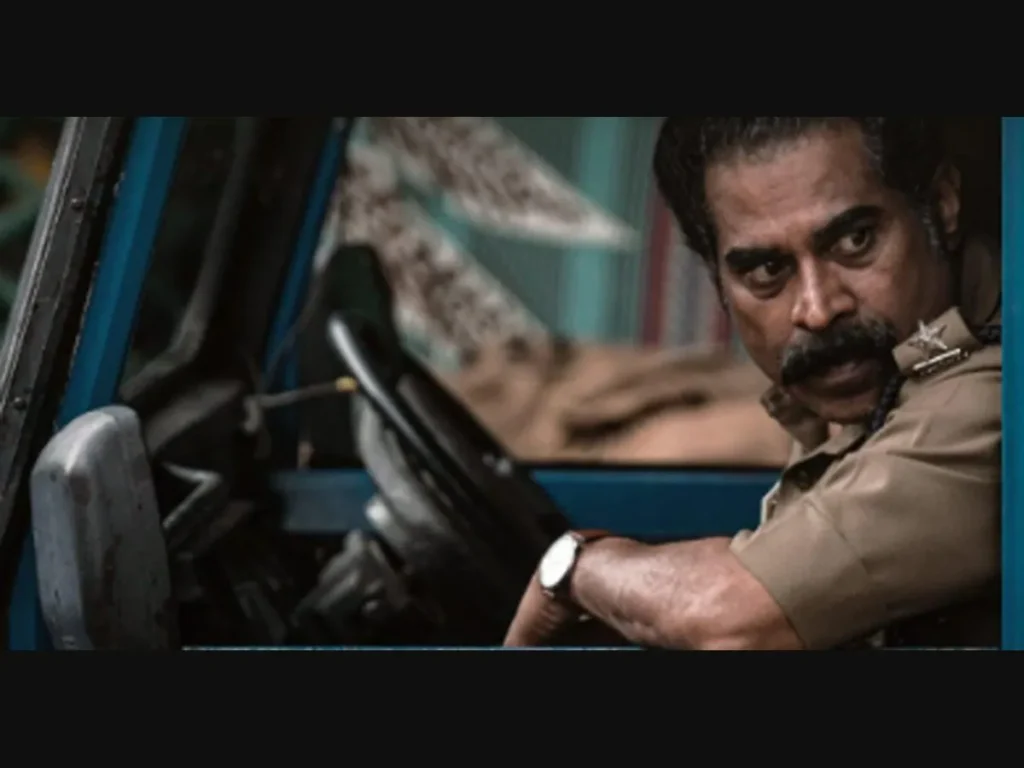
The second half turns into a cat and mouse with the reentry of Suraj Venjaramoodu’s DSP Bharatan. He has a past connected with Kara. Bharatan much like the protagonist comes with his own grey areas. The biggest motivation for Bharatan to catch the thief is having his name splashed in the newspaper. Early on in the movie there is a scene of Bharatan trying to attach his name to an already open and shut case. However, he doesn’t succeed with Kara escaping. Suraj Venjaramoodu’s act of a determined cop and his portions with the sinister bank head (a wonderful Jayaram) gives the movie its best moments.

Dhanush as Kaarasami is expectedly solid. Kaarasami is a layered character coming across as not so likeable in some portions. Dhanush particularly shines in the emotionally vulnerable moments like a heartfelt scene with Mamita Buiji. The subplot of gulf war and its impact on the downtrodden is a character in itself. It gives Kara a contemporary feel moving the viewers emotionally.

A major roadblock of Kara is the underdeveloped love story between Dhanush and Mamita. Mamita as Selli gets a couple of intense moments and the young actress does hold her own. But the writing needed to be much better. Also, the portions featuring KS Ravikumar as Dhanush’s father could have done with less melodrama. The background score does more heavy lifting here than the writing. Finally, Dhanush’s justification of multiple robberies may not work for all.

Technically speaking Theni Eshwar does a fine job in capturing the rural atmospherics through his lens. The production design is on point too; the action sequences have also been well designed. GV Prakash Kumar’s music has its moments. The song Kanamma has a melodious feel making for a soothing listen and watch. The background score on the other amplifies the tense moments successfully.

Final word: Kara is worth watching for the cat and mouse game as well as the social themes it addresses. But tighter writing would have made it a more wholesome experience.

Love Insurance Kompany: An audacious mix of science fiction and romance

This Vignesh Shivan directorial needed better writing especially the trope of love at first sight. Having said that the film is solidly staged and the latter half has good conflict points. The movie also benefits from SJ Suryah act of a comic villain. His face offs with Pradeep Ranganathan lead to some entertaining moments. Among the two leads Krithi Shetty makes a stronger impact

Starcast: Pradeep Ranganathan, Krithi Shetty, S J Suryah and others

Genre: Science fiction/romance

Director and writer: Vignesh Shivan

Music: Anirudh Ravinchander

Cinematography: Ravi Varman

Producer: Nayanathara

Production Companies: Rowdy pictures and Seven screen studios

Running time: 2 hours and 30 minutes

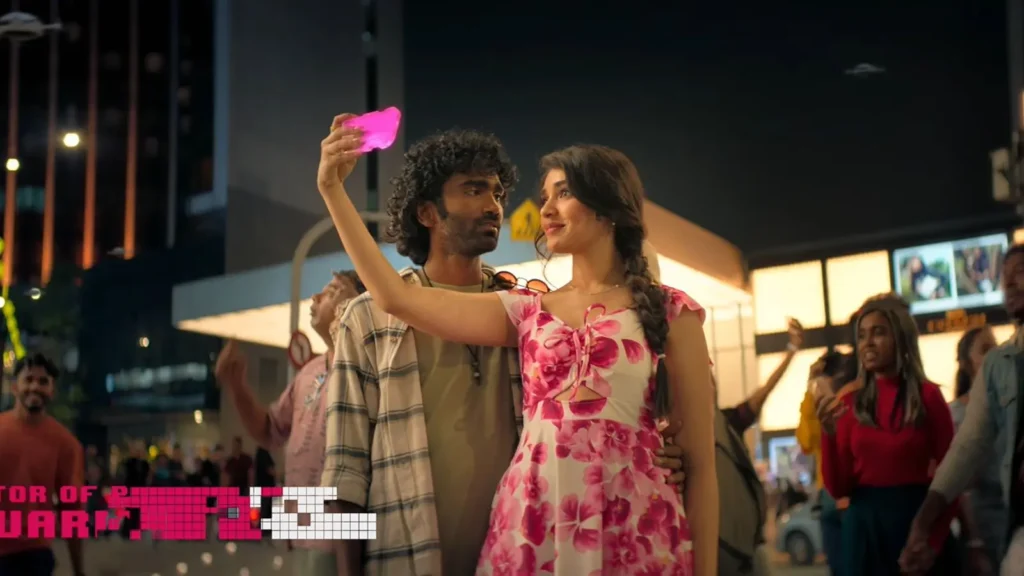
Narratives of social medium algorithms and how they are influencing people have been explored numerous times on the big screen. Whether its the Hollywood movie Social Network or the Bollywood one CTRL starring the excellent Ananya Pandey. But Vignesh Shivan’s Love Insurance Kompany goes notches above in terms of imagination. The director sets his plot in the year 2040 where there is a clear divide between those obsessed with apps and others growing up in an ashram type. The two leads played by Pradeep Ranganathan and Krithi Shetty differ significantly in terms of their lifestyle. The story in brief focuses on how Pradeep Ranganathan’s Vaibhav Vasudevan falls for Krithi Shetty’s Dheema. Their love story forms the core with a message on human connection being more important. S J Suryah is the owner of the dating app Love Insurance Kompany. How he becomes a thorn in the needle for Vaibhav’s love forms an important subplot.

A major strength of LIK is the production design coupled with Ravi Varman’s cinematography. The stark difference between the environments of Dheema and Vaibhav has come out well. The portions of 2040 especially feel like we are really watching a futuristic world where this can really happen. Ravi Varman captures the different color pallets wonderfully through this camera.

The movie also benefits from solid conflict points especially Kriti Shetty’s Dheema. Her backstory on she becomes an influencer more on less than on the phone creating video’s, also the impact of her mother’s failed marriage has come out well. Kriti does a very fine job in capturing the characters over the top nature as well as emotional vulnerability.

Pradeep Ranganathan as Vaibhav is competent both in the scenes of being love struck and the desperation of making his love story a success. However, the writing doesn’t completely support the actor. For example, the typical love at first sight with Vaibhav landing in a hospital feels overtly dramatic. It becomes somewhat difficult to buy Vaibhav’s intense love for Dheema so much so that he starts using LIK.

Having said that Pradeep Ranganathan does a fine job with his natural acting. His face off with S J Suryah are laced with effective humor contributing immensely to a more enjoyable second half. S J Suryah as Suryan is solid too with his eccentric humor. He particularly shines in the scenes of tug of war. Suryan’s desperate attempts in trying to win gives the movie some of its best moments. Having said that the backstory of Suryan on why he set up LIK needed much better writing. Also, the film could have done with a more balanced approach regarding social media addiction. The dangers of an app like LIK are convincingly portrayed, at the same time the positives of social media could have been equally highlighted.

Anirudh Ravichander’s music has its high points. The song Dheema in particularly has a soothing tune and has been picturized well. The backdrop score is fairly fine especially in the confrontation scenes of Pradeep Ranganathan and SJ Suryah.

Final word: Love Insurance Kompany is worth watching for the solid world building and the audacious ideas. Having said that some fine tuning would have made the film more gripping.

Youth: A nostalgia ride worth embarking on

Leading man and director Ken Karunas does a fine job in capturing the general teenage life. The school brawls with the desperation of a girlfriend have an authentic feel. The emotional second half is the film’s biggest ace especially Suraj Venjaramoodu as the caring husband. Having said that the coming-of-age angle comes with its share of problems. The third love track turns into a manipulative device for the hero to understand his parents. This needed to be avoided.

Starcast: Ken Karunas, Suraj Venjaramoodu, Devadarshini, Anishma Anilkumar and others

Genre: Teen romance/drama

Director and writer: Ken Karus

Music: G V Prakash Kumar

Cinematographer: Viki

Producers: C Ram, Sulochana Kumar and Karuppaih

Running time: 2 hours plus

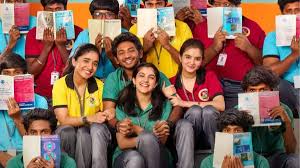
The adolescence phase is a special part of most people’s lives. Numerous stories depicting teenage have been witnessed on big screen. In spite of the many stories on this line the genre always has a fresh appeal. The latest Youth is a mixed kichadi of different slice of life films depicting adolescence. Still the movie works as a nostalgia ride elevated by strong performances.

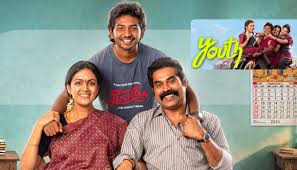
Youth follows the journey of a wastrel Praveen (Ken Karunas). Praveen is a brat creating trouble in classroom with major focus on having a girlfriend. The mother Sarojini (Devadarshini) though has different ideas; she wants her to son to pursue IAS. Suraj Venjaramoodu is the father and the owner of a bakery. The father and son have a strained relationship. In the process of finding love Praveen falls for three different girls at various points. The third one turns out to be the more serious one. Anishma Anilkumar plays Gaganvalli a focused student with aspirations. The viewers are given the impression of Gaganvalli also loving Praveen, but things turn out to be different. This is the story in brief.

A strong aspect of Youth is the relatable characterization of Praveen coupled with Ken Karuna’s competent performance. There is a certain rakishness to Praveen, and he often comes across as unlikeable. However, there is a solid inner journey from mid second half. Ken Karus nails this in both direction and acting.

Ken Karunas also deserves appreciation for the impactful characterization of parents. The understated romance between Suraj Venjaramoodu and Devadarshini gives Youth some of its best moments. Both the actors get some solid emotional scenes and they are first rate. Suraj Venjaramoodu though makes a bigger impact. Towards the end there is a very poignant moment with the father opening up about his past and getting emotionally vulnerable. Suraj Venjaramoodu absolutely nails this portion. At the same time, he is also impactful in the scenes of anger with the son and showcasing love and affection towards the wife.

The love tracks have its share of enjoyable moments and the pre interval block is absolutely solid. Among the girls Anishma Anilkumar has the most fleshed out one. She plays a strong teenager with clarity on future. Anishma Anilkumar does well in bringing out the feistiness especially in the dramatic scenes but is somewhat let down by the characterization. There is a scene where Gangavalli puts a condition for accepting hero’s love.

The hero passes this test with flying colors and Gangavalli is about to express her love. But Praveen stops her by saying would she have said I love you even if he failed. Praveen compares her love of expectations to his parents. This leaves a bitter after taste in spite of some extremely fine acting. The actors playing Praveen’s friends are competent in their respective parts.

GV Prakash Kumar’s music is of a good order with the right mix of funky and emotional numbers. The tunes especially in the second half elevate the hero’s coming of age.

Final word: Youth is a relatable slice of life movie. Worth watching particularly for those who like breezy cinema with emotional undercurrents.

Kaantha: A strong beginning marred by an uneven execution

Selvamani Selvaraj does an excellent job in building up the tension particularly shining in his handling of psychological drama. The ego tussles between Dulquer and Samuthrikani has come out well with both men having flaws of their own. The prominent female character played by Bhagyashri Borse has some solid scenes too: but once the movie slips into murder mystery proceedings start to stagnate. The secondary characters with the interpersonal dynamics needed more texture.

Starcast: Dulquer Salmaan, Samuthrikani, Bhagyashri Borse, Rani Dagubatti, Ravindra Vijay and others

Genre: Thriller/drama

Director and writer: Selvamani Selvaraj

Additional writer: Tamizah Prabha

Cinematography: Dani Sanchez- Lopez

Music: Jhanu Chantar

Producers: Rana Dagubatti, Dulquer Salmaan and others

Production Companies: Spirit Media and Wayfarer films

Running time: 2 hours and 43 minutes

Some movies sound very promising on paper but get lost in translation. Kaantha is a perfect example of this category. The movie has big ideas with a potential edge of a sit thriller, but the film stumbles big time after solid world building. However, all isn’t lost thanks to the solid trio of Dulquer, Samuthrikani and Bhagyashri Borse. The dramatic portions exploring why things went sour between a superstar and a director/father figure has come out well giving a cautionary message on how bruised egos are never good and the need to sort differences. The surprise package though is Bhagyashri Borse something which I will get to later.

The timeline of Kaantha is 1950’s. Dulquer Salmaan is superstar TKM (Thiruchengode Kalidasa Mahadevan). His journey perfectly fits the caption of rags to riches. The movie begins with the death of Bhagyashri Borse’s Kumari. She is a first-time actress and a protégée of Samuthrikani’s TPK much like Kalidasa Mahadevan. TPK is also called as Ayya. The first half is primarily about the revival of TPK’s most ambitious project, a story connected to his mother’s death. How the film gets a second life amidst an air of tension and what led to the strained relationship between TKM and TPK occupies a major space. Running parallel to this is a budding love story between Kumari and TKM. Kalidasa Mahadevan finds true love with Kumari, but the path is riddled with obstacles. The second half slips into a murder mystery with numerous suspects and motivations. Rana Dagubbati is inspector Devaraj alias Phoenix. Devaraj has his own way of going about things. There is a quirky nature with some sarcastic humor.

A strong aspect of Kaantha is undoubtedly its world building. Selvamani Selvaraj along with Tamizah Prabha do a good job in gradually unravelling the tension. In the beginning the viewers are given the impression of TPK being a pure soul with TKM projected as narcissist with huge ego. However, as the movie progresses the viewers understand that both come with their own share of issues. TPK too has a god like complex on certain occasions making him no less of a narcissist.

The movie also does a fine job in depicting big male stars overriding director’s vision according to their whims and fancies so that the fans won’t get upset. There is a contemporariness though the plot is set in 50’s. The addictive nature of fame and what happens if a person isn’t able to have a levelheaded approach has been well written and enacted too.

Bhagyashri Borse as Kumari also has an important role. She is never reduced to a pawn and comes across as a strong woman who isn’t afraid to voice her opinions. Bhagyashri does an excellent job in bringing alive both the innocence and a strong-willed nature. Her presence can be felt even when Kumari’s isn’t physically alive.

Kaantha is also technically strong more so in the cinematography and background score. The cinematography of Dani Sachez Lopez is excellent transporting the viewers successfully back to 1950’s. He also does a fine job in capturing the tension filled atmosphere with the eerie settings and a certain kind of lighting. Jakes Bejoy’s background score is of a good order too especially in the portions of Dulquer and Samuthrikani’s face off. Both Dulquer and Samuthrikani don’t need a special introduction on their acting abilities and here too both shine equally. Two scenes deserve a particular mention. One is Samuthrikani’s breakdown where TPK expresses his regret on behaving in an egoistic manner and how they should have had a proper conversation fixing the issues. The second one involves Dulquer staring into a mirror. TKM shrinks back as he is confronted with uncomfortable truths. Dulquer is absolutely first rate in this.

Rana Dagubbati as Devaraj lifts a very muddled second half with his sarcastic humor. His way of investigating the case has some nice touches. A specific mention must be made of the scene where he is casually dismissive of TKM’s acting abilities.

A major problem with Kaantha are the underdeveloped secondary characters. The suspects barring Dulquer and Samuthrikani are hampered by sketchy characterizations. Even TKM’s interpersonal relationships with the wife and the father-in-law needed better writing. Selvamani Selvaraj tries to do an Agatha Christie but falls flat on his face.

Some of the characters like Kumari’s friend a fellow refugee from Burma had good potential but the weak writing plays a major spoilsport. The music also leaves something to be desired. A movie of this scale required better songs.

Final word: Kaantha can be watched for fans of Dulquer. The charismatic actor doesn’t disappoint but don’t except a wholesome experience.

Bison Kaalamaadan: A rousing tale of breaking social shackles

The movie benefits immensely from its strong ensemble headed by a terrific Pashupathy. The real-life story which the film is based on also helps the proceedings even when things start to stagnate. Much like the teenage rom com Little Hearts earlier this year Bison Kaalamaadan is also successful in normalizing the heroine being older to the hero in a different social milieu. Anupama Parameswaran playing a defiant young lady brings in the required passion making the romantic subplot interesting

Starcast: Pashupathy. Dhruv Vikram, Rajisha Vijayan, Anupama Parameswaran, Lal, Ameer, Anurag Arora and others

Genre: Drama/action

Director and writer: Mari Selvaraj

Producers: PA Ranjith, Sameer Nair, Aditi Anand and Deepak Saigal

Production Companies: Applause Entertainment and Neelam Studios

Cinematography: Ezhil Arasu K

Music: Nivas K Prasanna

Running time: 2 hours and 48 minutes

Mari Selvaraj like PA Ranjith and Vetrimaran has made a place for himself as a politically charged filmmaker. His stories revolve around the marginalized communities with the protagonists coming from the oppressed castes. Some elements which the director uses have become his trademark symbols. This includes the incorporation of animal imagery starting from his debut movie Pariyerum Perumal itself. His latest Bison is no different. He takes the staple elements of a sports drama and combines that with his politically charged filmmaking.

In simple terms the storyline of Bison focuses on the numerous tribulations faced by Dhruv Vikram’s Kittan also called as “Vanathi” Kittan. The setting is 90’s rural Tamil Nadu. Kittan comes from an area where both caste oppression and violence are never ending. The basis for this story is Manathi Ganesan renowned Kabaddi player. The movie looks at how Kittan makes it big overcoming numerous battles of various kinds. This includes a conflicted father turned emotional anchor Velusamy (A scene stealing Pashupathy). There is an elaborate subplot of two warring factions headed by Lal and Ameer. These two also play an important role in shaping up Kittan’s journey especially Lal as Kandasamy. Rajisha Vijayan as Raji is the supportive elder sister. She fights for Kittan even when Velusamy is dead against his son playing the sport.

A strong aspect of Bison Kaalamaadan is the father and son dynamics. As Velusamy, Pashupathy goes through myriad emotions more than Dhruv Vikram in the titular character. In the initial portions Velusamy is adamant that his son shouldn’t pursue kabaddi. There is a constant fear in him given the social strata coupled with the violence prone atmospherics. It also doesn’t help that Kittan himself has a very aggressive personality with anger management problems. For example, there is a scene in the bus involving a goat. A seemingly small thing snowballs into a very violent incident as Kittan loses his temper further fueling the already tense atmosphere. It takes a lot of convincing for Velusamy to even see his son play. It’s only after watching the match that he finally says yes. This doesn’t mean that the fear stops completely but Velusamy later becomes an important pillar of support. This particularly comes out in a telephonic conversation when Kittan is down and out before a Kabaddi game.

Pashupathy as expected delivers a knockout act capturing the myriad emotions with ease. Bison is another feather in the cap for this versatile actor. As Kittan Dhruv Vikram does a fine job in justifying the tough persona. More than the moments of aggression the upcoming actor shines in the portions of showcasing vulnerability. It comes out in a solid manner in the second half. However, Kittan needed more shades especially in the romantic track with Anupama Parameswaran’s Rani. The passion feels one sided with only Anupama showing her intense love. Anupama Parameswaran as a defiant young lady sparkles in spite of the less screen time. She fares much better than Anandhi’s pretty but clueless doll in Periyarum Perumul. Its good to see movies normalizing the heroine being older than the hero and more importantly having a happy ending. Rajisha Vijayan also makes her presence amply felt.

Mention must also be made of the portions featuring Lal and Ameer. Yes, the track could have done with some serious trimming. At the same time they aren’t painted in a caricaturist manner. There is a humanness to them especially in the way Kandasamy supports Kittan when the people around him treat Kittan as a suspicious outsider. Mention must also be made of the scene where Ameer as Pandiraja supports Rani’s love more than her own brother. Ameer scolds him for his narrow-minded thinking along with the treatment of his wife. The futility of violence comes out well with both of them in the end betrayed by close ones.

The cinematography of Ezhil Asaru K is suitably rustic. The rugged atmospherics with a constant dread has been effectively captured. The costume design coupled with the art direction is also of a good order. The music and background score amplifies the drama on numerous occasions.

A major problem with Bison is the staple and cliched sports film tropes. The film gives a major hangover of numerous sports dramas with the political manipulations and also a dramatic finale which can be seen from a mile. Anurag Arora as the coach is particularly irritating with his constant undermining of Kittan. More of Kabaddi and less violence would have benefitted the film. An overdose of blood with stretched action sequences makes the film a tough watch.

Final word: Bison Kaalamaadan has its heart in the right place and is definitely worth watching for fans of Mari Selvaraj’s brand of cinema. But the overdose of violence and the repetitive animal imagery isn’t for all.

Bad Girl: A wonderful coming of age tale through female lens

Director Varsha Bharath does a fine job in etching the tumultuous journey of Anjali Sivaraman’s Ramya. Her yearning for liberation and eventually finding peace is relatable for numerous millennial women. Mention must also be made of the female friendships. It gives the movie some of its best moments

Starcast: Anjali Sivaraman, Shantipriya, Saranya Ravichandran and others

Genre: Coming of age

Director and writer: Varsha Bharath

Producers: Vetrimaaran and Anurag Kashyap

Production Company: Grass Root Film Company

Cinematography: Preetha Jayaraman, Jagadeesh Ravi and Prince Anderson

Music: Amit Trivedi

Running time: 1 hour and 55 minutes

Most coming of age stories in cinema revolve around young men dealing with societal expectations and thorny relationships with their fathers. A coming-of-age tale through a female lens isn’t a common thing. Varsha Bharath’s Bad Girl is a refreshing and much needed tale through female lens.

As the title suggests Bad Girl focuses on the journey of a young woman going through many turbulent life scenarios. She does numerous things defying the general social norms. The title here isn’t the case of a moral judgment being passed. It’s more of a reflection on how traditional culture perceives a woman attempts to find her autonomy. The viewers see this through the journey of Anjali Sivaram’s Ramya.

A strong aspect of Bad Girl is how Varsha Bharath has etched Ramya. More than a plot driven story Bad Girl feels like a series of episodes and a character study. Varsha Bharath does a very fine job in showcasing the journey starting from teenage life. When we first meet Ramya, she is forever imagining a fairy tale with thoughts of romance and sex. Ramya feels that she has found it in her classmate Nalan (Hridhu Haroon). Through Nokia Phones and dialed up internet connection they have a series of secret conversations which Ramaya’s orthodox family has no idea about.

These portions have a dream like visuals. The cinematography by Preetha Jayaram, Jagadeesh Ravi and Prince Andreson is simply fantastic to say the least. They bring to life Ramaya’s state of mind. Of course, Ramya’s fairytale comes to an end when caught red handed. The mother played by an excellent Shanti Priya isn’t happy about her daughter’s actions laying the base for the thorny mother and daughter relationship.

The process of Ramya making one bad decision after another in her attempts of finding liberation. While also questioning the traditional thoughts of her parents has been wonderfully written and enacted. There are scenes where Ramya is seen reflecting on her actions as she grows older. Through this Varsha Bharath talks about what it feels like to be a contemporary young woman who is judged on something or other.

Mention must also be made of the how the films deals with the generational differences. Shantipriya’s Sundari doesn’t understand the ways of her daughter’s lifestyle. She is constantly worried about who is going to look after her daughter. There are numerous moments of friction. At the same time love is there too. There is a wonderful pre climax moment after Sundari’s retirement as a teacher. Ramya wants to hug her mom and express love. After a lot of deliberation Ramya does it, the reason being a huge showdown which had taken place previously.

Through the role of Sundari Varsha Bharath also looks at patriarchy. Sundri is a working woman with a well-paying job. She fits the traditional standards of the society but still there is no getting away from the patriarchy.

Lastly Bad Girl also deserves appreciation for how it celebrates female friendships. Saranya Ravichandran as Ramya’s confidante specially deserves a mention. The female bond explored through her and Anjali Shivaraman gives the movie some of its best moments.

Apart from the already mentioned cinematography department Amit Trivedi’s music also needs to be talked about. His soundtrack perfectly captures the tumultuous journey of Ramya. The production design also stands out more so in the portions of Ramya’s formative years.

Performances wise the film belongs to Anjali Shivaraman and Shantipriya. Anjali Shivaraman effortlessly portrays the multifaceted journey of Ramya. Whether it’s the innocence of college days or the simmering frustration of college years and eventually making peace. Shantipriya is also compelling bringing out both the motherly concern and a quiet inner strength.

Final word: Bad Girl is an important watch for how it tackles coming of age through female lens.

Coolie: A trademark Rajinikanth film with deliciously entertaining villains

Coolie directed by Lokesh Kanagaraj is a mixed cocktail combining numerous elements of previous Rajinikanth movies. There is a huge hangover of both Jailer and Baashha but the packaging is done right for most part, the film benefits immensely from powerful antagonists and also a strong emotional backstory for the titular protagonist

Starcast: Rajinikanth, Nagarjuna, Soubin Shahir, Rachita Ram, Satyaraj, Shruti Haasan, Upendra, Aamir Khan and others special appearance (Pooja Hedge)

Genre: Action/drama

Story, direction and screenplay: lokesh Kanagaraj

Additional screenplay: Chandhru Anabazghan

Producer: Kalanithi Maran

Production Company: Sun Pictures

Cinematography: Girish Gangadharan

Music: Anirudh

Running time: 2 hours and 50 minutes

In a short span of time Lokesh Kanagaraj has established himself as a successful commercial director. In spite of working with major stars like Vijay Thalapathy and Kamal Haasan Lokesh has developed his distinctive style. There are certain trademark Lokesh Kanagaraj elements you will find in most of his films presenting his actors in a different light. His latest Coolie though is more of a Rajikinath film rather than what Lokesh is known for. The story beats harp to the numerous masala movies of Rajinikanth, however its to Lokesh’s credit that he manages to make the film engaging specifically in the way he presents Nagarjuna as an out and out villain. Kuberra had elements of grey with some moral dilemmas, however Coolie presents Nagarjuna in his most unhinged avatar and the senior actor embraces the hammy nature with absolute finesse.

Coolie opens with the introduction of Rajinikanth’s Deva. He runs a mansion like hostel for the college students. The students are given free meals, and the rent is affordable too, however drinking is strictly prohibited. Not surprisingly Deva has a violent past along the lines of 1995 Baashha and his numerous other movies. Satyaraj is Rajshekhar an old friend, the tragic death of Rajashekhar drastically changes the life of Deva. In a major turn of events Deva has to infiltrate the gang of Simon (Nagarjuna). Soubin Shahir plays Simon’s second in command Dayal. Sruthi Hassan on the other hand is the typical damsel in distress either waiting to be rescued or being the object of violence for both Simon and Dayal.

A strong aspect of Coolie is how Lokesh intermingles fan service with some strong emotional beats specifically in the latter half. The second half has some interesting twists shocking the viewers. The best twist comes from the character of Rachita Ram. In the first half she is presented as a supposed love interest to Simon’s son however her real identity turns out to be something else, it comes across as a pleasant shock. Rachita Ram is very good fully embracing the negative shades with absolute precision, she also gets a kick ass action sequence equal to the male counterparts.

Mention must also be made of how Lokesh integrates the character of Upendra as Deva’s right-hand man. Upendra exudes effortless swagger while taking on the baddies, he hasn’t got many dialogues still Upendra impresses with his strong screen presence. Satyaraj in his brief role adds an emotional gravitas. Aamir Khan though gets a raw deal, neither his look nor the presentation helps.

Lokesh also deserves credit for how he has shaped up the roles of Nagarjuna and Soubin Shahir. The roles have been crafted with the right amount of evilness proving to be formidable villains. The styling of Simon also adds to the character of Nagarjuna, he looks very dashing with the long hair. The best part of Nagarjuna’s performance is the way he performs with the eyes and overall body language. Soubin Shahir too is excellent too in portraying the different shades of Dayal, he specifically stands out in the pre-interval sequence with Rajinikanth changing colors like a chameleon. His dance in the special song Monica is fantastic too, there is an uninhibitedness to the steps. Pooja Hedge in a special appearance sparkles as well with her sensuous moves.

Sruthi Hassan in the role of Rajeshekhar’s daughter has a lengthy screen time but the one note characterization makes it irritating. There is a constant wide-eyed expression with little nuances. As Deva Rajinikanth is mostly there to do fan service barring some emotional moments. He pulls off the part with expected charismatic ease with some fine acting in the few emotional moments.

Anirudh’s background score is thumping adding to the elevation shots. The songs go with the flow of the movie. Monica with Pooja Hedge and Soubin stands out for the energetic picturization.

Final word: Coolie is an enjoyable star vehicle for Rajinikanth and Nagarjuna fans. For those looking for meaningful cinema though its a different matter.

3 BHK Flat: An ode to middle class aspirations and coming of age

The first half of 3 BHK Flat feels like a series of never-ending problems with the tone of a sappy TV serial, fortunately post interval takes a much better turn. The second half has two important subplots. One is Meetha Raghunath’s Aarti deciding that she will no longer put up with marital abuse and starts life new, the second one is the transformation of Siddarth’s character where he decides that he has had enough of the mechanical IT Job, he begins his studies afresh by doing engineering These two tracks elevate the film from being a typical middle-class story of sacrificing sons and daughters

Starcast: R Sarathkumar, Siddarth, Meetha Raghunath, Devyani, Chaitra J Archar and others

Genre: Drama

Direction and screenplay: Sri Ganesh

Based on: Tamil short story Aravindh Sachidanam

Producer: Arun Viswa

Production Company: Shanti Talkies

Music: Amrith Ramnath

Cinematographers: Dinesh B Krishnan and Jithin Stanislaus

Running time: 2 hours and 20 minutes

The core plot of Sri Ganesh’s 3 BHK Flat has a certain relatability specifically for young men who have grown up in certain households, the burden of expectations where the father looks at them as a beacon of hope. This hope acting as a catalyst for major life decisions and of course shunting between different houses with a shared dream of having one own’s home. The beginning portions of 3 BHK Flat has all the trappings of sacrificial drama, at one point boredom creeps in as well thankfully the movie doesn’t end up being regressive with its plot developments.

R Sarathkumar plays Vasudevan. He is a typical middle-class man with dreams of having an own home. The financial status of Vasudevan is quite wobbly; he has his hopes pinned on the son Prabhu (Siddarth). However, these expectations become a hurdle for the son, in spite of putting in all the hard work Prabhu remains a failure for a major portion of the movie. Devyani plays Vasudevan’s wife Shanti, she is the typical emotional pillar thankfully with a voice of her own. Meetha Ragunath plays the sister Aarti. This is the story in brief.

One of the things which work in 3BHK Flat are the atmospherics. Director Sri Ganesh does a fine job in setting up a lived-in atmosphere, whether it’s the conversations between the characters or the design of the different houses which the characters shuttle at numerous junctures. The characterization of Siddarth’s Prabhu is also relatable for most young boys growing up in typical middle-class families. The constant turmoil which Siddarth goes through for a large part of the movie hits the viewers hard making them empathize with him. The build up to the change is also smartly done without making it look abrupt. Siddarth does a very fine job in capturing the different nuances.

R Sarathkumar as Vasudevan also makes a strong impact in spite of coming across as not so likeable in some portions. The way he has portrayed the physical and emotional transformation from a 40-year-old to 60 plus is commendable. The scenes between him and Siddarth have numerous poignant moments. Meetha Raghunath is also wonderful more so in the post interval portions. Her act in the breakdown portion deserves a specific mention and the question that she asks about whether marital abuse is only about physical violence is so relevant. Meetha Raghunath is excellent in portraying the fighting spirit of Aarti. Devyani is also striking in her scenes giving good support. Rana Daggubati’s voice over as the different houses adds an interesting element although it doesn’t bring anything substantial.

Mention must also be made of how Sri Ganesh talks about important topics without making it come across as overtly political. There is a portion about the rising real estate making it difficult for a common man to fulfill his dreams, similarly the impact of societal pressures in choosing studies has also come out well. The songs composed by Amrith Ramnath have a soulful nature. Tracks like Kalaleene have an emotional resonance, at the same time Aagiponu Nenu works as an engaging motivational number.

A major problem with 3BHK Flat is a TV Serial treatment of the first half. As viewers you get a feeling of depression with the overdose of problem faced by Vasudevan and his family. The tonality of a sappy daily soap induces a certain tediousness making you wish that the movie moves at a crisper pace.

The cinematic liberties which the movie takes in the third act isn’t for all too. For some Prabhu quitting a well-paying tech job at 34 to pursue his passion while having aged parents at house will be tough to swallow.

Final word: 3 BHK Flat makes for a good watch if you are fan of middle-class dramas without the overtop commercial ingredients.

Thug life: A bitter reunion

Kamal Hassan and Simbu in Thug Life

Reputed filmmaker Mani Ratnam struggles to find the right balance between the demands of a mainstream action movie and a character driven drama; this results in the film never finding its feet in spite of some solid acting from Kamal Haasan and Simbu. The two try their level best to inject some life into the proceedings. Apart from the generic gangster tropes Thug Life also suffers from misogyny and cringe romantic portions featuring Kamal and Trisha

Starcast: Kamal Haasan, Simbu, Trisha, Abhirami, Nassar, Mahesh Manjrekar, Rohit Saraf, Ali Fazal and others

Genre: Action/drama

Director and writer: Mani Ratnam

Additional writer: Kamal Haasan

Producers: Kamal Haasan, Mani Ratnam, Udhayanidhi Stalin etc

Production Companies: Raaj Kamal Films International, Madras Talkies etc

Music: A R Rahman

Cinematography: Ravi K Chandran

Running time: 2 hours

Right since the disastrous run of 2010’s Raavan brand Mani Ratnam has taken a severe beating, the critical and commercial failure of the ambitious film has proved to be a major roadblock for the director who hasn’t still recovered from it. Of course, O Kadhal Kanmai with Dulquer Salmaan and Nithya Menon was a commercial success, though not vintage Mani Ratnam the movie was a charming romantic comedy majorly elevated by the leads. The Ponniyin Selvan movies on the other hand didn’t quite become the pan India blockbuster that Mani Ratnam was hoping to be. With Thug Life the director has reunited with Kamal Haasan, a duo which gave the classic gangster film Nayakan. A lot was expected from Thug Life given the stature of both Kamal and Mani Ratnam, however Thug Life turns out to be a reunion which nobody asked for.

Thug life primarily focuses on Rangaraya Shakti Raju (Kamal Haasan). He is a gangster set in the state of Delhi. In the initial portion Rangaraya Shakti Raju is seen rescuing a young boy Amar (Simbu) during a police shootout. He brings up the orphaned Amar as his own son. Flash forward to the present Amar is seen managing both the crime syndicate and also the family problems like setting up the marriage of Rangaraya’s daughter. An underlining of distrust is there from Rangaraya’s side given the nature of the criminal world. A particular incident leads Amar to turn against his mentor almost resulting in Rangaraya’s death. This is the story in brief.

Among the very few positives the performances of Kamal and Simbu are definitely worth mentioning. The two share a good chemistry bringing in the necessary tension and warmth. The two manage to rise above the formulaic writing. As Rangaraya Shakti Raju Kamal Haasan brings his trademark intensity. He brings in a certain heft like the scenes where the character expresses his anguish and a certain desperation. A good example of is the portion involving Abhirami the wife, a victim of memory loss due to an accident. The actor lends an emotional gravitas to the proceedings even when the writing is subpar. Simbu as the trusted aid going against his mentor is also in fine form portraying the different facets of Amar with ease. He brings in a palpable intensity specifically in the pre climax fight between the two characters.

A light moment featuring Kamal Haasan and Simbu

Ravi K Chandran’s cinematography is effective in creating the right atmospherics. The rustic action sequences like the hand-to-hand combats have been well captured by Ravi K Chandran.

A major problem with Thug Life are its women characters. The so-called romance between Kamal and Trisha is beyond cringe. There is a visible awkwardness, and Trisha eventually ends up as a shuttle cock with little to no agency. Also, the lens through which her role of a mistress has been written and performed is very problematic to say the least. She is reduced to a mostly vampish figure, a third person who has snatched away Rangaraya. Abhirami playing the wife may look like a defiant person from outside but her passive acceptance of Rangaraya’s affair and how she treats Trisha’s Indrani is a major disappointment from a celebrated director like Mani Ratnam.

Kamal Haasan and Trisha awkward romance

Apart from the misogyny and sexism Thug Life also suffers from characters who don’t serve much purpose. The best example of this is Rohit Saraf playing a typical spoil brat who does drugs. The only reason for his existence is to be thrashed by Kamal Haasan and Co. Similarly, Ali Fazal playing the elder brother of Rohit is mostly there to watch from the sidelines. For a large part of the movie, he is relegated to the background only to appear for taking advantage of the tensions between Rangaraya and Amar. Nassar too has a one note characterization as a constantly frustrated man, he is mostly seen in a sulking mood without much nuances.

Talking about the familiar tropes Thug Life majorly suffers on the account of been there and done that scenarios: whether it’s the rivalries both within and outside the crime syndicate or backstabbing from family. It’s hard to see what the legendary duo Kamal and Mani Ratnam saw in this story. The music and the background score both by A R Rahman are another major misfire.

Final word: Thug Life is a massive downfall not even matching 5 percent of the expectations. Watch it only if you are a diehard Kamal Haasan fan, for the rest re watching Nayakan would be best.

Veera Soora Dheeran (Part 2): A delightful star vehicle with an in form Vikram

Before dissecting Veera Dheera Sooran 2 its necessary to look at why it’s called part 2. A major reason for the movie being called part 2 is that the characters already know each other with established relationships. The movie is both a sequel and prequel simultaneously. Prequel because there is an important flashback explaining the events leading up to the current predicament of its titular protagonist.

The storyline of Veera Dheera Sooran mostly takes place during a particular night. The movie starts off with a woman coming to the house of Periyar Ravi and his son Kannan (Prudhvi Raj and Suraj Venjaramoodu respectively). The woman accuses the father and son of causing harm to her husband. Both of them deny having any hand in the matter but its clear that neither of them are good souls. Meanwhile the husband is seen in the police station giving an important complaint, this compliant has the potential of causing mayhem in the life of Periyar Ravi and son Kannan. S J Suryah is SP Arunagiri, Arunagiri has some old scores to settle and he decides to use this as an opportunity. The situation reaches a point where Periyar Raj is left with no other option other than to bring back his trusted henchman Kaali ( a robust Vikram). Kaali is now a settled family man having left his dark past long time back but eventually gives in due to the continuous pleading of Periyar Ravi. Dushara Vijayan plays the strong housewife Kalai. This is the story in brief nothing more can be revealed.

Vikram and Dushara Vijayan

A strong aspect of Veera Dheera Sooran 2 is how the director has balanced the massy pitch with vulnerability. There is a palpable tension particularly in the first half, Kaali is seen in a very vulnerable situation going through a lot of internal and external conflicts. He is up against individuals whom he cannot completely trust but at the same time has no other option other than to help Periyar. The shared history between Kaali, Arunagiri and Periyar Ravi is kept to a bare minimum making the viewers connect the dots themselves.

The cat and mouse game also has some thrilling moments like the portion involving the dangerous landmine. Even the first interaction between Kaali and Arunagiri has some powerful mass moments with well written punch lines.

The movie also benefits from the fantastic technical department headed by Theni Eshwar’s fantastic cinematography. The way he captures the grittiness of the night situations with the hand held shots and the dim lighting helps significantly in creating a tense atmosphere. GV Prakash’s songs along with his background score also elevate the movie in many ways. His background score particularly stands out in the moments of tension.

Although Veera Dheera Sooran 2 is essentially a mass movie the writing is pretty layered. The best example of this is SJ Suryah’s Arunagiri. The character starts off as a sincere police officer but soon the viewers see him becoming the instigator. He becomes a man consumed with revenge with a calculated malice. The actor dials down his trademark eccentrics showcasing a different facet of him. Even the character of Dushara Vijayan’s Kalai isn’t one dimensional. Kalai is shown to be a sensible and lovable wife but even she picks up a knife at a certain point due to certain circumstances.

S J Suryah as Arunagiri

What pulls down Veera Seera Dhooran part 2 is the flashback portion. The writing starts to get tedious slowing down the movie’s pace significantly. Also the film’s generic storyline with the traditional elements of the hero outsmarting the villains reduces the tension. The pre climax with Vikram taking on the many baddies in spite of being thrashed and even shot makes the proceedings difficult to digest even in the template of mass commercial cinema.

In the role of Kaali Vikram delivers an outstanding act, its a far better star outing than the unnecessarily convoluted Thangaalan. The actor particularly shines in the portions where Kaali is going through a lot of emotional turmoil. The surprise package though is comedian Prudhvi Raj who is generally known for his numerous comic roles. As Periyar Ravi Prudhvi Raj does a terrific job in conveying both the menace and also the vulnerability of a family man. A scene which particularly stands outs is the portion where Periyar pleads for Kaali’s help. There is a palpable helplessness wonderfully conveyed by the actor. Dushara Vijayan also makes a significant impact. Her part of Kalai isn’t there just for the sake of it, she adds an emotional depth. Suraj Venjaramoodu as the impulsive son also has his moments.

Prudhvi Raj as Periyar Ravi is the surprise package

Veera Dheera Sooran Teaser

Final word: Veera Dheera Sooran is a must watch for fans of rustic action dramas and Vikram.