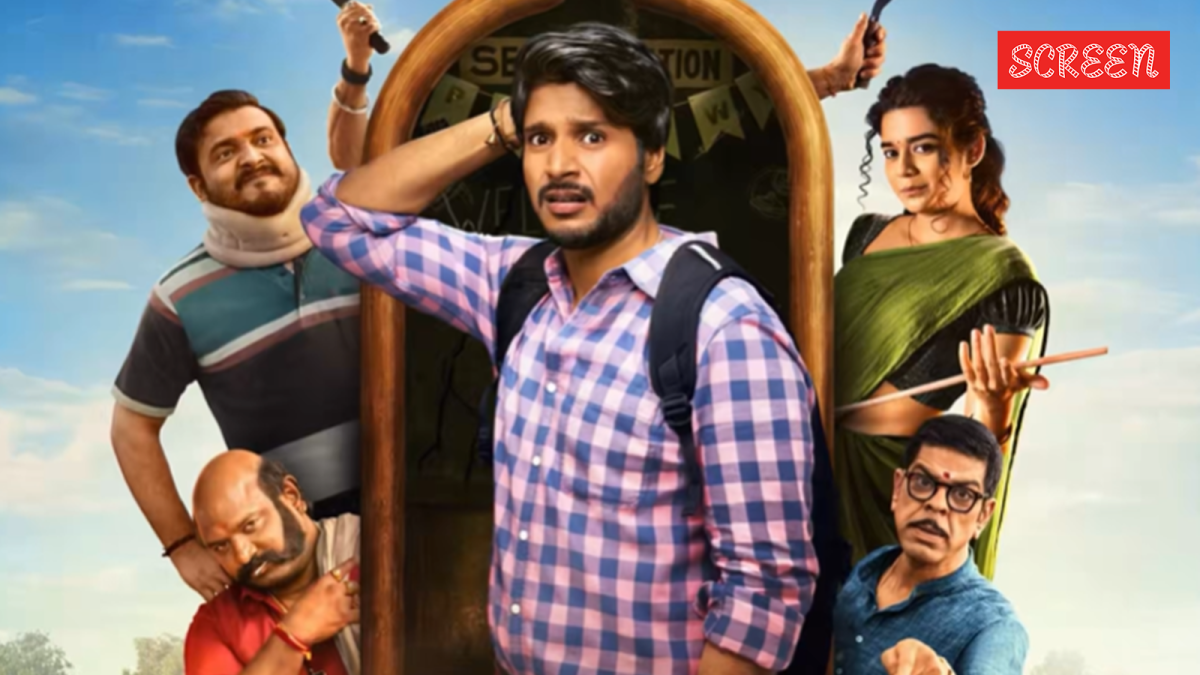
Super Subbu: An engaging rural dramedy

Creator and director Mallik Ram does a fine job in exploring the importance of sex education with a mix of humor and sensitivity. The characterization of Sundeep Kishan’s Subbu from a insecure young man to finding courage is a major strength of the show. The series also throws light on so called cultural beliefs dictating gender roles. Mithila Palkar as an aspiring actress is also wonderful giving solid support to Sundeep, she particularly shines in an audition sequence.

Starcast: Sundeep Kishan, Murali Sharma, Mithila Palkar, Getup Srinu, Jeevan Kumar, Sampoornesh Babu etc

Genre: Dramedy

Creator and director: Mallik Ram

Writers: Ramesh Eligeti and Shivani Dhobal

Producers: Rajiv Chilaka and Bharath Laxmipati

Production house: Chilika Productions

Cinematography: A J Aaron

Music: Anudeep Dev

No of episodes: 7

Streaming site: Netflix

Humor as a genre is a very potent tool for exploring certain so-called taboo topics. Super Subbu streaming on Netflix is a solid example of this. The series blends social message with chuckle worthy moments. This is a tricky balance to achieve, but Maliik Ram along with the writers do a fine job for most of the duration. Sure, there are certain subplots which needed better writing, the romantic thread between Sundeep Kishan and the fiancé played by a charming Manasa Choudhary is severely undercooked. Having said that Super Subbu is very much worth binging for the performances and its social undertones.
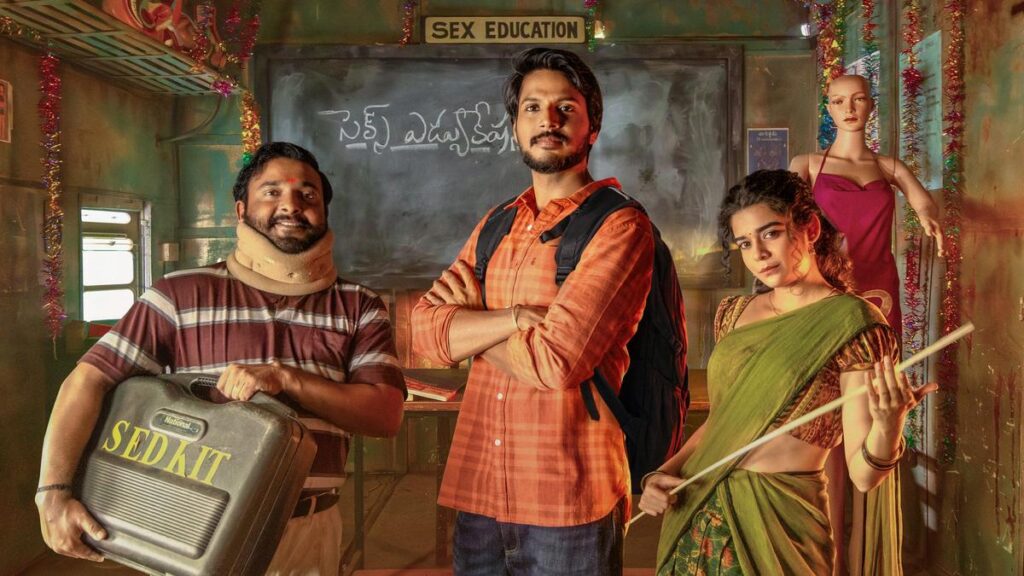
The story of SS follows the journey of Subramanyam Chilukuri akka Subbu (A solid Sundeep Kishan). He is posted to a remote Telangana village called Makhipur. Subbu ha a precarious task of educating villagers on matters related to sex. Running parallel to this is Subbu’s troubled equation with Murali Sharma’s Kukkuteswar Rao. Kukkuteswar Rao is an authoritarian father cum teacher. He has a very dismissive towards sex education. In his own words its “pure unadulterated nonsense”. Subbu has a hard time in keeping the nature of his job a secret. How Subbu eventually finds acceptance among the villagers as well as his coming of age forms the core of Super Subbu.

The texture of Super Subbu bears a striking resemblance to both Vicky Donar as well as the Panchayat web series. Much like the latter here too the protagonist comes under the category of a reluctant hero. A young man forced to do something which he doesn’t like but eventually finds a sense of belonginess. The humor too has shades of Vicky Donar, still SS is very much its own beast, and this majorly comes from the village of Makhipur.

Mithila Palkar’s Swathi makes a key difference. Her dynamics with Sundeep Kishan and their blossoming love story gives the show some of its best moments. Mithila aces the Telangana dialect coming up with a solid act. Two scenes deserve a specific mention. One is an audition portion where she is enacting a dramatic moment, the other one is Swathi questioning her father’s patriarchal attitude in a poignant emotional sequence. In both these sequences Mithila is first rate. She also shares a nice chemistry with Sundeep.

However, the shows’ beating heart is the characterization of Subbu and the social issues woven around it. Maliik Ram and the writers have done a fantastic job in tackling themes not often seen in mainstream cinema. Through the journey of Subbu the makers have dwelt into protected sex, family planning, menstrual health and a woman’s wellbeing, all these have been seamlessly integrated making the series thoroughly engaging.

A pop culture reference to Pawan Kalyan’s Vaakel Sab with a no means no has also been excellently used. It becomes a tool of mini revolt for the village women when they don’t want to engage in sex with their husbands. An underlining theme of consent being important has come out well

The characterization of Subbu as already said is a major plus, Subbu is someone who starts off as an indifferent educator. He just wants to make an exit out of Makhipur as soon as possible. But as Subbu witnesses the challenges faced by these women especially in the matters of intimacy and childbirth he genuinely starts to care. Sundeep is first rate in capturing this transformation. The actor also does a fine job in capturing the insecurities of a son living under the shadows of an overbearing father.

Murali Sharma as the terrifying father figure brings in both authority and humor in equal measures. He particularly shines in the scenes of showcasing Kukkuteswar Rao’s discomfort with the topic of sex. Among the rest Getup Srinu as Subbu’s subordinate and ally makes a significant impact with his comic timing. Jeevan Kumar in the role of a principal antagonist brings in an intimidating presence.
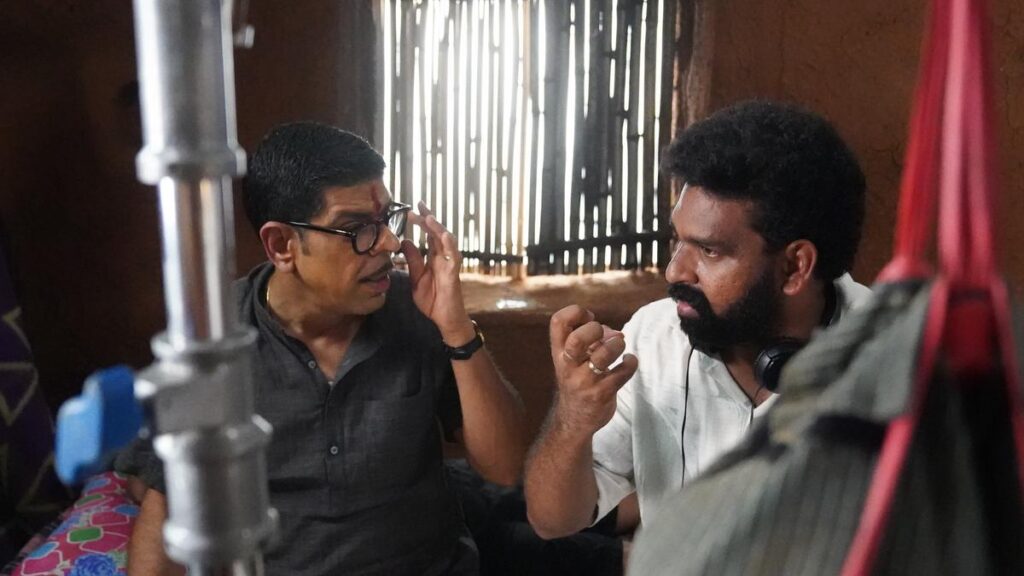
AJ Aaron captures both the earthiness and the vibrancy of Makhipur in a solid manner. Anudeep Dev’s music on the other hand compliments the journey of Subbu well.

Final word: Super Subbu is indeed a job very well done. For fans of rural dramedies this show is very much worth binging on.


Enola Homles 3: A strong anti-colonial thread in a muddled thriller

The third part of this enjoyable franchise has a strong-willed protagonist and a villain modeled on Robin Hood. As an investigative thriller the film lacks the required finesse. There are stretches with the detective elements taking a complete backseat. Having said that the romantic subplot coupled with the political intrigue makes it an enjoyable watch

Starcast: Millie Bobby Brown, Henry Cavil, Louis Patridge, Helena Bonham Carter, Sharon Ducan Brewster and others

Genre: Mystery

Director: Philip Bartani

Screenplay: Jack Thorne

Based on: The novel Enola Holmes Mysteries by Nancy Springer

Producers: Mary Parent, Millie Bobby Brown etc

Production Houses: Legendary Entertainment and PCMA Productions

Cinematography: Matthew Lewis

Running time: 1 hour and 50 minutes

Streaming site: Netflix

Enola Holmes films holds a unique space for its portrayal of feminism in a detective genre. Through the three movies we have a female protagonist going beyond the archaic traditions. In the first two films the viewers saw Enola embarking on various adventures and gradually coming out of her brother Sherlock’s shadow. By the time we come to this part Enola has firmly established her identity as acknowledged by her brother in the closing portions. EH3 is set around the sudden disappearance of Sherlock during Enola’s wedding day. The story in simple terms is about how Enola rescues Sherlock while learning the delicate balance between love, family and a sense of purpose. A political thread running simultaneously is colonialism and how this forces some to become extremists.

A strong aspect of EH 3 is the characterization of actor/producer Millie Bobby Brown. Her character comes with different shades in comparison to the previous ones. Yes, Enola is no longer the impulsive teenager out to prove a point. She has earned respect with her intelligence and courage. Having said that adulthood comes with its own things. Enola’s struggles of balancing her fiercely independent nature, while wanting to settle down with Louis Patridge Tewkesbury gives EH3 some of its best moments. Millie Bobby Brown nails the conflicting emotions making Enola’s coming of age an enjoyable journey.

Louis Patridge as Tewkesbury isn’t reduced to a bystander at any moment. He gets a solid arc of his own especially a crucial revelation about his father’s dark side. The romantic scenes between him and Millie Bobby Brown have some lovely moments with good depth. In short Louis Patridge gives major boyfriend goals with his portrayal of steadfast love.

The dynamics between Sherlock and Enola has also been well done. The climatic portion of Sherlock finally acknowledging Enola as his equal with some heartfelt dialogues pack a solid punch. Henrey Cavil makes a strong impact in this particular stretch.

Another interesting aspect of EH 3 is the political subplot spun around the investigation. Sharon Duncan Brewester playing Moriatary isn’t your stereotypical villain. Her villainy stems from anger towards class privilege and imperial injustice. Yes, Moriatary is ruthless and not likeable having said that her distaste towards colonialism has some valid points.

A major problem with EH 3 is the familiar technique of Enola speaking to the audiences. There was a certain novelty to this technique in the first two parts but here it comes across as laborious. Another issue with EH 3 are the underwritten detective portions.

The juggling act of romantic thread with Enola’s investigation doesn’t blend seamlessly. As a result, the eventual solving doesn’t hit the required high notes. Equal focus on both with a different running time would have benefitted EH 3 more.

Final word: Keeping aside the flaws Enola Holmes 3 makes for a fun weekend watch with a strong feminist aspect.

Maa Behen: A strong feminist core elevates this uneven ride

Director Suresh Triveni succeeds in subverting the usual trope of motherhood. Madhuri Dixit’s Rekha is someone who is unapologetic about her choices. The film does a fine job in exploring a certain gossip culture and society’s judgmental tone. Maa Behen is at its strongest when it focuses on the family dynamics and the evolving bond between the three female protagonists. Not everything lands but Maa Behen makes for an entertaining feminist thriller.

Starcast: Madhuri Dixit Nene, Tripti Dimri, Dharna Durga, Ravi Kishan, Arunoday Singh etc

Genre: Thriller/comedy

Direction and story: Suresh Triveni

Additional story and writer: Pooja Talani

Music: Akshadeep Sengupta

Cinematography: Anuj Rakesh Dhawan

Producers: Vikram Malhotra and Suresh Triveni

Production Companies: Abundantia Entertainment and Opening Image Films

Running time: 2 hours and 7 minutes

Streaming site: Netflix

Indian Cinema has a major tendency of putting mother figures on pedestal. They are presented in a stereotypical manner with no desires of their own in general. Suresh Triveni’s Maa Behen is radically different in its presentation; he is also helped by an uninhibited Madhuri Dixit Nene having an absolute ball. As a film Maa Behen bears a striking resemblance to the 2022 movie Darlings. Just like that movie here too is there a mixture of crime with dark humor. The theme of female autonomy also has a striking parallel. Having said that Maa Behen comes with its distinct identity.

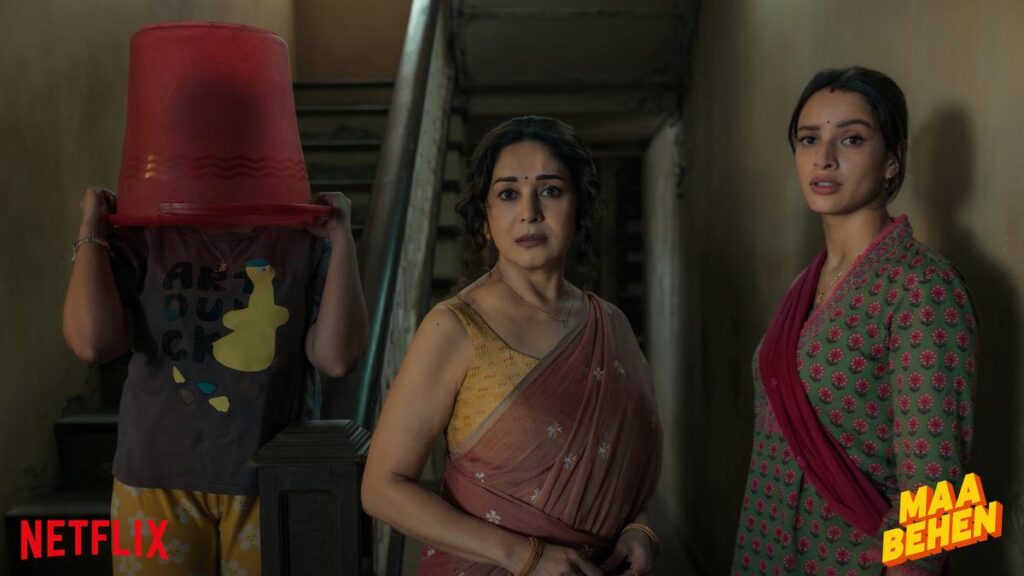
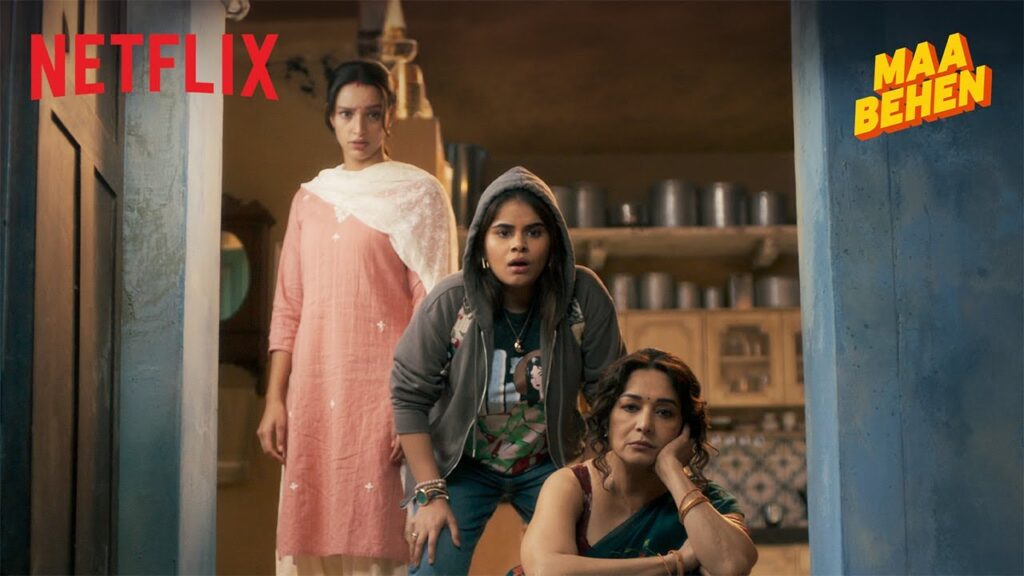
The story of Maa Behen focuses on a non-confirming widow Rekha (a magnetic Madhuri Dixit) Rekha has a certain reputation of being Adarsh Colony’s Daayan because of her lifestyle. Tripti Dimri and Dharna Durga play Rekha’s two daughters. Tripti’s Jaya is stuck in an oppressive marriage, the younger sister on the other hand is an aspiring social media influencer going through her own share of societal judgments. The film takes a dramatic turn with the suppose dead body of Ravi Kishan’s Gupta Ji in Rekha’s house. Rekha calls her two estranged daughters and what follows is a lot of chaos with female bonding

A strong aspect of Maa Behen are its social themes explored through the three women. All the three have important arcs and this makes the movie engaging even when the screenplay get into a major tangle. For example, Tripti Dimri’s character represents the emotional suffering of numerous housewives. There is a lot of pent-up anger coupled with a strained mother and daughter relationship. The sequences between Tripti and Madhuri Dixit gives Maa Behen some of its best moments. As expected Tripti pulls off Jaya’s frustration as well as her rebellion in a solid manner. Her confrontation scene with a suitably despicable Shardul deserves a special mention.

Dharna Durga too makes her presence amply felt. In spite of sharing screen space with the likes of Madhuri Dixit and Tripti she does a wonderful job in conveying a young woman’s yearning for love. Yes, the character’s emotional wounds needed better exploration, but Dharna Durga does a very fine job, nevertheless.

Ravi Kishan’s Gupta ji is another interesting character worthy of mention. His character begins off as a seemingly ordinary neighbor, but the film throws a major surprise in the third act. The gradual unraveling of Gupta ji’s different layers makes the women’s fightback all the more engaging. Arunoday Singh as a police officer and Jaya’s friend brings in the required tension especially in the films latter stages.

Madhuri Dixit though is the emotional anchor of Maa Behen. Her part is a mix of vulnerability and quiet resilience, and the veteran actress is successful in unleashing a different shade of her. Suresh Triveni along with Pooja Talani explore the pedestal of imposed motherhood through Rekha in a successful manner. The small-town setting of Adarsh Colony with the running commentary of Shrivardan Trivedi presents an important social layer of self-appointed moral custodians.

Some of the flaws in Maa Behen include the tonal shift which needed better handling. Also, Guptaji’s family not panicking much and carrying on with the daughter’s wedding celebrations as if nothing has happened feels odd. Also, more groundwork could have been laid for the sudden twist in Guptaji’s character. Lastly Geetanjali Kulkarni as Gupta’s wife needed more heft in terms of charcterization.

Final word: There is no denying that Maa Behen could have been tighter with a more fleshed out screenplay. Nevertheless, for fans of feminist stories this makes for a good watch.

Kartavya: Familiar but an important crime thriller/drama

Kartavya written and directed by Pulkit does fall into a tangle with its multiple themes. There is a rushed treatment to the proceedings, nevertheless Kartavya does make for a gripping watch especially the dilemmas faced by Saif Ali Khan’s SHO Pawan Malik. The references to Abhimanyu and Arjuna from Mahabharata does add an interesting dimension.

Starcast: Saif Ali Khan, Sanjay Mishra, Zakir Hussain, Rasika Duggal, Manish Chaudhari, Saurabh Dwivedi etc

Genre: Thriller/drama

Writer and director: Pulkit

Cinematographer: Anil Mehta

Producer: Gauri Khan

Production Company: Red Chillies Entertainment

Running time: 2 hours and 27 minutes

Streaming site: Netflix

The story of Kartavyaa begins on the 40th birthday of Saif Ali Khan’s Pawan Malik. It starts off as a moment of fun camaraderie, a celebration among fellow police men. But soon things take a dramatic turn with the journalist being shot under the vigil of Pawan. This leads to several developments the details of which cannot be revealed here. The movie juggles between the different pressures faced by both Pawan both professionally and personally. Some of the themes explored are caste, abuse of law, the regressive notions of khap panchayat among others

A strong aspect of Kartavyaa are the mythological references. There are numerous dialogues where Pawan compares his situations to Abhimanyu in the Chakravyuh. Later on, there is a parallel to Arjuna’s dilemma’s well. This particularly comes out in connection to the regressive father played by a terrific Zakir Hussain. Harihar is a deeply entranced casteist with fixed notions of so-called societal boundaries. Pawan’s simmering anger and the confrontation scenes with Harihar gives the movie some of its best moments.

The significant role of Khap panchayat’s ideology serving as self-appointed moral custodians has also come out in a disturbing manner. Yes the topic of honor killings has been addressed numerous times in movies but that doesn’t take away its significance in any way. The scenes have a realistic feel sending a chill down the viewers spine.

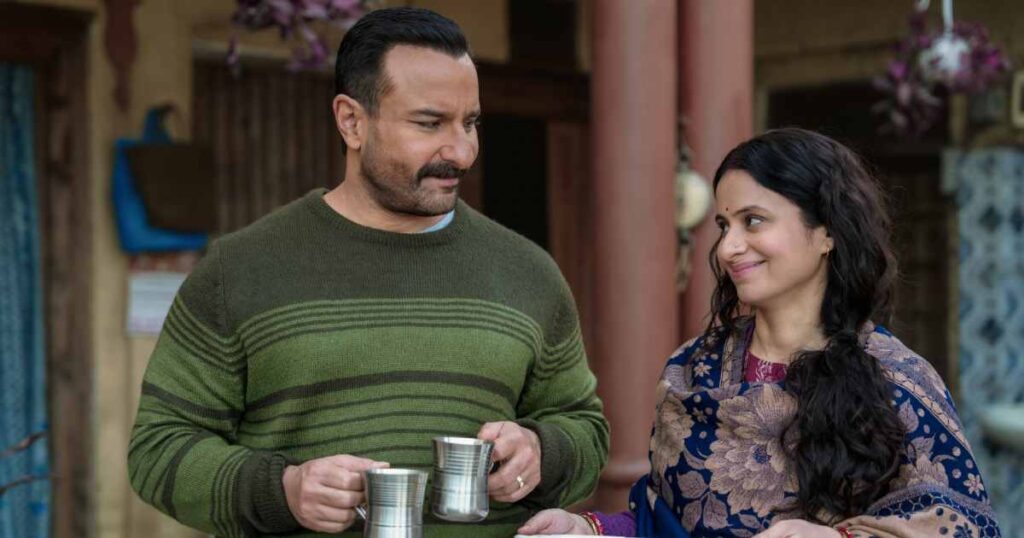
Rasika Duggal as the homemaker trying to keep things together has a lovely presence. Her scenes with Saif come across as a much-needed breather amidst the tense scenarios. A particular mention must be of the portion where she jokes about Pawan’s smoking while in tension. Some of the other lighter moments include in house references to Shah Rukh Khan as well as Pawan comparing his dad to late Amrish Puri.

Sanjay Mishra as the weary constable is another big asset of the movie. The scenes of on screen friendship between him and Saif has some nice touches. However, an important twist related to his character can be seen from miles.

The corrupt godman and child abuse angle comes with Saurabh Diwidi and Yudhvir Ahlawat. Yudhvir in particular is very effective in the breakdown scenes with Saif. However, Saif Ali Khan is the major glue holding Kartavya together. Saif brings a simmering anger to Pawan, a certain exhaustion both professionally and personally but still a strong fighting spirit has been excellently portrayed by the actor.

As already mentioned Kartavyya does stretch itself a little too far with the themes it wants to explore. As the result there is a sense of incompleteness. A web series along the lines of Sacred Games or Paatal lok would have been a better option.

Also, Kartavyya suffers from a somewhat glossy look. There is a polished feel to the cinematography of Anil Mehta making it a bit distracting.

Final word: Kartavya is worth watching for those who like slow burn thrillers and if you are an admirer of Saif Ali Khan.

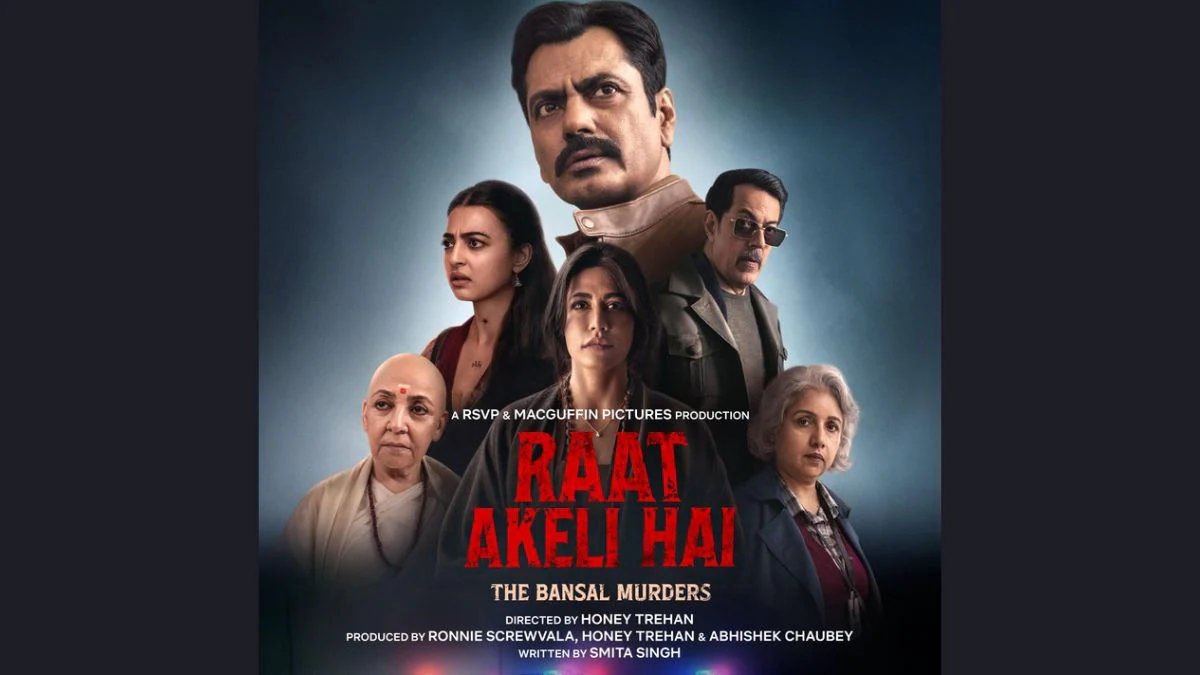
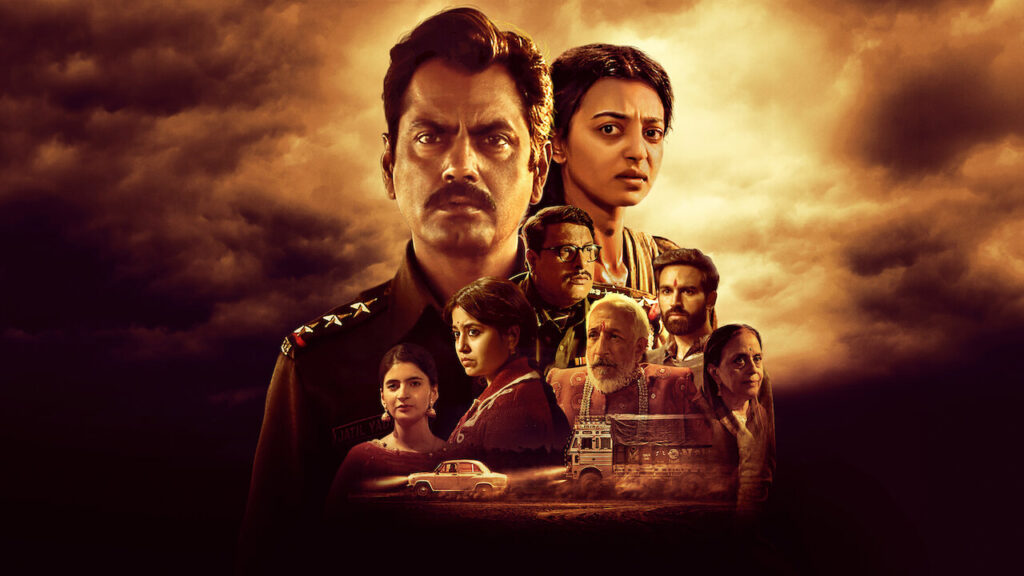
Raat Akeli Hai(The Bansal murders): A competent whodunit with strong social themes

Honey Trehan’s second in the series doesn’t quite hit the high notes of the previous one: nevertheless, the movie is a gripping watch especially in its treatment of human greed and systemic corruption. Honey Trehan along with Smita Singh also touch upon on industrial pollution and a certain apathy for environment

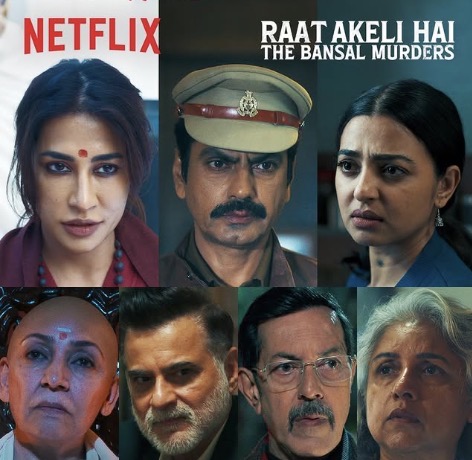
Starcast: Nawazuddin Siddiqui, Chitragandha Singh, Deepti Naval, Revathy, Sanjay Kapoor and others

Genre: Thriller

Director: Honey Trehan

Writer: Smita Singh

Cinematography: Sirsha Ray

Producers: Abhishek Chaubey, Ronnie Screwala etc

Production companies: RVSP Movies and Macguffin Pictures

Running time: 2 hours and 29 minutes

The first Raat Akeli Hai released in 2020 was a compelling murder mystery as well as a social thriller. Through a murder mystery the plot explored the themes of women’s bodies controlled by patriarchy and how their autonomy both sexual and emotional are treated as sins: the institution of marriage being more of a transaction among others. Raat Akeli Hai (The Bansal Murders) follows a similar pattern in the way it combines a whodunit with social elements.

Raat Akeli Hai first part

The storyline of Raat Akeli Hai (The Bansal Murders) takes the viewers right into the thick of action. A wealthy and well-connected family is massacred to death. The crime is meant to be easily solved by the higher officers with a quick culprit fixed: however, Nawazuddin Siddiqui’s Jatil Yadav believes that there is more to what meets the eye. There are multiple skeltons in the closet. Secrets which are meant to be buried and not solved. The rest of the story is about the multiple suspects and the whys and how’s of the case.

A strong aspect of Raat Akeli Hai (The Bansal Murders) is its treatment of multiple layers. The suspects have been written with enough care. This particularly holds true of Chitragandha Singh. She is one of the four survivors. Chitragandha’s Meera is an ambiguous woman with deep bitterness. Meera covers this deep resentment under the guise of spirituality. Chitragandha aces the part with the required mysteriousness keeping the viewers guessing about her motivations.

Screenshot

Deepti Naval plays a supposed preacher moddled on fake godmen. This character is reminiscent of movies and web featuring fake babas exploiting people’s vulnerabilities. There is nothing particularly new here, but the senior actress plays her role with the required charm.

Mention must also be made of Sanjay Kapoor as a relative. His eyes are set on the fortunes of Bansali family. Both the character and the actor don’t come across as a stereotypical villain. There is a casual entitlement wonderfully portrayed by the actor. His role and the track cover the theme of moral shortcuts justified in the name of lineage.

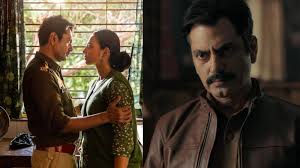
There is no denying that Raat Akeli Hai (The Bansal Murders) suffers somewhat on the pacing front. The first part had a tight structure with not much meandering. The second one though needed more crispness. The portions involving Rajat Kapoor and Akhilendra Mishra overstay their welcome. The same applies to the track involving the nitty gritty of forensics. Radhika Apte has an extended special appearance meant to show a personal side of Jatil Yadav. These scenes have some nice touches but in the bigger picture the track doesn’t contribute much. Proceedings stagnate for a while: thankfully though the movie regains lost ground when the focus shifts to environmental destruction.

The themes of industrial pollution and a certain apathy towards environment has come out well. It makes the viewers ponder about where we are heading. Most importantly Honey Trehan and Smita Singh do a good job in linking these portions with the main murder plot. Special mention must also be made of the scenes featuring Revathy as a forensic expert. She plays a moral counterpart to Jatil Yadav’s superiors. The scenes featuring her and Nawazuddin gives the movie some of its best moments.

As Jatil Yadav Nawazuddin Sidddiqui successfully takes off from the first movie. He plays the determined cop with his trademark gravity. He especially shines in the scenes of the character finding itself at crossroads torn between the pressures of institution while listening to his personal consciousness.

Among the technical departments Sirsha Ray’s cinematography is suitably eerie. The cinematography helps in building up a mysterious atmosphere.

Final word: Raat Akeli Hai (The Bansal Murders) is a competent follow up. For fans of murder mysteries with social angles its very much worth watching.

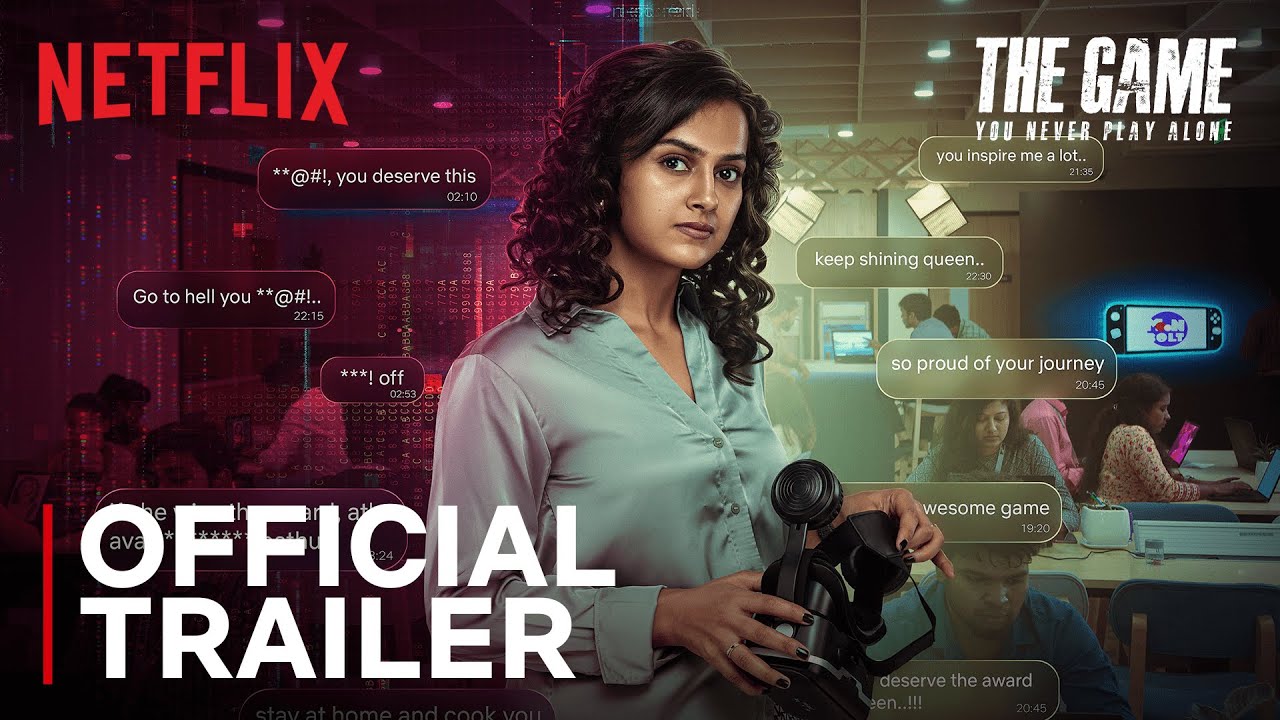
The Game (You Never Play Alone): An important cautionary thriller led by a brilliant Shraddha Srinath

Rajesh M Selva’s The Game (You Never Play Alone) has a strong beginning keeping the viewers invested for 2 thirds of the narrative. Things though start stagnating from the middle episodes with underdeveloped villains and also the gaming portions. Nevertheless, this Tamil web series throws light on important issues like data tracking and how technology in the wrong hands can be a very harmful tool. It also helps that Shraddha Srinath is in excellent form getting into the skin of the role

Starcast: Shraddha Srinath, Santhosh Prathap, Chandini Tamilarasan and others

Genre: Thriller/drama

Writer: Deepthi Govindarajan

Director: Rajesh M Selva

Music: Simon K. King

Cinematography: Akilesh Kathamuthu

Producers: Sameer Nair and Pramod Cheruvalath

Production Company: Applause Entertainment

No of episodes: 7

Streaming site: Netflix

The growing age of technology is both a Boone and bane for the current times. In one way technology has made our lives easier in connecting with people far away and also the vast information helping in increase of our knowledge. However, this massive digital age also comes with major side effects. One of this includes losing connect with the real world and also data impeachment. Numerous movies have come on this topic whether its the 2010 American Drama The Social Network or the two Ananya Pandey’s starrers Kho Gaye Hum Kahan and CTRL. The Game (You Never Play Alone) is the latest addition to this genre. This Shraddha Sranath starrer is a remake of the French show Le Jeu.

A still from the web series

The broad storyline of this seven-episode show follows the tumultuous journey of Shraddha Srinath’s Kavya. She is a talented game developer alongside her husband Anoop (Santhosh Prathap). Both work at a leading game company called Moon bolt. Their professional lives are going well but Kavya often faces scrutiny on the account of her gender. There is this constant pressure of proving her skills in a male dominated office.

Things take a traumatic turn at an award night. She is attacked by an unknown group of men and is left traumatized both physically and mentally. Chandini Tamilrasan plays officer Bhanumati. She gets deep into the case revealing a series of chilling incidents connected to online abuse and misogyny. Running alongside this is the track of Kavya’s niece Tara. Tara becomes the target of online predators. How all these are interconnected forms the basic premise.

Chandi Tamilrasan as police officer

A strong aspect of The Game (That You Never Play Alone) is the technical department. Cinematographer Akhilesh Kathamuthu does an excellent job in capturing the intensity of urban life as well as the scenes of online harassment. The psychological horror is palpable with appropriately lit frames. Sudharshan’s background music too enhances the tension filled moments. As viewers you feel a certain anxiety on what will happen next especially till the mid part.

Director Rajesh M Selva also deserves credit for how he has explored the topics of social media abuse which includes misogyny along with the challenges faced by women in professional spaces. The last one comes through a jealous colleague. The subplot of the jealous colleague and how this leads to several things is underdeveloped nevertheless the aspect of male ego being hurt is an important one.

The character of Shraddha Srinath coupled with her performance is another major ace especially the emotional parts. The way Shraddha portrays the emotions of resilience, vulnerability and solid inner strength is a delight to watch. She is the glue holding the show even when things start to fall apart.

Santhosh Prathap brings in a certain warmth as a husband who stands tall with Kavya in spite of some tensions in the marriage. The tender moments between the two are a delight to watch with Anoop giving major husband goals. Chandini Tamilrasan too does a fine job in balancing professional diligence with empathy. This trio play a crucial role in making the show engaging.

A tender moment between the two

As already mentioned The Game (Which You Never Play Alone) keeps the viewers invested for 2 thirds. However, things start stagnating while exploring the motives of the villain gang. This track needed more solid writing. As a result, the built-up tension somewhat dilutes. Also the gaming background needed more depth.

There is a surface level treatment with the glossy backdrop. More insight into the functioning of the gaming world would have enhanced the proceedings. These two aspects stop the show from soaring higher.

Final word: In spite of a muddled second act and a tame climax The Game (Which You Never Play Alone) makes for an important watch especially for those who are into digital thrillers.

The Ba***ds of Bollywood: Aryan Khan hits a sixer

Director Aryan Khan delivers a delightful whimsical ride backed with strong satire. The debut director doesn’t spare anyone, and this includes events from his real life too. It’s clear that Aryan has all the trappings of a successful mainstream director. He deserves appreciation for choosing an unconventional route when he could have easily been launched as a leading man

Starcast: Lakshya Lalwani , Raghav Juyal, Bobby Deol, Sahher Bambaa, Manoj Pahwa, Mona Singh, Anya Singh, Rajat Bedi, Manish Chaudhari and others

Genre: Satire

Creator, director and writer: Aryan Khan

Additional writers: Bilal Siddiqui and Manav Chauhan

Producer: Gauri Khan

Executive producers: Bonnie Jain and Akshat Verma

Production Company: Red Chilies Entertainment

Music: Sashwat Sachadeva and Anirudh Ravichander

Cinematography: Jay Pinak Oza

No of episodes: 7

Streaming site: Netflix

The Ba***ds of Bollywood directed by Aryan Khan could have been a feature film instead of a web series. The plot is hardcore masala with comedy, action, star crossed lovers and a mind-boggling twist that is sure to leave the viewers polarized. Much like Zoya Akhtar’s Luck By Chance The Ba***ds of Bollywood is a percipient take on the starry world of Bollywood. However, this goes a step ahead in dealing with the insider outsider debate, exploitative producers and the uncertain nature of fame among others.

Aryan Khan makes a smashing debut

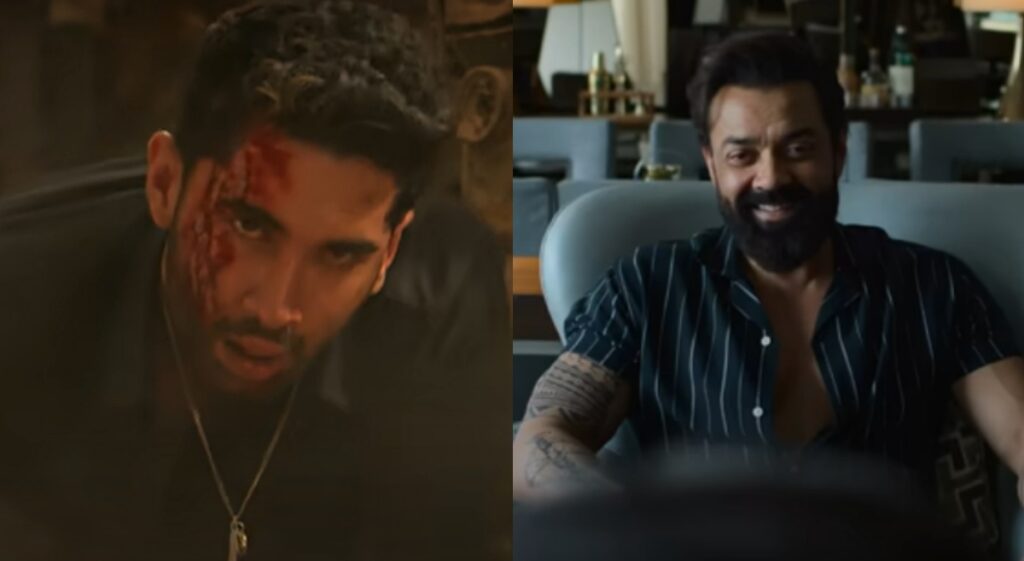
The broad storyline of this web series revolves around Lakshya Lalwani’s Aasmaan Singh. An outsider with big dreams. His debut becomes a major hit making him a sensation. Soon, things start getting complicated. The web series focuses on how Aasmaan navigates this starry and unpredictable world with the help of a loving family. Raghav Juyal plays Aasmaan’s buddy and an important anchor. Anya Singh on the other hand is the loyal manager. Bobby Deol plays a huge star who isn’t happy with his daughter Karishma (Sahher Bambaa) getting close to Aasmaan and vice versa.

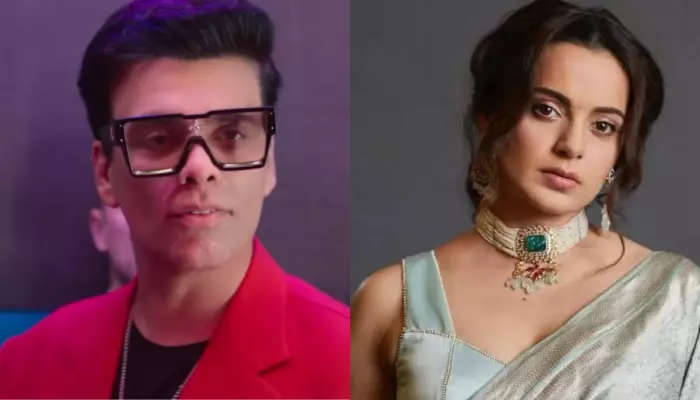
A strong aspect concerning The Ba***ds of Bollywood is the self-aware and whimsical tone. The web series is peppered with numerous real-life scenarios. For example, there is a newcomer’s roundtable clearly modelled on the 2019 Rajeev Masand’s Actors roundtable. There is a cheeky node to Siddhanth Chaturvedi roasting Ananya Pandey. Similarly, one of the extended cameos features Karan playing a movie mafia version inspired from Kangana Ranaut’s comment.

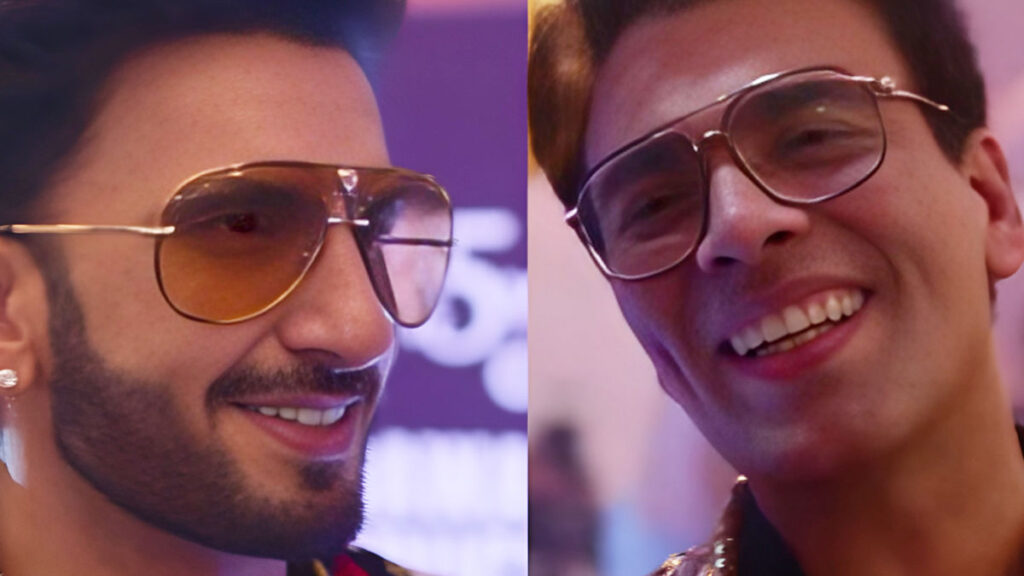
There is a hilarious banter between Ranveer and Karan connected to Rocky Aur Rani Ki Prem Kahani. Karan talks to Ranveer about giving him a hit. Ranveer on the other hand replies back by saying he carried the movie on his shoulders.

Emraan Hashmi turns up as an intimacy coach, it’s a tip off to the actor’s famous real-life image. Raghav Juyal’s reaction on seeing Emraan is priceless. He bursts into an emotional state singing Emraan Hashmi’s famous songs. Emraan’s bewilderment on how to deal with this fan boy moment coupled with Raghav’s acting is brilliant.

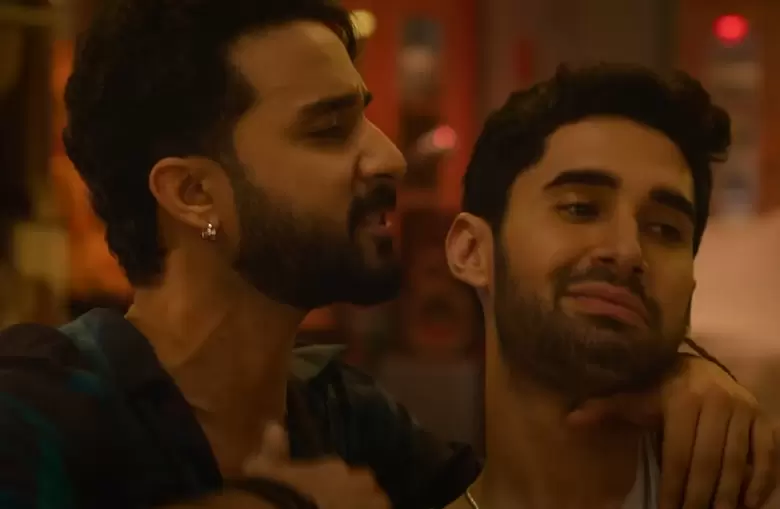
Arshad Warsi as Gaffor Bai is used to represent the role of Mumbai underworld. The actor raises many chuckles with his acting. Above all Aryan Khan doesn’t spare himself either. You have an officer who is moddled on the Narcotics Control Bureau (NCB). In one scene Aasmaan is locked up in a jail and a cop says people get more famous after going in. After last years negative role in Kill Raghav showcases a different facet of himself. As Aasmaan’s buddy the actor lights up the screen with his effortless acting. He shares a wonderfulcamaraderie with Lakshya making their scenes a major highlight of the show.

Mention must also be made of Sahher Bambaa’s Karishma. The young actress brings in a certain vulnerability and a humanness making the character likeable in spite of the privileged background. The love angle between Aasmaan and Karishma is underwritten still the two young actors share a good chemistry.

What also grounds the show amidst the starry cameos and larger than life world is the family dynamics. Apart from Raghav Anya Singh also lends gravity as the loyal manager. The way she stands by Aasmaan in spite of the numerous hurdles is brilliant to watch. Similarly, Mona Singh and Vijayant Kohli as parents are also wonderful. Their conversations with Lakshya have an emotional resonance, especially the advice given by the father on never backing down. Manoj Pahwa as Aasmaan’s uncle also touches a chord with his own backstory.

The web series also looks at the unpredictable nature of show biz with Rajat Bedi’s Jaraj Saxena. On the surface the character may across as a comedic caricature. But there is a palpable pain as well and Rajat aces it.

Lakshya as the shows center pivot perfectly captures the different shades of Aasmaan. He brings alive the determination of Aasmaan along with a certain cheeky and arrogant nature. There are certain shades of Shah Rukh Khan in the way Aryan along with Bilal Siddqui etc have written the role. Lakshya also does very well in an important emotional outburst.

As one of the primary villains Bobby Deol packs a strong punch too. He brings in both a starry aura as well as solid acting in this multifaceted role. Manish Chaudhari also succeeds in bringing the required ruthlessness along with a misogynistic nature.

The music composed by multiple people goes perfectly well with the show’s eccentric tone. Special mention must be made of the tracks Rusiya and Who’s your Daddy.

Final word: Overall it’s a web series that Shah Rukh himself would have loved to either act or direct. Must be a proud moment for the father.

Aap Jaisa Koi: Feminism wrapped in romance

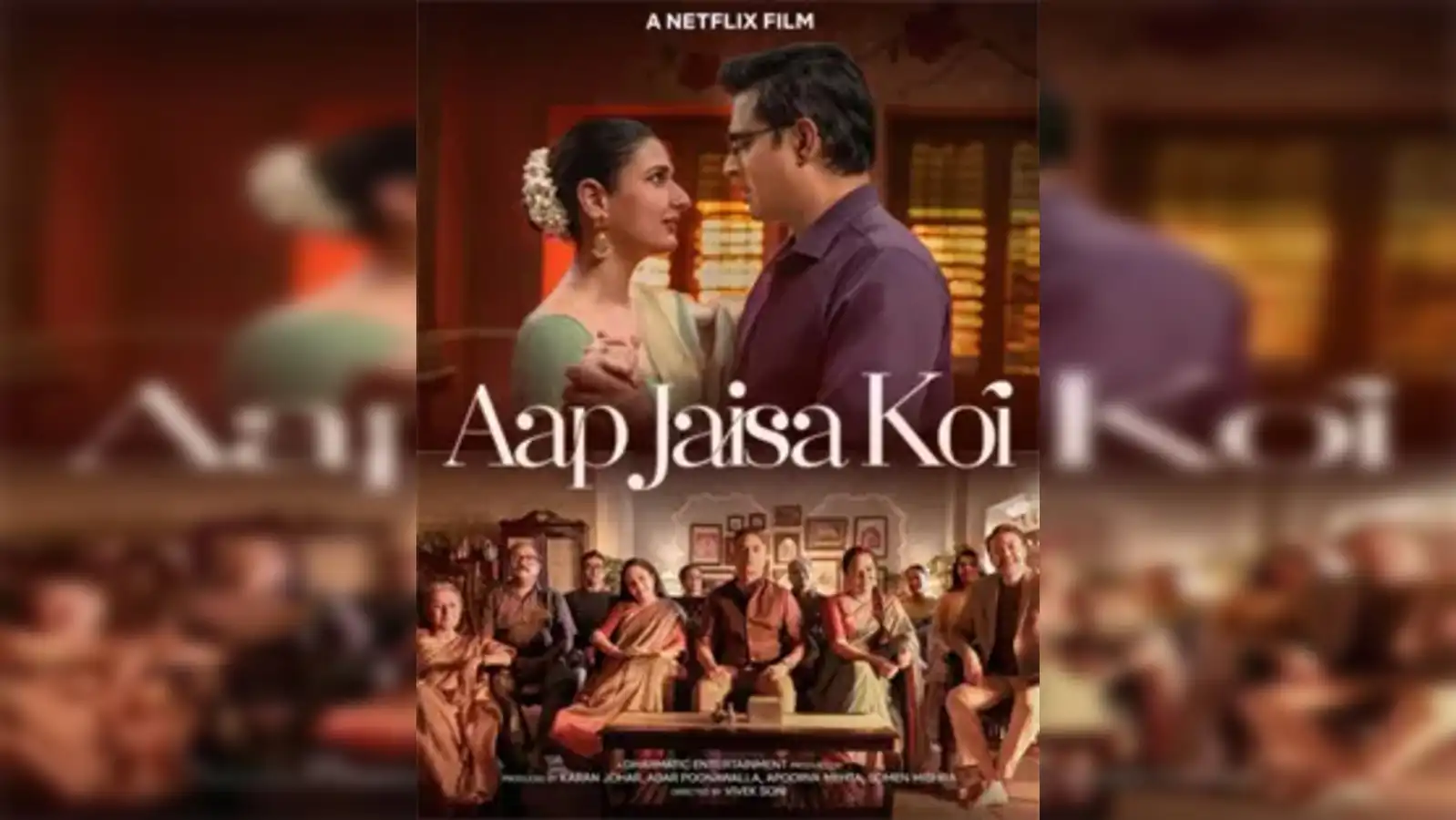
R Madhavan and Fatima Sana Sheikh in Aap Jaise Ko

Director Vivek Soni takes the classic trope of gradual love in an arranged marriage to deliver stinging lessons on patriarchy. Men who appear to be modern on surface but actually placing themselves in authority. Vivek Soni along his writers do a fine job in calling out the double standards particularly in matters related to sexuality and desires

Starcast: R Madhavan, Fatima Sana Sheikh, Ayesha Raza, Namit Das, Manish Chaudhary and others

Genre: Romance

Director: Vivek Soni

Writers: Radhika Anand and Jehan Handa

Producers: Karan Johar, Somen Mishra, Aadar Poonawala etc

Production Company: Dharmatic Entertainment

,Music: Rochak Kohli and Justin Prabhakaran

Cinematography: Debojeet Ray

Running time: 1 hour and 55 minutes

Streaming site: Netflix

On the surface the plot of Aap Jaisa Koi feels a cross between Karan Johar’s Rocky Aur Rani Ki Prem Kahani and R Madhavan’s own Tanu Weds Manu. Much like Alia Bhatt in Rocky Aur Rani Ki Prem Kahani Fatima Sana Sheikh also plays a fiercely opiniated Bengali here. R Madhavan’s character of a middle aged bachelor has shades of the soft Manu. Thankfully though Aap Jaisa Koi has its own identity specifically the subplot of Ayesha Raza representing the numerous married women facing casual sexism and misogyny and how she breaks out of the conventions by following her heart.

The story of Aap Jaisa Koi primarily revolves around two people belonging to different age brackets as well as varied thought processes. R Madhavan is a 40 plus Sanskrit professor Shrinenu Tripathi. Shrinenu is painfully shy, he hasn’t even kissed till now. In short an absolute virgin becoming the butt of jokes. The friend played by Namit Das introduces him to an anonymous world of chatting with unknown women, the site is Aap Jaisa Koi. The chats in this site have sexual undertones which Shrinenu thoroughly enjoys. Fatima Sana Sheikh is Madhu Bose. a lecturer from Kolkata. Both of them meet in an arranged marriage set up and sparks fly soon. However the path is far from easy. The obstacles are societal expectations and the traditional expectations of gender roles. This is the story in brief.

A strong aspect of Aap Jaise Koi is the integration of different social issues like women’s desires along with the hypocritical attitude of men towards their choices. There is a key scene in the second half where Shrinenu and Madhu Bose have a split when everything is going right, the break up is connected to the dating site. Madhu Bose was also on the same site for a while chatting with many men. Shrinenu considers Madhu Bose a whore just because she chatted with numerous unknown males .The heated dialogues between the two exposes the double standards of men like Shrinenu who think of themselves as progressive but in actuality they are sexist.

In the beginning portions there is a heavy hangover of Manu in R Madhavan’s role but unlike that movie Shrinenu here comes with more shades. Post the bitter break up there are scenes of Shrinenu grappling with prejudices that he has never questioned so far. After a long time R Madhavan has returned back to the romantic set up and the actor is a delight to watch conveying the internal turmoil with just his body language. Fatima Sana Sheikh is confidence personified perfectly embodying the feministic attitude, additionally she looks gorgeous as well in the sarees.

Mention must also be made of Ayesha Raza’s heartfelt portrayal of a woman who hasn’t got the emotional love and often faces casual sexism from her husband. In spite of doing a job from home the husband doesn’t take her seriously, instead Manish Chaudhary’s character thinks that he is doing some favor by allowing her to work. This is where the theme of ingrained patriarchy comes in. This is cycle of inherited attitudes is very visible in Shrinenu’s view points towards Madhu being on Aap Jaisa Koi app. Manish Chaudhary is successful in making the viewers hate him, he perfectly embodies the character’s attitude making the role relatable.

The songs composed by Rochak Kohli and Justin Prabhakaran are soulful too. Jab Tu Sajan and Mila Tujhe stand out among the compositions. Both these numbers perfectly capture the blossoming romance.

Final word: Aap Jaisa Koi is a simple tale with feministic undertones. If you are in the mood for something breezy and are an R Madhavan fan do watch it.

Royals: Superficial fun elevated by some strong performances

Ishaan Khattar and co

Royals directed by Priyanka Ghosh and Nupur Asthana often feels like a cross between the English web series Bridgeton and Shashanka Ghosh’s Khoobsurat. The initial episodes are more of a fizzle than a sizzle but the show does take a turn for the better in the later half particularly for those who like palace politics. Ishaan Khattar as Aviraaj is the series beating heart effortlessly combing swag with emotional depth

Starcast: Ishaan Khattar, Bhumi Pednekar, Sakshi Tanwar, Zeenat Aman, Vihaan Samraat, Chunky Pandey, Dino Morea, and others

Genre: Romance/drama

Directors: Priyanka Ghosh and Nupur Asthana

Writer: Neha Veena Sharma

Creators: Rangita Pritish Nandy and Ishita Pritish Nandy

Producer: Late Pritish Nandy

Production Company: Pritish Nandy Communications

Cinematographer: Nachiket Pangare

Music: Rooh and Joh

Episodes: 8

Streaming platform: Netflix

Ever since its release on May 9th the web series Royals has seen a very mixed response. Some have praised the performances and the visuals. There has also been a lot of criticism due to the hangover of films and web series set in the same space most notably Bridgeton, also the depiction of royal households has come under intense scanner with the members of erstwhile royal families expressing their displeasure. In spite of not so rave reviews Royals has seen a renewal for season 2.

There is no denying that Royals could have done with much more depth in terms of storytelling, a cut down on the glam quotient would have benefited the series immensely. Having said that Royals does make for a good guilty pleasure and the dramatic twist in the finale does set things nicely for season 2.

The storyline of Royals primarily centers on Morapur royal family. They are dealing with problems of various kinds like financial issues and the death of a king. Ishaan Khattar is Aviraaj, a reluctant prince. Aviraaj has no intention of taking over his father’s place but things take a turn where he is left with no other option. Aviraaj path crosses with Bhumi Pednekar’s Sophia. A self made entrepreneur with a fierce attitude. Sophia wants to turn this crumbling palace into something more luxurious. The two share a relationship swinging between hate and love leading to several developments.

A strong aspect of Royals is the production design and the cinematography department. The web series has a very rich look, the visual esthetics are absolutely on point transporting the viewers into the intriguing world of palace politics.

Talking about palace politics every relationship comes here with layers of manipulation and secrets traumas. Beneath the smiles there is a certain calculatedness making it entertaining specifically in the later episodes. At times it can get confusing too however it adds a lot of spice to the proceedings. The one liners is also a big USP of Royals. Numerous dialogues have shades of sarcasm, even when the script fails the conversations do pack a punch.

As already mentioned Ishaan Khattar’s Aviraaj is the beating heart of Royals. The character comes with different shades, on some occasions he comes across as an asshole with princely arrogance. At the same time he is also Chivalrous, this side comes out on more than one occasion in the scenes with Sophia. Ishaan delivers a splendid act embracing the grey shades of the role with panache, with this act he once proves his versatility in picking up different roles and doing justice to them. A particular scene worth mentioning here is the breakdown before the coronation. The best part of Ishaan’s performance is how he expresses the feelings of happiness, sorrow and other emotions through his eyes. Cannot wait to see his act in the upcoming Homebound which has already received great reviews. Apart from Ishaan Khattar Vihaan Samrat as Yuvraj Digvijay also gives solid support with his nuanced act. His character has the most grounded arc and the actor does a very good job. There is an interesting subplot of Digvijay of wanting to prove himself as a chef without the baggage of being a royal family member. Vihaan Samrat does a very fine job specifically in these portions. Mention must also be made of the scene where Digvijay clears the doubts of Aviraaj handling him with the required love.

Ishaan Khattar and Bhumi

Among the ladies Sakshi Tanwar has the meatiest role as maharani Padmaja. In spite of being a maharani Sakshi Tanwar’s character doesn’t come across as a usual rigid queen. The romantic subplot with the dashing Chunky Pandey shows a different facet to her personality. The way Sakshi portrays Padmaja’s need for love and embracing her libido (sexual desire) is a delight to watch. Veteran actress Zeenat Aman starts off promisingly but suffers on the account of a sketchy characterization, nevertheless Zeenat Aman plays her part with flair. Bhumi Pednekar as Sophia is a mixed bag. The actress looks glamorous with those stunning outfits looking every inch a fierce CEO but on the performance front she come across as rather flat with her expressions. She does ace some of the emotional ones like the portion where Sophia is ousted from her position however the consistency is missing. Also she doesn’t look comfortable in the dances with Ishaan, the chemistry between the two is quite underwhelming with Ishaan putting most of the effort.

Sakshi Tanwar and Zeenat Aman

A major problem with Royals is the clumsy treatment of the LGBTQIA+ representation. Milind Soman plays the father of Aviraaj. He is a closeted gay revealed at a crucial juncture. The past of Milind Soman’s character had good scope for emotional drama but the haphazard narration makes it more of a checklist to be added. Even the lesbian track with Kavya Trehan as Yuvarani Divyaranjini is more of an add on for inclusivity than cohesive storytelling.

The show also needed more depth in the writing of secondary characters, Milind Soman is mostly reduced to a wallpaper, the likes of Nora Fatehi and Dino Morea also don’t get much to do coming and going at the scripts convivence.

Final word: Royals makes for a fun watch provided you can get past the initial episodes and not looking for something very deep.

Test: An intriguing character study exploring the themes of morality and ambition

Characters with grey shades always make for fascinating on-screen characters, the reason being many of us have a grey area within us. More often than not a person being good or bad depends on how you react to the circumstances. Sometimes even the purest person can become evil due to an inability to cope with the challenges.

Test directed by S Sashikanth begins with an interesting quote. “A hero will sacrifice the person they love to save the world, but a villain will sacrifice the world in order to save the person they love.” this quote perfectly sums up the core theme of Test. The three protagonists are often pushed to their limits forcing them to choose between morality and self-interest. The plot of Test primarily focuses on three characters from different paths of life, but their journeys get intertwined. Arjun Viswanathan (Siddarth) is a major batsman going through a professional crisis. He is almost at the end of his career. There are huge rumors of him retiring during an important test series against Pakistan. In order to save his career Arjun resorts to media manipulation forcing the selectors to play him. On the other hand, you have R Madhavan’s Saravanan and Nayanathara’s Kumudha. Sarvanan is an MIT scientist struggling to get his project on alternative energy approved, he is also drowning in debt. Kumudha on the other hand is longing to become a mother through the procedure of IVF, but it isn’t happening due to certain problems. As the plot progresses all three characters face life alternating scenarios where their integrities are put at test.

As already mentioned, the movie Test plays along the lines of a five-day test match. A majority of the first half is devoted to establishing the different hurdles faced by the characters. Director S Shashikanth along with Suman Kumar slowly build up the simmering tension particularly the dynamics of R Madhavan and Nayanathara. Towards the end of the first half the movie gets into a thriller mode with the backdrop of match fixing and a crucial change in the character of Sarvanan. From here the graph of the movie becomes more interesting.

R Madhavan and Nayanathara share a magnetic chemistry

A strong aspect of Test is the psychological insight that the director and the writer have given exploring the motivations of the primary characters. This can be particularly felt in the character of R Madhavan. There is an interesting juxtaposition here. Saravanan is someone who is working on a groundbreaking project which could benefit the humanity however he doesn’t have the privileges of Siddarth’s Arjun. The survival struggle of Saravanan and Arjun’s fight for legacy raises interesting questions.

Test also benefits immensely from the on-screen chemistry combined with the performances of Madhavan and Nayanthara. Both the actors share a magnetic chemistry whether it is some of the lovey Dovey moments or the more intense ones when their marriage starts to crumble. R Madhavan as Saravanan delivers a truly scintillating act. The way he goes from loving to slowly grey and eventually psychotic is brilliant to watch. A major reason for the second half turning out the way it does is due to his outstanding act. R Madhavan is truly aging like fine wine proving his versatility with wide range of characters. A specific portion worthy of mentioning here is a slap scene featuring Saravanan and Kumuda. A wide range of emotions are on display ranging from frustration, concern, instant guilt and then regret. This portion itself is a perfect example of why R Madhavan is one of the best actors working in the industry today. Nayanthara as Kumudha also delivers a strong act. The way she portrayals the dual shades of her role the motherly concern for her students by becoming their cheerleader at the same time the grey shades too is a sheer delight to watch.

A lovey dovey moment between R Madhavan and Nayanathara

Siddarth as Arjun though could have done with more intensity. His act is more internalized and does suffer somewhat from weak writing. Having said that Siddarth also gets into his groove when the stakes become very high, and Arjun goes through an emotional upheaval connected to the missing son. Meera Jasmine as Arjun’s wife does a fine job too. The confrontation scenes between the two actors strike the right emotional cord. Having said that here too the writing could have been much better. The subplot of India and Pakistan test match feels like more of an add on and doesn’t add much to the proceedings.

Siddarth as Arjun

The music by Shaktisree Gopalan is a major speed breaker. The songs don’t add much value to the proceedings. However, the cinematography of Viraj Singh Gohli is of a good standard. A particular mention must be made of his work during the emotional scenes.

Final word: Watch Test if you like complex human dramas and of course if you are an R Madhavan fan