
Among the Telugu films released in 2026, Sing Geetham and Rao Bahadur occupy a unique place for their distinctive storytelling. Both films embrace a Broadway-inspired, whimsical style of staging while tackling weighty social issues. Sing Geetham explores themes such as environmental destruction and the exploitation caused by mining, while Rao Bahadur delves into the pressures of lineage, colorism, casteism, and patriarchy. Despite these serious subjects, both films present their narratives through a whimsical lens, allowing their social commentary to emerge organically, particularly for the discerning viewers.
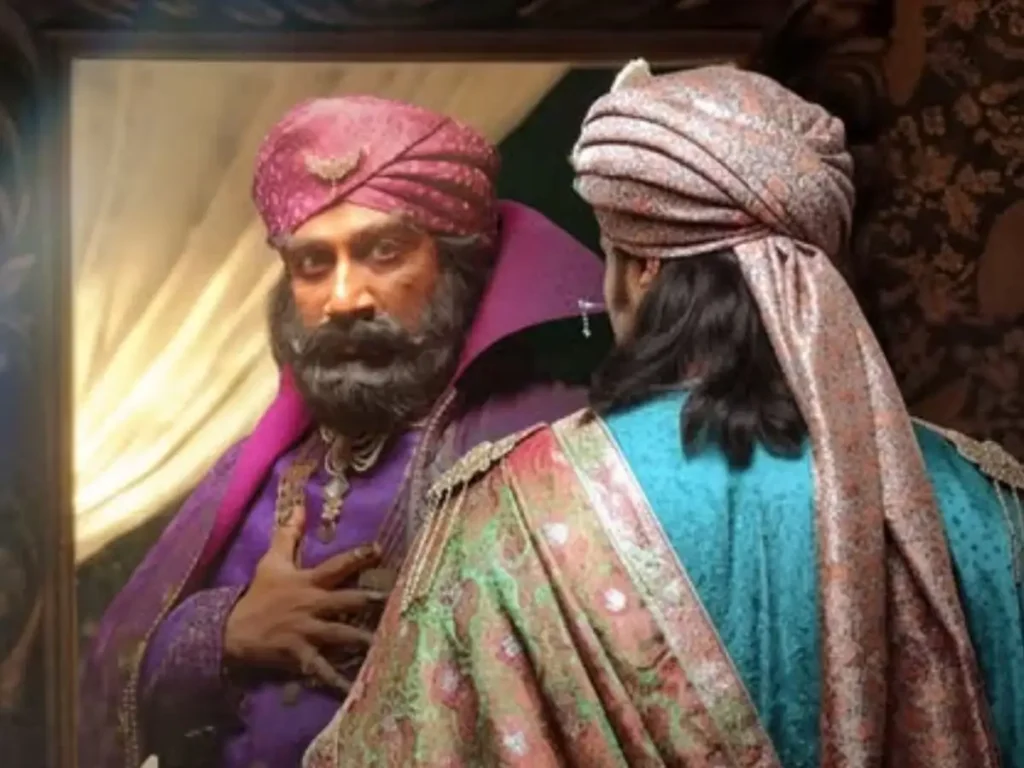
In Sing Geetham, nearly seventy to eighty percent of the narrative unfolds through songs, with characters expressing their emotions musically—whether it is their initial bewilderment, moments of despair, or personal revelations. Several key developments take place within these musical sequences. One such example is the portion where every character speaks their mind without any filters, leading to both humorous and revealing moments. Shalini Kondepudi’s Reenu inadvertently exposes her true intentions to the mining workers, while the male protagonist, played by Ayaan, openly reveals that he has recently come out of jail and discloses the deal he has struck with her, further shocking the villagers.
At the same time, the musical format is also used to create emotionally poignant moments. One of the film’s most moving sequence is a heartfelt plea to the god Kubera, where the villagers acknowledge their mistakes and pray not to be punished any further. The song combines emotional vulnerability with the film’s Broadway style, making the moment especially affecting.

Venkatesh Maha’s Rao Bahadur, on the other hand, is not a full-fledged musical like Sing Geetham. However, its Broadway influence is evident in the staging of several key sequences. The song “Desa Sanchari,” for instance, captures the protagonist’s free-spirited nature before he eventually succumbs to the weight of lineage. Both its melody and visual presentation evoke the feel of a Broadway production.
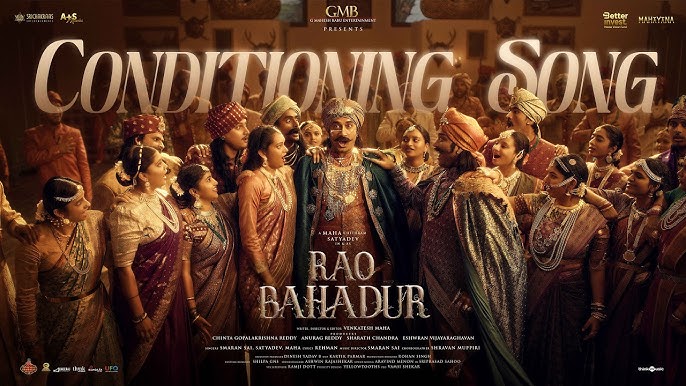
One of the film’s most crucial sequences is the imaginatively staged song “Conditioning.” Here, Venkatesh Maha employs magical realism to powerful effect and even appears on screen as one of the ancestors of Satyadev’s Bhuvana Ramappa Rao Bahadur.
On the night before Ramappa is expected to return, leaving the family lineage without a heir, the spirits of his ancestors gather to devise a plan. Through this surreal musical sequence, they attempt to indoctrinate him into their belief system, ensuring that he carries forward their rigid values.
The song unfolds in a whimsical manner, supported by inventive choreography and striking visual staging. Beneath its playful exterior, however, lies a sharp critique of patriarchal traditions and restrictive gender roles. The sequence perfectly encapsulates the core of Rao Bahadur, using music and fantasy to communicate its social commentary with remarkable effectiveness.
Taken together, Sing Geetham and Rao Bahadur demonstrate the power of unconventional storytelling. Both films use Broadway-inspired staging not merely as a stylistic flourish but as a meaningful narrative device deepening their exploration of social issues. Beneath the whimsical surfaces lie incisive observations on society, proving that fantasy, music, and social critique can coexist seamlessly. The results are two cinematic experiences both thoroughly entertaining and thought-provoking.