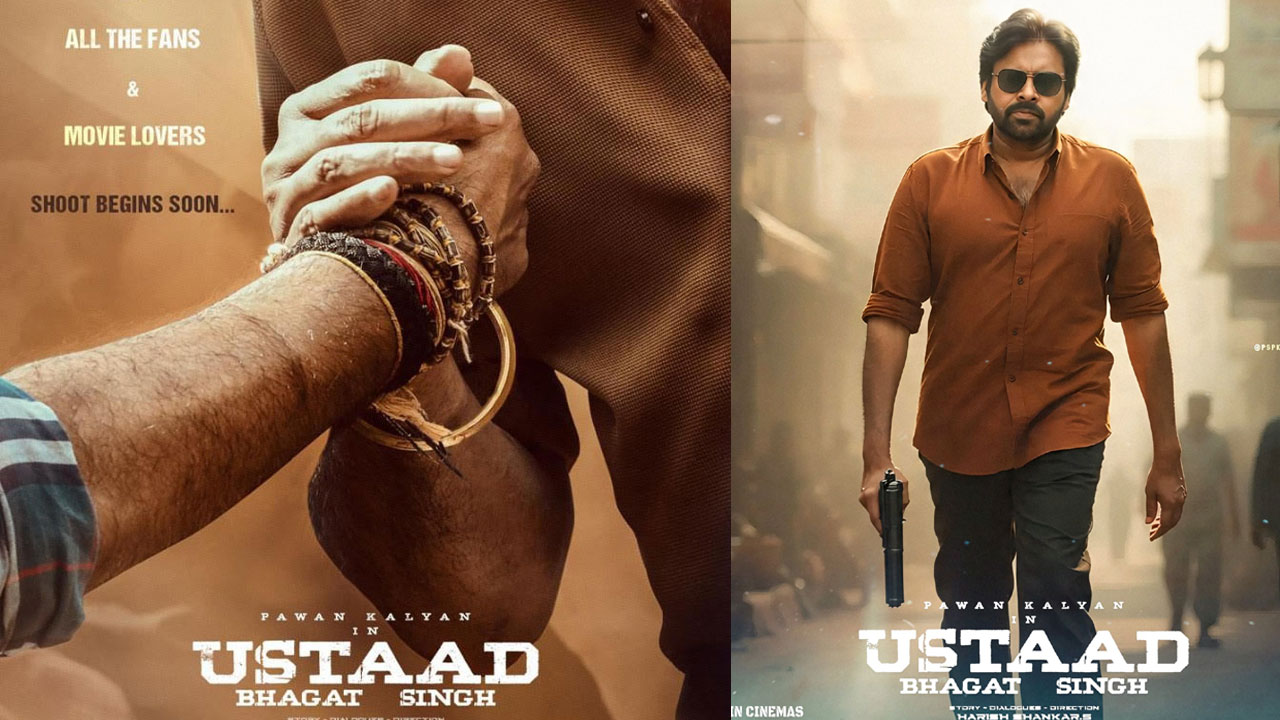
The reunion of Harish Shankar with Pawan Kalyan doesn’t have the entertainment value of Gabbar Singh. Nevertheless, the post interval portions save the film from being a sinking ship. The social issues dealt with are not new but at least there is a coherence with enjoyable fan moments. Sree Leela appears in mid second half delivering her best act in recent times. Pawan Kalyan plays to the gallery for a substantial part at the same time there are some solid moments of acting too.
Starcast: Pawan Kalyan, Partiban, K S Ravi Kumar, Sree Leela, Rashi Khanna and others
Genre: Action/drama
Direction and story: Harish Shankar
Screenplay: Dasardh and Ramesh Reddy
Music: Devi Sri Prasad
Cinematography: Ayananka Bose
Producers: Naveen Yerneni and Yalamanchili Ravi Shankar
Production Company: Mythri Movie Makers
Running time: 2 hours and 34 minutes
There has been a certain apprehension about Ustaad Bhagat Singh being a remake of Vijay Thalapathy’s Theri. A big reason for the fear is the director’s last Mr Bachchan based on the first Raid, an absolute mockery. The good news is that Ustaad Baghat Singh is an original story even though the beats harp back to numerous other cop dramas. The film tries to be a mix of fan appeasement with Pawan Kalyan’s political ideology. And the result is a mixed bag especially the first half.
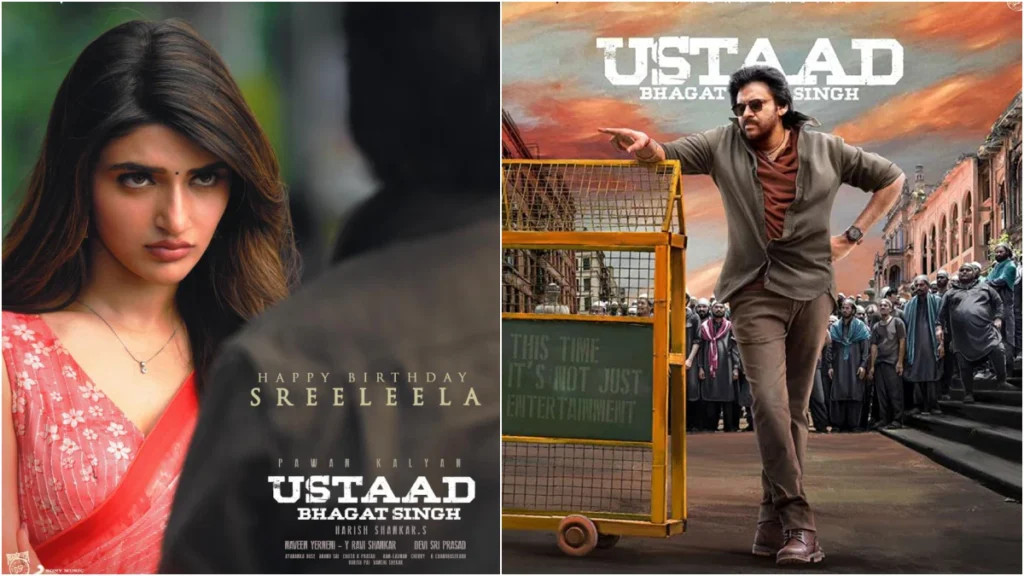
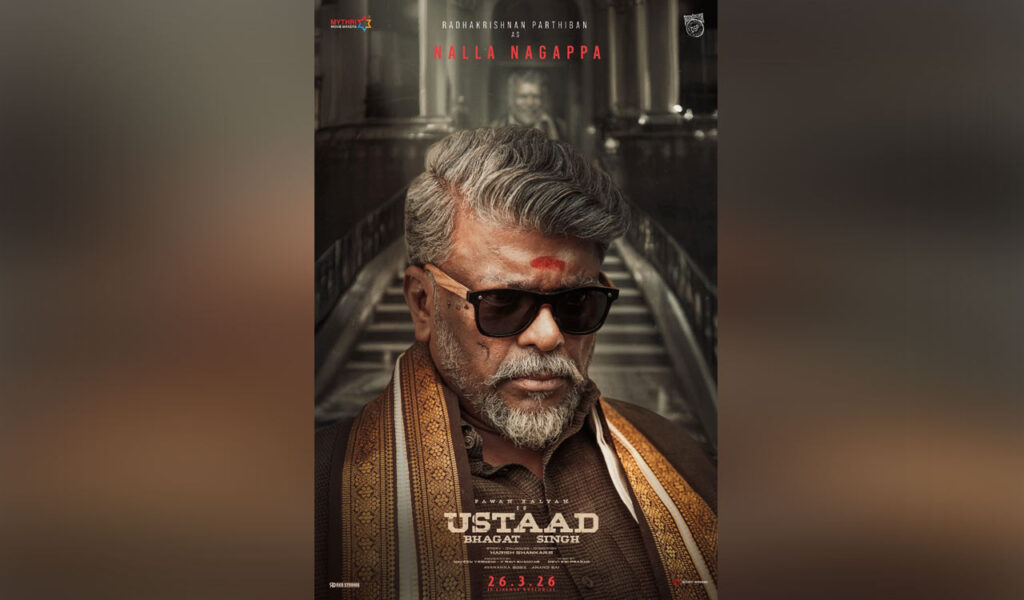
Ustaad Bhagat Singh begins with the childhood story of how Pawan Kalyan’s character grows up in an orphanage. How his thought process is influenced by books especially the one on revolutionary Bhagat Singh. Filmmaker and actor KV Ravikumar plays a father figure, and he is the one who names the younger version of the protagonist Ustaad Bhagat Singh. KV Ravikumar’s character soon enters politics but before leaving the village he takes a promise from Bhagat. Bhagat soon grows to be a daredevil cop but this daredevilness comes with a cost. And this is connected to a cunning politician Chandala Maari Nalla Nagappa (a suitably evil Partiban). How the paths of Bhagat and Nagappa cross along with the protagonists fight against different social evils forms the core of UBS. In between the masala there is Sree Leela’s radio jockey Leela.
It goes without saying UBS is largely dependent on Pawan Kalyan’s screen presence and his overall star power. To Pawan Kalyan’s credit the actor delivers a competent act playing to the gallery when required as well as the few emotional scenes. A special mention must be of the scene in a hospital involving a sexual assault victim. The scene does not have much novelty per say but Pawan Kalyan’s understated but thoroughly effective act elevates the moment. Similarly, there is another sequence when an attack happens and a person close to Bhagat dies. The aggression mixed with the moist eyes is also well done.
The movie in particular picks up pace in the second half. The love story mixed with Pawan Kalyan’s face off moments have a good dose of masala. Sree Leela as the hyperactive radio jockey makes Leela’s bubbly nature work. At the same time there are a couple of emotional too like a breakdown when the friend is found assaulted and the actress does an effective job. Also, the shock mixed with happens when Bhagat proposes is very nicely done.

The use of the soulful duet ‘Nee Manesa’ from Tholi Prema with Leela bestowed by Bhagat Singh is nostalgia done right. Partibaran as already said is suitably evil especially in the scene where he challenges Bhagat when the latter is down and out. KV Ravikumar as the father figure lends in a certain warmth in the interactions with Pawan Kalyan.
A mention must also be made of some masala dialogues. A couple of them are as follows ‘Gandhi Garu Ante Gauravam. Bhagat Singh Ante Pranam’. ‘Aasthulu andaru pogesukuntarandi. Aasirvadalu matram kondare pogesukuntaru’.
A major problem with UBS is the uneven first half. Rashi Khanna’s Sloka does not bring any value and her interactions with Pawan Kalyan are in no way entertaining. Satyam Rajesh as the supposed psychiatrist comes across as more of a caricature than a professional. The entire angle of the so-called depression Sloka is going through is a perfect example of lazy writing.
An elongated gag involving Bhagat’s dancing skills also overstays its welcome. It does not add anything substantial to the story. In fact, the comedy of the first half involving Satyam Rajesh and also Prabhas Srinu as a sidekick of Bhagat produces more groans than laughs. There is also an unnecessary homosexual detour.
While the second half is definitely better the social issues handled have been seen in umpteen better masala films. The terrorism angle in particular with Pawan Kalyan’s dialogues has a major Hindutva hangover. The character of the terrorist head and his punchline leads to unintentional humor rather than the viewers hating him. A couple of so-called twists have a repetitive nature as well.
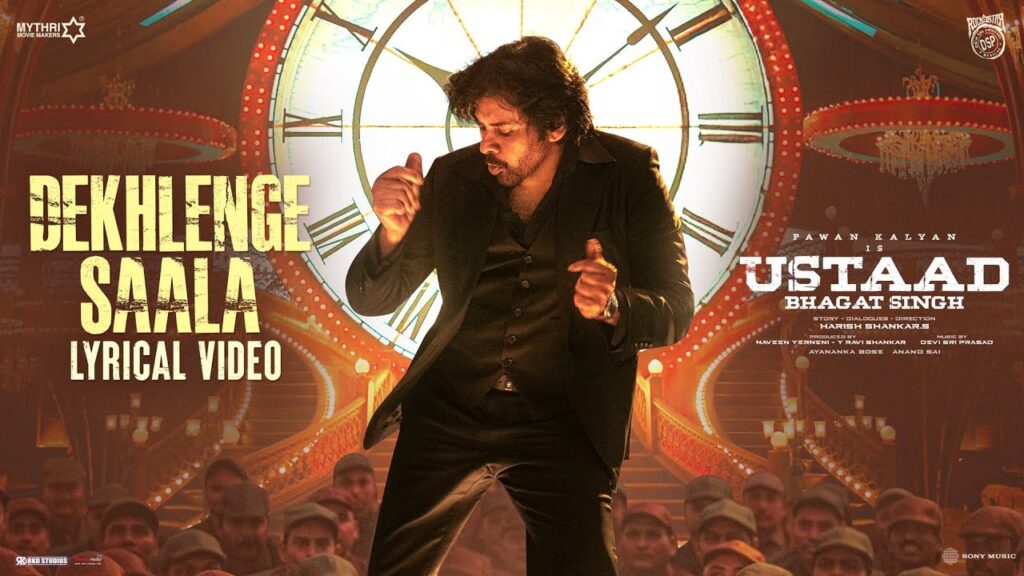
The music of Devi Sri Prasad is nowhere close to the previous collaborations with Pawan Kalyan. Having said that Dekhlenge Saala makes an impression thanks to the tune and Pawan Kalyan’s nimble dance steps. Thaman S background score is in tune with the celebration of Pawan Kalyan.
Final word: UBS is passable entertainment for diehard fans provided one can overlook the clumsy first half.