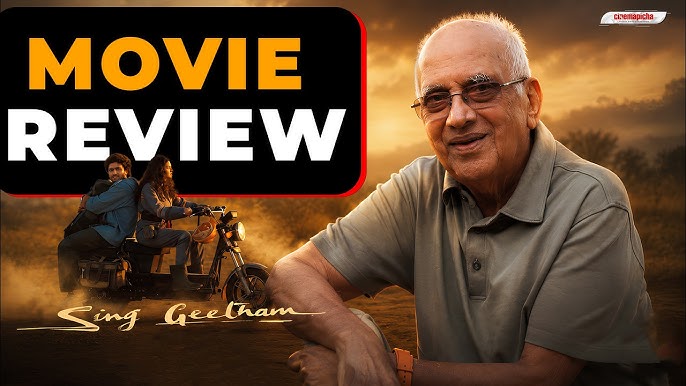
Biker: Sharwanand’s Jersey moment

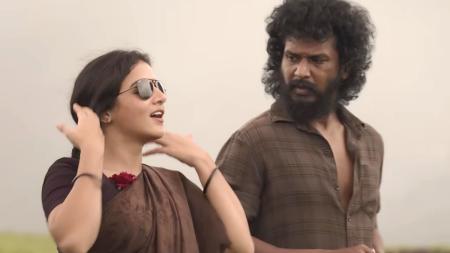
The broad arc of Biker follows a familiar sports template. But the difference lies in packaging. The father and son dynamics with different ideologies gives a fresh layer. Sharwanand delivers a performance high on physicality as well emotional depth. Dr Rajeskhar lends gravitas as a father operating more like a coach. He gets a nice arc from the mid second half and the climactic moment with him hugging Sharwanand is sure to move the viewers. Malavika Nair too has a prominent role not reduced to just a cheerleader

Starcast: Sharwanand, Dr Rajeshekar, Malavika Nair, Atul Kulkarni, Bramhaji and others

Genre: Sports drama

Director and writer: Abhilash Reddy Kankara

Additional writers: Sharvan Madala and MVS Bhardwaj

Cinematography: J Yuvraj

Music: Ghibran Vaibodha

Producers: V Vamsi Krishna Reddy and Pramod Uppalapati

Production house: UV Creations

Running time: 2 hours and 42 minutes

Sports films in general come with certain ticked boxes whatever the language. The protagonist would be a champion player quitting midway for different reasons. After a significant gap he or she rises back eventually regains glory with a dramatic finale. Abhilash Reddy Kankara’s Biker belongs to the same terrain. However, the setting of motor cross gives a different dimension. There is enough adrenaline rush in the way these portions have been filmed but more on that later. The brief story of Biker follows Sharwanand’s Vikas Narayan quitting the racetrack leading to an estranged relationship with coach/father Sunil Narayan (Rajeshekar). The storyline alternates between the past and present concluding with Vikas regaining his past glory. Malavika Nair is Ananya Vikas’s love interest in the past and in the present wife cum mother. She had taken a promise from Vikas on how he would never resume racing. But Vikas’s decision of comeback leads to a strain in their marriage.

For a movie like Biker the technical department is of utmost importance, thankfully the movie delivers right from the choreography, background score and the overall presentation. There is a lived-in atmosphere to these parts. A special mention must be of a pre interval and the final blocks. Both these sequences have the right thrills. For example, there is a scene where Vikas Narayan’s prominent opponent catches fire, but he still drives on. Vikas Narayan saves his life by pushing the bike into water. Vika’s bike on the other hand isn’t functioning properly either due to a malfunction still he finishes third. In the climax Vikas falls hard due to a deliberate collision. For a while it appears that everything is over, but Vikas gets back on his feet racing like a fierce beast out there to prove a point.

Biker also scores on the emotional front. As already mentioned Rajasekar’s character comes across as more of a tough coach than a father. There is a sequence of Sharwanand and the uncle played by Bramhaji going to a movie theatre. However, it turns out to be short lived as Rajeshekar makes an entry. He scolds Sharwanand’s Vikas saying these pleasures are not for him. At one-point Malavika Nair talks on how Sunil Narayan views his son as a champion than an offspring. For two thirds of the movie this feels right having said that different layers of Sunil Narayan are gradually revealed.

A special mention must be made of the scenes involving child actor Shourya and Rajeshekar. The grandson has zero inhibitions talking to his grandfather without fear. The scenes between the two show a different side of Sunil. They end up watching a movie together as well. The eventual change in how Sunil looks at relationships has been both well written and enacted. After the final race we see Rajeshekar’s Sunil letting his guard down and hugging his son with great affection. Rajeshekar absolutely owns this part delivering his best act in recent times. The movie also pays homage to Rajeskhar’s angry cop roles through a dialogue by Sharwanand.

Mention must also be made of Malavika Nair. Her character comes with dual shades. In one timeline she is seen as a supportive girlfriend, but all this changes due to an unplanned pregnancy. Tulasi plays the mother of Malavika, thankfully there is no overt melodrama with Tulasi getting hysterical. The character treats it in a matter-of-fact way. Coming back to the past Ananya gives birth to a baby boy who turns out all right after an initial scare. Ananya wants Vikas to give up racing as she cannot handle the anxiety.

The scene is both solidly written and enacted. When Vikas decides to make a reentry, the marriage undergoes tension. Ananya is visibly upset and as viewers you can understand her point of view. Eventually Ananya gets over her anxiousness with the help of Sunil Narayan. There is a poignant conversation where Sunil takes about Vikas needing her and his changing viewpoint on relationships not being a hurdle for success. Malavika does a very fine job in portraying Ananya’s quiet strength.
However, the major ace of Biker is Sharwanand who gives it his all both physically and emotionally. The actor especially shines in the scenes of vulnerability dealing with inner demons. The fighting spirit of a former champion overcoming different hurdles has been excellently portrayed by the actor. Clearly 2026 has turned out to be a solid year first Nari Nari Naduma Murari and now this.

A major problem with Biker are the predictable tropes particularly in the scenes featuring Atul Kulkarni. He plays a typical corporate bigwig. There is nothing wrong with Atul’s performance per say he plays the part with panache, but the scenes needed much better writing. Even the side characters accompanying Atul Kulkarni come across as caricatures. A song and dance featuring Sharwanand and Malavika also appears out of sync coming across as a speed breaker.

Final word: Biker is worth watching for fans of sport movies especially for those into racing. The visuals alone are worth the price.

Project Hail Mary: A moving tale of unexpected bromance

Project Hail Mary headlined by Ryan Gosling has a standard sci fi story. But the difference lies in the treatment of Phil Lord and Christopher Miller. The movie has a hopeful tone regarding the environmental crisis. The heart touching friendship between the protagonist and an alien takes the viewers on a roller coaster ride

Starcast: Ryan Gosling, Sandra Huller and others

Genre: Science fiction/drama

Based on: Novel Project Hail Mary by Andy Weir

Directors: Phil Lord and Christopher Miller

Screenplay: Drew Goddard

Cinematography: Grieg Fraser

Music: Daniel Pemberton

Producers: Ryan Gosling, Phil Lord, Aditya Sood etc

Production Companies: Pascal Pictures, Lord Miller Productions etc

Running time: 2 hours and 36 minutes

The treatment of extra-terrestrial creatures has often bordered on dangerous entities. They are treated as humankind’s worst enemy with zero redeeming features. Of course, exceptions like Rakesh Roshan’s Koyi Mil Gaya are there. Though inspired from the west the film was a solid emotional drama with Hrithik Roshan’s Rohit developing an unlikely bond with an alien named jadoo. There is a hugely poignant moment when the time for farewell comes. The writing coupled with Hrithik’s performance was first rate. Project Hail Mary takes this notches above by mixing environmental crisis with themes of perseverance and a friendship that is sure to strike a chord.

The story of Project Hail Mary mainly focuses on Ryan Gosling’s Grace. He is a biology teacher. The movie begins with him waking up from coma on a starship. Through various flashbacks the viewers understand how Grace landed here and his mission of saving earth. There is a microorganism called Astrophage dimming the solar system. In this process Grace befriends an alien called Rocky voiced by different artists Ray Porter and Meryl Streep. This is the plot in brief.

It goes without saying that Project Hail Mary’s biggest strength is the strong on-screen brotherhood between Ryan Gosling and the Alien. Their scenes together have a fantastic mix of comedy and drama. Talking about the lighthearted bits a specific mention must be made of the early portions with Grace’s attempt of communication.

Initially Grace gets a shock of his life upon seeing the alien. But soon he warms up as the two gradually open up about their lives. The alien gets into the spaceship of Grace as well. Here too there are some chuckle worthy moments with the commentary of Grace.

Soon though things take a very different turn as Grace and Rocky together set out to solve interstellar problems. In this process the two strike an emotional bond leading to numerous poignant moments. Since I have not read the novel I cannot say how the brotherhood plays there but as far as the movie is concerned its the movie’s beating heart.

The flashback portions are another plus for the movie. Sandra Huller plays Eva Stratt. Eva is the head of an international task force representing the project. Eva comes across as a hardened soul especially in her methods of sending Grace to the spaceship. At the same time there are also scenes of warmth making the viewers think that there are some sparks.

The numerous back and forths also do a good job in establishing Grace personality. Grace is not a protagonist with a natural inclination for saving the day. He is someone who rather prefers teaching science to children and this trait helps in the viewers rooting for the protagonist more. The climax with Grace teaching on Rocky’s planet serves as a perfect conclusion. Ryan Gosling pulls off the different shades with ease whether its the lighthearted bits or moving the viewers. He is one of the major reasons for the movie being so engaging.

The cinematography of Graig Feser coupled with the production design has a lived in in feel. It adds to the immersive experience. A special mention must be made of the scenes involving Grace’s daredevil stunts amidst danger.

Final word: Project Hail Mary is definitely a big screen watch even if you are not into science fiction much.

Youth: A nostalgia ride worth embarking on

Leading man and director Ken Karunas does a fine job in capturing the general teenage life. The school brawls with the desperation of a girlfriend have an authentic feel. The emotional second half is the film’s biggest ace especially Suraj Venjaramoodu as the caring husband. Having said that the coming-of-age angle comes with its share of problems. The third love track turns into a manipulative device for the hero to understand his parents. This needed to be avoided.

Starcast: Ken Karunas, Suraj Venjaramoodu, Devadarshini, Anishma Anilkumar and others

Genre: Teen romance/drama

Director and writer: Ken Karus

Music: G V Prakash Kumar

Cinematographer: Viki

Producers: C Ram, Sulochana Kumar and Karuppaih

Running time: 2 hours plus

The adolescence phase is a special part of most people’s lives. Numerous stories depicting teenage have been witnessed on big screen. In spite of the many stories on this line the genre always has a fresh appeal. The latest Youth is a mixed kichadi of different slice of life films depicting adolescence. Still the movie works as a nostalgia ride elevated by strong performances.

Youth follows the journey of a wastrel Praveen (Ken Karunas). Praveen is a brat creating trouble in classroom with major focus on having a girlfriend. The mother Sarojini (Devadarshini) though has different ideas; she wants her to son to pursue IAS. Suraj Venjaramoodu is the father and the owner of a bakery. The father and son have a strained relationship. In the process of finding love Praveen falls for three different girls at various points. The third one turns out to be the more serious one. Anishma Anilkumar plays Gaganvalli a focused student with aspirations. The viewers are given the impression of Gaganvalli also loving Praveen, but things turn out to be different. This is the story in brief.

A strong aspect of Youth is the relatable characterization of Praveen coupled with Ken Karuna’s competent performance. There is a certain rakishness to Praveen, and he often comes across as unlikeable. However, there is a solid inner journey from mid second half. Ken Karus nails this in both direction and acting.

Ken Karunas also deserves appreciation for the impactful characterization of parents. The understated romance between Suraj Venjaramoodu and Devadarshini gives Youth some of its best moments. Both the actors get some solid emotional scenes and they are first rate. Suraj Venjaramoodu though makes a bigger impact. Towards the end there is a very poignant moment with the father opening up about his past and getting emotionally vulnerable. Suraj Venjaramoodu absolutely nails this portion. At the same time, he is also impactful in the scenes of anger with the son and showcasing love and affection towards the wife.

The love tracks have its share of enjoyable moments and the pre interval block is absolutely solid. Among the girls Anishma Anilkumar has the most fleshed out one. She plays a strong teenager with clarity on future. Anishma Anilkumar does well in bringing out the feistiness especially in the dramatic scenes but is somewhat let down by the characterization. There is a scene where Gangavalli puts a condition for accepting hero’s love.

The hero passes this test with flying colors and Gangavalli is about to express her love. But Praveen stops her by saying would she have said I love you even if he failed. Praveen compares her love of expectations to his parents. This leaves a bitter after taste in spite of some extremely fine acting. The actors playing Praveen’s friends are competent in their respective parts.

GV Prakash Kumar’s music is of a good order with the right mix of funky and emotional numbers. The tunes especially in the second half elevate the hero’s coming of age.

Final word: Youth is a relatable slice of life movie. Worth watching particularly for those who like breezy cinema with emotional undercurrents.

Taskaree (The smugglers web): A layered cat and mouse game with moral ambiguities

Directors Neeraj Pandey and Raghav M Jairath shed light on the unexplored lives of custom officers. What majorly works for the show are the grey areas and the nuanced manner in which the characters have been written. Emraan Hashmi in his 2-point O Version blends in wonderfully coming up with a restrained but impactful act. The women characters also have substance

Starcast: Emraan Hashmi, Nandish Sandhu, Anurag Sinha, Amruta Khanvilkar, Zoya Afroz, Sharad Kelkar and others

Genre: Crime thriller

Creator, director and writer: Neeraj Pandey

Additional writer: Vipul K. Rawal

Cinematography: Sudheer Palsane and Arvind Singh

Music: Advait Nemlekar

Producer: Shital Bhatia

Production Company: Friday Storytellers

No of episodes: 7

Streaming site: Netflix

Stories about men and women officers have been explored umpteen times. However, Taskaree (The smugglers web) is a different beast from the narratives we have experienced previously whether it’s on big screen or OTT. A big reason for the freshness is the airport backdrop becoming a major character in itself. After watching Taskaree, the viewers are sure about to ponder about the happenings behind the baggage belts.

Taskaree in brief focuses on the fight of Emraan Hashmi’s Arjun Meena and co against international smuggling rackets. The setting is Mumbai International Airport a place mostly associated with fan selfies etc. But here we see a completely different side. Sharad Kelkar plays the primary antagonist Bada Choudhary, however Bada Choudhary is not the only villain here. He is aided by a few more especially a person from the custom office.

For most part of Taskaree viewers are kept in suspense about the identity of informers as well as the ones working for Bada Choudhary. This is a major strength of this seven-episode saga. The show also benefits immensely from a non-fussy approach regarding the crime operations.

There is nothing flashy or heavily dramatic about the smuggling of goods. Routine baggage checks with bribed officials among other things give a sense of realism. The web series also does a fine job in not caricaturing people. The struggles of custom officers in dealing with family responsibilities, career stagnation etc lends a moral ambiguity.

The web series also gives an insight into how criminals are not always born out of a twisted mind. Sometimes it becomes a matter of survival where is no other resort. The perfect example of this is the angle of officials taking bribes.

As already mentioned the women characters have been written with substance. Whether it’s Amrita Khanvilkar as a single mother or Zoya Afroz as an airhostess turned informer. Both the actresses get solid parts, and they do a good job in portraying the different nuances.

Nandish Sandhu as Arjun’s confidante is solid too. He particularly shines in the emotional scenes. Anurag Sinha as the head of Arjun Meena has a character with different shades. Not much can be revealed since it will be spoilers, but the actor does a very fine job especially in a crucial reveal.

Emraan Hashmi has always been a proficient actor often undermined due to his serial kisser image. But as last year’s Haq showed the actor is having a resurgence with impactful roles. Taskaree is a solid addition to this. There is a controlled intensity to Arjun Meena and Emraan portrays that brilliantly. Sharad Kelkar as Bada Choudhary is understated yet very effective in bringing out the menace.

But the conclusion to the cat and mouse comes across as somewhat hurried. It could have done with more intensity. Similarly, a few passages could have been trimmed too. The rest of the cast are in fine form as well especially Jammel Khan in a twisted role.

Final word: Taskaree is a well-made crime thriller with a new concept. Definitely worth binge watching.

Aspirants 3: A gripping tale of ideological clash

Unlike the last season which made a mess of the pertinent social issues. This one does a far superior job in tackling the themes of linguistic and cultural divide, political pressures, ethical dilemmas etc. The series also tackles the strained interpersonal dynamics with the character of DM Abhilash Sharma coming across as more of a grey shaded character.

Starcast: Naveen Kasturia, Jatin Goswami, Shivankit Singh Parihar, Abhilash Thapliyal, Sunny Hinduja, Tengam Celine and Namita Dubey

Genre: Drama

Director and writer: Deepesh Sumitra Jagdish

Additional writers: Anurag Goswami, Anurag Ramesh Shukla etc

Music: Sangeet Haldipur and Siddharth Haldipur

Cinematography: Sreechith Vijayan Damodar

Producer: Shreyansh Pandey and Arunabh Kumar

Production Company: The Viral Fever (TVF)

No of episodes: 5

Streaming site: Amazon Prime

The production house of TVF has created a strong identity with its heartland stories whether its Panchayat or Kota Factory among others. There is a relatability factor to the characters. The web series Aspirants is no different. The first season of Aspirants focused on the struggles of UPSC students in cracking the exams. At the center of the story are the characters played by Naveen Kasturia, Shivankit Singh Parihar and Abhilash Thapliyal. Season two on the other hand focused on the rise of Naveen Kasturia’s DM Abhilash Sharma and the trickly balance of professional career with personal relationships. On the side there was also the subplot of protesting villagers. This was dealt in an extremely haphazard manner making them come across as semi villains. However, the series wasn’t a complete washout with some well written tracks especially Abhilash journey as a district magistrate.

Like season 2 season 3 also juggles between different timelines. One of them is Abhilash facing an enquiry on showing favoritism to his friend Guri (Shivankit Singh Parihar). The complaint was filed by Sunny Hinduja’s Sandeep Baya. Sandeep was once upon a senior to Abhilash and co. Now he is the Assistant labor commissioner. However, the heart of season 3 is the rivalry between Naveen Kasturia and Jatin Goswami’s Pawan Kumar. Pawan has been a rival of Abhilash since the days of Rajendra Nagar and that has only grown. This is mainly because of their different ideologies in going about their job. Pawan comes from Hindi medium, and this is where the show’s theme of linguistic divide comes in.

A major strength of third season are the scenes involving Naveen and Jatin Goswami. The social angle of both class and language divide has come out in a strong manner. The two have a very different way of handling things leading to an intense rivalry. The arguments between the two on emotional approach versus practical gives the show its best moments. Jatin Goswami nails the insecurities of a student who has risen from Hindi medium and does not want others to suffer like him. The actor especially shines in a crucial dramatic monologue.

Mention must also be made of the changed dynamics between the three friends. This particularly comes out well in the attitude of Abhilash Thapliyal’s SK. There is a brilliant scene where SK pours out his anger on Abhilash being emotionally unavailable when he needed him the most. The anguish is palpable and the actor absolutely nails it. Having said that the viewers get the impression of Abhilash being too easily forgiven.

Nevertheless, how power and position can have a big impact on old friendships has been well explored by Deepesh Sumitra Jagadish. Naveen Kasturia’s role had shades of grey in the second season but in this season that aspect has been fully explored. The moral dilemmas and the fight to maintain position has been well portrayed by Naveen Kasturia. As the third friend Shivankit Singh Parihar also lends solid support.

The harsh realities of administration with corruption allegations and ethical compromises is another key aspect of 3. Both the director and the writers have done complete justice to it. Mention must also be made of the love story between Abhilash and Tengam Celine’s Deepa. The role of Deepa has been etched much better here as a vulnerable past aspirant and now confident IPS officer. Tengam does complete justice to her role. The lovey Dovey scenes like the one in the hospital shows a different facet of Abhilash bringing a smile to the viewer’s face.

Among the rest Sunny Hinduja in spite of a brief role makes his presence amply felt. He particularly shines in an important conversation with Naveen Kasturia. Coming to music Lamhe Lamhe makes for a soulful tune elevating the emotional core.

Final word: Aspirants season 3 is a solid comeback for TVF after the middling season of Panchayat four and Aspirants 2.

Ustaad Bhagat Singh: Second half saves the day

The reunion of Harish Shankar with Pawan Kalyan doesn’t have the entertainment value of Gabbar Singh. Nevertheless, the post interval portions save the film from being a sinking ship. The social issues dealt with are not new but at least there is a coherence with enjoyable fan moments. Sree Leela appears in mid second half delivering her best act in recent times. Pawan Kalyan plays to the gallery for a substantial part at the same time there are some solid moments of acting too.

Starcast: Pawan Kalyan, Partiban, K S Ravi Kumar, Sree Leela, Rashi Khanna and others

Genre: Action/drama

Direction and story: Harish Shankar

Screenplay: Dasardh and Ramesh Reddy

Music: Devi Sri Prasad

Cinematography: Ayananka Bose

Producers: Naveen Yerneni and Yalamanchili Ravi Shankar

Production Company: Mythri Movie Makers

Running time: 2 hours and 34 minutes

There has been a certain apprehension about Ustaad Bhagat Singh being a remake of Vijay Thalapathy’s Theri. A big reason for the fear is the director’s last Mr Bachchan based on the first Raid, an absolute mockery. The good news is that Ustaad Baghat Singh is an original story even though the beats harp back to numerous other cop dramas. The film tries to be a mix of fan appeasement with Pawan Kalyan’s political ideology. And the result is a mixed bag especially the first half.

Ustaad Bhagat Singh begins with the childhood story of how Pawan Kalyan’s character grows up in an orphanage. How his thought process is influenced by books especially the one on revolutionary Bhagat Singh. Filmmaker and actor KV Ravikumar plays a father figure, and he is the one who names the younger version of the protagonist Ustaad Bhagat Singh. KV Ravikumar’s character soon enters politics but before leaving the village he takes a promise from Bhagat. Bhagat soon grows to be a daredevil cop but this daredevilness comes with a cost. And this is connected to a cunning politician Chandala Maari Nalla Nagappa (a suitably evil Partiban). How the paths of Bhagat and Nagappa cross along with the protagonists fight against different social evils forms the core of UBS. In between the masala there is Sree Leela’s radio jockey Leela.

It goes without saying UBS is largely dependent on Pawan Kalyan’s screen presence and his overall star power. To Pawan Kalyan’s credit the actor delivers a competent act playing to the gallery when required as well as the few emotional scenes. A special mention must be of the scene in a hospital involving a sexual assault victim. The scene does not have much novelty per say but Pawan Kalyan’s understated but thoroughly effective act elevates the moment. Similarly, there is another sequence when an attack happens and a person close to Bhagat dies. The aggression mixed with the moist eyes is also well done.

The movie in particular picks up pace in the second half. The love story mixed with Pawan Kalyan’s face off moments have a good dose of masala. Sree Leela as the hyperactive radio jockey makes Leela’s bubbly nature work. At the same time there are a couple of emotional too like a breakdown when the friend is found assaulted and the actress does an effective job. Also, the shock mixed with happens when Bhagat proposes is very nicely done.

The use of the soulful duet ‘Nee Manesa’ from Tholi Prema with Leela bestowed by Bhagat Singh is nostalgia done right. Partibaran as already said is suitably evil especially in the scene where he challenges Bhagat when the latter is down and out. KV Ravikumar as the father figure lends in a certain warmth in the interactions with Pawan Kalyan.

A mention must also be made of some masala dialogues. A couple of them are as follows ‘Gandhi Garu Ante Gauravam. Bhagat Singh Ante Pranam’. ‘Aasthulu andaru pogesukuntarandi. Aasirvadalu matram kondare pogesukuntaru’.

A major problem with UBS is the uneven first half. Rashi Khanna’s Sloka does not bring any value and her interactions with Pawan Kalyan are in no way entertaining. Satyam Rajesh as the supposed psychiatrist comes across as more of a caricature than a professional. The entire angle of the so-called depression Sloka is going through is a perfect example of lazy writing.

An elongated gag involving Bhagat’s dancing skills also overstays its welcome. It does not add anything substantial to the story. In fact, the comedy of the first half involving Satyam Rajesh and also Prabhas Srinu as a sidekick of Bhagat produces more groans than laughs. There is also an unnecessary homosexual detour.

While the second half is definitely better the social issues handled have been seen in umpteen better masala films. The terrorism angle in particular with Pawan Kalyan’s dialogues has a major Hindutva hangover. The character of the terrorist head and his punchline leads to unintentional humor rather than the viewers hating him. A couple of so-called twists have a repetitive nature as well.

The music of Devi Sri Prasad is nowhere close to the previous collaborations with Pawan Kalyan. Having said that Dekhlenge Saala makes an impression thanks to the tune and Pawan Kalyan’s nimble dance steps. Thaman S background score is in tune with the celebration of Pawan Kalyan.

Final word: UBS is passable entertainment for diehard fans provided one can overlook the clumsy first half.

Dhurandhar 2 (The Revenge): Aditya Dhar’s Hindutva version of Gangs of Wasseypur

There is no denying Aditya Dhar’s technical prowess and his ability in staging a scene. However, it’s high time that the young director steps out of government mouthpiece image. Ranveer Singh as Jaskirat/Hamza Ali Makari gets a more of an author backed role here and the actor chews the scenery perfectly oscillating between understatedness and emotionally charged. Rakesh Bedi continues to entertain as the conniving politician with a solid twist towards the end

Starcast: Ranveer Singh, Rakesh Bedi, Arjun Rampal, Sanjay Dutt, Danish Pandor and others

Direction, story and production: Aditya Dhar

Additional screenplay: Ojas Gautam and Shivkumar V Panicker

Music: Shaswat Sachdev

Cinematography: Vikas Nokawala

Producers: Aditya Dhar, Jyoti Deshpande and Lokesh Dhar

Production Companies: Jio Studios and B62 Studios

Running time: 3 hours and 53 minutes

There are two major reasons for the mega success of Dhurandhar movies. One is the YRF spy template with increasing focus on style with the same aesthetics. This has led to a lag after an impressive start with EK Tha Tiger, Tiger Zinda Hai etc. The other big reason for Dhurandhar’s blockbuster success is the gritty texture. The spy here takes his own sweet to roar. The first part of Dhurandhar in spite of the polarizing views became a monstrous hit especially Akshaye Khanna as Rehman Dakiat. Dhurandhar (the revenge) comes with massive expectations and is most likely to go the way of its predecessor splitting up the viewers on Aditya Dhar’s craft versus the political propaganda.

For those who haven’t seen Dhurandhar one the plot focused on Ranveer Singh’s Hamza infiltrating into the gang of Rehman Dakiat on the orders of R Madhavan’s Arjun Sanyal. The first one hinted at a backstory of how Jaskrit turned into Hamza. The second part is both a continuation and a prequel. The viewers see Jaskrit transforming from a young man with big dreams to his life turning upside down. In the present timeline the journey of a spy continues with him taking down the nation’s enemies one by one in a methodical manner. There is also the reveal of Bade Saab with a Dawood Ibrahim inspired character, but the biggest twist comes in the pre climax with Rakesh Bedi. The details of which are better enjoyed on the screen.

A strong aspect of Dhurandhar (The Revenge) is the effective world building. Much like the first part there is a lived in a feel to the proceedings whether it’s the Baluchistan politics or the internal strife especially the rivalry of gangs. In one way the film can be easily termed as Aditya Dhar’s Gangs of Wasseypur. The sprawling world of Lyari is a good example of this.

Shaswat Sachdev’s music and the background score also uplifts many scenes. The Aari Aari song continues to be a pulsating number, the placement of this signifying the transformation of Jaskirat is extremely well done. Another number worth mentioning here is Jaan Se Guzarte Hain. The background score is another winner for the movie, especially in the portions of tension and Ranveer turning into a ferocious beast.

Vikas Nokawala’s cinematography is of an excellent order too. He captures the rugged atmospherics of Lyari in a first-rate manner. His work in the hardcore action sequences also deserves a mention. A special mention must be made of the brutal showdown involving Ranveer and Arjun Rampal.

Talking about the villains the presence of Akshaye Khanna is definitely missed. There was a magnetic charm in the way Rehman Dakiat was written and performed. Arjun Rampal’s major Iqbal lacks that nevertheless the actor makes for a formidable antagonist especially in the scenes of Hamza’s real identity coming out. Aditya Dhar also gives a slight backstory into why Iqbal hates India and this gives a good psychological insight.

Sanjay Dutt as the semi villain is entertaining with his one liners like the humorous interaction with Rakesh Bedi amidst a shoot-out. He plays the grey shaded cop in a charismatic manner. However, Rakesh Bedi continues to be the strongest pillar. Much like the first part his character switches shades like a chameleon and the actor nails it. At the same time there is a surprising emotional touch in the pre climax conversation with Ranveer showcasing a different facet.

Ranveer Singh in the titular role gets more of a wholesome arc unlike the first one. The actor throws himself deeply coming up with a first-rate performance. The performance has the right mixture of emotional vulnerability and ferociousness. At the same time, he also plays the part with the required understatedness. Ranveer especially stands out in a post interval stretch when the cover is almost blown. R Madhavan also gets more screen time in comparison to the first one and the actor makes his presence amply felt as the strategist. Among the rest Danish Pandor as Rehman Dakiat’s younger brother starts off promisingly but is soon relegated to the background.

Blatant glorification of ruling party:

A major problem with Dhurandar (The revenge) is the extremely blatant glorification of the ruling party. Narendra Modi twice makes an appearance and there is an extended subplot of praising demonetization. His dialogues talk about how the entire operation created a big dent for terrorists and this is stretching enmity too far. The first part had its share of open propaganda, but this one makes the movie look like a film funded by BJP whether it is the demonetization angle or the slogans of Bharat Mata ki Jai. The surgical strikes also find a mention.

The women characters are also patchily written. Sara Arjun as the wife is relegated to the background for most part. Apart from being tensed in the post interval portions there is nothing more. There is a crucial emotional sequence with the character going through a heartbreak but as viewers you don’t feel anything because the romantic relationship was hardly developed in the first place. Even the powerhouse Yami Gautam is wasted in a cameo adding zero substance.

The violence is also more grating than the 2025 movie. Its more violence for the sake of effect than anything else in spite of Ranveer putting his heart and soul.

The Pakistani characters too are more of barbarians than fleshed out human beings. There is an attempt at nuance when Jaskirat talks about how Pakistan is equally suffering due to terrorism and that his war is not against the common man. But this feels like more of lip service than something concrete.

Final word: Dhurandar 2 (The Revenge) is best enjoyed for fans of patriotic action dramas or if you are a huge admirer of Ranveer Singh.

Corpse Collector: A moving memoir of quite heroism

Vinu P’s autobiographical account is a poignant read on how the society views certain professions. The deep belief of Vinu P on the dead deserving equal respect in spite of the numerous trials and tribulations is very praiseworthy indeed. The novel for the most part has a dark tonality, nevertheless there is some light too with some considerate people .

Recently I read a memoir called Corpse collector written by Vinu P and Niyas Kareem. This is not a review; it’s more of an introduction giving an overview. As the title suggests the focus is on a man dedicating his life to abandoned and scarred bodies. In spite of severe social ostracization Vinu P goes about his job with deep compassion. Thankfully he does get some help from the local police who treat him kindly and give respect.

Corpse Collector engages the readers from beginning with the gritty tone. Vinu P’s explanation on why he chose this profession is touching. His deep belief on giving dignity to the dead no matter the condition of the corpse comes out in a striking manner. An important mention must be made of his first steps in becoming a corpse collector. The dead body is of his friend, and the heartbreak is very palpable.

As already said Corpse Collector is not all dark in spite of Vinu P being mostly shunned. This includes a failed first marriage as well. A reason for the marriage collapsing are the lies on which the foundation was built. At the same time Vinu P’s life has its share of positivity too. This particularly comes out in the chapters involving Kerala Police. The Kerala police apart from empathizing also payed him from their own pockets. Additionally, they protected him from goons too.

Mention must also be made of Vinu finding companionship in the form of a nurse called Bincy. How the entry of Bincy changes Vinu’s life gives a sense of happiness. However, the importance of this novel lies in the questions it raises. It lays bare the different contradictions especially the constitutional article 21. When right to dignity is guaranteed should it not be extended to death.

Final word: The Corpse Collector is one of the finest memoirs leaving the readers with different thoughts.

Made In Korea: A charming tale of resilience and womanhood

Made In Korea perfectly fits the definition of a sunshine movie. A couple of subplots are rushed through, but the emotional core coupled with the performances make this cross-culture worth watching. Priyanka Arul Mohan as Shenba delivers a strong act and her scenes with Kim Young-Oak gives Made In Korea its best moments.

Starcast: Priyanka Arul Mohan, Kim Young-Oak, Park Hye-Jin and others

Genre: Comedy/drama

Director and writer: Ra. Karthik

Music: Hesham Abdul Wahab

Producer: Sreenidhi Sagar

Production Company: Rise East Entertainment

Cinematography: Prasanna Kumar

Running time: 1 hour and 51 minutes

Streaming site: Netflix

Ra. Karthik’s Made in Korea can be easily termed as a spiritual sequel to Vikas Bahl’s Queen. Just like that film here too the heroine gets dumped and has to navigate a foreign country. In both the movies the female protagonists re discover themselves and become stronger individuals. Keeping aside the similarities Made In Korea is very much its own beast. The uniqueness majorly comes from the Korean cast especially Kim Young-Oak a familiar name for those who have seen Squid Games. Through her character and the on-screen friendship with Priyanka Arul Mohan the movie celebrates the theme of womanhood.

Made In Korea primarily focuses on a Tamilian girl Shenba (Priyanka Arul Mohan in an author backed role). Shenba is hugely fascinated with the city of Korea thanks to binge watching K Dramas. Her dream is going to Seoul, and this does come true but not in the happiest of circumstances. How Shenba navigates the different challenges eventually finding acceptance forms the core of this movie. An important subplot connected to Shenba’s journey is Kim Young-Oak’s elderly woman.

A strong aspect of Made In Korea is the depiction of Shenba’s challenges. Her struggles with the language in particular have moments of understated humor. The entry of Park Hye-Jin as a vlogger and a growing bond between the two is filled with warmth. However, the movie’s biggest strength are the scenes between Priyanka and Kim Young Oak.

Initially the viewers are given the impression of Kim Young Oak being a bedridden lady who needs to be fed. However, the movie soon springs a surprise with an important revelation. There is a reason for the character pretending to be bedridden and this is revealed at a crucial juncture.

The theme of womanhood comes out in a striking manner as Shenba also grows into a more confident individual. The scenes between Priyanka and Kim Young have a good balance of emotions and humor. Apart from womanhood theme Made In Korea gives an important life message too. This is explored through the quote “Where you think it ends, it begins”.

The transformation journey of Shenba is a good example of how we should move forward whatever the setbacks. Of course, the movie has a feel-good treatment. This may not work for all nevertheless the importance of message cannot be denied.

The background score by Dharan enhances the emotional scenes. The music of Hesham Abdul Wahab is pleasant going perfectly well with the movie’s tone. Both the upbeat and mellow numbers do a good job in capturing Shenba’s transformation. Prasanna Kumar’s cinematography is of a good order as well. He captures the different shades of Seoul effectively through his camera.

Priyanka Arul Mohan as Shenba springs a very pleasant surprise. She captures the different nuances with an understated but thoroughly effective act. Kim Young Oak makes her presence amply felt especially in an important confrontation scene with the son. Park Hye Jin as the vlogger who becomes an important part of Shenba’s life is good too. He brings in the required warmth making the viewers wish that they come across a friend like him.

As far as the flaws are concerned a subplot of Kim Young oak and Shenba opening a restaurant has a rushed treatment. The same applies to the track of a music band which needed more fleshed out writing.

Final word: Made In Korea is a good watch for fans of feel good/optimistic cinema and the central message.

The Bride: Feminism wrapped in a gothic romance

Maggie Gyllenhaal’s The Bride is a touching story of two outsiders finding companionship with each other. The movie also examines the monster within us with sharp social commentary; this comes out well in the scenes of monsters having more humanity than human beings

Starcast: Jessie Buckley, Christian Bale and others

Genre: Horror/romance

Director, writer and producer: Maggie Gyllenhaal

Based on: Frankenstein; or the Modern Prometheus by Mary Shelly

Additional producers: Talia Kleinhendler, Osnat Handelsman- Keren etc

Cinematographer: Lawerence Sher

Production Companies: First Love Films and In the Current Company

Running time: 2 hours and 6 minutes

The character Frank created by Mary Shelly has influenced numerous filmmakers with a range of stories. This includes something as recent as the 2025 one. The different shades of this creature coupled with a deep desire for love makes it a fascinating personality. The 2025 movie for example looked at the monster’s deep desire for human connection and the suffering he faces due to the physical appearance. On the other hand, creator Viktor Frankenstein is portrayed a flawed master. The latest movie influenced by Mary Shelly’s work upgrades this with socially relevant themes.

Frankenstein 2025

The story of The Bride is set in the 1930’s. In simple terms the plot focuses on Dr Euphonious radical social experiment she brings back to life a dead woman. The purpose is to find a companion for Christian Bale’s Frank. However, this leads to a huge catastrophe beyond the imagination of Dr Euphonious.

A strong aspect of The Bride is the juggling of different social themes. Yes, the storytelling at times gets into an incoherent zone. Still the treatment makes an impact for a large part. Among the themes mention must be particularly made of comparisons between the monsters and so-called normal people.

The actions of some men towards Jessie Buckley’s Ida are a solid example of this. In comparison Frank comes across as a more empathetic human. How true monsters often turn out to be humans has come out in an impactful manner.

Mention must also be made of the female agency. The transformation of Ida from a constructed object to an independent and volatile being has a good feminist touch. The film highlights the need for women to be a whole in themselves and their identity not being tied to someone’s else’s name.

The female rage is very visible in Jessie Buckley’s fiery monologues. References to important social movements has been smartly integrated as well. The performances of the two central players is exemplary to say the least.

As the monster/creature craving for companionship Christian Bale is top notch. Of course, the film belongs to Jessie Buckley in a double role, but Christian Bale makes his presence amply felt with a strong act. Jessie Buckley gets the fiery spirit bang on convincingly portraying the transformation. Apart from Ida she is also seen as author Mary Shelly and here too she gives a strong act. The feminist monologues in particular are a delight.

Among the rest a specific mention must be made of Peter Sarsgaard and Penelope Cruz. Peter Sarsgaard’s police/ detective has a past connection with ida and this gives a good emotional touch. A crucial reveal with Peter Sarsgaard letting his guard down has been solidly written and enacted. Penelope Cruz as the assistant also makes her presence amply felt. Her character comes with the ambition of moving up the ranks. In this subplot too the feminist touch is visible.

The cinematography of Lawerence Sher is of a very high order especially in the scenes of Jessie Buckley’s double act. The production design adds to an immersive experience creating a lived-in gothic world.

Final word: The Bride is a solid watch for the sheer audacity of Maggie Gyllenhaal coupled with some excellent acting