Actress turned writer Huma Quereshi successfully breaks the stereotypes by creating a hijab wearing superhero. The novel has some nice feminist touches along with some social themes
Recently I read a novel called Zeba (An accidental Superhero). When we hear the word superhero what automatically comes to the reader’s word is a superman or batman or even a Krrish. The term superhero is generally associated with male characters, however with Zeba Huma Quereshi has successfully broken the mould. She has created an unusual superhero with strong feminist touches.
Yes the plot troupes aren’t particularly novel especially for those who have grown on western comics but Huma’s seamless integration of serious issues like PTSD, immigration and women empowerment give the novel its own flavor.
The storyline of Zeba focuses on a protagonist who is both rich and spoiled. It is set between 1992 and 2019. Zeba is living a very fancy life in America. As the story progresses Zeba stumbles upon many secrets, one of them is loosing her parents. The second one is she possesses many superpowers and has to save a fictional kingdom called Khudir. This place of Khudir is ruled by her father, he is a big tyrant. This is the story in brief.
A strong aspect of Zeba is undoubtedly the setting of the royal harem. Through the characters of the many royal women Huma Quereshi has broken the numerous stereotypes attached with Muslim women. Here it isn’t just about Zeba fighting against the bad. But the women in harem also play a significant part. They rise above the perception of being meek victims.
One of the most special characters in the novel is that of a royal hijra called Kherun. Through this character Huma Quereshi talks about the pivotal role played by this section of people in the royal kingdoms. Huma Quereshi has written the character in a strong way empowering the role with a strong voice of her own.
Although the novel is called Zeba Huma Quereshi gives equal importance to other woman too making it a wholesome novel.
The characterization of the main protagonist is another big plus. How Zeba goes from being a spoilt woman to finding about her past and the subsequent changes have been interestingly written. A particular mention must be made of her interactions with the tyrannical father.
Through this novel Huma Quereshi also talks about religious teachings being used as a tool to spread hate. The villain called Great Khan perfectly symbolizes this theme.
The ending of Zeba is also pretty interesting. After saving the world from destruction Zeba exclaims that “I’m so tired, man. I hope this is it. This s**t is exhausting,”. Through this dialogue Huma Quereshi brings up the theme of PTSD as Zeba is now looking for therapy.
To sum it up Zeba makes for a good read particularly if you are in the mood for a female superhero.
This Laxman Utekar’s directorial is a delight for admirers of Maratha warriors. Just like the recent historicals, ‘Chhaava’ too has a strong undercurrent of saffronisation. Still the solid technical work coupled with the towering performances makes this a worthy big screen spectacle.
Main Cast: Vicky Kaushal, Rashmika Mandanna, and Akshaye Khanna
Director: Laxman Utekar
Producer: Dinesh Vijan
Music Director: AR Rahman
Cinematography: Saurabh Goswami
Rating: 3.5/5
In the last few years, Hindi cinema has seen a huge increase in the Hindutva influx, this doesn’t just pertain to the numerous war dramas, but this list also includes historical fiction based on the wars involving the Hindu kings, particularly the Rajput and Maratha warriors.
Very good examples of these are Sanjay Leela Bhansali’s Padmavaat (2018) and Om Raut’s Tanhaji (2020). In these films, the Muslim rulers are presented as merciless invaders from whom the Hindu nation should be saved.
Laxman Utekar’s first attempt at historical fiction also treads on the same path. After directing a slew of feel-good movies like Luka Chuppi (2019) and Zara Hatke Zara Bachke (2023) the cinematographer turned director takes an extremely different path from his previous works.
Synopsis
Chhaava meaning a lion cub is based on a novel of the same name written by Shivaji Sawant. The book covered the life and times of the very noted Maratha warrior Chhatrapati Sambhaji.
It’s hard to say what percentage of Chhaava is based on its original source material and how much fiction Laxman Utekar has added. but the movie does a very fine job of capturing the bravery of Chhatrapati Sambhaji managing to make the viewers feel for the man particularly if you are an admirer of Maratha warriors.
In simple terms, the core plot of Chhaava focuses on the events which transpired from 1680 to 1689, a period marked by the relentless pursuit of Mughal emperor Aurangzeb (a fabulous Akshaye Khanna).
The movie celebrates the valour of Chhatrapati Sambhaji (an outstanding Vicky Kaushal) in fighting against the troops of Aurangzeb. Rashmika Mandanna plays Maharani Yesubai— a very important pillar of support for Sambhaji.
Vicky Kaushal as Sambhaji
‘Chhaava’ is a historical drama. (X)
Chhaava works largely due to the emotional depth brought by Laxman Utekar. He and the screenplay writers don’t just depict Sambhaji as a fierce warrior but also reveal a vulnerable side to him.
There is a palpable sense of grief in the way Sambhaji speaks about missing his mother’s love and a recurring nightmare involving his father. Some of the dialogues effectively convey the brutalities of war, where countless lives are lost.
As Sambhaji, Vicky Kaushal fully embodies the role, delivering a top-notch performance. With this role, Vicky once again proves why he is a versatile actor, able to adapt to various genres, whether it’s the light-hearted Bad News or the more emotionally intense roles in Sardar Udham Singh and Chhaava.
Vicky shines the most in scenes where he portrays the psychological toll endured by a warrior king. The torture sequence involving Sambhaji is another standout moment where Vicky excels.
While the historical accuracy of these moments may be debatable, the way Vicky portrays Sambhaji’s fighting spirit, even while being physically tormented by Aurangzeb, creates an emotional connection with the character.
Performances
Rashmika Mandanna as Rani Yesubai. (X)
Akshay Khanna as Aurangzeb makes for more than a worthy tormentor. While there is no denying the amazing prosthetic work Akshay Khanna with his acting also makes the part memorable.
Thankfully there are no unnecessary theatrics; Akshay invokes terror with just his demeanour and piercing gaze. He excels in showcasing Aurangzeb’s huge hunger for power.
Rashmika Mandanna as Yesubai plays a strong partner in the same mould as her last outing Pushpa 2. She delivers a fine performance perfectly showcasing the inner strength of a warrior’s wife. A particular mention must be made of her act in the portions following Sambhaji’s capture.
Vineet Kumar Singh as Kavi Kalash shines the brightest among the supporting cast. He plays his part with a lot of warmth. The friendship between Sambhaji and him gives the movie some of its best moments.
Strong technical aspects
Among the strong aspects of Chhaava, the technical department deserves special mention. The fight sequences in the second half are a delight, especially for those who enjoy rustic action. There are numerous instances of the Marathas outsmarting the Mughals using guerrilla tactics. The way these ambush sequences unfold with surprise attacks resembles a gripping chess game.
Vicky Kaushal in ‘Chhaava’. (X)
Cinematographer Saurabh Goswami delivers high-quality work, successfully capturing both the grand scale and intense action set in the forests. Special mention should also be made of the scenes following the destruction of the war, which are staged realistically.
AR Rahman’s background score and music complement the film well. The tune “Aaye re toofan” serves as a powerful war anthem with a touch of Maharashtrian folk. On the other hand, “Jaane Tu,” a romantic number, perfectly captures the understated romance between Vicky and Rashmika.
A major flaw in Chhaava is its core plot, which suffers from a significant hangover of clichés found in numerous films set in the same historical context.
Additionally, the film doesn’t break new ground in its portrayal of Muslim characters. The heavy emphasis on the concept of Swarajya, along with the lack of subtlety in the dialogues surrounding it, can test the audience’s patience.
Final take
To sum it up Chhaava works as a big-screen spectacle, especially for fans of Vicky Kaushal and those who like stories of brave Maratha warriors.
‘Laila’ briefly comes alive in the second half when Vishwak Sen dons the lady get up but the weak writing plays a major spoilsport. The major problem is its over-reliance on crass humour and less on emotions.
Main Cast: Vishwak Sen, Akanksha Sharma, Abhimanyu Singh, and Babloo Prithiveeraj
Director: Ram Narayan
Producer: Sahu Garapati
Music Director: Leon James
Cinematography: Richard Prasad
Rating: 2/5
Over the years numerous leading men have successfully transformed into female avatars. Whether it is the legendary Kamal Haasan in the rollicking entertainer Avvai Shanmugi (1996) (in Telugu Bhamane Satyabhamane).
In the Telugu film industry too, both Rajendra Prasad and VK Naresh experienced huge success with Madam (1994) and Chitram Bhalare Vichitram (1992). These movies have outlandish scenarios but they are backed by cohesive writing and a strong emotional core.
Talking about Hindi actors Ayushmann Khurrana tasted major success with his female get-up in the Dream Girl 2 (2023). And now, actor Vishwak Sen has tried something similar, how did he fare?
Synopsis
Laila directed by Ram Narayan had the potential of being a good Valentine’s treat but the treatment makes it a tedious watch for most of its running time.
Vishwak Sen is a capable young actor, but his selection of scripts has been getting worse and Laila is a perfect example.
The storyline of Laila focuses on Sonu Model (Vishwak Sen). Sonu runs a beauty parlour in the area of the old city. Sonu is extremely popular among the ladies for both his makeup skills and also his helpful nature.
Sonu’s helpful nature is reflected when he allows a customer to use his name for an oil brand. However, this decision leads to a dramatic shift in his life. Due to certain circumstances, Sonu is forced to transform into Laila. The rest of the story revolves around why Sonu undergoes this transformation and the events that follow.
What works and what doesn’t
Laila has very few redeeming qualities and one of them is Vishwak Sen’s avatar as a female. He brings in a certain charm while seducing the men around him particularly Abhimanyu Singh— the comic villain.
Vishwak Sen in ‘Laila’. (X)
The way he portrays femininity, starting from the body language showcases Vishwak’s capability in attempting different roles. The scenes between him and Abhimanyu are an absolute riot even though it borders on farce.
As Sonu Model, Vishwak Sen does a fair job, particularly in the scenes where Sonu talks about his emotional attachment towards the parlour. Abhimanyu Singh as a married man lusting after Laila gives the movie some much-needed energy.
The way he adores Laila brings a smile to the viewers’ faces, the viewers feel that he is genuinely in love with Laila.
The major problem with Laila is too much emphasis on crass humour. Most of the dialogues are way below the belt producing more groans than laughs. Sonu’s connection with the parlour and him being a makeup artist is a very novel concept but this angle isn’t sufficiently developed.
The love track between Vishwak Sen and Akansha Sharma has also been haphazardly written. Portions involving Akansha’s interactions with Sonu majorly pull down the movie.
The songs composed by Leon James are another downer. None of them come close to standing out. The movie also has some unnecessary references to megastar Chiranjeevi’s films.
Final take
To sum it up Laila leaves a bitter aftertaste. Watch it only if you are in the mood for some senseless fun.
In his directorial debut, Boman Irani delivers a bitter sweet story on complex family dynamics. The understated writing coupled with the acting performances makes this a must watch for those who like slice of life movies.
The Mehta Boys (Hindi). 07-02-2025, Drama, 1 hour 56 minutes, U/A, OTT
Main Cast: Boman Irani, Avinash Tiwary, Shreya Chaudhary, and Puja Sarup
Director: Boman Irani
Producer: Boman Irani, and Danesh Irani
Music Director: Gulraj Singh, Ibarisha Lyngdoh, and Raghav Meattle
Cinematography: Krish Makhija
Rating: 4/5
The Mehta Boys, directed and co-written by acclaimed actor Boman Irani, is a perfect example of a well-made slice of life.
The complex family dynamics feel straight out of life without any overt melodrama.
Often times the movie conveys a lot through symbolism.
Synopsis
The core plot of The Mehta Boys focuses on an underconfident architect Amy (Avinash Tiwary) and his father Shiv (Boman Irani).
Shiv is a grieving widower who is having a hard time dealing with the death of his wife. Amy shares a distant relationship with his father.
Shiv is all set to go for the US with his daughter Anu (Puja Sarup). However, a last-minute mishap forces Amy to spend time with Shiv for 48 hours. Over 48 hours a transformative change happens as the father and son navigate how to deal best with the situation.
Emotions which have been buried for a long time resurface leading to introspection. This is the story in brief.
What works
‘The Mehta Boys’ is a family drama. (X)
The best part of The Mehta Boys is how Boman Irani avoids melodrama. Both Shiv and Amy are flawed in their own way, their attempts to find a common ground without any dramatic dialogues and filmy exaggerations is a treat to watch.
As a director and an actor, Boman Irani conveys a lot with the silences between the conversations.
What also makes The Mehta Boys special is how it showcases the importance of acknowledging emotions and doesn’t make it just about fixing the relationships overnight. How Boman Irani gradually showcases the discord between the father and son is a master class in both direction and writing.
Strong on symbolism
The strained relationship isn’t because of hatred, but it has more to do with unresolved pain and the clash of egos, which results in an inability to communicate. This gradual layering makes the viewers introspect about their own relationships.
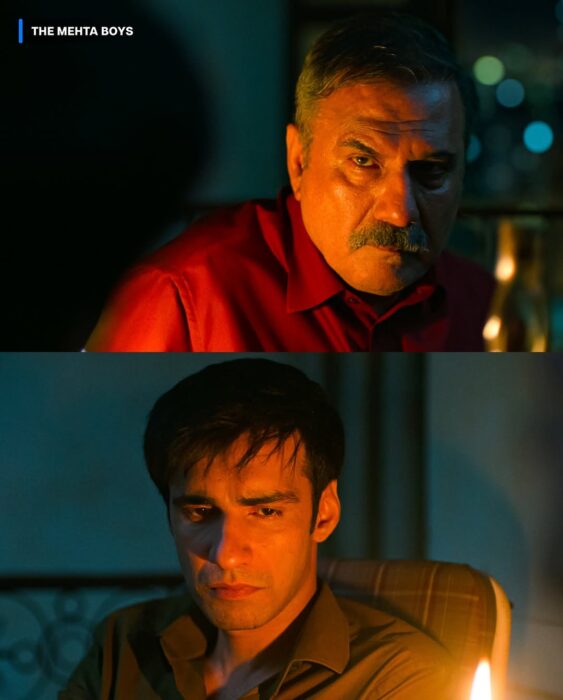
Boman Irani directorial ‘The Mehta Boys’. (X)
As already mentioned, The Mehta Boys is a movie which rides high on symbolism. A special mention must be made of how Boman Irani uses a leaking roof, a piece of cloth drifting in the wind etc to showcase the inner turmoil of Amy and Shiv.
One of the most poignant moments in the movie involves a tattered cloth floating over Shiv and Amy’s heads resembling their late mother’s saree. This tattered cloth is a reminder that the mother is still there in spirit keeping a watch on them.
The core of The Mehta Boys is how it isn’t always about fixing relationships instead it’s about acknowledging the fact that every person has a different way of expressing their feelings. The healing process doesn’t always need to be dramatic; instead, it can come in the form of small gestures.
Through the profession of Avinash Tiwary’s Amy, Boman Irani also makes scathing remarks on how every building feels the same in terms of the overall architecture, the dialogues related to the high tower buildings work as a perfect social commentary.
A minor issue with The Mehta Boys is that Boman Irani could have gone deeper into the origin of father and son discord. The distance between the two is mostly left for the viewers to interpret; still, this is just a minor in an otherwise powerful movie.
Performances
Avinash Tiwary and Boman Irani in ‘The Mehta Boys’. (X)
The performances of the central characters also add a lot of weight to the movie. Boman Irani is a legendary actor who doesn’t need a specific introduction.
As Shiv he is spectacular in portraying a loving yet reserved father. He simply nails the various eccentricities. The actor particularly shines in the portions expressing the character’s grief, guilt and stubbornness.
Avinash Tiwary is also terrific in providing solid support. He perfectly embodies the angst of a son who wants to be acknowledged and understood. The way he portrays the internal battles of Amy is a sheer delight to watch.
Shreya Chaudhary as Amy’s girlfriend Zara also makes her presence amply felt. Although the story is essentially a father and son drama she too leaves a significant impact, more than holding her own opposite Boman Irani.
Her character of Zara thankfully isn’t just a supportive girlfriend, Zara has an agency of her own and Shreya excels in portraying the various shades. Puja Sarup as the daughter also deserves a special mention.
Final take
To sum it up, The Mehta Boys is a perfect watch for fans of slice-of-life movies with relatable scenarios. The film is now streaming on Prime Video.
(Views expressed here are personal, edited by Sumavarsha.)
Director Arati Kadav’s adaptation of ‘The Great Indian Kitchen’ is equally gripping like the original. Arati brings in small but significant changes like the profession of its male protagonist.
Mrs (Hindi), 07-02-2025, Drama, 1 hour 51 minutes, 13+, OTT
Main Cast: Sanya Malhotra, Kanwaljit Singh, and Nishant Dahiya
Director: Aarti Kadav
Producer: Harman Baweja and Pammi Baweja
Music Director: Sagar Desai, and Faizan Hussain
Cinematography: Pratham Mehta
Rating: 3.5/5
Jeo Baby’s The Great Indian Kitchen released in 2021 was a very impactful movie on internalised patriarchy. The movie focused on the lives of the women who manage our homes, the category whom we take for granted.
These women constantly put the needs of the men above their dreams relegating themselves to the kitchen. Through the story of newly married women finally breaking out of conventions, Jeo Baby held a mirror to society.
What added to the impact of The Great Indian Kitchen was also the terrific Nimisha Sajayan.
Before Mrs, The Great Indian Kitchen was remade into Tamil with another equally good actress Aishwarya Rajesh. Now you have the Hindi adaptation with the talented young actress Sanya Malhotra.
Synopsis
For those who aren’t familiar with the source material, Mrs focuses on a newlywed woman Richa (an excellent Sanya Malhotra). Nishant Dahiya takes over from Suraj Venjaramoodu, but in this movie, the profession of the male character is changed as is the setting.
A still from the film ‘Mrs’. (X)
Nishant Dahiya plays a gynaecologist, this adds an interesting layer something which I will touch upon later. Coming back to Mrs, Richa has a passion for dancing, she wants to make a career out of it but the role of a traditional housewife starts taking a toll. This is the story in brief.
The best part of Mrs is how Arati Kadav showcases internalized patriarchy using the kitchen and the constant cooking of food as a metaphor.
The kitchen in Mrs is more modern in comparison to the one showcased in The Great Indian Kitchen. There are more windows and also shiny appliances but the drudgery of the main character is the same.
The clash between the old and new ways has been represented wonderfully by Arati Kadav. A striking aspect of the kitchen is that although the structure here is more modern the dripping of dirty water is constant.
Just like The Great Indian Kitchen there are numerous cooking shots of the same nature but these are necessary as it gives the viewers a psychological insight.
Characterisation
‘Mrs’ is a remake of ‘The Great Indian Kitchen’. (X)
The characterization of Sanya Malhotra coupled with her acting is another backbone of the movie. Richa is someone who starts as a lively young girl wanting to do something with her life, the initial days of her marriage flow smoothly but soon she gets stuck in a depressing cycle of pleasing her husband and father-in-law.
How this starts affecting her and the moment where she decides that enough is enough has come out wonderfully both in the writing done by Harman Baweja, and Anu Singh Choudhary along with Sanya Malhotra’s act.
Many young girls would connect to Richa’s dreams and cheer for her when she finally decides not to succumb to the vicious cycle of patriarchy.
Internalized patriarchy
A poster of the film ‘Mrs’. (X)
As a society, the issue of internalized patriarchy looms large however modern people pretend to be. The theme of internalized patriarchy also comes out in the scenes between the daughter-in-law and mother-in-law.
When Richa complains about being overworked, the other woman responds with a dismissive attitude saying ‘Yeh Sab toh Sikna Hoga (You have to learn this)’
As already mentioned director Arati Kadav brings in small but significant changes. The profession of Nishant Dahiya’s character adds an interesting contrast to his behaviour while doing his job and how he is as a husband.
There are scenes of Diwakar trying to force himself on Richa not caring whether she also wants to participate in that particular moment. There is a very mechanical process adopted by Diwakar with no foreplay and build-up.
Again through these scenes, Arati Kadav makes a strong comment on the general attitude of misogynistic men.
Performances and technical aspects
Apart from Sanya Malhotra’s brilliant act, both Nishant Dahiya and Kanwaljit Singh also make a strong impact. Nishant Dahiya is completely convincing as a doctor who pretends to be outwardly respectable but is actually regressive. Kanwaljit Singh is also exceptional in making the viewers hate him.
The songs and the background score though leave something to be desired. Both these aspects stick out like a sore thumb in an otherwise powerful movie.
Final take
The last word, Mrs is highly recommended even for those who love The Great Indian Kitchen. The film is now streaming on Zee5.
(Views expressed here are personal, edited by Sumavarsha)
Director Chandoo Mondeti succeeds in delivering a heartfelt love story along with capturing the everyday dangers of a fisherman’s life making the viewers empathize with their plight. At the same time typical patriotic elements pull the movie down.
Main Cast: Naga Chaitanya Akkineni, Sai Pallavi, Aadukalam Naren, and Karunakaran
Director: Chandoo Mondeti
Producer: Bunny Vas
Music Director: Devi Sri Prasad
Cinematography: Shamdat Sainudeen
Rating: 3/5
Many fishermen from both sides of the border drifting into the territory of either India or Pakistan is unfortunately a very common phenomenon.
These people are suspected of being spies and put in jail for a very long time. Chandoo Mondeti focuses on one such tale. This tale however has a happy ending.
For those who don’t know what Thandel means it is a term denoting leader.
Synopsis
At the heart of Thandel is an intense love story between Raju (Naga Chaitanya) and Satya (Sai Pallavi). Raju is a fearless fisherman from the coastal area of Srikulam. Due to his bravery and honesty, Raju is soon honoured with the title of Thandel (leader).
It is a very big honour for Raju but Satya becomes extremely worried about Raju’s safety after a particular incident. She pleads with him to give up fishing forever but Raju is deeply committed to his community of fishermen and his principles.
Despite Satya’s warnings, Raju heads out to the sea and unknowingly drifts into Pakistani waters while saving their countrymen. This turns the lives of Raju and others upside down.
The rest of the movie focuses on how Raju and his men return home and of course whether Raju and Satya have a happy ending.
What works
‘Thandel’ is based on real incidents. (X)
The best part of Thandel is how Chandoo Mondeti along with the storywriter Kartik Theeda has explored the lives of fishermen. A constant sense of danger while going out on the sea and the huge effect it has on their dear ones has come out very well.
The use of the Srikakulam dialect and the rustic surroundings are a major plus for the movie. There is no sense of artificiality, making the viewers empathize with the daily risks. A sense of brotherhood among the fishing community also comes out strong.
The love story between Naga Chaitanya and Sai Pallavi has a good mix of light and emotionally touching moments. Their initial scenes have a sense of lightheartedness bringing a smile to the viewers’ faces.
At the same time, the build-up to Satya’s conflict and the highly charged emotional moments make the viewers feel for the couple.
The best part of the conflict point is that both Raju and Satya are right in their ways. Raju as a Thandel has a certain duty towards his community. Going out on the sea and capturing fish is very important for the survival of families.
At the same time, Satya’s fears are also valid given her love for him. This has come out very well.
What doesn’t work
A major problem with Thandel is the tried and tested patriotic troupes, with the Pakistani characters mostly a caricature.
A clash between Naga Chaitanya and a Pakistani terrorist suffers on account of weak writing. Prakash Belwadi as the Pakistani jailer is mostly meant to be stern and anxious, both of which he pulls off competently but there isn’t much meat in the role.
Towards the end, there is an abrupt change in his behaviour but it doesn’t register strongly. Similarities with Randeep Hooda’s Sarabjit also pull the down movie, somewhat giving a major déjà vu.
Technical aspects
Devi Sri Prasad’s music and background score is another plus for the movie. Among the songs, “Bujji Thalli” and “Hilesso Hilessa” pack a major punch. His background music is also of a very high order elevating the emotional scenes in particular.
The cinematography of Shamdat Sainudeen is also fantastic. He does a brilliant job of capturing both the rustic surroundings and also a thrilling portion involving the sea.
Performances
A still from the film ‘Thandel’. (X)
Both Naga Chaitanya and Sai Pallavi deliver first-rate performances. Their acting along with the chemistry majorly keeps the movie afloat even when the second half goes into a mundane territory.
In the last few years, Naga Chaitanya has delivered some outstanding performances in the movie Love Story (2021) and also the web series Dhootha. Thandel is yet another top-notch act from him. He gets into the skin of the role splendidly portraying the various shades.
He looks every inch the rugged fisherman and the fearless Thandel. Naga Chaitanya also expresses his vulnerabilities splendidly when Satya refuses to communicate with him.
Sai Pallavi as Satya is also equally good. She makes the viewers feel the pain of Satya, on more than one occasion. She may across as too stubborn for some but her emotional portrayal of Satya’s inner dilemmas will make the viewers empathize with her concerns.
There is also a deep inner strength which comes out in the second half when Satya takes it upon herself to save the community; Sai Pallavi portrays both these shades wonderfully.
Among the rest, Tamil actor Karunakaran leaves the biggest impact as the empathetic third wheel. There is a genuine honesty to the role and Karunkaran brings that out wonderfully.
Final take
To sum it up, Thandel mostly works as an intense love story, a tighter second half without the patriotic troupes would have made this a more engaging one.
(Views expressed here personal, edited by Sumavarsha)
An overview into what makes Anil Ravipudi a very successful commercial filmmaker with both his positives and negatives
Anil Ravipudi entered the Telugu film industry as a screenplay and dialogue writer starting from the year 2009.
He co-wrote the scripts of the Dookudu sequel Aagadu (2014) and also the Bol Bachchan Bol remake Masala (2013).
Anil Ravipudi saw success as a screenplay writer with the 2011 Kandireega, directed by Santhosh Srinivas. The entertaining screenplay particularly the characterization of Sonu Sood, a typical villainous role with the comic undertones left the viewers in splits.
In fact, a major strength of Anil Ravipudi has always been his whacky storytelling. The scenarios are often outlandish, but there is a conviction that he brings to the table.
Director Anil Ravipudi
Anil Ravipudi’s debuted as a director with Patas (2015). Concept-wise the movie has similarities to Junior NTR’s Temper (2015), however, Patas is very much its own beast.
It featured Kalyan Ram as a police officer but not the usual grim cop. There is an easygoing nature to the character particularly in the first half. The viewers get to see an energetic side of Kalyan Ram.
Patas also benefited immensely from comedian Srinivasa Reddy playing Kalyan Ram’s sidekick. The scenes featuring the two were a major highlight of the movie. It went on to become a huge hit and since then there has been no looking back for Anil Ravipudi.
Raja The Great features Ravi Teja as a visually impaired man, but his character doesn’t seek sympathy. Trained by his mother, played by veteran actress Radhika, he leads a self-sufficient life and turns his disability into an advantage.
Though Raja The Great is a typical commercial entertainer with little focus on logic, it ended Ravi Teja’s flop streak in 2017. Anil Ravipudi brought back Ravi Teja’s energetic persona, which his fans had missed for a while.
He has gone on to deliver hit after hit with the likes of Sai Dharam Tej, Nandamuri Balakrishna and of course, Victory Venkatesh with whom he has done three movies including the latest Sankranthiki Vasthunnam.
Flaws in Anil’s filmmaking
Before going into some of Anil Ravipudi’s movies explaining his success it’s also necessary to look into some of the drawbacks in Anil Ravipudi’s stories. It’s a well-known fact that Anil Ravipudi’s storytelling is mostly outlandish with characters behaving in a farcical manner.
Anil Ravipudi with Venkatesh. (X)
While the director’s conviction in dealing with outlandish scenarios is a plus, at the same time his brand of humour and lack of certain political correctness also becomes a major hurdle. For example, in Sarileru Neekevvaru (2020) there is a scene where Rashmika’s Sankruti accuses of Mahesh Babu raping her.
This is used as comic fodder leaving a very bitter taste. The entire portions on the train don’t give much entertainment for the viewers, even the climax portion where the antagonist joins the army just because of one fiery speech, borders on extreme ridiculousness.
Similarly in F3 (2023), most of the principal characters, both male and female, including an honest police officer, are driven by greed for money.
This makes them do questionable things. When it comes to the actions of both Venkatesh and Varun Tej there is no judgmental tone, but when it comes to the characterizations of Tamannaah and co they are unnecessarily vilanised.
There is also a very unnecessary track of Sonal Chauhan thinking that Tamannaah is a man.
While F3 is largely entertaining and also features an important message about what greed for money can make people do and how it should be respected in the right way, at the same time these aspects could have been taken care of by Anil Ravipudi.
Now let’s get into some of Anil Ravipudi’s most successful movies explaining his commercial success.
Sankranthiki Vasthunnam
A poster of the film ‘Sankranthiki Vasthunnam’. (X)
Anil Ravipudi’s Sankranthiki Vasthunnam was an entertaining story of an ex-encounter specialist stuck between his wife and also an ex-girlfriend cum cop while handling an important mission of bringing back a reputed businessman. A strong aspect of Sankranthiki Vasthunnam was undoubtedly the characterization of Venkatesh’s YD Raju coupled with the actor’s brilliant comic timing.
Senior actor Venkatesh isn’t new to the genre of comedy; he has brought the house down on multiple occasions with his fantastic sense of humour most notably in Malliswari (2004) and Nuvvu Naaku Nachav (2001), still Anil Ravipudi brought out a different side to his comedy.
Venkatesh portrayed the multiple shades of YD Raju in a brilliant manner, aided by the hilarious writing.
Women characters
Anil Ravipudi crafted two strong women characters, Aishwarya Rajesh and Meenakshi Chaudhary. Aishwarya’s portrayal of Bhagyalakshmi, a supportive yet jealous wife afraid of her husband reconnecting with his old love, added an interesting layer to the mission. She aced the role perfectly.
Meenakshi Chaudhary, known for her traditional housewife roles in Lucky Baskhar (2024) and Matka (2024), was showcased differently in Sankranthiki Vasthunnam. She played an ex-cop still in love with YD Raju. Meenakshi stood her ground against both Venkatesh and Aishwarya, proving to be a great foil.
Apart from the leads, Bheemla Revanth Pavan, as YD Raju’s son, brought a lot of humour. His OTT-inspired curses had the audience laughing on multiple occasions.
However, a weak subplot about respecting teachers stuck out like a sore thumb. Anil Ravipudi often adds small messages to his films, like in F3, where the theme of greed worked well. But in Sankranthiki Vasthunnam, the teacher-respect theme felt forced and disconnected, more like an afterthought than an integrated part of the story.
Bhagavanth Kesari
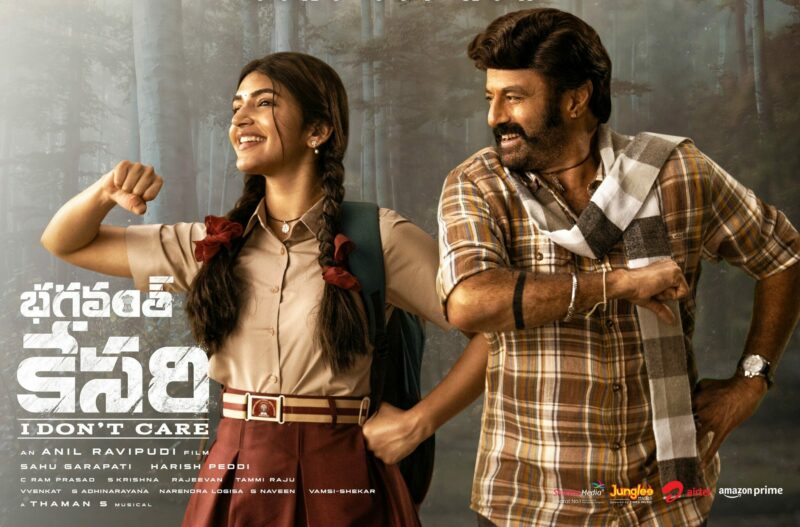
Balakrishna and Sreeleela in ‘Bhagavanth Kesari’. (X)
Apart from his usual commercial movies, Bhagavanth Kesari starring Nandamuri Balakrishna was a pleasant surprise as Anil blended Balakrishna’s stardom with an important story of a young girl rising above a certain psychological trauma.
In a way, it was Dangal on steroids. Thankfully the troupes of the army aren’t used here for evoking patriotic feelings. It is more about Sreeleela’s Vijji overcoming her anxiety attacks and in the process becoming a resilient young woman.
In this film, general Anil Ravipudi’s comic troupes are kept to a bare minimum. The film also has powerful dialogues on good touch and bad touch delivered by the terrific Balakrishna.
The track of Kajal Aggarwal playing a supposed psychiatrist is the only occasion where we see trademark Anil Ravipudi touches.
Sreeleela as Vijji
A big strength of the movie was the powerful emotional bond between Balakrishna and Sreeleela’s Vijji. Balakrishna’s character is a foster father to Vijji.
To help Vijji become more resilient, he pushes her to join the army, something which Vijji hates. The portion of Bhagavanth pushing Vijji resulting in her hating him has a distinct hangover of Aamir Khan’s Mahavir Phogat in Dangal.
The movie’s underlying message emphasizes raising girls to be strong, like lions, and this theme comes across powerfully. A notable moment occurs in the pre-climax when, at a critical point, Anil Ravipudi shows Sreeleela fighting the baddies while Balakrishna pretends to be incapable.
There’s a clear reason for this. Both Anil Ravipudi and Balakrishna deserve credit for allowing Sreeleela to take centre stage. Her scenes, where she fights the baddies overcoming her anxiety, form the heart of Bhagavanth Kesari.
F2
F2 directed by Anil Ravipudi deals with familiar themes of frustrated men, in this case, it is Venkatesh’s Venky and Varun Tej’s Varun.
A poster of the film ‘F2’. (X)
Venky is a frustrated husband unable to cope with the system of marriage and the expectations which come with it. Varun on the other hand is a happy go lucky youngster who falls in love with Venky’s sister-in-law. Varun also ends up being frustrated unable to bear the eccentricities of his girlfriend.
The best part of F2 was the entertainment quotient specifically in the first half. Venkatesh played the “subjugated” husband to perfection raising many chuckles with his just his expressions and dialogue delivery.
A particular scene which needs to be mentioned here is when Venkay pours out his emotions about his marriage woes to a patient male dog.
This portion ends up with tears in the dog’s eye making Priyardarshi comment that you not only make families emotional but also dogs. The “juggalbandi” between Venkatesh and Varun Tej was a big plus for the movie enhanced by Anil Ravipudi’s writing.
Varun Tej with his rustic Telangana accent also got a good character and he did a fine job providing able support to Venkatesh.
The second half though went for a toss with some unnecessary characters and a climax which was both convulsed and chaotic; still, the movie was a good entertainer.
F3
F3, the sequel to F2 except for Venkatesh, Varun Tej and some other characters has no connection to F2.
The storyline here is completely different as it focuses on a bunch of men and women driven by greed. A strong aspect of F3 is its entertainment quotient even though it isn’t always politically correct.
Venkatesh and Varun Tej in ‘F3’. (X)
Venkatesh’s character suffers from night blindness; Varun Tej on the other has a specific mannerism to cover his stuttering. A lot of the humour is generated from this.
Much like F2 the “juggalbandi” between Venkatesh and Varun Tej was a major highlight. Talking about the humorous scenes, similar to the first part, there is a portion where Venkatesh talks about his problems to a raging bull, the bull subsequently has tears.
The way it is written by Anil Ravipudi coupled with Venkatesh’s acting makes it very entertaining to watch. Towards the end, there is an important moral lesson that Anil Ravipudi smartly integrates.
This is all about Anil Ravipudi’s strengths and weaknesses as a filmmaker along with what makes him a blockbuster director, here’s hoping that Anil Ravipudi grows from strength to strength and also explores new genres.
This book written by noted film personality K Hariharan is not your conventional biography, it comes across as more of an academic study. For the many Kamal Haasan fans and serious movie buffs the book is a must read.
The filmography of Kamal Haasan is a delight for any true cinephile. The legendary actor has done so many versatile roles both in offbeat and mainstream cinema. Kamal’s penchant for experimenting with different get ups has enthralled his fans over decades. He has many admirers among different age groups and is still going strong. To pick up 40 plus movies out of his illustrious career is a very difficult task for any writer, but K Hariharan does a good job in selecting them which not only reflect Kamal Haasan’s craft but also the influence of politics.
Kamal Haasan in Nayakan
Kamal Haasan and K Balachander: A major highlight of the book is undoubtedly the chapters covering Kamal Haasan’s early movies with the legendary K Balachander. The role of K Balachander in shaping up Kamal’s career is immense and this comes across very strongly. K Balachander’s movies always had a socio political context.
The influence of the Dravadian moment in how K Balachander wrote his characters particularly the women coming across as very strong makes for a fascinating read. Topics of sexuality and the frustration of unemployed youth often found place in K Balachander’s cinema.
The characters which Kamal Haasan played were often surrounded by strong women making him a feminist symbol, this quality made him very endearing to the female audiences of various age groups.
Interpretation of lost and found themes: Another interesting aspect of the book is how K Hariharan looks at the lost and found themes in the movies of Kamal Haasan. A particular mention must be made of his analysis on Michael Madan Kamaraju released in the year 1990. This comedy of errors focuses on three siblings growing up in different places and finally reunited with their mother.
He compares Michael Madan Kamaraju to other famous Indian movies Amar Akbar Anthony (1977) and Raj Kapoor’s (Awaara) which also has the themes of lost and found. K Hariharan puts these movies in the context of many families losing their loved ones while fleeing borders during the tumultuous partition.
Kamal Haasan in Michael Madan Kamaraju
Mention must also be made of the chapter covering Kamal Haasan’s cross over hit Ek Duuje Ke Liye. The nervousness which Kamal Haasan went through (because it was his first Hindi film) while filming the movie and how it went on to defy many odds makes for a very good read. The success of Ek Duuje Ke Liye opened doors to Bollywood for the likes of K S Chitra and K J Yesudas. Interestingly you also had the likes of Lata Mangeskhar, Asha Bhonsle and Udit Narayan making a foray into Tamil and Telugu film industry as a reverse phenomenon.
Another interesting thing about the book is the analysis of Kamal Haasan’s commercial movies. K Hariharan looks at them as part of industrial products. Kamal Haasan viewed commercial filmmakers as simple and honest human beings not governed by philosophies either moral or ethical.
Talking about one of Kamal Haasan’s most political movies Hey Ram there is an interesting analysis on how the initial script was based on the character of Nathuram Godse. Later it became a fictionalized tale of an agonised Hindu wanting to kill Mahatma Gandhi as he suffers a personal loss during the partition. There is a detailed explanation of a scene involving Naseeruddin Shah playing the on screen Mahatma Gandhi. During the shooting in Ooty the musicians were rehearsing the hymn Vaishnava Jana Toh. As soon as Naseeruddin Shah walked in to the set as Mahatma the noisy location went silent and every one walked up to the old man to join in the prayers. K Hariharan describes how Kamal Haasan had Goosebumps all over his body.
Kamal Haasan’s natural flair for comedy has also come out well along with his passion for experimenting with different characters. One slight drawback of the book is that his two Telugu classics Swathi Muthyam and Sagara Sangamam needed more exploration. Even the chapter on Mani Ratnam’s Nayakan doesn’t give much insight except for the very famous breakdown scene.
In its run time of 22 minutes director Adam J Graves subtly touches upon the issue of child labor, however the movie never becomes depressing as the focus is on hope for a better future
Sometimes a short film become a very powerful medium for a director to talk about important subjects. A short movie by nature needs a concise narrative and this can be very helpful for certain directors who aren’t comfortable with the long format of movies and web shows. Anuja directed by Adam J Graves and backed by Guneet Monga, Priyanka Chopra etc has made international waves. Its one of the five movies that has been nominated for the Oscar in the Best Live Action Short Film Category and deservedly so.
The storyline of Anuja streaming on Netflix focuses on two sisters Anuja (Sajda Pathan) and Palak (Ananya Shanbag). Both work in a government factory of Delhi. Things take a dramatic turn when Anuja is given an opportunity of life time due to her strong mathematical skills. It sheds light on the dilemmas faced by Anuja of wanting to break out of the social hierarchy while making sure that she is also able to survive. Through this tale of two sisters the movie gives a glimpse into the dark underbelly of child labor. The movie also takes digs on the nature of matrimonial ads where the focus is always on fair skinned brides.
The best part of Anuja is how it highlights the struggles of marginalized children. Their desires of going to school clashing with the necessity of earning livelihood. This has come out well in the dilemmas faced by both the sisters particularly Sajda Pathan.
The characterization of the government factory supervisor as the calculative villain may across as too predictable but it mirrors the harsh reality. Another striking aspect of Anuja is how it looks at the idea of stealing from the perspective of the downtrodden.
The idea of stealing is generally termed to be bad but sometimes the downtrodden are left with no other option. The exploration of the morality concept in today’s world has come out strongly through this angle. A particular mention must be made of the scene where Palak steals a left over cloth for a reason. She questions the supervisor on why her thieving of left over garments is such a crime.
Both the child actors Sajda and Ananya Shanbag deliver very good performances making the viewers believe in the deep love that the sisters have for each other.
This Rosshan Andrrews directorial is inspired from the director’s own Mumbai Police but with a different touch. ‘Deva’ often plays to the gallery celebrating the rakish ways of its titular character; thankfully though the movie also critiques the inner workings of the police system
Main Cast: Shahid Kapoor, Pooja Hegde, Pavail Gulati, and Kubra Sait
Director: Rosshan Andrrews
Producer: Siddharth Roy Kapur
Music Director: Vishal Mishra
Cinematography: Amit Roy
Rating: 3/5
Right since the first teaser of Deva, there has been a lot of speculation on it being a remake of Rosshan Andrrews’s own Mumbai Police (2013).
Shahid and the rest of the team have reiterated that Deva isn’t Mumbai Police but after seeing the film it’s clear that Roshaan Andrrews has taken inspiration from his own movie.
Thankfully though, Deva has its own unique flavour, unlike the Kalees-directed Baby John, which had plenty of South drama.
Synopsis
For those who haven’t seen Mumbai Police, Deva focuses on inspector Dev Ambre (Shahid Kapoor). He is very arrogant along with being hot-headed.
Dev Ambre has zero tolerance for rules while carrying out his police duties within the boundaries of what he considers right. At the same time, he is seen sharing a solid brotherhood with ACP Rohan D’ Silva ( an impactful Pavail Gulati).
Pravesh Rana plays a senior officer and the boss of Dev called Farhan. Farhan often gets angry with Dev’s ways of doing his duty but still stands with him.
Pooja Hegde plays a crime journalist called Diya, she is the daughter of a constable. Dev and Diya eventually fall in love but Dev’s life takes a very dramatic turn when Rohan is shot by a mysterious killer while he is being felicitated.
This is the story in brief.
Strong and weak aspects
The beginning portions of Deva are mostly a series of sequences celebrating his machismo. Shades of Shahid Kapoor’s blockbuster and very polarizing Kabir Singh can be found in numerous instances.
But the movie picks up pace after the tragic death of Rohan. There are constant twists and turns with intricate subplots.
The interval bang showcasing the serious accident of Dev, resulting in a memory loss is a major high point as the viewers, particularly those who haven’t seen Mumbai Police would be tensed about the killer’s identity.
In the second half, the viewers see Shahid’s persona changing as Dev grapples with what he was once while handling an important task at hand.
There is a distinct mellowness in the way he goes about things, but at the same time, there is a quiet determination too. This has come out brilliantly in both the writing done by many like Abbas Dalal and Hussain Dalal, coupled with Shahid Kapoor’s acting performance.
Mention must also be made of the dialogues where the court criticizes Deva’s hooligan ways strictly warning him that police are not meant to behave like rowdies terrorising people.
A major problem with Deva is its women characters and a haphazard love story. Pooja Hegde as Divya looks gorgeous as always playing the honest crime journalist competently but the way her track has been integrated leaves a lot to be desired.
Kubbra Sait as a women cop doesn’t add much to the proceedings either. The character of Kubbra Sait could have added a different dimension given that we mostly see men as police officers. But she becomes more of an add-on, not serving much purpose.
Shahid’s show all the way
There is an important plot twist in the pre-climax. Many details of which cannot be revealed here but this portion gives an emotional subtext into the hyper-aggressive nature of Deva in the first half.
Shahid Kapoor in ‘Deva’. (x)
Shahid brings in a raw intensity brilliantly capturing the emotional turmoil of a man carrying the burden of his father’s criminal past.
The revelation of who is the killer and the motivations behind it will definitely shock the viewers. The brotherhood between Pavail Gulati and Shahid Kapoor has also come out well.
Pavail Gulati brings in an emotional depth proving to be the perfect anthesis to Shahid’s Deva. Pravesh Rana also lends solid support as the senior inspector; he brings both authority and warmth to the part.
Mumbai, an integral part
The use of Mumbai’s rustic surroundings brings in an extra layer. The city with its many layers becomes a character in itself, the cinematography of Amith Ray is simply brilliant.
A particular mention must also be made of how he captures the action sequences designed by Parvaz Sheikh and Abbas Ali Moghul among others.
The songs don’t make much of an impression except for “Bhasad Macha”, the combination of Shahid Kapoor’s electric dance moves along with the raw energy packs in a major punch. However, Jakes Bejoy’s background score is of the highest order elevating the intense scenes.
Final take
To sum it up Deva thankfully doesn’t completely glorify the cops, something which we have seen a lot in mainstream cinema. At the same time, a much better first half would make this investigative drama a more wholesome experience.