Khushi: Love, God And Marriage

The film takes some time to get going but director Shiva Nirvana eventually finds his footing particularly in the second half

Khushi (Telugu)           

Starcast: Vijay Devarakonda, Samantha, Murali Sharma, Sachin Khedekar, Saranya, Vennela Kishore and others

Director and writer: Shiva Nirvana

Producers: Naveen Yemeni and Yalamanchili Ravi Shankar

Production Company: Mythri Movie Makers

Music: Hesham Abdul Wahab

Production Company: Mythri Movie makers

Running time: 2 hours and 45 minutes

Genre: Romantic comedy/drama

Shiva Nirvana’s Khushi doesn’t particularly boast of a novel plot. There are certain similarities that the viewers will find with Mani Ratnam’s Sakhi. However,  there are some interesting things also that the director does. Chief among them is the background of his two protagonists. The hero’s father is a renowned atheist with an absolute distaste for god and astrology. On the other hand the heroine’s father is a staunch believer in god who is also known for his religious lectures. This adds a lot to the story, more so when the drama part kicks in. These two characters are played by Sachin Khedekar and Murali Sharma respectively. 

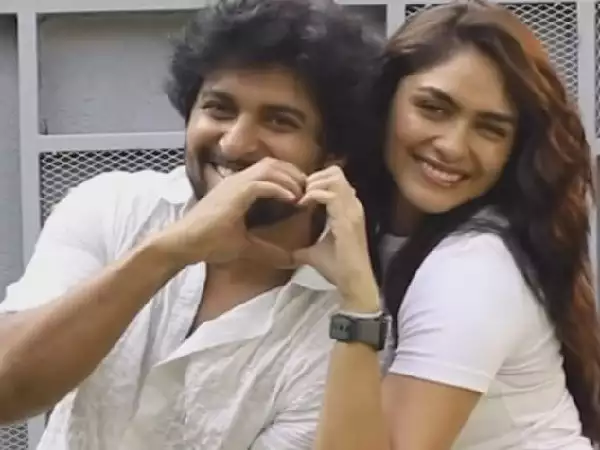
Samantha and Vijay Devarakonda

In brief it is a usual love story with a happy ending via many twists and turns. The conflict point in this movie is faith versus non faith. Viplav Devarakonda’s (Vijay Devarakonda) family represents non faith while Samantha’s family represents faith. Vijay’s father is Lenin Sathyam (Sachin Khedekar) and Samantha’s father is Chadarangam Srinivasa Rao (Murali Sharma). Previously a huge debate on TV had happened between them. Understandably both Chadarangam and Lenin aren’t too happy with their children’s choices. Yet they agree to meet to discuss their marriage. But Chadarangam declares that Viplav will have to do a homam along with his father before marriage; otherwise Aradhya cannot become a mother. Lenin Sathyam is enraged and tells his son to forget about Aradhya. But the two rebellious lovers decide to follow their hearts. In Sakhi style they make their own home. The rest of the story is about the issues that crop up given the two vastly different family backgrounds and how they resolve them.  

For any romantic film to work two aspects are of prime importance. One is having a likeable lead pair and the other is having hit music. Khushi scores in both these departments. Vijay Devarakonda and Samantha are in fine form both individually and together. They share a good chemistry.

Vijay devarakonda, Sumantha and Shiv Nirvana

It is refreshing to see Vijay Devarakonda shed his mass avatar and do an urban character. Vijay does a terrific job in portraying the various shades of Viplav; whether it is his lover boy act in Kashmir or the dramatic portions of the second half. Vijay’s comic timing also leaves viewers in splits. In the Kashmir portions Viplav speaks in broken Hindi and this leads to many amusing moments. Maybe a revenge on SRK’s broken Tamil in Chennai Express.

Vijay also takes a jibe at his own hugely successful yet hugely controversial Arjun Reddy in an interesting scene. There is a bit where a lady maid gets scared on seeing Viplav. He assures her that people have unnecessarily created a bad image of him in the market but he is actually a feminist. This leads to many laughs in the theatre.

Samantha is also in fine form complementing Vijay well. She is particularly effective in the more intense scenes.

Sachin Khadekar

The music of Hesham Abdul Wahab is another major winner. My favorite songs in the album are Na Roja Nuvve and Aradhya. Except for one number the rest of them are rich in melody.

The second half of Khushi is more engaging as it deals with the marital problems that the couple faces. For example there is an episode of Aradhya’s miscarriage. Aradhya believes that the miscarriage happened because of Viplav not doing the homam leading to some arguments. There is certain realisticness to the way Shiva Nirvana has staged these scenes.

 Murali Sharma and Sachin Khedekar shine the brightest among the supporting cast as two men who firmly believe in their respective ideologies. There is a touching scene in the pre- climax where both the fathers have an emotional moment.

Murali Sharma

What doesn’t work for Khushi is the stretched first half. The Kashmir portions needed to be trimmed down. Aradhya’s façade of being a Pakistani Muslim comes across as stretching things too far just to prove viplav’s broadmindedness.

Also there are some characters which could have been better developed like the ones of Rohini and Jayaram. Rahul Ramakrishna as Vijay’s buddy is underutilized as always but Vennela Kishore does raise some laughs in the first half.

Overall Khushi is an enjoyable romantic drama as the title suggests. The message of love triumphing over everything is something that all of us could imbibe given the politically troubled times we are living in.

Allu Arjun: The Stylish Star Of Tollywood With Unconventional Looks

From a shaky start in ‘Gangotri’ to a National Award-winning performance in ‘Pushpa’, he conquered many hearts over the years.

Starting from Gangotri in 2003, Allu Arjun has done 26 films so far. Among these is a short film titled I Am That Change (2014) directed by the star filmmaker Sukumar.

There are special appearances, too, like the one in Shankar Dada Zindabad (2007). Before Gangotri, he played a small role in Megastar Chiranjeevi’s Daddy (2001).

Gangotri was a prestigious project in more ways than one. Apart from the film being Allu Arjun’s debut as a leading man, it was also K Raghavendra Rao’s 100th movie.

Gangotri was a success at the box office, but the actor’s performance got mixed reviews.

There was a visible rawness. The film also didn’t have any of the stylish dance steps that have become a trademark of Allu Arjun now.

In short, there was no indication of the pan-India superstar he would become one day.

As Stylish Star

Post Gangotri, Allu Arjun went through a rough patch for a year or so. But he reinvented himself both as a performer and as a Stylish Star with Sukumar’s directorial debut Arya (2004).

In Arya, the actor played a free-spirited guy who falls in love with an introverted girl Geeta (Anuradha Mehta).

Geeta is already the love interest of someone else. But Arya doesn’t give up. He pursues his love.

What made the film work were the fresh treatment and the positive attitude of the protagonist. For the most part of the movie, Arya keeps asking Geeta to just feel his love. This was a new approach that struck a chord with the audience.

Through the character of Arya, Sukumar also explored the concept of one-sided love. In fact, there is also a song that celebrates one-side lovers. His performance was a far cry from his shaky start in Gangotri.

He not only proved himself as a performer, but his dancing skills also caught the attention of the moviegoers. Since Arya, there has been no looking back for the actor. He conquered many hearts across the demographic of India.

What makes Allu Arjun’s success even more special is the fact that he doesn’t have the conventional looks of a hero, unlike Prabhas or Mahesh Babu.

Before the latest Pushpa: The Rise (2021), some of his more prominent movies included Happy (2006), Vedam (2010), Son of Satyamurthy (2015), Julayi (2012), and Ala Vaikunthapurramuloo (2020).

An early movie that showed Allu Arjun’s potential as a serious actor was Vedam directed by Krish Jagarlamudi. In the film, he played the role of a cable operator who isn’t particularly likeable.

He pretends to be a big shot in order to marry a rich girl. There is a transformation that the character goes through and Allu Arjun doesn’t miss a single beat in capturing the different nuances.

As a stellar performer

In Happy, he is mostly a happy-go-lucky guy named Bunny. At the same time, there are some scenes that show his capability as a performer. A case in point is the scenes that he shares with Manoj Bajpai.

In one particular scene, Bunny cooks up a story of how he and Madhumati (Genelia) are madly in love and won’t be able to bear separation. He leaves the police station crying, which also leaves Manoj Bajpai in tears.

But the minute he comes out he becomes his normal self. The merger of grief and laughter was done seamlessly.

I am sure everyone in the theatre would have noticed and appreciated his talent in that particular bit. He also shined in an emotionally charged pre-climax.

Trivkram and Allu Arjun

Before Son of Satyamurthy, Trivikram and Allu Arjun teamed up for Julayi.

It was a stylish entertainer about an intelligent youngster who wants quick bucks and would take any risks to achieve his goal.

The film had many witty one-liners in trademark Trivikram style, which Allu Arjun delivered effortlessly.

Son of Satyamurthy was a different outing from Julayi. Here, he played the younger son who undergoes a life-changing transformation after the sudden death of his father.

The actor showed his versatility with an emotional performance, particularly in the scenes where he remembers his father. It was a welcome restraint from the actor.

Ala Vaikunthapurramulo, also directed by Trivikram, is a key milestone in the actor’s career.

Before Pushpa: The Rise happened, Ala Vaikunthapurramulo announced the arrival of the Stylish Star in the Hindi Market.

At its core, Ala Vaikunthapurramulo is a movie filled with regressive undertones. However, what made it work was the skilful treatment of Trivikram and Allu Arjun’s charisma.

The script relies heavily on the charisma of Allu Arjun and the actor didn’t disappoint one bit.

He excelled in portraying all the shades of Bantu. He was particularly good in his combination scenes with Murali Sharma.

He also shined in roles where the focus was not always on him. For example, in Gunashekhar’s Rudhramadevi (2015), he played a fearsome warrior called Gona Ganna Reddy.

His screen presence coupled with his dialogue delivery proved to be a much bigger attraction than Rana who had more screen time. His Telangana dialect was also an absolute delight.

Allu Arjun as Pushparaj

Now let’s come to the film that has given Allu Arjun his National Award — Pushpa: The Rise. His role in Pushpa is very different from what the actor did so far.

There is no trace of the Stylish Star even in the dance sequences. What you see is only the character and not Allu Arjun.

The role of Pushparaj is challenging in many ways starting from a particular body language to a specific dialect that the actor speaks.

He did a fantastic job of portraying a rustic and downtrodden character. On the outside, Pushpa is a tough soul, but there is also a strong vulnerable side.

Allu Arjun delivered an immersive performance that made the viewers root for him.

In these 20-odd years, Allu Arjun’s journey went from strength to strength and made him a huge pan-India Star. Here’s hoping that Pushpa 2 lives up to the massive expectations that have only increased after the national award win.

(PS: Many fans are hoping to see Allu and Aloo (Alia Bhatt) working together in a feature film. It would be a treat to watch the two National Award winners in the same frame.)

https://thesouthfirst.com/entertainment/allu-arjun-the-stylish-star-of-tollywood-with-unconventional-looks/

Dream Girl 2: Ayushmann Khurrana Entertains As Pooja In This Comedy Of Errors

Ayushmann Khurrana effortlessly switches between the roles of Karam and Pooja. He is particularly impressive in the female avatar.

Falters in the second half
Dream Girl 2 (Hindi)
  • Cast: Ayushmann Khurrana, Ananya Panday, Paresh Rawal. Seema Pahwa, Abhishek Banerjee, and Asrani
  • Director: Raj Shaandilyaa
  • Producer: Ektaa R Kapoor, Shobha Kapoor
  • Music: Meet Bros, Tanishk Bagchi, and Arko
  • Runtime: 2 hours 2 minutes

Starting from Vicky Donor (2012), Ayushmann Khurrana has always tried to push the envelope with his on-screen characters. There has always been an effort to do something different, even when he has done films in the slapstick zone.

For example, in Dream Girl (2019), Ayushmann’s Karam has an impressive ability to imitate a female voice. This comes from his experience of playing female characters in plays. In his desperation to find a job, he starts working at a call centre with the name of Pooja.

In Dream Girl 2, writer and director Raaj Shaandiliyaa goes one step ahead with Ayushmann becoming Pooja to the extent of wearing sexy sarees as well.

Synopsis

Dream Girl 2 is none other than Karamveer aka Karam (Ayushmann Khurrana). He and Pari (Ananya Pandey) are deeply in love and want to get married as soon as possible. However, there is a loan that Karam has to clear.

This loan is his father Jagit Singh’s (Annu Kapoor). Karam doesn’t have a stable job. In his desperation to earn money, Karam transforms himself into a bar dancer by the name of Pooja with some persuasion from his dad and best friend Smiley (Manjot Singh).

Pooja impresses everyone with her dance moves. Running parallel to this is the track of a Muslim patriarch, Abbu Saleem (Paresh Rawal). Smiley loves Abbu Saleem’s daughter, and she also reciprocates, but there is a hurdle in the form of Abhishek Banerjee’s Shah Rukh.

Shah Rukh is the son of Abbu Saleem, who has depression problems. Abbu Saleem tells the loving couple that he will agree to their marriage only after his son comes out of depression. Smiley convinces Karam to become a female psychiatrist. However, this only ends up in further complications which can’t be elaborated here.

What follows is an assemblage of funny situations with one thing leading to another.

On the shoulders of Ayushmann Khurrana

Not surprisingly the biggest strength of Dream Girl 2 is Ayushmann Khurrana. The actor effortlessly switches between the roles of Karam and Pooja. He is particularly impressive in the female avatar.

The actor leaves you thoroughly charmed with his body language, make-up and dance moves. The actor’s comic timing also leaves the audience in splits throughout. For example, there is a scene where Abhishek Banerjee tries to seduce Pooja, and the latter’s wig comes off.

Pooja starts shrieking, “Hairfall, hairfall.” The humour in Dream Girl 2 isn’t of the intelligent type but Ayushmann along with the supporting cast keeps the proceedings engaging.

Other performances

Out of the numerous subplots my favorite is the one involving Seema Pahwa’s Jumani. She has been through multiple marriages and is absolutely unapologetic about her desire to find true love. At one point she falls head over heels in love with Karam. Seema Pahwa aces the part with her uninhibited act.

The scenes between Abhishek Banerjee and Ayushmann are also good to watch. Abhishek Banerjee’s role doesn’t have much scope for comedy, but still, both the actors feed off each other well.

The music composed by Meet Bros, Tanishk Bagchi and Arko has a good variety. Special mention must be made of the songs picturised on Ayushmann in the role of Pooja.

Final take

What pulls Dream Girl 2 down is the elongated second half. The comedy of errors runs out of steam as there isn’t much meat left by then.

In the pre-climax, Karam has a monologue with undertones of social commentary about middle-class angst, but this doesn’t gel well with the overall tonality.

(Views expressed here are personal.)

King Of Kotha: Dulquer Salmaan Comes Out All Guns Blazing In This Lengthy But Gritty Gangster Drama

Director Abhilash Joshiy doesn’t reinvent the wheel but there is enough meat for fans of Dulquer and action lovers

Starcast: Dulquer Salmaan, Shabeer Kallarakaal, Prasanna Kumar, Shammi Tikalan, Aishwarya Lekshmi and others

Director: Abhilash Joshiy

Writer: Abhilash G Chandran

Cinematography: Nimish Ravi

Music and background score: Jakes Bejoy

Producer: Dulquer Salmaan and Zee Studios

Production Companies: Wayfare and Zee Studios

Running time: 2 hours and 55 minutes

Genre: Action/drama

Gangster films are one of the most overused genres in films across the world, whether it is Francis Coppola’s Godfather, Mani Ratnam’s Nayakan, Ram Gopal Varma’s Satya and Company among others. Debut director Abhilash Joshiy takes the familiar concept of two friends turning against each other and gives it a retro touch. At 2 hours and 55 minutes King of Kotha does test the viewers’ patience.  But what powers King of Kotha are the performances led by Dulquer Salmaan and Shabeer Kallarakkal. The film is also technically brilliant particularly the cinematography and the art direction.

King of Kotha is set in a fictional town by the same name. The time period is 1980’s. Raju (Dulquer Salmaan) and Kannan (Shabeer Kallarakaal) are buddies/gangsters. They have a strong brotherly bond. What makes them different from other gangsters is that they wouldn’t deal with drugs. Tara (Aishwarya Lekshmi) is the love interest of Raju. Things take a drastic turn when the brotherly bond with Kannan breaks. Due to certain reasons Raju goes into exile and Kotha is no longer the same. Prasanna Kumar plays the police officer Shahul Hassan. Paradoxically he brings Raju back to set things right in the current time.

The strongest pillar of King of Kotha is easily the dynamics between Raju and Kannan. Abhilash Joshiy does a good job in exploring the friendship between these characters and also how things go sour between them. He manages to give some nice touches to this predictable angle. For example there is a scene in the second half when Raju and Kannan reminisce about their past days in a hotel room. In a particular moment Raju talks about his plans to set up a farm and grow apples in the future. This leads to a chuckle from Kannan.

Another angle worth mentioning here is the father and son relationship between Raju and Kotha Ravi (Shammi Thilakan). They share some good emotional moments.

Director succeeds in presenting Dulquer as a mass hero. Dulquer is presented as a feared gangster in both the past and the present but at the same time he is successful in humanizing Raju. There are occasions where Raju comes across as defeated both mentally and physically.  Dulquer Salmaan once again shows his versatility with a knockout performance.

The action sequences are raw in nature with doses of bloodshed. These sequences are not for all but still there is some thrill in seeing Dulquer delivering those punches. The background score by Jakes Bejoy is an absolute delight particularly in the scenes elevating Dulquer.

The cinematography of Nimish Ravi is another big plus for King of Kotha. He is successful in capturing the raw terrain through his lens.

Apart from Dulquer the other actor who makes a solid impression is Shabeer Kallarakal. The actor makes for a formidable opponent. In fact Dulquer shares more chemistry with Shabeer than his leading lady.

One big problem with King of Kotha is the very stretchy run time. There are passages which could have been easily chopped off. The predictable nature of things also plays a spoilsport. Some of the subplots could have been crisper.

Overall Dulquer’s performance coupled with the Visuals make this Kotha worth a visit.

Guns & Gulaabs: A Blend Of ‘Gangs Of Wasseypur’ And ‘Mirzapur’

Another story on drugs but worth a watch for the ensemble cast and the eccentric characters created by the director duo — Raj & DK.

Not as brilliant as Raj & DK’s previous ventures.
Guns & Gulaabs (Hindi)
  • Cast: Dulquer Salmaan, Rajkummar Rao, Adarsh Gourav, and Gulshan Devaiah
  • Director: Raj & DK
  • Producer: Raj & DK
  • Music: Aman Pant
  • No. of episodes: 7
  • OTT platform: Netflix

Raj & DK carved a niche for themselves in the web series zone with the two seasons of The Family Man (2019, 2021) and Farzi (2023).

In both the web shows, the director duo took up global issues and portrayed them through a humanistic lens.

But with their latest outing — Guns & Gulaabs, they seem to have entered more into the space of Gangs of Wasseypur (2012) and Mirzapur (2018, 2020). However, what remains the same is their trademark humour.

Synopsis

The story of Guns & Gulaabs is set in the fictional town of Gulaabgunj during the 1990s.

Ganchi (late Satish Kaushik) is a drug dealer who signs a big deal with a Kolkata-based businessman named Sukanto Chatterjee (Rajatava Datta). As per the deal, Ganchi needs to deliver a big quantity of opium to this businessman in just a month.

Paana Tipu (Rajkummar Rao) is the son of the late Bablu Tiger (Arijit Dutta), a key member of the Ganchi Gang. Tipu is a mechanic with zero interest in entering his father’s profession. He is head over heels in love with a school teacher named Chandralekha (T J Bhanu).

However, Tipu’s life takes an unexpected turn when he kills two people, in a fit of rage, who work for a contract killer named “Chaar Cut” Atmaram (Gulshan Devaiah). This gang is responsible for the death of his father Bablu Tiger.

Jugnu (Adarsh Gourav) is the son of Ganchi who is both effeminate and also savage. He is desperate to win the approval of his father. He gets an opportunity to fulfil his dreams when Ganchi meets with an unexpected accident.

Arjun (Dulqer Salmaan) is the seemingly honest cop and the perfect family man. He was a deputy commissioner of police in Delhi during the time of the Bofors scam. Now, he is transferred to Gulaabgunj with a simple brief of cleaning up the place.

Running parallel to these characters are a bunch of schoolchildren. Among the kids, the most important one is Tanishq Chaudhary playing the troublemaker Gangaram.

Raj & DK smartly integrate this track into the main plot of gang violence and the opium trade.

Eccentric characters

What also makes Guns & Gulaabs worth a watch are the eccentric characters that Raj & DK created. Most of them come in shades of both black and white.

For example, Rajkummar Rao starts as a reluctant son whose only aim is to become a famous mechanic and marry the school teacher Chandralekha. His scenes with TJ Bhanu bring a smile to the viewer’s face.

The actor also leaves you in splits with his fantastic comic timing. There is certain likeability to Tipu even after he becomes a part of the Ganchi’s Gang.

Rajkummar Rao portrays all these shades with his usual finesse.

The combination of scenes between Rajkummar and Dulqer, though few in number, is still good to watch.

Through the character of Jugnu, Raj & DK explore the journey of a young man who is stuck between effeminateness and living up to his father’s expectations. There is a chilling scene at the end where Jugnu pours out his frustration to his dad.

It gives goosebumps to viewers, thanks to the performance of Adarsh Gaurav.

Tipu and Jugnu have a striking commonality — both are burdened by the legacy of their respective fathers.

As mentioned in the beginning Dulqer Salmaan’s Arjun is initially presented as the perfect cop and the ideal family man. But as the show progresses past skeletons keep coming out.

One of these includes a past affair with Yamini (Shreya Dhanwanthary). The duality of Arjun is portrayed well. Dulqer delivers the cuss words with conviction.

The track of the school children is effectively used to address how students are usually slotted under a particular category and the consequences it has on their personalities.

An important track that needs to be mentioned here is the student’s (Gangaram) infatuation with Chandralekha.

Flaws

Nevertheless, one big problem with Guns & Gulaabs is the tying up of the various subplots.

The last few episodes feel cluttered. You get the feeling that Raj & DK were in a hurry to wrap up the web series. The last episode, in particular, even with an interval in between feels much laboured.

The female characters, except TJ Bhanu, don’t make any impression.

Shreya Dhanwanthary, in particular, is criminally underused. This is sad because the women in both The Family Man and Farzi — be it Samantha, Priyamani, or Rashi Khanna — were featured in full-length roles as strong and powerful ladies.

Technical crafts

One of the things that stand out in Guns & Gulaabs is the technical department.

Pankaj Kumar does a beautiful job of taking back the audiences to those times with his lens.

In this, he is aided by a solid art direction department.

Aman Pant’s background score complements the period perfectly. It has the right retro feel. Both the background score and the cinematography enhance the show in a significant way.

Verdict

In all, Guns & Gulaabs do not entirely match up to the brilliance of the director duo’s previous works. But still, it is worth watching, particularly if you like crime thrillers.

(Views expressed here are personal.)

Made In Heaven Season 2: A Gripping Critique On Social Issues

Despite a few editing lapses, the directors explore different topics and deliver a solid show, once again.

A worthy follow-up!
Made In Heaven Season 2 (Hindi)
  • Cast: Sobhita Dhulipala, Arjun Mathur, Vijay Raaz, Mona Singh, Shashank Arora, Mrunal Thakur, Pulkit Samrat, Radhika Apte, and Anurag Kashyap
  • Directors: Zoya Akhtar, Alankrita Srivastava, Neeraj Ghaywan, and Nitya Mehra
  • Producers: Excel Media & Entertainment and Tiger Baby
  • Music: Sagar Desai, Dub Sharma, Balkrishan Sharma, and Sherry Mathews
  • No. of episodes: 9
  • OTT platform: Amazon Prime Video

The first season of Made in Heaven created by Zoya Akhtar, Nitya Mehra, Reema Kagti, Prashant Nair, Alankrita Shrivastava, and Neeraj Ghaywan was a gripping take on the affluent society of South Delhi.

In the web series, the directors looked at the hypocrisies beneath all the glitter and glamour.

At the heart of Made in Heaven are the two wedding planners Tara Khanna (Sobhita Dhulipala) and Karan (Arjun Mathur). Tara was born into a typical middle-class family but her luck changes when she gets married into a rich South Delhi family.

Karan, on the other hand, is a gay who has unattached hookups.

Through each wedding, the directors explore different topics along with the upheavals that Tara and Karan face, both professionally and personally.

Synopsis

The second season of the web show, Made in Heaven Season 2, starts with Tara and Arjun trying to reconstruct their business which is facing financial issues.

As a result, they set up their office in an old dilapidated house with a new business partner Jauharji (Vijay Raaz) reprising his role from the first part.

In order to have tight control over the financés he brings in his wife Bulbal Jauhar (Mona Singh).

Apart from her, another new addition to the team is Meher (Trinetra Haldar).

Shashank Arora and Shivani Raghuvanshi continue their parts of Kabir and Jaspreet respectively.

Much like the first season, this time too, the creators push the envelope in exposing the double standards and hypocrisies that dwell in our society through different weddings.

For example, one of the episodes is about a successful author and Professor Pallavi Menke (Radhika Apte) who asserts her Dalit identity at every step. She insists on having a Dalit Buddhist wedding in addition to a traditional ceremony.

What is also similar is the various complexities playing out in the individual lives of Tara and Arjun.

The best part of Made in Heaven Season 2 is how the directors integrated the different social aspects of our society in an engaging manner.

Yes, there are times when the viewers feel the length of the episodes could have been trimmed. However, the impact doesn’t diminish.

Each episode ends with Shashank Arora’s social commentary. He raises uncomfortable yet important questions.

The Dalit episode definitely packs a bigger punch, thanks to Neeraj Ghaywan’s direction in addition to Radhika’s fiery performance.

Other episodes also make a strong impact.

A good example of this is the one centred on Kriti Malhotra and Gulshan Raina (Neelam Kothari and Samir Soni respectively).

This episode has also been directed by Neeraj Ghaywan. Kriti and Gulshan were lovers once upon a time in college. Now in their 50s, they are having an extra-martial affair behind the backs of their respective spouses.

The episode ends with Kriti taking a bold decision that doesn’t go down well with her children.

Effortless performances

Made in Heaven Season 2 also does a good job in the way it portrays a transgender character. There is certain sensitivity both in the writing and execution of the transgender person (Trinetra Haldar) who delivers a confident performance.

Special mention must also be made of Mona Singh. Her character Bulbal comes across as a tough woman in the office. But at the same time, there is also a vulnerability in the scenes with her rebellious teenage son.

Mona Singh does a fantastic job of portraying these shades.

One of my favourite characters apart from Radhika Apte is the one played by Mrunal Thakur. She plays a beauty queen struggling in an abusive relationship. The actress does a wonderful job, particularly in the emotional bits.

Sobhita and Arjun Mathur take off effortlessly from where they left in the first season.

In the second season, Sobhita as Tara has to literally restart her life after the separation from her husband Adil (Jim Sarbh).

Tara is someone who is both vulnerable and manipulative. The actress does a good job of bringing out these shades.

Arjun Mathur is in impressive form with his arresting performance.

Final Take

To sum it up, the title “Made in Heaven” actually feels like a paradox because of the way most of the marriages in this series end up. However, it’s a worthy follow-up to the first season.

(Views expressed here are personal.)

These Bollywood heroes and heroines made our jaws drop as onscreen baddies too!

Unlike many top actors who did negative roles later in their careers, Shah Rukh Khan started off his film career as an anti-hero.

It is hugely liberating for any actor who is relatively comfortable in one’s career doing roles that fall outside the conventional zone. It gives the artiste a certain abandon where he or she doesn’t have to pander to a certain image.

Following is a list of some Bollywood actors and actresses who have tried their hand at grey/negative roles and found varying degrees of success.

Let us start with “Bollywood Baadshah” Shah Rukh Khan.

Shah Rukh Khan

Unlike many top actors who did these kinds of roles later in their careers, Shah Rukh Khan started off his film career with a spat of anti-hero roles.

Both Baazigar (1993) and Darr (1993) made him a household name much before Dilwale Dulhania Le Jayenge (1995).

The impact of Shah Rukh in Darr was so much that the audiences hardly remember Sunny Deol. Not surprisingly, the “Bollywood Baadshah” was the obvious choice for the remake of Amitabh Bachchan’s Don (1978).

In spite of comparisons with Amitabh Bachchan, Shah Rukh made the character of Don his own with his stylish performance in the 2006 release. The actor effortlessly played the negative shades.

Aamir Khan

Among the other Khans, Aamir Khan played a character with grey shades to great success in Deepa Mehta’s directorial 1947: Earth (1999).

Here, he played an ice candy man named Dil Navaz who falls in love with Shanta (Nandita Das), a Hindu woman.

Shanta works as a nanny for a wealthy Parsi Family. However, she loves a Muslim man named Hassan (Rahul Khanna).

This is something that Aamir’s character cannot digest. Partition and the ensuing family tragedy change him completely.

As a person who gets swayed by the hate around him, Aamir delivered a brilliant performance. He did a wonderful job of bringing out the many nuances of his character.

Saif Ali Khan

Saif Ali Khan also made a huge impression with his negative roles in Omkara (2006), Tanhaji: The Unsung Warrior (2020), and Adipurush (2023).

With Omkara, the actor successfully broke his urban image under the skilful direction of Vishal Bhardwaj.

Even in Adipurush, the actor brought certain energy whenever he appeared on the screen.

Interestingly, Salman Khan is the only Khan who did not play a negative role yet.

John Abraham

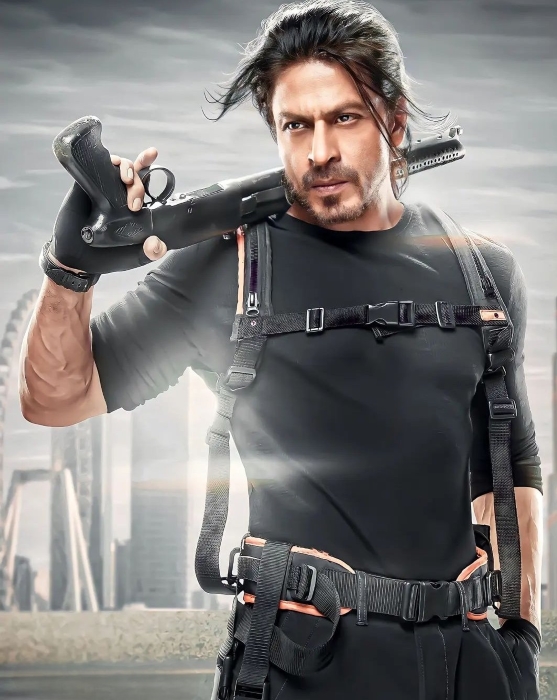
Before Pathaan (2023), John did several roles mainly consisting of chest-thumping patriotism and slapstick comedies. Nevertheless, most of these films didn’t click.

But the actor made a strong comeback in Siddharth Anand’s globetrotting entertainer Pathaan.

In Pathaan John’s Jim was not the regular clichéd villain. He is someone who is always a step ahead of Shah Rukh Khan’s Pathaan, which adds to the victory of the protagonist at the end.

The action scenes choreographed between Shah Rukh and John had a lot of grit.

Jim also had a solid back story explaining why he does what he does.

After a series of sub-par outings, John Abraham was finally in form. The best part of his performance was how he expressed his angst in the more dramatic bits.

Tabu

In Bhool Bhulaiyaa 2 (2022), Tabu played a double role — one of a dutiful daughter-in-law Anjulika and the other of her twin sister Manjulika who wreaks havoc in Anjulika’s life.

As Manjulika, Tabu let her hair down with a delightfully devilish performance. It was clear that the actress was having a blast.

Apart from Kartik Aryan’s comic timing, Tabu’s double act was another major reason why the film worked.

In Andhadhun (2018), the actress played the wife of a yesteryear movie star. Her character had many layers. She was erratic, vulnerable and deceitful all at the same time. She was simply brilliant in portraying these shades.

Tabu also made a huge impact with Maqbool (2003) and Haider (2014). Both these were adaptations of William Shakespeare’s “Hamlet” and “Macbeth” respectively.

Ranveer Singh

There is no denying that Ranveer Singh’s Alauddin Khilji was more of a caricature meant to glorify the Rajputs in Padmaavat (2018).  But at the same time, his Khilji was easily the biggest backbone of the film.

Ranveer gave an electrifying performance which easily overshadowed both Shahid Kapoor and Deepika Padukone. As viewers, we wanted to see more of him on the screen.

Ranveer’s scenes with Jim Sarbh as Malik Kafur were way more enjoyable than the poetic romance of Shahid and Deepika.

Priyanka Chopra

In Aitraaz (2004), Priyanka Chopra played an ambitious woman for whom fame and glamour are more important than anything else. In this quest, Priyanka’s Sonia marries a much older man (late Amrish Puri). Her desire for fame and success is fulfilled, but she doesn’t get sexual satisfaction from her husband.

In order to fulfil her desires, she tries to seduce her ex-boyfriend Raj Malhotra (Akshay Kumar). However, Raj rejects her advances as he is a happily married man. Sonia gets upset by his rejection and falsely accuses Raj of sexually harassing her.

Priyanka played this role very early on in her career. It was a bold move that could have easily backfired, but Priyanka made a huge impact. In fact, she shined more than Kareena Kapoor, who was playing the conventional heroine.

Alia Bhatt

Alia Bhatt‘s Hollywood debut is not exactly a smashing one, particularly for those who have seen her work in Hindi films. But the actress needs to be credited for taking up a grey character in her very first Hollywood venture — Heart of Stone (2023).

She tries to procure it for the villain without knowing his actual purpose. In the process, she is pitted against Gal Godot, the main protagonist.

In the initial portions, we see Alia’s harsh demeanour towards Gal. There is a visible arrogance in the way she speaks to her.

However, there comes a point when Keya goes through an existential crisis. All this was well portrayed by Alia. There is also a tough fight scene between them in mid-air.

Ajay Devgn

In Khakee (2004), Ajay Devgn played a formidable opponent who creates havoc for the police officers, played by Amitabh Bachchan and Akshay Kumar among others.

The actor brought a lot of quirks to his character. The subtle humour that he brought with his dialogues won the hearts of audiences.

His confrontation scenes with Amitabh Bachchan were easily one of the best parts of Khakee. With Khakee, Ajay Devgn showed that he can do a variety of roles.

Amitabh Bachchan

Amjad Khan’s Gabbar Singh in Sholay (1975) is easily one of the most iconic villains that Indian cinema has seen. It is not an easy task to recreate that villainy given how firmly the character has been etched in the minds of the Indian viewers.

But Amitabh managed to play the new-age Gabbar Singh in his trademark style in Ram Gopal Varma Ki Aag (2007). If we keep the comparisons aside, the veteran actor was also quite menacing as a villain.

Apart from the above-mentioned actors and actresses, others too did roles that fell outside the convention of hero and heroine.

For example, Aishwarya Rai Bachchan played a character with a lot of vengeance on her mind in both the Ponniyin Selvan films (2022, 2023).

Akshay Khanna in Race 1 (2008) was superb in his role as a scheming younger brother.

In Race 3 (2018), Anil Kapoor played an illegal arms dealer named Shamsher Singh. Of late, he has been doing more negative/grey roles, and the actor seems to be enjoying them also.

OMG 2: A Compelling Social Drama That Makes You Laugh And Think

Amit Rai’s directorial is another noteworthy addition to the list of mainstream movies that discuss taboo subjects.

A good follow-up!
OMG 2 (Hindi)
  • Cast: Akshay Kumar, Pankaj Tripathi, Yami Gautam, and Pavan Malhotra
  • Writer-Director: Amit Rai
  • Producer: Vipul D Shah, and Ashwin Varde
  • Music: Sandesh Shandilya and Vikram Montrose
  • Runtime: 2 hours 36 minutes

Director Amit Rai’s OMG 2 is not only a good follow-up to the first part but also works as a standalone film.

In OMG-Oh My God (2012), writer-director Umesh Shukla took several digs at the so-called religious men who feed upon the fears of common folk across religions. There was a sharp commentary on all types of religious hypocrisies.

OMG 2 features a different protagonist this time — a Shiv Bhakt. But what remains the same is how it touches upon an important social topic.

Nevertheless, the sequel is a step ahead in many ways.

Synopsis

Kanti Sharan Mudgal (Pankaj Tripathi) runs a pooja shop near a temple. he is a diehard devotee of Lord Shiva and enjoys respect in his area.

His life turns upside down when his son Vivek (Aarush Sharma) gets admitted to the hospital due to exhaustion caused by excessive masturbation (the word used here is a “selfie”).

Things get more problematic when Vivek’s fellow students secretly shoot a video of him doing the act in the toilet and the video gets circulated.  This results in a lot of humiliation for both Vivek and the family.

So, Kanti Sharan decides to flee with his family. It is at this point that Akshay Kumar enters as God’s messenger in human form.

Much like the first film, here too, Akshay guides his protagonist. This time, it is about fighting for his son and not running away from problems.

Kanti Sharan realises that his son has been a victim of misinformation and misguidance. He drags the school authorities and a chemist among others to the court. Here he is pitted against a high-profile lawyer Kamini (Yami Gautam).

Pavan Malhotra plays the judge.

The rest of the story is about how Kanti Sharan brings out the importance of sex education through his arguments and whether Vivek becomes his normal self again.

Highlights sex education

The best part about OMG 2 is how Amit Rai normalises the importance of sex education without making it come across as awkward.

For example, there are scenes where Tripathi shows how the body parts of males and females should be taught in school. He uses the words penis and vagina as normal words. All this comes across as natural.

The film also does a good job of normalising discussions about physical intimacy. There is a progressive outlook that can be felt throughout.

Further, it smartly integrates ancient Indian texts which have references to homosexuality.

There is also a reference to the Kamasutra which Kanti Sharan uses at an important juncture to remind us how progressive the Hindu religion was in the past.

However, the bashing of Macaulay towards the end could have been avoided. It comes as too simplistic.

Commendable performances

What also works for the film are the scenes between Akshay Kumar and Pankaj Tripathi.

The scenes where Akshay imparts wisdom to Pankaj Tripathi bring a smile to your face.

Akshay Kumar plays his part with the right amount of divinity. He also does a Shiv Tandav with admirable ease.

Pankaj Tripathi as Kanti Sharan does complete justice to the arc of the protagonist. His character has several shades from a distraught father to becoming a revolutionary and the actor pulls it off with the finesse that you expect from him.

Yami Gautam as the menacing opponent is also in fine form. She brings in the required aggressiveness and holds her ground.

Pavan Malhotra as the judge has his moments, particularly in his reaction shots.

Verdict

In all, OMG 2 is another noteworthy addition to the list of mainstream movies that discuss taboo subjects.

(Views expressed here are personal.)

Jailer: A Well Packaged Entertainer

There are enough Rajini moments to keep the fans satisfied
Jailor ( Tamil). 3 out of 5
Starcast: Rajinikanth, Vinayakan, Ramya Krishna, Yogi Babu and others special appearances ( Shiv Rajkumar, Mohanlal and Jackie Shroff)
Director and writer: Nelson Dilipkumar
Producer: Kalanithi Maran
Production Company: Sun Pictures
Music: Anirudh Ravichander
Genre: Action/comedy
Running time: 2 hours and 48 minutes

Jailer, directed by Nelson Dilipkumar, is a commercial potboiler with a mix of everything. There is the father and son emotion with a climax that is reminiscent of Kamal Haasan’s Bharateeyudu. There is also lot of dark humour generated through Yogi Babu’s character. The film takes the viewers back to Baasha times. Like in Baasha the protagonist in this film also has a violent past.

The film begins with the introduction of a gang who smuggles temple sculptures. The head of gang is Varman (Vinayakan). The opening scene establishes the brutality of the antagonist. From here we move to Tiger Muthuvel Pandian (Rajinikanth). Pandian is a retired jailor who now spends most of his time making YouTube videos with his grandson. His son Arjun (Vasanth Ravi) is an assistant commissioner of police who is on the trail of Varman’s gang. Arjun is warned by many not to dig too deep into this case but he refuses to stop the investigation. One day Arjun goes missing and the viewers are led to believe that he is dead. But things are not as simple as they appear to be. In brief Jailor is about what happened to Arjun and how Muthuvel Pandian nullifies the baddies with the help of some delightful cameos.

For any masala potboiler it is necessary that the villain is on par with the hero. Jailor doesn’t disappoint you there. Nelson has created a terrific antagonist with the character of Vinayakan. Vinayakan makes a huge impression with just his body language. Even in the lighter moments the actor does a very good job. A special mention must be made of Harshath playing one of the henchmen. In spite of limited screen time he makes a good impact.

Rajinikanth and others in celebration mood

The family moments particularly those between Rajinikanth and his on-screen grandson leave a smile on the viewers face. There is palpable warmth between them.  

The dark humour in the film mostly lands thanks to Yogi babu’s comic timing and the banter that both he and Rajinikanth share. Even the action scenes have a certain element of fun.

Coming to Rajinikanth’s Muthuvel Pandian Nelson has done a good job in designing the character. Initially we see Rajinikanth underplaying but later the character transforms into a menacing force. This has been showcased well. The emotional bits are also done well. There are scenes where there are no dialogues but the emotion is still very much felt.

Vinayakan, the perfect villain

Anirudh’s music and background score is another strong pillar for the film. It elevates the scenes in a major way. My favorite song in the film is Rathamaarey which showcases the family bond.

Finally the cameos have also been integrated well. It is a treat to watch Rajinikanth sharing screen space with Mohanlal and Shiv Rajkumar.

What doesn’t work for Jailor is the subplot of Sunil and Tamannah. It only adds to the length of the second half. Ramya Krishna as a typical housewife plays her part well but some of Rajinikanth’s scenes with her come across as too misogynistic.

Keeping the flaws aside it is good to see Rajinikanth playing his age like Amitabh Bachchan. Hope more good stories are written for him.

Rocky Aur Rani Ki Prem Kahaani: Inclusivity In Karan Johar Style

The director subverts some of his own themes from his previous films; a case in point being how fear is looked upon as respect in our culture.

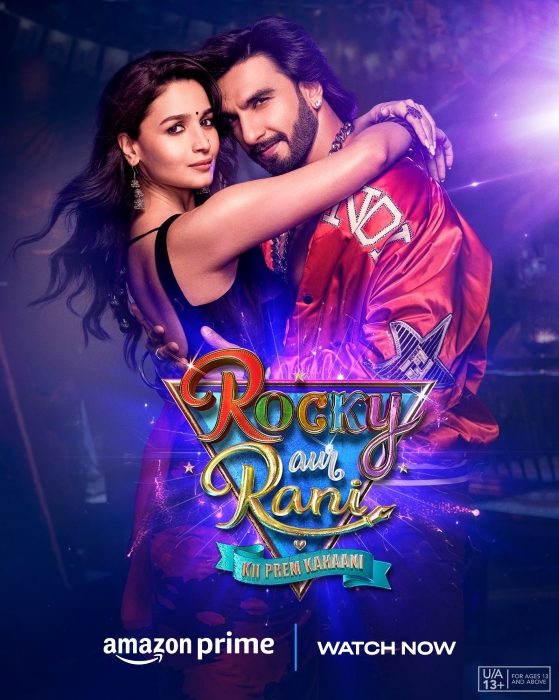
Karan Johar’s Rocky Aur Rani Ki Prem Kahaani is everything that you expect from the filmmaker. There are larger-than-life sets and exquisite costumes among other things.

At the same time, the director subverts some of his own themes from his previous films; a case in point being how fear is looked upon as respect in our culture.

The film also makes a strong case for inclusivity through Tota Roy Chowdhury’s character who loves Kathak which is looked upon as a female dance form. It also makes a strong case for inclusivity between two vastly different cultures — Punjabi and Bengali.

Synopsis

Rocky Aur Rani ki Prem Kahaani begins with the introduction of Rocky and Rani (Ranveer Singh and Alia Bhatt respectively).

Rocky is introduced through a dance number where he is surrounded by many women, including Janhvi Kapoor, Sara Ali Khan, and Ananya Pandey (in special appearances).

He is dancing his heart out; but as soon as his grandmother Dhanalakshmi (Jaya Bachchan) appears, he scampers away because he is afraid of her and also his father.

Dhanalakshmi is the owner of a sweet shop — Dhanalakshmi Group. Rocky is the future heir to this business venture.

After the introduction of Ranveer, we move to Alia Bhatt’s Rani Chatterjee. She is introduced as this firebrand journalist who isn’t afraid to take on the Jugular.

The viewers see her grilling a minister about the rising rape cases by uttering a powerful dialogue: “Nazare Kharab Aapki Parde Kare Hum” (You ever tease us and we have to hide behind the curtains).

This sets the base for the drama to follow.

Rocky’s grandfather Kanwal (Dharmendra) is bedridden most of the time because of paralysis. He suffers from memory loss, too.

He has half picture of a woman in one of his books and Rocky believes that this woman might be the key to his grandfather regaining his memory.

The woman turns out to be Rani Chatterjee’s grandmother Jamini Chatterjee (Shabana Azmi). She is a cultural icon known among her intellectual gatherings.

Rocky arranges a meeting between his grandfather and Jamini through Rani.

Real kahaani

Rani initially treats him in a patronising way. But after some flirtation and through some old Hindi songs, they both fall for each other.

Rani isn’t sure about getting into a relationship with Rocky, given the many differences. But she eventually gives in.

However, things are far from easy as both families are contrastingly different from each other.

While the Chatterjees are woke, the Randhawas are as rigid as you get.

Taking the Telugu film Bommarillu (2006) route, the couple decides to go for a swap. Rani starts living with the Randhawas and Rocky with the Chatterjees.

Rani initially treats him in a patronising way. But after some flirtation and through some old Hindi songs, they both fall for each other.

Rani isn’t sure about getting into a relationship with Rocky, given the many differences. But she eventually gives in.

However, things are far from easy as both families are contrastingly different from each other.

While the Chatterjees are woke, the Randhawas are as rigid as you get.

Taking the Telugu film Bommarillu (2006) route, the couple decides to go for a swap. Rani starts living with the Randhawas and Rocky with the Chatterjees.

Rani faces severe opposition from Dhanalakshmi as she doesn’t like her firebrand nature. on the other hand, Rocky faces cultural issues. In a hilarious scene, he thinks that Rabindranath Tagore is Rani’s grandfather because of his long beard.

Whiff of nostalgia

The best part of Rocky Aur Rani Ki Prem Kahaani is how the director uses old Hindi songs at important junctures.

For example, Dharmendra sings “Abhi Na Jao Chod Ke” for the first time when his character regains his memory.

Some of the other songs include “Yeh Shaam Mastani“, “O Saathi Chal“, and “Do Dil Mil Rahe Hai“. These old songs are a character in itself.

However, the best usage has to be “Dola Re Dola” from Sanjay Leela Bhansali’s Devdas (2002). The song starts off with Tota Roy Chowdhury performing in Durga Puja.

Ranveer’s Rocky joins him much to the delight of Alia Bhatt’s Rani and to the horror of Jaya Bachchan. Here the director is clearly subverting gender stereotypes.

Alia and Ranveer hold the fort

What also works for Rocky Aur Rani Ki Prem Kahaani is how Ranveer and Alia play off each other’s energies. Their contrasting personalities work for the film.

Ranveer Singh as Rocky brings the house down with his faulty English and uninhibited performance. The actor equally shines in the scenes showcasing Rocky’s fragile side.

The best example is the emotional moment that he shares with Alia’s father Chandon Chatterjee (Tota Roy Chowdary).

Alia Bhatt plays the firebrand journalist with the finesse that you expect from her. She more than holds her own opposite the veteran actors. She is first-rate in the dramatic bits like the showdown that happens between her and Rocky post the “Dhindora” song.

Veterans steal the show

Another thing that works for the film is the bonding between Dharmendra and Shabana Azmi. Their scenes bring a smile to the viewer’s face.

Dharmendra doesn’t have many dialogues, but the actor is still quite good. Shabana Azmi is a picture of grace and poise. Some of her dialogues are truly wonderful.

For instance, there is a scene where Jamini opens up about why she fell in love with Kanwal and how she doesn’t regret it.

Jamini also adds that she got more love from Kanwal in just seven days than she got from her husband in their entire marriage. Further, she talks about how her grandfather wasn’t as polished as Rani thinks him to be.

Tota Roy Chowdhury is in a wonderful form as the man who loves Kathak and takes pride in being a dancer. There is a heart-touching scene where he talks about how he was the only male student in his dance class.

Jaya Bachchan as Dhanalakshmi is more or less a personification of all patriarchal characters, including her husband. She seems to have taken revenge on behalf of all the women characters who have been subjugated by them — Sweet Vengence.

Technical crafts

Pritam’s music isn’t exactly a blockbuster but still, it works on the big screen. “Dhindora Baje Re” and “Ve Kamleya” are easily the best of the lot.

Dhindora Baje Re” is further enhanced by the intense scene which precedes the song.

What Jhumka” makes for a perfect Sangeet number. Alia’s dance moves in sarees particularly stand out.
The cinematography by Manush Nandan is appropriately glossy. He captures the wide canvas of the film well through his lens. Having said that, for some, the canvas may come across as too glossy.

Final take

Rocky Aur Rani Ki Prem Kahaani does remind you of 2 States (2014) and Bommarillu. However, this cultural and family clash is hugely enjoyable if you buy into Karan Johar’s world.

(Views expressed here are personal.)