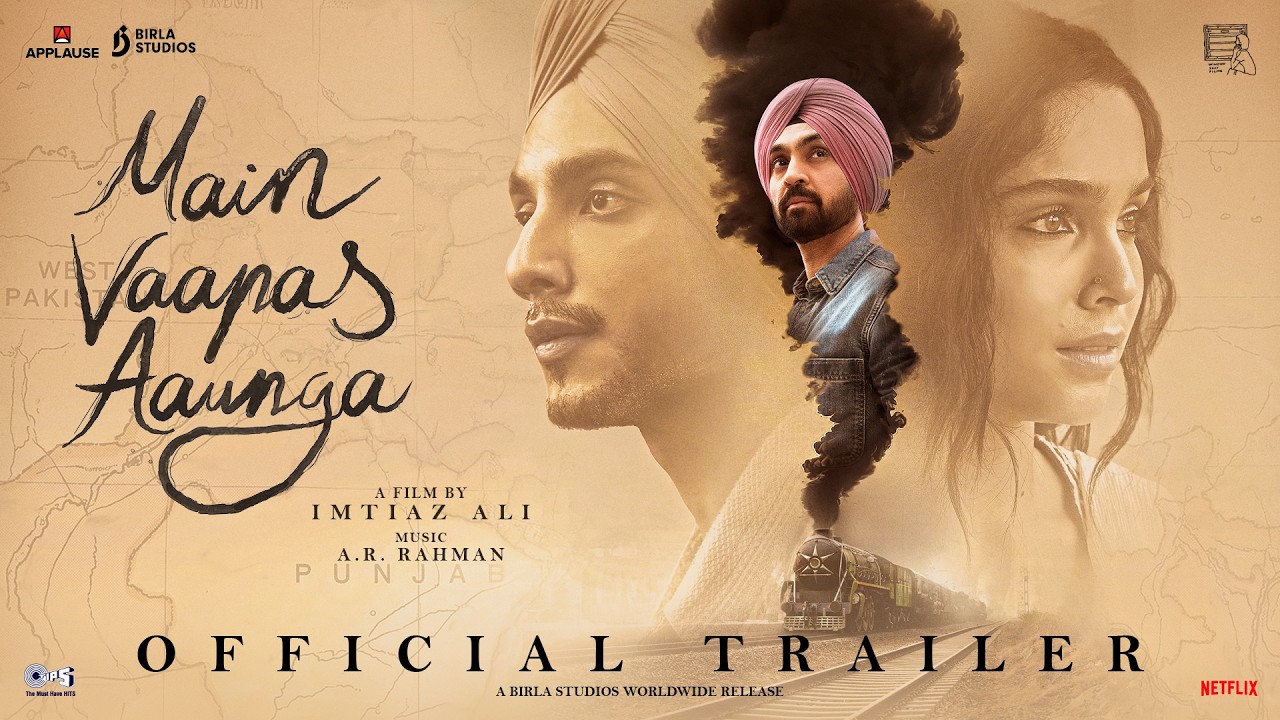
Batwara 1947 on some occasions feels like a spiritual sequel to Imtiaz Ali’s resounding success Main Vaapas Aunga. Shabana Azmi effectively channels her inner Naseeruddin Shah but the film belongs to Sunny Deol. As a conflicted family man who takes a stand for humanity the actor nails both vulnerability and ferociousness. Much like MVA this one too speaks to today’s divisive times. You have a Pakistani Mulla warning the antagonist not to mix religion and politics. There is also an important dialogue by Sunny on the dangers of hatred and its eventual consequences.
Starcast: Sunny Deol, Shabana Azmi, Priety Zinta, Karan Deol, Ali Fazal, Abhimanyu Singh and others
Genre: Drama/action
Direction, screenplay and dialogues: Rajkumar Santhoshi
Additional dialogues: Asghar Wajahat
Based on: “Jis Lahore Nai Vekhya, O Jamya E Nai” play
Music: A R Rahman
Cinematography: Santhosh Sivan
Producers: Aamir Khan and Aparna Purohit
Production Company: Aamir Khan Productions
Running time: 2 hours and 25 minutes
Currently a major trend is happening in Bollywood and that is two types of socio-political movies. On one hand you have the likes of Dhurandhar operating as a PR of the current ruling party. On the other hand, you have filmmakers using the backdrop of partition to tell humanistic tales. Earlier this year you had Sriram Raghavan’s Ikkis, a film about second lieutenant Arjun Kheterpal played by Agastya Nanda. Through a subplot featuring late Dharmendra and Jaideep Ahlawat the film looked at the scars of war and the aftermath of violence. Batwara has echoes of that Sriram Raghavan directorial apart from MVA. What makes this movie even more special is the solid presence of Sunny Deol, an actor who is known for the jingoistic drama Gadar.
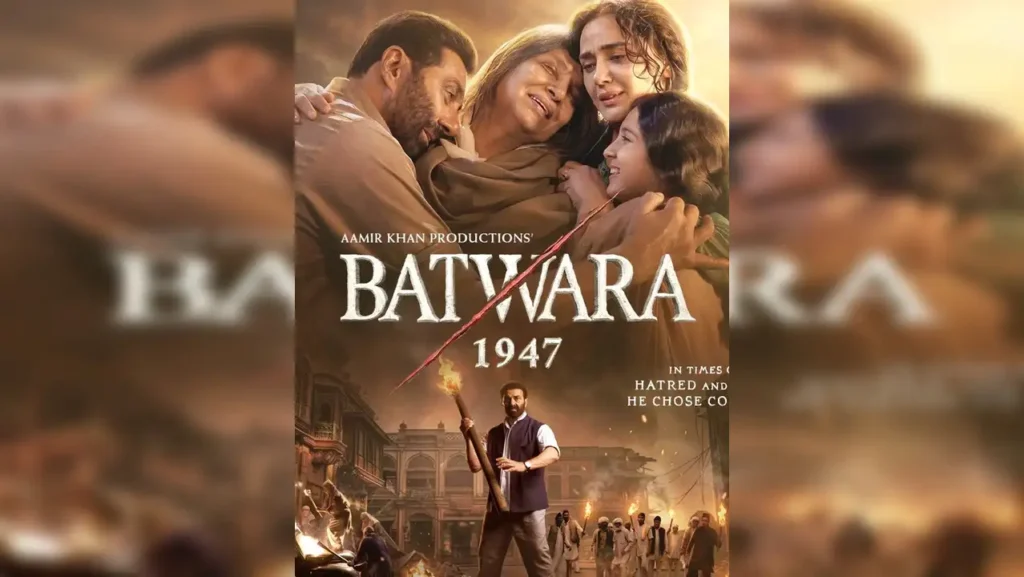
For those not aware, Batwara 1947 is based on an acclaimed Urdu/Hindi play “Jis Lahore Nai Vekhya, O Jamya E Nai” written by Asghar Wajahat. The story in brief follows the tribulations of Sunny Deol’s Sikander Mirza, a businessman forced to flee India during the tumultuous period of partition. Priety Zinta plays his wife Hamida. Sunny Deol’s real life son Karan plays the onscreen son too (Javed). After staying in the relief camp for some time the family is given a supposed vacant haveli but Shabana Azmi playing Durgavati/Mai is still living inside. How Sikander and his family develop a deep bond with Mai and the troubles they face due to an extremist man Yaqoob (a hammy Abhimanyu Singh) forms the main plot of Batwara 1947.
The strong aspect of Batwara 1947 is the changing dynamics between Sikander and Mai. Initially both him and his family have a certain distaste for Shabana Azmi’s character. They look at her as an intruder who needs to be vacated. The meanness with which Sikander and Hamida talk and behave with her is very palpable. But slowly the relationship changes first it is Hamida when she and Durgavati are having a candid chat, Sikander enters and gets terribly upset, scolds his wife for building a camaraderie.
At one-point Sikander thinks of taking Yaqoob’s help also, not caring about the consequences. Hamida puts some sense into her husband leading to an eventual change. All this has been wonderfully captured both in terms of writing and performances. Sunny’s character has been etched well by Rajkumar Santhoshi and Asghar Wajahat. From almost getting swayed away in hate to recognizing its dangers Sunny nails the different shades of Sikander.
Having said that, a few action sequences feel force fitted pandering to the actor’s larger than life image. As far as the dialogues there are many impactful ones. A few examples;
“Koi mazhab bura nahi hoti hai, acha bura aadmi hota hai (no religion is inherently bad, it’s the people who can be good or bad).
“Maa ko Hindu Musalman Mein na baatiye, maa apne hi aap mazhab hai… har insaan ka pehla mazhab maa hai, … har bache ke munh se nikla pehla labz maa hai (Don’t divide a mother into Hindu or Muslim … a mother herself is a religion … every person’s first religion is their mother … the first word a child ever says is mom).
Finally, “Darr raha hai insaan … marr raha hai insaan … aur main jeetey jee marna nahi chahta … main zinda hoon, aur zinda hone ka saboot doonga (People are living in fear … people are dying … but I refuse to die while I’m still alive … I am alive, and I will prove it).
Apart from Sunny Deol and Shabana Preity Zinta and Ali Fazal also make their presence amply felt. Preity much like Sunny does a fine job in showcasing the character’s evolution. She brings in an understated strength especially in the scenes of supporting her husband. Ali Fazal as the poet is also mighty effective in an extended special appearance. His scenes with both Sunny and Shabana give the movie some of its best moments. He particularly excels in the scene of narrating a crucial flashback. Karan Deol is competent too managing to hold his own opposite Sunny.
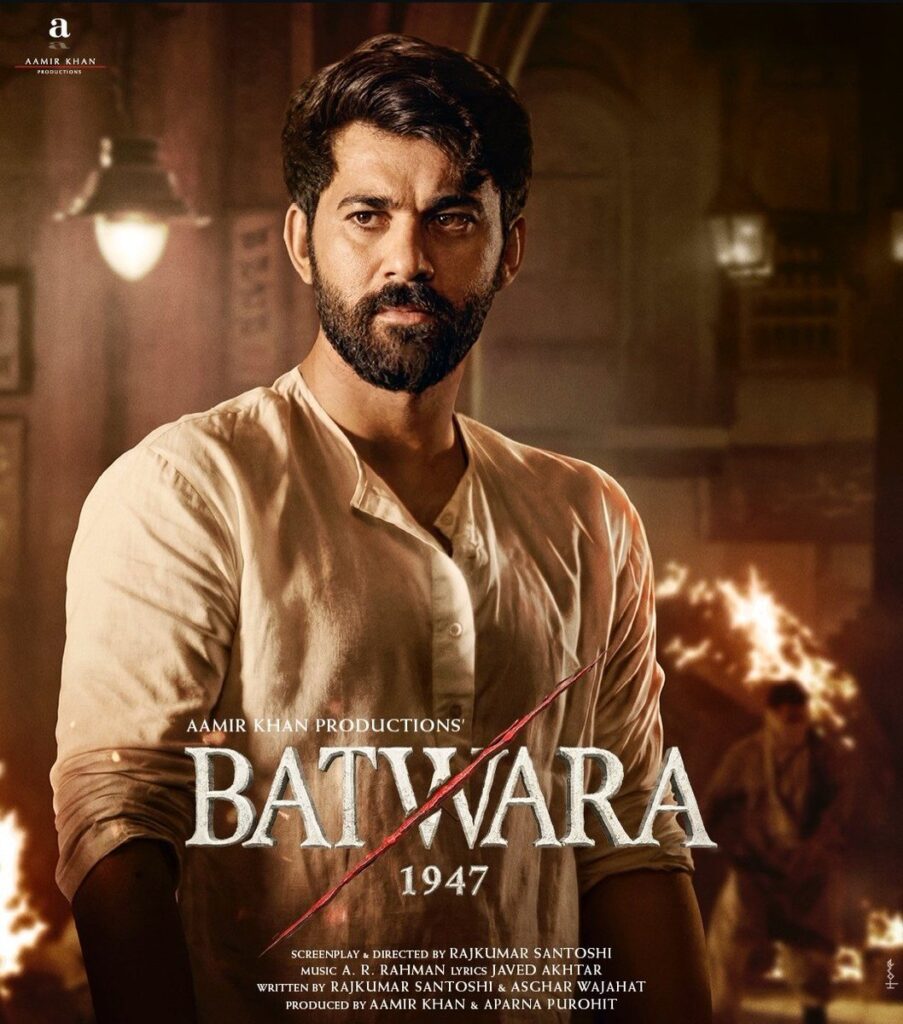
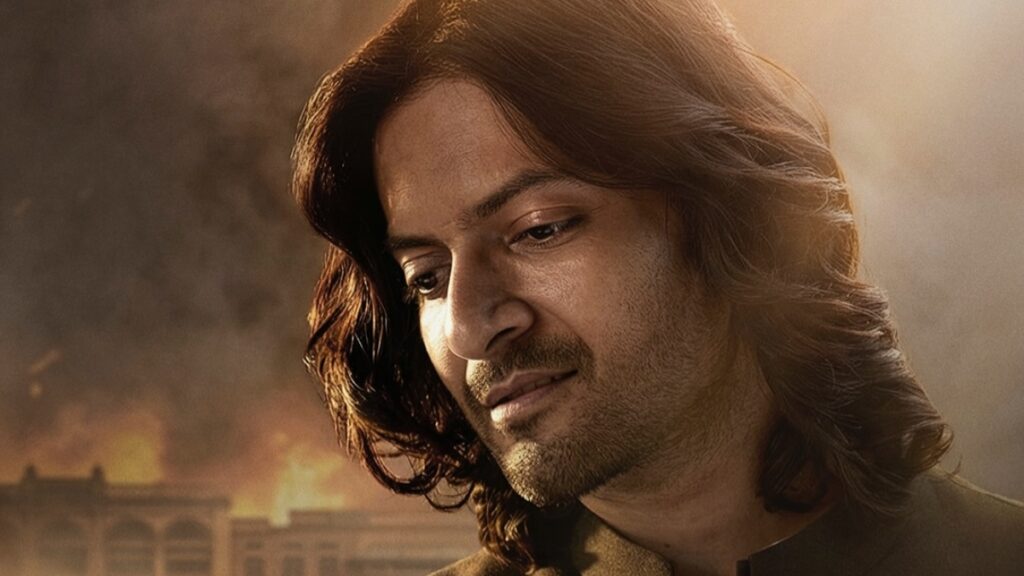
A R Rahman’s music doesn’t match up to MVA. Nevertheless, a solid bhajan number and the penultimate song leave an impact. The cinematography of Santhosh Sivan captures the period setting of Lahore authentically. There is a lived-in feel to the movie adding to an immersive experience.
Final word: Batwara 1947 in the final analysis is a movie late Dharmendra would have been proud of.