Social Dramas Shift From Theatres To OTT Space

A rundown of how gritty stories are of late being made more for the OTT platforms, both as films and web series.
Published in: Southfirst

The COVID-19 pandemic has resulted in many changes in the film industry. The uncertainty of what works and what doesn’t work on the big screen has grown bigger than before.

The demand seems to be more for larger-than-life entertainment — whether it is Pushpa: The Rise (2021), RRR (2022), Pathaan (2022), Jawan (2023), or Rocky Aur Rani Kii Prem Kahaani (2023).

Sure, there are also the likes of Vikrant Massey’s 12th Fail (2023), which sprung a huge surprise. But many films which did well since COVID-19 are full of action and heroism.

Of course, movies with messages when mixed with entertainment — social dramas — do reach more audiences.

For example, in Shah Rukh Khan’s Jawan, director Atlee touched upon some pressing grassroots issues like poor facilities in government hospitals and farmer suicides among others.

In Rocky Aur Rani Kii Prem Kahaani — a mainstream love story, director Karan Johar made some important points on inclusivity, the side effects of toxic masculinity, etc.

However, commercial trappings don’t always gel with issue-based films. For example, take Bheed (2023). It was mainly a story about the mass migration of workers during the COVID-19 lockdowns.

Director Anubhav Sinha chose to insert a love story which didn’t gel in the overall tonality of Bheed. It was the commercial elements like these that hampered the film in a big way.

Now, let us look at the social dramas streaming on the OTT platforms:

OTT space sees influx of social dramas

After the advent of OTT, many social issues have come to light on screen.

For example, Manoj Bajpayee’s Sirf Ek Bandaa Kaafi Hai (2023) was a legal drama based on the trial of Asaram Bapu who raped a minor. This movie garnered a lot of acclaim for the realistic portrayal of the courtroom along with Manoj Bajpayee’s performance.

Pankaj Tripathi’s Kaagaz (2021) was about the struggle of a farmer who was declared dead in official papers. This social drama got decent reviews with particular praise for Pankaj Tripathi’s performance as a common man.

Vidya Balan’s Sherni (2021), again a social drama, dealt with the protection of wildlife which includes saving tigers.

Now, even the big production houses and stars have made a foray into OTT. I will start with King Khan.

Shah Rukh Khan’s Red Chillies made a few films on some important topics — Love Hostel (2022), Darlings (2022), and Bhakshak (2024). Darlings is a co-production of Alia and Shah Rukh Khan.

Love Hostel

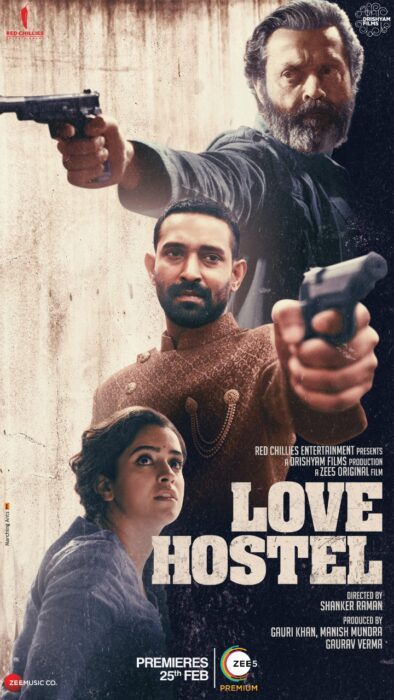
A poster of the series ‘Love Hostel’. (X)

Vikrant Massey and Sanya Malhotra’s Love Hostel was set amidst the background of families and Khap panchayats resorting to honour killings.

Sanya Malhotra played a Hindu girl named Jyothi in it, while Vikrant Massey played a Muslim named Ahmad. They stay in a protection home after marrying without the consent of their respective families, but this protection home does not guarantee their safety in any way.

Bobby Deol as Dagar is seen in the role of a ruthless mercenary who is hired to kill these young lovers.

Director Shankar Raman made this chilling film that questioned the self-appointed custodians of society.

The subject of Love Hostel isn’t particularly novel but what made this film click was the taut narration coupled with the trio of Vikrant Massey, Sanya Malhotra and Bobby Deol.

As the ruthless mercenary, Bobby evoked fear with just his demeanour. Dagar is someone who believes that his actions are necessary to keep the social fabric intact and the actor got the nuances of the character spot on.

Vikrant and Sanya as young lovers also made a striking impact; they aced the dialect apart from sharing a wonderful chemistry.

Bhakshak

‘Bhakshak’ on Netflix. (X)

Bhakshak, directed by Pulkit, was based on the real-life incidents of sexual abuse that happened in Bihar’s Muzaffarpur shelter home.

Bhumi Pednekar played the role of a small-time independent journalist who wants to bring out the reality of this shelter home.

In the recent past, the portrayal of journalists in movies has been quite objectionable. But here, the director did an authentic job of depicting journalism and journalists.

The scenes of sexual exploitation were also shown with the required sensitivity, never bordering on exaggeration.

Bhumi Pednekar aced her role as did Sanjay Mishra and Aditya Srivastava, among others.

Darlings

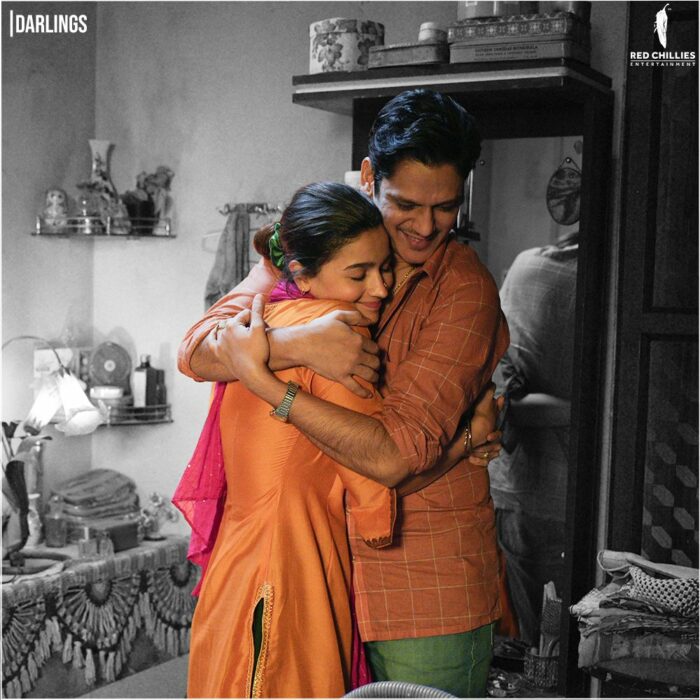
A poster of the film ‘Darlings’. (X)

Jasmeet K Reen’s Darlings is a dark comedy/thriller about two Muslim women; Alia Bhatt as Badrunissa—the daughter and Shefali Shah as Shamshunissa—the mother.

Badrunissa faces both physical and emotional abuse from her husband Hamza (a scary Vijay Varma) but is always hopeful that he will change.

Shefali Shah’s Shamshunissa is more practical as she already experienced abuse from her spouse.

Darlings does have tonal issues in the second half but for a debut director Jasmeet K Reen did a good job in showcasing the unequal power structure of marriage and also the usage of the bustling chawl (lower middle class colony) which became a character in itself.

After Darlings, Alia Bhatt co-produced Poacher, a web show on another important social issue, which is about the poaching of elephants.

Richie Mehta is the director. His follow-up to Delhi Crime works as both an investigative thriller and human drama. It makes the viewers do some serious soul-searching about the need for peaceful co-existence between man and nature.

The Railway Men

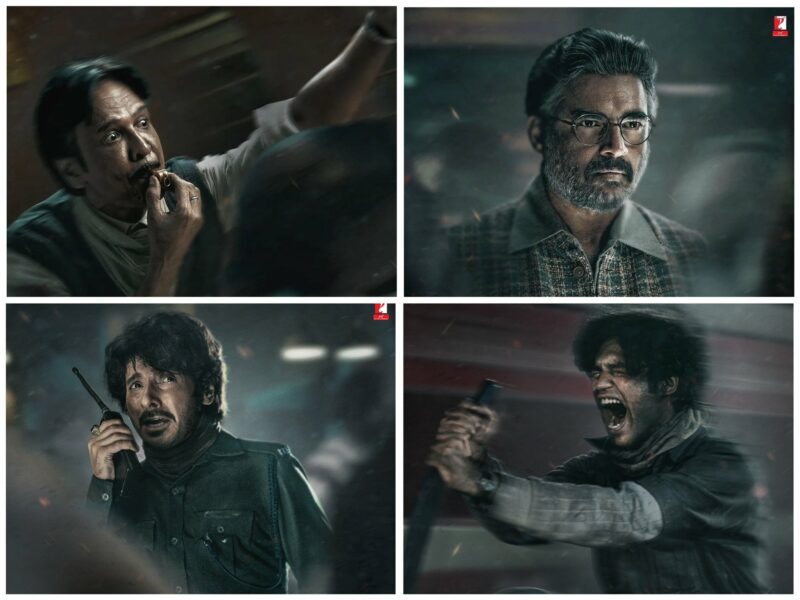
Stills from the series ‘The Railway Men’. (X)

Yash Raj Films is mostly known for producing big-scale entertainers. But, of late, it came up with a web show on a social issue — The Railway Men.

Of course, they have produced films like Chak De India (2007), Rocket Singh: Salesman of the Year (2009), etc. However, The Railway Men, produced by Aditya Chopra is a different entity altogether, as the series is based on the sensitive subject of the Bhopal gas tragedy.

Shiv Rawail made his debut as a writer cum director with this one. The debutant focused his lens on the little-known heroes of the Indian Railway who put their lives at stake to save thousands of people from the lethal gas.

The subject of The Railway Men is not an easy one to handle but Shiv Rawail showed a lot of maturity aided by some powerful performances from Kay Kay Menon and Babil Khan, among others.

More social dramas

Director-producer Karan Johar also sprang a pleasant surprise on the eve of Valentine’s Day with the docu-series Love Storiyaan (2024).

Love Storiyaan (2023) focused on real-life couples across age groups and states narrating their stories of resilience and strength. The narratives could have easily fit into a movie but he chose to do a docu-series.

Arjun Varain Singh’s Kho Gaye Hum Kahan (2023) is a friendship-based story on the loneliness of Gen Z in the digital era.

Zoya Akhtar also is a commercially successful director but she chose Kho Gaye Hum Kahan‘s story for the OTT space.

This increase in social issues in OTT platforms has its positives as more authentic presentation is possible. But at the same time, there is also the danger of theatrical experience being reduced to just larger-than-life entertainment stories.

The triumph of ‘Hanu-Man’ amidst star-studded Sankranthi films…

Storywise, ‘Hanu-Man’ doesn’t boast of much novelty. It is a classic tale of good versus evil with the superhero tropes of Hollywood.
Published in: Southfirst

Much like Teja Sajja’s character Hanumanthu in the film, Hanu-Man is also an underdog in more ways than one.

Neither Prasanth Varma is a blockbuster director nor the leading man Teja Sajja. The young actor was still finding his footing as a commercial hero when the fantasy flick was released.

Sure, he was a part of the hugely successful film Oh! Baby (2019), but that was primarily Samantha and Lakshmi’s vehicle.

In such a scenario, Hanu-Man was up against Mahesh Babu, Venkatesh, and Nagarjuna — three big stars of Tollywood.

Guntur Kaaram (2024) was the reunion of Mahesh Babu and Trivikram. Saindhav (2024), on the other hand, was the 75th film of Venkatesh.

Saindhav had a massive pre-release buzz, and Venkatesh sounded very confident in his interviews and functions. Additionally, director Sailesh Kolanu of the successful HIT franchise was helming it.

Lastly, Naa Saami Ranga (2024) was expected to rake in good numbers given the rural atmospherics. Furthermore, Nagarjuna’s last two Sankranthi releases were commercially successful.

The USP of Hanu-Man

A poster of Teja Sajja’s ‘Hanu-Man’. (X)

Hanu-Man not only held its own among all four Sankranthi releases but also emerged as the biggest winner.

Storywise, Hanu-Man doesn’t boast of much novelty. It is a classic tale of good versus evil with the superhero tropes of Hollywood.

The protagonist of this tale is a small-time thief in a fictional village called Anjanadri, a village located miles away from urbanisation.

The protagonist here is the last person whom you would associate with having superhero powers.

What made Hanu-Man click was how Prasanth Varma weaved the elements of mythology in a contemporary setting. The amalgamation of devotion with the superhero elements made a perfect mix.

The transformation of Teja Sajja’s character was also done well, and the young actor pulled off the different shades with finesse.

Varalaxmi Sarathkumar, as Hanumanthu’s elder sister, was another big strength of the film.

The brother-sister bond gave the movie an emotional gravitas. Varalaxmi Sarathkumar also had her masala moment, which was a treat to watch.

Though the film’s budget doesn’t come anywhere close to Adipurush (2023), the special effects are far superior. These factors made Hanu-Man a big hit among all age groups.

Underwhelming performances

A poster of Mahesh Babu’s ‘Guntur Kaaram’. (X)

The other three Sankranthi releases underperformed for different reasons.

In the case of Guntur Kaaram, Trivikram’s favourite theme of discord in families and an estranged son fixing things backfired badly. Mahesh Babu had fun with his role but for the audiences, it was a slog for the most part.

The tone of Venkatesh’s Saindhav is similar to Lokesh Kanagaraj’s Leo (2023), a family man with a violent past.

A poster of Venkatesh’s ‘Saindhav’. (X)

Venkatesh works as a crane operator in the port city of Chandraprastha. Before taking up this job he was a member of a drug cartel.

Things take a drastic turn when his daughter is diagnosed with SMA (Spinal Muscular Atrophy). To survive, she needs urgent medical treatment that costs ₹17 crore.

Saindhav had all the elements needed for a solid action drama. Venkatesh, as the single father, also delivered a commendable performance and pulled off the action sequences with the required intensity.

But the film was not entirely satisfying for fans of the action genre. The big reason for that is the uneven screenplay coupled with the lack of attention-grabbing twists.

Nawazuddin Siddiqui played an eccentric antagonist with a mix of Hindi and Telugu dialogues. But the unhingedness of his character comes across as irritating.

Doesn’t hit the mark

A poster of Nagarjuna’s ‘Naa Saami Ranga’. (X)

Naa Saami Ranga, directed by Vijay Binni, is a decent entertainer, provided you are not looking for a lot.

The village atmospherics are good as are the performances, particularly of Allari Naresh.

But the sharp writing needed for a wholesome Sankranti film is missing. The portions of Nagarjuna with his love interest Varalakshmi (Ashika Ranganath) feel dated.

The friendship between Nagarjuna’s Kishtayya and Allari Naresh’s Anji needed to be etched better.

To conclude, Hanu-Man has once again proved why big stars are not always needed to draw the audience in huge numbers.

Sometimes, solid storytelling can transform an actor into a star!

Three Bollywood Biopics Based On Indian Prime Ministers — All Congress Bashers!

All three biopics depicted the Congress leaders as cardboard cut-outs; they are either scheming villains or incompetent buffoons.

Indian biopics in general turn out as reverential portraits where the flaws of a person are mostly hidden or camouflaged. They end up being more of a highlights reel.

This is even more so in the case of movies dwelling on the lives of politicians and those related to the army.

All three movies mentioned in this article have one striking thing in common—Congress bashing.

Congress leaders reduced to cardboard cut-outs

All three biopics, including The Accidental Prime Minister (2019) depict the Congress party as cardboard cut-outs. The Congress characters are either scheming villains or incompetent buffoons.

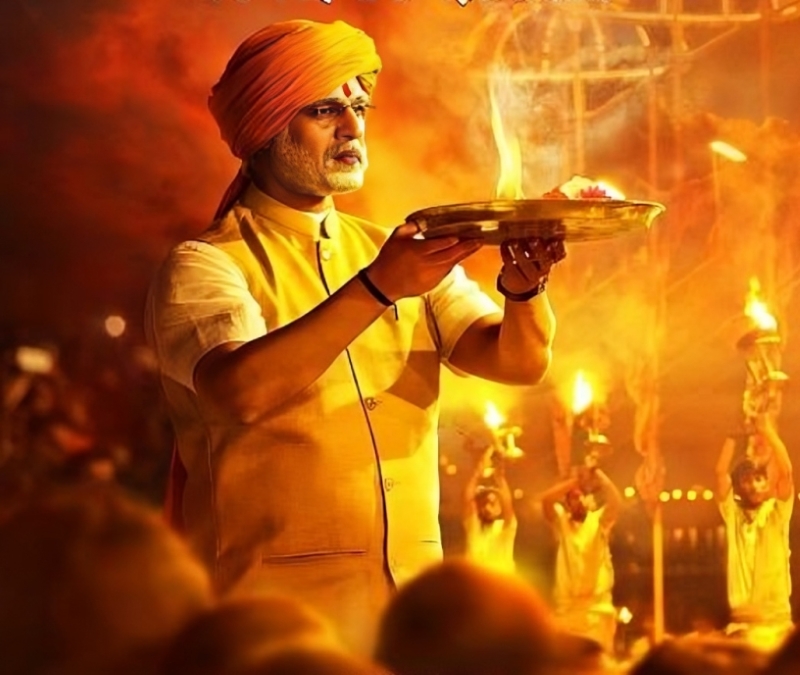
PM Narendra Modi (2019) was always meant to be a highly respectful portrait and the film did just that.

Director Omung Kumar took many cinematic liberties in presenting Modi as the perfect person.

An example of this cinematic liberty comes in the portions involving the Gujarat riots. He even showcased Narendra Modi as the hero of religious minorities!

This movie also has some Congress characters who seem to have stepped straight out of the sets of The Accidental Prime Minister.

A better biopic

Pankaj Tripathi in ‘Main Atal Hoon’. (X)

The recent addition Main Atal Hoon (2024) is a biopic on Atal Bihari Vajpayee. This film is definitely notches ahead of the other two movies.

Yes, the movie does come across as a highlights reel, particularly in the second half. But at the same time, there is some visible craft.

Director Ravi Jadhav did a good job of showcasing the different stages of Atal’s life.

The USP of Main Atal Hoon was the use of his poems; they come at the right juncture.

The speeches of Atal are another highlight of the film, especially the scene where he expresses anguish about the disturbing events of the emergency.

Ravi Jadhav also did a fine job of showing Atal’s political ideology, which includes wanting peace between India and Pakistan.

One of the early scenes in Main Atal Hoon perfectly establishes how he was the right mixture of calmness and aggression.

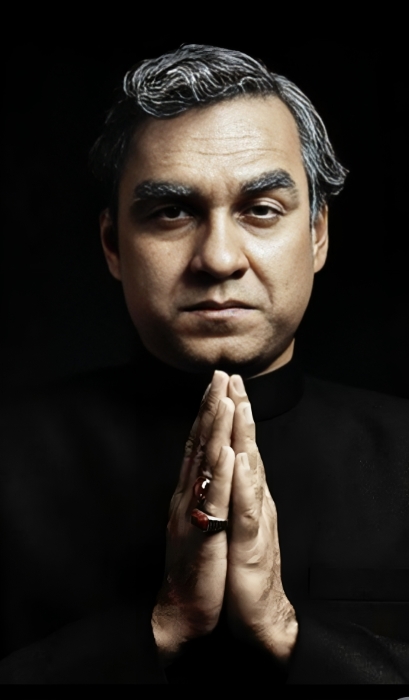
Pankaj Tripathi, in the title role, added another feather to his cap. The actor was magnetic and owned the screen.

A subplot featuring Pankaj Tripathi and Piyush Mishra (as Krishna Bihari Vajpayee, the father of Atul) was filled with so much warmth. The father-son scenes are so endearing, with portions of subtle humour.

But here, too, the portrayal of the Congress continues to be caricaturist.

The characterisation of Indira Gandhi, in particular, left a lot to be desired.

Payal Nair, as Indira Gandhi, was blank in her expressions. She had a sullen face throughout.

A clumsy propaganda

Vivek Oberoi in ‘Prime Minister Narendra Modi’. (X)

Now, to The Accidental Prime Minister, which was released much before these two biopics.

It was released during the run-up to the 2019 general elections. As it was also a biopic on Manmohan Singh, the previous PM, one would have naturally expected some good things about his life and deeds.

But even that film was meant to valorise the BJP and downgrade Congress.

Apart from BJP propaganda, another big problem with The Accidental Prime Minister was the clumsy manner in which the role of Manmohan Singh was written and enacted.

Manmohan Singh is a man who has donned multiple hats apart from being the prime minister. He was an economist and academician.

But in the film, he comes across as eternally confused and a puppet figure.

Anupam Kher is an acclaimed actor who has brought many characters to life. But here, he was doing more mimicry with exaggerated hand movements and a stiff voice.

Director Sriram Raghavan and his unique casting choices…

Apart from creating deliciously dark characters, filmmaker Sriram Raghavan’s speciality lies in presenting his actors in different roles.

For example, much before Saif Ali Khan did a negative role in Omkara (2006), he was cast in the role of a smooth charmer who wreaks havoc in the life of Urmila Matondkar’s Sarika in Ek Hasina Thi (2004).

Saif handled this role — his very first negative character — like a pro by showcasing his versatility in a big way.

In Johnny Gaddaar (2007), Sriram Raghavan trusted a complete newcomer like Neil Nitin Mukesh with a challenging role. His role of Vikram comes across as a calculating and cold person who does not hesitate to sacrifice even his friends.

Neil’s performance in Johnny Gaddaar remains his best to date.

Sriram Raghavan also tapped a different side of the veteran actor Dharmendra in this film. Dharmendra played a ring leader. Though the duration of his scenes was less, his role was well-written and enacted.

Now, I will primarily focus on Sriram Raghavan’s last three films Badlapur (2015),  Andhadhun (2018), and Merry Christmas (2024).

Interestingly, in these movies, the director has pushed his lead actors to do something different from what they have done previously.

Badlapur

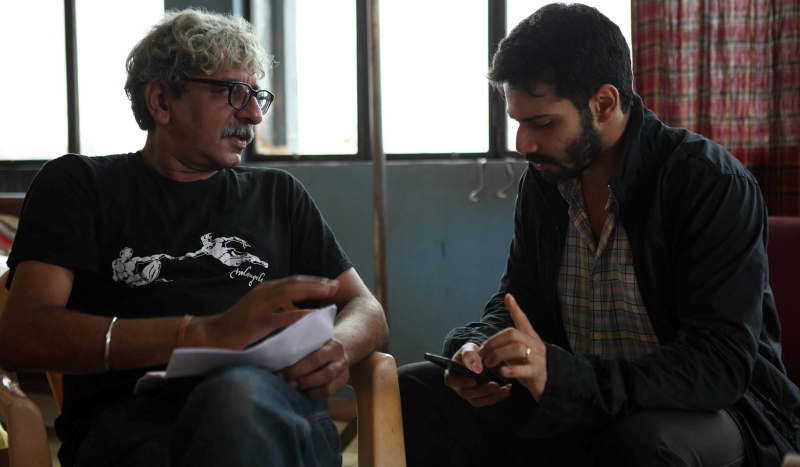
Sriram Raghavan and Varun Dhawan on the sets of ‘Badlapur’. 

Sriram Raghavan and Varun Dhawan on the sets of ‘Badlapur’. (Facebook)

Before BadlapurVarun Dhawan only did romantic and comic roles; he was absolutely charming in Main Tera Hero (2014) and Humpty Sharma Ki Dulhania (2014).

But with Badlapur, the actor stepped into a new zone.

The film is based on a real-life event where Varun’s character goes through many stages — physically and emotionally. Varun Dhawan played Raghu, whose life changed drastically after the death of his wife and son.

Raghu is consumed by revenge, and in the process of retribution, he does some questionable things. Even after succeeding in his mission, Raghu does not find complete peace.

In Badlapur, the viewers saw a new Varun Dhawan. The actor completely submitted to the vision of Sriram Raghavan and delivered one of his best performances so far.

Despite sharing screen space with Nawazuddin Siddiqui, there was not a moment where Varun Dhawan came across as anything less.

Andhadhun

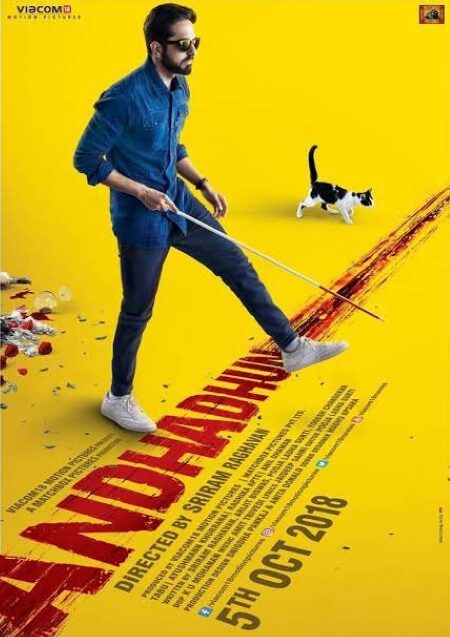
Ayishmann Khurrana in a poster of ‘Andhadhun’. 

Ayishmann Khurrana in a poster of ‘Andhadhun’. (X)

Like Varun Dhawan, Ayushmann Khurrana also delivered a career-defining performance in Andhadhun (2018).

Ayushmann never did thrillers before, but director Sriram Raghavan trusted the actor with the role of a supposed blind pianist.

Even at the end, the viewers don’t know if he is blind. Ayushmann shared a lot of scenes with the veteran actor Tabu, but still, he more than stood his own.

Sriram Raghavan etched the character brilliantly with many shades, and Ayushmann Khurrana did complete justice to the director’s vision.

Merry Christmas

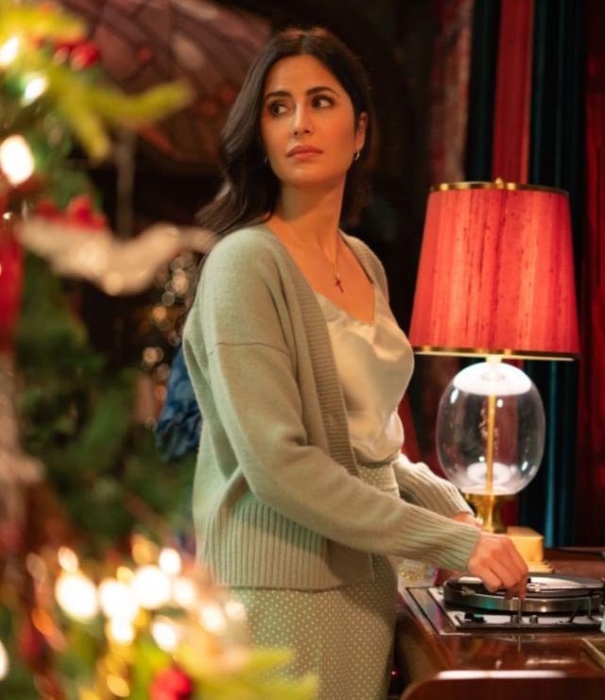
Katrina Kaif in ‘Merry Christmas’.

Lastly, you have the recent Merry Christmas starring Katrina Kaif and Vijay Sethupathi. The film does not match the brilliance of Badlapur and Andhadhun, but there is no denying Sriram Raghavan’s uniqueness in bringing two actors who belong to vastly different worlds.

Vijay Sethupati is a proven actor with a brilliant repertoire of roles as diverse as Super Deluxe (2019) and Master (2021).On the other hand, Katrina Kaif is known more for her dancing skills than her acting.

Not many directors would have thought of bringing them together but Sriram proved his penchant for taking risks.

A big USP of Merry Christmas is how Vijay Sethupati and Katrina Kaif feed off each other as two strangers in the beginning and develop a bond during a Christmas night.

They shared a wonderful chemistry, which helped the film tide over the speed bumps.

In Merry Christmas, Sriram successfully explored a different side of Katrina.

Her character goes from an alluring and vulnerable single mom to a hurt and revengeful wife. Katrina Kaif was proficient in her part managing to pull off both the shades.

Her role as Maria is a new beginning for Katrina even though the film has not done great business.

It is interesting to see Sriram Raghavan’s unique casting choices, which bring out something different from them every time. Hoping to see more such experimenting.

Increase Of Male Bonding In Mainstream Indian Cinema

From ‘RRR’ to ‘Animal’, an overview of how protagonists are sharing better onscreen chemistry with their male counterparts.

Most directors of mainstream action films hardly give any importance to the female leads. The primary duty of leading ladies has always been looking glamorous and waiting to be flirted or rescued by the heroes.

A recent deviation to this trend is YRF spy films, where Katrina Kaif and Deepika Padukone did some full-fledged action. Still, they cannot be called substantial parts.

But, of late, the female leads in action films are not even getting their romantic space.

Instead, the male leads bond with themselves rather than the opposite sex. For example, in Pathaan (2023), Shah Rukh Khan shared more chemistry with his nemesis, John Abraham, instead of Deepika Padukone.

Romantic comedies and movies of other genres are, of course, a different matter.

In romantic comedies, female leads usually have a substantial presence. In some movies, they get more screen presence than the heroes.

For instance, Imtiaz Ali’s Jab We Met (2007) was a huge turning point in the career of Kareena Kapoor. Both her performance and film are remembered fondly by the audience to this day.

Likewise, in Humpty Sharma Ki Dulhania (2014), which can be described as an ode to the blockbuster Dilwale Dulhania Le Jayenge (1995), Alia Bhatt’s Kavya Pratap Singh was much more assertive in her love than Kajol in the original.

Getting back to my original point, in most recent blockbusters — particularly pan-Indian movies, women’s roles have been pretty negligible. These include Salaar: Part 1-Ceasefire (2023), Gadar 2 (2023), and Animal (2023).

The male bonding in these pan-Indian hits consists of different types. In Salaar: Part 1-Ceasefire and the historical fantasy RRR (2022), the focus has been on intense brotherhood.

Salaar: Part 1-Ceasefire

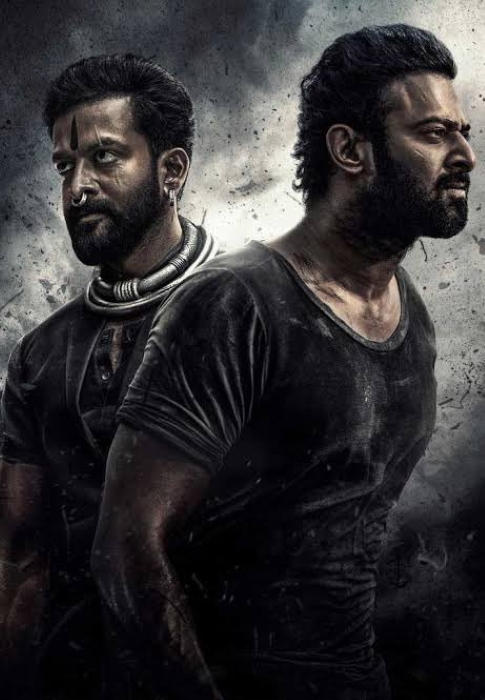
Prabhas and Prithviraj Sukumaran in ‘Salaar: Part 1-Ceasefire’. (X)

In the case of Salaar: Part 1-Ceasefire, the characters of Prabhas and Prithviraj Sukumaran are shown to be close from a young age.

The very first scene of Salaar has Deva (Prabhas) taking on a seasoned wrestler for his friend Varada (Prithviraj).

As the plot progresses, Deva becomes an extremely valuable commander-in-chief for his friend. Their bromance is particularly visible when they both take on some drug-infested zombies and indulge in some hilarious banter.

Expectedly, this became a major highlight of Salaar: Part 1-Ceasefire. Not only were there any major scenes with the women characters, but they were grossly underwritten and mostly left as bystanders.

RRR

RRR is a historical fantasy with a huge hangover of “Amar Chitra Katha“. SS Rajamouli chose the lives of two famous freedom fighters — Komaram Bheem and Alluri Sita Ramaraju (Junior NTR and Ramcharan).

He created a fictional scenario where the paths of these two meet and what happens after that.

In RRR, the two characters are not childhood friends but bond with each other fast while saving a young boy.

This friendship goes through many tests and trials before the ultimate happy ending.

Right from the first frame, it was clear that Rajamouli majorly focused on the bromance aspect. The different stages of their relationship came out well, but the rest was a huge mess.

The romantic angle between Ramcharan and Alia Bhatt’s Sita was pretty much nonexistent. Even the few scenes between them lacked the punch.

Ironically, Alia’s only substantial scene was with Junior NTR when she saved Bheem by pretending to have a deadly disease. The likes of Shreya Saran and Olivia Morris didn’t even get that.

Gadar 2

In Gadar 2Animal, and Jawan, the male bonding is seen as father and son. In the case of Animal, there is also the additional angle of estranged brothers.

Talking about Gadar 2, Sunny Deol’s affection for his onscreen son is the biggest selling point of this blockbuster sequel.

Unfortunately, Ameesha Patel was reduced to either a weeping wife or a mother, depending on the circumstances.

The scenes between Sunny and Ameesha have hardly any scope for romantic chemistry.

Animal

Sandeep Reddy Vanga could have easily named his movie “A Son’s Psychotic Love for his Father” instead of Animal, because nothing else mattered in the flick.

All the women’s characters in the film are redundant, including Rashmika Mandanna’s Geetanjali.

Ranbir Kapoor has intimate scenes with Rashmika and Tripti Dimri, but the actor shares most chemistry with Anil Kapoor’s Balbir Singh and Bobby Deol’s Abrar.

A good example of this can be seen in an emotionally charged fight scene on an airport runway. Both Ranbir Kapoor and Bobby Deol are seen shirtless, and the entire sequence plays out like a romantic ballad. There is a particular moment where they even lie on top of each other.

Jawan and Pathaan

Atlee’s Jawan is essentially a father-and-son drama with a liberal dose of Shankar’s vigilante brand of cinema.

Unlike the abovementioned films, the women characters here are not insignificant. Nayanthara had a meaty role, particularly in the first half, where we see her doing a balancing act — a single mother who is also an NSG officer.

The women in SRK’s vigilante gang also had reasonably fleshed-out parts, particularly Sanya Malhotra.

But the highlight of Jawan is easily the scenes where SRK features as father and son — the emotions are so palpable.

In the other SRK film Pathaan, the male bonding comes out big time when he shares screen space with John Abraham’s Jim. The scenes between John and SRK were cracking — whether it was the banter they indulge in or the big action sequences, which have a lot of grit.

On the other hand, the attempt at creating a romantic chemistry between Shah Rukh Khan and Deepika Padukone came as an unnecessary distraction. Even in Jawan Shah Rukh’s chemistry with Deepika was rather cold.

Pushpa

Allu Arjun’s Pushpa does not exactly fall under the category of the abovementioned films because there are some proper romantic moments.

But it has to be said that Allu Arjun’s chemistry with Jagadeesh’s Keshava made a bigger impact. Their bromance can be particularly felt in the song “Srivalli“. Throughout the song, Pushpa asks Keshava whether or not Srivalli has seen him.

This trend might be good for heroes as it is helping them to expand their market like never before, along with a variety of roles. But for the cine-goers and female actors, the scenario is not desirable and needs to change fast.

An overview of how 2023 has been a game changer for some Bollywood heroes

From Shah Rukh Khan and Sunny Deol to Ranveer Singh, these Bollywood actors made a comeback of sorts in the current calendar year.

2023 has been a remarkable year for Bollywood in more ways than one. The success rate of films is much higher than last year.

Additionally, some of the major stars have made a smashing comeback after a series of duds — be it Shah Rukh Khan with Pathaan and Jawan, or Sunny Deol with Gadar 2.

Shah Rukh in Pathaan and Jawan

There was a period when Shah Rukh Khan was struggling to deliver solid box-office hits. Films like Jab Harry Met Sejal (2017), Fan (2016), and Zero (2018) are major examples of this.

Rahul Dholakia’s Raees (2017) was a box office success but it was nowhere close to what Aamir and Salman were delivering with 3 Idiots (2009), Dangal (2016), PK (2014), and Sultan (2016).

In between, Shah Rukh played an adorable shrink in Gauri Shinde’s Dear Zindagi (2016) which was a moderate success. But it was only a relief considering how the aforementioned films went.

Of course, he was appreciated for playing a supporting role in a female-centric movie headlined by Alia Bhatt.

After Zero, the actor took time to sign his next films as a leading man and the wait has certainly paid off.

Reinventing himself

At the age of 57, Shah Rukh Khan reinvented himself as an action star in both Pathaan (2023) and Jawan (2023). On the surface, both are masala flicks, but the presentation of Siddharth Anand and Atlee are as different as chalk and cheese.

In Pathaan, Shah Rukh was in equal parts charming and rugged. The actor didn’t disappoint one bit — whether it was in the high-octane action sequences or in the more intense bits like the confrontation scenes with John Abraham.

In Jawan, the Bollywood Badshah further pushed the envelope with his double role. And within that double role, there were a lot of variations.

For example, he is a vigilante who uses unconventional ways to speed up societal changes. He is also a military officer who has been accused of cheating the nation and suffers from partial memory loss.

Jawan can be described as a South Indian thali (meal) with a North Indian flavour. Shah Rukh got the pitch of the film perfectly and delivered a thunderous performance, particularly in the father’s role.

There is also Dunki coming up in December and it is expected to rake in good box office numbers, considering the directorial skills of Rajkumar Hirani along with Shah Rukh Khan’s star power.

Sunny Deol in Gadar 2

When the trailer of Gadar 2 was released, it was dismissed as outdated with not many giving it a chance. But the film’s collections surprised many trade analysts.

The nostalgia associated with Gadar (2001) definitely played a part in making it a box-office hit. But more than that, it is Sunny Deol as Tara Singh who sold the movie with his intense performance. Even at the age of 65, Sunny has a commanding presence that resonates well with the audience.

After a series of disasters like Bhaiaji Superhit (2018), Yamla Pagla Deewana Phir Se (2018), and Mohalla Assi (2018), the Bollywood actor is back with a bang with Gadar 2.

His performance particularly stands out in the emotional scenes that Tara Singh shares with his son Jeetay (Utkarsh Sharma). The action scenes are deliberately over the top but Sunny Deol sells them with his conviction.

Ranveer Singh in Rocky Aur Rani Ki Prem Kahani

Before the pandemic, Ranveer was having an absolute dream run with his varied characters. Whether it was the despicable Alauddin Khilji in Padmaavat (2018), the masala cop in Rohit Shetty’s Simmba (2018), or the young Muslim boy who has a fascination for rap in Zoya Akhtar’s Gully Boy (2019).

In all these movies, the Bollywood actor got critical acclaim as well as box office success. But post-pandemic, things started going downhill for the actor.

It started with Kabir Khan’s 83 (2021). Ranveer won rave reviews for his portrayal of Kapil Dev and so did the film. And yet, it didn’t achieve its full potential. The sudden hurricane of Pushpa: The Rise (2021) definitely played a spoilsport for this Ranveer Singh-starrer.

His next release Jayeshbhai Jordaar (2022) was directed by a new director Divyang Thakur. The flick didn’t do well at the box in spite of tackling a socially relevant subject.

Much was expected from Rohit Shetty’s Cirkus (2022) but neither the director nor the actor could recreate the success of Simmba (2018).

A flamboyant Punjabi

The situation was looking grim for Ranveer too. But this year has been good for the actor, thanks to Rocky Aur Rani Ki Prem Kahaani directed by Karan Johar.

Ranveer’s Rocky is a flamboyant Punjabi guy who wears his heart on his sleeve. He is someone who is neither politically nor culturally sophisticated.

His life undergoes a metamorphosis after falling in love with a fiercely opinionated Bengali journalist Rani Chatterjee (Alia Bhatt).

The role of Rocky gave Ranveer ample scope to display both his comic and dramatic skills.

On many occasions, Ranveer brought the house down with his broken English. A good example of this is when Rocky attempts poetry to flatter Rani who is very amused.

On the other hand, he was also equally effective while displaying the fragile side of Rocky. For example, there is a brilliant dramatic scene where he apologises to Rani’s onscreen dad (Tota Roy Chowdhury).

Rocky gives a heartfelt monologue about how he has been conditioned to think in a certain manner from childhood. He also talks about the Cancel Culture and how none of us will learn anything if we keep on cancelling each other.

Ranveer also surprised one and all with his Kathak performance on the famous number “Dhole Re Dhola.” His sizzling chemistry with Alia was an icing on the cake.

Ayushmann Khurrana in Dream Girl 2

Ayushmann Khurrana already proved his credentials as a good actor in different genres. Whether it is Sriram Raghavan’s thriller Andhadhun (2018) or Anubhav Sinha’s social drama Article 15 (2019), he gave a series of hits before the pandemic.

However, post-pandemic, Ayushmann’s brand of cinema stopped working; they were not just outright disasters, none of them took a good opening either.

As a result, the Bollywood actor took the route of a masala comedy with the film Dream Girl 2 (2023). Dream Girl 2 definitely had the sequel advantage.

Dream Girl (2019) remains Ayushmann’s highest-grosser to date. Dream Girl 2‘s critical response was mixed but Ayushmann’s performance, particularly as Pooja, did receive a good response.

Dream Girl 2 earned over ₹100 crore at the domestic box office.

John Abraham in Pathaan

In the last few years, John Abraham has been following the route of Akshay Kumar — either playing a patriotic hero or doing slapstick comedies.

The likes of Pagalpanti (2019) and Satyameva Jayate-2 (2021) were disasters both critically and commercially. But, with Pathaan, John more than made up for his previous lacklustre outings.

His role as Jim was not just about being a dashing villain, there is also an emotional back-story about why he does what he does. As viewers, you might not agree with his actions but you do understand his resentment with RAW (Research and analysis wing).

There are certain moments where John Abraham expresses the angst of his character and he did a good job.

Akshay Kumar in OMG 2

Unlike the above-mentioned actors Akshay Kumar is not the leading man of OMG 2 (2023), nor is it a major supporting role. In OMG 2, he had only an extended cameo as the messenger of Lord Shiva in Human form.

Though there was not much scope for performance, Akshay still brought the right amount of divinity to his part. It is easily his most relaxed performance in the recent past.

Akshay Kumar also pulled off a Shiv Tandav with ease. After the debacle of Samrat Prithviraj (2022) and Raksha Bandhan (2022), OMG 2 must have been a much-needed relief for him.

South Indian film directors who won hearts with their Bollywood outings

An overview of South Indian filmmakers who tried their luck in Hindi cinema with varying degrees of success.

In the last few years, more South Indian film directors have been working with Bollywood stars. We have seen Prabhudeva directing the likes of Salman Khan and Akshay Kumar and Atlee directing the Bollywood Badshah Shah Rukh Khan in the recent blockbuster hit Jawan.

Not that this trend didn’t exist earlier; both Bapu and K Viswanath had directed nine films each in the 1980s and 1990s. Filmmaker K Viswanath remade his own classic Swathi Muthyam (1986) as Eeshwar (1989) with Anil Kapoor.

K Raghavendra Rao also directed quite a few Hindi films — all were remakes of his Telugu movies. He debuted in Bollywood with Nishana (1980) starring Jeetendra and Poonam Dhillon. It was a remake of the Telugu movie Vetagadu (1979).

However, Jeetender-Sridevi’s Himmatwala (1983) helped Rao make a mark for himself in Hindi cinema. It, again, was a remake of the Telugu flick Ooriki Monagadu (1981).

Raghavendra Rao followed it up with films like Tohfa (1984), Masterji (1985), Suhaagan (1986), and Aamdani Atthani Kharcha Rupaiyaa (2001), to mention a few.

In the later years, Mani Ratnam and Ram Gopal Varma carved their niche in Bollywood.

Following are some prominent South Indian film directors who went North starting from recent times to slightly old:

Atlee

Atlee has established his credibility as a successful commercial director in a short period. His stories always have shades of other films, particularly the hangover of Shankar’s films.

But Atlee has mastered the art of mixing all the elements in the right proportion with strong political and social touches. A good example of this is his Hindi debut Jawan starring Shah Rukh Khan which has already become a bigger blockbuster than Pathaan (2023).

Shah Rukh has done mass films in the past too. But Atlee’s presentation of the actor is something that’s never seen before.

What also makes Jawan such a monstrous hit is the rousing manner in which Atlee dealt with several problems plaguing our society. The director’s conviction is such that the viewers don’t mind the not-so-subtle treatment.

Not surprisingly, Atlee has become a hot-shot director with whom many actors would want to work. There are already rumours of Atlee doing a film with the National Award winner Allu Arjun.

Prabhudeva

Before foraying into Hindi Cinema Prabhudeva directed two Telugu films — Siddharth-Trisha’s Nuvvostante Nenoddantana (2005) and Prabhas-Trisha’s Pournami (2006). The first one did well at the box office and the second one got critical acclaim.

Prabhudeva

Before foraying into Hindi Cinema Prabhudeva directed two Telugu films — Siddharth-Trisha’s Nuvvostante Nenoddantana (2005) and Prabhas-Trisha’s Pournami (2006). The first one did well at the box office and the second one got critical acclaim.

In 2012, Prabhudeva teamed up with Akshay Kumar for Rowdy Rathore, another remake. This time, it was the super-hit Telugu Film Vikramarkudu (2006) featuring Ravi Teja in a dual role. Rowdy Rathore went on to gross more than that of Wanted.

Post-Rowdy Rathore, Prabhudeva delivered movies that have largely missed the mark. The likes of R… Rajkumar (2013) were moderate successes, but his style of loud filmmaking has gone past its expiry date.

AR Murugadoss

AR Murugadoss is one of those filmmakers who want to entertain and enlighten.

Suriya-starrer Ghajini (Tamil, 2008) is a significant film in his career. Compared to his other works, Ghajini is cut from a different cloth as there is nothing political about it. It is a revenge drama revolving around a protagonist who suffers from a certain kind of amnesia due to a severe head injury.

Murugadoss remade the film in Hindi with the same name and with Aamir Khan as the protagonist. We all know how big a hit it is — more than the original. This was because of his skilful direction and also Aamir Khan’s dedication.

The director’s second Hindi film was also a remake of his own Tamil film Thuppaki (2012).

Akshay Kumar played Vijay Thalapathy’s role in Holiday: A Solider is Never Off Duty (2014). It was also a commercial success, but Thuppaki was more entertaining.

Puskhar-Gayatri

The duo of Puskhar-Gayatri remade their own Tamil film Vikram Vedha (2017) into Hindi in 2022 with Hrithik Roshan and Saif Ali Khan. What made Vikram Vedha a cut above the usual cop versus gangster drama was the moral ambiguities analysed through the Vikram and Betaal analogy.

A striking aspect of the Hindi remake was the more messy and flamboyant way in which Hrithik Roshan was presented as Vedha. This added a different dimension along with the Lucknow setting.

The Hindi Vikram Vedha wasn’t a box-office success, but Hrithik’s performance was vastly appreciated in terms of how he made Vedha his own.

Sandeep Reddy Vanga

Sandeep Reddy Vanga has already become a much-talked-about director despite making only two films — Vijay Deverakonda-starrer Arjun Reddy (Telugu, 2017) and its Hindi remake Kabir Singh (2019).

Kabir Singh starring Shahid Kapoor was a huge hit but the uproar was also equally big.

Now, he is making a straight Hindi film Animal with Ranbir Kapoor. There is a lot of curiosity and intrigue about this movie because of the title and also the violent depiction of the protagonist in the earlier one.

Gowtam Tinnanuri

Gowtam Tinnanuri made his Telugu film directorial debut with Malli Raava (2017). But it was Jersey (2019) starring actor Nani that made Gowtam a successful director.

This sports drama won a lot of acclaim along with commercial success. In the year 2021, it won several national awards which include Best Director and Best Actor as well.

Gowtam tried to recreate the same magic with Shahid with a nearly identical storyline except for setting it in Chandigarh.

The Hindi Jersey had some good reviews but suffered on account of the remake fatigue. The Punjabi setting also didn’t add any new dimension to the story.

In short, Shahid Kapoor’s strategy of getting another remake hit bombed badly.

Vishnu Vardhan

Tamil director Vishnu Vardhan made his Hindi debut with Vikram Batra’s biopic Shershaah (2021). He was appreciated for not making the flick overtly jingoistic and showing a certain restraint.

Vishnu Vardhan’s directorial skills particularly come out in the second half when the war drama sets in.

Shershaah had a direct OTT release, but it should have been ideally released in theatres.

Not surprisingly, Siddarth Malhotra got some good reviews for his performance as Vikram Batra.

Now, let’s go to the slightly older ones Mani Ratnam and Ram Gopal Varma.

Mani Ratnam

Before the film Dil Se (1998), made directly in Hindi, Mani Ratnam was already a known face in the North, thanks to Roja (1992) and Bombay (1995) dubbed in Hindi.

Dil Se was the third one in the trilogy of Roja and Bombay as this film also had the backdrop of insurgency.

Over the years, the Shah Rukh Khan-starrer has acquired a cult of its own thanks to AR Rahman‘s scintillating music coupled with the intense performances of Shah Rukh Khan and Manisha Koirala.

After a long gap, Mani Ratnam simultaneously shot Aayutha Ezhutu (2004) in Tamil and Yuva (2004) in Hindi. Yuva was a significant game changer for Abhishek Bachchan before Guru (2007) and Sarkar (2005) happened. In Yuva, Abhishek Bachchan was brilliant as a ruffian with political ambitions.

After Dil SeGuru was Mani Ratnam’s second straight Hindi film. The film was loosely based on the industrial tycoon Dhirubhai Ambani. It won critical appreciation along with good money. It is easily the most memorable solo outing of Abhishek Bachchan.

However, their next collaboration Raavan (2010) turned out to be a disaster of epic proportions. Despite a solid storyline, the movie turned out to be a cringe-fest both in acting and direction.

Ram Gopal Varma

Ram Gopal Varma scored a sixer with his debut Hindi film Satya (1998), a cult classic. It was the start of many more movies dealing with organised crime and the nexus between politicians and the underworld.

The film focuses on the life of an immigrant Satya (JD Chakravarthy) who visits Mumbai in search of a job. He gets drawn to the underworld by the gangster Bhiku Mhatre (Manoj Bajpai).

Satya gave birth to a lot of new talent, the chief among them being Manoj Bajpai and Saurabh Shukla. Their characters are remembered more than the lead hero.

It was followed by an equally successful Company (2002). The film was loosely based on the fallout between Dawood Ibrahim and Chhota Rajan. Vivek Oberoi made a very promising debut as Chandrakant aka Chandu.

In both films, Varma was successful in humanising gangsters instead of painting them as cardboard cuts with no nuances.

He added more feathers to his cap with Sarkar (2005) and Sarkar Raj (2008). In these movies, the director combined Godfather (1972, 1974 & 1990) elements with that of Balasaheb Thackeray. Both the flick had the perfect mix of style and substance.

Ram Gopal Varma also directed the romantic-comedy Rangeela (1995) with Aamir Khan and Urmila.

Romance is the last thing that viewers associate Varma with. But to the director’s credit, he did pull off an enjoyable watch which also was a satire on the film industry.

But in the recent past, the filmmaker has been making one embarrassing movie after another. Sadly, the viewers are now more interested in what controversial remarks he would make rather than his works.

Priyadarshan

There was a period when Priyadarshan was a successful director in Hindi as well. Most of his Hindi films are remakes of his Tamil and Malayalam movies. But the director, more often than not, hit a jackpot.

He debuted in Hindi cinema with Muskurahat, a comedy-drama, which was a remake of his Malayalam film Kilukkam (1991).

Priyardarshan was a major reason behind the emergence of Akshay Kumar as a comic actor. In fact, many of Priyardarshan’s Hindi films featured Akshay Kumar.

The filmmaker delivered many flicks that have been both critically acclaimed and commercially successful. He delivered a good number of superhits like Gardish (1993), Virasat (1997), Hera Pheri (2000), Hungama (2003), Hulchul (2004), Malamaal Weekly (2006), Bhool Bhulaiyaa (2007), and Rangrezz (2013).

However, things have been going downhill, of late, with Priyadarshan not being able to reinvent himself. A good example of this is Hungama 2 (2021) which was released on Disney+Hotstar. It opened to negative reviews.

Well, this list is not exhaustive. I am sure many more South Indian film directors have done movies in Hindi earlier too. But Shah Rukh Khan’s Jawan is the latest and the most significant film in this trend.

These Bollywood heroes and heroines made our jaws drop as onscreen baddies too!

Unlike many top actors who did negative roles later in their careers, Shah Rukh Khan started off his film career as an anti-hero.

It is hugely liberating for any actor who is relatively comfortable in one’s career doing roles that fall outside the conventional zone. It gives the artiste a certain abandon where he or she doesn’t have to pander to a certain image.

Following is a list of some Bollywood actors and actresses who have tried their hand at grey/negative roles and found varying degrees of success.

Let us start with “Bollywood Baadshah” Shah Rukh Khan.

Shah Rukh Khan

Unlike many top actors who did these kinds of roles later in their careers, Shah Rukh Khan started off his film career with a spat of anti-hero roles.

Both Baazigar (1993) and Darr (1993) made him a household name much before Dilwale Dulhania Le Jayenge (1995).

The impact of Shah Rukh in Darr was so much that the audiences hardly remember Sunny Deol. Not surprisingly, the “Bollywood Baadshah” was the obvious choice for the remake of Amitabh Bachchan’s Don (1978).

In spite of comparisons with Amitabh Bachchan, Shah Rukh made the character of Don his own with his stylish performance in the 2006 release. The actor effortlessly played the negative shades.

Aamir Khan

Among the other Khans, Aamir Khan played a character with grey shades to great success in Deepa Mehta’s directorial 1947: Earth (1999).

Here, he played an ice candy man named Dil Navaz who falls in love with Shanta (Nandita Das), a Hindu woman.

Shanta works as a nanny for a wealthy Parsi Family. However, she loves a Muslim man named Hassan (Rahul Khanna).

This is something that Aamir’s character cannot digest. Partition and the ensuing family tragedy change him completely.

As a person who gets swayed by the hate around him, Aamir delivered a brilliant performance. He did a wonderful job of bringing out the many nuances of his character.

Saif Ali Khan

Saif Ali Khan also made a huge impression with his negative roles in Omkara (2006), Tanhaji: The Unsung Warrior (2020), and Adipurush (2023).

With Omkara, the actor successfully broke his urban image under the skilful direction of Vishal Bhardwaj.

Even in Adipurush, the actor brought certain energy whenever he appeared on the screen.

Interestingly, Salman Khan is the only Khan who did not play a negative role yet.

John Abraham

Before Pathaan (2023), John did several roles mainly consisting of chest-thumping patriotism and slapstick comedies. Nevertheless, most of these films didn’t click.

But the actor made a strong comeback in Siddharth Anand’s globetrotting entertainer Pathaan.

In Pathaan John’s Jim was not the regular clichéd villain. He is someone who is always a step ahead of Shah Rukh Khan’s Pathaan, which adds to the victory of the protagonist at the end.

The action scenes choreographed between Shah Rukh and John had a lot of grit.

Jim also had a solid back story explaining why he does what he does.

After a series of sub-par outings, John Abraham was finally in form. The best part of his performance was how he expressed his angst in the more dramatic bits.

Tabu

In Bhool Bhulaiyaa 2 (2022), Tabu played a double role — one of a dutiful daughter-in-law Anjulika and the other of her twin sister Manjulika who wreaks havoc in Anjulika’s life.

As Manjulika, Tabu let her hair down with a delightfully devilish performance. It was clear that the actress was having a blast.

Apart from Kartik Aryan’s comic timing, Tabu’s double act was another major reason why the film worked.

In Andhadhun (2018), the actress played the wife of a yesteryear movie star. Her character had many layers. She was erratic, vulnerable and deceitful all at the same time. She was simply brilliant in portraying these shades.

Tabu also made a huge impact with Maqbool (2003) and Haider (2014). Both these were adaptations of William Shakespeare’s “Hamlet” and “Macbeth” respectively.

Ranveer Singh

There is no denying that Ranveer Singh’s Alauddin Khilji was more of a caricature meant to glorify the Rajputs in Padmaavat (2018).  But at the same time, his Khilji was easily the biggest backbone of the film.

Ranveer gave an electrifying performance which easily overshadowed both Shahid Kapoor and Deepika Padukone. As viewers, we wanted to see more of him on the screen.

Ranveer’s scenes with Jim Sarbh as Malik Kafur were way more enjoyable than the poetic romance of Shahid and Deepika.

Priyanka Chopra

In Aitraaz (2004), Priyanka Chopra played an ambitious woman for whom fame and glamour are more important than anything else. In this quest, Priyanka’s Sonia marries a much older man (late Amrish Puri). Her desire for fame and success is fulfilled, but she doesn’t get sexual satisfaction from her husband.

In order to fulfil her desires, she tries to seduce her ex-boyfriend Raj Malhotra (Akshay Kumar). However, Raj rejects her advances as he is a happily married man. Sonia gets upset by his rejection and falsely accuses Raj of sexually harassing her.

Priyanka played this role very early on in her career. It was a bold move that could have easily backfired, but Priyanka made a huge impact. In fact, she shined more than Kareena Kapoor, who was playing the conventional heroine.

Alia Bhatt

Alia Bhatt‘s Hollywood debut is not exactly a smashing one, particularly for those who have seen her work in Hindi films. But the actress needs to be credited for taking up a grey character in her very first Hollywood venture — Heart of Stone (2023).

She tries to procure it for the villain without knowing his actual purpose. In the process, she is pitted against Gal Godot, the main protagonist.

In the initial portions, we see Alia’s harsh demeanour towards Gal. There is a visible arrogance in the way she speaks to her.

However, there comes a point when Keya goes through an existential crisis. All this was well portrayed by Alia. There is also a tough fight scene between them in mid-air.

Ajay Devgn

In Khakee (2004), Ajay Devgn played a formidable opponent who creates havoc for the police officers, played by Amitabh Bachchan and Akshay Kumar among others.

The actor brought a lot of quirks to his character. The subtle humour that he brought with his dialogues won the hearts of audiences.

His confrontation scenes with Amitabh Bachchan were easily one of the best parts of Khakee. With Khakee, Ajay Devgn showed that he can do a variety of roles.

Amitabh Bachchan

Amjad Khan’s Gabbar Singh in Sholay (1975) is easily one of the most iconic villains that Indian cinema has seen. It is not an easy task to recreate that villainy given how firmly the character has been etched in the minds of the Indian viewers.

But Amitabh managed to play the new-age Gabbar Singh in his trademark style in Ram Gopal Varma Ki Aag (2007). If we keep the comparisons aside, the veteran actor was also quite menacing as a villain.

Apart from the above-mentioned actors and actresses, others too did roles that fell outside the convention of hero and heroine.

For example, Aishwarya Rai Bachchan played a character with a lot of vengeance on her mind in both the Ponniyin Selvan films (2022, 2023).

Akshay Khanna in Race 1 (2008) was superb in his role as a scheming younger brother.

In Race 3 (2018), Anil Kapoor played an illegal arms dealer named Shamsher Singh. Of late, he has been doing more negative/grey roles, and the actor seems to be enjoying them also.

From Urban Love Stories To Village Conflicts, Sukumar’s Protégés Follow His Lead

Buchi Babu Sana, Srikanth Odela, and Karthik Varma Dandu chose rustic tales for their debut films.

Director Sukumar is popular for his films which are usually set in urban scenarios. But he seems to have developed a fantasy for rustic tales now.

Right from his debut film, Allu Arjun’s Arya (2004) to Naga Chaitanya’s 100% Love (2011), Mahesh Babu’s 1: Nenokkadine (I Am the Only One, 2014), and NTR Jr’s Nannaku Prematho (To Father, With Love, 2016), the filmmaker delivered back-to-back hits that had an urban background.

Little did we know then that he would also successfully helm two rustic dramas — Rangasthalam (2018) and Pushpa (2021) — that would make the audience sit up and take notic

Rangasthalam and Pushpa have two mainstream heroes who are not particularly known for their rustiness; more so, Ram Charan. But the director’s gamble paid off in both cases.

Protégés follow in his path

Over the years, Sukumar has also nurtured some young filmmakers. Interestingly, three of them — Buchi Babu Sana (Uppena, 2021), Srikanth Odela (Dasara, 2023), and Karthik Varma Dandu (Virupaksha, 2023) — made their debut films in rustic scenarios with village issues.

Caste might not have been mentioned explicitly in their films, but it is obvious that the heroes in these movies are from lower castes. Only in Uppena (Tiday Surge), the protagonist’s caste is specifically mentioned. Viasshnav Tej plays a Dalit Christian belonging to the fishermen’s community.

In Virupaksha, Sai Dharam Tej plays an outsider who visits his ancestral village and tries to address the local issues.

But first, let us look into Sukumar’s Rangasthalam and Pushpa.

Rangasthalam

The story of Rangasthalam is set in a village of the same name. The theme is exploitation and feudalism.

A ruthless president runs the village like a tyrant. The concept of a landlord/village president treating villagers as slaves is of course not new.  There are many films with that theme.

One of Chiranjeevi’s (Ram Charan‘s father) earlier films, Ma Voori Pandavulu (1978), also dealt with the struggles against the feudal system.

However, Sukumar’s treatment made Rangasthalam much more engaging, particularly for the new generation audience.

Ramcharan as Chitti Babu

Ram Charan’s character (Chitti Babu) in Rangasthalam not only comes from a lower caste but is also partially deaf.

Sukumar dealt with this disability in a sensitive manner. He never used it to generate crude comedy.

Ram Charan Tej as Chitti Babu was adorable right from the first frame.

Rough and rustic is not something that the viewers associate with the actor. But under the guidance of Sukumar, the actor delivered his career-best performance.

The actor also got the nuances of Chitti Babu spot on, both in his body language and accent.

Pushpa

Following the success of Rangasthalam, Sukumar once again teamed with his Allu Arjun. But this time, in a very different zone.

Just like RangasthalamPushpa also featured a protagonist who is not only rustic but also an underdog.

In Pushpa, Sukumar majorly looked at the entire syndicate of the red Sandalwood business and the politics involved. It also briefly touched upon the dangers faced by the coolies from the police.

Allu Arjun as Pushpa

Chief among them is Pushpa’s characterisation and how Allu Arjun performed it.

Pushpa is one of the many coolies in the Seshachalam area, hired to chop down red sandalwood trees illegally. He is also an illegitimate son.

Despite being a coolie, there is an inherent swag in Pushpa which comes from his determination to climb up the social ladder to get over that stigma.

Beneath all the roughness, there is vulnerability whenever he is reminded of his birth status, which is brought up at various points in the film. Allu Arjun particularly shined in these moments.

He previously played a non-urban character in Gunasekhar’s Rudramdevi (2015), but that was a warrior role.

Pathbreaking films

These two films are significant in many ways.

After a long time, the viewer is taken back to the villages not to see the natural beauty or innocence of the people, the love or conflict among joint families, and the faction-based stories of Rayalaseema. But, the audience got to see some real conflict themes and exploitation in different forms.

The story of Rangasthalam might look a little outdated in comparison to Pushpa because the subject in the latter is an ongoing problem.

But as a hero, Ram Charan’s Chitti Babu is more relatable than Allu Arjun’s Pushpa because his macho image keeps growing every minute.

Now let’s look at some of the films made by Sukumar’s protégés who have also directed hinterland stories.

Uppena by Buchi Babu Sana 

A protégé of Sukumar, Buchi Babu Sana took the route of his master.

In Uppena, Vaisshnav Tej’s character (Aasi) belongs to the fishermen’s community. Here, the caste of Aasi is directly mentioned as Dalit Christian.

Buchi Babu needs to be credited for making a film like Uppena with a debutant; Vaisshnav Tej comes from the Mega (actor Chiranjeevi’s family) family though.

The first-time director did a wonderful job of exploring the bond that a fisherman shares with the sea.

Vaisshnav Tej’s Aasi also suffers from a stuttering problem. He cannot pronounce the heroine’s name properly however much he tries. Instead of Sangeetha, he calls her Santha.

However, this disability is also dealt with with a certain amount of sensitivity by Buchi Babu Sana, just like Ram Charan’s partial deafness in Rangasthalam.

Vaisshnav Tej also deserves appreciation for how he portrayed the rusticness and vulnerability of Aasi.

Dasara by Srikanth Odela 

Dasara is set against the backdrop of Singareni Coal Mines.

Nani’s Dharani is a ruffian who steals coal for a living. The influence of Sukumar is pretty visible in terms of how Srikanth Odela builds up the village’s atmospherics.

The caste politics are quite reminiscent of Rangasthalam. However, there is no denying that Srikanth has his voice, too. This can be seen in how the director built up the character of Nani.

Nani’s Dharani is timid when he doesn’t consume alcohol. But when on a high, he is altogether a different person. This trait was well used by Srikanth Odela, particularly in the later portions when Dharani decides to get over his alcoholism.

There is a local bar called Silk Bar which has a looming presence throughout the film. The director used this bar to highlight the caste dynamics, as the liquor here is reserved for upper-class men.

Virupaksha by Karthik Varma Dandu 

Much like Dasara and UppenaVirupaksha is also directed by a first-time filmmaker, Karthik Varma Dandu who assisted Sukumar.

Sukumar himself wrote the screenplay for this film.

Virupaksha is a paranormal thriller set in the fictional village of Rudravaram. The director, along with writer Sukumar, made some valid arguments against prejudices and superstitious beliefs that stem from ignorance.

Unlike the heroes in the above-mentioned films, Sai Dharam Tej’s Surya is an outsider to Rudravaram. However, the issues addressed in the film are much rooted.

Nevertheless, if we compare the above-mentioned movies to the Tamil ones, there is a significant difference in how the issue of caste is portrayed.

There it is not just about the protagonist being rustic in overall demeanour; in Tamil movies, filmmakers like Vetri Maraan and Pa Ranjith are not afraid to take the name of the caste. Asuran (2019) and Kaala (2018) are the best examples.

Having said that, for Telugu audiences, the likes of Rangasthalam and others are a definite step forward in the genre of caste-based films.

https://thesouthfirst.com/entertainment/urban-love-stories-to-village-class-conflicts-sukumars-proteges-follow-his-lead/

Hindi Biopics: A Flourishing Trend

Taking off from the previous post on Telugu Biopics, this one is on the flourishing trend of biopics on persons of significance in Hindi. Unlike the Telugu Film Industry many more biopics are made in Hindi on people from different backgrounds. The same cannot be said about mythological and maybe historical biopics. But I will come to that later.

On Women

Let us start with women biopics for a change. Bandit Queen (1994) and Godmother (1999) are two films that come to mind immediately. Surprisingly both are based on women who lived on the wrong side of law and later became politicians. While Phoolan Devi is the Bandit Queen played by Seema Biswas, Godmother is based on the life of Santokben Jadeja who is a mafia leader from Gujarat played by Shabana Azmi. The first one directed by Shekhar kapoor was internationally acclaimed. There is also an old film called Bhumika (1997) directed by Shyam Benegal starring late Smitha Patil. Bhumilka was based on a well known Marathi stage and screen actress Hansa Wadkar.

New millennium saw many more movies made on women like Vidya Balan’s Dirty Picture (2011), Sonam Kapoor’s Neerja (2016), Kangana Ranaut’s Thalaivi (2021) etc.

Dirty Picture was inspired by the life of Silk Smitha, a south Indian actress who was popular for her erotic roles. The film was a huge game changer for both Vidya Balan who played the lead role and also to Milan Luthria who directed the film. Neerja was about an air hostess who saved the lives of the passengers by giving up her life. It is Sonam Kapoor’s best performance to date. Kangana’s Thalaivi was a biopic on late actress/politician Jayalalitha. The film’s subject was powerful but the execution needed to be better.

Hindi cinema has also seen women biopics inspired by books. For example Meghana Gulzar made a film out of the book ‘Calling Sehmat’. It is Raazi (2018). This book was written by a former army man Harinder Sikha. Similarly Sanjay Leela Bhansali took a chapter from a book written by S Hussain Zaidi and made a strong film. It is Gangubai Kathiawadi (2022). Both the films have Alia Bhatt playing the lead role and both have become huge success at the box office.

On Sports

On the sports front there seems to be a galore of biopics. Chak De India (2007), Bhaag Milkha Bhaag (2013), Mary Kom (2014), M.S Dhoni (2016), Dangal (2016), ‘83 (2021) etc.


The lesser known ones include Azhar (2016), Saina (2021) and Kaun Pravin Tambe (2022). While all these are success stories there is one film directed by Tighmanshu Dhulia about a soldier who wins a gold medal at the Indian National Games but is eventually forced to become a notorious bandit. It is Paan Singh Tomar (2010) played by Irrfan Khan.

On Commoners

Biopics on commoners include Sarbjit, Manjhi, Shahid and Padman. Sarbjit was about an innocent villager who ends up in a Pakistan jail. Manjhi was about a laborer called Dashrath Manjhi. He is famous for carving out a road through a mountain. Shahid was about a rebel turned human rights activist lawyer. Padman is about a social entrepreneur Arunachalam Muruganantham. Arunachalam is famous for making sanitary pads available at lesser cost.

Hrithik Roshan’s Super 30 (2019) is based on a real life mathematics teacher called Anand Kumar. He became famous for starting an educational program for students aspiring for IIT study called Super 30. In this genre you have also got Madhavan’s labour of love Rocketry. It is about a scientist called Nambi Narayan. He was accused of selling his country which is not true. This film brings back the glory he deserves.

On Freedom Fighters

Hindi cinema has had its share of biopics on freedom fighters as well. For example three films on Bhagat Singh came in just one year 2002. Out of the three Rajkumar Santhoshi’s film was the best. Ajay Devgan won a national award for his portrayal of the patriot. Before that Sardar based on Sardar vallabhai Patel came in 1994 played by Paresh Rawal.

In 2004 a film on Netaji Subhas Chandra Bose directed by Shyam Benegal was made with the same name. In 2005 a film based on Mangal Pandey, the man who ignited the Sepoy mutiny was released. The film starred Aamir Khan in the lead role and was made by the acclaimed director Ketan Mehta. In 2021 Shoojit Sarcar made a film on Sardar Uddam Singh. Uddam Singh was a contemporary of Bhagat Singh. Late Irrfan Khan was supposed to play the lead role, but due to his sudden death Vicky Kaushal stepped in.

There are also political and army based biopics. In the political category you have ‘The Accidental Prime Minister’, ‘PM Narendra Modi’ (2019) etc. Both the above mentioned fims came with a political agenda. While ‘PM Narendra Modi’ was an unabashed glorification of Modi, ‘The Accidental Prime Minister’ was intentionally caricaturing the former Prime Minister Manmohan Singh. The army biopics include Shershah and Gunjan Saxena.

Now I will expand a little on some of the more popular biopics.

1. Dirty Picture (2011) – Milan Luthria’s Dirty Picture is a landmark film in the mainstream women centric films. Silk Smitha was a south Indian actress known for her exposing roles. She was mostly playing what was then called vamp roles. The biggest triumph of Dirty Picture lies in how the director humanises the actress. The word dirty here is about the film industry and not Smitha.

As Silk Smitha Vidya completely let go of her inhibitions and came out with a towering performance, it was not just about her physical appearance, it went way beyond that. Naseeruddin Shah was also a hoot as the ageing superstar. Director Milan Luthria took several potshots at different aspects of the then southern film industry.

2.Paan Singh Tomar (2012) – Tighmanshu Dulia brilliantly captured the life of an athlete who turns into a feared dacoit. The film uses the technique of Paan Singh narrating his story in a flashback. The director did a fabulous job in capturing the rustic terrain and the significant events in the life of Paan Singh Tomar. The transition never feels Jerky.
Late Irrfan Khan delivered a rousing performance which aided beautifully to the narrative. The anguish of Paan Singh was effortlessly captured by the actor.

3. Bhaag Milkha Bhaag (2013) – Bhaag Milkha Bhaag directed by Rakesh Omprakash Mehra was a competent biopic on the flying Sikh Milkha Singh. Milkha Singh is a sprinter who needs no particular introduction.

Bhaag Milkha had its share of melodrama but still it is a very watchable film. Apart from Rakesh Mehra’s direction

Farhan Akhtar also did a splendid job in bringing alive the real life icon. The partition portions gave the film its strong emotional core. Farhan not only scored with his physical transformation, he also delivered a knockout punch in the emotional scenes.

4. Mary Kom (2014) – Omung Kumar’s Mary Kom had its share of criticism for Priyanka Chopra playing the lead character. There were people who questioned on why a north east person wasn’t cast. However Priyanka proved her skeptics wrong with an emotionally moving act.

Mary Kom remains the best film that Omung Kumar has directed till date. Post Mary Kom the director has delivered some embarrassing films like Sarbjit and PM Narendra Modi. The boxing scenes were a major highlight of this film. You could see the effort that Priyanka Chopra had put in. It didn’t appear fake in any way.

5. Sanju (2018) – This Rajkumar Hirani directorial was both popular and controversial. The director was accused of trying to whitewash Sanjay Dutt’s image. It was seen by a section of people as the director’s defense of the many transgressions of the actor.

Keeping aside the controversies there is no denying that Sanju was an emotional-roller coaster. Rajkumar Hirani used his trademark approach of making it both moving and humorous. Fortunately this balance worked in favour of the film.

As Sanjay Dutt Ranbir disappeared into the character completely, he nailed the different shades of the real life man. Ranbir was also aided by the terrific costume department. And of course Vicky Kaushal and Paresh Rawal made their presence amply felt.

6. 83 (2021) – The film 83 isn’t strictly a biopic as the movie is not about Kapil Dev alone but still 83 does fall in this category as Kapil Dev was the captain of the world cup winning team. Kapil had a significant role in making the team believe that they could win the world cup.

Kabir Khan made a rousing drama with ample moments to cherish. The film presses all the right buttons. You know what is going to happen at the end but that doesn’t stop you from clapping when the moment arrives. The footage of real life scenes added more heft to this heartwarming film.

As Kapil Dev Ranveer delivered an award winning performance, the best thing about Ranveer’s performance was how he captured the spirit of Kapil Dev. The film wasn’t a box office success but it is one of those films which has immense repeat value.

7. Gangubai Kathiawadi (2022) – Sanjay Leela Bhansali went into a different terrain with his latest Gangubai Kathiawadi. He based his film on a chapter from the book Mafia Queens of Mumbai. Gangubai film has the typical Bhansali aesthetics in how he stages the red light area of Kamatipura. There is a heartfelt soul to the film. This comes from the director’s real life observations of that area.

Gangubai was a powerful feminist tale with lot of moments to savor, case in point being the Azad Maidan speech in the second half. There were some noteworthy masala moments too in terms of how the character of Gangubai is introduced. The lighter bits also made you chuckle.

Alia Bhatt reinvented herself as an actress with this one. It is a performance which is going to be remembered for a very long time. She proved her skeptics wrong with a towering performance.

On mythological and historic persons

There aren’t many mythological biopics in Hindi. But movies on kings and queens are of course there. Some of the earlier examples of this type are the 1960 historical Mughal-e-Azam and 1983’s Razia Sultan. Out of the modern directors Ashutosh Gowarikar and Sanjay Leela Bhansali have had their share of films on kings and queens.

Ashutosh Gowarikar has made Jodha Akbar and Panipat.

Panipat was based on the war between the Maratha warrior Sadhashiv Bauv and Ahmad Shah Abdali. Sanjay Leela Bhansali made Bajirao Mastani and Padmavat. Both the directors have certainly taken ‘creative liberties’ with their films. The story of Padmavat is actually based on a poem. No historic proof exists about Padmini’s life. In the case of Jodha Akbar the romance between the two was exaggerated. In fact the Alex Rutherford book on Akbar contains zero romance.

The latest is Samrat Prithviraj starring Akshay Kumar, the film has been panned by both critics and audiences.

Just like Telugu biopics this list is not complete in anyway. I have just picked up those biopics which I am familiar with.