Ikkis: An introspective war drama and a far cry from Dhurandhar’s hyper nationalism

Director Sriram Raghavan successfully charts into a new territory with Ikkis. The film is successful in not just honoring the bravery of Arjun Khetarpal (a Param Vir Chakra hero): but it also explores the aftermath and the human cost of war. Above all though Ikkis is a perfect swan song for the late Dharmendra. The veteran actor brings in an emotional resonance especially in his monologue about the endless cycle of violence. His scenes with the ever-reliable Jaideep Ahlawat gives Ikkis its best moments

Starcast: Agastya Nanda, Dharmendra, Jaideep Ahlawat, Vivan Shah, Sikander Kher, Rahul Dev and others

Genre: Drama

Director and writer: Sriram Raghavan

Additional writers: Arjit Biswas and Pooja Ladha Surti

Producer: Dinesh Vijayan

Production Company: Maddock

Cinematography: Anil Mehta

Music: Sachin Jigar

Running time: 2 hours and 24 minutes

In today’s age of hyper nationalism, the term patriotism is often confused with demeaning our neighbor Pakistan or presenting Muslims in a certain way. Aditya Dhar’s films starting with Uri to Dhurandhar are a perfect example of making movies to please a certain political party. Nuanced depiction of war is hard to fine but Sriram Raghavan achieves a unique feat with his latest Ikkis. The broad story has the familiar tropes of sacrifice and a young man fighting against all odds in the direst of circumstances.

However, within this familiar palate Sriram Raghavan brings in something new. The newness comes from the characterization of Jaideep Ahlawat’s Brigadier Nissar. Nissar is a far cry from the stereotypical Pakistani commanders. There’s a humanness to him and this comes out wonderfully on numerous occasions. The storyline of Ikkis juggles with three different timelines. One timeline is about Agastya Nanda’s Arjun Khetarpal fighting in the war, two the romantic track and lastly the scenes between Brigadier Nissar and late Dharmendra’s M. L Khetarpal. Brigadier Nissar hosts M.L Khetarpal taking him to different places in Pakistan. There is a specific reason for Nissar doing it and this is something to be explored on screen rather than me saying.

The strongest aspect of Ikkis is undoubtedly the scenes between Dharmendra and Jaideep. The movie’s core themes is explored through them. Both these men have fought numerous wars for their respective nations, so they perfectly understand the emotional baggage that comes with it. The scars of a war are always there and this has been wonderfully explored in their conversations. The approach is refreshingly restrained without making it us versus them. M.L Khetarpal like the many partition refugees has his origins in Pakistan but eventually settles in India.

A major reason for Khetarpal’s Pakistan visit is seeing his ancestral home apart from a reunion party with former army mates. For a man who has seen a lot of emotional turmoil he has an upbeat nature brilliantly portrayed by Dharmendra. A special mention must be made of how Khetarpal reacts to Nissar’s confession. There is a remarkable restraint followed by an important monologue on the futility of war and the cycle of violence with its tragic aftermath. The beautiful bond shared between these characters in a short span of time is a delight to watch. In more ways than one Ikkis feels like a Sriram Raghavan’s version of Bajarangi Bhaijaan. Ikkis has a much-needed message of humanity, and this is very important especially in today’s politically divisive environment.

Apart from the late Dharmendra Jaideep Ahlawat is another strong pillar for Ikkis. The fantastic actor never overplays the guilt of Nissar. There is a grace to his overall demeanor and Jaideep nails the different shades especially when he has an important breakdown. Jaideep is truly one of the best actors that we have today, someone who is extremely versatile.

Agastya Nanda as Arjun Khetarpal turns out to be a good choice for the titular protagonist. The rough edges are still there in the scenes of drama nevertheless the young actor makes a good impression: its a performance which is far ahead of the OTT debut Archies. He brings in the right amount of enthusiasm and the required daredevil nature. The romantic scenes though act as a major speed breaker. They have been loosely written, and it doesn’t help that Simar Bhatia is rather flat with her expressions. The songs too by Sachin Jigar belong to a different movie and not this.

In the supporting cast Vivan Shah, Sikander Kher and Rahul are competent especially Vivan playing Arjun Khetarpal’s captain. Agastya and Vivan share a good camaraderie especially in the scene where Vivan advises Arjun on how firing alone doesn’t make someone a man.

Vivan Shah from Ikkis

In the technical department Anil Mehta’s work deserves a special mention. How he has captured the nature of war tanks with a gritty texture is praiseworthy. The action sequences have a different feel to them as you don’t have the usual template of action seen in war dramas.

Final word: Ikkis is a much-needed tale of patriotism without demeaning Pakistan. The thread of emotional baggage across borders makes Ikkis a poignant war drama.

Dhandoraa: A strong anti-caste narrative with fresh dimensions

Director Muralikanth Devasoth takes a while to find his footing. The constant back and forth with abrupt tonal shifts makes it a little jarring: nevertheless, the movie is eventually successful in engrossing the viewers. The character graph of Sivaji is the biggest strength of Dhandoraa. From a caste bigot to undergoing social consciousness

Starcast: Sivaji, Nandu, Navadeep, Bindu Madhavi, Muralidhar Goud, Ravi Krishna and others

Genre: Social drama

Director and writer: Muralikanth Devasoth

Music: Mark R Robin

Cinematographer: Venkat Shakumari

Producer: Ravindra Benarjee Muppaneni

Running time: 2 hours and 15 minutes

Telugu Cinema has seen a major surge in terms of anti-caste and women centric narratives. This year itself you have had Court and Iravai Moodu. Two strong movies exploring different social hierarchies from the angle of caste in an effective manner. Dhandoraa directed by Muralikanth Devasoth belongs to a similar space but with a different thread. The movie explores the guilt of the anti-hero and how he eventually finds redemption.

The storyline of Dhandoraa in simple terms focuses on an upper caste farmer deeply obsessed with caste pride. How his regressive thought process affects the lives of the children and how the protagonist/antagonist learns from his huge mistakes forms the core of Dhandoraa

As already mentioned the biggest strength of Dhandorra is the solid graph of Sivaji. In the first half Sivaji’s act feels similar to the hit movie Court. The caste arrogance with an attitude of a dictator is very reminiscent of that one. However, in the second half the viewers see a different side. The scenes with Bindu Madhavi playing a prostitute showcase a humane nature. A man who is struggling to find inner peace with the daughter’s death and the son drifting far away. Though Bindu Madhavi plays a prostitute Muralikanth Devasoth treats her with dignity, never making the interactions crass.

Sivaji’s character cares deeply about her and that comes across in numerous scenes. For example, there is a portion where the friend uses a slur word and Sivaji immediately reprimands him. The two share some heartfelt conversations especially the scene leading to the character transformation. In spite of a wobblily dialect Bindu Madhavi does a very good job particularly in the scene where the character opens up about her dark past and also makes Sivaji introspect about his deep obsession with caste pride.

Sivaji continues his golden run of form with a very good act. Both the writing and Sivaji make sure that the role doesn’t become a caricature. The scene where he opens up about his wrong doings incurring the wrath of his fellow community is a solid example of the fine actor Sivaji is.

Nandu as the estranged son with different ideology is also good. There is a deep angst in the man which Nandu pulls off successfully. His character Vishnu isn’t perfect by any means: he has his own faults in his attitude towards the daughter character of Bindu Madhavi. A lack of sensitivity can be seen and Nandu nails all these shades. Navadeep plays a frustrated sarpanch with panache. His interactions with the oddball characters amidst the background of a funeral raises ample chuckles though it does take a while getting used to the screwball humor.

At the same time Navadeep’s role has an emotional pay off in the pre- climax. There is an important connection between the movie’s opening scene and the background from which he has become a sarpanch. This leads to an emotionally poignant moment which Navadeep pulls off well. Among the rest Ravi Krishna as one of the doomed lovers is entertaining while also delivering a strong act in a crucial scene of questioning Sivaji’s regressive attitude.

One of Dhandoraa’s flaws is the lack of sufficient build up for the love story. Better writing was needed to make the track more heartfelt. Also, abrupt shift of mood from tragic to screwball humor especially the first half doesn’t always land.

Music by Mark R Robin goes well with the mood of the movie. The song Pilla in particular makes for a good listen and watch. There is also a sad version of the same coming in at a crucial juncture. Venkat Shakumari’s cinematography is suitably rustic giving a lived in experience.

Final word: Dhandoraa is a fine addition to the list of anti-caste narratives. This is a worthy big screen watch especially for the performances and thought-provoking dialogues

Avatar 3 (Fire and Ash): A strong anti-colonial message in a cliched template

James Cameron’s eye for visuals especially in the staging of action is undoubtedly noteworthy. But the third part doesn’t have much novelty relying on overused tropes. Oana Chaplin as a new entrant steals the thunder with her villainous act.

Starcast: Sam Worthington, Zoe Saldana, Sigourney Weaver, Stephen Lang, Oana Chaplin and others

Genre: Science fiction

Direction, story, screenplay and producer: James Cameron

Additional screenplay and story: Rick Jaffa , Amanda Silver etc

Music: Simon Franglen

Cinematography: Russel Carpentar

Production Company: Lightstorm Entertainment

Running time: 3 hours and 15 minutes

The first Avatar movie released on December 18th, 2009, had some novelty particularly the world building. The movie had socially relevant themes making it much more than just a science fiction. Some of the issues explored were greed versus nature, clash of cultures and colonialism among others. The story followed the journey of an ex-marine Jake Sully (Sully Worthington). He is sent to infiltrate a blue skinned tribe called Navi. How his world view changes after intermingling with the Navi tribe formed an important part of Avatar 1.

Sam Worthington and Zoe Saldana

The second part of Avatar called The Way of Water released in 2022. A huge gap of thirteen years. This was more of a family drama beginning with the establishment of Jack Sully’s domestic life. But this happiness doesn’t last long with the return of General Frances (Edie Falco) and Colonel Miles Quaritch (Stephen Lang). They make a comeback to the world of Pandora with the intention of destroying Jack with his family. Left with not much choice Jack Sully along with the wife and children seek refugee with a clan called Metkayina. This clan is also a Navi but they stay beside a huge ocean. Unlike the first part the second one had less social commentary: nevertheless, humanity’s disdain towards other life forms came out in a thought-provoking manner.

Now you have the third part which feels more like a continuation of part two. Avatar 3 is basically about the newer challenges faced by Sam Worthington’s Jack Sully and Zoe Saldana’s Neyitri. There is an aggressive new tribe led by Oana Chaplin. The old enemies are also waiting to strike back. Once again, a huge battle ensues for the survival of both family as well as Metkayina.

A strong aspect of Avatar 3 is undoubtedly the visual aesthetics. The cinematography of Russel Carpenter is in perfect sync with James Cameron’s vision. Three action sequences in particular are definitely big screen worthy. A major shutout though should be given to the big action stretch of pre climax and climax. The way it has been captured with the raw intensity is a delight to watch.

The world building of Pandora with its different dynamics continues to be a major highlight of Avatar movies. The viewers often feel like they are travelling with these characters making the film visually appealing.

The themes explored in part three are similar to the first two. The issues of power struggles and colonialism is an important part of Avatar 3. The battle of Jack Sully and co against Colonel Miles Quaritch is very reminiscent of real word indigenous struggles. There is also humanity’s ever ending need for resources. The theme of Ash is represented through the cynical nature of destruction and hope. Newer themes are also present like futility of war and burden of family legacy.

All these subplots have its share of impactful dialogues, but very loose editing coupled with the repetitive nature of sequences makes it a hard slog. Also, the characters in the third part don’t get much of an upgrade. The trio of Sam Worthington and Zoe Saldana etc are competent in their respective parts but a sense of staleness has crept in the overall design making it difficult to care.

Oana Chaplin though gets a solid role lifting the movie’s energy with her sheer presence. Her character is completely unhinged, and the actress chews the scenery. Apart from being a convincing antagonist Oana Chaplin also makes for a great seductress. There is a certain sensuality in the way she sweet talks Colonel Miles Quaritch.

The major issue with Avatar 3 (Fire and Ash) is the lack of wow factor. The movie isn’t exactly unwatchable but needed more high moments. The music too falls significantly short. The background score is generic and needed more intensity.

Final word: Avatar 3rd part is a feast for fans of visual spectacles. The best way to watch it is by avoiding comparisons especially with the first part.

Kalamkaval: More of a Mammootty showreel

Kalamkaval is an absolute treat for Mammootty die-hard fans. The actor does a fantastic job as the charming serial killer, but the film needed more polish. The women targeted by the protagonist have been written with zero care making it difficult to care for them. Vinayakan as the determined cop proves to be the perfect foil with his understated but very effective act.

Starcast: Mammootty, Vinayakan and others

Genre: Crime

Director and writer: Jithu K Jose

Additional writer: Jishnu Sreekumar

Producer: Mammootty

Production Company: Mammootty Kompany

Music: Mujeeb Majeed

Cinematography: Faisal Ali

Running time: 2 hours and 17 minutes

The story of Cyanide Mohan a notorious serial killer has caught the fancy of numerous filmmakers. Both movies and web series on how he trapped women systematically have come in the recent past. A good example is Dahaad streaming on Amazon Prime. The web series had the excellent Vijay Verma in the role of a supposedly mild manner college professor and a noble man doing social service. His actual reality though is something else. The 2025 Zee 5 Film Bhagwat Chapter one: Raakshas saw the Panchayat actor Jitendra Kumar in a surprisingly dark role.
Vijay Verma in Dahaad

Now you have Kalamkaval also inspired from the same terrain. The big difference here is the presence of the legendary Mammootty as the ladies’ man/psychopath. As earlier said the film often plays like an expensive showreel with him getting the meatiest scenes. This is both a plus and a minus: something which I will get to later. In simple terms Kalamkaval focuses on a seemingly ordinary man targeting a specific category of women. There are zero surprises regarding his identity. So, the question here is more about how the antagonist gets caught through the efforts of a honest and resolute cop Jayakrishnan (an excellent Vinayakan).

A strong aspect of Kalamkaval is the chilling atmospherics. A major credit for that goes to background score and cinematography. The shift of mood when Mammootty goes from charming to a beast has been wonderfully done. It gives ample thrills making the viewers scared about the protagonist’s psychological mindset. The cinematography is of an excellent order too. The duality of the antagonist with a sharp contrast between his family life and the sinister side is first rate. Both Mujeeb Majeed and Faisal Ali deserve distinction marks for a job very well done.

Mention must also be made of the psychoanalytical commentary. There is an important conversation between Jayakrishnan and his senior officer about the extreme dark nature of human beings. The conversation raises some important points on how the minds of a certain section work. This portion is brief, but it gives a psychological insight into the modus operandi of men like Cyanide Mohan.

It goes without saying that Mammootty is excellent. In spite of playing an antagonist previously too like Puzhu and Bramayugam the veteran actor shines bright even when proceedings start to get repetitive. How he turns the charms on when required and unleashes the venomous side strategically is a masterclass in acting. Vinayakan as Jayakrishnan is more subdued but the actor more than makes his presence felt. He is first rate in capturing the gritty nature of an honest cop.

Other than the two leads no other actor registers and this is a major issue with Kalamkaval. The women targeted by Mammootty especially have zero shades. They mostly exist to be impressed and then killed. This aspect makes Kalamkaval somewhat a tedious experience. Also, the stylish presentation of a serial killer to the point of romanticization needed to be avoided. A more earthy approach would have helped the proceedings.
The movie also suffers due to a major hangover of both Dahaad and Bhagwat Chapter one: Raakshas. The former particularly comes to the viewers mind especially for those who have seen the web series. The slow pace of police investigation and also the duality between antagonists’ domestic life and what he actually is feels like a major replica of that one.
Final word: Kalamkaval is worth watching to see Mammootty experimenting with different roles but a tighter narration with better women characters would have enhanced the final product.
Dhurandhar: A gritty but overstretched spy saga

Aditya Dhar’s second directorial is high on style and solid word building but suffers due to an overblown narrative. The predictable beats of jingoism with Pakistan as the arch enemy gets tiring. Akshaye Khanna steals the show as the swashbuckling Rehman Dakait. He overshadows leading man Ranveer Singh on numerous occasions

Starcast: Ranveer Singh, Akshaye Khanna, R Madhavan, Arjun Rampal, Rakesh Bedi, Sanjay Dutt, Sara Arjun and others

Genre: Action/drama

Writer, director and producer: Aditya Dhar

Additional Producers: Lokesh Dhar and Jyoti Deshpande

Production Companies: Jio Studios and B62 Studios

Music: Shashwat Sachdev

Cinematography: Vikas Nowalakha

Running time: 3 hours and 32 minutes

Aditya Dhar has made a solid place for himself as a patriotic storyteller. Whether its Uri: The Surgical Strike or Article 370. The latter wasn’t directed by Aditya Dhar but he was one of the screenplay writers along with the story. These films are well mounted nationalistic movies making them even more dangerous. Dhurandhar belongs to the same terrain with high pitch nationalism and a solid technical department.

The storyline of Dhurandhar starts off with the 1999 Kandahar episode followed by the 2001 Parliament attacks. This leads to the formation of operation Dhurandhar. R Madhavan is Ajay Sanyal based on National security advisor Ajit Doval. Ranveer Singh is the undercover spy tasked with an enormous responsibility. He has to win the trust of an influential figure Rehman Dakait (a scene stealing Akshaye Khanna). Nothing more can be revealed as the plot is very dense with switching loyalties and backstories.

A strong aspect of Dhurandhar is the recreation of 200’s Pakistan. There is a gritty texture to the depiction of gang wars and Pakistan’s political atmosphere. A major credit for that goes to production designer Saini S Johary. The settings have an authentic tone successfully transporting the viewers. The audiences feel that they are travelling alongside these characters. The cinematography of Vikas Nowalaka is of a good order as well. The way he captures the tension filled atmosphere with a particular lighting as well as the sweeping landscapes is first rate. Shashwat Sachdev’s background score is also rousing. The songs are more experimental than of the popular type, but it goes with the movie’s narrative.

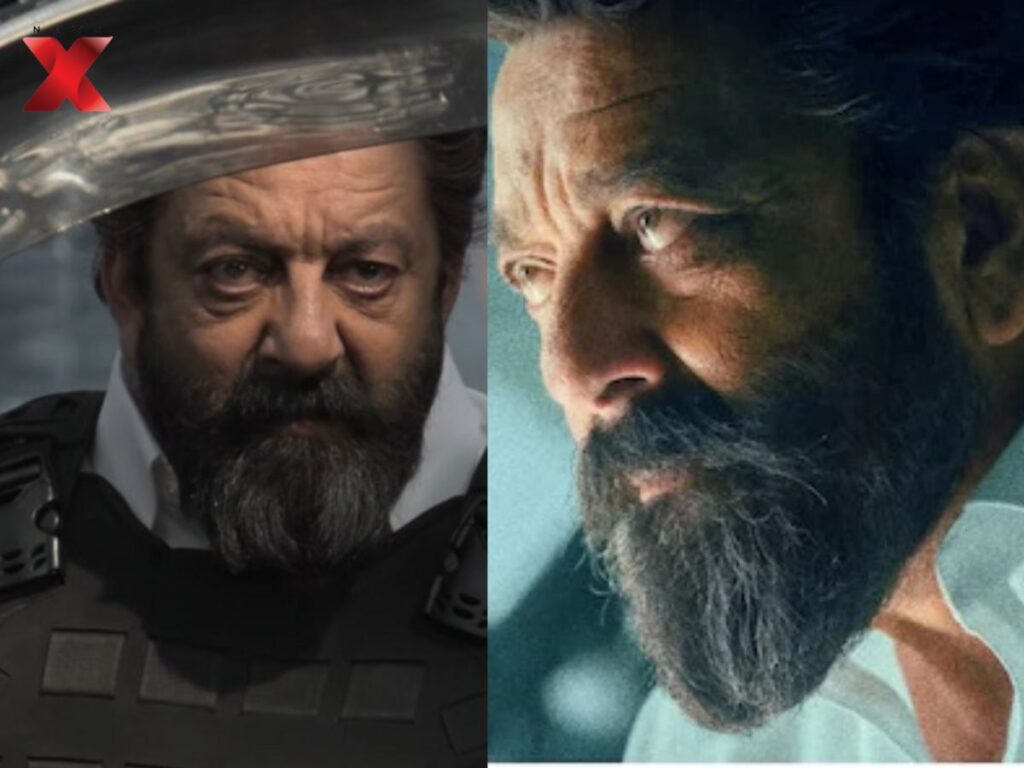
The action chorography is deliberately gruesome: at the same time the way it has been shot especially hand to hand combats is praiseworthy. The climatic faceoff between Sanjay Dutt and Akshaye Khanna particularly stands out. The physical agility of both the actors is commendable.

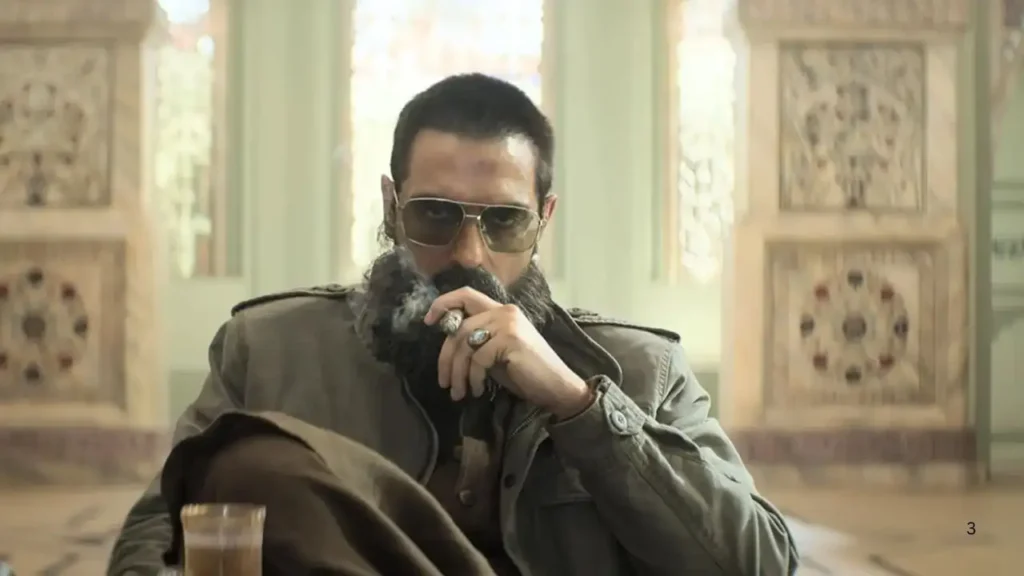
The performances of the vast ensemble also help this sprawling saga. The ones who stands out are Akshaye Khanna and Rakesh Bedi. Akshaye Khanna has always been a chameleon and here too the actor is first rate. As the Karachi inspired crime lord Akshaye chews the scenery with his effortless acting. There is a magnetic charm about the man in spite of the brutality. In spite of the brutal nature there is also an emotional side: this comes out in an impactful manner during the portions of son’s death, and the actor simply nails the different shades. When Akshaye is there on the screen it’s hard to take your off him. The combination scenes between Ranveer and him is a solid example of this. Rakesh Bedi as the cunning politician also makes a strong impact. His character switches colors like a chameleon and Rakesh Bedi does complete justice to it. The scenes featuring Rakesh Bedi gives Dhurandhar some of its best moments.

R Madhavan as the fictional Ajit Doval brings in an understated gravity. Sanjay Dutt as the Pakistani cop desperate to settle scores with Rehman Dakiat also makes his presence amply felt. Arjun Rampal as the volatile ISI agent is also good with his sinister villainy. Ranveer Singh gets somewhat lost in this huge cast. His character is more internalized and Ranveer does well: however, the killer impact is missing. The actor only comes alive only in the pre climax where he lets it all out.

Sara Arjun as the love interest though sticks out like a sore thumb. More than the glaring age gap what sticks out is how fast her character falls in love with the hero. It happens over an escape from a police raid. The way Ranveer flirts with Sara Arjun’s Yalina is more chessy than romantic. Other than being a moral support for the hero Yalina has nothing more to do. For a nineteen-year-old Yalina has zero interest in doing anything with her life. Infact the movie has no prominent female characters. Another major problem with Dhurandhar is its exhausting length coupled with the familiar anti Pakistan position. The depiction of Pakistan as the hub of all terrorist activities is a done to death trope. It doesn’t evoke much reactions especially for the neutrals who aren’t into Pakistan bashing. The movie also features dialogues which are a throwback to Uri: The Surgical Strike. They come across as cliched rather than rousing.

The second half also meanders with some superficial arcs. Some of the subplots are merely touched as a founding stone for the second part. This results in a certain fatigue making the viewers wish that the film concludes soon.

Final word: Dhurandhar is best enjoyed for those who like gritty action dramas with ample doses of patriotism and let’s hate our neighbor.

Tere Ishq Mein: A headache in the name of intense love

Tere Ishq Mein often feels like a friendship meet between Kabir Singh, Animal and fighter. Aanand L Rai and his longtime collaborator Himanshu Sharma pick elements from various movies: the end result is let’s hate a woman for rejecting the hero, how dare she marry someone else. The problematic representation of mental health also adds to the agony. The cliched use of trauma as a justification for protagonist’s violence is the final nail

Starcast: Dhanush, Kriti Sanon, Prakash Raj, Tota Roy Chowdhury and others

Genre: Romantic drama

Director: Aanand L Rai

Writers: Himanshu Sharma and Neeraj Yadav

Producers: Aanand L Rai, Himanshu Sharma, Bhushan Kumar etc

Production Companies: Color Yellow Productions and T Series Films

Music: A R Rahman

Cinematography: Tushar Kranti Roy

Running time: 2 hours and 49 minutes

There is a very thin line separating intense love and celebrating problematic characters under the disguise of romance. Mohit Suri’s Saiyaara was an intense romantic drama done right. Yes, Ahaan Pandey’s Krish Kapoor starts off as a hot-headed young man with temper issues: however, the second half sees a major change with the hero becoming a devoted boyfriend putting his love above the need for fame. By the end the hero strikes the perfect balance between ambition and standing for his love. Tere Ishq Mein on the other hand has very harmful gender politics. The hot-headed nature of Dhanush’s Shankar is often passed as heroism and deep love.

The storyline of this convoluted mess begins with a scene firmly establishing the hero’s aggressive nature. Shankar (an intense Dhanush) is a fighter pilot facing disciplinary action. Shankar needs a mental health certificate clearance stating that he is fit to participate in an ongoing war. Kriti Sanon plays a supposed psychologist Mukti which is more unintentionally funny. Mukti has a complicated past with Shankar: this is revealed gradually with numerous flashbacks.

Looking for positives in a train wreck like this is similar to searching for a needle in Haystack. Still to give credit where its due Prakash Raj as Shankar’s concerned father strikes an emotional chord. The veteran actor especially shines in the sequence of pleading with Mukti’s father (a suitably arrogant Tota Roy Chowdhury). There is also a very poignant father and son moment explaining why Shankar becomes a fighter pilot instead of pursuing UPSC. Tota Roy Chowdhury as the upper-class aristocrat has a strong presence. His attitude towards Shankar has a condescending nature but as a father it’s understandable why he wouldn’t want a guy like Shankar to be his son- in- law. It also doesn’t help that Shankar continues to be a proud alpha.

Dhanush as Shankar brings his trademark earnestness. The south Indian accent along with the character’s nature stops the viewers from being completely invested. But Dhanush’s efforts as a performer cannot be faulted. He is especially good in a heartbreak sequence involving Kriti. The questions that he asks about Mukti using him as a guinea pig for her psychological study of violence is genuinely good.

As far as the flaws are concerned the basic premise is the biggest problem. Mukti’s obsession with getting her thesis done and a certain overconfidence on her ability’s reeks of stupidity. She is very much aware of Shankar’s temper and how dangerous he can be: In spite of being aware Mukti invites self-trouble. As a professor rightly says Mukti could have chosen another subject area for PHD thesis rather than I will go out of my way to reform a violent man. This in itself becomes a major obstacle for sympathizing with Mukti. Also, the character graph from a confident young woman to walloping in self-destruction has many tonal problems.

For a supposed psychologist Mukti has zero control over her emotional turmoil. There are numerous sequences of her drinking and vomiting. This happens even when she is pregnant. As a viewer you really feel for the on-screen husband who in spite of knowing her complicated past and an inability to get over stands with her.

Shankar for all his temper issues at least becomes a fighter pilot which is a huge improvement from Raanjhanaa. The entire arc of Mukti in simple terms is spinless. This is in a very sharp contrast to a movie like The Girlfriend where Rashmika’s Bhooma goes from timid to assertive. Even Shivani Nagaram’s Khathyayani in Little Hearts does a much better job in handling pressure and exercising her choice. Kriti tries her best but there isn’t much she can do with a self-defeating woman like Mukti.

There is also a forced link with Raanjhanaa with an extended special appearance of Mohammed Zeeshan Ayub. His attempts at philosophical puns on Shiva and Mukti is completely out of place. It irritates the viewer’s big time. Both the writing and the dialogues don’t help. The portions of Dhanush pursuing UPSC is also very shabbily done. It will make the fans of 12th fail movie squirm in their seats.

Finally, Tere Ishq Mein’s attempt at handling different threads like class differences, Emotional trauma due to a loss of parent etc. is simply surface level. Most of it is used for convenient dramatic moments.

AR Rahman’s music works in parts. The theme song coupled with a Sufi track Deewana Deewana is striking. Tushar Kranti Ray’s cinematography is effective in capturing the different moods of the movie.

Final word: Watch Tere Ishq Mein only if you are in the mood for heartbreak and are fans of doomed love stories.

Andhra King Taluka: A fan’s engaging love letter

Unlike Maneesh Sharma’s Fan Andhra King Taluka does a much better job in using the emotional bond between a devotee and his favorite actor. Ram Pothineni finally gets a noteworthy part, and the actor does a very good in portraying the different nuances. Upendra in an important supporting role lends gravity as Sagar’s idol. The heartfelt conversations between the two is the soul of Andhra King Taluka. At the same time the underwritten love story plays a major spoilsport

Starcast: Ram Pothineni, Upendra, Bhagyashri Borse, Rao Ramesh, Murali Sharma and others

Genre: Drama/romance

Director and writer: Mahesh Babu Pachigolla

Producers: Naveen Yerneni and Yalamanchili Ravi Shankar

Production house: Mythri movie Makers

Music: Vivek Mervin

Cinematography: Siddartha Nuni and George C Williams

Running time: 2 hours and 43 minutes

There is something magical about the bond shared by a fan with his favorite actor or actress. You may never meet that person and he or she will probably never know about your existence. But the influence of the characters played by an actor that you adore stays permanently. This can be both positive and negative depending on the audience mindset. Movies about fans and their favorite stars have been made previously too but Andhra King Taluka holds a certain novelty. The freshness majorly comes from how Ram’s Sagar learns many life lessons from the on-screen characters of his idol. How the paths of Ram and Upendra meet leading to a heartfelt conversation is touching.

The story of Andhra King Taluka begins with the introduction of Upendra’s Surya. A major star going through a financial crisis now. His 100th movie is shelved and some people are after him to give the money back. At this crucial point a large amount is deposited in Surya’s account in the name of Sagar. Surya is curious about the identity of Sagar and on some research, it is found that Sagar is the president of fan’s association called Andhra King Taluka. Surya decides to meet Sagar personally leading to a life changing journey.

A strong aspect of Andhra King Taluka is the depiction of fan mania. Yes, Sagar’s excessive devotion towards Surya may across as melodramatic for some but anyone remotely aware of how fandom plays out will understand Sagar’s extreme love. There is an important flashback too explaining Sagar’s nervous issues. How in moments of fear he starts to stutter. A major reason for Sagar becoming more confident are the movies of Surya with numerous life lessons.

This gives an important emotional edge unlike Fan which portrayed fanism in a negative light. The issues of Sagar’s village in East Godavari and how the hero decides to make things better is also interesting. Its connected to Bhagyashri Borse’s Mahalakshmi. The romance between the two is severely underdeveloped nevertheless Bhagyashri Borse has a charming presence. The love ballad Nuvvante Chale featuring the two makes for a soothing listen and watch.

Andhra King Taluka also benefits from some strong dialogues written by Mahesh Babu Pachigolla himself. For example, there is a portion where Upendra says I may not be aware of who Sagar is but it’s because of fans like him that I am here. Similarly, the climax portion where Sagar talks about the numerous lessons Surya has given him is also touching.

The cinematography of Siddartha Nuni and George C Williams is eye pleasing. The visuals are in perfect sync with the movie’s feel-good tone. The music is also of a good order. The songs especially Nuvantee Chaley and Chinni Gundelo stand out for its melody and the colorful palette.

Ram as already said is top notch in the role of Sagar: whether it’s the devotion of a fan or the more intense moments like the fantastic pre interval block with Murali Sharma. Apart from Upendra Rao Ramesh as Sagar’s father also stands out especially in the scene where he backs up his son’s plans.

Coming to the flaws the love story as already said is severely undercooked. More scenes between Ram and Bhagyashri Borse would have enhanced the romantic parts. More so given the deep love that Sagar has for Mahalakshmi. There is also a moment with Sagar sacrificing something deeply emotional for an actor whom he has never met. This will appear silly for a section of audiences.

Final word: Andhra King Taluk makes for a nice feel-good movie especially if you have been a die-hard fan of any actor or actress.

Kaantha: A strong beginning marred by an uneven execution

Selvamani Selvaraj does an excellent job in building up the tension particularly shining in his handling of psychological drama. The ego tussles between Dulquer and Samuthrikani has come out well with both men having flaws of their own. The prominent female character played by Bhagyashri Borse has some solid scenes too: but once the movie slips into murder mystery proceedings start to stagnate. The secondary characters with the interpersonal dynamics needed more texture.

Starcast: Dulquer Salmaan, Samuthrikani, Bhagyashri Borse, Rani Dagubatti, Ravindra Vijay and others

Genre: Thriller/drama

Director and writer: Selvamani Selvaraj

Additional writer: Tamizah Prabha

Cinematography: Dani Sanchez- Lopez

Music: Jhanu Chantar

Producers: Rana Dagubatti, Dulquer Salmaan and others

Production Companies: Spirit Media and Wayfarer films

Running time: 2 hours and 43 minutes

Some movies sound very promising on paper but get lost in translation. Kaantha is a perfect example of this category. The movie has big ideas with a potential edge of a sit thriller, but the film stumbles big time after solid world building. However, all isn’t lost thanks to the solid trio of Dulquer, Samuthrikani and Bhagyashri Borse. The dramatic portions exploring why things went sour between a superstar and a director/father figure has come out well giving a cautionary message on how bruised egos are never good and the need to sort differences. The surprise package though is Bhagyashri Borse something which I will get to later.

The timeline of Kaantha is 1950’s. Dulquer Salmaan is superstar TKM (Thiruchengode Kalidasa Mahadevan). His journey perfectly fits the caption of rags to riches. The movie begins with the death of Bhagyashri Borse’s Kumari. She is a first-time actress and a protégée of Samuthrikani’s TPK much like Kalidasa Mahadevan. TPK is also called as Ayya. The first half is primarily about the revival of TPK’s most ambitious project, a story connected to his mother’s death. How the film gets a second life amidst an air of tension and what led to the strained relationship between TKM and TPK occupies a major space. Running parallel to this is a budding love story between Kumari and TKM. Kalidasa Mahadevan finds true love with Kumari, but the path is riddled with obstacles. The second half slips into a murder mystery with numerous suspects and motivations. Rana Dagubbati is inspector Devaraj alias Phoenix. Devaraj has his own way of going about things. There is a quirky nature with some sarcastic humor.

A strong aspect of Kaantha is undoubtedly its world building. Selvamani Selvaraj along with Tamizah Prabha do a good job in gradually unravelling the tension. In the beginning the viewers are given the impression of TPK being a pure soul with TKM projected as narcissist with huge ego. However, as the movie progresses the viewers understand that both come with their own share of issues. TPK too has a god like complex on certain occasions making him no less of a narcissist.

The movie also does a fine job in depicting big male stars overriding director’s vision according to their whims and fancies so that the fans won’t get upset. There is a contemporariness though the plot is set in 50’s. The addictive nature of fame and what happens if a person isn’t able to have a levelheaded approach has been well written and enacted too.

Bhagyashri Borse as Kumari also has an important role. She is never reduced to a pawn and comes across as a strong woman who isn’t afraid to voice her opinions. Bhagyashri does an excellent job in bringing alive both the innocence and a strong-willed nature. Her presence can be felt even when Kumari’s isn’t physically alive.

Kaantha is also technically strong more so in the cinematography and background score. The cinematography of Dani Sachez Lopez is excellent transporting the viewers successfully back to 1950’s. He also does a fine job in capturing the tension filled atmosphere with the eerie settings and a certain kind of lighting. Jakes Bejoy’s background score is of a good order too especially in the portions of Dulquer and Samuthrikani’s face off. Both Dulquer and Samuthrikani don’t need a special introduction on their acting abilities and here too both shine equally. Two scenes deserve a particular mention. One is Samuthrikani’s breakdown where TPK expresses his regret on behaving in an egoistic manner and how they should have had a proper conversation fixing the issues. The second one involves Dulquer staring into a mirror. TKM shrinks back as he is confronted with uncomfortable truths. Dulquer is absolutely first rate in this.

Rana Dagubbati as Devaraj lifts a very muddled second half with his sarcastic humor. His way of investigating the case has some nice touches. A specific mention must be made of the scene where he is casually dismissive of TKM’s acting abilities.

A major problem with Kaantha are the underdeveloped secondary characters. The suspects barring Dulquer and Samuthrikani are hampered by sketchy characterizations. Even TKM’s interpersonal relationships with the wife and the father-in-law needed better writing. Selvamani Selvaraj tries to do an Agatha Christie but falls flat on his face.

Some of the characters like Kumari’s friend a fellow refugee from Burma had good potential but the weak writing plays a major spoilsport. The music also leaves something to be desired. A movie of this scale required better songs.

Final word: Kaantha can be watched for fans of Dulquer. The charismatic actor doesn’t disappoint but don’t except a wholesome experience.

Haq: A gripping tale of perseverance and fighting for one’s rights

Director Suparn Verma does an excellent job in making sure that the movie doesn’t end up demonizing the Muslim community. It’s more about men twisting laws and using religion as an excuse to have their way irrespective of the faith. Yami Gautam as Shazia Bano is excellent as is Emraan Hashmi who has the trickier part. Both the writing and Emraan make sure that the husband doesn’t slip into a caricature

Starcast: Yami Gautam, Emraan Hashmi, Danish Hussain, Sheeba Chadda, Vartika Singh and others

Genre: Drama

Director: Suparn Verma

Writer: Reshu Nath

Based on: Bharat Ki Beti novel Jigna Vora

Producers: Harman Baweja, Vishal Gurnani and Juhi Parekh Mehta

Production Companies: Baweja Studios, Insomnia Films and Junglee Pictures

Cinematography: Pratham Mehta

Music: Vishal Mishra

Running time: 2 hours and 16 minutes

The landmark Supreme court judgement of Sha Bano upholding her rights of maintenance is a very significant one even today. Of course, the entire scenario took a political turn as well making it a matter of national debate; but beyond that it become a milestone case for women’s rights in this case an Indian Muslim. It raised questions about gender equality and protecting women’s rights. Haq directed by Suparn Verma and written by Reshu Nath successfully brings alive the long and arduous battle of Sha Bano with Yami Gautam playing Shazia. Emraan Hashmi is Shazia’s husband turned adversary Abbas.

The story of Haq in simple terms focuses on the emotional turmoil faced by Shazia (an excellent Yami Gautam). Everything seems perfect with a loving husband and children, but her life goes upside down with Abbas (Emraan Hashmi) doing second marriage. Shazia as expected is very angry with her husband’s actions. She tries to make peace with the situation but that becomes difficult as Abbas gives little to no attention for Shazia. She takes the decision of going back to parent’s house. The situation takes a major dramatic turn when Abbas cuts of all ties starting with the children. He stops giving the maintenance money and then comes the divorce with just the three words Talaq. This is the story in brief.

A strong aspect of Haq is the gradual revealing of different layers. Suparn Verma first establishes the happy moments of their married life. Abbas isn’t painted as a complete jerk. There is a visible romantic side in the initial scenes like the portion involving Shazia’s wish of wanting a rose garden. Gradually though things start to change after two children. He spends more time in the office giving not much time for her and children. Even when Shazia calls to talk about important matters Abbas asks her to not disturb and handle things on her own. The seeds of a scarred marriage start from there and take a full shape with the arrival of Vartika Singh’s Saira.

As a result of this layered writing the transformation of Abbas doesn’t come as jerky. The battle of Shazia has also been depicted well both in the terms of direction and Yami’s solid act. The role has the perfect mixture of vulnerability and a mother’s fighting spirit. A specific mention must be made of the emotional scenes where Shazia questions her husband. The dialogues are power packed, and the performances of both the actors make it even better.

Emraan Hashmi though has a trickier role as already mentioned. Abbas could have easily slipped into an over-the-top villain but Suparn Verma along with Reshu Nath give a psychologist insight into a man trapped in a sense of entitlement. Someone who refuses to see his wrong doings. There is also a sense of tragedy to Abba’s downfall. This is wonderfully captured in the moment where the one of sons doesn’t even make eye contact with the father. There is a palpable pain in the way Abbas talks about this to Shazia before the landmark Judgement. Emraan does an excellent job in capturing the little nuances.

The biggest victory of Haq though is that it never demonizes the Muslim community. The battle of Shazia Bano has a universal touch not restricted to a particular religion. Its more about men reinterpreting laws as per their convenience and using religion as a tool to hide behind their regressive thought process.

The dialogues are also power packed. The best of the lot involves a conversation between Shazia and Abba’s second wife. Shazia gives an important message on the need for respect in a relationship and how that is sometimes equally important. Vartika Singh as the second wife has a dignified presence and thankfully the movie doesn’t turn into two women fighting over one man. There is a wonderful moment involving the two when Saria places a basket of vegetables for cooking. This happens after Shazia starts facing social ostracization. Similarly in another moment she strongly says to Abbas about Shazia being right which obviously doesn’t go down well with the husband.

Danish Hussain as the supportive father is also wonderful to watch. The way he boosts Shazia’ ‘s spirit when the chips are absolutely down is a treat to watch. Through him the movie gives a progressive Muslim man. Sheeba Chadda as Shazia’s lawyer is excellent too in the courtroom scenes. Assem Hattangady as Faraz Sayeed is fine as well. The way he stands with Sheeba Chadda’s Bela Jain in spite of certain misgivings is nice to watch.

There isn’t much place for music in a movie like Haq but an important romantic number between Emraan and Yami has been smartly integrated. The song Qubool has a lovely melody establishing how happy they were. Pratham Mehta’s cinematography is successful in taking back the viewers to those times. The atmospherics have a lived-in feel.

As for the flaws the final courtroom arguments have a rushed feel. Also, the heavy use of Urdu in some sequences can be hugely distracting.

Final word: Haq is a very relevant tale with the issues being the same even today. On a side note, its great to see two women centric narratives the Girlfriend and Haq in the same week.

The Girlfriend: A strong slap to Arjun Reddy and Animal’s endorsement of toxic masculinity

Director Rahul Ravindran tells a much-needed tale of a young woman taking life into her own hands and not crumbling in timidity. Rahul Ravindran who has also written the story does an extremely fine job in analyzing why a certain kind of men prefer their partners to be a doormat rather than self-assured. The messaging might be a little too much in the face for a section of audiences but there is no doubt about The Girlfriend being a much-needed feministic tale

Starcast: Rashmika Mandanna, Dheekshith Shetty, Anu Emanuel, Rao Ramesh, Rahul Ravindran and others

Genre: Drama

Story, screenplay, direction and dialogues: Rahul Ravindran

Producers: Dheeraj Mogileni and Vidya Koppineedi

Production house: Geeta Arts and Dheeraj Mogilnineni Entertainment

Music: Hesham Abdul Wahab

Cinematography: Krishnan Vasant

Running time: 2 hours and 18 minutes

Its easy to see why The Girlfriend has been dismissed as female propaganda by some. The movie’s strong social commentary on controlling men and their belief system has been laid out in a stark manner. This obviously hasn’t gone down well with a section of men who consider feminism as a propaganda. The initial reels of The Girlfriend feels like a sequel to Sandeep Reddy Vanga’s Arjun Reddy in more ways than one. The characterization of Dheekshith Shetty’s Vikram right down to the entitled nature has a major echo of Vijay Devarakonda of that film. However, what separates a movie like The Girlfriend is the feministic gaze through which Rahul narrates the story. The gradual transformation of Rashmika Mandanna’s Bhooma from bearing the suffocation of a toxic boyfriend to eventually breaking the shackles has been dealt with the required sensitivity. By the climax viewers are rooting for Bhooma and when the moment comes with a Durga ma symbolism you want to clap hard.

Rashmika Mandanna and Dheekshith Shetty from The Girlfriend

The storyline of The Girlfriend primarily focuses on a soft natured girl Bhooma. Bhooma is an extremely timid personality with confidence issues. Her big solace are books making her choose MA English literature. Bhooma also has aspirations of becoming a writer Dheekshith Shetty is Vikram. The paths of Bhooma and Vikram cross leading to a tumultuous journey.

A strong aspect of The Girlfriend is the layered approach taken by Rahul Ravindran. The transformation of Bhooma becoming more assertive doesn’t happen in a jiffy. The film has numerous scenes showcasing Bhooma’s inner dilemmas through the use of magical realism and symbols. For example, there is fantastic pre interval sequence with Rohini Molleti. Rohini plays the mother of Vikram, she has no dialogues, but a palpable fear of her son’s aggressive nature comes out in a vivid way. she doesn’t make eye contact with the son for not even a second. There is a portion of Rashmika looking into the mirror while checking the album of her prospective mother-in-law. In the album a younger Rohini comes across as lively and Bhooma wonders why the woman sitting in front of her is so different. In the mirror Bhooma sees her future life in Rohini’s saree.

There is also a scene in the restroom where Rashmika feels the walls are literally closing on her reflecting the starting of suffocation. This use of imagery adds a lot to the movie’s emotional core. Rahul Ravindran also deserves credit for how he does a psychoanalysis of men like Vikram. The molding of a women into a more of a caretaker than an equal partner and the reasons behind this thought process has come out wonderfully. There is a very important scene in which Vikram extols his mother’s caring nature and further adds on how women of this generation cannot match to the older generation.

He concludes by saying temples can be built for mothers like them. There is also a casual mention of domestic abuse without any criticism. These small but important nuances add depth to both Bhooma and Vikram.

The Girlfriend also does a good job in celebrating a strong bond of sisterhood in the portions featuring Anu Emanuel and Rashmika. Anu Emanuel’s Durga initially has a major crush towards Vikram but his treatment of Bhooma makes her introspect. How the two bond over a play bringing a different side to Bhooma is a delight to watch in spite of the less scenes. Anu Emanuel lends in a lot of warmth especially in the scene where she strongly cautions Bhooma on Vikram not being the right guy for her.

Rahul Ravindran also has an extended cameo as literature HOD. The role is an extension of Rahul’s real-life beliefs on the importance of female autonomy. Yes, the conversations between Rashmika and Rahul spells out the message a little too explicitly nevertheless Rahul does a fine job in portraying empathetic nature.

The biggest ace of The Girlfriend though is Rashmika’s fantastic performance. The actress absolutely imbibes the different shades of Bhooma. Whether it’s the initial timidity or gradually taking control of her life. The actress especially shines in showcasing the suffocation of Bhooma just through body language. Similarly, she owns the climatic moments too with ma Durga symbolism. The confidence with which Rashmika let’s it all out in a large campus crowd will give goosebumps. Dheekshith Shetty as the controlling boyfriend with a regressive thought process also makes his presence amply felt. The role doesn’t slip into a caricature at any point thanks to both the writing and the performance. The way he gradually brings out the manipulative streak under a supposedly caring nature is a treat to watch. Rao Ramesh as Bhooma’s father has a short but important role. He holds a mirror image to Vikram even though the scenes are overdramatic.

The music of Hesham Abdul Wahab is soulful too. The climactic song “Needhe Katha” is very intense working as a perfect culmination for Bhooma’s journey. Krishnan Vasanth’s cinematography is also of a fine standard especially in the scenes of magic realism.

Final word: The Girlfriend isn’t for those looking for comfort but for fans of feminist stories with strong women the film is a treat to watch.