Telusu Kada (You Know, right?): Bold and intense romantic drama

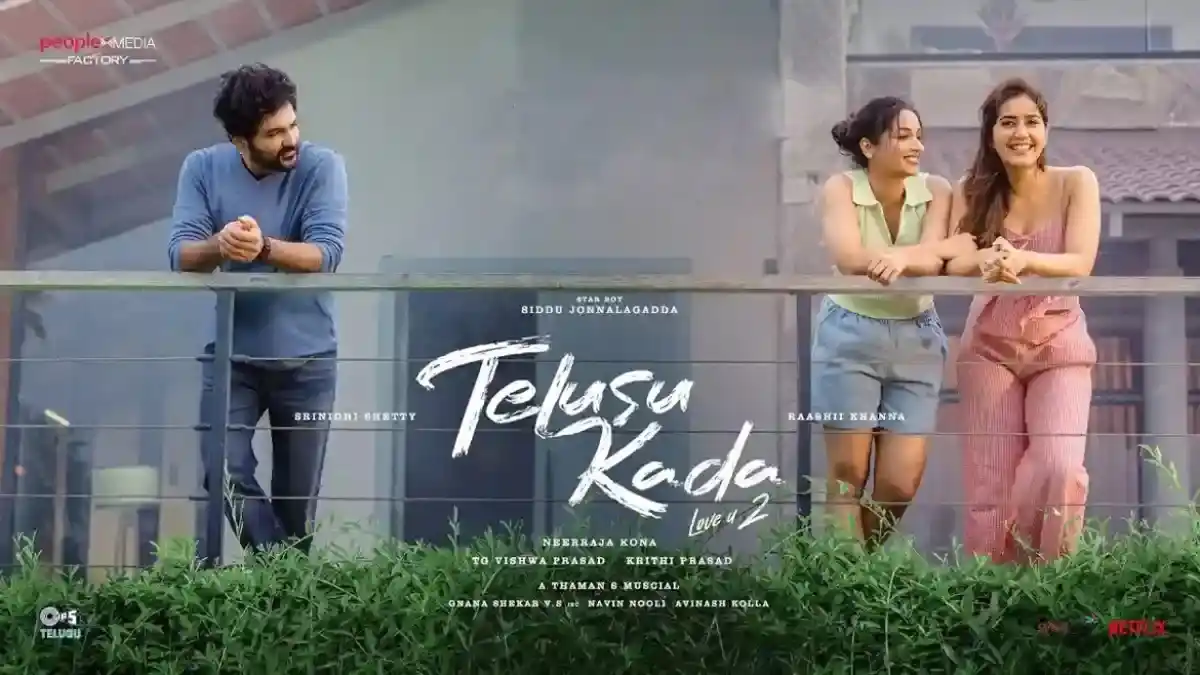
Telusu Kada has certain similarities with the Salman Khan and Rani Mukherjee starrer Chori Chori Chupke Chupke. But this is no remake. Writer and director Neeraja Kona takes a familiar set up of a triangle love story, but the sensibilities are different. All the three protagonists come with shades of grey. The movie dwells into the complexities of modern-day relationships with its messiness. The unconventional storytelling isn’t for all nevertheless Neeraja Kona establishes herself as a promising new director.

Starcast: Siddhu Jonnalagadda, Rashi Khanna, Srinidhi Shetty, Harsha Chemudu and others

Genre: Romance

Director and writer: Neeraja Kona

Producers: T. G Vishwa Prasad and Vivek Kuchibhotia

Production Company: People Media Factory

Music: Thaman S

Cinematography: Gnana Shekar V S

Running time: 2 hours and 12 minutes

The conflict points in love stories have undergone a significant change over time. From the cliches of warring parents and simplistic rich versus poor now the sensibilities are very different. This is amply evident in today’s love stories whether it’s the intense ones or coming of age mixed with love. Neeraja Kona’s Telusa Kada is a bold story dealing with interesting conflict points. One of them are the varied expectations. Siddhu Jonnalagada plays the volatile Varun. Having grown up as an orphan with no proper family he earns for a complete life with a wife and kids. Srinidhi Shetty is Raaga. Without giving much away Raaga is the anthesis of Shivani Nagaram’s steel rod Kathyayini in Little Hearts.

The movie begins with Varun tearing away some photos and venting out his anger. Harsha Chemudu as Mahesh is a buddy as well as an important emotional anchor. Mahesh knows Varun inside and out, the scenes featuring the two gives the movie some of its best moments. Rashi Khanna is Anjali Sharma. She is a mix of traditional and modern. Anjali’s thought process regarding family life is similar to Varun. Not surprisingly Varun falls fast for Anjali and vice versa. The two end up marrying however a major incident changes everything. This is connected to surrogacy. In a big twist of events Raaga makes a comeback into Varun’s life as a surrogate mother. The conflicts that arise when Anjali comes to know about Raaga’s past connection with Varun forms the basic core of Telusu Kada

A strong aspect of Telusu Kada are the characterizations of the principal protagonists especially Siddhu Jonnalagda and Rashi Khanna. Thanks to the huge success of Tillu character Siddhu has been largely associated with comedy. However, Telusu Kada presents a refreshingly different side. This is evident from the first scene itself. Siddhu imbibes the volatileness with gay abandon. The second half has numerous scenes of Varun showing his mean side. He gives taunts to Raaga on how their relationship was a time pass for her. On the surface some of it may across as childish but the palpable pain makes the viewers understand the hero’s perspective. It is hard to pinpoint Varun as either a good or bad. This confusing characterization has its minus points too but there is no denying that Siddhu absolutely aces the role from the body language to the emotional intensity. Telusu Kada definitely marks a new beginning for the budding actor.

Rashi Khanna too displays a different facet. She not only looks stunning but also aces the grey shades. A special mention must be made of the scenes where she questions Varun about holding back important incidents and how she feels like a third wheel between him and Raaga. Srinidhi Shetty is also good in her part but is somewhat let down by a sketchy characterization. The movie could have benefitted a little more by showing the emotional upheaval of Raaga after she dumps Varun. Harsha Chemudu gets a role beyond hero’s best friend and the actor aces it.
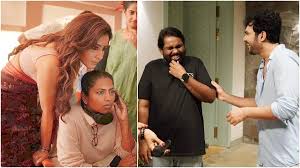
The second half drama between the three characters has some engaging moments as well however a comic interlude featuring veteran actress Annapurna leaves a bitter after taste. Mention must also be made of how Neeraja Kona normalizes the concept of a surrogate mother for mainstream Telugu audiences. The movie’s ending with Varun getting what he always wanted makes the viewers happy.

Thaman’s score also adds to the film. Among the tunes Mallika Gandha and Sogasu Chudatharama are soulful enhancing the romantic core. Gnana Shekar VS Cinematography in spite of the limited locations makes the movie visually appealing.
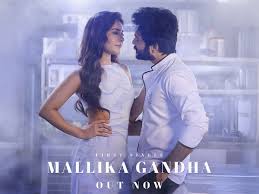
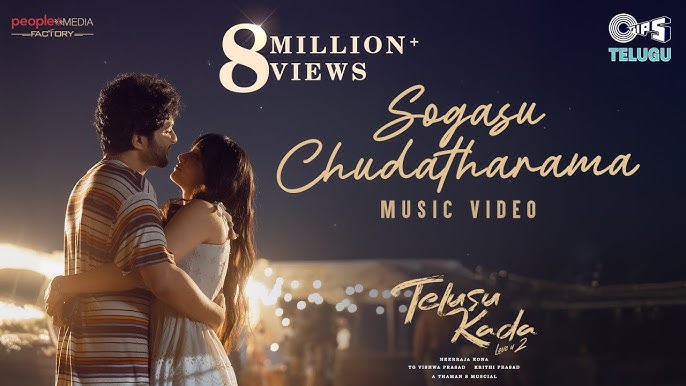
Final word: Telusu Kada isn’t for all but for those like romance with unconventional storytelling its very much worth a watch.
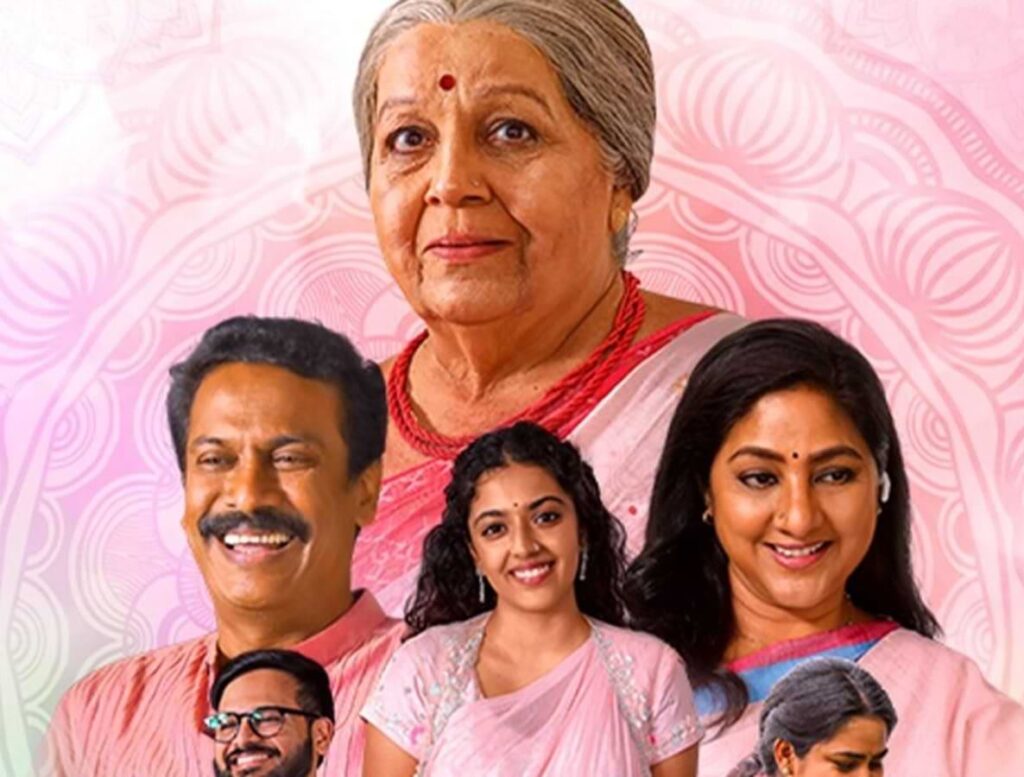
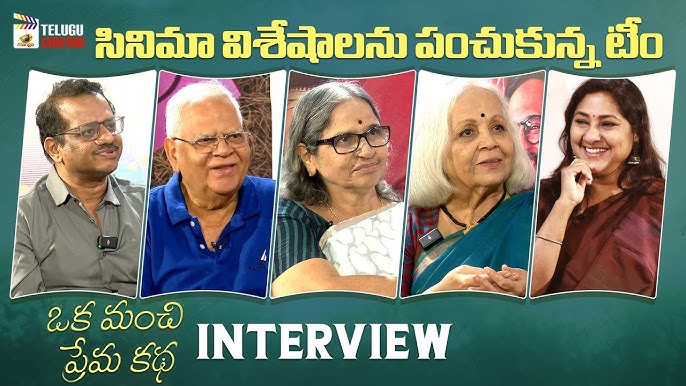
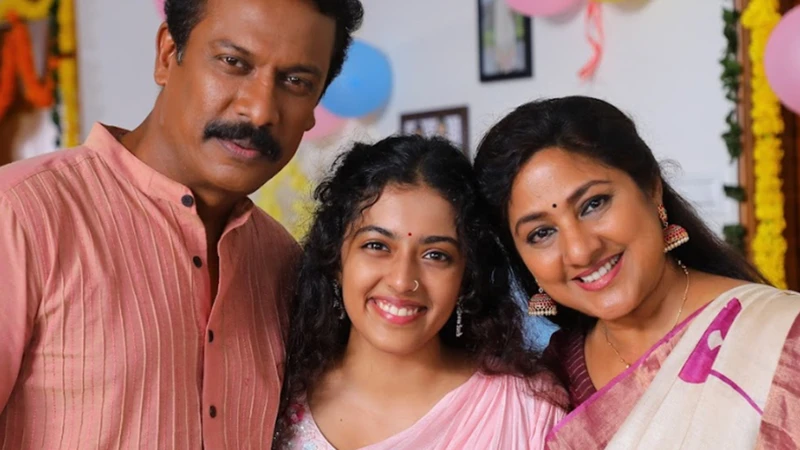
Oka Manchi Prema Katha: Not just making a case for old age parents but raising many more important questions

Oka Manchi prema katha isn’t confined to looking after old age parents it is also about the corporate culture and the subsequent rat race. Stories of parents going through emotional neglect has been explored many times much like the genre of love itself. But this movie has many interesting points and one of them is about becoming a mother to your own parent. Among the principal actors Samuthirakani makes the strongest impact in a refreshingly different role.

Starcast: Rohini Hattangadi, Rohini Molleti, Samuthirakani, Himanshu Popuri and others

Genre: Drama

Direction and screenplay: Akkineni Kutumba Rao

Story, Dialogues and Songs: Volga

Producer: Himanshu Popuri

Cinematographer: Madhu Ambat

Music: K M Radhakrishnan

Streaming site: ETV Win

Running time: 2 hours+

Stories of parents facing emotional neglect has a certain template. The children are generally presented in a shrill and often unbearable tone. Oka Manchi Prem Katha’s first half also follows this formula. Sujatha (Rohini Molleti) is a very ambitious woman. She wants to reach the top position and has been working heavily to get a promotion which will put her on par with her husband Eshwar (Samuthirakani). Their daughter is studying abroad. Because of the extremely busy work schedules neither Sujatha nor Eshwar have much time to each other and for their daughter. Veteran actress Rohini Hattangadi is Rangamani the mother. Rangamani was also an employee but now stays in her village doing a bit of social service. She interacts with numerous people on a daily basis, solving some of their problems and one of them is her ‘adopted’ son Shankar. However, a health problem makes her miss her daughter dearly, but Sujatha is too busy to visit Rangamani. How they come together is the core of the film.

A strong aspect of Oka Manchi Prem Katha are the portions featuring the two Rohinis in the latter half. From the moment Sujatha becomes a mother to her own parent the film hits numerous high notes. The scenes are filled with lot of warmth, and the film succeeds in presenting a different kind of love, in this case a bond between a mother and a daughter. Both Sujatha and Rohini Molleti become more likeable here.

Through the very ambitious nature of Sujatha, Volga does a fine job in critiquing the current working lifestyle especially the corporate set up where there is one deadline after another leaving little to no space for imbibing humanistic values. The mental health issues that come with it has also been effectively presented. There is a nice bit in the first half when Sujatha visits a psychiatrist. The psychiatrist says that she needs love and more communication with people around her. To this Sujatha asks whether there is any medicine to cure this problem and the Doctor replies that unfortunately no love pill has been discovered so far.

The portions of Samuthirakani missing his wife and the telephonic conversations have been wonderfully written and enacted. Samuthirakani is a delight to watch whether it is reciting poems of John Keats or making up his own one or portraying the absolute bewilderment about the change in Sujatha’s behaviour. It is nice to see the actor playing a nuanced role for a change rather than the routine mainstream villain.

Among the other actors Rohini Molleti’s character was a little too loud and caricaturist in the first half but gets better as the movie progresses. Rohini Hattangadi as usual shines bright especially in the confrontation scenes. A specific mention must be made of the portion between her and Samuthirakani when Eshwar sends a divorce notice. She counters him with one simple question but a powerful one; would he do the same thing if the company had sent Sujatha somewhere for work purpose. There is one more dialogue where she raises an important question about Companies not granting leave to take care of old age parents. The reasoning that she gives is also very thought provoking. When there can be a maternity leave why can’t there be one for old age parental care? The rest of the cast are also fine. Himanshu Popuri as Shankar especially stands out.

Talking about the flaws the movie needed to be crisper in the first half. The core plot should have kicked in earlier instead of leaving it to the second half. The jarring difference between the attitudes of village folk and Sujatha could have been handled with more subtlety.

The music by K M Radhakrishna is soulful adding to the movie’s emotional core. Madhu Ambat’s cinematography is of course as usual very pleasant.

Kantara (Chapter 1): A powerful second half saves the day

Director, writer and actor Rishabh Shetty saves the best for the latter half. The devotional elements with Rishabh in a possessed state makes for a fantastic watch especially if it’s the big screen. The twist around the gorgeous Rukmini Vasanth catches the viewers unawares. Much like the 2022 Kantara this one also explores the importance of ecological conservation and not taking the downtrodden for granted among others. Only the scale is much bigger this time around

Starcast: Rishabh Shetty, Rukmini Vasanth, Gulshan Devaih, Jayaram and others

Genre: Action/devotional

Director and writer: Rishabh Shetty

Producers: Vijay Kirangadur and Chaluve Gowda

Production Company: Hombale Films

Music: B Ajaneeth Loknath

Cinematography: Aravind S Kashyap

Running time: 2 hours and 48 minutes

The 2022 Kantara released with less expectations but surprised everyone. In spite of the problematic elements like the romantic track the Karnataka folklore coupled with Rishabh Shetty’s committed performance made it sail through. The movie became a national wide success making Rishabh a breakthrough star director and actor.

Expectations with Kantara (Chapter 1) is huge given the massive success of the first part. In simple terms the plot of this one is an origin story connected to the divine protectors of the mythical forest. The guardians include Panjurli Daiva, Guliga Davia and Varaha Roopam. Each of this symbolizes a divine power. The period is Kadamba dynasty.

The first half of Kantara (Chapter 1) has a slow build up. A lot of time is spent on world building with comedic episodes and side characters occupying more space than required. This does test the viewers patience making the viewers wish that Rishabh speeds up the proceedings. Even the very talented Gulshan Devaih starts off as a caricature. Thankfully though the film picks up pace towards the interval.

Things really start moving once the central conflict is introduced. The hidden riches of the Kadamba Forest and how this triggers a chain of events. The second half has many engaging moments especially the sequences where Rishabh Shetty goes into a trance like state. The sheer physical energy that the actor brings to the table is extremely commendable.

Gulshan Devaih also comes into his own during the second half. He is successful in making the viewers hate him. Mention must also be made of the twists and turns connected to Jayaram and Rukmini Vasanth’s roles. Without giving much away how they eventually shape up takes the viewers by surprise especially in the case of Rukmini Vasanth as Princess Kanakavathi. Until the midway mark Princess Kanakavathi is presented as a love interest but there is a surprise twist connected to her birth. This changes the graph of the movie completely. Rukmini Vasanth not looks gorgeous but also leaves a strong mark in portraying the duality of her role. Jayaram also leaves a significant mark in a grey shaded role.

Apart from a strong second half the technical values also enhance the film specially in the large action set pieces. Cinematographer Aravind S Kashyap does a very fine job in capturing the massive scale through his lens. The picturization of the Kadamba forests has the required eeriness. The background score by Ajaneesh Loknath is also rousing. His work enhances the trance portions of Rishabh Shetty. The songs have the right devotional flavor for deep believers in God.

Underneath all the mysticism Kantara Chapter 1 has important socio-political commentary too. Specifically, the need for ecological balance and how not to take the downtrodden for granted. These portions are definitely relevant and some of Rishabh Shetty’s dialogues do pack a punch as well: however, the overreliance on divine intervention and mythological folklore makes the film simplistic.

Final word: Kantara (Chapter 1) will be a delight for hard core Rishabh Shetty fans and also those who enjoy mythical mixed with devotion.

One Battle After Another: A strong cocktail of politics, thrills and drama

Director Paul Thomas Andreson delivers a khichdi of genres in a seamless manner. The best part of Paul Thomas Andreson narration is how he manages to find humor in even the direst of circumstances. The movie’s socio-political commentary- like the angle of racial discrimination- doesn’t feel force fitted at any point. There is a natural blend to the way events unfold

Starcast: Leonardo DiCaprio, Sean Penn, Chase Infiniti, Teyana Taylor and others

Genre: Action thriller/drama

Director and writer: Paul Thomas Andreson

Based on: The Book Vineland by Thomas Pynchon

Producers: Adam Somner, Sara Murphy and Paul Thomas Andreson

Production Company: Ghoulardi Film Company

Cinematography: Michael Bauman

Music: Jonny Greenwood

Running time: 2 hours and 50 minutes

The best way to describe One Battle After Another would be a chaotic ride in the best manner. The movie takes the viewers on a roller coaster of a journey from the beginning itself. The plot doesn’t waste any time in establishing a revolutionary group called French 75. A scene stealing Leonardo DiCaprio along with a fierce Teyana Taylor are a part of this French 75. A revolutionary group taking on a fascist regime.

There is a daring rescue operation involving the immigration detention center. Sean Penn plays colonel Steven Lockjaw. He is absolutely smitten by Teyana Taylor’s Perfidia Beverly Hills. The first half an hour establishes the motives of French 75 and the mayhem they cause. However once incident changes everything leading Leonardo DiCaprio’s Bob and the young child played by Chase Infinti to go underground. Perfidia Beverly has already left her husband and daughter due to a certain friction. Bob is leading a quiet life with the grown-up daughter but the past returns back to haunt and soon the movie turns into a race against time.

A strong aspect of One Batlle After Another is the entertainment quotient. The movie raises many chuckles at regular intervals: this in spite of the tense situations. A lot of credit for that goes to Leonardo DiCaprio’s comic timing. When his daughter suddenly disappears, he knows that she is in peril and tries to contact his old comrades. However, the person on the phone insists on their secret code answers which Bob cannot recollect due to the overuse of drugs and alcohol in all these years. This keeps repeating generating a lot of comedy.

The portions of Bob as a father and how he interacts with the daughter’s friends specially the scene where she is going to a party is hilarious to say the least. Leonardo simply brings the house down. In the emotional scenes also, he does a fine job. The desperation is palpable making the viewers root for him. In short Leonardo is first rate.

Mention must also be made of the impactful socio-political commentary. The political violence led by colonel Steven Lockjaw in how the immigrants and the black community are treated has a contemporary touch. The result of extreme authoritarianism and how this leads to rebellious groups like French 75 has been well written and enacted.

The movie also pays a nod to Hitler’s dictatorial ways in a sequence resembling a gas chamber. Sean Penn makes for a suitably despicable antagonist even though the character becomes a mere caricature as the plot progresses.

The character of Chase Infiniti has been well crafted. There is a strong inner strength to the role and a certain street-smart nature. She isn’t someone waiting for her to dad rescue her. There is an important sequence where she bumps off an assassin after he fails to answer an important code question. Chase Infiniti more than holds her own opposite Leonardo.

The cinematography of Michael Bauman is also eye filling. The vast landscape specially in the tense chase sequence makes the movie a visual delight. The background score of Jonny Greenwood also adds to the drama.

Final word: I am sure that a person who is familiar with American political context would understand the film more comprehensively.

Homebound: A searing tale of friendship and politics

Returning back to the big screen after a huge gap Neeraj Ghaywan once again shows his ability in delivering socially relevant tales. Homebound is notches above Masaan in more ways than one: the angst is more, and the politics more in your face but highly effective. Homebound benefits immensely from the solid on screen friendship. The viewers feel the everyday marginalization felt by Vishal Jethwa’s Chandan and Ishaan Khattar’s Shoaib. The heart of Homebound though lies in the second half when it tackles the plight of migrant workers

Starcast: Vishal Jethwa, Ishaan Khattar, Janhvi Kapoor, Harshika Parmar, Shalini Vasta and others

Genre: Social drama

Story: Basharat Peer, Neeraj Ghaywan and Sumit Roy

Direction, screenplay and dialogues: Neeraj Ghaywan

Additional dialogues: Varun Grover

Based on: A friendship, a pandemic and the death beside the Highway article by Basharat Peer

Cinematography: Pratik Shah

Music: Benedict Taylor, Amit Trivedi and Naren Chandavarkar

Producers: Karan Johar, Somen Mishra, Adar Poonawala etc

Production Company: Dharma Productions

Running time: 2 hours and 2 minutes

In the last few years Dharma has seen a massive shift in terms of the diverse stories and filmmakers who come with strong voices. This is very apparent with films like 2024’s Kill and this year’s Dhadak 2 along with Homebound. All these movies have a social voice especially in the case of last two. In both Dhadak 2 and Homebound the plight of the marginalized form the central core: both these movies aren’t afraid to wear their politics on sleeves dealing with thorny issues which don’t find much representation in mainstream pan masala cinema.

Homebound is inspired from a devasting real life incident. A tragic story of two friends who like the numerous migrant workers had to walk long distance during the harrowing COVID pandemic. Out of the two only one makes it. An article about this was written by the noted writer Basharat Peer. Taking this as a base director Neeraj Ghaywan along with Sumit Roy and Basharat himself add different social dimensions.

In simple terms the story of Homebound primarily focuses on two childhood friends played by the excellent Vishal Jethwa and Ishaan Khattar. Both of them go after a police constable job promising them dignity which has been long denied due to their social backgrounds. Ishaan Khattar plays a young Muslim man facing religious taunts. Vishal Jethwa on the other hand is Chandan a Dalit boy afraid of embracing his true identity. Janhvi Kapoor plays Sudha Bharati. Much like Chandan she is also a Dalit but with a better economic background. Sudha is a strong believer in the Ambedkar philosophy: she constantly eggs Chandan to complete his studies so that he will be in a stronger position. This is the story in brief.

The best part of Homebound is the strong on-screen friendship. There is a lived in feel to the scenes featuring Vishal and Ishaan. Their moments together whether it’s the light ones or the more intense portions when Shoiab doesn’t make it has been brilliantly written and enacted.

Through the two friends the film delivers a hard-hitting tale on the everyday discrimination faced by the marginalized. For example, there is a scene where Chandan goes to check about his exam results. An official asks Chandan which category he applied. To this Chandan replies general category hiding his true identity. This is followed by the official going on a rant about reservation in a tone reminiscent of the numerous upper-class people who feel that reservation is a regressive thing.

Similarly in the case of Shoaib he too faces the brunt of being a Muslim. There is a scene of Shoaib going for an office party. A cricket match between India and Pakistan is going on. Like the other people in party Shoaib is also happy about India winning however his seniors chide him with the term Lahore implying that he is sad about Pakistan losing. All this hits the viewers hard especially those who are into serious cinema.

The love story between Chandan and Sudha also has interesting dynamics. As already mentioned, Sudha is financially better off than Chandan and this shows in her confident persona. Through Janhvi Neeraj shows a more empowered Dalit with a strong voice. Janhvi doesn’t have much heavy lifting to do but she plays the part with the required confidence. Her scenes with Vishal bring a much-needed lightness to the otherwise grim proceedings.

In the second half the plot goes from caste to the plight of migrant workers. The movie makes the viewers ponder on how lucky we were safe in our homes. The visuals of the sudden lockdown imposed and migrant workers desperate attempts to get away will definitely stir a strong emotion. In these segments the touch of Basharat Peer is very apparent.

The movie doesn’t directly critique the government but for those who read between the lines the administrative failure is very palpable. The moments leading up to Chandan’s death has also been brilliantly staged. There is an important conversation just before he gets sick. He talks about his future aspirations which include completing his studies among other things. This adds to the tragedy later on. The pre climax scene with Shoaib desperately wanting to save his friend by egging him on is so emotionally riveting. Ishaan Khattar as Shoaib especially shines in this sequence making you wish that the real-life scenario had played out differently. With his portrayal of Shoaib Ishaan once again shows why he is such a fine talent. Vishal Jethwa is also equally good in portraying the angst and anguish of a lower caste man who is afraid to embrace his true caste identity. Mention must also be made of Harshika Parmar as Chandan’s sister. She brings in a quiet strength in the sequence where her character reminds Chandan about how she never had the opportunity of going to college unlike her brother. Shalini Vatsa as the mother is equally good in spite of the brief screen time.

Pratik Shah’s cinematography is solid too. He does a very fine job in capturing the lived in atmospherics. The costumes and production design are also in perfect sync making Homebound a technically solid product as well.

Final word: Its no surprise that the movie received a 9-minute standing ovation at the Cannes Festival.

The Long Walk: A haunting dystopian tale in the post Vietnam America

The Long Walk directed and produced by Francis Lawrence has a distinct hangover of the Korean web series Squid Games along with Jennifer Lawrence’s Hunger Games: but this movie has bromance with the participants being supportive of each other. The movie isn’t for those who are in the mood for grim stories. For fans of dystopian dramas with socio political commentary, The long Walk is a must watch

Starcast: Cooper Hoffman, David Jonsson, Garrett Warieng and others

Director and Producer: Francis Lawrence

Genre: Thriller/drama

Based on: Stephen King’s novel The Long Walk

Screenplay: JT Mollner

Producers: Francis Lawrence, Roy Lee, Cameron MacConmy and Steven Schneider

Cinematography: Joe Willems

Music: Jeremaih Fraites

Running time: 1 hour and 48 minutes

The backdrop of Francis Lawrence’s The Long Walk is a future of extreme fascism. In a brutal test numerous young men participate in a walk by the same name. In this competition they must maintain a minimum walking pace with no option of slowing down or giving up. If either of the two happens the soldiers would bump them off. Only one winner remains.

The broad themes covered by The Long Walk are false hopes, government dictatorial/fascist ways, economic hardships resulting in numerous men participating and finally resilience of human spirit along with a certain optimism.

A strong aspect of the movie is the haunting dystopian world created by Francis Lawrence along with cinematographer Joe Willems. The atmospherics are truly scary given the current political atmosphere. Francis Lawrence makes the viewers contemplate on how our near future will look like if the fascism continues.

In spite of a mostly bleak picture mention must be made of a strong sense of brotherhood among the men. This specially comes out in the companionship portions featuring Cooper Hoofman’s Ray Garraty and David Jonsson ‘s Peter Mc Vries. For Ray, Peter Mc Vries becomes an important anchor given his emotional turmoil and his reasons for joining the walk.

Inspite of the premise being rooted in capitalist machinery the men are unexpectedly supportive of each other. They urge each other keep on walking no matter what. The conversations have a philosophical tone

Through these men the movie explores different kinds of masculinity starting from Ray. The concept of American dream has also been used well to critique a dystopian society which offers false hope of success.

The actors also do a very fine job in making the viewers feel for them. The ones who stand out though are Cooper Hoofman and David Jonsson. They get the emotional graph of the roles spot on.

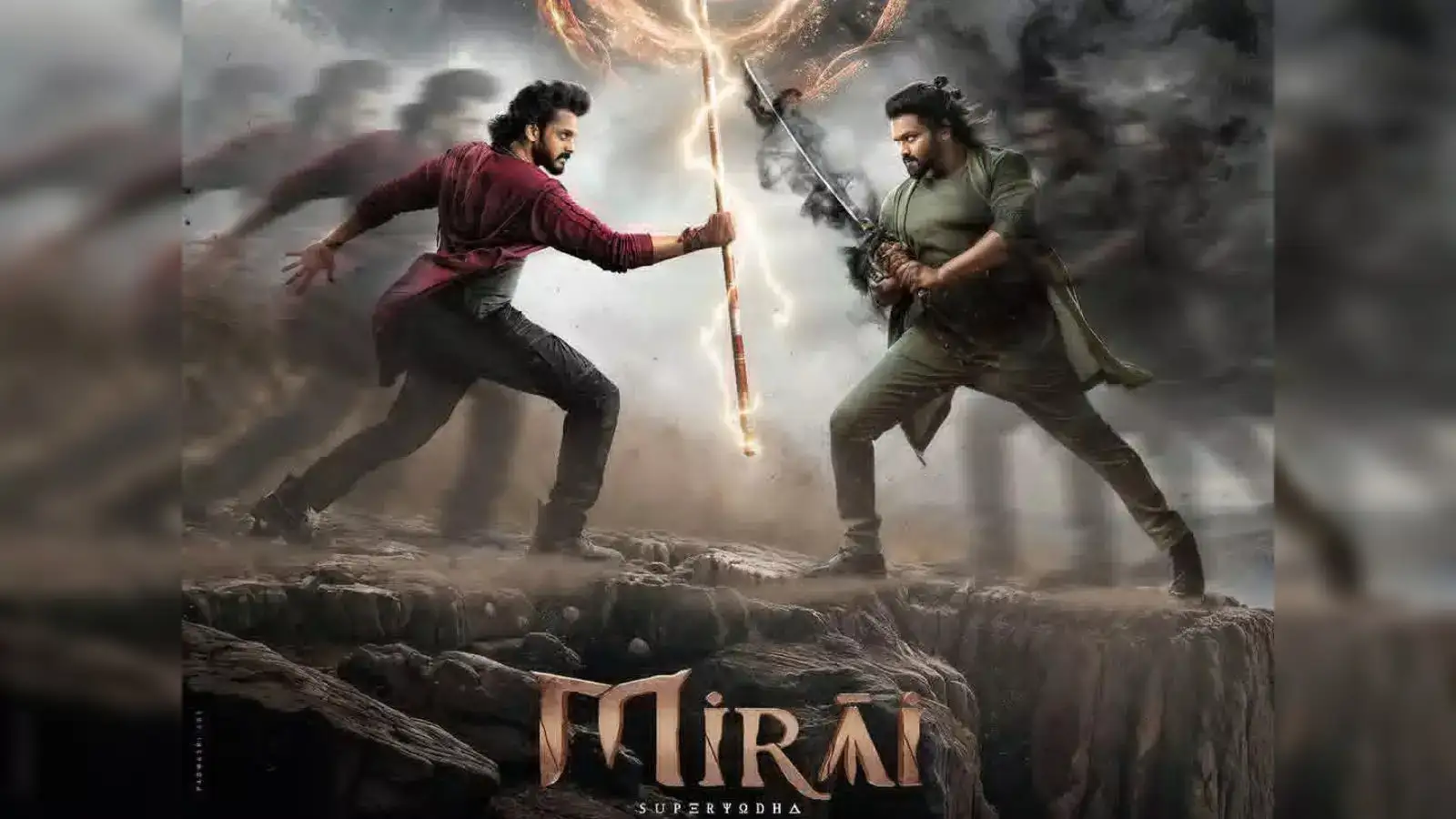
Mirai: An engaging amalgamation of devotion and fantasy

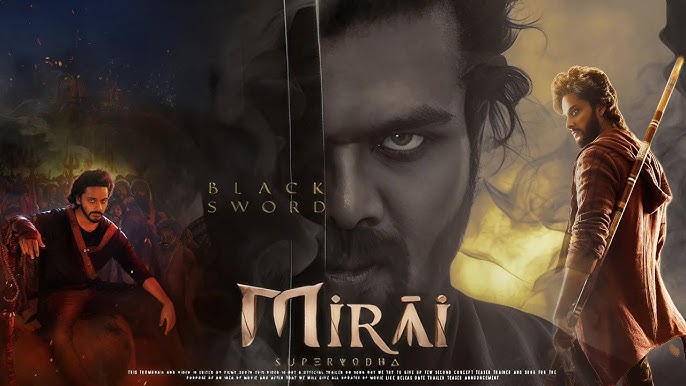
Karthik Gattamneni who has written and directed Mirai does a good job in creating solid back stories for both Teja Sajja and Manchu Manoj. How their respective pasts shape up the present timeline is good. The solid visuals coupled with the performances specially the hero and the antagonist help the movie tide through some weak comedic gags. Rana Dagubbati appearing in the post credit sequence also has a blast.

Starcast: Teja Sajja, Manchu Manoj, Shriya Saran, Jagapathi Babu, Karthikeya and others

Genre: Fantasy/action

Story, screenplay and direction: Karthik Gattamneni

Additional writer: Manibabu Karanam

Producers: T G Vishwa Prasad and Krithi Prasad

Cinematographer: Karthik Gattamneni

Music: Gowra Hari

Running time: 2 hours and 49 minutes

The 2024 movie Hanuman was a huge game changer for both Teja Sajja and the director Prashanth Verma. Much like the protagonist the film was also an underdog. The expectations weren’t high, but the movie surprised one and all beating Sankranti biggies like Saindhav, Guntur Kaaram etc. Teja Sajja established himself as a potential young star. Mirai also follows a similar trajectory in terms of the hero’s characterization. Here too the hero is a ruffian unaware of his destiny. He ends up fighting a force that’s way above his league but succeeds with determination and some help. In spite of a not so novel storyline Mirai mostly hits the right chords specially for those who are into the genre of devotion with fantasy.

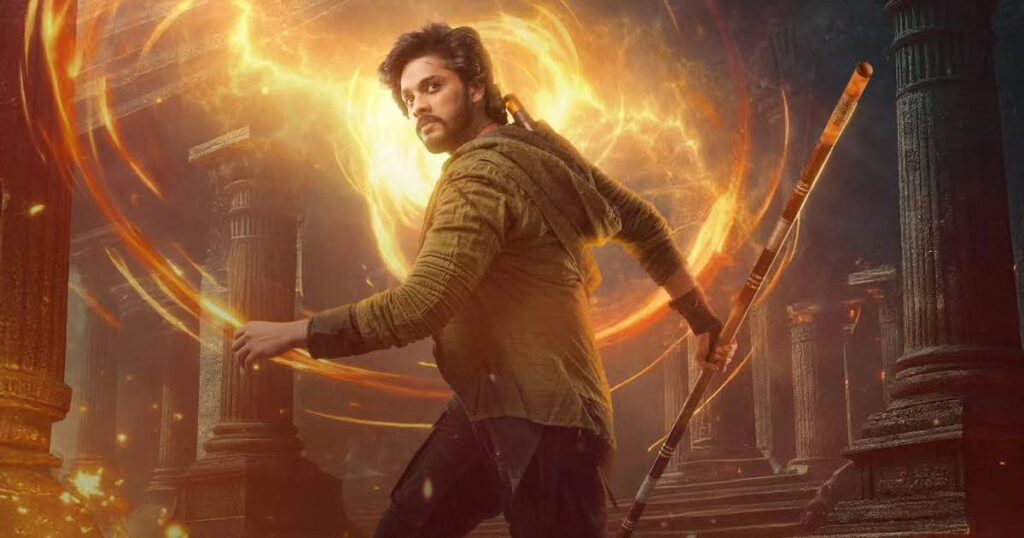
Protagonist Teja Sajja

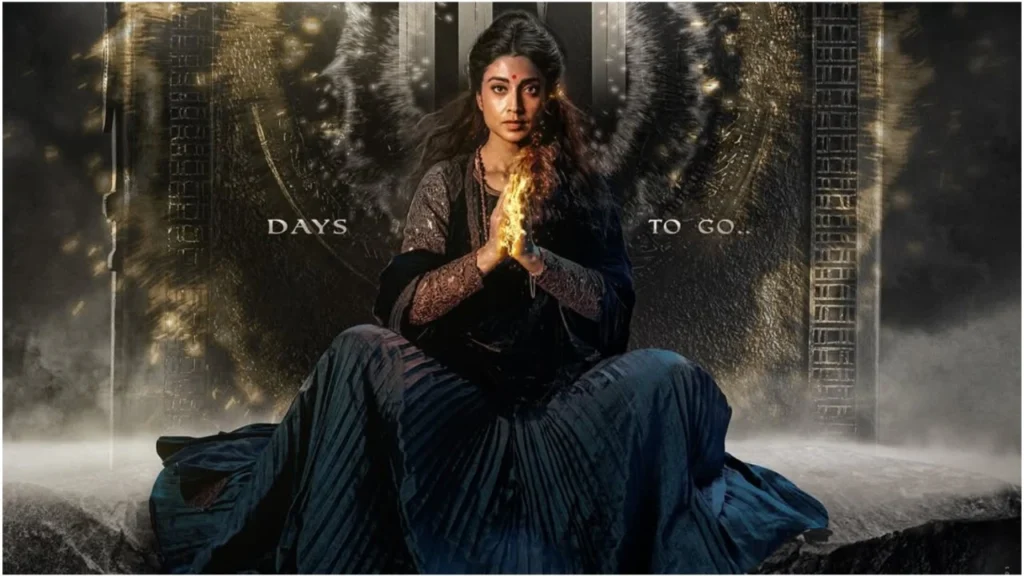
The broad storyline of Mirai involves Emperor Ashoka’s sacred books. The nine scriptures have the power of turning any mortal human being into a deity. Teja Sajja’s Vedaa is a young warrior unaware of his past. Vedaa’s life undergoes a huge change with the arrival of Ritika Nayak as Vibha. Guided by Vibha and others Vedaa must understand his true role which is protecting the scripture. The film pits Vedaa opposite the more powerful Mahabir Lamba (a commanding Manchu Manoj). Shriya Saran plays Vedaa’s mother, and a divine soul connected to protecting the scriptures.

A strong aspect of Mirai is the visual department. Director Karthik Gattamneni who has also handled the cinematography department does an excellent job in creating some big screen worthy moments. These portions include a sequence involving a bird called Sampathi. Also, a high-octane moment on the train is a visual delight.

The CGI involving the bird as well as the climatic fight between Teja Sajja and Manchu Manoj is brilliant to say the least. The Ramayana connection with the magical stick will also be a treat for the devotees.

Apart from the cinematography Gowra Hari’s background score also deserves a specific mention. It amplifies the high voltage moments adding to the immersive experience.

Mirai also works because of some solid acting specially the leads. Teja Sajja’s role of an underdog shares more than one similarity with Hanuman. Still, he pulls of Vedaa’s transformation from a carefree youngster to a determined force with ease. The actor is especially good in conveying the vulnerabilities making the protagonist a grounded character in spite of the fantasy world.

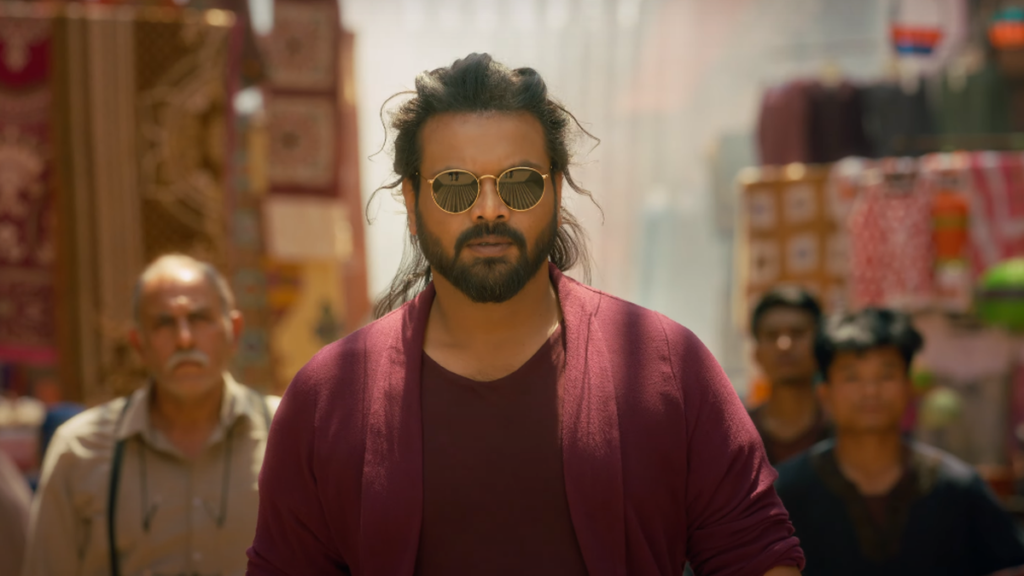
Manchu Manoj as Mahabir Lamba also makes for a powerful antagonist. The fiery eyes coupled with the commanding dialogue delivery making him a very worthy rival. Manoj particularly shines in the sequence where he talks about his past. The anguish of a young boy facing societal rejection due to caste hierarchy has come out in an impactful manner. Karthikeya playing the younger version of Manoj is also excellent.

Shriya Saran also shines in spite of the limited screen time. Shriya lends an emotional depth with her nuanced acting. She brings in the required divinity as well as a strong inner strength. Jagapathi Babu as one of the protectors too lends in the required gravity during his conversations with Teja Sajja.

A major problem with Mirai is the unnecessary comic stretches involving police officers’ team. Venkatesh Maha and Kishore Tirumala are reduced to mere buffoons producing more groans than laughs. Ritika Nayak as the sanyasini has a good presence but her character could have been better utilized instead of a typical damsel in distress trope.

Final word: Mirai is worth watching for the stunning visuals and if you are into the devotional genre.

Bad Girl: A wonderful coming of age tale through female lens

Director Varsha Bharath does a fine job in etching the tumultuous journey of Anjali Sivaraman’s Ramya. Her yearning for liberation and eventually finding peace is relatable for numerous millennial women. Mention must also be made of the female friendships. It gives the movie some of its best moments

Starcast: Anjali Sivaraman, Shantipriya, Saranya Ravichandran and others

Genre: Coming of age

Director and writer: Varsha Bharath

Producers: Vetrimaaran and Anurag Kashyap

Production Company: Grass Root Film Company

Cinematography: Preetha Jayaraman, Jagadeesh Ravi and Prince Anderson

Music: Amit Trivedi

Running time: 1 hour and 55 minutes

Most coming of age stories in cinema revolve around young men dealing with societal expectations and thorny relationships with their fathers. A coming-of-age tale through a female lens isn’t a common thing. Varsha Bharath’s Bad Girl is a refreshing and much needed tale through female lens.

As the title suggests Bad Girl focuses on the journey of a young woman going through many turbulent life scenarios. She does numerous things defying the general social norms. The title here isn’t the case of a moral judgment being passed. It’s more of a reflection on how traditional culture perceives a woman attempts to find her autonomy. The viewers see this through the journey of Anjali Sivaram’s Ramya.

A strong aspect of Bad Girl is how Varsha Bharath has etched Ramya. More than a plot driven story Bad Girl feels like a series of episodes and a character study. Varsha Bharath does a very fine job in showcasing the journey starting from teenage life. When we first meet Ramya, she is forever imagining a fairy tale with thoughts of romance and sex. Ramya feels that she has found it in her classmate Nalan (Hridhu Haroon). Through Nokia Phones and dialed up internet connection they have a series of secret conversations which Ramaya’s orthodox family has no idea about.

These portions have a dream like visuals. The cinematography by Preetha Jayaram, Jagadeesh Ravi and Prince Andreson is simply fantastic to say the least. They bring to life Ramaya’s state of mind. Of course, Ramya’s fairytale comes to an end when caught red handed. The mother played by an excellent Shanti Priya isn’t happy about her daughter’s actions laying the base for the thorny mother and daughter relationship.

The process of Ramya making one bad decision after another in her attempts of finding liberation. While also questioning the traditional thoughts of her parents has been wonderfully written and enacted. There are scenes where Ramya is seen reflecting on her actions as she grows older. Through this Varsha Bharath talks about what it feels like to be a contemporary young woman who is judged on something or other.

Mention must also be made of the how the films deals with the generational differences. Shantipriya’s Sundari doesn’t understand the ways of her daughter’s lifestyle. She is constantly worried about who is going to look after her daughter. There are numerous moments of friction. At the same time love is there too. There is a wonderful pre climax moment after Sundari’s retirement as a teacher. Ramya wants to hug her mom and express love. After a lot of deliberation Ramya does it, the reason being a huge showdown which had taken place previously.

Through the role of Sundari Varsha Bharath also looks at patriarchy. Sundri is a working woman with a well-paying job. She fits the traditional standards of the society but still there is no getting away from the patriarchy.

Lastly Bad Girl also deserves appreciation for how it celebrates female friendships. Saranya Ravichandran as Ramya’s confidante specially deserves a mention. The female bond explored through her and Anjali Shivaraman gives the movie some of its best moments.

Apart from the already mentioned cinematography department Amit Trivedi’s music also needs to be talked about. His soundtrack perfectly captures the tumultuous journey of Ramya. The production design also stands out more so in the portions of Ramya’s formative years.

Performances wise the film belongs to Anjali Shivaraman and Shantipriya. Anjali Shivaraman effortlessly portrays the multifaceted journey of Ramya. Whether it’s the innocence of college days or the simmering frustration of college years and eventually making peace. Shantipriya is also compelling bringing out both the motherly concern and a quiet inner strength.

Final word: Bad Girl is an important watch for how it tackles coming of age through female lens.

Little Hearts: A youthful love entertainer about two misfits

Little Hearts written and directed by Sai Marthand isn’t plot heavy. The story often plays out like a series of comic sketches: but the engaging screenplay coupled with the performances makes this a fun weekend watch. A strong aspect of Little Hearts is the subtle coming of age with the heroine standing up for her love
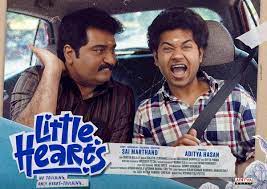
Starcast: Mouli Tanuj Prasanth, Shivani Nagaram, Rajeev Kanakala, Satya, S S Kanchi, Jai Krishna and others

Genre: Comedy/romance

Director and writer: Sai Marthand

Producer: Aditya Hasan

Production house: ETV Win

Cinematographer: Surya Balaji

Music: Sinjith Yerramilli

Running time: 2 hours and 8 minutes

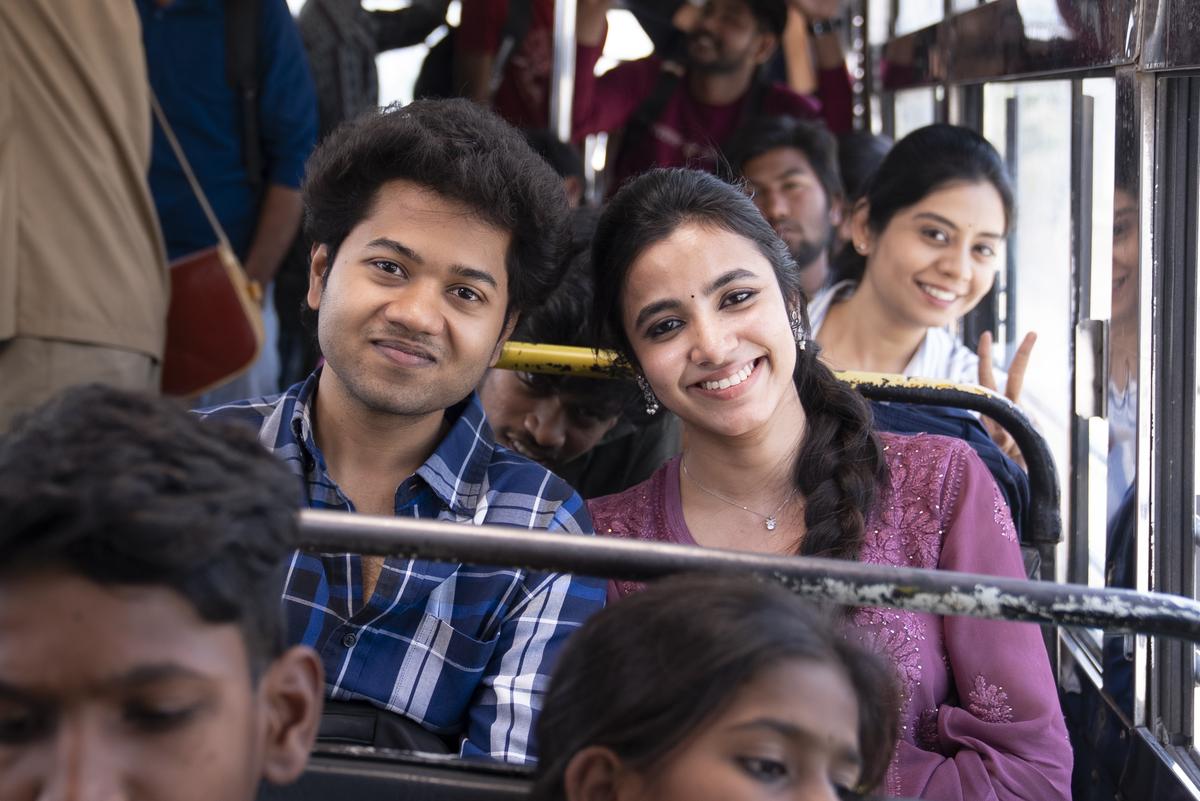
Little Hearts is a film which perfectly fits the tag of a nonsensical but fun entertainer. Unlike the usual larger-than-life heroes with no flaws this is a movie which isn’t afraid to poke fun at the protagonist. In this case the hero and the heroine aren’t the brightest bulbs, they are equally dimwits when it comes to studies. Sai Marthand who has written and directed Little Hearts does a fine job in creating a fun love story with all social media and pop culture references. The love story has a hilarious connection to the Bahubali films which I will get to later. Producer Aditya Hasan who is only one web series old needs to be applauded for backing this up.

Mouli Tanuj Prasanth and Shivani Nagaram

The storyline of Little Hearts primarily revolves around Akhil (Mouli Tanuj Prasanth) and Shivani Nagaram’s Khatyayini. Both of them fail in clearing their respective subjects and are compelled to undertake long-term coaching due to their respective fathers. Akhil has just gone through a bitter break up with his intermediate sweetheart. Initially his attraction towards Khatyayini feels like a temporary recourse but things take a serious turn with both falling in love head over heels. This is the story in brief.

A strong aspect of Little Heats is the entertainment quotient. Special mention must be made of the scenes featuring Mouli and Jai Krishna a fellow wastrel. The banter between them coupled with Jai Krishna’s constant predictions on how Akhil’s love is domed only to be proven wrong raises many chuckles. His disbelief on how Khatyayini falls for Akhil and vice versa is hilarious to say the least. A specific mention must be made of the portion where Jai Krishna does a translation of Khatyayini words thinking that she has broken up with Akhil only to fall flat on his face.

The love story of the leads has a constant comparison to the journey of Bahubali films. The initial mixed reactions of Bahubali one is compared with their romance. The assumption is neither their romance nor the film will soar. The cultimation of Bahubali journey with the second part becoming a massive blockbuster as well as Akhil and Kathyayini’s love story has been wonderfully connected.

Little Hearts also works because of the self-aware tone, the flaws of both the hero and the heroine with their quirks have been well written and enacted. Towards the middle of the second half the movie slips into a coming age of territory. Both the hero and the heroine decide that they had enough of engineering and medicine respectively. They decide to do something else with their future.

Sai Marthnand gives some agency to Kathyayini in the way she stands up for her love. The dialogue of Akhil on why Kathyayini is worth fighting for gives the movie some emotional heft. In this scene Akhil openly talks about his flaws making the protagonist relatable.

The music composed by Sinjith Yerramilli is funky going well with the movie’s tonality. A specific mention must be made of the humorous conversational song where the leads are seen missing each other deeply. There is also an amateur musical video sung and edited by Akhil as a surprise birthday gift for Kathyayini. This video coming at important junctures is another high point of the movie. The cinematography of Surya Balaji is also fair perfectly capturing the vibrant atmosphere.

Both Mouli and Shivani Nagaram perfectly fit the parts of bumbling youths coming of age. They embrace the quirky tone matching each other making the romance believable. Rajeev Kanakala as Akhil’s extremely worried father also does well bringing in a certain seriousness. His reaction to Akhil’s musical video is especially worth mentioning.

S S Kanchi as Kathyayini’s father also raises some chuckles particularly in the post interval portions. The rest of the cast add to the quirky scenarios with their wonderful acting.

Final word: Little Hearts is small scale but high on entertainment value. This deserves a theatre watch,

Ghaati: An absolute abomination and Krish’s final nail in the coffin

Ghaati is one of those rare films with no striking qualities. Jagapati Babu playing a nonsensical police officer has some fun with his crass lines and shifting shades like a chameleon: however the movie is a tonal mess in spite of a gritty subject with much potential. Anuskha Shetty’s performance too lacks the required fire often coming across as monotonous.

Starcast: Anuskha Shetty, Vikram Prabhu, Jagapathi Babu, Chaitanya Rao, Ravindra Vijay and others

Genre: Action/drama

Direction and screenplay: Krish Jagarlamudi

Writer: Chintakindi Srinivasa Rao

Producers: Saibabu Jagarlamudi and Yeduguru Rajeev Reddy

Production Company: First Frame Entertainments

Music: Nagavelli Vidya Sagar

Cinematography: Manojh Reddy Katasani

Running time: 2 hours and 37 minutes

There was a point in time when Krish Jagarlamudi was a respected filmmaker, the director had a unique voice starting with movies like Gamyam, Vedam and Krishnam Vande Jagadguram. There was something different in the way he presented his heroes whether its Allu Arjun in Vedam, Allari Naresh in Gamyam and Rana Dagubbati in Krishnam Vande Jagadguram. These movies used to have a strong social core: however the last few years has been a very uneven ride for the director. The historical fantasy Manikarnika went through many tribulations with the director leaving the project midway, the ambitious NTR biopic Kathanayakudu and Mahanayukudu ended up as box office duds in spite of a solid Balakrishna.

His project with Pawan Kalyan Hari Hara Veera Mallu also suffered the same fate as Manikarnika becoming a bigger disaster than the former. Ghaati is also a film which has seen several delays leading to less pre release buzz which now is far more abysmal than many would have imagined. The film tries to be a social drama while having the masala of Pushpa and the end result is neither here nor there. The romance between Vikram Prabhu and Anuskha lacks the required soul and the highly irritating villains led by the Mayasabha actor Chaitanya Rao only makes things worse.

The one line story of Ghaati is a woman seeking revenge and wanting to uplift her community. The setting is eastern Ghats. The local porters carrying marijuana are called as ghaatis, they are stuck in the cycle of exploitation with little to no alternatives.

Its hard to point out any positives in an extreme train wreck like this but Manojh Reddy Katasani’s cinematography is visually striking at least in the beginning portions. The vast landscape with the drone shots are nice to watch. Jagapathi Babu as already mentioned has a colorful role though his crass lines and the personality traits don’t befit the role of a police officer. His antics does provide some entertainment in an otherwise drab film. He keeps the audiences guessing as a shape shifter.
The major problem with a movie like Ghaati is wanting to replicate the story of Allu Arjun’s Pushpa. There’s a major Pushpa hangover in the portions featuring the different cartel heads. Pushpa for all its flaws at least had some innovation and the character graph of Allu Arjun came with a strong emotional core. This is missing completely becoming a poor imitation in the process. The love story between Anuskha and Vikram Prabhu again lacks the ex factor whether its the staging or the performances. Vikram Prabhu tries to do a Dulquer Salmaan but ends up falling flat on his face: nowhere close to matching the charisma of Dulquer.

Anuskha Shetty too leaves a lot to be desired. The required fire in portraying the transformation of Sheelavathi is majorly missing. The actress has very static expressions with flat voice modulation. The villain gang are mere caricatures instilling no fear whatsoever. The worst casualty is Chaitanya Rao. After an impressive turn in Mayasabha the actor irritates you with exaggerated body language and dialogue delivery leading to unintentional funny moments.

The story’s graph is as predictable as it can get with zero surprises: logically too the villains atrocious behavior towards Sheelavathi doesn’t make any sense. The music composed by Nagavelli Vidya Sagar is another downer, the tunes fall flat adding to the tediousness.

Final word: Ghaati is easily Krish Jagarlamudi’s worst film, even for die hard Anuskha Shetty fans this is a tough slog.