Khauf: A slow burn paranormal thriller about the horrors of patriarchy

Khauf web series

Pankaj Kumar and Surya Balakrishnan’s Khauf juxtaposes the real world issues with the traditional jump scares. The series gives a strong message on how a certain kind of men are more dangerous than the supernatural entities. The show isn’t perfect by all means but there is a lot to like led by an explosive Monika Panwar. Rajat Kapoor and Geetanjali Kulkarni also make their presence amply felt.

Starcast: Monika Panwar. Rajat Kapoor, Geetanjali Kulkarni, Chum Darang and others

Genre: Horror

Directors: Pankaj Kumar and Surya Balakrishnan

Writer and creator: Smita Singh

Producers: Sarita Patil, Vipin Agnihotri etc

Production Company: Matchbox shots

Cinematography: Pankaj Kumar

No of episodes: 8

Streaming site: Amazon Prime

In the last few years the horror genre has undergone a major reinvention with stories that go beyond creaking doors, there has been a conscious effort to give these plots a social subtext whether it is the whacky Stree films directed by Aamir Kaushik or Tumbbad a psychological horror/thriller about the devastating consequences of unlimited greed. Vishal Furia’s Chhorii movies also dealt with societal aspects combining elements of horror. The web series Khauf is a good addition to this trend. The major victory of the two directors is how they perfectly merge the real world issues faced by modern young women and combining that with the usual spooky elements.

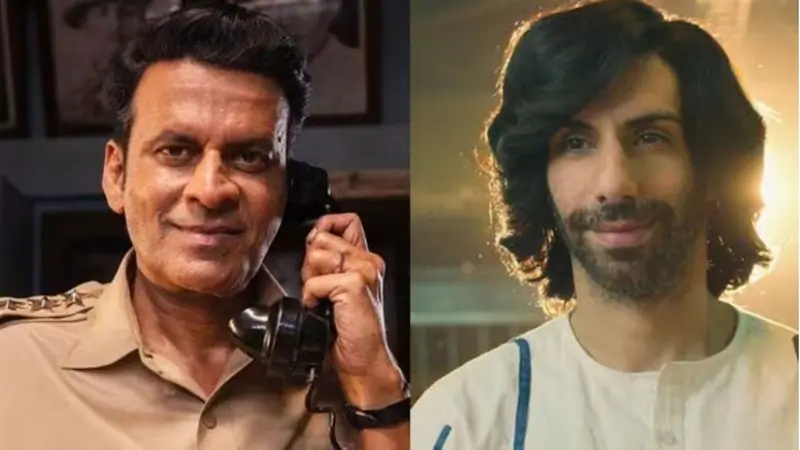
The story of Khauf primarily revolves around Madhu (Monika Panwar). She has moved from Gwalior to a women’s hostel in Delhi. She is looking to make a fresh start but the room that she has been assigned comes with a dark past. Running parallel to this is the hakim played by a creepy Rajat Kapoor. He preys on young vulnerable girls in order to prolong his life. Geetanjali Kulkarni plays Madhuri, she is an alcoholic cop in search of her missing son. This is the story in brief nothing more can be revealed.

A strong aspect of Khauf web series is the technical department led by a brilliant Pankaj Kumar. Pankaj Kumar is a very reputed cinematographer whose work in Tumbbaad is hugely admired. Here too he brings the same level of craft, the hostel in which the young women stay becomes a major character in itself. He does a very good job in capturing a certain sense of claustrophobia. The long silences and a certain kind of lighting add to the eerie atmosphere. The setting of the story also plays a significant part in building up the tension. Delhi city has some shameful scars in cases related to atrocities on women and this includes not just the gruesome Nirbhaya case. Grounding the show in Delhi makes the horror elements even more chilling.

The hostel becomes a major character in itself

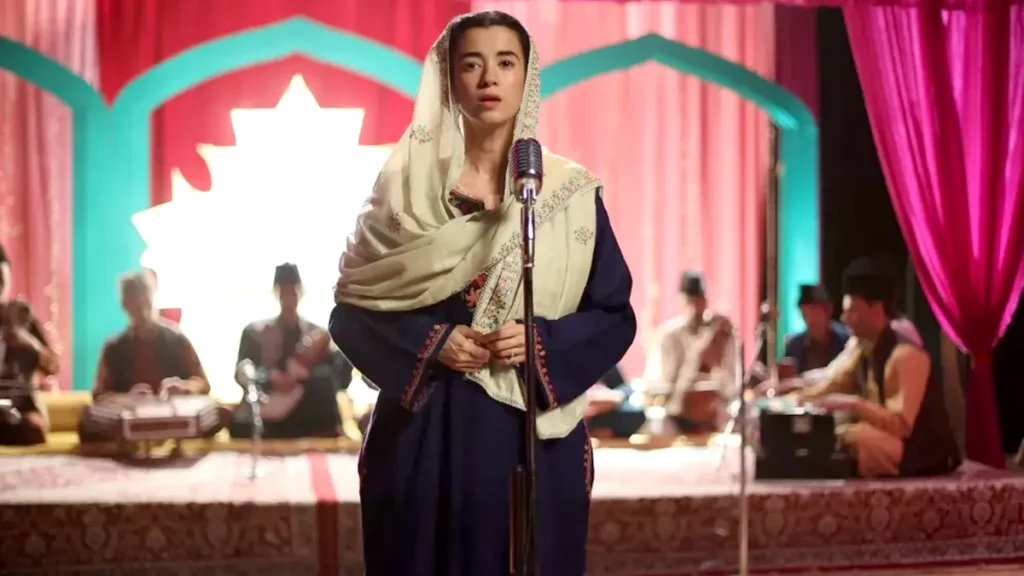
The show also does a very fine job in addressing the different issues faced by modern females. The way Madhuri juggles between the haunting past of the room and the men who prey on women gives the show some of its best moments. Monika Pawar does a fantastic job in showcasing the different emotions like anxiety and rage. The young actress is also mighty impressive in the portions where Madhuri becomes more confident after being possessed by a certain thing. Rajat Kapoor is also fantastic as a man who has zero regret about the evil things that he does. He brings in the right amount of creepiness instilling fear in the viewers minds. Geetanjali Kulkarni is also top class in a grey shaded role. The way she oscillates between a tough police women and a worried mother of an erratic boy is a delight to watch. The hostel mates played by Chum Darang, Priyanka Setia and Aasheema Vardan also make their presence amply felt. Each of these character represent a different facet of the problems faced by an everyday women in today’s society. Through their tracks the director duo of Pankaj Kumar and Surya Balakrishnan have addressed the aspect of societal expectations among other things.

Chum Darang as one of the hostel mates

A major issue with Khauf is the use of trauma as the only way to give agency for a victim, It becomes both cliched and problematic. Also the show’s tonal shift from ghosts to internalized trauma could have been handled better, a sense of clumsiness creeps in. The etching of the romantic relationship also leaves something to be desired. Abhishek Chauhan as Arun renders an instant likeability as the sweet and reliable boyfriend but the love story would have been more heartwarming with better depth.

Watch Khauf if you are a fan of horror stories mixed with social commentary

Raid 2: More or less the same beats but works as a utopian tale of delivering justice

Ritesh Desmukh in Raid 2

Ritesh Desmukh’s avatar of a crooked and suave politician under the guise of a philanthropist is the most interesting part of this Rajkumar Gupta directorial. Ritesh once again proves that he is a very capable actor who can go beyond comic roles. Saurabh Shukla returns back as Tauji and the veteran actor is a complete hoot with his sarcastic humor and punch lines.

Starcast: Ajay Devgan, Ritesh Deshmukh, Vani Kapoor, Saurabh Shukla, Amit Sial and others

Genre: Crime thriller

Director and writer: Rajkumar Gupta

Additional writers: Ritesh Shah, Karan Vvyas and Jaideep Yadav

Producers: Bhushan Kumar, Krishan Kumar and others

Production Companies: T- Series Films and Panorama Studios

Music: Amit Trivedi, Rochchak Kohli etc.

Cinematography: Sudhir K. Chaudhary

Running time: 2 hours and 18 minutes

One way to describe the Raid movies is utopian tales of social justice, the reason being in today’s age honest income tax officers conducting raids on powerful people is a distant dream. Many are aware about the manipulative nature of the investigative departments and the way they have been used by the ruling party. In that sense both the Raid movies are more of aspirational tales on how an income tax officer should actually be like. Ajay Devgan as Amay Patnaik fits the bill perfectly given his larger-than-life image and also a solid presence.

Raid 2 primarily focuses on the Amay Patnaik’s 75th raid. In the initial portions of the movie Amay is accused of corruption charges. However this just turns out to be a facade on expected lines. Amay is actually collecting information on Ritesh Deshmukh’s Dada Bai, a suave politician with the image of a benevolent man. The local population of Bhoj considers Dada Bai as their god but beneath the philanthropist facade Dada Bai is actually a crooked politician with multiple crimes. The story focuses on the various hurdles faced by Amay Patnaik in bringing out the truth of Dada Bai with the help of certain people like Amit Sial’s Lallan Sudhir.

A major strength of Raid 2 is the battle of wits between Ajay and Ritesh Desmukh. The way Dada Bai outsmarts Amay Patnaik in the first half gives the movie some of its best moments. Ritesh presents a very calm demeanor systematically destroying all the evidence. The first half ends with Amay being suspended, also his reputation of a honest income tax officer goes for a toss.

Ritesh Desmukh as Dada bai is more of a sophisticated politician who doesn’t get his hands dirty but gets the work done through his men. This works as an interesting contrast to Saurabh Shukla’s Tauji who was more rustic. Also, the duality in the characterization of Dada Bai has come out well. This can be particularly seen in the way he worships his mother every morning by washing her feet. The mother played by Supriya Pathak considers her son to be an epitome of virtue when the actual reality is different.

It’s a long time since Ritesh has done something outside comedy and the actor does a very good job in portraying the different facets of Dada Bai. The way he exudes menace mostly through the eyes is brilliant to watch. Raid 2 once again shows Ritesh’s ability in adapting to different characters. This is another impactful performance from the actor who has proved that he is capable of doing more than just comedies, easily Ritesh’s best work post EK Villain.

Mention must also be made of Saurabh Shukla and Amit Sial, they contribute to some very entertaining moments. Saurabh Shukla is an absolute hoot with his punch lines; specific mention must be made of the scenes where Tauji takes pleasure in the downfall of Dada Bai. Amit Sial too makes his presence amply felt with his witty one liners. He plays the eccentric nature of Lallan Sudhir perfectly raising ample chuckles.

Amit Sial as Lallan Sudhir

A major problem with Raid 2 is the familiar beats coupled with Ajay Devgan’s characterization. There isn’t much of an upgrade to the role, as a result there is nothing new that Ajay brings to the table. Of course, the actor slips into the role with practiced ease, the serious gaze and the overall body language helps. However, there is a stale nature to his scenes because as viewers you know that Amay is completely pure and will win the battle.

Vani Kapoor also doesn’t add much to the proceedings other than looking gorgeous. Unlike Ileana she gets more to do but the romantic track and the overall arc doesn’t contribute anything significant to the movie. Supriya Pathak as the naive mother who later gets to know of the reality about her son fares much better.

Vani Kapoor as the supportive wife

Songs come across as more of speed breakers; however Tammana does look sizzling hot in the special number Nasha. The actress exudes a lot of sensuousness with her belly moves. Having said that the remixed version of “Paise Ye Paise” from Karz movie does make an impact. The placement of the song is absolutely perfect.

Watch Raid 2 if you are in the mood for a utopian tale of social justice and Ritesh Deshmukh’s acting

Hit 3: Nani’s mass jathara

Nani as the psycho cop from Hit The Third Case

The rooted texture of the first two Hit movies is absent here. The third part comes across as more of an ultra mass showreel for Nani, nevertheless the actor’s intense performance coupled with his swag as well as Sanu Varghese’s cinematography makes it a delightful watch for fans of violent investigative dramas, for the rest it might feel like an ovedose

Starcast: Nani, Srinidhi Shetty, Samuthrikani, Rao Ramesh and others

Genre: Action

Director and writer: Sailesh Kolanu

Producer: Prashanti Tripirneni

Production Companies: Wall Poster Cinema and Unanimous Productions

Music: Mickey J Meyer

Cinematography: Sanu Varghese

Running time: 2 hours and 30 minutes

Sailesh Kolanu’s directorial debut Hit 1 also called as Hit- The First Case released with minimal expectations but surprised everyone with its taut storytelling. It was a major success for its leading man Vishwak Sen who hasn’t been to capitalize on the strong foundation given by the movie. In spite of the logical loopholes and a weak climax it came across as a fresh of breadth air from the formulaic storytelling. The second part of Hit with Adavi Sesh was an ever bigger success, now you have the third part with Nani. Over the last few years Nani’s stardom has increased significantly thanks to his versatile roles and overall persona. Among the mid budget heroes Nani has made rapid strides establishing himself as a star actor. An outsider who has risen to the top with sheer handwork.

Vishwak Sen, Adavi Sesh and Nani from the first three Hit movies and now Karthi in the upcoming Hit 4

The one line story for all the Hit movies would be police officers belonging to the Homicide intervention team dealing with twisted criminals. The third installment of this growing franchise is no different. Nani plays Arjun Sarkar a psycho cop with his own methods, he treats criminals in an extremely brutal manner often indulging in custodial violence. According to him a criminal who cannot reformed should be buried under the ground. The movie focuses on a series of murders following a similar pattern and how Arjun Sarkar infiltrates a particular psychotic gang.

It goes without saying that Nani’s histrionics is the biggest asset of Hit 3. The actor completely imbibes the intensity of Arjun Sarkar starting from the aggressive and ruthless body language. Arjun Sarkar is someone who comes with a streak of short temperedness making him very volatile and Nani absolutely nails the different nuances. At the same time he also raises ample chuckles even in serious situations. Nani’s use of Hindi language in a scene involving a Kashmiri criminal deserves a specific mention. In the action sequences the actor truly comes across as a one man army with the ferocious attitude.

Nani as the violent cop

However there is also a different side to Arjun Sarkar in the portions with the leading lady Srindhi Shetty. There is a visible softness in the scenes of understated romance and Nani completely turns the charm on.

Apart from Nani’s first rate act Sanu Varghese cinematography is also of a very high order whether it is the Kashmir portions or the second half when the movie moves into a survival drama. The way he has captured the high voltage action sequences of the second half is a delight for action junkies. The location of a dense forest set in Arunachal Pradesh becomes an important character in itself too. Mickey J Myer’s songs are all right but his background music is more impactful in the intense moments.

Srindhi Shetty starts off as a typical love interest but the way Sailesh integrates her track into the main one with a certain twist makes their portions more than just your standard love story. Srindhi Shetty gives a good account of herself. Samuthrikani as Nani’s father gives the movie some much needed light moments. The sequences of banter between Nani and Samuthrikani is fun to watch. Adavi Sesh in an extended special appearance makes his entry at a critical juncture, he reprises his role of KD from the second part. The actor is usual charismatic self.

Nani and Srinidhi Shetty

Talking about the portions of custodial violence on some occasions Arjun Sarkar is questioned about his brutal methods by his boss specifically in the Kashmir segment. A major unrest happens in Kashmir due to Arjun Sarkar’s handling, this eventually leads to him being transferred as well. Sailesh Kolanu doesn’t dig deep into the criticism that Arjun Sarkar faces and on numerous occasions the movie seems to be celebrating the violent attitude of Arjun. However the purpose for which Arjun is fighting makes a huge difference unlike SJ Suryah in Saripodhaa Sanivaaram an unhinged cop who takes out his frustrations on a group of innocent people.

A major problem with Hit 3 is the lack of a strong villain. Pratik Babbar as the leader of a twisted online gang is suitably psychotic but fails to make a major impact due to the weak characterization. Sailesh attempts to make a social comment on the consumption of violence with the scenarios resembling the Korean web show Squid Games but this track needed more texture.

Phule: A hard-hitting tale of revolution and solid companionship

The immense work done by the husband-and-wife Jyotiba and Savitri bhai Phule is very difficult to capture in a movie format. The major reason for that is the duo fought against many evils which still exist in some form or the other. Phule much like Sandhya Suri’s Santhosh has also been through censorship issues with the CBFC demanding certain modifications due to the dialogues related to Manusmriti. Fortunately for genuine movie lovers Phule has managed to hit the screens though very few unlike Santhosh which may never see the light of the day. Irrespective of the censorship modifications there is no denying that Phule packs a strong punch with its understated approach and sharp dialogues. Director Anant Mahadevan along with his team have done a very authentic job in bringing alive those times.

Pratik Gandhi and Patralekha in the roles of the iconic social reformers

In simple terms the story of Phule focuses on the tumultuous and inspiring journey undertaken by the visionary couple during the times of British India. The movie begins in 1897 during a horrific plague leading to a mass migration. This horrific plague eventually results in the death of Savitri Bhai Phule (Patralekha). From here the story moves into a flashback zone where all the important events are covered starting from Savitri bhai’s early years and Jyotiba (Pratik Gandhi) educating his young wife.

Real life social reformers

A major strength of Phule are its brilliant atmospherics. Director Ananth Mahadevan along with his cinematographer Sunita Radia do a first-rate job in bringing alive the social atmosphere of 19th century Maharashtra. The movie has a lived-in feel transporting the viewers effortlessly into those times whether it is the portions of Maharashtrian hinter lands or a sense of claustrophobia in the caste ridden society of Pune. The styling of the actors is also excellent as the clothes they wear perfectly reflect that particular time period.

Apart from authentically recreating the time period Ananth Mahadevan also does a very fine job in showcasing the solid companionship that the two shared. The way both of them pretty much do every social activity together and the tenderness with which Jyothiba treats his wife is an absolute delight to watch. Special mention must be made of the scenes where Jyothiba gives equal credit to Savitri and how he defends her whenever the father tries to hurt Savitri and suggests second marriage. Jyothiba comes across as a true feminist, the love and affection that Jyothiba and Savitri have each other is tough to find in any married couple whether it is of the past and present. Often times a lot is communicated through simple gestures.

Talking about the social commentary the movie avoids a typical bombastic approach, instead the reliance is on sharp dialogues. A very good example of this is a courtroom scene where Jyothiba questions an upper caste lawyer on avoiding a barber by doing his own shaving. There is another important bit when Jyothiba is honored with the title of Mahatma. He makes significant points on how people are so easily provoked in the name of religion and caste, in a way he has foreshadowed today’s political atmosphere. He ends the speech by talking about the need to keep alive the spark of revolution.

Mention must also be made of how Anant Mahadevan has depicted his British characters. More often than not the British officials in Indian movies are presented in an extremely caricaturist way. Shoojit Sarcar’s Sardar Udham Singh is one of the few exceptions. Regular foreign actor Alex O ‘ Niel adds an interesting layer as the British collector who has genuine empathy towards Jyotiba and Savitri Bhai Phule’s social crusade, at the same time he is also bound by the constraints of imperialism. Alex O Niel plays his role with a lot of understatedness. Both the writing and acting make sure that his character doesn’t come across as a typical caricature.

The background score coupled with the music also add to the movies immersive tone. The love ballad Sathi in particular is very tuneful sung melodiously by Monali Thakur. It immortalizes the deep love that Jyothiba and Savitri bhai had each other. On the other hand, there is the revolutionary number, Dhun Lagi. This song works as a perfect companion piece in the portions of revolution.

Both Pratik Gandhi and Patralekha get into the skin of their respective characters coming up with stirring performances. Pratik Gandhi imbibes Jyothiba with a quiet intensity, his eyes particularly convey a lot of emotions whether it is showcasing pain at the plight of lower caste people or the determination to bring a revolutionary change. Mention must also be made of how he portrays the affectionate and tender nature of Phule. With this act Pratik Gandhi once again, proves that he is an extremely versatile actor. Patralekha too disappears into the role portraying the grit of Savitri bhai Phule. She perfectly captures the strong feminist spirit proving to be a perfect foil for Pratik Gandhi. A specific mention must be made of the scene where she is threatened by an upper caste man. Instead of retreating Savitra Bhai holds her ground with a solid response. The intensity with which Patralekha portrays the fiery nature is simply fantastic. The chemistry between Pratik and Patralekha in the moments of tender romance particularly stands out.

The supporting cast led by Vinay Pathak and Darsheel Safary also do a fine job. A mention must be made of Akshaya Gurav as Fatima Sheikh. She brings in the required fire proving to be a perfect support for the husband and wife. Through her role Ananth Mahadevan touches upon the angle of communal harmony too. Vinay Pathak in the role of Govindrao also makes his presence amply felt as the anthesis to Jyotiba’s revolutionary thinking.

Hope more people see the film in theaters given the relevance of Jyotiba’s ideology.

Sarangapani Jathakam: An interesting concoction of screwball comedy and social satire

Sarangapani Jathakam Priyadarshi

Sarangapani Jathakam marks a mini comeback for the respected filmmaker Indraganti Mohankrishna. In terms of of repeat value the movie doesn’t completely match up to the likes of Ashta Chamma and Sammohanam however there’s quite a bit to to enjoy for the viewers if you buy into Sarangapani’s eccentric behavior, the movie ends with a small yet an important message on the dangers of blind faith. The combo of Priyadarshi and Vennela Kishore are the films spine raising many chuckles

Starcast: Priyadarshi, Vennela Kishore, Viva Harsha, Roopa Koduvayur and others

Genre: Comedy

Director and writer: Indraganti Mohankrishna

Producer: Sivalenka Krishna Prasad

Music: Vivek Sagar

Production Company: Sridevi Movies

Cinematography: P.G. Vinda

Running time: 2 hours and 20 minutes

Indraganti Mohankrishna’s huge love for novels and how he incorporates them into his movies is a well known thing. Starting from his debut Grahanam the director has mostly taken inspiration from Telugu and English literature. A very good example of this is the Nani and Srinivas Avasarala starrer Ashta Chamma. The clear inspiration for the movie was Oscar Wilde’s hilarious play The Importance of Being Earnest. The novel was a farcical comedy dwelling into the themes of social expectations and class among others. The director did a fantastic job in Indianizing Oscar Wild’s novel majorly helped by the wonderful starcast . Sarangapani Jathakam is also inspired from Oscar Wild’s work, this time a semi comic tale Lord Arthur Savile’s crime. This absurd story followed the efforts of an aristocrat in committing a murder before marrying his fiancé, the reason being a palm reader says that lord Arthur would commit a murder and this man blindly believes in the prophecy leading to a lot of chaotic moments.

Director and writer Indraganti Mohankrishna places this story in the context of a young man’s obsession with astrology. Sarangapani played by a wonderfully eccentric Priyadashi attributes every good thing in his life due to a twist in his fate and miracles rather than his own personality and talent. The movie wastes no time in establishing Sarangapani’s obsession with astrology, in fact the movie begins with the protagonist tracking down horoscope predictions both on TV and in newspapers. In real life we often come across numerous individuals who have the traits of Sarangapani but here the eccentric nature is dialed up to a thousand. In simple terms the story focuses on how Sarangapani’s obsession with astrology turns his life upside down. The many problems that he faces both professionally and personally along with Sarangapani getting out of a self created mess.

Priyadarshi, Vennela Kishore and Viva Harsha

A major strength of Sarangapani is the whacky characterization of Priyadarshi coupled with his winsome performance. The way Priyadarshi portrays the sheer conviction of Sarangpani’s irrationality often brings the house down particularly if the viewers buy into his behavior. Priyadarshi brings the perfect mix of innocence and vulnerability showcasing a different facet of him after a serious role in Court. His conversations with Vennela Kishore needs to be specifically mentioned when the movie moves into a crime zone. The way Vennela Kishore’s Chandru plays along with his friend’s madness and the seriousness with which they make the plans of choosing an evil person raises ample chuckles.

Vennela Kishore with his dead pan humor and dialogue delivery perfectly compliments Priyadarshi’s histrionics. A particular stretch worth mentioning here is the track of a cantankerous old woman and a bewildered son. This portion delivers plenty of laughs with excellent wordplay. Priyadarshi and Vennela Kishore together majorly contribute to the movie’s entertainment quotient even when the proceedings start to get more absurd and illogical.

Mention must also be made of Viva Harsha’s Ramki. Ramki is a head waiter, he becomes a scapegoat in his friend’s elaborate plans. In spite of a very late entry Viva Harsha also raises chuckles with his quirky humor. The trio share a wonderful chemistry.

Just like Sammomohan Sarangpani Jathakam also critiques the media culture. In that movie Indraganti Mohankrishna mocked the gossip websites. In this one its about the troll economy, anonymous rage fueled by personal dissatisfaction. The movie also has some interesting pop culture references particularly a character’s obsession with alpha male. The movie also takes a jibe at the formulaic nature of mainstream Telugu screenwriting with a self aware tone.

A major drawback for Sarangapani Jathakam is the weakly written love story. Roopa Koduvyaar as Maithali has a lovely presence and plays her part with poise. The good thing about Maithali is that she is no push over however for the emotional drama to work better the love story needed more depth which is severely lacking here. The comedy takes a front seat as a result the love story gets majorly dialuted. Also the movie could have done with more psychological insight into the reasons behind Sarangapani’s obsession with horoscopes and astrology. The likes of VK Naresh and Tanikella Bharani also don’t make much of an impact majorly due to the loosely written characters. Srinivas Avasarala in the role of a flamboyant soothsayer has an interesting character design and he makes complete use of it in spite of the limited screen time. Vivek Sagar’s music is not of the standout variety but it goes with the flow of the movie.

Sinners: An amalgamation of supernatural horror and poignant social commentary

Michael B Jordan in a double role as Smock and Stack

Sinners is a heady cocktail of several things like Afro American history and the threat of white supremacy. The movie takes a while to get going with a lot of first half established for the set up but soon the plot picks up pace when it moves to the supernatural zone. Director Ryan Coogler deserves utmost praise for how he gives a new twist to the vampire genre

Starcast: Michael B Jordan, Hailee Steinfeld, Miles Caton and others

Genre: Horror

Director and Writer: Ryan Coogler

Producers: Zinzi Coogler, Sev Ohanian etc

Production Companies: Warner Bros and Proximity Media

Cinematography: Autumn Durald Arkpaw

Music: Ludwing Gorannsson

Running time: 2 hours and 17 minutes

Ryan Coogler’s Sinners is set in the period of 1930’s Mississippi. It follows the story of twin brothers both played by Michael B Jordan. After serving for long in world war 1 of Chicago the two return to their small southern town in the hope of making a fresh start. As part of this they open a juke joint. The purpose of the juke joint is for the local black community to enjoy themselves through a certain type of music, in this process having a sense of freedom. For the twin brothers the juke joint is a symbol of resistance and joy from a racist society. Everything seems to be going well but the joy is short lived due to a mysterious man Remmick (Jack O’ Connel). Soon the movie turns into a survival drama where one of the brothers along with some more are not just fighting for their lives but also the community’s soul.

Jack O Connell as Remmick

The first half of Sinners has a slow burn nature to it and this can become a major problem for those expecting more thrills. There is a lot of historical insight with establishing the numerous characters along with the interpersonal relationships. However this deliberate slow burn nature is also a plus because it helps in raising the emotional stakes when the story moves into the zone of race against time.

The best part of Sinners is how Ryan Coogler has used the vampire genre. He gives it a fresh twist by intersecting it with race, class and also the inheritance of American sin. The vampirism isn’t confined to being a metaphor here, it becomes a tool for examining power and survival.

The horror elements in the movie are not used for cliched jump scares but its more about the atmospherics and the terrible situation of seeing their loved ones perverted into something outwardly.

The vampires led by a delightfully devilish Jack O Connell represent the exploitation of black culture and how their cultural aspects are used and profited without any respect. In simple terms the character of Jack O Connell stands for the colonial power and the threat they pose to the black’s creativity.

One of the strongest sub plots in Sinners is the track involving Miles Caton as Saamiee also called as Preacher Boy. The evolution of Saamiee from a wide eyed young man to a scarred survivor gives the movie some of its best moments. The best part of the role and the performance is how Miles Caton never losses the core gentleness which Saamiee has. Miles Caton plays the complex character with absolute ease enriching the movie’s emotional core.

The movie also benefits from powerful dialogues like “They like our music, but not us,” The social commentary can also be seen through the presence of a clan called Ku Klux Klan. It acts as a perfect subtext for the real life horrors. Ku Klux Klan is an Christian extremist group with a lot of hate towards the black.

In the role of twin brothers Michael B Jordan does a very fine job in bringing out the subtle nuances through the use of body language. Another actor which needs to be specifically mentioned here is Hailee Steinfield. She too delivers a solid act bringing both tragedy and tension in equal part as Mary.

The period of 1930’s has also been skillfully recreated by Autumn Durald Arkpaw. The dusty landscapes are in complete tune with the period. At the same time the way he captures the tense moments through his lens is also equally praiseworthy. The blues soundtrack also becomes a character in itself.

Chaturanga (Baahubali series part 2 novel): Notches above the first part showcasing a different facet to the epic character of Shivgamini

Chaturanga book cover

True to the title the novel often plays out like a game of chess with numerous power games. A strong aspect of the novel is that we see a different shade of Shivgamini on the flipside though the character of Kattapa’s brother Shivappa leaves a lot to be desired, he doesn’t carry the same weight as the first one. The novel also has some good political commentary

The impact of SS Rajamouli’s Baahubali movies is something undeniable irrespective of certain issues that both movies have. The two films have become a significant part of our pop culture altering the landscape of mainstream cinema significantly. Noted writer Anand Neelakantan novels based on the Bahubali movies serve as a prequel to the character of Shivgamini, how she comes to the kingdom of Mahismati and her back story.

The first book The Rise of Shivagamini focused on the turbulent childhood of the majestic queen. She was orphaned at a young age and also cruelly taken away from her foster family. Shivgamini is waiting for the day where she can avenge the death of her father blamed as a traitor. Running parallelly is the track of budding resentment against the Mahishmati kingdom, Kattappa much like the Baahubali movies is a devoted slave, however the younger brother Shivappa has a different personality he is much more of a rebel. Alongside this there are numerous other mini stories within the main one.

The second part of this series named Chaturanga is centered around Shivgamini’s rise to power and how she continues to pursue her goal of clearing the father’s name. Shivgamini is given the title of Bhoomipathi, the title Bhoomipathi essentially refers to a person owning or governing a piece of land in the context of feudalism. This position gives her more power, on the other hand Mahismati is amidst a major political turmoil. Chaturanga much like the first book is a mix of various elements like politics, ambition and loyalty among others.

A strong aspect of Chaturanga is undoubtedly the characterization of Shivgamini. Unlike the first part which was more of a filler here the character graph is much more interesting and layered. On numerous occasions a certain tender side comes out beneath a strong facade that she maintains. The writing is more much detailed on how a teenage girl evolves into a strong-willed woman due to the circumstances around her. The tender side of Shivgamini specifically comes out in the portions with the king Mahadeva. There is some nice, understated romance between the two.

What also works for the book is how the writer has depicted the political games in the style of a chess game. Many characters in the book come with interesting layers apart from Shivagamini. A very good example of this is king Somadeva. On the surface he may appear to be a good-natured person with certain serenity however he also has a very calculative nature. Another character worth mentioning here is Pattaraya. Pattaraya is a rich nobleman who is known for his ruthless and cunning nature. He is one of the evilest characters in the book at the same time Anand Neelankantan humanizes him with a psychological insight on how his actions are driven by the social milieu he was born in along with the adverse circumstances.

Through the character of Pattaraya there are some important dialogues too reflecting the current political atmosphere. For example, there is a dialogue where he says nothing sells like nationalism and religion in our country. This is very apt in our current socio-political atmosphere. Similarly, there is a dialogue about make up stories and repeating them so often that people will fall for it.

As an absolute contrast to the likes of Somadeva and Pattaraya there is the character of Mahadeva. The readers will like him immensely for his soft nature and overall kindness.

As already mentioned the character of Shivappa lacks the fire of the first one. This comes across as a disappointing aspect since he was the soul of the first one. Also, the novel suffers from a certain rushed nature in some scenes. There is an abrupt nature to the novel on some occasions. However, for most part Chaturanga is highly recommended for fans of Baahubali movies.

Kesari Chapter 2 (The untold story of Jallinwala Bagh): A stirring tale of colonial injustice

Kesari Chapter 2 poster

An aspect which makes Kesari Chapter 2 stand out is the characterization of Ananya Pandey’s Dilreet Gill an idealistic young woman breaking conventions. Director and writer Karan Singh Tyagi is successful in pushing all the right buttons making the viewers emotional and evoking feelings of disgust towards the British.

Starcast: Akshay Kumar, R Madhavan, Ananya Pandey, Simon Paisley Day, Reginna Cassandra and others

Genre: Drama

Director and writer: Karan Singh Tyagi

Dialogues: Sumit Saxena

Cinematography: Debojeet Ray

Based on: The Case That Shook The Empire By Raghu Palat And Pushpa Jalat

Producers: Karan Johar, Adar Poonawala etc

Production Companies: Leo Media Collective and Dharma Productions

Music: Shaswat Sachadev, Kavita Seth and Kanishk Seth

Running time: 2hours and 14 minutes

The subject of Jallinwala Bagh massacre has a huge emotional resonance irrespective of how many times filmmakers explore the topic. The beats of Kesari Chapter 2 has a certain resemblance to the Ram Madhvani web series The Waking of a Nation in terms of the courtroom proceedings and how the narrative unfolds the events leading up to the mass genocide however Kesari Chapter 2 is very much its own beast, the movie is based on the novel written by Raghu Palat and Pushpa Jalat focusing on the fight of Shankaran Nair. It’s hard to say how much has been fictionalized particularly the characterization of Ananya Pandey however the movie is successful in immersing the viewers in spite of familiar troupes particularly the courtroom proceedings. Subtlety and logic isn’t Kesari Chapter 2’s biggest strength but nevertheless the movie is successful in evoking patriotic feelings.

Ananya Pandey as the young lawyer Dilreet Gill

Kesari Chapter 2 doesn’t waste any time in setting up the proceedings. The first ten to fifteen minutes are devoted to the massive bloodbath led by Simon Paisely Day’s General Dyer. The presentation is very graphic in nature unlike Ram Madhvani’s The Waking of a Nation however it does work. The piles of blood soaked bodies coupled with cinematography department makes the audiences blood boil. We see the massacre from the perspective of a young boy Pargat Singh (played by an excellent Krish Rao). From here we move to Akshay Kumar’s Sir C Shankaran Nair. Shankaran Nair is a hot shot lawyer working for the British. He also receives the honor of Knighthood from the British government the same day when the Jallianwala Bagh massacre happens. Shankaran Nair is known for his excellent arguments and the way he manipulates the proceedings. This is established early on in a case involving Pargat Singh’s father. However things take a huge turn after the set up of a so called commission meant to enquire the events leading up to that harrowing day. Shankaran Nair’s belief in the British justice system takes a massive hit as Shankaran starts digging deep. What also shakes his conscience is a meeting with Pargat Singh. However in spite of the misgivings Shankaran Nair decides to not dwell further but that changes with the entry of the fiery Dilreet Gill (an excellent Ananya Pandey). This is the story in a nutshell.

A strong aspect of Kesari Chapter 2 is how Karan Singh Tyagi has designed the character of Akshay Kumar. Yes the transformation of Shankaran Nair and his deep faith in the British justice system could have done with little more nuances still the way the director has presented the various dilemmas faced by the man keeps the viewers engrossed. A particular mention must be made of the emotional turmoil which Shankaran Nair goes through at various stages. His fighting spirit in spite of the numerous hurdles coupled with Akshay’s act makes the viewers root for Shankaran Nair. Of course an argument can be made on why not have R Madhavan play the titular role given his South Indian background, still Akshay’s fiery performance particularly in the scenes where Shankaran Nair confronts General Dyer about his racist behavior makes the casting work.

As already mentioned Ananya Pandey’s Dilreet Gill plays a young woman breaking numerous conventions particularly given the period the movie is set in. Of course how much of the characterization is similar to the truth and book is a question mark still Ananya Pandey plays a very crucial role in making the movie more interesting. A scene which specifically needs to be mentioned here is Dilreet Gill’s response to the press who are surprised with Shankaran Nair having a female counsel. She responds by saying what is so surprising doesn’t the British have a queen. On the surface it may appear as a simple moment but the sarcasm behind it questioning a certain type of attitude makes it a brilliant scene. The character of Dilreet Gill has various shades and Ananya does complete justice more than holding own opposite Akshay Kumar. The scene in the railway station where she confronts Shankaran Nair on how he shouldn’t run away and instead should fight back against the crown is a significant reminder of how far the young actress has come. Another portion worth mentioning is the cross examination scene involving an important character Martha Stevan’s. From the initial nervousness to taking things head on Ananya does a marvelous job.

R Madhavan plays Advocate Neville McKinley. He enters the movie at a crucial moment just before the interval. Nevile McKinley is an eccentric counsel with a certain misguided grudge towards Shankaran Nair. The back story of Nevile McKinley has some interesting touches which could have been explored more however to the actor’s credit R Madhavan adds a lot of spice to the courtroom proceedings even though the writing trudges along a familiar path. Of late R Madhavan has been playing more of grey/negative roles whether it is Vikas Bahl’s Shaitaan or this years Test. Once again R Madhavan does a very fine job proving to be a worthy opponent for Akshay. The way he portrays the different shades of the role is a treat to watch.

R Madhavan and Akshay Kumar face off

Simon Paisley Day in spite of the heavily accented Hindi like his collogues is very successful in making the viewers detest him. The backstory of Dyer involving scenes of being bullied give a psychological insight into the man’s behavior. Among the other actors Amit Sial impresses with his understated villainy. Reginna Cassandra as Akshay’s wife adds an emotional depth in spite of the limited screen time and a not so great characterization.

Simon Paisley Day as General Dyer

An another interesting aspect of Kesari Chapter 2 is how it portrays the issue of press being controlled either through manipulation or being shut down. Looks like nothing much has changed from them.

The technical department led by cinematographer Debojeet Ray is very effective in creating the right atmospherics. There is an authenticity to the way the period has been recreated whether it is the blood stained grounds of Jallianwala Bagh, the colonial courts or the even the place of viceroy which has numerous shots of lavish parties. The soundtrack by nature isn’t of the popular variety still the few songs make for a wonderful listen and watch. The recreated version of Teri Mitti with Nair visiting the massacre sight of course takes the top spot. At the same time “Oh Shera and “Kithe Gaya Tu Saaiyan” also tug at the viewers heartstrings.

Talking about the flaws the heavily accented Hindi of the Foreign actors leave a bitter after taste. Even Akshay Kumar’s attempt at speaking Malayalam in one scene comes across as very jarring to say the least. Also the way Dilreet and Shankaran Nair find evidences against the British make it look like an piece of cake. The courtroom proceedings follow a set template, this adds to a certain fatigue during some moments.

Final word: Keeping aside the flaws Kesari Chapter 2 makes for a solid rousing tale with good performances. Ananya Pandey as Dillret Gill stands out with a towering performance.

Santhosh: A disturbing tale with no easy answers

Sandhya Suri’s Santhosh has been through many hurdles due to its raw depiction of social issues raising uncomfortable questions. The censor board has blocked Santhosh release date due to the movie’s tone, unlike most mainstream masala films with cops Santhosh examines the misuse of power by the cops, this includes custodial torture. The movie also takes the burning topics of islamophobia and casteism head on. However the hurdles created by the censor board hasn’t stopped Sandhya Suri from taking the movie to various film festivals, this includes the 77th Cannes Film Festival and MAMI Mumbai Film festival among others. After seeing the movie it’s very clear on why the movie has rattled so many.

Santhosh primarily focuses on the journey of Shabana Goswami’s Santhosh Saini. Santhosh had lost her constable husband during a riot. The in-laws of Santhosh have certain issues with her due to a supposed ill behavior. The pension of her husband isn’t substantial enough, additionally Santhosh could also lose her husband’s quatre. Santhosh is left with no other option other than to join the police force, this happens due to a government scheme. As a police constable and a women Santhosh soon becomes aware of the numerous biases and the discriminatory practices within the department. Things take a major turn when a girl from a lower spectrum of society is raped and murdered. A new officer Geeta Sharma played by Sunita Jarwar takes charge of the case. This is the story in brief.

A strong aspect of Santhosh is the delicate balancing of the numerous issues addressed by the movie. At no point the movie feels like an overstuffed menu, this is because of the taught writing and direction. There is a seamlessness in the flow of proceedings.

Some of the powerful scenes in Santhosh include the police being more concerned with installing so called moral and cultural values in young couples through threats or taking bribes. There is another hugely poignant portion where the police turn a blind eye to the sufferings of the lower strata. As a female constable Santhosh herself is faced with numerous instances of power hierarchy. For example in the one of the earlier scenes she is seen taking an officer’s puppy for a walk, on the surface it may appear as a simple moment but it brings forth a lack of agency due to her position along with the gender aspect.

Through the character of Santhosh Sandhya Suri presents a hard hitting picture on what it means to be a poor woman. The reason for Santhosh joining the department is due to the adverse circumstances around her. As a result she suppresses her frustrations knowing very well that her opinions carry little weight in this fractured system.

Santhosh’s only solace is her equation with Sunita Rajwar’s Geeta Sharma. Geeta becomes an unlikely mentor for Santhosh. There is a genuine empathy that Geeta feels for Santhosh being a woman and a police official herself. The scenes of friendship and compassion between them give the movie some of its best moments. Sunita Rajwar best known for her role of a nosy neighbor in Gullak web series shows a vastly different side of her. She does a very good job in balancing the stern attitude with moments of genuine compassion. In the titular character Shahana Goswami does a very good job in portraying the different facets of her role. The actress is particularly good in portraying emotions just through body language.

Talking about the aspect of islamophobia this comes out strongly through the repeated torture of a Muslim man. There is a very chilling scene involving a guy called Saleem he is repeatedly beaten and thrashed forcing him to confess for a crime he hasn’t committed. Even Santhosh ends up partaking in the brutality, its connected to her husband’s death. This Muslim man is a soft target as its easier to pin the blame on a minority community rather than going against the deeply entranced power structure. In these portions the aspect of religious prejudice comes out in an hard hitting manner.

The movie also benefits from the rugged atmospherics. The plot is set in a fictional state of Chirag Pradesh but in actuality parallels can be drawn to any part of India where the upper caste dominate the socio political landscape. The cinematography by Lennert Hillege is of the highest order too, a specific mention must be made of the intense close up shots reflecting the inner anguish faced by Santhosh. This comes out starkly in the portions of Santhosh brooding in her staff quatres or being stranded in the middle of the road. It reflects the moral crossroads which Santhosh finds herself in. The sound design of Nikola Medic, Bruno Tarriere etc also adds to the dramatic element.

Chhorii 2: A gripping story of a dangerous cult and a mother’s fight

For those who haven’t seen Chhorii 1 the plot revolved around an eight month pregnant Sakshi played by Nushratt Bharuccha. Sakshi and her husband Hemant are a happily married couple. However due to the debts of Hemant they are forced to move somewhere else. The setting is a secluded place in a north Indian village reminiscent of Haryana. After a few days the husband makes a decision of going back to the city for arranging money. Sakshi soon stumbles upon a deadly secret related to Mita Vashist’s Bhanno Devi. Without giving away too much Chhorii effectively combined the horror elements and the important issue of female infanticide, the acting performances specifically that of Nushratt and Mita Vashist were of the highest order too. The movie is based on a Marathi film Lapachhapi.

Chhorii 1 movie image

Now you have the sequel to Chhorii after a gap of four years. The basic storyline of Chhorii 2 is about Sakshi’s return to the cursed village due to her missing daughter Ishaani (Hardik Sharma). Ishaani is in the grip of a dangerous cult who do demonic rituals. Sakshi is left no other option other than to fight back. Standing in the path of Sakshi is Soha Ali Khan’s Daasi ma (Soha Ali Khan). Soha Ali Khan is a shape shifting priestess in servitude of her master.

The genre of horror gives scope for stories that go beyond the commercial template. A good example of this is Sohum Shah’s Tumbbaad. The movie focused on ordinary human beings turning into monsters in order to satisfy their unlimited greed. It gave a strong message on these types of humans being more dangerous than a cursed supernatural entity. Another good example of horror genre being effectively used is Aamir Kaushik’s Stree 2, in this film the antagonist by the name of sarkate is used to explore the patriarchal mindset reminiscent of our sexist leaders who often blame a women’s modernity for the crimes happening on them. Vishal Furia’s Chhorii 2 is a good addition to this trend of movies.

As already mentioned the paranormal entities in Chhorii aren’t ghosts but a certain regressive mindset justified under the name of tradition. The portions of the patriarchal cult led by the character of Pradhan sends a chill down the viewers spine. Soha Ali Khan’s character of Daasi ma is both a villain and a victim. Villain because she stands in the way of Sakshi, however Daasi ma isn’t just a mouth piece for the activities of Pradhan she is also a victim of a certain kind of training. This layered characterization makes the movie very interesting.

Nushratt Bharuccha and Soha Ali Khan

The camerawork of Anshul Dobey is also of the highest order. The way he captures the underground maze and the numerous struggles of Sakshi through his lens is very praiseworthy. In fact the underground maze becomes a character in itself. The narrow tunnel becomes an allegory representing the societal structures which suffocate women generation after generation.

The main themes in Chhorii 2 are blind faith, misogyny, child marriage etc. All these come across effectively in simple yet effective moments like a young boy’s malicious behavior. An interesting plot device in Chhorii 2 is the major contrast in the stories that Sakshi and Daasi ma say to Ishaani. On one hand Sakshi tells tales of empowerment, on the other hand Daasi ma narrates manipulative stories using folklore as a device to make her submissive. This parallel storytelling adds an interesting social layer to the proceedings.

Talking about the jump scares the film could have done more with intense moments in that department. The eerie atmosphere is suitably effective but the jump scares lack a consistency factor. Also some of the secondary characters have been sketched way too loosely. They fade into oblivion leaving little to no impact. The movie also suffers from pacing issues in the final act and an abrupt ending which feels like more of a set up for the next part.

As Sakshi Nushrratt Bharuccha successfully takes off from the first movie. She does a very fine job in portraying both the motherly warmth and also the strong resolve of a warrior. Soha Ali Khan plays her complex character with the right amount of finesse, her grasp of the local dialect is impressive too. The supporting cast led by Gashmeer Mahajani as a police officer and Sakshi’s ally do a fine job too however the absence of Mita Vashist can be significantly felt.

Final word: Watch Chhorii 2 for its intense depiction of social issues and the acting performances.