Movies Beyond the Binary of Entertainment: Social Themes Across Cinema in 2026

Movies, in general, tend to carry social undertones of various kinds. Sometimes these are overtly explicit, in other cases they emerge subtly through subplots. These social undertones aren’t confined to just the serious stuff, sometimes it can just be a fun rom com like this year’s Godavari Gattu Paina. On the surface, the film’s plot is threadbare, but within that lay some interesting nuances. One of the most notable is its underlying theme of religious inclusivity. This is conveyed seamlessly through the hero’s close friends, who are Muslim and Christian respectively. The film also features an important scene in which the mother character emphasizes that belonging to a different religion is neither a barrier to love nor a valid reason to oppose marriage. Rather than feeling preachy, the message is woven naturally into the narrative, making it all the more effective.

Mahesh Narayan’s globe-trotting Malayalam film Patriot also explores the theme of religious inclusivity, anchored by the strong on-screen friendship between Mammootty’s Dr. Daniel James and Mohanlal’s Rahim Naik. Through their bond, the film conveys the symbolism of unity in diversity in a powerful manner. Patriot also features strong female characters in brief yet significant roles, particularly those played by Revathy and Nayanthara. Revathy, especially leaves a lasting impression as a determined Chief Minister, projecting both understated authority and quiet strength.
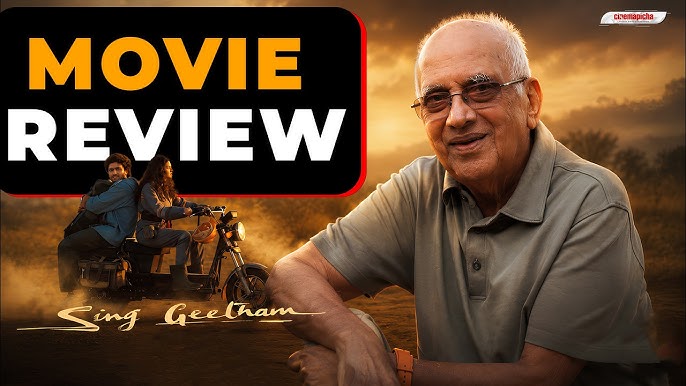
2026 has, so far, witnessed an interesting mix of social themes. From the ecological fable Sing Geetham to the poignant story of displacement in Main Vaapas Aaunga, filmmakers have explored a wide range of contemporary and historical concerns. At the same time, big-budget productions like Peddi have also engaged with socially relevant ideas, focusing on themes of identity, dignity, and aspiration through the journey of a crossover athlete. What follows is a brief exploration of some of the key social themes emerging from Hindi, Telugu, and other language films released this year.

Maverick director Singeetham Srinivasa Rao’s latest film, Sing Geetham, tackles weighty themes such as mining, environmental destruction, and humanity. While these subjects could have resulted in a heavy-handed drama, the film stands out for its fable-like narrative structure giving the story a distinctive charm. Several scenes evoke the harsh realities of mining and the large-scale destruction of forests in the name of development. Another aspect that makes Sing Geetham special is its strong focus on women, particularly Ahilya Bamroo’s Gauri and Shalini Kondepudi’s Renu. Gauri, a spirited environmental activist, and Renu, a shrewd businesswoman, emerge as the story’s driving forces. Their contrasting ideologies shape the narrative and are brought to life through a series of compelling and thought-provoking confrontations.

 Imtiaz Ali’s Main Vaapas Aaunga is much more than just the horrors of Partition. It also serves as a poignant reminder of the displacement and devastation caused by the wars unfolding across the world today. The film explores the loss of humanity as people are swept into an endless cycle of violence, a theme that comes through powerfully in several scenes of second half. By the end, we realize that despite the passage of decades, very little has changed. This realization makes Main Vaapas Aaunga a timely watch for our times

Buchi Babu Sana’s Peddi demonstrates how a mainstream star vehicle can also possess a meaningful social core.  While the heroine’s characterization leaves much to be desired, the film’s exploration of dignity and identity carries universal appeal. The story portrays caste discrimination through an oppressed community that lacks even basic civic amenities such as proper roads and railway access. The casteist insults endured by Ram Charan’s Peddi and his community make their eventual triumph all the more satisfying.

Another underlying theme of Peddi is sports as a great unifier. This is wonderfully conveyed through the oppressed community watching the Paralympics match in an upper caste man’s house, this person until then treats them with distaste but the medium of sports breaks that barrier.

Gopi Atchara’s Hey Balwant occupies a unique space among this year’s films. At its heart, it is a father-son drama, but it also offers a compassionate portrayal of sex workers. The lodge run by VK Naresh’s Balwant becomes a character in itself, carrying years of history and emotional significance. There is a police officer whose mother was one of the numerous prostitutes. He talks about how Balwant helped him with his studies, an important reason for his growth.

The film also examines society’s attitudes towards women in this profession through the characters played by Suhas and Shivani Nagaram.

One important scene features Suhas casually asking a sex worker on “why don’t you find” some another job, exposing his ignorance about the realities forcing some women into such work. Another important sequence sees Shivani Nagaram’s Mithra blaming the lodge for her grandfather’s visits to sex workers, rather than holding him accountable for his own choices. Through these moments, the film critiques society’s tendency to judge women while excusing men.

AR Sajeev’s Om Shanti Shanti Shantihi shares thematic similarities with Rahul Ravindran’s Girlfriend in a slice of life zone. Though a remake of Jaya Jaya Jaya Hey OSSS has a strong social core, an important theme explored in the movie is the power dynamics. The patriarchal hierarchy with women also enabling it has parallels with numerous households. A specific mention must be made of a sequence involving Esha Rebba’s Prasanthi and her on screen mother. When Prasanthi complains about her husband’s beating, she defends the son- in law by using Sandeep Reddy Vanga’s real life comment on how physical violence is an expression of love. This scene gives a perfect insight into a certain kind of social conditioning.

Vivek Soni’s Chand Mera Dil unfolds like a spiritual companion to Thappad. Through Ananya Panday’s Chandini, the film explores self-respect, personal identity, and emotional independence. Ananya Pandey’s Chandini is someone who doesn’t compromise on her identity in order to preserve her relationship. She carves out her own space as a single mother. The film doesn’t celebrate the violent snap of Lakshya Lalwani’s Aarav; it makes him work hard to earn the relationship back.

Cheekatilo, streaming on Amazon Prime Video, examines society’s treatment of sexual assault survivors. It critiques the tendency to blame victims while also exposing the voyeuristic gaze of sections of the media. The film’s emotional impact is heightened by the fact that only two survivors come forward to share their experiences, reflecting the harsh reality that many victims go through due to fear and stigma.

Two notable Hindi OTT releases this year, Accused and Maa Behen, also offer compelling gender perspectives. Both are streaming on Netflix and focus on a certain kind of perception. In Accused Anubuthi Kashyap does an interesting gender flip with the backdrop of Me Too. Here the accused is a woman Geetika Rao (Konkana Sen Sharma), she is a top doctor who has worked hard to reach this position. Through this gender flip Anubuthi presented a a nuanced picture on how men feel threatened by woman in power. This is perfectly summed up in the following dialogue. “Jab aadmi successful hota hai to hum kehta hain deserve karte hain. But when a woman reaches a powerful position, we doubt Aisya Kya Kiya Hoga. A dramatic sequence featuring this dialogue sums up the underlying social theme. Another interesting aspect of Accused is the same sex relationship and how Pratibha Ranta isn’t reduced to just a supportive spouse. Their dynamics are treated in a matter-of-fact way like any normal couple in the same circumstances.

Maa Behen on the other hand has scenes of gossip culture and how society judges those not conforming to what they think is appropriate. A strong example of this is the rumours spread on Madhuri Dixit Nene’s Rekha, a non conforming widow living life on her own terms. There is also a social angle similar to Jeo Baby’s The Great Indian Kitchen. Tripti Dimri’s Jaya is someone caught in a suffocating cycle of an oppressive marriage. Through her character and her eventual rebellion director Suresh Triveni explores the emotional exhaustion a regular housewife goes through.

Among the Tamil Films Made in Korea and Thaai Kizhavi deserve a special mention for their tackling of social themes related to gender. Made in Korea celebrates female solidarity through the friendship between a young Tamil woman and a Korean woman. Priyanka Mohan’s character evolves into a stronger, more self-reliant individual because of this relationship.

Thaai Kizhavi presents an equally compelling feminist narrative within a rural setting. It emphasizes the importance of women’s financial independence while also briefly addressing remarriage. Radhika Sarathkumar’s character undergoes a fascinating transformation from someone initially perceived as a ruthless moneylender into a self-made matriarch who inspires other women to shape their own destinies.

Among English-language films, three releases stand out for their social themes: Obsession, The Devil Wears Prada 2, and The Bride.

Obsession uses psychological horror to examine autonomy and emotional dependency. Through supernatural elements, director Curry Barker explores the gradual erosion of Nikki’s individuality. Initially an aspiring writer, she slowly loses her sense of self as emotional dependency takes over her.

The Devil Wears Prada 2 examines the changing landscape of digital journalism, touching upon sponsored content, clickbait culture, and editorial compromise. It also subtly explores female solidarity through the evolving relationship between the characters played by Meryl Streep and Anne Hathaway.

The Bride presents feminism through the lens of gothic romance. Jessie Buckley’s Ida is created as a companion for Christian Bale’s Frank, but over time she develops into a complete individual. The film argues that a woman’s identity should never exist solely in relation to someone else.

Taken together, these films demonstrate that cinema in 2026 continues to move beyond mere entertainment. Interestingly, many of the year’s strongest social commentaries have emerged from small and medium-budget productions featuring newcomers or actors outside the mainstream star system.

Sing Geetham and Main Vaapas Aaunga exemplify how middle-of-the-road and alternative cinema are currently producing some of the year’s most meaningful storytelling. Their ability to earn both appreciation and commercial success is an encouraging trend for Indian cinema.

Mainstream big-budget films, however, still have considerable ground to cover, particularly in terms of gender representation. Peddi, despite its powerful exploration of dignity and caste discrimination, fails to extend the same sensitivity to its female lead.

Similarly, films dealing with patriotism and history have increasingly become vehicles for ideological agendas. A prominent example is Dhurandhar 2: The Revenge. In contrast, both Main Vaapas Aaunga and Dharmendra’s Ikkis foreground humanity across borders, emphasizing compassion over divisive nationalism. Their humane perspective serves as a reminder that cinema can engage with history, not reducing it to an “us versus them” narrative.

Save The Tigers Season 3: A fun cosmic twist with some relationship lessons

Unlike the last two seasons this installment scores less on humor. Having said that the use of parallel world and the realizations undergone by the three protagonists makes the third season a compelling watch. The trio of Priyadarshi, Abhinav Gomatam and Chaitanya Krishna successfully take off from the previous seasons. They slip into their respective parts with practiced ease while also portraying the new variations in a wonderful manner

Starcast: Priyadarshi, Abhinav Gomaram, Chaitanya Krishna, Jordar Sujatha, Pavani Gangireddy, Deviyani Sharma, Jabardasth Rohini, Gundu Sudharshan, Vennela Kishore and others

Genre: Comedy/drama

Director: Sriram Eragam

Writers: Pradeep Adviatham, Vijay Namoju and D.S Gautam

Creators: Mahi V Raghav and Pradeep Adviatham

Music: Ajay Arsada

Cinematography: S.V Vishweshwar

Producers: Shiva Meka and Sahiti Chintalapadi

Production Company: Three Autum Leaves

No of episodes: 7

Streaming site: Disney+Hotstar

Save The Tigers holds an important place among the numerous streaming shows. A major reason for that is its exploration of marital life from different angles. This time too creator Mahi V Raghav gives a fresh spin to a familiar territory. The web series takes the famous English quote “Grass is Greener on the Other Side” and makes it an underlying theme in the realization journey of the three frustrated husbands. In the previous two seasons they were constantly questioning their married lives, but the twist of a parallel world where they temporarily take the place of their doppelgangers brings a significant change in them. These portions give Season 3 its best moments

Season 3 begins with a kidnap scenario, the details of which are better explored while watching. Then we move to a flashback setting up the frustration of Ghanta Ravi, Rahul and Vikram. Ghanta Ravi (Priyadarshi) has moved to a gated community and is struggling to cope with the new atmosphere, Rahul (Abhinav Gomatam) is stuck in a job which he hates. Finally, Vikram (Chaitanya Krishna) is having a difficult time due to the divorce scenario. One particular night the three in a state of alcohol question the god above. Vennela Kishore plays Lord Indra; Lord Indra decides to give them a fresh start with the help of Gundu Sudharshan’s Chitragupta. What follows is chaos mixed with a life changing swap.

As already mentioned STT 3 is less funny in comparison to the previous seasons. This takes a while to adjust, also the reestablishment of familiar domestic conflicts and character dynamics needed to be crisper. There are stretches too where the story seems to be going in circles.

However, the show finds its rhythm once the fantasy concept sets in fully. The new world in which our protagonists find themselves in give a fresh angle rather than simply recycling old arguments. The shows best moments are those when the three men introspect about their constant complaining and realize the invisible effort of their wives in holding their respective marriages together.

The fantasy of Grass being Greener on the other side isn’t used for just surface level. It acts an important catalyst for our protagonists to change. This has come out solidly in the season’s latter half.

The underlying themes of gratitude, companionship and the need for empathy in a successful marriage has come out in a subtle but very effective manner. Along with the theme of marriage the web series also throws light on parenting and respecting female perspective. These themes again have been seamlessly integrated into the narrative rather than just a sudden add on.

The new characters give their own charm especially Gundu Sudharshan and Vennela Kishore. Gundu Sudharshan lends in the right amount of mischievousness and his interactions with Vennela Kishore raise ample chuckles, the conversations between the two give also give an important insight into the marriage system. Vennela Kishore too does a fine job as Lord Indira. His punchlines in particular are a riot. Jhansi as the judge also has her moments especially her dialogues about the process of divorce.

However, the major spine of STT 3 continues to be Priyadarshi, Abhinav Gomatam and Chaitanya Krishna. Whether it’s the role frustrated husbands going through realization or the doppelgangers they don’t miss a single beat. The chemistry is once again spot on elevating the bumpy patches. The women also leave a significant mark whether it’s the wives or Jabardasth Rohini as Rahul’s maid. The interactions of Abhinav Gomatam and Rohini have a different dynamic as Rohini’s character is part of the parallel world too. Rohini gets a solid mass moment too where she saves our hero’s, and this adds a nice touch.

The score of Ajay Arasda complements the comic and emotional moments well. The cinematography of S.V Visheshwar is suitably glossy in the portions of Lord Indra.

Final word: STT 3 is an interesting mix of fantasy with some important lessons on what it takes to sustain marriage. Definitely worth watching for the message and the actors.

Maa Inti Bangaram: Woman power with a ‘Baasha’ spin

MIB largely rides on Samantha’s all round show and Gulshan Devaih’s sinister villainy. The writing though falls significantly short in two key stretches. One the husband-and-wife relationship, and second a rather hurried origin story with the angle of naxalism. Keeping the shortcomings aside MIB makes for a fun popcorn entertainer especially for those who have liked Samantha’s action avatar. Nandini Reddy and Raj Nidimoru tackle some interesting gender themes in a typical joint family set up

Starcast: Samantha, Gulshan Devaih, Manjusha Mukkavalli, Sreemukhi and others

Genre: Action/drama

Director: BV Nandini Reddy

Writers: Raj Nidimoru and Vasanth Maringanti

Music: Santhosh Narayanan

Cinematographer: Om Praksh

Producers: Samantha, Raj Nidimoru and Himank Reddy Duvvuru

Production Company: Tralala Moving Pictures

Running time: 2 hours and 34 minutes

The Baasha template of a man with violent past is one of the most overused tropes in Indian cinema. Numerous male stars have attempted this with a fair amount of success. Rajinikanth himself has had many reiterations of the same especially the 2023 smash hit Jailer. BV Nandini Reddy along with the writers take the core of Baasha and add a tadka of Family Man Season 2. The origin story with the angle of naxalisam bears a striking resemblance to the LTTE angle in that web show. In one way the movie feels like what if Samantha’s Raji had left the movement and found a loving husband. Keeping aside the comparisons Maa Inti Bangaram is a treat for Samantha fans even though the storytelling doesn’t fully soar.

The story of MIB focuses on Samantha’s Swarna/Jhansi. Swarna is a far cry from the typical daughter-in laws of a joint family. Dignath Manchale plays Swarna’s husband Anirudh, he had gone against his family and married Swarna. How they fell in love is hardly touched upon and this is something which I will get to later. Coming back to the story Anirudh and Swarna come for a family wedding amidst a somewhat hostile atmosphere. How Swarna wins over her in laws while tackling an extremist leader/angsty ex-lover is the main story of Maa Inti Bangaram.

It goes without saying that MIB largely relies on Samanth’s star power and the actress doesn’t disappoint one bit. Whether its kicking goons, the emotional vulnerability or the comic portions she doesn’t miss a single beat. Samanth’s prowess in action is something that we have already seen, still its a delight to watch Samantha take on the bad guys with absolute conviction. A special mention must be made of the climactic fight filled with gun shots and hand to hand combats. At the same time, Samantha does a fantastic job in the emotional sequences too like the one where Swarna reveals important details about her past, in the same scene she also questions the typical matrimonial ads describing the qualities so-called perfect daughter- in-law.

The comic sequences too are a riot. Her scenes with Manjusha Mukkavalli raises ample chuckles like the portion of emotional manipulation. In a couple of sequences there is also a perfect mix of humor with tension. For example, there is a portion of Swarna and Manjusha’s character desperately trying to put away a dead body. Manjusha makes her presence amply felt in spite of sharing screen space with Samantha.

Sreemukhi as the orthodox daughter in law typically seen in numerous joint families also makes a striking impact. In scenes of jealousy, she particularly stands out. Gulshan Devaih as the hurt lover Karuna makes for a striking villain. His dynamics with Swarna has been fleshed out much better in comparison to the husband-and-wife relationship. A portion worthy of mentioning is Karuna taking jibe at Swarna’s domestic avatar saying that did he train her for this and how she is wasting herself. On a side note, it would be good to see Swarna playing an active part in her father in laws political activities if a sequel is made, while carrying on the duties of a wife/daughter-in law. Among the rest veterans Gautami and Sri Lakshmi do a fair job within the confines of their roles.

A major flaw with Maa Inti Bangaram is the haphazard integration of the Naxalite angle. The socio-political complexities of a then important movement is reduced to a mere side note. The nuance is absolutely lacking in how Nandini Reddy along with the writers have presented the social scenarios leading to naxalism.

Another big issue is the lack of meat in the husband-and-wife relationship. The process of Anirudh and Swarna falling in love is never shown, we just get a couple of mentions in Swarna’s words, but more depth was required. This aspect sticks out even more glaringly given that Anirudh had gone against his parents to be with Swarna, so a much better exploration of how they fell in love was needed.

Maa Inti Bangaram features only one song which is the energetic Thaasadiya. The upbeat tune coupled with Samanth’s free flowing dance moves makes for a nice watch visually. Om Prakash’s cinematography stands out in the climatic fight.

Burial of hearts (in the shadows of Holocaust): A moving tale of compassion and an unlikely friendship

Inspired from true incidents this novel restores faith in humanity during one of history’s darkest periods. Shania Sarup paints a vivid picture of Maharaja Sir Digvijaysinhji Ranjitsinhji Jadeja’s bravery in giving shelter to Holocaust refugees. The unlikely friendship between an Indian Princess and a Jewish girl has also been wonderfully crafted

The mass genocide of Jews from Nazi Germany is a very shameful chapter in our world history. Adolf Hitler’s dastardly acts of so-called ethnic cleansing is a blot on humankind The backdrop of Shania Sarup’s novel is World War 2, but this a story of human connection amidst the bleakness. It restores faith in humanity something which we need in today’s geo- political atmosphere

A strong aspect of Shania Sarup’s work is the contrasting world of Silina’s traumatic experiences and the sheltered life of princess Tara. The emotional turmoil of suddenly becoming a refugee with dangers lurking all around has been excellently captured by Shania Sarup. The readers feel tensed on what would be the fate of these children.

How Tara and Silina form a bond is also interesting. Music plays a key role in Tara warming up to Silina. Through their subsequent bonding Shania Sarup gives an important message on how art can cut across the deepest barriers. The gradual friendship between the two makes for a thoroughly engaging read.

An underlying theme of Burial of Hearts is standing up for vulnerable groups in times of crisis. The bravery shown by the Maharaja stands as a perfect testament to what we need from our leaders in today’s times.

The cross-culture aspect also plays a key role in Burial of Hearts. Silina and Tara come from vastly different backgrounds and one of them are cultural differences. In spite of this the two end up forming a meaningful connection. Through this historical fiction Shania Sarup explores how culture isn’t a barrier when there is shared humanity.

Lastly both the female characters have a strong arc. As they navigate war, displacement etc they undergo significant personal growth. This evolving transformation forms an important part of Burial of Hearts.

The novel’s ultimate message of compassion prevailing over hatred is a timely one. This aspect alone makes this World War II novel worth reading

Main Vaapas Aaunga: A stirring tale of trauma and loss of humanity

Imtiaz Ali once again employs his favorite two timeline plot sequencing. More than the partition horrors the movie holds a mirror to today’s displaced homes due to bloodshed. The end montage song with the ever-charming Diljit Dosanjh hits hard. A strong aspect of Main Vaapas Aaunga are the scenes between Nasseerudin Shah and Diljit. The portions have a perfect blend of humor with emotional pathos. The pre partition romance though needed better writing

Starcast: Naseeruddin Shah, Diljit Dosanjh, Vedang Raina, Sharvari Wagh and others

Genre: Romance/drama

Director and writer: Imtiaz Ali

Additional writer: Nayanika Mahatani

Music: A R Rahman

Cinematography: Sylvester Fonseca

Producers: Sameer Nair, Deepak Segal etc

Production Companies: Window Seat Films, Applause Entertainment etc

Running time: 2 hours and 46 minutes

Stories of Partition and Bollywood go hand in hand; numerous filmmakers have depicted the horrors of partition in their own ways but still there is always something left to be explored. Imtiaz Ali’s latest Main Vaapas Aaunga is also about pre partition and the horrors following it. But the genre here makes a difference. Imtiaz packs in an intense tale of unrequited love, love so intense that our protagonist hasn’t forgotten his heroine though he is 95 years old. Naseeruddin Shah is Keenu. He falls in love with a Muslim girl Jiya/Afshana played by a radiant Sharvari Wagh. Vedang Raina plays the younger version in the flashbacks. Their blossoming romance hits a roadblock due to partition. He manages to make a living, but the scars haven’t completely left. Diljit Dosanjh plays the grandson Nirvair Grewal. Nirvair is going through his own hassles both professionally and personally. Nirvair becomes Keenu’s support system, and he is determined to fulfill his grandfather’s last wish and how that happens is the essence of MVA.

A strong aspect of MVA are the scenes between Nasseerudin Shah and Diljit. Their interactions have undertones of humor in the beginning especially the hospital ones. But as Nirvair becomes more emotionally involved the dynamics takes a different turn. The portions start to become emotionally poignant and the two feed off each other wonderfully. After a long time Naseeruddin Shah has gotten an author backed part and the veteran makes complete use of it. Whether its his intense love for Jiya/Afshana or the pain of leaving one’s home the actor tugs at your heartstrings. He also raises chuckles in his initial interactions with Diljit.

Diljit as the grandson gets his own arc and the dependable actor doesn’t disappoint. In spite of sharing screen space with an in form Naseeruddin Shah he more holds his own. From being curious and then the strong determination of making sure that the grandfather finds peace at least in death the actor doesn’t miss a single beat.

The pre partition romance also has his moments. Both Vedang and Sharvari look the part of bestowed lovers, but the writing could have been better. The love track could have been developed more; there is a hurried nature to the proceedings here. Having said that the conversations between young Keenu and Jiya have the right romantic spark. Vedang in particular impresses more so in the post partition scenes. The scenes of subtle pain and grief has been excellently portrayed by the young actor. Sharvari has much less to do in comparison, but she has a luminous presence and does a fine job in portraying a certain inner resilience.

The theme of humanity loss has a realistic feel to it as well. Human beings getting carried away in the cycle of violence and behaving in a barbarious manner has a contemporary feel. The post credit song Kya Kamaal Hai takes the audiences on a short tour of present horrors and the incredible spirit of fighting back. The tune coupled with Diljit voice is simply fantastic.

AR Rahman’s music jells perfectly with the movie’s tone capturing both the young love as well as the emotional undertones perfectly. The cinematography of Slylvester Fonseca particularly the pre partition romance has some nice frames. The proceedings have a lived-in feel

One of the things sticking out like a sore thumb is the subplot of Nirvair and his off/on relationship with Banita Sandhu’s Kaveri. It doesn’t add much substance to the movie. The subplot feels like more of a crutch to amplify Keenu’s deep love for Jiya. But this is a minor misstep in a mostly heartfelt drama on what it means to leave your home.

Sing Geetham: A gripping ecological fable soaked in allegory

Acclaimed director Singeetham Srinivas Rao once again employees his trademark whimsical style while exploring the themes of human greed, capitalism and environmental destruction. Kudos to the director for coming up with a story like this at the age of 94 and showing why he is one of his kind. Nag Ashwin and Vijayanthi movies also deserve appreciation for bringing alive his vision. Devi Sri Prasad delivers one of his best soundtracks whether it’s the initial bewilderment or the anguish in the pre climax. A committed ensemble especially Ahilya and Shalini Kondepudi stand out among the performers

Starcast: Ayaan, Ahilya Bamraoo, Shalini Kondepudi, Tulasi, Banerjee, Nivetha Pethuraj, Rahul Ravindran and others

Genre: Fantasy/supernatural

Director and writer: Singeetham Srinivas Rao

Additional writers: Nanda Kishore Emani, Gautami Challagulla etc

Music: Devi Sri Prasad

Cinematographer: Ankur C

Producer: Nag Ashwin

Production houses: Vyjayanti Movies and Swapna Cinema

Running time: 2 hours and 17 minutes

Before dissecting Sing Geetham its necessary to appreciate the spirit of Singeetham Srinivas Rao. The story of Sing Geetham is an old one, it has been with Singeetham Srinivas Rao for a long time. Through the story has been written long time back the plot is still so contemporary. The themes of environmental destruction and Mining don’t need a special introduction. We see it all around us but to explore these topics in the age of big scale Pan India takes courage both for the director and the producers. So firstly, a big round of applause for the entire team. Coming to the film Sing Geetham in set in the village of Kuberapuram. A young man Prathap (Ayaan) returns to his native village for claiming inheritance. He wants to make some quick buck by signing a deal with a businesswomen Renu (Shalini Kondepudi). Ahilya Bamaroo plays Gauri a feisty young woman deeply attached to the village’s last surviving tree. Things take a major turn with the tree being razed to the ground and the village getting cursed. A big reason for the curse is Gauri’s rant on that particular night. The backstory of Prathap involving Nivetha Pethuraj and Rahul Ravindran and how the curse of communicating only through songs is broken forms an important core of Sing Geetham.

A strong aspect of Sing Geetham is the world building. Singeetham Srinivas Rao along with the writers get to the heart of the story without wasting much time. Whether its Pratap’s release from jail, his entry into Kuberapuram and the mining business of Renu and her father, the latter played by a suitably evil Banerjee. Gauri’s attachment with the tree and her ideological differences with the father also set a solid base.

The portion of village’s last tree razed to the ground and Gauri’s desperate plea is emotionally poignant. Yes, the scene does across as melodramatic but there is an important reason behind Gauri’s attachment. This comes in the latter half with solid acting from both Nivetha Peturaj and Rahul Ravindran as Prathap’s parents.

For some viewers the environmental destruction explored will remind them of tress being cut down in real life. The most recent one is KBR. The mining portions are again reminiscent of numerous stories we have read in newspapers or come across online. To make a film like this with a strong political voice and then to be backed up by names like Nag Ashwin and Vyjayanthi alone makes for a big reason to watch.

Having said that the subject takes a while to warm up. The format of communicating every feeling through songs will appear outlandish for the mass belt, also the title Sing Geetham doesn’t appear in sync with the story’s nature. Still there is a lot to savor for those who like experimental cinema especially Singeetham Srinivas Rao fans.

Devi Sri Prasad’s music and background score is the soul of Sing Geetham apart from direction and writing. The songs are of a completely different flavor something we don’t usually associate with DSP. It is a huge challenge to compose tunes for a film like this but Devi Sri Prasad more than rises up to the challenge. Among the songs the one which stands out is the emotional plea to the god Kubera when a lot of people turn into gold statues. The tune, lyrics and the actor’s performances combined stirrers the viewers. On the other hand, a song situation with everyone speaking their mind without any filter makes for a fun watch. Sing Geetham is easily Devi Sri Prasad’s best work to date.

The allegorical touch especially the story of King Midas and its integration in the pre climax has also been well done. The pre climax also gives an important message on humanity and the need for harmony. There is a powerful portion of villagers setting aside their greed and protecting a newborn baby. Some of them become gold statues and this is preceded by an emotional plea to God.

The movie ends with the people of Kuberapuram living together in harmony with nature. Vijay Devarakonda briefly appears as a potential threat to Kuberapuram ; the part itself doesn’t have much significance nevertheless it makes for a fun special appearance especially with Vijay struggling to hold himself together because of the involuntary dancing curse.

The cast of Sing Geetham is an interesting mix of newcomers and established actors, and this works for the movie. Among the younger lot Ahilya and Shalini stand out. Ahilya portrays the feistiness of Gauri in a solid manner. Shalini Kondepudi as a calculative businesswoman with her own insecurities also makes a striking impact. Her character Renu is someone who is driven by the need to prove herself and this adds an interest psychological layer to the character. On a side note, it’s good to see the emergence of new actresses coming through Youtube like Shalani and Shivani Nagaram.

Obsession: A gripping psychological horror on consent and the need for space

A roundabout second half does test the viewers patience, nevertheless the film is successful in giving jump scares through the effective atmospherics. The movie has a strong social undercurrent through the supernatural aspect. At times Obsession feels like watching Ram Gopal Varma’s prime particularly the classic thriller Kaun

Starcast: Michael Johnston, Inde Navarrette etc

Genre: Horror

Director, writer and editor: Curry Baker

Cinematographer: Taylor Clemons

Music: Rock Burwell

Producers: James Harris, Hayle Nichlo Johnson etc

Production Companies: Tea Shop Productions, Blum House Productions etc

Running time: 1 hour and 50 minutes

Ever since its release on May 29th Obsession has been breaking records right, light and center. Made on a shoestring budget the film has raked in both numbers and critical acclaim and deservedly so. Obsession is a different space of horror than the usual ghost stories that we encounter. It’s more psychological with a spilt personality. Obsession bears a striking resemblance to the best of RGV work, the likes of Kaun and Bhoot. Like those films here too the horror majorly comes from the solid background score and tension filled situations. Even Inde Navarette seems to be channeling her inner Urmilla Mathodkar from those movies. Keeping the comparisons aside Obsession genuinely succeeds in giving creeps while touching upon relationships

The story of Obsession starts with a nerdy and insecure music store clerk Bear (Michael Johnston). For a long time, Bear has been in love with Nikki (a solid Inde Navarette). But he isn’t able to confess given the introvert nature coupled with insecurity. Instead of directly confessing his love Bear breaks a mystical “One Wish Willow” to make Nikki fall in love with him. But this leads to disastrous sequences as Nikki goes from feisty to emotionally clingy. The final fate of Nikki and the relationship forms the core of Obession.

A strong aspect of Obsession is the significance of the title and the way Curry Baker justifies it. Obsession here isn’t just a random title chosen but represents the core theme. The emotionally clingy nature of Nikki like the terrifying portion of her behavior at a boy’s party is a solid example of this.

In the beginning portions Nikki talks about wanting to be a writer to Bear, she further mentions about writing a romantic story. But after the “One Wish Willow” episode the character takes a huge 360 degrees turn. From being independent Nikki goes into the territory of a psychopathic girlfriend. She even ends up killing Megan Lawless Sarah’s Harper in a fit of extreme possessivness.

The social commentary underneath all this about stripping a woman of her autonomy has come out in a solid manner. Bear may across as a good man in the beginning, but his inner patriarchy comes out clearly in the way he makes the wish.

What also works for Obsession is the technical department. Both the background score and the cinematography deserves a special mention. The scenes where Nikki’s personality goes through a major within seconds is majorly enhanced by the terrifying background score. Taylor Clemen’s cinematography too is in sync with the eerie atmospherics. The night shots especially make for a truly scary experience.

Obsession also benefits from two solid leads. Inde Naverrette goes from loving to scary without missing a single beat. She particularly shines in the portions of the alter ego taking over causing absolute carnage. By the end of Obsession, the viewers feel bad for her and think on how she is going to deal with the future emotional turmoil. Michael Johnston also stands his own especially in the scenes of regret and tension.

Coming to the flaws the second half suffers somewhat from roundabout storytelling. Some of the scenes feel jaded thanks to the repetitive scenarios. Also, a subplot of Nikki’s equation with her father needed more layering, it feels like an add on rather than something substantial.

Final word: Obsession is worth watching for fans of psychological horror with social commentary

Maa Behen: A strong feminist core elevates this uneven ride

Director Suresh Triveni succeeds in subverting the usual trope of motherhood. Madhuri Dixit’s Rekha is someone who is unapologetic about her choices. The film does a fine job in exploring a certain gossip culture and society’s judgmental tone. Maa Behen is at its strongest when it focuses on the family dynamics and the evolving bond between the three female protagonists. Not everything lands but Maa Behen makes for an entertaining feminist thriller.

Starcast: Madhuri Dixit Nene, Tripti Dimri, Dharna Durga, Ravi Kishan, Arunoday Singh etc

Genre: Thriller/comedy

Direction and story: Suresh Triveni

Additional story and writer: Pooja Talani

Music: Akshadeep Sengupta

Cinematography: Anuj Rakesh Dhawan

Producers: Vikram Malhotra and Suresh Triveni

Production Companies: Abundantia Entertainment and Opening Image Films

Running time: 2 hours and 7 minutes

Streaming site: Netflix

Indian Cinema has a major tendency of putting mother figures on pedestal. They are presented in a stereotypical manner with no desires of their own in general. Suresh Triveni’s Maa Behen is radically different in its presentation; he is also helped by an uninhibited Madhuri Dixit Nene having an absolute ball. As a film Maa Behen bears a striking resemblance to the 2022 movie Darlings. Just like that movie here too is there a mixture of crime with dark humor. The theme of female autonomy also has a striking parallel. Having said that Maa Behen comes with its distinct identity.

The story of Maa Behen focuses on a non-confirming widow Rekha (a magnetic Madhuri Dixit) Rekha has a certain reputation of being Adarsh Colony’s Daayan because of her lifestyle. Tripti Dimri and Dharna Durga play Rekha’s two daughters. Tripti’s Jaya is stuck in an oppressive marriage, the younger sister on the other hand is an aspiring social media influencer going through her own share of societal judgments. The film takes a dramatic turn with the suppose dead body of Ravi Kishan’s Gupta Ji in Rekha’s house. Rekha calls her two estranged daughters and what follows is a lot of chaos with female bonding

A strong aspect of Maa Behen are its social themes explored through the three women. All the three have important arcs and this makes the movie engaging even when the screenplay get into a major tangle. For example, Tripti Dimri’s character represents the emotional suffering of numerous housewives. There is a lot of pent-up anger coupled with a strained mother and daughter relationship. The sequences between Tripti and Madhuri Dixit gives Maa Behen some of its best moments. As expected Tripti pulls off Jaya’s frustration as well as her rebellion in a solid manner. Her confrontation scene with a suitably despicable Shardul deserves a special mention.

Dharna Durga too makes her presence amply felt. In spite of sharing screen space with the likes of Madhuri Dixit and Tripti she does a wonderful job in conveying a young woman’s yearning for love. Yes, the character’s emotional wounds needed better exploration, but Dharna Durga does a very fine job, nevertheless.

Ravi Kishan’s Gupta ji is another interesting character worthy of mention. His character begins off as a seemingly ordinary neighbor, but the film throws a major surprise in the third act. The gradual unraveling of Gupta ji’s different layers makes the women’s fightback all the more engaging. Arunoday Singh as a police officer and Jaya’s friend brings in the required tension especially in the films latter stages.

Madhuri Dixit though is the emotional anchor of Maa Behen. Her part is a mix of vulnerability and quiet resilience, and the veteran actress is successful in unleashing a different shade of her. Suresh Triveni along with Pooja Talani explore the pedestal of imposed motherhood through Rekha in a successful manner. The small-town setting of Adarsh Colony with the running commentary of Shrivardan Trivedi presents an important social layer of self-appointed moral custodians.

Some of the flaws in Maa Behen include the tonal shift which needed better handling. Also, Guptaji’s family not panicking much and carrying on with the daughter’s wedding celebrations as if nothing has happened feels odd. Also, more groundwork could have been laid for the sudden twist in Guptaji’s character. Lastly Geetanjali Kulkarni as Gupta’s wife needed more heft in terms of charcterization.

Final word: There is no denying that Maa Behen could have been tighter with a more fleshed out screenplay. Nevertheless, for fans of feminist stories this makes for a good watch.

Bandar: A gritty drama on the inner workings of jail

Anurag Kashyap and Sakshi Mehta present a harrowing picture of the numerous tribulations faced by undertrial prisoners. The social commentary on corrupt public institutions as well as media trial hit hard. Bobby Deol gets a layered role with shades of grey, and he goes full throttle coming up with a first-rate act. The character Sameer Mehra isn’t completely white or black, and this makes the movie more interesting

Starcast: Bobby Deol, Sapna Pabbi, Sanya Malhotra, Indrajit Sukumaran, Saba Azad etc

Genre: Thriller/drama

Directors: Anurag Kashyap and Sakshi Mehta

Writers: Sudip Sharma and Abhishek Benarjee

Music: Amit Trivedi, Vishal Mishra etc

Cinematography: Saiyed Shaaz

Producers: Anurag Kashyap, Nikhil Tiwedi etc

Production Company: Saffron Magic Works

Running time: 2 hours plus

There is an important line in Anurag Kashyap’s latest Bander where Bobby Deol’s Sameer Mehra describes himself. He categorizes himself as sometimes good and sometimes bad. This scene with an ex-girlfriend turned adversary (a super Sapna Babbi) isn’t just a throw away portion. It sums up the role in many ways. At some points Bandar also reflects Bobby Deol’s real-life struggles before the fantastic resurgence in Animal. There is a portion of Sameer walking out of an airport after performing in a wedding. In spite of being popular in the past no one in media notices Sameer let alone clicking his photograph. Bandar in simple terms is about a woman accusing a man of raping her. Of course, nothing of that sort has happened. Sapna Babbi’s Gayatri is driven by vengeance when Sameer develops a cold feet. However, the bigger picture of Bandar are the hardships faced by undertrial prisoners and how they are boxed in a certain category irrespective of whether they have actually done the crime or not.

A strong aspect of Bandar is undoubtedly the depiction of jails nitty gritties. Anurag Kashyap along with his writers don’t sugar coat at any point, the portions have the required rawness and as viewers you are immersed on what would be the plight of Sameer. Of course, the technical departments deserve equal credit too whether it’s the cinematography or production design.

The different gangs within the jail and the rules which come with it also have an authentic texture. Initially Sameer aligns himself with a certain group, but things change in a heated moment. He switches sides joining with Indrajith Sukumaran’s Lijo. Lijo has a solid hold over the jail atmosphere. His influence can be seen clearly in numerous portions. Lijo guiding Sameer on how to maintain sanity and the cutthroat nature of the law gives Bandar some of its best moments. Indrajith Sukumaran brings in the required authority along with a certain warmth in equal measure.

The character of Sameer Mehta also deserves equal appreciation. As already mentioned the man isn’t completely white or black. At times the viewers feel that he is actually capable of doing the heinous crime he has been charged with. There is one portion of sexual innuendoes with Gayatri, the details of which cannot be mentioned here. The man also comes across as someone stuck in the past glory and not wanting to start fresh. In spite of some despicable behavior on certain occasions, the viewers still feel for Sameer when he gets emotionally vulnerable constantly pleading with the sister played by a wonderful Sanya Malhotra.

The sequences between the two are emotionally poignant and Bobby is particularly fantastic in these scenes. Sanya Malhotra as the sister trying to hold things together from crumbling also tugs at the viewers hearts.

The gradual unraveling of Sameer’s past with Gayathri has also come out well. From the initial lovey dovey moments and then the eventual rejection leading to a psychotic change in Gayathri, all this has been wonderfully written and enacted with Sapna Pabbi not missing a single beat.

The songs of Bandar composed by multiple artists have a nice variety. The title song in particular catches the movie theme well. A romantic number “Kyun Maaza Aa Raha Hai” makes for a soothing listen and watch too.

Apart from the actors mentioned above Saba Azad playing one of Sameer’s girlfriends has a lovely presence and does a good job within the limited scope. Jithendra Joshi as a corrupt policeman has an absolute ball especially in an early interrogation scene with Bobby. This portion also has some chuckle worthy moments.

The subject of Bandar featuring a male victim is likely to split the viewers especially in the context of the then Me Too Movement. Having said that the movie is very much worth watching. The performances alone make it worth the ticket.

Peddi: A moving tale of undying spirit

Uppena director Buchi Babu Sana gives his own touch to a Rangasthalam like set up. The film works best when it focuses on the social milieu of caste and the incredible fighting spirit of Peddi. Ramcharan in the titular role goes all out both physically and emotionally. Whatever the fate of Peddi financially the film will be a milestone for Ramcharan the actor. Janhvi Kapoor in her second Tollywood outing doesn’t fare any better whether its the accent or the overall performance. The overt sexualization doesn’t help either

Starcast: Ramcharan, Jagapathi Babu, Shiva Rajkumar, Divyendu, Janhvi Kapoor and others

Genre: Sports/drama

Direction and story: Buchi Babu Sana

Screenplay: Nagendra Kasi, Vara Prasad Toleti, Sri Raman CH etc

Music: AR Rahman

Cinematography: R Rathnavelu

Producers: Naveen Yerneni, Venkata Satish Kilaru, Sukumar etc

Production Companies: Mythri Movie Makers, Sukumar Writings etc

Running time: 3 hours plus

Sukumar’s Rangasthlam and the Pushpa movies aren’t just box office blockbusters; they opened a new grammar of filmmaking especially the return of rural stories in a commercial set up. His assistants Srikant Odela and Buchi Babu Sana have been successful in carving their own niche while paying tribute to their mentor/guru. Buchi Babu Sana’s first film Uppena started off as a story of star-crossed lovers, but what made the film unique was a pivotal pre climax twist. It was daring especially keeping in mind the star launch of Vaishav Tej. With his latest Peddi the director once again takes a very wild swing with the characterization of Ramcharan. The details cannot be revealed here but Ramcharan deserves major appreciation for submitting to the vision of the filmmaker and not letting his pan India image come in the way

The one-line story of Pedda is about a labor/athlete. How Ramcharan’s Peddi uses his multiple sporting skills to lift a deprived community with the village getting united forms the spine of the film. The story of Peddi is narrated to Boman Irani’s Kiran Singh. Kiran Singh is a senior official from Indian Olympics and is used as a typical framing device for the audiences to discover the legendary journey of Peddi. The plot is supposedly inspired from a daily wage laborer called Peddi Babu.

A strong aspect of Peddi are its social beats. An overarching theme is the struggle for basic identity and recognition. Peddi becoming a cross over athlete is less about personal fame and more about his village lacking infrastructure and a name. This has come out solidly in the monologues of both Ramcharan as well as Jagapathi Babu playing Peddi’s father.

Buchi Baba also does a solid job in presenting the struggles of bonded laborers. How the rural working class is repeatedly shamed for belonging to a marginalized caste has some powerful moments. The prejudices of the government in not helping them makes the viewers root even more for Peddi to win.

The caste politics in everyday life even in something like sports meant to be a unifier has its share of poignant moments. A special mention must be made of Shiva Rajkumar’s Gournaidu. His character has some powerful moments like the scene where he chooses Peddi over his upper caste student/disciple. The scenes between Gournaidu and Peddi though familiar gives the movie some of its best moments. Shiva Rajkumar brings in emotional depth as well as the required authority.

Bollywood actor Divyendu plays a mini antagonist. The character Rambujji is sketchy written, but Divyendu plays the part with the required attitude. A particular mention must be made of the scene where Divyendu questions Peddi’s worth after a deliberately lost cricket match. It sets a solid base for Peddi venturing into wrestling. Buchi Babu does succeed in humanizing Rambujji though. The climatic portion of Peddi’s village people seeing the match in his house has some nice touches. The message of how sports can be a great unifier in getting people together irrespective of caste, class etc has been solidly written and enacted.

However, the major spine of Peddi without a doubt is Ramcharan. Ramcharan is the glue holding the proceedings together. The physical transformation is of course fantastic particularly the wrestling part. But the actor majorly scores in the emotional scenes. A crucial portion set in the hospital will move the viewers. A long monologue towards the end also deserves a special mention, it hits the right buttons thanks to the writing as well as Ramcharan’s stupendous act. Lastly Jagapathi Babu is also striking in the role of Applasoori. Yes, for some the part may across as melodramatic but Jagapathi Babu nails the desperation of Appalasoori.

A major problem with Peddi is Janhvi Kapoor as Achiyamma. The romantic track just doesn’t work whether its the lines or how Achiyamma falls in love. For a movie talking about dignity and identity Achiyamma is mostly written from a voyeuristic gaze. Even some of Peddi’s lines about Achiyamma reek of casual sexism and this is something Buchi Babu should have avoided. In fact the female characters leave a lot to be desired especially keeping in mind how Uppena had a solid female character. The confrontation of Krithi Shetty with Vijay Sethupathi was Uppena’s biggest highlight. Unfortunately, Peddi lacks severely in this department.

Also Boman Irani as a framing device feels convoluted beyond a point. A more original approach was needed. Apart from being a patient listener and being bewildered on Peddi’s multi-faceted personality the actor has nothing more to do.

AR Rahman’s music and background score is solid for most part. The already popular Chikiri works both for its upbeat tune and Ramcharan’s swag. The Masaa Massa on the other hand makes for a good montage training song. The background score too especially the Delhi scenes work well. But a special number featuring Sruthi Hasan along with Janhvi feels like an unnecessary add on. Apart from ample skin show for front benchers there is nothing more.