Tere Ishq Mein: A headache in the name of intense love

Tere Ishq Mein often feels like a friendship meet between Kabir Singh, Animal and fighter. Aanand L Rai and his longtime collaborator Himanshu Sharma pick elements from various movies: the end result is let’s hate a woman for rejecting the hero, how dare she marry someone else. The problematic representation of mental health also adds to the agony. The cliched use of trauma as a justification for protagonist’s violence is the final nail

Starcast: Dhanush, Kriti Sanon, Prakash Raj, Tota Roy Chowdhury and others

Genre: Romantic drama

Director: Aanand L Rai

Writers: Himanshu Sharma and Neeraj Yadav

Producers: Aanand L Rai, Himanshu Sharma, Bhushan Kumar etc

Production Companies: Color Yellow Productions and T Series Films

Music: A R Rahman

Cinematography: Tushar Kranti Roy

Running time: 2 hours and 49 minutes

There is a very thin line separating intense love and celebrating problematic characters under the disguise of romance. Mohit Suri’s Saiyaara was an intense romantic drama done right. Yes, Ahaan Pandey’s Krish Kapoor starts off as a hot-headed young man with temper issues: however, the second half sees a major change with the hero becoming a devoted boyfriend putting his love above the need for fame. By the end the hero strikes the perfect balance between ambition and standing for his love. Tere Ishq Mein on the other hand has very harmful gender politics. The hot-headed nature of Dhanush’s Shankar is often passed as heroism and deep love.

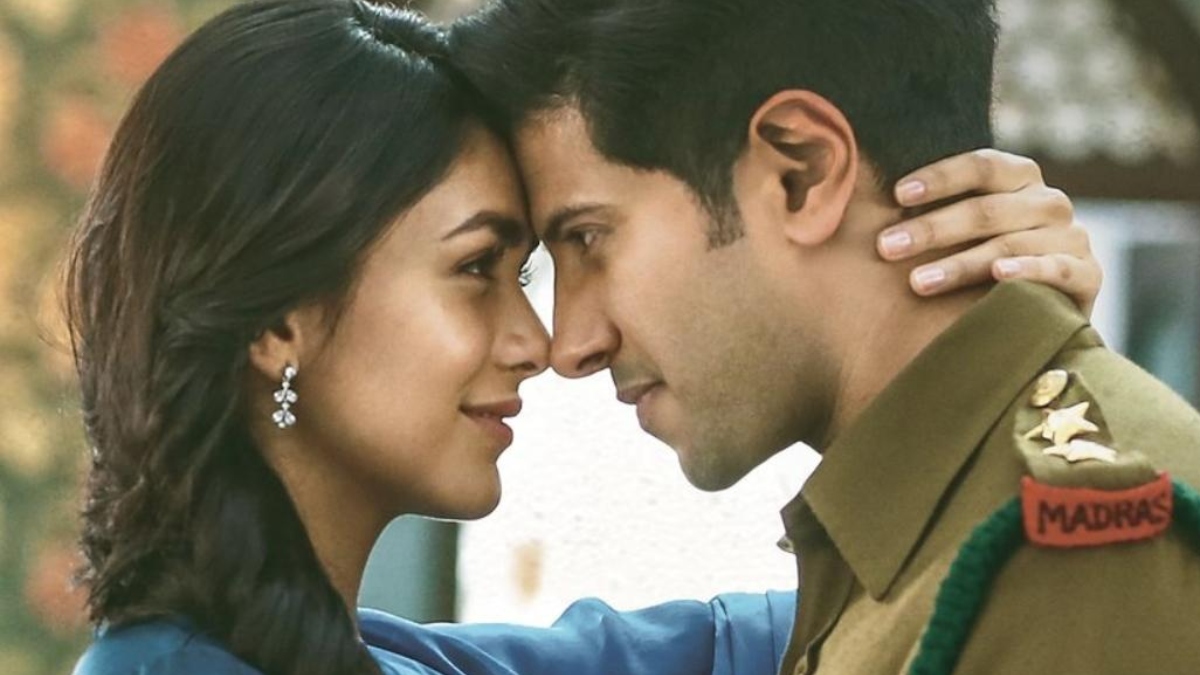
The storyline of this convoluted mess begins with a scene firmly establishing the hero’s aggressive nature. Shankar (an intense Dhanush) is a fighter pilot facing disciplinary action. Shankar needs a mental health certificate clearance stating that he is fit to participate in an ongoing war. Kriti Sanon plays a supposed psychologist Mukti which is more unintentionally funny. Mukti has a complicated past with Shankar: this is revealed gradually with numerous flashbacks.

Looking for positives in a train wreck like this is similar to searching for a needle in Haystack. Still to give credit where its due Prakash Raj as Shankar’s concerned father strikes an emotional chord. The veteran actor especially shines in the sequence of pleading with Mukti’s father (a suitably arrogant Tota Roy Chowdhury). There is also a very poignant father and son moment explaining why Shankar becomes a fighter pilot instead of pursuing UPSC. Tota Roy Chowdhury as the upper-class aristocrat has a strong presence. His attitude towards Shankar has a condescending nature but as a father it’s understandable why he wouldn’t want a guy like Shankar to be his son- in- law. It also doesn’t help that Shankar continues to be a proud alpha.

Dhanush as Shankar brings his trademark earnestness. The south Indian accent along with the character’s nature stops the viewers from being completely invested. But Dhanush’s efforts as a performer cannot be faulted. He is especially good in a heartbreak sequence involving Kriti. The questions that he asks about Mukti using him as a guinea pig for her psychological study of violence is genuinely good.

As far as the flaws are concerned the basic premise is the biggest problem. Mukti’s obsession with getting her thesis done and a certain overconfidence on her ability’s reeks of stupidity. She is very much aware of Shankar’s temper and how dangerous he can be: In spite of being aware Mukti invites self-trouble. As a professor rightly says Mukti could have chosen another subject area for PHD thesis rather than I will go out of my way to reform a violent man. This in itself becomes a major obstacle for sympathizing with Mukti. Also, the character graph from a confident young woman to walloping in self-destruction has many tonal problems.

For a supposed psychologist Mukti has zero control over her emotional turmoil. There are numerous sequences of her drinking and vomiting. This happens even when she is pregnant. As a viewer you really feel for the on-screen husband who in spite of knowing her complicated past and an inability to get over stands with her.

Shankar for all his temper issues at least becomes a fighter pilot which is a huge improvement from Raanjhanaa. The entire arc of Mukti in simple terms is spinless. This is in a very sharp contrast to a movie like The Girlfriend where Rashmika’s Bhooma goes from timid to assertive. Even Shivani Nagaram’s Khathyayani in Little Hearts does a much better job in handling pressure and exercising her choice. Kriti tries her best but there isn’t much she can do with a self-defeating woman like Mukti.

There is also a forced link with Raanjhanaa with an extended special appearance of Mohammed Zeeshan Ayub. His attempts at philosophical puns on Shiva and Mukti is completely out of place. It irritates the viewer’s big time. Both the writing and the dialogues don’t help. The portions of Dhanush pursuing UPSC is also very shabbily done. It will make the fans of 12th fail movie squirm in their seats.

Finally, Tere Ishq Mein’s attempt at handling different threads like class differences, Emotional trauma due to a loss of parent etc. is simply surface level. Most of it is used for convenient dramatic moments.

AR Rahman’s music works in parts. The theme song coupled with a Sufi track Deewana Deewana is striking. Tushar Kranti Ray’s cinematography is effective in capturing the different moods of the movie.

Final word: Watch Tere Ishq Mein only if you are in the mood for heartbreak and are fans of doomed love stories.

Andhra King Taluka: A fan’s engaging love letter

Unlike Maneesh Sharma’s Fan Andhra King Taluka does a much better job in using the emotional bond between a devotee and his favorite actor. Ram Pothineni finally gets a noteworthy part, and the actor does a very good in portraying the different nuances. Upendra in an important supporting role lends gravity as Sagar’s idol. The heartfelt conversations between the two is the soul of Andhra King Taluka. At the same time the underwritten love story plays a major spoilsport

Starcast: Ram Pothineni, Upendra, Bhagyashri Borse, Rao Ramesh, Murali Sharma and others

Genre: Drama/romance

Director and writer: Mahesh Babu Pachigolla

Producers: Naveen Yerneni and Yalamanchili Ravi Shankar

Production house: Mythri movie Makers

Music: Vivek Mervin

Cinematography: Siddartha Nuni and George C Williams

Running time: 2 hours and 43 minutes

There is something magical about the bond shared by a fan with his favorite actor or actress. You may never meet that person and he or she will probably never know about your existence. But the influence of the characters played by an actor that you adore stays permanently. This can be both positive and negative depending on the audience mindset. Movies about fans and their favorite stars have been made previously too but Andhra King Taluka holds a certain novelty. The freshness majorly comes from how Ram’s Sagar learns many life lessons from the on-screen characters of his idol. How the paths of Ram and Upendra meet leading to a heartfelt conversation is touching.

The story of Andhra King Taluka begins with the introduction of Upendra’s Surya. A major star going through a financial crisis now. His 100th movie is shelved and some people are after him to give the money back. At this crucial point a large amount is deposited in Surya’s account in the name of Sagar. Surya is curious about the identity of Sagar and on some research, it is found that Sagar is the president of fan’s association called Andhra King Taluka. Surya decides to meet Sagar personally leading to a life changing journey.

A strong aspect of Andhra King Taluka is the depiction of fan mania. Yes, Sagar’s excessive devotion towards Surya may across as melodramatic for some but anyone remotely aware of how fandom plays out will understand Sagar’s extreme love. There is an important flashback too explaining Sagar’s nervous issues. How in moments of fear he starts to stutter. A major reason for Sagar becoming more confident are the movies of Surya with numerous life lessons.

This gives an important emotional edge unlike Fan which portrayed fanism in a negative light. The issues of Sagar’s village in East Godavari and how the hero decides to make things better is also interesting. Its connected to Bhagyashri Borse’s Mahalakshmi. The romance between the two is severely underdeveloped nevertheless Bhagyashri Borse has a charming presence. The love ballad Nuvvante Chale featuring the two makes for a soothing listen and watch.

Andhra King Taluka also benefits from some strong dialogues written by Mahesh Babu Pachigolla himself. For example, there is a portion where Upendra says I may not be aware of who Sagar is but it’s because of fans like him that I am here. Similarly, the climax portion where Sagar talks about the numerous lessons Surya has given him is also touching.

The cinematography of Siddartha Nuni and George C Williams is eye pleasing. The visuals are in perfect sync with the movie’s feel-good tone. The music is also of a good order. The songs especially Nuvantee Chaley and Chinni Gundelo stand out for its melody and the colorful palette.

Ram as already said is top notch in the role of Sagar: whether it’s the devotion of a fan or the more intense moments like the fantastic pre interval block with Murali Sharma. Apart from Upendra Rao Ramesh as Sagar’s father also stands out especially in the scene where he backs up his son’s plans.

Coming to the flaws the love story as already said is severely undercooked. More scenes between Ram and Bhagyashri Borse would have enhanced the romantic parts. More so given the deep love that Sagar has for Mahalakshmi. There is also a moment with Sagar sacrificing something deeply emotional for an actor whom he has never met. This will appear silly for a section of audiences.

Final word: Andhra King Taluk makes for a nice feel-good movie especially if you have been a die-hard fan of any actor or actress.

The Family Man Season 3: A formidable follow up with bigger stakes

Directors Raj &DK, Suman Kumar and Tusshar Seyth do a good job in depicting the complexities of northeast. Like the previous seasons here too the characters come with shades of black and white. Yes, the series doesn’t quite match up to the previous ones nevertheless there is a lot to enjoy. The performances led by the ever-reliable Manoj Bajpayee and Jaideep Ahlawat deserve a special mention.

Starcast: Manoj Bajpayee, Jaideep Ahlawat, Sharib Hashmi, Nimrat Kaur, Priyamani and others

Genre: Thriller/drama

Directors: Raj &DK, Suman Kumar and Tusshar Seyth

Creator and writer: Raj &DK

Producers: Raj&DK

Production Company: D2R Films

Music: Sachin-Jigar, Ketan Sodha

Cinematographer: Jay Charola

Streaming site: Amazon Prime

No of episodes: 7

Before dissecting the third season of Family Man it’s necessary to acknowledge how much the representation of Northeast has changed. From a visual prop to now a living and breathing entity. The specialty of The Family Man series has always been a certain grounded nature with a relatable protagonist. In Season 3 there is a moment where Manoj Bajpayee finally reveals his real job nature to the family. The grown-up son played by an endearing Vedant Sinha has an exciting reaction saying do you have a code name like Tiger, lion etc. Srikant replies that he works for the intelligence and not circus. This simple but effective conversation sums up why The Family Man series has always been special differing vastly from YRF’s route of fantasy spy heroes.

Without giving much away season 3 focuses on a new project called Sahakkar. The aim is to help the northeast states who are deprived of development and peace with the common man suffering the most. However, things take a dramatic turn due to some bomb blasts putting the project on temporary hold.

Manoj Bajpayee’s Srikant Tiwari and Dalip Tahil as NIA chief Gautam Kulkarni meet a very respected leader David Khuzou (Sunil Thapa) to bring the project back on track. However, a major obstacle comes in the form of Jaideep Ahlawat’s Rukma. Rukma is a hit man and a drug baron but interestingly he doesn’t take drugs or drinks personally. Srikant Tiwari becomes a suspect due to certain circumstances. From being a respected spy, he becomes the most wanted man. This is the story in brief.

A strong aspect of season 3 is the humanistic lens through which the directors and writers have depicted complex political issues. The representation of northeast people and the state’s situation has a nuanced touch. Even the rebels headed by Paalin Kabak’s Stephen Khuzou are treated in a sympathetic manner. The ideological differences between Stephen and David in spite of the same goal has been both well written and enacted. At one point Srikant and men get shelter from Stephen in very dire circumstances. There are some heartfelt conversations between Srikant and Stephen when the latter opens about picking up a gun at a young age.

In more ways than one the viewers feel they are watching the continuation of Paatal Lok Season 2. This is also due to the presence of Jaideep Ahlawat this time on the other side of the fence. Yes, Paatal Lok Season 2 took a more layered look at the northeast complexities nevertheless what Family Man Season 3 pulls off is also commendable.

The locations of northeast become a major character in itself. It helps in shaping up the tension particularly in the sequences where Srikant and co are on the run. Cinematographer Jay Charola deserves a major appreciation for how he has captured the different moods of northeast landscape through his lens. The music composed by Sachin- Jigar along with Ketan Sodha has a nice northeast flavor adding to the authenticity.

Even the antagonists especially Jaideep Ahlawat has some interesting touches. Rukma can be extremely brutal brilliantly established in his intro: at the same time, he has a different side. This especially comes out in the portions with the girlfriend and the segment when he is trying to embrace fatherhood. Jaideep does a fantastic job as always pulling off the different shades with finesse.

Nimrat Kaur playing an elegant villain brings in the right amount of ruthlessness and charm There are some unsaid feelings in the portions featuring Jaideep and Nimrat. The writing here does fall short but the actors more than make up for it.

The depiction of family dynamics also deserves a mention. The falling marriage and Srikant’s exasperation at everything from bureaucracy to the children’s teenage moods have been wonderfully written and enacted. A special mention must be of a scene where Vedant Sinha’s Athrav patiently explains to his father about nonbinary terms and gen ze slangs in general. Srikant has a bemused, but earnest look on his face genuinely showing interest. As Srikant Manoj pulls off the various shades with his usual finesse. Whether its sarcasm, vulnerability and a fighting spirit even when everything is falling apart.

Sharib Hashmi returning as JK is in great form too. His humor as always is impeccable like the train scene featuring Paradha actor Raj Mayur. JK tries to present himself as a Telugu person leading to a hilarious cooked up story from Srikant. This portion is small but very entertaining. At the same time the scenes featuring JK and Srikant have an emotional resonance when Srikant opens up about a past mistake. JK comforts Srikant by saying that he should focus more on how to get out of the current mess. Mention must be also made of Vijay Sethupathi respiring his role from Farzi. It’s a short but a memorable cameo. The banter between Vijay and Manoj is a treat to watch.

As far as the flaws some subplots are left hanging. This includes the daughter being bullied at school for her opinions. Even the professional life of Priyamani’s Suchitra needed a better handling. Priyamani brings in an emotional heft though the writing doesn’t support her. The same applies to Seema Biswas playing the role of PM Basu. In comparison Shreya Dhanwanthary gets a better arc as the ambiguous Zoya, and she does a very good job. The series also tries to poke fun at the Alpha male image with Athrav taking advice from JK on how to impress his crush with macho methods. At the same time the sister drops in saying how typical is it of two males discussing what a female wants. This is an interesting thread to explore but the makers dump it midway.

Final word: The Family Man Season 3 is worth watching for its depiction of northeast complexities and of course if you are a fan of Manoj or Jaideep.

The Palace of Illusions: A gripping psychological insight

Novelist Chitra Banerjee Divakaruni does a good job in not giving a voice to Draupadi: but there is also a contemporariness by analyzing the expectations Draupadi was burdened with. Both as a woman of five husbands and queen of Hastinapur. The subtle wit of Draupadi along with an unapologetic attitude makes The Palace Of Illusions a very engaging read.

The character of Draupadi in the epic Mahabharata shares than one similarity with the famous Helen of Troy. Both the women are treated as the major reasons behind the massive conflicts when in actuality it was the actions of men which drove the situation. Coming to Draupadi she is easily one of the most complex personalities in Mahabharata. A woman often becoming a pawn in the ego tussles of the men around her. Someone with not much say going through the worst of humiliations.

There have been numerous retellings of both Mahabharata and Ramayana: however there have been far and few when it comes to retelling of epics from the main female protagonist point of view. Before The Palace of Illusions there was Yagnaseni written by Pratibha Roy. Pratibha Roy also did a fine job in presenting Drapudi’s point of view by taking the popular perceptions head on. There is a visible angst in the way the protagonist questions things. The Palace of Illusions is another worthy addition.

Yagnaseni and The Palace of Illusions

Since the story of Drapaudi is well known I wouldn’t get into the plot. Instead, directly jump into my brief take on what makes The Palace of Illusions an engaging read. As earlier said Chitra Banerjee gives a contemporariness to the conflicts placed by Draupadi. For a large part of the novel Drapaudi is seen grappling with her complex emotions towards the five husbands. All the five fail her in different ways. The emotional labor faced by a woman in a relationship comes out in a stark manner. These complex emotions though aren’t just confined to marriage but also her role as a Hastinapur queen.

These portions have a relatable parallel to the balancing act of a modern woman. However, what makes The Palace of Illusions stand out is Draupadi’s sharp wit. There is an unapologetic attitude in the way Draupadi contemplates the situation around her. These includer her commentary on the flawed husbands or the dry humor about fate’s cruel sense of humor. These moments make the readers both chuckle and flinch.

By the end Draupadi emerges as a queen in her own right and not just as a wife of five husbands. Eventually her journey becomes a symbol of finding strength making this latest retelling a very contemporary read.

At the same time though Chitra Banerjee Divakaruni doesn’t shy away from presenting Draupadi with all her flaws. Whether it’s her jealousy towards the other Pandava women or having a certain vanity. But these elements make her a wholesome personality.

Mention must also be made of the track involving Karna and Draupadi. Yes, the writer has taken liberties here with zero mention of Karana’s wife, nevertheless an unsaid love between the two has come out well. Draupadi’s fascination with Karna during the swayamvar only to be sidelined later due to the prejudiced opinions of Krishna gives the novel some of its best moments.

Draupadi’s interactions with Krishna also adds an important layer to the novel. The friendship between the two has been etched well. Krishna comes across as a major confidant helping her to cope with challenges both personal and societal. Often times he comes across as a dearer one than the five husbands put together.

Final word: The Palace of Illusions is a must read for those who enjoy retelling of epics with a feministic tone.

Kaantha: A strong beginning marred by an uneven execution

Selvamani Selvaraj does an excellent job in building up the tension particularly shining in his handling of psychological drama. The ego tussles between Dulquer and Samuthrikani has come out well with both men having flaws of their own. The prominent female character played by Bhagyashri Borse has some solid scenes too: but once the movie slips into murder mystery proceedings start to stagnate. The secondary characters with the interpersonal dynamics needed more texture.

Starcast: Dulquer Salmaan, Samuthrikani, Bhagyashri Borse, Rani Dagubatti, Ravindra Vijay and others

Genre: Thriller/drama

Director and writer: Selvamani Selvaraj

Additional writer: Tamizah Prabha

Cinematography: Dani Sanchez- Lopez

Music: Jhanu Chantar

Producers: Rana Dagubatti, Dulquer Salmaan and others

Production Companies: Spirit Media and Wayfarer films

Running time: 2 hours and 43 minutes

Some movies sound very promising on paper but get lost in translation. Kaantha is a perfect example of this category. The movie has big ideas with a potential edge of a sit thriller, but the film stumbles big time after solid world building. However, all isn’t lost thanks to the solid trio of Dulquer, Samuthrikani and Bhagyashri Borse. The dramatic portions exploring why things went sour between a superstar and a director/father figure has come out well giving a cautionary message on how bruised egos are never good and the need to sort differences. The surprise package though is Bhagyashri Borse something which I will get to later.

The timeline of Kaantha is 1950’s. Dulquer Salmaan is superstar TKM (Thiruchengode Kalidasa Mahadevan). His journey perfectly fits the caption of rags to riches. The movie begins with the death of Bhagyashri Borse’s Kumari. She is a first-time actress and a protégée of Samuthrikani’s TPK much like Kalidasa Mahadevan. TPK is also called as Ayya. The first half is primarily about the revival of TPK’s most ambitious project, a story connected to his mother’s death. How the film gets a second life amidst an air of tension and what led to the strained relationship between TKM and TPK occupies a major space. Running parallel to this is a budding love story between Kumari and TKM. Kalidasa Mahadevan finds true love with Kumari, but the path is riddled with obstacles. The second half slips into a murder mystery with numerous suspects and motivations. Rana Dagubbati is inspector Devaraj alias Phoenix. Devaraj has his own way of going about things. There is a quirky nature with some sarcastic humor.

A strong aspect of Kaantha is undoubtedly its world building. Selvamani Selvaraj along with Tamizah Prabha do a good job in gradually unravelling the tension. In the beginning the viewers are given the impression of TPK being a pure soul with TKM projected as narcissist with huge ego. However, as the movie progresses the viewers understand that both come with their own share of issues. TPK too has a god like complex on certain occasions making him no less of a narcissist.

The movie also does a fine job in depicting big male stars overriding director’s vision according to their whims and fancies so that the fans won’t get upset. There is a contemporariness though the plot is set in 50’s. The addictive nature of fame and what happens if a person isn’t able to have a levelheaded approach has been well written and enacted too.

Bhagyashri Borse as Kumari also has an important role. She is never reduced to a pawn and comes across as a strong woman who isn’t afraid to voice her opinions. Bhagyashri does an excellent job in bringing alive both the innocence and a strong-willed nature. Her presence can be felt even when Kumari’s isn’t physically alive.

Kaantha is also technically strong more so in the cinematography and background score. The cinematography of Dani Sachez Lopez is excellent transporting the viewers successfully back to 1950’s. He also does a fine job in capturing the tension filled atmosphere with the eerie settings and a certain kind of lighting. Jakes Bejoy’s background score is of a good order too especially in the portions of Dulquer and Samuthrikani’s face off. Both Dulquer and Samuthrikani don’t need a special introduction on their acting abilities and here too both shine equally. Two scenes deserve a particular mention. One is Samuthrikani’s breakdown where TPK expresses his regret on behaving in an egoistic manner and how they should have had a proper conversation fixing the issues. The second one involves Dulquer staring into a mirror. TKM shrinks back as he is confronted with uncomfortable truths. Dulquer is absolutely first rate in this.

Rana Dagubbati as Devaraj lifts a very muddled second half with his sarcastic humor. His way of investigating the case has some nice touches. A specific mention must be made of the scene where he is casually dismissive of TKM’s acting abilities.

A major problem with Kaantha are the underdeveloped secondary characters. The suspects barring Dulquer and Samuthrikani are hampered by sketchy characterizations. Even TKM’s interpersonal relationships with the wife and the father-in-law needed better writing. Selvamani Selvaraj tries to do an Agatha Christie but falls flat on his face.

Some of the characters like Kumari’s friend a fellow refugee from Burma had good potential but the weak writing plays a major spoilsport. The music also leaves something to be desired. A movie of this scale required better songs.

Final word: Kaantha can be watched for fans of Dulquer. The charismatic actor doesn’t disappoint but don’t except a wholesome experience.

Haq: A gripping tale of perseverance and fighting for one’s rights

Director Suparn Verma does an excellent job in making sure that the movie doesn’t end up demonizing the Muslim community. It’s more about men twisting laws and using religion as an excuse to have their way irrespective of the faith. Yami Gautam as Shazia Bano is excellent as is Emraan Hashmi who has the trickier part. Both the writing and Emraan make sure that the husband doesn’t slip into a caricature

Starcast: Yami Gautam, Emraan Hashmi, Danish Hussain, Sheeba Chadda, Vartika Singh and others

Genre: Drama

Director: Suparn Verma

Writer: Reshu Nath

Based on: Bharat Ki Beti novel Jigna Vora

Producers: Harman Baweja, Vishal Gurnani and Juhi Parekh Mehta

Production Companies: Baweja Studios, Insomnia Films and Junglee Pictures

Cinematography: Pratham Mehta

Music: Vishal Mishra

Running time: 2 hours and 16 minutes

The landmark Supreme court judgement of Sha Bano upholding her rights of maintenance is a very significant one even today. Of course, the entire scenario took a political turn as well making it a matter of national debate; but beyond that it become a milestone case for women’s rights in this case an Indian Muslim. It raised questions about gender equality and protecting women’s rights. Haq directed by Suparn Verma and written by Reshu Nath successfully brings alive the long and arduous battle of Sha Bano with Yami Gautam playing Shazia. Emraan Hashmi is Shazia’s husband turned adversary Abbas.

The story of Haq in simple terms focuses on the emotional turmoil faced by Shazia (an excellent Yami Gautam). Everything seems perfect with a loving husband and children, but her life goes upside down with Abbas (Emraan Hashmi) doing second marriage. Shazia as expected is very angry with her husband’s actions. She tries to make peace with the situation but that becomes difficult as Abbas gives little to no attention for Shazia. She takes the decision of going back to parent’s house. The situation takes a major dramatic turn when Abbas cuts of all ties starting with the children. He stops giving the maintenance money and then comes the divorce with just the three words Talaq. This is the story in brief.

A strong aspect of Haq is the gradual revealing of different layers. Suparn Verma first establishes the happy moments of their married life. Abbas isn’t painted as a complete jerk. There is a visible romantic side in the initial scenes like the portion involving Shazia’s wish of wanting a rose garden. Gradually though things start to change after two children. He spends more time in the office giving not much time for her and children. Even when Shazia calls to talk about important matters Abbas asks her to not disturb and handle things on her own. The seeds of a scarred marriage start from there and take a full shape with the arrival of Vartika Singh’s Saira.

As a result of this layered writing the transformation of Abbas doesn’t come as jerky. The battle of Shazia has also been depicted well both in the terms of direction and Yami’s solid act. The role has the perfect mixture of vulnerability and a mother’s fighting spirit. A specific mention must be made of the emotional scenes where Shazia questions her husband. The dialogues are power packed, and the performances of both the actors make it even better.

Emraan Hashmi though has a trickier role as already mentioned. Abbas could have easily slipped into an over-the-top villain but Suparn Verma along with Reshu Nath give a psychologist insight into a man trapped in a sense of entitlement. Someone who refuses to see his wrong doings. There is also a sense of tragedy to Abba’s downfall. This is wonderfully captured in the moment where the one of sons doesn’t even make eye contact with the father. There is a palpable pain in the way Abbas talks about this to Shazia before the landmark Judgement. Emraan does an excellent job in capturing the little nuances.

The biggest victory of Haq though is that it never demonizes the Muslim community. The battle of Shazia Bano has a universal touch not restricted to a particular religion. Its more about men reinterpreting laws as per their convenience and using religion as a tool to hide behind their regressive thought process.

The dialogues are also power packed. The best of the lot involves a conversation between Shazia and Abba’s second wife. Shazia gives an important message on the need for respect in a relationship and how that is sometimes equally important. Vartika Singh as the second wife has a dignified presence and thankfully the movie doesn’t turn into two women fighting over one man. There is a wonderful moment involving the two when Saria places a basket of vegetables for cooking. This happens after Shazia starts facing social ostracization. Similarly in another moment she strongly says to Abbas about Shazia being right which obviously doesn’t go down well with the husband.

Danish Hussain as the supportive father is also wonderful to watch. The way he boosts Shazia’ ‘s spirit when the chips are absolutely down is a treat to watch. Through him the movie gives a progressive Muslim man. Sheeba Chadda as Shazia’s lawyer is excellent too in the courtroom scenes. Assem Hattangady as Faraz Sayeed is fine as well. The way he stands with Sheeba Chadda’s Bela Jain in spite of certain misgivings is nice to watch.

There isn’t much place for music in a movie like Haq but an important romantic number between Emraan and Yami has been smartly integrated. The song Qubool has a lovely melody establishing how happy they were. Pratham Mehta’s cinematography is successful in taking back the viewers to those times. The atmospherics have a lived-in feel.

As for the flaws the final courtroom arguments have a rushed feel. Also, the heavy use of Urdu in some sequences can be hugely distracting.

Final word: Haq is a very relevant tale with the issues being the same even today. On a side note, its great to see two women centric narratives the Girlfriend and Haq in the same week.

The Girlfriend: A strong slap to Arjun Reddy and Animal’s endorsement of toxic masculinity

Director Rahul Ravindran tells a much-needed tale of a young woman taking life into her own hands and not crumbling in timidity. Rahul Ravindran who has also written the story does an extremely fine job in analyzing why a certain kind of men prefer their partners to be a doormat rather than self-assured. The messaging might be a little too much in the face for a section of audiences but there is no doubt about The Girlfriend being a much-needed feministic tale

Starcast: Rashmika Mandanna, Dheekshith Shetty, Anu Emanuel, Rao Ramesh, Rahul Ravindran and others

Genre: Drama

Story, screenplay, direction and dialogues: Rahul Ravindran

Producers: Dheeraj Mogileni and Vidya Koppineedi

Production house: Geeta Arts and Dheeraj Mogilnineni Entertainment

Music: Hesham Abdul Wahab

Cinematography: Krishnan Vasant

Running time: 2 hours and 18 minutes

Its easy to see why The Girlfriend has been dismissed as female propaganda by some. The movie’s strong social commentary on controlling men and their belief system has been laid out in a stark manner. This obviously hasn’t gone down well with a section of men who consider feminism as a propaganda. The initial reels of The Girlfriend feels like a sequel to Sandeep Reddy Vanga’s Arjun Reddy in more ways than one. The characterization of Dheekshith Shetty’s Vikram right down to the entitled nature has a major echo of Vijay Devarakonda of that film. However, what separates a movie like The Girlfriend is the feministic gaze through which Rahul narrates the story. The gradual transformation of Rashmika Mandanna’s Bhooma from bearing the suffocation of a toxic boyfriend to eventually breaking the shackles has been dealt with the required sensitivity. By the climax viewers are rooting for Bhooma and when the moment comes with a Durga ma symbolism you want to clap hard.

Rashmika Mandanna and Dheekshith Shetty from The Girlfriend

The storyline of The Girlfriend primarily focuses on a soft natured girl Bhooma. Bhooma is an extremely timid personality with confidence issues. Her big solace are books making her choose MA English literature. Bhooma also has aspirations of becoming a writer Dheekshith Shetty is Vikram. The paths of Bhooma and Vikram cross leading to a tumultuous journey.

A strong aspect of The Girlfriend is the layered approach taken by Rahul Ravindran. The transformation of Bhooma becoming more assertive doesn’t happen in a jiffy. The film has numerous scenes showcasing Bhooma’s inner dilemmas through the use of magical realism and symbols. For example, there is fantastic pre interval sequence with Rohini Molleti. Rohini plays the mother of Vikram, she has no dialogues, but a palpable fear of her son’s aggressive nature comes out in a vivid way. she doesn’t make eye contact with the son for not even a second. There is a portion of Rashmika looking into the mirror while checking the album of her prospective mother-in-law. In the album a younger Rohini comes across as lively and Bhooma wonders why the woman sitting in front of her is so different. In the mirror Bhooma sees her future life in Rohini’s saree.

There is also a scene in the restroom where Rashmika feels the walls are literally closing on her reflecting the starting of suffocation. This use of imagery adds a lot to the movie’s emotional core. Rahul Ravindran also deserves credit for how he does a psychoanalysis of men like Vikram. The molding of a women into a more of a caretaker than an equal partner and the reasons behind this thought process has come out wonderfully. There is a very important scene in which Vikram extols his mother’s caring nature and further adds on how women of this generation cannot match to the older generation.

He concludes by saying temples can be built for mothers like them. There is also a casual mention of domestic abuse without any criticism. These small but important nuances add depth to both Bhooma and Vikram.

The Girlfriend also does a good job in celebrating a strong bond of sisterhood in the portions featuring Anu Emanuel and Rashmika. Anu Emanuel’s Durga initially has a major crush towards Vikram but his treatment of Bhooma makes her introspect. How the two bond over a play bringing a different side to Bhooma is a delight to watch in spite of the less scenes. Anu Emanuel lends in a lot of warmth especially in the scene where she strongly cautions Bhooma on Vikram not being the right guy for her.

Rahul Ravindran also has an extended cameo as literature HOD. The role is an extension of Rahul’s real-life beliefs on the importance of female autonomy. Yes, the conversations between Rashmika and Rahul spells out the message a little too explicitly nevertheless Rahul does a fine job in portraying empathetic nature.

The biggest ace of The Girlfriend though is Rashmika’s fantastic performance. The actress absolutely imbibes the different shades of Bhooma. Whether it’s the initial timidity or gradually taking control of her life. The actress especially shines in showcasing the suffocation of Bhooma just through body language. Similarly, she owns the climatic moments too with ma Durga symbolism. The confidence with which Rashmika let’s it all out in a large campus crowd will give goosebumps. Dheekshith Shetty as the controlling boyfriend with a regressive thought process also makes his presence amply felt. The role doesn’t slip into a caricature at any point thanks to both the writing and the performance. The way he gradually brings out the manipulative streak under a supposedly caring nature is a treat to watch. Rao Ramesh as Bhooma’s father has a short but important role. He holds a mirror image to Vikram even though the scenes are overdramatic.

The music of Hesham Abdul Wahab is soulful too. The climactic song “Needhe Katha” is very intense working as a perfect culmination for Bhooma’s journey. Krishnan Vasanth’s cinematography is also of a fine standard especially in the scenes of magic realism.

Final word: The Girlfriend isn’t for those looking for comfort but for fans of feminist stories with strong women the film is a treat to watch.

The Game (You Never Play Alone): An important cautionary thriller led by a brilliant Shraddha Srinath

Rajesh M Selva’s The Game (You Never Play Alone) has a strong beginning keeping the viewers invested for 2 thirds of the narrative. Things though start stagnating from the middle episodes with underdeveloped villains and also the gaming portions. Nevertheless, this Tamil web series throws light on important issues like data tracking and how technology in the wrong hands can be a very harmful tool. It also helps that Shraddha Srinath is in excellent form getting into the skin of the role

Starcast: Shraddha Srinath, Santhosh Prathap, Chandini Tamilarasan and others

Genre: Thriller/drama

Writer: Deepthi Govindarajan

Director: Rajesh M Selva

Music: Simon K. King

Cinematography: Akilesh Kathamuthu

Producers: Sameer Nair and Pramod Cheruvalath

Production Company: Applause Entertainment

No of episodes: 7

Streaming site: Netflix

The growing age of technology is both a Boone and bane for the current times. In one way technology has made our lives easier in connecting with people far away and also the vast information helping in increase of our knowledge. However, this massive digital age also comes with major side effects. One of this includes losing connect with the real world and also data impeachment. Numerous movies have come on this topic whether its the 2010 American Drama The Social Network or the two Ananya Pandey’s starrers Kho Gaye Hum Kahan and CTRL. The Game (You Never Play Alone) is the latest addition to this genre. This Shraddha Sranath starrer is a remake of the French show Le Jeu.

A still from the web series

The broad storyline of this seven-episode show follows the tumultuous journey of Shraddha Srinath’s Kavya. She is a talented game developer alongside her husband Anoop (Santhosh Prathap). Both work at a leading game company called Moon bolt. Their professional lives are going well but Kavya often faces scrutiny on the account of her gender. There is this constant pressure of proving her skills in a male dominated office.

Things take a traumatic turn at an award night. She is attacked by an unknown group of men and is left traumatized both physically and mentally. Chandini Tamilrasan plays officer Bhanumati. She gets deep into the case revealing a series of chilling incidents connected to online abuse and misogyny. Running alongside this is the track of Kavya’s niece Tara. Tara becomes the target of online predators. How all these are interconnected forms the basic premise.

Chandi Tamilrasan as police officer

A strong aspect of The Game (That You Never Play Alone) is the technical department. Cinematographer Akhilesh Kathamuthu does an excellent job in capturing the intensity of urban life as well as the scenes of online harassment. The psychological horror is palpable with appropriately lit frames. Sudharshan’s background music too enhances the tension filled moments. As viewers you feel a certain anxiety on what will happen next especially till the mid part.

Director Rajesh M Selva also deserves credit for how he has explored the topics of social media abuse which includes misogyny along with the challenges faced by women in professional spaces. The last one comes through a jealous colleague. The subplot of the jealous colleague and how this leads to several things is underdeveloped nevertheless the aspect of male ego being hurt is an important one.

The character of Shraddha Srinath coupled with her performance is another major ace especially the emotional parts. The way Shraddha portrays the emotions of resilience, vulnerability and solid inner strength is a delight to watch. She is the glue holding the show even when things start to fall apart.

Santhosh Prathap brings in a certain warmth as a husband who stands tall with Kavya in spite of some tensions in the marriage. The tender moments between the two are a delight to watch with Anoop giving major husband goals. Chandini Tamilrasan too does a fine job in balancing professional diligence with empathy. This trio play a crucial role in making the show engaging.
A tender moment between the two

As already mentioned The Game (Which You Never Play Alone) keeps the viewers invested for 2 thirds. However, things start stagnating while exploring the motives of the villain gang. This track needed more solid writing. As a result, the built-up tension somewhat dilutes. Also the gaming background needed more depth.

There is a surface level treatment with the glossy backdrop. More insight into the functioning of the gaming world would have enhanced the proceedings. These two aspects stop the show from soaring higher.

Final word: In spite of a muddled second act and a tame climax The Game (Which You Never Play Alone) makes for an important watch especially for those who are into digital thrillers.

12 Years (My Messed-Up Love Story): More of a Bollywood romantic drama with some interesting topics

Chetan Bhagat does a good job in building up the love story while also making sure that the 12 years age gap doesn’t come across as cringeworthy. The conversations between the hero and the heroine have a good flow with well-established personalities. Mention must also be made of how Chetan Bhagat integrates different issues through a romantic drama. The novel though needed much a much better edit and a cut down on staple Bollywood elements

Most of Chetan Bhagat’s novels come across as a pitch for producers. Whether it’s the autobiographical novel 2 States or Half Girlfriend, Revolution 2020 and now 12 Years (My Messed- Up- Love Story). Chetan Bhagat’s latest follows the journey of the 33-year-old Saket Khuranna and a 21-year-old Payal Jain. Saket is recovering from the emotional wounds of a divorce while trying to chart a new career path of standup comedy. Payal Jain on the other hand is a young woman stepping into the corporate world. How the paths of these two cross and the various tribulations they go through with a happy ending forms the core of Chetan Bhagat’s latest.

As already mentioned Chetan Bhagat does a good job in building up the love story. The dilemmas which both go through before taking the big leap has been well written. What also helps the love story is the integration of hero’s standup comedy profession. This acts as a building block for Payal’s attraction as she finds Saket unique. How her presence helps Saket in navigating the emotional wounds of the first marriage makes the readers root for the couple. The novel’s ending with the two having a happy ending in a standup comedy act leaves the viewers in a happy mood.

Up until midway point the novel has a smooth flow especially for those who are acquainted with Chetan Bhagat’s style of love stories. A mention too must be made of the portion where the two are caught in the middle of a sexual act. It’s both laugh out funny as well as tragic.

However, once the separation sets in the novel follows a set template. Saket almost becomes a Devadas slipping into depression. He has also a major fall resulting in hospital treatment. The reactions of Saket is definitely understandable given his love for Payal and what she means to him, but these portions overstay their welcome.

This is where the staple Bollywood elements kick in whether it’s parental opposition, separation and destiny bringing them back together. Hopefully these elements are toned down if the novel is made into a movie.

Keeping aside these things, Chetan Bhagat deserves appreciation for how he has integrated various societal aspects. Some of these include gender-based divorce laws from the perspective of men and the demands of unreasonable maintenance. Also, how society looks at age gaps along with the community aspect has come out well.

Final word: 12 Years (My Messed Up Love Story) is worth reading for fans of romantic fiction and also those who have grown on Chetan Bhagat novels.

Thamma: Rashmika Mandanna steals the show in this gender bender

Director Aditya Sarpotdar for most part reverses the knight in shining armor trope with Rashmika’s character of Taraka/Tarika. The role has the perfect mix of vulnerability and fierceness in equal measure. Thamma is a welcome change from the usual Maddock horror comedy even though the concoction of scares and laughs doesn’t hit the high notes of the Stree movies. Ayushmann Khurrana also brings his usual finesse especially in the second half when his character is caught between two worlds

Starcast: Rashmika Mandanna, Ayushmann Khurrana, Paresh Rawal, Nawazuddin Siddiqui, Faisal Malik and others

Director: Aditya Sarpotdar

Writers: Niren Bhatt, Suresh Mathew and Arun Fulara

Producers: Dinesh Vijan and Aamir Kaushik

Production Company: Maddock Films

Cinematography: Saurabh Goswami

Music: Sachin Jigar

Running time: 2 hours and 29 minutes

Genre: Romance/horror

The horror comedy universe for Maddock has been its most successful business venture. The two Stree films along with Munjya have done fantastic numbers at the box office. Even Bhediya did fair business at the box office. This universe is expanding further with newer actors and fresh storylines. Thamma is the latest addition with crossovers from the movies mentioned above. Thamma varies from the previous films of this space as the beating heart is the love story between two people belonging to vastly different worlds. At the same time there is also a set formula in its treatment of horror with laugh out moments. This two way approach doesn’t always work nevertheless Thamma makes for an interesting watch.

Thamma is essentially the journey of two lovers having to battle many odds. Ayushmann Khurrana is a small-time reporter Alok Goyal. While roaming in the forest Alok is confronted with an animal. A scared Alok runs away and his path crosses with Rashmika Mandanna’s Taraka/Tarika. Taraka is a mysterious woman belonging to a mythical world. A situation comes when Alok is offered as a sacrifice to Nawazuddin Siddqui’s Yakshashan. Yakshashan was once upon a time a leader of the demi humans. Now he is a chained prisoner. Taraka breaks the rules of the tribe by following her heart. She saves Alok and runs away with him. This sets the clash between two opposing worlds.

A strong aspect of Thamma is the love story between Alok and Taraka. It does take a little to warm up but soon the romance gathers momentum. The sweet nature of Alok and how he falls in love with Taraka has been both well written and enacted. The revelation of who Taraka actually is and the origin story comes in at the right juncture. There is a reference to the horrific partition when Taraka talks about a group called betaals. This tribe follows a strict rule which is never kill humans and drink their blood. The reason is they consider the human blood to be poisonous. This happens after they come across a charade of dead bodies with people slaughtering each other in the mayhem of partition.

The biggest strength of Thamma though is the character design of Rashmika Mandanna’s Taraka coupled with her performance. Unlike the Stree movies Rashmika Mandanna here is much more than just a mysterious woman. For a large part of the film Rashmika is the protector of Alok fighting tooth and nail for her love. The character is both ferocious and also tender as the situation demands and Rashmika nails both these shades. The actress also gets to do some action like the sequence with a group of boys chasing Alok and her after a party. In spite of a slightly drunken state Taraka gives a sound beating to the guys.

Ayushmann too comes into his own when Alok turns into a Betaal himself. The actor does a wonderful job in conveying both the initial shock and also accepting the new identity. Paresh Rawal as the scared father raises some chuckles. At the same time the veteran actor also shines in the few emotional sequences. A special mention must be made of the sequence where he encourages Alok to not give up saying that he has accepted Taraka as his daughter in law. However, the reference to late Amrish Puri’s dialogue in DDLJ and an Ayushmann bava feels forced. Nawazuddin Siddqui’s character as the comic villain needed more depth in writing nevertheless Nawazuddin chews the scenery coming up with a wonderfully eccentric act. Faisal Malik as a betaal turned cop is also good.

The crossover characters have also been smartly integrated. Whether its Abhishek Benarjee from the Stree and the Bhediya movies or Satyraaj in Munjya. These roles aren’t confined to filers. They play an important role in connecting the dots. Varun Dhawan as Bhediya gets a roaring entry too. His fight sequence with Ayushmann has been wonderfully choreographed. Saurabh Goswami’s cinematography is of a very good order whether it’s the haunting wilderness or the more tender moments.

Sachin Jigar’s music falls significantly short of Stree 2. The special dance numbers stick out like a sore thumb. But the duo do redeem themselves with Tum Mere Na Hue and Rahien Na Rahien hum.

Final word: Thamma is an interesting addition to the growing Maddock horror universe. Inspite of some bumps the movie makes for an engaging watch.