Romantic comedies are one of the most sought genres in cinema worldwide. They fill you with a certain warmth and make you forgot about the troubles in everyday life. It is a genre which has lost some of its sheen given that you know what will happen at the end. The challenge therefore is what you bring to the table within the familiarity. Vivek Athreya takes a simple story line and peppers it with certain social topics. His non-linear style of narration works big time. The director is also helped by his in form leads Nani and Nazriya.
The film begins with an elongated background of both its lead characters. Sundar comes from a highly conservative Hindu family. You can gauge their nature from the fact that Sundar is not allowed to travel to the US. The reason being that they believe it is a sin to allow a man to cross the sea. This kind of superficial thinking makes Sundar’s growing up years very painful. Naresh plays the father of Nani (Sastri Garu). The mother is played by Rohini. In fact Sastri Garu gets his son a girl’s bike. The reason is he is worried that the horizontal crossbar would make him infertile. Sundar is also subjected to many rituals since his childhood; this makes the astrologer very rich. Like the rest of the family Sundar also comes with his own quirks. For example he stops watching movies for a silly reason. He also has a problem posing for photos.
Nazriya’s Leela on the other also comes from a very conservative family. The only difference is that they pray to a different god; Christ. Both families have a problem of mixing with people from other religious backgrounds. But that doesn’t stop the growing friendship between these two within the premises of the school. Their friendship soon grows into love. But the hitch is that neither have the courage to say it directly. What follows is a web of lies that leads to many complicated situations.
THERE IS A WONDERFUL BALANCE OF COMEDY AND EMOTIONS. THE FILM ALSO MAKES OTHER PERTINENT POINTS ON PREGNANCY AND FERTILITY AMONG OTHER ASPECTS.
A basic perquisite for any romantic comedy is that the lead characters should share a wonderful chemistry. The comfort level between Nani and Nazariya is visible throughout. As audiences you believe that their love would move heaven and earth through their barrage of almost never ending lies.
Vivek Athreya uses humor to address many of our religious biases, the jokes not only land but they make you introspect.
There is a wonderful balance of comedy and emotions. The film also makes other pertinent points on pregnancy and fertility among other aspects.
Out of the comic scenes, my most favorite ones are the interactions between Nani and Harshvardhan. They just bring the house down. Special mention must also be made of the scenes of Sundar and Leela tapping into their inner child whenever they make outlandish plans. It raises many chuckles.
THE ROLE OF SUNDAR IS PRETTY MUCH A CAKEWALK FOR NANI. THE ACTOR IS VERY MUCH IN HIS ELEMENT.
Naresh has the best role among the supporting players. The role of Sastri garu has a very good arc. He starts off as someone who is highly traditional but as we go along we see him slowly and gradually changing. Naresh does a splendid job in bringing out all these nuances. Rohini gets her one big moment in the pre-climax where she questions her husband and mother-in-law. The actress aces this scene.
The role of Sundar is pretty much a cakewalk for Nani. The actor is very much in his element. A special mention must be made of his comic timing which leaves you in splits. Malayalam actress Nazriya makes an impressive Tollywood debut. She fits perfectly into the skin of leela. Her screen presence combined with the performance stays with you.
In a nutshell Ante Sundaraniki is entertaining and emotional. It is a love story across religions without any bloodshed which is rare in these times.
The attack of 26/11 is a subject that has found a prominent place in both movies and also web series. A good example of this is the Anupam Kher and Dev Patel’s Hotel Mumbai and also the web series Mumbai Dairies. Major directed by Sashi Kiran focuses on the real life major Sandeep Unnikrishnan. Sandeep Unnikrishnan was an NSG Major who sacrificed his life in fighting the terrorists on that fateful day. The beats of the story isn’t unfamiliar in any way. Most of us know how the attacks of 26/11 had played out and as an audience you also know that Sandeep is going to end up as a martyr. So the tricky thing is how you engage the audiences. But director Sashi Kiran keeps the audiences hooked. He is also helped by the mostly tight writing of Adavi Sesh, apart from acting, Adavi Sesh has also written the story and screenplay of this film.
The story of Sandeep is narrated through the parents played by Prakash Raj and Revathy respectively. Sandeep’s fascination with the uniform is established early on by the director. From a young age itself Sandeep is someone who doesn’t think twice before putting himself in harm’s way in order to save someone’s life. His parents aren’t exactly too pleased with his decision of joining the army. But there is nothing that they can do given the firmness of Sandeep’s decision; through the course of the film, Sandeep is confronted with what it means to be a soldier. Is it putting oneself first on the battlefield, or forgoing being a good husband etc. On that fateful day he had the option of staying back but he instead decided to fight the terrorists.
The biggest triumph of Major is way the character of Sandeep has been etched. The focus is on Sandeep as a complete human being and not just as a martyr. When the inevitable happens you not just mourn for a soldier who has lost his life, but you also think about the life that he could have lived.
Fascinating story of a braveheart
There is a deep emotional connect that the director brings. Sandeep’s interactions with his parents in particular are good. There aren’t many of those scenes but whatever what you get is heart touching. The film also works as a coming- of- age tale and not just as a soldier’s story.
Sandeep’s love story with his childhood sweetheart Isha (Saiee Manjrekar) is also fairly well etched out. Saiee gets a pretty solid role and she delivers a decent performance, but there are times where you feel that a more solid actress would have uplifted the love story.
A majority of Major’s second half plays out as a combat drama. The action set pieces by Naba are very good. You can clearly see that a lot of hard work has gone into it. The dialogues by Abburi Ravi are another standout feature of this film. Lastly, Patchipulusu also deserves credit for his cinematography. He ably captures the different moods of the film through his lens.
Adavi Sesh gets a role of a lifetime and the actor grabs the opportunity with both hands. It is a part which is demanding in both physical and emotional sense, and Adavi Sesh nails it with a terrific performance. He is convincing in all the stages of his character.
It is a film that is going to stay with you for a long time
Prakash Raj and Revati are experienced actors who don’t need any particular validation, as expected both of them bring in their immense experience to the parts. Their performances in the closing moments would move audiences to tears. Murali Sharma and Shobhita Dhulipala are effective in their brief roles.
In a nutshell, Major more than lives up to the promise made by the impactful trailer. It is a film that is going to stay with you for a long time even if the subject of army isn’t your cup of tea.
Among the younger crop of Tollywood directors Anil Ravipudi is someone who has quickly climbed up the ladder of success. From his first film Patas onwards the director has been successful in catering to the masses. His latest F3 is no different from the earlier ones. The film comes with a solo agenda of making the audiences forget the stress of real life. While F2 focused on the trials of frustrated husbands, this one talks about money and people’s greed for it. Much like F2 there isn’t much of a plot but it still keeps you entertained. There are two reasons for this; one is the conviction of the actors and two there is a method to the madness.
Venketash and Varun Tej reprise their roles of Venky and Varun respectively, but this time they are playing two individuals who are always after money. After failing to make it big they come across a video of a rich businessman played by Murali Sharma. He is looking for his lost son. So both Venky and Varun decide to go in as the lost son and inherit the crores of property. But they are not the only ones who are in desperate need of money.
Tammanha’s character also shows up at the place disguised as a male. In addition there is also the character of Vennala Kishore. He is brought there by Rajendra Prasad who has his own motive. The rest of the story is about who the actual son is and what happens to these characters.
A major strength of F3 is the entertainment quotient. Venky suffers from night blindness and Varun has stammering issues. A lot of the film’s humor comes from these two aspects (though it is incorrect to draw fun of these disabilities) Comedy is not something new to Venkatesh. It is something that he has always been good at. Here too the actor brings the house down with his comic timing. There are many inside jokes that make you chuckle. A particular reference must be made to the scene where he talks about his problems to a raging bull. Tears come out from the eyes of the bull after hearing his story. Raghubabu playing the sidekick comments that you can make not just the families but also animals emotional. This is in reference to the family man image of Venkatesh.
F3 IS NOT FOR THOSE WHO ARE LOOKING FOR A PROPER STORY AND LOGIC. IT IS FOR THOSE WHO WANT A FULL ON MASALA FILM WITH ENTERTAINMENT PACKED AT REGULAR INTERVALS.
In the climax there is an instance where Venkatesh dresses up as Narappa. When Varun asks him about this get up. The actor says that this is for my fans as Narappa didn’t release in theatres.
Varun Tej also gets his share of funny moments. The mannerism that he uses to cover up his stammer raises some chuckle worthy moments.
There is a moment in the climax where Varun Tej dresses up as Vakeel sab and beats the villains. It is one of those inside jokes that bring a smile on your face. Much like F2 here too the chemistry between Venkatesh and Varun Tej is on point. The supporting cast has many players and most of them make their screen time count. Sunil and Ali in particular stand out. Murali Sharma’s serious avatar is in complete contrast to the other characters. In the pre- climax you have an unexpected twist and also an important moral lesson on people’s greed for money, and the things that it makes people do.
One of the things that stick out in F3 is the character of Sonal Chauhan. Her character falls in love with Tammanh thinking he is a male. These portions weren’t at all needed. Also the characters in Tammanh’s family are unnecessarily vilanised. Their greed for money is portrayed with a judgmental tone unlike Venketash and Varun Tej’s
In a nutshell F3 is not for those who are looking for a proper story and logic. It is for those who want a full on masala film with entertainment packed at regular intervals.
Koratala Siva is a director who is known for taking social backdrops and giving them a commercial garnishing. It is a formula that paid rich diligence in films like Mirchi and Janata Garage. Here too you have the trademark Koratala Siva elements. There is naxalism and uranium mining among other aspects. The fights and the dances are also there but the missing link here is a solid base that binds the story together. The first half in particular is a big drag where nothing much happens. The second half is definitely far better but that is not enough to salvage the film.
The plot of Acharya revolves around a town with a mythical past. You have two settlements Dharmasthali and Paadaghattam. Both of them are surrounded by dense forests and a sparkling river. Mahesh Babu’s voice over at the start gives the audience an understanding of the town’s past. Now Dharmasthali has become Adharmasthali after Ramcharan’s Siddha disappeared from there.
ACHARYA HAS THE ELEMENTS BUT THE MIXING HAS GONE TERRIBLY WRONG. IT IS HIGH TIME THAT FILMMAKERS RETHINK ON WHAT THEY ARE MAKING IN THE NAME OF TWO HERO CINEMA.
Sonu Sood is once again the dreaded antagonist. But it is hard to imagine him as a villain particularly after the humanitarian work that he did during the first wave of COVID.
Jisshu Sengupta plays another forgettable part after last year’s Shyam Singha Roy.
Coming back to the story the people of Dharmasthali are waiting for a savior who will restore dharma. It is at this juncture that Chiranjeevi’s Acharya enters the town. The rest of the plot is about what the connection between Acharya and Siddha is, and how dharma is restored.
THE SCENES FEATURING THESE TWO ARE GOOD TO WATCH. THEY ARE IN PERFECT SYNC WITH EACH OTHER.
The lifeline of Acharya is without a doubt the back-story of Ramcharan and his connection with Acharya. The scenes featuring these two are good to watch. They are in perfect sync with each other, whether it is the stunt sequences or the dance number Bhale bhale Banjara. The song is no Natu Natu but still it is fun to watch them shaking a leg. There are certain moments in the film where you can see Chiranjeevi’s eyes swell with pride. This happens particularly in the scenes where Ramcharan’s Siddha holds forth on what is right and wrong, and goes to any length to save someone of his ilk. Putrotsaaham.
As Siddha Ramcharan once again delivers a formidable performance, his growth from a boy in Gurukul to the eventual transformation is well etched. There is a scene towards the end of the flashback regarding Ramcharan’s character. It is a moment that will make you feel emotional.
As Acharya Chiranjeevi shows that he has still got it in him to play a leading man. The intensity and the screen presence are still very much there. His dance moves are also fluid. The sets of Dharmastali are visually grand. The art work and the cinematography are a feast to the eyes.
THE BIGGEST MINUS OF ACHARYA IS THE LACKLUSTER FIRST HALF.
The biggest minus of Acharya is the lackluster first half. Nothing much happens after setting up the plot. Acharya’s interactions with the people are nothing great.
The characters of the town people on either side has been hardly explored by the director, they are used as props to elevate Chiranjeevi.
As a result it is difficult to feel any emotion for the suffering that they are undergoing. This is sad because you have a bunch of talented actors like Tanikella Bharani and Ajay but they are wasted.
POOJA HEDGE PLAYS AN EXTENDED VERSION OF WHAT ALIA BHATT DID IN RRR.
The love story between Ramcharan and Pooja Hegde is also done in a haphazard manner. The chemistry is good but you don’t root for the couple.
Pooja Hedge plays an extended version of what Alia Bhatt did in RRR. She is beautiful to look at but you will forget her character as soon as the movie is finished.
The villains are poorly etched; they are no match for the mega duo.
In a nutshell Acharya has the elements but the mixing has gone terribly wrong. It is high time that filmmakers rethink on what they are making in the name of two hero cinema.
The influence of Amar Chitra Katha stories has always been apparent in Rajamouli’s films. In the two Bahubali films the director had combined Amar Chitra Katha elements with an engaging story. There were several aspects that the audiences connected with in spite of a stale storyline. With RRR the director once again takes a larger-than-life canvas but misses the Connect.
With RRR the director tries to make an epic mythological film with superhero bromance. But here the ingredients feel undercooked. The focus is more on its lead actors and the visuals than a solid storyline. As a result RRR lost the magic that Bahubali had. It is not unwatchable but at the same time it doesn’t have the repeat value.
RRR is set in British India of 1920’s. The film begins off with a tribal girl being taken away by a British officer’s wife. Bheem (Junior NTR) belongs to the same tribe and takes the responsibility of bringing the girl back. Standing in his path is Ramaraju (Ram Charan). Ramaraju is part of the British set up but he has his own goal to achieve against the Britishers. The rest of the story is about Ram’s personal goal, will Bheem and Ram patch up for a common cause etc.
Actors like Ajay Devgan, Alia Bhatt, Rahul Ramakrishna and Shriya Saran appear in bits and pieces.
From the beginning it is clear that Rajamouli has heavily relied on Junior NTR and Ramcharan to make things work. A lot has been said about their off-screen camaraderie, which is very apparent on screen. Their bromance and the different stages of their relationship have come across well.
The scenes where Ramcharan’s character tries to help Bheem in his courtship with Jenny (Olivia Morris) are quite cute.
The interval bang where the two heroes go at each other is emotionally moving. The scene is too prolonged but it still works. The grey shades of Ramcharan’s character and how it is connected to his past is smartly integrated by the director.
Performances wise it is out and out a Ramcharan and Junior NTR show. Both the actors embrace their parts wholeheartedly. The other actors do what is required but none of them stands out. This is sad because you have the likes of Ajay Devgan and Alia Bhatt. Alia as Sita gets only one solid scene which of course she does her best.
The romantic angle between Ramcharan and Alia is pretty much non-existent. Infact, Alia’s soloscene with Junior NTR has far bigger impact.
Visually RRR is stunning just like the Bahubali films. Cinematography by Senthil Kumar is appropriate to the atmospherics of the film. The production design by Sabu Cyril also makes the film a visual treat.
The biggest issue with RRR is the lack of focus on building an engaging storyline. Suspension of disbelief is fine but even that requires a certain finesse.
You know that both the heroes will emerge victorious in the end irrespective of what weapons the Britishers use. As a result you don’t feel the high which you ideally should.
The British characters are not just evil but they are also annoyingly foolish. You don’t at all understand why a British woman would kidnap a small tribal girl. The most annoying British character is of the General’s wife.
There is also too much violence and bloodshed happening in every second reel. The action scenes are way too long, and on top of it the BGM is deafeningly loud.
In a nutshell RRR may make money but it is high time the director reflects on the stories that he is directing.
Saagar K Chandra’s Bheemla Nayak tries to be a mix of retaining the spirit of the original Ayyappanum Koshiyum, but at the same time there is lot of fan appeasement particularly in the second half. The director has taken the Adivasi background with Pawan Kalyan’s character being a demi god for the locals. However, the Adivasi background doesn’t really add much value to the story except for the climax. The Adivasi characters are purely there to worship Bheemla and to sing praises of him.
For most part of the first half Pawan Kalyan is subdued. Rana Daggubati’s Daniel Shekhar provokes him multiple times but Bheemla doesn’t give in. Honestly nothing much happens in the first half, it is more like a filler for what is to follow in the second one. But it isn’t a complete bore either thanks to Nithya Menon’s Sugana. It is fun to watch her in her firebrand character. The second half is definitely much better but more on that once we are done discussing the story.
This Ayyappanum Koshiyum remake is set in the forest region connecting Telangana and Andhra Pradesh. In the opening minute we see Bheemla Nayak paying his obeisance to the forest, the next shot is Rana Daggubati’s introduction. We see him resting in a car; he tells his driver that the tiger is resting after a few drinks. A folk number by S Thaman leads the audiences through the terrain. Daniel Shekhar does not think it is a crime to have a stash of alcohol when his car is going through the forest zone. Expectedly a clash happens between Daniel and the cops, this leads to something bigger. There is also a back-story to Bheemla which all the villagers know but they won’t discuss it. It is considered a ‘sacred’ oath. Murali Sharma plays Kodandram. He desperately tries to bring some peace. While Ayyapum Koshiyam tackled class divisions among other aspects here those are downplayed significantly. Also while there is a certain restrained approach in the first half still there is no getting away from the hero elevation. The best example of that is the title song where you have ample slow mo shots and hundreds of junior artists.
Rana Daggubati : Ample scope to showcase his towering personality
The movie gets more into the zone after Bheemla is stripped of his official duties. The scenes between Pawan and Rana are more powerful in the second half. It is fun to watch the actors taking on each other. One of the good things here is that Rana isn’t reduced to a junior artist; he gets ample scope to showcase his towering personality. He perfectly carries the attitude of the character from scene 1, his scenes with Samyukhta who plays the wife is quite good to watch. In these scenes we see a softer side to him. Also there is certain decency to his role; this comes through when Rao Ramesh’s character suggests Daniel to use Bheemla’s wife Sugana as a bait in his battle with Bheemla. Daniel scolds him saying that don’t you have shame in suggesting a thing like this.
Samyukta Menon, debut in Telugu films
The romance between Pawan Kalyan and Nitya Menon is also interesting because Nitya Menon’s character is no push over. She is appropriately spunky.
The climax fight is too elongated but it still makes an impact. The emotional touch at the end of the fight is quite good.
Pawan Kalyan as Bheemla is suitably restrained and also explosive when required. But his performance comes across as indifferent. The energy levels that you associate with the actor are missing for the most part.
The supporting cast hasn’t got much to do. They are mostly there to watch the show from the sidelines.
The first half as I said is quite a bore. One major reason for that is the mishmash of sensibilities and not knowing what approach to take. Also the music is one big letdown. There is an attempt to give it an earthy touch but it comes across as more artificial. This can be particularly seen in the title song.
Watch Bheemla Nayak for the confrontation scenes between Pawan Kalyan and Rana Daggubati
Director Sukumar’s last venture Rangasthalam was a vastly appreciated film both commercially and critically. It was a film which presented both its leading man and also the director in a new light. With Pushpa the director once again presents a story in a raw and rustic tone. This time he sets it in the Chittor belt, complete with the smattering of Tamil Lingo. However the result though is far from satisfactory. He takes the subject of Red Sandalwood coolies but ultimately turns it into a typical gangster drama, but the thing is he doesn’t do justice to either genres.
The film begins off with animated video that talks about the importance of Red Sandalwood. From here we move to the main character of Pushpa (Allu Arjun). We see Pushpa through the eyes of a daily wager Kesava (Jagadeesh Pratap Bandari) Kesava ends up being a loyal apprentice to Pushpa. The first part of Pushpa is essentially about the rise of the protagonist from a daily wager to controlling the smuggling syndicate. The story takes place in an era when pagers were in vogue and mobile phones a luxury. In between you have a barrage of villains starting from Ajay Ghosh and Sunil. Towards the end we are introduced to Fahadh Fassil’s character.
ONE OF THE FEW GOOD THINGS ABOUT PUSHPA IS ALLU ARJUN’S PERFORMANCE.
One of the few good things about Pushpa is Allu Arjun’s performance. The actor is seen in an avatar which is a far cry from what we generally associate with him. Allu Arjun not only brings in the required shrewdness needed for the character but he also brings a certain heft to the emotional scenes. The constant emotional trope in Pushpa is him being questioned about his family name. It is an overused troupe but the emotional scenes still work because of the actor’s performance. Another performance worth mentioning here is Jagadeesh Pratap Bandari. His scenes with Allu Arjun give the film some good moments. They bring a smile to your face.
THE CINEMATOGRAPHY BY KUBA BROZEK IS SUCCESSFUL IN ABLE TO TRANSPORT YOU TO THOSE ATMOSPHERICS.
Lastly the cinematography by Kuba Brozek is successful in able to transport you to those atmospherics. The visuals are in sync with the rustic nature of the story. The music by Devi Sri Prasad is fine but Rangasthalam had better songs.
The biggest issue with Pushpa is the formulaic approach that director Sukumar takes. With the topic of Red Sandalwood coolies the director could have ventured into a new direction but he sticks to the often seen template. It soon becomes clear that the director isn’t really interested in the nitty gritties of the coolie’s lives. They are just mere bystanders to propel Allu Arjun’s character.
RASHMIKA IN HER DEGLAMORISED AVATAR HASN’T GOT MUCH TO DO. SHE IS DECENT BUT NOTHING MEMORABLE.
The opponents aren’t great either. Sunil is comparatively more menacing than the others but that is not saying much. Adding to the disappointment is Fahadh Faasil. Yes we will see more of him in the second part but whatever little is there of him here certainly isn’t promising.
Rashmika in her deglamorised avatar hasn’t got much to do. She is decent but nothing memorable. The women characters here are completely forgettable in contrast to the ones that you had in Rangasthalam.
HERE’S HOPING THAT THE SECOND PART TURNS OUT MUCH BETTER.
The biggest sin of Pushpa though is that it makes you apprehensive for the second part. There is no solid hook line which makes you eager. At the end of Rajamouli’s Bahubali one there was suspense over why a loyal servant like Kattapa killed Bahubali but no such luck here.
Here’s hoping that the second part turns out much better.
There is a lot to admire about Rahul Sankrityan’s Shyam Singha Roy. The theme of reincarnation isn’t something new in films but what makes the difference here is the narration. That is not to say that the film is flawless. The second half could have been trimmed down; also the climax is a letdown. However for most part the director makes you invested.
The story begins off with the struggles of a debut director Vasu (Nani plays both Vasu and Shyam Singha Roy). Vasu has ambitions of becoming a film director; in order to achieve that goal he starts off with a short film. The story is set but the issue is that Vasu is not able to find the heroine for his short film. At this point he comes across a postgraduate student played by Krithi Shetty of Uppena fame. Kriti’s character Keerty has no interest in films whatsoever let alone acting, but Vasu is convinced that she is the one. After some effort he is able to convince her. From here you have some romance between the two. The romance isn’t particularly something new but the staging of these scenes have a certain freshness to it. In between Vasu has flashes of Shyam Singa Roy. During those times he goes into a trance. Once he goes into a trance while getting intimate with Keerty and calls her Rose. This leads to a split between the two.
THE HEART OF SHYAM SINGHA ROY LIES IN THE FLASHBACK EPISODE OF THE SECOND HALF. THE DIRECTOR DEALS WITH MULTIPLE ISSUES STARTING FROM UNTOUCHABILITY.
Coming back to the short film it becomes a success. A producer asks him to come with up a bound script with the assurance that he would provide all the resources that Vasu needs. The film becomes a massive success and Vasu is asked to make the same film in Hindi. Things are going very well but it is here that the life of Vasu turns upside down. He is accused of a plagiarism by a leading publication house. Their accusation is that Vasu has directly copied the stories of Bengali activist and writer Shyam Singha Roy. Vasu denies that he has copied these stories and this leads to an intriguing court case where history and religion are linked.
The heart of Shyam Singha Roy lies in the flashback episode of the second half. The director deals with multiple issues starting from untouchability. Later it goes to the Devadasi system and how the Devadasi’s are abused. The director makes a powerful statement on how they shouldn’t be slaves to anyone not even god. Yes the role of Shyam does fall under the upper caste savior but it still works.
SAI PALLAVI IS TERRIFIC IN BOTH THE DANCES AND ALSO OTHERWISE. SHE CONVEYS SENSUOUSNESS AND VULNERABILITY AT THE SAME TIME THROUGH HER DANCES.
The romance between the Devadasi woman ( Sai Pallavi) and Nani gives plenty of heartwarming moments. Sai Pallavi is terrific in both the dances and also otherwise. She conveys sensuousness and vulnerability at the same time through her dances. Their romance is built up well and the director makes sure that you root for them.
Another key character here is of Rahul Ravindran who plays one of Shyam Singa Roy’s brothers Manoj Singa Roy. Nani and Rahul Ravindran don’t have many scenes but their scenes are filled with warmth. Rahul Ravindran gives a strong performance but he is particularly impressive in his old man avatar in the pre climax. Unfortunately the same cannot be said about Jishu Sengupta who plays the elder brother. It is a character which could have been played by anyone. It would have been best if Jishu had not played this role.
The contemporary bits in the first half are also hugely enjoyable. The comic scenes featuring Abhishek Gomatam and Nani raise lot of chuckles. The struggles of Vasu are something that many aspiring filmmakers would connect with. Kriti Shetty as Keerti has a very different role from Uppena and the actress makes her presence amply felt. What also makes the first half work is the role of Madonna Sebastain as lawyer Padmavati.
NOT SURPRISINGLY NANI IS SUPER EFFICIENT IN BOTH HIS ROLES. HE SHIFTS SEAMLESSLY BETWEEN THE BEWILDERED VASU AND THE DASHING SHYAM SINGA ROY.
Micky J Myer’s music is another strong pillar of Shyam Singa Roy. His compositions add a lot to the film. Malayalam cinematographer Sanu Varghese makes his Tollywood debut with this film. His cinematography deserves distinction marks. The way he captures the atmospherics in the second half is particularly commendable. Avinash Kolla’s art direction is also first rate.
Not surprisingly Nani is super efficient in both his roles. He shifts seamlessly between the bewildered Vasu and the dashing Shyam Singa Roy. His performance is a major reason why we buy into this recarnation drama.
Coming to the dampeners the big downer is the climax. It doesn’t make any sense to keep Sai Pallavi’s character alive. The director could have easily avoided that. It is not just melodramatic but plain unnecessary. It also doesn’t help that the prosthetic used are in no way convincing. Rahul Ravindran’s old man get up is far better than Sai Pallavi’s one.
Another problematic thing is how the director depicts the violent actions of Nani and Jishu Sengupta at different points in the film. There are two gory murders in the film but at no point we are told that they are punished leave alone a police case. Another problem is that we don’t see Shyam Singa Roy doing any activism post marriage. He does write books and also gives speeches but you don’t see much of on ground activism.
Irrespective of these flaws the film the movie is watchable and the director is promising.
Sannapureddy Venkatarami Reddy’s novel Konda Polam is a hugely acclaimed novel for many reasons. It addressed many significant topics, one of which is the need for coexistence between man and nature. It was also about the protagonist getting rid of his inner demons and facing life with confidence.
Director Krish retains the spirit of the novel and adds his own touch to it. At the same time he removes certain unnecessary chapters from the novel like the smuggling one. Krish’s touch can be seen in the way he builds up the love story between Vaishnav Tej’s Ravi and Rakul Preet Singh’s Obu. The character of Obulamma is a creation of the director but it never feels unnecessary or unwanted. Through the characters of both Rakul Preet Singh and Hema Krish gives a feministic touch.
THE BIGGEST ACHIEVEMENT OF KRISH IS HOW HE SETS UP THE TALE WITH THE HELP OF A FANTASTIC TECHNICAL TEAM.
The movie begins off with Ravi attending an interview at the UPSC board. His aim is to become a forest officer. Though he is fluent in English he requests Nassar along with the other officers to conduct the interview in Telugu, highlighting the right to speak in one’s own mother tongue. From there we move to a flashback that tells you about the journey of the protagonist from Nallamala forest to this current interview.
The biggest achievement of Krish is how he sets up the tale with the help of a fantastic technical team. Gnana Sekhar’s cinematography beautifully captures the locales. Although the film was shot in Vikarabad forests and Anantagiri, it has the authentic feel of Nallamala forests. They are a treat to watch. The art direction is another department that deserves full marks. Rajkumar Gibson creates an authentic milieu that has a lived in feel. You never feel any sense of artificiality.
ANOTHER THING THAT KRISH GETS RIGHT IS THE CHARACTER GROWTH OF RAVI.
Another thing that Krish gets right is the character growth of Ravi. Initially we see him in a perpetual state of fear whether it is in the boardroom or back home in village. He is jerky whenever he is asked why he hasn’t got a job yet. The transformative journey begins when he is sent by his grandfather to Konda Polam. If his biggest fear in forest is tiger, his biggest fear in life is not getting a job. Krish combines both these aspects and shows how Ravi overcomes both.
Rakul Preet Singh’s Obulamma is a character that will be remembered for a long time just like Samantha’s role in Rangasthalam. While Ravi might look more knowledgeable in the outside world, but it is Obulamma who is superior to him in terms of sheep rearing and the ways of the forest. She turns into a guru for Ravi and teaches him the ropes of the forest. The way the love story has been weaved into the bigger picture is very appreciable.
RAKUL PREET SINGH IS A REVELATION IN HER PART. SHE PORTRAYS THE DE-GLAM ROLE WITH ABSOLUTE CONVICTION.
Rakul Preet Singh is a revelation in her part. She portrays the de-glam role with absolute conviction. Vaishnav Tej is earnest and delivers a sincere performance.
One of my other favorite characters is of Ravi Prakash. There is a brilliant monologue scene where he speaks to his wife over the phone and breaks down. It is a highly emotional scene that moves us to tears. Ravi Prakash is absolutely brilliant. Sai Chand also deserves appreciation for his wonderful acting. After Uppena it is the second time that Vaishnav Tej and Sai Chand are acting together as father and son and the comfort level shows. Kota Srinivasa Rao has a small role but the veteran actor is a delight to watch.
AFTER UPPENA IT IS THE SECOND TIME THAT VAISHNAV TEJ AND SAI CHAND ARE ACTING TOGETHER AS FATHER AND SON AND THE COMFORT LEVEL SHOWS.
The use of Rayalaseema dialect is also pretty impressive. The accent never comes across as odd. However there are certain heavy dialogues by some characters that seem strange given their background.
The songs and the background score by Keeravani is definitely a minus. Except for the Obulamma song nothing really works. Couple of romantic songs also act as speed breakers. The background score is too loud and it distracts you somewhat from the watching experience.
Watch Konda Polam for the authentic performances and the realistic background.
Sekhar Kammula is a director who has created a niche for himself within a short span of time. Most of his movies have had a touch of feminist streak. For example in Anand, Kamalinee Mukherjee’s character Roopa is a woman with self respect, she is someone who places importance on her freedom and individuality. Roopa walks out of her marriage with a guy called Rahul when she realizes that her freedom and individuality are not being respected by him. In the film Godavari too the female character is a career oriented woman who is determined to become a successful business woman. The above mentioned films along with Fida dealt with these issues in a feel good manner and had immense repeat value. With Love story director Sekhar Kammula takes up a romantic film with serious undertones of caste and gender. While the film is a brave attempt within the format of a mainstream Telugu film but it had the potential to be better. Two things act as a huge deterrent. One is the length, at two hours and forty five minutes, the film feels too long. It could have been easily cut short by twenty to thirty minutes. Another issue is that the narration which reminds you of films like Highway and Sairat.
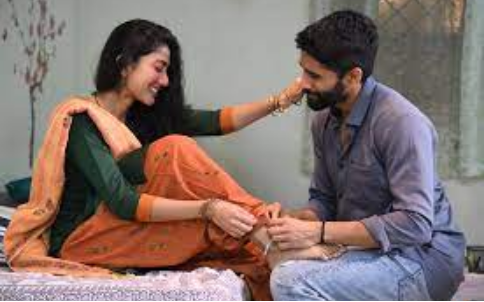
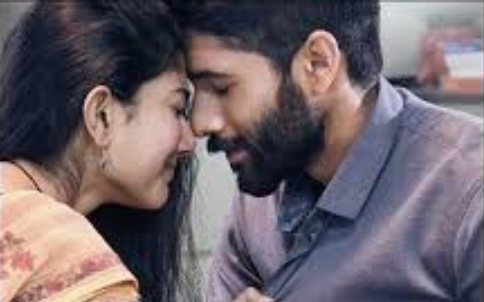
Sai Pallavi and Naga Chaitanya
The film begins off with the introduction of Naga Chaitanya’s Revanth, he comes from a lower caste in Armoor, Telangana. He has grown up listening to his mother about how it’s always better to be in a position where you can give financial assistance rather than having to receive it. Revanth is settled in Hyderabad, he runs a small Zumba centre. There are challenges but he is in a position where he can employ someone. Revanth has a dream of expanding the Zumba centre. Sai Pallavi’s Mounica on the other hand is a girl from an upper-caste family. Her family has acres of land but still she has to fight for her rights- financial and otherwise. Mounica finds her wings by partnering with Revanth but she is living in a constant fear, Mounica’s fear is regarding her family and what will they say if they find out about her work. She is particularly scared of her babai (uncle) played by Rajeev Kanakala. Mounica has a condition of trembling if anyone touches her. In fact her condition for joining with Revanth is that two feet distance must always be maintained. This problem has nothing to do with caste as we come to know later on.
Sekhar Kammula is most successful with how he develops the character of Revanth. It has been dealt with utmost sensitivity. Sekhar doesn’t resort to unnecessary commercial elements to prop up the character. Revanth is someone who tries to avoid conflicts as much as possible. He tries to solve problems through peace. There is only one scene towards the end where Revanth feels that enough is enough and decides to fight back. However this action scene works because of the context behind it. It is also refreshing to see Naga Chaintanya come out of his comfort zone playing a character like this. Naga Chaintanya delivers a career defining act. He gets the nuances of the role spot on starting from the accent.
The caste disparities have also been portrayed well. Although these scenes remind you of Sairat they still work. For example there is a scene where Revanth and her mother are looked down upon by the household of Mounica. Revanth is mocked by Mounica’s mother based on his attire and she doesn’t think twice before offering him second- hand shirts.
Sai Pallavi and Naga Chaitanya
Sekhar Kammula also does a good job in portraying Mounica’s psychological condition. The reason why she asks to maintain two feet distance has been well explained.
Lastly the scenes between Naga Chaitanya and Easwari Rao who plays the mother are a delight to watch. Her character is someone who is the moral centre of the film. Their relationship is one of the most satisfying aspects of the film. Eshwari Rao is very good in her role.
The biggest issue with Love Story is that Sekhar Kammula takes too much time in building up the love. There are too many Zumba dances which take half of the screen time. Too much time is also spent on the hero and hero’s introduction. As a result there are times when you feel that some scenes have been added without any purpose.
While Sai Pallavi is good in her role elements of Fida are very glaring. The Telangana accent and the dances are straight out of Fida. The crying scenes towards the end are too melodramatic and it acts as a hindrance for the audiences in completely sympathizing with the character.
Logically also there are some glaring loopholes. Uttej’s character is supposed to be an important role but he disappears when the hero needs him the most. The character of Sai Pallavi’s sister is also left midway.
The hangover of Sairat and Highway also compound the issues. This hangover will be particularly felt for those who have seen the above mentioned ones.
Love Story isn’t a bad film but it doesn’t have the repeat value of Sekhar Kammula’s Anand, Godavari and Fida.