Cheekatilo: A twisted tale of male unresolved trauma

Sharan Koppisetty takes a familiar set up of a police procedural but gives some interesting touches. A special mention must be made of how the movie questions society’s attitude towards sexual assault victims. The blame entirely placed on them and also the voyeuristic gaze of media channels. The movie also dwells into what real journalism means

Starcast: Sobhita Dhulipalia, Vishwa Rachakonda, Krishna Chaitanya, Vadlamani Srinivas and others

Genre: Thriller/drama

Director and writer: Sharan Koppisetty

Additional writer: Chandra Pemmaraju

Producer: Suresh Babu

Production company: Suresh Productions

Cinematography: Mallikarjun

Music director: Sricharan Pakala

Running time: 2 hours and 6 minutes

Streaming site: Amazon Prime

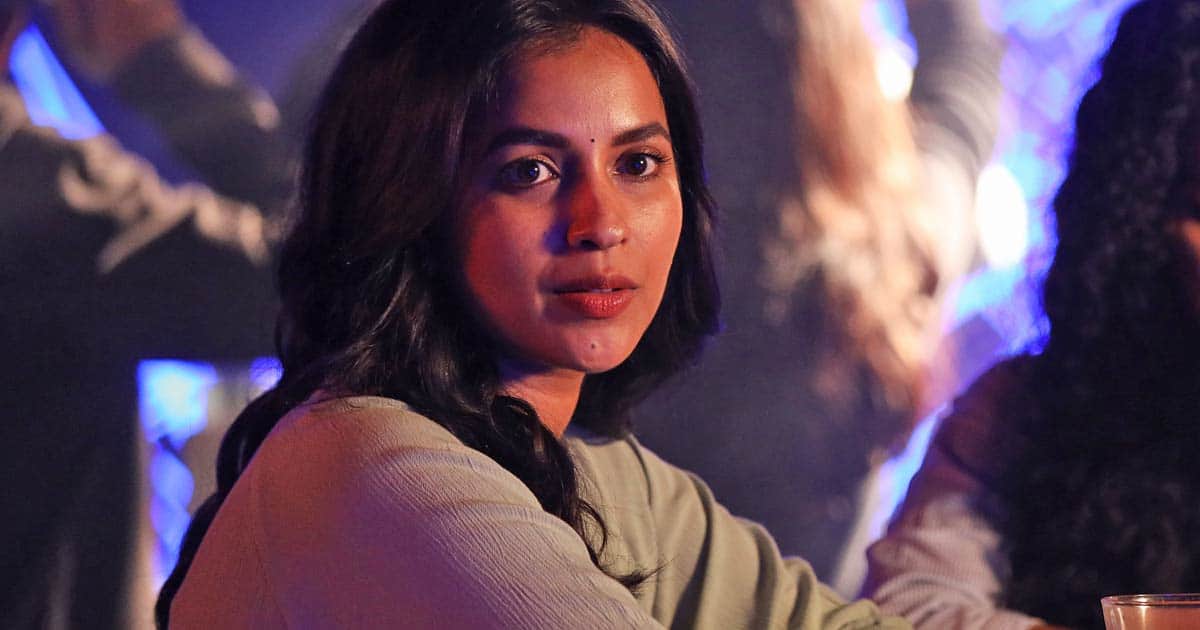
Cheekatilo streaming on Amazon Prime jigsaws in different directions. The film begins with a crime scenario like a template serial killer movie. From there we are introduced to Shobhita Dhulipalia’s Sandhya. She is a Television journalist who is going through immense suffocation. The reason being her boss attitude towards news presentation. The game of TRP with tragedy staged as a spectacle is weighing her down. Sandhya is going through a major inner conflict on the disconnect between her personal beliefs and the work she is doing. Simultaneously a series of murders are happening in a particular pattern. Things take a massive turn when Sandhya decides to quit her job and do real journalism through a podcast. She chooses the format of long-term investigation rather than just a clickbait. The identity of the serial killer and how Sandhya helps the police putting her personal life at stake forms the core of Cheekatilo.
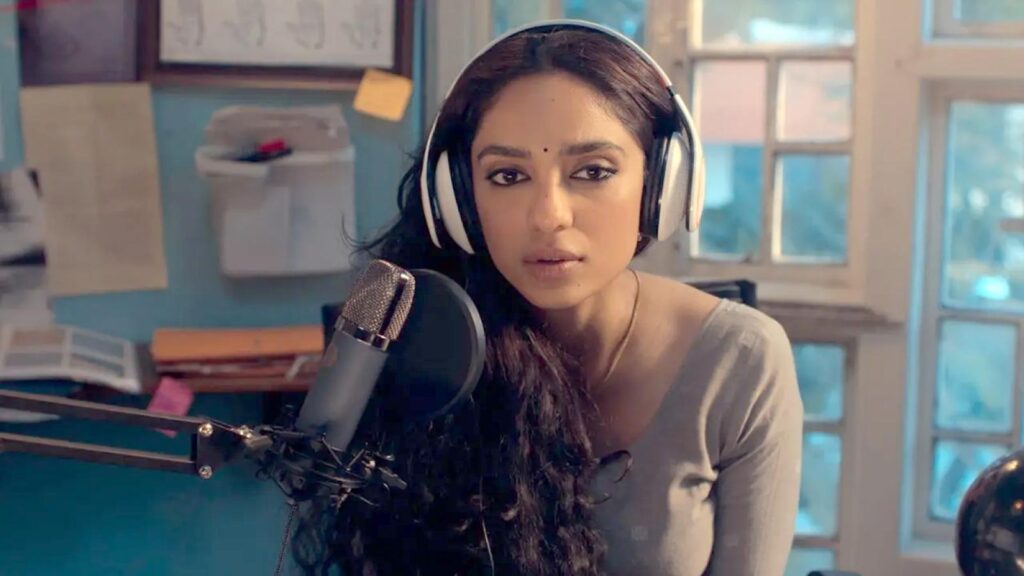
There is no denying that Cheekatilo takes a while to get going. The initial portions of police investigation take a bit to warm up but things start to get interesting when Sandhya quits her job and starts podcast. How she does investigation and discovers a distinct pattern makes the viewers anxious on who this dastardly person is and what are his motivations.

The suspense of the killer has been kept well. When the revelation comes its indeed shocking. Not much can be said here but its hair raising which the viewers don’t see coming. The conversation between Sobhita and the antagonist when the latter talks about his modus operandi with an important flashback gives the movie its best moments.

Through the back story of the villain Sharan Koppisetty along with his additional writer talk about unresolved trauma. How this can have an extreme effect is both solidly written and enacted. Yes, the flashback in no way justifies the violence nevertheless it makes the movie more interesting.

Another highlight of Cheekatilo is the depiction of women alone being shamed for the act of rape. How they are made to feel guilty has come out in a hard-hitting manner through two survivors coming forward to share their stories.

Mention must also be made of how Shobita’s character has been written. There is a groundedness to Sandhya with the right mix of vulnerability and fighting spirit. At one point Sandhya accepts defeat shutting down the podcast. Shobhita pulls off the different shades with finesse making the viewers root for Sandhya to win.
Krishna Chaitanya as the cop lends able support but Valdamani Srinivas steals the show in the supporting cast. His character has a major 360 degrees turn the details of which are better seen than me saying.
The cinematography of Mallikarjun adds to the movie’s eeriness especially in the portions of the serial killer hunting down his targets. The background score adds to the thrills too.

Final word: Cheekatilo is a gripping watch for how it intermingles a serial killer story with societal elements.
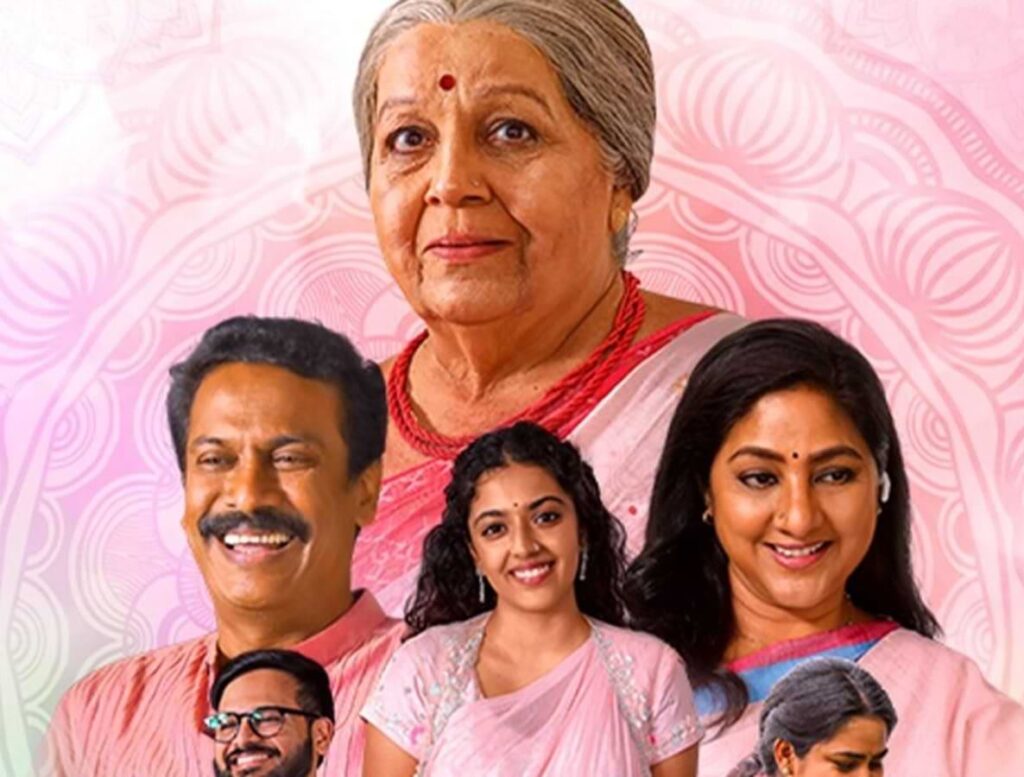
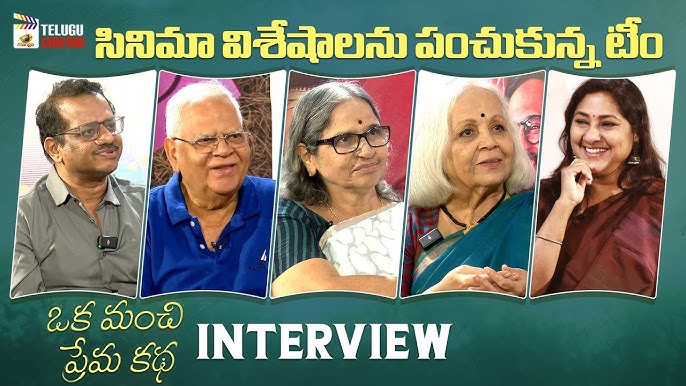
Oka Manchi Prema Katha: Not just making a case for old age parents but raising many more important questions

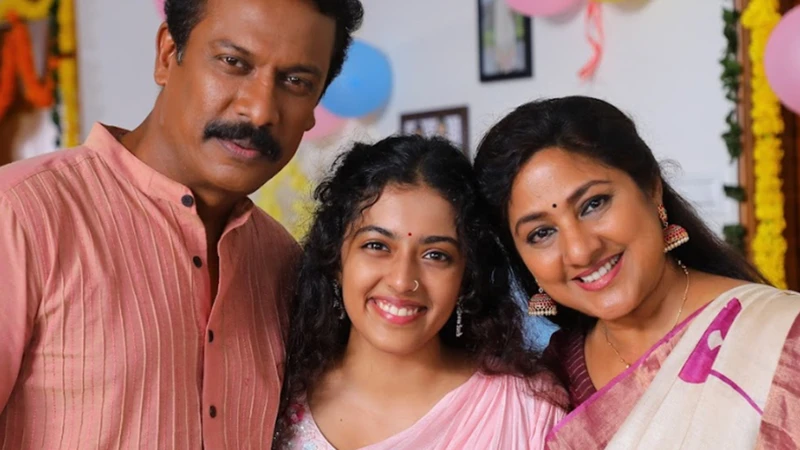
Oka Manchi prema katha isn’t confined to looking after old age parents it is also about the corporate culture and the subsequent rat race. Stories of parents going through emotional neglect has been explored many times much like the genre of love itself. But this movie has many interesting points and one of them is about becoming a mother to your own parent. Among the principal actors Samuthirakani makes the strongest impact in a refreshingly different role.

Starcast: Rohini Hattangadi, Rohini Molleti, Samuthirakani, Himanshu Popuri and others

Genre: Drama

Direction and screenplay: Akkineni Kutumba Rao

Story, Dialogues and Songs: Volga

Producer: Himanshu Popuri

Cinematographer: Madhu Ambat

Music: K M Radhakrishnan

Streaming site: ETV Win

Running time: 2 hours+

Stories of parents facing emotional neglect has a certain template. The children are generally presented in a shrill and often unbearable tone. Oka Manchi Prem Katha’s first half also follows this formula. Sujatha (Rohini Molleti) is a very ambitious woman. She wants to reach the top position and has been working heavily to get a promotion which will put her on par with her husband Eshwar (Samuthirakani). Their daughter is studying abroad. Because of the extremely busy work schedules neither Sujatha nor Eshwar have much time to each other and for their daughter. Veteran actress Rohini Hattangadi is Rangamani the mother. Rangamani was also an employee but now stays in her village doing a bit of social service. She interacts with numerous people on a daily basis, solving some of their problems and one of them is her ‘adopted’ son Shankar. However, a health problem makes her miss her daughter dearly, but Sujatha is too busy to visit Rangamani. How they come together is the core of the film.

A strong aspect of Oka Manchi Prem Katha are the portions featuring the two Rohinis in the latter half. From the moment Sujatha becomes a mother to her own parent the film hits numerous high notes. The scenes are filled with lot of warmth, and the film succeeds in presenting a different kind of love, in this case a bond between a mother and a daughter. Both Sujatha and Rohini Molleti become more likeable here.

Through the very ambitious nature of Sujatha, Volga does a fine job in critiquing the current working lifestyle especially the corporate set up where there is one deadline after another leaving little to no space for imbibing humanistic values. The mental health issues that come with it has also been effectively presented. There is a nice bit in the first half when Sujatha visits a psychiatrist. The psychiatrist says that she needs love and more communication with people around her. To this Sujatha asks whether there is any medicine to cure this problem and the Doctor replies that unfortunately no love pill has been discovered so far.

The portions of Samuthirakani missing his wife and the telephonic conversations have been wonderfully written and enacted. Samuthirakani is a delight to watch whether it is reciting poems of John Keats or making up his own one or portraying the absolute bewilderment about the change in Sujatha’s behaviour. It is nice to see the actor playing a nuanced role for a change rather than the routine mainstream villain.

Among the other actors Rohini Molleti’s character was a little too loud and caricaturist in the first half but gets better as the movie progresses. Rohini Hattangadi as usual shines bright especially in the confrontation scenes. A specific mention must be made of the portion between her and Samuthirakani when Eshwar sends a divorce notice. She counters him with one simple question but a powerful one; would he do the same thing if the company had sent Sujatha somewhere for work purpose. There is one more dialogue where she raises an important question about Companies not granting leave to take care of old age parents. The reasoning that she gives is also very thought provoking. When there can be a maternity leave why can’t there be one for old age parental care? The rest of the cast are also fine. Himanshu Popuri as Shankar especially stands out.

Talking about the flaws the movie needed to be crisper in the first half. The core plot should have kicked in earlier instead of leaving it to the second half. The jarring difference between the attitudes of village folk and Sujatha could have been handled with more subtlety.

The music by K M Radhakrishna is soulful adding to the movie’s emotional core. Madhu Ambat’s cinematography is of course as usual very pleasant.

Uppu Kappurambu: A whimsical social satire with a wonderful Suhas

Suhas and Keerty Suresh

Director Ani I. V Sasi flips the concept of the famous Telugu poem on its head by saying everyone is equally important. Keerthy Suresh trying her hand at slapstick comedy is rather annoying in the beginning portions however the national award winner comes into her own as the movie progress. Her dynamics with Suhas gives the movie some of its best moments

Starcast: Keerthy Suresh, Suhas, Babu Mohan, Talluri Rameshwari and others

Genre: Comedy

Director: Ani I.V Sasi

Screenplay: Vasanth Mariganti

Cinematography: Divakar Mani

Music: Sweekar Agasthi

Producer: Radhika Lavu

Production Company: Ellanar Private Limited

Running time: 2 hours and 15 minutes

Streaming site: Amazon Prime

In terms of tonal structure both Shubham and Uppu Kappurambu have a distinct similarity, the use of screwball humor in addressing the respective social issues. This brand of farcical humor can take a while getting used to however both the movies are successful in getting the message across.

Uppu Kappurambu begins with Rana Ragubbati’s hilarious voice over perfectly setting the stage for the following outlandish scenarios. The broad storyline of Uppu Kappurambu focuses on Keerthy Suresh’s Apoorva. A young woman thrown into a tumultuous situation following the death of her father and village head Subbaraju (Subhalekha Sudhakar). Keeping up with the village tradition Apoorva takes over her father’s position. Babu Mohan and Shatru play Bheemaya and Madhababu respectively. They openly scoff at the very thought of a woman sarpanch and that too a naive young girl. Suhas plays the graveyard caretaker Chinna taking over his father’s position. In an odd turn of events Chinna realizes that the graveyard is running out of space to bury the dead. This leads to a lot of chaotic situations.

A major strength of Uppu Kappurambu is the dynamics between Apoorva and Chinna. The growing friendship between them as the two race against time gives some wonderful moments. There is an emotional poignancy to their conversations like the portion where Suhas reminisces about their school days talking about the huge disparity in their lives. Mention must also be made of Suhas’s retort to a man ridiculing Chitti Jayapuram having a female village head. He critiques the narrow mindset by mentioning about his village having a female deity, then what is so wrong about Chitti Jayapuram having a female head. The scenes of Suhas speaking to the dead as if they are long lost friends also make an impact.

Suhas is simply top notch moving the viewers with his heartfelt act. Keerthy Suresh on the other hand feels like a fish out of water in the initial moments however the actress does a very fine job in showcasing Apoorva’s transformation. From the initial nervousness to a more confident approach Keerty makes the viewers root for Apoorva.

Another ace of Uppu Kappurambu is the political aspect specifically the upper caste men wanting to exercise control over the graveyard. Through the characters of both Mohan Babu and Shatru the director has successfully brought about the angle of caste disparities. On the surface the village may give an impression on treating the dead with equal dignity however the truth is something else. This is amply clear in the portion where a character believes that his clan deserves the utmost space in the graveyard based on the long lineage.

Apart from the caste disparities Uppu Kappurambu also dwells into the themes of communal division, misogyny and the resistance to change. All these have come out well particularly in the movie’s later half where things start to get more coherent.

Apart from Suhas and Keerthy Suresh the supporting cast comprising of Babu Mohan, Shatru and Talluri Rameshwari also do well in their respective parts. Among the technical aspects Divakar Mani does a fine job in capturing both the village atmosphere and the eccentricities through his lens.

Among the flaws the movie’s screwball tone takes a while getting used, the humor in the beginning is also a hit and miss. An elongated sequence with Keerty using dramatic gestures to whip up a frenzy doesn’t elicit much chuckles. Similarly the sequences involving a village drunkard only add to the run time instead of adding anything substantial.

Final word: Uppu Kappurambu is worth watching if you are in the mood for something whimsical with a social message.

Anaganaga: Simplistic core but a relevant story on the need to reinvent the education system

The starcast of Anaganaga

Anaganaga directed and written by Sunny Sanjay is part Taare Zameen Par and part Dead Poets society. What powers Anaganaga in spite of the regular cliches is the emotional core involving the father and son along with how it effectively captures the cut throat world of academic competition. Sumanth as Vyas delivers a nuanced performance conveying a lot with his gaze

Starcast: Sumanth, Kajal Choudhary, Viharsh, Srinivas Avasarala and others

Director and writer: Sunny Sanjay

Genre: Drama

Producers: Rakesh Reddy Gaddam and Rudra Madireddy

Production Company: Krishi Entertainments

Music: Chandu Ravi

Cinematography: Pavan Pappula

Running time: 2 hours and 16 minutes

Streaming site: ETV Win

Anaganaga streaming on ETV Win is a khichdi of numerous movies, a rebellious teacher whose methods feel alien and how he or she transforms the students lives. However stories on the flawed education system has a relevancy to it as the problems still persist, the academic pressures of getting solid marks is something which numerous students face and same goes to the school management specifically the international schools who are in a race.

Sunny Sanjay as a writer and director does a fine job in addressing these themes through a strong father and son story. The plot focuses on the unconventional methods of Sumanth’s Vyas. He is a major advocate of concept based learning, his emphasis is on the students understanding the concept rather than just memorize everything. Vyas uses the method of storytelling in order to makes studies more engaging however the wife Bhagya played by a solid Kajal Choudhary doesn’t approve of his methods. Apart from being a wife and a mother Bhagya is also the school principle in which their son is studying. Things take a major turn when their son along with some more students fail in the exams. The management makes a decision of removing Vyas. The rest of the story focuses on what Vyas does next and how he pursues his goal of concept based learning through alternative methods.

A strong aspect of Anaganaga is the relatable family drama whether it is the husband and wife arguments over the clash of ideologies or the son’s emotional struggle with studies. This aspect makes the movie stand out from the other films which have depicted teachers fighting against the education system.

Sunny Sanjay deserves a major credit for how has developed the character of Bhagya. On the surface she may come across as coldhearted but at the same time as viewers you understand where she is coming from. Bhagya is the main bread winner of the family so there is a lot of financial stress on her, this often results her in clashing with the husband who isn’t after money much, additionally their ideas of parenting also vary. This clash of ideologies has come out well without going over the top. There is also nice understated romantic moments between the two like the portion where Vyas pacifies his wife. Later on we see Bhagya understanding her husband’s point of view.

Mention must also be made of how the director and writer has portrayed the dark side of academic competition. There is a scene of class toppers being rewarded on the podium, on the other hand those who have failed are publicly called out. Sunny Sanjay gives an important message on the need for empathy in education and how the race for marks and top ranks are harmful in the long run.

The father and son scenes are another plus for the movie. The way Vyas helps his son in gradually getting over his academics and stage fear lead to some poignant moments. A shared moment over Musfa and Simba story from the movie lion King adds an emotional depth specifically in the pre climax block. Viharsh as Ram does a very fine job inn conveying both the vulnerability and the eventual transformation. Anu Hassan’s extended cameo also deserves a mention, it gives an insight into Vyas formative years. She adds a lot of warmth giving Vyas a direction at an important juncture of his life. As Vyyas Sumanth perfectly embodies the quiet strength of a man who has firm belief on storytelling being a very good tool. He particularly shines in the portions involving the son. Among the rest Srinivas Avasarala suffers on the account of a stereotypical characterization. He does a fair job but the role needed more nuances than just being an opposition to Vyas.

Talking about the technical departments Chandu Ravi’s music is soothing. Mention must also be made of Pavan Kumar’s cinematography. He does a fine job in capturing the nuances of concept based learning through his lens.

A song from Anaganaga

A major problem with Anaganaga is the done to death troupes involving Vyas challenge against the school management. The portions of Vyas retaliation and how he becomes a threat for the traditional schools needed more depth. The film could have benefited with some more exploration of Vyas’s methods. Also the miraculous transformation of the failed students overnight becomes tough to digest.

Final word: Anaganaga is an important watch particularly for those interested in stories related to education.

My Dear Donga: A breezy rom-com with a lovable thief

Light-hearted rom-coms with some fun always make for a good stress buster. My Dear Donga, directed by BS Sarwagna Kumar, fits perfectly in this category.

The storyline of My Dear Donga is paper thin but Shalini Kondepudi, who has written the story and acted, ensures there is some good situational humour in the movie.

The subject of My Dear Donga focuses on new-age relationships and the small things, which matter in the long run.

Synopsis

Sujatha (Shalini Kandepudi) has been in a relationship for over two years with Vishal (Nikhil Gajula).

Vishal is a doctor who lies to his girlfriend about being in an ICU when he is actually watching a cricket match with his friends. Apart from this, he also occasionally ignores her with some excuse.

Things reach a crescendo when Sujatha learns that there is no ICU in the workplace of Vishal. She catches him red-handed handed watching a cricket match with a friend.

Naturally, Sujatha is devastated and reaches home broken mentally.

A robber named Suresh (Abhinav Gomatam) is already in her house and picks up a few valuables. Initially, she is shocked but soon, Sujatha and Suresh start conversing with each other as they have some commonalities in terms of family backgrounds, they hate their respective fathers.

Things get more complicated with the arrival of Vishal and her two friends. They visit Sujatha’s house to celebrate her birthday, and Sujatha introduces Suresh as her childhood friend.

The rest of the story is about how the birthday party goes and how she develops feelings towards Suresh.

Explores today’s relationships

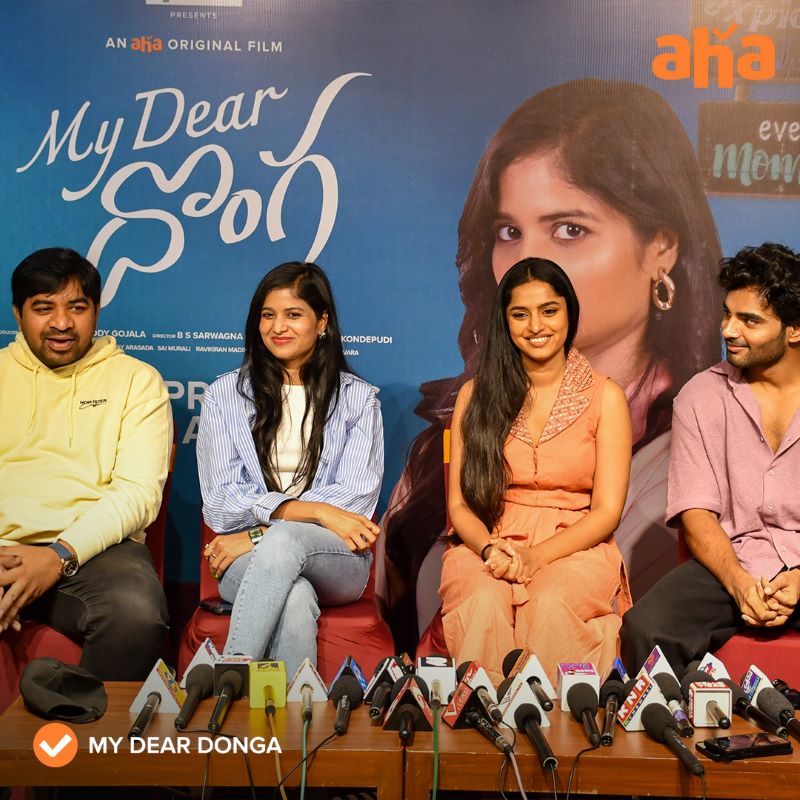
Team ‘My Dear Donga’. (X)

A strong aspect of My Dear Donga is its crisp running time. At one hour and 43 minutes, the movie never feels dragged out.

Director BS Sarwagna quickly establishes the thorny relationship of Sujatha and Vishal.

Here, it has to be said that Sujatha is telling her story to a bartender who listens to her with complete attention. His reaction shots coupled with the conversations between them raise many chuckles.

How Sujatha develops feelings towards Suresh and the blossoming of love has been etched well.

A good example of this is when Suresh takes Sujatha & Co out, giving a huge surprise by celebrating her birthday with cake.

The situational humour involving Abhinav Gomatam also has some fun moments.

Special mention must be of the scenes where Divya Sripada’s character questions Abhinav Gomatam’s Suresh about where he and Sujatha met and which school they studied in.

As mentioned above, My Dear Donga focuses on the small things that matter in a relationship. Arranging surprise party poppers, washing the plates, and spending more time with the girl you love may appear trivial. But sometimes, these very same things give big happiness. This aspect has come out strongly.

Technical crafts

Ajay Arasada’s music could have been more soulful, but still, the tunes go with the movie’s flow. The title song “My Dear Donga” has been well-tuned.

There isn’t much scope for cinematography here given the setting but still, the film looks good visually.

Apart from relatively weak music, the reasons for Abhinav Gomatam’s Suresh becoming a burglar does not make much logical sense.

Also, we are never shown whether the mother comes to know about her son being a robber or not.

In the initial portion of the movie, we hear her voice. But after the family backgrounds are discussed, there is no mention of her.

Abhinav and Shalini excel

Abhinav Gomatam and Shalini Kandepudi do most of the heavy lifting.

Abhinav Gomatam’s ability to generate humour is of course well known. Here too, the actor does not disappoint. He plays the loveable thief with a lot of charm.

Apart from the comic scenes Abhinav also proves his versatility in the portions where Suresh gives wisdom.

As the story progresses, Shalini Kondepudi brings in both the required innocence and the strong-headed nature.

The rest of the actors do as required.

Final take

My Dear Donga makes for a good weekend watch in the family. Some moments in the film will definitely connect to this generation.

It is streaming on AHA.

Bhamakalapam 2: A Delicious Sequel With An ‘In-Form’ Priya Mani

Director Abhimanyu Tadimeti keeps the viewers thoroughly intrigued. The characterisation of Priya Mani’s Anupama continues to be a big highlight.
Bhamakalapam 2 (Telugu); Crime Thriller, 2 hours 8 minutes U/A
  • Main Cast: Priya Mani, Shranya Pradeep, Bramhaji, and Seerat Kapoor
  • Director: Abhimanyu Tadimeti
  • Producer: Sudheer Edara and Bhogavalli Bapineedu
  • Music Director: Prashanth V Vihari
  • Cinematography: Deepak Yaragera
  • Rating: 3.5
  • Published in: Southfirst

Bhamakalapam (2022), directed by Abhimanyu Tadimeti, was an engrossing thriller with elements of crime, greed, and religion.

The pivot of the first part was about an extremely valuable egg that is worth ₹200 crore. This egg is stolen by someone and gets lost again.

Priya Mani’s Anupama was a homemaker-cum-YouTuber who kept a sharp eye on the neighbourhood. In a way, she was the Sherlock Homes of her apartment.

Abhimanyu Tadimeti did a good job of building the mystery around the egg along with making a strong statement about finding god within you.

The first part was released in 2022 and now, you have the sequel after a gap of two years.

The second part begins with Anupama and her family shifting to a new place.

Synopsis

Priya Mani and Sharanya Pradeep in ‘Bhamakalapam 2’, a thriller. (X)

Anupama’s husband Mohan (Pradeep Rudra) asks her to not meddle in other people’s issues. Meanwhile, Anupama launches a restaurant with the revenue generated from YouTube.

She makes Shilpa (Sharanya Pradeep) her business partner.

Just when everything seems to be going well, the life of Anupama takes a drastic turn.

She unintentionally helps the police in catching a criminal while practising driving with the instructor next to her.

Bramhaji plays the teacher. He uses this incident to increase the popularity of his driving school.

The person gets out on bail and starts threatening Anupama. To get out of this mess, Anupama and Shilpa approach Sadanand (Anish Gurwara), who used to work as the head of Narcotics Control. However, this only results in the situation becoming messier.

A situation comes when Anupama has to steal an illustration of an adult male chicken worth a lot of money. She has no other option.

Additionally, Anupama and Shilpa are selected to participate in a major cooking competition. Adding to this mix are the new characters like Jubeda (Seerat Kapoor).

Playing to the strengths

A big strength of Bhamakalapam 2 is the jugulbandi between Priya Mani and Sharanya.

The actors take off effortlessly from where they left off in the first part. Their scenes together leave the viewers in splits.

Abhimanyu Tadimeti also does a good job of developing the new characters.

For example, the viewers are initially supposed to sympathise with the character of Sadanand, an outcast officer. But soon, that changes with his behaviour towards Anupama. His plans of stealing the valuable item and how he goes about it keep the viewers on the hooks.

Similarly, the track of Seerat Kapoor, a former TV actor, has also been well-written. The character comes with grey shades that go beyond just her glamorous looks.

The portions of the heist mixed with the cooking competition are another highlight of the film.

A few minutes after the cooking competition begins, Anupama deliberately cuts her finger as it is time to execute the heist plan.

While doing Sadanand’s job, she also gives cooking instructions to Shilpa through the second earphone.

A far-fetched heist

A still from the film ‘Bhamakalapam 2’. (X)

The heist scenes are far-fetched in nature, but what makes them work is the handling of Abhimanyu Tadimeti.

Pre-climax also has a good twist regarding the illustration of the adult male chicken, but the subsequent sequence is not entirely satisfactory.

Almost every character has a gun in their hands, and the shooting scenes don’t add much to the narrative.

Also, the eventual fate of this adult male chicken goes out of the window. The director should have clarified this.

However, Abhimanyu Tadimeti does deserve credit for setting up a good base for part 3.

Priya Mani is once again spot-on in the title role. She portrays the mental strength of Anupama with absolute finesse.

Priya Mani is seen doing some action, and the actor excels in that, too.

Sharanya Pradeep raises many chuckles, particularly in the scenes where Shilpa has to cook solo.

Bramhaji, as the driving instructor, has a brief presence, but he is an absolute riot.

The rest of the actors are fine in their respective parts.

Final take

Bhamakalapam 2 makes the viewers eager for the third part.

It is streaming on Aha Video.

Modern Love Hyderbad: An Anthology That Leaves You With A Warm And Fuzzy Feeling

Anthologies have fast become a trend that everyone wants to make. It is not surprising given that you don’t need big budgets and a huge star cast. Many of the anthologies have had mixed results. The stories in these anthologies have generally tilted towards dark ones. For example the Tamil anthology Pava Kadhaigal had four stories of extremely dark nature.

Hyderabad basks in Modern Love
Actors with Charminar in the background

In that respect Modern Love Hyderabad is of a different type, and in a good way. For those who are not aware the source material of Modern Love Hyderabad is Modern Love. There is also another anthology called Modern Love Mumbai based on Modern Love.

Coming back to Modern Love Hyderabad, this anthology looks at the universal feeling of love through different set of age groups. For example you have a mother and daughter trying to reconnect in the pandemic. There is a couple who have understanding issues etc. Out of the six three have been directed by Nagesh Kukunoor. Venketash Maha of K for Kancharapalam has also directed one of the episodes.

Let’s look at the six stories one by one, along with a brief analysis.

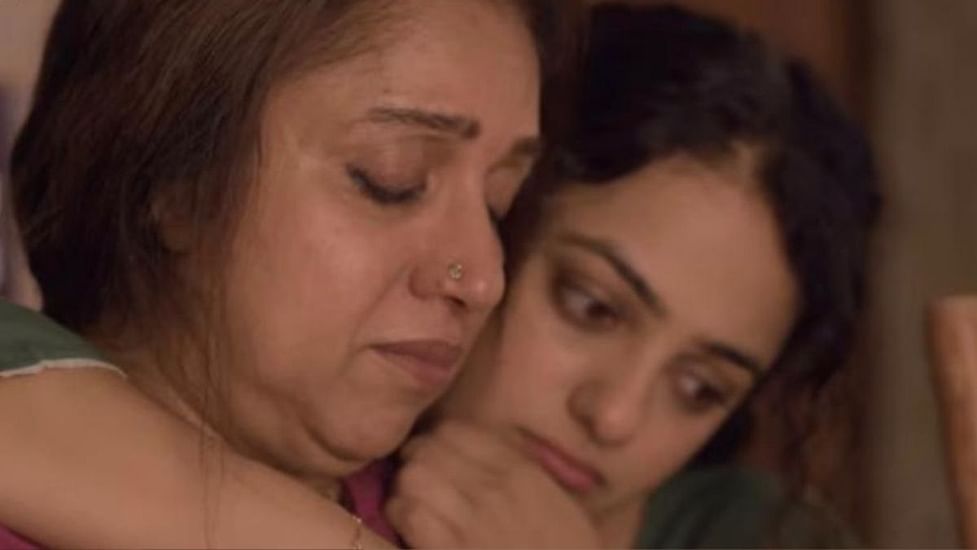
  1. 1. My Unlikely Pandemic Dream Partner– This episode is set during the COVID lockdown. Mehrunissa (Revathy) is stuck with her daughter Noori (Nithya Menon). There are some unresolved issues which need to be sorted. There is a quiet resentment that both of them have towards each other.

Director Nagesh Kukunoor uses food as a character in itself. The delicious Biryani, Haleem etc are used as a device for the characters to unpack their baggage.

It is a simple plot but what makes it click is the treatment of the director. Both Revathy and Nithya Menon convey the required emotions with ease. The analogy of food has also been smartly integrated.

Modern Love Hyderabad's Nagesh Kukunoor: 'One language isn't better than  other' | Web Series - Hindustan Times
Director Nagesh Kukunoor uses food as a character
  •  Fuzzy, Purple and Full of Thorns– As the title suggests this one is about a thorny relationship between Uday (Aadhi Pineshetty) and Renuka (Ritu Varma). Both of them fall in love after a chance meet up but a pair of purple slippers creates a havoc in their love life.

The best thing about this segment is the character of Ritu Varma. Ritu Varma is delightful as the imperfect protagonist. She has her own insecurities but you don’t dislike her completely. Her fixation with the slippers raises many chuckles.

This segment also looks at the modern day life through a live-in-relationship. Aadhi Pinishetty and Ritu Varma share a wonderful chemistry.

Modern Love: Hyderabad Review: Suhasini Maniratnam, Revathy & Nithya ...
Suhasini Maniratnam tugs at your heartstrings
  •  Why Did She Leave Me- Why Did She Leave Me begins on a slow note. This episode starts with a CEO giving a speech to booster his colleagues. The CEO is Ramulu (Naresh Agastya). This episode is mostly about the relation between Ramulu and his grandmother Rangamma (Suhasini). Rangamma left Ramulu in an orphanage at a young age due to certain circumstances and never came back.

The flashback portions between Rangamma and the young Ramulu is the best thing about this segment, Suhansini tugs at your heartstrings as a grandmother raising her two grandchildren alone. Advitej Reddy plays the younger version of Ramulu with ease.

Partly mediocre, partly predictable—Modern love Hyderabad is pleasing, but  fails the city
Revathy and Nitya Menon in an emotional scene
  •  What Clown Wrote the Script- What Clown Wrote The Script is an interesting satire on the ridiculous nature of the serials. This story is about a television producer (Abhijeet Duddla) who collaborates with a standup comedian to create something different.

Malavika Nair plays the standup comedian here. It is a simplistic story but still there is a lot to enjoy here. Both Malavika and Abhijeet deliver earnest performances, the references to the legendary Jandhyala brings a smile to the face of the audience.

  •  About the rustle in Bushes- This segment reminds you of Prakash Raj’s Akashamanta. Much like that one here too Naresh plays an overprotective father.
Modern Love Hyderabad series review: Flashes of charm in an anthology  series set in Charminar City
Aadhi Pineshetty and Ritu Varma share a wonderful chemistry

Sneha (Ulka Gupte) is looking for love and finds it when she least expects it, along the way she meets a host of different people. Keeping a secret watch on her is Naresh.

The trope of the overprotective parent isn’t a new one by any means, but what makes this segment tick is the casting. Ulka as Sneha in particular delivers a wonderful performance. Through her character the director talks about how guilt manifests in irrational ways, particularly when it comes to love and family.

  •  Finding Your Penguin- Finding your Penguin is a hilarious tale about a young woman in Hyderabad. Indu (Komalle Prasad) tries a different approach to dating by comparing her dates with the way animals mate.

Indu’s interactions with her friends are laugh out loud. They have an authentic feel to them. This segment ends the anthology on a high.

Modern Love Hyderabad is not for those looking for depth, however if you are in the mood for some warmth and fuzziness then this one is for you. 

Bloody Mary: An Engrossing Thriller With A Formidable Performance From Its Leading Lady

Narratives weaved around the characters of visually impaired isn’t something really new. For example you have had Nayanathara’s Netrikaraan. Director Chandoo Mondeti’s Bloody Mary is an intense thriller with a social cause integrated into it.

Mary (Nivetha Pethuraj) is a nurse in a hospital. She is also an orphan who lives in a small apartment along with her childhood friends Basha and Raju (Kriti Damaraju and Rajkumar Kasireddy). Basha aspires to become an actor although he cannot speak. One day a hospital doctor tries to misbehave with Mary, Mary accidentally kills him.

Parallel to this you have her friend Basha seeing a murder committed by the area circle inspector (Played by Ajay). The rest of the plot is about how Mary will handle the situation? Who is Mary? What is her actual Identity? Among others. Revealing anything more wouldn’t be appropriate given that it is a thriller.

Chandoo Mondeti doesn’t waste any time in setting up the plot. There are no unnecessary diversions here; as a result you are hooked to the narrative. He is also well aided by the technical team. Kala Bhairava’s background music is very much apt for the film’s genre. The photography by Karthik Ghattamaneni is also in perfect sync. The framing and the set up aid immensely in building up the perfect atmospherics.

The runtime is another huge plus for Bloody Mary. It is very much slick.

A major reason why Bloody Mary works is because of the way the title character has been developed. We initially see her as this subdued person but more and more layers are revealed as we go along. The director is successful in making you root for her.

Nivitha Pethuraj gives an arresting performance as a lady with big dreams in life. Her screen presence along with the performance brings depth to the key episodes. She also gets some nice masala moments which are usually reserved for heroes.

The scenes between Nivetha and Ajay are also good to watch. The cat and the mouse between Mary and the cop keeps you engaged. Ajay gets a good amount of screen time and he does his aggressive cop act perfectly.

 The bond that Mary shares with Basha and Raju is also well presented.

Bloody Mary does suffer a bit from impossibility issues. Some of the twists will put you off but these are minor grouses as the film is mostly satisfying.

Bhamakalapam: An Engaging Thriller

Abhimanyu Tadimeti’s Bhamakalapam is an interesting mix of ingredients such as crime, greed and religion. The director pivots his plot on a Faberge egg that is worth 200 cores. This valuable egg has been stolen and later on gets lost again. Apart from making an engrossing thriller the director also makes a statement on how to find god within. The underlying message here is that not to be misled by anyone who uses religion as a weapon. The film also benefits from Priyamani’s spot on performance.

Bhamakalapam begins with an incident that is eerily similar to 2018’s Andhadhun. Instead of the Rabbit you have a lamb that crosses the path and the car meets with an accident. This of course leads to many things. However the similarities with Andhadhun end here. Anupama Mohan (Priyamani) is a homemaker and also a well known Youtuber. She is famous for her videos on cooking.

But Anupama is more than just a YouTuber, she also keeps an eye on what is happening in neighborhood. You can say that Anupama is her ‘apartments Sherlock Homes’. We get evidence of this early on when she tries to expose the extramarital affair of her neighbour. Her detective work backfires and she is thoroughly embarrassed by her apartment people. She also promises her husband that she wouldn’t peek out of the window again; however fate has different plans for her.

Other important members of the apartment include a pastor who is waiting for divine events to happen. There is also a woman called Saira who is a survivor of domestic abuse. Sharanya of Fida fame plays the domestic help of Anupama called Shilpa.

The biggest reason why Bhamakalapam works is due to the intrigue that the director is able to maintain. He builds up the mystery around the egg really well.

https://www.youtube.com/embed/sbrrlQzaezY?feature=oembed Another major highlight of the film is the scenes between Priyamani and Sharanya. Their scenes are filled with comedy and also tension. The duo is particularly good when the characters become unwilling partners in crime.

The religious aspect is also brought out well by Abhimanyu. The theme of certain men misleading people by using religion isn’t really particularly new but the message is still an important one.

The cinematography by Viplav Nyshadam and music by Justin Prabhakaran also add to the comic thriller mood. For example there is a scene where Anupama finds herself dragged into a situation wishing that she had never taken that step. The sound of the violin has been very well used.

Priyamani as I earlier said is spot on with her performance. She gets the nuances of the character spot on starting from Anupama’s inquisitiveness. Saranya as Shilpa is another ace in the story. The actress is good in both the comic bits and also the ones where she needs to show tension. The rest of the cast are appropriate in their respective roles.

Bhamakalapam is an interesting experiment that deserves to be seen.

Narappa: An Unnecessary Remake

Vetrimaran’s Asuran was a powerful take on the caste system and made you root for the central character’s quest of protecting his family. Narappa on the other hand is not just an unnecessary remake but also doesn’t work as a standalone film. Director Srikant Addala misses the target by miles. It would have been best if Asuran was dubbed in Telugu instead of being remaked.

The film would have probably worked more in theatres for those who couldn’t  see Asuran. But given that it has released on OTT where you have many other options there are very less chances of Narappa being liked.

The plotline of Narappa is the same as Asuran with no changes at all, just the actors change. Venketash replaces Dhanush as the father who has left his violent past behind and is now living a quiet life with his wife and three children. He is satisfied with farming a small part of land and has no major expectations from life. The only thing he wants to see is his eldest son Munikanna getting married. Munikanna is a hot headed youngster who feels that his father is a coward and isn’t happy with the passive attitude of his father. Since Munikanna is  more aggressive he often gets into fights with an upper class family. During one of these conflicts the situation takes an ugly turn and Narappa and his family are forced to run away. While he is on the run Narappa is pushed to revisit his past which he had left many years ago. This is the basic plot for those who haven’t seen Asuran.

The most glaring thing about Narappa is the shifting of the story to Rayalaseema region. By placing the story in that particular region Srikant Addala adds to the streyotypes that have been associated with that place thanks to dozens of Telugu movies.

Narappa could have been easily placed somewhere else too but the director could only think of Rayalaseema of all the places.

It also doesn’t help that the accents of almost all the actors are inconsistent. Only Rao Ramesh gets the slang right, his scenes are the only ones which make some sort of impression even though they are copy pasted.

Coming to the obvious comparisions Venketash is no Dhanush and the reasons for that are very clear from the first frame. Venketash tries his level best but the performance comes across as laboured. He is no way able to bring the rustic presence of Dhanush. It is not just about histrionics but it is also about the physicality. Dhanush physicality also worked well for the original but here Venketesh’s one comes across as a misfit.

To make matters worse the flashback portions are not even half as impactful as Asuran.  The flashback portions in Asuran were important as it made you understand the reasons behind the lead character’s quietness and why he is the way he is. However here it comes across as not so natural. Venketesh is made to look younger in these scenes but it is hard for the audience to buy it.

GV Prakash’s music was a key element in Asuran but here the songs don’t add much to the plot. The background score is impactful but again it is not something new for those who have seen Asuran.

Technically the film is all right as Shyam K Naidu is able to capture the rusticness of the place and the surroundings.

Narappa just like Asuran gives a message which is very important for the society regarding how education can help you in overcoming the caste barrier. Wonder why they could not take an original story from Andhra Telangana regions.