Bhool Bhulaiyaa 2: A Wholesome Commercial Entertainer

Priyadarshan’s Bhool Bhulaiyaa was a remake of the Tamil film Chandramukhi which starred Rajinikanth and Jyotika. Chandramukhi itself was a remake of the Malayalam film Manichitrathazhu. Bhool Bhulaiyaa wasn’t as good as Chandramukhi but it was still highly watchable thanks to the comic timing of Akshay Kumar and also the performance of Vidya Balan in the post interval portions. It was also the time when Priyadarshan was in good form. Bhool Bhulaiyaa was a psychological thriller with ample doses of comedy.

Anees Bazmee’s Bhool Bhulaiyaa 2 is an extension of that universe. This one plays out like a horror comedy, a genre which has brought good box office numbers. Karthik Aryan steps into the shoes of Akshay Kumar, Tabu on the other hand steps into the shoes of Vidya Balan. Tabu plays a double role in this one. The only cast member who is common between both the films is Rajpal Yadav. He returns back as Chota Pandit. Bhool Bhulaiyaa 2 is one of those wholesome entertainers that have something for everyone.

Strangers Ruhan Randhawa (Karthik Aryan) and Reet Thakur (Kiara Advani) meet at a hill station. Just like most Bollywood love stories there is an instant connection followed by a song and dance sequence. Things take a turn when Ruhan and Reet land up in an abandoned haveli where the spirit of Manjulika is believed to held captive for 18 years. Ruhan turns into Rooh Baba in no time and convinces people that he can talk to ghosts. Things are going well for Ruhan, but he invites self trouble when he accidently unleashes the spirit that has been locked for 18 years. The rest of the story is about why the spirit of Manjulika is so angry and will Rooh baba be able to handle the situation. The back story of Manjulika and the connection of the twin sisters form an integral part of the second half.

The best thing about Bhool Bhulaiyaa 2 is how the director combines the elements of horror and comedy. The scares aren’t particularly new but still they do spoke you. The scenes of Karthik Aryan as Rooh Baba are an absolute laugh riot. His interactions with the family of Kiara Advani bring the house down. The subplot of Rajpal Yadav, Sanjay Mishra and Ashwini Kaleskar also raise some chuckles, even if the nature of the humor is somewhat questionable. The dialogues by Aakash Kaushik deserve praise for the way punch lines have been written.

Karthik Aryan gets ample scope to display his comic timing and the actor doesn’t disappoint one bit. Karthik is also very impressive in pre-climax scene where you have a big reveal.

Another thing that Anees Bazmee gets right is the track of twin sisters. After Karthik Aryan, Tabu has the meatiest role among the rest. She serves as the catalyst of the plot. The parts of the twin sister are as different as chalk and cheese. Tabu effortlessly switches between Anjulika and Manjulika. She gets her big moment in the climax and as usual Tabu kills it with her performance. The big twist here is quite satisfying as you don’t really see it coming. Special mention must also be given to the makeup of Tabu in the flashback portions. Tabu looks effortlessly young. Performances wise it is Karthik Aryan and Tabu who shoulder the film on their shoulders.

There are two areas where the film falters. One is the romance between Karthik and Kiara. There is a lot of flirting and also one kiss. But the chemistry is nowhere visible. In fact the romantic portions come across as speed breakers. The songs of Bhool Bhulaiyaa 2 are another major sore point. The only song that makes any impression is the reworked version of Hare Ram from the original. Karthik’s dance moves in that are quite fluid.

In a nutshell, Bhool Bhulaiyaa 2 is a wholesome entertainer that is going to keep its target audiences engaged. It is a film which is sure to break the dry run that Bollywood has been having since the success of Gangubai and Kashmir Files.

Saani Kaayidham: Keerty Suresh Scores An A Plus In This Engaging But Problematic Revenge Saga

Arun Matheswaran’s Saani Kaayidham is an amalgamation of two strong influences. One is Shekhar Kapur’s Bandit Queen and other is Quentin Tarantino’s films. Much like Bandit queen here too the director mixes up caste and violence on women. The scenes of revenge on the other hand remind you of the Tarantino’s films. There are multiple shots of the villains being stabbed and tortured. The film is definitely not for the faint hearted. The story of Saani Kaayidham isn’t particularly new but what makes it engaging are the performances of Keerty Suresh and Selvaraghavan. Arun’s direction is at his strongest when he deals with the dynamics between these two. The direction in the revenge portions is less sure footed but more on that later.

Keerty Suresh and Selvaraghavan play half-siblings (Poni and Sangaiyah) respectively. Both of them have faced trauma beyond measure due to an unjust tragic event. Poni works in the police department but that doesn’t stop the upper caste men from raping her. Their excuse for raping her is the husband who stands up to the upper caste men. After being let down by the court and police she sets out on a journey of revenge with her half sibling Sangaiyah. The rest plays out like a cross between Bandit queen and Kill- Bill.

The basic theme of Saani Kaayidham is how a woman always becomes a soft target when men face humiliation and fight in their own worlds. This aspect has been brought out strongly by the director.

In the initial portions we see a strained relation between Poni and Sangaiyah. But once they get together the dynamics slowly change. There is an undercurrent of emotions that come to the surface. This entire process has been well developed by both the writers and the director.

Both Keerty Suresh and Selvaraghavan deliver outstanding performances. After Mahanati it looked like the actress in Keerty was lost. But here Keerty makes more than a strong comeback. She makes you feel the loss of Poni with her terrific acting. She expresses a lot through her fiery eyes. Keerty also gets to perform some action scenes and also punch lines that are generally reserved for men. Needlessly to say she rocks it.

Selvaraghavan also fits effortlessly into his role. He is the perfect foil for Keerty Suresh’s Poni. His role is comparatively more understated but the actor makes sure that the audiences don’t forget him.

The one major drawback of Saani Kaayidham is the excessive violence. It gets nauseating after a point. The vigilante justice is a trope which has been seen in many films, the presentation of the vigilante justice in this one is similar to what we have seen in other films of this genre.

As an audience you get the feeling that the director is glorifying the violence. Agree that Poni deserves justice for what she has undergone but that is no excuse for the blood curling violence that the director employs.

Another issue with the film is the lack of sufficient family scenes between Poni, her husband and the child. Addition of some family scenes would have given more emotional heft.

The villains are all one dimensional as expected. They are mere cardboard cutouts than flesh and blood characters. At the beginning the villains are shown to be very powerful but by the end they are reduced to being powerless.

In a nutshell, Saani Kaayidam is engaging but would have worked more if the director had taken a different approach.

Bloody Mary: An Engrossing Thriller With A Formidable Performance From Its Leading Lady

Narratives weaved around the characters of visually impaired isn’t something really new. For example you have had Nayanathara’s Netrikaraan. Director Chandoo Mondeti’s Bloody Mary is an intense thriller with a social cause integrated into it.

Mary (Nivetha Pethuraj) is a nurse in a hospital. She is also an orphan who lives in a small apartment along with her childhood friends Basha and Raju (Kriti Damaraju and Rajkumar Kasireddy). Basha aspires to become an actor although he cannot speak. One day a hospital doctor tries to misbehave with Mary, Mary accidentally kills him.

Parallel to this you have her friend Basha seeing a murder committed by the area circle inspector (Played by Ajay). The rest of the plot is about how Mary will handle the situation? Who is Mary? What is her actual Identity? Among others. Revealing anything more wouldn’t be appropriate given that it is a thriller.

Chandoo Mondeti doesn’t waste any time in setting up the plot. There are no unnecessary diversions here; as a result you are hooked to the narrative. He is also well aided by the technical team. Kala Bhairava’s background music is very much apt for the film’s genre. The photography by Karthik Ghattamaneni is also in perfect sync. The framing and the set up aid immensely in building up the perfect atmospherics.

The runtime is another huge plus for Bloody Mary. It is very much slick.

A major reason why Bloody Mary works is because of the way the title character has been developed. We initially see her as this subdued person but more and more layers are revealed as we go along. The director is successful in making you root for her.

Nivitha Pethuraj gives an arresting performance as a lady with big dreams in life. Her screen presence along with the performance brings depth to the key episodes. She also gets some nice masala moments which are usually reserved for heroes.

The scenes between Nivetha and Ajay are also good to watch. The cat and the mouse between Mary and the cop keeps you engaged. Ajay gets a good amount of screen time and he does his aggressive cop act perfectly.

 The bond that Mary shares with Basha and Raju is also well presented.

Bloody Mary does suffer a bit from impossibility issues. Some of the twists will put you off but these are minor grouses as the film is mostly satisfying.

Sharmaji Namkeen: The Perfect Swan Song To Rishi Kapoor

Sharmaji Namkeen is a special movie primarily for two reasons. It is of course the last time that we will see Rishi Kapoor on screen, but it also the first time in the history of cinema that two actors have played the same role. Paresh Rawal had stepped in to complete the film after the death of the actor. It is very generous of Paresh Rawal to do it, the reason being the film would be remembered for Rishi Kapoor and not Paresh Rawal.

Sharmaji Namkeen tells the story of a retired manager Brij Gopal Sharma (Rishi Kapoor and Paresh Rawal). Brij Gopal is someone who cannot sit idle at home. The retired life is frustrating him. He contemplates taking up Zumba classes and becoming a property agent among other jobs. His son Rinku (Suhail Nayyar) tells him to enjoy his post-retirement life and not to do unnecessary things. Sharma ji’s biggest hobby is cooking.

He takes his passion for cooking to another level. He is tricked by his friend Chadda (Satish Kaushik) into cooking at a ladies kitty party, and soon it becomes a regular affair. In this process he meets Veena (Juhi Chawla). She becomes his friend and confidante. But things take a turn when Sharmaji’s sons come to know about his secret job. This is all about the plot in brief.

Hitesh Bhatia’s story takes a little time to get into the groove. The initial portions are a bit hazy but he soon finds his groove. The experiment of two actors playing the same role is well managed by the director.

The story has certain similarities to Amitabh Bachchan’s Baghban. In that film too you have got a retired father but there is a sea difference between the treatment of both the films.

In this one, Sharmaji starts his second innings independently without any approval from his sons. There is a scene in the film where the character insists that he should not be dependent on his sons and look after himself.

There are several comic punches that bring a smile to your face. The best ones of course are those featuring late Rishi Kapoor. There is a certain warmth that Rishi Kapoor brings to the role.

My favorite scenes in the film are those featuring Juhi Chawla and Rishi Kapoor.  There is lot of charm in the scenes featuring the two. There is an undercurrent of romance between them; this is well explored by Hitesh Bhatia. You look forward to seeing their scenes. Juhi Chawla is a delight to watch as Veena.

The film also takes certain digs at the patriarchal ways of our society. The director openly talks about how a woman still needs to take permission from their male counterparts before following her passion.

Coming to Paresh Rawal the actor does a pretty good job in maintaining the continuity, however there are times when you feel that he doesn’t fit the character as well as Rishi Kapoor. The warmth that Rishi Kapoor exudes is missing in Paresh Rawal.

Another factor is that both of them come from different schools of acting. Rishi Kapoor is someone who has always been a natural actor. There is a spontaneity that he brings to the table. Paresh Rawal on the other hand is a method actor. The role of Sharmaji fits Rishi Kapoor’s acting style more than Paresh Rawal’s.

Satish Kaushik as Chadda does a fairly fine job. The rest also contribute in making the film enjoyable.

In a nutshell, watch Sharmaji Namkeen to witness the magic of Rishi Kapoor one last time.

RRR: An Important R Is Missing, That Is The Story

The influence of Amar Chitra Katha stories has always been apparent in Rajamouli’s films. In the two Bahubali films the director had combined Amar Chitra Katha elements with an engaging story. There were several aspects that the audiences connected with in spite of a stale storyline. With RRR the director once again takes a larger-than-life canvas but misses the Connect.

With RRR the director tries to make an epic mythological film with superhero bromance. But here the ingredients feel undercooked.  The focus is more on its lead actors and the visuals than a solid storyline. As a result RRR lost the magic that Bahubali had. It is not unwatchable but at the same time it doesn’t have the repeat value.

RRR is set in British India of 1920’s. The film begins off with a tribal girl being taken away by a British officer’s wife. Bheem (Junior NTR) belongs to the same tribe and takes the responsibility of bringing the girl back. Standing in his path is Ramaraju (Ram Charan). Ramaraju is part of the British set up but he has his own goal to achieve against the Britishers. The rest of the story is about Ram’s personal goal, will Bheem and Ram patch up for a common cause etc.

Actors like Ajay Devgan, Alia Bhatt, Rahul Ramakrishna and Shriya Saran appear in bits and pieces.

From the beginning it is clear that Rajamouli has heavily relied on Junior NTR and Ramcharan to make things work. A lot has been said about their off-screen camaraderie, which is very apparent on screen. Their bromance and the different stages of their relationship have come across well.

The scenes where Ramcharan’s character tries to help Bheem in his courtship with Jenny (Olivia Morris) are quite cute.

The interval bang where the two heroes go at each other is emotionally moving. The scene is too prolonged but it still works. The grey shades of Ramcharan’s character and how it is connected to his past is smartly integrated by the director.

Performances wise it is out and out a Ramcharan and Junior NTR show. Both the actors embrace their parts wholeheartedly. The other actors do what is required but none of them stands out. This is sad because you have the likes of Ajay Devgan and Alia Bhatt. Alia as Sita gets only one solid scene which of course she does her best.

The romantic angle between Ramcharan and Alia is pretty much non-existent. Infact, Alia’s soloscene with Junior NTR has far bigger impact.

Visually RRR is stunning just like the Bahubali films. Cinematography by Senthil Kumar is appropriate to the atmospherics of the film. The production design by Sabu Cyril also makes the film a visual treat.

The biggest issue with RRR is the lack of focus on building an engaging storyline. Suspension of disbelief is fine but even that requires a certain finesse.

You know that both the heroes will emerge victorious in the end irrespective of what weapons the Britishers use. As a result you don’t feel the high which you ideally should.

The British characters are not just evil but they are also annoyingly foolish. You don’t at all understand why a British woman would kidnap a small tribal girl. The most annoying British character is of the General’s wife.

There is also too much violence and bloodshed happening in every second reel. The action scenes are way too long, and on top of it the BGM is deafeningly loud.

In a nutshell RRR may make money but it is high time the director reflects on the stories that he is directing.

Salute: A Gripping Police Procedural

Salute is a cocktail of a suspense drama, murder mystery and a whodunit rolled into one. This cocktail works in spite of some familiarities
Salute (Malayalam). 3.5 out of 5

Starcast: Dulqer Salmaan, Manoj K Jayan, Diana Penty and others
Director: Roshan Andrews
Writer: Bobby- Sanjay
Producer: Dulqer Salmaan
Production Company: Wayfarer Films
Music : Jakes Bejoy
Genre: Thriller/drama
Running time: 2 hours and 23 minutes

Streaming site: Sony LIV

The genre of police procedurals isn’t something new. Earlier also we have seen films which look at the inner workings of the police department. Salute directed by Roshan Andrews is a suspense drama, a murder mystery and a whodunit all rolled into one. It is a cocktail which works in spite of some familiarities. You can see the influence of last year’s critically acclaimed Nayattu. What makes Salute work is the tight script and also Dulquer Salman’s performance.

Salute tells the story of sub-inspector Aravind Karunakaran. He belongs to a family of police officers. His role model to join the force is his own brother Ajith Karunakaran (Manoj K Jayan). Aravind takes pride in working with his brother. Things take a turn when the police nab an innocent auto-driver Murali on a double murder case. An upcoming election and political pressure leads to Murali being implicated.

At the start of the film we come to know that Aravind has taken a sabbatical after realizing that his brothers had done wrong. The difference between the brothers comes out clearly from the beginning. Aravind wants to pursue the truth, his brother Ajith on the other hand mocks him and constantly says this is how the system works. The reason for Aravind reopening the case is the accidental interaction with the sister of Murali. Diana Penty plays Aravind’s girlfriend. She looks pretty but nothing more can be said about her character or performance.

Salute works best when the focus is on Dulquer and Manoj. The cat and mouse game between the brothers while living under the same roof is a delight to watch, you can see that they are keeping up appearances for the sake of the family. But at the same time they are trying to outwit each other. These scenes work really well.

The pace of the film is deliberately slow. There is no hurry to make the police catch the criminal. More often than not the film plays out as a battle between a hero who is haunted by his own conscience and a faceless villain.

Just when you think that Aravind has caught the criminal the story takes a turn every time, the best thing about Aravind’s characterization is that he is not shown to be invincible. He is as vulnerable as anyone.

The background music by Jakes Bejoy also adds to the impact. It adds a layer of intrigue and threat.

One of the areas where Salute fumbles is its last stretch. The finale of the film doesn’t quite live up to the buildup. Also none of the female characters adds much value to the film.

Dulquer Salman and Manoj K Jayan are in perfect sync with each other. Dulquer makes you empathize with Aravind’s moral dilemmas. There are no traditional hero antics but Dulquer shows that he is equally adept at serious roles. In a nutshell Salute is a gripping investigative drama that deserves to be seen.

Gangu Comes Alive Through Alia

In her short career so far Alia has done many memorable characters. There have been a few exceptions like Sadak 2 but most of them have hit the mark. Out of all the roles that she has done so far the one which is most recent and most appreciated is that of Gangubai.

The character of Gangubai is in many ways different from what we have seen Alia do earlier. Roles like Highway and Udta Punjab showed the actress playing a young girl but the graph of Gangubai is very different. Here we see the life of Gangubai in three stages. It starts off with her being sold to the brothel house at the age of 16 and goes until the character is in its mid-thirties. Though we don’t see much change in the facial features as it is glamorous throughout still it doesn’t distract you from the viewing experience. The main reason for that is her body language. By body language I mean her walk, voice and eyes. Throughout the film there are many instances where she conveys her various emotions like innocence, sadness, frustration, anger and pain just through her body language. Following are some scenes in the film which bear testimony to this.

Alia is an actress who has become synonymous with her breakdown scenes starting from Highway. There is a general pattern to these, however in this movie we see a very different side to her acting capabilities. There are scenes in the film where you don’t have any breakdown but you still feel her grief. For example in one of the initial scenes where she has to stand in front of a brothel house leaning on a wall calling out to men in whispers. There are no dialogues here but Alia conveys the pain of Ganga superbly just through her eyes. There is a certain emptiness in those eyes.

The song Meri Jaan in the back of the car is also another example of how much she has evolved as an actress. The song starts off as a blossoming romance between Alia and Shantanu’s characters but midway through it takes a different turn. Shantanu’s character tries to get intimate with Alia but she rebukes him, at one point she even gets angry with him. The reason for the anger is that she expects a different relationship with him, not the prostitute-customer relationship. She wants to be cared for, it is an emotion that she has missed for a long time. All this was mostly expressed through her eyes only.

Before the song Dholida there is a scene where Alia makes a trunk call to her father, without knowing that he died already. While her mother is telling her about it the trunk call operator keeps reminding her that there are only thirty seconds left. This frustrates her to no end and not surprisingly Alia expresses her anger in full measure. The summary of what she says is that my father is dead and there are plenty of things to talk, how can you expect me to cover all this in thirty seconds. The loss and pain are superbly brought out by the actor with just her voice.

The Dholida song starts off as a celebration track but soon it moves into a very different zone. In the second part of the song we see the character going into trance and in this again we can see the different emotions that Alia conveys through her body language. The trance state is related to the telephone conversation of the previous scene.

Likewise there are plenty of instances in the film where she conveys emotions through her walk and voice. The tonality of the voice varies in many situations. For example in the school scene she talks in a teasing manner, on the other hand there is an authority that Alia brings to her voice in her scenes with Raziabai (Vijay Raaz). In the Azad Maidan speech we can see Gangubai’s empathy for sex workers. She also makes a strong case for the betterment of the sex workers lives.

In a nutshell Gangubai gives the audiences a whole new Alia.

Bheemla Nayak: A Boisterous Second Half And Rana Saves The Day

Saagar K Chandra’s Bheemla Nayak tries to be a mix of retaining the spirit of the original Ayyappanum Koshiyum, but at the same time there is lot of fan appeasement particularly in the second half. The director has taken the Adivasi background with Pawan Kalyan’s character being a demi god for the locals. However, the Adivasi background doesn’t really add much value to the story except for the climax. The Adivasi characters are purely there to worship Bheemla and to sing praises of him.

For most part of the first half Pawan Kalyan is subdued. Rana Daggubati’s Daniel Shekhar provokes him multiple times but Bheemla doesn’t give in. Honestly nothing much happens in the first half, it is more like a filler for what is to follow in the second one. But it isn’t a complete bore either thanks to Nithya Menon’s Sugana. It is fun to watch her in her firebrand character. The second half is definitely much better but more on that once we are done discussing the story.

This Ayyappanum Koshiyum remake is set in the forest region connecting Telangana and Andhra Pradesh. In the opening minute we see Bheemla Nayak paying his obeisance to the forest, the next shot is Rana Daggubati’s introduction. We see him resting in a car; he tells his driver that the tiger is resting after a few drinks. A folk number by S Thaman leads the audiences through the terrain. Daniel Shekhar does not think it is a crime to have a stash of alcohol when his car is going through the forest zone. Expectedly a clash happens between Daniel and the cops, this leads to something bigger. There is also a back-story to Bheemla which all the villagers know but they won’t discuss it. It is considered a ‘sacred’ oath. Murali Sharma plays Kodandram. He desperately tries to bring some peace. While Ayyapum Koshiyam tackled class divisions among other aspects here those are downplayed significantly. Also while there is a certain restrained approach in the first half still there is no getting away from the hero elevation. The best example of that is the title song where you have ample slow mo shots and hundreds of junior artists.

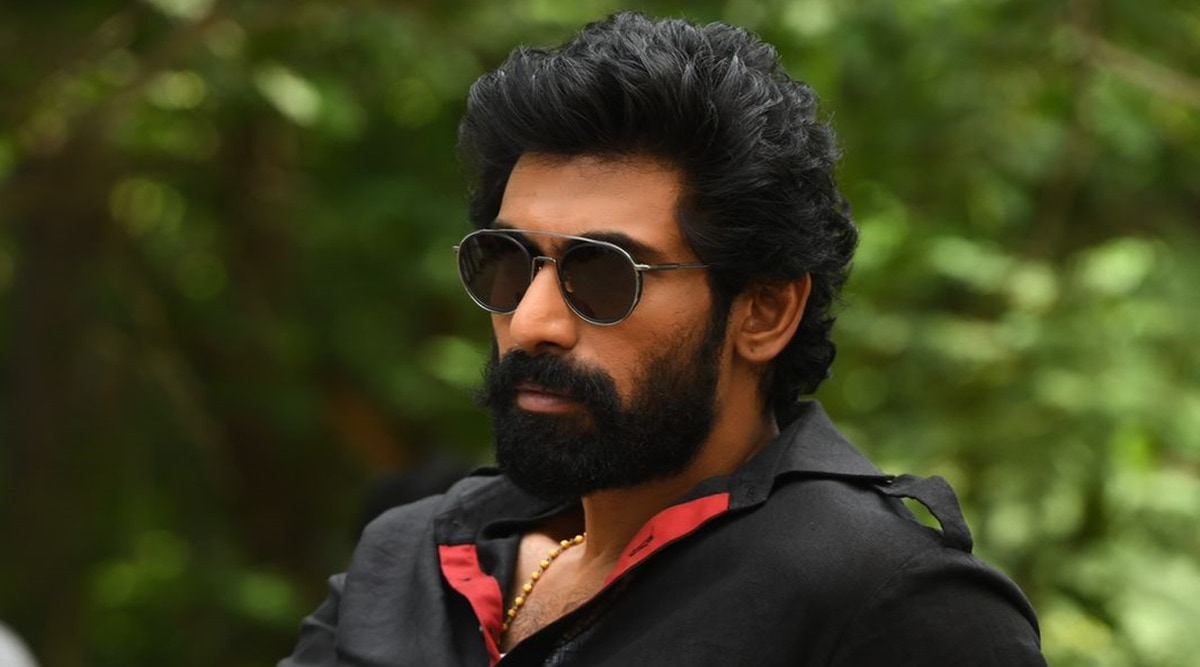
Rana Daggubati promises epic clash with Pawan Kalyan's Bheemla Nayak in new  teaser | Entertainment News,The Indian Express
Rana Daggubati : Ample scope to showcase his towering personality

The movie gets more into the zone after Bheemla is stripped of his official duties. The scenes between Pawan and Rana are more powerful in the second half. It is fun to watch the actors taking on each other. One of the good things here is that Rana isn’t reduced to a junior artist; he gets ample scope to showcase his towering personality. He perfectly carries the attitude of the character from scene 1, his scenes with Samyukhta who plays the wife is quite good to watch. In these scenes we see a softer side to him. Also there is certain decency to his role; this comes through when Rao Ramesh’s character suggests Daniel to use Bheemla’s wife Sugana as a bait in his battle with Bheemla. Daniel scolds him saying that don’t you have shame in suggesting a thing like this.

Bheemla Nayak Movie News: Samyuktha Menon confirms she will be part of 'Bheemla  Nayak'
Samyukta Menon, debut in Telugu films

The romance between Pawan Kalyan and Nitya Menon is also interesting because Nitya Menon’s character is no push over. She is appropriately spunky.

The climax fight is too elongated but it still makes an impact. The emotional touch at the end of the fight is quite good.

Pawan Kalyan as Bheemla is suitably restrained and also explosive when required. But his performance comes across as indifferent. The energy levels that you associate with the actor are missing for the most part.

The supporting cast hasn’t got much to do. They are mostly there to watch the show from the sidelines.

The first half as I said is quite a bore. One major reason for that is the mishmash of sensibilities and not knowing what approach to take. Also the music is one big letdown. There is an attempt to give it an earthy touch but it comes across as more artificial. This can be particularly seen in the title song.

Watch Bheemla Nayak for the confrontation scenes between Pawan Kalyan and Rana Daggubati

The Great Indian Murder: Much More Than Just A Murder Mystery

Vikas Swarup’s Six suspects was a book which used the format of an investigate thriller to talk about the rampant corruption that runs through in all the systems. The character of Vicky Rai who gets killed in his own party was a just a medium through which Vikas Swarup explored the different facets of our contemporary society. For those who are not aware, the book was about a playboy called Vicky Rai. He is the son of the home minister of Uttar Pradesh. He gets embroiled in a murder case, but he quickly gets acquittal being the home minister’s son. To celebrate his acquittal he throws a party in his farm house. In that party he gets killed by a gun shot. The police arrest six guests on the grounds of suspicion.

Among those who are arrested there is a bureaucrat who claims to have become Mahatma Gandhi. Director Tigmanshu Dullia takes the Skelton of this book and gives it his own touch. There are certain characters in the book which aren’t here but you don’t really miss them as Tigmanshu delivers a mostly satisfying thriller.

The very first episode sets the base for what is to follow. You have a wealthy womanizer Vicky Rai (Jatin Goswami). He has thrown a bash to celebrate his acquittal at his Delhi farmhouse. The party includes family, friends, foes and also quite a few gate-crashers.

Ashutosh Rana plays the father of Vicky Rai. He is a power mongering home minister. Fireworks begin soon after Vicky Rai’s speech. In these fireworks someone has shot a bullet that leads to the death of Vicky Rai.

There are three people who come under the most suspicion for Vicky Rai’s death. One is a slum- dwelling thief (Shashank Arora), another is a tribal who is looking for a stolen ancient idol and lastly there is the former chief secretary (Raghubir Yadav). He is suffering from split personality, due to the split personality he sometimes starts behaving like Gandhi.

There are also other characters that may or may not have had a hand in the murder of Vicky Rai. One of them is Vicky Rai’s own father. Thrown into this mix are a top cop and a CBI officer. These characters are played by Richa Chadda and Pratik Gandhi respectively. Revealing anything more wouldn’t be appropriate since this is a thriller, also there are many mini stories within that are important to the plot.

The most striking aspect of The Great Indian Murder is the grip that writer director Tigmanshu Dhulia maintains for the most part of the show. There is lot of back and forth which is going on, the sequence of events keep on changing with plenty of twists and turns. It is a lot to handle but Tigmanshu makes good use of the Rashomon approach. The underlining theme of the show is the manipulating of evidence for political mileage.

Each character shows a different side of our society. My most favorite one is that of Shashank Arora. Yes, he is a slum dwelling thief but at the same time there is an inherent decency to his character. The trajectory of his role has an emotional touch. His love for Vicky Rai’s sister and how he goes out of his way to help her leaves you quite emotional.

Another character which needs to be mentioned here is that of Raghubir Yadav. His split personality gives the show some of its best moments. The scenes where he switches over to Gandhi are very amusing, to say the least. There are several jibes that the director takes through his character. 

While most of the characters are well written there are also some which could have done with more bite. An example of this is Paoli Dam who plays an actress. She is someone who has been body shamed and also physically assaulted by Vicky Rai. She even goes to a television channel and blasts Vicky Rai with her words. However, she is soon pushed to the background after the first two episodes.

Also the handling of the many tracks slows the proceedings at certain junctures. You can see that Tigmanshu is trying his best to tie up the many subplots, the strain of that shows up more than once.

In this huge ensemble Shashank Arora and Raghubir Yadav stand out the most.

Yeh Kaali Kaali Ankhein: A Twisted Love Story That Keeps You Hooked

The story of Siddarth Sengupta’s Yeh Kaali Ankhein isn’t particularly new. Love triangles where one person is obsessed with another isn’t an unfamiliar space, here instead of a male obsessive/possessive lover you have a female. But what makes the show click is the treatment. Every episode ends on a cliffhanger which arouses curiosity in the audience. The twist at the end in particular deserves a special mention. It is not only something that catches you unawares but it also sets up the base for an exciting season 2.

This eight episode series is set in the imaginary town of Onkara. The plot focuses on the character of Vikrant played by Tahir Raj Bhasin. His father (Bijendra Kala) works under the powerful politician of that area Akhiraj (Saurab Shukla). Vikrant’s life plan is very simple. He wants to move out of Onkara, get a job and have a happily ever after with the love of his life Shikha played by Shweta Tripathi. But his life turns upside down with the entry of a childhood classmate Purva (Anchal Singh). Adding to Vikrant’s misery she is the daughter of the politician under which his father works. Purva’s obsession with Vikrant had started from school itself and now it has reached a dangerous level. Things take such a turn that Vikrant is forced to marry Purva as a result his life turns upside down. Since this is a thriller revealing anything more wouldn’t be appropriate.

An important aspect of a genre like this is how you keep audiences on the edge of their seat, it has to be said that the director does a splendid job in keeping the audiences guessing. The way the narrative moves between reality and Vikrant’s imagination is neatly done. The director also deserves credit for the way he sets up the story in the first twenty minutes of the first episode. There is no dragging or beating around the bush.

The lights moments have also been smartly integrated into the plot. Most of them involve Vikrant and his family. The son’s desperation to move away and do something with his life and the father’s inability to understand it raise many chuckles. These scenes provide a much needed comic relief from the tense drama.

Siddarth Sengupta also deserves appreciation for the way he shapes up the character of Vikrant. The journey of Vikrant from a small time boy to a man on mission is smoothly done. Because of this the grey shades of Vikrant’s character in the latter half of the show do not feel abrupt. It also helps that Tahir captures the nuances perfectly; he doesn’t miss a single beat. Anchal Singh’s Purva is another big winner. The most striking aspect of her performance is the way she uses her eyes. Every time she smiles at Vikrant audiences feel a sense of uneasiness. She is perfect as the intimidating and unforgiving Purva. In comparison to Tahir and Anchal, Shweta Tripathi’s character doesn’t feel adequately fleshed out. She feels mostly underutilized in spite of being one of the major characters. Her job is mostly confined to being on the run and waiting for Vikrant’s instructions. There is a half hearted attempt to give her some agency but it feels labored. Here’s hoping that she will have a better role in season 2.

Saurab Shukla is an actor who doesn’t need any special introduction. He has proved his worth many times in the past and here too he gets perfectly into the headspace of Akhiraj

The cinematography by Murzy Pagdiwala adds authenticity to the plot. The atmospherics feel real starting from the river Ghats and dams.

Watch Ye Kaali Kaali Ankhein if you are in the mood for a twisted tale of power, love and deceit.