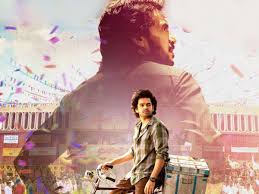
3 BHK Flat: An ode to middle class aspirations and coming of age

The first half of 3 BHK Flat feels like a series of never-ending problems with the tone of a sappy TV serial, fortunately post interval takes a much better turn. The second half has two important subplots. One is Meetha Raghunath’s Aarti deciding that she will no longer put up with marital abuse and starts life new, the second one is the transformation of Siddarth’s character where he decides that he has had enough of the mechanical IT Job, he begins his studies afresh by doing engineering These two tracks elevate the film from being a typical middle-class story of sacrificing sons and daughters

Starcast: R Sarathkumar, Siddarth, Meetha Raghunath, Devyani, Chaitra J Archar and others

Genre: Drama

Direction and screenplay: Sri Ganesh

Based on: Tamil short story Aravindh Sachidanam

Producer: Arun Viswa

Production Company: Shanti Talkies

Music: Amrith Ramnath

Cinematographers: Dinesh B Krishnan and Jithin Stanislaus

Running time: 2 hours and 20 minutes

The core plot of Sri Ganesh’s 3 BHK Flat has a certain relatability specifically for young men who have grown up in certain households, the burden of expectations where the father looks at them as a beacon of hope. This hope acting as a catalyst for major life decisions and of course shunting between different houses with a shared dream of having one own’s home. The beginning portions of 3 BHK Flat has all the trappings of sacrificial drama, at one point boredom creeps in as well thankfully the movie doesn’t end up being regressive with its plot developments.

R Sarathkumar plays Vasudevan. He is a typical middle-class man with dreams of having an own home. The financial status of Vasudevan is quite wobbly; he has his hopes pinned on the son Prabhu (Siddarth). However, these expectations become a hurdle for the son, in spite of putting in all the hard work Prabhu remains a failure for a major portion of the movie. Devyani plays Vasudevan’s wife Shanti, she is the typical emotional pillar thankfully with a voice of her own. Meetha Ragunath plays the sister Aarti. This is the story in brief.

One of the things which work in 3BHK Flat are the atmospherics. Director Sri Ganesh does a fine job in setting up a lived-in atmosphere, whether it’s the conversations between the characters or the design of the different houses which the characters shuttle at numerous junctures. The characterization of Siddarth’s Prabhu is also relatable for most young boys growing up in typical middle-class families. The constant turmoil which Siddarth goes through for a large part of the movie hits the viewers hard making them empathize with him. The build up to the change is also smartly done without making it look abrupt. Siddarth does a very fine job in capturing the different nuances.

R Sarathkumar as Vasudevan also makes a strong impact in spite of coming across as not so likeable in some portions. The way he has portrayed the physical and emotional transformation from a 40-year-old to 60 plus is commendable. The scenes between him and Siddarth have numerous poignant moments. Meetha Raghunath is also wonderful more so in the post interval portions. Her act in the breakdown portion deserves a specific mention and the question that she asks about whether marital abuse is only about physical violence is so relevant. Meetha Raghunath is excellent in portraying the fighting spirit of Aarti. Devyani is also striking in her scenes giving good support. Rana Daggubati’s voice over as the different houses adds an interesting element although it doesn’t bring anything substantial.

Mention must also be made of how Sri Ganesh talks about important topics without making it come across as overtly political. There is a portion about the rising real estate making it difficult for a common man to fulfill his dreams, similarly the impact of societal pressures in choosing studies has also come out well. The songs composed by Amrith Ramnath have a soulful nature. Tracks like Kalaleene have an emotional resonance, at the same time Aagiponu Nenu works as an engaging motivational number.

A major problem with 3BHK Flat is a TV Serial treatment of the first half. As viewers you get a feeling of depression with the overdose of problem faced by Vasudevan and his family. The tonality of a sappy daily soap induces a certain tediousness making you wish that the movie moves at a crisper pace.

The cinematic liberties which the movie takes in the third act isn’t for all too. For some Prabhu quitting a well-paying tech job at 34 to pursue his passion while having aged parents at house will be tough to swallow.

Final word: 3 BHK Flat makes for a good watch if you are fan of middle-class dramas without the overtop commercial ingredients.

Metro In Dino: A solid spiritual sequel exploring the complexities of love and marriage

Metro In Dino movie image

Anurag Basu’s Metro in Dino holds a mirror to today’s society much like the first movie Life in A Metro. Metro In Dino is a mostly gripping concoction of emotions and humor making you laugh as well as reflect. Pankaj Tripathi as Monty successfully takes over the mantle from the late Irrfran Khan. As a flawed husband he is both charming and also heartfelt in the emotional sequences. Sara Ali Khan’s track turns out to be the weak link partly salvaged by a charming Aditya Roy Kapoor

Starcast: Pankaj Tripathi, Konkana Sen Sharma, Fatima Sana Sheikh, Ali Fazal, Aditya Roy Kapoor, Sara Ali Khan, Neena Gupta, Anupam Kher, Saswata Chatterjee and others

Genre: Romance

Story, screenplay and direction: Anurag Basu

Dialogues: Sandeep Shrivastava and Samrat Chakravarthy

Producers: Bhushan Kumar, Krishan Kumar, Taani Basu and Anurag Basu

Production Companies: T-Series Films and Anurag Basu Productions

Music: Pritam Chakraborty

Cinematography: Abhishek Basu and Anurag Basu

Running time: 2 hours and 42 minutes

Life In A Metro released in 2007 was a romantic drama exploring different topics like extramarital affairs, the sanctity of love etc. The city of Mumbai where the different tracks take place simultaneously was also a character in itself reflecting the hustle and bustle along with the ambitions of making it big. The movie received widespread acclaim for the gripping narration, music and fantastic performances. Life In A Metro is widely considered to be one of late Irrfran Khan’s best work and rightly so, the actor was a sheer delight to watch with his wackiness, his track with an equally good Konkana Sen Sharma was the highlight of the movie.

Late Irrfran Khan and Konkana Sen Sharma

After a huge gap of 18 years Anurag Basu returns back with a spiritual sequel with similar strands and new additions. Like Life in a Metro the locations in this movie also become a character in itself perfectly reflecting the various moods and the emotional upheavals which the characters go through. The story of Metro in Dino focuses on numerous individuals spanning different age groups and cities. Pankaj Tripathi and Konkana Sen Sharma are Monty and Kajol respectively. The two are going through a major midlife crisis, the marriage has lost the spark. In order to escape from the boredom Monty takes the aid of a dating app leading to a lot of chaos. Ali Fazal’s Akash and Fatima Sana Sheikh’s Sruthi on the other hand are a young couple dealing with a major conflict of ambitions and a secured life. Neena Gupta and Anupam Kher play two lonely souls Shivani and Parimal respectively. For most part of her life Shivani has been stuck in a family rut not thinking about what she enjoys. All this changes during a college reunion. Lastly Sara Ali Khan’s Chumki and Aditya Roy Kapoor’s Parth are your typical gen z with issues commitment phobia and clash of ideas regarding the institution of marriage and what love really is. This is the story in brief.

A strong aspect of Metro In Dino is Anurag Basu’s handling of the various strands. The director has done a very good job in reflecting the contemporary society. The fast lifestyles of today and the sometimes-fickle nature of marriages has been brought out beautifully. The city audiences in particular will relate to the multi layered narrative and most would see a bit of themselves in the characters.

The use of music with Pritam and his band performing the songs has also been wonderfully integrated by Anurag Basu. It doesn’t feel jarring at any point. Much like Life In A Metro here too it enhances the various emotions which the characters go through at different points. There are also some occasions in the beginning where the main cast sing songs in the musical style of Anurag Basu’s Jagga Jasoos. This adds an interesting touch too giving a context into the background and the situations.

Among the four tracks specific mention must be made of two. The first one being Monty and Kajol. Both Pankaj Tripathi and Konkana Sen Sharma feed off each other wonderfully, whether it’s the comic situations of Monty unknowingly chatting with Kajol on the dating app or the second half portions where Monty is desperate to make amends. It’s an absolute delight to watch the two in one frame. As a flawed husband Pankaj Tripati delivers a knockout act perfectly capturing the different shades of Monty. A specific mention must be made of the scene in the pre climax where Monty expresses his anguish about how many more times should he say sorry. Konkana Sen Sharma is also delightful as Kajol. She brings out the fierce nature as well as the vulnerability brilliantly, there is a wonderful moment in the second half where Kajol questions about her mother’s passive acceptance of the father’s infidelity and how she doesn’t want to become like that.

Through the track of Ali Fazal and Fatima Sana Sheikh Anurag Basu is successful in bringing out the clash between ambition and practicalities. Ali Fazal plays an aspiring musician with big dreams, his father also had aspirations of making it big in music however things didn’t plan out that way due to family responsibilities. The fear of unfilled dreams and insecurity takes a toll on the marriage of Ali Fazal and Fatima Sana Sheikh. The emotional upheavals of the couple have a rawness to them without trying to sugar coat. Both the actors do a first-rate job in portraying the different nuances.

The story of Shivani and Parimal also has some interesting touches. Through this track Anurag Basu tells a liberating story of an older woman breaking out of a self-created rut. The transformation of Neena Gupta’s Shivani from a doormat to becoming more independent is wonderful to watch. The conversations between her and Anupam Kher have a philosophical touch to them as well regarding how love eventually happens in most marriages. The senior actors play their parts with the right amount of gravity.

Anupam Kher and Neena Gupta

In comparison to the three mentioned above Sara Ali Khan and Aditya Roy Kapoor’s one sticks out a sore thumb. This is mostly because of a Yeh Jaawani Hai Deewani and Ludo hangover. Aditya Roy Kapoor’s character feels like a mixture of Ranbir Kapoor’s Bunny and his own Akash, nevertheless Aditya plays the role with a certain charm salvaging the proceedings to some extent, the actor seems to be having a lot of fun with the quirky nature of Akash and that clearly shows in his scenes. His dialogue about how whether the so called happily married couples are really happy does work as a reflection of most relationships. Sara Ali Khan though is a major let down with her squeaky voice and poor voice modulation. There is an important scene where Chumki has to let out her inner anguish similar to the one in Life In A Metro involving Konkana Sen Sharma, but the way Sara portrays it makes the viewers feel zero emotion.

Coming to the music the songs of Metro In Dino has their own pluses, tracks like Zammana Lage sung by Arjit Singh and Dil Ka Kye by Raghav Chaitanya make for a soulful listen and a good watch. The cinematography by Abhishek Basu and Anurag Basu has a lived-in feel too. The two do a very fine job in capturing both the bustling nature of the cities as well as a certain inner loneliness.

Final word: Metro In Dino is a must watch for fans of intimate cinema.

Uppu Kappurambu: A whimsical social satire with a wonderful Suhas

Suhas and Keerty Suresh

Director Ani I. V Sasi flips the concept of the famous Telugu poem on its head by saying everyone is equally important. Keerthy Suresh trying her hand at slapstick comedy is rather annoying in the beginning portions however the national award winner comes into her own as the movie progress. Her dynamics with Suhas gives the movie some of its best moments

Starcast: Keerthy Suresh, Suhas, Babu Mohan, Talluri Rameshwari and others

Genre: Comedy

Director: Ani I.V Sasi

Screenplay: Vasanth Mariganti

Cinematography: Divakar Mani

Music: Sweekar Agasthi

Producer: Radhika Lavu

Production Company: Ellanar Private Limited

Running time: 2 hours and 15 minutes

Streaming site: Amazon Prime

In terms of tonal structure both Shubham and Uppu Kappurambu have a distinct similarity, the use of screwball humor in addressing the respective social issues. This brand of farcical humor can take a while getting used to however both the movies are successful in getting the message across.

Uppu Kappurambu begins with Rana Ragubbati’s hilarious voice over perfectly setting the stage for the following outlandish scenarios. The broad storyline of Uppu Kappurambu focuses on Keerthy Suresh’s Apoorva. A young woman thrown into a tumultuous situation following the death of her father and village head Subbaraju (Subhalekha Sudhakar). Keeping up with the village tradition Apoorva takes over her father’s position. Babu Mohan and Shatru play Bheemaya and Madhababu respectively. They openly scoff at the very thought of a woman sarpanch and that too a naive young girl. Suhas plays the graveyard caretaker Chinna taking over his father’s position. In an odd turn of events Chinna realizes that the graveyard is running out of space to bury the dead. This leads to a lot of chaotic situations.

A major strength of Uppu Kappurambu is the dynamics between Apoorva and Chinna. The growing friendship between them as the two race against time gives some wonderful moments. There is an emotional poignancy to their conversations like the portion where Suhas reminisces about their school days talking about the huge disparity in their lives. Mention must also be made of Suhas’s retort to a man ridiculing Chitti Jayapuram having a female village head. He critiques the narrow mindset by mentioning about his village having a female deity, then what is so wrong about Chitti Jayapuram having a female head. The scenes of Suhas speaking to the dead as if they are long lost friends also make an impact.

Suhas is simply top notch moving the viewers with his heartfelt act. Keerthy Suresh on the other hand feels like a fish out of water in the initial moments however the actress does a very fine job in showcasing Apoorva’s transformation. From the initial nervousness to a more confident approach Keerty makes the viewers root for Apoorva.

Another ace of Uppu Kappurambu is the political aspect specifically the upper caste men wanting to exercise control over the graveyard. Through the characters of both Mohan Babu and Shatru the director has successfully brought about the angle of caste disparities. On the surface the village may give an impression on treating the dead with equal dignity however the truth is something else. This is amply clear in the portion where a character believes that his clan deserves the utmost space in the graveyard based on the long lineage.

Apart from the caste disparities Uppu Kappurambu also dwells into the themes of communal division, misogyny and the resistance to change. All these have come out well particularly in the movie’s later half where things start to get more coherent.

Apart from Suhas and Keerthy Suresh the supporting cast comprising of Babu Mohan, Shatru and Talluri Rameshwari also do well in their respective parts. Among the technical aspects Divakar Mani does a fine job in capturing both the village atmosphere and the eccentricities through his lens.

Among the flaws the movie’s screwball tone takes a while getting used, the humor in the beginning is also a hit and miss. An elongated sequence with Keerty using dramatic gestures to whip up a frenzy doesn’t elicit much chuckles. Similarly the sequences involving a village drunkard only add to the run time instead of adding anything substantial.

Final word: Uppu Kappurambu is worth watching if you are in the mood for something whimsical with a social message.

Kannappa: A devotional second act saves the day

Manchu Vishnu in the role of Kannappa.

Manchu Vishnu donning multiple hats of an actor and writer takes a while to find his footing, however he comes into his own in the moving post interval portions specifically the climax. For Shiva devotees Kannappa will be a delight. Akshay Kumar as Shiva lends in the right amount of serenity and Prabhas as Rudra makes his presence amply felt in an extended special appearance.

Starcast: Manchu Vishnu, Akshay Kumar, Kajal Aggarwal, R SarathKumar, Mohan Babu, Preity Mukhundan, Prabhas, Mohanlal etc

Genre: Devotional

Director: Mukesh Kumar Singh

Story and screenplay: Vishnu Manchu

Producer: Mohan Babu

Production Companies: AVA Entertainment and 24 Frames Factory

Music: Stephen Devassay

Cinematography: Sheldon Chau

The story of a tribal hunter turned shiva devotee Kannappa is an important part of Indian mythology. The tale of Kannappa is closely connected with Srikalahasteeswara temple in Andhra Pradesh. The story of Kannappa was brought to life by the moving Bhakta Kannappa played by an excellent Krishnam Raju. The movie was a major commercial success and is remembered fondly to even this day.

Vishnu Manchu’s Kannappa is an modern adaptation of Bhakta Kannappa with added commercial elements. The destination is the same, but the packaging varies. For those who haven’t seen Bhakta Kannappa the plot of this one revolves around Thinnadu (an earnest Manchu Vishnu). He is a fierce hunter rejecting anything connected to god and divinity. He is far removed from the world of faith. R Sarathkumar as Nathanathudu plays the village head of a particular tribe. Nathanathudu is the complete opposite of his son Thinnadu, in spite of not liking his son’s views towards god Nathanathudu never forces his religious beliefs on him. The story essentially looks at the transformation of Thinnadu when he stumbles upon an Shiva Lingam changing his entire outlook towards religion and the existence of god. This is the story in brief.

Before getting deeper into the movie its necessary to get the comparisons out of the way. Manchu Vishnu is no Krishnam Raju and that is very visible in the initial portions. His warrior like presence has a certain stiffness, at times he seems to be aping Prabhas in the action and romantic portions. However Manchu Vishnu slowly starts to grow on the viewers getting the soul of Kannappa right. As earlier mentioned the post interval portions are far more engaging a big reason for this is Manchu Vishnu’s act, his portrayal of Shiv bhakt embracing a trance like state is excellent. In the climax where he removes his eyes has a wonderful intensity moving the viewers. Mention must also be made of Manchu Vishnu’s act in the fiery dialogues where he questions the act of human sacrifice in the name of rituals.

Prabhas as Rudra also plays a major role in making the second half better. The screen time of Prabhas is short but the interactions with both Mohan Babu and Manchu Vishnu are a perfect blend of humor and philosophical wisdom. He adds significant depth to Kannappa’s spiritual journey.

Prabhas as Rudra

The father and son dynamics between Thinnadu and Nathanadu also has some nice touches. An emotional conversation featuring the ghost of R Sarathkumar and Manchu Vishnu touches the viewers heart in particular. R Sarathkumar lends a certain dignity to his part.

Coming to others senior actor Mohan Babu as Mahadev Shasthri has a commanding presence, he nails the arrogant nature as expected while also shining in the sequence showcasing remorse. Mohanlal in a completely new look brings his signature gravitas. His pre interval sequence with Vishnu setting the base for the second half is nicely done.

The devotional songs of the second half also lift the movie. The song Shiv Shiv Shankar in particular is well tuned, it makes for a good watch and listen. Sheldon Chau’s cinematography is of a good order too. He does a fine job in capturing both the vast landscape and also the mythical moments through his lens.

A major problem with Kannappa is the attempt to make the story more pan India. The love portions featuring the two leads feels completely out of place, they feel more situated for a modern love story rather than the story of a non-believer turned devotee. Preity Mukhandan has a fiery presence starting off with promise but soon she just turns into a regular commercial heroine. The overdose of skin show leaves a bitter after taste occupying more space than necessary. Even the romantic songs featuring the two also lengthen the running time rather than aiding the narrative. The war sequences feel straight out of Bahubali and Hollywood movies. The clumsy CGI in some places don’t help matters either.

The likes of Bramhanadam and Saptagiri also feel out of place. The first half needed a much tighter edit, the village conflicts and the battle to protect a sacred lingam needed to be shortened since the main crux of Kannappa is the transformation story.

Final word: Kannappa is a delight for Shiv bhakts specifically the intense climax, its a sincere effort to bring alive the tale of a non believer turned devotee for the modern generation.

The Case that Shook the Empire: A gripping read about an unsung hero

Kesari Chapter 2 based on the novel does take cinematic liberties with the addition of Ananya Pandey’s Dilreet Gill and also the ending where C Sankaran Nair actually lost the case, nevertheless both the novel and the movie have successfully captured the quest of one man’s fight for justice along with the political environment of the period

The Jallianwala Bagh episode will always remain a major blot in the history of mankind. Many unarmed people protesting peacefully were shot by the army of monster Dyer, till date the scars remain with British refusing to apologize for the dastardly incident. The Case that Shook the Empire for those who haven’t seen the movie or read the novel follows the judicial fight of prominent Indian lawyer C Sankaran Nair (full name Sir Chettur Sankaran Nair. Apart from being a lawyer he was the leader of Indian National Congress too in 1897. Sankaran Nair also served in the viceroy’s executive council. However after the Jallianwala Bagh massacre Sankaran Nair stepped out of the viceroy council fighting a long case against the British authorities.

A strong aspect of this crisp but impactful novel is the depiction of events leading up to Jallianwala Bagh massacre. Writers Raghu Palat and Pushpa Palat have given a context to the mass genocide of Jallianwala Bagh by providing an insight on how Indian soldiers were recruited for World War 1 with large promises, the novel is successful in making the readers feel the pain and sufferings of Indian people much like Kesari Chapter 2 movie.

Special mention must also be made of how the two writers have etched the character of C Sankaran Nair with all his idiosyncrasies, his blunt nature while dealing with people including the Britishers has come out well. On more than one occasion his blunt and strong persona is very palpable. Here it has to be mentioned that Raghu Palat is the great grandson of Sir Sankaran Nair.

The novel also dwells into the ideological differences between Sankaran Nair and Mahatma Gandhi in an impactful way. Both of them were contemporaries with contrasting stand points on the Indian independence movement. Nair openly opposed Gandhi on his non violence stance specifically in the context of Jallianwala Bagh massacre.

The ending of the novel with Sankaran Nair losing the case is heartbreaking in many ways. As readers you wish he had actually won the case like the movie Kesari 2. However that doesn’t happen, yet Sankaran Nair won a moral battle by bringing to light the atrocities of British government. His long judicial battle boosted the nationalistic cause.

Coming to the changes made in Kesari Chapter 2 there is no denying that director Karan Singh Tyagi has somewhat tampered with the novel, having said that the characters of both Ananya Pandey and R Madhavan do add an interesting layer to the movie specifically Annie as the idealistic young woman Dilreet Gill. Her scenes like the cross examination portion gives an edge to the movie.

.

Kuberaa: Shekhar Kammula’s most socio political movie till date

Shekhar Kammula’s last movie before Kubera Love Story with Naga Chaitanya and Sai Pallavi marked a significant shift in the kinds of stories that Shekhar has dealt so far. Strong women characters have always been Shekhar Kamula’s forte but what made Love Story different was the angle of caste and class. Working with Chaitanya Pingali has clearly brought a different facet of Shekhar, with Kuberra the director moves into a very political zone with themes of class disparity and capitalism. Kuberra is an audacious movie in more ways than one , it takes a little time to get drawn but soon the viewers are sucked feeling tensed on what will happen next.

Chaitanya Pingali the associate director and writer

The storyline of Kuberaa begins with Neeraj Mitta (a truly despicable Jim Sarbh). He is a ruthless businessman embodying a typical capitalist whose only aim is to become richer and richer. A rare oil is discovered and Neeraj Mitta plans to make it a source of wealth and control, he does a secret meeting with top leaders. To make this plan work Neeraj Mitta and the father played by Dalip Tahil rope in a once honest CBI officer Deepak (Nagarjuna). Deepak has lost faith in the system, there is a simmering anger inside him. This turns out to be an advantage for Neeraj. As part of plan Deepak gathers a group of beggars who will become benamis. Dhanush’s Deva is one of them. Soon things start to spiral out of control for Neeraj and Deepak is forced to confront his inner demons. This is the story in brief.

A strong aspect of Kuberaa is the world building specifically the Juxtaposition of Mumbai’s high scrapers and the not so privileged ones . The movie presents a heart touching picture of the society’s attitude towards beggars. There is a scene early on showcasing the death of a beggar run over by a car and except for the fellow beggars no one cares. As Jim Sarbh says in a dialogue this section of society represent the invisible type making them easy scapegoats for his task.

The cinematography of Niketh Bomireddy coupled with Thota Tharani’s production design play a significant role in creating an authentic atmosphere. The stench of the garbage dumps like the scene where Rashmika and Dhanush get into a van in a tense moment filled with waste bags have a realistic feel to them. Devi Sri Prasad’s music and background score is another asset for the movie. The songs aren’t of the blockbuster type but have a soulful nature.

Apart from the world building the movie’s dialogues often laced with philosophical undertones is also a delight to watch. In a scene Rashmika Mandanna talks about how all of us are beggars in some way or other. The dialogue goes like this “I begged freedom from my parents. I begged my boyfriend to not break up with me. I begged my friend to let me stay at her place for a few days and now I’m begging people to give me a job. So in some way or other all of us are qualified to be called beggars’. This is a just sample example of the numerous impactful dialogues critiquing class and capitalism. The underlying message of Kubera is true wealth lies in improving other people’s lives and not just hoarding riches.

The tense cat and mouse game between Dhanush and Nagarjuna also has many thrilling moments. Rashmika Mandanna in a different role from her previous ventures has been smartly integrated into the main plot. Her character Sameera gets herself into a tangle by helping Dhanush. The scenes between the two are filled with tension and humorous moments in equal measure. Rashmika is successful in bringing an inner strength. Jim Sarbh as the ruthless capitalist perfectly embodies the nastiness making the viewers hate him.

Rashmika Mandanna as Sameera

Kuberaa primarily rests on the shoulders of Dhanush and Nagarjuna, both get into the skin of their respective parts. Dhanush as an innocent beggar turning into an unlikely hero delivers a first rate act. He immerses himself completely showcasing why he is a worthy national award winner again. Dhanush particularly shines in the scenes with Nagarjuna. As Deepak Nagarjuna delivers a nuanced performance, the senior actor has done a swell job in capturing the moral complexities which Deepak under goes on numerous occasions. As viewers you feel for Deepak inner dilemmas on where he started and what he has become. A particular moment has to be mentioned where Nagarjuna shoots a police officer because of a crucial reveal, there is a visible distraught on the face of Nagarjuna where the existential crisis is extremely visible.

Talking about the flaws the final stretches of Kubera become a little hard to digest. The portion of Jim Sarbh turning into a beggar for a night on the order of Dhanush can appear silly. Also the confrontation scene between Dhanush and Jim in the pre climax could have been more crisp.

Sitare Zameen Par: An epic misfire with an irritating and stale Aamir Khan

Aamir Khan and Co in Sitare Zameen Par

On paper Sitare Zameen Par comes across as well-intentioned normalizing individuals who are dealing with down syndrome and different kinds of autism. However, the problem majorly lies in making the story a redemption arc with too much of Aamir Khan. It doesn’t help that Aamir goes way over the top mimicking his previous performances. This spiritual sequel is an embarrassment to the heart touching Taare Zameen Par

Starcast: Aamir Khan, Simran Mangeskar, Aayush Bhansali, Rishi Shahani, Genelia Deshmukh, Gurpal Singh, Dolly Ahluwalia etc

Genre: Sports

Director: B Prasanna

Writer: Divy Nidhi Sharma

Based on: Champions by Javier Fesser

Producers: Aamir Khan, Aparna Purohit etc

Production Company: Aamir Khan Productions

Music: Shankar Ehsaan Roy

Running time: 2 hours and 35 minutes

Cinematography: G Srinivas Reddy

There is a pivotal moment in Sitare Zameen Par where a team of neurodivergent basketball players have won an important free throw in a game which they could lose. Aamir Khan playing Gulshan is continuously prep talking to a character Satbir (Aroush Datta). After a few minutes Satbir eventually cuts short Gulshan by saying “Sir, pehle aap Chup rahiye,” he says this in a thundering voice shocking Gulshan. This moment aptly sums up the proceedings. After watching Sitare Zameen Par it’s clear that Aamir has learned nothing from the epic disaster Laal Singh Chadda, it’s high time that the actor goes back to the drawing board analyzing his recent style of performances because he is becoming a major roadblock instead of an asset that we are used to seeing in the likes of Rang De Basanti etc.

Taare Zameen Par released in 2007 was a heart touching emotional drama about Darshal Saffery’s Ishaan. A schoolboy suffering from a learning disorder dyslexia and how through an empathetic teacher Ram Shankar Nikumb (Aamir Khan) he overcomes it. The movie brought to light the topic of dyslexia in a sensitive manner. Sitare Zameen Par on the other hand belongs to the rotten template of a coach finding redemption, in the process he overcomes his biases and fears.

Poster of Taare Zameen Par (2007)

Based on a movie called Champions Sitare Zameen Par follows the journey of Aamir Khan’s Gulshan. The film begins by establishing his brash personality, he is suspended for punching the head coach in the initial minutes, this is followed by Gulshan slamming into a police vehicle while being heavily drunk. Instead of jail Gulshan is ordered to do community service, he is ordered to build a team of intellectually challenged persons for the national basketball tournament. The rest of the cliched and exhausting storyline looks at how Gulshan becomes a better human being and also fixes his internal and personal relationships. Genelia Deshmukh plays the estranged wife Suneeta.

Aamir and Genelia

Among very few positives mention must be made of how B Prassana has done justice to the movie tagline Sabka Apna Apna Normal (Everyone has their own normal). The actors playing the intellectually disabled have been chosen with care and that shows on the big screen. Some of the training portions where Aamir is initially exhausted with no idea on how to deal with them does raise chuckles. The ensemble cast particularly Simran Mangeskar, Ayush Bhansali, Rishi Sahani etc do a very fine job getting the mannerisms and the overall body language right. There are a couple of cute moments between Aamir and Simran Mangeskar, for example there is a scene where Gulshan carefully removes onions and capsicum slices from her pizza since the character Golu is allergic to them, similarly there is another moment where Gulshan ties her hair with colorful clips.

Gurpal Singh as the manager of the sports academy lends a lot of warmth to his part specifically in an important conversation with Aamir, it is related to the backstories of these players. Dolly Ahluwalia as the spunky mother has her moments too. Her scenes of banter with Aamir does raise some chuckles. Genelia Deshmukh though in spite of a luminous screen presence is stuck in an underwritten role reduced to a cheerleader for Gulshan’s team.

A major problem with Sitare Zameen Par isn’t just the cliched redemption arc but the way B Prasanna and Divy Nidhi Sharma have tried to assimilate the emotional baggage which Gulshan carries, this eventually makes the movie exhausting particularly in the second half. In trying to give a closure to the characters a thin plot feels like never ending.

It also doesn’t help that Aamir and Genelia have zero chemistry between them. The so-called cute moments simply don’t land. Also, Shankar Ehsaan Loy’s music lacks the heartfelt nature of the first one.

The predictable scenario with endless moral lessons also makes Sitare Zameen Par a tough watch. Aamir Khan as Gulshan pretty much mimics his own previous acts whether it’s the facial expressions or the overall body language. A constant smugness on the face becomes unbearable after a point. The exaggerated tone doesn’t help the matters either like the portion of Gulshan overcoming his fear of lift.

Rana Naidu (Season2): A competent follow up led by an excellent cast

A poster of Rana Naidu Season 2

The toned down approach of season 2 does harm than good robbing the show of its zing, nevertheless the family dynamics make up for the shortcomings. Abhishek Banerjee as Jaffa gets the best arc, a sexual abuse survivor finding his voice and the actor absolutely nails it moving the viewers. The new entrants led by Arjun Rampal and Kriti Kharbanda make their presence amply felt too

Starcast: Rana Dagubbati, Venkatesh Dagubbati, Surveen Chawla, Sushant Singjh, Abhishek Banerjee, Arjun Rampal, Kriti Kharbanda, Dino Morea and others

Genre: Action/drama

Directors: Karan Anshuman and Suparn Verma

Writers: Karan Anshuman, Karan Gour, Vaibhav Vishal etc

Producer: Sunder Aron

Production house: Locomotive Global Production

Cinematography: John Schmidt

Music: Sangeet-Siddarth

No of episodes: 8

Streaming site: Netflix

For those who haven’t seen season one of Rana Naidu the story followed the journey of a fixer Rana (Rana Dagubbati). The job of Rana is to clean up the mess of his high profile clients. Rana goes about his job with utmost seriousness successfully solving their problems, at home though its a very different matter. Naga (an uninhibited Venkatesh Dagubbati) played the estranged father. He had gone to jail for a crime he didn’t commit coming out of a prison after a huge gap of fifteen years. Naga is desperate to fix his relationship with the sons for the other mistakes he has done. Sushant Singh and Abhishek Banerjee played the other two sons. The series was based on an English web series Ray Donavan.

Rana Naidu Season 1

At ten episodes Rana Naidu did feel a little long, specifically the use of swear words, at times it felt overdone although the same no holds barreled approach was a major USP of the show. Season 1 was an gripping drama about a twisted family giving a psychological insight into the different psyches of parents. Not surprisingly the shows bold nature had its share of praise and brickbats making Season 1 one of the most watched web series. Now you have Season 2 within a gap of two years. The affect of the brickbats is clearly visible in toning down of the content, this makes the show less interesting nevertheless season 2 has its share of pluses specifically the drama involving the three brothers and also the women characters.

Season 2 of Rana Naidu begins with the protagonist wanting to quit his fixer’s life. However the dream gets shattered due to his son’s kidnap. Rajat Kapoor plays billionaire Vikram Oberoi. He helps Rana in rescuing the child however this comes with a cost. Rana aligns himself with Vikram helping the daughter Alia Oberoi (Kriti Kharbanda) to acquire her own cricket team. Enter Arjun Rampal’s Rauf Bhai, Rauf Bhai has a history with Rana. He comes out of jail with a the support of politician OB Mahajan (Rajesh Jais). Rauf Bhai is filled with Vengeance. On personal front Rana’s wife Naina (Surveen Chawla) becomes emotionally distant. This is the storyline in brief as the web series moves along multiple threads.

A strong aspect of Season 2 are the human emotions whether it is the subplot of Abhishek Banerjee’s Jaffa overcoming the trauma of sexual abuse and finding the courage to fall in love or the crumbling marriage of Rana and Naina. The subplot of Abhishek Banerjee and Aditi Shetty’s Tasneem gives the show some of its best moments. The love story and Jaffa’s path to finding courage has been wonderfully integrated. There is a brilliant scene where Abhishek Banerjee let’s out a shout of joy after a love making session. How he breaks down revealing a crucial incident of his past to Tasneem hugging her has been brilliantly written and enacted. Abhishek Banerjee continues his super run of form delivering a fantastic act, he is truly one of the best actors that we have in the current lot.

Abhishek Banerjee and Aditi Shetty

Mention must also be made of the nuanced manner in which the directors have depicted the complexities of a troubled marriage. The portions between Rana and Surveen Chawla also pack an emotional punch. The ups and downs of a long marriage has come out in an impactful manner. Just like the first season Surveen Chawla’s Naina is no push over, Naina is a strong woman who isn’t afraid of pointing out her husband’s flaws and following her heart. Surveen plays the part with a lot of grace perfectly capturing the robust nature. In fact the main women characters in the show apart from Surveen have also been written with lot of care with different shades. A good example of this is Kriti Kharbanda in the role of an ambitious girl who would go to any lengths in taking over her father’s business. Kriti pulls off a pleasant surprise with her impactful performance, she embraces the grey shades with complete conviction. Aditi Shetty as Tasneem is also very good as the woman in charge of her life. There is a key portion between Aditi Shetty and Rana just before her and Jaffa’s wedding, Tasneem clearly tells Rana on how she loves Jaffa as much as he does and how she isn’t marrying for his social background. This scene is a perfect example of Tasneem’s feisty nature and Aditi Shetty does a swell job.

Arjun Rampal and Kriti Kharbanda

Season 2 also makes an interesting case study of different types of masculinity. Rana Dagubbati’s Rana is the more macho guy, Jaffa on the other hand is more sensitive. In case of Sushant Singh’s Tej he somewhere falls in between as an elder brother. He doesn’t approve of Rana and Naga Naidu’s ways but at the same time he also takes decisions which go against the core nature of his personality. Sushant Singh plays a key emotional anchor in a solid manner.

The series also dwells into vote bank politics and power struggles, how greed and power fuel shifting alliances with nothing good coming out of it for the characters.

Coming to the titular protagonists. Rana Dagubbati as Rana reprises his role with practiced ease. There isn’t much of an upgrade and often times a predictability creeps in how Rana manages to get out of tough situations. Nevertheless the actor’s charisma keeps the viewers invested. Much like the first season he strikes the perfect balance between brooding intensity and emotional vulnerability. Venkatesh Daggubati as Naga Naidu has a lot of fun in spite of the reduced screen time and less profanities. In spite of Naga Naidu’s flawed nature Venkatesh makes you care for the character’s desperation to reconcile with the sons. There is a brilliant scene between Venkatesh and Abhishek Banerjee where Jaffa asks Naga on how to become the best father. To this Venkatesh says to not do the mistakes which he did, its a heartwarming moment. Arjun Rampal effortlessly slips into the shoes of a Mumbaiya Gangster whether its the dialect or the overall body language. The actor effortlessly switches between a supposed messiah and a merciless villain. Rajat Kapoor as Oberoi lends a suave charm to his role of a millionaire with hidden closets. Lastly Dino Morea as the undercover cop falling in love with Naina also makes his presence amply felt.

Final word: Rana Naidu Season 2 is a perfect watch for admirers of dysfunctional and twisted families. The toned down approach becomes a roadblock for fans of first season nevertheless second season is still worth watching.

Materialists: A sharp social commentary on the complexities of finding true love

Dakota Johnson as matchmaker Lucy

Under the guise of a romantic movie director and writer Celine Song looks at the various factors which play a part in choosing a life partner and also the dating culture where the older women have a tough time given the specific requirements that some clients have

Starcast: Dakota Johnson, Chris Evans, Pedro Pascal and others

Genre: Romance

Director and writer: Celine Song

Producers: David Hinojosa, Pamela Koffler etc

Production Companies: 2AM and Killer Films

Cinematography: Shabier Krichner

Music: Daniel Pemberton

Running time: 1 hour and 49 minutes

The depiction of love stories has come a long way in movies across languages, from simple rom coms to more complex stories. The Materialists is a very good example of that. Through a story set in the context of today’s dating apps the movie’s plot explores how finding the right partner is so difficult given the many factors both economic and social.

At the heart of Materialists is Dakota Johnson’s Lucy. A failed theatre actor turned matchmaker. She deals with clients of different types everyday with hidden vulnerabilities of her own. Among her numerous clients Zoe Winter’s Sophie is a special one. Sophia is 39 years old and is desperate to find a loving man. Things take a dramatic turn when Lucy falls for the charm of Pedro Pascal’s Harry. Initially she thinks of setting up Harry as a client for the dating website however Lucy ends up falling for him. Harry has many desirable qualities, he is rich, chivalrous, kind and belongs to a happy family. In Lucy’s words he is a unicorn, soon enough Harry convinces Lucy about a potential union between them. Things start to look up at one point but life soon comes to crossroads due to a certain turn of events. One of the other important characters is Chris Evan’s John. A struggling theatre actor trying hard to make ends meet, he is also Lucy’s ex. This is the story in brief.

Dakota Johnson and Pedro Pascal

A big strength of Materialists is how the movie seamlessly integrates the professional and personal life of Lucy. Through the characters of some clients Celine Song does a fine job in touching upon the biases and how men are obsessed with certain physical features like a particular height and BMI (body fat). There is a scene in the movie where a client talks about how it shouldn’t exceed over 20.

Similarly the movie also dwells into the issues faced by older women due to ageism. Most men even if they are 50 want someone younger and not their age. The aspect of sexism has come out in a strong manner through the character of Sophia, she goes through many heartbreaks and assault as well. Zoe Winter as Sophia is excellent in making the viewers feel Sophia’s pain.

Mention must also be made of how Celine Song has dealt with the love triangle. The eventual path taken by Lucy isn’t unpredictable but the path to get there has been written and enacted wonderfully. The practicalities of what sustains a relationship whether it is love or financial security has come out beautifully.

The characterization coupled with the acting performance of Dakota Johnson is another plus for the movie. There is an unapologetic nature to Lucy on wanting a wealthy life partner, there is a scene in the movie where she says marriage is more of a business deal. At the same time Lucy is also clear about wanting love. Dakota Johnson plays the complicated role of a strong woman dealing with low self esteem at the same time in an excellent manner. The men also give solid support specifically Chris Evans. As an optimist with deep love for Lucy Chris turns in a memorable act, he makes the viewers fall in love with the character of John.

Chris Evans as John an optimist with deep love for Lucy

Daniel Pemberton’s songs have a poetic feel uplifting the emotions at many places. Shabier Kirchner cinematography is of an excellent order too. He succeeds in capturing both the glossy nature along with the emotional vulnerabilities underneath the sheen.

Final word: Materialists is a perfect watch for those who like complex love stories

Devika &Danny: A friendly ghost with a strong message of female empowerment

Ritu Varma and Surya Vashistta

B Kishore’s Devika &Danny is an interesting mixture of supernatural elements and a young woman breaking out of her self imposed shackles. What works for the web series is the family friendly tone and simple but effective storytelling. Ritu Varma in the role of Devika gives an assured performance mixing vulnerability with inner strength

Starcast: Ritu Varma, Surya Vashistta, Subbaraju, Goparaju Ramana and others

Genre: Fantasy

Director: B Kishore

Writer: Deepak Raj

Cinematography: Venkat C Dilip

Production house: Joy Films

Producer: Changati Sudhakar

No of episodes: 7

Streaming site: Disney+ Hotstar

In the first few minutes of Devika &Danny streaming on Disney+ Hotstar Ritu Varma’s Devika Nandan talks about living her life within a 25 kilo radius. She is a woman who despite certain reservations on her father’s choice of a potential groom decides to go ahead. Her belief is that a few adjustments will make the marriage work, also Devika is someone who doesn’t want to cross the line chosen by her father. In more ways than one Devika is an anthesis to the character played in Pelli Choopulu featuring the same Ritu Varma. Devika lacks the agency Chitra had at least in the initial portions. This establishment of character trait sets the tone for the subsequent transformation. The transformation of Devika Nandan into a more determined woman isn’t unpredictable but what makes it work is the subtle nuances.

A major strength of Devika &Danny is the mix of the supernatural elements with a coming of age story. The track of Surya Vashistta who charms Devika gives a different dimension to the web series. The revelation of who Danny actually is though predictable acts as a major catalyst for Devika to rethink and step out of the conventions. The way Devika becomes a more confident person taking on different challenges is a delight to watch. Surya Vashistta as Danny is both charming and intense as the scene requires. Additionally he shares a charming chemistry with Ritu Varma making the viewers wish they had met in different circumstances.

Mention must also be made of how the web series talks about generational patriarchy through the character of Gopuraju Ramana playing Subbaraju’s father. Subbaraju as a potential groom and a complete jerk with a regressive mindset also makes his presence amply felt. He raises many chuckles with his serious expressions and a certain exasperation. Mention must also be made of senior actress Kovai Sarala as an elderly woman running an orphanage. She appears in the crucial flashback lending an emotional depth.

Subbaraju and other cast members

A major problem with Devika &Danny is an over reliance on the use of Ritu Varma’s voice over. A cut down on that would have benefited the series immensely. Also some of the writing choices in the later half feel very convenient reducing the intrigue factor. The portions featuring Harsh Chemudu also doesn’t much add to the proceedings. His comic track comes across as a major speed breaker.

Venkat C Dilip’s cinematography is of a good order specifically in the village portions. Jay Krish’s background score is also fine and the CGi is well intergrated into the narrative.

Final word: Devika & Danny is a pleasing coming of age story. The series makes for a decent weekend watch.