Rachael Zegler in the role of Snow White surrounded by the Dwarfs
Walt Disney production house latest attempt at reimagining an old fairy tale is entertaining in spite of some flaws. What makes Snow White mostly work is the reimaging of the central character as a more self-reliant young woman
Starcast: Rachael Zegler, Gal Gadot, Andrew Burnap and others
Genre: Fantasy/musical
Director: Marc Webb
Screenplay: Erin Cressida Wilson
Based on: Snow White and the Seven Dwarfs
Producers: Marc Platt and Jared LeBoff
Cinematography: Mandy Wanker
Music: Pasek and Paul etc
Streaming site: Disney+Hotstar
Running time: 1 hour and 49 minutes
In the last few years Walt Disney productions have been on a spat of remaking old fairy tales with modern sensibilities whether it is Aladdin in 2019 or now the latest Snow White. A couple of commonalities linking the two films are the musical format and more empowered women characters specifically the lead women. Snow White (2025) is no different from its predecessor, the movie is a mix of fantasy while dealing with real world themes. Not everything lands but the movie makes for a breezy watch with an assertive female protagonist.
Aladdin 2019
In simple terms the story focuses on Rachael Zegler’s Snow White. She is confined to her own castle by a demonically evil queen played by Gal Gadot. Snow White hopes to reclaim her rightful place. In this process she meets Andrew Burnap’s Jonathan, Unlike the prince character from the old one Jonathan is a charming bandit on the lines of Robin Hood. The rest of the story focuses on Snow White ending the reign of the evil queen.
A strong aspect of Snow White (2025) is the characterization of the central character coupled with Rachael Zegler’s act. Marc Webb along with Erin Cressida Wilson have done a good job in gradually building up the character, in the initial portions she comes across as a sweet but docile person however by the end the character becomes a leader standing up against the injustices. This entire transformation has come out strongly.
Mention must also be made of the understated romance between Rachael Zelger and Andrew Burnap. Andrew Burnap bandit is a welcome break from the regular character of a prince. Sure, the character could have done with more depth but the scenes between them make for a good watch. Andrew Burnap delivers a charismatic act in spite of the brief screen time.
Rachael Zelger and Andrew Burnap
Gal Gadot’s character has some modern touches too going beyond someone who is just jealous of Snow White and tormenting her, she is seen as a symbol of fascism plundering the riches of the land. There is a dictatorial way in which the character operates, and Gal does a very fine job in bringing out those shades. These touches elevate the movie beyond just another reimagining.
As far as the visuals go cinematographer Mandy Waker makes sure that the movie becomes a visual treat. The movie has a vibrant look to it and the special effects have been well integrated. The musical numbers make for a fun watch particularly ‘Waiting on a Wish’
One of the big flaws of the movie are the dwarf characters. Their bond with Snow White doesn’t make an impact due to the lazy writing, it feels like more of an add on due to their presence in the fairytale rather than something substantial. Also, the movie’s tonality alerting between fantasy and real-world issues doesn’t land on some occasions.
Final word: Watch Snow White (2025) if you are in the mood to watch something lighthearted and get yourself lost in a fantasy world.
Inspired from a true incident director Karan Tejpal presents a largely gripping and harrowing tale of the huge divide between the privileged and the poor. Stree and Vedaa actor Abhishek Banerjee once again proves his chameleon like ability in adapting to different roles, he knocks it out of the park as usual.
Starcast: Abhishek Banerjee, Shubham Vardan, Mia Mazeler and others
Genre: Thriller
Director: Karan Tejpal
Writer and producer: Gaurav Dhingra
Executive Producers: Kiran Rao, Anurag Kashyap and Vikramaditya Motwane
Production house: Jungle Book Studio
Running time: 1 hour and 55 minutes
Cinematography: Ishaan Ghosh
Streaming site: Amazon Prime
In structure Karan Tejpal’s Stolen shares more than one similarity with Navadeep Singh’s NH10. Just like that movie here too the urbane characters find themselves in a huge tangle, a world far removed from their comfortable lives. The two protagonists become the medium to explore a world which is far away from high rise buildings and the glittery urbane space. However Karan Tejpal gives Stolen its own distinct identity through two brothers who are as different as chalk and cheese. In spite of some rough edges Stolen for most part is largely engrossing drawing the viewers in.
Stolen begins at a small town railway station in Rajasthan. Gautam (Abhishek Banerjee) is waiting for his younger brother Raman (Shubam Vardan). Raman is coming in a train since he missed the flight. Next day there is an important family event, Gautam is desperate to return back home. However things don’t go according to plan and the reason for this is Jhumpa (Mia Mazeler). Jhumpa’s daughter is missing and Raman is briefly suspected by the police. Raman is cleared of the charges but the police ask the brothers to wait leading to several things. This is the story in brief.
A strong aspect of Stolen is the cinematography of Ishaan Ghosh. Ishaan Ghosh is very successful in capturing the gritty tone, the visuals have a lived in feel with the rusty atmospherics. Through his lens he presents an India that we don’t see in big budget mainstream movies. A major divide between the privileged and oppressed, a deep cynicism and an agony of those who aren’t blessed with the safety net. Ishaan Ghosh’s work also stands out in the tense chase sequences. Sure at times they do get repetitive still he does a first rate job in capturing the dreadful scenarios which both the brothers find themselves in.
Mention must also be made of the sibling dynamics. Abhishek Banerjee’s Gautam is the more corporate guy among the two trying to dissuade his brother from helping Jhumpa. Shubham Vardan’s Raman is the more considerate guy leading to an interesting clash of ideologies. At one point the contrast may across as too jarring but Karan Tejpal along with Gaurav Dhingra give a slight insight into why Raman connects with Jhumpa. In spite of different view points there is an undercurrent of love and affection too. The sibling dynamics makes the movie stand out from NH 1O also set in the same space.
Abhishek Banerjee and Shubham Vardan
Stolen is stuffed with numerous social issues like illegal surrogacy and the absolute lack of law and order. However at no point Stolen feels preachy, this is because of the thriller format. As viewers you are constantly tensed about what would be the fate of the three protagonists. It also helps that the movie has no unnecessary detours, no comic or romantic angle to slow down the proceedings.
Stolen also benefits immensely from its lead actors. Abhishek Banerjee shows a masterclass in acting. The way he portrays the different shades of Gautam effortlessly showcasing the eventual transformation is a sheer delight to watch. With this movie he once proves his capability in adapting to different roles. Shubham Vardan as Raman also lends solid support proving to be a perfect foil for Abhishek Banerjee, both the actors feed of each other wonderfully. As Jhumpa Mia Maezeler is very effective too bringing in a raw intensity without going melodramatic.
Mia Maezeler as Jhumpa
Although tight for most part Stolen does suffer from a couple of mishaps. One of them is a slightly repetitive nature of the brothers being chased. Also towards the end the movie does stray somewhat, a tighter edit in some portions would have definitely helped.
Final word: Stolen is a must watch for those seeking stories beyond entertainment.
Ans 1 I have done M. A English literature. With the purpose of becoming a teacher I also did B.ed. However the job of a teacher didn’t really suit me. As an education content writer I worked in Pudami publications for four years. Once the office was shut down movies became my full time profession. Currently apart from movies I am also doing a fellowship for a society called Yakshi, Yakshi has set a program regarding the upholding of constitutional values. I discovered my passion for writing on movies, web series etc during the pandemic. and since then there has been no looking back with more than 500 reviews available in my website rigoberthareviews.com. Even while working as an education content writer I used to watch movies and web series on a regular basis. Apart from movies, web series and theme based some book reviews are also there mostly based on movies.
2 How did interest on movies grow?
My experience with movies started on not a great note. My first movie experience which I saw and couldn’t complete was Ramgopal Varma’s Satya. The first five minutes had numerous killings as a result I hugged mom tightly. Accompanying us was also a friend called Khadeer. Without seeing the movie we came back. My age at that time was six years. Of course later I saw Satya on TV. Now its one of my most favorite films, the depiction of villains specifically showcasing Manoj Bajpai as a normal human being is something which I liked. My initial movies didn’t consist of Hindi much. Whenever mom suggested seeing some language films (she was a member of film society). I used to make a huge ruckus. In fact I made a protest on why she wouldn’t take me to see Telugu movies, however slowly watching the likes of Laagan, Mangal Pandey, Munnabhai MBBS spiked me in an interest towards Hindi language films, I remember even dad accompanying us. Since I couldn’t understand Hindi much mom had to translate. but the sporadic outings of Hindi movies soon led to a major interest. Some of the early Hindi movies which I saw were Lagaan and Mangal Pandey besides the two Munnabhai films. On certain occasions dad also came against his nature and mom had to do the explaining. As the years have gone by I have acquired my own taste across different languages and genres. It has reached a different level by seeing actors and directors across various language spectrums
3 What was the starting point of writing reviews?
Ans 3 Maybe COVID was the reason for that. Just like many I also got habituated to seeing movies and web series in various OTT platforms. I used to write three to four paragraphs on my Facebook page and used to post. it. Apart from posting reviews on facebook I also did Youtube videos in Prabhathalovesmovies. Of course later I stopped it. Knowing about my interest in writing reviews senior editor Ramachandra Murthy guru asked me to write for his website Primepost. At that time I had no proper idea on how to write reviews. Slowly I became habituated to it. I discovered a lot joy analyzing each movie or web series as the stories and the characters vary a lot. As a result it gave me a lot of excitement each time I watched something. As time progressed I also started doing stuff other than movie reviews, these include profiles, theme based etc. Similarly I have also written book reviews based on movies. Although I resumed my job after COVID I continued to write. Even if I join another job in the future I hope to continue writing.
4. Through which mediums do you share reviews?
Initially it started with facebook. However once I started writing for websites like Primepost and Southfirst I started sharing it on Twitter, Instagram, facebook and Linkedin. Currently I have my own website as well; the name of the website is rigoberthareviews.com
5. What are the changes that you have observed from the time you started watching movies to now?
A lot has changed in terms of storytelling particularly with the entire pan Indian phenomenon. Technology has also increased. If we take movies like Bahuballi, RRR and Kalki this change is very apparent. Rugged mass heroes with huge beards are ruling commercial cinema. This doesn’t mean that other kinds of stories aren’t being attempted. Thirty Five Chinna Katha Kadu, Court and Iravai Moodu kinds of movies are coming successfully. A lot of changes are visible too in the new age horror stories. The days of scaring people with swinging doors is gone, instead the new age horror films have plots that have both scares and social issues.
6. In your view how are our movies in comparison to world cinema?
I don’t like comparing Indian cinema with world or Hollywood cinema. We have our unique traditions; many filmmakers have done movies that are remembered even today. There is no limit to the talent we have whether its directors or actors. Many are trying to push the envelope in their own ways. At the same time we also need to let go of some notions, this includes defining commercial cinema as only large action sequences.
7. Who is your favorite director and why?
Not just one there are many. For example, Kabir Khan, I like him for the way he crafts underdog stories who become winners in a heartouching way. The likes of 83, Bajrangi Bhaijaan, Chandu Champion are good examples of these. I also like Anant Mahadevan who directed Phule and Storyteller. Among the senior directors I am a fan of Sanjay Leela Bhansali as well. His stories are not just different, but they also have strong women characters. Among the ones he directed Gangubai Kathaiwadi is my most favorite. Coming to Telugu movies among the new directors Nag Ashwin is one of my favorites. With just three movies he has created a strong space. He effectively handled a big star like Amitabh Bachchan in Kalki. Among the Tamil directors I like Vetrimaaran, I like the way he boldly presents the issues of caste and class. It feels like an eye opener. In Malayalam I cannot single out a particular person, Blessy who directed Prithviraj Sukumaran’s Adujeevitham one of my favorites. I like the way the directors there give importance to stories, it seems like they don’t have the habit of writing a story keeping in mind the hero. Due to this many directors are able to make good films there, In Hollywood I like James Cameron who directed Titanic and the two Avatar films.
Kabir Khan the director of Chandu Champion
8. Who is your favorite actress and why?
Ans 8 Maybe I would have said Alia Bhatt once upon a time. Now though there are many. From Meryl Streep to Ananya Pandey. In between there are the likes of Nayanthara and Parvathy Thiruvothy, there are also some actresses whom I have liked in some movies. We are seeing actresses in different languages acting brilliantly. I will also give my reason behind liking these actresses. Talking about Alia Bhatt she has acted in a wide variety of roles, she has done characters which have represented different sections of society. Examples of these are Udta Punjab, Dear Zindagi and Gangubai Kathiawadi. Parvathy Thiruvothu comes across as a strong person both on and off screen. Nayanathara on the other hand has managed the perfect balance. She has done glamorous roles as well as characters that are strong in nature. Meryl Streep of course doesn’t need a particular introduction. Along with doing many memorable characters being bold is also her strong quality. In the last few years Ananya Pandey has done some good roles and is emerging as a fine talent.
Alia Bhatt in Gangubai Kathiawai
Ananya Pandey CTRL
9. You are translating stories from Telugu to English right! How did you get that interest? Would you like to share those experiences?..
Ans 9 In the beginning Hyderabad book trust (HBT) Geeta asked if I could translate. I said yes since it would be a new thing for me. I transalated Satyavati garu story ‘I am coming with the name of ‘Here I am’. Till now I have done forty small poems poems and 10 stories. Some of the translations have come out in anthologies; some are yet to be published. I don’t know how much the writers liked my translations but I got an opportunity to read Telugu literature through them. Since both the writers and the time periods are very different I found it challenging to translate both in terms of language and style.
I got the feeling of learning something new from every story. The stories of B Anuradha ‘Dheesali’, Ek Chaddar Mailisi’ while translating these two I entered into a new world of jail life. Both the core and the language in Satish Chandar’s Thorn felt unique. While translating this story which deeply examined gender and caste, I initially felt surprised on the spat of verbal abuses between the mother and daughter, it was their way of expressing love. Although it was extremely difficult to translate their conversations I soon started enjoying. The two stories which I did from ‘Viyuka’ collection are also special. I learned many things about the lives of revolutionaries who face many challenges. Also, Chaso’s ‘Why would I throw away Father’, ‘Yugantham stories of Nelluru Keshava Swamy story and Sudhakar’s some soap bubble and a knife cut’ (Barber’s Tale). Finally, Kuppili Padma’s Coffee Plantation. The language in Kuppli Padma’s stories is mostly poetic as a result to bring out their emotions was difficult. Apart from those mentioned I have learned a lot from the rest too however I will stop here since the answer has already become big.
10 How is the response for your reviews? Would you like to share any responses that are special for you!
Ans 10 The response for my reviews has gradually grown specifically after putting my reviews in Instagaram and X. A big reason for this increase is fan pages. They have shared reviews and profiles of their favorite stars. For example my profile on Kartik Aryan was shared well on twitter by his fans. Similarly my Dhootha review starring Naga Chaitanya was widely shared by Akkeneni fans. Coming to the rest of the readers I don’t know whether everyone who has read have liked them or not, so I haven’t had the opportunity to better them. As far as I am concerned I am writing whatever coming to mind. In the recent past the ones which I felt special are one of the directors in My Melbourne anthology Onir. He directed a short segment called Nandhini. Also Ananth Narayan Mahadevan who directed ‘Storyteller and Phule, their responses felt very special. One shared it on Instagram and the other on facebook with praises. Similarly Rahul Ravindran sharing my Jigra review and lastly Bhavana Pandey the mother of Ananya Pandey liking my ‘Kesari Chapter 2’ review are also some of the special moments.
Inspired from the Israeli thriller/drama Magpie Kankhajura focuses on some important issues like the impact of childhood traumas specifically bullying and how a need for validation leads to manipulative behavior. Through the character of Roshan Mathews’s Ashu director gives a message on the need to recognize and address childhood trauma. The slow burn nature isn’t for all, but the acting performances led by Roshan Mathew and Mohit Raina coupled with the themes makes it a thrilling watch
Stories of flawed human always make for an interesting drama as most of us have some flaw or the other whether it is psychological or psychical. The meaning of Kankhajura is a pest called centipede. This pest is small in size but extremely dangerous just like one of the protogonists who can be very cunning and dangerous beneath the seemingly soft persona.
The storyline of Kankhajura focuses on the release of Roshan Mathew’s Ashu. He has spent fourteen years in jail and is desperate to reconnect with his brother Max (Mohit Raina). Max gives refugee to Ashu, but the acceptance comes with a calculative nature. The affection is almost absent, as the plot unfolds Ashu turns against Max due to certain reasons leading to the unraveling of dark secrets. This is the story in brief.
A strong aspect of Kankhajura is how Chandan Arora slowly builds up the tension between the two brothers leading to a crescendo. He gives ample psychological insight into the mindset of the two brothers. The themes of past traumas, sibling rivalry and unresolved guilt has been well integrated by the director.
The cinematography of Rajeev Rai and Vinod Illampaly also adds to the tension. Both the cinematographers present Goa in a different way than the viewers are used to seeing. They present Goa as a place of shadows and secrets unlike a usual paradise. The visual pallet they have chosen perfects compliments the theme of the show.
Mention must also be made of the women characters both Sarah Jane Dias and Trinetra Halder give very good support as the moral counterweights. Their characters have a strong individuality particularly Sara Jane Dias who doesn’t shy away from giving it back to Max pointing out his greedy nature whenever required. This strong personality is maintained throughout and as viewers you cheer for her when she walks out of the marriage in the climax.
Sarah Jane Dias
Trinetra Halder as a transgender plays her role with a lot of grace and is successful in bringing out the inner strength. Her scenes with Roshan Mathew showcase a different facet to Ashu making the viewers wish there was more of her. Trinetra Halder is a real-life transgender; this adds to a certain authenticity specifically in the portions where her character talks about the past.
Roshan Mathew and Trinetra Halder
Coming to the lead actors both Roshan Mathew and Mohit Raina knock it out of the park with their respective characters. As Ashu Roshan Mathew strikes the perfect balance between intensity and underplaying as the situation demands. The role could have easily gone into the zone of overacting, but Roshan Mathew doesn’t let that happen with his skilled act. The way he portrays anguish in particular is excellent. Mohit Raina also does a swell job with his restrained yet impactful act. He perfectly brings out the different layers like being charming and ruthless at the same time. Mention must also be made of Mahesh Shetty and Ninand Kamat playing the morally ambiguous allies. Heeba Shah as inspector Leena also makes an impact.
Although taught for most part Kankhajura isn’t without flaws. On occasions the story loses momentum with meandering subplots. Similarly, the pace at which the events unfold may not satisfy thriller buffs.
Final word: Kankhajura is a perfect watch for those who like character driven dramas at a leisure pace.
Housefull 5 directed by Tarun Mansukhani comes alive from the entry of Jackie Shroff and Sanjay Dutt. As suspended police officers with a point to prove the veterans share a wonderful camaraderie. Housefull 5 has an important message on the dangers of unlimited greed and the twist at the end with the guest star does pack a punch however the movie could have been so much more given the premise. The stale humor with sexual undertones is a major bummer
Additional producers: Warda Nadiadwala and Firuzi Khan
Production Banner: Nadiadwala Grandson Entertainment
Music: Yo Yo Honey Singh, Tanishk Bagchi and others
Cinematography: V Manikandan
Running time: 2 hours and 43 minutes
The Housefull movies is the longest running comedy franchise with five films in total. Rohit Shetty’s Golmaal is the second longest. The Housefull movies have managed to rake in huge numbers in spite of having humor, which is mostly crass. Political correctness has never been the franchise’s biggest strength however the masses have embraced the over top tone. For example, Housefull 4 in 2019 went on to do very good numbers in spite of not-so-great critical reviews and severe criticism on how it treated the angle of a feminine man.
After a gap of six years, you have the fifth installment which is slightly different from the other Housefull movies in terms of mixing suspense with humor. Without giving much away Housefull 5 focuses on the death of a billionaire Ranjith played by Ranjith. Before succumbing to a heart attack set on a luxury cruise, he makes a declaration about leaving 69 million pounds to his first son. However, the trouble is except for Ranjith no one knows who the real Jolly is leading to plenty of chaos. Akshay Kumar, Ritesh Deshmukh and Abhishek Bachchan make a claim of being the real Jolly leaving the board of directors confused. Things take a massive turn with two deaths almost back-to-back leaving the three Jolly’s in a desperate situation. This is the story in brief.
As already mentioned the fifth part of the Housefull installment tries to be different while maintaining the core of what these movies appealed to the masses. The thriller element definitely works starting from the entry of Sanjay Dutt and Jackie Shroff. The duo play suspended police officers with a point to prove, the veterans share a wonderful chemistry uplifting the movie. Whether it is the scene of Jackie Shroff losing his cool on being called the assistant of Sanjay Dutt’s Bhiddu or Sanjay Dutt’s bewilderment on Jackie Shroff on having a hot ex-wife in the form of Chitrangada Singh. The portions leading up to the big reveal has enough suspense on who could be the potential killer or killers and the motivations. Mention must also be made of Nana Patekar in an extended special appearance. He brings in a certain intensity as a dhoti clad Interpol chief.
Just when you think everything is solved Housefull 5 shows up a big surprise with the entry of a guest star who is having a wonderful second innings with a series of grey/negative roles. This guest actor turns out to be the actual Jolly, however he isn’t there to inherit his father’s wealth. Instead, he tells Akshay and co to share the 69 million pounds among themselves leaving the killers angry on what they have done. It’s here that Tarun Mansukhani and Sajid Nadiadwala bring out an important message, the consequences of unlimited greed.
There is no denying that the message is good, but the humor intermixed with the suspense needed to be much better. A lot of movie’s humor is juvenile filled with sexual innuendoes. The character of Shreyas Talpade for example is mostly there to ogle at women’s breasts whenever the secretary bends down for the papers. This becomes a repeated gag even in the pre climax. In fact, the character disappears for a long period too making Shreya’s presence thoroughly inconsequential. The women headed by Jacqueline Fernandes are only there to up the glamor quotient and often times being sex objects for the men to lust at. There is a scene in a tunnel like passage where three female leads are crawling through and the camera focus is on their cleavage line. Even the gorgeous and talented Chitrangada Singh doesn’t fare any better in spite of some grey shades.
Both Fardeen Khan and Dino Morea start of promisingly but are let down badly by the haphazard characterizations. The likes of Akshay Kumar and Ritesh Deshmukh somehow manage to make some of the juvenile’s jokes work on the strength of their experience in this genre. However Abhishek Bachchan sticks out like a sore thumb with his constipated expressions, but the twist around his character does redeem Abhishek somewhat. Chunky Pandey as Aakiri Pasta too suffers from a lazy characterization with little upgrade.
V Manikandan’s cinematography is undoubtedly lavish making the movie a visual feast. The songs are mostly forgettable except for ‘Laal Pari’ which has a catchy vibe.
Final word: Housefull 5 is strictly for those who enjoy juvenile and slapstick humor along with those who have liked the previous Housefull movies.
Reputed filmmaker Mani Ratnam struggles to find the right balance between the demands of a mainstream action movie and a character driven drama; this results in the film never finding its feet in spite of some solid acting from Kamal Haasan and Simbu. The two try their level best to inject some life into the proceedings. Apart from the generic gangster tropes Thug Life also suffers from misogyny and cringe romantic portions featuring Kamal and Trisha
Starcast: Kamal Haasan, Simbu, Trisha, Abhirami, Nassar, Mahesh Manjrekar, Rohit Saraf, Ali Fazal and others
Genre: Action/drama
Director and writer: Mani Ratnam
Additional writer: Kamal Haasan
Producers: Kamal Haasan, Mani Ratnam, Udhayanidhi Stalin etc
Production Companies: Raaj Kamal Films International, Madras Talkies etc
Music: A R Rahman
Cinematography: Ravi K Chandran
Running time: 2 hours
Right since the disastrous run of 2010’s Raavan brand Mani Ratnam has taken a severe beating, the critical and commercial failure of the ambitious film has proved to be a major roadblock for the director who hasn’t still recovered from it. Of course, O Kadhal Kanmai with Dulquer Salmaan and Nithya Menon was a commercial success, though not vintage Mani Ratnam the movie was a charming romantic comedy majorly elevated by the leads. The Ponniyin Selvan movies on the other hand didn’t quite become the pan India blockbuster that Mani Ratnam was hoping to be. With Thug Life the director has reunited with Kamal Haasan, a duo which gave the classic gangster film Nayakan. A lot was expected from Thug Life given the stature of both Kamal and Mani Ratnam, however Thug Life turns out to be a reunion which nobody asked for.
Thug life primarily focuses on Rangaraya Shakti Raju (Kamal Haasan). He is a gangster set in the state of Delhi. In the initial portion Rangaraya Shakti Raju is seen rescuing a young boy Amar (Simbu) during a police shootout. He brings up the orphaned Amar as his own son. Flash forward to the present Amar is seen managing both the crime syndicate and also the family problems like setting up the marriage of Rangaraya’s daughter. An underlining of distrust is there from Rangaraya’s side given the nature of the criminal world. A particular incident leads Amar to turn against his mentor almost resulting in Rangaraya’s death. This is the story in brief.
Among the very few positives the performances of Kamal and Simbu are definitely worth mentioning. The two share a good chemistry bringing in the necessary tension and warmth. The two manage to rise above the formulaic writing. As Rangaraya Shakti Raju Kamal Haasan brings his trademark intensity. He brings in a certain heft like the scenes where the character expresses his anguish and a certain desperation. A good example of is the portion involving Abhirami the wife, a victim of memory loss due to an accident. The actor lends an emotional gravitas to the proceedings even when the writing is subpar. Simbu as the trusted aid going against his mentor is also in fine form portraying the different facets of Amar with ease. He brings in a palpable intensity specifically in the pre climax fight between the two characters.
A light moment featuring Kamal Haasan and Simbu
Ravi K Chandran’s cinematography is effective in creating the right atmospherics. The rustic action sequences like the hand-to-hand combats have been well captured by Ravi K Chandran.
A major problem with Thug Life are its women characters. The so-called romance between Kamal and Trisha is beyond cringe. There is a visible awkwardness, and Trisha eventually ends up as a shuttle cock with little to no agency. Also, the lens through which her role of a mistress has been written and performed is very problematic to say the least. She is reduced to a mostly vampish figure, a third person who has snatched away Rangaraya. Abhirami playing the wife may look like a defiant person from outside but her passive acceptance of Rangaraya’s affair and how she treats Trisha’s Indrani is a major disappointment from a celebrated director like Mani Ratnam.
Kamal Haasan and Trisha awkward romance
Apart from the misogyny and sexism Thug Life also suffers from characters who don’t serve much purpose. The best example of this is Rohit Saraf playing a typical spoil brat who does drugs. The only reason for his existence is to be thrashed by Kamal Haasan and Co. Similarly, Ali Fazal playing the elder brother of Rohit is mostly there to watch from the sidelines. For a large part of the movie, he is relegated to the background only to appear for taking advantage of the tensions between Rangaraya and Amar. Nassar too has a one note characterization as a constantly frustrated man, he is mostly seen in a sulking mood without much nuances.
Talking about the familiar tropes Thug Life majorly suffers on the account of been there and done that scenarios: whether it’s the rivalries both within and outside the crime syndicate or backstabbing from family. It’s hard to see what the legendary duo Kamal and Mani Ratnam saw in this story. The music and the background score both by A R Rahman are another major misfire.
Final word: Thug Life is a massive downfall not even matching 5 percent of the expectations. Watch it only if you are a diehard Kamal Haasan fan, for the rest re watching Nayakan would be best.
Royals directed by Priyanka Ghosh and Nupur Asthana often feels like a cross between the English web series Bridgeton and Shashanka Ghosh’s Khoobsurat. The initial episodes are more of a fizzle than a sizzle but the show does take a turn for the better in the later half particularly for those who like palace politics. Ishaan Khattar as Aviraaj is the series beating heart effortlessly combing swag with emotional depth
Creators: Rangita Pritish Nandy and Ishita Pritish Nandy
Producer: Late Pritish Nandy
Production Company: Pritish Nandy Communications
Cinematographer: Nachiket Pangare
Music: Rooh and Joh
Episodes: 8
Streaming platform: Netflix
Ever since its release on May 9th the web series Royals has seen a very mixed response. Some have praised the performances and the visuals. There has also been a lot of criticism due to the hangover of films and web series set in the same space most notably Bridgeton, also the depiction of royal households has come under intense scanner with the members of erstwhile royal families expressing their displeasure. In spite of not so rave reviews Royals has seen a renewal for season 2.
There is no denying that Royals could have done with much more depth in terms of storytelling, a cut down on the glam quotient would have benefited the series immensely. Having said that Royals does make for a good guilty pleasure and the dramatic twist in the finale does set things nicely for season 2.
The storyline of Royals primarily centers on Morapur royal family. They are dealing with problems of various kinds like financial issues and the death of a king. Ishaan Khattar is Aviraaj, a reluctant prince. Aviraaj has no intention of taking over his father’s place but things take a turn where he is left with no other option. Aviraaj path crosses with Bhumi Pednekar’s Sophia. A self made entrepreneur with a fierce attitude. Sophia wants to turn this crumbling palace into something more luxurious. The two share a relationship swinging between hate and love leading to several developments.
A strong aspect of Royals is the production design and the cinematography department. The web series has a very rich look, the visual esthetics are absolutely on point transporting the viewers into the intriguing world of palace politics.
Talking about palace politics every relationship comes here with layers of manipulation and secrets traumas. Beneath the smiles there is a certain calculatedness making it entertaining specifically in the later episodes. At times it can get confusing too however it adds a lot of spice to the proceedings. The one liners is also a big USP of Royals. Numerous dialogues have shades of sarcasm, even when the script fails the conversations do pack a punch.
As already mentioned Ishaan Khattar’s Aviraaj is the beating heart of Royals. The character comes with different shades, on some occasions he comes across as an asshole with princely arrogance. At the same time he is also Chivalrous, this side comes out on more than one occasion in the scenes with Sophia. Ishaan delivers a splendid act embracing the grey shades of the role with panache, with this act he once proves his versatility in picking up different roles and doing justice to them. A particular scene worth mentioning here is the breakdown before the coronation. The best part of Ishaan’s performance is how he expresses the feelings of happiness, sorrow and other emotions through his eyes. Cannot wait to see his act in the upcoming Homebound which has already received great reviews. Apart from Ishaan Khattar Vihaan Samrat as Yuvraj Digvijay also gives solid support with his nuanced act. His character has the most grounded arc and the actor does a very good job. There is an interesting subplot of Digvijay of wanting to prove himself as a chef without the baggage of being a royal family member. Vihaan Samrat does a very fine job specifically in these portions. Mention must also be made of the scene where Digvijay clears the doubts of Aviraaj handling him with the required love.
Ishaan Khattar and Bhumi
Among the ladies Sakshi Tanwar has the meatiest role as maharani Padmaja. In spite of being a maharani Sakshi Tanwar’s character doesn’t come across as a usual rigid queen. The romantic subplot with the dashing Chunky Pandey shows a different facet to her personality. The way Sakshi portrays Padmaja’s need for love and embracing her libido (sexual desire) is a delight to watch. Veteran actress Zeenat Aman starts off promisingly but suffers on the account of a sketchy characterization, nevertheless Zeenat Aman plays her part with flair. Bhumi Pednekar as Sophia is a mixed bag. The actress looks glamorous with those stunning outfits looking every inch a fierce CEO but on the performance front she come across as rather flat with her expressions. She does ace some of the emotional ones like the portion where Sophia is ousted from her position however the consistency is missing. Also she doesn’t look comfortable in the dances with Ishaan, the chemistry between the two is quite underwhelming with Ishaan putting most of the effort.
Sakshi Tanwar and Zeenat Aman
A major problem with Royals is the clumsy treatment of the LGBTQIA+ representation. Milind Soman plays the father of Aviraaj. He is a closeted gay revealed at a crucial juncture. The past of Milind Soman’s character had good scope for emotional drama but the haphazard narration makes it more of a checklist to be added. Even the lesbian track with Kavya Trehan as Yuvarani Divyaranjini is more of an add on for inclusivity than cohesive storytelling.
The show also needed more depth in the writing of secondary characters, Milind Soman is mostly reduced to a wallpaper, the likes of Nora Fatehi and Dino Morea also don’t get much to do coming and going at the scripts convivence.
Final word: Royals makes for a fun watch provided you can get past the initial episodes and not looking for something very deep.
Some of my thoughts on watching this Trivikram Srinivas directorial in the theatres (earlier I watched the movie only in bits on tv). He has redefined the concept of god through a taxi driver played by a brilliant Mahesh Babu.
The concept of re releases in Tollywood has caught up in a big way. Many older movies are re releasing in theatres today with upgraded technology. A recent example of this is Raghavender Rao’s Jagadeka Veerudu Athiloka Sundari. For people like me who haven’t watched it in theatres or haven’t seen it as a whole there’s a lot to enjoy in how he has created a magical world. Junior NTR’s Yamadonga and Prabhas’s Varsham have also seen a re release in the recent times.
Khaleja during its initial release didn’t have a great run due to many not getting the whacky concept. However over the years Khaleja has achieved cult status specifically for the characterization of Mahesh Babu. The scenes of Mahesh Babu looked upon by a group of people as god and the absurd situations his character finds himself in raises many chuckles even today. Of course the same absurd situations led to the movie backfiring at that time because a large chunk of viewers had difficulty in understanding how a taxi driver can be a god. But if one scratches beneath the surface we will understand Trivikram Srinivas is not talking about the character being a literal god.
For those who are not familiar with the storyline of Khaleja it primarily revolves around Mahesh Babu’s Raju also called as Alluri Sitarama Raju. A series of incidents leads Mahesh Babu to become a saviour for a remote village. This village is suffering from a mysterious disease leading to several deaths. This is the story in brief.
A standout aspect in Khaleja is the redefining of god not as an external element but as an individual persona. The movie goes beyond the stereotypical representation of god associated with temples and rituals. Instead the movie explores god being present in the actions we do, how the god within us comes out when we stand up for people. This is an important message.
Another important theme in Khaleja is that of environmentalism. The angle of illegal mining explores the consequences of unchecked destruction. How unlimited greed is bad for mankind and the environment has been brought out wonderfully through the character of Prakash Raj.
Mahesh Babu’s performance in Khaleja is easily his best act till date. There are many layers to Raju with ample scope for histrionics, Mahesh Babu truly did a swell job whether it is the scenes of bewilderment with Rao Ramesh and Shafi, or the more volatile ones. The sheer intensity which he brings in the action sequences is an example of an actor who can do much more. The same goes for Trivikram who is stuck in the zone of Ala Vaikuntapuramuloo, a staleness has crept into his formula of family dramas which the director needs to recover from. Another highlight of Khaleja is the performances of Rao Ramesh and Shafi. The conviction with which they play their outlandish characters is such a delight to watch. Mani Sharma’s music is a mixed bag with Sada Siva standing out. In fact the songs come across as more of speed breakers disrupting the flow. The romantic track between Mahesh Babu and Anushka Shetty has its moments, particularly the comic scenes, but overall it is patchily written.
Final word: Here’s hoping that Khaleja gets its deserved due in the re release posting good numbers,
This is a look-back into how Karan Johar has evolved over the years both as a producer and director encouraging new talent whether it is directors or actors. The way he is going strong with an unfazed attitude is praise worthy in spite of being trolled for different things, more so for launching star kids.
Producer, director, TV Host and occasional actor Karan Johar is one of the most polarising Bollywood personalities. On one hand he gets lots of love for backing films like Kill and Homebound, which has gone to Cannes receiving a standing ovation, on the other hand he faces trolling for producing films with star kids like Alia, Janhvi Kapoor and the recent launch pad Nadaaniyan with Ibrahim Ali Khan. There is an unabashed nature to Karan which comes out strongly in all his interviews. A good example of this is the latest interview with Baradwaj Rangan.
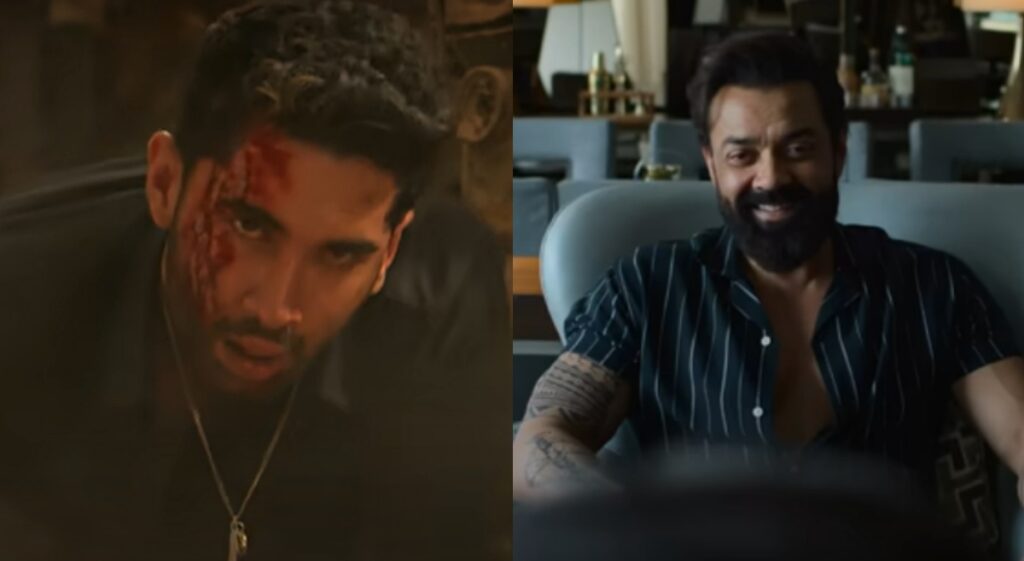
He had a convincing answer to every criticism. He said he goes by his inner conviction while selecting young actors and actresses irrespective of their family background. Sounds true, because in the movie Kill both the lead actors come from non filmy families, Lakshya Kapoor and Raghav Juyal. A big strength of Karan is his strong persona. Karan also has this great ability to take pot-shots at himself and his movies either directed by him or produced by him. Karan’s inherent jovial nature and the way he interacts with even younger actors and actresses, putting them at ease without the baggage of a producer is refreshing too.
Lakshya Kapoor and Raghav Juyal in Kill
Director:
Karan Johar has come a long way as a director in selection of stories, he started his directorial debut with the frothy Kuch Kuch Hota Hai but as a filmmaker his most defining moment came with Kabhi Alvida Naa Kehna a major departure from the usual romantic dramas. Though not without flaws Kabhi Alvida Naa Kehna showed Karan Johar’s ability in taking on more layered and risky storylines. The director successfully dwelt into the complexities of modern marriages and emotional dissatisfaction. The movie showcased how messy relationships can turn out to be with everyone getting hurt.
In more ways than one Karan completely turned the concept of the clichéd ‘happily ever after’ on its head. The movie had its share of brickbats as well due to the bold presentation. Kabhi Alvida Naa Kehna featured SRK in one of his most unlikeable roles as a very bitter and arrogant Dev while Abhishek Bachchan gave one of his better performances. There is a child like nature and sweetness to the role. As viewers you sympathize with Abhishek more than SRK.
The starcast of Kabhi Alvida Naa Kehna
Another movie showcasing Karan Johar’s evolution as a director is My Name Is Khan. The movie explored the burning issue of Islamophobia set in the period after 9/11 attacks. It’s a very risky topic given the political undertones but Karan did a very fine job. Apart from Islamophobia Karan also dealt with a syndrome called Aspergus with the required sensitivity. In spite of having an overblown pre climax involving a massive flood Karan delivered an important message about the need for tolerance and rising above religious hatred.
A still from My Name Is Khan
Mention must also be made of 2023’s Rocky Aur Rani Ki Prem Kahani. Karan managed to bring in something new within the familiar terrain; he subverted some of his own themes regarding patriarchal authority. A major highlight of Rocky Aur Rani Ki Prem Kahani is the recreation of ‘Dole Re Dola’. Ranveer’s Rocky dancing with his prospective father in law challenged the traditional notions of masculinity like nothing else; he broke down the gender stereotypes with this one. gesture. Through the character of Rocky Karan presented a refreshingly different protagonist, a man who is willing to change for his girlfriend.
Ranveer Singh’s Rocky doing Kathak with his prospective father in law
Apart from feature films Karan has also been part of anthology movies like Bombay Talkies, Lust Stories 1 and Ghost stories. By Karan’s own admission he was very sceptical on how he would fare among the more intellectuals Anurag Kashyap, Dibakar Banerjee and Zoya Akhtar. Though he stuck to his favorite homosexuality theme starring Saqib Saleem and Randeep Hooda he effectively brought out the need to embrace one’s real self. It ended up being the most talked about segment.
Producer
As a producer too Karan has experimented with different genres. For example there is Tarun Mansukhani’s Dostana a movie about two guys pretending to be gays in order to find a house. Dostana may come across as just a frivolous fun film with humour that often borders on being outlandish, but it is not that. It is an important film as it is one of the first mainstream movies on homosexuality in an attempt to normalize it. There is an important scene in the second half where Kirron Kher is seen accepting her son’s sexual identity and relationship. Of course Abhishek Bachchan’s character is not an actual gay, still it is an important moment in the larger context of social acceptance.
Abhishek Bachchan and John Abraham as pretending gays
Kapoor &Sons directed by Shakun Batra and produced by Karan is another millstone. The film was a family drama with several hidden skeletons, something which most families try to cover up with a pretense of everything is all right. Through this tale of a dysfunctional family Shakun Batra also advocated on a same sex relationship being normal
Kapoor &Sons
Raazi directed by Meghana Gulzar and produced by Karan is a nuanced war drama bringing alive a little known chapter of history. Raazi’s significance lies in how Meghna Gulzar explored the human cost of war through a wonderful Alia Bhatt. The presentation of the Pakistani characters specifically Vicky Kaushal’s Iqbal was refreshing too.
Raazi movie banner
With Nikhil Nagesh Bhatt’s Kill Karan entered into a very different territory, a movie combining raw and brutal action with societal undertones. The movie brilliance lies in how it humanized the gang of armed robbers through the themes of class divide elevating a standard one man army plot. Much like Homebound Kill also went to a film festival last year to Toronto, it received rave reviews as well as awards. Kill marked the emergence of two promising talents.
With Gauri Shinde’s Dear Zindagi Karan brought the much needed topic of mental health to the mainstream. The need to recognise mental health issues and go for professional help was well emphasised. This is necessary, particularly in today’s society where people are judged constantly. Dear Zindagi also explored the challenges, both professional and personal of a young woman cinematographer aspiring to be a director.
Alia and SRK in Dear Zindagi
Lastly Neeraj Ghawyan’s segment called Geeli Puchhi in the Karan Johar produced Ajeeb Daastaans anthology also deserves a mention for its exploration of caste, sexuality and womanhood in an impactful manner. It was the most liked segment in the anthology making a political statement.
Geeli Puchhi
Of course Dharma Productions has its share of huge misfires too, Puri Jagannadh’s Liger being the best example. The film was a cross pollination of various genres making little sense. Even Ayaan Mukherjee’s Bramhastra: Part 1 didn’t have a long run. There is no denying that Bramhastra: Part 1 was an ambitious attempt at merging western aesthetics with Indian mythology, however the plot suffered majorly on account of tonal issues like the jarring trope of quick love. In spite of these hiccups he continues to be strong backing new talent and content. Many directors who have worked in Dharma productions have talked about the freedom Karan gives.
Actor:
As an actor Karan made his debut with a small role in one of the longest running Indian movies Dilwale Dulhania le Jayenge. He played a small role, as a friend of SRK. After many years he played a full fledged part in Anurag Kashyap’s ill fated Bombay Velvet. The movie was a disaster on many levels but Karan did make an impact, specifically in the scene where his character Khambata breaks into an uncontrollable laugh.
Host:
Karan Johar’s chat show Koffee with Karan doesn’t need a particular introduction. Starting from the year 2004 the chat show has had 8 seasons so far. The show has stirred up numerous controversies due to his adult line of questioning and the intimate nature with which Karan hosts the show. The conversations on more than one occasion may come across as crass; however it presents a different side to the celebrities making it interesting.
Presenter: Of late he has started presenting and promoting movies also, like Bahubali and Lunchbox. Let us see what else he has up his sleeve. One thing is for sure -whatever he does, he makes sure the spotlight is on him and his work.
Though the inspiration of the storyline comes from Hollywood director and writer Karan Sharma gives it a distinct desi touch by using the elements of Indian mythology. The repetitive nature of the time loop sequences does get tiring but the movie’s chore themes coupled with the acting performances led by a terrific Rajkummar Rao help it to tide over the speedbumps
Production Companies: Amazon MGM Studios and Maddock Films
Cinematography: Sudeep Chatterjee
Music: Tanishk Bagchi and Ketan Sodha
Running time: 2 hours and 1 minute
There was a period when movies set in small town used to very profitable specifically before the pandemic. Infact Ayushmann Khurrana hugely profited with consecutive hits like Bala, Bareilly Ki Barfi and the first part of Dream Girl, Dream Girl 1 remains Ayushmann’s highest grosser till date, however just like any other genre a certain staleness crept in due to an overdose. Of course Stree 2 is an exception but by and large the formula of a small town movie with a flawed protagonist has led to a certain fatigue. Bhool Chuk Maaf starring Rajkummar Rao and Wamiqa Gabbi is a throwback to the Ayushmann Khurrana sub genre of small town movies. In spite of familiar beats Karan Sharma manages to infuse some freshness.
Set against the backdrop of Varanasi Bhool Chuk Maaf primarily focuses on Ranjan Tiwari (Rajkummar Rao) and Titli (Wamiqa Gabbi). The two are deeply in love and desperate to get married. The hitch is that Ranjan doesn’t do any kind of job, he has applied for government jobs but with zero luck. Things take a dramatic turn when Ranjan promises to get a government job in two months and then marry Titli. Through the system of jugaad Ranjan manages to get one but the joy is short-lived. A day before the wedding Ranjan finds himself stuck in a bizarre time loop where he relives the cycle of a particular day, the date refusing to move. This is the story in brief.
Ranjan and Titli are deeply in love and are desperate to get married
Rajkummar Rao’s Ranjan Tiwari stuck in a time loop
A strong aspect of Bhool Chuk Maaf is the gradual progression of Ranjan Tiwari in becoming a better person. Although Rajkummar Rao has previously played the role of a small time boy as well Karan Sharma manages to give it fresh nuances through the layered writing. Ranjan starts off as a wastrel of sorts by spending the money of either his mother or the girlfriend. He has no intention of being self sufficient until he is forced to become due to the desperate situation. A big reason for Ranjan’s attitude is the father played by Raghubir Yadav. Seema Pahwa playing Ranjan’s mother is the solo breadwinner of the family through the pickle business. The father also doesn’t do any job and Ranjan inherits his father’s extreme laid back attitude.
However things start changing when Ranjan gets stuck in a time loop where he is forced to confront on why things aren’t moving ahead in spite of praying to god and feeding people as well as animals. This gradual journey of self discovery and a complete arc through a series of absurd situations is a big strength of the movie.
The love story between Rajkummar Rao and Wamiqa Gabbi also has interesting touches due to their individual personality traits. Titli isn’t just Rangan’s love interest but also an equal partner who on certain occasions seems to be more invested in their relationship than him. At times its hard to see what Titli sees in Ranjan but Wamiqa Gabbi does a very good job in imbibing Titli’s passionate love. She does a very good job in portraying the different facets of the role, Wamiqa also raises ample chuckles with her wonderful comic timing. The duo of Rajkummar and Wamiqa also share a good chemistry specifically in the drunken conversation a day before the time loop. Rajkummar Rao as Ranjan is no stranger to playing a small town boy but the actor still manages to bring a freshness with his nuanced acting. He does complete justice to the journey of Ranjan making the viewers empathize with the bizarre scenarios that the character finds himself in. Among the elders Sanjay Mishra deserves a specific mention as Bhagwan Das, the film’s central message is conveyed through his role. He plays the character with the right amount of mysteriousness.
An important subplot in Bhool Chuk Maaf is the system of Juggad where a more worthy candidate doesn’t get what he deserves. The movie much like Pradeep Ranganathan’s Dragon talks about how real success isn’t about cheating your way to the top. There is an important subplot related to a Muslim man called Hamid Ansari, he repeatedly tries to commit suicide only to be saved by Ranjan. How this Muslim man triggers a change in Ranjan’s attitude makes the movie much more than just an average small town movie. The movie also critiques people’s obsession with government jobs and the marriage market where a certain kind of people are considered more marriage material.
Talking about the flaws on some occasions the movie seems stuck in a certain rut like the protagonist reliving the same day. There is a sense of repetitiveness to the sequences specifically in the portions where Ranjan keeps saving Ansari and persuading him on not to commit suicide. This does get exhausting, the movie could have done with more crispness in storytelling. The music also needed to be much better, the only track which makes a good impression is Tanishk Bagchi’s ‘Koi Na’ its a soothing love ballad perfectly capturing the romance between the lead pair.
Cinematographer Sudeep Chatterjee does a very fine job in capturing the small town essence. The atmospherics of Varanasi become a character in itself thanks to the divinity associated with the place.
Final word: Bhool Chuk Maaf makes for a good watch if you are in the mood for a morality tale with the concept of time loop.