The Long Walk directed and produced by Francis Lawrence has a distinct hangover of the Korean web series Squid Games along with Jennifer Lawrence’s Hunger Games: but this movie has bromance with the participants being supportive of each other. The movie isn’t for those who are in the mood for grim stories. For fans of dystopian dramas with socio political commentary, The long Walk is a must watch
Starcast: Cooper Hoffman, David Jonsson, Garrett Warieng and others
Director and Producer: Francis Lawrence
Genre: Thriller/drama
Based on: Stephen King’s novel The Long Walk
Screenplay: JT Mollner
Producers: Francis Lawrence, Roy Lee, Cameron MacConmy and Steven Schneider
Cinematography: Joe Willems
Music: Jeremaih Fraites
Running time: 1 hour and 48 minutes
The backdrop of Francis Lawrence’s The Long Walk is a future of extreme fascism. In a brutal test numerous young men participate in a walk by the same name. In this competition they must maintain a minimum walking pace with no option of slowing down or giving up. If either of the two happens the soldiers would bump them off. Only one winner remains.
The broad themes covered by The Long Walk are false hopes, government dictatorial/fascist ways, economic hardships resulting in numerous men participating and finally resilience of human spirit along with a certain optimism.
A strong aspect of the movie is the haunting dystopian world created by Francis Lawrence along with cinematographer Joe Willems. The atmospherics are truly scary given the current political atmosphere. Francis Lawrence makes the viewers contemplate on how our near future will look like if the fascism continues.
In spite of a mostly bleak picture mention must be made of a strong sense of brotherhood among the men. This specially comes out in the companionship portions featuring Cooper Hoofman’s Ray Garraty and David Jonsson ‘s Peter Mc Vries. For Ray, Peter Mc Vries becomes an important anchor given his emotional turmoil and his reasons for joining the walk.
Inspite of the premise being rooted in capitalist machinery the men are unexpectedly supportive of each other. They urge each other keep on walking no matter what. The conversations have a philosophical tone
Through these men the movie explores different kinds of masculinity starting from Ray. The concept of American dream has also been used well to critique a dystopian society which offers false hope of success.
The actors also do a very fine job in making the viewers feel for them. The ones who stand out though are Cooper Hoofman and David Jonsson. They get the emotional graph of the roles spot on.
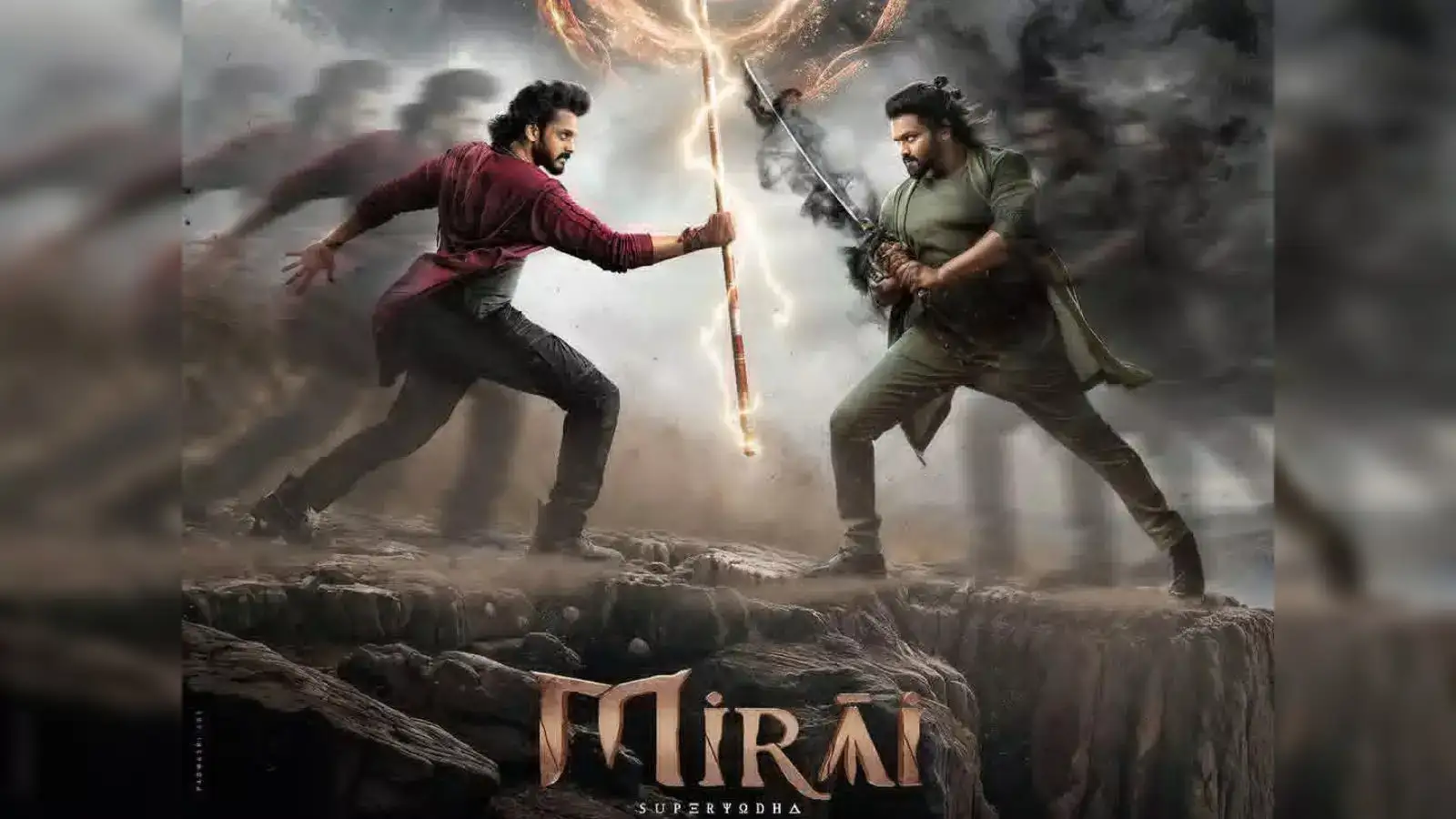
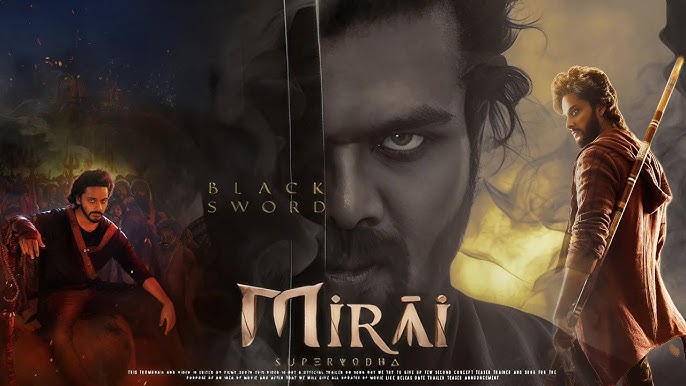
Karthik Gattamneni who has written and directed Mirai does a good job in creating solid back stories for both Teja Sajja and Manchu Manoj. How their respective pasts shape up the present timeline is good. The solid visuals coupled with the performances specially the hero and the antagonist help the movie tide through some weak comedic gags. Rana Dagubbati appearing in the post credit sequence also has a blast.
Story, screenplay and direction: Karthik Gattamneni
Additional writer: Manibabu Karanam
Producers: T G Vishwa Prasad and Krithi Prasad
Cinematographer: Karthik Gattamneni
Music: Gowra Hari
Running time: 2 hours and 49 minutes
The 2024 movie Hanuman was a huge game changer for both Teja Sajja and the director Prashanth Verma. Much like the protagonist the film was also an underdog. The expectations weren’t high, but the movie surprised one and all beating Sankranti biggies like Saindhav, Guntur Kaaram etc. Teja Sajja established himself as a potential young star. Mirai also follows a similar trajectory in terms of the hero’s characterization. Here too the hero is a ruffian unaware of his destiny. He ends up fighting a force that’s way above his league but succeeds with determination and some help. In spite of a not so novel storyline Mirai mostly hits the right chords specially for those who are into the genre of devotion with fantasy.
Protagonist Teja Sajja
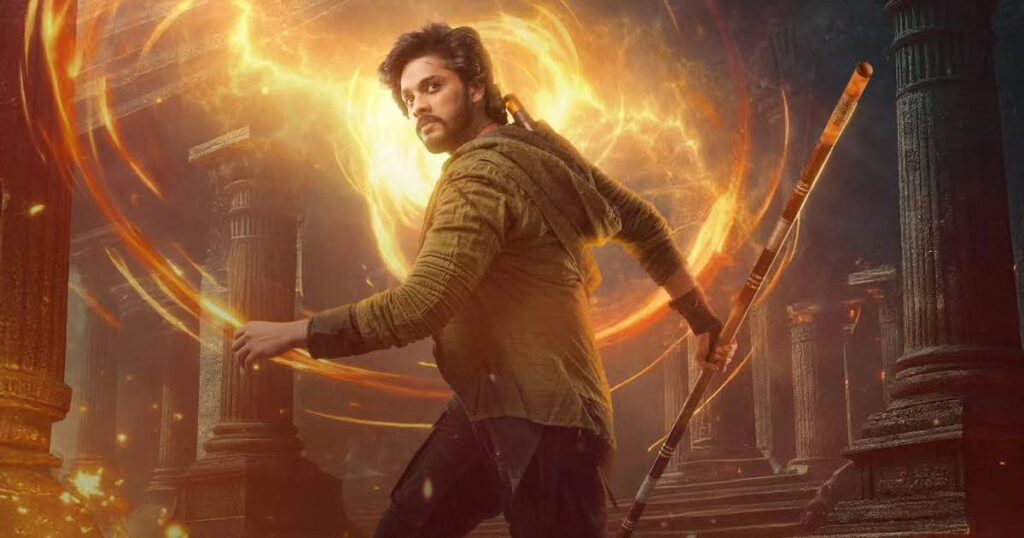
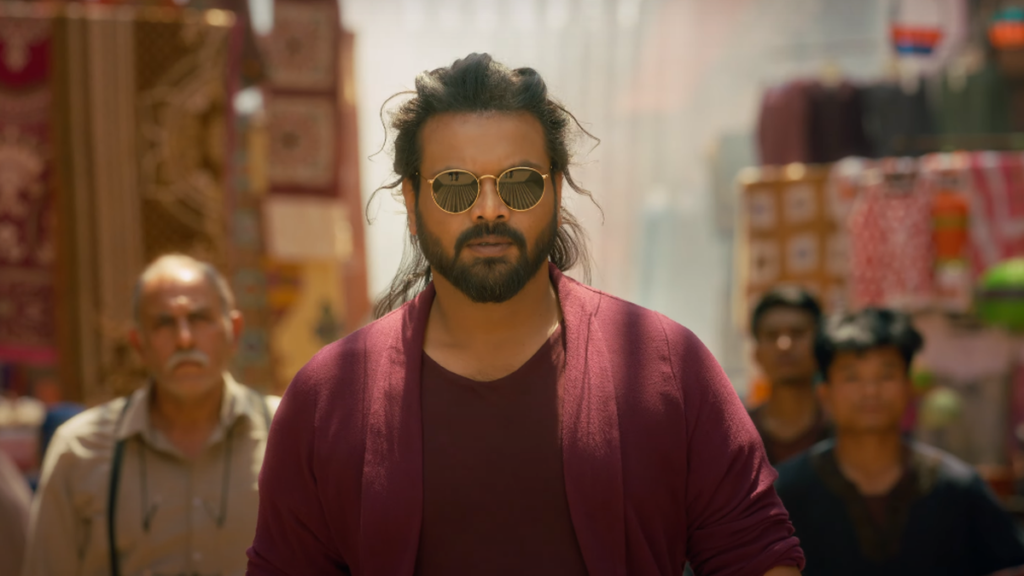
The broad storyline of Mirai involves Emperor Ashoka’s sacred books. The nine scriptures have the power of turning any mortal human being into a deity. Teja Sajja’s Vedaa is a young warrior unaware of his past. Vedaa’s life undergoes a huge change with the arrival of Ritika Nayak as Vibha. Guided by Vibha and others Vedaa must understand his true role which is protecting the scripture. The film pits Vedaa opposite the more powerful Mahabir Lamba (a commanding Manchu Manoj). Shriya Saran plays Vedaa’s mother, and a divine soul connected to protecting the scriptures.
A strong aspect of Mirai is the visual department. Director Karthik Gattamneni who has also handled the cinematography department does an excellent job in creating some big screen worthy moments. These portions include a sequence involving a bird called Sampathi. Also, a high-octane moment on the train is a visual delight.
The CGI involving the bird as well as the climatic fight between Teja Sajja and Manchu Manoj is brilliant to say the least. The Ramayana connection with the magical stick will also be a treat for the devotees.
Apart from the cinematography Gowra Hari’s background score also deserves a specific mention. It amplifies the high voltage moments adding to the immersive experience.
Mirai also works because of some solid acting specially the leads. Teja Sajja’s role of an underdog shares more than one similarity with Hanuman. Still, he pulls of Vedaa’s transformation from a carefree youngster to a determined force with ease. The actor is especially good in conveying the vulnerabilities making the protagonist a grounded character in spite of the fantasy world.
Manchu Manoj as Mahabir Lamba also makes for a powerful antagonist. The fiery eyes coupled with the commanding dialogue delivery making him a very worthy rival. Manoj particularly shines in the sequence where he talks about his past. The anguish of a young boy facing societal rejection due to caste hierarchy has come out in an impactful manner. Karthikeya playing the younger version of Manoj is also excellent.
Shriya Saran also shines in spite of the limited screen time. Shriya lends an emotional depth with her nuanced acting. She brings in the required divinity as well as a strong inner strength. Jagapathi Babu as one of the protectors too lends in the required gravity during his conversations with Teja Sajja.
A major problem with Mirai is the unnecessary comic stretches involving police officers’ team. Venkatesh Maha and Kishore Tirumala are reduced to mere buffoons producing more groans than laughs. Ritika Nayak as the sanyasini has a good presence but her character could have been better utilized instead of a typical damsel in distress trope.
Final word: Mirai is worth watching for the stunning visuals and if you are into the devotional genre.
Director Varsha Bharath does a fine job in etching the tumultuous journey of Anjali Sivaraman’s Ramya. Her yearning for liberation and eventually finding peace is relatable for numerous millennial women. Mention must also be made of the female friendships. It gives the movie some of its best moments
Starcast: Anjali Sivaraman, Shantipriya, Saranya Ravichandran and others
Genre: Coming of age
Director and writer: Varsha Bharath
Producers: Vetrimaaran and Anurag Kashyap
Production Company: Grass Root Film Company
Cinematography: Preetha Jayaraman, Jagadeesh Ravi and Prince Anderson
Music: Amit Trivedi
Running time: 1 hour and 55 minutes
Most coming of age stories in cinema revolve around young men dealing with societal expectations and thorny relationships with their fathers. A coming-of-age tale through a female lens isn’t a common thing. Varsha Bharath’s Bad Girl is a refreshing and much needed tale through female lens.
As the title suggests Bad Girl focuses on the journey of a young woman going through many turbulent life scenarios. She does numerous things defying the general social norms. The title here isn’t the case of a moral judgment being passed. It’s more of a reflection on how traditional culture perceives a woman attempts to find her autonomy. The viewers see this through the journey of Anjali Sivaram’s Ramya.
A strong aspect of Bad Girl is how Varsha Bharath has etched Ramya. More than a plot driven story Bad Girl feels like a series of episodes and a character study. Varsha Bharath does a very fine job in showcasing the journey starting from teenage life. When we first meet Ramya, she is forever imagining a fairy tale with thoughts of romance and sex. Ramya feels that she has found it in her classmate Nalan (Hridhu Haroon). Through Nokia Phones and dialed up internet connection they have a series of secret conversations which Ramaya’s orthodox family has no idea about.
These portions have a dream like visuals. The cinematography by Preetha Jayaram, Jagadeesh Ravi and Prince Andreson is simply fantastic to say the least. They bring to life Ramaya’s state of mind. Of course, Ramya’s fairytale comes to an end when caught red handed. The mother played by an excellent Shanti Priya isn’t happy about her daughter’s actions laying the base for the thorny mother and daughter relationship.
The process of Ramya making one bad decision after another in her attempts of finding liberation. While also questioning the traditional thoughts of her parents has been wonderfully written and enacted. There are scenes where Ramya is seen reflecting on her actions as she grows older. Through this Varsha Bharath talks about what it feels like to be a contemporary young woman who is judged on something or other.
Mention must also be made of the how the films deals with the generational differences. Shantipriya’s Sundari doesn’t understand the ways of her daughter’s lifestyle. She is constantly worried about who is going to look after her daughter. There are numerous moments of friction. At the same time love is there too. There is a wonderful pre climax moment after Sundari’s retirement as a teacher. Ramya wants to hug her mom and express love. After a lot of deliberation Ramya does it, the reason being a huge showdown which had taken place previously.
Through the role of Sundari Varsha Bharath also looks at patriarchy. Sundri is a working woman with a well-paying job. She fits the traditional standards of the society but still there is no getting away from the patriarchy.
Lastly Bad Girl also deserves appreciation for how it celebrates female friendships. Saranya Ravichandran as Ramya’s confidante specially deserves a mention. The female bond explored through her and Anjali Shivaraman gives the movie some of its best moments.
Apart from the already mentioned cinematography department Amit Trivedi’s music also needs to be talked about. His soundtrack perfectly captures the tumultuous journey of Ramya. The production design also stands out more so in the portions of Ramya’s formative years.
Performances wise the film belongs to Anjali Shivaraman and Shantipriya. Anjali Shivaraman effortlessly portrays the multifaceted journey of Ramya. Whether it’s the innocence of college days or the simmering frustration of college years and eventually making peace. Shantipriya is also compelling bringing out both the motherly concern and a quiet inner strength.
Final word: Bad Girl is an important watch for how it tackles coming of age through female lens.
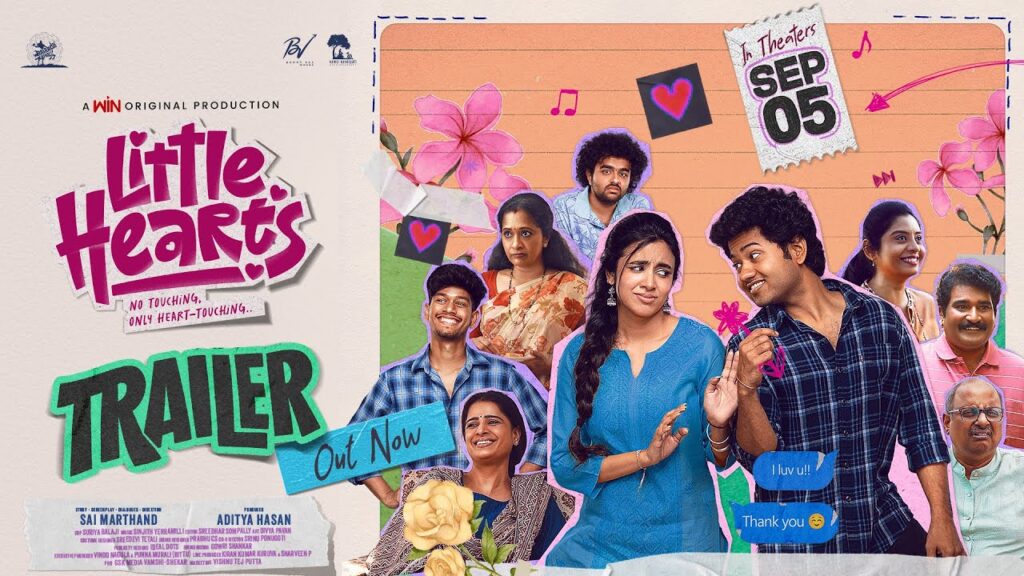
Little Hearts written and directed by Sai Marthand isn’t plot heavy. The story often plays out like a series of comic sketches: but the engaging screenplay coupled with the performances makes this a fun weekend watch. A strong aspect of Little Hearts is the subtle coming of age with the heroine standing up for her love
Starcast: Mouli Tanuj Prasanth, Shivani Nagaram, Rajeev Kanakala, Satya, S S Kanchi, Jai Krishna and others
Genre: Comedy/romance
Director and writer: Sai Marthand
Producer: Aditya Hasan
Production house: ETV Win
Cinematographer: Surya Balaji
Music: Sinjith Yerramilli
Running time: 2 hours and 8 minutes
Little Hearts is a film which perfectly fits the tag of a nonsensical but fun entertainer. Unlike the usual larger-than-life heroes with no flaws this is a movie which isn’t afraid to poke fun at the protagonist. In this case the hero and the heroine aren’t the brightest bulbs, they are equally dimwits when it comes to studies. Sai Marthand who has written and directed Little Hearts does a fine job in creating a fun love story with all social media and pop culture references. The love story has a hilarious connection to the Bahubali films which I will get to later. Producer Aditya Hasan who is only one web series old needs to be applauded for backing this up.
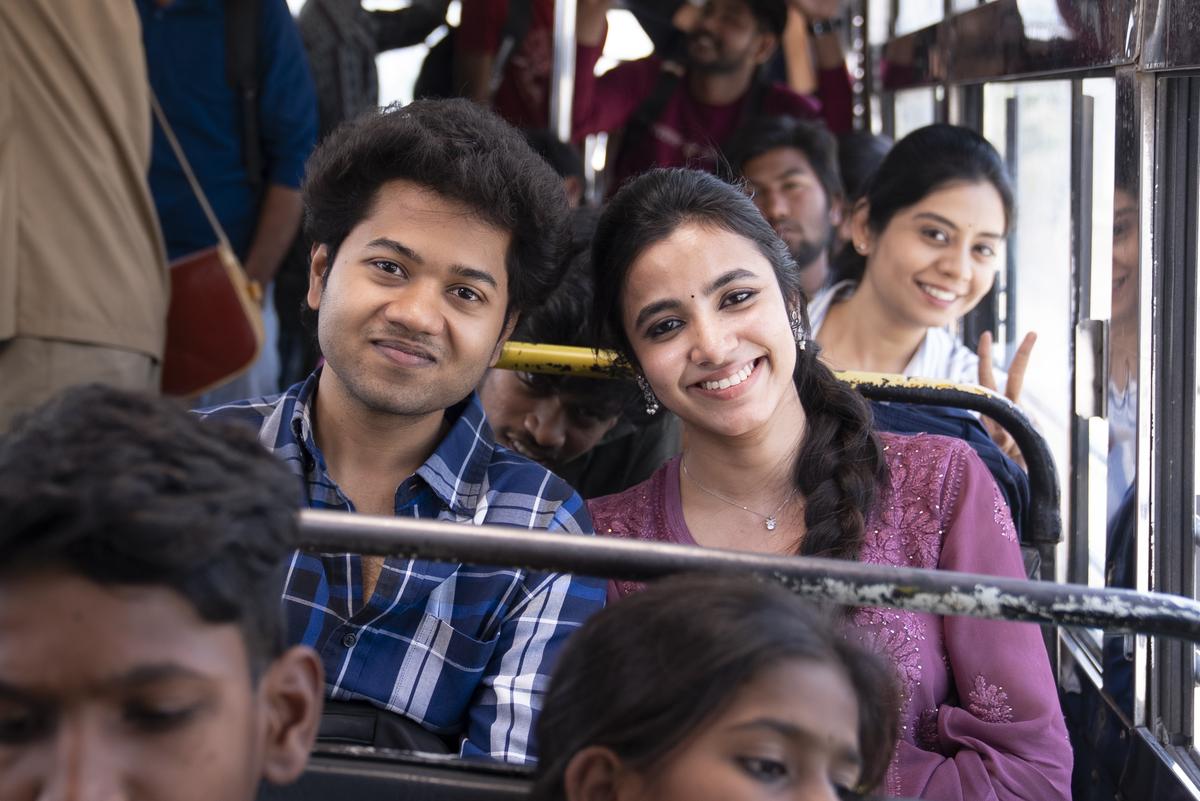
Mouli Tanuj Prasanth and Shivani Nagaram
The storyline of Little Hearts primarily revolves around Akhil (Mouli Tanuj Prasanth) and Shivani Nagaram’s Khatyayini. Both of them fail in clearing their respective subjects and are compelled to undertake long-term coaching due to their respective fathers. Akhil has just gone through a bitter break up with his intermediate sweetheart. Initially his attraction towards Khatyayini feels like a temporary recourse but things take a serious turn with both falling in love head over heels. This is the story in brief.
A strong aspect of Little Heats is the entertainment quotient. Special mention must be made of the scenes featuring Mouli and Jai Krishna a fellow wastrel. The banter between them coupled with Jai Krishna’s constant predictions on how Akhil’s love is domed only to be proven wrong raises many chuckles. His disbelief on how Khatyayini falls for Akhil and vice versa is hilarious to say the least. A specific mention must be made of the portion where Jai Krishna does a translation of Khatyayini words thinking that she has broken up with Akhil only to fall flat on his face.
The love story of the leads has a constant comparison to the journey of Bahubali films. The initial mixed reactions of Bahubali one is compared with their romance. The assumption is neither their romance nor the film will soar. The cultimation of Bahubali journey with the second part becoming a massive blockbuster as well as Akhil and Kathyayini’s love story has been wonderfully connected.
Little Hearts also works because of the self-aware tone, the flaws of both the hero and the heroine with their quirks have been well written and enacted. Towards the middle of the second half the movie slips into a coming age of territory. Both the hero and the heroine decide that they had enough of engineering and medicine respectively. They decide to do something else with their future.
Sai Marthnand gives some agency to Kathyayini in the way she stands up for her love. The dialogue of Akhil on why Kathyayini is worth fighting for gives the movie some emotional heft. In this scene Akhil openly talks about his flaws making the protagonist relatable.
The music composed by Sinjith Yerramilli is funky going well with the movie’s tonality. A specific mention must be made of the humorous conversational song where the leads are seen missing each other deeply. There is also an amateur musical video sung and edited by Akhil as a surprise birthday gift for Kathyayini. This video coming at important junctures is another high point of the movie. The cinematography of Surya Balaji is also fair perfectly capturing the vibrant atmosphere.
Both Mouli and Shivani Nagaram perfectly fit the parts of bumbling youths coming of age. They embrace the quirky tone matching each other making the romance believable. Rajeev Kanakala as Akhil’s extremely worried father also does well bringing in a certain seriousness. His reaction to Akhil’s musical video is especially worth mentioning.
S S Kanchi as Kathyayini’s father also raises some chuckles particularly in the post interval portions. The rest of the cast add to the quirky scenarios with their wonderful acting.
Final word: Little Hearts is small scale but high on entertainment value. This deserves a theatre watch,
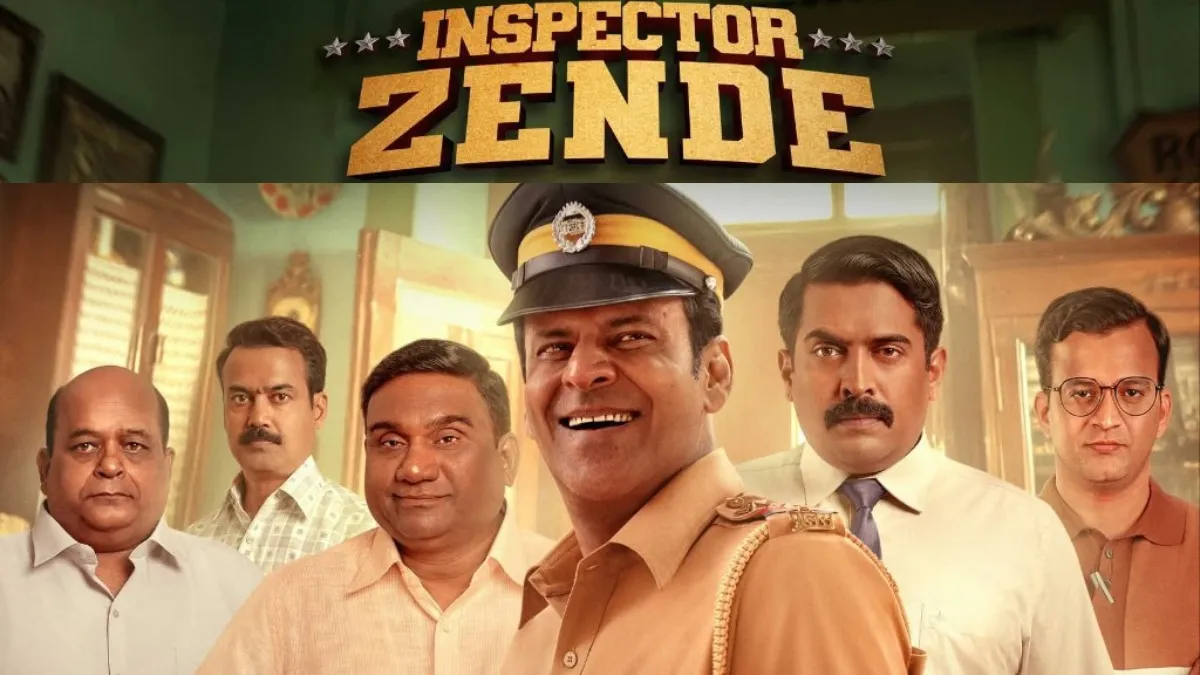
Unlike the usual larger than life Bollywood cop’s director Chinmay Mandlekar opts for a comic tone with a bumbling hero. He mixes crime with comedy, and the results are quite good. In spite of some uneven writing Inspector Zende makes for a fun watch and a good stress buster.
Starcast: Manoj Bajpayee, Jim Sarbh, Girija Oak, Harish Dudhade, Sachin Khedekar and others
Genre: Comedy/thriller
Director and writer: Chinmay Mandlekar
Producers: Om Raut and Jay Shewakramani
Production house: Northern Light Films
Cinematography: Vishal Sinha
Music: Sanket Sane
Running time: 1 hour and 52 minutes
Streaming site: Netflix
Inspector Zende streaming on Netflix is based on a real-life story set in the period of 1970&1980’s. Madhukar Zende’s pursuit of the noted criminal Charles Sobhraj and the eventual capture in Goa. The story makes for a good dramatic fodder with a larger-than-life protagonist. But the tone adopted by Chinmay Mandelkar is more goofy than a serious drama. This approach has its positives and negatives. The good thing is that the film makes for a welcome stress buster. At the same time those looking for more intensity will be disappointed.
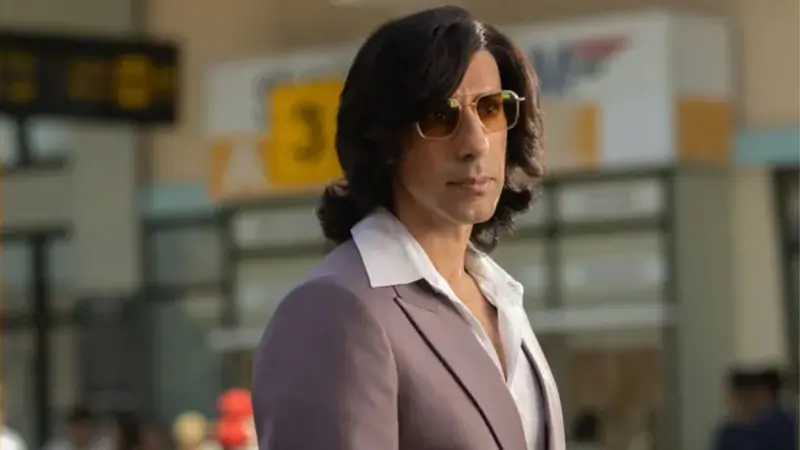
Jim Sarbh as Charles Sobhraj
The one-line story of Inspector Zende focuses on Manoj Bajpayee’s Madhukar Bapurao Zande. He is no supercop with flexing muscles. He is a middle-class Maharashtrian officer with no distinct qualities as such. The movie focuses on his pursuit of Carl Bhojraj (a flamboyant Jim Sarbh). Bapurao Zande’s eventual capture of Carl forms the basic premise of Inspector Zende
A strong aspect of Inspector Zende is the retro atmospherics. Director Chinmay Mandlekar along with his cinematographer Vishal Sinha create a lived-in world. The streets of Bombay with the bustling lanes and the police force operating with no fancy technology has been recreated well. The detailing is on point, and this includes the chawl where Zende stays too.
A lot of movie’s humor is situational emerging from the messy situations and undercover names like “Rushi Kapoor” and “Om Raut”. For the modern audiences the ways of Zende and his tribe may feel dated but the way these men operate fits the time period.
Refreshingly the movie doesn’t opt for the mainstream slapstick approach like Rohit Shetty and David Dhawan. Instead, it finds laughs in the small errors and the sheer absurd nature of humans. Thankfully many jokes land.
A standout moment in Inspector Zende is the scene where Zende finally crosses paths with Carl Bhojraj. Instead of a brutal showdown their encounter feels like an odd dance. Every punch and push feels like choreographed number. The scene comes across like a bizarre Tango between a cop and criminal. It’s both thrilling and funny in perfect synch with the movie’s tonality.
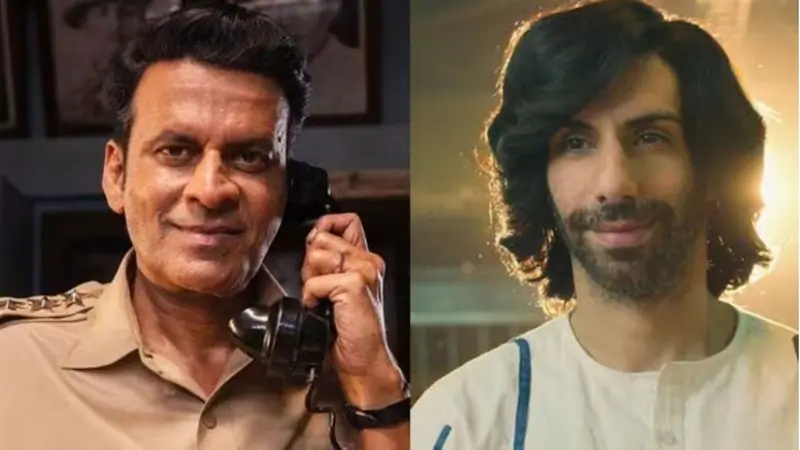
Manoj Bajpayee and Jim Sarbh
Mention must also be made of the husband-and-wife scenes. Girija Oak as Zende’s wife plays her part with lot of warmth. Her interactions with Manoj Bajpayee and specially the segment involving puranpolis is adorable. As Zende’s collogues Both Harsh Dudhade and Bhalchandra Kadam bring strong comic timing. Sachin Khedekar too brings in the required authority as the no nonsense DGP. Jim Sarbh as Carl Sobhraj plays his part with the right amount of deception and flamboyant attitude. As Zende Manoj Bajpayee slips into the part with practiced ease nailing the goofball nature. He does a very fine job in capturing the grit of Zende while also making the viewers laugh.
Apart from the uneven writing in some patches the songs composed by Sanket Sane is also a minus point. The tunes are just about serviceable nowhere close to good.
Final word: Inspector Zende is worth watching if you are fans of stories mixing crime with comedy.
Ghaati is one of those rare films with no striking qualities. Jagapati Babu playing a nonsensical police officer has some fun with his crass lines and shifting shades like a chameleon: however the movie is a tonal mess in spite of a gritty subject with much potential. Anuskha Shetty’sperformance too lacks the required fire often coming across as monotonous.
Producers: Saibabu Jagarlamudi and Yeduguru Rajeev Reddy
Production Company: First Frame Entertainments
Music: Nagavelli Vidya Sagar
Cinematography: Manojh Reddy Katasani
Running time: 2 hours and 37 minutes
There was a point in time when Krish Jagarlamudi was a respected filmmaker, the director had a unique voice starting with movies like Gamyam, Vedam and Krishnam Vande Jagadguram. There was something different in the way he presented his heroes whether its Allu Arjun in Vedam, Allari Naresh in Gamyam and Rana Dagubbati in Krishnam Vande Jagadguram. These movies used to have a strong social core: however the last few years has been a very uneven ride for the director. The historical fantasy Manikarnika went through many tribulations with the director leaving the project midway, the ambitious NTR biopic Kathanayakudu and Mahanayukudu ended up as box office duds in spite of a solid Balakrishna.
His project with Pawan Kalyan Hari Hara Veera Mallu also suffered the same fate as Manikarnika becoming a bigger disaster than the former. Ghaati is also a film which has seen several delays leading to less pre release buzz which now is far more abysmal than many would have imagined. The film tries to be a social drama while having the masala of Pushpa and the end result is neither here nor there. The romance between Vikram Prabhu and Anuskha lacks the required soul and the highly irritating villains led by the Mayasabha actor Chaitanya Rao only makes things worse.
The one line story of Ghaati is a woman seeking revenge and wanting to uplift her community. The setting is eastern Ghats. The local porters carrying marijuana are called as ghaatis, they are stuck in the cycle of exploitation with little to no alternatives.
Its hard to point out any positives in an extreme train wreck like this but Manojh Reddy Katasani’s cinematography is visually striking at least in the beginning portions. The vast landscape with the drone shots are nice to watch. Jagapathi Babu as already mentioned has a colorful role though his crass lines and the personality traits don’t befit the role of a police officer. His antics does provide some entertainment in an otherwise drab film. He keeps the audiences guessing as a shape shifter.
The major problem with a movie like Ghaati is wanting to replicate the story of Allu Arjun’s Pushpa. There’s a major Pushpa hangover in the portions featuring the different cartel heads. Pushpa for all its flaws at least had some innovation and the character graph of Allu Arjun came with a strong emotional core. This is missing completely becoming a poor imitation in the process. The love story between Anuskha and Vikram Prabhu again lacks the ex factor whether its the staging or the performances. Vikram Prabhu tries to do a Dulquer Salmaan but ends up falling flat on his face: nowhere close to matching the charisma of Dulquer.
Anuskha Shetty too leaves a lot to be desired. The required fire in portraying the transformation of Sheelavathi is majorly missing. The actress has very static expressions with flat voice modulation. The villain gang are mere caricatures instilling no fear whatsoever. The worst casualty is Chaitanya Rao. After an impressive turn in Mayasabha the actor irritates you with exaggerated body language and dialogue delivery leading to unintentional funny moments.
The story’s graph is as predictable as it can get with zero surprises: logically too the villains atrocious behavior towards Sheelavathi doesn’t make any sense. The music composed by Nagavelli Vidya Sagar is another downer, the tunes fall flat adding to the tediousness.
Final word: Ghaati is easily Krish Jagarlamudi’s worst film, even for die hard Anuskha Shetty fans this is a tough slog.
Actor and producer Dulquer Salmaan deserves major appreciation for backing a female centric project like this. The film is a good mix of western tropes with strong folklore. At times the film bears a striking resemblance to the Tripti Dimri starrer Bulbbul too, in terms of the men targeted by the protagonists coupled with the strong personalities.
Before dissecting Kotha Lokah Part 1 (Chandra) a major appreciation should be given to actor and producer Dulquer Salmaan. Backing a female superhero subject on a big scale takes a different kind of thought process and Dulquer deserves every bit of appreciation for making sure that the film doesn’t come across as a compromised product. Technically speaking Kotha Lokah Part 1 (Chandra) is far ahead of the many big budget extravagances specially a movie like War 2 with its shabby VFX. Fortunately Kotha Lokah Part 1 is much more than just the visuals. It has a strong plot with the right fusion of west meets east. The film also benefits from Kalyani Priyadarshan’s strong act something which I will get to later.
Dulquer Salmaan the producer of the movie along with a small cameo
The storyline of Kotha Lokha Part 1 (Chandra) focuses on the mysterious Kalyani Priyadarshan She lands in Banglore and soon finds work in a coffee shop. Chandra is asked to maintain a low profile by a mystifying man Moothon (voice over given by Mammootty). Chandra tries her best to maintain a low profile but the past catches up soon due to the neighbor Sunny (Naslen of Premalu fame). Sunny is very curious about Chandra’s real identity and this leads to a stunning revelation. Parallelly the city of Bangalore is witnessing cases of organ trafficking, how these two tracks collide forms the centric basis of Kotha Lokha Part 1 (Chandra).
A strong aspect of the movie is the efficient world building done by Dominic Arun and Santhy Balachandran. Unlike the many big screen extravagances focusing on elevations this one takes its time to establish the world of Chandra and Sunny. The portions of Sunny with his wastrel friends may seem to be an unnecessary subplot in the beginning but how the director connects the two worlds is brilliant.
The integration of Chandra’s origin story with actor Vijayaraghavan’s narration is also fantastic. It comes in at the right moment giving a solid emotional touch. The haunting visuals of Nimish Ravi coupled with Jakes Bejoy’s music elevates this stretch further. The touch of Kerala Folklore with the template of modern superhero will be a delight for fans of sci fi and superhero movies.
A growing bond between Sunny and Chandra with an undercurrent of romance is also a treat to watch. By the ending you wish the two had met in different circumstances. As Sunny Naslen is an absolute riot with his expressions and one liners. There is an inherent sweetness to the part in spite of a certain lazy nature and Naslen does a very fine job in bringing that out. Mention must also be made of Chandu Salimkumar, he also brings in a fair share of laughs sharing a perfect chemistry with Naslen.
What also makes the film click are the real world issues through a conservative a police inspector Nachiyappa Gowda (a despicable Sandy). Nachiyappa Gowda is a traditionalist who doesn’t like women with modern traits. This comes out visibly in different occasions. So the character of Chandra represents a superwoman taking on patriarchal structures while standing up against the organ trafficking ring.
The major ace for the film apart from the visuals is Kalyani Priyadarshan’s strong act. She is absolutely wonderful in the action sequences bringing in a strong agility. Apart from the physicality the actress is also good in bringing an emotional depth specially in the second half scenes with Sunny. In a short its a performance which has the right mixture of fierceness and vulnerability.
Talking about the cameos Tovino Thomas has an extended special appearance and the actor seems to be having a ball enjoying the whacky characterization. Dulquer Salmaan comes at the end, he has a stylish entry. In spite of the limited screen time the swag is unmissable.
Final word: Kotha Lokha Part 1 (Chandra) is a big scale experiment worth appreciating in theatres.
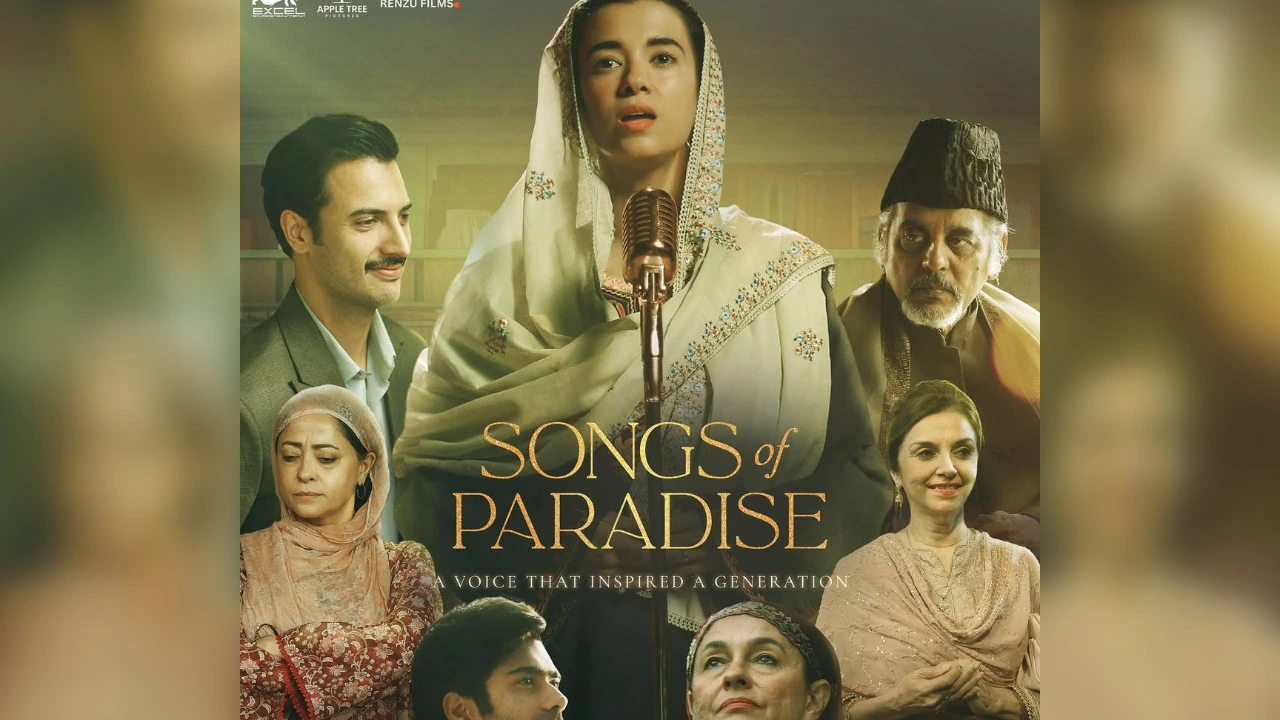
Taking inspiration from Kashmir’s first female singer director Danish Renzu tells a relevant tale of resilience and rebelling against the social norms. The fight of Saba Azad’s Zeeba Akhtar holds relevance even today. Not everything lands but Songs of Paradise is an important watch
Starcast: Saba Azad, Soni Razdan, Zain Khan Dhurrani, Sheeba Chadda, Taaruk Raina and others
Genre: Musical
Director and writer: Danish Renzu
Producers: Ritesh Sidhwani, Danish Renzu, Farhan Akhtar and Shafat Qazi
Production Companies: Excel Entertainment, Apple Tree Pictures and Renzu Films
Music: Abhay Sopori
Cinematography: Vincenzo Condorelli
Running time: 1 hour and 40 minutes
Streaming site: Amazon Prime
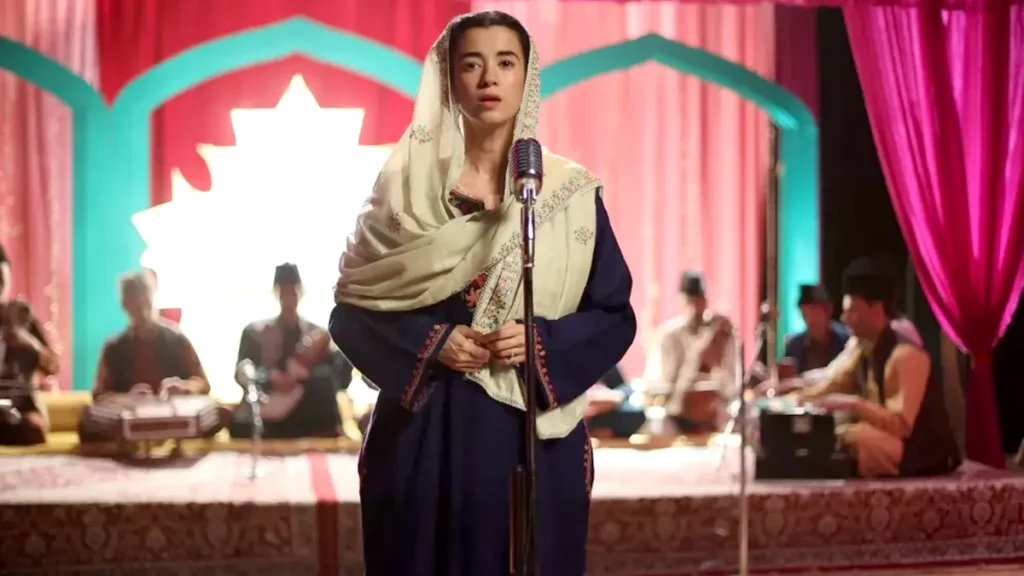
Raj Begum born in the year 1927 became popular as the Melody Queen of Kashmir. She was honored with Sangeet Natak Akademi award along with the Padma Shri. Raj Begum became a singer at the time of major restrictions. Danish Renzu’s Songs of Paradise is an earnest effort at celebrating her defiance.
Saba Azad as the younger version of Raj Begum
In brief the storyline traces the life of Saba Azad’s Zeeba Akhtar, a young woman blessed with an extraordinary voice. How she breaks the rigid traditions with the help of supportive men forms the basic arc of the film.
A major strength of the film are the acting performances coupled with the music. Both Saba Azad and Soni Razdan playing Zeeba at different ages are a delight to watch. As a young Zeeba Saba brings the perfect mix of vulnerability and resilience. The journey of Zeeba in navigating the world of patriarchal mindset in spite of a support system is both well written and enacted. Saba conveys the determination and the persistence often times with the slightest expressions, specifically her eyes. A standout sequence involves Zeeba’s conversation with a man, “You are a male, you look for an opportunity to showcase your talent. We women seek excuses to pursue our hobbies.” Saba Azad’s background as a singer also comes in handy during the song portions.
Soni Razdan as the older Noor Begum is also wonderful with her moving portrayal. She becomes an emotional anchor often conveying a lot through silences. Zain Khan Durrani as the oxford educated poet is charm personified. The way he supports Zeeba in spite of the open hostility makes the viewers wish that the world has more men like him. Their love track has some adorable moments.
Sheeba Chadda playing an overbearing mother is also fantastic successfully making the viewers hate her. Shishir Sharma as Zeeba’s master also pitches in a good act. Taaruk Raina as a music student is fairly good too. What also adds to the performances is the perfect local dialect. The songs is another plus for the movie. The compositions of Abhay Sopori are deeply rooted in Kashmiri Folk giving a different flavor. The songs do a fine job in echoing Zeeba’s yearning for freedom.
A major problem with Songs of Paradise is the lack of sufficient dramatic tension. The socio and political turmoil in Kashmir needed to be explored more. The challenges faced by Zeeba specifically the societal backlash and the emotional toll have a rushed nature. There is a certain surface level approach sometimes distancing the viewers.
Final word: In spite of a certain surface level approach Songs of Paradise is a relevant tale of pursuing one’s hobby without giving into the society’s narrow minded thinking.
The Pakistani characters in Arabia Kadali have more depth in comparison to Thandel, they are written with more nuance. However, a sense of repetitiveness specifically for those who have seen Thandel plays a major spoilsport. The series is worth watching for how it handles the socio-political aspects. Fortunately, Satyadev’s Badri never becomes a larger-than-life hero, he wins over the enemies with humanness instead of fists
Starcast: Satyadev, Anandhi, Poonam Bajwa and others
Genre: Drama
Director: V. V Surya Kumar
Screenplay: Krish Jagarlamudi and Chintakindi Srinivasa Rao
Producers: Y Rajeev Reddy and J Sai Babu
Production Company: First Frame Entertainments
Music: Nagavelli Vidyasagar
Cinematography: Sameer Reddy
No of episodes: 8
Streaming site: Amazon Prime
The story of Arabia Kadali focuses on a group of fishermen from Srikakulam. They unknowingly wander into Pakistani waters in the year 2018. Satyadev is Nurgala Badri, among his people Badri is the most educated. He dreams of a better life with Ganga (Anandhi). Anandhi lives in a nearby village of Matsyawada. There is a major animosity between the villages of Badri and Ganga. Things take a massive turn when the fishermen are imprisoned in a foreign land. The rest of the story focuses on how they return home after a long ordeal and in process the hostility giving way to mutual cooperation and respect.
A strong aspect of Arabia Kadali is the world building done by director VV Surya Kumar along with Krish Jagarlamudi. The interpersonal dynamics between the two villages with the financial struggles has been shown in an engaging manner. It takes a while for the central conflict to kick in but because of the engaging world building the viewers care for the fishermen’s plight.
The gradual process of the hostility coming down has also been shown in a layered manner. There is no overnight transformation, instead it’s a step-by-step process. The web series is also refreshing in how it doesn’t paint Pakistan’s as complete caricatures. At one point you have a judge defending Indian Fishermen in front of Pakistani officials. Amit Tiwari as warden Saleem starts off as hugely evil but he too gets a credible redemption arc.
Poonam Bajwa as Dr Fathima also has a strong voice not afraid to express her opinions. She plays her part with the right balance of warmth and authority. The web series doesn’t confine itself just to the plight of Indian prisoners it also mentions the Pakistani ones languishing in Indian jails. The need for humanity across borders comes out in a strong manner.
Mention must also be made of how Anandhi’s Ganga shapes over the web series. Much like Sai Pallavi in Thandel she is also a woman of steel not letting the cynicism get to her. Anandhi does a fine job in capturing the inner strength.
The cinematography of Sameer Reddy is also good. He captures the numerous landscapes in an effective manner. There is an earthiness to the atmospherics. As Badri Satyadev does a good job in capturing the resilient nature of the man. He makes you believe in Badri’s almost saint like nature with his earnest acting, a particular sequence worthy of mention is when he talks about not writing any letter to Ganga. The reason doesn’t make complete sense still the emotional vulnerability makes the viewers feel for the man.
Talking about the flaws the VFX department leaves something to be desired. A key sequence involving a heavy storm comes across as rather cartoonish. The beats of Thandel also weigh down Arabia Kadali. A sense of boredom creeps in certain portions due to this. The track involving Harsh Rohan as the spoilt brother hasn’t been well integrated either, it comes across as jarring to say the least.
The love story while neatly done could have done with more intensity. The web series would have benefitted immensely with more scenes featuring Satyadev and Anandhi. As a result, the required emotional pang for two lovers is missing.
Final word: Arabia Kadali is a more grounded version of Thandel. Watch it for the performances and the message of humanity.
Paradha directed by Praveen Kandregula is a much needed social drama in the age of muscular heroes and pan India settings. The end portions do feel somewhat hurried as the resolution needed a more emotional high. Nevertheless Paradha is an important story celebrating feminism and sisterhood. Anupama Parameshwaran gets one of the best written female characters in 2025 and the actress absolutely nails it.
Story, screenplay and direction: Praveen Kandregula
Producers: Vijay Donkada, Sridhar Makkuva and Sreenivasulu P.V
Production Company: Ananda Media
Music: Gopi Sundar
Cinematography: Mridul Sujit Sen
Running time: 2 hours and 25 minutes
In today’s age of increasing pan masala stories strong women characters with agency is difficult to find. A good example of this are the latest independence day releases both Coolie and War 2. In Coolie Sruthi Hassan plays a perpetual damsel in distress either waiting to be rescued by Rajinikanth or becoming the object for violence. In War 2 Kiara is presented as a tough soldier doing hand to hand combat with Hrithik but the overall characterization leaves a lot to be desired. Having said that you also have films with strong women and these aren’t necessarily female centric. Good examples of these are Patralekha in Phule as Jyotiba Phule’s equal, also Tripti Dimri in Dhadak 2 an upper caste girl who fights for her love and questions the family members pretending to be modern. Also Ananya Pandey in Kesari Chapter 2 as the idealistic Dillret Kaur playing an important role in the courtroom proceedings.
Paradha directed by Praveen Kandregula is a significant addition to this list. The movie broadly tackles the themes of foolish traditions passed from generation to generation ad also the celebration of sisterhood. The film begins with the introduction of a fictional village. In this village all women must be strictly veiled outside the house. A woman who is seen without the paradha is considered to be a bad omen and the punishment for that is death only. This practice is linked to a village deity who is ironically a feisty warrior. Its hard to believe that places like these exist in 2025 but director and writer Praveen Kandregula makes the viewers buy into these archaic scenarios with a convincing build up. Anupama Parameswaran’s Subbalakshmi aka Subbu not surprisingly starts off as a young girl with firm belief in these outdated thoughts thanks to her mother. Things take a huge turn for Subbu when the veil gets blown away due to excessive wind. A wildlife photographer played by Gautham Vasudeva Menon clicks Subbu without her knowledge. On the day of her engagement a magazine with her photograph getting published as the front cover causes absolute mayhem. The rest of the story focuses on how Subbu gets out of this outdated thinking with the help of Sangeeta and Darshana along with a strong bond of sisterhood.
A strong aspect of Paradha is the characterization of these three women. Yes the transformation of Anupama Parameshwaran’s Subbu is the heart of Paradha, at the same time both Sangeeta and Darshana are crucial too with their individual journeys. Sangeeta plays a homemaker called Ratna. Ratna represents numerous homemakers who devote most of their energy and time on their husbands and children. On the other hand Darshana’s Amishti is a civil engineer. In a predominantly male dominated atmosphere Amishti is a rare exception. Amishti is a hugely ambitious woman with a solo focus on reaching top position, she is an Alpha male with a hot temper. Again many young girls/women would connect with the ways of Amishti.
How these three distinct backgrounds play out with their age gaps is very engaging. In the beginning on a trip to Dharmasala Amishti often Chides Subbalakshmi on her thought process which doesn’t go well with Subbu who complains to her aunt Ratna. On certain occasions Ratna becomes a referee between the two younger women.
How Subbu gradually let goes of the veil wearing after a haunting incident packs a strong emotional punch thanks to the powerful acting of Anupama. The conversation between the three women with Ratna and Amishti encouraging her to get out of this blind faith and the need to question practices makes a strong impact.
Paradha is a film which doesn’t completely resort to male bashing. Praveen Kandregula makes important points on how women can also be extremely judgmental about the choices of their fellow tribe. This comes out wonderfully in a sequence involving a woman cop. In a conversation with Amishti this woman talks about her love for shopping, make up and cooking while being a tough police officer. Amishti has a certain disregard for things like these which she considers as an obstacle.
The movie in a gentle but firm manner establishes the need to question practices and in the process bringing a perceptional change. Apart from the dramatic moments the movie also has some chuckle worthy scenes. This primarily includes Harshvardhan as the often exasperated husband unable to manage home duties with his job demands. The conversations between him and Sangeetha as she cooks up stories is a delight to watch. Sangeeta as the homemaker with new found freedom is first rate, specifically in the portion where she changes her voice as an old woman. Darshana as Amishti brings out both the feisty nature and the vulnerability in an impactful manner. Raj Mayur in his brief part as Subbu’s fiancée is good too. Rajendra Prasad in an extended cameo makes his presence amply felt, the scene where he narrates the tale of a bird wanting to discover the world is poignant, it adds to the transformative journey of Subbu.
Paradha ultimately belongs to Anupama Parameswaran. The young actress is a revelation taking on a complex part, she delivers a nuanced performance portraying the vulnerability and the eventual transformation in an excellent manner. Often times Anupama conveys a lot with her body language.
Gopi Sundar’s music goes well with the movie’s tone. Its not of a chartbuster material, nevertheless the songs do a fine job in elevating the key emotional moments. The cinematography of Mridul Sen is of a fine standard, whether its the village portions with the dark tonality or the Himalayan mountains in the latter half. The color pallet goes perfectly with the mood changes.
One of the minor issues with Paradha is the end resolution, its too simplistic lacking the fire specifically considering the build up. Also the three women mostly coming across Telugu speaking population in Dharamsala feels too much of a coincidence.
Final word: Keeping aside the minor niggles Paradha is an important tale of feminism and sisterhood which needs to be celebrated.