Representation Of LGBTQ+ Community In Mainstream Hindi Cinema


Salute is a cocktail of a suspense drama, murder mystery and a whodunit rolled into one. This cocktail works in spite of some familiarities
Salute (Malayalam). 3.5 out of 5
Starcast: Dulqer Salmaan, Manoj K Jayan, Diana Penty and others
Director: Roshan Andrews
Writer: Bobby- Sanjay
Producer: Dulqer Salmaan
Production Company: Wayfarer Films
Music : Jakes Bejoy
Genre: Thriller/drama
Running time: 2 hours and 23 minutes
Streaming site: Sony LIV
The genre of police procedurals isn’t something new. Earlier also we have seen films which look at the inner workings of the police department. Salute directed by Roshan Andrews is a suspense drama, a murder mystery and a whodunit all rolled into one. It is a cocktail which works in spite of some familiarities. You can see the influence of last year’s critically acclaimed Nayattu. What makes Salute work is the tight script and also Dulquer Salman’s performance.
Salute tells the story of sub-inspector Aravind Karunakaran. He belongs to a family of police officers. His role model to join the force is his own brother Ajith Karunakaran (Manoj K Jayan). Aravind takes pride in working with his brother. Things take a turn when the police nab an innocent auto-driver Murali on a double murder case. An upcoming election and political pressure leads to Murali being implicated.
At the start of the film we come to know that Aravind has taken a sabbatical after realizing that his brothers had done wrong. The difference between the brothers comes out clearly from the beginning. Aravind wants to pursue the truth, his brother Ajith on the other hand mocks him and constantly says this is how the system works. The reason for Aravind reopening the case is the accidental interaction with the sister of Murali. Diana Penty plays Aravind’s girlfriend. She looks pretty but nothing more can be said about her character or performance.
Salute works best when the focus is on Dulquer and Manoj. The cat and mouse game between the brothers while living under the same roof is a delight to watch, you can see that they are keeping up appearances for the sake of the family. But at the same time they are trying to outwit each other. These scenes work really well.
The pace of the film is deliberately slow. There is no hurry to make the police catch the criminal. More often than not the film plays out as a battle between a hero who is haunted by his own conscience and a faceless villain.
Just when you think that Aravind has caught the criminal the story takes a turn every time, the best thing about Aravind’s characterization is that he is not shown to be invincible. He is as vulnerable as anyone.
The background music by Jakes Bejoy also adds to the impact. It adds a layer of intrigue and threat.
One of the areas where Salute fumbles is its last stretch. The finale of the film doesn’t quite live up to the buildup. Also none of the female characters adds much value to the film.
Dulquer Salman and Manoj K Jayan are in perfect sync with each other. Dulquer makes you empathize with Aravind’s moral dilemmas. There are no traditional hero antics but Dulquer shows that he is equally adept at serious roles. In a nutshell Salute is a gripping investigative drama that deserves to be seen.

Suresh Triveni’s debut feature Tumhari Sulu was a film about a housewife who is full of life. It was a slice of life film that resonated with the audiences, particularly the middle aged women. Here the director switches gears and tells a story about moral ambiguities and class divide among other aspects. There is a lot that the director packs in, sometimes it feels too cluttered but still the film is largely watchable. A major reason for that is Shefali Shah’s presence. The actress is clearly having a blast in her second innings but more on that later.
Maya played by Vidya Balan is a strong willed, super popular journalist. This comes out strongly in the introduction scene of Maya . We see her grilling a powerful person, there is a holier than dow attitude. It is a character which is clearly influenced by Barka Dutt just like the many female journalists that we have seen on screen. Maya is someone who believes that truth should come out however things take a turn when she gets embroiled in an unfortunate accident. Shefali Shah plays the house help of Maya called Rukshana. Rukshana’s daughter is the girl who gets hit by the car and is severely injured.
What follows is a series of events that challenges nearly all the characters and pushes them to confront their dilemmas. Other important characters include Rohini Hattangadi who plays Vidya’s on screen mother. Revealing anything more wouldn’t be appropriate as there are many threads in the screenplay.
Suresh Triveni is successful in capturing the audience’s attention from the start, the sense of dread and foreboding is masterfully captured. As a result you are sucked into the story and want to know what will happen next.
An important aspect of Jalsa is the intricacies of human behavior when they are pushed over the edge. At many points Jalsa unfolds like an examination of human psychology.
The class divide between Rukshana and Maya has also been brought out well by the director. This divide can be seen in many scenes. For example there is a scene where Rukshana’s son comes to Maya’s house. He plays around with motion flush in the toilet; he is very amused by the number of toys that rich people can buy.
The scenes featuring Rohini Hattangadi are filled with certain warmth. It is a straight forward role but still the scenes work because of the effervescence that the senior actress brings in. The good thing about her character is that she gives it back to Vidya’s Maya. She doesn’t take things lying down when Maya has fits of anger.
Lastly the scenes featuring Surya Kashibhatla as the 10 year old boy with cerebral palsy are also very good to watch. The bond that he and Rukshana share comes out naturally. This is why the twist in Rukshana’s character during the pre-climax feels odd.
Coming to Shefali Shah it is great to see the actress doing such great work in her second innings. As Rukshana she uses her eyes to great effect. She does a splendid job in portraying the anger and the dismay. She doesn’t speak a lot in the film but it is her performance that you remember the most. It is difficult to say that this is the same actress who played the unapologetic villain in the web series Human.
The chief reason why Jalsa doesn’t become a great film is due to the inconsistent characterization of Vidya Balan. We are first introduced to her as someone who is absolutely fearless and can manage anything. However there is a serious shift in the tonality as we go along.
Yes a certain fear would be there at the start but you never see her feeling guilty about what she did. It is always about what will happen if the police find out. The character actions and the characterization don’t simply gell.
There is an attempt to show that she is feeling guilty towards the end but it never feels comprehensive. We see Maya confessing to a trainee journalist called Rohini, Rohini is seen taking a video of her confession but there is no guarantee that Maya will be punished for what she has done.
The climax is also underwhelming as Maya never apologizes to Rukshana. We just see Maya sitting on a bench with her. The portrayal of the journalists is also stereotypical in nature. It is something that we have seen in countless other films; honestly it is high time that the filmmakers think differently on how to portray journalists.
Because of the inconsistent characterization Vidya’s performance also suffers badly. Her emotional outbursts feel forced and don’t create the desired impact. Vidya is sincere but we have seen the actress do far better work in the past. This is a performance that she can do even in her sleep.
Another issue with Jalsa is the addition of too many subplots. You get the feeling that Suresh Triveni has bitten more than he can chew.
In a nutshell Jalsa is very much watchable but it needed a tighter screenplay.

I still vividly remember the day 19th October 2012
It was the release of Student of The year
At that point I had no idea that you will become a part of my world
In spite of not having a lot of screen time you stormed through my heart
Your cuteness mixed with beauty bowled me and many others too
With Highway you became one of my favorite actresses
I have never missed any of your films whether they are good or bad
It is almost ten years and each of them has been a loving memory.
I have watched most of your films on repeat mode and never felt tired re watching them again and again.
One of the qualities that I admire in you is your mental strength.
I still remember the short film Genuis of the year after the debacle of Coffee with Karan
It was not just a short film but it was also a statement on how you can take a joke on yourself.
There are many times Kangana Ranaut has attacked you but you have always dealt with it in a dignified manner.
With Coexist you made me more interested in nature
The day when I got the Coexist cup it was one of the best moments in my life
It is my most treasured possession.
Due to Coexist influence I also brought home a hibiscus flowerpot
I also developed the habit of reading to trees and petting them like dogs and cats.
Your personality reflects not just in your films but also in Ads
I love Manyavar Ads particularly the last one on Kanyamaan
It questioned the practice of Kanyadaan in a simple but effective manner
You have conquered many hearts with characters that have had the right mixture of vulnerability and strength particularly the latest one Gangubai Kathiawadi.
Thank you so much for noticing my videos on you
The profile video that I made on you will remain one of my best videos
My admiration for you is never ending
Cheers to many more years Alia.

Rajesh Mapuskar’s Rudra is a psychological thriller/drama that doesn’t quite land. For those who are not aware this series is an official adaptation of the BBC show Luther. Since I haven’t seen Luther I would be talking about this as a standalone one.
This Hindi remake revolves around DCP Rudraveer Singh (Ajay Devgn). He is a part of the special crimes unit of Bombay police, every episode has a new case that puts Rudra to test. The first episode introduces Rashi Khanna’s Aliyah Choksi- she is a genius in space research and also a suspect in a double homicide case. Aliyah’s character keeps coming and going in the series. She is seen affecting Rudra’s professional and personal life. Other important characters include Esha Deol, Atul Kulkarni, Ashwini Kaleskar etc.
One of the few things which work in Rudra is the scenes between Ajay Devgn and Rashi Khanna. The unusual bond that Rudra shares with her is brought out well by the director. Rudra wants to keep away from Aliyah but there are certain times in the series where he has to take help from her. The chemistry between Rudra and Aliyah keeps the series afloat even when things start to go downhill.
It also helps that Rashi Khanna gives a layered performance. She plays her character’s complexities with ease.
Out of the multiple psychopaths KC Shankar is the most terrifying one. The actor plays a painter who paints with blood and gets a kick by drinking other women’s blood. KC Shankar plays his role with an unhinged madness. He is the only villain who stands up to Ajay Devgan’s screen presence.
Another performance worth noting here is that of Ashwini Kalsekar. It is refreshing to see the actress step out of the Golmaal mode and playing an authoritative character.
Ajay Devgn as Rudra gives his trademark intense performance. There isn’t particularly anything new but the actor makes it work. He displays the various shades of his character with finesse.
The biggest issue with Rudra is the underdevelopment of several characters. This can be best seen with Atul Kulkarni’s Gautam. In the initial episodes he is the best friend of Rudra but the character takes a 180 degree transformation, this sudden twist makes you scratch your brains about what the director was thinking.
Another issue with the show is its predictability. The template of Rudra getting it wrong for the first time and solving it in the second chance feels so overdone after a point.
This predictability can also be seen in the scenes of Ajay getting angry. He breaks the things in his cabin and just messes everything around him. As an audience you wonder why the bosses aren’t deducting salary.
The portions involving the turbulent personal life feel more like an add on than anything else. It also doesn’t help that Esha Deol hasn’t improved one bit in all these years.
In a nutshell Ajay Devgn’s OTT debut could have been far better.

In her short career so far Alia has done many memorable characters. There have been a few exceptions like Sadak 2 but most of them have hit the mark. Out of all the roles that she has done so far the one which is most recent and most appreciated is that of Gangubai.
The character of Gangubai is in many ways different from what we have seen Alia do earlier. Roles like Highway and Udta Punjab showed the actress playing a young girl but the graph of Gangubai is very different. Here we see the life of Gangubai in three stages. It starts off with her being sold to the brothel house at the age of 16 and goes until the character is in its mid-thirties. Though we don’t see much change in the facial features as it is glamorous throughout still it doesn’t distract you from the viewing experience. The main reason for that is her body language. By body language I mean her walk, voice and eyes. Throughout the film there are many instances where she conveys her various emotions like innocence, sadness, frustration, anger and pain just through her body language. Following are some scenes in the film which bear testimony to this.
Alia is an actress who has become synonymous with her breakdown scenes starting from Highway. There is a general pattern to these, however in this movie we see a very different side to her acting capabilities. There are scenes in the film where you don’t have any breakdown but you still feel her grief. For example in one of the initial scenes where she has to stand in front of a brothel house leaning on a wall calling out to men in whispers. There are no dialogues here but Alia conveys the pain of Ganga superbly just through her eyes. There is a certain emptiness in those eyes.
The song Meri Jaan in the back of the car is also another example of how much she has evolved as an actress. The song starts off as a blossoming romance between Alia and Shantanu’s characters but midway through it takes a different turn. Shantanu’s character tries to get intimate with Alia but she rebukes him, at one point she even gets angry with him. The reason for the anger is that she expects a different relationship with him, not the prostitute-customer relationship. She wants to be cared for, it is an emotion that she has missed for a long time. All this was mostly expressed through her eyes only.
Before the song Dholida there is a scene where Alia makes a trunk call to her father, without knowing that he died already. While her mother is telling her about it the trunk call operator keeps reminding her that there are only thirty seconds left. This frustrates her to no end and not surprisingly Alia expresses her anger in full measure. The summary of what she says is that my father is dead and there are plenty of things to talk, how can you expect me to cover all this in thirty seconds. The loss and pain are superbly brought out by the actor with just her voice.
The Dholida song starts off as a celebration track but soon it moves into a very different zone. In the second part of the song we see the character going into trance and in this again we can see the different emotions that Alia conveys through her body language. The trance state is related to the telephone conversation of the previous scene.
Likewise there are plenty of instances in the film where she conveys emotions through her walk and voice. The tonality of the voice varies in many situations. For example in the school scene she talks in a teasing manner, on the other hand there is an authority that Alia brings to her voice in her scenes with Raziabai (Vijay Raaz). In the Azad Maidan speech we can see Gangubai’s empathy for sex workers. She also makes a strong case for the betterment of the sex workers lives.
In a nutshell Gangubai gives the audiences a whole new Alia.

Saagar K Chandra’s Bheemla Nayak tries to be a mix of retaining the spirit of the original Ayyappanum Koshiyum, but at the same time there is lot of fan appeasement particularly in the second half. The director has taken the Adivasi background with Pawan Kalyan’s character being a demi god for the locals. However, the Adivasi background doesn’t really add much value to the story except for the climax. The Adivasi characters are purely there to worship Bheemla and to sing praises of him.
For most part of the first half Pawan Kalyan is subdued. Rana Daggubati’s Daniel Shekhar provokes him multiple times but Bheemla doesn’t give in. Honestly nothing much happens in the first half, it is more like a filler for what is to follow in the second one. But it isn’t a complete bore either thanks to Nithya Menon’s Sugana. It is fun to watch her in her firebrand character. The second half is definitely much better but more on that once we are done discussing the story.
This Ayyappanum Koshiyum remake is set in the forest region connecting Telangana and Andhra Pradesh. In the opening minute we see Bheemla Nayak paying his obeisance to the forest, the next shot is Rana Daggubati’s introduction. We see him resting in a car; he tells his driver that the tiger is resting after a few drinks. A folk number by S Thaman leads the audiences through the terrain. Daniel Shekhar does not think it is a crime to have a stash of alcohol when his car is going through the forest zone. Expectedly a clash happens between Daniel and the cops, this leads to something bigger. There is also a back-story to Bheemla which all the villagers know but they won’t discuss it. It is considered a ‘sacred’ oath. Murali Sharma plays Kodandram. He desperately tries to bring some peace. While Ayyapum Koshiyam tackled class divisions among other aspects here those are downplayed significantly. Also while there is a certain restrained approach in the first half still there is no getting away from the hero elevation. The best example of that is the title song where you have ample slow mo shots and hundreds of junior artists.
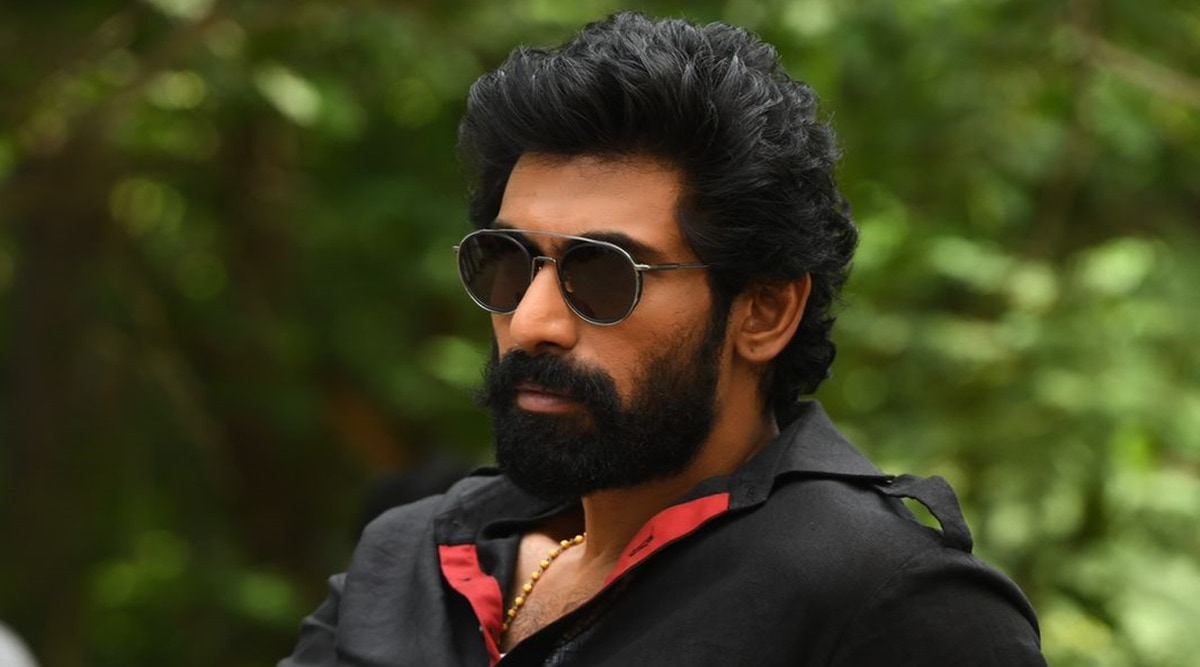
The movie gets more into the zone after Bheemla is stripped of his official duties. The scenes between Pawan and Rana are more powerful in the second half. It is fun to watch the actors taking on each other. One of the good things here is that Rana isn’t reduced to a junior artist; he gets ample scope to showcase his towering personality. He perfectly carries the attitude of the character from scene 1, his scenes with Samyukhta who plays the wife is quite good to watch. In these scenes we see a softer side to him. Also there is certain decency to his role; this comes through when Rao Ramesh’s character suggests Daniel to use Bheemla’s wife Sugana as a bait in his battle with Bheemla. Daniel scolds him saying that don’t you have shame in suggesting a thing like this.

The romance between Pawan Kalyan and Nitya Menon is also interesting because Nitya Menon’s character is no push over. She is appropriately spunky.
The climax fight is too elongated but it still makes an impact. The emotional touch at the end of the fight is quite good.
Pawan Kalyan as Bheemla is suitably restrained and also explosive when required. But his performance comes across as indifferent. The energy levels that you associate with the actor are missing for the most part.
The supporting cast hasn’t got much to do. They are mostly there to watch the show from the sidelines.
The first half as I said is quite a bore. One major reason for that is the mishmash of sensibilities and not knowing what approach to take. Also the music is one big letdown. There is an attempt to give it an earthy touch but it comes across as more artificial. This can be particularly seen in the title song.
Watch Bheemla Nayak for the confrontation scenes between Pawan Kalyan and Rana Daggubati

Abhimanyu Tadimeti’s Bhamakalapam is an interesting mix of ingredients such as crime, greed and religion. The director pivots his plot on a Faberge egg that is worth 200 cores. This valuable egg has been stolen and later on gets lost again. Apart from making an engrossing thriller the director also makes a statement on how to find god within. The underlying message here is that not to be misled by anyone who uses religion as a weapon. The film also benefits from Priyamani’s spot on performance.
Bhamakalapam begins with an incident that is eerily similar to 2018’s Andhadhun. Instead of the Rabbit you have a lamb that crosses the path and the car meets with an accident. This of course leads to many things. However the similarities with Andhadhun end here. Anupama Mohan (Priyamani) is a homemaker and also a well known Youtuber. She is famous for her videos on cooking.
But Anupama is more than just a YouTuber, she also keeps an eye on what is happening in neighborhood. You can say that Anupama is her ‘apartments Sherlock Homes’. We get evidence of this early on when she tries to expose the extramarital affair of her neighbour. Her detective work backfires and she is thoroughly embarrassed by her apartment people. She also promises her husband that she wouldn’t peek out of the window again; however fate has different plans for her.
Other important members of the apartment include a pastor who is waiting for divine events to happen. There is also a woman called Saira who is a survivor of domestic abuse. Sharanya of Fida fame plays the domestic help of Anupama called Shilpa.
The biggest reason why Bhamakalapam works is due to the intrigue that the director is able to maintain. He builds up the mystery around the egg really well.
https://www.youtube.com/embed/sbrrlQzaezY?feature=oembed Another major highlight of the film is the scenes between Priyamani and Sharanya. Their scenes are filled with comedy and also tension. The duo is particularly good when the characters become unwilling partners in crime.
The religious aspect is also brought out well by Abhimanyu. The theme of certain men misleading people by using religion isn’t really particularly new but the message is still an important one.
The cinematography by Viplav Nyshadam and music by Justin Prabhakaran also add to the comic thriller mood. For example there is a scene where Anupama finds herself dragged into a situation wishing that she had never taken that step. The sound of the violin has been very well used.
Priyamani as I earlier said is spot on with her performance. She gets the nuances of the character spot on starting from Anupama’s inquisitiveness. Saranya as Shilpa is another ace in the story. The actress is good in both the comic bits and also the ones where she needs to show tension. The rest of the cast are appropriate in their respective roles.
Bhamakalapam is an interesting experiment that deserves to be seen.


It is difficult to categorize Shakun Batra’s Gehraiyaan in one particular slot. It starts off with the theme of adultery in relationships; from there we move to various alleys. There is some corporate drama, an accidental murder and finally letting go of your past. There are too many things that Shakun tries to put in and the result is a huge mess. This mess becomes more apparent towards the end. There are too many unanswered questions, the film ends with a hint of sequel but it would be honestly better if the makers don’t go ahead it.
Gehraiyaan tells the story of four individuals. Alisha (Deepika Padukone) is a yoga instructor with a troubled past. She is carrying a huge emotional baggage. She has a start- up plan to launch a yoga app. Karan ( Dhairya Karwa) is a writer boyfriend of hers who is trying to get his book published. Their relationship is in muddy waters. Alisha’s cousin Tia (Ananya Pandey) is a well- off US returned girl. She has the best of everything in terms of lifestyle and money. Tia invites Alisha and Karan for a short trip and introduces them to her fiancé Zain (Siddanth Chaturvedi). Zain is flamboyant, impressive and also flirtatious. It doesn’t take long for Zain to flirt with Alisha, sparks fly and eventually bodies meet too. What follows is a complex web of human relationships that leaves you completely puzzled.
The biggest issue with Gehraiyaan is lack of strong foundation for the intimate relationship between Zain and Alisha. It all comes across as too fast, as a result it is difficult to be invested in the characters. Also except for Karan and to an extent Tia both Zain and Alisha are difficult to sympathize with.
The drama revolving around Alisha’s pregnancy is not just old fashioned but it is also irritating. She pushes Zain to the brinks of frustration. As a result you don’t really sympathize with the problems that her character is going through.
Zain, on the other hand, becomes a complete bad person, so there is no question of sympathizing with him anyway.
Shakun uses the high waves to show the turmoil of the characters but the issue is that one problem comes after another. Therefore the loud roar of the waves seems continuous without giving us the relief.
The starcast tries its best to make the script work but it is a difficult task given the nature of the story. However there are some emotional bits which work in bits and pieces. For example, there is a conversation between Nassurudin Shah and Deepika Padukone towards the end. This bit is quite effective mainly because of Nassurudin Shah. Ananya Pandey also scores in the few emotional bits that she has, Dhairya Karwa as Karan fits the laid back attitude of the character but he hasn’t got a lot to do.
In a nutshell Shakun Batra needs to take a serious break from adultery and strained relationships; he needs to write his stories better.