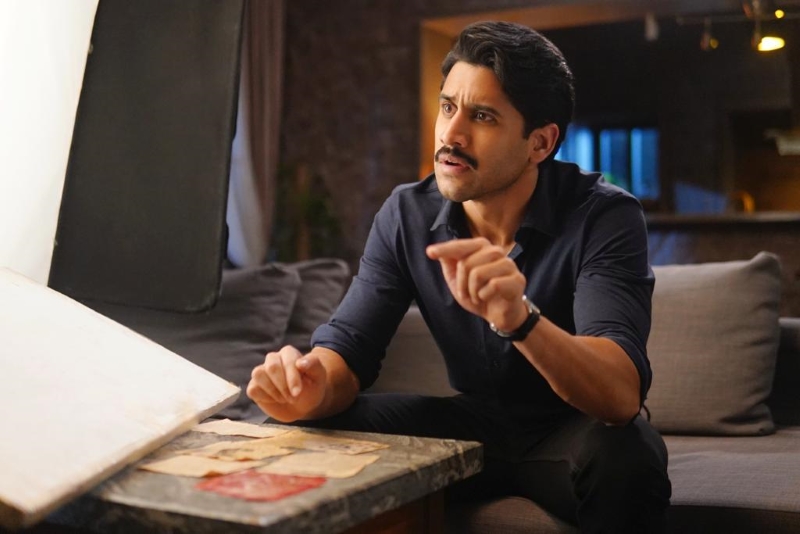
‘Dhootha’ focuses on how Sagar (Naga Chaitanya) is related to the invisible forces and races against time to connect the dots.
An intriguing web show!
Dhootha (Telugu)
Cast: Naga Chaitanya, Priya Bhavani Shankar, and Parvathy Thiruthovu
Director: Vikram K Kumar
Producer: Sharrath Marar
Music: Ishaan Chhabra
No. of episodes: 8
OTT platform: Amazon Prime Video
Filmmaker Vikram K Kumar is not new to the genre of paranormal thrillers.
For example, the director made a horror film in Tamil titled Yavarum Nalam (2009). The same was dubbed into Telugu as 13 B.
13 B was a gritty thriller where a TV set becomes a character in the story.
After making a series of romantic and science fiction movies, the filmmaker is back with a paranormal thriller and this time, the focus is on journalism and politics.
Synopsis
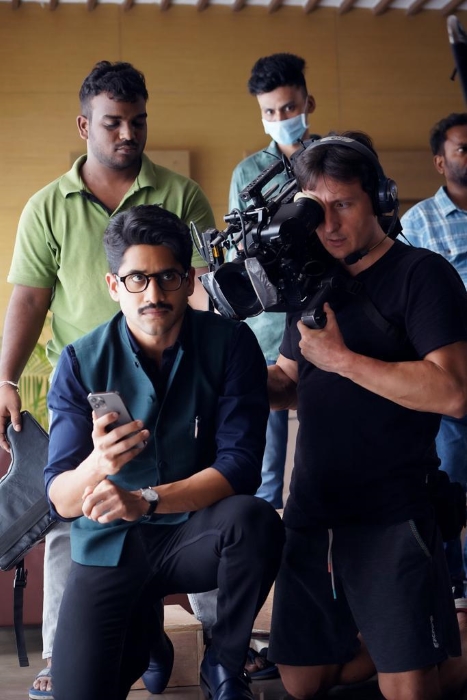
Actor Naga Chaitanya and director Vikram K Kumar on the sets of ‘Dhootha’. (X)
Sagar (Naga Chaitanya) and Priya (Priya Bhavani Shankar) are successful investigative journalists. They both are in a happy space, professionally and personally.
Priya is on maternity leave. But thankfully, director Vikram K Kumar doesn’t regulate her to just a one-note character.
Sagar is promoted as the chief editor of a newspaper called “Samachar“.
But the happiness doesn’t last long. A tragic accident claims the life of Sagar’s pet dog. Right before the tragedy, Sagar comes across a newspaper clipping which foretells what would happen.
The incident marks the beginning of many ominous messages foretelling future events and an external force targeting corrupt journalists.
Parvathy Thiruvothu plays an investigating officer named Kranti Shenoy.
In a nutshell, Dhootha focuses on how Sagar is related to these invisible forces and how he races against time to connect the dots.
Analysis
Naga Chaitanya in a still from ‘Dhootha’. (X)
Vikram Kumar engrosses the viewers from the first frame. He does a brilliant job of balancing the suspense and supernatural elements.
A major strength of the Dhootha web series is how the director designs the character of Sagar.
Initially, the viewers see Sagar as an ideal husband and a righteous media person. He is an inspiration to many aspiring journalists.
But soon enough, layers upon layers come out. Sagar is a departure from the on-screen characters that Naga Chaitanya has portrayed thus far, and the actor more than rises to the occasion.
He does a splendid job, particularly when Sagar has mental and emotional breakdowns.
Backstory shines
A working still from ‘Dhootha’. (X)
The backstory of the newspaper involving Pasupathy and Tharun Bhascker also gives the web show some of its best moments.
There is a lot of impactful socio-political commentary.
For example, there are hard-hitting dialogues about how intersecting politics and journalism are dangerous for society. The web series also predicts that nothing good will come out of politicians running newspapers.
Apart from Pasupathy and Tharun Bhascker, Dhootha has many small characters. For example, Prachi Desai is Sagar’s PA, and Rohini is the mother. These characters have been neatly integrated into the main storyline by Vikram K Kumar.
For any thriller, it is necessary that the dots are connected, and the director has done a great job of connecting all the pieces of the jigsaw puzzle.
Like the television set in 13 B, the newspaper cuttings play a pivotal role in the web series. As soon as a newspaper cutting appears, the viewers feel tense about what will happen next.
Performances
Parvathy Thiruvothu doesn’t need an introduction. She has always been a solid actor. Here too, she makes a huge impact as the no-nonsense police officer.
Priya Bhavani Shankar Sagar, as spouse, is in good form. Her character comes with its grey shades.
Technically, the Dhootha web series is a solid product with top-notch cinematography and special effects.
However, one slight problem is the middle part where the parallel investigation of Kranthi feels a bit bloated.
Also, the closing episode could have been more impactful. However, these are just minor quibbles in an otherwise gripping show.
Verdict
In a nutshell, the Dhootha web series is a gripping paranormal saga that makes some pertinent points about politics and journalism.
Ranbir Kapoor and Anil Kapoor bring their A game but the conundrum of Sandeep Reddy Vanga persist
Rating: 2.5 Starcast: Ranbir Kapoor, Anil Kapoor, Rashmika Mandana, Bobby Deol and others Direction, Screenplay and editing: Sandeep Reddy Vanga Additional screenplay: Pranay Reddy Vanga and Saurabh Gupta Producers: Bhushan Kumar, Krishna Kumar, Murad Khetani and Pranay Reddy Vanga Music composers: Pritam, Manan Bhardwaj and others Production Companies: Bhadrakali Pictures, T- Series Films and Cine 1 studios.
Sandeep Reddy Vanga is one of the few directors who became a big sensation with his very first film. Arjun Reddy (Kabir Singh in Hindi) was not just a box office success but it was also intensely scrutinized given the extreme raw nature with which he had depicted the love story of his protagonist.
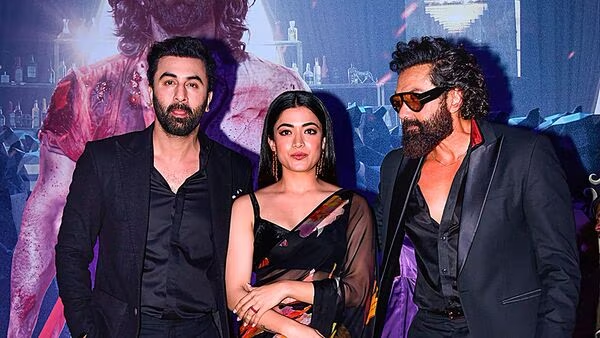
Ranbir Kapoor, Rashmika Mandanna and Bobby Deol
With Animal the director dwells into another dark tale. This time it is about a father and son; Ranvijay Singh (Ranbir Kapoor) is the son of a successful industrialist Balbir Singh (Anil Kapoor). Ranvijay considers Balbir as the best father in the world, this in spite of having many issues with him. He is sent out of the house twice by his father; first when he went with a gun to threaten his sister’s classmates for ragging her and the second time for a huge argument with his brother-in-law on the occasion of his father’s 60th birthday.
After a brief love story, marriage and two kids in US Ranvijay returns to India when he comes to know his father was attacked and grievously injured. He decides to find out who his father’s enemies are. In this process his path crosses with that of Bobby Deol who turns out to be his stepbrother thirsting for revenge. Rashmika Mandanna is the disgruntled wife of Ranvijay. She bears the brunt of her husband’s violent actions and his obsessive love for his parent. Soon enough there are no traces of the man that she fell in love with.
A big strength of Animal is easily the twisted father and son dynamics. Sandeep Reddy Vanga doesn’t waste any time in establishing how much Ranvijay craves for his father’s affection along with the workaholic nature of the father. There is a wild streak in Ranvijay from a young age itself.
Anil Kapoor, Ranbir Kapoor, Parineeti Chopra and Bobby Deol
As mentioned above there is a scene where Ranvijay’s sister comes home crying after a ragging incident. She calls up her father multiple times but Balbir doesn’t lift the phone. Later she pours out her frustration to Ranvijay who immediately goes to her college with a gun. Not surprisingly Balbir gets pissed with his son and ends up slapping him.
This scene successfully sets the base for the friction between father and son. The gradual progression of Ranvijay into an ‘Animal’ has been well staged and does send a chill down the audience’s spine.
The emotional bits between father and son in the later stages are also directed well. There is a scene in the pre-climax where Ranvijay does a role reversal with his father, that is, Ranvijay acting as the dad and Balbir acting as the son. The long years of inner frustration and Anil Kapoor’s repentance packs a big punch.
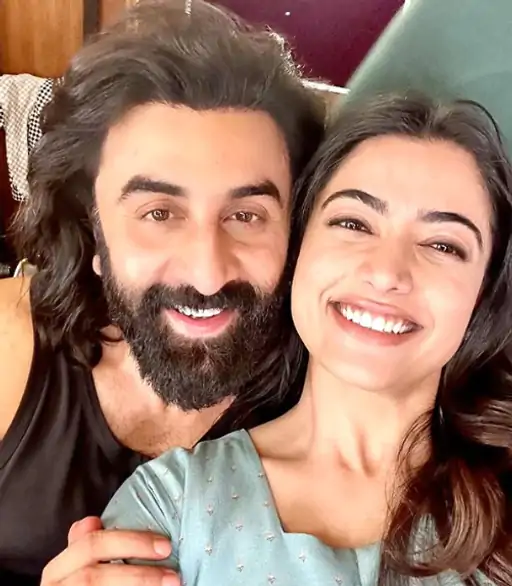
Ranbir Kapoor and Rashmika Mandanna
Bobby Deol appears only in the second half. His scenes are few but Bobby makes a solid impression just with his eyes and overall physical demeanor. The climatic fight between him and Ranbir has lot of raw action and is definitely a delight for those who like this kind of action.
But the overdose of blood and violence is a definite put off. The scenes of Ranbir hacking and killing several men gets nauseating after a point.
Another major flaw with Animal is the depiction of its female characters. They are mostly there only to bear the brunt of men. The best example of this is Rashmika’s Geetanjali. There is an important scene in the second half when Geetanjali has a severe argument in a high pitched tone with her husband. This is because of an affair that Ranvijay had behind her back.
Sandeep Reddy Vanga, director
Ideally the viewers should have rooted for Geetanjali but Rashmika’s screaming makes it difficult to empathize. Another example of a badly written female character is that of the one played by Tripti Dimri. She is a moll who is sent to seduce Ranvijay by Bobby Deol. Ranvijay knows that she is a moll but still ends up having a physical relationship and also makes her lick his shoes to prove her love. This is, to say the least is in very bad taste.
The music composed by Pritam, Harshavardhan Rameshwar and others make for a good listen. The songs that stand out are Satranga and Pappa Meri Jaan.
Not surprisingly it is Ranbir and Anil Kapoor who lead the acting department. Both the actors get into the zone of Sandeep Reddy Vanga with zero inhibitions.
Animal is not a film that can be slotted as either good or bad. Still there is enough to enjoy if you are a fan of Sandeep Reddy Vanga’s style of filmmaking or if you like Ranbir and Anil Kapoor’s acting. But it is clear that Sandeep Reddy Vanga hasn’t learnt anything from the criticism of Arjun Reddy.
The genre of horror thrillers has become as overused as romantic films, and stories about villages haunted by a horrific past have also become old as hills.
In his OTT debut The Village, director Milind Rau takes this familiar premise while attempting to do social commentary on nature conservation and superstitions.
However, the acclaimed filmmaker fails miserably to make the audience either scared or make them root for the central protagonist.
Interestingly, the web series is based on a graphic horror novel of the same name written by Asvin Srivatsangam, Vivek Rangachari, and Shamik Dasgupta.
Synopsis
Milind Rau’s directorial ‘The Village’. (X)
Gautham (Arya) is a doctor by profession. His wife is Neha (Divya Pillai).
They are on a road trip with their daughter Maya (Baby Aazhiya) and a dog called Hectic. During the road trip from Chennai to Thoothukudi, the car breaks down in a deserted village called Kattiyal.
Gautham goes to a nearby town to seek help. While Gautham is away, both Neha and Maya are mysteriously abducted.
Three locals, for their own personal reasons, agree to help Gautham. They are Peter (George Maryan), Karunagam (Muthu Kumar), and Sakthi (Aadukalam Naren).
Running parallel to this, Prakash (Arjun Chidambaram) is a despicable villain and is wheelchair-bound. He sends a group of mercenaries headed by Farhan (John Kokken). He is aided by some scientists.
John’s task is to retrieve a chemical called Lantanite, which may help Prakash to walk again.
What follows is a hotchpotch of different timelines and various themes that test the viewers’ patience.
Analysis
Arya in ‘The Village’. (X)
The biggest flaw of The Village is the weakly written flashback portions.
Here, Milind Rau touches upon the issues of oppression, the corporates taking over villages, and health hazards caused by pollution. These are undoubtedly relevant, but the execution falls flat.
Technically too, The Village is a disaster.
The forest where Farhan and others try to find the Lantanite looks like a poor cousin of the forest shown in the Avatar films.
There is an ample dose of bodies being cut in halves, intestines lying on the floor, and gory-looking men who should have ideally made the audience feel anger and fear. But nothing of that sort happens.
This is because of the cartoonish way that those scenes have been written.
Another major problem with The Village is that we don’t feel any sympathy for the plight of Gautham. This is because the web series doesn’t have strongly written scenes depicting Gautham’s love for his wife and daughter.
Performances
Most of the performances only add to the lethargic quality.
Aadukalam Naren and Muthukumar are the only actors who rise above the torrid story.
Aarya, on the other hand, struggles big time in portraying the panic and the desperation required. He labours on many occasions.
The characterisations of Farhan and the mercenaries, too, are written haphazardly.
Arjun Chidambaram does a decent job as a man with severe daddy issues. However, both the character and the performance need more bite.
Final take
The Village web series tries hard to bring a shiver down the audience’s spine but misses the mile by many miles.
Cast: Alizeh Agnihotri, Juhi Babbar, Ronit Roy, and Sahil Mehta
Director: Soumendra Padhi
Producer: Atul Agnihotri, Alvira Khan
Music: Sachin-Jigar
Runtime: 1 hour 54 minutes
The Thai film Bad Genius (2017) was about an A+ student who devises innovative methods to cheat in exams.
It was based on a real-life incident and focused on themes of class inequality and some general issues that teenagers go through. It is a subject that can fit in any language.
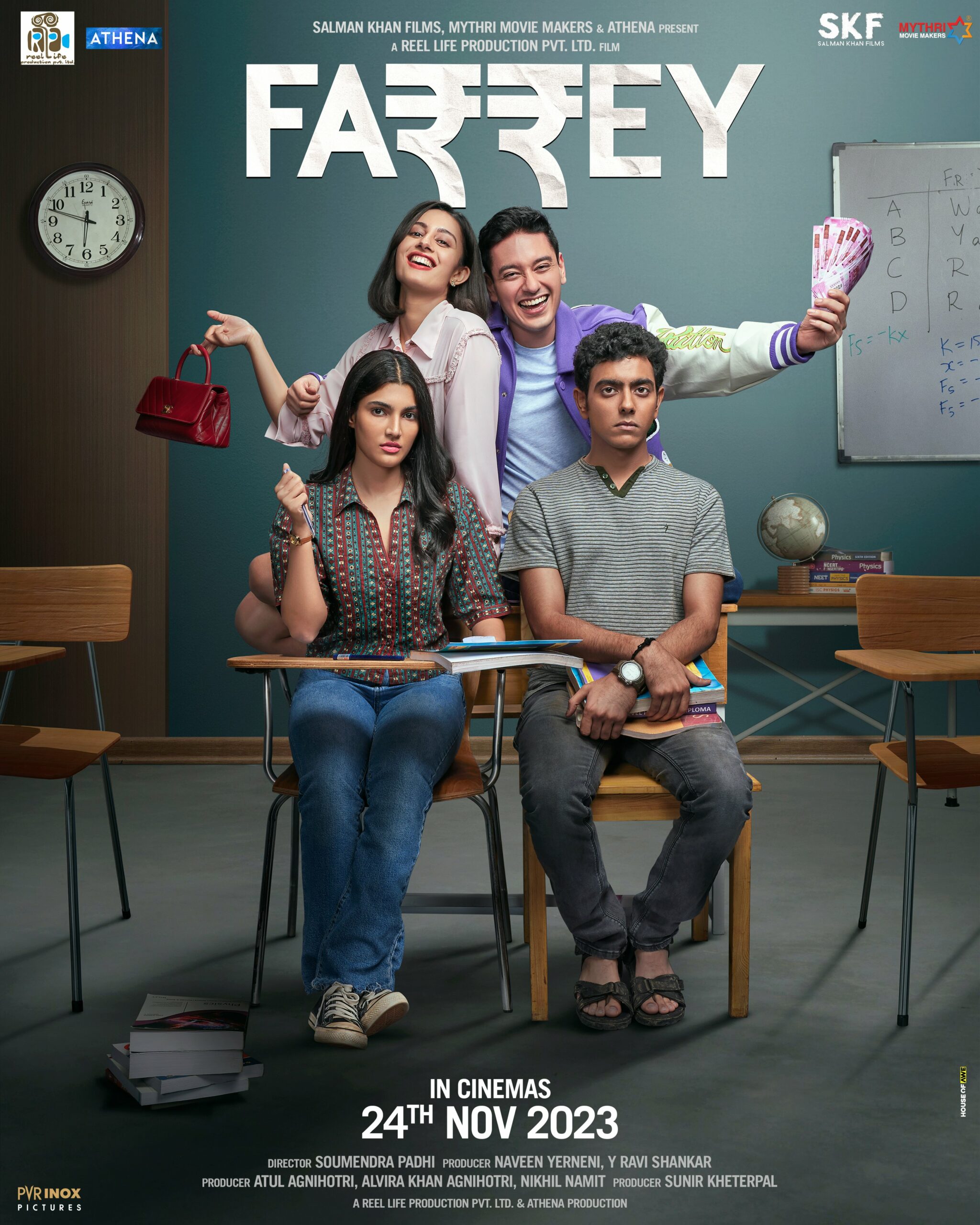
Therefore, it is not surprising that Salman Khan has chosen this film as a launch for his niece Alizeh.
Soumendra Padhi’s first feature film was the critically acclaimed Budhia Singh-Born to Run (2016). It was based on the life of Budhia Singh, who ran 48 marathons and was the world’s youngest marathon runner.
Surprisingly, the buzz around Farrey (Slip that students use for cheating in exams) has been on the lower side despite the film opening to positive reviews in the International Film Festival of India, Goa.
Whatever the box office outcome of Farrey is, there is no denying that Salman Khan has produced a quality film and a star is born.
Synopsis
‘Farrey’ is based on the Thai film ‘Bad Genius’. (X)
For those who have not watched the Thai movie, Farrey focuses on two students from an underprivileged class.
Niyati (Alizeh Agnihotri) is one of them. She is brought up in an orphanage under the loving care of a warden-cum-father figure (Ronit Roy) and his wife (Juhi Babbar Soni).
Niyati is always a top student. She passes her 10th-class exams with distinction marks and gets admission for Plus-Two in a popular institution. Here, too, Niyati becomes a top student.
The principal (Shilpa Shukla) grants her a full scholarship.
Her nearest competitor in studies is Aakash (Sahil Mehta). He is Niyati’s friend and comes from the same social strata as she does. He, too, is granted the same scholarship.
On the other side of the spectrum, you have the super-rich Chhavi (Prasanna Bisht) and Prateek (Zeyn Shaw). Niyati and Chhavi become good friends.
Chhavi’s father (Arbaaz Khan in a two-scene cameo) wants his daughter to follow in the footsteps of her brother and secure a seat at Stanford. She constantly faces the pressure of being pitted against her brother.
Chhavi lures Niyati to help her and a few others. After some agonising, Niyati agrees to earn some quick money because she wants to help the orphanage.
What starts as a one-time help ends up as a serious affair.
Farrey is essentially a coming-of-age story of a girl who realises her mistakes and undergoes a transformation.
Class divide
Director Soumendra Padhi does a good job of presenting the class divide and the two vastly different worlds of Niyati and Chhavi. This comes out particularly well in the scenes where Niyati goes to Chhavi’s house. She feels like an “Alice” lost in some strange land.
Another aspect that stands out is the character of Chhavi. There is no denying that Chhavi is manipulative and not likeable. But at the same time, the viewers also understand why she does what she does.
Chhavi wants to become an interior designer and is not interested in taking over her father’s business. However, the pressure of living up to the expectations of her father’s desires gets to her.
Prasanna Bisht does a swell job of portraying the grey shades of Chhavi.
The second half of Farrey is more about the cheating methods that Niyati employs along with her friend Aakash. The drama becomes more heightened, and soon, the film turns into a morality play where the viewers feel tense about the plight of these two students. Of course, all ends well.
Alizeh Agnihotri and Sahil Mehta stand out
Alizeh Agnihotri stands out in ‘Farrey’. (X)
The scenes featuring Alizeh and Ronit Roy are filled with warmth. For example, there is a scene in the pre-climax where Niyati confesses about her wrongdoings.
It has been solidly directed and acted. It is nice to see Ronit Roy in a character like this for a change, as he mostly played a stern father. The actor plays his part with a lot of warmth.
However, the same thing cannot be said about the two-scene cameo of Arbaaz Khan. It doesn’t add any significance to the film.
More scenes between Prasanna and Arbaaz would have enhanced the drama.
The scenes of Niyati helping her rich friends have the right amount of thrill, but they are also stretched in some places.
The character arcs of the rich kids needed to be tied up in a more uncliched manner.
Alizeh Agnihotri makes a truly sparkling debut. She has a difficult character to play, given the moral ambiguities. But the young actress pulls it off like a pro. She pulls off the various transitions in Niyati’s life admirably.
Sahil Mehta, as Aakash, is solid. Just like Alizeh, he also does a swell job of depicting the grey shades of his role.
Verdict
To sum it up, Farrey is a film that should be on your weekend list — whether you have watched Bad Genius or not.
Cast: Kay Kay Menon, Babil Khan, R Madhavan, Divyenndu Sharma, and Juhi Chawla
Director: Shiv Rawail
Producer: Aditya Chopra
Music: Sam Slater
No. of episodes: 4
OTT platform: Netflix
The Bhopal Gas tragedy of 1984 is one of the darkest chapters in Indian history. Thousands lost their lives, and thousands are still suffering from the severe aftereffects.
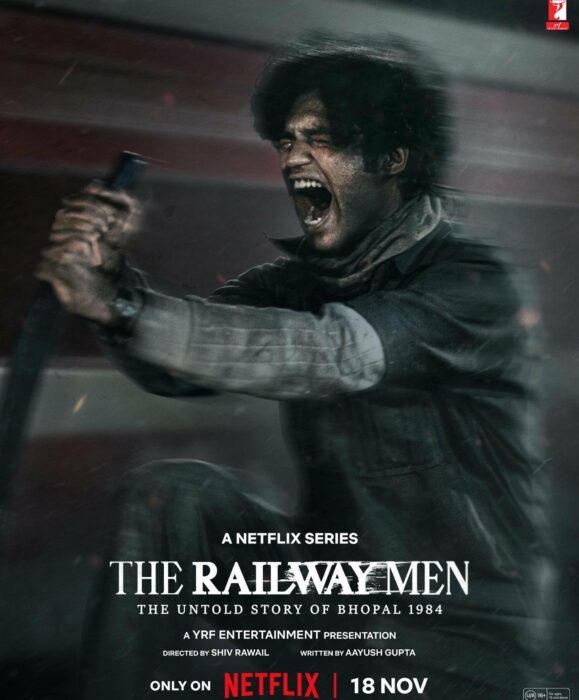
As the title suggests, The Railway Men limited web series focuses the lens on the little-known heroes of the Indian Railways and how they had put their lives at stake to save as many lives as possible on that fateful night.
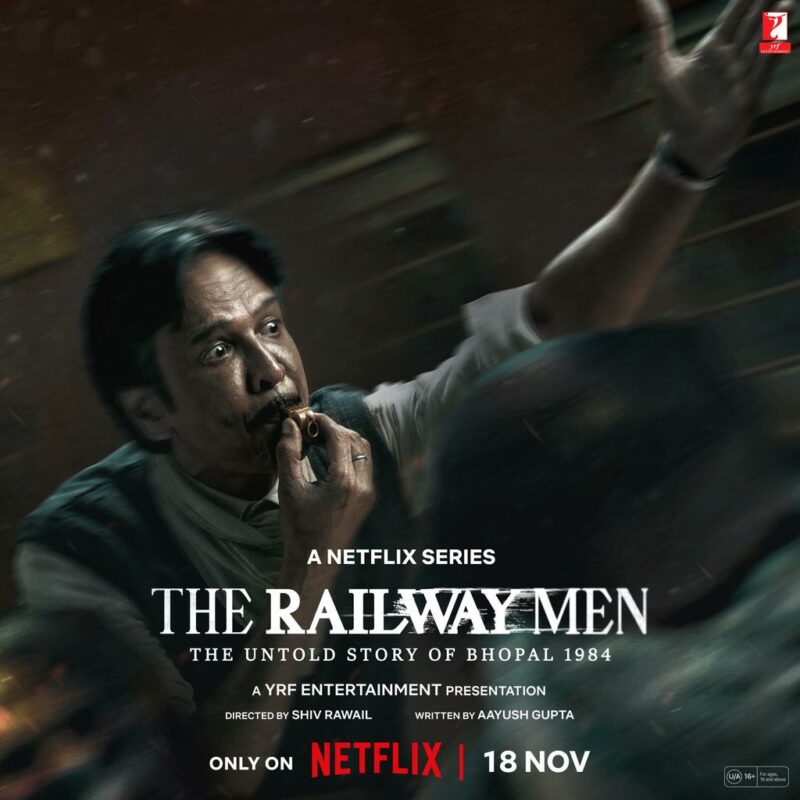
There are four main characters in the web show. Iftekaar Siddiqui (Kay Kay Menon) is the station master of Bhopal Junction. Imaad Riaz (Babil Khan) is the newly joined locomotive pilot.
R Madhavan plays the Central Railways GM. Divyenndu is a thug who wants to take advantage of the chaos around them but contributes to the rescue mission.
Meanwhile, Journalist Jagmohan Kumawat (Sunny Hinduja) runs a crusade against the American company Union Carbide — even before the gas leak — and warns the locals against the impending danger. This, he does, in spite of the attempts to silence him.
Synopsis
Babil Khan in ‘The Railway Men’. (NetflixIndia/ X)
Through the four episodes, director-cum-co-writer Shiv Rawail presents a horrifying picture of the tragedy.
The Railway Men web series hits the ground running for the first time. The director doesn’t mince any words in throwing light on the moral corruption within the political landscape, including how the chief of the Union Carbide factory got away without any punishment. This he does successfully through the character of Sunny Hinduja.
What also works for The Railway Men is the strong emotional connection that Shiv Rawail builds through his characters.
The subject of the Bhopal Gas tragedy is a difficult subject to handle for any director, let alone a debutant, but the newbie more than lives up to the challenge.
The limited web series has quite a lot of close-up shots of poison emanating from people’s mouths. These scenes are difficult to watch, but they leave a solid impact on the viewers’ minds.
A realistic portrayal
Kay Kay Menon in ‘The Railway Men’. (NetflixIndia/ X)
The web series also presents a realistic picture of the aftereffects of the gas leak.
Of course, as viewers, you do feel happy when the four men together save some lives. But the series is also a reminder of how things are still bleak for those who survived that night.
The production design of Rajat Poddar is another plus for the series. He does a splendid job of creating an authentic atmosphere.
The Railway Men also briefly touches upon the 1984 anti-Sikh riots, along with another brief subplot about a group of women who were going to participate in a swimming competition.
The angle involving the anti-Sikh riots has been well integrated, but the other one doesn’t really work.
Performances
R Madhavan in ‘The Railway Men’. (NetflixIndia/ X)
The performances of all the actors are top-notch, starting with the excellent Kay Kay Menon. The actor is at his usual best, portraying the determination and courage of Iftekaar.
Divyenndu Sharma portrays the dual-shaded personality of his character well. He delivers some punchy one-liners.
Babil Khan is also flawless. He perfectly adopts the Bhopali dialect. He is one of the men who dies on that tragic night.
R Madhavan has a late entry, but the actor is authoritative in all his scenes. There is a solid monologue involving Madhavan, where he delivers with his usual panache.
Juhi Chawla plays the solo woman representative of the government. She is good in her brief role.
Here, it has to be said that the women characters could have been more impactful.
Final take
The Railway Men is the first web series that YRF has produced. Let’s hope that Aditya Chopra continues to bankroll more web shows on various subjects.
One of the major characteristics of Yash Raj Films (YRF) is how it nurtures talent and gives several chances to directors and artistes in spite of their initial failures.
For example, Kabir Khan’s directorial debut Kabul Express (2006) wasn’t a commercial success but the director still got an opportunity to direct two more major Yash Raj Films — New York (2009) and Ek Tha Tiger (2012).
Both did well at the box office, especially Ek Tha Tiger, which laid the foundation for the flourishing spy universe.
Here’s the list of Bollywood celebrities who won multiple opportunities from the YRF chief Aditya Chopra despite their failures:
Maneesh Sharma
Maneesh Sharma has directed five films — all for YRF.
The first is the romantic comedy Band Baaja Baaraat (2010) starring Ranveer Singh and Anushka Sharma. The movie had low expectations, but Maneesh and Ranveer surprised the audiences.
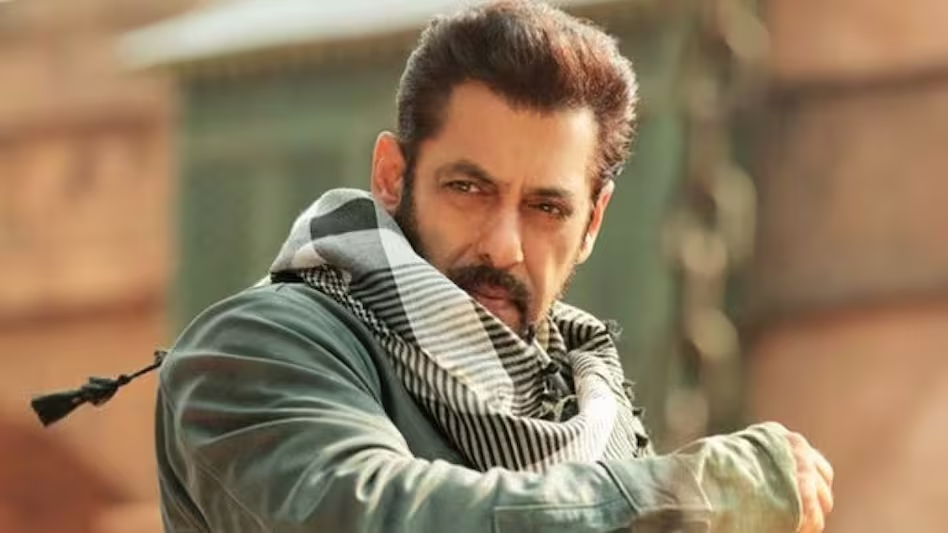
A poster of the film ‘Tiger 3’. (X)
Maneesh’s second film too was a Ranveer-starrer: Ladies vs Ricky Bahl (2011). Though it didn’t replicate the success of his debut, the Bollywood movie didn’t break Aditya Chopra’s trust in the director.
A third film, Shuddh Desi Romance (2013), was offered to him again. It was an engaging romantic comedy dealing with how the younger generation looked at marriage commitment in small-town India. The movie also dwelt on live-in relationships.
Its success led to Maneesh Sharma getting his fourth opportunity with the YRF — to direct Shah Rukh Khan in a double role. As the title Fan (2016) suggested, the film was about an obsessive fan who gets heartbroken with his idol.
Maneesh Sharma did a decent job in the first half, but the young director lost his grip in the second half, and everything went topsy-turvy.
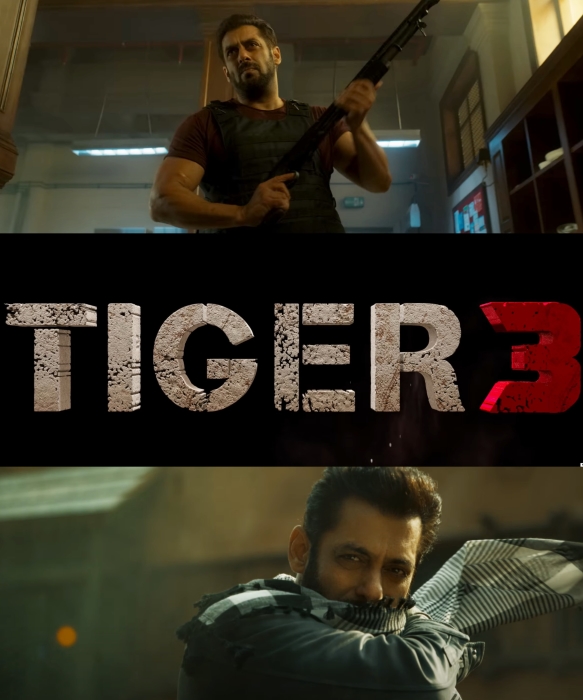
In spite of the failure of Fan, Maneesh got yet another opportunity to direct a large-scale action film — Tiger 3 (2023).
Maneesh Sharma aimed to make a geo-political film with a lot of action. However, his inability to handle big scale once again came to the fore.
The hand-to-hand combats, Emraan Hashmi’s characterisation, and Shah Rukh’s extended cameo were all brilliant in Tiger 3. But the film never rose above the sum of its parts.
There is no denying that Tiger 3 is doing good business, but having said that, it is also a setback for the spy universe, particularly in comparison to the previous two films War (2019) and Pathaan (2023).
Vijay Krishna Acharya
Vijay Krishna Acharya made his directorial debut with the action drama Tashan (2008). The film had a galaxy of stars — Kareena Kapoor, Saif Ali Khan, Akshay Kumar, and Anil Kapoor.
It was an old-fashioned revenge drama in Hollywood style. True to the title, the film had plenty of style, particularly the characterisation of Akshay Kumar’s Bachchan Pandey.
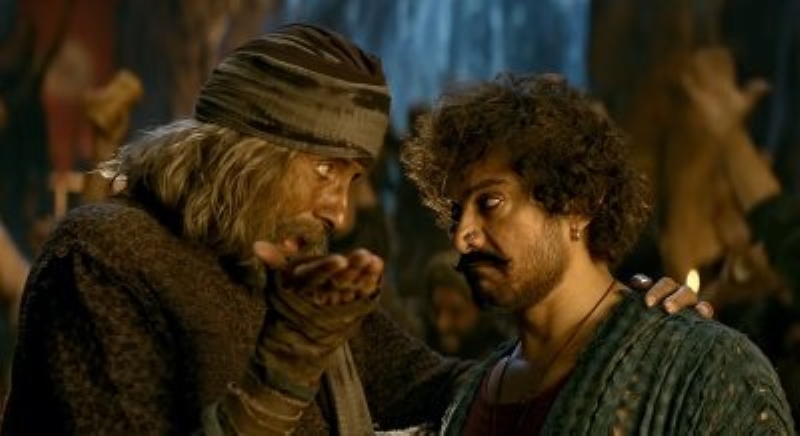
A still from the film ‘Thugs of Hindostan’. (X)
But, just gloss can never substitute for a gripping story. And, that was what happened with Tashan too.
Kareena definitely found her soul mate in Saif Ali Khan and vice-versa, but for Aditya Chopra, the movie was a big loss.
However, Tashan‘s failure did not stop the producer from trusting Vijay Krishna Acharya again with the third instalment of the Dhoom franchise.
Vijay Krishna Acharya was only a story writer for the first two Dhoom films (2004, 2006) but for Dhoom 3 (2013), he was both writer and director.
Dhoom 3 did bring in profits for its producers, but at the same time, it was a step back as it paled in comparison to the fun and thrills provided by Dhoom 2.
Only Aamir Khan’s star power coupled with a more engaging second half made Dhoom 3 a hit at the box office.
Aditya Chopra was even more generous when he allowed Vijay Krishna Acharya to direct Bollywood “Shahenshah” Amitabh Bachchan and Mr Perfectionist Aamir Khan together in Thugs of Hindostan (2018).
Unfortunately, for the fans and the production house, the experience was far from memorable. The film brought huge losses to everyone concerned.
Vijay Krishna Acharya’s last directorial is a religious comedy/drama titled The Great Indian Family (2023) also produced by YRF.
Despite being a much better product than Thugs of Hindostan, The Great Indian Family didn’t do much at the box office. Now, we have to wait and see if Aditya Chopra will give him another chance.
Shaad Ali
Shaad Ali was an assistant director to Mani Ratnam for Dil Se (1998).
Later on, he helmed seven films as a director. Of these seven projects, four were produced by YRF.
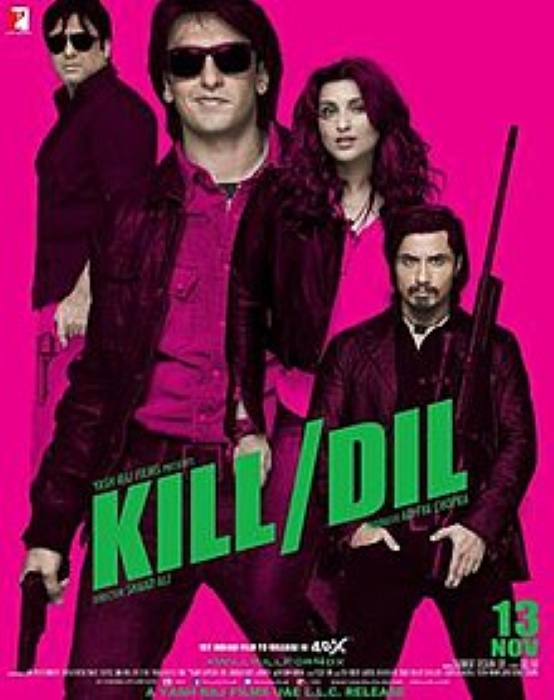
A poster of the film ‘Kill Dil’. (X)
The first is the romantic comedy/drama Saathiya (2002), a remake of Mani Ratnam’s Tamil blockbuster hit Alaipayuthey (2000). Saathiya was a moderate success and was well-received by the critics.
Before Saathiya, Rani Mukherjee had only seen limited success. With the film, her career saw a resurgence. For Vivek Oberoi, it was the third success of that year.
Shaad Ali’s second outing, Bunty Aur Babli (2005), also did well at the box office.
It gave Abhishek Bachchan a much-needed hit as the leading man. His sizzling chemistry with Rani Mukherjee also helped the movie become a blockbuster.
Later, Shaad Ali faced massive roadblocks in the form of Jhoom Barabar Jhoom (2007) and Kill Dil (2014).
Jhoom BarabarJhoom was an expensive musical that brought no profits. It had a hit soundtrack composed by Shankar Ehsaan Loy. But good music and glossy cinematography couldn’t compensate for the lacklustre direction.
Shaad Ali was clearly not comfortable dealing with a story of this scale.
Despite Jhoom Barabar Jhoom‘s failure, the director helmed another YRF film — Ranveer Singh’s Kill Dil (2014). It was an action comedy film about two assassins raised by a local gangster. Here too, there was ample style but little substance.
Shaad Ali’s journey with YRF has come to a stop for now.
Siddarth P Malhotra
Siddarth P Malhotra’s debut directorial was We Are Family (2010). It is an official adaption of Stepmom (English, 1998).
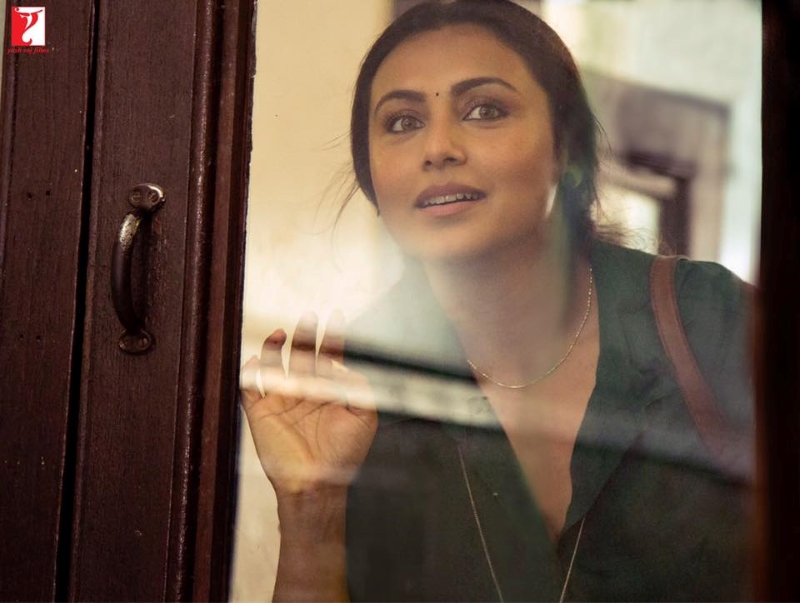
Rani Mukherjee in ‘Hichki’.(X)
The film was produced by Karan Johar and had the likes of Kajol and Kareena Kapoor.
It had all the elements required to be a solid emotional drama, but Siddarth P Malhotra couldn’t do complete justice to it.
Despite We Are Family’s failure, the young director got an opportunity to helm a YRF film starring Aditya Chopra’s life partner, Rani Mukherjee.
Hichki (2018) was about a teacher with a passion for teaching in spite of suffering from Tourette syndrome and the impact she has on students of class 9F.
These students come from a nearby slum and are not interested in studies. Rani Mukherjee, as Naina Mathur, transforms their lives with patience and perseverance. Hichki was a classic underdog story that resonated well with the audience.
Siddarth P Malhotra showed that Aditya Chopra’s trust in him wasn’t misplaced.
Karan Malhotra
Just like Siddarth P Malhotra, Karan Malhotra, too, started his career with Dharma Productions.
He directed the action drama Agneepath (2012), a remake of the 1990 film of the same name.
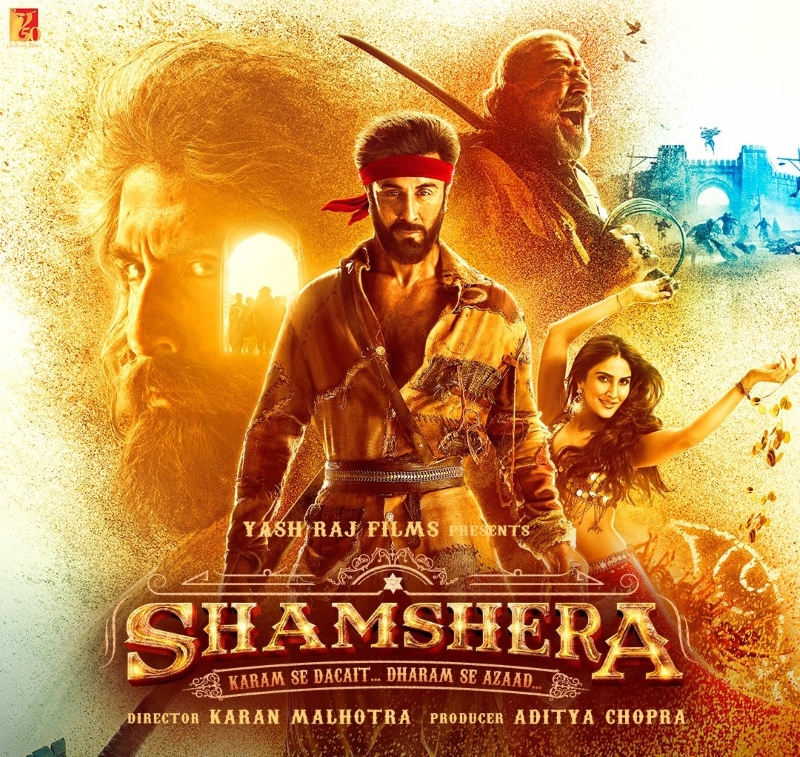
A poster of the film ‘Shamshera’. (X)
While the original film had Amitabh Bachchan in the lead role, the remake had Hrithik Roshan and two terrifying villains, Rishi Kapoor’s Rauf Lala and Sanjay Dutt’s Kancha Cheena
Agneepath was a well-made masala film that registered good numbers at the box office.
Later, Karan Malhotra directed Brothers (2015), also a remake. However, the source material this time was an English film titled Warrior (2011). He tried to replicate the success of Agneepath with the same treatment, but this time, the results were far from satisfying.
The failure of Brothers led to Karan Malhotra stepping out of Dharma Productions.
After a gap of seven years, Karan Malhotra directed Shamshera (2022) produced by Aditya Chopra.
The film was a period-action drama about an oppressed tribe with a double dose of Ranbir Kapoor. Ranbir gave it his all, but the movie ended up being a poor clone of the Baahubali (2015 and 2017) films.
Unlike the other Malhotra, this Malhotra couldn’t live up to the expectations of the YRF Chairman.
Pradeep Sarkar
Late Pradeep Sarkar directed five films. Of them, three were produced by YRF.
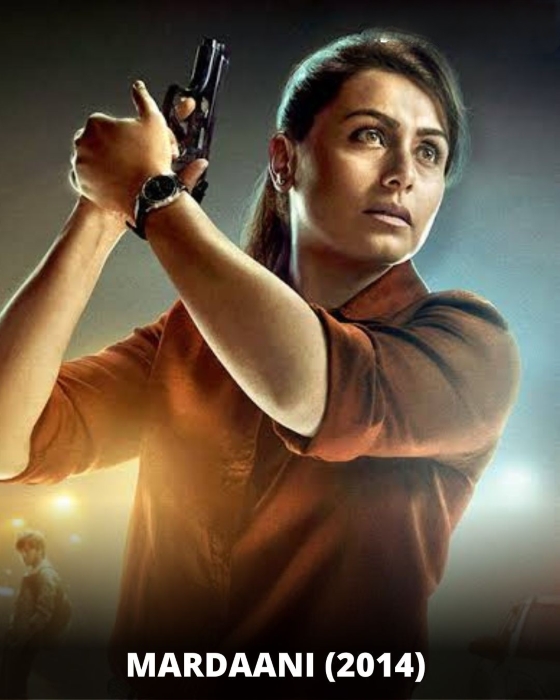
These include Laaga Chunari Mein Daag (2007), Lafangey Parindey (2010) and Mardaani (2014). Among these, only Mardaani did good business.
Not many would have trusted the Parineeta (2005) director with a subject like Mardaani, but the late Pradeep Sarkar ensured that Aditya Chopra’s trust in him was not misplaced.
Mardaani is a significant film in the career of Rani Mukherjee.
Rani Mukherjee in ‘Mardaani’. (X)
Vani Kapoor
Vani Kapoor has acted in seven films so far. Out of seven, five were produced by YRF.
The Bollywood diva started her career promisingly with Shuddh Desi Romance. But her next outing, Aaha Kalyanam (2014), a Tamil-telugu remake of Band Baaja Baaraat produced by YRF (the only South film bankrolled by YRF) was a dud.
Despite Aaha Kalyanam’s failure, Vani Kapoor was paired opposite Ranveer Singh in Befikre (2016). Unfortunately, neither the film nor Vani could create any impact.
Still, she was cast in another YRF film – War (2019). But there wasn’t much heavy lifting for her, as the focus was primarily on Hrithik Roshan and Tiger Shroff.
The actress was last seen in another YRF dud Shamshera (2022).
Vani Kapoor will next be seen in the web show Mandala Murders, co-produced by Aditya Chopra.
Here’s hoping that the actress will finally be able to repay the trust of her mentor.
Manushi Chillar
Manushi Chhillar has acted in two movies so far. Both were bankrolled by Aditya Chopra.
In spite of the failure of Samrat Prithviraj (2022), YRF gave her another chance in The Great Indian Family, which again was a failure.
The actress is a good looker, but she hasn’t proved her acting credentials until now!
She will be next seen in Operation Valentine alongside Varun Tej. The Telugu actor is making his debut in Bollywood with this Telugu-Hindi bilingual. It is hitting the screens on 8 December.
Cast: Tara Sutaria, Abhishek Banerjee, Rajpal Yadav, and Dhairya Karwa
Director: Nikhil Nagesh Bhat
Producer: Murad Khetani
Music: Vishal Mishra
Runtime: 1 hour 35 minutes
OTT platform: Disney+ Hotstar
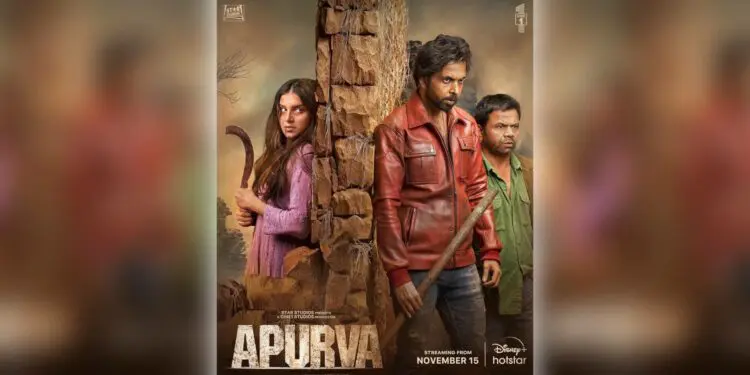
Nikhil Nagesh Bhat’s Apurva is based on an extraordinary real-life story of a girl named Apurva who was kidnapped by some goons in the Chambal area.
With no substantial help, Apurva fought them all alone and emerged as a victor.
The film begins by establishing the extreme cruelty of the four bad guys.
The main antagonists among these are Abhishek Banerjee and Rajpal Yadav. From there, we see how Apurva’s (Tara Sutaria) path crosses with these four local dacoits.
Excellent characterisation
Tara Sutaria in ‘Apurva’. (X)
To put it briefly, the story of Apurva is about how a city girl transforms herself into goddess Durga and kills the bad guys, of course, not literally.
The big area where Apurva scores is the gritty atmosphere that pulls the viewers into the story.
Despite tonal similarities with NH10 (2015), director Nikhil Nagesh Bhat and his technical team stage the Chambal area with authenticity. There is no artificiality whatsoever.
What also works for the film is a sense of dread that the director creates among the viewers with the help of the background score.
The characterisations of the dacoits are another major plus for the film.
Abhishek Banerjee and Co are truly scary as psychopaths. As a result, the viewers anxiously wait for Tara Sutaria’s Apurva to come out safe.
The characterisation of Apurva from a city girl to finding herself in a life-threatening situation has been written well. Her love story with Sid (Dhairya Karwa) gives some much-needed light moments. Both actors share good chemistry.
A brilliant Tara Sutaria
Tara Sutaria debuted with the sequel of Student of The Year 2 in 2019. Since then, she faltered in the selection of roles.
But here, the actress has an author-backed part, and Tara delivers a commendable performance. It is a juicy role with different shades, and Tara doesn’t miss a single beat.
Dhairya Karwa also does well as the supportive fiancée. He succeeds in portraying the love and desperation of Sid.
Coming to the local dacoits, Rajpal Yadav and Abhishek Banerjee successfully make the audiences hate them, particularly Abhishek, who plays an unhinged man with a lot of glee.
The major problem with Apurva is the excessive bloodshed and cuss words that won’t go down well with all. The serious hangover of NH10 also acts as a deterrent in some parts.
The police characters feel cardboard, more like an add-on, and don’t serve any purpose.
Same case with Apurva’s parents. They are hardly there.
Final take
To sum it up, watch Apurva if you are a fan of gritty dramas and real-life stories.
Emraan Hashmi roars the loudest with his portrayal of the menacing Aatish. Shah Rukh Khan more than makes his presence felt in an extended cameo.
Tiger 3 (Hindi) 2.5 out of 5
Starcast: Salman Khan, Katrina Kaif, Emraan Hashmi and others; Special appearances (Shah Rukh Khan and Hrithik Roshan)
Director: Maneesh Sharma
Story: Aditya Chopra
Screenplay: Shridhar Raghavan
Dialogues: Anckur Chaudhry
Music: Pritam
Production Company: Yash Raj Films
Genre: Action thriller/drama
Running time: 2 hours and 36 minutes
In the year 2012 the spy journey of Aditya Chopra and YRF began with the Kabir Khan directorial EK Tha Tiger. It was a love story between a RAW and an ISI agent. Ek Tha Tiger was appreciated for its action and also the love story.
The success of Ek Tha Tiger led to the creation of an entire spy universe like Tiger Zinda Hai, War and Pathaan. Tiger 3 is the fifth film of this universe and there are more to follow.
Maneesh Sharma the director of Tiger 3 had a huge responsibility on his shoulders as all the previous films of this franchise have gone on to become blockbusters. The director’s last film was Fan. Fan had a gripping first half followed by a lackluster and implausible second half. Viewers could clearly see Maneesh Sharma being overwhelmed by the scale of the film and losing focus. Tiger 3 is another example of Maneesh Sharma’s inability to handle stories of large scale. Tiger 3 is not a bad film but in comparison to War and Pathaan it does fall quite short.
Emraan Hashmi roars the loudest
The plot of Tiger 3 focuses on one of Bollywood’s most favorite theme. That is India, Pakistan’s love hate relationship. The mission of Avinash Singh Rathore aka Tiger (Salman Khan) is to prevent a military coup and also the assassination of the Pakistani Prime Minister (Simran modeled on Benazir Bhutto). Tiger’s biggest thorn in the back is a Pakistan agent gone rogue Aatish (Emraan Hashmi). The biggest desire of Aatish is to take over Pakistan and make sure that no kind of peace happens between both the countries.
Katrina Kaif also reprises her role of Zee Humaimi aka Zoya from the previous two Tiger films. This time around the character of Zoya has a back-story. In this back-story the viewers get to know that Aatish was her former handler. Once upon a time she was a protégée of Aatish but in the present scenario things have changed drastically.
Salman Khan gets into his shoes with practised ease
A big strength of Tiger 3 is the galore of twists and turns at regular intervals. For example in the beginning the viewers are led to believe that Zoya is betraying Tiger by hiding certain information. These twists and turns do keep the viewers on their feet.
Cinematographer Anay Goswamy also does a wonderful job in capturing the many locations of this globe trotter. These include Europe, Russia and Istanbul among others.
The action sequences have plenty of hand to hand combats and are a definite treat for those who like to see raw action. Two action scenes deserve a particular mention. One is the climax fight between Salman and Emraan Hashmi. The other one is Katrina fighting in a towel inside a Turkish hammam or bath. Both these sequences have been brilliantly shot.
Katrina Kaif in her towel fight scenes
As mentioned in the beginning Emraan Hashmi shines the brightest in this cast. His demeanor and the body language are a treat to watch. Emraan plays the ruthless villain without missing a single beat. A special mention must be made of the scenes that Emraan shares with Katrina in the flashback portions.
One of the most enjoyable portions of Tiger 3 is definitely Shah Rukh Khan’s extended cameo as Pathaan. It is a perfect mixture of action and some very witty dialogues. Viewers can clearly see that Shah Rukh is having a blast. In one of the scenes you have Shah Rukh Khan and Salman in a Sholay inspired motorcycle scene. Pathaan is in the driver’s seat and Tiger makes a joke about how the last time this vehicle was driven only one person came out alive. There is also a post credit scene involving Hrithik Roshan’s Kabir from War. The scene doesn’t last long but Hrithik’s swagger is unmissable.
A big problem with Tiger 3 is the overtly simplistic treatment of the issues between India and Pakistan. Director Maneesh Sharma doesn’t bring anything particularly new to the Indo-Pak angle. Tiger 3 operates in a fanciful zone of two rival nations hoping to initiate peace talks and end the fear of war. But these noble intentions do not translate effectively on screen.
Salman Khan and Shah Rukh Khan, a camio scene
The love story between Tiger and Zoya is in the same space as in the previous two films. There is no substantial character development in spite of Zoya’s back-story.
Both Salman Khan and Katrina Kaif get into the shoes of their respective characters with practiced ease. As said earlier Katrina shines in the action sequences but her performance in the emotional ones leave a lot to be desired.
Some of the supporting cast from Tiger 1 and 2 are seen in this film as well. They include Ranvir Shorey and Kumud Mishra among others but they are reduced to side dishes. Revathi as the boss takes over from the late Girish Karnad. Unfortunately the senior actress has been severely underutilized. This is sad because Dimple Kapadia in Pathaan made a terrific boss woman.
Pritam’s music consists of only one good number and that is Ruaan. Pritam’s tune coupled with Arjit Singh’s voice makes it a good hear and watch.
To sum it up Tiger 3 is a step back for the spy universe but here’s hoping that War 2 and others bring it back on track.
Cast: Ishaan Khattar, Priyanshu Painyuli, Mrunal Thakur, and Soni Razdan
Director: Raja Krishna Menon
Producers: Ronnie Screwvala and Siddarth Roy Kapur
Music: AR Rahman
Runtime: 2 hours 19 minutes
OTT Platform: Amazon Prime Video
The significance of the 1971 Bangladesh War goes beyond winning the battle against Pakistan. It is more about liberating the large number of refugees who have faced many atrocities.
In a scene in Pippa, Ishaan Khattar’s character talks about how this is the first military battle fought to free the helpless.
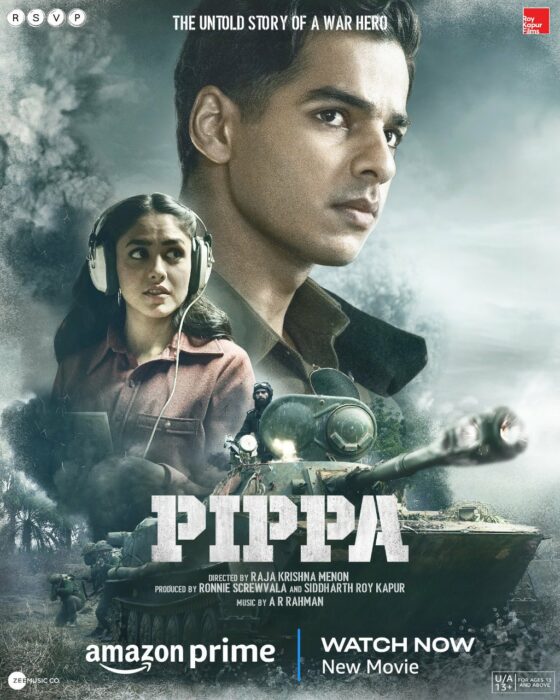
For those who are not aware, Pippa is based on the book titled “Burning Chaffees“. Ishaan Khattar plays Brigadier Balram Singh Mehta (the author) aka Balli.
Ram Mehta (Priyanshu Painyuli), an army officer, is the elder brother of Balli. Ram’s personality is different from that of Balli. Not surprisingly, both brothers often find themselves at odds.
Their sister Radha (Mrunal Thakur) is an expert at cryptography and quite rebellious, too. This comes out well in a scene where we see her participating in a college protest.
Mrs Mehta (Soni Razdan) is their mother.
Balli’s family is a refugee family from Rawalpindi, West Pakistan. There is a brilliant scene when Mrs Mehta talks about how people don’t become refugees by choice.
As the story progresses, all three siblings play a vital role in the Indian victory.
Analysis
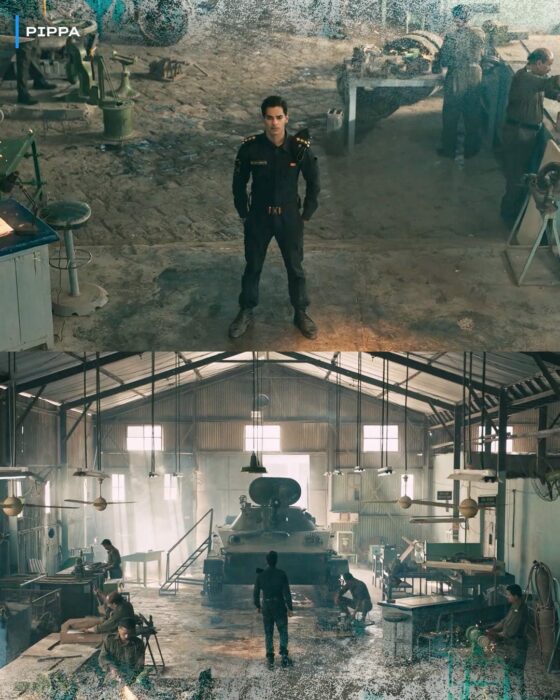
The first feeling that comes to viewers’ minds after watching Pippa is why it was not released in theatres. The war sequences have been brilliantly shot, and if seen on the big screen, the impact would have been tenfold.
Pippa has all the elements needed for a big theatrical experience. However, there is no point in dwelling on that now.
So, let’s go into the analysis. Raja Krishna Menon does not waste any time in setting up the plot.
There is a graphic representative story at the start that shows many people in East Pakistan being gunned down. This disturbs us, and you will instantly empathise with Bangladeshis.
After that, the director establishes the relationship dynamics of these siblings, which adds to the human drama when Ram becomes a war prisoner.
For those who don’t know, Pippa is a nickname given to the army tank PT 76 that Balli operates. The scenes of Ishaan Khattar leading this tank are a sight to behold.
The camaraderie between the members of Balli’s squadron has some amusing moments, like the scene where the mutton is cooked when the war preparations are going on.
Ishaan cements his place in Bollywood
Mrunal Thakur and Ishan Khattar in ‘Pippa’. (X)
On the performance front, Ishaan Khattar leads the show with his impeccable act. His character starts as a constantly flirting captain. From there, we see him as an unhappy officer who notes down maintenance reports to finally being a brave commander.
Ishaan strongly pulls all these shades. With this film, the actor cements his place as a young talent who is versatile with his choices.
Priyanshu Painyuli is also equally good as the elder brother. His confrontational scenes with Ishaan give some powerful moments.
Mrunal Thakur does well both as a caring young sister and a cryptographer who helps the nation.
Soni Razdan has a brief presence, but the actress is impactful in her scenes, particularly the one where she talks about refugees.
Rahman’s music & BGM do wonders
Ishan Khattar ‘in Pippa’. (X)
AR Rahman’s music and background score complement the film.
The soundtrack is diverse, starting with “Main Parwaana“. This song brings out the playful side of Balram. The choreography and the tune go perfectly well with the setting.
On the other hand, you have the more intense “Jazbaat” that gives an adrenaline rush.
The background score is also chilling and enhances many of the war scenes.
Director Raja Krishna Menon also deserves appreciation for how he gives equal importance to the character arcs of Ram Mehta and Radha. They are blended seamlessly into the narrative.
An area where the film could have been better is the visual effects. Also, 10 minutes could have been edited.
Verdict
Not many stories about the Bangladesh war are made into films. Let’s hope Pippa will rekindle interest in that glorious chapter in Indian history for the new generation.
For any detective/investigator story to work, two things are of primary importance, Firstly the audience should feel that the protagonist is having fun in solving the case. Secondly, the dangers that he/she faces should make the viewers anxious about what will happen next.
Earlier this year, Vishal Bhardwaj delivered a pulpy thriller titled Charlie Chopra & the Mystery of Solang Valley. It was a thoroughly enjoyable web show with an excellent Wamiqa Gabbi.
The setting of Solang Valley also became a major character itself, thanks to the cinematographer Tassaduq Hussain.
Unfortunately, PI Meena doesn’t even reach 5 percent of what the Vishal Bhardwaj directorial had achieved or even the Sujoy Ghosh directorial Jaane Jaanwhere the hill station Kalimpong was a significant part.
The protagonist in PI Meena comes across as too brooding with no sense of fun and the city of Kolkata fails to become a major character.
Synopsis
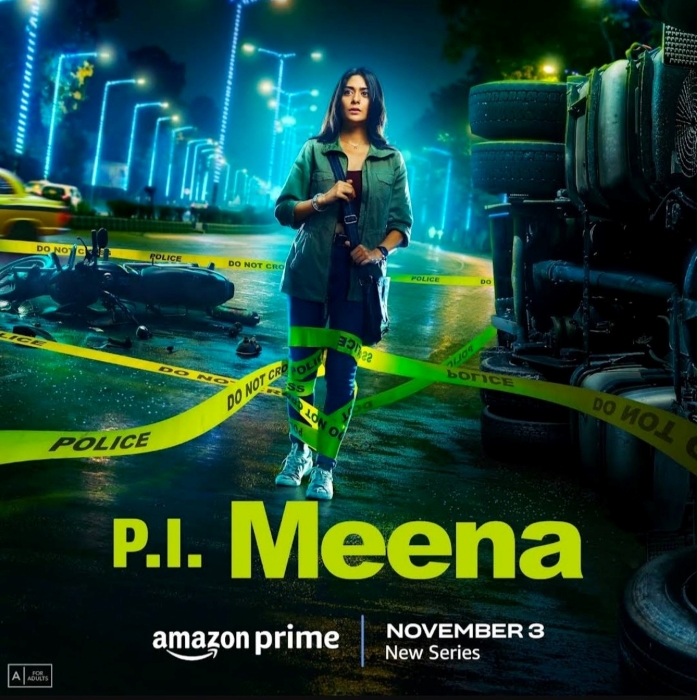
‘PI Meena’ is streaming on Amazon Prime Video. (X)
As the title suggests, Tanya Maniktala plays a private investigator named Meena. She is haunted by a tragic past involving her brother Joy who is in a coma.
On many occasions, we see Meena pouring out her angst to him.
Though Meena works as a private investigator, the cases only involve unfaithful spouses and rotten fiancés!
Pritam Sen (Harsh Chhaya) is her boss. He has a swanky office and powerful connections as well with higher levels of power. However, this doesn’t make any sense given the kind of cases they get.
Parambrata’s Chatterjee’s Subho Roy is Meena’s partner in crime and also a romantic interest who is very concerned about her. Subho Roy also has aspirations of getting into politics, though his interest in politics isn’t exactly about serving the nation.
The story takes an unexpected turn when Meena witnesses a bike rider named Partho Dey (Sawon Chakrobarthy) being knocked down by a truck. Surprisingly it doesn’t occur to Meena that she should take a picture of the departing truck.
Anyway, she takes the wounded Partho to the hospital and also files a police complaint.
Partho’s mother (Zarina Wahab) believes that her son has been murdered and this isn’t a simple case of hit and run.
Meena decides to dig deeper into the case and the investigation takes her to Littnong where she meets Dr Andre Rakshaw (Jisshu Sengupta).
There is also the track of the virus outbreak running simultaneously. Revealing anything more wouldn’t be appropriate.
Parambrata and Jisshu Sengupta shine
Parambrata Chatterjee and Jisshu Sengupta are solid in their performances.
Parambrata’s charming act is a major relief, particularly in comparison to Tanya’s constant brooding.
Subho Roy isn’t a complete saint or a sinner and Parambrata does a good job in bringing out these nuances.
Not a lot can be revealed about the character that Jisshu Sengupta plays. But it is a role which has many secrets.
At one point, he advises Meena to seek something more when she is in a big web of confusion. Jisshu Sengupta is brilliant in keeping the audience guessing about his actual intentions.
Drawbacks
Tanya Maniktala as PI Meena. (X)
There is no denying the gravity of Meena’s past, but on many occasions, she comes across as an unreasonable schoolchild who is annoyed with everything and everyone.
At no point do the viewers feel that Meena is having fun in solving the case. The constant frown on her face irritates the viewers.
Projecting intensity is different from coming across as bad-tempered and this is where director Debloy Bhattarchya and Tanya falter big time.
Actors like Vinay Pathak and Zarina Wahab are hardly there. They have been utterly wasted.
Another big problem with the series is its depiction of Kolkata. The city never feels like a major character. As a result, the viewers feel that the plot could have been set anywhere and didn’t particularly need this place.
The loose editing also plays a major spoilsport. The episodes could have much crisper and eight episodes feel too long for this story.
After a decent beginning, the web series goes in many directions like the journalist girlfriend of Joy among other things. But these tracks only add to dragging down the proceedings.
Final take
To sum it up, PI Meena is a good cure for insomnia.