Shaakuntalam: An Epic Story That Doesn’t Match Up To The Expectations

Gunasekhar is successful in creating a fantasy forest world but is unable to sustain the audience’s interest till the end.

Watch it for Samantha & Arha!
Shaakuntalam (Telugu)
  • Cast: Samantha Ruth Prabhu, Dev Mohan, Sachin Khedekar, Mohan Babu, Aditi Balan, Ananya Nagalla, Prakash Raj, Gautami, Madhoo, Kabir Bedi, Jisshu Sengupta, Allu Arha, Harish Uthaman, and Subbaraju
  • Director: Gunasekhar
  • Producer: Neelima Guna
  • Music: Mani Sharma
  • Runtime : 2 hours 36 minutes

Gunasekhar’s Shaakuntalam is an adaptation of Kalidasa’s “Abhignana Sakuntalam”.

It is a significant piece of literature that has relevance even in today’s times. Some galore men ditch women on various pretexts and leave them to their fate.

Shakuntala is a woman who had not seen any world outside the ashram where she is born. But all that changed with the entry of King Dushyant.

The trials and tribulations of Shakuntala are something that resonates with women even to this day like Sita. The love story of Dushyant and Shakuntala is, of course, familiar to everyone.

The play has also seen its share of onscreen adaptions. Hence, Gunasekhar should have put in more effort to make it more engaging for contemporary audiences.

Before Shaakuntalam, he made Rudramadevi — starring Anushka Shetty — ­which was also meant to be an epic tale but the director wasn’t completely successful in his endeavour.

This is despite Anuskha’s committed performance and also Allu Arjun’s thundering presence. Unfortunately, the same is the case with Shaakuntalam.

Much like Rudramadevi, this is also an ambitious attempt but Gunasekhar hasn’t got the technical finesse or storytelling craft needed for a film of this scale.

Synopsis

Shaakuntalam begins with a brief introduction regarding the birth of Shakuntala (Samantha). She is brought up in a tapovanam (a forest of spiritual practices). It is love at first sight for both Shakuntala and King Dushyant (Dev Mohan).

Their conversations are filled with poetic dialogues written by Sai Madhav Burra. Love leads to marriage but in Gandharva style (consensual acceptance without any rituals) with the animals and Nature as witnesses.

The king gifts Shakuntala his ring as a symbol of his love and leaves for his kingdom promising to take her later. However, Shakuntala’s happiness doesn’t last for long, thanks to sage Durvasa (Mohan Babu in a short but impactful role). He condemns Shakuntala to a life of unrequited love in his anger.

As a result, Dushyant forgets all about Shakuntala on his return to the kingdom. The result is something that the audiences are well aware of.

Samantha’s show all the way

Before going into the negatives, it is necessary to talk about the positives.

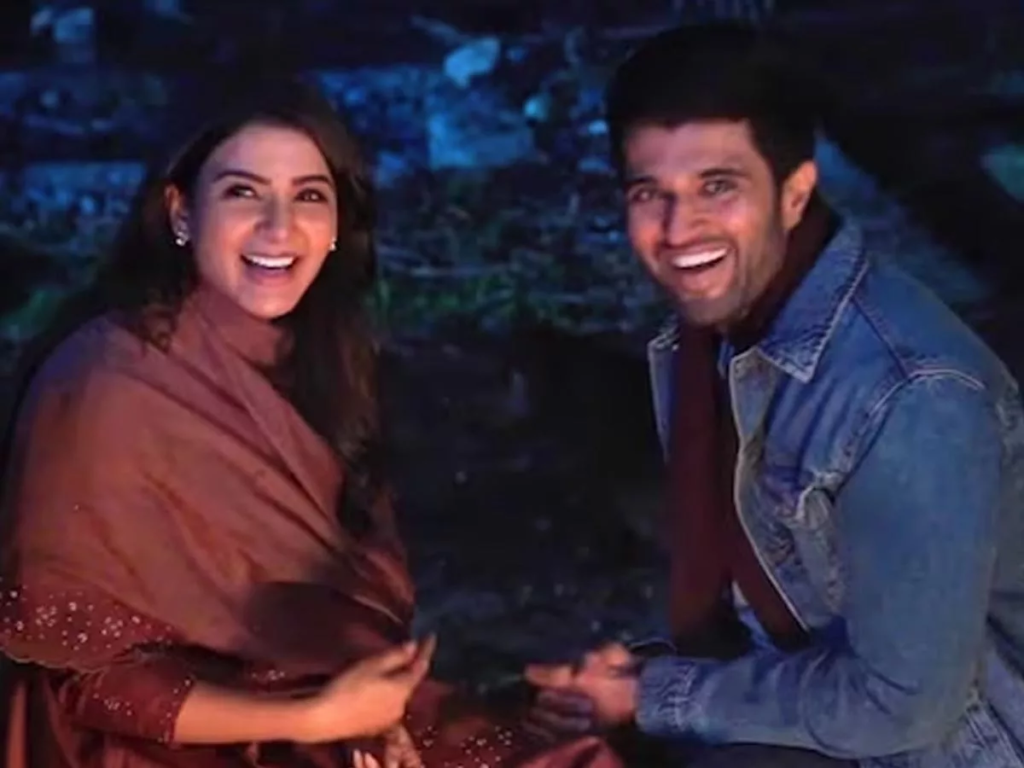
The trope of love, at first sight, is one of the most overused things in cinema. Yet, Samantha and Dev Mohan make it work with their chemistry. Both actors are successful in bringing out sensuousness. The passion is very much visible.

Before Shaakuntalam, Samantha did back-to-back action roles in The Family Man Season 2 and Yashoda. Here, the actress is seen in a vastly different avatar.

She does a good job of bringing out both the naivety of an ashram girl and the stoic strength of a wronged woman. A scene that deserves particular mention is when she questions Dushyant about his inability to recognise her. Samantha is simply terrific at that moment.

Dev Mohan as Dushyant also shows a wide range of emotions. He has also got the physicality required to portray the king. He is very convincing in all his shades.

Gunasekhar deserves appreciation for how he treats the reunion of Shakuntala and Dushyant. She doesn’t run into his arms after meeting him in the end. Dushyant pleads and begs for forgiveness. The entire scene has come out well.

Shaakuntalam has a huge plethora of supporting characters but there are only a few who make an impression. Mohan Babu as Durvasa has a short role but the senior actor commands your attention whenever he is onscreen. His modulation of voice is bang-on.

Madhoo (Roja fame) as Menaka comes in the second half. Again, she doesn’t get a lot of screen time but the actress makes a solid impression.

Last but not least, Allu Arha proves to be a worthy successor to her father Allu Arjun. She is an absolute dynamite with an undeniable screen presence.

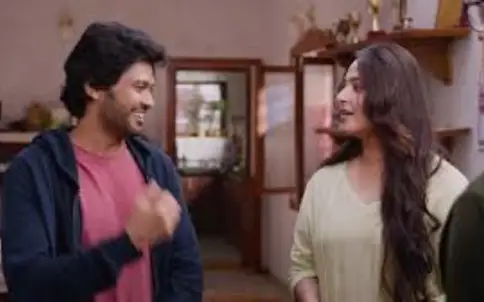
Here’s hoping that Arha continues to do films and Shaakuntalam isn’t a one-off. Her interactions with Dev Mohan’s Dushyant do bring a smile to the audience’s face.

By its very nature, Shaakuntalam is heavily dependent on VFX. The special effects are not perfect but still, they are not a complete write-off either.

The portions involving ashram life and animals have been beautifully done. It successfully transports the audience to a fantasy world.

The costumes by Neeta Lulla are absolutely eye catchy. There is nothing expensive about them but Samantha looks gorgeous.

What doesn’t work?

The biggest problem with Shaakuntalam is the TV serial treatment of Gunasekhar. His narrative style hasn’t got the brevity that is needed for a film of this nature.

The director could and should have worked more on the tribulations of Shakuntala in the second half. But instead, the film becomes more about Dushyant’s redemption.

There are some comic bits in the second half that are meant to bring a smile to the audience’s face. But instead, the viewers feel more frustration than happiness.

The demon gang led by Kabir Singh Duban does not come across as a powerful villain at any point. They end up being caricatures.

The battle scenes have zero intensity. Except for increasing the run time they do not give any thrills to the viewers.

Mani Sharma’s music and background score is good but needed to be far more impactful for a movie of this nature. “Maliika Maliika” is easily the best among all the numbers though.

Final take

Gunasekhar needs to take a break from these period dramas. Watch Shaakuntalam if you want to see some good acting by Samantha and Arha and also enjoy yourselves in a fantasy world.

(Views expressed are personal.)

Ravanasura: Ravi Teja Comes Out All Guns Blazing In This Decent But Muddled Thriller

Lacks solid story & screenplay!

Ravanasrura (Telugu)

  • Cast: Ravi Teja, Sushanth, Anu Emmanuel, Faria Abdullah, Megha Akash, and Daksha Nagarkar
  • Direction: Sudheer Varma
  • Producers: Abhishek Nama and Ravi Teja
  • Music: Harshvardhan Rameshwar and Bheema Ceciroleo
  • Runtime: 2 hours 21 minutes

Sudheer Varma made an impressive directorial debut with the film Swamy Ra Ra starring Nikhil Siddharth in the lead. It was a well-made crime comedy that received both critical appreciation and commercial success.

Later, the director teamed up with Nikhil once again for Keshava in 2017. Though it was a revenge drama it had an interesting element to it.

The element is the condition of the hero who suffers from a rare congenital disorder called Dextrocardia. People with this disorder are prevented from doing activities which results in a faster heartbeat.

In between these two films, Sudheer Varma directed two absolute duds – one with Naga Chaitanya and the other with Sharwanand.

Still, Ravanasura created a certain buzz, thanks to the title and the different presentations of Ravi Teja in the promos.

The director does deserve appreciation for how he connects certain qualities of the famous mythological character Ravanasura to his protagonist Ravindra. However, the film lacks the required punch to make it a memorable experience.

Synopsis

Ravindra (Ravi Teja) is a junior lawyer working under Kanaka Mahalakshmi (Faria Abdullah). Kanaka Mahalakshmi is a reputed criminal lawyer.

One day, Harika (Megha Akash) approaches her to take up a murder case where her father (Sampath Raj) is accused.

Ravindra falls for Harika at the very first sight. At least that is the impression that the audiences get in the initial reels. He requests Kanaka Mahalakshmi to deal with the case.

Meanwhile, several murders happen with a particular pattern. The rest of the story deals with whether Harika’s father is connected to those crimes or not and also how heroes are not always innocent.

An engaging first half

Ravanasura begins interestingly. There is a proper mix of comedy and thrills. The scenes between Ravi Teja and Hyper Adi do bring many a smile to the audience’s faces.

The entry of Sushanth as a mysterious guy makes the film more interesting.

Although the suspense regarding the killer is revealed midway into the first half itself, we will still be interested in knowing about the motivations behind these murders.

The interval bang raises expectations for a gripping second half.

The flaws

However, things fall flat in the second half once we come to know the reasons behind the murders. The proceedings soon become tedious.

The Ramayana connection has its high points but at the end of the day, it doesn’t add much.

The flashback of Ravindra is dealt with in a rather haphazard manner. As a result, it lacks the required emotional connection. Vigilante justice is also hugely problematic.

It also doesn’t help the film except for Sushanth and to an extent Megha Akash the rest of the actors are severely handicapped by underwritten parts.

Rao Ramesh in particular suffers on the account of a weak characterisation.

Ravi Teja is a real surprise

Despite the film’s many flaws, Ravi Teja does manage to hold the movie together with his solid performance.

In the comic bits, he is his usual goofy self but the actor surprises you when he has to portray the unhinged nature of Ravindra. His menacing avatar will send a shiver down the audience’s spine.

Sushanth does a good job as a prosthetics artist. His confrontation scenes with Ravi Teja have come out well.

Megha Akash has a dual-shaded role and she does a good job of portraying the contrasting shades.

Among the technicians, Vijay Karthik Kannan’s cinematography deserves appreciation. It is in sync with the dark nature of the film.

Harshavardhan Rameshwar’s background score does provide some thrills.

Final take

Though Ravi Teja gives his all, Ravanasura needs a more solid story and screenplay.

Bholaa: A Competent Action Thriller, But Lacks The Vulnerability Of Lokesh Kanagaraj’s ‘Kaithi’

Better not to compare with the original!

Bholaa (Hindi)

  • Cast: Ajay Devgn, Tabu, Sanjay Mishra, Deepak Dobriyal, Gajraj Rao, Kiran Kumar, Amala Paul, and Abhishek Bachchan
  • Writer-Director: Ajay Devgn
  • Producer: Ajay Devgn FFilms
  • Music: Ravi Basur
  • Runtime: 2 hours 24 minutes

Ajay Devgn made his directorial debut with the romantic drama U Me Aur Hum in 2008. The film did just average business at the box office but that didn’t stop the acclaimed actor from continuing to direct films.

So far, he directed four films and each of these films covered different genres.

The latest is Bholaa. This time around, Ajay takes inspiration from Lokesh Kanagaraj’s 2019 film Kaithi (Prisoner) starring Karthi.

Kaithi was a gripping thriller about a prisoner who is desperate to meet his daughter. The entire story took place in one night.

The mass masala elements were much there. But, at the same time, it was not just a mindless commercial entertainer.

There was enough tension in the protagonist’s journey that made you root for Karthik’s character Dilli. Audiences feel a certain connection when Dilli talks about his past in a lengthy shot.

On the other hand, Ajay Devgn’s Bholaa is more generic. The background score swells each time the actor gets into a fight with the baddies. A huge aura surrounds him and this is mixed with mythical undertones.

Synopsis

For those who haven’t seen KaithiBholaa revolves around an ex-convict of the same name (Ajay Devgn). Tabu plays IPS officer Diana Joseph. In the original, the same role was essayed by Narain.

The film begins by establishing the heroics of Diana. The intense chase sequence makes it clear that she isn’t a woman whom anyone would want to mess around with.

Bholaa is desperate to meet his daughter who stays in an orphanage and has no idea that she has a parent. He hasn’t seen his daughter till now due to some unfortunate circumstances.

In an unavoidable situation, Diana seeks Bholaa’s help. He initially doesn’t agree but is coaxed to help her after Diana promises to help him in meeting his daughter.

Pretty soon, Bholaa finds himself in the middle of a war between the police and the drug trafficking mafia. The rest of the story looks at how he fights off these menacing foes and manages to unite with his daughter.

Tabu wins the brownie points

The best thing about Bholaa is the inclusion of Tabu. We have seen Tabu playing a cop before as well in Drishyam and Kuttey. But still, there is something new that the actress brings to the table.

She commands the viewer’s attention right from her introduction scene. Tabu does a brilliant job of portraying determination of Diana.

The scenes between her and Ajay benefit immensely from the comfort level that both actors share. A scene that deserves a particular mention is when Tabu talks about how people forget that even cops are human beings at the end of the day.

The performances

Among the plethora of bad guys, Deepak Dobriyal is the only one who makes a solid impression. His Ashwathama is deliberately over the top and Deepak chews the scenery whenever he is on screen.

Vineet Kumar as Nihaari starts promisingly but suffers on the account of a half-baked character.

The subplot of Bholaa and the on-screen daughter has its high points but doesn’t have the impact of the original. This is major because of how Ajay presents himself.

However, Devgn does deserve praise for how he handles the track of Sanjay Mishra.

Sanjay Mishra is more known for his comic roles. But here, he plays a subdued officer who is forced to bring out his inner courage.

Too much super-heroic

The biggest issue with Bholaa is that the protagonist comes across as too much of a superhero.

The action sequences start getting tiresome after a point. As viewers, you know well that Devgn will slice off all the bad guys.

Interestingly, Karthik’s Dilli was someone who experiences a lot of physical pain while going about his job. There is a certain emotion that the viewers feel when Dilli talks about his past. But here, Devgn is an all-powerful deity from the start.

Hence Bholaa becomes an extension of the many intense avatars that the senior actor has done so far.

Ajay only shines in a couple of emotional moments.

The flashback sequence involving Amala Paul halts the proceedings significantly. Their love story comes across as rather hurried. The flashback leaves you with more questions than answers.

A sequel on cards

The film ends with a hint of a sequel but it would have been far better if Ajay Devgn had tied up the loose ends.
Some of the supporting characters also needed to be better established. The character of Gajraj Rao is one such example.

The motivations behind his character are rather sketchy. And as far as Abhishek Bachchan is concerned, he makes a tiny appearance at the end without any impact. Maybe he has a better role in the sequel if it happens.

Aseem Bajaj’s cinematography is appropriate for the scale of the film.

Ravi Basur’s music and background score is quite good. The “Nazar Lag Jaayegi” song is melodious. The title song has a powerful beat.

A special mention must be made of how Ajay Devgan uses the classic “Aaj Phir Jeene Ki Tamanna Hai” song in an important situation.

Verdict

The best way to watch Bholaa is by not comparing it with Kaithi.

Dasara: A Rustic Revenge Drama Bolstered By The Lead Actors’ Performances And The Atmospherics

Nani & Keerthy’s show all the way!

Dasara (Telugu)

  • Cast: Nani, Keerthy Suresh, Anant Singh, Dheekshith Shetty, Samuthirakani, Shine Tom Chacko, Sai Kumar, Jhansi, Poorna, and Zarina Wahab
  • Director: Srikanth Odela
  • Producer: Sudhakar Cherukuri
  • Music: Santhosh Narayanan
  • Runtime: 2 hours 36 minutes

P Sukumar’s Rangasthalam (stage) and Pushpa: The Rise changed the mainstream Telugu cinema grammar in significant ways. They presented their heroes in a vastly different light from what the audiences are generally used to seeing.

First-time director Srikanth Odela was an assistant to Sukumar before making his directorial debut with Dasara. The hangover of Sukumar is visible in terms of how he sets up his story.

Like the above-mentioned films, Dasara also has a rustic background. In Pushpa: The Rise, the backdrop is a remote forest where the smuggling of red sandalwood is rampant.

In Dasara, it is the Singareni coal mine area. At its core, Srikanth Odela’s Dasara is a typical revenge saga where the viewers can easily guess how it is going to end.

What redeems the film is the performances and also how the young director has mounted the story.

Synopsis

The story of Dasara is set in a village called Veerlapally. The period is the 1990s.

The movie begins with the story of three childhood friends Dharani (Nani), Soori (Deekshith Shetty) and Vennela (Keerthy Suresh).

Dharani is attracted to Vennela but he sacrifices his love after learning about Soori and Vennela’s love. He also helps them in their endeavour to get married.

When everything is going hunky dory things change drastically and their lives turn upside down – all because of the politics between the two village heads.

Amidst these developments, Dharani faces a shock of his life that forces him to fight back. This is the story in brief.

Excellent cinematography & production design

The film starts in a gripping manner. The life of the three friends and the bond between them keeps you hooked.

The villagers’ addiction to alcohol in the coal mine area and the problems that come with it keep the audiences engaged.

Srikanth Odela is also successful in portraying the cultural and social specificities of that area. The case in point is the “Bathukamma” (a flower festival celebrated by the women of Telangana) performance during the Dasara festival.

A special mention must be made of cinematography and production design. Sathyan Sooryan does a splendid job of capturing the rawness of the area through his lens. Singareni Coal Mine area has an authentic feel to it.

Falters after interval bang

Much like Rangasthalam, here too, caste politics play an important role. Though the angle of caste politics isn’t as strong as in Rangasthalam, Srikanth Odela still does a fairly fine job.

The pre-interval chase sequence and the intermission bang have been expertly handled. But things stagnate quickly after the true intentions of the villain are revealed. As a consequence, things become dull.

The running time of two hours-plus feels quite heavy, particularly the elongated climax when Dharani goes on an absolute killing spree.

Santhosh Narayanan’s music goes well with the Telangana flavour. The “Bathukamma” song and “Chittu Chittula Gumma”, in particular, have been well-tuned.

Nani & Keerthy Suresh shine

As Dharani, Nani knocks it out of the park. There is no trace of the boy next door that we generally associate with the actor.

The actor just disappears into the rustic avatar starting from his body language. He portrays the many emotions with ease.

Dharani’s character has an interesting design to it. When he doesn’t consume alcohol, he comes across as timid. But when he drinks, he is completely another person.

This character trait of the protagonist has been effectively used by the director, particularly in the later portions when Dharani decides to get over his alcoholism.

Keerthy Suresh stands out as Vennela. The actress shines bright in both the light and the emotional bits. She shares good chemistry with both Deekshith Shetty at the beginning and Nani later on.

Dheekshith Shetty as the friend gives an effective performance. Although he is there only till the interval, the actor more than makes his presence felt.

The likes of Sai Kumar and Samuthirakani needed to be better used.

The same applies to Malayalam actor Shine Tom Chako as well. He has a good presence but the character needed to be more unhinged to make an impact

Except for Keerthy Suresh, neither Poorna nor Jhansi has anything worthwhile to do. They mostly don’t have a say.

Verdict

Watch Dasara for Singareni and Nani.

Rocket Boys Season 2: A Worthy Follow-Up to The First Season

Jim Sarbh and Ishwak Singh takes the center stage

Rocket Boys Season 2

Cast: Jim Sarbh, Ishwak Singh, Regina Cassandra, Saba Azad etc.

Screenplay, Dialogues and Direction: Abhay Pannu

Story: Abhay Koranne

Additional dialogues: Kausar Munir

Genre: Biographical drama

Producers: Siddarth Roy Kapoor, Monisha Advani and Madhu Bhojwani

Number of episodes: 8

OTT: SonyLiv

Season 2 of Rocket Boys is a worthy follow-up to the first season. It mainly looks at the decisions that shaped the nation’s space and nuclear programmes under the leadership of Jim Sarbh’s Homi Bhabha and Ishwak Singh’s Vikram Sarabhai.

There is also a major subplot of how their decisions ended up creating geopolitical ripples across the subcontinent.

Strong women characters

Much like the first season, the new season also has strong women characters.

Mrinalini Sarabhai played by Regina Cassandra is one example of this. She is the wife of Vikram Sarabhai and also a classical dancer. Her presence is significant both at home and also in the outside world.

Saba Azad who played Pipsi, a close friend of Homi Bhabha, has less to do in comparison to the first season, but she also gets her moments at a critical juncture.

The biggest strength of Rocket Boys Season 2 is the humane touch that director Abhay Pannu brings to the table. One example of this is how the director deals with the political undertones of the plot.

For instance, there are scenes showcasing the struggle of Indira Gandhi (Charu Shankar) post the death of her father Jawaharlal Nehru.

The entire process of Indira Gandhi coming to terms with her father’s death has been portrayed with a lot of sensitivity. Charu Shankar is impressive in capturing the spirit of Indira Gandhi. She brings in the required authority.

Humane touch in characters

The arguments between Ishwak and Jim Sarbh, though fierce, never get into the shrill territory.

The turbulent interpersonal relationship between them has been brought out well by the director. In spite of their great scientific achievements, they don’t come across as superheroes at any point.

On certain occasions, we see them vulnerable to provocations and also not shying away from their weaknesses.

The scenes between Vikram and Mrinalini Sarabhai are another major highlight of the series.

Their marriage is under severe strain because of Sarabhai’s long absences from home and his other attractions.

Still, Mrinalini doesn’t come across as a nagging wife at any point. She has her own ambitions of becoming a classical dancer.

There is certain assertiveness to the character which is refreshing to watch. Regina does a fantastic job of capturing the feistiness of Mrinalini. She has effectively portrayed the vulnerable moments of the character.

Impressive technical team

Season 2 also benefits from a very impressive technical team.

The cinematography by Harshvir Oberoi is successful in transporting the viewers back to that era with the frames being perfectly in sync with the nature of the story without overriding the content.

The sound design by Subhash Sahoo is also top-notch. A special mention must also be made of the show’s theme music, which is an absolute winner.

Falters at some places

The positive being told, there are certain areas where the series falters.

Primarily, the characterisation of the young Dr APJ Abdul Kalam could have been better written.

Also, some of the supporting characters come across as more of TV serial villains which are not in sync with the tonality of the show.

Particularly those played by Namit Das and KC Shankar.

Jim Sarbh, Ishwak take centrestage

The performances by Jim Sarbh and Ishwak are simply terrific.

There is no dull moment whenever Jim is on screen. He gets ample opportunities to be a charmer which Jim pulls off with ease. He is equally good in the more intense bits.
The scene leading to the death of Homi Bhabha has an emotional poignancy that stays with the audience for a long time.

Ishwak Singh’s part is less colourful but the young actor makes his presence felt.

He is particularly good in the vulnerable bits with his wife. He is successful in bringing out the zen-like attitude of Vikram Sarabhai.

Saba Azad enters pretty late but she does hold her own in the few scenes that she has got.

A special mention must be made of the intense scene where she questions the futility of war.

Dibyendu Bhattacharya is also in form, as a misunderstood scientist who has to prove his innocence.

Verdict

In a nutshell Rocket Boys Season 2 is a worthy tribute to the two great scientists. What elevates this underdog story is the humane touch that the director brings.

Bheed: The Plight Of Migrant Workers Deserved A Better Film

The muddled treatment fails it!

Bheed (Hindi)

  • Cast: Rajkummar Rao, Bhumi Pednekar, Dia Mirza, Pankaj Kapoor, Kritika Kamra, and Ashtoush Rana
  • Writer-Director: Anubav Sinha
  • Producer: Beneras Media works
  • Music: Anurag Saikia
  • Runtime: 1 hour 54 minutes

Starting from 2018’s Mulk (Region or Country), Anubhav Sinha has repeatedly chosen issues that are important to society.

In Mulk, he successfully addressed the prejudices that Muslims are facing in our society, through the character of a respected Muslim patriarch played by the late Rishi Kapoor.

In Article 15 (2019), the topic was the horrors of caste discrimination. Ayushmann Khurrana played Ayan Ranjan, a police officer from society’s upper crust. He had no idea about the various caste divisions.

Article 15 was followed by an equally powerful Thappad (Slap) in 2020 which looked at the consequences of a slap by the husband in a momentary fit of anger.

Thappad made a powerful statement on how it isn’t okay for a husband to slap his wife.

All the above-mentioned films positioned Anubhav Sinha as a director with a strong progressive voice.

However, the director saw a downfall with Anek where he focused his lens on the strained relationship between the government and the separatist groups in the North East.

Despite the powerful subject, he floundered big time. Unfortunately, the same has happened with his latest – Bheed (Crowd).

There are passages in the film that keep the audiences completely hooked particularly the ones featuring Rajkummar Rao and Pankaj Kapoor. But the film tries to address too many things at the same time. As a result, it never comes across as a comprehensive whole.

India’s pandemic exodus

Bheed begins with the shocking scene of the real-life incident of 16 migrant workers who were run over by a train. This sets the mood for the drama that follows. The film has been shot in black and white by cinematographer Soumik Mukherjee.

After the horrific death scene, we move to Surya Kumar Singh Tikas (Rajkummar Rao). Surya, a young cop, is appointed as in in-charge of a check-post at one of the state borders. This check-post has been closed due to Covid.

Surya’s girlfriend is an upper-class girl Renu Sharma (Bhumi Pednekar). She is a doctor who treats patients who are stranded at the check-post.

Aditya Shrivastava plays Surya’s subordinate who doesn’t like the latter much but has no other option other than to take orders from him.

On the other side of the barricade, you have the characters played by Dia Mirza and Pankaj Kapoor, among others.

Dia Mirza comes from a privileged class. She is a desperate mother who wants to cross the border to take her daughter back home. Her need is such that she doesn’t mind offering money to the in-charge officer.

Pankaj Kapoor plays watchman Balram Trivedi who also wants to return home from the city, much like his fellow friends and workers.

They arrive at the Tejpur border which is 1200 km from Delhi. However, the border has been sealed now.

There is also a young girl carrying her alcoholic father on a bicycle. Amidst all this, Kritika Kamra plays a TV journalist named Vidhi Tripati. She is an idealistic journalist with a lot of passion.

Revealing anything more wouldn’t be right as this is a story that has many layers to it.

The caste angle

Before getting into the shortcomings, it is necessary to highlight what works well for the movie.

It is successful in highlighting the plight of migrant workers. The scenes of families walking barefoot for miles, hungry kids crying for food and the inability of the mothers leaves a lump in your throat.

There are several other issues that the director tackles; chief among them is the issue of caste through Rajkummar Rao’s Surya Kumar Singh Tikas.

Surya is someone who hides his caste under the surname Singh because it is something that his father had done as well.

Surya Kumar feels happy to be the in-charge. But, at the same time, there is also a deep insecurity about his caste identity amidst the Sharmas and Tridevis.

Anubhav Sinha does a good job of fleshing out this character. Once again, Rajkummar Rao proves his versatility with his exceptional performance.

He is particularly good in a scene when he expresses his anguish and decides that he also wants to be a hero and not remain as part of the crowd (Bheed).

The prejudices related to Muslims

Another track worth mentioning in Bheed is that of Pankaj Kapoor’s Balram Trivedi. Though the character of Balram, Anubhav Sinha exposes the prejudices related to Muslims.

There is an important scene when Balram doesn’t allow his hungry companions to eat the food served by a Muslim man.

Balram is someone who is filled with bigotry. But fortunately, the character is not one-dimensional.

Pankaj Kapoor is a vastly experienced actor who has given many terrific performances. Here too, he packs a punch whenever he is on screen. His confrontation scenes with Rajkummar Rao deserve a particular mention.

The shortcomings

There are many issues that Anubhav Sinha tackles through Bheed. The intentions are worth applauding but the film tries to address/ highlight too many things at the same time. As a result, it feels cluttered.

The love track, for example, doesn’t make any sense. It feels more suited for a romantic drama than an issue-based film like this. It would have been far better if Surya and Renu Sharma were portrayed as strangers who meet in this difficult period.

There is also a forcefully inserted intimate scene between the duo. The conversations between Surya and Renu mostly don’t align with the genre of Bheed.

Bhumi is her usual feisty self but nothing is outstanding about her performance.

Kritika Kamra as an honest journalist has an impressive beginning. But, after a point, it is clear that the director has no idea about where to take the character.

The paradigm shift of journalism in those times is hardly touched upon.

Dia Mirza gets the most baked character in the ensemble. Her desperation to reach her daughter is painted in a rather insensitive manner.

A more nuanced characterisation was needed. Still, Dia does the best that she can do with this one-dimensional character.

Soumik Chatterjee’s black-and-white cinematography takes some time to get used to but it is an interesting experiment. There is no scope for songs in a film like Bheed but the composition of “Herali Ba” is quite powerful.

Verdict

Bheed is a perfect example of how good intentions don’t always translate into powerful films.

Rangamarthanda: This High-Pitch Emotional Tale Is More For Those Interested In The Bygone Era

Brahmanandam is awe-inspiring!

Rangamarthanda (Telugu)

  • Cast: Prakash Raj, Ramya Krishna, Brahmanandam, Anasuya Bharadwaj, Shivathmika Rajashekar, Adarsh Balakrishna, Rahul Sipligunj, and Ali Reza
  • Director: Krishna Vamsi
  • Producers: Kalipu Madhu and S Venkat Reddy
  • Music: Ilaiyaraaja
  • Runtime: 2 hours 30 minutes

There are certain tropes associated with films related to old-age parents. These clichés seem to be a must, irrespective of whatever language the film is. The younger generation is always the villain and the root cause of all their problems.

The audience is meant to sympathise with the parents even if they are in the wrong. The daughter-in-law who cannot adjust to a joint family and her need to have an individual space is looked down upon as something bad.

Director Krishna Vamsi’s Rangamarthanda (a title conferred on a skilled theatre artist) pretty much follows this blueprint. But what makes the movie slightly different is how he integrates the life of a stage artist into this familiar tale.

Through the characters of Prakash Raj and Brahmanandam, the film talks about how performing on stage is different from living a real-life role.

The retirement life of a stage artist

Rangamarthanda is a remake of the 2016 Marathi film Natsamrat starring Nana Patekar. For those who did not watch the original, the Telugu remake is the story of a celebrated theatre artist Raghava Rao (Prakash Raj).

He rules the stage for decades. He takes retirement to spend more time with his family. Though his intentions are pure, Raghava Rao is too straightforward to adjust to the changing landscape.

His unfiltered attitude often becomes a problem when he stays with his daughter-in-law and then his daughter.

Ramya Krishna is a dutiful wife who adores and walks in the footsteps of her husband.

Anasuya Bharadwaj’s Geetha is the supposedly shrewd daughter-in-law.

Shivathmika Rajashekar plays the daughter who later turns out to be a villain because of a misunderstanding.

Siddu (Ali Reza) plays a spoilt brat and an upcoming actor who has a connection to Raghava Rao in the past. He spends most of his screen time listening to the flashback story of Raghava Rao.

After Prakash Raj, Brahmanandam gets the next big part to play. He plays Raghava Rao’s best friend and a fellow stage artist.

Unlike most of Brahmanandam’s previous films, the senior actor doesn’t do any comedy here.

Brahmanandam & Prakash Raj complement each other

The best parts of Rangamarthanda are easily the portions involving Prakash Raj and Brahmanandam. Their scenes have both wit and emotional resonance.

On more than one occasion, they move audiences with their emotional acting.

For example, there is a scene where the onscreen wife of Brahmanandam dies. Sitting next to the pyre, he wonders why he can’t shed tears unlike in similar situations on stage.

Also, there is a scene in the hospital room where Brahmanandam and Raghava Rao enact a part of the “Karna-Duryodhana” play in dialogues. This scene is a treat to watch even if you are not so much into stage plays.

Prakash Raj and Brahmanandam do most of the heavy lifting as far as acting is concerned.

Brahmanandam deserves extra points for his exceptional performance because he has never done this kind of role before.

With Rangamarthanda, the veteran actor shows that he is more than capable of doing heavy roles, too.

Shivathmika Rajashekar & Rahul Sipligunj excel

The portions involving Shivathmika Rajashekar and Rahul Sipligunj are good to watch.

Rahul Sipligunj brings a certain freshness to the table with his Telangana slang. The singer-turned-actor brings a much-needed liveliness to this otherwise depressing story.

Shivathmika Rajashekar springs a pleasant surprise by more than holding her own opposite both Prakash Raj and Ramya Krishna. She does quite well as a caring daughter.

The viewers feel bad when a small misunderstanding involving her snowballs into a big issue later on.

Ilaiyaraaja’s music goes perfectly well with the mood of the film. His songs have a certain weight and add depth to the woes of Raghava Rao.

The dialogues are a bit of a mixed bag. Some turn out to be extremely preachy but there are also some gems. Not surprisingly, most of these are delivered by Prakash Raj and Brahmanandam.

Cliched and overdramatic

What considerably pulls Rangamarthanda down is the pile of clichés.

The concerns about Anasuya Bharadwaj’s character are genuinely valid but the treatment is extremely one-sided.

Another example is regarding Telugu — how speaking Telugu is looked down upon in schools.

There is no denying that everything has become an English medium but the point should have been made subtly. The school principal’s role comes across as more of an NRI villain.

Another problem with Rangamarthanda is how it looks at the inability of Raghava Rao to adjust to his new life. We are meant to sympathise with him even when he is clearly in the wrong.

Simple problems unnecessarily snowball into bigger issues. Some problems have also been added for the sake of it.

The biggest example of this is the death sequence featuring Ramya Krishna. As viewers, we don’t feel sad as it is overdramatic.

Even the end message about looking after your parents are more hammered in rather than coming as organic.

The irony of the situation is that Raghava Rao was very successful in portraying different roles on stage. But, in real life, he is unable to perform the one role that is expected of him.

Above all, at the beginning of the film, there is a monologue in the voice of actor Chiranjeevi dedicated to the senior male Telugu Cinema actors. The photos of these Telugu actors are shown as part of the commentary.

I wonder why the makers went for screen actors instead of stage actors as the film is all about a stage artist!

Final take

In a nutshell, Rangamarthanda is for a thin section of the audience. Watch it if you are a fan of Prakash Raj or Brahmanandam or if you are an avid follower of stage plays.

Mrs Chatterjee Vs Norway: A Real-Life Saga Marred By Flawed Execution

Deserves better on-screen adaptation!

Mrs Chatterjee Vs Norway (Hindi)

  • Cast: Rani Mukherjee, Anirban Bhattacharya, Jim Sarbh, Balaji Gauri, and Neena Gupta (cameo)
  • Writer-Director: Ashima Chibber
  • Producers: Monisha Advani, Madhu Bhojwani, and Nikhil Advani
  • Music: Amit Trivedi
  • Runtime: 2 hours and 14 minutes

Stories based on real life have an inherent potential of moving the audience, particularly, the mother and the children’s sagas. For those who are not aware, Mrs Chatterjee Vs Norway is inspired by a real-life legal drama.

The children of Sagarika Chakraborty were taken away from her by the Norwegian government as they considered her to be an unfit mother. Sagarika fought relentlessly for her children’s custody and eventually won the battle.

At one point, the whole issue almost led to a diplomatic row between India and Norway.

Sagarika Chakraborty wrote about her entire ordeal in a book titled “The Journey of A Mother”. By its very nature, this is a story that has all the potential of a heart-wrenching saga.

But director Ashima Chibber lacks the nuances that are needed to depict this subject.

However, Mrs Chatterjee Vs Norway isn’t a complete washout either, thanks to a more engaging second half and Jim Sarbh who elevates the proceedings.

Synopsis

In the onscreen adaption, Sagarika’s name has been changed to Debika (Rani Mukherjee). Debika is a young Bengali housewife grappling with motherhood and a new way of life in Norway.

Though her husband (Anirudh Chatterjee) adapts to the ways of the Norwegian language and norms, she prefers to retain her Indian roots and often wears them on her sleeve.

Her refusal to let go of her Indianness draws the attention of some officers in the Norwegian childcare services.

Common Indian practices like eating with hands and hand-feeding your children among others are seen as bad parenting. The officers feel these reasons are enough to separate the kids from their parents.

Debika decides to fight for her children’s custody at any cost. But her impulsive behaviour becomes her worst enemy and things start spiralling downwards.

It also doesn’t help that the husband’s character is more bothered about securing his Norwegian citizenship rather than helping his wife in this emotional and legal battle.

The rest of the story of Mrs Chatterjee Vs Norway chronicles the long journey of Debika in getting back her children.

First half falters

The first half of Mrs Chatterjee Vs Norway is a mixed bag, to be honest. It begins on a dramatic note and you are instantly invested in the pain of Debika. But things go downhill post that.

Debika’s constant screeching does get on the nerves of the audience. The tone is constantly high pitch, as a result, some of the emotional scenes don’t completely land. Also, most of the characterisations leave a lot to be desired.

The Norwegian officials come across more like the Bollywood villains of the 80s than actual human beings.

The husband and co have zero redeeming features. They are more cardboard cutouts meant to increase the audience’s sympathy for Debika.

There is no explanation for why Debika’s In-laws aren’t on her side. There is also a small subplot about domestic violence but that also is dumped midway.

Engaging second half

Things take a turn for the better with the entry of Jim Sarbh as Daniel Singh Ciupek, a lawyer of Indian descent practising in Norway.

He brings certain poise to the proceedings. His scenes with Rani Mukherjee are particularly good.

Neena Gupta plays a character based on Sushma Swaraj. She has a small but pivotal cameo in the second half. She gives a new direction to Debika’s fight.

Rani Mukherjee’s performance also gets better in the second half where the strain doesn’t show.

She shines particularly in the quieter bits. Her emoting through the eyes leaves a lot more impact than the melodramatic moments.

The courtroom drama in the second half is when the film finally comes together.

The face-off between Jim Sarbh and Debika’s counsel played by Balaji Gauri is exceptionally good. The arguments between them are laced with strong dialogue.

Balaji Gauri also brings a touch of humour to the proceedings. Both Jim Sarbh and Balaji Gauri leave the biggest impact despite their limited time.

Through Jim Sarbh’s character, Ashima Chibber raises questions about the stereotypes regarding adoptive parents.

Amit Trivedi’s music isn’t of the popular variety but the music composer is successful in embodying the spirit of a fearless mother. “Shubho Shubho”, in particular, is a worthy number in Mrs Chatterjee Vs Norway.

Verdict

In a nutshell, the spirit of Mrs Chatterjee does deserve kudos. But her battle deserved a better on-screen representation.

Rana Naidu: A Gripping Father-Son Saga Bolstered By Real-Life Chacha-Nephew Combo

Venkatesh is the icing on the cake!

Rana Naidu (Hindi)

  • Cast: Rana Daggubati, Venkatesh, Surveen Chawla, Sushant Singh, Abhishek Benarjee, Gaurav Chopra, and Aditya Menon
  • Directors: Suparn Verma and Karan Anshuman
  • OTT platform: Netflix
  • Number of episodes: 10

Over the years, web shows have not just opened doors for newer stories but also given mainstream actors an opportunity to explore a different facet of their acting skills — something which doesn’t always happen on the big screen.

Rana Naidu directed by Karan Anshuman and Suparn Verma feels a little long with its duration of 10 episodes. The use of swear words and also an overdose of sex scenes get bothersome at times.

But still, there is a lot to enjoy here: particularly, the confrontation scenes between Rana Daggubati and Venkatesh.

I must say, Venkatesh has the guts to play a role that is quite different from his onscreen image.

For those who are not aware, Rana Naidu is based on the English web drama Ray Donavan. Since I have not seen the original, this will be a standalone review.

Synopsis

Rana Daggubati plays a fixer called Rana Naidu whose profession is cleaning up the mess of his high-profile clients. He takes his job seriously and successfully solves the problems of his clients.

But, at home, it is an altogether different story. His relationship with his family — wife and two children — is on tense ground. Adding to his woes is Rana Naidu’s estranged father Naga Naidu (Venkatesh).

Naga Naidu comes out of prison after 15 years for a crime that he did not commit. He has two more sons — played by Abhishek Banerjee and Sushant Singh.

Naga wants to fix his relationship with his sons. This is the story in brief.

A gripping drama

The best part of the Rana Naidu web series is how the undercurrent of the drama is maintained throughout.

As the layers peel off, audiences become more and more excited about what will happen next. There are ample twists and turns that shock you.

Another major highlight of Rana Naidu is the drama generated by the protagonist’s profession.

Gaurav Chopra as the Bollywood superstar may come across as a tad dramatic but the character is deliberately designed in that manner. And it works in the favour of the web series.

The directors also dwell on the different psyches of parents through the characters of Rana Naidu and Naga Naidu. They present some fascinating insights into exploring this aspect.

The confrontation scenes between Rana Dagubbati and Venkatesh, though less in number, still pack a punch.

The face-off between this real-life mama and nephew gives the show some of its best solid moments.

Rana and Venkatesh are top-notch

Rana Daggubati is supremely effective in essaying a protagonist who is torn between his high-profile job and his crumbling family.

He is top notch in not just portraying the menace and the intensity required but also shines in the vulnerable moments — whether it is with his wife and children or with his two brothers.

Venkatesh Dagubbati is equally solid as the wronged father who is at loggerheads with his son. The actor brings a certain warmth to his part beneath all the roughness.

The senior actor also brings much-needed humour to this otherwise serious show.

His Hyderabadi Hindi gives the show some of its most amusing moments. He successfully oscillates between being a chilled-out guy, who is desperate to reunite with his family and someone who is thirsting for vengeance.

Abhishek Banerjee nails it

Although the primary focus is on Rana and Venkatesh, the directors give ample space to others as well. Particular mention must be made of Abhishek Banerjee and Sushant Singh.

Abhishek Benarjee’s Jaffa, a recovering alcoholic, gets abused by a swamiji during his childhood. He is severely affected by those scars.

Sushant Singh’s Tej Naidu is a stuntman with Parkinson’s disease.

Suparn Verma and Karan Anshuman handle the complicated back story of Jaffa with the right amount of sensitivity.

Abhishek Banerjee is someone who is known more for his comic roles. But here, he successfully presents a different facet of himself.

The scenes between the three brothers are filled with a lot of warmth. As audiences, we earnestly want them to come out of their childhood scars.

Surveen Chawla and Ashish Vidyarthi stand out

The supporting cast is equally solid in their parts but the ones who stand out are Surveen Chawla and Ashish Vidyarthi.

As the fierce wife, Surveen Chawla more than holds her own opposite — both Rana and Venkatesh. The refreshing aspect of her character is that she is no pushover at any point.

Ashish Vidyarthi makes a surprise entry towards the end and sends chills down the audience’s spine. The coolness with which he goes about things makes him even scarier.

Too much adult content

The technical department starting from the cinematography and the background score also deserves equal credit for creating the right atmospherics.

What pulls down Rana Naidu is the length of the series. Instead of 10 episodes, the makers should have restrained it to seven. This would have made the web show crisper.

Also, there is an overdose of cuss words and uninhibited sex scenes. This becomes a tad too much to digest.

Final take

In a nutshell, Rana Naidu isn’t everyone’s cup of tea, But, if you are in the mood to watch a twisted family drama, then this one is definitely for you.

Tu Jhoothi Main Makkar: Luv Ranjan’s Rom-Com Entertains Till It Lasts

Revives the rom-com genre.

Tu Jhoothi Main Makkar (Hindi)

  • Cast: Ranbir Kapoor, Shraddha Kapoor, Anubhav Singh Bassi, Dimple Kapadia, Boney Kapoor and Hasleen Kaur; special appearances by Karthik Aryan and Nushrratt Bharuccha
  • Writer-director: Luv Ranjan
  • Producers: Luv Ranjan and Ankur Garg
  • Music: Pritam
  • Runtime: 2 hours 39 minutes

Tu Jhoothi Main Makkar comes at a time when there is a severe drought of quintessential romantic films. Its success is necessary for the revival of this genre.

Its director Luv Ranjan started his career with a small film titled Pyaar Ka Punchnama. Not much was expected of it but the movie ended up being a moderate hit. Since then, Luv created a brand for himself.

Except for Akaash Vani (2013), his filmography largely consisted of projects where friends come before love. Girlfriends are always the conniving type!

In Akaash Vani though, Luv Ranjan did address an important topic of martial abuse where the woman finally walks out of an abusive marriage. But the film didn’t find many takers.

But this time, Tu Jhoothi Main Makkar has enough crowd-pleasing moments to help it to sail through.

Synopsis

The film is about the second-generation Delhi-based businessman Mickey (Ranbir Kapoor).

He also has a side business of helping people break up relationships. Except for his niece, no one else in the family knows about Mickey’s side business.

Anubhav Singh Bassi plays Mickey’s best friend-cum-business partner. Mickey believes that what he does is an art. All this is established wonderfully in the first fifteen minutes.

During a vacation, Mickey sees Nisha Malhotra (Shraddha Kapoor). Sparks fly immediately and in no time, they are head over heels for each other. Now, this part of the story has problems which I will talk about later.

Things take an unexpected turn before the interval when Micky’s expertise works in reverse to hurt him.

Nisha wants to break up with Mickey and she contacts him for help, without knowing that he is the very same person with whom she is trying to part with.

The rest of the story is about why Nisha wants to break up with Mickey and what eventually happens.

Routine love track

Luv Ranjan wastes no time in establishing the world of Mickey, his boisterous joint family headed by Dimple Kapadia and also his side business.

Dimple Kapadia plays this loud yet caring mother.

The niece (Inayat Verma) is the youngest of the family. Her scenes with Ranbir are particularly a laugh riot.

The bro-romance between Ranbir and Anubhav Singh Bassi has certain warmth. We instantly connect with their friendship.

The proceedings start stagnating when the scene shifts to Spain. The boy-meets-girl scenes have a distinct hangover of Imtiaz Ali’s Tamasha but not in a good way.

The love story is very haphazardly written with no head or tail to it. It is high time that writers think of better ways to establish a love story with proper nuances.

However, Ranbir’s infectious energy coupled with Pritam’s chart-busting soundtrack does make you tide over these portions.

An engaging second half

The twist at the interval point sets the base for a more engaging second half and the film gets better.

The cameos of Karthik Aryan and Nushrratt Bharuchha have been smartly integrated into the narrative.

The meta references to the Pyar Ka Punchnama along with Sonu Ki Titu Ki Sweety do bring a smile to your face.

Luv Ranjan cleverly incorporates references to both Alia Bhatt and some of Sooraj Barjatya’s films. These dialogues also bring some amusing moments.

The second half works more because of the relatable conflict point.

Shraddha fails to pull it off

Shraddha’s character of a career-oriented girl who needs her own space in life is something that many girls can identify with. Her fears about adjusting to a joint family have some heft.

But it also has to be said that her insecurities could have been dealt with in a better manner without her coming across as selfish.

It also doesn’t help that Shraddha hasn’t got the acting chops to pull off the high-octane scenes.

The pre-climax and the climax have the perfect mix of both hilarious and emotional moments. A particular mention must be made of the airport scene which has ample chaos but, this time, in a good way.

Pritam is back

For any love story to work, music is an important ingredient. After an average soundtrack in Shehzada, Pritam is back in form with Tu Jhoothi Main Makkar.

Except for Shraddha’s forgettable introductory number, the rest of the work is big time.

On one hand, there are the groovy “Tere Pyaar Mein” and “Pyaar Hota Kayi Baar Hai” songs.

On the other hand, “O Bedardeya” is a soulful romantic number where the pain and vulnerability of Mickey are beautifully conveyed by Ranbir.

The performances

After a hiatus, Ranbir returns to the romantic genre. As expected, he makes for a charming Mickey. The actor also pulls off lengthy dialogues with a certain panache.

Anubhav Singh Bassi as Mickey’s buddy is another major highlight of Tu Jhoothi Main Makkkar. His jokes and camaraderie with Ranbir are both spots on.

Dimple Kapadia has a commanding presence whenever she appears on the screen. Despite the high pitch, the senior actress is still adorable.

Boney Kapoor making his acting debut hasn’t got a lot to do. But still, he is reasonably good for a newcomer.

Hasleen Kaur is also impressive as Mickey’s sister.

Final take

In a nutshell, Tu Jhoothi Main Makkar does succeed in reviving the romantic comedy genre. Despite some hiccups in the first half, there is quite a lot to enjoy here.