Sita Ramam: This Tale Of Star Crossed Lovers Touches Your Hearts

Hanu Raghavapudi’s Sita Ramam is a poetic love story that works on many levels. The twists and turns keep you hooked. Most importantly the chemistry between Dulqer and Mrunal works like magic. The director also looks into the Indo-Pak conflict with Kashmir. He smartly integrates this subplot into the film and makes sure that it never comes across as just an add on.

Rashmika Mandanna tasked with uniting Dulqer and Mrunal

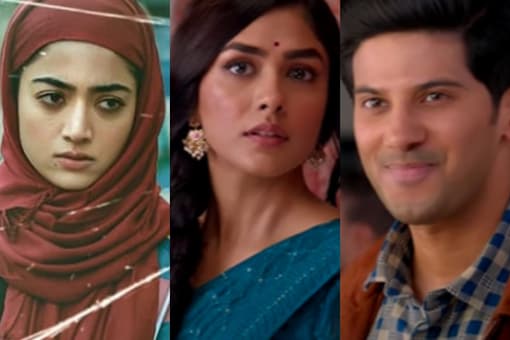
In the mid-1960’s Lieutenant Ram (Dulqer Salman) falls in love with a stranger (Mrunal Thakur as Sita) after an exchange of letters. Ram meets Sita and she also reciprocates his love. But Sita has problems due to her family, cut to 20 years later Afreen (Rashmika) is assigned with the task of delivering Ram’s letter to Sita by her grandfather-army general (Sachin Khedar). Afreen has no inclination to deliver the letter but she has no other option, the reason being her grandfather’s will, Afreen is a Pakistani Muslim who hates Indians. The rest of the story focuses on why the letter is so important and what is the connection between Ram and Afreen’s grandfather.

For a love story like this to work the casting of the lead pair is very important, director Hanu Raghavapudi gets the casting absolutely spot on. Both Dulqer and Mrunal deliver wonderful performances. The chemistry between them is a treat to watch. Dulqer turns on his charm fully and makes the audiences fall in love with him. The actor is in splendid form in both romantic and emotional scenes. The surprise package though is Mrunal. She makes a stunning Tollywood debut. She not only looks gorgeous but also performs with ease.

Rashmika Is Not A Heroine But The Hero Of This Film! - Movie News
Rashmika is not the heroin of the film but a very important character

Hanu Raghvapudi has handled the portions between Dulqer and Mrunal in a classy manner. Some of the emotional bits featuring the lead pair give you goosebumps.

The director has also made sure that the supporting characters come out well. The roles of Sumanth and Rashmika are beautifully woven into the story. Both the actors do a splendid job in their gray shade characters.

Indo-Pak conflict mixed with a love angle is something that Indian audiences are always keen to watch. The film reminds you a bit of Veer Zara in the sense that Dulqer’s Ram is prisoner in a Pakistani jail. The scenes involving war makes you tense about what will happen next.

There are twists and turns at regular intervals and the last one leaves you teary eyed.

Sita Ramam teaser is visually appealing | Telugu Cinema
Dulqer in army uniform bringing in war atmosphere

Technically also Sita Ramam makes for an eye pleasing product. The cinematography by PS Vinod and Shreyas is of very high standards. The music by Vishal Chandrasekhar is soothing and suits the mood of the film perfectly.

Sita Ramam is not without its flaws though. Some of the comic portions are oddly placed. The track of Vennela Kishore could have been better etched out. Also there are some logical errors. For example Mrunal Thakur’s character doesn’t de age for a bit even after twenty years.

Sita Ramam is a feast particularly if you are a fan of Dulqer and also intense love stories.

Darlings: Watch This Domestic Noir For The Acting Performances And The Message

Jasmeet K Rheen’s Darlings is a domestic noir filled with elements of a dark comedy and thriller. It is a difficult genre to crack for any director let alone a debutant. The rough edges are very much visible but there is no denying that Jasmeet makes some important points on domestic abuse, most importantly it doesn’t paint all men as monsters. It is also a delight to watch the ensemble cast of Alia Bhatt, Shefali Shah, Vijay Varma and Roshan Mathew. Alia has co produced this film under the banner of Eternal Sunshine productions.

The story of Darlings is set in a lower middle-class Muslim dominated neighbourhood. Badrunisaa (aka Badru) played by Alia Bhatt is a  woman who is married to an abusive man Hamza (Vijay Varma). Badru represents those housewives that put up with abuse in hope that the husband will change one day. Shefali Shah plays Badru’s mother Shamshunisaa. Shamshunisaa is a more practical woman who knows that Hamza is never going to change, the reason being she has had her own share of domestic abuse in the hands of her deceased husband. She constantly advises Badru to leave Hamza but Badru is admant that her husband will change. The fourth key character is Zulfi (Roshan Mathew). He is the antithesis to the violent Hamza. He is an aspiring screenplay writer who also sells household appliances for a living. Zulfi also serves a solo delivery boy for the dabba service of Shamshu. Coming back to the marriage of Badru and Hamza, a certain incident happens, which leaves Badru with no option, other than to make Hamza pay for his sins with the help of her mother. These plans lead to several risky situations. The dark humour is generated out of the outlandish situations that arise out of these plans.

Jasmeet K Rheen does a wonderful job in setting up the world of Badru and Shamshu. Both these women are as different as chalk and cheese, this makes the dynamics between the two more interesting.

The bustling chawl where the film takes place plays out as a character in itself. The scenes leading up to the domestic violence is filled with a sense of dread that makes you uncomfortable.

Jasmeet also does a good job in addressing the unequal power structure of marriage. This comes out brilliantly in a scene  of police station where Shefali Shah says that world may have changed for those on twitter and facebook but not for them.

The biggest pleasure of watching Darlings lies in watching the scenes between Shefali Shah and Alia. There is a constant tussle happening throughout between the mother and daughter. This leads to many entertaining moments.

Out of the two Shefali Shah has the more fleshed role and not surprisingly the actress does a stellar job. She pulls off her quirky character with ease, and is the source of comic relief in many scenes. Alia as Badru starts off this as this submissive wife and it takes some time for Badru to transform. The transition could have better etched out but it is to the credit of the actress that she sells it. Alia plays the character with complete conviction and wholeheartedly embraces all the contradictions of Badru. Alia is particularly impressive in the climax scene. Vijay Varma makes for a terrific psychopath. He effortlessly switches from a loving husband to a violent demon within a matter of second. Lastly Roshan Mathew is also charming as the loving Zulfi. His scenes with the mother and daughter do bring a smile on your face.

Darlings falters when the director starts mixing elements of dark comedy with thriller. The situations in the second half lack plausibility factor even within the outlandish situation. Badru tying Hamza with dupatta and constantly giving him sleeping pills is too farfetched. The policemen led by Vijay Maurya come across as bumbling fools.

Another major problem is that director Jasmeet takes way too much time for Badru to finally come to a decision. This indecisiveness of Badru till the last moment makes it hard for the audiences to root for her character in entirety.

All said and done, Jasmeet addresses the different dynamics in an abusive marriage, but mixing of elements needed to better. A more matured director was the need of the hour.

Masaba Masaba Season 2: Neena And Masaba Score Once Again

Sonam Nair’s Masaba Masaba Season 1 was one of those loved web series when it released in the year 2020. Neena Gupta was expectedly brilliant, the surprise package though was daughter Masaba also playing herself. She stood her own and the scenes featuring Neena and Masaba were very good to watch. The plotline was basically Neena and Masaba playing a fictionalized version of themselves. The web series covered the professional and personal lives of the mother and daughter duo. There were also some important issues that season 1 covered like ageism in the industry, and how it is not so easy for senior actors particularly for the women to get solid parts. Director Sonam Nair smartly intergrated the film Badhai Ho into one of the episodes, for those not aware Badhai Ho was a huge gamechanger for Neena Gupta. The series also took several potshots at the fashion industry. At the end of season 1 you were eager to know how the story would go forward.

The tonality of Season 2 which has seven episodes is more or less the same, but director Sonam Nair is successful in bringing different dimensions to the same story. Season 2 begins off with Masaba’s pregnancy scare, and this unfortunately leads to Neena going all guns blazing on her. Masaba’s professional life isn’t exactly going well either. She puts all her energy into the fashion show but things don’t turn the way she expects, the reason for that is a young designer who steals the limelight. Neena, on the other hand, doesn’t want to confine herself to the backseat and is on her way to challenge the expected norms. In a way the problems addressed are similar to the first season, but the handling of it is more intense.

Director Sonam Nair dwells deep into the burden that successful women have to carry on their shoulders. She does a good job in capturing both the public scrutiny and also the unrelenting social media. In spite of being a fashion designer for a decade and learning the craft, Masaba still has to justify her talent time and again. Masaba even ends up hiring a publicist for her professional life to get better.

This publicist makes Masaba do things that she isn’t comfortable with. A segment that stands out is when Masaba is invited on a reality show as a judge. Masaba is made to go against her nature.

Another segment worth mentioning is the involving Neena Gupta.  Neena Gupta wants to revive her hit show Fursat but her script has been turned into a ridiculous joke by the producers and also a young-know-it all director. The reason for changing the script is that no one is apparently interested in watching older people romance on screen. It doesn’t take long for the director’s sexism to come out.

Sonam Nair also brings a certain sensitivity in handling the scenes between Masaba and Niel Bhooplam’s Dhairya Rana. Dhairya is Masaba’s investor. He has feelings for Masaba but there is a past incident involving her personal life and things get complicated. Niel Bhooplam plays his part with lot of understatedness.

As expected both Neena and Masaba knock it out of the park both together and also individually. Their scenes together have a real life warmth that makes you root for them.

Through the mother and daughter duo director Sonam Nair tells a heartwarming story of women standing up for each other, and how this changes each other’s lives.

Good Luck Jerry: Janhvi Kapoor Leads This Delicious Crime Comedy

Siddarth Sengupta’s Good Luck Jerry is a delicious crime comedy that works both as a standalone film, and also as a remake of Nelson Dilipkumar’s Tamil classic Kolamaavu Kokila. Siddarth takes the beats of the original and adds his own touch. For those who haven’t seen the original, the story of Kolamaavu narrated the tale of a girl from lower middle class family played by Nayanthara. She lives a happy life with her parents. But things take a turn when her mother is diagnosed with lung cancer. Kokila tries her level best to get money for treatment but nothing works. Left with no other option she takes up the risky job of drug peddling without the knowledge of her parents. After a point she tries to get out of drug peddling but that is something which is easier said than done.

In the remake the director transports the plot to Punjab. Like Alia Bhatt in Udta Punjab Janhvi and her family are also Bihari migrants. You don’t have any father character unlike the original. There is a kind hearted neighbour Anil (Neeraj Sood). Anil has eyes for Jerry’s mother (Mita Vashisht). There is also Rinku (Deepak Dobriyal) who is in love with Jerry. I won’t elaborate further since the basic hook of the storyline is the same.

Janhvi is particularly good in the masala moments of the second half

Like the original the best thing about this too is the way the lead character has been written and performed. It would be unfair to compare Nayanthara with Janhvi given that Nayanthara is a more seasoned actress but to Janhvi’s credit she delivers a solid performance. She does justice to the character arc of Jerry, which goes from a petrified girl to eventually taking things in her own hands. Janhvi is particularly good in the masala moments of the second half. Her Bihari accent is mostly on spot. Deepak Dobriyal is another actor who stands out with his impeccable comic timing. His one side lover act leaves you in splits. His scenes with Janhvi and the family are thoroughly enjoyable.

There are many instances of subtle humour that keeps you involved. These scenes include Jerry smuggling cocaine in her dabba and hiding it beneath instant noodles, or even those ones when Jerry’s family transports kilos of drugs pretending to drive a cancer-stricken woman. Music is more functional by nature but the songs don’t disrupt the narrative.

The twists and turns also keep you engrossed. As a viewer you want Jerry and her family to get out of this mess much like the original. The villains headed by Sushant Singh are suitably menacing as per the requirements.

Janhvi does justice to the character arc of Jerry, which goes from a petrified girl to eventually taking things in her own hands.

The one thing which could have been better though are the scenes between Janhvi and Mita Vashishat. The scenes that they share are good but more focus could have been there on developing the bond between the mother and daughter.

Comparisons to the original aside, watch Good Luck Jerry for a much improved Janhvi and also the dark humour.

Shamshera: The Duo Of Ranbir And Sanjay Dutt Make it Worth A Theater Watch

Karan Malhotra is someone who established himself as a successful mass director with his debut film Agneepath. The film was a remake of the old one by the same name. It was an unabashed masala film with little nuance. But still Agneepath was very much watchable; there were two main reasons for that. One is a certain craft that Karan brought along with the powerful performances led by Hrithik Roshan. Agneepath also gave us two powerful villains in the form of Sanjay Dutt’s Kancha Cheena, and late Rishi Kapoor’s Raut Lala. His next Brothers was also a remake, this time a Hollywood film. Brothers was less successful but still the film had its moments.

His latest Shamshera pretty much treads on the same path. It is a mass masala entertainer that presents Ranbir in a very different light. Earlier also Ranbir has tried his hand at mass genre, case in point being Besharam and Bombay Velvet directed by Abhinav and Anurag Kshyap respectively. Shamshera is a far more successful mass stint than the above mentioned ones. The film isn’t without its share of lapses but there is no denying that it is an absolute big screen experience.

Fictional tribe and city

The movie begins with Ronit Roy’s narration about a fictional lower caste warrior tribe called Khammeeran. This tribe is led by Shamshera (Ranbir Kapoor in a double role as father and son). They are imprisoned in an imaginary city of Kaza. In Kaza they are enslaved and tortured by the ruthless authoritarian general Shuddh Singh (Sanjay Dutt once again in a negative role). After a lot of humiliation Shamshera decides to free his tribe but he only ends up dying. After a leap of 25 years we are introduced to the son Baali who looks exactly like his father.

However, Baali’s inner personality is very different from his father. He likes singing and dancing. This is established wonderfully in the intro song Ji Huzoor. The aim of Baali is to join the security forces working for the British. He is blissfully unaware about the truth behind his father’s painful death.

Soon enough Baali comes to know about how much his tribe has suffered, he takes over the mantle of Shamshera and thus a new fight begins. It is a fight for the freedom of his people and their self respect. Added to this mix you also have Vaani Kapoor playing Baali’s love interest. Her introduction is very similar to what Katrina Kaif had in Thugs of Hindustan. In a way her character can be called as a distant cousin of what Katrina Kaif had played. There is also Saurabh Shukla who is reminiscent of Satyaraj’s Kattappa in the Bahubali films.

The most striking aspect of Shamshera is how it has been staged. The imaginary city of Kaza never feels fake. A major reason for that is the production design by Sumit Basu. It looks intrinsic and detailed. A shout out also has to be given to the cinematographer Anay Goswamy. He does a wonderful job in capturing the terrain of the Nubra Valley, the film has been mostly shot there. The constantly swirling dust has been brilliantly used by the cinematographer.

Music and background score by Mithoon is another high point of the film. The best examples of this are the two distinctively different intro songs for the father and son. The one song which sticks out like a sore thumb is the Vaani Kapoor’s introduction song.

From the first frame it is very clear that Karan Malhotra has banked heavily on the duo of Ranbir Kapoor and Sanjay Dutt, fortunately for the director neither disappoint. Ranbir Kapoor is on point both as the father and son. The characters of Shamshera and Baali give enough scope for Ranbir to showcase his all round capability, and the actor doesn’t disappoint one bit. He holds the film together with his charisma and acting chops even when the script starts wobbling. Ranbir is particularly good when he aces the vulnerable side of the father and the son. As an action hero he never appears out of place.

A terrific villain

Sanjay Dutt makes for a terrific villain. Shuddh Singh is cut from the many villain roles that the actor has been playing of late. But unlike KGF 2 here Sanjay Dutt doesn’t come across as sleepwalking. It is easily the best negative role that the actor has played post Agneepath. The action scenes between Ranbir and Sanjay are a delight to watch. More so given that Ranbir played Sanjay Dutt in the latter’s biopic Sanju.

The biggest flaw of Shamshers is how it treats its secondary characters, starting from Vaani Kapoor’s Sona. In the first half her only job is to do sensual dances. In the second half there are some dramatic moments where she could have shined, but Vaani fails miserably. The love story between Ranbir and Vaani comes across as an unnecessary extra. The actress playing Shamshera’s wife is mostly reduced to a weeping figure.

On the other hand, capable actors like Ronit Roy and Saurabh Shukla are mostly reduced to loyal elderly men, for the father and son respectively, the other members of Shamshera’s tribe don’t fare any better.

Shamshera also suffers from a distinct hangover of Bahubali films and RRR. There is a seen there feeling that the audiences get at many junctures.

The climax is too elongated and by the time Shuddh Singh dies you feel utterly exhausted. Karan Malhotra uses crows as a helping hand very frequently; this plot device doesn’t bring anything substantial to film.

There is a lot to enjoy if you are a fan of Ranbir Kapoor. It is indeed a treat to watch the actor on the big screen after four years. However, an original approach would have made this more worthwhile. Shamshera would have fared better if it had come before Bahubali and RRR.

Gargi : Only For Die Hard Fans Of Sai Pallavi

Gargi directed by Gautam Ramachandra is a khichdi of many films. Courtroom drama interspersed with an important social topic has become a genre in itself. Case in point being Surya’s Jai Bheem and Prithviraj Sukumaran’s Jana Gana Mana among others. The topic of sexual abuse is also something which we have seen in films earlier too. A film becomes engaging only when a director brings something new to the table even within the familiar zone. Gautam did try to make it engaging but he did not succeed completely. One thing is sure, the twist at the end is something which knocks off your feet.

(Sai Pallavi) is a school teacher leading a decent life in Hyderabad. Her father (R.S Shivaji) is a security guard. He is accused of sexual abuse on a girl child, this girl child lives in the apartment that he works. Gargi is convinced that her father is innocent and she wants to prove it. No lawyer is ready to fight his case as everyone is convinced that the security guard is indeed guilty. At this crucial juncture an inexperienced advocate Gireeshan Kappaganthula (Kaali Venkat) steps in. Adding to the mix there is also Aishwarya Lekmi playing a typical version of cinema journalist. The rest of the story is about whether the security guard has been falsely accused or if he has actually done this heinous crime.

Gautam Ramachandra doesn’t waste any time in setting up the plot. More than the story it is the narration that pulls you in. The director does a good job in capturing the lifestyle of Gargi and her surroundings. There is no artificiality here.

The portions between Sai Pallavi and Kaali Venkat have also been well developed by the director. The way he comes forward to help Gargi has come out well. There is also some subtle humour that he brings to the table.

The director also deserves credit for creating the character of a transgender judge. Sudha S brings a certain authority to the part. She is particularly good when she gives it back to the public prosecutor after his snide remark.

One major failure of Gargi is how it depicts the media. Stereotypical representation of media has become a common feature in these kind of films, and Gargi is no different. The character of Aishwarya Lekmi doesn’t bring anything substantial to the tale. The change in her character at the end comes across as lame. There are some other supporting characters too which could have been avoided. These include the uncle character and also the boyfriend of Gargi that we see earlier on. They don’t really help in any way.

The scenes showing the childhood trauma of Gargi are rather inappropriately placed. The intention isn’t wrong but the placement is where it goes horribly wrong. Gargi gives you a sense of deja vu as Sai Pallavi’s love story also had the theme of sexual abuse.

Though Sai Pallavi essays the role of a lower middle class woman with a conviction, which by now we have got accustomed to, the theme of the film has become redundant; it might have reached its expiry date.

Hindi Biopics: A Flourishing Trend

Taking off from the previous post on Telugu Biopics, this one is on the flourishing trend of biopics on persons of significance in Hindi. Unlike the Telugu Film Industry many more biopics are made in Hindi on people from different backgrounds. The same cannot be said about mythological and maybe historical biopics. But I will come to that later.

On Women

Let us start with women biopics for a change. Bandit Queen (1994) and Godmother (1999) are two films that come to mind immediately. Surprisingly both are based on women who lived on the wrong side of law and later became politicians. While Phoolan Devi is the Bandit Queen played by Seema Biswas, Godmother is based on the life of Santokben Jadeja who is a mafia leader from Gujarat played by Shabana Azmi. The first one directed by Shekhar kapoor was internationally acclaimed. There is also an old film called Bhumika (1997) directed by Shyam Benegal starring late Smitha Patil. Bhumilka was based on a well known Marathi stage and screen actress Hansa Wadkar.

New millennium saw many more movies made on women like Vidya Balan’s Dirty Picture (2011), Sonam Kapoor’s Neerja (2016), Kangana Ranaut’s Thalaivi (2021) etc.

Dirty Picture was inspired by the life of Silk Smitha, a south Indian actress who was popular for her erotic roles. The film was a huge game changer for both Vidya Balan who played the lead role and also to Milan Luthria who directed the film. Neerja was about an air hostess who saved the lives of the passengers by giving up her life. It is Sonam Kapoor’s best performance to date. Kangana’s Thalaivi was a biopic on late actress/politician Jayalalitha. The film’s subject was powerful but the execution needed to be better.

Hindi cinema has also seen women biopics inspired by books. For example Meghana Gulzar made a film out of the book ‘Calling Sehmat’. It is Raazi (2018). This book was written by a former army man Harinder Sikha. Similarly Sanjay Leela Bhansali took a chapter from a book written by S Hussain Zaidi and made a strong film. It is Gangubai Kathiawadi (2022). Both the films have Alia Bhatt playing the lead role and both have become huge success at the box office.

On Sports

On the sports front there seems to be a galore of biopics. Chak De India (2007), Bhaag Milkha Bhaag (2013), Mary Kom (2014), M.S Dhoni (2016), Dangal (2016), ‘83 (2021) etc.


The lesser known ones include Azhar (2016), Saina (2021) and Kaun Pravin Tambe (2022). While all these are success stories there is one film directed by Tighmanshu Dhulia about a soldier who wins a gold medal at the Indian National Games but is eventually forced to become a notorious bandit. It is Paan Singh Tomar (2010) played by Irrfan Khan.

On Commoners

Biopics on commoners include Sarbjit, Manjhi, Shahid and Padman. Sarbjit was about an innocent villager who ends up in a Pakistan jail. Manjhi was about a laborer called Dashrath Manjhi. He is famous for carving out a road through a mountain. Shahid was about a rebel turned human rights activist lawyer. Padman is about a social entrepreneur Arunachalam Muruganantham. Arunachalam is famous for making sanitary pads available at lesser cost.

Hrithik Roshan’s Super 30 (2019) is based on a real life mathematics teacher called Anand Kumar. He became famous for starting an educational program for students aspiring for IIT study called Super 30. In this genre you have also got Madhavan’s labour of love Rocketry. It is about a scientist called Nambi Narayan. He was accused of selling his country which is not true. This film brings back the glory he deserves.

On Freedom Fighters

Hindi cinema has had its share of biopics on freedom fighters as well. For example three films on Bhagat Singh came in just one year 2002. Out of the three Rajkumar Santhoshi’s film was the best. Ajay Devgan won a national award for his portrayal of the patriot. Before that Sardar based on Sardar vallabhai Patel came in 1994 played by Paresh Rawal.

In 2004 a film on Netaji Subhas Chandra Bose directed by Shyam Benegal was made with the same name. In 2005 a film based on Mangal Pandey, the man who ignited the Sepoy mutiny was released. The film starred Aamir Khan in the lead role and was made by the acclaimed director Ketan Mehta. In 2021 Shoojit Sarcar made a film on Sardar Uddam Singh. Uddam Singh was a contemporary of Bhagat Singh. Late Irrfan Khan was supposed to play the lead role, but due to his sudden death Vicky Kaushal stepped in.

There are also political and army based biopics. In the political category you have ‘The Accidental Prime Minister’, ‘PM Narendra Modi’ (2019) etc. Both the above mentioned fims came with a political agenda. While ‘PM Narendra Modi’ was an unabashed glorification of Modi, ‘The Accidental Prime Minister’ was intentionally caricaturing the former Prime Minister Manmohan Singh. The army biopics include Shershah and Gunjan Saxena.

Now I will expand a little on some of the more popular biopics.

1. Dirty Picture (2011) – Milan Luthria’s Dirty Picture is a landmark film in the mainstream women centric films. Silk Smitha was a south Indian actress known for her exposing roles. She was mostly playing what was then called vamp roles. The biggest triumph of Dirty Picture lies in how the director humanises the actress. The word dirty here is about the film industry and not Smitha.

As Silk Smitha Vidya completely let go of her inhibitions and came out with a towering performance, it was not just about her physical appearance, it went way beyond that. Naseeruddin Shah was also a hoot as the ageing superstar. Director Milan Luthria took several potshots at different aspects of the then southern film industry.

2.Paan Singh Tomar (2012) – Tighmanshu Dulia brilliantly captured the life of an athlete who turns into a feared dacoit. The film uses the technique of Paan Singh narrating his story in a flashback. The director did a fabulous job in capturing the rustic terrain and the significant events in the life of Paan Singh Tomar. The transition never feels Jerky.
Late Irrfan Khan delivered a rousing performance which aided beautifully to the narrative. The anguish of Paan Singh was effortlessly captured by the actor.

3. Bhaag Milkha Bhaag (2013) – Bhaag Milkha Bhaag directed by Rakesh Omprakash Mehra was a competent biopic on the flying Sikh Milkha Singh. Milkha Singh is a sprinter who needs no particular introduction.

Bhaag Milkha had its share of melodrama but still it is a very watchable film. Apart from Rakesh Mehra’s direction

Farhan Akhtar also did a splendid job in bringing alive the real life icon. The partition portions gave the film its strong emotional core. Farhan not only scored with his physical transformation, he also delivered a knockout punch in the emotional scenes.

4. Mary Kom (2014) – Omung Kumar’s Mary Kom had its share of criticism for Priyanka Chopra playing the lead character. There were people who questioned on why a north east person wasn’t cast. However Priyanka proved her skeptics wrong with an emotionally moving act.

Mary Kom remains the best film that Omung Kumar has directed till date. Post Mary Kom the director has delivered some embarrassing films like Sarbjit and PM Narendra Modi. The boxing scenes were a major highlight of this film. You could see the effort that Priyanka Chopra had put in. It didn’t appear fake in any way.

5. Sanju (2018) – This Rajkumar Hirani directorial was both popular and controversial. The director was accused of trying to whitewash Sanjay Dutt’s image. It was seen by a section of people as the director’s defense of the many transgressions of the actor.

Keeping aside the controversies there is no denying that Sanju was an emotional-roller coaster. Rajkumar Hirani used his trademark approach of making it both moving and humorous. Fortunately this balance worked in favour of the film.

As Sanjay Dutt Ranbir disappeared into the character completely, he nailed the different shades of the real life man. Ranbir was also aided by the terrific costume department. And of course Vicky Kaushal and Paresh Rawal made their presence amply felt.

6. 83 (2021) – The film 83 isn’t strictly a biopic as the movie is not about Kapil Dev alone but still 83 does fall in this category as Kapil Dev was the captain of the world cup winning team. Kapil had a significant role in making the team believe that they could win the world cup.

Kabir Khan made a rousing drama with ample moments to cherish. The film presses all the right buttons. You know what is going to happen at the end but that doesn’t stop you from clapping when the moment arrives. The footage of real life scenes added more heft to this heartwarming film.

As Kapil Dev Ranveer delivered an award winning performance, the best thing about Ranveer’s performance was how he captured the spirit of Kapil Dev. The film wasn’t a box office success but it is one of those films which has immense repeat value.

7. Gangubai Kathiawadi (2022) – Sanjay Leela Bhansali went into a different terrain with his latest Gangubai Kathiawadi. He based his film on a chapter from the book Mafia Queens of Mumbai. Gangubai film has the typical Bhansali aesthetics in how he stages the red light area of Kamatipura. There is a heartfelt soul to the film. This comes from the director’s real life observations of that area.

Gangubai was a powerful feminist tale with lot of moments to savor, case in point being the Azad Maidan speech in the second half. There were some noteworthy masala moments too in terms of how the character of Gangubai is introduced. The lighter bits also made you chuckle.

Alia Bhatt reinvented herself as an actress with this one. It is a performance which is going to be remembered for a very long time. She proved her skeptics wrong with a towering performance.

On mythological and historic persons

There aren’t many mythological biopics in Hindi. But movies on kings and queens are of course there. Some of the earlier examples of this type are the 1960 historical Mughal-e-Azam and 1983’s Razia Sultan. Out of the modern directors Ashutosh Gowarikar and Sanjay Leela Bhansali have had their share of films on kings and queens.

Ashutosh Gowarikar has made Jodha Akbar and Panipat.

Panipat was based on the war between the Maratha warrior Sadhashiv Bauv and Ahmad Shah Abdali. Sanjay Leela Bhansali made Bajirao Mastani and Padmavat. Both the directors have certainly taken ‘creative liberties’ with their films. The story of Padmavat is actually based on a poem. No historic proof exists about Padmini’s life. In the case of Jodha Akbar the romance between the two was exaggerated. In fact the Alex Rutherford book on Akbar contains zero romance.

The latest is Samrat Prithviraj starring Akshay Kumar, the film has been panned by both critics and audiences.

Just like Telugu biopics this list is not complete in anyway. I have just picked up those biopics which I am familiar with.

Modern Love Hyderbad: An Anthology That Leaves You With A Warm And Fuzzy Feeling

Anthologies have fast become a trend that everyone wants to make. It is not surprising given that you don’t need big budgets and a huge star cast. Many of the anthologies have had mixed results. The stories in these anthologies have generally tilted towards dark ones. For example the Tamil anthology Pava Kadhaigal had four stories of extremely dark nature.

Hyderabad basks in Modern Love
Actors with Charminar in the background

In that respect Modern Love Hyderabad is of a different type, and in a good way. For those who are not aware the source material of Modern Love Hyderabad is Modern Love. There is also another anthology called Modern Love Mumbai based on Modern Love.

Coming back to Modern Love Hyderabad, this anthology looks at the universal feeling of love through different set of age groups. For example you have a mother and daughter trying to reconnect in the pandemic. There is a couple who have understanding issues etc. Out of the six three have been directed by Nagesh Kukunoor. Venketash Maha of K for Kancharapalam has also directed one of the episodes.

Let’s look at the six stories one by one, along with a brief analysis.

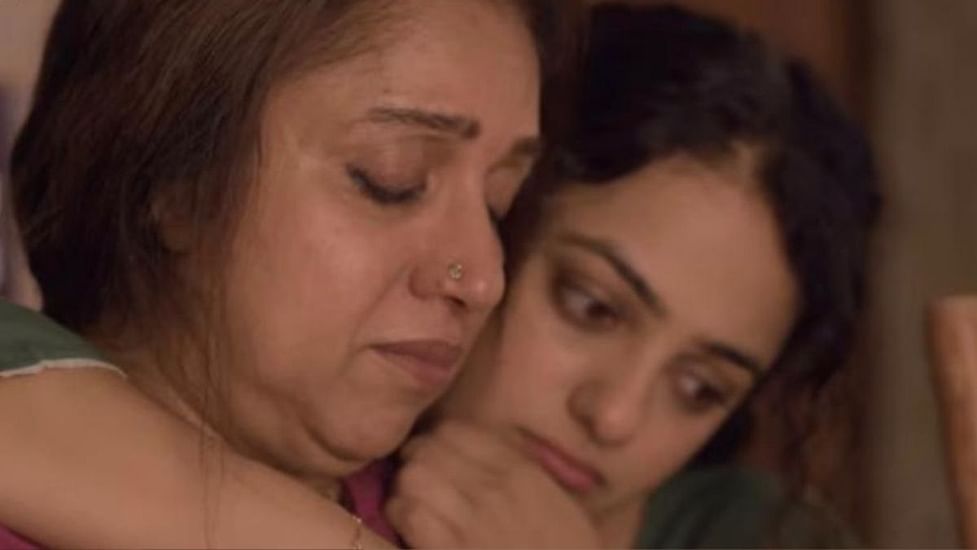
  1. 1. My Unlikely Pandemic Dream Partner– This episode is set during the COVID lockdown. Mehrunissa (Revathy) is stuck with her daughter Noori (Nithya Menon). There are some unresolved issues which need to be sorted. There is a quiet resentment that both of them have towards each other.

Director Nagesh Kukunoor uses food as a character in itself. The delicious Biryani, Haleem etc are used as a device for the characters to unpack their baggage.

It is a simple plot but what makes it click is the treatment of the director. Both Revathy and Nithya Menon convey the required emotions with ease. The analogy of food has also been smartly integrated.

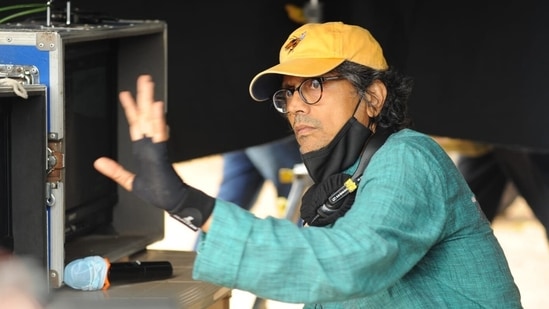
Modern Love Hyderabad's Nagesh Kukunoor: 'One language isn't better than  other' | Web Series - Hindustan Times
Director Nagesh Kukunoor uses food as a character
  •  Fuzzy, Purple and Full of Thorns– As the title suggests this one is about a thorny relationship between Uday (Aadhi Pineshetty) and Renuka (Ritu Varma). Both of them fall in love after a chance meet up but a pair of purple slippers creates a havoc in their love life.

The best thing about this segment is the character of Ritu Varma. Ritu Varma is delightful as the imperfect protagonist. She has her own insecurities but you don’t dislike her completely. Her fixation with the slippers raises many chuckles.

This segment also looks at the modern day life through a live-in-relationship. Aadhi Pinishetty and Ritu Varma share a wonderful chemistry.

Modern Love: Hyderabad Review: Suhasini Maniratnam, Revathy & Nithya ...
Suhasini Maniratnam tugs at your heartstrings
  •  Why Did She Leave Me- Why Did She Leave Me begins on a slow note. This episode starts with a CEO giving a speech to booster his colleagues. The CEO is Ramulu (Naresh Agastya). This episode is mostly about the relation between Ramulu and his grandmother Rangamma (Suhasini). Rangamma left Ramulu in an orphanage at a young age due to certain circumstances and never came back.

The flashback portions between Rangamma and the young Ramulu is the best thing about this segment, Suhansini tugs at your heartstrings as a grandmother raising her two grandchildren alone. Advitej Reddy plays the younger version of Ramulu with ease.

Partly mediocre, partly predictable—Modern love Hyderabad is pleasing, but  fails the city
Revathy and Nitya Menon in an emotional scene
  •  What Clown Wrote the Script- What Clown Wrote The Script is an interesting satire on the ridiculous nature of the serials. This story is about a television producer (Abhijeet Duddla) who collaborates with a standup comedian to create something different.

Malavika Nair plays the standup comedian here. It is a simplistic story but still there is a lot to enjoy here. Both Malavika and Abhijeet deliver earnest performances, the references to the legendary Jandhyala brings a smile to the face of the audience.

  •  About the rustle in Bushes- This segment reminds you of Prakash Raj’s Akashamanta. Much like that one here too Naresh plays an overprotective father.
Modern Love Hyderabad series review: Flashes of charm in an anthology  series set in Charminar City
Aadhi Pineshetty and Ritu Varma share a wonderful chemistry

Sneha (Ulka Gupte) is looking for love and finds it when she least expects it, along the way she meets a host of different people. Keeping a secret watch on her is Naresh.

The trope of the overprotective parent isn’t a new one by any means, but what makes this segment tick is the casting. Ulka as Sneha in particular delivers a wonderful performance. Through her character the director talks about how guilt manifests in irrational ways, particularly when it comes to love and family.

  •  Finding Your Penguin- Finding your Penguin is a hilarious tale about a young woman in Hyderabad. Indu (Komalle Prasad) tries a different approach to dating by comparing her dates with the way animals mate.

Indu’s interactions with her friends are laugh out loud. They have an authentic feel to them. This segment ends the anthology on a high.

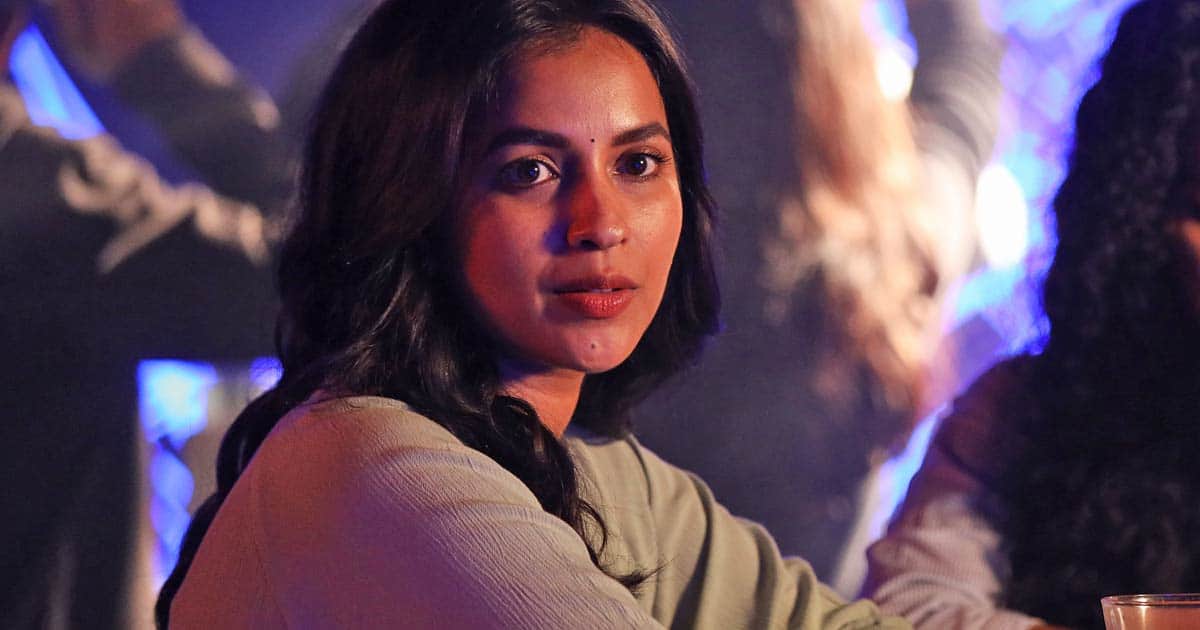
Modern Love Hyderabad is not for those looking for depth, however if you are in the mood for some warmth and fuzziness then this one is for you.