Vijay Krishna Acharya is known for directing big-budget extravaganzas. All his films — Tashan (2008), Dhoom 3 (2013), and Thugs of Hindostan (2018) — belong to the action genre and feature big stars.
However, the subject of his latest outing — The Great Indian Family — on the surface appears as a misfit for the director. But he pleasantly surprises us, particularly, when the film gets to the meat of the story.
The Great Indian Family is about a Brahmin boy Ved Vyas Tripathi, also known as Bhajan Kumar.
Ved Vyas (Vicky Kaushal) faces an identity crisis when all of a sudden he comes to know that he is actually a Muslim by birth.
His father, rather the adopted father Siya Ram Tripathi (Kumud Mishra) is a most respected pandit of the small town where the film is set.
Manoj Pahwa plays the uncle of Ved Vyas. His character Balak Ram goes through a shift when the identity of Ved Vyas is known. All this happens when Siya Ram Tripathi is on a pilgrimage.
Yashpal Sharma, on the other hand, plays the rival pandit who wants to bring down the popularity of Siya Ram Tripathi.
And finally, you have the female lead Manushi Chillar who shows no improvement from her Samrat Prithviraj (2022) days.
Positives
The Great Indian Family does take time to get going. Vicky Kaushal’s scenes with his two friends don’t add much to the film.
Manushi Chjillar’s entry only further slackens the proceedings. Her attempt at being a Punjabi firebrand is rather laboured. There is zero spunk.
Vicky’s chemistry with Manushi has none of the sizzle that he shared with Sara Ali Khan in Zara Hatke Zara Bachke (2023).
The best portions of the film are the scenes where Ved Vyas is going through an existential crisis. There was a time when he was adored by his uncle and others. But now, the same family turns its back on him owing to societal pressure.
The situation reaches a point where Ved Vyas seriously thinks of embracing Islam. The paradox here is that without knowing his identity, he finds shelter in a Muslim family. Additionally, his Sikh girlfriend has no issues about him belonging to either of the religions.
It is in these bits that the directorial skills of Vijay Krishna Acharya come forth.
Performances
Another area where the movie scores is the scenes featuring the senior actors Manoj Pahwa and Kumud Mishra.
Manoj Pahwa plays a citizen who is good at heart but can get easily influenced by WhatsApp forwards. But the director makes sure that he doesn’t become a caricature.
Vicky Kaushal and Manoj Pahwa have a couple of dramatic showdowns, and these bits are a delight to watch because of the intense acting on display.
Kumud Mishra conveys a lot with his silence and expressions. The actor particularly shines in the scene where he opens up to the other family members about how he and his wife decided to adopt the boy born to a Muslim mother.
What pulls the film apart from the female lead is the lacklustre music. The only song that works in The Great Indian Family is “Kanhaiya Twitter Pe Aaja“. It has a catchy tune along with Vicky Kaushal’s energy.
Pritam’s soundtrack in Rock Aur Rani Ki Prem Kahani (2023)had far better songs.
Final take
The story of The Great Indian Family might sound a little clichéd and a filmy attempt at unifying religions in these difficult times. But it is still an effort that needs to be appreciated.
Director Bharath YG takes the familiar template of a big mansion with scary elements to explore the negative shades in human beings.
The film industry across the languages has a fascination for horror/thriller stories. Periodically, one director or the other has revisited this genre.
Ram Gopala Varma was successful in delivering some genuinely scary films like Urmila Matondkar’s Bhoot (2003).
In the recent past, Amar Kaushik was successful in reinventing the genre with his film Stree (2018). In Stree, the director used the popular legend of “O Stree Kal Aana” (Oh woman, visit tomorrow) and gave it a feministic touch.
On the other hand, directors like Rohit Shetty and Anees Bazmee have made popcorn entertainers with elements of horror.
Now, director Bharath YG takes the familiar template of a big mansion with scary elements in this web series to explore the negative shades in human beings. The shades include lust, anger, and greed.
But the jump scares are presented in a very clichéd manner. It is high time that filmmakers do away with such clichéd elements for scaring the audiences.
Synopsis
Athidhi — now streaming on Disney+ Hotstar — marks Venu Thottempudi’s debut in the OTT space.
Ravi (Venu Thottempudi) is introduced as a writer, who is living with his paralysed wife Sandhya (Aditi Gautam). He is trying to reinvent himself as a writer.
At this point, a mysterious woman Maya (Avantika Mishra) and a Youtuber Savari (Venkatesh Kakumanu), take shelter in his house. Savari makes videos on the non-existence of ghosts.
There is also a cop called Prakash (Ravi Varma). None of these characters are what they appear on the surface. They have secrets of their own. Revealing anything more will not be appropriate.
Positives
One of the things that stands out in Athidhi is the technical department.
Special mention must be made of Kapil Kumar’s background score and Manoj Katasani’s cinematography.
The background music definitely enhances the key scenes.
Manoj Katasani successfully captures the show’s eeriness through his lens.
The most impressive twist is the flashback regarding the ghost. Through it, Bharath YG raises some pertinent points about greed and jealousy.
There is also an underlying message — too much greed will lead to disastrous consequences.
The ghost is presented as a messenger of God to teach this lesson to humans.
Performances
The performances in Athidhi are a mixed bag.
Venu Thottempudi is someone who is mostly associated with comic romantic roles. But here, the actor ventures out of his comfort zone. He pulls off an impressive act, particularly in the key emotional scenes.
The next good performance comes from Avanthika Mishra. Her character has quite a few layers and the actress does a good job.
But Venkatesh Kakumanu overacts as a YouTuber. Instead of feeling sorry for Savari, viewers feel irritated whenever he is on screen.
Aditi Gautam as the wife suffers on account of a half-baked characterisation.
Final take
Athidhi is not an entirely satisfying ride but the show has its moments.
The biggest problem with ‘Kaala’ is the many back and forths dealing with multiple characters that float in and out.
A black mark in Bejoy Nambiar’s filmography!
Kaala (Hindi)
Cast: Rohan Mehra, Taher Shabbir, Avinash Tiwary, and Nivetha Pethuraj
Director: Bejoy Nambiar
Producers: Bejoy Nambiar, Bhushan Kumar, and Krishan Kumar
Music: Gaurav Godkhindi
No. of episodes: 8
OTT platform: Disney+ Hotstar
The story of Kaala has certain elements inspired by the recent blockbusters Pathaanand Jawan, but the experience here is far from rousing.
Bejoy Nambiar’s Kaala moves along two parallel storylines.
On one hand, you have an IB officer named Ritwik Mukherjee (Avinash Tiwary). This is set in 2018. Ritwik Mukherjee is given the task of investigating a huge case of “reverse hawala” (a transaction where the money is transferred back to the original sender).
This reverse hawala is being run by Naman Arya (Taher Shabbir) in West Bengal. Naman Arya is a business tycoon who uses waste recycling as a front for the money laundering that he does.
As Ritwik gets deeper into the case, he finds a certain link that connects to his past.
Parallel storyline
Running parallel to this plot is the storyline set in 1988. This portion begins with a military truck being blown up on the Indo-Bangladesh border.
Subhendu Mukherjee (Rohan Vinod Mehra) is a solo survivor who somehow manages to escape by jumping into the water.
He is accused of cheating his own battalion by helping the rebel forces use the wartime tunnels as a route for smuggling.
As Kaala progresses, a complicated chain of events happens leading to Ritwik being labeled as a rogue and criminal, much like Subhendu Mukherjee.
But it goes without saying that they both have been falsely implicated. To nobody’s surprise, Subhendu turns out to be Ritwik’s father.
What follows is a familiar tale of a son avenging his father’s insult by gradually coming to know about his father’s courage.
Positives
One of the few positive aspects of Kaala is the portions involving Rohan Vinod Mehra. His scenes have an emotional resonance. As viewers, you feel for the plight of Subhendu Mukherjee.
Taher Shabbir also does well as a cool businessman.
Also, to the credit of Bejoy Nambiar, he doesn’t waste any time in setting up the world of money laundering.
Flaws
The biggest problem with Kaala is the many back and forths dealing with multiple characters that float in and out. Bejoy Nambiar does a lot of globetrotting, much like the other SRK-starrer Pathaan (2023). But here, the globetrotting doesn’t have any value to the plot.
The series starts with the issue of money laundering in the name of reverse hawala. But soon, that is relegated to the background. It becomes more about Ritwik’s fight for his father, but not in a positive way.
There is also a subplot dealing with homosexuality — involving one of the villains (Jitin Gulati). It is not just poorly placed but has been written with zero nuances.
This is sad because you have had web shows that have portrayed homosexuality in a much more nuanced manner.
A case in point is this year’s Taali, a web show on the transgender activist Gauri Sawant.
There is no denying that Kaala has been stylishly mounted. But the slickness cannot compensate for the overall dullness.
Final take
To sum it up, Kaala is a big black mark in the filmography of Bejoy Nambiar who is capable of doing much better stuff as we have seen in Shaitan (2011) and Wazir (2016).
An overview of South Indian filmmakers who tried their luck in Hindi cinema with varying degrees of success.
In the last few years, more South Indian film directors have been working with Bollywood stars. We have seen Prabhudeva directing the likes of Salman Khan and Akshay Kumar and Atlee directing the Bollywood Badshah Shah Rukh Khan in the recent blockbuster hit Jawan.
Not that this trend didn’t exist earlier; both Bapu and K Viswanath had directed nine films each in the 1980s and 1990s. Filmmaker K Viswanath remade his own classic Swathi Muthyam (1986) as Eeshwar (1989) with Anil Kapoor.
K Raghavendra Rao also directed quite a few Hindi films — all were remakes of his Telugu movies. He debuted in Bollywood with Nishana (1980) starring Jeetendra and Poonam Dhillon. It was a remake of the Telugu movie Vetagadu (1979).
However, Jeetender-Sridevi’s Himmatwala (1983) helped Rao make a mark for himself in Hindi cinema. It, again, was a remake of the Telugu flick Ooriki Monagadu (1981).
Raghavendra Rao followed it up with films like Tohfa (1984), Masterji (1985), Suhaagan (1986), and Aamdani Atthani Kharcha Rupaiyaa (2001), to mention a few.
In the later years, Mani Ratnam and Ram Gopal Varma carved their niche in Bollywood.
Following are some prominent South Indian film directors who went North starting from recent times to slightly old:
Atlee
Atlee has established his credibility as a successful commercial director in a short period. His stories always have shades of other films, particularly the hangover of Shankar’s films.
But Atlee has mastered the art of mixing all the elements in the right proportion with strong political and social touches. A good example of this is his Hindi debut Jawan starring Shah Rukh Khan which has already become a bigger blockbuster than Pathaan (2023).
Shah Rukh has done mass films in the past too. But Atlee’s presentation of the actor is something that’s never seen before.
What also makes Jawan such a monstrous hit is the rousing manner in which Atlee dealt with several problems plaguing our society. The director’s conviction is such that the viewers don’t mind the not-so-subtle treatment.
Not surprisingly, Atlee has become a hot-shot director with whom many actors would want to work. There are already rumours of Atlee doing a film with the National Award winner Allu Arjun.
Prabhudeva
Before foraying into Hindi Cinema Prabhudeva directed two Telugu films — Siddharth-Trisha’s Nuvvostante Nenoddantana (2005) and Prabhas-Trisha’s Pournami (2006). The first one did well at the box office and the second one got critical acclaim.
Prabhudeva
Before foraying into Hindi Cinema Prabhudeva directed two Telugu films — Siddharth-Trisha’s Nuvvostante Nenoddantana (2005) and Prabhas-Trisha’s Pournami (2006). The first one did well at the box office and the second one got critical acclaim.
In 2012, Prabhudeva teamed up with Akshay Kumar for Rowdy Rathore, another remake. This time, it was the super-hit Telugu Film Vikramarkudu (2006) featuring Ravi Teja in a dual role. Rowdy Rathore went on to gross more than that of Wanted.
Post-Rowdy Rathore, Prabhudeva delivered movies that have largely missed the mark. The likes of R… Rajkumar (2013) were moderate successes, but his style of loud filmmaking has gone past its expiry date.
AR Murugadoss
AR Murugadoss is one of those filmmakers who want to entertain and enlighten.
Suriya-starrer Ghajini (Tamil, 2008) is a significant film in his career. Compared to his other works, Ghajini is cut from a different cloth as there is nothing political about it. It is a revenge drama revolving around a protagonist who suffers from a certain kind of amnesia due to a severe head injury.
Murugadoss remade the film in Hindi with the same name and with Aamir Khan as the protagonist. We all know how big a hit it is — more than the original. This was because of his skilful direction and also Aamir Khan’s dedication.
The director’s second Hindi film was also a remake of his own Tamil film Thuppaki (2012).
Akshay Kumar played Vijay Thalapathy’s role in Holiday: A Solider is Never Off Duty (2014). It was also a commercial success, but Thuppaki was more entertaining.
Puskhar-Gayatri
The duo of Puskhar-Gayatri remade their own Tamil film Vikram Vedha (2017) into Hindi in 2022 with Hrithik Roshan and Saif Ali Khan. What made Vikram Vedha a cut above the usual cop versus gangster drama was the moral ambiguities analysed through the Vikram and Betaal analogy.
A striking aspect of the Hindi remake was the more messy and flamboyant way in which Hrithik Roshan was presented as Vedha. This added a different dimension along with the Lucknow setting.
The Hindi Vikram Vedha wasn’t a box-office success, but Hrithik’s performance was vastly appreciated in terms of how he made Vedha his own.
Sandeep Reddy Vanga
Sandeep Reddy Vanga has already become a much-talked-about director despite making only two films — Vijay Deverakonda-starrer Arjun Reddy (Telugu, 2017) and its Hindi remake Kabir Singh (2019).
Kabir Singh starring Shahid Kapoor was a huge hit but the uproar was also equally big.
Now, he is making a straight Hindi film Animal with Ranbir Kapoor. There is a lot of curiosity and intrigue about this movie because of the title and also the violent depiction of the protagonist in the earlier one.
Gowtam Tinnanuri
Gowtam Tinnanuri made his Telugu film directorial debut with Malli Raava (2017). But it was Jersey (2019) starring actor Nani that made Gowtam a successful director.
This sports drama won a lot of acclaim along with commercial success. In the year 2021, it won several national awards which include Best Director and Best Actor as well.
Gowtam tried to recreate the same magic with Shahid with a nearly identical storyline except for setting it in Chandigarh.
The Hindi Jersey had some good reviews but suffered on account of the remake fatigue. The Punjabi setting also didn’t add any new dimension to the story.
In short, Shahid Kapoor’s strategy of getting another remake hit bombed badly.
Vishnu Vardhan
Tamil director Vishnu Vardhan made his Hindi debut with Vikram Batra’s biopic Shershaah (2021). He was appreciated for not making the flick overtly jingoistic and showing a certain restraint.
Vishnu Vardhan’s directorial skills particularly come out in the second half when the war drama sets in.
Shershaah had a direct OTT release, but it should have been ideally released in theatres.
Not surprisingly, Siddarth Malhotra got some good reviews for his performance as Vikram Batra.
Now, let’s go to the slightly older ones Mani Ratnam and Ram Gopal Varma.
Mani Ratnam
Before the film Dil Se (1998), made directly in Hindi, Mani Ratnam was already a known face in the North, thanks to Roja(1992) and Bombay (1995) dubbed in Hindi.
Dil Se was the third one in the trilogy of Roja and Bombay as this film also had the backdrop of insurgency.
Over the years, the Shah Rukh Khan-starrer has acquired a cult of its own thanks to AR Rahman‘s scintillating music coupled with the intense performances of Shah Rukh Khan and Manisha Koirala.
After a long gap, Mani Ratnam simultaneously shot Aayutha Ezhutu (2004) in Tamil and Yuva (2004) in Hindi. Yuva was a significant game changer for Abhishek Bachchan before Guru (2007) and Sarkar (2005) happened. In Yuva, Abhishek Bachchan was brilliant as a ruffian with political ambitions.
After Dil Se, Guru was Mani Ratnam’s second straight Hindi film. The film was loosely based on the industrial tycoon Dhirubhai Ambani. It won critical appreciation along with good money. It is easily the most memorable solo outing of Abhishek Bachchan.
However, their next collaboration Raavan (2010) turned out to be a disaster of epic proportions. Despite a solid storyline, the movie turned out to be a cringe-fest both in acting and direction.
Ram Gopal Varma
Ram Gopal Varma scored a sixer with his debut Hindi film Satya (1998), a cult classic. It was the start of many more movies dealing with organised crime and the nexus between politicians and the underworld.
The film focuses on the life of an immigrant Satya (JD Chakravarthy) who visits Mumbai in search of a job. He gets drawn to the underworld by the gangster Bhiku Mhatre (Manoj Bajpai).
Satya gave birth to a lot of new talent, the chief among them being Manoj Bajpai and Saurabh Shukla. Their characters are remembered more than the lead hero.
It was followed by an equally successful Company (2002). The film was loosely based on the fallout between Dawood Ibrahim and Chhota Rajan. Vivek Oberoi made a very promising debut as Chandrakant aka Chandu.
In both films, Varma was successful in humanising gangsters instead of painting them as cardboard cuts with no nuances.
He added more feathers to his cap with Sarkar (2005) and Sarkar Raj (2008). In these movies, the director combined Godfather (1972, 1974 & 1990) elements with that of Balasaheb Thackeray. Both the flick had the perfect mix of style and substance.
Ram Gopal Varma also directed the romantic-comedy Rangeela (1995) with Aamir Khan and Urmila.
Romance is the last thing that viewers associate Varma with. But to the director’s credit, he did pull off an enjoyable watch which also was a satire on the film industry.
But in the recent past, the filmmaker has been making one embarrassing movie after another. Sadly, the viewers are now more interested in what controversial remarks he would make rather than his works.
Priyadarshan
There was a period when Priyadarshan was a successful director in Hindi as well. Most of his Hindi films are remakes of his Tamil and Malayalam movies. But the director, more often than not, hit a jackpot.
He debuted in Hindi cinema with Muskurahat, a comedy-drama, which was a remake of his Malayalam film Kilukkam (1991).
Priyardarshan was a major reason behind the emergence of Akshay Kumar as a comic actor. In fact, many of Priyardarshan’s Hindi films featured Akshay Kumar.
The filmmaker delivered many flicks that have been both critically acclaimed and commercially successful. He delivered a good number of superhits like Gardish (1993), Virasat (1997), Hera Pheri (2000), Hungama (2003), Hulchul (2004), Malamaal Weekly (2006), Bhool Bhulaiyaa (2007), and Rangrezz (2013).
However, things have been going downhill, of late, with Priyadarshan not being able to reinvent himself. A good example of this is Hungama 2 (2021) which was released on Disney+Hotstar. It opened to negative reviews.
Well, this list is not exhaustive. I am sure many more South Indian film directors have done movies in Hindi earlier too. But Shah Rukh Khan’s Jawan is the latest and the most significant film in this trend.
Producers: V. Vamsi Krishna Reddy and Pramod Uppalapati
Production Company: UV Creations
Music: Radhan
Running time: 2 hours and 27 minutes
Genre: Romantic comedy/drama
Miss. Shetty Mr. Polishetty is refreshingly different from what we generally see in Telugu Cinema. Director Mahesh Babu P uses the genre of a feel good Rom-Com to tell a story that is filled with many layers. On one hand it is about an older woman who wants a child but not through marriage. There is also a coming of age story exploring the art of standup comedy through the male protagonist character. The film has also got a distinct Ayushmann Khurrana hangover for those who have seen the likes of Vicky Donor.
Anushka Shetty with Naveen Polishetty
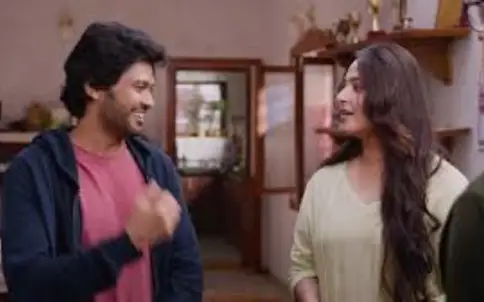
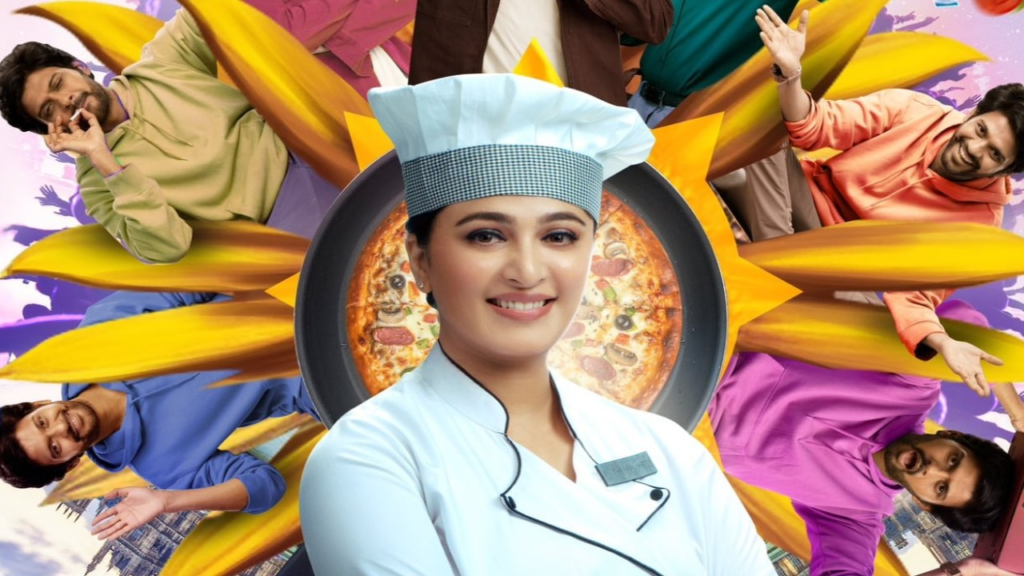
Anvitha Shetty (Anuskha Shetty) is a top chef in London. Her mother (Jayasudha in an extended cameo) wants Anvitha to get married but Anvitha is someone who has no belief in either love or marriage. She doesn’t want to get into the complications of married life. The mother soon dies because of an ailment. After a while Anvitha decides to have a child outside marriage through IVF. In her search for a sperm donor she comes across Siddhu Polishetty (Naveen Polishetty).
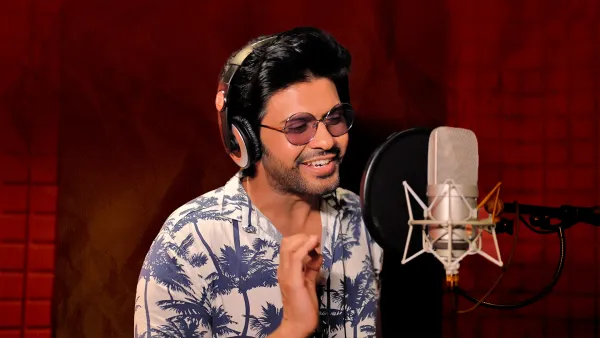
Siddhu works in software but his real passion lies in doing standup comedy. He does his shows without the knowledge of his parents. Anvitha is vastly impressed with his standup humour and feels that his sperm would be best for her child. In order to know more about him she gets into a friendship which Siddhu mistakes for love. The rest of the story is about the complications that happen when Siddhu comes to know about Anvitha’s real intentions.
Naveen Polishetty
Mahesh Babu P takes his own sweet time to establish the plot. The initial portions are dedicated to establishing Anvitha’s personality. The film actually gets going when Anvitha starts her search for a sperm donor. Naveen Polishetty’s entry as a standup comedian perks up the proceedings. The dynamics between Anvitha and Siddhu is not what we usually see in Telugu films and this gives a refreshing touch.
As mentioned in the beginning the film has a distinct Ayushmann Khurrana hangover in terms of the sperm donor angle; having said that it is still refreshing to watch because of Mahesh Babu P’s treatment.
The director also deserves credit for how he sketched his two protagonists. Anvitha is someone who comes across as this very stubborn woman who is very clear about not wanting a partner. There is a big inner trauma within her. This stubbornness may have come across as cold hearted but the viewers understand why she is the way she is. Even when Anvitha realises her feelings for Siddhu she doesn’t want to accept it and prefers going away from his life.
Anushka Shetty
Naveen Polishetty’s Siddhu on the other hand comes from a typical middle class family with an upbringing that is vastly different from Anvitha. As said earlier he does a software job just to please his parents but his passion is only standup comedy. Mahesh Babu P does a good job in exploring the art and intricacies of standup comedy. The reaction of Siddhu when Anvitha reveals what she wants feels very natural. The characters of Murali Sharma and Tulasi have an authentic middle class milieu. However the transformation of these characters particularly the father’s character when he takes his son’s autograph after a show feels quite rushed. Also the likes of Nassar could have been better used.
Jayasudha
As the title suggests the film majorly hinges on Anuskha and Naveen Polishetty and both the actors do not disappoint. Anuskha Shetty plays a character which goes with her age. She fits the part of an older woman who is scared of getting into relationships. Anuskha carries the cold heartedness and the aggressive nature well.
Naveen Polishetty’s real life experience of doing standup comedy comes in very handy during the comic portions. The actor is an absolute live wire. He also does a swell job in the more dramatic portions.
Jayasudha’s cheerfulness brings a smile to the viewers face. Her fan act of Balakrishna in particular does raise some chuckles.
Music composed by Radhan goes well with the flow of the film. Lady luck in particular is an upbeat number. I am sure many young people would connect with the theme of the film.
Jawan is easily SRK’s most political film in the recent past with the actor taking on the establishment. He also delivers a passionate monologue about the importance of choosing wisely.
Starcast: Shah Rukh Khan, Nayanthara, Sanya Malhotra, Priyamani, Vijay Sethupathi and others
Direction, screenplay and story: Atlee
Additional screenplay: S Ramanagrivasan
Producers: Gaurav Verma and Gauri Khan
Production Company: Red Chillies Entertainment
Music: Anirudh Ravichander
Running time: 2 hours and 45 minutes
Genre: Action thriller/drama
Director Atlee’s stories are never original; they are more about effective packaging. Jawan is no different. In simple terms if you mix Shankar’s brand of cinema with Chak De India the result would be Jawan.
Jawan is a father and son drama at its core; Azad and Vikram Rathod (Shah Rukh Khan in a double role). One of them is a masked vigilante who wants to speed up the societal changes in unconventional ways. Helping him in this mission are a bunch of women prisoners headed by Sanya Malhotra and Priyamani. Each of these prisoners have their own back stories that cover different issues plaguing our society. Kaali (Vijay Sethupati) is a dangerous arms dealer who has a history with the father SRK. Last but not the least is Narmada (Nayanthara) who is a determined NSG officer on the lookout for the vigilante. In a twist of events she also ends up marrying one of the SRKs (one of the absurdist thing in the story) for the sake of her daughter. She is a single mother. Revealing anything more wouldn’t be appropriate as the film goes through a non linear storyline with many twists and turns.
A big strength of Jawan is the packaging of the various social issues that Atlee takes up. Sure the treatment isn’t subtle and does require suspension of belief but the conviction of Atlee and SRK is such that as viewers we can’t help but cheer. As mentioned above Jawan is Shah Rukh’s most political film in the recent times. Many of societal problems find a place in Jawan. Whether it is farmers being driven to suicide because of loan sharks, the severely underdeveloped government facilities, the frauds taking place in election and the manufacture of bad quality military weapons among others. There is also a Meta moment where SRK directly addresses his fans and delivers a passionate monologue. All this has come out in a powerful manner. Sumit Arora’s dialogues hugely aid in this.
Father and son drama has always an emotional connect, irrespective of how many times we have seen it. There is a rousing interval bang when the son SRK has been tied up with no hopes of getting away. At that exact moment you have the arrival of the father. The dialogue there is “Bete ko Haath Lagane se pahle, baap se baat Kar (Deal with the father before you touch the son).” This comes at the moment when the father is assumed to be dead. This again is a perfectly placed Meta moment and looks like a warning from SRK to not mess with his son Aryan Khan in the future. The father character is a military officer who was accused of being a traitor. He was thrown from a helicopter by Kaali and suffers from a partial memory loss. As a result he doesn’t completely remember the past. The scenes where both the SRKs feature are an absolute treat.
Early on there is a sequence where the vigilante Shah Rukh takes a metro train as hostage. When Nayanthara asks him what are his demands over the wireless he gives a witty reply saying “I want Alia Bhatt but she is younger in age.” The reaction shot of the passenger sitting next to him adds to the humour. Many dialogues both political ones and humorous ones like this evoked a lot of hooting and cheering from the audiences.
Shah Rukh Khan has successfully ventured into the mass zone in the past too but Atlee’s presentation of the superstar is something else. Shah Rukh owns every frame that he is in. He embraces the masala tone of Atlee with absolute fervour. Nayanathara makes a solid Bollywood debut with her portrayal of Narmada both as a determined cop and also as a single mother. There is a terrific action sequence where Narmada takes on the masked SRK. It is a treat to watch.
The few romantic scenes between Nayanthara and SRK are pleasant to watch particularly in the song Chaleya. However the same cannot be said of the brief flashback portion consisting of Deepika. It has been written patchily. Sanjay Dutt also has an extended cameo. The women prisoners have reasonably fleshed out parts. The ones who stand out are Sanya Malhotra and Priyamani.
Vijay Sethupati who locks horns with both the father and son does not have a lot to do in the beginning but he more than makes up for it in the second half. He gets some comic punches that leave you in splits.
Anirudh Ravichander’s music doesn’t quite match the scale of the film but Zinda Banda and Chaleya are foot tapping numbers. There is also Aararaari Raaro which has a good emotional touch. But his background score is excellent particularly in the scenes where the vigilante SRK takes over.
At a time when most systems are failing in delivering justice the success of Jawan would represent the angst of the common man and the justice (by whatever means) that he is hoping for in Bharateeyudu style.
Bhav Dhulia might have directed it but it is an extension of Neeraj Pandey’s ‘Baby’ and ‘Special Ops’; war-torn Syria is the USP here.
Keeps you hooked to your seats!
The Freelancer (Hindi)
Cast: Mohit Raina, Kashmira Pardeshi, Sushant Singh, and Anupam Kher
Director: Bhav Dhulia
Producers: Gaurav Banerjee, Varun Malik, and Mahesh Menon
Music: Sanjoy Chowdhury
No. of episodes: 4
OTT platform: Disney+ Hotstar
After the hugely controversial and successfulTheKerala Story (2023), we have another story that looks at the ISIS terror groups who want to conquer the world and the extent they would go for it.
For those who are not aware this web show is based on the book “A Ticket to Syria” by writer Shirish Thorat.
In simple terms, The Freelancer focuses on the plight of a newly married girl named Aliya (Kashmira Pardeshi). Her husband Mohsin takes her to Istanbul on the pretext of honeymoon, but his actual intention is something else.
Aliya has no idea that her husband and in-laws have been completely brainwashed by ISIS and want her to be a tool in their plans, too. She is not allowed to communicate with her parents and becomes a virtual prisoner.
Mohit Raina plays Avinash Kamat, an ex-cop turned mercenary.
The title — The Freelancer — refers to this kind of mercenary who fights as a soldier for any group or country that would pay him or her.
Avinash’s physical prowess is established very early on.
Avinash and Aliya’s father Inayat (Sushant Singh) are good friends. After learning about her plight, Inayat tries to contact her, but he doesn’t succeed. In desperation and guilt, he commits suicide.
Aliya’s mother requests Avinash to somehow bring her back.
The first season primarily focuses on how Aliya gets trapped in Syria and how she manages to get in contact with Avinash.
Performances
The Freelancer works best when it focuses on the plight of Aliya, and also ravaged terrain of Syria.
Brainwashing done in the name of religion is something that we have seen earlier as well. But it becomes uncomfortable when the stories emanate only from groups like ISIS.
The character of Aliya is the backbone of The Freelancer. She goes through varied emotions.
The young actress delivers a commendable performance. Her conversations with her mother (Ayesha Raza) are particularly impactful.
As viewers, we feel anxious about Aliya’s safety and want her to come out safe.
Sushant Singh effectively conveys the desperation of a father in the screen time he has.
Mohit Raina makes for a formidable mercenary and also a concerned uncle.
Anupam Kher as the mentor figure has a pleasing presence but the part feels undercooked.
Technical aspects
Cinematographers Tojo Xavier, Arvind Singh, and Sudhir Palsane do a good job of capturing the many locations through their lenses. Their work stands out more when they recreate the harsh terrain of Syria — whether it is the camps, local markets or dilapidated houses.
Though a lot of back and forth keeps happening editing is quite seamless.
What doesn’t work for The Freelancer is the track of Mohit Raina and the complicated relationship that he shares with his on-screen wife (Manjari Fadnnis). It is weakly written, and as a result, their track comes across as more of an unnecessary distraction.
Final take
The Freelancer ends with a cliffhanger of Aliya’s in-laws turning suicide bombers. This makes the viewers even more hooked about what would unfold in Season 2.
Producers: Naveen Yemeni and Yalamanchili Ravi Shankar
Production Company: Mythri Movie Makers
Music: Hesham Abdul Wahab
Production Company: Mythri Movie makers
Running time: 2 hours and 45 minutes
Genre: Romantic comedy/drama
Shiva Nirvana’s Khushi doesn’t particularly boast of a novel plot. There are certain similarities that the viewers will find with Mani Ratnam’s Sakhi. However, there are some interesting things also that the director does. Chief among them is the background of his two protagonists. The hero’s father is a renowned atheist with an absolute distaste for god and astrology. On the other hand the heroine’s father is a staunch believer in god who is also known for his religious lectures. This adds a lot to the story, more so when the drama part kicks in. These two characters are played by Sachin Khedekar and Murali Sharma respectively.
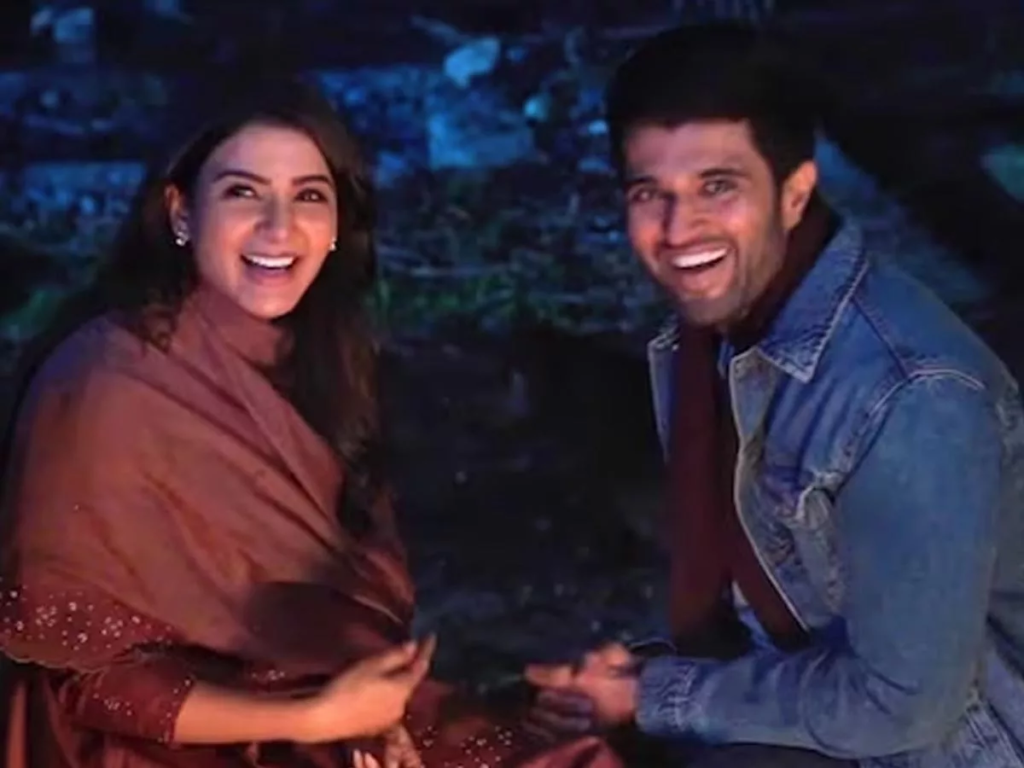
Samantha and Vijay Devarakonda
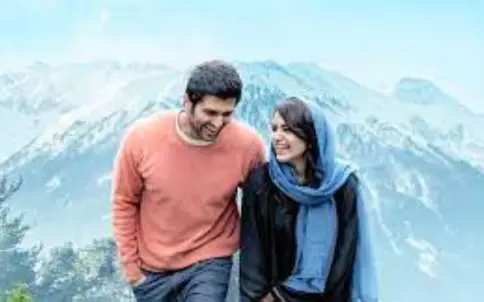
In brief it is a usual love story with a happy ending via many twists and turns. The conflict point in this movie is faith versus non faith. Viplav Devarakonda’s (Vijay Devarakonda) family represents non faith while Samantha’s family represents faith. Vijay’s father is Lenin Sathyam (Sachin Khedekar) and Samantha’s father is Chadarangam Srinivasa Rao (Murali Sharma). Previously a huge debate on TV had happened between them. Understandably both Chadarangam and Lenin aren’t too happy with their children’s choices. Yet they agree to meet to discuss their marriage. But Chadarangam declares that Viplav will have to do a homam along with his father before marriage; otherwise Aradhya cannot become a mother. Lenin Sathyam is enraged and tells his son to forget about Aradhya. But the two rebellious lovers decide to follow their hearts. In Sakhi style they make their own home. The rest of the story is about the issues that crop up given the two vastly different family backgrounds and how they resolve them.
For any romantic film to work two aspects are of prime importance. One is having a likeable lead pair and the other is having hit music. Khushi scores in both these departments. Vijay Devarakonda and Samantha are in fine form both individually and together. They share a good chemistry.
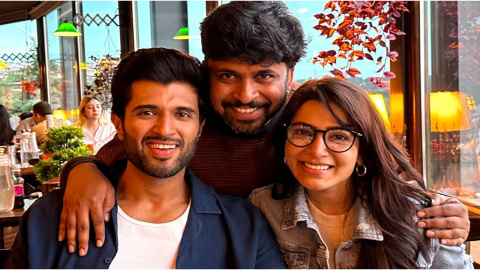
Vijay devarakonda, Sumantha and Shiv Nirvana
It is refreshing to see Vijay Devarakonda shed his mass avatar and do an urban character. Vijay does a terrific job in portraying the various shades of Viplav; whether it is his lover boy act in Kashmir or the dramatic portions of the second half. Vijay’s comic timing also leaves viewers in splits. In the Kashmir portions Viplav speaks in broken Hindi and this leads to many amusing moments. Maybe a revenge on SRK’s broken Tamil in Chennai Express.
Vijay also takes a jibe at his own hugely successful yet hugely controversial Arjun Reddy in an interesting scene. There is a bit where a lady maid gets scared on seeing Viplav. He assures her that people have unnecessarily created a bad image of him in the market but he is actually a feminist. This leads to many laughs in the theatre.
Samantha is also in fine form complementing Vijay well. She is particularly effective in the more intense scenes.
Sachin Khadekar
The music of Hesham Abdul Wahab is another major winner. My favorite songs in the album are Na Roja Nuvve and Aradhya. Except for one number the rest of them are rich in melody.
The second half of Khushi is more engaging as it deals with the marital problems that the couple faces. For example there is an episode of Aradhya’s miscarriage. Aradhya believes that the miscarriage happened because of Viplav not doing the homam leading to some arguments. There is certain realisticness to the way Shiva Nirvana has staged these scenes.
Murali Sharma and Sachin Khedekar shine the brightest among the supporting cast as two men who firmly believe in their respective ideologies. There is a touching scene in the pre- climax where both the fathers have an emotional moment.
Murali Sharma
What doesn’t work for Khushi is the stretched first half. The Kashmir portions needed to be trimmed down. Aradhya’s façade of being a Pakistani Muslim comes across as stretching things too far just to prove viplav’s broadmindedness.
Also there are some characters which could have been better developed like the ones of Rohini and Jayaram. Rahul Ramakrishna as Vijay’s buddy is underutilized as always but Vennela Kishore does raise some laughs in the first half.
Overall Khushi is an enjoyable romantic drama as the title suggests. The message of love triumphing over everything is something that all of us could imbibe given the politically troubled times we are living in.
From a shaky start in ‘Gangotri’ to a National Award-winning performance in ‘Pushpa’, he conquered many hearts over the years.
Starting from Gangotri in 2003, Allu Arjun has done 26 films so far. Among these is a short film titled I Am That Change (2014) directed by the star filmmaker Sukumar.
There are special appearances, too, like the one in Shankar Dada Zindabad (2007). Before Gangotri, he played a small role in Megastar Chiranjeevi’s Daddy (2001).
Gangotri was a prestigious project in more ways than one. Apart from the film being Allu Arjun’s debut as a leading man, it was also K Raghavendra Rao’s 100th movie.
Gangotri was a success at the box office, but the actor’s performance got mixed reviews.
There was a visible rawness. The film also didn’t have any of the stylish dance steps that have become a trademark of Allu Arjun now.
In short, there was no indication of the pan-India superstar he would become one day.
As Stylish Star
Post Gangotri, Allu Arjun went through a rough patch for a year or so. But he reinvented himself both as a performer and as a Stylish Star with Sukumar’s directorial debut Arya (2004).
In Arya, the actor played a free-spirited guy who falls in love with an introverted girl Geeta (Anuradha Mehta).
Geeta is already the love interest of someone else. But Arya doesn’t give up. He pursues his love.
What made the film work were the fresh treatment and the positive attitude of the protagonist. For the most part of the movie, Arya keeps asking Geeta to just feel his love. This was a new approach that struck a chord with the audience.
Through the character of Arya, Sukumar also explored the concept of one-sided love. In fact, there is also a song that celebrates one-side lovers. His performance was a far cry from his shaky start in Gangotri.
He not only proved himself as a performer, but his dancing skills also caught the attention of the moviegoers. Since Arya, there has been no looking back for the actor. He conquered many hearts across the demographic of India.
What makes Allu Arjun’s success even more special is the fact that he doesn’t have the conventional looks of a hero, unlike Prabhas or Mahesh Babu.
Before the latest Pushpa: The Rise (2021), some of his more prominent movies included Happy (2006), Vedam (2010), Son of Satyamurthy (2015), Julayi (2012), and Ala Vaikunthapurramuloo (2020).
An early movie that showed Allu Arjun’s potential as a serious actor was Vedam directed by Krish Jagarlamudi. In the film, he played the role of a cable operator who isn’t particularly likeable.
He pretends to be a big shot in order to marry a rich girl. There is a transformation that the character goes through and Allu Arjun doesn’t miss a single beat in capturing the different nuances.
As a stellar performer
In Happy, he is mostly a happy-go-lucky guy named Bunny. At the same time, there are some scenes that show his capability as a performer. A case in point is the scenes that he shares with Manoj Bajpai.
In one particular scene, Bunny cooks up a story of how he and Madhumati (Genelia) are madly in love and won’t be able to bear separation. He leaves the police station crying, which also leaves Manoj Bajpai in tears.
But the minute he comes out he becomes his normal self. The merger of grief and laughter was done seamlessly.
I am sure everyone in the theatre would have noticed and appreciated his talent in that particular bit. He also shined in an emotionally charged pre-climax.
Trivkram and Allu Arjun
Before Son of Satyamurthy, Trivikram and Allu Arjun teamed up for Julayi.
It was a stylish entertainer about an intelligent youngster who wants quick bucks and would take any risks to achieve his goal.
The film had many witty one-liners in trademark Trivikram style, which Allu Arjun delivered effortlessly.
Son of Satyamurthy was a different outing from Julayi. Here, he played the younger son who undergoes a life-changing transformation after the sudden death of his father.
The actor showed his versatility with an emotional performance, particularly in the scenes where he remembers his father. It was a welcome restraint from the actor.
Ala Vaikunthapurramulo, also directed by Trivikram, is a key milestone in the actor’s career.
Before Pushpa: The Rise happened, Ala Vaikunthapurramulo announced the arrival of the Stylish Star in the Hindi Market.
At its core, Ala Vaikunthapurramulo is a movie filled with regressive undertones. However, what made it work was the skilful treatment of Trivikram and Allu Arjun’s charisma.
The script relies heavily on the charisma of Allu Arjun and the actor didn’t disappoint one bit.
He excelled in portraying all the shades of Bantu. He was particularly good in his combination scenes with Murali Sharma.
He also shined in roles where the focus was not always on him. For example, in Gunashekhar’s Rudhramadevi (2015), he played a fearsome warrior called Gona Ganna Reddy.
His screen presence coupled with his dialogue delivery proved to be a much bigger attraction than Rana who had more screen time. His Telangana dialect was also an absolute delight.
Allu Arjun as Pushparaj
Now let’s come to the film that has given Allu Arjun his National Award — Pushpa: The Rise. His role in Pushpa is very different from what the actor did so far.
There is no trace of the Stylish Star even in the dance sequences. What you see is only the character and not Allu Arjun.
The role of Pushparaj is challenging in many ways starting from a particular body language to a specific dialect that the actor speaks.
He did a fantastic job of portraying a rustic and downtrodden character. On the outside, Pushpa is a tough soul, but there is also a strong vulnerable side.
Allu Arjun delivered an immersive performance that made the viewers root for him.
In these 20-odd years, Allu Arjun’s journey went from strength to strength and made him a huge pan-India Star. Here’s hoping that Pushpa 2 lives up to the massive expectations that have only increased after the national award win.
(PS: Many fans are hoping to see Allu and Aloo (Alia Bhatt) working together in a feature film. It would be a treat to watch the two National Award winners in the same frame.)
Starting from Vicky Donor (2012), Ayushmann Khurrana has always tried to push the envelope with his on-screen characters. There has always been an effort to do something different, even when he has done films in the slapstick zone.
For example, in Dream Girl (2019), Ayushmann’s Karam has an impressive ability to imitate a female voice. This comes from his experience of playing female characters in plays. In his desperation to find a job, he starts working at a call centre with the name of Pooja.
In Dream Girl 2, writer and director Raaj Shaandiliyaa goes one step ahead with Ayushmann becoming Pooja to the extent of wearing sexy sarees as well.
Synopsis
Dream Girl 2 is none other than Karamveer aka Karam (Ayushmann Khurrana). He and Pari (Ananya Pandey) are deeply in love and want to get married as soon as possible. However, there is a loan that Karam has to clear.
This loan is his father Jagit Singh’s (Annu Kapoor). Karam doesn’t have a stable job. In his desperation to earn money, Karam transforms himself into a bar dancer by the name of Pooja with some persuasion from his dad and best friend Smiley (Manjot Singh).
Pooja impresses everyone with her dance moves. Running parallel to this is the track of a Muslim patriarch, Abbu Saleem (Paresh Rawal). Smiley loves Abbu Saleem’s daughter, and she also reciprocates, but there is a hurdle in the form of Abhishek Banerjee’s Shah Rukh.
Shah Rukh is the son of Abbu Saleem, who has depression problems. Abbu Saleem tells the loving couple that he will agree to their marriage only after his son comes out of depression. Smiley convinces Karam to become a female psychiatrist. However, this only ends up in further complications which can’t be elaborated here.
What follows is an assemblage of funny situations with one thing leading to another.
On the shoulders of Ayushmann Khurrana
Not surprisingly the biggest strength of Dream Girl 2 is Ayushmann Khurrana. The actor effortlessly switches between the roles of Karam and Pooja. He is particularly impressive in the female avatar.
The actor leaves you thoroughly charmed with his body language, make-up and dance moves. The actor’s comic timing also leaves the audience in splits throughout. For example, there is a scene where Abhishek Banerjee tries to seduce Pooja, and the latter’s wig comes off.
Pooja starts shrieking, “Hairfall, hairfall.” The humour in Dream Girl 2 isn’t of the intelligent type but Ayushmann along with the supporting cast keeps the proceedings engaging.
Other performances
Out of the numerous subplots my favorite is the one involving Seema Pahwa’s Jumani. She has been through multiple marriages and is absolutely unapologetic about her desire to find true love. At one point she falls head over heels in love with Karam. Seema Pahwa aces the part with her uninhibited act.
The scenes between Abhishek Banerjee and Ayushmann are also good to watch. Abhishek Banerjee’s role doesn’t have much scope for comedy, but still, both the actors feed off each other well.
The music composed by Meet Bros, Tanishk Bagchi and Arko has a good variety. Special mention must be made of the songs picturised on Ayushmann in the role of Pooja.
Final take
What pulls Dream Girl 2 down is the elongated second half. The comedy of errors runs out of steam as there isn’t much meat left by then.
In the pre-climax, Karam has a monologue with undertones of social commentary about middle-class angst, but this doesn’t gel well with the overall tonality.