Inspired from true incidents this novel restores faith in humanity during one of history’s darkest periods. Shania Sarup paints a vivid picture of Maharaja Sir Digvijaysinhji Ranjitsinhji Jadeja’s bravery in giving shelter to Holocaust refugees. The unlikely friendship between an Indian Princess and a Jewish girl has also been wonderfully crafted
The mass genocide of Jews from Nazi Germany is a very shameful chapter in our world history. Adolf Hitler’s dastardly acts of so-called ethnic cleansing is a blot on humankind The backdrop of Shania Sarup’s novel is World War 2, but this a story of human connection amidst the bleakness. It restores faith in humanity something which we need in today’s geo- political atmosphere
A strong aspect of Shania Sarup’s work is the contrasting world of Silina’s traumatic experiences and the sheltered life of princess Tara. The emotional turmoil of suddenly becoming a refugee with dangers lurking all around has been excellently captured by Shania Sarup. The readers feel tensed on what would be the fate of these children.
How Tara and Silina form a bond is also interesting. Music plays a key role in Tara warming up to Silina. Through their subsequent bonding Shania Sarup gives an important message on how art can cut across the deepest barriers. The gradual friendship between the two makes for a thoroughly engaging read.
An underlying theme of Burial of Hearts is standing up for vulnerable groups in times of crisis. The bravery shown by the Maharaja stands as a perfect testament to what we need from our leaders in today’s times.
The cross-culture aspect also plays a key role in Burial of Hearts. Silina and Tara come from vastly different backgrounds and one of them are cultural differences. In spite of this the two end up forming a meaningful connection. Through this historical fiction Shania Sarup explores how culture isn’t a barrier when there is shared humanity.
Lastly both the female characters have a strong arc. As they navigate war, displacement etc they undergo significant personal growth. This evolving transformation forms an important part of Burial of Hearts.
The novel’s ultimate message of compassion prevailing over hatred is a timely one. This aspect alone makes this World War II novel worth reading
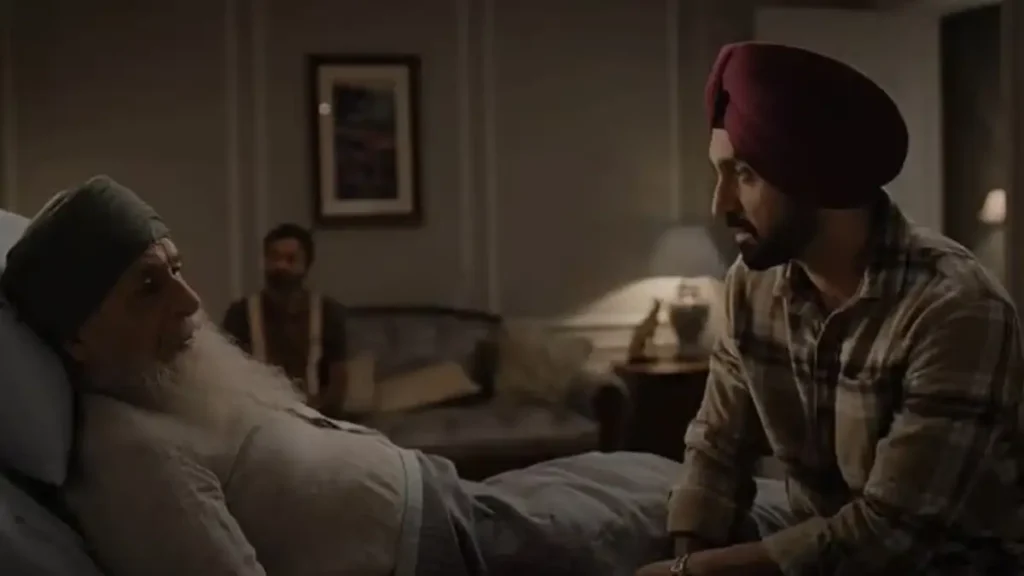
Imtiaz Ali once again employs his favorite two timeline plot sequencing. More than the partition horrors the movie holds a mirror to today’s displaced homes due to bloodshed. The end montage song with the ever-charming Diljit Dosanjh hits hard. A strong aspect of Main Vaapas Aaunga are the scenes between Nasseerudin Shah and Diljit. The portions have a perfect blend of humor with emotional pathos. The pre partition romance though needed better writing
Production Companies: Window Seat Films, Applause Entertainment etc
Running time: 2 hours and 46 minutes
Stories of Partition and Bollywood go hand in hand; numerous filmmakers have depicted the horrors of partition in their own ways but still there is always something left to be explored. Imtiaz Ali’s latest Main Vaapas Aaunga is also about pre partition and the horrors following it. But the genre here makes a difference. Imtiaz packs in an intense tale of unrequited love, love so intense that our protagonist hasn’t forgotten his heroine though he is 95 years old. Naseeruddin Shah is Keenu. He falls in love with a Muslim girl Jiya/Afshana played by a radiant Sharvari Wagh. Vedang Raina plays the younger version in the flashbacks. Their blossoming romance hits a roadblock due to partition. He manages to make a living, but the scars haven’t completely left. Diljit Dosanjh plays the grandson Nirvair Grewal. Nirvair is going through his own hassles both professionally and personally. Nirvair becomes Keenu’s support system, and he is determined to fulfill his grandfather’s last wish and how that happens is the essence of MVA.
A strong aspect of MVA are the scenes between Nasseerudin Shah and Diljit. Their interactions have undertones of humor in the beginning especially the hospital ones. But as Nirvair becomes more emotionally involved the dynamics takes a different turn. The portions start to become emotionally poignant and the two feed off each other wonderfully. After a long time Naseeruddin Shah has gotten an author backed part and the veteran makes complete use of it. Whether its his intense love for Jiya/Afshana or the pain of leaving one’s home the actor tugs at your heartstrings. He also raises chuckles in his initial interactions with Diljit.
Diljit as the grandson gets his own arc and the dependable actor doesn’t disappoint. In spite of sharing screen space with an in form Naseeruddin Shah he more holds his own. From being curious and then the strong determination of making sure that the grandfather finds peace at least in death the actor doesn’t miss a single beat.
The pre partition romance also has his moments. Both Vedang and Sharvari look the part of bestowed lovers, but the writing could have been better. The love track could have been developed more; there is a hurried nature to the proceedings here. Having said that the conversations between young Keenu and Jiya have the right romantic spark. Vedang in particular impresses more so in the post partition scenes. The scenes of subtle pain and grief has been excellently portrayed by the young actor. Sharvari has much less to do in comparison, but she has a luminous presence and does a fine job in portraying a certain inner resilience.
The theme of humanity loss has a realistic feel to it as well. Human beings getting carried away in the cycle of violence and behaving in a barbarious manner has a contemporary feel. The post credit song Kya Kamaal Hai takes the audiences on a short tour of present horrors and the incredible spirit of fighting back. The tune coupled with Diljit voice is simply fantastic.
AR Rahman’s music jells perfectly with the movie’s tone capturing both the young love as well as the emotional undertones perfectly. The cinematography of Slylvester Fonseca particularly the pre partition romance has some nice frames. The proceedings have a lived-in feel
One of the things sticking out like a sore thumb is the subplot of Nirvair and his off/on relationship with Banita Sandhu’s Kaveri. It doesn’t add much substance to the movie. The subplot feels like more of a crutch to amplify Keenu’s deep love for Jiya. But this is a minor misstep in a mostly heartfelt drama on what it means to leave your home.
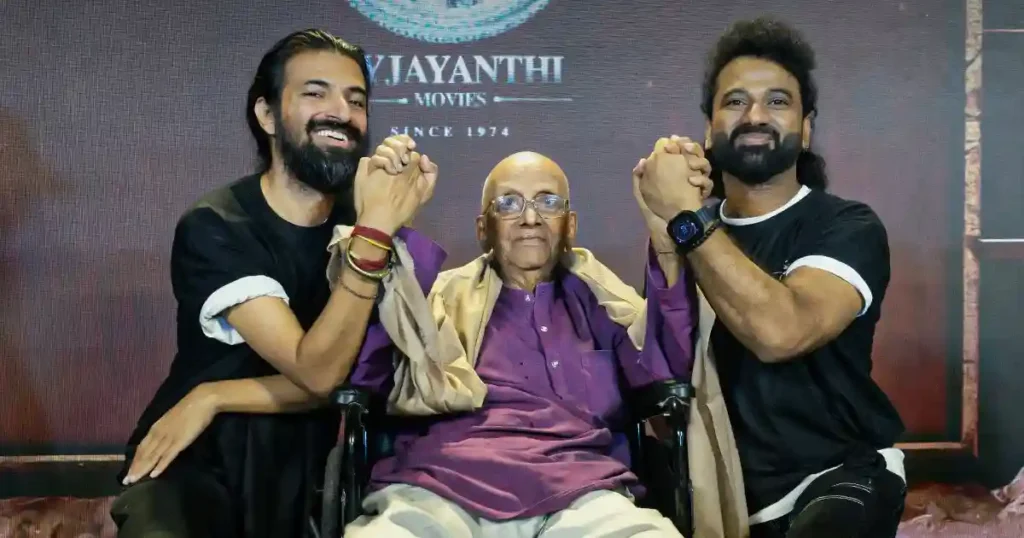
Acclaimed director Singeetham Srinivas Rao once again employees his trademark whimsical style while exploring the themes of human greed, capitalism and environmental destruction. Kudos to the director for coming up with a story like this at the age of 94 and showing why he is one of his kind. Nag Ashwin and Vijayanthi movies also deserve appreciation for bringing alive his vision. Devi Sri Prasad delivers one of his best soundtracks whether it’s the initial bewilderment or the anguish in the pre climax. A committed ensemble especially Ahilya and Shalini Kondepudi stand out among the performers
Production houses: Vyjayanti Movies and Swapna Cinema
Running time: 2 hours and 17 minutes
Before dissecting Sing Geetham its necessary to appreciate the spirit of Singeetham Srinivas Rao. The story of Sing Geetham is an old one, it has been with Singeetham Srinivas Rao for a long time. Through the story has been written long time back the plot is still so contemporary. The themes of environmental destruction and Mining don’t need a special introduction. We see it all around us but to explore these topics in the age of big scale Pan India takes courage both for the director and the producers. So firstly, a big round of applause for the entire team. Coming to the film Sing Geetham in set in the village of Kuberapuram. A young man Prathap (Ayaan) returns to his native village for claiming inheritance. He wants to make some quick buck by signing a deal with a businesswomen Renu (Shalini Kondepudi). Ahilya Bamaroo plays Gauri a feisty young woman deeply attached to the village’s last surviving tree. Things take a major turn with the tree being razed to the ground and the village getting cursed. A big reason for the curse is Gauri’s rant on that particular night. The backstory of Prathap involving Nivetha Pethuraj and Rahul Ravindran and how the curse of communicating only through songs is broken forms an important core of Sing Geetham.
A strong aspect of Sing Geetham is the world building. Singeetham Srinivas Rao along with the writers get to the heart of the story without wasting much time. Whether its Pratap’s release from jail, his entry into Kuberapuram and the mining business of Renu and her father, the latter played by a suitably evil Banerjee. Gauri’s attachment with the tree and her ideological differences with the father also set a solid base.
The portion of village’s last tree razed to the ground and Gauri’s desperate plea is emotionally poignant. Yes, the scene does across as melodramatic but there is an important reason behind Gauri’s attachment. This comes in the latter half with solid acting from both Nivetha Peturaj and Rahul Ravindran as Prathap’s parents.
For some viewers the environmental destruction explored will remind them of tress being cut down in real life. The most recent one is KBR. The mining portions are again reminiscent of numerous stories we have read in newspapers or come across online. To make a film like this with a strong political voice and then to be backed up by names like Nag Ashwin and Vyjayanthi alone makes for a big reason to watch.
Having said that the subject takes a while to warm up. The format of communicating every feeling through songs will appear outlandish for the mass belt, also the title Sing Geetham doesn’t appear in sync with the story’s nature. Still there is a lot to savor for those who like experimental cinema especially Singeetham Srinivas Rao fans.
Devi Sri Prasad’s music and background score is the soul of Sing Geetham apart from direction and writing. The songs are of a completely different flavor something we don’t usually associate with DSP. It is a huge challenge to compose tunes for a film like this but Devi Sri Prasad more than rises up to the challenge. Among the songs the one which stands out is the emotional plea to the god Kubera when a lot of people turn into gold statues. The tune, lyrics and the actor’s performances combined stirrers the viewers. On the other hand, a song situation with everyone speaking their mind without any filter makes for a fun watch. Sing Geetham is easily Devi Sri Prasad’s best work to date.
The allegorical touch especially the story of King Midas and its integration in the pre climax has also been well done. The pre climax also gives an important message on humanity and the need for harmony. There is a powerful portion of villagers setting aside their greed and protecting a newborn baby. Some of them become gold statues and this is preceded by an emotional plea to God.
The movie ends with the people of Kuberapuram living together in harmony with nature. Vijay Devarakonda briefly appears as a potential threat to Kuberapuram ; the part itself doesn’t have much significance nevertheless it makes for a fun special appearance especially with Vijay struggling to hold himself together because of the involuntary dancing curse.
The cast of Sing Geetham is an interesting mix of newcomers and established actors, and this works for the movie. Among the younger lot Ahilya and Shalini stand out. Ahilya portrays the feistiness of Gauri in a solid manner. Shalini Kondepudi as a calculative businesswoman with her own insecurities also makes a striking impact. Her character Renu is someone who is driven by the need to prove herself and this adds an interest psychological layer to the character. On a side note, it’s good to see the emergence of new actresses coming through Youtube like Shalani and Shivani Nagaram.
A roundabout second half does test the viewers patience, nevertheless the film is successful in giving jump scares through the effective atmospherics. The movie has a strong social undercurrent through the supernatural aspect. At times Obsession feels like watching Ram Gopal Varma’s prime particularly the classic thriller Kaun
Starcast: Michael Johnston, Inde Navarrette etc
Genre: Horror
Director, writer and editor: Curry Baker
Cinematographer: Taylor Clemons
Music: Rock Burwell
Producers: James Harris, Hayle Nichlo Johnson etc
Production Companies: Tea Shop Productions, Blum House Productions etc
Running time: 1 hour and 50 minutes
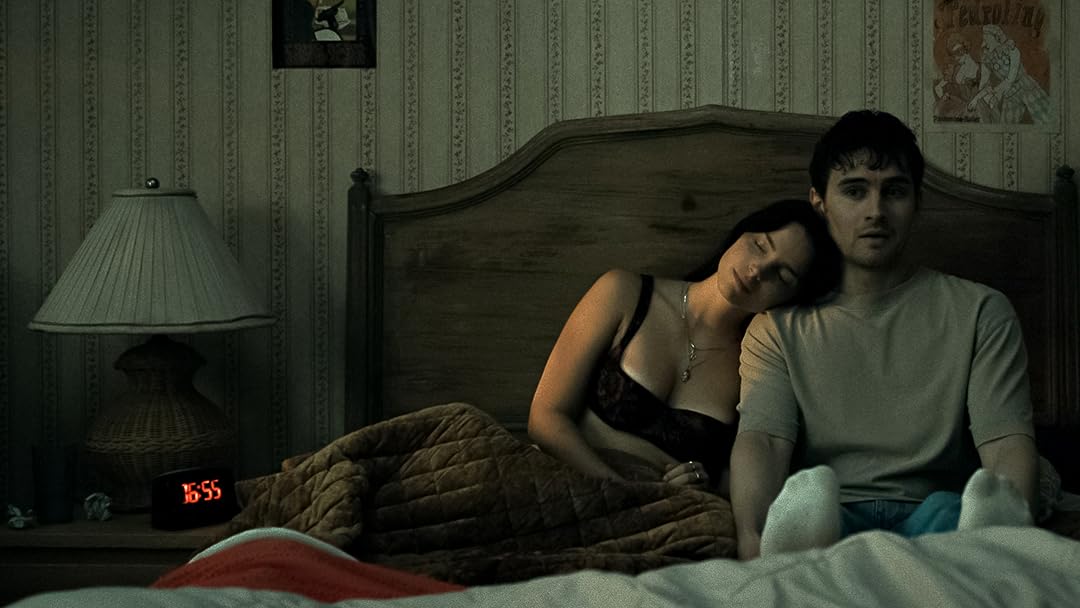
Ever since its release on May 29th Obsession has been breaking records right, light and center. Made on a shoestring budget the film has raked in both numbers and critical acclaim and deservedly so. Obsession is a different space of horror than the usual ghost stories that we encounter. It’s more psychological with a spilt personality. Obsession bears a striking resemblance to the best of RGV work, the likes of Kaun and Bhoot. Like those films here too the horror majorly comes from the solid background score and tension filled situations. Even Inde Navarette seems to be channeling her inner Urmilla Mathodkar from those movies. Keeping the comparisons aside Obsession genuinely succeeds in giving creeps while touching upon relationships
The story of Obsession starts with a nerdy and insecure music store clerk Bear (Michael Johnston). For a long time, Bear has been in love with Nikki (a solid Inde Navarette). But he isn’t able to confess given the introvert nature coupled with insecurity. Instead of directly confessing his love Bear breaks a mystical “One Wish Willow” to make Nikki fall in love with him. But this leads to disastrous sequences as Nikki goes from feisty to emotionally clingy. The final fate of Nikki and the relationship forms the core of Obession.
A strong aspect of Obsession is the significance of the title and the way Curry Baker justifies it. Obsession here isn’t just a random title chosen but represents the core theme. The emotionally clingy nature of Nikki like the terrifying portion of her behavior at a boy’s party is a solid example of this.
In the beginning portions Nikki talks about wanting to be a writer to Bear, she further mentions about writing a romantic story. But after the “One Wish Willow” episode the character takes a huge 360 degrees turn. From being independent Nikki goes into the territory of a psychopathic girlfriend. She even ends up killing Megan Lawless Sarah’s Harper in a fit of extreme possessivness.
The social commentary underneath all this about stripping a woman of her autonomy has come out in a solid manner. Bear may across as a good man in the beginning, but his inner patriarchy comes out clearly in the way he makes the wish.
What also works for Obsession is the technical department. Both the background score and the cinematography deserves a special mention. The scenes where Nikki’s personality goes through a major within seconds is majorly enhanced by the terrifying background score. Taylor Clemen’s cinematography too is in sync with the eerie atmospherics. The night shots especially make for a truly scary experience.
Obsession also benefits from two solid leads. Inde Naverrette goes from loving to scary without missing a single beat. She particularly shines in the portions of the alter ego taking over causing absolute carnage. By the end of Obsession, the viewers feel bad for her and think on how she is going to deal with the future emotional turmoil. Michael Johnston also stands his own especially in the scenes of regret and tension.
Coming to the flaws the second half suffers somewhat from roundabout storytelling. Some of the scenes feel jaded thanks to the repetitive scenarios. Also, a subplot of Nikki’s equation with her father needed more layering, it feels like an add on rather than something substantial.
Final word: Obsession is worth watching for fans of psychological horror with social commentary
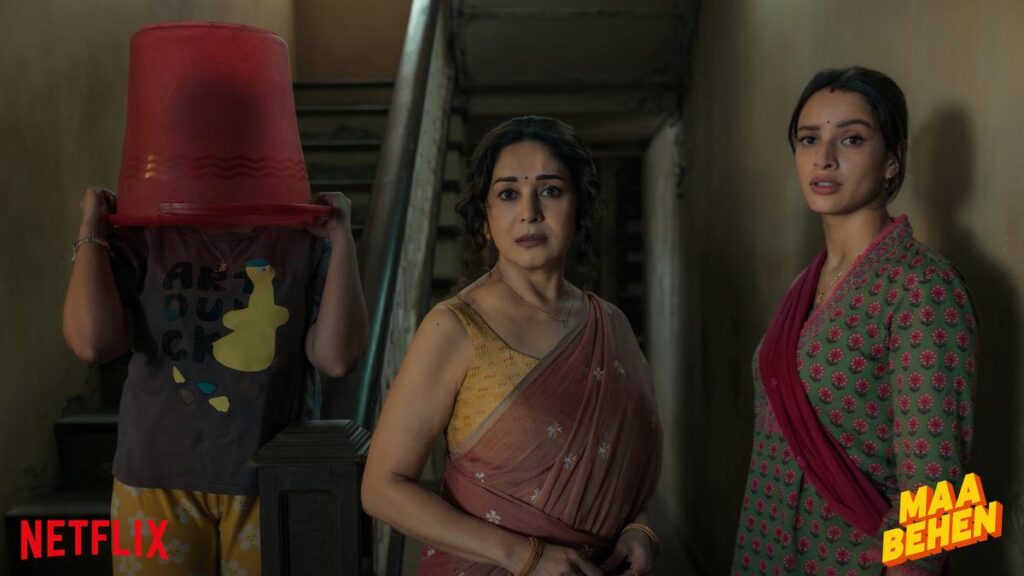
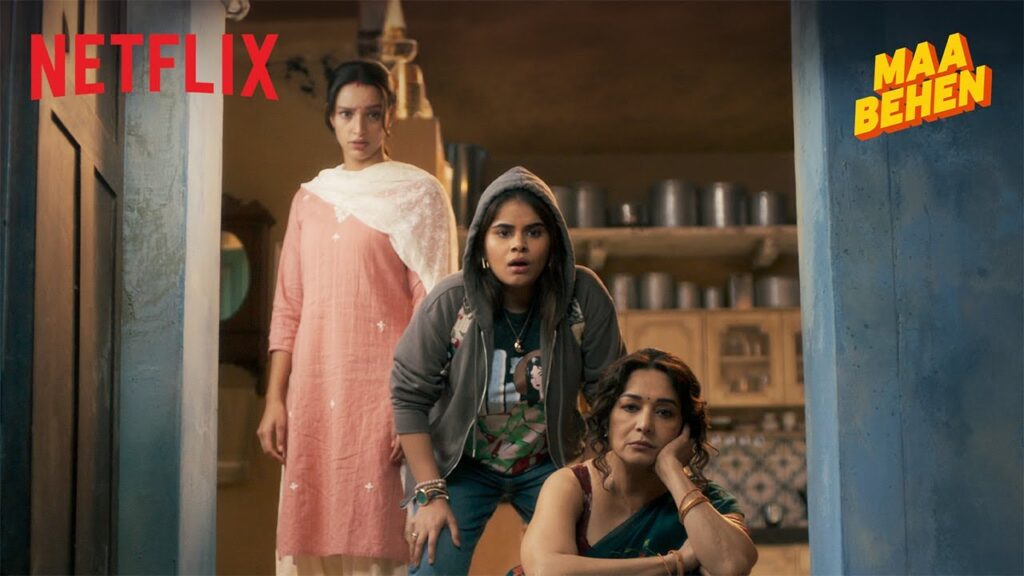
Director Suresh Triveni succeeds in subverting the usual trope of motherhood. Madhuri Dixit’s Rekha is someone who is unapologetic about her choices. The film does a fine job in exploring a certain gossip culture and society’s judgmental tone. Maa Behen is at its strongest when it focuses on the family dynamics and the evolving bond between the three female protagonists. Not everything lands but Maa Behen makes for an entertaining feminist thriller.
Starcast: Madhuri Dixit Nene, Tripti Dimri, Dharna Durga, Ravi Kishan, Arunoday Singh etc
Genre: Thriller/comedy
Direction and story: Suresh Triveni
Additional story and writer: Pooja Talani
Music: Akshadeep Sengupta
Cinematography: Anuj Rakesh Dhawan
Producers: Vikram Malhotra and Suresh Triveni
Production Companies: Abundantia Entertainment and Opening Image Films
Running time: 2 hours and 7 minutes
Streaming site: Netflix
Indian Cinema has a major tendency of putting mother figures on pedestal. They are presented in a stereotypical manner with no desires of their own in general. Suresh Triveni’s Maa Behen is radically different in its presentation; he is also helped by an uninhibited Madhuri Dixit Nene having an absolute ball. As a film Maa Behen bears a striking resemblance to the 2022 movie Darlings. Just like that movie here too is there a mixture of crime with dark humor. The theme of female autonomy also has a striking parallel. Having said that Maa Behen comes with its distinct identity.
The story of Maa Behen focuses on a non-confirming widow Rekha (a magnetic Madhuri Dixit) Rekha has a certain reputation of being Adarsh Colony’s Daayan because of her lifestyle. Tripti Dimri and Dharna Durga play Rekha’s two daughters. Tripti’s Jaya is stuck in an oppressive marriage, the younger sister on the other hand is an aspiring social media influencer going through her own share of societal judgments. The film takes a dramatic turn with the suppose dead body of Ravi Kishan’s Gupta Ji in Rekha’s house. Rekha calls her two estranged daughters and what follows is a lot of chaos with female bonding
A strong aspect of Maa Behen are its social themes explored through the three women. All the three have important arcs and this makes the movie engaging even when the screenplay get into a major tangle. For example, Tripti Dimri’s character represents the emotional suffering of numerous housewives. There is a lot of pent-up anger coupled with a strained mother and daughter relationship. The sequences between Tripti and Madhuri Dixit gives Maa Behen some of its best moments. As expected Tripti pulls off Jaya’s frustration as well as her rebellion in a solid manner. Her confrontation scene with a suitably despicable Shardul deserves a special mention.
Dharna Durga too makes her presence amply felt. In spite of sharing screen space with the likes of Madhuri Dixit and Tripti she does a wonderful job in conveying a young woman’s yearning for love. Yes, the character’s emotional wounds needed better exploration, but Dharna Durga does a very fine job, nevertheless.
Ravi Kishan’s Gupta ji is another interesting character worthy of mention. His character begins off as a seemingly ordinary neighbor, but the film throws a major surprise in the third act. The gradual unraveling of Gupta ji’s different layers makes the women’s fightback all the more engaging. Arunoday Singh as a police officer and Jaya’s friend brings in the required tension especially in the films latter stages.
Madhuri Dixit though is the emotional anchor of Maa Behen. Her part is a mix of vulnerability and quiet resilience, and the veteran actress is successful in unleashing a different shade of her. Suresh Triveni along with Pooja Talani explore the pedestal of imposed motherhood through Rekha in a successful manner. The small-town setting of Adarsh Colony with the running commentary of Shrivardan Trivedi presents an important social layer of self-appointed moral custodians.
Some of the flaws in Maa Behen include the tonal shift which needed better handling. Also, Guptaji’s family not panicking much and carrying on with the daughter’s wedding celebrations as if nothing has happened feels odd. Also, more groundwork could have been laid for the sudden twist in Guptaji’s character. Lastly Geetanjali Kulkarni as Gupta’s wife needed more heft in terms of charcterization.
Final word: There is no denying that Maa Behen could have been tighter with a more fleshed out screenplay. Nevertheless, for fans of feminist stories this makes for a good watch.
Anurag Kashyap and Sakshi Mehta present a harrowing picture of the numerous tribulations faced by undertrial prisoners. The social commentary on corrupt public institutions as well as media trial hit hard. Bobby Deol gets a layered role with shades of grey, and he goes full throttle coming up with a first-rate act. The character Sameer Mehra isn’t completely white or black, and this makes the movie more interesting
Starcast: Bobby Deol, Sapna Pabbi, Sanya Malhotra, Indrajit Sukumaran, Saba Azad etc
Genre: Thriller/drama
Directors: Anurag Kashyap and Sakshi Mehta
Writers: Sudip Sharma and Abhishek Benarjee
Music: Amit Trivedi, Vishal Mishra etc
Cinematography: Saiyed Shaaz
Producers: Anurag Kashyap, Nikhil Tiwedi etc
Production Company: Saffron Magic Works
Running time: 2 hours plus
There is an important line in Anurag Kashyap’s latest Bander where Bobby Deol’s Sameer Mehra describes himself. He categorizes himself as sometimes good and sometimes bad. This scene with an ex-girlfriend turned adversary (a super Sapna Babbi) isn’t just a throw away portion. It sums up the role in many ways. At some points Bandar also reflects Bobby Deol’s real-life struggles before the fantastic resurgence in Animal. There is a portion of Sameer walking out of an airport after performing in a wedding. In spite of being popular in the past no one in media notices Sameer let alone clicking his photograph. Bandar in simple terms is about a woman accusing a man of raping her. Of course, nothing of that sort has happened. Sapna Babbi’s Gayatri is driven by vengeance when Sameer develops a cold feet. However, the bigger picture of Bandar are the hardships faced by undertrial prisoners and how they are boxed in a certain category irrespective of whether they have actually done the crime or not.
A strong aspect of Bandar is undoubtedly the depiction of jails nitty gritties. Anurag Kashyap along with his writers don’t sugar coat at any point, the portions have the required rawness and as viewers you are immersed on what would be the plight of Sameer. Of course, the technical departments deserve equal credit too whether it’s the cinematography or production design.
The different gangs within the jail and the rules which come with it also have an authentic texture. Initially Sameer aligns himself with a certain group, but things change in a heated moment. He switches sides joining with Indrajith Sukumaran’s Lijo. Lijo has a solid hold over the jail atmosphere. His influence can be seen clearly in numerous portions. Lijo guiding Sameer on how to maintain sanity and the cutthroat nature of the law gives Bandar some of its best moments. Indrajith Sukumaran brings in the required authority along with a certain warmth in equal measure.
The character of Sameer Mehta also deserves equal appreciation. As already mentioned the man isn’t completely white or black. At times the viewers feel that he is actually capable of doing the heinous crime he has been charged with. There is one portion of sexual innuendoes with Gayatri, the details of which cannot be mentioned here. The man also comes across as someone stuck in the past glory and not wanting to start fresh. In spite of some despicable behavior on certain occasions, the viewers still feel for Sameer when he gets emotionally vulnerable constantly pleading with the sister played by a wonderful Sanya Malhotra.
The sequences between the two are emotionally poignant and Bobby is particularly fantastic in these scenes. Sanya Malhotra as the sister trying to hold things together from crumbling also tugs at the viewers hearts.
The gradual unraveling of Sameer’s past with Gayathri has also come out well. From the initial lovey dovey moments and then the eventual rejection leading to a psychotic change in Gayathri, all this has been wonderfully written and enacted with Sapna Pabbi not missing a single beat.
The songs of Bandar composed by multiple artists have a nice variety. The title song in particular catches the movie theme well. A romantic number “Kyun Maaza Aa Raha Hai” makes for a soothing listen and watch too.
Apart from the actors mentioned above Saba Azad playing one of Sameer’s girlfriends has a lovely presence and does a good job within the limited scope. Jithendra Joshi as a corrupt policeman has an absolute ball especially in an early interrogation scene with Bobby. This portion also has some chuckle worthy moments.
The subject of Bandar featuring a male victim is likely to split the viewers especially in the context of the then Me Too Movement. Having said that the movie is very much worth watching. The performances alone make it worth the ticket.
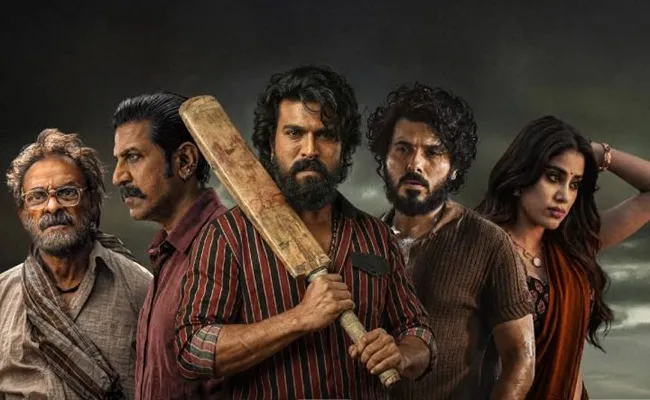
Uppena director Buchi Babu Sana gives his own touch to a Rangasthalam like set up. The film works best when it focuses on the social milieu of caste and the incredible fighting spirit of Peddi. Ramcharan in the titular role goes all out both physically and emotionally. Whatever the fate of Peddi financially the film will be a milestone for Ramcharan the actor. Janhvi Kapoor in her second Tollywood outing doesn’t fare any better whether its the accent or the overall performance. The overt sexualization doesn’t help either
Production Companies: Mythri Movie Makers, Sukumar Writings etc
Running time: 3 hours plus
Sukumar’s Rangasthlam and the Pushpa movies aren’t just box office blockbusters; they opened a new grammar of filmmaking especially the return of rural stories in a commercial set up. His assistants Srikant Odela and Buchi Babu Sana have been successful in carving their own niche while paying tribute to their mentor/guru. Buchi Babu Sana’s first film Uppena started off as a story of star-crossed lovers, but what made the film unique was a pivotal pre climax twist. It was daring especially keeping in mind the star launch of Vaishav Tej. With his latest Peddi the director once again takes a very wild swing with the characterization of Ramcharan. The details cannot be revealed here but Ramcharan deserves major appreciation for submitting to the vision of the filmmaker and not letting his pan India image come in the way
The one-line story of Pedda is about a labor/athlete. How Ramcharan’s Peddi uses his multiple sporting skills to lift a deprived community with the village getting united forms the spine of the film. The story of Peddi is narrated to Boman Irani’s Kiran Singh. Kiran Singh is a senior official from Indian Olympics and is used as a typical framing device for the audiences to discover the legendary journey of Peddi. The plot is supposedly inspired from a daily wage laborer called Peddi Babu.
A strong aspect of Peddi are its social beats. An overarching theme is the struggle for basic identity and recognition. Peddi becoming a cross over athlete is less about personal fame and more about his village lacking infrastructure and a name. This has come out solidly in the monologues of both Ramcharan as well as Jagapathi Babu playing Peddi’s father.
Buchi Baba also does a solid job in presenting the struggles of bonded laborers. How the rural working class is repeatedly shamed for belonging to a marginalized caste has some powerful moments. The prejudices of the government in not helping them makes the viewers root even more for Peddi to win.
The caste politics in everyday life even in something like sports meant to be a unifier has its share of poignant moments. A special mention must be made of Shiva Rajkumar’s Gournaidu. His character has some powerful moments like the scene where he chooses Peddi over his upper caste student/disciple. The scenes between Gournaidu and Peddi though familiar gives the movie some of its best moments. Shiva Rajkumar brings in emotional depth as well as the required authority.
Bollywood actor Divyendu plays a mini antagonist. The character Rambujji is sketchy written, but Divyendu plays the part with the required attitude. A particular mention must be made of the scene where Divyendu questions Peddi’s worth after a deliberately lost cricket match. It sets a solid base for Peddi venturing into wrestling. Buchi Babu does succeed in humanizing Rambujji though. The climatic portion of Peddi’s village people seeing the match in his house has some nice touches. The message of how sports can be a great unifier in getting people together irrespective of caste, class etc has been solidly written and enacted.
However, the major spine of Peddi without a doubt is Ramcharan. Ramcharan is the glue holding the proceedings together. The physical transformation is of course fantastic particularly the wrestling part. But the actor majorly scores in the emotional scenes. A crucial portion set in the hospital will move the viewers. A long monologue towards the end also deserves a special mention, it hits the right buttons thanks to the writing as well as Ramcharan’s stupendous act. Lastly Jagapathi Babu is also striking in the role of Applasoori. Yes, for some the part may across as melodramatic but Jagapathi Babu nails the desperation of Appalasoori.
A major problem with Peddi is Janhvi Kapoor as Achiyamma. The romantic track just doesn’t work whether its the lines or how Achiyamma falls in love. For a movie talking about dignity and identity Achiyamma is mostly written from a voyeuristic gaze. Even some of Peddi’s lines about Achiyamma reek of casual sexism and this is something Buchi Babu should have avoided. In fact the female characters leave a lot to be desired especially keeping in mind how Uppena had a solid female character. The confrontation of Krithi Shetty with Vijay Sethupathi was Uppena’s biggest highlight. Unfortunately, Peddi lacks severely in this department.
Also Boman Irani as a framing device feels convoluted beyond a point. A more original approach was needed. Apart from being a patient listener and being bewildered on Peddi’s multi-faceted personality the actor has nothing more to do.
AR Rahman’s music and background score is solid for most part. The already popular Chikiri works both for its upbeat tune and Ramcharan’s swag. The Masaa Massa on the other hand makes for a good montage training song. The background score too especially the Delhi scenes work well. But a special number featuring Sruthi Hasan along with Janhvi feels like an unnecessary add on. Apart from ample skin show for front benchers there is nothing more.
Directors Joe Russo, David Weil and Greg Yaitanes do a far superior job in building up the emotional stakes. The characterization of Priyanka Chopra deserves a special mention. A solid supporting cast especially Stanley Tucci also helps in keeping the momentum going. But the themes of surveillance and power needed better etching. The show becomes too tangled for its own good at certain points
Starcast: Priyanka Chopra, Richard Mason, Stanley Tucci, Jack Reynor, Matt Berr, Gabriel Leone etc
Genre: Espionage
Directors: Joe Russo, David Weil and Greg Yaitnes
Creators: Josh Applelbaum and Bryan Oh
Writers: Tori Sampson, Kennedy Edmonds etc
Cinematographer: Newton Thomas Sigel
Producers: Joe Russo, David Weil, Anthony Ruso etc
No of episodes: 7
Streaming site: Amazon Prime
The first season of Citadel season 1 released with a lot of hype on an estimated budget of $300 million. However, the show didn’t live up to its promise. A main reason for that was more style than substance. The writing was majorly criticized for its hollowness. For those who haven’t season 1 the show was about two elite spies Nadia and Mason Kane (Priyanka Chopra and Richard Mason respectively). They survive the destruction of a rival syndicate, but their memories are wiped out leaving them to assume civilian identities. Season 2 comes after a gap of three years with little to no expectations. Season 2 does turn out to be a pleasant surprise though especially for fans of Priyanka Chopra.
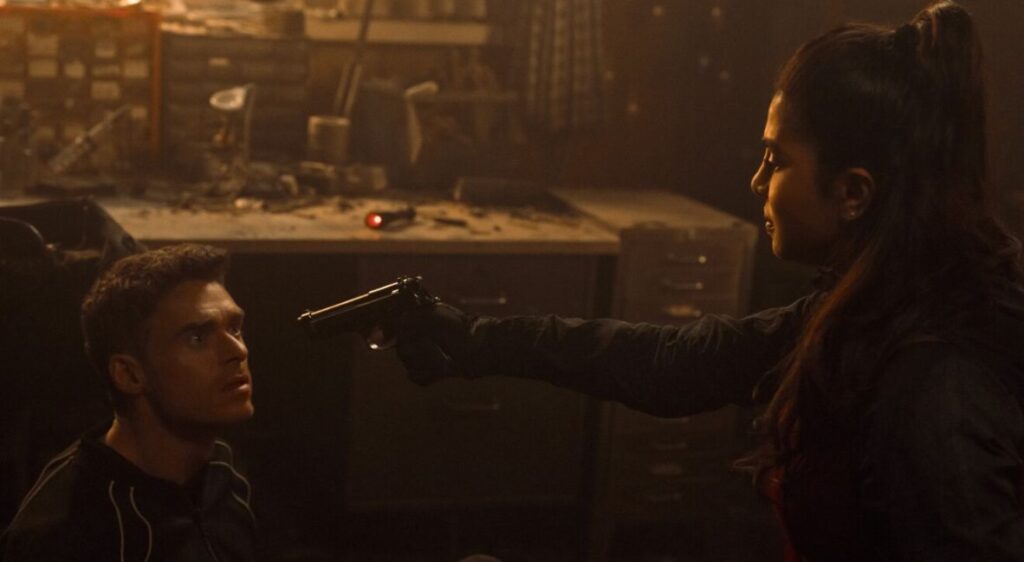
Citadel Season 1 image
Citadel Season 2
Season two of Citadel in brief is about a brain chip capable of turning people into human assassins. Stanley Tucci’s Bernard brings back the estranged spies/former lovers Nadia and Mason Kane in order to stop a major global conspiracy. This includes a certain assassination plan. The backdrop is G8 Summit. Along with the main plot the changed interpersonal dynamics between the two leads also play a significant part.
A strong aspect of Citadel season 2 are the portions between Priyanka Chopra and her on screen daughter Asha. Their equation has a few similarities to the Raj and Dk’s own spin off Citadel: Honey Bunny. Still the writing coupled with the actors gives the show some of its best moments. Nadia wants to protect her young daughter from the danger outside; at the same time, she doesn’t want the daughter to lose her innocence. A tender mother and daughter moment includes Nadia singing Kishore Kumar’s Ab Chal Ke Tujhe. Through the song Nadia implies that she wants to take her daughter to a more peaceful place. When Nadia says no one is listening Asha replies back saying she is. The daughter goes on to hum the same song. This moment gives a much-needed emotional texture.
Priyanka Chopra as Nadia gets a much-layered arc this time whether it is as an agent, a mother, a betrayed lover and a conflicted woman. Priyanka aces all of these portions apart from some solid action. The action sequences have been much better choreographed and staged. Richard Masson also gets a much meatier part, and he makes his scenes count as well. A particular mention must be made of the portions featuring him and the on-screen mother (Lesley Manvile). The confrontation scenes with sprinklings of humor make for some engaging moments.
Stanley Tucci as Bernad is another major plus for Citadel Season 2. He raises ample chuckles with his sarcastic humor as well as bringing an authority whenever required. At the same time, he also shines in a few dramatic bits like the one post the death of Mason Kane.
A special mention must also be made of how the directors and writers have explored the terrifying scenario of memory manipulation. The viewers feel that the some of the situations may happen with them too. It also helps that Gabriel Leone makes for a chilling antagonist.
One of the major issues with Citadel Season 2 is the surface level writing of Nadia’s strained equation with her mother. Unlike the Mason Kane’s portions exploring the same thread here the writing doesn’t fully develop into something cohesive. The standard spy tropes also play a spoilsport. Finally, some of the big themes needed more space to explore. In a rush to become a globe trotter the series loses focus with abrupt jumps.
Final words: Citadel Season 2 doesn’t reinvent the spy genre, still it makes for an engaging watch especially in comparison to the season 1 disaster
A Sarkunam’s Exam has its rough patches especially the latter episodes. But the web series is worth watching for how it tackles the pressures faced by hard working aspirants. Dushara Vijayan as Jhansi is the show’s beating heart and she gets good support from both Aditi Balan and Abbas
Starcast: Dushara Vijayan, Aditi Balan, Abbas and others
Genre: Thriller/drama
Director and writer: A Sarkunam
Creators: Puskhar- Gayathri
Producers: Gayathri Pushkar
Cinematographer: Arun Amarenthiran
Production Company: Wall watcher Films
No of episodes: 7
Streaming site: Amazon Prime
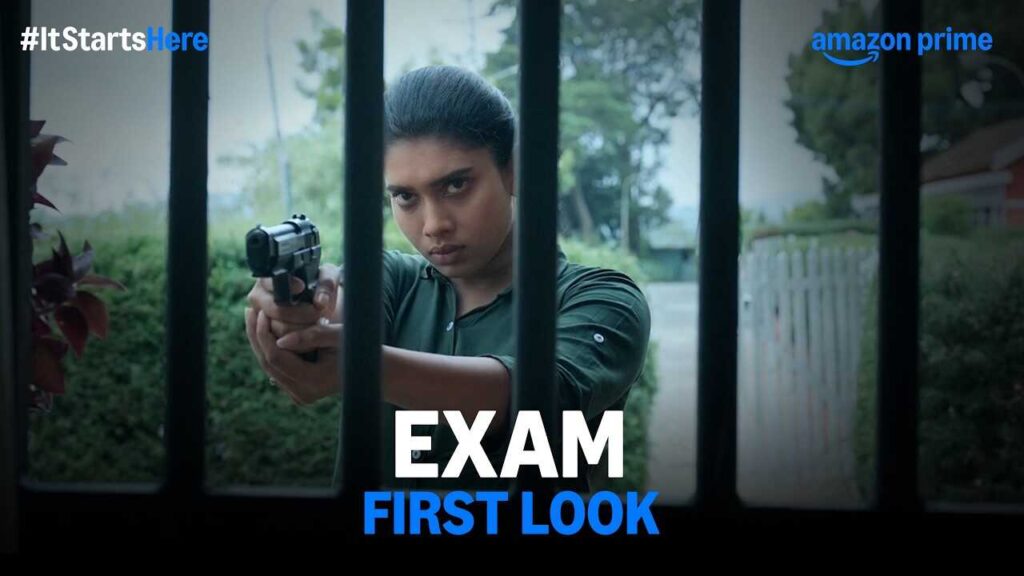
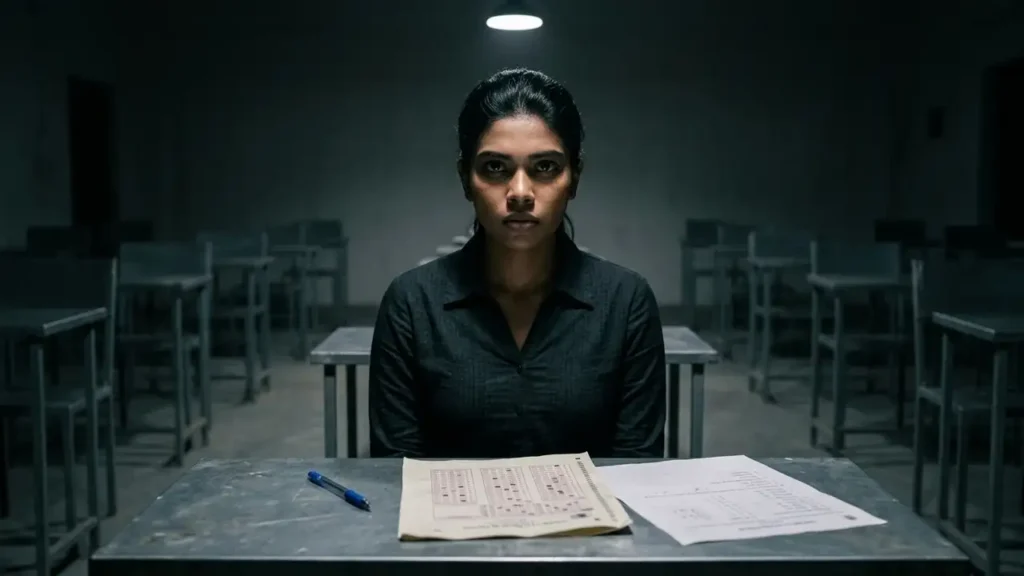
Exam created by the acclaimed director duo Gayathri-Pushkar bears a striking resemblance to the numerous question papers leaks and the effect it has on students. A solid example of it is the recent NEET. The web series starts with a bang exploring how the paper leaks happen and privilege eroding merit. There is a lived-in feel to the proceedings. But the latter ones don’t completely live up to the earlier promise, this is something I will get to later. The story of Exam in brief focuses on a determined woman Jhansi (an excellent Dushara Vijyan). She infiltrates a highly dangerous syndicate under the guise of a new police officer. Jhansi comes with her own past and its related to DSP Maramalli (Aditi Balan). How Jhansi unearths the scam saving the dreams of many honest students forms the main core of Exam.
A strong aspect of Exam is the emotional undercurrents more than the thriller aspect. The determination of Jhansi in unearthing the scam and a poignant back story gives the web series some of its best moments. The viewers feel the pain of Jhansi and understand why she is taking such a big risk.
Her dynamics with DSP Maramaali and the two striking an unlikely sisterhood during the closing portions has also been solidly written and enacted. Aditi Balan starts off as a privileged brat, but both the writing and the actress humanize the character never tipping into a caricature.
Mention must also be made of how A Sarkunam handles the theme of systemic corruption. Numerous scenes bear an uncanny similarity to what we come across in daily newspapers. The entire process of exam scandals has been meticulously crafted.
The frustration of honest students with the psychological toll hits hard. There is an important line when a character talks about how the government systems need to be more efficient in cracking down corruption. There is a further mention of how someone like a Jhansi wouldn’t be needed if the officials had done their job properly. This sums up the actions of Jhansi nicely. The viewers feel happy when Jhansi gets formally appointed no longer needing to impersonate someone else.
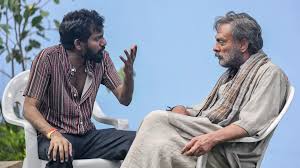
A mention must also be made of the track featuring Abbas and Dushara Vijayan. Abbas’s Jayachandran is also a victim of systemic corruption much like Jhansi. His character comes with words of wisdom especially the scene post Jhansi’s suicide attempt. He plays the mentor with a lot of warmth becoming an important pillar of support. His death sequence has a certain poignancy.
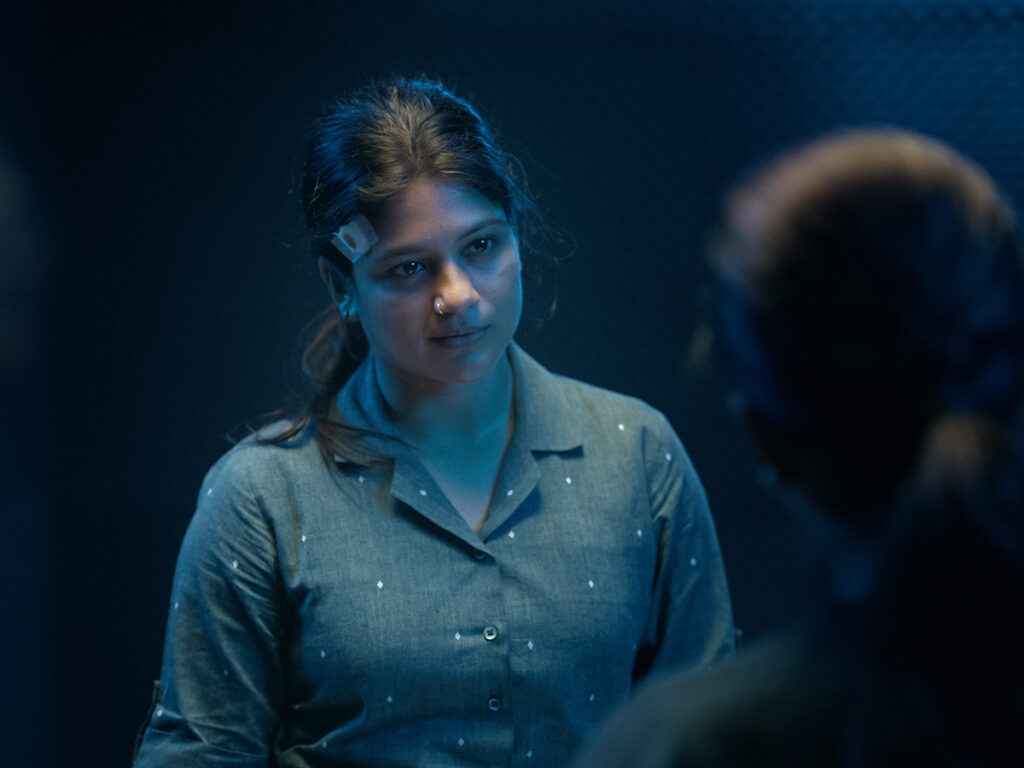
Dushara Vijayan though is the central pillar of Exam with a first-rate act. Whether it’s the vulnerable moments or the determination Dushara is simply excellent. Dushara particularly shines in the portion of her identity being blown.
The cinematography of Arun Amarenthiran is of a good order. The mist covered setting creates a sense of concealment aiding the story. Sam CS background score aids the tension filled scenarios.
A major problem with Exam are the mid portions. Certain characters are introduced but the payoff isn’t satisfactory. Also, the story struggles in balancing the investigative tension with personal drama as the show progresses.
Final word: Exam is worth watching for the solid performances and the social themes
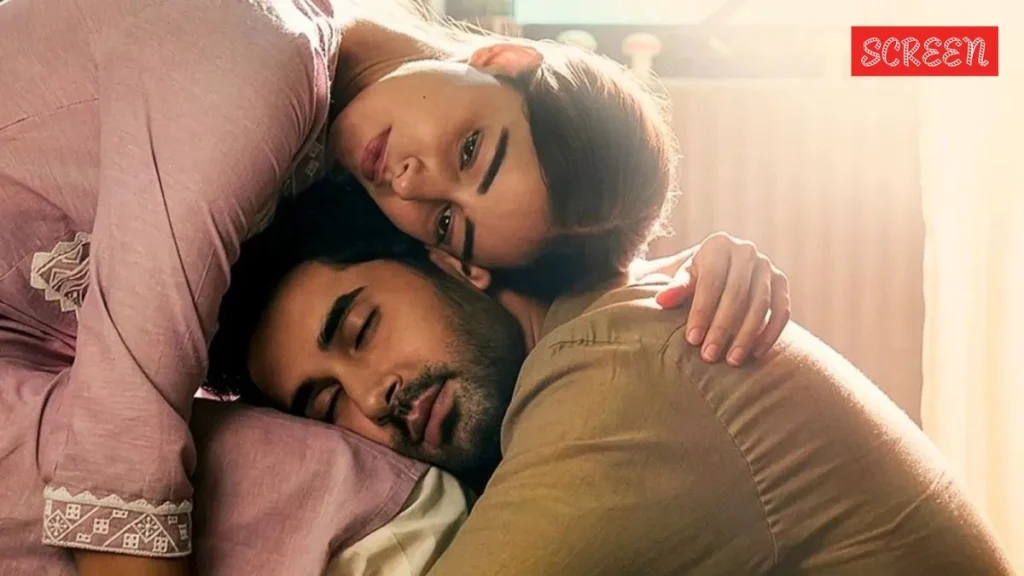
The lovey Dovey moments are a mixed bag alternating between cute and cringe. But the film finds it feet once it explores the pressure of responsibilities and certain male ego. The best part of CMD is the character graph of Lakshya Lalwani’s Aarav. The repercussions of a violent moment and how he earns back Chandini’s love has been solidly written and enacted. Ananya Pandey as the titular Chandini continues to showcase her evolution with a strong act. The actress especially shines in the scenes of emotional fragility
Starcast: Lakshaya Lalwani, Ananya Pandey and others
Genre: Romance
Writer and director: Vivek Soni
Screenplay: Tushar Paranjape
Music: Sachin Jigar
Cinematography: Debojeet Ray
Producers: Karan Johar, Somen Mishra, Adar Poonawala etc
Production House: Dharma
The beginning portions of Vivek Soni’s Chand Mera Dil feel like a typical assemblage of campus romances. At one point the viewers are reminded of 2 states too mainly because of the engineering campus and a scene of Ananya Pandey’s Chandini entering a male hostel. There is also an undercurrent of Mani Ratnam’s Sakhi in the treatment of life post marriage. The movie feels like your average campus rom com until Chandini gets pregnant. The movie soon switches gears charting into some serious topics like the burden of responsibilities having an impact on relationships among others. The movie begins in US with Aarav finishing off his masters and Chandini congratulating him on a video call. But there is a layer of awkwardness underneath the short conversation, in the car Aarav reminiscences on how the two should have met now rather than the engineering college where everything started. In simple terms the story is about madness of youthful love and how the two become more responsible individuals winning in life as well as reconciling with a fresh start
A strong aspect of Chand Mera Dil is how it looks at the complexities of a marriage. Especially with two students who are trying to find their feet while managing multiple roles. Vivek Soni along with Tushar Paranjape get into a zone which most campus rom coms avoid and do a fine job with an unfiltered approach. The film gives an important message on how love alone isn’t enough to sustain a relationship. Perseverance and discipline is equally paramount to make sure that the relationship doesn’t crumble.
The confrontation scenes between Ananya and Lakshaya have a rawness with zero vanity. The two actors are particularly impressive in these dramatic moments. The characterization of Aarav also deserves a special mention. The man comes across as a chauvinist on a few occasions like the portion where he discourages Chandini from working. Similarly, a certain male ego is clearly visible in his sulking of Chandini getting a better job than him. Before the interval there is a moment where he snaps too showcasing his violent side.
But the film doesn’t justify Aarav’s loss of temper as hyper masculinity. Chandini leaves that night along with the daughter. She is very clear on self-respect being more important than love. Yes, Chandini hasn’t lost love for Aarav completely as she clearly says in a dialogue. At the same time for her a feeling of safety is more important. A subplot of Chandini’s broken family and how that plays a crucial role in her decisions adds emotional heft to the movie. The emotional fragility as well as a strong individuality has been superbly brought out by Ananya. Even the portion of Ananya being adamant on keeping the baby has been written and enacted with good psychological insight.
Coming back to Aarav the happy union feels earned rather than something obligatory. The redemption of the male protagonist has some touching scenes especially the ones with the on-screen daughter. Lakshaya Lalwani is successful in showcasing a different facet of him as an actor whether it’s the initial scenes of care or the darker areas.
As already mentioned in the beginning the lovey Dovey moments are a hit and miss. Aarav wearing the same color clothes as Chandini is interesting to begin with, soon though a tedium sets in with repetitiveness. Also, a 2 States inspired moment doesn’t quite land. It feels more like aping leaving little impact. But the scene of Aarav quitting smoking and his explanation makes for a lovely moment.
The supporting characters needed better fleshing too. The friends for example don’t have much personality. Also, Aarav’s strained equation with his parents needed better writing, having said Vidushi Kaul’s scenes as Aarav’s sister has been well written and enacted. Her honest opinion on Aarav’s actions without letting the sisterly feelings come in the way makes for a good watch. Some abrupt jump cuts also act as a turbulence. The transition of scenes is not always smooth.
Sachin Jigar’s music adds soul to the movie. The title track played on various occasions is excellent both in terms of composition and the colorful visuals. Shreya Ghoshal’s rendition of the title song deserves a special mention. Faheem Abdullah of Saiyaara handles the male voice and he does a competent job too though not on the same level as his last one. Other tunes like Aaitbaar and Khasiyat make for a soothing listen and watch too. Debojeet Ray’s cinematography consists of interesting frames mirroring the turbulent relationship.
Final word: Chand Mera Dil is worth watching for those who like complex love stories