Tiku Weds Sheru: A Hotchpotch Of ‘Luck By Chance’ And ‘Tanu Weds Manu Returns’ That Leaves You With A Bitter Aftertaste

Avneeth Kaur’s confident debut and Nawazuddin Siddiqui’s earnestness aren’t enough to salvage this wreck of a film.

A complete dud!
Tiku Weds Sheru (Hindi)
  • Cast: Nawazuddin Siddiqui and Avneet Kaur
  • Direction: Sai Kabir
  • Producers: Kangana Ranaut
  • Music: Gaurav Chatterji
  • Runtime: 1 hour 51 minutes
  • OTT platform: Amazon Prime

There have been several films set against the backdrop of the film industry and Tiku Weds Sheru is one such.

For example, Shyam Benegal’s Bhumika (1977) was based on a well-known Marathi stage and screen actress of the 1940s. Even before that, Guru Dutt’s Kaagaz Ke Phool (1959) explored the turbulent life of a famous filmmaker.

If we talk about recent times, Zoya Akhtar showed the journey of two aspiring actors who arrive in Mumbai to become big stars in Luck By Chance (2009). Though the film didn’t make a lot of money, it was critically appreciated and won the best debut director award for Zoya.

This year, you had the web series Jubliee (2023), directed by Vikramaditya Motwane. It was about the film industry of the 1940-50s through five major characters. It turned out to be a major hit on Amazon Prime.

Sai Kabir’s Tiku Weds Sheru majorly takes inspiration from two films — Luck By Chance Kangana Ranaut’s Tanu Weds Manu Returns (2015). Even the title resembles it.

Director Sai Kabir tries to address many pertinent issues like misogyny and patriarchy here, but his direction lacks the required clarity. Tiku Weds Sheru neither works as a romantic drama nor as a story of two underdogs.

Shiraz Afghani aka Sheru (Nawazuddin Siddiqui), is one of the many countless junior artists slogging it out in the film industry. Apart from being a junior artist, he works secretly as a pimp too.

Synopsis

Tiku (Avneeth Kaur) is a fierce girl from Bhopal. She has a good flair for poetry. Tiku aims to escape from her misogynistic family and become a superstar in Bollywood.

Her ticket to Bollywood comes in the form of Sheru who pretends to be a film financer. The duo gets married.

He uses the dowry money to repay a loan shark. Sheru doesn’t know that Tiku has already got a boyfriend and is using him as a gateway to reunite with him. This boyfriend promises to make her a superstar.

But eventually, he dumps her as expected. The rest of the story is about how Tiku and Sheru navigate their personal lives, and also the world of showbiz.

The only positive aspect

The only positive aspect of Tiku Weds Sheru is the performances of the individual actors.

Avneeth Kaur, in particular, sparkles as the girl who aspires to be a superstar. She shines equally in both the dramatic and comic bits. With a much better script, this girl can go a long way.

Nawazuddin Siddiqui brings certain earnestness to his part, as he does in most of his films. His performance here is no Manto (2018). Nevertheless, he is sincere.

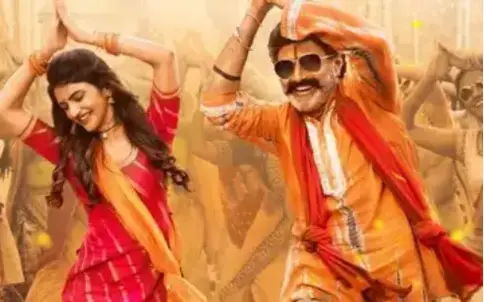
But at the same time, Nawazuddin looks completely out of place in the dancing portions.

Fails to do justice

But as a pair, there is a complete lack of chemistry between the leads. It is not just about the hugely significant age gap. But there is a general awkwardness in the romantic scenes which only adds to the woes of the film.

The biggest issue with Tiku Weds Sheru is that it does not do justice to any of the themes handled.

The issues of the plight of the junior artists and the casting couch are very pertinent, but director Sai Kabir makes a mockery with his inept direction.

The supporting characters are another big joke. All of them are one-note characters. As a result, none of them leaves an impact.

Kangana’s cameo also comes out of nowhere. It is a part that could have been easily deleted

Verdict

Tiku Weds Sheru is the first venture for Kangana as a producer and the third film for Sai Kabir. Unfortunately, it turns out to be a complete dud. Hope they come up with better and more original stories in future.

(Views expressed here are personal.)

Jee Karda: A Tale Of Friendship With Good Dose Of Fun And Drama

Director Arunima Sharma’s web series is a good attempt at exploring the different problems faced by today’s youth.

A mirror of contemporary times!
Jee Karda (Hindi)
  • Cast: Tamannaah Bhatia, Anya Singh, Aashim Gulati, Suhail Nayyar, and Hussain Dalal
  • Direction: Arunima Sharma
  • Producer: Maddock Films
  • Music: Sachin Jigar
  • No. of episodes: 8
  • OTT platform: Amazon Prime

Arunima Sharma’s Jee Karda (What the Heart Wishes) is a relatable tale of seven childhood pals, now in their 30s going through different issues.

Through this tale of friendship, Arunima Sharma touches upon multiple topics. Not all of them are fleshed out sufficiently. But still, there is a lot to enjoy particularly if you are in the mood for some fun.

Jee Karda begins with an old man making a prophecy about a bunch of schoolchildren. He tells each of them how their lives will turn out and what things they need to keep a distance from.

Children dismiss this farfetched prophecy, and we fast forward to 15 years.

At the centre of this tale is Lavanya (Tamannaah Bhatia). She is on the verge of marrying her childhood friend Rishabh (Suhail Nayyar). Even at that stage, we see her struggling to come to terms with the idea of marriage and the complexities that come with it.

Among others, Arjun (Aashim Gulati) is a popular Punjabi pop singer who is often embroiled in controversies. Preet (Anya Singh) is struggling to find a compatible partner.

Sheetal (Samvedana Suwalka) is married to Sameer (Malhar Thakkar). She is facing the challenges of living in a joint family and is desperate to have her own space with her husband.

Melroy (Sayan Banerjee) is in a problematic relationship with a guy called Yavar. Melroy is trying to cope with Yavar’s inability to come out of his closet.

The last one in the group is Shahid (Hussain Dalal), a school teacher struggling financially to make ends meet.

In a nutshell, Jee Karda looks at how these seven friends navigate the challenges of adulthood.

There is no denying that the theme of Jee Karda isn’t exactly original. The story at times reminds you of both Shashanka Ghosh’s Veere di Wedding (2018) and also Ayan Mukherjee’s Yeh Jawaani Hai Deewani (2013).

But what makes the show work is how Arunima Sharma deals with the different plotlines.

Strong plotlines

One of the best tracks in Jee Karda is the one involving Sayan Banerjee as Melroy. He is a homosexual man who had to face a lot of problems because of that.

The director does a wonderful job of portraying the arch of his character. It also helps that Sayan did complete justice to the character.

Another subplot that deserves a mention is that of Hussain Dalal’s Shahid.

Shahid comes from the lower social strata, in comparison to his friends. As a result, life has never been easy for him. Hussain Dalal does a very good job of bringing out the vulnerability of Shahid.

The story of Samvedana Suwalka is similar to what we had earlier seen this year in Zara Hakte Zara Bachke (2023). However, there is no denying that the claustrophobia of her character Sheetal is easily relatable for many married women.

Coming to the main leads, Tamannaah Bhatia gets to portray a character which is vastly different from what we have seen in her earlier films. To Tamannaah’s credit, she does pull off a wonderful performance.

There are times when she goes overboard. But nevertheless, she is impressive.

Aashim Gulati is also fun to watch as the Punjabi pop singer. His character Arjun is not just high on energy, but there is also a vulnerable side to him.

Another aspect that works for Jee Karda is the family scenes featuring Lavanya’s mother and Rishabh’s parents. Their contrasting ideologies have been well portrayed by the director.

Weak points

Among the seven friends, the one track that sticks out like a sore thumb is Anya Singh’s Preet. The arc given to her is the weakest of all.

One major problem with Jee Karda is the overdose of the “F” words. After a point, it does get irritating.

Technical aspects

The cinematography by Mahendra Shetty is suitably glossy adding to the rich production values. Sachin Jigar’s background music also works well.

Final takeOverall, Jee Karda is a good attempt at exploring the different problems faced by today’s youth. Some of them manage to resolve them while others don’t; a mirror of contemporary times.

(Views expressed here are personal.)

Prabhas: The rise and decline of the ‘Baahubali’ star

Here’s an overview of how Rebel Star Prabhas has gone from a strong force to a pale shadow of himself, post-‘Baahubali’.

Prabhas made his debut with Jayanth C Paranjee’s Eeswar in 2002. He has been part of over 20 films to date. His most famous projects include Varsham (2004), Chatrapathi (2005), Darling (2010), Mr Perfect (2011), Mirchi (2013), and of course the Baahubali (2015 & 2017) films.

Of the 20-plus films, only eight are hits at the box office. The rest of them have either done average business like his first film Eeswar or have been complete disasters like Munna, Yogi, and Rebel.

So, it is not that Prabhas hasn’t seen flops before, but his once magnetic screen presence has seen a total dip after the world-famous Baahubali. Also, the actor has become too macho leaving little or no space for other emotions like vulnerability.

Machoism and sentiment

His debut film Eeswar was a typical “rich girl loves poor boy” story filled with all the clichés that we associate with the genre. Despite this, he made an impressive debut, for there was certain ease in his acting.

There was a time when Prabhas made efforts to cater equally to both masses and classes. For example, SS Rajamouli’s action-drama Chatrapathi was meant to make him the darling of the masses.

The director presented him as macho, but there were also some solid emotional moments beneath all that action. Prabhas more than stood his own, even opposite a senior actress like Bhanupriya. His scenes with over-the-top Shafi also showed a different side of the actor.

Romance and action

In Varsham and Mirchi, the Rebel Star struck a perfect balance between a romantic and an action hero. His romantic scenes with both Trisha and Anushka Shetty respectively had many adorable moments.

In between, he also tried his hand with a classy period film like Pournami (2006).  Of course, it also had its share of action scenes. But there is also a hugely vulnerable side of Prabhas, especially in his scenes with Trisha.

Pournami wasn’t a blockbuster when it was released but it continues to be a film that is remembered fondly by the class audiences.

The likes of Mr Perfect and Darling, on the other hand, established Prabhas as an out-and-out lover boy. Contrary to the title Mr Perfect, his character Vicky isn’t flawless. There are times when he comes across as too selfish. But Prabhas managed well to balance the different shades of his character.

The Baahubali films directed by Rajamouli, of course, took the stardom of Prabhas to a different level. Baahubali 1&2 allowed him to portray different shades — a fierce warrior, a righteous prince who stands up for his beliefs, a loving husband, etc.

But, since then, things are on downhill with Saaho (2019), Radhe Shyam (2022) and the latest Adipurush (2023). There could be multiple reasons for these disasters, but the chief reason is they did not match up to the expectations after Baahubali.

In the case of Saaho, director Sujeeth made a mess of what was essentially a revenge drama with an underworld background. The plot was convoluted unnecessarily with too many characters.

Sujeeth tried to show some 50 shades of Prabhas. But in the process, the style took over substance. Chunky Pandey as Devraj was the only actor in the supporting cast who made any impression.

As for the Baahubali-star, he comes across as rather bored for most of the movie. There is a lazy attitude that we see in the actor and this makes Sahoo even worse. The close-up shots did not exactly help either.

Radhe Shyam: Another debacle

Radhe Shyam directed by Radha Krishna Kumar was an interesting attempt given that it is a love story where there are no human villains. You don’t have any action scenes where Prabhas takes on the baddies. Here, it is fate that plays spoilsport.

And the conflicts arise from his destiny, not his fellow human beings. Though Radhe Shyam was a complete departure from Saaho in many ways, the box office result was the same.

To the credit of Prabhas, he did put in a sincere performance. But the romantic side wasn’t as convincing as in Mr Perfect. He did try to rise above the muddled script.

The biggest reason behind Radhe Shyam’s failure was the lack of clarity on the part of director Radha Krishna Kumar. It was not clear at any point whether he was supporting science or astrology. It also didn’t help that Prabhas and Pooja Hedge’s chemistry was far from convincing.

Adipurush: More of a video game

Now to the latest Adipurush. Om Raut’s take on the Ramayana is something that writer Valmiki would cringe at. With the weird tonality that the director adopted Adipurush became more of a video game than the story of Lord Rama.

Apart from the lapses in the story, the performance of Prabhas was also rather laboured. There was no attempt on his part to get into the headspace of Rama. The actor treated it as any other mainstream character.

The magnetic presence associated with the actor is also completely missing in this film. His broad frame did not help in any way. Forget about NT Rama Rao, even others who acted as Rama fared much better.

And now, for the Baahubali actor to return to form, he needs to do two things seriously — choosing his scripts wisely and getting rid of his laziness in acting.

Let’s hope that his forthcoming Salaar and Project K would bring out the better version of the actor!

https://thesouthfirst.com/entertainment/prabhas-the-rise-and-decline-of-the-baahubali-star/

Adipurush: Prabhas’s Latest Outing Is A Misfire Of Epic Proportions

In spite of all the resources available, Om Raut has delivered an absolutely subpar film that makes a mockery of the ‘Ramayana’.

Prabahs-starrer Adipurush was one of the most keenly anticipated movies of this year. It was expected to be a mega-comeback for the actor.

However, since the release of its teaser, it has been hitting the headlines for the wrong reasons more often than for the right ones.

Only the songs have managed to create some buzz. Unfortunately for Prabhas, Adipurush is going to be another severe setback after Saaho (2019) and Radhe Shyam (2022).

A subpar film

In spite of all the resources available, director Om Raut has delivered an absolutely subpar film that makes a mockery of the Ramayana.

Om Raut made a smashing Bollywood debut with his first film Tanhaji: The Unsung Warrior (2020). Ajay Devgn played the title role in it.

Saif Ali Khan was the chief antagonist, playing Aurangzeb’s trusted guard Udaybhan Singh Rathore.

In spite of its hyper-nationalism, Tanhaji still worked primarily because of the performances, and also the scale on which Om Raut mounted the film.

I won’t go into the story of Adipurush as Ramayana is an epic that needs no introduction. So, let’s delve straight into the analysis.

Before getting into the negatives, it is necessary to mention the few positives that Adipurush has.

To give credit where it is due, the music and the background score do manage to pump in the much-required emotions.

The movie begins with the wonderful song “Ram Siya Ram“. Manoj Muntashir’s lyrics coupled with his singing make the track an absolute winner.

Jai Shri Ram” has a robust energy which makes the audience sit up.

The background score done by Ajay-Atul and Sachet-Parampara is rousing.

A particular mention must be made of the background score whenever Saif Ali Khan’s Raavan comes on screen.

Saif as Raavan

Saif Ali Khan clearly has a ball playing Raavan and it shows in every scene. Thanks to his strong screen presence, the actor brings a certain energy that uplifts the film considerably.

Yes, the part does remind you of Ranveer Singh’s Allauddin Khilji in Padmaavat (2018) and also Saif’s own Udaybhan Singh Rathore. But still, there is no denying the impact of Saif.

Saif has always been at his best when not playing the typical hero and this thunderous performance is proof of that.

Vatsal Seth as Indrajeet deserves a mention. He makes a striking impact in spite of his limited screen time.

Too many flaws

Coming to the shortcomings, Prabhas and Kriti Sanon are easily the weakest links of Adipurush.

The success of the Baahubali films (2015 & 2017) has changed the fortunes of Prabhas, both positively and negatively.

On one hand, it has opened new doors for the actor. But the expectations have also risen many folds.

An important part of his success has always been his magnetic screen presence but that charisma was nowhere visible in both Saaho and Radhe Shyam, particularly the former.

Here, too, Prabhas comes across as rather dull. At no point does he succeed in making the audiences feel that he is Rama, the Ideal Man/God that crores of people in this country worship.

It is very clear that the actor has treated this role as any other mainstream character. At no point does he get into the headspace of Rama.

Kriti Sanon as Sita

Kriti Sanon, on the other hand, does suffer from a sketchy characterisation. She is largely absent in the second half. Even when she is there, she comes across as bland.

Much like Prabhas, Kriti has also failed to internalise her character.

The chemistry required between Prabhas and Kriti Sanon is completely absent.

Weak characterisation

The characterisations of the “Vanar Sena” also leave a lot to be desired. The accent of Devdatta Nage’s Hanuman, in particular, is rather jarring.

Om Raut has tried to give Hanuman a modern touch, but the dialogues are completely out of sync with what viewers generally expect from Hanuman.

Poor VFX

The VFX is another big disaster. Adipurush is a film that is supposed to have been made on a budget of ₹600 crore. But as viewers, you wonder where the budget went.

In spite of the flaws in the story, Brahmastra (2022) was at least a visual spectacle. But the graphics in Adipurush seems to have been designed by amateurs.

The battle scenes, in particular, are both laughable and exhausting. They test the viewers’ patience to the optimum. One wishes to see the end as quickly as possible.

Final take

A runtime of almost three hours makes things worse for Adipurush. Instead of being an epic tale, it turns out to be an epic bore.

(Views expressed are personal.)

Bloody Daddy: Shahid Kapoor Comes Out All Guns Blazing In This Pulpy Action Thriller

Beneath all the action and thrills, the film has a relatable emotional angle — the father-son dynamic that has come out well.

Provides enough adrenaline rush!
Bloody Daddy (Hindi)
  • Cast: Shahid Kapoor, Ronit Roy, Sanjay Kapoor, and Diana Penty
  • Director: Ali Abbas Zafar
  • Producer: Jyoti Deshpande, Gaurav Bose, and Ali Abbas Zafar
  • Music: Badshah, Aditya Dev and Anuj Garg
  • Runtime: 2 hours 5 minutes
  • OTT platform: Jio Cinema

Ali Abbas Zafar’s Bloody Daddy opens with information on the country slowly getting back to its feet post the second wave of COVID-19 lockdown.

More than the story, it is the racy screenplay that makes Bloody Daddy enjoyable particularly if you are an action junkie.

Synopsis

The setting of Bloody Daddy is the milieu of North India.

In the very first scene, we see Sumair (Shahid Kapoor) and his colleague (Zeishan Quadri of Gangs of Wasseypur fame) racing down the streets of Connaught Place in pursuit of another car.

Soon enough, they manage to catch up with the car and have a fight with two men. They get their hands on cocaine worth ₹50 crore.

This action sequence sets the tone for the rest of the film. Here, it has to be mentioned that Sumair is an NCB officer but not the traditional mainstream cop, as he is not catching the criminal but robbing the cocaine.

In short, he is a dubious cop, and as viewers, we don’t understand whether he is on the right side of the law or the wrong side till the end.

Sikander (Ronit Roy) plays a drug lord-cum-hotelier. He comes to know that Sumair has beaten up his men and is in possession of his cocaine. He abducts Sumair’s son Athrav.

Crux of Bloody Daddy

The one-line story is about how Sumair manages to get back his son. But what makes this drama interesting is the various subplots that director Ali Abbas Zafar integrates.

For example, you have another drug dealer Hamid (Sanjay Kapoor), and two anti-corruption officials, Aditi and Sameer (Diana Penty and Rajeev Khandelwal), who are also on the job.

Soon a cat-and-mouse chase starts, but there is much more than what meets the eye.

Parallel to this, Sumair has a messy relationship with his ex-wife Riya and son Athrav.

The biggest strength of Bloody Daddy is how Ali Abbas Zafar designed the character of Shahid Kapoor.

Sumair isn’t perfect by any means and on certain occasions, he also comes across as a selfish and irresponsible dad.

His moral compass also seems to be oscillating and this keeps the viewers guessing whether he is the good guy or the anti-hero till the very end.

Positive aspects

There is certain believability to the fight sequences that the director and his leading man bring to the table. Sumair’s scenes with his son Athrav are few in number, but they do make an impact.

A special mention must be made of the phone conversation when Sumair instils confidence in his son that he will come out safe.

Bloody Daddy has also some wonderful laugh-out-loud moments.

A good example of this is the hilarious interaction Sumair has with a Nepali cook in the hotel. Some of the other laugh-out-loud moments come from the interactions between Sikander and Hamid.

Beneath all the action and thrills, Bloody Daddy has a relatable emotional angle.

You have a father who eventually wants to make his son understand that he isn’t the irresponsible and indifferent dad that the boy assumes him to be. This has come out well.

What also makes Bloody Daddy even more intriguing is the characterisation of Rajeev Khandelwal. On the surface, he appears to be an honest tough cop but there is a solid twist to his character.

Ali Abbas Zafar also uses the background of COVID-19 smartly to make important points about the growing inflation and the crime rate.

Low points

The second half of Bloody Daddy feels a little stretched because of the long drawn-out cat-and-mouse game.

Diana Penty as the solo female official needed to be better etched. It looks more like an add-on to the story rather than being organic.

Performances

As Bloody Daddy, Shahid Kapoor exudes power and vulnerability in equal measure. He brings a palpable intensity which makes the viewers root for him.

Apart from the intense scenes, Shahid shines bright in the lighter ones, too.

The duo of Ronit Roy and Sanjay Kapoor are also in fine form, particularly Ronit Roy. Rajeev Khandelwal is another actor who makes a strong impression.

The cinematography by Marcin Laskaweic matches the vision of Ali Abbas Zafar. On more than one occasion, the viewers feel that this film should have been released on the big screen.

Final take

Bloody Daddy is a highly watchable action thriller that provides enough adrenaline rush.

(Views expressed are personal.)

Vimanam: A Turbulent Ride Worth Taking

The spine of “Vimanam”, Samuthirikani’s character and the warmth that the father-son duo share hold the film together.

The one-line story of Siva Prasad Yanala’s Vimanam is about how far a parent can go in fulfilling the wish of their offspring. In this case, it is about a single father and his young son.

The film primarily banks on the emotional bond that the two characters share.

A major portion of the story of Vimanam takes place in the vicinity of the old Begumpet airport of Hyderabad in early 2008. This is the period before the present Shamshabad airport was set up. This setting isn’t merely functional but also works as a character in itself.

Synopsis

Veerayya (Samuthirakani) lives in a colony near Begumpet airport and looks after a “Sulabh Shauchalaya” (public toilets complex).  He is someone who always looks at the brighter side of things.

Though physically disabled, Veerayya is a self-sufficient man who rides a tricycle. He cleans and manages the facility of a community toilet.

His son Raju (Master Dhruvan) is obsessed with both aeroplanes and flying. Raju’s biggest dream is to get on an aeroplane and fly high in the sky. He constantly keeps talking about it.

On many occasions, he keeps running to the airport compound and tries to peep through the crevices.

The life of Veerayya and Raju revolves around these things and some neighbours also play an important part. These include cobbler Koti (Rahul Ramakrishna), auto driver Daniel (Dhanraj), and sex worker Sumati (Anasuya Bharadwaj).

Vimanam takes a happy turn when Veerayya is informed of his son clearing the Sainik School entrance test. Clearing this test is a big thing for Raju.

When everything seems to be going well a tragedy strikes. Raju suddenly faints and is rushed to a hospital.

The doctor reveals devastating news to Veerayya about his son’s health. The rest of the story is about what happens to Raju and whether Veerayya fulfils his son’s dream of flying.

Brilliant characterisation

The spine of Vimanam is how Siva Prasad Yanala has written the character of Samuthirikani.

As earlier said, Veerayya is someone who always looks at the brighter side of things. This aspect has been brought out well by the director.

There are some nice touches that the debut director brings to this familiar tale. Chief among them is how he treats the disability of the protagonist.

His fighting spirit makes him endearing to the audience. There are some wonderful moments which show the warmth that the father and son share, particularly in the first half. The bond between them is the glue that holds the film together.

Shiva Prasad Yanala also deserves credit for how he has written the character of Anasuya Bharadwaj’s Sumati.

Sumati is unapologetic about what she does. She has an innate distrust towards men and treats them only as customers. There is also an important dialogue where Veerayya says that Sumati is not earning money by cheating anyone.

Emotional moments

The director has also created some solid emotional moments that linger in the viewers’ minds for a long time. Yes, some of it is manipulative. But still, it is difficult not to be moved by the situations that Veerayya goes through.

The subplot between Koti and Sumati starts in a lighter vein but there are some nice touches to this subplot as well.

The reason behind Sumati becoming a sex worker is a familiar one. But Anasuya Bharadwaj makes it work with her wonderful performance. She particularly shines in the scene where she bursts out and pours her feelings towards Rahul Ramakrishna’s character.

Weak points

The landing of Vimanam’s first half is quite smooth, but the cracks begin to appear in the second half.

There are some scenes which could have been easily chopped down on the editing table.

One of them is when Veerayya is suspected of stealing and beaten mercilessly by a cop. This scene is meant to make you more sympathetic towards Veerayya.

However, given his physical condition and the circumstances it comes across as more emotional manipulation.

Similarly, there is a scene involving a bunch of rich guys in the most clichéd manner. It is high time that filmmakers stop stereotyping the offspring of rich parents.

Climax

Vimanam‘s climax is also hugely problematic. The viewers are well aware that the son isn’t going to survive for long.

As expected, he does die in the flight but there is a double tragedy in the form of Veerayya also dying.

Two deaths coming one after another becomes difficult to digest for the audience. The ideal ending would have been Veerayya working with and taking care of other children.

Performances

Both Samuthirakani and Master Dhruvan are terrific in their respective parts.

So far, Samuthirakani has mostly featured as a villain in big-budget Telugu movies like Bheemla Nayak (2022), Sarkaru Vari Paata (2022), etc.

But here, the actor plays a character that is vastly different from his previous outings. He does a fantastic job of portraying different shades of Veerayya.

Master Dhruvan also delivers a nuanced performance and makes you root for Raju.

Technical crafts

There is also a certain authenticity to the way the slum has been presented in Vimanam. It has that required rustic feel starting from the body language of the dwellers.

Cinematographer Vivek Kalepu deserves appreciation for how he captures the slum through his lens. The music by Charan Arjun goes well with the flow of the film.

Final take

Despite some contrived melodrama, Vimanam is a welcome break from the usual high masala cinema.

(Views expressed are personal.)

The Family Man Season 2: A Scintillating Sequel

The expectations from The Family Man Season 2 have been huge ever since its announcement. Fortunately the show turned out to be a worthy one. It not only matches up to the first part but it also goes a step ahead. Through the second season director duo Raj and DK continue to showcase their ability in dealing with conflicts both global and domestic through humanist lens. There are no simplistic heroes and villains here. Both sides come with their own shades of grey.

By the start of Season 2 Manoj Bajpai’s Srikant Tiwari had quit his task force job and joined an IT company. The reason for it is his guilt about certain events that happened at the end of the first season. He also wanted to make his family life work. But both were not working well for him. In fact things became worse.

The backdrop of Family Man Seaason 2 is Northern Sri Lanka. You have a Tamil government in exile who wants to take revenge on PM Basu ( Seema Biswas). Manoj Bajpai’s Srikant who is already vexed with his IT job decides to return back to where he belongs. This time around Srikant is dealing with a hardened LTTE militant Raji ( Samantha Akkineni).

In addition the old enemies have also made a comeback lead by Darshan Kumar. As part of the plan Darshan Kumar’s character along with another person Sajid uses a boy to trap Srikant’s daughter. This is only one side of the story but many other things are happening simultaneously.

The biggest take way from this season is how Raj and DK deal with the character of Samantha’s Raji and the entire LTTE thing in general. Samantha has said in various interviews that she doesn’t look at her character as a villain and you understand the reasons behind it when you see the show. Raji is someone who has faced brutality not only at the hands of the Sri Lankan soldiers but has also been abused by men in day to day life.

There are scenes where we see men trying to get into bed with her, you also have a random stranger trying to touch her inappropriately on a local bus. So her anger is not just about the governments but it is also about the patriarchy and the society at large.

Initially we see her as a very silent person with no expressions but as the story goes along we are introduced to the darker side of her life. Samantha embodies all these aspects of her character superbly and delivers a performance which pushes boundaries. Her performance in the action scenes is also top notch.

The scenes where the paths of Manoj Bajpai and Samantha cross keep you on your toes. One of my favourite scenes in the series is when Manoj Bajpai’s character question’s Samantha’s about their plans. Can’t give too much away as it will be spoilers but the scene works very well. In simple terms Raj and DK touch upon about how a freedom fighter is a terrorist for a person who is on the other side.  

The treatment of Samantha’s character also extends to the other LTTE ones. Raj and DK along with co writer Supan Varma show that although the path they have chosen is wrong we shouldn’t ignore the struggles and the sufferings that they have undergone.

Another important thing about the show is how Tamil characters speak. It comes across as very natural without sounding caricaturist (for example Chennai Express).

The moral dilemmas of Srikant Tiwari has also been explored well. This particularly comes out in a scene where he and his boss played by Dalip Tahil talk about a mishap related to the first season. This is regarding a Muslim student who gets branded as a terrorist because of Srikant’s mistake.

The friendship between Srikant and Sharib Hashmi’s JK also grows stronger in this one. There is a strong thread of emotion that comes out.

The family portions don’t get the same weightage as the first one but they still work. The character which gets the most growth in the family is the daughter Dhriti played by Ashlesha Thakur. Her character goes through a major transformation in this one. She gets into a relationship with Kalyan AKA Salman. One thing leads to another and eventually it is shown that Salman is not what he appears to be. He kidnaps her on his bosses’ command. In the eighth episode she saves herself from Salman and also from Sajid. She shows that she has inherited her father’s genes and can make for a great agent herself. After that incident we see a more mature Dhriti. Ashlesha Thakur is particularly good in the scenes where she saves herself.

The comedy bits work perfectly and come across as a major relief when the drama gets dark. The scenes which will make you chuckle the most are the ones where Srikant is struggling to adjust with his IT life. There are also some humorous scenes when the action shifts to South India. Most of the humour in these scenes comes from the stereotypes that north and south people have about each other. These include food and other things.

Manoj Bajpai as Srikant continues his good form and shows why he is the perfect actor to play this character. This time around there are more scenes which portray Srikant’s vulnerability and Manoj faces it. Sharib Hashmi continues his impressive form, out of the old nemeses Darshan Kumar looks very dashing and fits the part of the stylish villain perfectly.

The Family Man Season 2 is well worth the wait and it will be interesting to watch how Raj and DK take the franchise forward. Can’t wait for the third season!

Scoop: Hansal Mehta Brings Alive Yet Another Real-Life Story

“Scoop” scores full marks in depicting the work of investigative journalists and what effect it has on their lives.

Miss it not!
Scoop (Hindi)
  • Cast: Karishma Tanna, Harman Baweja, Prosenjit Chatterjee, Inayat Sood, and Mohammad Zeeshan Ayub
  • Director: Hansal Mehta
  • Producer: Matchbox Shots
  • Music: Achint Thakur
  • No. of episodes: 6
  • OTT platform: Netfilx

Scoop, the latest Netflix series of Hansal Mehta, is based on the real-life account of journalist Jigna Vora.

Starting from the year 2010, Hansal Mehta has become a filmmaker who is synonymous with making real-life stories.

Irrespective of their commercial success, these films have left a huge impact on the audience’s mind. His latest web show Scoop is another noteworthy addition to this.

Synopsis

Jagruti Pathak (Karishma Tanna) is a senior crime journalist working as deputy bureau chief in the newspaper “Eastern Age”. Since Jagruti has a solid network, she excels in her job.

She shares a good rapport with police officer Harshvardhan Shroff (Harman Baweja) who often tips her about several crimes. She also has the support of her editor-in-chief Imran (Mohammed Zeeshan Ayub).

Here, it has to be mentioned that the characters in Scoop of Imran and Jagruthi are based on real-life persons.

Imran is none other than the well-known investigative journalist Hussain Zaidi. He was the mentor of Jigna Vora on whom Jagruti’s role is based.

The murder of a journalist

There is another investigative journalist in Scoop who gets killed mysteriously. He is Jaideb Sen, played by Prosenjit Chatterjee. He works for the newspaper “News Day”.

One day, Sen is found dead in the middle of the road. Gangster Chhota Rajan is suspected to have a hand in this murder.

Meanwhile, things take a tragic turn for Jagruti. She is arrested based on a phone conversation which makes the police think that Jagruti instigated Chhota Rajan to kill him.

The rest of the story is about what happens to Jagruti and who the real culprits are in this murder case.

Strong points

Scoop scores full marks in depicting the work of investigative journalists and what effect it has on their lives. The show also dwells on the prejudices that female professionals face.

The makers of Scoop should also be appreciated for fearlessly exposing the nexus between Dawood Ibrahim and the police, without any fear of backlash.

Another major reason why Scoop is interesting to watch is because of the way the characters are written.

Hansal Mehta, along with writers Mrunmayee Lagoo Waikul and Mirat Trivedi, sketches the characters that stay for a long time in the viewers’ minds.

The best example of this is Karishma Tanna’s Jagruti.

Jagruti goes from a confident journalist to a dejected woman. Her scenes with the jail inmates are particularly disturbing to watch.

Performances

Karishma Tanna easily delivers her career-best performance. Her performance in Scoop should open new doors for the actress.

Another character who deserves a mention is Harman Baweja’s, Harshvardhan Shroff.

Harshvardhan has a lot of fondness for Jagruti. But, at the same time, he is in a situation where he has to save the skin of both his department and himself.

Harman Baweja springs a pleasant surprise with his acting.

Mohammad Zeeshan Ayub as the editor-in-chief plays a character that is very similar to his real-life ideology. He makes Imran immensely watchable.

Prosenjit Chatterjee as Jaideb has a small part, but the actor is impressive every time he appears on the screen.

Technical aspects

Pratham Mehta’s cinematography blends in with the realistic look of the series — whether it is the newsroom, editorial meetings, or even the shady bars and cafes where the reporters meet their sources.

Achint Thakkar’s music and background score uplift the drama in many places.

Pratham Mehta and Achint Thakkar deserve full appreciation for a job well done.

Weak points

Scoop has its share of shortcomings as well. For example, the extended cameo of Shikha Talsania as the Godwoman isn’t well defined in any way and creates a halt in the proceedings.

Similarly, some of the jail portions could have been trimmed. However, these are minor aberrations.

Final Take

Scoop should be high on your watchlist if you are a sucker for stories centred on investigative journalism.

(Views expressed are personal.)

Zara Hatke Zara Bachke: A Fun Ride While It Lasts

The film benefits from both Vicky Kaushal and Sara Ali Khan. Their chemistry is on point and keeps the viewers invested.

Has its moments.
Zara Hatke Zara Bachke (Hindi)
  • Cast: Vicky Kaushal, Sara Ali Khan, Neeraj Sood, Rakesh Bedi, and Sharib Hashmi
  • Director: Laxman Utekar
  • Producer: Dinesh VIjan and Jyoti Deshpande
  • Music: Sachin Jigar
  • Runtime: 2 hours 12 minutes

Before making his directorial debut with Luka Chuppi (2019), Laxman Utekar was a noted cinematographer who worked on films like English Vinglish (2012) and Dear Zindagi (2016). He was vastly appreciated for his work in these films.

In 2019, Utekar directed the Karthik Aryan and Kriti Sanon-starrer Luka Chuppi, a romantic comedy that explored the concept of live-in-relationships through the lens of comedy. The film also had some satire about moral policing and communal biases in small towns.

The director used the same formula in 2021 with Mimi, starring Kriti Sanon in the lead.

Mimi was about an aspiring actress who agrees to be a surrogate mother for a rich foreign couple as they promise her a lot of money. It is again a film with a lot of situational humor.

But, in both films, Laxman Utekar wasn’t entirely successful in maintaining the balance between humour and social commentary.

His latest, Zara Hatke Zara Bachke is no exception.

The director takes the story of a middle-class couple struggling to find some space for intimacy. The wife tries to find a house of their own. This is a promising premise but the director uses dubious means to achieve this simple desire.

Synopsis

The film begins with a wedding anniversary celebration. Vicky Kaushal plays Kapil Dubey and Sara Ali Khan plays Saumya Chawla Dubey.

Apart from Kapil’s parents, there are also his nosy uncle and aunt in the house. They shift to Kapil’s house due to some personal problems.

The wedding celebration changes into something tragic as Kapil’s aunt smells an egg in the cake. This results in a huge ruckus.

Saumya decides that she and Kapil need a space of their own as their romantic life is frequently interrupted by their relatives. The mama’s son also sleeps between the two.

To achieve her dream, Saumya tries to get a flat under the government programme Pradhan Mantri Awaas Yojana (PMAY).

Here, we are introduced to a dubious agent (Inaamulhaq). He tells Saumya that she would be eligible to get the flat under the single woman’s quota. However, for that, she and her husband need to have a fake divorce. They can remarry once the house is allotted.

What follows is your typical comedy of errors where the couple tries to pursue both the families and the judge that they must be divorced.

To make things spicier, there is also a love triangle coupled with a watchful guard Daroga (Sharib Hashmi).

Creates authentic middle-class milieu

There is no denying that Saumya’s step of faking a divorce in order to get a new flat is very drastic, but having said that, Laxman Utekar is successful in creating an authentic middle-class milieu.

A particular mention must also be made of how he portrays the relationship dynamics between Kapil and Saumya. Their romantic scenes have their share of adorable moments that are simple yet impactful.

Zara Hatke Zara Bachke also benefits from both Vicky Kaushal and Sara Ali Khan. Their chemistry is on point and keeps the viewers invested even when the plot goes off rails.

Vicky Kaushal brings certain reliability to his role as a middle-class husband who would go to any length to make his wife happy.

He particularly stands out in the pre-climax scene in a hospital when Kapil and Saumya have a heart-to-heart talk to iron out their differences.

Sara Ali Khan lends the required fire to her part of a feisty Punjabi Girl. She does go over the top in the emotional bits. But still, she makes an impact.

The film has also got some laugh-out-loud moments.

For example, there is a scene where a government official inspects Saumya’s home to ensure that she is indeed separated from her husband. Kapil is with her at that time. He decides to act like a plumber and that results in some chuckle-worthy moments.

Technical crafts

Sachin Jigar’s music is quite melodious.

Arjit Singh’s “Phir Aur Kya Chahiye” is the number that stands out the most.

Raghav Ramadoss’s cinematography goes well with the mood of the film. He creates some beautiful frames that add a vibrant tone. The art design is also good, particularly in the family’s house.

Derails in second half

However, the big issue with Zara Hatke Zara Bachke is how the plot derails in the second half. There are some subplots that the film could have easily done away with.

There are portions where Kapil and Saumya have to act like brother and sister. These scenes come across as unnecessary.

Kapil’s mami has a backstory of suffering from a deadly disease. This comes out of nowhere.

But then, Zara Hatke Zara Bachke ends on a happy note when they realise that their fake divorce is leading to real quarrels. After that, they give up on the new flat and settle in their old house.

Verdict

Zara Hatke Zara Bachke is a fun ride. At the end of the day, you take away the performances, music and some delightful moments, particularly in the first half.

(Views expressed are personal.)

Anek: An Admirable Effort But Lacks Focus

With MulkArticle 15 and Thappad Anubav Sinha has created a strong niche for himself. Each of these three films has covered important socio-political issues. For example, Mulk was about the growing Islamaphobia in the country. Article 15, on the other hand, was about a young police officer who comes upon the horrors of caste discrimination. Lastly, Thappad looked at whether a slap can lead to divorce. All these were powerfully made films that stayed with you for a long time. With his latest Anek, the director shifts his focus to the mostly neglected north east. Omung Kumar’s Mary Kom was also set in the northeast but Anek falls in a very different zone altogether. This is a highly political film which talks about the alienation and lack of opportunities for the youth in northeast. The director focuses his lens on the racial abuse faced by the people of northeast.

There is no denying that Anubav Sinha makes an important statement through Anek, but having said that the script is all over the place. Anubav Sinha jumps from one issue to another. You get the feeling that cramming of too many things is happening. It looks like Anubav Sinha was bombarded with too many ideas.

Anek tells the story of a secret agent Aman (Ayushmann Khurrana) who goes by the name of Joshua. He opens a café in a city somewhere in the northeast. This café becomes the base for his operations. He has been sent by the government to neutralize Tiger Sangha (Loitongbam Dorendra Singh), he is a militant leader who runs a parallel government in the region. The government wants him to fall in line and sign a peace accord. Along with this you also have the track of a boxer Aido (Andrea).  Aido wants to become a part of India’s boxing team. Her reasoning is recognition in sports would give her a platform to highlight the problems of her region.

Her father Wangao (Mipham Otsal) is a revolutionary who believes that independence isn’t necessarily earned through guns. Wangao’s belief is that independence can be won through social reforms as well, interactions with these two changes Joshua. He begins to question the motives of his handler Abhar (Manoj Pahwa). There is also Kumud Mishra playing the wily minister. Last but not the least JD Chakravarthy also makes a comeback to the screen as another agent. What follows is a complex political thriller covering many burning issues.

First and foremost Anubav Sinha deserves credit for how he shows the militancy in northeast. They are never branded as terrorists but as revoluntaries. A lot of effort has gone into understanding what makes these young people take up arms. There is a distinct empathy which comes out. Also the film never goes into the jingoistic zone in spite of the political background.

Some of the conversations strike a definite chord, they make you think. For example, there is an important conversation between Ayushmann Khurrana and JD Chakravarthy about what makes someone an Indian. Is it the place where you come from, the language that you speak etc? The film also dwells into how the idea of peace can be utopian and also be subjective. This particularly comes out through JD Chakravarthy’s character.

Ewan Mulligan’s cinematography is another major plus for Anek. It is perfectly in tone with the requirement of the film. The cinematographer shows both the aesthetic beauty of northeast along with the destructive side. 

One of the factors that pull down Anek is the lack of coherence. This is majorly due to the tone that Anubhav Sinha has adopted. In telling too many things the direction often becomes indulgent. More focus was also needed on developing the characters of common people. A good example of this is the Andrea’s Aido. The character is too sketchily written for you to completely empathize with her.

The half baked romance between Ayushmann and Aido isn’t convincing in any way. It could have been either avoided, or be written in a better manner.

The overtly political nature also alienates the audiences somewhat. The first half in particular has too much of politics.

As expected the performances of the cast are on point. Ayushmann Khurrana is as dependable as ever. He once again shows his versatility as an undercover agent who develops a conscience. Andrea makes a confident debut, some rawness is there in the emotional scenes but there is no denying that Andrea has a bright future. Manoj Pahwa stands out in the supporting cast. He imbibes the necessary ruthlessness. It is also good to see JD Chakravarthy in his role of the field agent. He makes his presence amply felt.

In a nutshell, Anek is a step in the right direction, but more finesse would have made it memorable.